SPACE/COSMOS
NASA’s TESS Mission finds planetary system in a new way
image:
This artist’s concept visualizes Gaia23bra b, the first microlensing planet orbiting a distant star found by NASA’s TESS (Transiting Exoplanet Survey Satellite). This super-Jupiter orbits an orange dwarf star at a distance similar to Jupiter’s distance from the Sun. Credit: NASA’s Goddard Space Flight Center
view moreCredit: NASA’s Goddard Space Flight Center.
For the first time, NASA’s TESS (Transiting Exoplanet Survey Satellite) mission has identified a planet orbiting a distant star thanks to its warping of space-time. Unlike the star-hugging transiting planets TESS regularly reveals, the newfound microlensing world is a super-Jupiter orbiting far from its host star.
“When TESS launched, no one expected it to ever be capable of finding this kind of planet,” said University of New Mexico Professor Diana Dragomir. “The discovery implies that there are probably other microlensing planets hiding in TESS’s data that we hadn’t previously thought to look for.”
Astronomers first became aware of the alerting microlensing event, called Gaia23bra b in 2023, using ESA's (European Space Agency) now-retired Gaia space telescope. Gaia23bra b is fundamentally different from the transiting planets normally found by TESS. Instead of causing a dimming, the star–planet system magnified the light of a more distant background star (the "source"). This occurred when the mass of the foreground star (the "lens") and its planet bent the background star’s light as the two systems briefly aligned on the sky, an effect known as gravitational microlensing. The time‑dependent shape of this brightening is what revealed the presence of a planet and allowed researchers to measure the mass ratio between the planet and its host star.
Researchers later looked back through archived TESS data and found TESS had caught it too.
“Gaia’s observations were too sparse to pick up on the planet. TESS happened to be monitoring the same area of the sky during the event, and its denser time coverage showed extra features in the light curve caused by a planet.” – Mallory Harris, UNM Ph.D. candidate
The team’s analysis, which was published July 1 in the Astrophysical Journal Letters, revealed that Gaia23bra b is about 1.63 times as massive as Jupiter. It orbits an orange dwarf star that’s about 80 percent of the Sun’s mass at a similar orbital distance Jupiter’s orbit around the Sun. Such a world would be impossible to detect using the primary transit method TESS was designed to employ.
The discovery also suggests that additional microlensing planets may be hidden within the past eight years of archived TESS observations. Although Gaia23bra b is the first confirmed planet/star system found using TESS data, researchers believe the mission may have captured other similar events that have yet to be recognized.
Microlensing 101
Out of more than 6,000 known exoplanets, about three-fourths were discovered via the transit method, TESS’s typical planet-searching technique. Astronomers monitor hordes of stars, watching for ones that periodically dim because orbiting planets cross in front of them — an event called a transit. Large planets block out the most starlight regardless of their proximity to the host star. The reason the technique is particularly sensitive to close-in planets is that they have the highest probability of transit.
Microlensing, however, is most sensitive to planets orbiting at Earth-like distances or farther from their stars, making it an important tool for studying planetary systems more like our own solar system. Microlensing has revealed less than 5% of known exoplanets. This light-bending phenomenon occurs when two stars align closely from our vantage point. Light from the more distant star curves as it travels through the warped space-time caused by the nearer star’s mass. If the alignment is especially close, the nearer star acts like a cosmic lens, focusing and magnifying light from the background star. Planets orbiting the foreground star may also modify the distant star’s light, acting as their own tiny lenses. Astronomers often observe this effect as a spike in the star’s brightness.
“The main advantage of microlensing lies in the kinds of planets it is sensitive to. Planets that orbit very close to their host stars effectively blend with the star’s mass and do not produce a distinct microlensing signal. With microlensing, we can find smaller planets with greater orbital distances, including worlds in the habitable zone of their star and even farther away.” – Mallory Harris, UNM Ph.D. candidate
“Transits and microlensing are very complementary because they each reveal a category of planet the other may not be able to detect,” Dragomir said. “And they offer different details. Transits give us the size of a planet, and in concert with other methods we can determine its mass and density. Microlensing gives us masses and orbital distances for planets we’d otherwise never see.”
But microlensing observations are limited-time opportunities.
“Microlensing events happen once and they’re gone — they don’t repeat,” Harris said. “I like to joke that we’ll probably find the first Earth analog with microlensing, and then wave at it as it goes by because we’ll never see it again.”
That makes detailed observations of microlensing planets difficult. However, as the sample of microlensing planets grows, it becomes possible to study how common wide‑orbit, planets are throughout the galaxy and how planetary systems form and evolve over time. This information helps fill an important gap left by transit and radial‑velocity surveys, which are strongly biased toward planets orbiting very close to their host stars.
“TESS has been observing the sky for nearly eight years and has repeatedly monitored regions along the Galactic Plane, where this system is located,” said Harris. “Despite this extensive coverage, Gaia23bra b represents the first definitive microlensing planet discovered using TESS data.”
The discovery also highlights the power of combining different kinds of space-based observations. Gaia supplied long-term monitoring that identified the event, while TESS observed the field every 200 seconds for nearly 60 days. Those rapid observations allowed researchers to detect subtle features in the microlensing light curve that are often missed by traditional surveys.
“Gaia23bra b is also one of only a very small number of microlensing planets discovered using space‑based data, making it an important case study for the upcoming Nancy Grace Roman Space Telescope,” said Harris. “Microlensing is currently the only method capable of detecting Earth‑mass planets at Earth‑like orbital distances, so demonstrating that these techniques work in real datasets is particularly valuable for future searches for potentially habitable worlds.
On track for launch in fall 2026, Roman will observe the center of the galaxy for one of its core surveys, revealing an estimated 1,000 microlensing planets and around 100,000 transiting planets. Because Roman will observe with a similarly continuous cadence, Gaia23bra b serves as an important case study demonstrating what high-cadence, space-based microlensing observations can reveal.
TESS looks at nearly the whole sky, and is only now beginning to look towards the center of the galaxy which was previously a difficult target due to stray light from the Earth and the Moon contamination. The high density of stars towards the Galactic Bulge increases Roman’s odds of seeing microlensing events, but the stars would blend together in TESS’s large pixels.
“Since TESS looks elsewhere in the Galactic Plane, it can naturally find microlensing planets in other parts of the galaxy, as demonstrated by this first microlensing planetary system,” Dragomir said. “That means it could help us study planets in regions with different conditions.”
That could have implications for the search for habitable worlds. Microlensing is currently the only planet-detection technique capable of routinely finding Earth-mass planets at Earth-like orbital distances, making it a critical tool for future studies of potentially habitable planetary systems. Most microlensing events are typically observed once per night or less frequently, especially outside the Galactic Bulge.
To learn more, visit the TESS mission.
This animation illustrates the concept of gravitational microlensing. When one star in the sky appears to pass nearly in front of another, the light rays of the background source star become bent due to the warped space-time around the foreground star. This star acts like a virtual magnifying glass, amplifying the brightness of the background source star. If the nearer star harbors a planetary system, then those planets can also act as lenses, each one producing a short deviation in the brightness of the source. When astronomers find planets this way, they can measure their mass and orbital distance from their host star.
Credit: NASA’s Goddard Space Flight Center/CI Lab
This graphic highlights the search areas of three planet-hunting missions: NASA’s upcoming Nancy Grace Roman Space Telescope, the retired Kepler Space Telescope, and NASA’s TESS (Transiting Exoplanet Survey Satellite). While TESS discovers transiting planets within a 150-light-year radius of Earth, it recently detected a planet about 40,000 light-years away (marked by the star symbol) via another method, called microlensing.
Credit: NASA’s Goddard Space Flight Center
Credit: NASA’s Goddard Space Flight Center
Journal
The Astrophysical Journal Letters
Method of Research
Observational study
Article Title
TESS’s First Bound Microlensing Planet—A Binary Microlensing Event Revealing a Planetary Companion toward the Galactic Plane
Article Publication Date
1-Jul-2026
New research using the James Webb Space Telescope reveals the violent origins of recently quenched galaxies
image:
Four examples of recently quenched galaxies from the new study. These massive, distant galaxies are observed as they were around 9 billion years ago. Having recently ceased forming stars, they appear highly compact and show faint signs of disturbance, providing clues to the dramatic processes that abruptly shut down their star formation. The main image represents around 1 per cent of the full PRIMER-UDS survey field, observed using the James Webb Space Telescope.
Credit: David Maltby - University of Nottingham
Researchers have shed new light on why some distant galaxies suddenly stop forming stars.
An international team led by astronomers at the University of Nottingham used the James Webb Space Telescope to study a large sample of recently "quenched” galaxies in the distant Universe, observed around 9 billion years ago.
“This was the epoch of peak activity in the Universe, when many of the most massive galaxies we see today were formed,” said Professor Omar Almaini, who led the team behind the new study. "A long-standing problem has been to understand why these galaxies stop forming stars. With Webb we can see detail that was completely hidden before, allowing us to search for clues to what drives this dramatic transformation”.
The recently quenched galaxies were identified from their distinct spectral signatures, which allowed the team to pinpoint systems that had rapidly shut off their star formation. Deep images with Webb at different wavelengths then allow a detailed study of their structure and morphology.
“These galaxies look calm on the surface, but Webb allows us to see the subtle signs of past violence,” said lead author, Dr David Maltby. “The galaxies show clear signs of disturbance, telling us that something dramatic happened to them not long before their star formation shut down, most likely a merger with another galaxy.”
The exceptionally compact nature of these galaxies provides further evidence for their violent origins, as simulations show that collisions between gas-rich galaxies will typically produce very compact remnants. The newly observed signatures of disturbance add further weight to this merger hypothesis.
The team used data from the JWST PRIMER programme, led by Professor James Dunlop at The University of Edinburgh, combined with data from the Ultra-Deep Survey, led by Professor Omar Almaini at the University of Nottingham.
The paper has been published in the Monthly Notices of the Royal Astronomical Society.
Journal
Monthly Notices of the Royal Astronomical Society
Method of Research
Observational study
Subject of Research
Not applicable
Article Title
The multiwavelength structure of post-starburst galaxies at 0.5 < 𝑧 < 3 with JWST PRIMER: compact morphologies and residual disturbances
Article Publication Date
1-Jul-2026
XMM-Newton helps revise distance to outer spiral arms
European Space Agency
image:
This artist’s impression depicts the structure of our galaxy, the Milky Way, based on data from ESA Gaia and illustrates how scientists have revised the position of its outer arms thanks to observations from ESA's XMM-Newton and NASA's Chandra.
view moreCredit: ESA/Gaia/DPAC, Stefan Payne-Wardenaar, ESA/XMM-Newton and NASA/Chandra
The European Space Agency’s XMM-Newton and NASA’s Chandra X-ray space telescopes have spotted the aftermath of three bright explosions echoing through the outer spiral arms of our galaxy, the Milky Way. By measuring the distance to these echoes, they find the outer arms to be up to 10% further away than we thought.
Mapping the Milky Way galaxy
Perhaps surprisingly, we don’t know much about the structure of our galaxy’s outer regions. It’s difficult to observe our galaxy from the inside; the Solar System is well embedded in its disc, preventing a bird’s eye view, and many regions are obscured by thick clouds of cosmic dust.
But this is changing: we’ve learnt a huge amount since the launch of ESA’s star-surveying Gaia space telescope. Using data collected by Gaia, scientists are currently mapping the Milky Way galaxy in more detail than ever before by measuring precise distances to its stars. Before Gaia, we weren’t even sure if our galaxy had two or four spiral arms (we now know the answer to be four).
Now, another of ESA's missions has found a new way to map the extremities of our galaxy. “We usually model the Milky Way's outer arms indirectly based on what we know of how our galaxy rotates, but doing it this way leaves room for error," says Beatrice Vaia of Istituto Nazionale di Astrofisica (INAF), Italy, who led the research as part of her PhD.
“Instead, we did something new: we looked at the aftermath of three cosmic explosions that took place in far more distant galaxies. These explosions flung out X-rays that echoed through several of the Milky Way’s outer arms – and we measured the distances to these echoes directly.”
X-ray light was thrown out by three bright explosions known as gamma-ray bursts (GRBs). The X-rays bounced around and were scattered by dust grains within the Milky Way galaxy’s spiral arms, forming bright rings that were then picked up by XMM-Newton and Chandra.
By studying how these ring-shaped echoes slowly expanded over time, Beatrice and colleagues were able to pinpoint the distance of the scattering dust grains. As these lie in clouds within the arms of our galaxy, the team could directly measure the distance of the arms. Besides confirming the known distance to the Perseus arm, the scientists found that two of the Milky Way galaxy’s arms – Outer Scutum-Centaurus Arm and Outer Arm – lie up to 10% further away than we thought.
A joint effort
While ESA’s Gaia has revolutionised our understanding of the Milky Way galaxy, the distance measurements available so far from the telescope are less precise for the outer arms. Using X-rays to probe the distances to dust clouds, as XMM-Newton and Chandra did here, is highly accurate out to longer distances, allowing the research team to revise the map of the outer Milky Way galaxy.
“This finding is a great example of how ESA’s longer-standing missions – such as XMM-Newton, which launched in 1999 – still have a hugely important role to play in exploring the Universe,” says Erik Kuulkers, ESA XMM-Newton project scientist.
“Now in its third decade, XMM-Newton continues to return a steady stream of groundbreaking science on everything from the brightest-ever GRBs, to stars being shredded by black holes, to X-ray snapshots of Mars. It’s even more exciting when missions team up, as they did here. Together, they can reveal huge amounts about the skies around us.”
What we know of our home galaxy will continue to grow in coming years. Alongside ever more detailed data from Gaia’s fourth and fifth data releases (planned for December 2026 and after the end of 2030, respectively), ESA’s next generation X-ray observatory NewAthena is poised to transform X-ray astronomy, and enable scientists to explore far fainter X-ray echoes in the outskirts of our galaxy.
Journal
Astronomy and Astrophysics
Method of Research
Observational study
Subject of Research
Not applicable
Article Title
Accurate distances of the Galactic spiral arms from dust-scattered X-ray emission of gamma-ray bursts
Article Publication Date
29-Jun-2026
Breakthrough in analogue gravity: New insights into Hawking radiation from black holes
Universität Paderborn
Hawking radiation is a form of radiation emitted by black holes, as theoretically predicted by Stephen Hawking. It suggests that black holes do not merely swallow matter – as had previously been assumed – but also emit very faint radiation themselves. This radiation has not yet been observed in space; instead, researchers use models in the laboratory that mimic the behaviour of black holes. Although the effect of Hawking radiation is well known in astrophysics, the mechanism by which it arises in a gravitational context has not yet been fully elucidated. A scientist from Paderborn University is now shedding light on this mechanism using gravitational analogues in the laboratory. An international team of researchers from the Weizmann Institute of Science in Israel, Cinvestav in Mexico and Paderborn has achieved a breakthrough: They have theoretically modelled the process by which Hawking radiation is generated in a non-linear optical environment, identifying a simple, direct mechanism in the process. Furthermore, they were able to observe in experiments that the radiation affects the system. The results have now been published in the prestigious journal Nature.
Traditional models describe a cascading mechanism in which various quantum mechanical processes interact to generate the radiation. Through a combination of rigorous theoretical modelling and precise experiments on a fibre-optic analogue of the event horizon, the researchers have discovered how Hawking radiation and its feedback on the system might arise. Instead of a complicated, multi-stage process, they found evidence of a simple, direct mechanism for radiation generation. “This simplifies the theoretical understanding and opens up new ways of calculating effects in such systems. It might even shed light on how Hawking radiation arises in the context of gravity,” explains Dr. Lorenzo M. Procopio. He was previously part of the research group at the Weizmann Institute of Science, where he led the project and carried out and analysed the experiments. Procopio is now conducting research at the Institute for Photonic Quantum Systems (PhoQS) and the Department of Physics at Paderborn University.
The researchers have not only demonstrated the more direct generation process, but have also experimentally verified how Hawking radiation affects the system. This means that the emitted Hawking radiation does not merely act passively from within the system, but actively interacts with it. This interaction is essential for understanding whether and how black holes remain in equilibrium, or how they lose their mass. Observing this feedback in a controlled laboratory setting gives scientists a unique opportunity to study effects that would be virtually inaccessible in the real universe due to the extreme scales involved.
The ability to study Hawking radiation in controlled environments could provide important clues to the nature of quantum gravity. Although black holes themselves remain out of reach, these analogue experiments allow for deep insights into the underlying Physics.
To the paper: https://www.nature.com/articles/s41586-026-10720-3
Journal
Nature
Oman's Etlaq signs launch deal with France's Latitude for 2027 mission
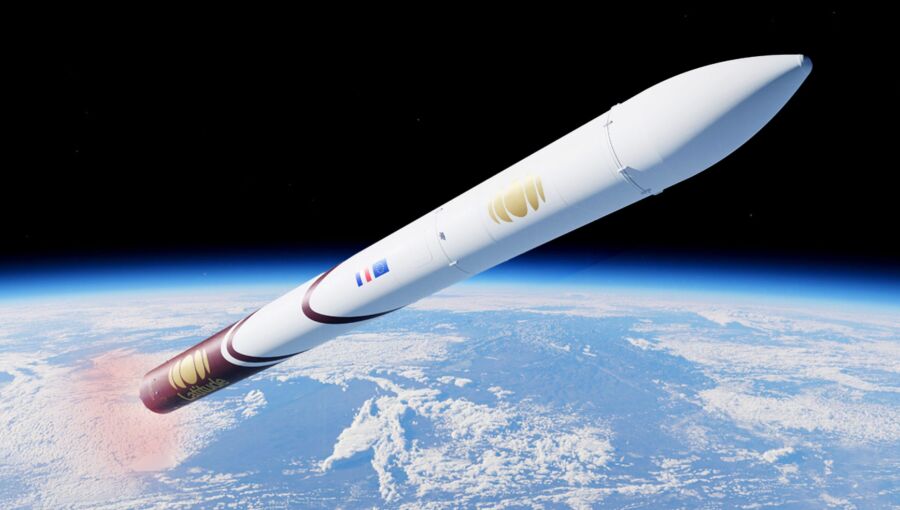
Oman's commercial spaceport operator Etlaq signed a letter of intent with French launch services provider Latitude to conduct the first experimental launch of a Latitude rocket from the Sultanate, the Omani startup said on July 1.
The agreement points to Oman's push to establish itself as a regional space hub, part of a wider strategy to diversify its economy by developing high-value technology sectors including space services and advanced aerospace, with the planned mission set to be one of the first orbital launch campaigns from the Arabian Peninsula.
The letter of intent was signed during the recent state visit of Sultan Haitham bin Tarik to France, where he held talks with President Emmanuel Macron. It establishes a framework for cooperation, paving the way for an experimental launch currently targeted for late 2027, with the partners collaborating on ground infrastructure, operational planning and regulatory requirements.
"Working with partners like Latitude strengthens our capabilities and reinforces the growing confidence international players have in Oman as a space hub. We look forward to building a partnership that cements Etlaq's role as a key gateway to space," said Azzan Kais Al Said, chief executive of Etlaq.
Olivier Zarrouati, chairman of Latitude's strategic committee, described the agreement as reflecting a shared ambition by France and Oman to develop independent space capabilities.
"Space has become an arena where tomorrow's strategic balances are being shaped. This signing reflects the shared ambition of France and Oman to build an independent space capability together," said Zarrouati.
Etlaq said its location offered geographical advantages for commercial launch operations, with proximity to the equator enabling access to multiple orbital trajectories, including low Earth orbit, sun-synchronous orbit and mid-inclination missions from a single launch site.
The partnership marked the first step towards a long-term presence for Latitude in Oman, the company said, as demand grows globally for commercially available sovereign launch infrastructure.

No comments:
Post a Comment