Trump Interior Department Is ‘Trying to Make It Easier to Kill Imperiled Grizzly Bears,’ Critics Warn
“Grizzlies shouldn’t be killed at the whim of the livestock industry while it exploits our public lands for its own personal profit.”
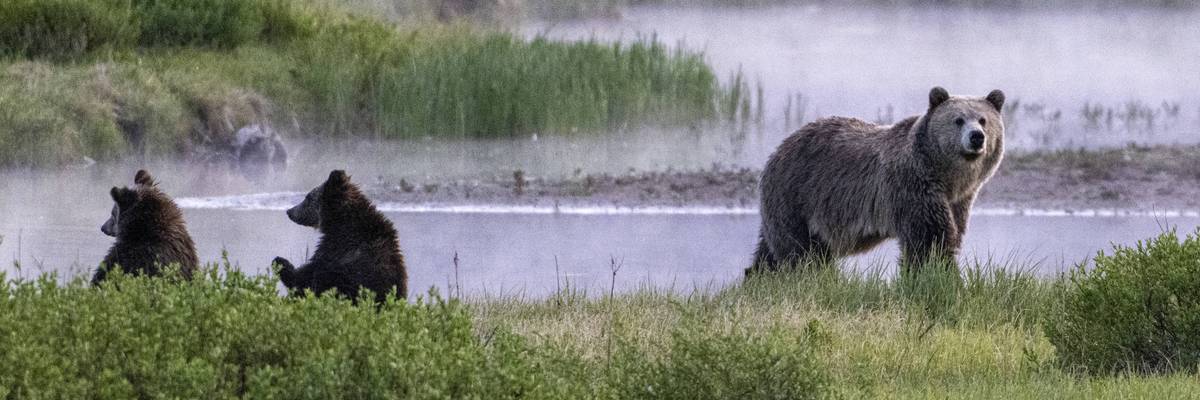
Interior DepartmentA Grizzly bear and her two cubs walk along Pelican Creek on June 21, 2024 in Yellowstone National Park.
(Photo by Jonathan Newton/Getty Images)
Jake Johnson
Jul 15, 2026
COMMON DREAMS
Conservationists warned on Tuesday that a new proposal by President Donald Trump’s Interior Department would permit more killing of grizzly bears, which are a threatened species in the lower 48 states of the US.
The Interior Department’s proposed rule would transfer management of grizzly bears from the federal government to states where Republican leaders have sought to strip the species of protections. Interior Secretary Doug Burgum announced the new proposal—with little specific detail—alongside Montana Gov. Greg Gianforte, Wyoming Gov. Mark Gordon, Idaho Gov. Brad Little, and Republican members of Congress.
Jenny Harbine, managing attorney for the Northern Rockies office at Earthjustice, said it is “extremely concerning that the Trump administration is seeking to hand over more management of the species to hostile Northern Rockies states.”
“While we need to see the details of this proposal, it could put grizzly bears at greater risk at a time of record mortality for the species,” said Harbine. “Anti-science political maneuvers should not be allowed to thwart grizzly bear recovery. If this proposal will further harm the species, we are prepared to take the administration to court.”
Andrea Zaccardi of the Center for Biological Diversity said that with its new proposal, “the Trump administration is trying to make it easier to kill imperiled grizzly bears.”
“Grizzlies shouldn’t be killed at the whim of the livestock industry while it exploits our public lands for its own personal profit,” said Zaccardi. “The science is clear that grizzlies need full federal protection to recover, not a rule that will lead to more grizzly bear mortality. We’ll be reviewing the rule and considering next steps.”
Fewer than 2,000 individual grizzly bears remain in isolated populations in the lower 48 states.
The Interior Department said its new proposal wouldn’t alter the bear’s listing status under the Endangered Species Act, which the Trump administration is trying to weaken. Opponents of the new proposal cautioned that giving more management to GOP-controlled states could be disastrous for the species, rejecting Republican officials’ claim that the bears have sufficiently recovered.
“This is a decision being made for political reasons, it is not based on science, in the best interest of the survival of the species, or in compliance with the requirements of the Endangered Species Act,” Greg LeDonne, Idaho director of Western Watersheds Project, said in a statement.
“Grizzlies shouldn’t be killed at the whim of the livestock industry while it exploits our public lands for its own personal profit.”
Interior DepartmentA Grizzly bear and her two cubs walk along Pelican Creek on June 21, 2024 in Yellowstone National Park.
(Photo by Jonathan Newton/Getty Images)
Jake Johnson
Jul 15, 2026
COMMON DREAMS
Conservationists warned on Tuesday that a new proposal by President Donald Trump’s Interior Department would permit more killing of grizzly bears, which are a threatened species in the lower 48 states of the US.
The Interior Department’s proposed rule would transfer management of grizzly bears from the federal government to states where Republican leaders have sought to strip the species of protections. Interior Secretary Doug Burgum announced the new proposal—with little specific detail—alongside Montana Gov. Greg Gianforte, Wyoming Gov. Mark Gordon, Idaho Gov. Brad Little, and Republican members of Congress.
Jenny Harbine, managing attorney for the Northern Rockies office at Earthjustice, said it is “extremely concerning that the Trump administration is seeking to hand over more management of the species to hostile Northern Rockies states.”
“While we need to see the details of this proposal, it could put grizzly bears at greater risk at a time of record mortality for the species,” said Harbine. “Anti-science political maneuvers should not be allowed to thwart grizzly bear recovery. If this proposal will further harm the species, we are prepared to take the administration to court.”
Andrea Zaccardi of the Center for Biological Diversity said that with its new proposal, “the Trump administration is trying to make it easier to kill imperiled grizzly bears.”
“Grizzlies shouldn’t be killed at the whim of the livestock industry while it exploits our public lands for its own personal profit,” said Zaccardi. “The science is clear that grizzlies need full federal protection to recover, not a rule that will lead to more grizzly bear mortality. We’ll be reviewing the rule and considering next steps.”
Fewer than 2,000 individual grizzly bears remain in isolated populations in the lower 48 states.
The Interior Department said its new proposal wouldn’t alter the bear’s listing status under the Endangered Species Act, which the Trump administration is trying to weaken. Opponents of the new proposal cautioned that giving more management to GOP-controlled states could be disastrous for the species, rejecting Republican officials’ claim that the bears have sufficiently recovered.
“This is a decision being made for political reasons, it is not based on science, in the best interest of the survival of the species, or in compliance with the requirements of the Endangered Species Act,” Greg LeDonne, Idaho director of Western Watersheds Project, said in a statement.
“Preventing harm to wildlife by protecting where they live, eat, and sleep is a basic foundation of the Endangered Species Act,” said Earthjustice attorney Kristen Boyles.
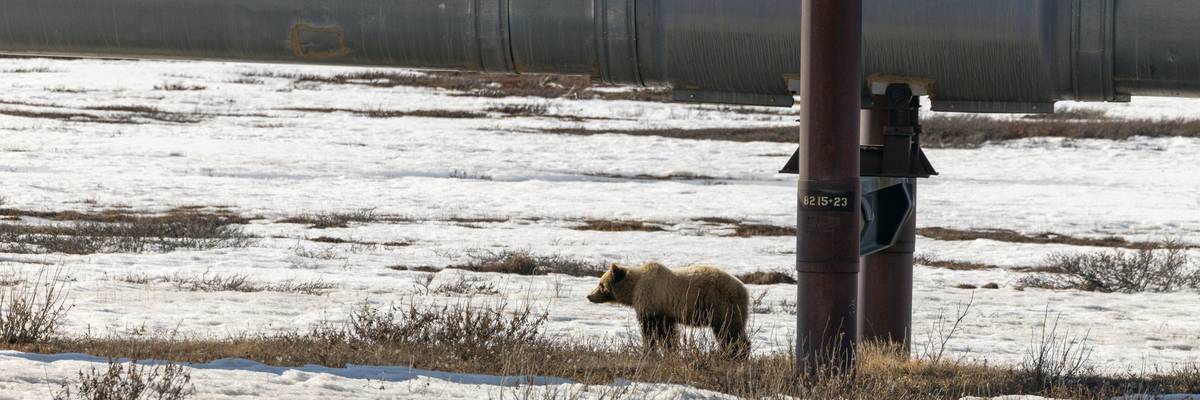
A grizzly bear walks on the tundra underneath a portion of the Trans Alaska Pipeline System near the Dalton Highway on May 9, 2025 about 10 miles north of Atigun Pass in North Slope Borough, Alaska.
(Photo by Lance King/Getty Images)
Jessica Corbett
Jul 14, 2026
COMMON DREAMS
A coalition of conservation groups sued the Trump administration in federal court on Tuesday over its move to rescind the regulatory definition of “harm” in the Endangered Species Act so that extractive industries can degrade crucial habitats.
“Since 1973, the ESA has served as the nation’s most effective conservation law, saving numerous imperiled species from extinction and moving them toward recovery,” states the complaint, filed in the District of Washington state. It argues that the rescission “defies the text and purpose of the statute, 50 years of administrative policy, and US Supreme Court precedent.”’
The coalition is made up of the Center for Biological Diversity, Columbia Riverkeeper, Conservation Law Foundation, Conservation Northwest, Friends of the Wild Swan, Oregon Wild, Sierra Club, Swan View Coalition, and WildEarth Guardians, and is represented by Earthjustice.
“Preventing harm to wildlife by protecting where they live, eat, and sleep is a basic foundation of the Endangered Species Act,” said Earthjustice attorney Kristen Boyles in a statement, also stressing that the decision conflicts with not only the ESA but also decades of legal precedent. “Now more than ever, imperiled fish, birds, and wildlife need protection to survive and recover.”
Ben Greuel, wildlife campaign manager at Sierra Club, warned that “without the habitat protections offered by the harm rule, countless species would be forced onto a path towards extinction.”
For example, “roads built for logging and other human access destroy grizzly bear habitat and the bear’s ability to safely use its habitat,” said Swan View Coalition chair Keith Hammer. “Weakening the harm rule will allow industry to devastate the habitat grizzly bears and many other wildlife species depend on for their survival.”
Noah Greenwald, endangered species co-director at the Center for Biological Diversity, pointed to not only grizzlies but also some of the other specific species that could be impacted by the administration’s decision.
“It’s beyond tragic that as the world’s scientists warn us of an extinction crisis threatening to unravel our shared future, the Trump administration is yanking basic protections from our most endangered wildlife,” Greenwald said. “There’s just no way to protect endangered animals like spotted owls, Florida panthers, or grizzly bears without protecting the places they live.”
In fact, as Oregon Wild staff attorney John Persell, noted, “habitat loss is the leading driver of extinction.”
“This gutting of the Endangered Species Act is part of a broader assault on our bedrock environmental values,” Persell also emphasized. “From public lands to wildlife to clean air and drinking water, the Trump administration is determined to waste, loot, and pollute America’s natural heritage.”
Separately, the group Defenders of Wildlife sent a letter to the departments of Commerce and the Interior about its intent to sue over the ESA rescission, which was published in the Federal Register on Tuesday by their respective agencies, the National Oceanic and Atmospheric Administration and the Fish and Wildlife Service.
“The law has been clear for decades,” said Jane Davenport, senior attorney at Defenders of Wildlife. “Rescinding this definition is wholly out of bounds and misaligned with the vast majority of Americans who support protecting and recovering endangered species.”
“We will use the full force of the law to fight back and prevent industry from unfettered destruction of critical forests, streams, deserts, oceans, and coastlines,” Davenport pledged.
The rescission came just a day after President Donald Trump signed proclamations dramatically shrinking the size of two national monuments in Utah, Bears Ears and Grand Staircase-Escalante.
As with Trump’s repeated attacks on the ESA, his targeting of the two monuments dates back to his first administration.
Taylor McKinnon, Southwest director at the Center for Biological Diversity, said Monday that “gutting Utah’s national monuments to enrich polluting extractive corporations shows Trump’s extreme disdain for Americans’ shared natural heritage. It’s a national embarrassment. These monuments protect some of America’s most iconic landscapes and rich biodiversity. We’ll fight like hell to safeguard their future.”

No comments:
Post a Comment