Friday, February 02, 2024

Opinion

From Water to Uranium, the US Government Continues to Fail the Navajo Nation

Kianna Pete
Fri, February 2, 2024 


Guest Opinion. The Navajo Nation is the largest land reservation held by the Diné (Navajo People) in the United States–larger than ten states. Despite this, 30% of the families in the Navajo Nation live without running water, and the opening of a uranium mine poses more risks for Native communities surrounding the Grand Canyon area. The Navajo Nation, who experience the hardships of limited access to water and uranium contamination, are advocating for change. Yet, the US government is doing little to help. 

In 2023, the US Supreme Court ruled in Arizona v. Navajo Nation that according to the 1868 treaty establishing the Navajo Nation reservation, the United States is not obligated to provide access to water for the tribe. According to the opinion of the court delivered by Justice Kavanaugh, “In the Tribe’s view, the 1868 treaty imposed a duty on the United States to take affirmative steps to secure water for the Navajos. With respect, the Tribe is incorrect. The 1868 treaty “set apart” a reservation for the “use and occupation of the Navajo tribe.” But it contained no “rights-creating or duty-imposing” language that imposed a duty on the United States to take affirmative steps to secure water for the Tribe.”

This decision was anything but respectful. It reversed the 9th Circuit Court of Appeals which sided with the Navajo Nation’s claim to urge the Secretary of the US Department of Interior, Deb Haaland, to develop a plan meeting the water needs of the Navajo Nation and ensure shared tribal water rights in the Colorado River.

Moreover, the ruling based its decision on the 1868 treaty but failed to acknowledge the centuries of settler colonialism and scorched earth campaigns that destroyed the water resources of the Navajo people. Instead, the treaty history accounted for by the court omits the violent acts committed by the US government and utilizes language from the treaty that blames the Diné peoples for their condition.

Arizona v. Navajo Nation is not just a case about the affirmative duty to provide water but also includes other resources destroyed by the US government. Ironically, the court declares this themselves saying that “under the treaty, the United States has no duty to farm the land, mine the minerals, or harvest the timber on the reservation—or, for that matter, to build roads and bridges on the reservation.” Regardless, uranium mining and transport are still in effect on the Navajo Nation.

On December 21, 2023, Energy Fuels, a lead producer of US uranium mining, announced the production of the Pinyon Plain Mine located near the Grand Canyon and Sacred Red Butte, also known as the sacred lands of the Havasupai and cultural property of the 11 Associated Tribes of the Grand Canyon. The mine poses a threat to the main water sources of these tribes yet Energy Fuels claims to be “the highest-grade uranium mine, with “state-of-the-art groundwater protections.” Only a few weeks after this announcement, the Havasupai Tribal Council released a statement on January 12, 2024, declaring that Energy Fuels contaminated one of two aquifers and sprayed toxic water that spread to surrounding plants and animals.

The tribe also raised concerns about the dangers of uranium transport. Haul No!, an Indigenous-led community organizing group leading efforts to halt the production of the mine, confirmed that Energy Fuels plans to “haul up to 12 trucks per day, each carrying 30 tons of uranium from the mine to the mill. This violates Navajo Nation law which prohibits the transport of new uranium across Diné lands.” This law is a result of previous US mining extraction, in which over 1,000 abandoned mines remain in the Navajo Nation that contaminated water resources and even caused deaths.

The violation of tribal law and reinterpretation of treaty rights is a unilateral power only acceptable to the US government. On one hand, the Supreme Court claimed the US couldn’t break a treaty negotiation to provide water. On the other hand, the US mining industry disregards tribal law to transport uranium. What is the use of being the largest land reservation if two legal systems cannot protect you? From water to uranium, the US government ignores systems of governance that do not favor their interests. They fail to take accountability for destroying and extracting resources from the Navajo Nation. Unlike the Navajo Nation, the United States has the liberty to choose when it can or can’t be held liable for its intervention with tribal communities.

In an election year where Native voters are pivotal to key races in states like Arizona, how are voters supposed to trust a government that disregards water rights and tribal law? Additionally, who are Native voters going to vote for when the Biden Administration is not keeping their promises to tribal communities after just signing a proclamation designating a million acres of land near the Grand Canyon as a national monument to protect the sacred lands of the Navajo Nation and Havasupai Indian Reservation. Should these tribal communities continue to put their hopes in the ballot box?

As a Diné citizen working with her community from afar, this is a tricky question to answer as I think of my relatives who are unaware of these legal barriers and will be directly affected by the Pinyon Plain Mine. I do know, however, that my hope for a more sustainable future for the Navajo Nation is in the Diné organizing groups who continue to resist and advocate for the connected right to life and water. Although the US government may fail us time and time again, what has remained since the 1868 treaty is the love for our home, Diné Bikéyah. My Diné relatives and all Indigenous communities should be living in harmony with their homelands, not having to fight for their existence inside it.

Kianna Pete (Diné) is an Indigenous Education and Policy Research Associate at the American Institutes for Research and Political Education Specialist at Start Empowerment. She is a graduate student at Columbia University and part-time volunteer with NoHaul!  

About the Author: "Elyse Wild is senior editor for Native News Online and Tribal Business News. "

Contact: ewild@indiancountrymedia.com

Secret US spying program targeted top Venezuelan officials, flouting international law

JOSHUA GOODMAN and JIM MUSTIAN
Wed, January 31, 2024 

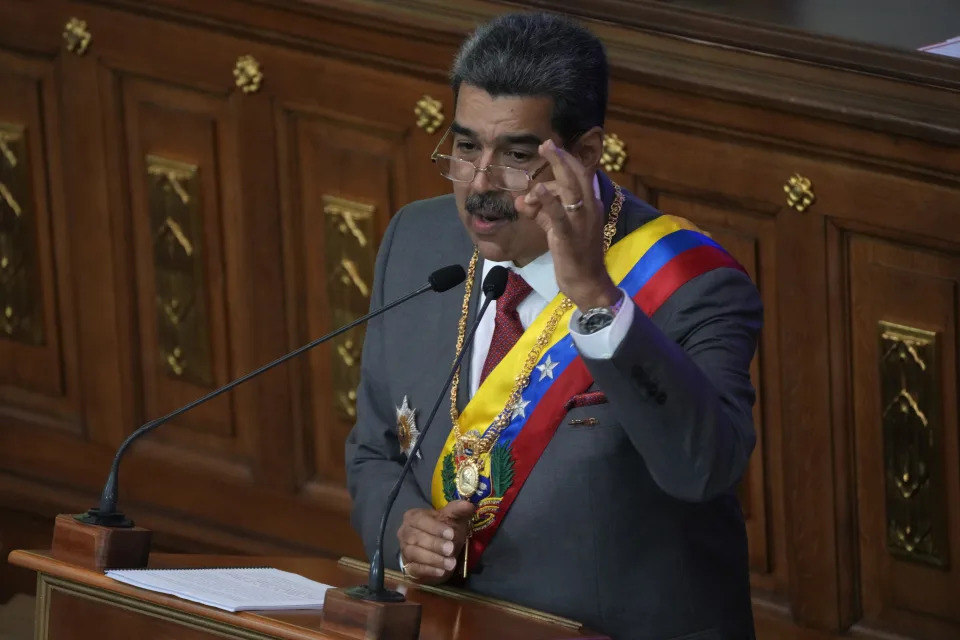
Venezuelan President Nicolas Maduro delivers his annual address at the National Assembly in Caracas, Venezuela, Monday, Jan. 15, 2024. (AP Photo/Ariana Cubillos)
ASSOCIATED PRESS

MIAMI (AP) — A secret memo obtained by The Associated Press details a yearslong covert operation by the U.S. Drug Enforcement Administration that sent undercover operatives into Venezuela to surreptitiously record and build drug-trafficking cases against the country’s leadership – a plan the U.S. acknowledged from the start was arguably a violation of international law.

“It is necessary to conduct this operation unilaterally and without notifying Venezuelan officials,” reads the 15-page 2018 memo expanding “Operation Money Badger,” an investigation that authorities say targeted dozens of people, including Venezuelan President Nicolás Maduro.

While there's no clear mechanism to hold the United States accountable legally, the revelation threatens to roil already fraught relations with Maduro’s socialist government and could deepen resentment of the U.S. across Latin America over perceived meddling. It also offers a rare window into the lengths the DEA was willing to go to fight the drug war in a country that banned U.S. drug agents nearly two decades ago.

Some of Maduro’s closest allies were ensnared in the investigation, including Alex Saab, the businessman recently freed in a prisoner swap for 10 Americans and a fugitive defense contractor. But until now, it was not clear that U.S. probes targeting Venezuela involved legally questionable tactics.

“We don’t like to say it publicly but we are, in fact, the police of the world,” said Wes Tabor, a former DEA official who served as the agency’s country attaché in Venezuela well before the investigation described in the memo was launched.

Tabor, who would not confirm the existence of any such operations, said unilateral, covert actions can be an effective tool when conducted with proper limits and accountability, particularly in a country like Venezuela, where the blurred lines between the state and criminal underworld have made it an ideal transit point for up to 15% of the world’s cocaine.

“We’re not in the business of abiding by other countries’ laws when these countries are rogue regimes and the lives of American children are at stake,” he said. “And in the case of Venezuela, where they’re flooding us with dope, it’s worth the risk.”

The DEA and Justice Department declined to answer questions from the AP about the memo, how frequently the U.S. conducts unilateral activities and the makeup of the panel that approves such operations.

Venezuela’s communications ministry did not respond to requests for comment. But in recent days Maduro accused the DEA and the CIA — a regular target he uses to rally supporters — of undertaking efforts to destabilize the country. The CIA declined to comment.

“I don’t think President Biden is involved,” Maduro said in a televised appearance this month. “But the CIA and the DEA operate independently as imperialist criminal organizations.”

TARGETING MADURO

The never-before-seen document was authored at the cusp of Republican President Donald Trump’s “ maximum pressure ” campaign to remove the Venezuelan president.

Maduro had just taken an authoritarian turn, prevailing in what the Trump administration decried as a sham re-election in 2018. Within weeks, senior DEA officials plotted to deploy at least three undercover informants to surreptitiously record top officials suspected of converting Venezuela into a narco state.

But because the plan appeared to run roughshod over Venezuelan and international law, it required the approval of what is known as the Sensitive Activity Review Committee, or SARC, a secretive panel of senior State and Justice Department officials that is reserved for the most sensitive DEA cases involving tricky ethical, legal or foreign policy considerations.

It marked an aggressive expansion of “Money Badger," which the DEA and prosecutors in Miami created in 2013 and would go on to investigate around 100 Venezuelan insiders, according to two people familiar with the operation who spoke on the condition of anonymity to discuss law enforcement details.

By authorizing otherwise illicit wire transfers through U.S.-based front companies and bank accounts, the DEA aimed to unmask the Colombian drug traffickers and corrupt officials leveraging Venezuela’s tightly controlled foreign currency exchange system to launder ill-gotten gains. But it expanded over time, homing in on Maduro’s family and top allies, although the president would end up being indicted elsewhere, by the U.S. Attorney’s Office in Manhattan, on drug trafficking charges.

None of the indictments of Venezuelans either before or after the 2018 memo made any mention of U.S. spying. And “to limit or mitigate the exposure of the unilateral activities,” the document advised DEA officials to protect their informants and curtail in-person meetings with targets.

It is not clear if ”Money Badger" is still ongoing.

Since Democratic President Joe Biden took office in 2021, his administration has rolled back sanctions and brought few new prosecutions of Maduro insiders as the Justice Department’s attention has turned to Russia, China and the Middle East. The Biden administration has also sought to lure Maduro back into negotiations with the U.S.-backed opposition, threatening to re-impose crippling oil sanctions if the OPEC nation doesn't abide by an agreement to hold fair and free elections this year.

The operation targeting Maduro’s inner circle is not the first time the United States has conducted law enforcement operations overseas without notifying a host country.

In 1998, Mexico castigated the United States for keeping it in the dark about a three-year money laundering sting known as “Operation Casablanca” — partly conducted on Mexican soil — that implicated some 160 people, including several bank executives.

Notably, legal experts say no international court or tribunal has jurisdiction to hold the United States or its agents accountable for covert law enforcement actions in other countries, and the U.S. Supreme Court has upheld arrests and evidence collected on such missions.

Evan Criddle, a law professor at William & Mary in Virginia, said international law forbids undercover operations such as those described in the memo that take place in another country’s territory without consent. He expects the release of the memo to “cause some embarrassment to the United States, prompt Venezuelan diplomats to register their objections and potentially inhibit future cooperation."

Several current and former DEA officials who examined the memo told the AP they were surprised less by the brazenness of the plan than the agency’s acknowledgement of it in internal documents.

“It’s very rarely done simply because there’s always that potential of it blowing up in the U.S. government’s face,” said Mike Vigil, the DEA’s former chief of international operations. “But Venezuela had already become a rogue state. I think they figured they had nothing to lose.”

RELEASED BY ACCIDENT

The Operation Money Badger memo was never intended to be made public.

It was inadvertently uploaded among dozens of government exhibits to a file share website by the U.S. Attorney’s Office in Manhattan during the bribery conspiracy trial late last year of two former DEA supervisors who helped spearhead the agency’s offensive against the Maduro government. It would be removed hours after an AP reporter started asking about it.

A few days later, over the AP’s objections, the federal judge presiding over the bribery trial took the highly unusual step of sealing the courtroom while the document was discussed, saying that doing so in open court would have “serious diplomatic repercussions.” Neither he nor prosecutors explained what those might be.

Former DEA supervisors Manny Recio and John Costanzo Jr. were eventually convicted of leaking sensitive law enforcement information to Miami defense attorneys as part of a bribery conspiracy. One case they discussed was that of Saab, a Colombian-born businessman who himself would be targeted by “Money Badger” for the alleged siphoning of $350 million from state contracts.

Recio, who later worked as a private investigator recruiting new clients for the defense attorneys, emailed the Venezuelan plans to his personal email account days before his 2018 retirement. He approved the plans as an assistant special agent in charge, while Costanzo, an expert on Venezuela, oversaw the covert sting. Both men are expected to serve federal prison time, joining a growing list of DEA agents behind bars.

“Information like this should never leave government servers,” Michael Nadler, a former federal prosecutor in Miami who also helped coordinate the overseas sting, testified behind closed doors, according to a redacted transcript. “It contains information that provides identifying information regarding people who have agreed to cooperate with the United States in pretty dangerous situations.”

The AP is not publishing the actual memo or identifying the informants to avoid putting them in danger.

‘A SPECIAL RISK’

The memo harkens back to an earlier era of rising hostilities between the U.S. and Venezuela when ambitious federal investigators in several districts – New York, Miami, Houston and Washington – were competing to see who could penetrate deepest into Venezuela’s criminal underworld.

As part of that undeclared race, the DEA Miami Field Division’s Group 10 recruited a dream informant: a professional money launderer accused of fleecing $800 million from Venezuela’s foreign currency system through a fraudulent import scheme.

The informant’s illicit activity in Venezuela positioned him to help the DEA collect evidence against the chief target of the unilateral operation: Jose Vielma, an early acolyte of the late Hugo Chávez who in two decades of service to the Bolivarian revolution cycled through a number of top jobs, including trade minister and the head of Venezuela’s IRS.

Vielma’s alleged partner in crime, according to the DEA document, was another former military officer: Luis Motta, then electricity minister. The DEA memo authorized three informants to secretly record undercover meetings with the targets.

“There is a special risk that the (confidential sources) would be in danger if their cooperation with the DEA is exposed to host country officials,” the memo states. “Potential penalties include imprisonment.”

Whether the risks were worth it remains an open question.

Vielma and Motta were indicted on money laundering charges tied to bribery — not drug trafficking. Both remain in Venezuela and loyal to Maduro, with Vielma serving as a senior lawmaker and Motta’s wife the governor of a major state. But like dozens of Maduro insiders wanted in the U.S., neither is likely to be brought to justice – despite a $5 million reward for Motta’s arrest — unless they travel outside Venezuela.

Zach Margulis-Ohnuma, an attorney for retired Gen. Hugo Carvajal, a former Venezuelan spy chief awaiting trial in the U.S. on narco-terrorism charges in a separate investigation, said “the DEA’s reputation for lawlessness is well-earned.”

“A program that institutionalizes lawbreaking by authorizing DEA agents and informants to violate foreign laws,” he said, “does little to stop drugs from coming into the U.S. while undermining the integrity of the DEA and the reputation of America abroad.”

___

News Researcher Jennifer Farrar in New York contributed.

___

Contact AP’s global investigative team at Investigative@ap.org or https://www.ap.org/tips/

A Texas Town's Misery Underscores the Impact of Bitcoin Mines Across the U.S.

Andrew R. Chow
TIME
Fri, February 2, 2024 

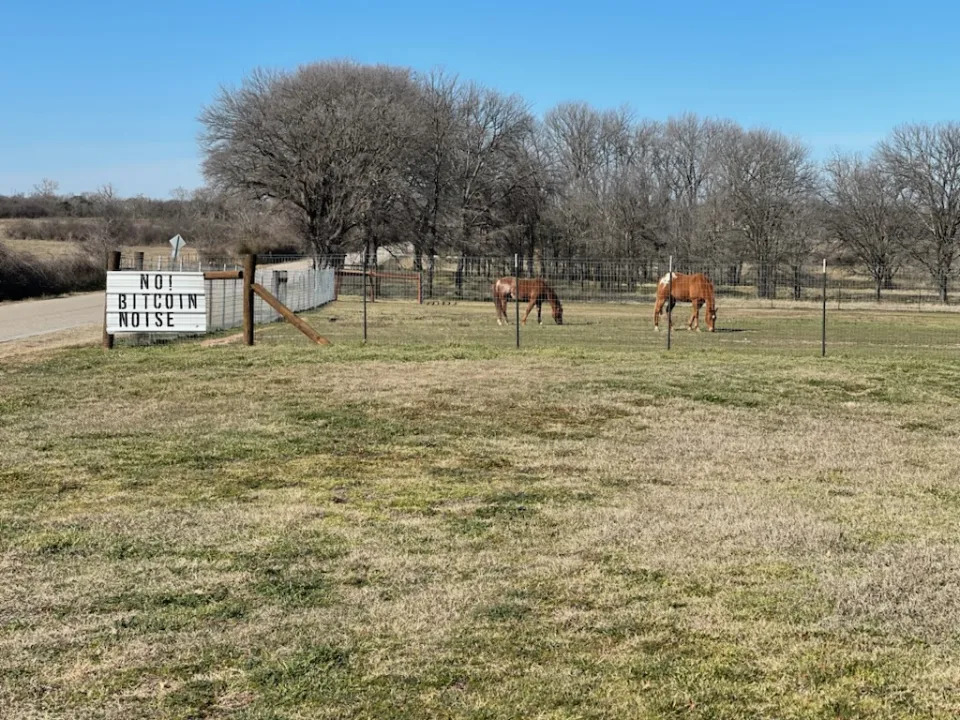
Cheryl Shadden, a resident of Granbury, hung a sign on her street to protest the noise from a nearby bitcoin facility. Credit - Cheryl Shadden

Every night, the nurse anesthetist Cheryl Shadden lies awake in her home in Granbury, Texas, listening to a nonstop roar. “It’s like sitting on the runway of an airport where jets are taking off, one after another,” she says. “You can't even walk out on your back patio and speak to somebody five feet away and have them hear you at all.”

The noise comes from a nearby bitcoin mining operation, which set up shop at a power plant in Granbury last year. Since then, residents in the surrounding area have complained to public officials about an incessant din that they say keeps them awake, gives them migraines, and seemingly has caused wildlife to flee the region. “My citizens are suffering,” says Hood County Constable John Shirley.

Granbury is one of many towns across the U.S. feeling the negative impacts of bitcoin mining, an energy-intensive process that powers and protects the cryptocurrency. Those impacts include carbon and noise pollution, and increased costs on consumers’ utility bills. According to the New York Times, there are 34 large scale bitcoin mines across the U.S. In 2022, the crypto market tumbled, in part due to high-profile collapses of crypto companies like Sam Bankman-Fried’s FTX. But in 2023, prices rebounded once again, and mining companies decided to expand their operations in order to cash in, causing global energy consumption for mining to double, according to one study. Critics say that mining is causing both long-term environmental damage, due to its energy use, as well as local harm. “We’re at a loss here,” Granbury resident Shadden says. “We want our lives back.”

Bitcoin is so energy-intensive because it relies on a process known as proof-of-work. Rather than being overseen by a single watchdog, bitcoin is designed to disperse the responsibility of the network’s integrity to voluntary “miners” around the globe, who prevent tampering through a complex cryptographic process that consumes a vast amount of energy. Over the last few years, Texas has become a global leader in crypto mining because miners can access cheap energy and land there, as well as benefit from friendly tax laws and regulation. Bitcoin miners consume about 2,100 megawatts of the state's power supplies, and companies like Riot Platforms and Marathon Digital Holdings have recently expanded in the state. (Other states, conversely, have pushed back on the industry: In 2022, New York imposed a moratorium on bitcoin mining over concerns that miners were overusing renewable energy resources.)
More From TIME

In December, Marathon paid $178 million to purchase bitcoin mines in Kearney, Nebraska and Granbury from Generate Capital. But with the Granbury purchase, Marathon also inherited a swath of angry nearby residents across Hood County whose lives have been upended by the mining facility. Generate Capital started operating the 300-megawatt facility, which sits about an hour southwest of Fort Worth, in 2023. Initially, many residents were unaware what, exactly, was causing the noise. Shannon Wolf, who lives about 8 miles from the plant, first assumed that the rumble was coming from a nearby train. “It has woken me from a dead sleep before,” she says.

The rumble, it turned out, comes from the massive cooling fans that the facility runs to keep their computers from overheating. Data centers, like bitcoin mines, also run massive cooling fans that have drawn the ire of nearby residents.

As residents learned what had caused the din, social media platforms like NextDoor and Facebook flooded with complaints. “This sound has been driving me to the point of insanity. I have continuous migraines, I can barely get out of my head, vomiting, nosebleeds, painful knots on my scalp,” wrote one commenter. “All the birds have left, only [buzzards],” wrote another poster.

As complaints swelled, local officials brought their concerns to the site’s operator, US Bitcoin Corp. Over the summer, the company agreed to construct a 24-foot sound barrier wall on one end of the property at the cost of $1 to $2 million. But while the wall reduced sound in some areas, it actually amplified it in others. “To be honest, the complaints have gotten louder for us since the mitigation efforts,” Constable John Shirley says.

Shirley says that he is monitoring the decibel levels of the facility. Texas state law stipulates that a noise is considered unreasonable if it exceeds 85 decibels. For comparison, vacuum cleaners often run at around 75 decibels—and a cardiologist told TIME in 2018 that chronic exposure to anything over 60 decibels had the potential to do harm to the cardiovascular system. Shadden took her own readings at her house near the Bitcoin mining facility that reached 103 decibels.

But the maximum penalty for breaking that Texas law is a $500 fine, Shirley says, adding: “The state law is inadequate.” He says that he has been talking to the county attorney’s office about options for recourse. “If we have a repeated violation problem, he will be looking into potential injunctive relief,” he says.

The community’s ire boiled over at a town hall on Jan. 29, hosted by Shirley and Hood County Commissioner Nannette Samuelson. About 75 people filled the room to complain about the facility. Complaints from attendees included migraines that required trips to the emergency room and a vertigo diagnosis. One attendee said she had been forced to put her chihuahua on seizure medication. Others claimed that their windows rattled from the vibrations, and that the noise made their homes unsellable.

“How does Hood County benefit from having such a ridiculous thing?” asked one woman. “What does this community gain from having them there?”

Charlie Schumacher, the vice president of corporate communications at Marathon Digital Holdings, wrote in an email to TIME that the company was unaware of the noise issues when it purchased the site. He said Marathon was commissioning a third party to conduct a sound study as early as next week. And on Feb. 1, three days after the town hall, Marathon announced that it planned to take over full day-to-day control of the Granbury mine from its previous operators.

“Marathon deeply values our relationships with the communities in which we live and work, and we appreciate the candid input our neighbors have shared with us in recent weeks,” he wrote. "Our team will now have more influence over the sight and can hopefully have a more positive impact for the community. We are in constant touch with local officials and working with community leaders to gain more information about the situation and to work on solutions.

US Bitcoin Corp did not immediately respond to a request for comment.

While the constant noise has become a major irritant in the county, residents also worry about the facility’s impact on their power supply and the surrounding environment. Texas has a notoriously fragile grid that becomes strained in cold weather: a 2021 deep freeze caused millions of people to lose power. Wolf Hollow II, the gas plant that supplies the Granbury bitcoin mine with energy, failed during that crisis.

This year, parts of Texas were hit with a frigid arctic front in mid-January, with temperatures dropping into the teens. The state’s grid operator, ERCOT (Electric Reliability Council of Texas), asked Texans to conserve electricity. The grid mostly held up under strain, and Wolf Hollow continued to operate at full capacity, as did the mining operation.

Nevertheless, some residents in rural Hood County lost power. That included Hunter Sims, who lives a mile and a half from the plant and lost power for 9 hours, relying on a backup generator for his well. Sims was angered that he was without power while the mining operation continued unabated. Overall, he says his quality of life has worsened due to the facility’s noise pollution. “When I’m sitting in my living room, I can hear a loud humming,” he says. “You can’t really relax.”

A representative for Constellation Energy, the company that runs Wolf Hollow, said that any power outages were not a result of any issues at the plant, but rather on the local level of transmission or distribution.

Read More: Fact-Checking 8 Claims About Crypto’s Climate Impact

Erik Kojola, a senior Climate Research Specialist for Greenpeace USA, says he’s monitored similar complaints from residents near new bitcoin mining centers across the country, in Iowa, Indiana, Nebraska, and upstate New York. He also contends that bitcoin mining poses a much larger threat to the environment. “Bitcoin mining is essentially a lifeline for fossil fuels,” he says. “It's ultimately creating a new industrial scale demand for energy at a time where we need to be reducing our energy use.”

Back in Granbury, the discomfort caused by the plant is causing some consternation for a region that largely prides itself on being pro-industry and anti-regulation. “I agree with people having the right to own a business if it’s not illegal or amoral,” says Granbury resident Wolf. “But when you’re harming a group of people, there needs to be some type of remedy.”

Correction, Feb. 2, 2024

A previous version of this story misstated when the Wolf Hollow II power plant failed. It failed in 2021; it did not fail during a 2011 storm, though a separate but nearby plant, Wolf Hollow I, did.
All American Families Have Stories of Illegal Immigration

César Cuauhtémoc, García Hernández
TIME
Thu, February 1, 2024 


Coast Guardsmen stand guard as illegal migrants arrested by police and FBI agents, and are escorted out of a police van at the barge office in New York City on Dec. 9, 1941. They were later transferred to the immigration detention center on Ellis Island. Credit - Bettmann Archive—Getty Images.

By the time I showed up on the scene, my wife’s grandmother was in her 90s. Her hearing was bad and her mobility worse. But her spirit was all there. The first of her Italian migrant family to be born in the United States, she enjoyed telling my wife and me about her parents. Unlike more recent migrants, they had done things the way they should be done, she insisted. Her father left Italy in 1912 only after his brother had a job lined up for him in Philadelphia. Then the rest of the family joined. Over the years, they worked hard, stayed out of trouble, and lived well.

In those moments, I often felt like I was shouting to be heard past the FOX News commentators that wouldn’t stop complaining about the Mexican migrants, some of whom resembled my own relatives. In my quiet frustration, I would tell grandmom that in the early 1900s, a century before I met her, it was illegal to come here with a job in hand. Her father, I pointed out, had lied to get into the U.S.—and her uncle had helped.

Watching endless stories of recent migrants' arrivals who violate immigration law, it’s easy to forget that the migrants who came to the U.S. generations ago often did, too. But reinventing the past doesn’t make migrants then any more fit for life in the U.S. than migrants today.

Read More: The Current Migrant Crisis Is a Collective Trauma

By the time grandmom died, I never convinced her that her family’s migration story was more complicated than she imagined it. That didn’t surprise me. This happens in most families. We remember the victories and celebrations, while forgetting the defeats and tragedies. Eventually the history we imagine becomes the only history anyone knows, creating pasts that are happier, less stained by stories of illegality, than the lives our ancestors lived.

More From TIME

But the truth about migration, like the truth hidden in the family history that I was born into and the one I married into, is more complicated. In those years when my wife’s relatives were settling into a life in the U.S. that they weren’t legally entitled to, transitioning from maligned southern Europeans to the ranks of white Americans, Louis Loftus Repouille busied himself building a life in New York City. A white man from the Dutch West Indies, Repouille spent his working days operating elevators at Columbia-Presbyterian Medical Center.

One afternoon in October 1939, Repouille’s wife and one child went shopping. He sent two other kids to a movie, leaving him alone with 13-year-old Raymond Repouille, the couple’s oldest child, a boy whose poor health prevented him from walking or talking. Quietly and deliberately, Repouille soaked a rag in chloroform and approached the bed where the boy laid. We don’t know whether Raymond understood what was happening or whether the father hesitated. But we do know that Repouille covered the boy’s mouth and nose with the rag and held it there until the boy stopped moving. Repouille had killed his son.

A jury eventually convicted Repouille of manslaughter but asked the judge to go easy on him. Raymond’s death was a “mercy killing,” newspapers declared. Evidently agreeing with the jury, the judge made sure he was home in time for Christmas.

Four years, 11 months, and one week after being convicted of killing Raymond, Repouille applied for U.S. citizenship. He met all the requirements, except for one: he hadn’t waited long enough since the conviction. Federal law required five years of good moral character before applying for citizenship. Had he just waited another three weeks, a federal court concluded, his crime would’ve been forgiven. “The pitiable event, now long passed, will not prevent Repouille from taking his place among us as a citizen,” Judge Learned Hand, a towering figure in 20th century U.S. law, wrote. And so it was: When Repouille later reapplied for citizenship, he succeeded.

There was never any worry that Repouille might be deported because, back then, immigration law could forgive even the vilest conduct.

Today, immigration law forgives little and forgets less. Since the 1980s, Republicans and Democrats have steadily made it easier to fall into immigration problems because of a run-in with the police. And they’ve made it harder for judges to let people out of the immigration prison and deportation pipeline. “The ‘drastic measure’ of deportation or removal is now virtually inevitable for a vast number of noncitizens convicted of crimes,” the Supreme Court wrote in 2010.

These days, immigration agents regularly target migrants for far less. In 2017, 12 years after racking up a drug possession conviction, Immigration and Customs Enforcement (ICE) agents knocked on Kamyar Samimi’s door near Denver, Colo. After four decades of living in the U.S. with the government’s permission, Samimi’s entire life was here, not in his native Iran. His daughter Neda, a Denver college student at the time, remembers the care he gave her as a young child and the laughter and happiness he brought to her life as she grew. “He was so sweet, gentle, understanding, and helpful,” she told me.

To ICE, none of that mattered. The only thing that was important was that conviction a dozen years earlier. Agents arrested him just before Thanksgiving. Neda and her family never again saw Samimi alive. Within days of arrest, his health worsened. Samimi told prison guards he felt sick and showed signs of physical distress, but the prison doctor never saw him, and nurses struggled even to reach the doctor by phone, according to ICE’s records. Fifteen days after being hauled into the immigration prison, Neda’s father was dead.

In a statement released after Samimi’s death, ICE listed his conviction, but didn’t mention his family. That didn’t come as a surprise to Neda. When ICE called with news of her father’s passing, the agent on the other end of the phone didn’t offer an explanation, much less sympathy. ICE merely wanted Neda’s address so someone could mail her father’s belongings. The only reason she knows what happened during the last two weeks of his life is because she sued ICE to get its internal review of his death.

Forgetting the "failures" that line our family stories mean we can imagine migrants like Samimi as different from—and worse than—the migrants who arrived generations ago. For my wife’s grandmother, overlooking her own family’s history of illegality meant she could more easily warn my wife about our families’ different “cultures”—too different to allow for a good match.

When politicians suggest that migrants today pose a greater threat to the nation than migrants in the past, they are living a public version of my personal experience. The memories lost are private, but the consequences change laws. Republicans like Donald Trump vilify migrants with abandon. Democrats use kinder words, but policies they support also assume that migrants today present an extraordinary danger against which extraordinary powers must be deployed—whether blocking migrants at the border or erecting steel and concrete barriers near the Río Grande.

Forgetting our family histories, ordinary people like my wife’s grandmother overlook that imperfect people dot all of our family trees. And by sanitizing history, politicians turn outsized fears of today’s newcomers into laws intended to keep out people who are flawed—much like migrants of earlier generations were. Eventually I won over my wife’s grandmother. Sadly, changing laws is much harder, but it begins by remembering that migrants of today have much more in common with migrants of the past than many of us like to admit.

Residents ask for a full examination of damage to a Japanese nuclear plant caused by a recent quake

MARI YAMAGUCHI
Fri, February 2, 2024 


This aerial photo shows Shika nuclear power plant, rear, in Shika, on the western coast of the quake-struck Noto peninsula, Ishikawa prefecture, Japan, on Jan. 28, 2024. A group of residents of towns near Japanese nuclear plants submitted a petition on Friday asking regulators to halt safety screening for the restart of idled reactors until damage to a plant that partially lost external power and spilled radioactive water during a recent powerful earthquake is fully examined
. (Kyodo News via AP)

TOKYO (AP) — A group of residents of towns near Japanese nuclear plants submitted a petition on Friday asking regulators to halt safety screening for the restart of idled reactors until damage to a plant that partially lost external power and spilled radioactive water during a recent powerful earthquake is fully examined.

The magnitude 7.6 quake on New Year’s Day and dozens of strong aftershocks in north-central Ishikawa prefecture left 240 people dead and 15 unaccounted for and triggered a small tsunami.

Two idled reactors at Shika nuclear power plant on the Noto Peninsula in Ishikawa suffered power outages because of damage to transformers. Radioactive water spilled from spent fuel cooling pools and cracks appeared on the ground, but no radiation leaked outside, operator Hokuriku Electric Power Co. said.

The damage rekindled safety concerns and residents are asking whether they could have evacuated safely if it had been more severe. The earthquake badly damaged roads and houses in the region.

All Japanese nuclear power plants were temporarily shut down after the 2011 Fukushima nuclear disaster for safety checks under stricter standards. The government is pushing for them to be restarted but the process has been slow, in part because of lingering anti-nuclear sentiment among the public. Twelve of the 33 workable reactors have since restarted.

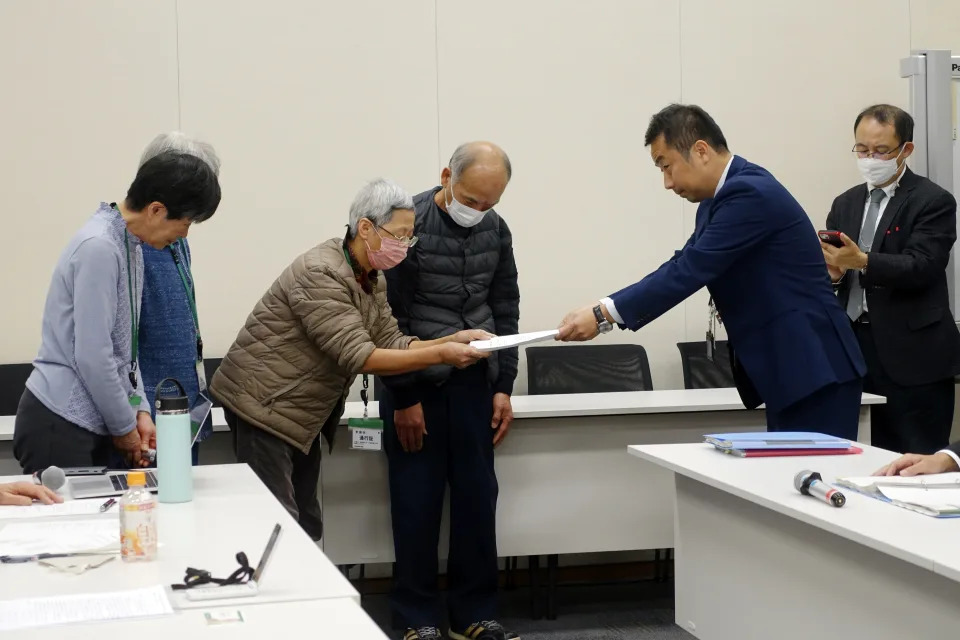
Residents of Ishikawa and other towns with nuclear plants gathered in Tokyo on Friday and handed their petition to officials at the Nuclear Regulation Authority. They are asking officials to freeze the screening process while damage at the Shika nuclear plant is fully examined and safety measures are implemented.

Susumu Kitano, a Noto Peninsula resident, said there would be no way to escape from his town in case of a major accident at the plant.

Nuclear safety officials have noted that the extensive damage suffered by houses and roads in the area of the Shika plant make current evacuation plans largely unworkable. The damage, including landslides, made many places inaccessible, trapping thousands of people on the narrow peninsula.

Experts say current nuclear emergency response plans often fail to consider the effects of damage from compounded disasters and need to be revised to take into account more possible scenarios.

Takako Nakagaki, a resident of Kanazawa, about 60 kilometers (35 miles) south of the Shika plant, said the current evacuation plan is “pie in the sky.” Under the plan, residents closer to the plant are advised to stay indoors in case of a radiation leak, but that would be impossible if houses are damaged in an earthquake.

The Noto quake also sparked fear in neighboring Fukui prefecture, where seven reactors at three plants have restarted, and in Niigata prefecture, where the operator of the tsunami-hit Fukushima nuclear plant is preparing to restart its only workable nuclear plant, the world’s largest seven-reactor Kashiwazaki-Kariwa plant.

Hundreds of other residents of towns hosting nuclear plants submitted similar requests to regulators and Prime Minister Fumio Kishida earlier this week.

The Nuclear Regulation Authority has requested a further investigation of the Shika plant, even though initial assessments showed no immediate risk to its cooling functions or outside radiation leaks. NRA officials said Shika’s operator should consider the possibility of additional damage to key equipment as aftershocks continue.

The Shika reactors, inaugurated in 1993 and 2006, have been offline since the 2011 Fukushima disaster. Hokuriku Electric Power has expressed hopes to restart the newer No. 2 reactor by 2026, but reviews of the recent quake damage could delay that plan.

Despite the Fukushima disaster, the government has pushed increasing use of nuclear energy as a source of stable and clean energy.

Federal court once again suspends bullfights in Mexico City, as activists and supporters lock horns

Associated Press
Wed, January 31, 2024 

A bullfighter performs during a bullfight at the Plaza Mexico, in Mexico City, Sunday, Jan. 28, 2024. Bullfighting returned to Mexico City after the Supreme Court of Justice overturned a 2022 ban that prevented these events from taking place in the capital. (AP Photo/Fernando Llano)


MEXICO CITY (AP) — A federal court granted a temporary injunction against bullfighting in Mexico City on Wednesday, as activists and supporters of the practice once again locked horns in court.

Bullfighting had only just returned Sunday to the capital's Plaza Mexico, which held the city's first legal bullfight in almost two years.

The ruling will apparently force the postponement of fights scheduled for Feb. 4-6; organizers have not yet announced what they will do.


In May 2022, a local court ordered an end to bullfighting, ruling that the practice violated city resident’s rights to a healthy environment free from violence.

That case had been appealed to the Supreme Court, which struck down the ban on largely technical grounds but left the underlying questions unresolved.

But the joy of bullfighting enthusiasts only lasted a few days. Animal rights supporters quickly filed another legal challenge that resulted in Wednesday's ruling, which suspends fights until Feb. 7.

At that point, another hearing will be held to consider activists' complaints that the practice subjected the animals to cruelty and violated humans' rights to be free of degrading spectacles of cruelty and environmental insensitivity.

Animal rights groups have been gaining ground in Mexico in recent years while bullfighting followers have suffered several setbacks. In some states such as Sinaloa, Guerrero, Coahuila, Quintana Roo and the western city of Guadalajara, judicial measures now limit the activity.

Ranchers, businessmen and fans maintain that the ban on bullfights infringes on their rights and puts at risk several thousand jobs linked to the activity, which they say generates about $400 million a year in Mexico.

The National Association of Fighting Bull Breeders in Mexico estimates that bullfighting is responsible for 80,000 direct jobs and 146,000 indirect jobs.

The association has hosted events and workshops in recent years to promote bullfights and find new, younger fans.

____

Follow AP’s coverage of Latin America and the Caribbean at https://apnews.com/hub/latin-america
View comments (4)


Mexican town continues bull running tradition despite legal struggle over bullfights in capital

ALBA ALEMÁN
Thu, February 1, 2024 


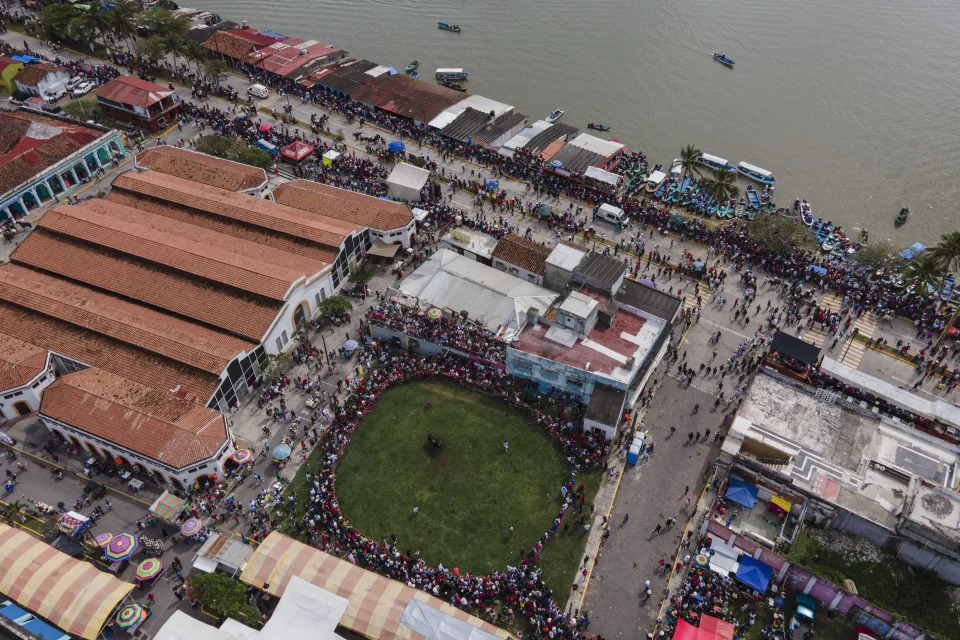
A reveler falls down after provoking a bull during a festival in honor of the Virgin of the Candelaria, in Tlacotalpan, Veracruz State, Mexico, Thursday, Feb. 1, 2024. For nearly a quarter century, the residents have taunted, slapped, chased and run from bulls as part of the religious festival. It is reminiscent, though at a much smaller scale, of the running of the bulls in northern Spain and has continued year after year despite laws banning the mistreatment of animals. 
(AP Photo/Felix Marquez)

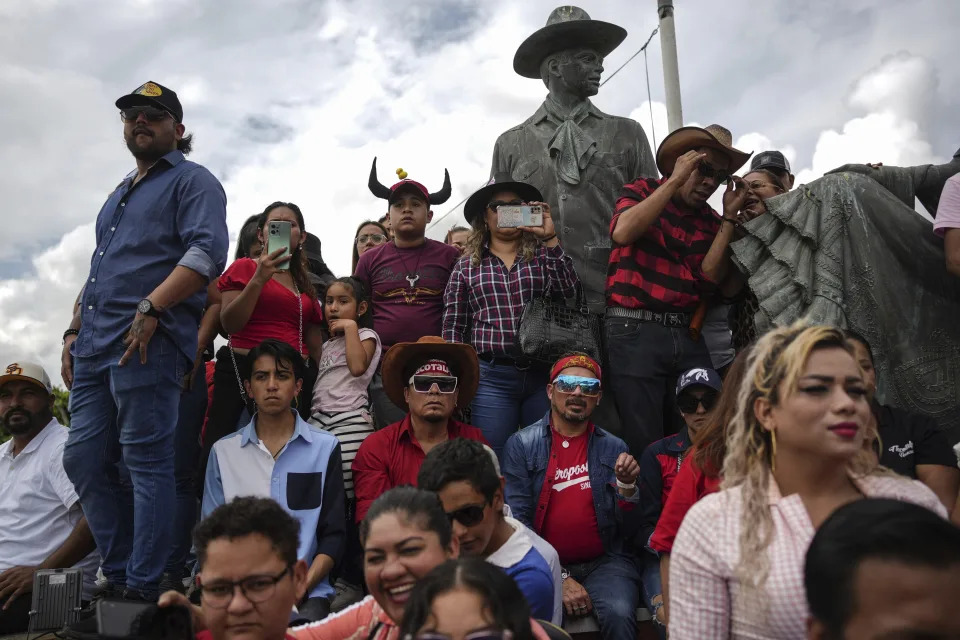
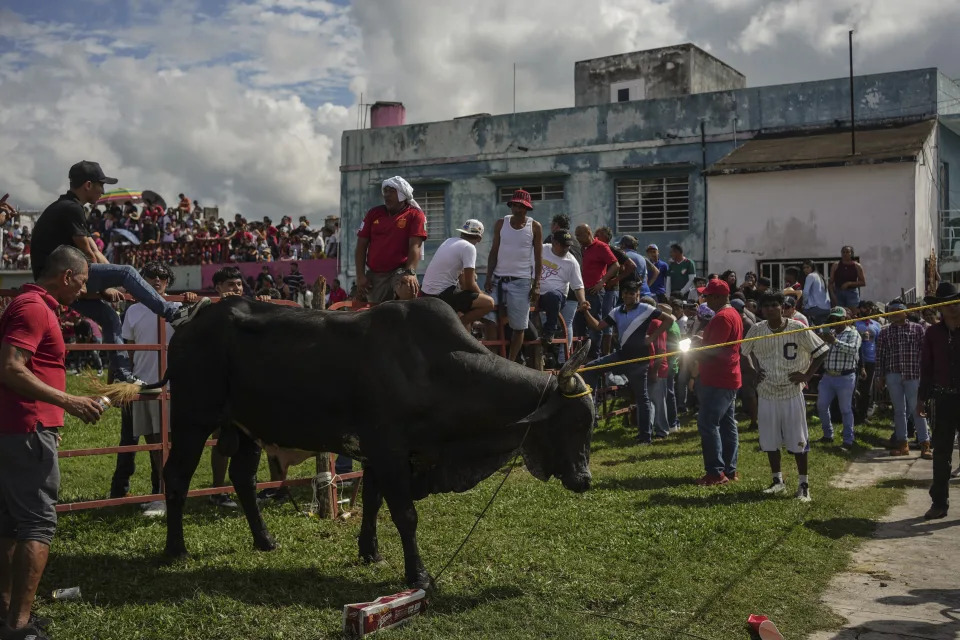
TLACOTALPAN, Mexico (AP) — For nearly a quarter century, the residents of this riverside town in southeastern Mexico have taunted, slapped, chased and run from bulls as part of a religious festival.

It is reminiscent, though at a much smaller scale, of the running of the bulls in northern Spain and has continued year after year despite laws banning the mistreatment of animals. This year, it takes place amid an ongoing legal battle over bullfights 300 miles (485 kilometers) to the west in Mexico City.

The festival tied to Candelaria -- Candlemas in English – runs from Jan. 28 to Feb. 9 among the colorfully painted houses of Tlacotalpan.

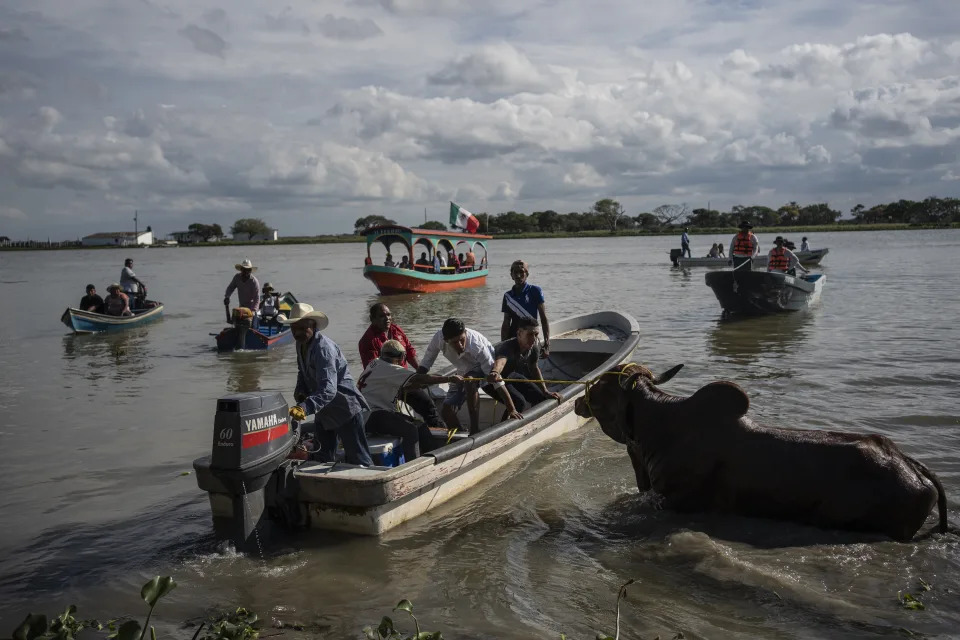
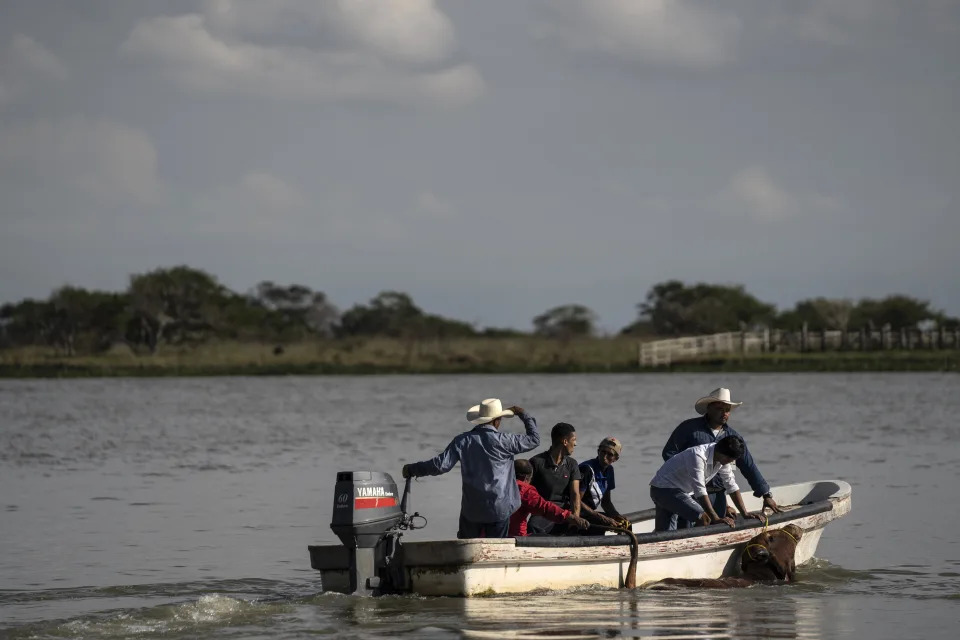
The bulls, donated by the town’s most well-off families, are just part of days of cultural and artistic events. On Thursday, six bulls crossed the Paploapan river into the town on a boat.

Beer drinking crowds of mostly young men clad in red shirts chased them through the streets, tugging on their ears and tails, to an improvised coral where some people tried to climb atop them.

Some of the tormentors suffered injuries, knocked down or gored and treated by paramedics.

In 2016, animal rights groups successfully pushed legislation in the state of Veracruz banning this sort of event. But Tlacotalpan has continued its festival undeterred in the name of tradition.

Alfredo Cervin, 20, described the adrenaline rush of running with the bulls with a profanity. He said the tradition should continue because it was something that distinguished the town.

Elva Arroyo Urbano, 48, said they were more careful with the animals now. “They’ve improved the way they bring them a little tied. They let them rest and they don’t mistreat them as much. There’s a little more discipline toward the bulls.”

Local authorities say the event has continued since the town was founded on the banks of the river in 1777. The annual threat of fines – there’s no record any have ever been imposed – have not stopped the town’s tradition.
Feds won't restore protections for wolves in Rockies, western states, propose national recovery plan

MATTHEW BROWN and TODD RICHMOND
Fri, February 2, 2024 

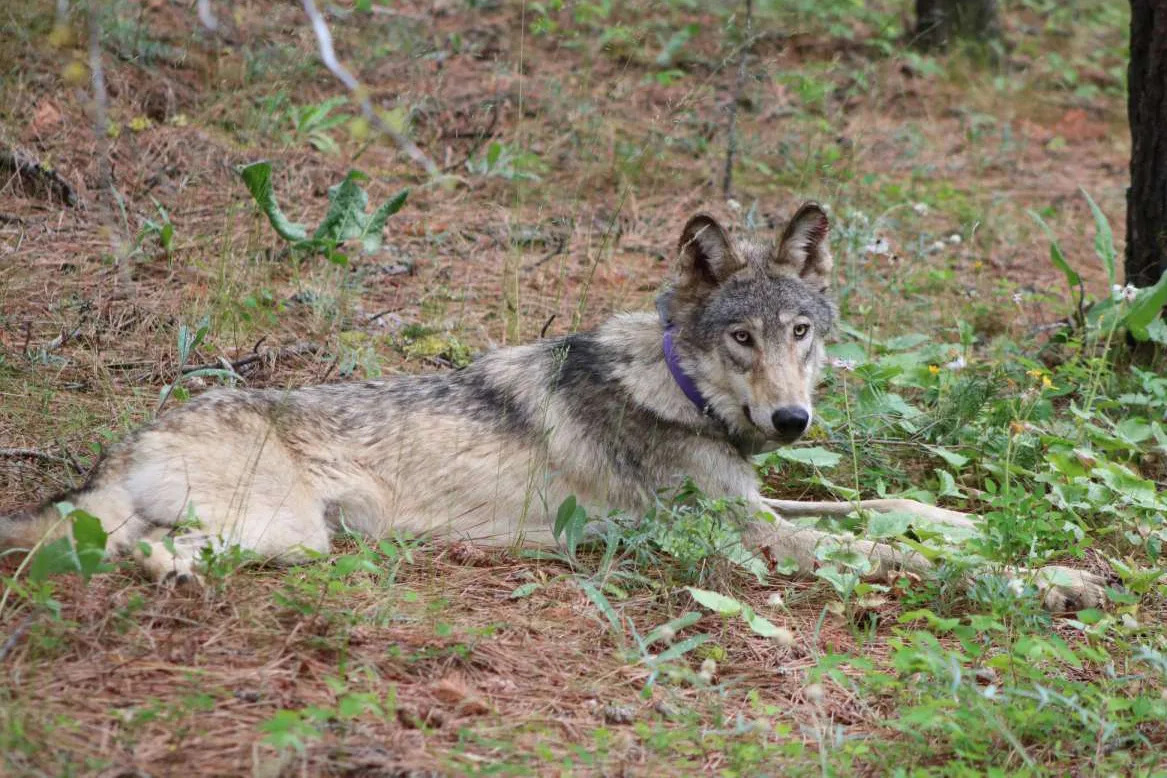
In this February 2021, photo released by California Department of Fish and Wildlife, shows a gray wolf (OR-93) near Yosemite, Calif. Federal wildlife officials announced Friday, Feb. 2, 2024, that they have rejected requests from conservation groups to restore protections for gray wolves across portions of six western states, saying the population in those states is strong. 
(California Department of Fish and Wildlife via AP, File)

Federal wildlife officials on Friday rejected requests from conservation groups to restore protections for gray wolves across the northern U.S Rocky Mountains, saying the predators are in no danger of extinction as some states seek to reduce their numbers through hunting.

The U.S Fish and Wildlife Service also said it would work on a first-ever national recovery plan for wolves, after previously pursuing a piecemeal recovery in different regions of the country. The agency expects to complete work on the plan by December 2025.

The rejection of the conservation groups’ petitions allows state-sanctioned wolf hunts to continue in Idaho, Montana and Wyoming. They estimated the wolf population in the region that also includes Washington, California and Oregon stood at nearly 2,800 animals at the end of 2022.

“The population maintains high genetic diversity and connectivity, further supporting their ability to adapt to future changes,” the agency said in a news release.

Conservationists who have been working to bring the wolf back from near-extinction in the U.S. blasted the decision, complaining that Idaho and Montana have approved increasingly aggressive wolf-killing measures including trapping, snaring and months-long hunting seasons.

“We are disappointed that the U.S. Fish and Wildlife Service is refusing to hold the states accountable to wolf conservation commitments they made a decade ago,” said Susan Holmes, executive director of the Endangered Species Coalition.

Antipathy toward wolves for killing livestock and big game dates to early European settlement of the American West in the 1800s, and it flared up again after wolf populations rebounded under federal protection. That recovery has brought bitter blowback from hunters and farmers angered over wolf attacks on big game herds and livestock. They contend protections are no longer warranted.

Congress stripped Endangered Species Act protections from wolves in western states in 2011. The Trump administration removed Endangered Species Act protections for wolves across the lower 48 states just before Trump left office in 2020.

A federal judge in 2022 restored those protections across 45 states, but left wolf management to state officials in Idaho, Montana, Wyoming and portions of Oregon, Washington and Utah.

Republican lawmakers in Montana and Idaho are intent on culling more wolf packs, which are blamed for periodic attacks on livestock and reducing elk and deer herds that many hunters prize.

The states’ Republican governors in recent months signed into law measures that expanded when, where and how wolves can be killed. That raised alarm among Democrats, former wildlife officials and advocacy groups that said increased hunting pressure could cut wolf numbers to unsustainable levels.

The Humane Society of the U.S., Center for Biological Diversity and other groups had filed legal petitions asking federal officials to intervene.

Despite the hunting pressure that they are under in some states, wolves from the Nothern Rockies region have continued to expand into new areas of Washington, Oregon, California and Colorado. Colorado this winter also began reintroducing wolves to more areas of the state under a plan mandated by voters under a narrowly approved 2020 ballot initiative.

There is continued political pressure to remove protections for wolves in the western Great Lakes region. When protections were briefly lifted under the Trump administration, hunters in Wisconsin using hounds and trappers blew past the state’s harvest goal and killed almost twice as many as planned.


Idaho wolves won’t return to Endangered Species list, Fish and Wildlife Service rules

Nicole Blanchard
Fri, February 2, 2024 


Gray wolves in Idaho will not be relisted under the Endangered Species Act despite conservationist concerns, the U.S. Fish and Wildlife Service announced in a ruling Friday.

The agency’s decision concluded more than two years of analysis in response to multiple petitions regarding the animals’ status in the Western U.S. and the Northern Rocky Mountains area, which includes Idaho, Montana, Wyoming and parts of Oregon, Washington and Utah.

Fish and Wildlife Service officials said the Northern Rocky Mountains population doesn’t constitute a “valid listable entity” for Endangered Species protections. It said the Western U.S. population qualifies for protections but determined the animals don’t meet the threshold to be listed under the Endangered Species Act.

Conservation groups brought relisting petitions to the federal government in 2021 and 2022 following an expansion of wolf hunting and trapping opportunities in Idaho and Montana. Several of them expressed disappointment at the Fish and Wildlife Service decision.

Nicholas Arrivo, managing attorney for wildlife at the Humane Society of the United States, in a statement called the ruling “reprehensible” and said the agency is standing by as wolves in Idaho and neighboring states are “pushed to the brink of extinction once again.”

“The agency is essentially turning their backs on wolves,” Arrivo said.

Suzanne Asha Stone, director of the Idaho-based International Wildlife Coexistence Network, told the Idaho Statesman in a text message that the decision “clears the way for states like Idaho to brutally kill as many wolves as they want.”

“We have to ask the Biden administration: Why did the American people bring healthy wolf populations back only to see them eradicated from the landscape just a few decades later?” she said.

Friday’s ruling adds layers to an already-complex landscape of wolf protections. With the exception of wolves in the Northern Rocky Mountains area, wolves in the Lower 48 states are protected by the Endangered Species Act. The species is considered “threatened” in Minnesota and “endangered” in all other states.

Idaho has managed its wolf population since 2011, when they were removed from the Endangered Species list. The Statesman has reached out to Idaho Department of Fish and Game officials for comment on the ruling.

The Fish and Wildlife Service decision coincides with the agency’s announcement of plans to start “a national conversation” about gray wolves. The agency said it will develop a national recovery plan for the species by December 2025.

Republicans raise alarm as Biden admin prepares plan to protect wolves nationwide

Thomas Catenacci
Thu, February 1, 2024


FIRST ON FOX: House Republicans on the Natural Resources Committee are raising the alarm about a Biden administration initiative they said could lead to expanded protections for the gray wolf species, despite opposition from farmers and western states.

Committee Republicans led by Chair Bruce Westerman, R-Ark., informed Fish and Wildlife Service (FWS) Director Martha Williams that they were probing her agency's National Dialogue Around Working Landscapes and Gray Wolves and Thriving Communities and Cultures, an initiative unveiled in December. The lawmakers said oversight was necessary given the significant effect of listing the gray wolf.

"The facts are clear regarding the listing status of the Gray Wolf in the lower-48 states — the species is recovered, should be delisted, and management should be returned to the states," Westerman and eight fellow Natural Resources Republicans wrote in a letter to Williams on Thursday. "Delisting the gray wolf in the lower-48 states has traditionally garnered bipartisan support."

"Yet under the vague parameters of the Service’s proposal, the Service could begin to dictate to states what their management approaches should be," they added in the letter. "Perhaps more concerning, they could utilize this proposal as a proxy to relist wolves in the Northern Rockies without the support of the impacted States."

BIDEN ADMIN PLAN TO RELEASE PREDATOR NEAR RURAL COMMUNITIES FACES WIDESPREAD OPPOSITION: 'A HUGE THREAT'


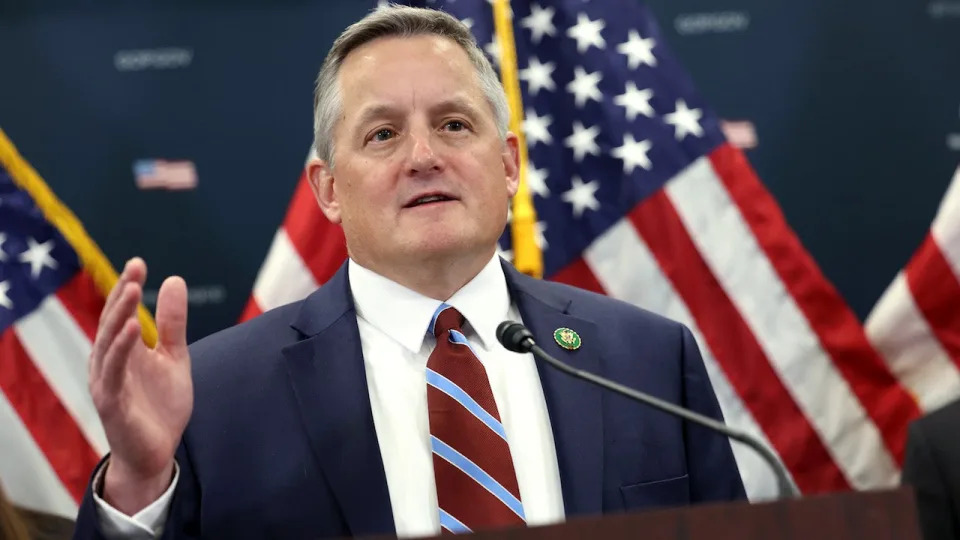
House Natural Resources Committee Chair Bruce Westerman, R-Ark.

On Dec. 13, FWS launched its gray wolf dialogue initiative to "foster the long-term conservation of wolves and address the concerns of varied communities." The agency said the effort would include discussions involving those who live near wolf populations and those who are interested in preserving the species, and contracting a third-party conflict resolution firm to oversee the initiative.

However, while the agency said the initiative would inform its policies and future rulemaking about wolves, it did not offer any additional details about what it specifically hoped to achieve.

LOCAL RESIDENTS EXPLODE AT BIDEN OFFICIALS OVER PLAN TO RELEASE GRIZZLY BEARS NEAR THEIR COMMUNITIES

"The Committee is concerned that the 'National Dialogue Around Working Landscapes and Gray Wolves and Thriving Communities and Cultures' could potentially impact areas where wolves are delisted and currently under state management, like in the Northern Rockies Ecosystem," the Republicans wrote in their letter.


House Republicans are concerned about a Biden administration initiative they say could lead to expanded protections for the gray wolf species, despite opposition from farmers and western states.

"States in the Northern Rockies Ecosystem have a proven track record of success in managing healthy wolf populations, with current populations being stable and even slightly increasing year to year," they continued.

For years, environmental and conservation nonprofits have advocated, through both public campaigns and litigation, for FWS to maintain federal protections for the gray wolf under the Endangered Species Act (ESA). Once a species is listed under the ESA, individuals and groups are prohibited from removing, interfering with, hunting or harming it.

According to environmentalists, the gray wolf is vital to ensuring ecosystems are healthy by keeping prey populations in check.


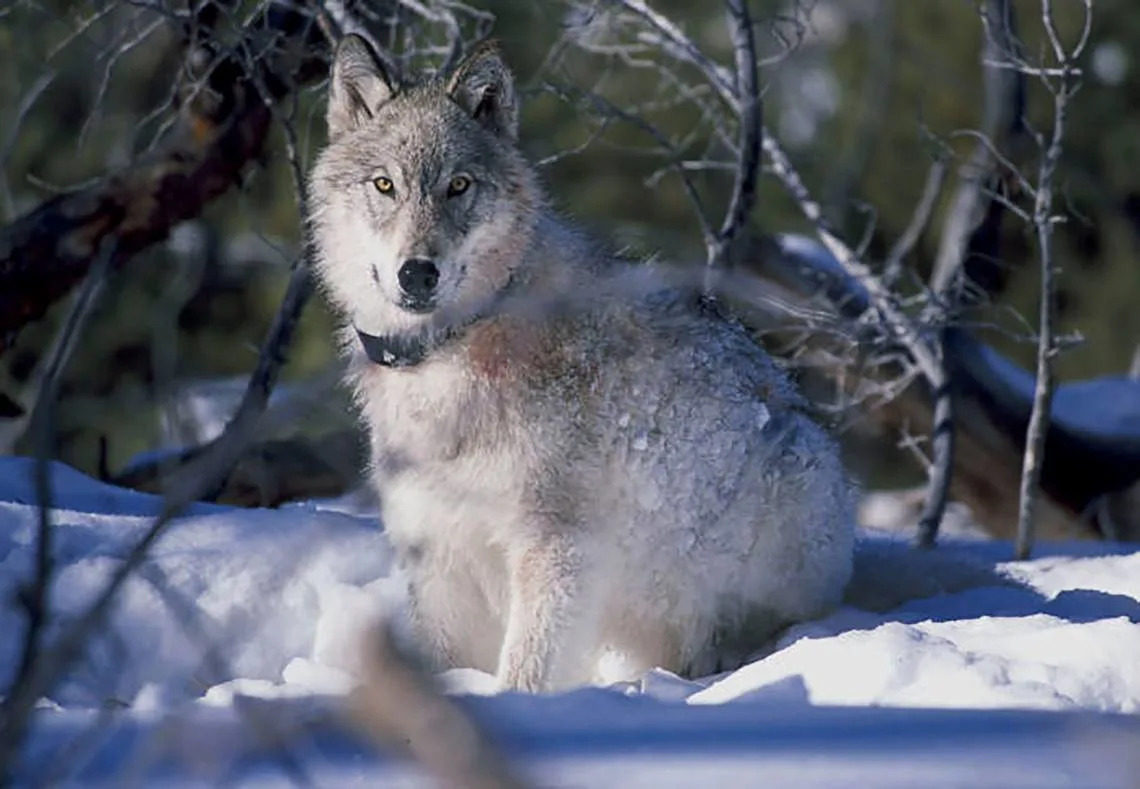
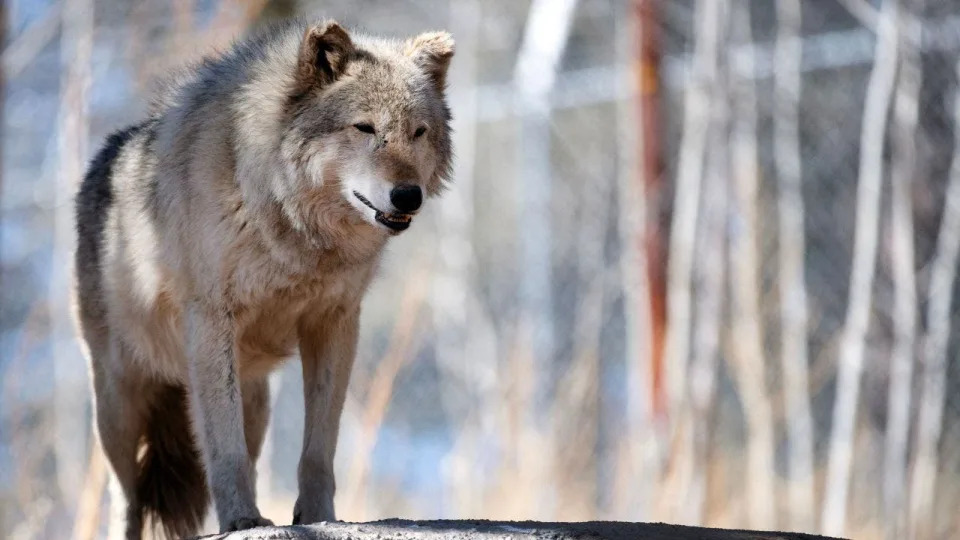
A 14-year-old wolf stands on top of her den at the Colorado Wolf and Wildlife Center in the town of Divide.

However, western states, in addition to agriculture and livestock industry associations, have argued that gray wolves are already recovered and that any recovery plan should be overseen by state officials who are more informed about the wildlife needs within their borders. As such, in 2020, the Trump administration declared the species fully recovered in the U.S. and delisted it from the ESA.

"After more than 45 years as a listed species, the Gray Wolf has exceeded all conservation goals for recovery," former Interior Secretary David Bernhardt said in a statement at the time. "Today’s announcement simply reflects the determination that this species is neither a threatened nor endangered species based on the specific factors Congress has laid out in the law."

In early 2022, though, a federal district court reinstated the ESA protections in the lower 48 states, a decision that does not impact the Northern Rockies ecosystem. The Republicans on Thursday expressed concern that FWS would pursue further protections for the gray wolf, including in that region, as a result of its dialogue initiative.