RFK Jr. Praises Wacky Wellness Gurus, Blames Fauci for Everything From Bad Breath to Jock Itch
” . . . slimy, dishonest, [a] stunning display of ignorance . . . [A] god-awful book.”
—–Molecular biologist Dan Wilson reviewing RFK Jr.’s “The Real Anthony Fauci”
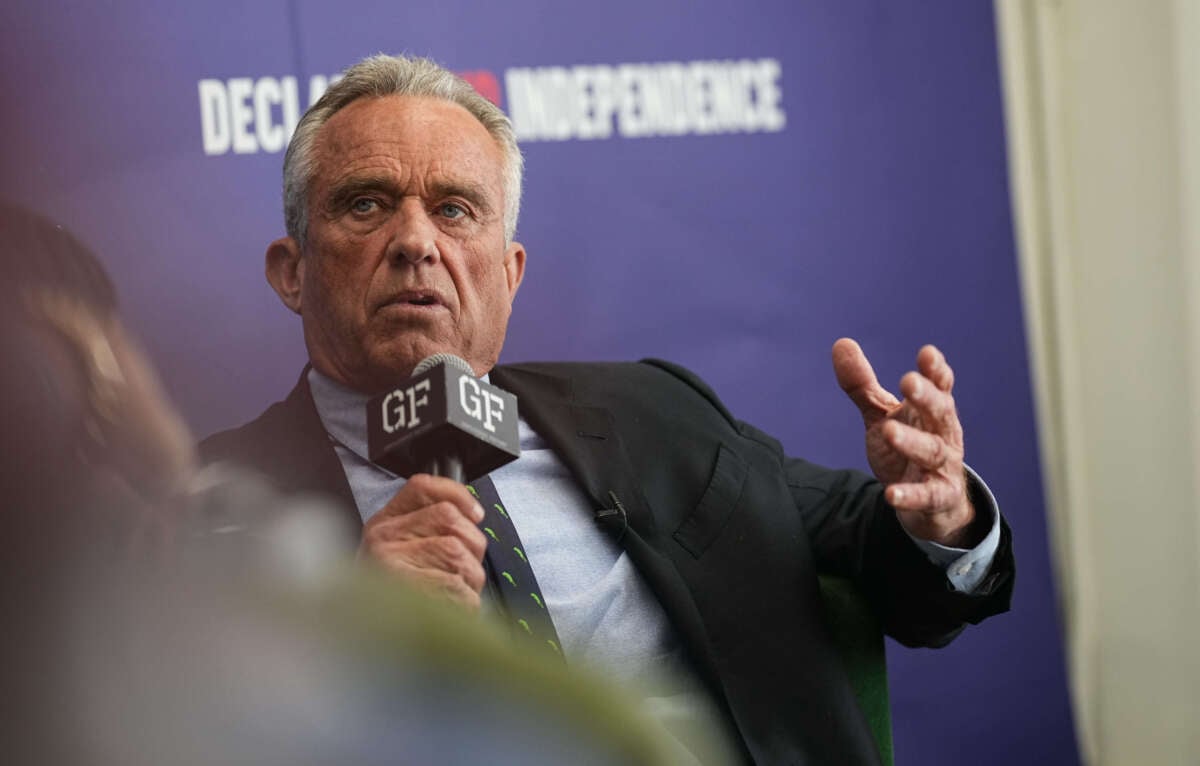
Son of the late Senator Robert F. Kennedy, RFK Jr. graduated from Harvard in 1976, later earning a law degree from the University of Virginia. He established his career in environmental law, but he is best known for his anti-vaccine advocacy.
In 2011, he founded Children’s Health Defense, an organization rooted in the conviction that vaccines cause more harm than the diseases they are supposed to protect us against. Financial contributions were modest until he began imitating Texans For Vaccine Choice, a “medical freedom” group warning loudly of vaccine harms. Donations then soared, increasing from $1 million to $15 million in three years while Kennedy preached the gospel of freedom to reject vaccines, which he claimed took more lives than they saved. By this time the Covid pandemic was in full swing and RFK had millions of followers on Facebook, Twitter, and Instagram, with his Twitter posts garnering more attention than those of the CDC. Children’s Health Defense had become one of the most popular alternative and natural medicine sites in the world.
In July 2020, RFK announced that “people with African American blood react differently to vaccines than people with Caucasian blood; they’re much more sensitive.” When baseball Hall of Fame member Hank Aaron died of natural causes the following year, he claimed that it was part of a “wave of suspicious deaths among the elderly following administration of Covid vaccines.” In a propaganda film that debuted the same year (Medical Racism: The New Apartheid), he claimed that Covid vaccines were “just one huge experiment on Black Americans.”
Two years before Covid arrived two babies in Samoa died due to nurses’ error in preparing their measles vaccines (muscle relaxant was used instead of water). RFK responded via Facebook and in person, flying to Samoa to meet with the president and local anti-vaccine activists. He stirred up enough fear so that vaccine rates plummeted. In 2019, a measles outbreak hit the island and dozens of children died, nearly all of them less than four-years-old. RFK blamed the vaccines.
This is his standard message to parents on the topic: “It is criminal medical malpractice to give a child one of these vaccines.” No professional medical association anywhere agrees with him.
Though he claims to be “pro-vaccine,” he regularly compares vaccination to the Holocaust. On January 23, 2022, he told a rally, “Even in Hitler’s Germany, you could cross the Alps into Switzerland, you could hide in an attic like Anne Frank did,” an ironic comment given that her story ended in Auschwitz. He added that Jewish children under the Nazis had more freedom than American children today, and that Covid vaccine mandates were intended to make everyone a slave.
In the Trump era that kind of messaging resonated well enough so that RFK was able to quickly sell more than half a million copies of his book, “The Real Anthony Fauci – Bill Gates, Big Pharma, and the Global War on Democracy and Public Health,” in which he argues that Fauci and other public health officials are dishonest actors, having fallen under the control of Big Pharma, dark money, and billionaires like Bill Gates.
The book is a tediously prolonged diatribe against Fauci, starting off with a Heroic Heroes honor roll, a rather dubious list of people’s champions that includes “holistic psychiatrist” Kelly Brogan, who touts the health benefits of coffee enemas and urine therapy, and alternative medicine practitioner Tom Cowan, whose medical practice was crippled by a five-year probation imposed for his having prescribed an unapproved quack cancer treatment to a patient he never met. Both of these “heroes” deny the validity of germ theory, and Cowan even denies that the heart is a pump.
When public health officials were struggling to figure out how to respond to the novel coronavirus, Brogan announced that pandemic response efforts were akin to the “dehumanization agendas that preceded the Holocaust.” For her, vaccines are part of a spiritual fight to the death with modern medicine.
Keeping pace with such heroes is no easy task, but RFK manages it with apparent ease. He actually endorses injecting a form of bleach as a treatment for Covid, approvingly citing the teaching protocols of popular alternative health practitioner Dr. David Brownstein on the matter. Says Brownstein:
“We’ve been treating viral diseases here for twenty-five years. COVID can’t be any different. In all that time, our office had never lost a single patient to flu or flu-like illness. We treated people in their cars with oral vitamins A, C, and D, and iodine. We administered IV solution outside all winter with IV hydrogen peroxide and vitamin C. We’d have them put their butts out the car window and shot them up with intramuscular ozone.” (emphasis added)
The butts out the window image is priceless, but just to be clear, RFK is talking about intravenous injections of hydrogen peroxide, which is a form of bleach. So we can stop pretending that Donald Trump is unique in believing that putting bleach in our bodies can cure Covid.*
RFK is also a full-fledged AIDS-denier who believes HIV has never been isolated, and that the symptoms we associate with an AIDS diagnosis are actually caused by “the gay lifestyle.” He quotes Christine Maggiore, without mentioning that she, too, was an AIDS-denier, one who refused treatment and then died of the disease, as did her three-year-old daughter, who was infected and denied treatment by her mother.
Much of his outlook on AIDS comes from molecular biologist Peter Duesberg (whose work RFK eagerly promotes), who claimed that anti-retroviral drugs prescribed to HIV patients were actually poison, and convinced former South African Prime Minister Thabo Mbeki (1999-2008) that that was the case. At the peak of the AIDS epidemic the South African government argued that HIV does not cause AIDS and antiretroviral drugs are not useful for AIDS patients. Multiple studies show that about 330,000 unnecessary AIDS deaths resulted from acting on this mistaken view.
But it is Anthony Fauci who supposedly doesn’t have a clue what he’s talking about, and RFK blames him for every real or imagined negative outcome during the SARS-CoV-2 pandemic. Nowhere does he note or care that Fauci’s political role was that of an adviser who didn’t create policy, and whose recommendations could be and often were ignored. He refuses to accept that Fauci’s responsibility for events was drastically less than he likes to imagine it was.
Nor does he take proper account of the complexity of events that contributed to the Covid disaster. For example, any fair recounting of the pandemic would have to concede that obfuscation early on in China guaranteed that pandemic response would go badly elsewhere. Critically, Beijing failed to make clear to the world that they hadn’t contained the virus.
The Trump administration had already contributed its own serious error, scrapping an extensive and detailed pandemic preparedness plan started by the George W. Bush administration and continued by Obama, leaving the U.S. unable to mount a rapid response to SARS-CoV-2.
To make matters worse, the CDC made a big mistake in testing. WHO had its own test, which they were distributing to various countries throughout the world, as per standard practice, so that monitoring and testing for the virus could begin immediately. But the CDC opted to make its own test, which didn’t work, giving lots of false negatives. This left U.S. health authorities weeks behind in detecting how far and fast the virus was spreading, which meant they had to rely on more extreme responses like lockdowns than they otherwise might have had to do.
After thus forfeiting the chance to employ less drastic measures, the Trump administration then made the situation considerably worse by deciding not to lead at all, defaulting to a free-for-all between the states, which wasted colossal energy fighting over supplies and improvising fifty competing ways of responding to the crisis. Washington released general guidelines, but left implementation up to state governors.
Blaming Fauci alone for all this makes little sense, however gratifying it may be to heap rage and contempt on a convenient scapegoat, and it is simply preposterous to describe the pandemic response as a coup d’etat against democracy, as RFK does. Pandemic measures have long since been lifted, and life proceeds very much like it did before Covid existed. Coup d’etat?
Regarding Covid as a merely “flu-like virus,” RFK blows off concern over the damage it has inflicted, and lambastes lockdown measures for allegedly being solely responsible for the immense economic fallout and psychological damage done, especially to children. We have no way of knowing, he says, how many people died of isolation, economic privation, and other lockdown induced outcomes, though he assumes the number has to be enormous, because U.S. life expectancy decreased by 1.9 years during lockdown.
But he can’t even bring himself to consider that that narrowing of life span might have had something to do with a deadly new virus killing thousands of Americans every day and over a million people in two years. No amount of evidence can shake his conviction that the lockdowns did everything and the virus nothing.
Sensible people, however, cannot ignore the fact that Covid itself caused economic chaos as well as considerable emotional damage. Roughly one hundred thousand children lost their primary or secondary care-givers to the disease, an inherently traumatizing experience. Also, millions of children were infected and many thousands hospitalized for Covid in the U.S., and it would be foolish to think that all of them emerged emotionally unscathed. On top of that, children who suffer from Covid can be at risk for Multi-System Inflammatory Syndrome and also long-Covid, not to mention that upwards of two thousand children actually died of the disease.
All of this has to have contributed to sharply negative mental health outcomes for a wide swathe of the population, but RFK Jr. doesn’t mention any of it, so fixated is he on assigning sole blame to Anthony Fauci.
He laments that the rich got richer during the pandemic (bulletin: the rich are always getting richer under capitalism), while small business owners were ruined. This is true, but RFK’s version of events simply notes that these things happened and then blames Fauci. He provides no proper analysis of the events themselves and no summation of what we ought to learn from them. For example, he ignores completely the glaring fact that many physicians in private practice were part of the wave of small business collapse, which they definitely would not have been if ivermectin were effective against Covid, as RFK insists that it is. Why didn’t physicians write prescriptions for ivermectin if doing so would have saved their patients’ lives and their own medical practices? RFK takes no account of what had to have been mass irrationality among doctors if his version of events is correct.
In an effort to convince us that public health officials badly over-reacted to events, RFK expresses regret that we cowered in fear from a minor virus akin to the flu, without noting that COVID killed more Americans in its first year than the flu did in the previous ten years, and about twice as many Americans as the entire Civil War did by the end of the second pandemic year. It’s no simple matter to determine what would credibly constitute over-reaction to death on such a massive scale.
He complains about “two weeks to flatten the curve,” as though it were a scientific prediction about the expected course of the pandemic rather than a political slogan, and ignores the fact that a prolonged pandemic response occurs by default if we continually refuse the solution, as RFK did. At no point in the pandemic did he pay any attention to Covid policy direction, preferring a do-nothing response, but without recognizing that refusing the solution simply guarantees the persistence of the problem. By definition policy doesn’t work if people refuse to cooperate in implementing it.
Moving on from Covid, a favorite RFK claim is that none of our childhood vaccines have been safety tested, which is simply false. In fact, every childhood vaccine has to be safety tested, and all of them are closely monitored after being commercially released. That is one good reason why we have such an abundance of evidence demonstrating that anti-vax claims are untrue.
One of RFK’s biggest expressed concerns is the increase in chronic disease in the U.S. starting in the 1980s. Unfortunately, he just blames Fauci and vaccines for the trend, as though a single individual could actually be the sole cause of such a broad outcome. In fact, medicine progressed leaps and bounds before and during this period, and children benefited greatly. In the second half of the 20th century childhood mortality rates decreased dramatically, and vaccines helped to eliminate deadly diseases common among children. Examples include childhood cancers, congenital heart disease, cystic fibrosis, spina bifida, leukemia, and sickle cell disease. But RFK just ignores these developments, presenting a uniformly bleak medical picture and blaming Fauci for everything bad, real or imaginary.
Many of the babies that used to die we are now able to save, although they are often of very low birth weight, which correlates with a higher than average risk of chronic disease later in life. What RFK is clearly saying is that the U.S. was healthier before, when such children didn’t survive (emphasis added). Given his training as an environmental lawyer he actually could make a positive contribution here by helping discover the social causes of disease. We know, for example, that children born to low-income families are more likely to develop chronic disease, because of poor nutrition and proximity to pollution sources like waste incinerators, but discovering real causes doesn’t interest RFK, who prefers the laziness of blaming vaccines for everything.
He flatly ignores the inconvenient fact that vaccines were being administered to children decades before the 1980s, which, according to him, is when they triggered increased chronic disease. But why did vaccines suddenly turn toxic in that decade and not before? RFK doesn’t say.
Unsurprisingly, he also believes that vaccines cause autism, a claim debunked to the point of tedium by many scientific researchers, and thus no longer even worth debating.
Aside from the money it’s making him, it’s clear that RFK’s purpose in writing the book was to indulge a boundless hatred of Anthony Fauci, not illuminate our understanding of the Covid pandemic. This adolescent fixation contrasts sharply with Fauci’s efforts to fight the scourge of deadly infectious diseases for his entire career. Most impressive was his relationship with the late Larry Kramer, an aggressively confrontational AIDS activist who denounced Fauci in print as an incompetent idiot and a mass murderer due to the federal government’s grossly inadequate AIDS response, but gradually became a close friend after Fauci took no offense and invited Kramer and other activists to participate in AIDS advisory boards and workshops, against the advice of his scientific colleagues. Though their relationship never stopped being contentious, it proved immensely constructive, and Fauci’s tearful good-bye to the AIDS activist when he finally succumbed to the disease in 2020 provides moving testimony as to how decent people can collaborate and care for one another even when their differing social roles bring with them a certain antagonistic tension.
You won’t find any such wisdom in RFK Jr.’s work.
*RFK notes in passing how ridiculous Trump’s view on using bleach to fight Covid is, without realizing the significance of his own recommendation of hydrogen peroxide.
Sources.
On background information about RFK and Children’s Health Defense, see Paul Offit, “Tell Me When It’s Over,” (National Geographic, 2024), pps. 89-94
On the measles outbreak in Samoa, see Dhruv Khullar, “The Fundamental Problem With RFK Jr.’s Nomination To HHS,” The New Yorker, November 24, 2024
On RFK Jr.’s book on Fauci, see “Reviewing RFK Jr.’s bad book about Fauci – Introduction,” Dr. Dan Wilson, Debunk The Funk, March 2, 2022
On Kelly Brogan and Tom Cowan, see Derek Beres, Matthew Remski, Julian Walker, Conspirituality – How New Age Conspiracy Theories Became a Health Threat, (Public Affairs, 2023) pps. 85, 159
On RFK Jr.’s endorsing injecting ourselves with bleach to ward off Covid, see Dr. Dan Wilson, “Reviewing RFK Jr.’s bad book about Fauci” – Chapter 1, Debunk The Funk (podcast) March 22, 2022
On the deadly consequences of AIDS denialism in South Africa, see:
(1) Dr. Dan Wilson, “RFK Jr. Goes Full HIV/AIDS Denial in his terrible book about Anthony Fauci,” Debunk The Funk, May 31, 2022
(2) Dr. Dan Wilson, “Reviewing RFK Jr.’s Bad Book on Fauci – Chapter 4,” Debunk The Funk, April 20, 2022
(3) Anthony Fauci, “On Call – A Doctor’s Journey in Public Service,”(Viking, 2024) p. 157.
On Larry Kramer and Fauci’s friendship see Fauci, “On Call – A Doctor’s Journey in Public Service,” (Viking, 2024) pps. 95-117.
The modest protections of the Affordable Care Act never went far enough, but even those could be weakened under Trump.
Truthout is an indispensable resource for activists, movement leaders and workers everywhere. Please make this work possible with a quick donation.
The United States healthcare system is so broken, sometimes I forget that it used to be even worse. After all, 15 short years ago, pregnant people could legally be denied health insurance, just for being pregnant. Cancer, diabetes, epilepsy, Alzheimer’s, arthritis, mental illness, AIDS — all potentially disqualifying conditions, too. Or, if your health care plan did offer coverage, it might charge you an exorbitant premium based on your preexisting conditions alone. In 2009, health care was a rogue landscape of private insurers prioritizing profit above all else while making arbitrary calls over life-or-death issues for their customers.
Okay, so maybe that last point hasn’t changed too much. But when Barack Obama signed the Affordable Care Act (ACA) into law in March 2010, it undeniably expanded crucial access to health care for millions of people. In 2024, less than 9 percent of people in the U.S. are uninsured, compared to nearly 17 percent in 2009. In addition to banning private insurers from discriminating based on preexisting conditions, the ACA expanded eligibility for Medicaid coverage, introduced new health insurance subsidies and extended dependent child coverage up to age 26. (I happen to be a 1998 baby, so the impact of that last reform was felt particularly acutely by my social circle this year.)
These are worthwhile wins, but from the moment the ACA was enacted, it has suffered a crisis of dual identity. When news headlines began calling the legislation “Obamacare,” Republican detractors saw their moment to seize the term; they’ve brandished it ever since to make the ACA out as an example of Democratic overreach and liberal government run amok. Obama will forever be the face of the health care legislation he championed, in all its wins and failures, even years after his second term ended.
This is a problem. And the re-election of Donald Trump as president proves why.
This past week, a spate of viral TikTok videos have mocked posts by people who claim to have voted for Trump, without knowing that his pledge to repeal Obamacare actually means ending the Affordable Care Act. Users cite the video of one Trump voter, who supposedly said he hadn’t realized the ACA’s protections for preexisting conditions are what allowed his mother with stage 4 cancer to obtain insurance coverage.
Trump and Allies Plot Cuts to Medicaid, Food Stamps to Fund Tax Cuts for Wealthy
Polling shows that most Americans would oppose cuts to either program.
By Chris Walker , TruthoutNovember 19, 2024
References to these posts have circulated extensively across social media, but I haven’t been able to track down the original posts themselves. Still, it wouldn’t be outside the realm of possibility, and it taps into a very real phenomenon. In a 2017 poll, more than a third of Americans said they didn’t know that Obamacare and the Affordable Care Act were the same thing. In a different survey released this year, more than 60 percent of respondents said they didn’t realize the ACA prohibited insurance companies from denying coverage to people with preexisting conditions. Another two-thirds of people in that study didn’t know that the ACA prevents sick people from paying higher premiums than healthy people.
It wasn’t always like this: In June 2010, 70 percent of respondents knew that the ACA prohibited insurance companies from discriminating based on medical history. But historical memory is all too short, and that number dropped to just 48 percent in 2019. Also in 2019, less than half of survey respondents knew that the ACA requires insurers to cover routine preventative services like mammograms, pap smears and cholesterol screenings at no cost to the consumer; less than 40 percent of people knew the ACA eliminated out-of-pocket costs for birth control.
It should, of course, be noted that these achievements are a far cry from the free universal health care system offered in other wealthy countries, including Canada, Australia, Germany and Norway, just to name a few. When Sen. Bernie Sanders (I-Vermont) ran for president in 2016 and 2020, he brought universal health care to the fore of the national conversation, making it a plank of the Democratic Party’s campaign pledge. But this year, the party dropped any mention of it from its platform, opting instead to focus on “lowering costs” without mention of advocating for a public option. Health care was an afterthought on the campaign trail, despite the fact that nearly half of adult Americans report having medical debt. It is yet another massive failure that many voters likely cast their ballots this election cycle without knowing what the Affordable Care Act really offered them.
While Republicans have, for more than a decade, made crusading against the ACA a focal point of their agenda, Trump actually backpedaled on his own pledge to repeal it this election cycle. In the September debate against Vice President Kamala Harris, Trump now infamously said he had a “concept of a plan” for what he’d do with it. Perhaps in light of the fact that public opinion on the legislation is generally positive — and improving — Trump has even falsely claimed he never pledged to replace Obamacare in the first place.
Regardless of what Trump has said on the campaign trail, health policy experts expect that his administration could attempt to weaken the Affordable Care Act in his second term. This includes rolling back Medicaid expansion, part of the Project 2025 playbook, and something we saw during Trump’s first term when he allowed red states to implement restrictions on Medicaid coverage. Under Trump’s first presidency, in the years before the COVID-19 pandemic, the total number of U.S. residents without health insurance grew by more than 2 million.
“The Republican plans — they don’t say they are going to repeal the ACA, but their collection of policies could amount to the same thing or worse,” Sarah Lueck, vice president for health policy at the Center on Budget and Policy Priorities, told KFF Health News.
Trump has now announced that Robert F. Kennedy Jr. and Dr. Mehmet Oz will helm the two federal agencies that handle the implementation of the Affordable Care Act — the Department of Health and Human Services (HHS) and the Center for Medicare and Medicaid Services (CMS), respectively. RFK Jr. is a noted vaccine skeptic and conspiracy theorist who has promised to remove enamel-strengthening fluoride from the water supply; Dr. Oz is a television doctor who has pushed aggressively for the privatization of Medicare through Medicare Advantage plans. These private-sector alternatives to Medicare have been known to deny health claims and require patients to obtain “prior authorization” for even basic procedures. The practice has created such a burden for elderly patients that the Biden administration proposed a slew of new Medicare Advantage reforms this week, including guardrails to curtail insurers’ use of the prior authorization process. But with Dr. Oz in charge of CMS, the new rules could be cut back just as quickly as they arrived.
Given their lack of government experience, it’s still unclear what Oz and Kennedy plan to do if confirmed — or what Trump’s “concept of a plan” to replace the ACA might look like in practice — but their Cabinet nominations hardly inspire confidence.
Still, it’s hard to believe that the Affordable Care Act was a mere glimmer on the horizon not long ago. And since it was enacted, the number of Americans who support free universal health care has only grown. The ACA was a starting point. But this is the long game we’re playing. Public opinion now favors a single-payer, national health plan and expanded access to Medicare. The challenge in coming months and years will be to fight to maintain the ACA’s basic protections, while informing, organizing and advocating for the truly universal health care we all deserve.
This article is licensed under Creative Commons (CC BY-NC-ND 4.0), and you are free to share and republish under the terms of the license.

Schuyler Mitchell is a writer, editor and fact-checker from North Carolina, currently based in Brooklyn. Her work has appeared in The Intercept, The Baffler, Labor Notes, Los Angeles Magazine, and elsewhere. Find her on X: @schuy_ler
