Thursday, December 05, 2024

GOP 'sociopaths' live among us — and it's 'contagious': neuroscientist

Seth D. Norrholm
December 5, 2024 
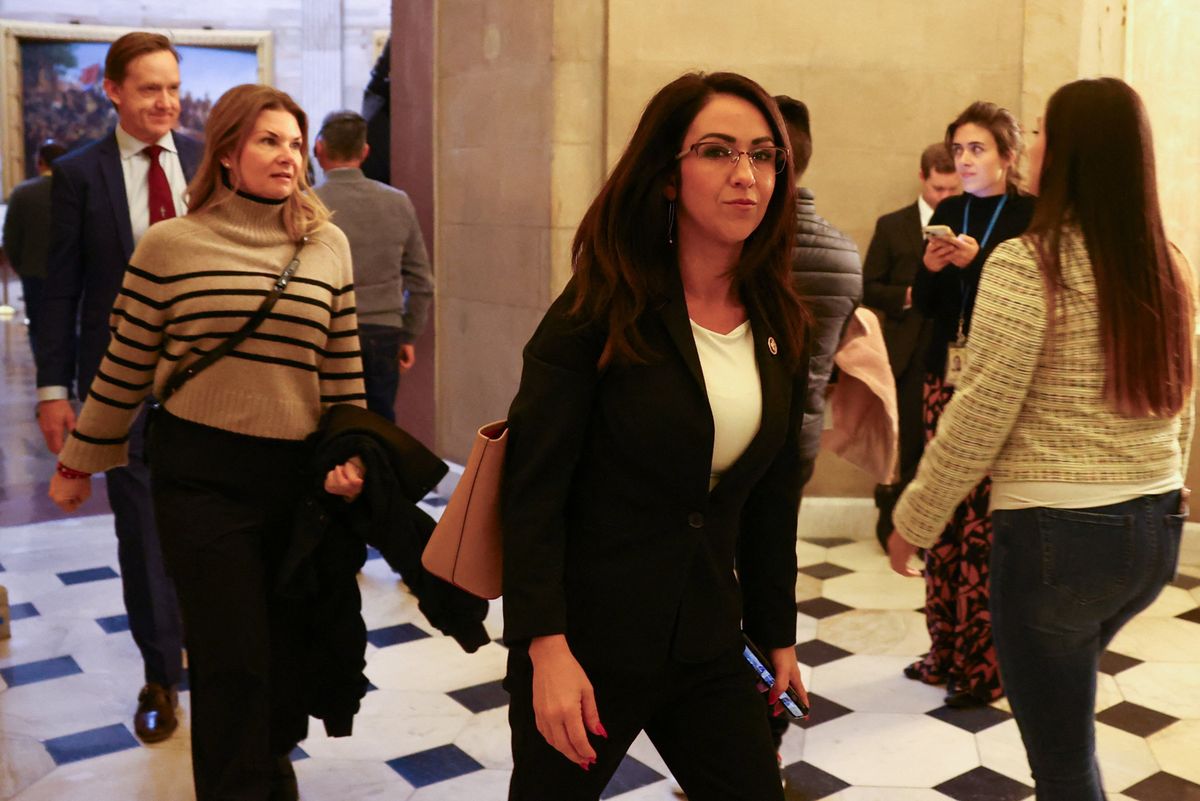
U.S. Representative Lauren Boebert (R-CO) walks at Capitol Hill in Washington, U.S., November 14, 2024. REUTERS/Hannah McKay

Sociopaths, a term often used to describe those living with antisocial personality disorder, who operate within their daily lives without a “conscience,” can be characterized as acting without feelings of guilt, remorse, or shame coupled with a tendency to reject the concept of responsibility.

Antisocial people will intentionally make others angry or upset and use harsh and cruel indifference as they manipulate or attack others.

Clinically speaking, there is no defined difference between a sociopath and a psychopath although some have drawn this line at acting with low moral conscience (sociopath) and no moral conscience (psychopath) or having no regard for someone else’s rights or feelings (sociopath) and taking pleasure in robbing another of their rights, freedom, or well-being (psychopath).

My colleagues and I have discussed psychopathy in the previous president elsewhere as an example. Recognizing these nuanced differences exist, I will use the term sociopath and sociopathy here for brevity’s sake.

There appear to be at least three forms of this public political/governmental sociopathy present today. The first are those individuals for whom sociopathic tendencies are deep-seated and a core feature of who they are – the former and incoming president being a prime example. A second form includes the scores of Republicans and right-wingers who have decided to play the role or act sociopathic for their own personal gain. This includes hard-line MAGA members such as Marjorie Taylor GreeneLauren Boebert, Kari Lake and Matt Gaetz, who decided to infect themselves with contagious sociopathy.

Look at the case of Florida Gov. Ron DeSantis whose impressive on-paper resume includes graduation from Yale University (where he served as captain of the baseball team) and Harvard law school (with honors), distinguished service in the United States Navy including a legal role with Seal Team One and a deployment to Iraq. On paper, he is highly accomplished and embodied what we as Americans tend to hold in high regard … until he acquired contagious sociopathy.

Coincident with his departure from active military service and rise to Congress and the Florida governorship, he apparently chose to include antisocial tendencies in his political and public persona. He believes in unregulated gun ownership (despite brutal killings in his state’s own schools), he attacks the rights of women with his restrictive abortion laws, he suppresses legislation that would support the LBGTQ+ community, and he seeks to diminish the plight of historically maltreated groups (such as African Americans) with his attempts to bury the past.

In another high-profile example, the U.S. Supreme Court was constitutionally designed as a third arm of our democratic republic that was supposed to serve independently from the other Branches in an apolitical manner … now its majority is infested with contagious sociopathy. In just the last year (and weeks), they sociopathically overturned Roe v. Wade and severely undercut women’s healthcare rights, ruled in favor of discrimination, and ruled against students struggling under the mountain of student debt…all while facing accusations of improper gifts, hypocrisy, and politicization … in other words, with contagious sociopathy.


The third group with contagious sociopathy are the passive enablers of widespread acts of manipulation and cruelty ranging from long-serving, establishment leaders like Sen. Mitch McConnell (R-KY) all the way to the throngs of people clad in Confederate flags and MAGA idolatry whose inaction and permissiveness serves as a large-scale petri dish by which contagious sociopathy can flourish. It cannot go without mentioning that the processes of cultism are at play here as well.

It should be noted that the term I have been using – contagious sociopathy – is not mutually exclusive from what we have been observing with the perversion of Christian thought to suit sociopathic behaviors and the rise of fascism in the U.S. (Ruth Ben-Ghiat has written extensively on the latter). In addition, and in no way trying to simplify or underestimate the factors underlying American racism, the racist platforms of the far right and GOP, have provided a type of currency by which contagious sociopathy can spread – many have argued that the ascension of Donald Trump allowed closeted racists to become public racists. Racism includes the antisocial tendencies of demeaning, manipulating, and harming others without remorse as a key feature.

One cannot talk about contagious sociopathy without considering righteousness – a term describing the phenomenon by which malicious acts – including harming and killing others – are justified as long as the bad actor can consider the ‘victims’ to be an enemy. This is a bedrock of the Trump and MAGA attacks on the Left and any that criticize or oppose them.

I have written and said it before and I will do so again: The contagious spread of sociopathy has provided us with potential and actual leaders who embody the worst that humanity has to offer according to moral, legal, religious/spiritual, and societal norms…and they continue to run on this platform.

About the author: Seth D. Norrholm, PhD (Threads: neuropsychophd) is an Associate Professor of Psychiatry and Behavioral Neurosciences at Wayne State University School of Medicine. Dr. Norrholm has spent 20 years studying trauma-, stressor-, anxiety-, depressive-, and substance use-related disorders and has published over 120 peer-reviewed research articles and book chapters. The primary objective of his work is to develop “bench-to-bedside” clinical research methods to inform therapeutic interventions for fear and anxiety-related disorders and how they relate to human factors such as personality, genetics, and environmental influences. Dr. Norrholm has been featured on NBC, ABC, PBS, CNN, Politico.com, The New York Times, The New York Daily News, USA Today, WebMD, The Atlantic, The History Channel, Scientific American, Salon.com, The Huffington Post, and Yahoo.com.
Neuroscience explains how right-wingers' brains work differently


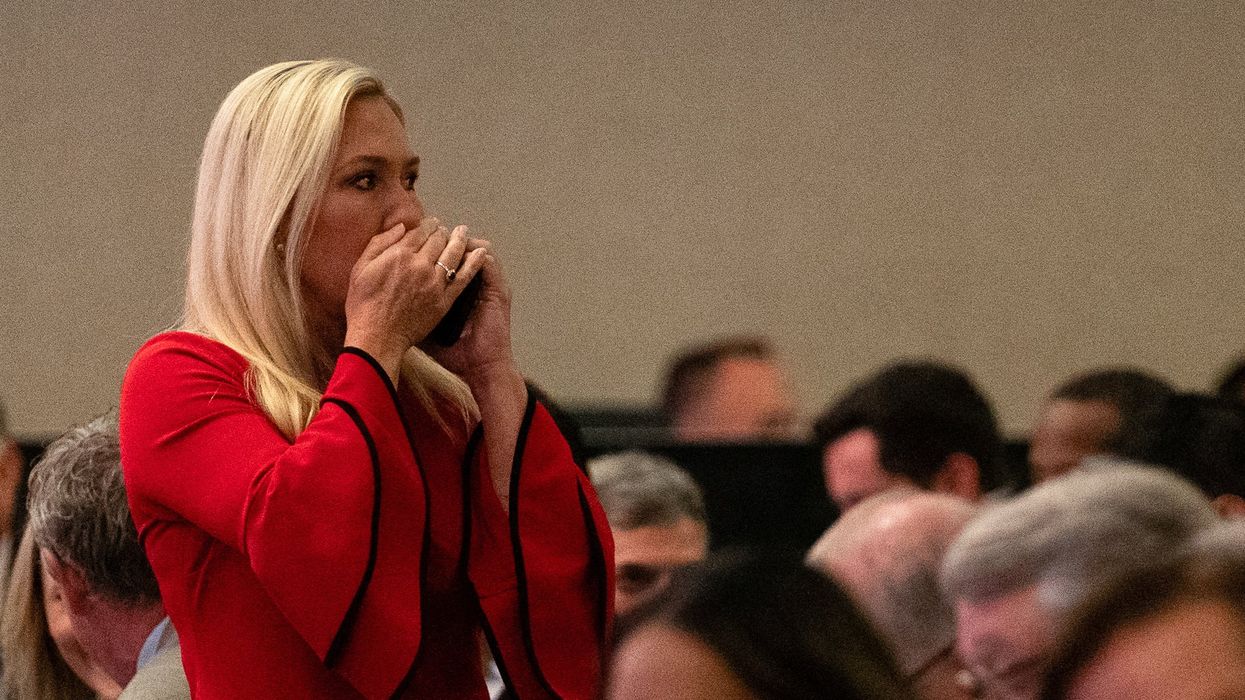
US Representative Marjorie Taylor-Greene (R-GA) takes a phone call at the Hyatt Regency hotel during a meeting with House Republicans and President-elect Donald Trump in Washington, DC, U.S. on November 13, 2024. ALLISON ROBBERT/Pool via REUTERS

December 04, 2024
ALTERNET

In the United States, liberals and conservatives have been having heated debates for generations. But the country has been especially divided in recent years.

Following President-elect Donald Trump's narrow victory over Vice President Kamala Harris in the 2024 election, many MAGA Republicans are delighted that he will be returning to the White House on January 20, 2025. Democrats and Never Trump conservatives, however, view Trump's incoming second administration as a full-blown threat to democracy and are slamming some of his nominees — including Kash Patel for FBI director and Pete Hegseth for defense secretary — as flat out dangerous.

Trump's supporters and detractors, many political experts have said, live in separate worlds.

But the divisions between the left and the right did not start with Trump and his MAGA movement. And research highlighted in 2020 offers insights on why Republicans and Democrats can process information so differently.

In an article published by Scientific American, journalist Lydia Denworth delved into "political neuroscience."

Hannah Nam of Stony Brook University told Scientific American, "Brain structure and function provide more objective measures than many types of survey responses. Participants may be induced to be more honest when they think that scientists have a 'window' into their brains…. Neurobiological features could be used as a predictor of political outcomes — just not in a deterministic way."

Denworth noted that the differences between conservatives and liberals were on full display when the National Review's William F. Buckly famously debated liberal author Gore Vidal back in 1968.

The journalist pointed out, however, that conservatives and liberals aren't necessarily black-and-white in their thinking, and that both can have nuance.

"To study how we process political information in a 2017 paper, political psychologist Ingrid Haas of the University of Nebraska-Lincoln and her colleagues created hypothetical candidates from both major parties and assigned each candidate a set of policy statements on issues such as school prayer, Medicare and defense spending," Denworth explained. "Most statements were what you would expect: Republicans, for instance, usually favor increasing defense spending, and Democrats generally support expanding Medicare. But some statements were surprising, such as a conservative expressing a pro-choice position or a liberal arguing for invading Iran."

Denworth added, "Haas put 58 people with diverse political views in a brain scanner. On each trial, participants were asked whether it was good or bad that a candidate held a position on a particular issue and not whether they personally agreed or disagreed with it."


UNESCO grants heritage status to Aleppo soap as Syria war flares


By AFP
December 4, 2024

Artisans have been using the same methods from 3,000 years to make the famous Aleppo soap - Copyright AFP/File -

The UN’s cultural organisation added Aleppo’s famous soap to its intangible cultural heritage list Tuesday with Syria’s second city again wracked by war.

Artisans have brewed olive and laurel oil in large pots for some 3,000 years in the city — which fell to Islamist-led rebels last week — allowing the mixture to cool before cutting it into blocks, and stamping them by hand.

Aleppo soap joins the city’s traditional music, Al-Qudoud al-Halabiya, on UNESCO’s list of intangible cultural heritage, while the city itself — declared a world heritage site in 1986 — was added to the organisation’s endangered list in 2013 amid the country’s civil war.

Makers craft the product using “traditional knowledge and skills”, said UNESCO, adding they rely on a mix of natural, locally produced ingredients and a drying process that can take up to nine months.

Aleppo had been slowly recovering from the wounds inflicted by more than a decade of civil war when Islamist-led rebels captured the city last week in a shock offensive that put forces loyal to Syria’s President Bashar al-Assad to flight.

Of the 100 soap factories in the city only about 10 remain, with many having relocated to Damascus or neighbouring Turkey.

But the soap remains essential to the families and communities involved in the trade.

“The collaborative production process promotes community and family unity,” said UNESCO.

UNESCO adds traditional Japanese sake brewing to Intangible Cultural Heritage list


UNESCO added Japan's process of sake brewing to its Intangible Cultural Heritage list. 
File Photo by Everett Kennedy Brown/EPA

Dec. 5 (UPI) -- The United Nations Educational, Scientific and Cultural Organization added traditional Japanese knowledge and skills used in the production of sake and "shochu" distilled spirits to its Intangible Cultural Heritage list.

It marked Japan's 23rd entry to the UNESCO list, pointing to how important it was to the cultural presence in Japanese society

Sake brewing is an ancient technique for fermenting rice and other ingredients with a "koji" mold. It involves multiple fermentation processes simultaneously in one vessel.

"Originally, sake was made only by women," UNESCO said in a statement. "As demand increased, men became involved in the process. Today, people of all genders can master the knowledge and skills. Sake-making is transmitted through apprenticeships."

The organization said that regional unions also support breweries, and two national organizations established by craftspeople contribute to the systemic transmission of the practice, with financial and technical support from the Japanese government.

"Since sake-making requires many hands and strong teamwork, the practice promotes social ties among the craftspeople," UNESCO said. "It also unites them with local residents, including the farmers who provide the ingredients, thus contributing to social cohesion."

Japanese travel agency president Marika Tazawa said the designation will be a boon not only to the tradition but also to people who will want to visit regionals to learn more about it.

"This will be a strong encouragement for the industry," Tazawa said, according to Kyodo News. "I hope it leads to more recognition and improvement in status.


GM announces more than $5 bn hit to earnings in China venture

By AFP
December 4, 2024

General Motors CEO Mary Barra said in October the company would stick it out in China but that it planned to restructure 
- Copyright GETTY IMAGES NORTH AMERICA/AFP/File Anna Moneymaker

General Motors announced Wednesday it will book more than $5 billion in losses and write-downs due to the restructuring of its China joint-venture.

Facing heavy competition in China that has forced automakers to cut retail prices, the SAIC General Motors Corporation is restructuring operations, resulting in non-cash impairment of between $2.6 and $2.9 billion and equity losses of around $2.7 billion, GM said in a securities filing.

GM and the Chinese state-owned company Shanghai Automotive Industry Corporation (SAIC) each own 50 percent of the company.

In October, GM reported a loss in equity income from China for the third straight quarter.

Chief Executive Mary Barra, who has divested several other GM overseas operations, emphasized at the time that the company saw a future for itself in the world’s biggest automotive market.

“We believe we can turn around the losses,” Barra said on an analyst conference call.

China has a “very challenging environment,” she said. “But we do believe there’s a place we can participate in a very different manner and do that profitably.”

Foreign companies from the United States, Germany and other countries have been operating in China since the 1980s, with Beijing requiring them to partner with Chinese companies, which had lagged behind in the global auto sector.

But in recent years, Chinese car companies have progressed significantly, embracing artificial intelligence and other gadgetry and leapfrogging foreign players with efficient electric vehicle offerings that are priced aggressively.

Chinese company BYD has been symbolic of the rise, recently surpassing Tesla in quarterly revenue for the first time.

Wednesday’s moves reflect a determination that the loss in value across the China venture is “other than temporary” in light of the actions “to address market challenges and competitive conditions,” GM said in the filing.

The actions, which include plant closures, will mostly be recorded in the fourth quarter of 2024, GM said.

GM shares rose 0.2 percent in early trading.

Cuba suffers third nationwide blackout in two months

WHERE ARE YOUR SOLAR AND WIND , COMRADES

By AFP
December 4, 2024

Employees waited outside their workplace after the power outage in Havana
 - Copyright AFP/File EVARISTO SA


Jordane BERTRAND


Cash-strapped Cuba was plunged into darkness on Wednesday for the third time in two months after the power grid failed.

The blackout dealt another blow to the communist-run island, which is reeling from the effects of two hurricanes, repeated power outages and a severe economic crisis.

At 2:08 am, “the electrical system… was disconnected when the Antonio Guiteras thermal power plant went out,” the energy and mines ministry wrote on its X account.

In mid-October, a massive four-day blackout hit the nation of 10 million people, leaving life in the capital Havana at a virtual standstill.

The cause of that outage, like Wednesday’s, was a failure at the Antonio Guiteras plant, the biggest of Cuba’s eight aging thermoelectric power plants.

Power was restored to most of the country in the following week, before Hurricane Rafael slammed into the island in early November, knocking out the grid nationwide once again.

The energy ministry downplayed the gravity of the latest blackout, saying on X that a “large percentage” of the system would be back up and running by the end of Wednesday.

Also writing on X, Energy Minister Vicente de la O Levy said the Antonio Guiteras plant suffered an “automatic breakdown.”

He was further quoted by state media as saying there was no damage to the plants that were operating at the time of the blackout.

Schools in Havana were closed and non-essential state services suspended on Wednesday in by-now familiar scenes that have caused growing frustration among Cubans.

“We live in fear of power cuts and blackouts,” Orlando Matos, a 56-year-old night watchman in the central Havana district of Vedado, complained.


– ‘Depressed’ –


Communist authorities have blamed previous outages on difficulties in acquiring fuel for the country’s power plants — attributed to the tightening, during Donald Trump’s first presidency, of a six-decade-long US trade embargo.

But the island is also in the throes of a broader economic malaise with what experts call its worst economic crisis since the collapse of the Soviet Union, which heavily subsidized the one-party state.

The island gets its power from eight decrepit oil-powered plants that are constantly being patched up, as well as a fleet of generators and floating power plants rented from Turkey.

The generators and Turkish plants are run on imported fuel.

The repeated power cuts triggered protests last month — a rare occurrence on the island.

Osnel Delgado, a 39-year-old contemporary dancer, complained Wednesday that the situation was making him “depressed.”

“You try to constantly overcome the situation but when the environment doesn’t help you, you wind up not wanting to do anything,” he said.

Thousands of Cubans took to the streets across the island on July 11, 2021, shouting “We are hungry” and “Freedom!” in what was the biggest challenge to the government in years.

According to the Mexico-based Justicia 11J NGO, which focuses on human rights in Cuba, more than 1,500 people were arrested after those protests, of whom 600 are still in prison.


Red Cross marks record numbers of humanitarians killed in 2024


By AFP
December 4, 2024

IFRC staff hold pictures of their colleagues killed while performing humanitarian duties in 2024 - Copyright GETTY IMAGES NORTH AMERICA/AFP/File Anna Moneymaker

Dozens of Red Cross staff and volunteers gathered Wednesday for a candlelight vigil for 31 of their colleagues killed in 2024, during the deadliest year on record for humanitarians.

More than 100 people crowded outside the headquarters of the International Federation of Red Cross and Red Crescent Societies (IFRC) in Geneva, most donning red vests and carrying candles.

Standing in the stinging cold in front of a banner emblazoned with the words “Protect Humanity”, some held up pictures of the 31 staff and volunteers killed this year while performing their humanitarian duties.

“We are shocked. We are appalled,” Nena Stoiljkovic, the IFRC’s Under Secretary-General for Global Relations, Humanitarian Diplomacy and Digitalisation, told the gathering.

“We are not a target,” added IFRC official Frank Mohrhauer.

Following a minute of silence, an IFRC staff member solemnly read out the names of those killed.

They were among a record number of aid workers who have perished around the world this year.

Already last month, the United Nations said the record number of 280 humanitarians killed in 2023 had been surpassed, and the number has kept climbing.

Israel’s devastating war in Gaza has especially been driving up the numbers, but aid workers were also subject to violence and killings in a range of countries including Sudan and Ukraine.

“2024 is now the deadliest year on record for humanitarian workers, especially for local staff and volunteers worldwide,” Stoiljkovic said.

“This grim milestone has not spared the IFRC network,” she said, pointing to more “heartbreaking news” just last week when another Syrian Arab Red Crescent volunteer was killed, and eight others injured in an attack.

“They were rescuing people in desperate need of humanitarian assistance,” she said.

Stoiljkovic told AFP that the event, which came before International Volunteers’ Day on Thursday, provided “a moment to reflect” on the towering losses with “sadness and compassion”.
OpenAI to partner with military defense tech company

POSTMODERN MILITARY INDUSTRIAL COMPLEX


By AFP
December 4, 2024

Palmer Luckey, a co-founder of Oculus VR, went on to co-found defense technology firm Anduril Industries after Facebook bought Oculus for $2 billion in 2014 - Copyright AFP Patrick T. Fallon

OpenAI and military defense technology company Anduril Industries said Wednesday that they would work together to use artificial intelligence for “national security missions.”

The ChatGPT-maker and Anduril will focus on improving defenses against drone attacks, the companies said in a joint release.

The partnership comes nearly a year after OpenAI did away with wording in its policies that banned use of its technology for military or warfare purposes.

Founded in 2017, Anduril is a technology company that builds command and control systems and a variety of drones, counting the United States, Australia and the United Kingdom among its customers, according to its website.

OpenAI said in October that it was collaborating with the US military’s research arm DARPA on cyber defenses for critical networks.

“AI is a transformational technology that can be used to strengthen democratic values or to undermine them,” OpenAI said in a post at the time.

“With the proper safeguards, AI can help protect people, deter adversaries, and even prevent future conflict.”

The companies said the deal would help the United States maintain an edge over China, a goal that OpenAI chief Sam Altman has spoken of in the past.

“Our partnership with Anduril will help ensure OpenAI technology protects US military personnel, and will help the national security community understand and responsibly use this technology to keep our citizens safe and free,” Altman said in Wednesday’s release.

Anduril was co-founded by Palmer Luckey, after Facebook bought his previous company Oculus VR in a $2 billion deal.

The new partnership will bring together OpenAI’s advanced AI models with Anduril systems and software, according to the companies.

“Our partnership with OpenAI will allow us to utilize their world-class expertise in artificial intelligence to address urgent Air Defense capability gaps across the world,” Anduril co-founder and chief executive Brian Schimpf said in the release.

Schimpf said the collaboration would allow “military and intelligence operators to make faster, more accurate decisions in high-pressure situations.”

Read more: https://www.digitaljournal.com/business/openai-to-partner-with-military-defense-tech-company/article#ixzz8takI0gir
Stick to current climate change laws, US tells top UN court


ByAFP
December 4, 2024

The ICJ is working on a new legal framework on how to tackle climate change - Copyright AFP/File EVARISTO SA

Richard CARTER

The current United Nations framework for fighting climate change should be preserved, the United States told the International Court of Justice, which is working on drafting fresh global legal guidelines.

Washington on Wednesday joined China in stressing that the present accords, such as the landmark 2015 Paris Agreement, were the best way to tackle the climate crisis, but their comments draw fury from campaigners.

The UN climate change regime “embodies the clearest, most specific, and the most current expression of states’ consent to be bound by international law in respect of climate change,” said Margaret Taylor, legal adviser at the State Department.

“Any other legal obligations relating to climate change mitigation identified by the court should be interpreted consistently with the obligations states have under this treaty regime,” added Taylor.

She urged the ICJ judges “to ensure that its opinion preserves and promotes the centrality of this regime.”

Campaigners were quick to lash out at the US statement before the court.

Vishal Prasad, Director of the Pacific Islands Students Fighting Climate Change, said: “Once again, we witness a disheartening attempt by the US to evade its responsibilities as one of the world’s largest polluters.”

Prasad said Washington had shown a “blatant disregard for the pressing urgency of the climate crisis.”

“Instead, the US is content with its business-as-usual approach and has taken every possible measure to shirk its historical responsibility, disregard human rights, and reject climate justice.”

The UN has asked the ICJ to develop a legal framework to flesh out states’ responsibilities in tackling climate change, as well as the legal consequences for states that cause damage to the climate.

But the world’s top two polluters have urged the court to stick to the current process, known as the UN Framework Convention on climate change (UNFCCC).

In its statement on Tuesday, Beijing’s representative Ma Xinmin said: “China… hopes that the court will uphold the UN climate change negotiations mechanism as a primary channel for global climate governance.”

The historic hearings at the ICJ will see more than 100 countries and organisations present their views on climate change — the highest number ever.

The ICJ will likely take months if not years to deliver its opinion, which critics say would have limited impact given its non-binding nature.

Taylor also appeared to dismiss the idea that the ICJ should propose in its opinion that historic emitters be held responsible for past pollution.

“An advisory proceeding is not the means to litigate whether individual states or groups of states have violated obligations pertaining to climate change in the past or bear responsibility for reparations… nor would it be appropriate to do so,” she said.
Biden unveils $600 million in new financing for African railway

Bloomberg News | December 4, 2024 | 

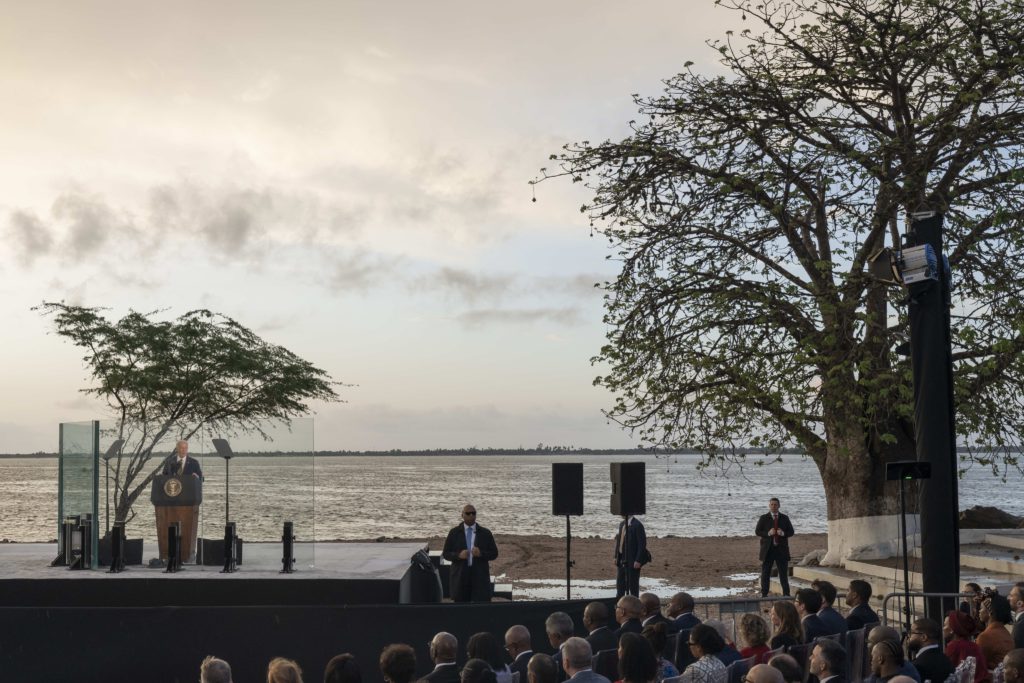
US President Joe Biden during its visit to Angola. (Image: Joe Biden Twitter (X) account)

President Joe Biden is rounding off his trip to Angola by announcing $600 million in new financing for a multi-country railway as the US looks to bolster its investment in critical minerals infrastructure in Africa and curb Chinese influence.


Today’s announcement builds on $553 million the US International Development Finance Corp pledged earlier this year in the Lobito Trans-Africa Corridor, connecting the Central African copperbelt to the Angolan coast. The new investments will support not just the rail infrastructure but also agriculture, clean energy and associated supply chains, along with health and digital access in the country, according to the White House.

Copper exports from DRC to the US begin via Lobito Atlantic Railway

“The United States understands how we invest in Africa is just as important as how much we invest in Africa,” Biden said in Lobito, a port city on Angola’s Atlantic coast. “To help Africa lead the way. We need more capital, more infrastructure to deal with these real solutions. That’s why we’re here today.”

Biden, whose nickname is Amtrak Joe, during a speech in the capital, Luanda, on Tuesday joked that he is the most “pro-rail guy” in the US. He’s used the trip to highlight the importance of the Lobito project, a railway being revamped with the aim of expediting the shipment of critical minerals including cobalt from the Democratic Republic of Congo and Zambia for technology including electric vehicles.

While in Lobito, Biden toured the port and met with companies investing in the project, including SunAfrica, US-owned mobile network Africell and Acrow Bridge, a Pennsylvania-based infrastructure company. Biden also met with African leaders including Angolan President João Lourenço, Zambian President Hakainde Hichilema, DRC President Felix Tshisekedi and Tanzanian Vice President Philip Isdor Mpango.

Biden’s trip comes as the US belatedly tries to play catchup with China, which has spent decades building influence on the continent — largely through tens of billions of dollars in infrastructure lending — and now dominates the region’s mining sector.

Angola has been among Beijing’s biggest borrowers, but since his election in 2017, Lourenço has sought to reduce its dependence on China. Still, Angola’s oil industry — which accounts for about 90% of the country’s export revenue — sells more than half its output to China.

The US has provided $2.9 billion in financing in Angola for its energy, infrastructure and telecommunications sectors, according to the White House. Biden, with less than 50 days left in office, has drawn a link between the investment in infrastructure in Africa and Angola to his landmark Bipartisan Infrastructure Law.

Biden promised to visit the continent after hosting a 2022 summit with African leaders in Washington. His trip has been overshadowed by his late Sunday evening announcement that he would pardon his son, Hunter Biden, and last month’s election of Donald Trump.

(By Skylar Woodhouse and Mario Parker)


In Angola, Biden promises to invest differently to China

By AFP
December 4, 2024

US President Joe Biden is the first US president to travel to Angola - Copyright AFP/File -
Aurélia END

President Joe Biden will make the case on Wednesday in Angola that the United States must do better rather than more than China to regain influence in Africa.

Biden is on the second day of a visit to the African country, where the United States is showcasing a major infrastructure project aimed at countering China’s investments on the continent.

“The investment from the United States versus from others, it’s not about more or less, it’s about (being) different,” a senior US administration official told reporters.

“Others (are) coming in with very large checks, building a lot of stuff, but that is with high interest rates on debt… and it doesn’t come with any of the commitments to their society,” the source added.

The outgoing president had promised to visit sub-Saharan Africa during his time in office and is the first US president to travel to Angola, a former Portuguese colony once allied to the Soviet Union.

But the trip takes places as the 82-year-old readies to leave the White House with little political weight left, raising questions about the impact of the visit.

On Tuesday, Biden met his counterpart President Joao Lourenco, 70, who was elected in 2017, and delivered remarks at the National Slavery Museum where slaves were once shipped to the Americas.

The Democrat’s schedule on Wednesday will be focused on the economy and a visit to Lobito port, around 500 kilometres (310 miles) south of the capital, Luanda.

He will also visit a food processing factory before attending a summit on infrastructure with the leaders of Angola, the Democratic Republic of Congo (DRC), Zambia and Tanzania.

The US president is expected to announce fresh investments worth $600 million for the Lobito Corridor, a massive infrastructure project aimed at transporting critical minerals from inland countries to the Angolan port for export.

The White House has said the initiative would also help develop communities around the railway, including boosting agriculture and business in general.


– Reducing 45 days to 45 hours –


The Lobito railway, also funded by the European Union and others, will reduce the time needed to transport minerals from the DRC and Zambia to Angola from 45 days to 45 hours, according to the US administration.

Biden’s team said it was confident that President-elect Donald Trump, who will be sworn in on January 20, will support the project that is widely seen as an alternative to Chinese investments on the continent.

“You can’t stand up and say, I want to compete with China… and not support what’s happening here,” the senior administration official said.

The Republican president-elect is known for wanting to be “tough” on China and has promised blanket tariffs, raising concerns of a trade war.

During his first term, Trump did not pay much attention to Africa, a continent he once reportedly described as home to “shithole countries”.

For the Lobito Corridor to be a real success, the United States will have to cooperate with China because it “dominates the mining sector” in particular in the DRC and Zambia, according to Mvemba Phezo Dizolele, director of the Africa Program at the DC-based Center for Strategic and International Studies.

“Critics of the (Lobito) project,” he said, “charge that it is as extractive and exploitative as the Chinese Belt and Road Initiative” — China’s flagship international infrastructure project.

Georgia police raid opposition offices as PM vows to curb protests


By AFP
December 4, 2024

Police and protestors have repeatedly clashed, with demonstrators throwing fireworks as authorities deploy water cannon and tear gas - 
Copyright AFP Giorgi ARJEVANIDZE

Irakli METREVELI, Léa DAUPLE

Georgian police raided the offices of opposition parties on Wednesday after the government vowed to crack down on those organising pro-EU protests, deepening a political crisis engulfing the Black Sea nation.

Tbilisi has been rocked by turmoil since the ruling Georgian Dream party claimed victory in an October 26 parliamentary election which opposition groups decried as rigged.

Tens of thousands have taken to the streets to protest against the alleged fraud, with Prime Minister Irakli Kobakhidze’s announcement last Thursday that Georgia would not hold EU membership talks until 2028 sparking uproar and a fresh wave of rallies.

Around 300 people have been detained and dozens, including protestors and police, injured in intense clashes outside the parliament building in central Tbilisi.

On Wednesday, Prime Minister Kobakhidze vowed to crack down on what he called “radical” political forces responsible for organising the protests.

“It is clear to everyone that these violent actions are entirely coordinated by the radical opposition… No one will escape accountability, including the politicians hiding in their offices,” he said.

Moments after, Georgian police beat and arrested the leader of the Akhali liberal opposition party, while conducting a raid on the offices of the Droa party, live TV showed.


– ‘Trumped-up charges’ –


Droa leader Elene Khoshtaria said on X: “They are now in our party office, searching. Likely hoping to find something to charge some of our members with trumped-up charges.”

Police also raided offices of the Youth Organisation of the opposition United National Movement (UNM) party, one of the party leaders, Levan Khabeishvili, told journalists.

UNM in a statement accused the Georgian government of launching “all-out terror and repressions against opponents”.

Over six consecutive nights of protest, demonstrators have hurled fireworks at riot police, who have deployed water cannon and tear gas and charged at protesters.

Thick grey fog from the tear gas canisters has blanketed Tbilisi’s central Rustaveli Avenue, with several of the rallies lasting until dawn.

At least 15 people were admitted to hospital after the latest demonstrations on Tuesday night, authorities said Wednesday.

In the face of international condemnation of overuse of police force, Kobakhidze has refused to back down.

He said the state would take “all necessary measures” to quash the “revolution” being plotted by the pro-Western opposition.

Several demonstrators, including journalists, have been hospitalised after being brutally detained and, they allege, beaten in custody by the security forces.


– ‘Torture’ –


Fresh protests were scheduled for Wednesday evening.

Beforehand, pro-EU President Salome Zurabishvili accused Georgian Dream of closing “shops selling protective gas masks, protective goggles, and helmets, leaving peaceful protesters deprived of their elementary protection.”

Some protesters have come to the rallies equipped with gas masks.

Critics have been enraged by what they say is the government’s betrayal of Georgia’s bid for EU membership, which is enshrined in its constitution and supported by around 80 percent of the population.

Several ambassadors and a deputy foreign minister resigned over Georgian Dream’s decision to suspend EU accession talks for four years.

Kobakhidze — who has ruled out talks with the opposition — has vowed to punish his opponents and civil servants who join the protests.

Rights ombudsman Levan Ioseliani has accused the police of using “torture” against those detained at the rallies.

Most of the injuries sustained by detained protesters “are concentrated on the face, eyes, and head”, he said in a statement.


– Pro-Russia slant –


Georgian Dream is seeking to remove pro-EU leader Zurabishvili from power before the end of the year.

The dramatic showdown is the latest in two tumultuous years in the Caucasus nation, which borders Russia to the north.

Critics accuse Georgian Dream of moving closer to Moscow, despite strong anti-Russian sentiment across Georgian society.

Since 2022, Georgian Dream has advanced Russia-style legislation targeting civil society and independent media outlets, as well as curbing LGBTQ rights.

Moscow has appeared to back Georgian Dream during the protests by saying the authorities were working to “stabilise” the situation.

Russia and Georgia have not had formal diplomatic relations since the two countries fought a brief war in 2008.

But foreign ministry spokesman Maria Zakharova said Wednesday that Moscow was open to developing closer ties with Tbilisi.

c
Russia Denies Interfering in Romania Elections

 by Staff Writer with AFP
12/05/24

Photo: Andrei Pungovschi, AFP


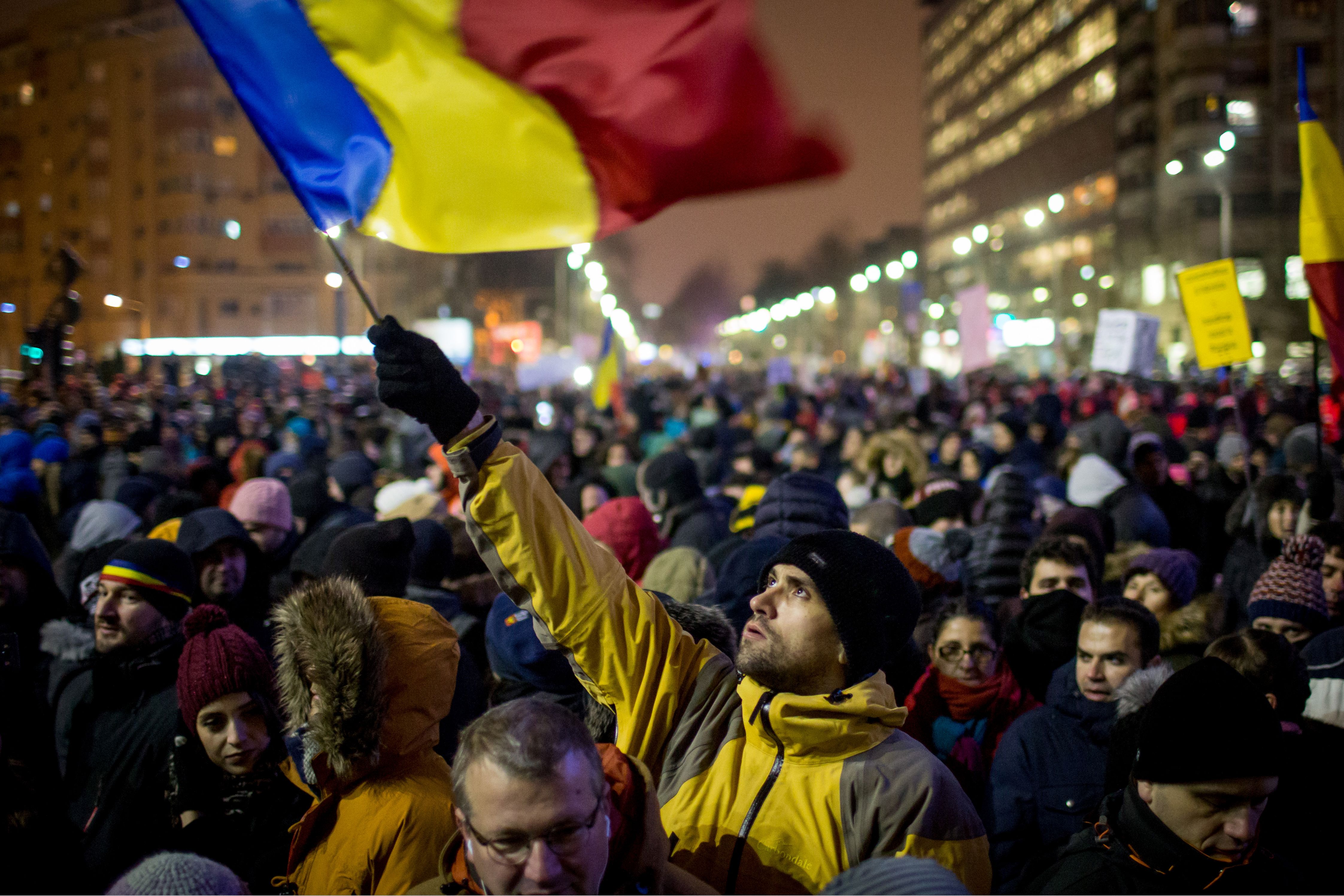
Russia denied on Thursday it was interfering in Romania’s elections, as the EU member geared up for the second round of a presidential vote that could see a pro-Russian candidate win.

Far-right contender Calin Georgescu unexpectedly topped the ballot in the first round of voting last month, shocking Bucharest’s NATO allies and prompting accusations of Kremlin interference from Romanian authorities.

“The campaign for the Romanian presidential election… is accompanied by an unprecedented outburst of anti-Russian hysteria,” Russian foreign ministry spokeswoman Maria Zakharova said of the allegations.

“More and more absurd accusations are being made by local politicians, officials and media representatives…,” she added.

“We firmly reject all hostile attacks, which we consider absolutely groundless.”

The European Commission said Thursday it had stepped up its monitoring of TikTok in the context of Romania’s elections, after receiving information about possible Russian interference.

Georgescu’s nationalist discourse has hit a mark on social media, particularly on TikTok, where his videos have racked up millions of views.

The second round of the vote will be held Sunday, where Georgescu will face centrist mayor Elena Lasconi.


‘Romania first’: Far-right election front-runner echoes Trump


By AFP
December 5, 2024

Calin Georgescu has been hammering home his nationalist programme and dodging critical questions - Copyright AFP Anthony WALLACE
Fulya OZERKAN, Ani SANDU

Romania’s far-right presidential front-runner Calin Georgescu has put his most controversial statements aside as he goes for a single slogan echoing Donald Trump before Sunday’s run-off vote — “Romania first”.

“I am ultra pro-Trump. I think in the same way he does,” said the 62-year-old, a past admirer of Russian leader Vladimir Putin, adding that he shares Trump’s “pragmatism”.

“Romania has to be first,” Georgescu — who has campaigned against aid for neighbouring war-torn Ukraine — told the news site Politico, “like how it was America first”.

“It’s about the vision… a vision for peace.”

Since the rank outsider shocked Romania by winning the first round of presidential elections on November 24, he has dodged questions about his previous praise for Putin and his “Russian wisdom”.

Whenever he is asked if he is pro-Russian, he insists he is “pro-Romanian”.

“For me and my people, the most important is the partnership with America,” he told Politico.


– Rivals ‘cry Russia’ –


Instead he has hammered home his nationalist programme as he avoided press conferences and critical questions before Sunday’s face-off against Elena Lasconi, a centrist pro-European mayor.

While he does not want Romania to leave the European Union and NATO, he now says he wants to negotiate, “standing tall, not on our knees”, for a better position within them.

In June, he described the Atlantic defence alliance as “the weakest on the face of the Earth”. “Why stay in a club that offers no security to your country?” he said.

But in recent weeks, Georgescu seems to weigh his words carefully, anxious to unite, as journalists have started to flock around him.

“Like any candidate in the second round of presidential elections, he pivots and reframes where he senses attacks from opponents,” political scientist Radu Magdin told AFP.

“Georgescu tries to play the Trump card, while opponents cry Russia,” he added.

Like Trump, he advocates “peace” in Ukraine and opposes any military aid for Kyiv.

An agronomist, he also champions protectionism, promising to reverse dubious privatisations of the post-communist era.

Also like the US president-elect, he regularly relays disinformation on topics ranging from Covid-19 to climate change.

Georgescu, who also frequently evokes God, wrote the preface to the Romanian translation of the latest book by Trump’s incoming health secretary Robert F. Kennedy Jr.

Kennedy Jr. has attracted major controversy for his anti-vaccine activism and embrace of conspiracy theories.


– ‘Magnetic’ –


Georgescu began his career in 1992 in the environment ministry before joining the foreign ministry.

From there he was posted to represent Romania at UN organisations in Vienna and Geneva.

In the 2010s, he was tipped as a possible prime minister, but it was only a decade later that he started to appear more frequently in the public eye.

During the Covid pandemic, he became a vocal vaccine-critic, frequently spreading conspiracy-laden narratives.

Once linked to Romania’s far-right AUR party, he was excluded for taking up positions deemed anti-Semitic and too radical.

AUR leader George Simion, who failed to advance in the first presidential round, has since thrown his support behind Georgescu in the run-off.

Romanian authorities alleged Georgescu was granted “preferential treatment” by TikTok in the run-up to the first round vote, with his videos viewed millions of times — an accusation the social network has dismissed.

“It’s not TikTok that went to vote, it was people,” Georgescu countered.

Several voters told AFP they saw him as “a man of integrity, serious and patriotic” and a man of “family” values, capable of bringing change.

Experts also note he managed to tap into voter anger over rampant inflation and other economic woes.

“Everyone gets him and he seems magnetic,” political analyst Magdin said, adding he talks with a deep voice like characters in old Romanian films.

Georgescu himself believes destiny is on his side, saying he “felt” a year and a half ago that he would become president.


Presidential vote seen as referendum on Romania’s European future

By AFP
December 4, 2024

Far-right politician Calin Georgescu shocked Romania when he topped the first round of the presidential elections - Copyright AFP Mihai Barbu
Fulya OZERKAN, Ani SANDU

Romania could elect its first far-right president on Sunday in a key vote for the EU and NATO member bordering Ukraine.

Far-right politician Calin Georgescu, a former senior civil servant, shocked the eastern European nation when he topped the first round of the presidential elections on November 24.

In Sunday’s run-off, he will face Elena Lasconi, a centrist mayor.

Fears are rife that under Georgescu the country — whose strategic importance has increased since Russia invaded Ukraine — would join the EU’s far-right bloc and undermine European unity in the face of Russia, at which Bucharest pointed the finger amid claims of interference in the first round vote.

“The outcome of the second round of the presidential elections is being framed as a referendum on the future foreign policy orientation of the country,” Marius Ghincea, a political scientist at ETH Zurich, told AFP.


– ‘Existential battle’ –


Lasconi underscores the high stakes of the vote in one of the EU’s larger countries with a population of 19 million.

The journalist-turned-politician, 52, has warned that the country faces “an existential battle”, “a historic confrontation” between those who wish to “preserve Romania’s young democracy” and those who want to “return to the Russian sphere of influence”.

Outgoing social-democrat Prime Minister Marcel Ciolacu gave his support to Lasconi, who also has the backing of the liberals.

Polls — which during the first round failed to predict Georgescu’s success — put him at 58 percent and Lasconi at 42 percent.

Having praised Russian President Vladimir Putin in the past, Georgescu, 62, now avoids answering questions about him being pro-Russian.

A critic of the EU and NATO, he says he does not want to leave either grouping but wants to put Romania “on the world map”.

Like his idol US president-elect Donald Trump, he is opposed to any military aid to Ukraine.

His nationalist discourse imbued with mysticism has hit the mark on social networks, particularly on TikTok, where his videos have been viewed millions of times.

If Romania is today “a reliable, predictable country aligned with the liberal West”, a victory of Georgescu would “increasingly align the country with Hungary and Slovakia… which seek to limit the supranational influence of the European Union,” according to Ghincea.

In neighbouring Moldova, pro-European President Maia Sandu — who holds a Romanian passport — in a video message called for a vote for “a strong European and free Romania”.

Georgia’s pro-Western President Salome Zurabishvili sent her wishes for victory to Lasconi.


– ‘Reject extremism’ –


While the president’s post is largely ceremonial, the head of state has considerable moral authority and influence on Romania’s foreign policy.

The president also designates the next prime minister — a key role especially since legislative elections last weekend returned a fragmented parliament.

The ruling pro-European Social Democrats won the vote, but far-right parties made strong gains, in total securing a third of the ballots.

In a joint appeal on Wednesday, four pro-EU parties with an absolute majority in parliament signed an agreement to form a coalition, promising “stability” and calling on voters on Sunday to “reject isolationism, extremism and populism”.

Since the fall of Communism in 1989, Romania has never seen such a breakthrough by the far-right, fuelled by mounting anger over soaring inflation and fears over Russia’s war in neighbouring Ukraine.

Romania’s constitutional court on Monday validated the results of the first round of the presidential elections.

This followed tense days with Romanian authorities alleging Russian interference and “preferential treatment” by TikTok of Georgescu — a claim the social network has denied.

Several documents pertaining to the alleged influence on the first round were declassified on Wednesday.