It’s possible that I shall make an ass of myself. But in that case one can always get out of it with a little dialectic. I have, of course, so worded my proposition as to be right either way (K.Marx, Letter to F.Engels on the Indian Mutiny)
Tuesday, December 17, 2024
Federal needle exchange programs are cost-effective to reduce health care costs, blood-borne infections
Canadian Medical Association Journal
“Needle exchange programs are evidence-based strategies that prevent transmission of blood-borne viruses, reduce injection-related infections, improve access to medical care, and facilitate entry into substance dependence programs for people who inject drugs,” writes Dr. Farah Houdroge, Disease Elimination Program, Burnet Institute, Melbourne, Australia, with coauthors.
The World Health Organization has set a target of reducing hepatitis C infections to fewer than 2 per 100 people who inject drugs per year as part of an elimination strategy for hepatitis C. In 2024, Canada unveiled its 2024–2030 Sexually Transmitted and Blood-Borne Infection Action Plan that emphasized support for harm reduction programs and expanding the PNEP.
Researchers from Canada and Australia sought to assess the return on investment for Canada’s PNEP, and the potential impact of scaling it up, as part of efforts to eliminate blood-borne infections in prisons. Using a modelling study, they found that expanding the program to 50% of people in all federal prisons who inject drugs from 2025 to 2030 would prevent 15% of new hepatitis C cases and 8% of injection-related infections compared with the status quo.
“This study adds to the growing body of evidence supporting PNEPs as effective harm reduction strategies that are also cost saving. Given that they show both health and economic benefits, PNEPs should be a priority not just in Canada, but globally,” the authors conclude.
In a related commentary, authors argue that more comprehensive interventions to make substance use in correctional institutions safer, and specifically reduce related risks of acute death, are needed. “Prison-based programs aimed at mitigating the health harms of substance use by correctional inmate populations should be carefully evaluated as part of their implementation, as has been done in the related research with specific respect to needle exchange programs. Without systematic expansion of and increased access to such programs, prisoners in Canada will remain at unnecessarily high risk of ill health and death from the adverse consequences of substance use,” the authors conclude.
“Cost–benefit analysis of Canada’s Prison Needle Exchange Program for the prevention of hepatitis C and injection-related infections” and “The burden of drug overdose deaths among correctional populations: implications for interventions” are published December 16, 2024.
The burden of drug overdose deaths among correctional populations: implications for interventions
Article Publication Date
16-Dec-2024
It’s worth mixing it up: what combination of policies will lead to a clean energy future?
University of Basel
How can we ensure that as many households as possible adopt not only solar panels, but also their own battery to store solar energy, a heat pump, and an electric car? Researchers at the Universities of Basel and Geneva have looked into just this question.
Climate protection and the energy revolution must continue to make progress, and private households could make a significant contribution to this goal if they would use environmentally friendly technologies such as solar panels, electric vehicles, and heat pumps. Dr. Mart van der Kam and Professor Ulf Hahnel at the University of Basel, Switzerland, conducted research into the political measures that would be necessary to fully realize this potential.
Together with researchers from the University of Geneva, their team first surveyed nearly 1,500 Swiss households on why they decided for or against environmentally friendly technologies. They then fed the data into a dynamic model representing the households and their interactions as a society of decision-makers. This allowed the researchers to test which policy measures best met the needs of the households and would therefore support these technologies being more widely adopted. Their findings recently appeared in Cell Reports Sustainability.
Individual incentives have too little effect
Mart van der Kam acknowledges that increasing competition among manufacturers is making it more affordable and more attractive for consumers to adopt environmentally friendly technologies such as electric cars. However, he says that political measures are necessary to encourage more widespread use of technologies such as solar panels and heat pumps. “It’s not individual incentives, but rather the proper mix of political measures that makes a decisive difference,” he emphasizes, summarizing their findings.
Subsidies for solar panels or heat pumps, for example, are just one piece of the puzzle. It is also important to remove the barriers that prevent renters from using these technologies. “Until now, the building owners have had to make the investment, but the renters have profited from the reduced energy costs,” van der Kam points out. This has made the investment less worthwhile for the owners.
Solutions for renters
The example of solar panels demonstrates how such hurdles for renters can be dismantled via government intervention: for several years now, renters have had the right to install solar panels on their balconies. Van der Kam suggests that policies supporting similar solutions for heat pumps or energy storage might be possible in the future, perhaps in the form of neighborhood batteries that could be supplied with solar energy from multiple buildings or an entire district at once and then used as a power source.
“Nearly two-thirds of Swiss households are renters. This represents an enormous untapped potential that could provide a major step forward toward the energy revolution,” says Ulf Hahnel. He argues that interdisciplinary research that not only takes technological innovations into account, but also consumers’ various preferences, can identify paths for targeted stimulus packages and structures. “We must bring different disciplines and their methods together to tackle complex and multifaceted challenges such as climate change and the energy revolution,” Hahnel emphasizes.
An empirical agent-based model of consumer co-adoption of low-carbon technologies to inform energy policy
Article Publication Date
12-Dec-2024
Unlocking the journey of gold through magmatic fluids
By studying sulphur in magmatic fluids at extreme pressures and temperatures, a UNIGE team is revolutionising our understanding of gold transport and ore deposit formation
Université de Genève
image:
Solfatara on Volcano island near the Sicilian coast with elemental sulphur precipitating from volcanic gases originating from magmatic fluids.
When one tectonic plate sinks beneath another, it generates magmas rich in volatiles such as water, sulphur and chlorine. As these magmas ascend, they release magmatic fluids, in which sulphur and chlorine bind to metals such as gold and copper, and transport these metals towards the surface of the Earth. As the extreme conditions relevant to natural magmas are very difficult to reproduce in the laboratory, the precise role of the different forms of sulphur in metal transport remains highly debated.However, an innovative approach by a team from the University of Geneva (UNIGE) has demonstrated that sulphur, in its bisulphide (HS-) form, is crucial for the transport of gold in magmatic fluids. These findings are published in Nature Geoscience.
When two tectonic plates collide, the subducting plate plunges into the Earth’s mantle, heats up and releases large amounts of water. This water lowers the melting temperature of the mantle, which melts under high pressure and temperatures exceeding a thousand degrees Celsius to form magmas. As the liquid magma is less dense than the rest of the mantle, it migrates towards the Earth’s surface.
‘‘Due to the drop in pressure, magmas rising towards the Earth’s surface saturate a water-rich fluid, which is then released as magmatic fluid bubbles, leaving a silicate melt behind” explains Stefan Farsang, a postdoctoral fellow at the Department of Earth Sciences at UNIGE’s Faculty of Science and first author of the study. Magmatic fluids are therefore composed partly of water, but also of dissolved volatile elements such as sulphur and chlorine. These two elements are crucial because they extract gold, copper and other metals from the silicate melt into the magmatic fluid, thus facilitating their migration towards the surface.
Several forms of sulphur
Sulphur can easily be reduced or oxidised, i.e. gain or lose electrons, a process known as redox. The redox state of sulphur is important because it affects its ability to bind to other elements, such as metals. However, one debate has divided the scientific community for more than a decade: what is the redox state of the sulphur present in the magmatic fluid that mobilizes and transports metals?
Zoltán Zajacz, associate professor in the Department of Earth Sciences at UNIGE’s Faculty of Science and coauthor of the study, explains: “A seminal paper in 2011 suggested that S3- sulphur radicals play this role. However, the experimental and analytical methods had several limitations, particularly when it came to reproducing relevant magmatic pressure-temperature and redox conditions, which we have now overcome.’’
Methodological revolution
The UNIGE team placed a quartz cylinder and a liquid with a composition similar to that of a magmatic fluid in a sealed gold capsule. The capsule was then put into a pressure vessel, which was then brought to pressure and temperature conditions characteristic of magmas emplaced in the Earth’s upper crust. ‘‘Above all, our setup facilitates flexible control of the redox conditions in the system, which wasn’t possible before,” adds Stefan Farsang.
During the experiments, the quartz cylinder is fractured, allowing the synthetic magmatic fluid to enter. The quartz then traps microscopic-sized droplets of fluid like those found in nature, and the form of sulphur in these can be analysed at high temperature and pressure by using lasers with an analytical technique known as Raman spectroscopy. While previous spectroscopic experiments were typically run up to 700 °C, the UNIGE team succeeded in raising the temperature to 875 °C characteristic of natural magmas.
Bisulphide as a transporter
The study shows that bisulphide (HS-), hydrogen sulfide (H₂S) and sulphur-dioxide (SO₂) are the major sulphur species present in the experimental fluids at magmatic temperatures. The role of bisulphide in metal transport was already well documented in lower-temperature so-called hydrothermal fluids that originate from the higher-temperature magmatic fluids. However, bisulfide was thought to have very limited stability at magmatic temperatures. Thanks to their cutting-edge methodology, the UNIGE team was able to show that in magmatic fluids too, bisulphide is responsible for transporting most of the gold.
‘‘By carefully choosing our laser wavelengths, we also showed that in previous studies, the amount of sulphur radicals in geologic fluids was severely overestimated and that the results of the 2011 study were in fact based on a measurement artefact, putting an end to this debate,’’ says Stefan Farsang. The conditions leading to the formation of important precious metal ore deposits have now been clarified. Since much of the world’s copper and gold production comes from deposits formed by magma-derived fluids, this study may contribute to their exploration by opening up important perspectives for understanding their formation.
'Sulfur species and gold transport in arc magmatic fluids'
Article Publication Date
16-Dec-2024
Butchered bones suggest violent ‘othering’ of enemies in Bronze Age Britain
University of Oxford
image:
Examples of cranial trauma. Top) perimortem injury to the left posterior of the frontal bone (a), cutmarks can also be seen on the frontal bone (b) and patinated bevel of the internal cranial surface is apparent around the injury (c); middle) cranium with a perforating injury to mid-frontal bone (d), a closer view shows radiating fracture lines (e) and the internal view shows patinated bevel (f ); bottom) adult cranium (g), close inspection shows cutmarks running along the mid-frontal (h) and a perimortem blunt force fracture to the conjoining right frontal bone fragment (i) Images by Schulting et al. Antiquity, December 2024.
Analysis of the remains of at least 37 individuals from Early Bronze Age England finds they were killed, butchered, and probably consumed before being thrown down a 15m-deep shaft.
It is the largest-scale example of interpersonal violence from British prehistory.
The treatment of the remains was likely a means to dehumanise or ‘other’ the victims.
This massacre was probably revenge for a perceived offense, implying a cycle of violence and questioning the idea that Early Bronze Age Britain was relatively peaceful.
Archaeologists have analysed over 3000 human bones and bone fragments from the Early Bronze Age site of Charterhouse Warren, England, concluding that the people were massacred, butchered, and likely partly consumed by enemies as a means to dehumanise them.
There have been hundreds of human skeletons found in Britain dating between c.2500-1500 cal. BC, however direct evidence for violent conflict is rare.
“We actually find more evidence for injuries to skeletons dating to the Neolithic period in Britain than the Early Bronze Age, so Charterhouse Warren stands out as something very unusual”, states lead author of the research, Professor Rick Schulting from the University of Oxford. “It paints a considerably darker picture of the period than many would have expected.”
In the 1970s, the scattered bones of at least 37 individuals were discovered in a 15m-deep shaft at Charterhouse Warren, Somerset. They were a mix of men, women, and children, suggesting the assemblage was representative of a community.
Unlike most contemporary burials, the skulls display evidence of violent death from blunt force trauma. To uncover the mystery of what happened to these people, researchers from several European institutions analysed the bones. Their results are published in the journal Antiquity.
The researchers found numerous cutmarks and perimortem fractures (made around the time of death) on the bones, suggesting that they were intentionally butchered and may have been partly consumed. But why would people in Early Bronze Age Britain cannibalise the dead?
At the nearby Palaeolithic site of Gough’s Cave in Cheddar Gorge, cannibalism was likely a form of funerary ritual. Charterhouse Warren is different, however. Evidence for violent death, with no indication of a fight, implies the victims were taken by surprise. It is probable they were all massacred, and the butchery was carried out by their enemies.
Were they killed for food? This is unlikely. There were abundant cattle bones found mixed in with the human ones, suggesting the people at Charterhouse Warren had plenty to eat without needing to resort to cannibalism.
Instead, cannibalism may have been a way to ‘other’ the deceased. By eating their flesh and mixing the bones in with faunal remains, the killers were likening their enemies to animals, thereby dehumanising them.
What events led to this dramatic act of violence? Resource competition and climate change don’t seem to have exacerbated conflict in Britain at this time, and there is currently no genetic evidence to suggest the co-existence of communities with different ancestries that could have resulted in ethnic conflict.
This suggests that the conflict was caused by social factors. Perhaps theft or insults led to tensions, which escalated out of proportion. Evidence for infection with plague in the teeth of two children indicates disease may have also exacerbated tensions.
“The finding of evidence of the plague in previous research by colleagues from The Francis Crick Institute was completely unexpected”, says Professor Schulting. “We’re still unsure whether, and if so how, this is related to the violence at the site”.
Ultimately, the findings paint a picture of a prehistoric people for whom perceived slights and cycles of revenge could result in disproportionally violent actions. This situation is, unfortunately, familiar from more recent times.
“Charterhouse Warren is one of those rare archaeological sites that challenges the way we think about the past”, Professor Schulting concludes. “It is a stark reminder that people in prehistory could match more recent atrocities and shines a light on a dark side of human behaviour. That it is unlikely to have been a one-off event makes it even more important that its story is told.”
---Ends---
Notes for editors
‘The darker angels of our nature’: assemblage of butchered Early Bronze Age human remains from Charterhouse Warren, Somerset, UK - Rick J. Schulting, Teresa Fernández-Crespo, Javier Ordoño, Fiona Brock, Ashleigh Kellow, Christophe Snoeck, Ian R. Cartwright, David Walker, Louise Loe & Tony Audsley
Right hemi-mandible of child aged about 10 years (a) with detail of cutmarks on the ascending ramus (b). Image credit: Schulting et al. Antiquity, December 2024
Cutmarks on distal left humerus. Image credit: Schulting et al. Antiquity, December 2024.
Bones showing damage attributed to possible human chewing—from left to right: metatarsal 1, metatarsal, clavicle, metatarsal. Image credit: Schulting et al. Antiquity, December 2024.
About
ABOUT ANTIQUITY
Antiquity is an international peer-reviewed journal of world archaeology, published six times a year and edited by Dr Robert Witcher. The journal was founded by O.G.S. Crawford in 1927 and is currently edited in the Department of Archaeology at Durham University (head: Professor Tom Moore). The journal is published in partnership with Cambridge University Press (CUP).
Cambridge University Press publishes over 350 peer-reviewed academic journals across a wide spread of subject areas, in print and online. Many of these journals are leading academic publications in their fields and together form one of the most valuable and comprehensive bodies of research available today.
Cambridge University Press is part of the University of Cambridge. It furthers the University’s mission by disseminating knowledge in the pursuit of education, learning and research at the highest international levels of excellence.
Its extensive peer-reviewed publishing lists comprise 45,000 titles covering academic research, professional development, over 350 research journals, school-level education, English language teaching and bible publishing.
Playing a leading role in today’s international market place, Cambridge University Press has more than 50 offices around the globe, and it distributes its products to nearly every country in the world.
For further information about Cambridge University Press, visit: http://cambridge.org
About the University of Oxford
Oxford University has been placed number 1 in the Times Higher Education World University Rankings for the ninth year running, and number 3 in the QS World Rankings 2024. At the heart of this success are the twin-pillars of our ground-breaking research and innovation and our distinctive educational offer.
Oxford is world-famous for research and teaching excellence and home to some of the most talented people from across the globe. Our work helps the lives of millions, solving real-world problems through a huge network of partnerships and collaborations. The breadth and interdisciplinary nature of our research alongside our personalised approach to teaching sparks imaginative and inventive insights and solutions.
Through its research commercialisation arm, Oxford University Innovation, Oxford is the highest university patent filer in the UK and is ranked first in the UK for university spinouts, having created more than 300 new companies since 1988. Over a third of these companies have been created in the past five years. The university is a catalyst for prosperity in Oxfordshire and the United Kingdom, contributing £15.7 billion to the UK economy in 2018/19, and supports more than 28,000 full time jobs.
‘The darker angels of our nature’: Early Bronze Age butchered human remains from Charterhouse Warren, Somerset, UK
Taiwanese artist creates a gun that freezes her tears and fires them at those who hurt her
ByMahipal Singh Chouhan
Dec 17, 2024
Taiwanese artist turned frustration into creativity, creating a tear gun that fires icy projectiles at those who upset her.
In a remarkable blend of art and emotion, a Taiwanese artist has created a tear gun that transforms her tears into icy projectiles, aimed at those who upset her. The inventive idea emerged from a heated argument with her teacher over an assignment, which left her feeling powerless and frustrated.
Taiwanese artist crafted a tear gun that uses frozen tears as projectiles. (Instagram/fei_studio_)
Tears turned to ammunition
Yi Fei Chen, who grew up in Taiwan, where challenging authority is often frowned upon, struggled to express her emotions during confrontations. “I had a confrontation with my teacher, but I didn’t really agree with him. I felt like I couldn’t speak up. I was frustrated and angry. Then the tears came," Chen shared with Asia One.
Instead of letting her tears be a sign of defeat, inspiration struck. She wondered, “What if this happens again? How can I change the situation?" That thought sparked the idea for the tear gun.
Chen’s creation eventually became her graduation project while studying in the Netherlands. Over three intense months, she designed the prototype that could literally shoot back.
How it works
The tear gun’s mechanism is as fascinating as its concept. The device collects tears, freezes them within 20 seconds using carbon dioxide stored in a high-pressure bottle, and launches them as tiny ice bullets using a spring-loaded system.
Interestingly, Chen had to pitch this very project to the teacher she had originally argued with. To her surprise, he was impressed. “He was quite happy with the result, even though it was something created against him," Chen revealed.
Years after its inception in 2016, Chen continues to refine her tear-powered invention, which has captured attention across the globe.
Social media buzz
A pinned post on Chen’s Instagram profile showcases a visual of the tear gun in action. The quirky yet profound device has left social media users intrigued, with some expressing admiration for her creativity.
Check out the post here:
One user wrote, “This is art at its finest. Emotional yet powerful!” Another commented, “Turning tears into strength—what a brilliant concept!” A third chimed in, “I’ve never seen anything like this before. Absolutely mind-blowing.”
Other comments ranged from curiosity to humour, with one saying, “Imagine explaining this to your future kids!” and another adding, “When life gives you tears, make tear bullets.”
Australian state proposes restrictions on protests to tackle rising antisemitism
Tue, 17 Dec, 2024 - 07:26
Rod McGuirk, Associated Press
An Australian state government has proposed new restrictions on protesters as a response to rising antisemitism, including a ban on demonstrations outside places of worship.
Victoria premier Jacinta Allan proposed the new laws after arsonists damaged a Melbourne synagogue earlier this month.
A week before the attack in the Melbourne suburb of Ripponlea, protesters in the neighbouring state of New South Wales prevented worshippers from leaving a synagogue in Sydney.
People gather outside the fire damaged Adass Israel Synagogue in Melbourne (Con Chronis/AAP Image via AP)
“That’s not peaceful protest. It’s menacing behaviour,” Ms Allan said.
“Antisemitism is a cancer and we must leave no stone unturned to fight the evil of antisemitism, to fight the evil of this racism in all of its forms and also to continue to work to help heal our multicultural community, to help build on that social cohesion and continue to support our strong, united Victoria,” she added.
The new laws would protect the right of people to “gather and pray free from fear, harassment and intimidation”, her office added in a statement.
The proposed laws, which will be voted on by the Victorian state parliament early next year, would establish safe access areas around places of worship and prohibit disturbances of religious gatherings.
The laws would also ban protesters from flying flags and displaying symbols of groups listed by Australia as terrorist organisations.
Face masks used by protesters to conceal their identities and protect against capsicum spray would also be banned.
Media wait outside a police cordon at a street where houses were vandalised with anti-Israel slogans (Mark Baker/AP)
Anti-Defamation Commission chair Dvir Abramovich, a leading opponent of antisemitism in Australia, welcomed the proposed law.
“Today, the Victorian government has declared war on hate and antisemitism — and it’s about time,” Dr Abramovich said in a statement.
“Victoria has drawn a line in the sand and sent a thunderous message to the hate-mongers, the graffiti cowards, the firebombers, and the social media trolls – your days of terrorising our communities are over,” he added.
The arson attack on Adass Israel Synagogue on December 6 marked an escalation in targeted assaults in Australia since the war between Israel and the militant Hamas group started over a year ago in the Gaza Strip.
Australian authorities have declared the Ripponlea attack a terrorist act, which increases the resources available to investigators.
SOUTH SUDAN
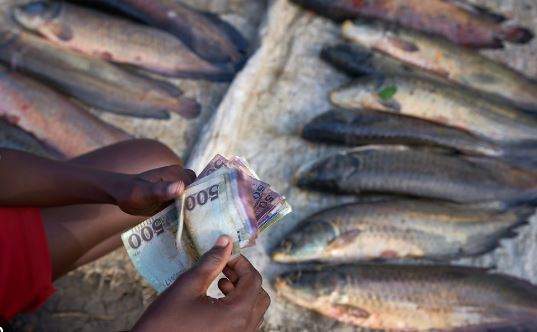
Fishermen stop work to protest government order reducing fish prices
December 17, 2024 JUBA CITY
The leaders of the fishing community in Lakes State’s Awerial County said they have suspended fishing activities after the government forced them to sell fish at lower prices.
According to the local order from Mingkaman Town Council this week, a big fish that was selling at SSP 13,000 was reduced to 7,000.
However, the order upset the fishermen who opted to now fish for domestic consumption only.
Abiar Chuti, the leader of the fishermen in Ahou, told Radio Tamazuj on Monday that the order was unfair to them as they buy other food items at higher prices in the market.
“I told the government last time when they brought the order to us that we will comply with this order only when you reduce the prices in the market so that we will be able to buy maize flour and beans at affordable prices,” he explained. “As we talk now, 10 Kg of maize is still selling at SSP 28,000 and 20 Kg at 60,000. This has become a burden on us and we decided to suspend fishing until we are sure that the market is fairly set for all.”
Another leader of fishermen, Alek Biar Angok, said the government needs to survey market prices and agree with traders before coming up with an order to reduce the fish prices.
“If the government wants to regulate the prices, it should not be one-sided. We should be called together with the traders in the market so that we compare prices,” he said. “This will help the government to understand the market before coming up with the decision to reduce the prices that will fairly favor everyone.”
The action by the fishermen has affected more than ten restaurants that have been serving fresh fish as the only food to their customers.
The restaurant owners who spoke on condition of anonymity said the small quantity of fish they get from far-flung like Mariik and Pane Bang are expensive, but they cannot sell food at higher prices.
Meanwhile, travelers who always stop at Mingkaman market to enjoy fish have been struggling to get fresh fish for the last four days.
Currently, traders sell commodities at higher prices due to the depreciation of the South Sudanese Pound against the U.S. Dollar. 1 dollar is selling at SSP 3,900 in the Central Bank but it is SSP 5,200 in the parallel black market.
A town council official in Awerial County, Deng Cuei, did not explain in the local order the method they used in reducing the fish prices.
Georgia marks 19th day of pro-EU protests
Protesters reiterate their call on the government to hold new parliamentary elections
Davit Kachkachishvili |17.12.2024 -
TBILISI, Georgia
Georgia marked its 19th day of protests Monday against Prime Minister Irakli Kobakhidze's decision last month to suspend negotiations on the country's bid to join the European Union until 2028.
Angry demonstrators gathered in front of the parliament building in the capital Tbilisi, once again blocking traffic on Shota Rustaveli Avenue.
Carrying Georgian and EU flags, they reiterated their call for the government to hold new parliamentary elections.
The demonstrators also demanded the release of those detained during the incidents that occurred in the early days of the protests.
On Nov. 28, Kobakhidze announced that in response to European political interference and the alleged use by some EU officials of financial aid as a tool for political manipulation that Georgia would suspend its EU accession talks until 2028, although it would continue working toward EU membership by 2030.
The decision sparked outrage, with thousands of protesters taking to the streets of Tbilisi.