Monday, December 30, 2024

‘We repeat: Stop attacks on hospitals,’ WHO chief calls for Gaza health care access

By HT News Desk
Dec 30, 2024 


Tedros Adhanom Ghebreyesus, recently caught in an Israeli strike on Yemen's airport, called for Abu Safiya’s release and condemned attacks on Al-Ahli hospital.

The head of the World Health Organization (WHO) on Monday urged an end to attacks on hospitals in Gaza. This call followed recent Israeli strikes on one hospital and a raid on another in the past few days, raising concerns over the safety of medical facilities in the region

.
World Health Organization (WHO) Director-General Tedros Adhanom Ghebreyesus. (via REUTERS)

“Hospitals in Gaza have once again become battlegrounds and the health system is under severe threat,” WHO Director-General Tedros Adhanom Ghebreyesus said in a post on X.

“We repeat: stop attacks on hospitals. People in Gaza need access to health care. Humanitarians need access to provide health aid. Ceasefire!” he added.

The Israeli military said that Hamas militants were the intended targets of a strike on Gaza City's Al Wafa hospital on Sunday, which, according to Palestinian civil defense, resulted in seven deaths.

Israeli forces also detained over 240 Palestinians, including dozens of medical staff, from Kamal Adwan hospital on Friday, with among them being its director, Hussam Abu Safiya, as reported by health authorities in Gaza and Israel's military.

The Israeli military claimed that the hospital was being used by Hamas as a command center for military operations, and the detainees were suspected militants. It also stated that Abu Safiya was taken for questioning due to suspicions of him being a Hamas operative.

Tedros, who was recently caught in an Israeli strike on Yemen's main airport said that it could have cost him his life, called for the immediate release of Abu Safiya and highlighted attacks on Al-Ahli hospital.

He also reported that the WHO and its partners had delivered essential medical supplies, food, and water to Gaza's Indonesian hospital and transferred 10 critically ill patients to Al Shifa hospital, though four patients were detained during the transfer.

“We urge Israel to ensure their health care needs and rights are upheld,” Tedros said.

According to Gaza's health ministry, at least 45,514 Palestinians have been killed and 108,189 wounded in Israel's military offensive in Gaza since the Hamas attacks of October 7, 2023.

With Reuters inputs

International human rights group condemns Israel’s burning of Kamal Adwan Hospital

Action is catastrophic blow to region’s health care system, says ICHR

Merve Berker |30.12.2024 - TRT/AA

ANKARA

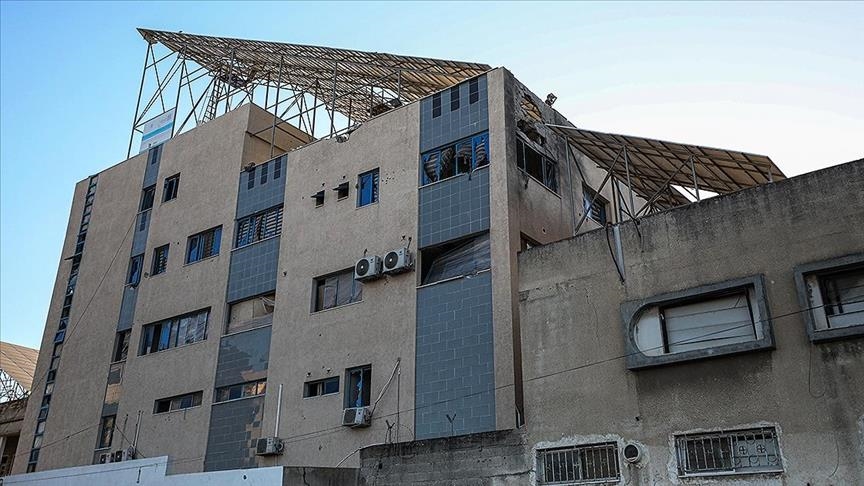
The Independent Commission for Human Rights (ICHR) strongly condemned Israel on Sunday for burning Kamal Adwan Hospital, rendering it inoperative and further crippling the health care system in northern Gaza.

The assault, marked by forced evacuations, arrests of medical staff and the destruction of critical facilities, has left the region without functioning hospitals.

Israeli forces besieged Kamal Adwan Hospital on Dec. 27, forcing patients and medical teams to evacuate under artillery fire, according to ICHR documentation.

Critically ill patients were sent to the Indonesian Hospital, which was already out of service, while others were interrogated and searched after being forced to walk to the Al-Fakhoura area, the statement said.

Following the evacuation, the hospital was set ablaze, destroying its equipment and facilities, it added.

The ICHR quoted the World Health Organization (WHO) as saying that the Israeli military’s actions amounted to "a systematic dismantling of Gaza's health care system, effectively sentencing tens of thousands of Palestinians reliant on it to death.”

Other hospitals in northern Gaza, including Beit Hanoun Governmental Hospital, are also out of service, leaving Al-Awda Hospital barely operational under constant bombardment.

The human rights group also denounced these actions as violations of international law, saying they constitute war crimes under the Rome Statute of the International Criminal Court and the Geneva Conventions.

The commission emphasized the long-term repercussions of these attacks, undermining the right to health for Gaza’s population.

The ICHR further called for urgent international action, including the prosecution of Israeli leaders, an immediate UN Security Council resolution to protect Gaza’s health care system, and an independent investigation by the International Criminal Court.

It also urged the international community to press for the release of detained health care workers and the provision of medical supplies to sustain the remaining infrastructure.

The attack on Kamal Adwan Hospital is a "heinous violation of human rights," it said, adding that such actions contribute to "an ongoing crime of genocide against the civilian population of Gaza."

On Friday, Israeli forces raided Kamal Adwan Hospital, located in the northern town of Beit Lahia, burning large sections of the medical facility and forcing patients and displaced civilians to flee.

Israel has killed more than 45,500 people in Gaza since a cross-border attack by the Palestinian group Hamas on Oct. 7, 2023 and reduced the enclave to rubble.

In November, the International Criminal Court issued arrest warrants for Israeli Prime Minister Benjamin Netanyahu and his former Defense Minister Yoav Gallant for war crimes and crimes against humanity in Gaza.

Israel also faces a genocide case at the International Court of Justice for its war on the enclave.


 

Saudi Arabia slams storming of Al-Aqsa Mosque by Zionist settlers

Saudi Arabia slams storming of Al-Aqsa Mosque by Zionist settlers
News code : ۱۵۷۶۳۶۴The Ministry of Foreign Affairs of Saudi Arabia issued a statement condemning the storming of the Al-Aqsa Mosque by Zionist settlers, describing it as a blatant violation of international law.

"The Ministry of Foreign Affairs expresses the Kingdom of Saudi Arabia's condemnation in the strongest terms possible of the storming of Al-Aqsa Mosque courtyards by Israeli settlers, under the protection of the police and occupation forces," read the statement issued by the Ministry of Foreign Affairs of Saudi Arabia on Sunday. 

"The Kingdom reiterates its denunciation of the continued blatant violations of international law and the continued brutal and repeated attacks on the sanctity of the Al-Aqsa Mosque," it added.

"The Kingdom affirms its categorical rejection of any actions that may undermine the historical and legal status of Jerusalem and its holy sites. The Kingdom also calls on the international community to hold the occupation authorities accountable for their ongoing and serious violations against Islamic holy sites and innocent civilians in the State of Palestine."


endNewsMessage1
German flying taxi startup Volocopter files for insolvency

 December 30, 2024 | 
AFP


BERLIN: Flying taxi startup Volocopter said Monday it was filing for insolvency, days after another fellow German company in the field, Lilium, was saved from collapse.


"Despite recent intensive fundraising efforts, finding a viable solution to maintain regular operations outside of insolvency proceedings has not been possible," Volocopter said in a statement, adding that the filing was made on December 26.


The company, founded in 2011, is now on the hunt for investors, and court-appointed administrator Tobias Wahl said that the aim was "to develop a restructuring concept by the end of February".

Volocopter had been aiming to enter the market in 2025 with its two-seater "Volocity" electric air taxi model.

It suffered a setback when it had to cancel test flights in Paris during this summer's Olympics at short notice when the certification for its aircraft engine didn't come through in time.

In December, Volocopter said that the Volocity model had fulfilled 75 per cent of the criteria required by the European Union's Aviation Safety Agency (EASA).

The firm is also working on a five-seater model which it hopes to present in 2027.

Germany's entrants in the burgeoning "electric vertical take-off and landing" (eVTOL) sector have struggled to keep up with US and Chinese competition.

Last week a company set up by a consortium of European and North American investors swooped in to save Lilium, which had filed for bankruptcy in October.

Lilium has also been developing small electric-powered jets that can take off and land vertically.

That case renewed debate about Germany's support - or lack thereof - for the country's startup scene.

Critics have long lamented a dearth of funding for young, innovative companies, comparing the situation in Germany unfavourably with that in the United States and elsewhere.


In October, Lilium's boss Klaus Roewe said that other countries were actively backing his firm's rivals in a highly competitive field.


Volocopter CEO Dirk Hoke told Capital magazine this year that "in a sector which is as technologically complex and capital-intensive as ours, we have to look to the state" for support.
Greece 2024, historic legalisation of same-sex marriages


Greece has made history by becoming the first Orthodox-majority country to legalise same-sex marriage. A step that comes after a long journey, marked by strong opposition from the Church and conservative forces in the country

22/02/2024 - Mary Drosopoulos Thessaloniki

The Greek Parliament was a full house on the evening of Thursday 15 February 2024. Ahead of the vote, PM Mitsotakis had delivered an emotional speech: “People who have been invisible will finally be made visible around us. And with them, many children (will) finally find their rightful place. For every democratic citizen, today is a day of joy”.

Upon the passage of the law, the audience attending the hearing, including many well-known artists and human rights activists of the LGBTQI+ community, erupted in loud applause and enthusiastic cheering. Greece had just written history as the first Orthodox-majority country to legalise same-sex marriage.

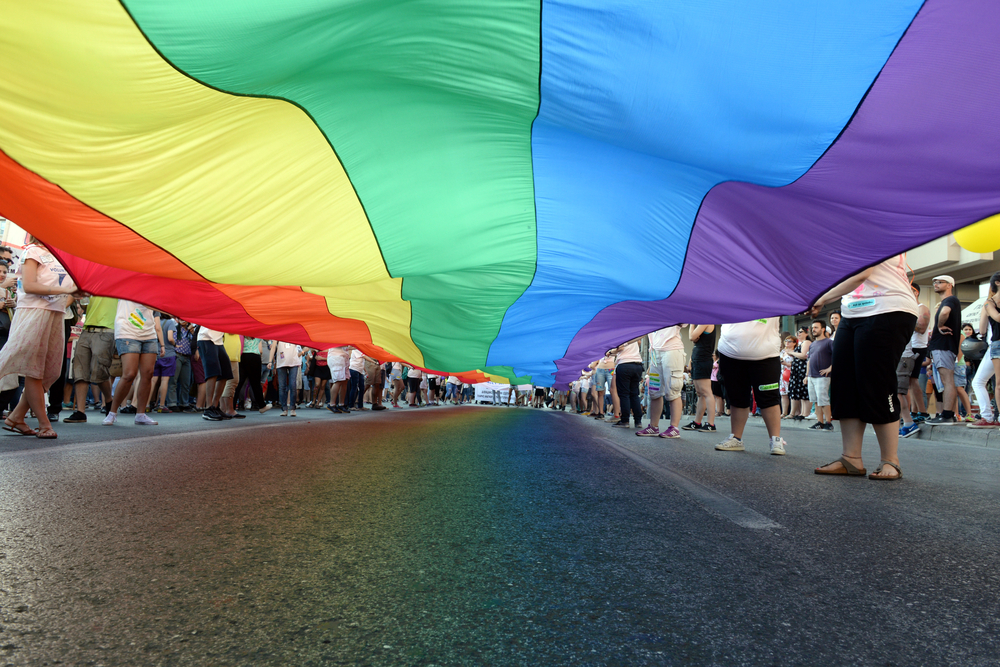
Outside the parliament, two very distinct groups were communicating diverging social messages. On the one hand, conservative protesters opposing the bill had taken to the streets brandishing Christian icons, crucifixes and bibles, chanting: ‘Voice of people, wrath of God’. On the other hand, an enthusiastic crowd of LGBT+ supporters waving rainbow flags and Pride banners started a spontaneous street celebration all over Syntagma square singing, dancing and hugging in tears of relief.

A few hours later, the first-ever same-sex wedding announcement in Greece was featured on the Greek newspaper Ta Nea. Stavros Gavriliadis and Dimitris Elefsiniotis, life-long partners and parents of three, had been publicly advocating for marriage equality for years. The couple was in Parliament during the voting.
The law in figures

The bill was voted by a cross-party majority of 176 Mps out of 300, while 76 opposed it. Two abstained from the vote and 46 were not present. This historic development makes Greece the 16th country in the EU and the 35th worldwide to legislate same-sex marriage.

This is the outcome of almost a decade of reforms aiming at gradually aligning the country with EU standards regarding marriage equality. The first important step was made in 2015, when civil partnership agreements for same-sex couples were introduced.

This law was extended in 2016, but no provisions over adoption were foreseen, with legal guardianship being granted only to the biological parent. In the same year, Greece prohibited discrimination on the grounds of sexual orientation in employment and in the provision of goods and services.

Two years later, in 2017, Greek lawmakers passed legislation allowing people to have their gender identity legally recognised, paving the way for the launching of ‘training sessions on gender and sexuality for civil servants’, introduced in 2022, and the appointment of a committee responsible for drafting a national strategy to improve LGBT+ rights.

Only a couple of years ago, in 2022, did Greece join Malta, Germany and France in banning ‘Conversion therapy for minors; a controversial practice designed ‘to suppress sexual orientation or gender identity’ through a number of ‘treatments’.

Despite the EU’s repeated calls on its Member States to ban such ‘degrading and discriminatory’ practices, warning of ‘permanent physical and psychological harm’, conversion therapies still exist all over the Union.
The law foresees child adoption but not surrogate parenthood

The Greek public opinion had been divided ever since January 24, when the draft bill was published and made available for public consultation.

Opponents responded with fierce criticism, accusing the government of jeopardising fundamental Greek-Orthodox values. Projecting the ideological triangle of ‘Homeland, Religion, Family’ – a slogan intertwined with Greek ultra-orthodox conservatism, the inception of which dates back to the ‘Moral reform’ of the late 19th century – political figures representing mainly right-wing ideology expressed their ardent opposition on TV channels, op-eds and the social media, focusing especially on the bill’s provision allowing child adoption by same-sex couples.

The model of the ‘traditional Greek family, consisting of a father and a mother’ was the main argument brought forward by the Greek Orthodox church. The circular of the Holy Synod, read by priests all over the country during the Sunday liturgy that followed the publication of the bill, stated clearly that the Church strongly opposes same-sex marriage.

Commenting specifically on the adoption of children by same-sex couples, identified within the bill as ‘parent 1’ and ‘parent 2’, the Synod raged: "This condemns future children to growing up without a father or mother in an environment of parental role confusion", warning that such a development would ‘threaten the sacred institution of marriage’.

LGBTQI+ couples’ right to adoption has been one of the most controversial aspects of the new law. Interviewed by OBCT, developmental psychologist Irini Makridou gives a different interpretation of this debate:

“The issue should not be who will raise a child, but how. It is not about the person, but rather the context. There are children who grow up in so-called ‘traditional’ families, but under unacceptable conditions, by abusive or negligent mothers and fathers”.

Makridou explains that children raised in a same-sex family by parents who have worked on their parenting skills can receive the affection and care that they need to feel complete and happy in life. Moreover, she expresses her scepticism regarding one of the most ambiguous topics dominating the national media:

“There is no scientific evidence supporting allegations that a child raised in a same-sex household is more prone to becoming homosexual than a child who grows up with heterosexual parents. Living and working in a peripheral area, inside a relatively more conservative society compared to big urban centres, I can say that the Greek society is not ready yet to accept and embrace these pivotal developments. Social change should start from the formal schooling system. Diversity, however, is still a taboo in Greek schools”.

PHOTO  Gay pride in Athens - © Kostas Koutsaftikis/Shutterstock

Framing the past: How Roma people are depicted in Romanian and Greek schools


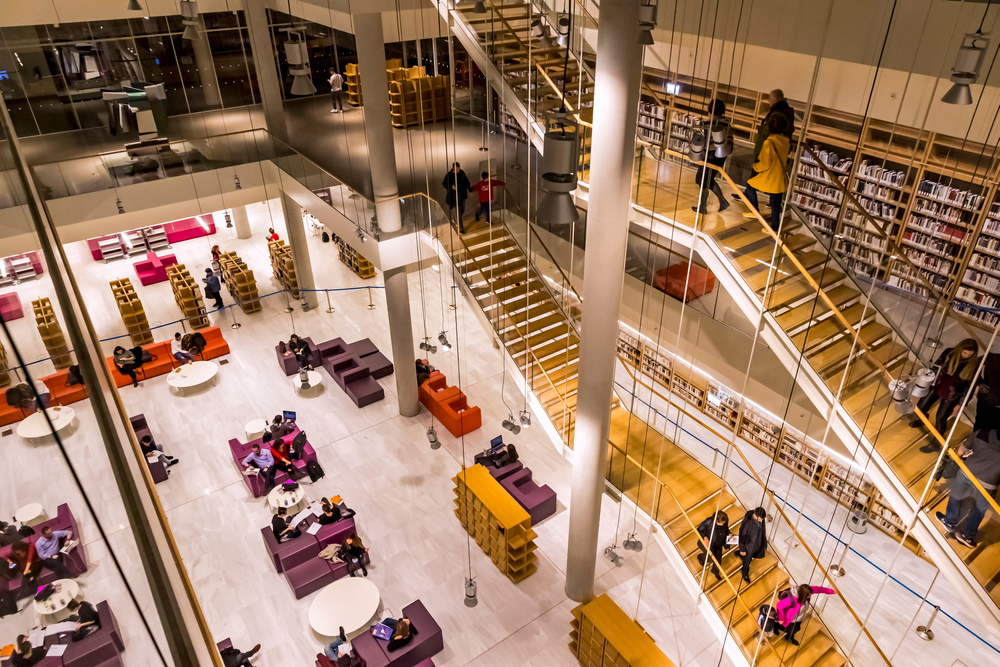
Athens library - ©katatonia82/Shutterstock

The way it is represented in formal education tells a lot about the condition of a people. Even when it is present in textbooks in South Eastern Europe, the history of the Roma is often ignored or represented in a way that perpetuates stereotypes and misconceptions


30/12/2024 - Mary Drosopoulos, Oana Dumbrava

The so-called “stateless people”, originally migrated from northern India to Europe in the 14th century, today they are officially referred to as “Roma” and “Travellers”, two umbrella-terms adopted by the Council of Europe to embrace a wide range of ethnic groups, divided as follows: Roma, Sinti/Manush, Calé, Kaale, Romanichals, Boyash/Rudari; Balkan Egyptians (Egyptians and Ashkali), Eastern groups (Dom, Lom and Abdal); Travellers, Yenish, populations referred to as “nomads”, and persons that identify themselves as “Gypsies”.

The history of the Roma in Europe is one of suffering. For centuries, many were enslaved by noble families and states, until slavery was finally abolished in the 19th century. But freedom never meant equality. Forced assimilation, violent expulsions, and the horrors of the Holocaust – in which between 220,000 and 1.5 million Roma lost their lives – left deep scars. Roma continued to face systematic discrimination after World War II, yet their vibrant cultural heritage in music, dance, and storytelling endures. Today, the Roma community continues its struggle for equal rights and recognition.

What do Romanian history textbooks say about the Roma people?


During the communist regime of Nicolae Ceaușescu there were almost no reference to Roma in school textbooks. In an attempt to promote a unified national identity, centered on ethnic Romanians, the experiences and contributions of the Roma, as well as other minorities, were left out of history books. This exclusion was intentionally designed to downplay ethnic diversity and foster a monolithic version of Romanian identity. The aim of assimilationist policies was to push Roma communities to abandon their cultural practices, reinforcing their invisibility in official discourse and perpetuating old stereotypes and discriminations that still persist.

After the fall of communism, Romania’s education system was affected by the slow transition to democracy, marked by continuos reforms and frequent changes. In the years of transition, the tendency of the individual to turn to his or her own ethnic group led to the process of social categorization on an ethnic basis, determining further discrimination.

Roma camp in Sibiu - source: National Museum of Romanian History

Today, the Romanian Ministry of Education oversees multiple textbook options for each subject. The offer is very varied in terms of quality and approach: while some textbooks remain focused on traditional narratives, others include more modern, inclusive perspectives. Teachers, in principle, can choose the books they consider most suitable for their students. The freedom of choice is very welcome, but this flexibility leads to some inconsistencies.

The Highschool history textbook (Gimnasium edition), published in 2007, was one of the first schoolbooks to mention the slavery of the Roma, but it addressed the issue through stereotypes, linking the position of the Roma to their “backwardness”.

“Since their arrival in these lands – the book states – the Roma were considered an inferior people because of their backward lifestyle and physical appearance. Therefore, from the very beginning, they were marginalized and isolated”. This narrative implicitly blames Roma communities for their treatment throughout history.

It has taken time to develop more realistic perspectives in history teaching. Only in 2020 have some more comprehensive textbooks been published, but many of them still present a biased perspective, maintaining nationalist tones and downplaying the experience of slavery and the Holocaust. This selective revisiting highlights the ongoing challenge of promoting balanced narratives in education.

Today, high school students in Romania learn from a textbook (ART edition) that “enslaved” Roma lived in poverty, practicing their trades and maintaining their traditional lifestyle. This description, taken out of context, reflects prejudices and risks leading to generalizations. One of the exercises in the book asks students to organize "a debate about the impact of prejudices on a community". Although it addresses the issue of prejudice, the exercise is reductive, ignores the impact of slavery and avoids critical reflections that foster true historical understanding.

Another textbook (published by CD Press) speaks of the Roma in the Middle Ages as people "subjected to all forms of injustice and abuse by their masters”, but claims that the Roma "lived among Romanians, integrated into medieval society".

As for the Roma Holocaust, we read (Niculescu’s textbook version) that “many were deported, some of them died because of the detention regime”. The textbooks do not provide more details that could facilitate a better understanding of the historical context.

Addressing Roma history is not only about slavery, deportation and genocide, but also about giving visibility to those who have overcome these traumas. As Luiza Medeleanu, an expert in intercultural education, suggests , Romanian students should learn more about people like Anna Frank, but also Constantin Anica, a young Roma Holocaust survivor, in order to foster empathy and dialogue.

However, as history teacher Ioan Cristian Caravană points out, history taught in Romanian schools is still “an official history, to be learned by heart. Rather than encouraging critical thinking, lessons present a pre-established narrative that limits deeper understanding”. Discussing historical phenomena, like racism, would allow us to understand their persistence, helping to break the vicious circle of social exclusion. School is the best place to tell meaningful stories and initiate debates, also to encourage Roma teenagers to deeply understand their roots and history and increase their self-esteem.


Postcard - fonte: Museo nazionale di storia rumena

For Vintilă Mihăilescu, renowned Romanian anthropologist, history education deeply impacts students’ sense of belonging. When textbooks focus only on Romanian heroes, ignoring the history of Roma people, they risk sending Roma students a negative message, making them feel excluded. Mihăilescu believed in promoting critical thinking, urging students to ask difficult questions and address all aspects of their national history, including uncomfortable issues that challenge traditional narratives.

Specifically, focusing on the history of the Roma people, one should:

- acknowledge the centuries of slavery that Roma endured in Romanian territories, a historical fact often belittled or ignored in textbooks

- talk about the Holocaust, during which approximately 25,000 Roma were deported, many died under the Antonescu regime

- highlight the persistent discrimination and systematic exclusion that Roma have faced in the post-communist era

Despite the significant progress made by the education system since the fall of communism, in Romania teaching the history of the Roma people is still optional, leaving teachers the choice of whether or not to delve into the topic. 


The case of Greece


The first references to Roma populations in the region of Peloponnese date back to the 14th century. Although there is no academic consensus on the routes and circumstances of Roma migration, it is assumed that their arrival is a consequence of migratory waves towards central Europe, the Balkans and Greece – mainly in the regions of Thrace and Macedonia – conditioned by the gradual expansion of Ottoman rule to the territories of the Byzantine Empire at the end of the 14th and beginning of the 15th century culminated with the fall of Constantinople in 1453.

Despite their long presence in Greece, Roma acquired political rights only in the 1970s. The first mapping of Roma communities was carried out in 1996 (Vassiliadou & Pavli Korre 2011; Μarkou 2013:132). According to 2021 data provided by the General Secretariat of Social Solidarity and Combating Poverty, the Roma population in the country amounts to 117,495 permanent residents and constitutes 1.13% of the total population. The majority of Greek Roma are Orthodox.

According to the UNICEF office in Greece, Roma are still a vulnerable minority, facing difficulties in accessing housing, health, education and employment. Over the last decades, the Hellenic Ministry of Education has launched several initiatives to combat illiteracy and delinquency among the Roma communities. Since the 1990s, several Greek universities have launched pilot programs with an ambitious goal: bring Roma children from the streets and child labor into schools (Skourtou 2003: 98). Specifically, since 2015, the state has promoted several extracurricular courses for Roma children, similar to those designed in 2016-2017 to meet the needs of refugee children in Greek schools (Drosopulos 2018).

In a study published in 2022, Eleni Mousena, Georgia Aggelidou and Anastasia Vasilopoulou observe that “a large part of the educational community believes that the causes of Roma children dropping out of school are related to their families’ negative attitude towards school and education, while the parents of Roma children are unhappy with teachers and the educational system”. The reasons why Roma children feel excluded from the national school system are mainly related to the absence of any reference to Roma in textbooks, but also to the general attitude of Greeks who perceive Roma as “others”, problematic people living on the margins of the society.

Otherness, exoticism and pseudo-interculturalism


August Moon by Voula Mastori is one of the classics of post-war Greek children’s literature, a title traditionally included in “reading lists” distributed to students before the Christmas and Easter holiadys. Published in thousands of copies by Patakis, one of the most prominent publishing houses in Greece, the book tells the story of a young tomboy who attends the last grade of primary school in a suburb. With her anticonformist behaviour, the protagonist raises concerns in conservative society: she becomes friends with a young tinsmith, a Roma whom the children from the neighborhood fear and from whom they run away. The presence of male character who, contrary to popular belief, is neither a thief nor a child abductor, is one of the “less negative” references to “Gypsie” in Greek children’s literature, that has preserved, if not even reinforced stereotypical and discriminatory representations of the Roma people (Gotovos 2004: 7).

August Moon by Voula Mastori

As for the history and fiction books used in schools, references to Roma culture are completely absent. The Roma people and their language are only briefly mentioned in the drama books for the last classes of primary school. However, these are incomplete and quite conventional references.

Aggelos Hatzinikolaou is a retired primary school teacher. Having spent most of his career teaching in Dendropotamos, the most notorious ghetto in Thessaloniki, inhabited almost exclusively by Roma, he has developed a deep understanding of Roma culture in the Greek context. Interviewed by OBCT, he comments on the ethnocentric nature of the Greek school system, where any reference to cultures that deviate from the dominant norm is superficial and usually limited to folkloristic elements.

“In the name of supposedly promoting multiculturalism, as expected in our globalized societies, there have been superficial attempts to ‘include’ populations considered as ‘others’, such as Roma, migrants and refugees. However, an intercultural dialogue cannot be achieved by stereotypical references to food, dance and songs, as is usually the case. There needs to be a much deeper dialogue, which is lacking in our education system”.

Late professor Sofia Gavriilidis has conducted important academic work in the field of pedagogy, illustrating examples of “pseudo-intercultural” books for children, both in formal education and in literature. “Pseudo-interculturalism” refers to attempts to acknowledge other cultures, but in ways that either exoticize the ”other”, further emphasizing differences rather than building bridges through shared traits, or imply the superiority of the dominant culture by depicting “others” as “victims”, in the same way that refugees and migrants are associated exclusively with war, trauma, poverty and other negative phenomena.

Georgia Kalpazidou is an activist, writer and co-founder of the NGO R.E.V.M.A. NGO (Roma Educational Vocational Maintainable Assistance), based in Ampelokipoi-Menemeni, in Northern Greece. PhD candidate in linguistics and member of the Roma community, Georgia has been mentoring young girls in accessing education. Driven by the desire to fill a gap in Greek children’s fiction, the young writer has published a children’s picture book about early school leaving among Roma children. When asked about the presence of Roma culture in textbooks, her answer confirmed the above-mentioned trend

“This is an interesting issue, I have also studied it, coming to the conclusion that there are no references, apart from some stereotypical (although not necessarily negative) images that students can come across when reading fiction books. So it is up to the teachers to decide whether to delve into the topic or not, formal schoolbooks do not contain any indication in this regard”.

In conclusion, juxtaposing the cases of two countries in South Eastern Europe, Romania and Greece, it seems that today more than ever representing history in schoolbooks is a complex challenge. It is not just about dates and events, but also about including voices, facing uncomfortable truths, and dismantling outdated perspectives. Although the history of the Roma people is marked by hardship and resilience, from enslavement to surviving the Holocaust, this reality is often belittled or misrepresented in textbooks. This raises a difficult but necessary question: how to teach history that truly reflects everyone’s experiences?


Related materials:

Italian - Slovene Commission: Toward Shared History 22/04/2008

Rumiz and the Balkans. Bastard notes speaking to the heart of man 22/07/2013


This publication has been produced within the Collaborative and Investigative Journalism Initiative (CIJI ), a project co-funded by the European Commission. The contents of this publication are the sole responsibility of Osservatorio Balcani Caucaso Transeuropa and do not reflect the views of the European Union. Go to the project page

 FREE TIBET

Larung Gar Under Siege: China’s military presence signals escalating crackdown on Tibetan Buddhism

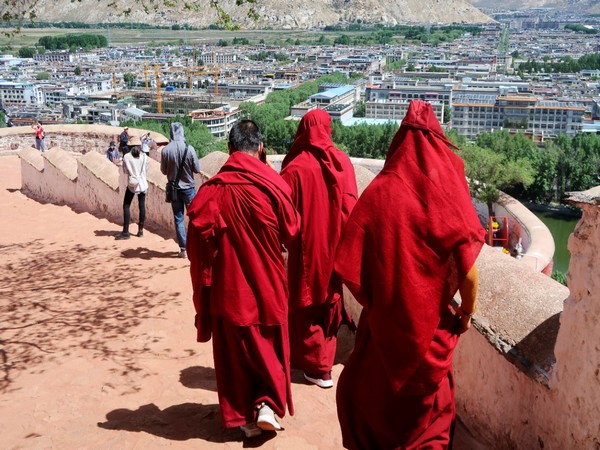
China has stationed around 400 military personnel at the Larung Gar Buddhist Academy in Serthar County, eastern Tibet. This deployment, according to the Central Tibetan Administration (CTA), is part of a broader strategy to tighten control over the region.

The arrival of troops on 20 December 2024, coupled with helicopter surveillance, signals an escalation of security measures at the world’s largest Tibetan Buddhist study centre.

Founded in 1980, Larung Gar has long been a hub for Buddhist monks and nuns seeking to deepen their spiritual education. However, it has faced increasing restrictions from the Chinese government, which views the academy as a centre of Tibetan identity and autonomy.

Previous crackdowns, particularly in 2016–2017, saw thousands of monastic dwellings demolished and many practitioners forcibly evicted. Consequently, the population at Larung Gar has been halved from around 10,000 to a significantly smaller number.

The CTA reports that China plans to impose new regulations at Larung Gar, including limiting residents’ stay to a maximum of 15 years. Additionally, all monks and nuns will be required to register with the authorities, and the total number of religious practitioners is expected to be reduced. Chinese students are reportedly being asked to leave, signalling a targeted effort to further decrease the academy’s population.

These measures represent a continued effort by the Chinese government to exert greater control over Tibetan Buddhist institutions and restrict religious freedom in Tibet, where traditional Buddhist practices have come under increasing pressure.

The Larung Gar Academy, once a beacon of Tibetan Buddhist scholarship, now faces heightened state surveillance and restrictions, reflecting the broader trend of diminishing religious autonomy in the region.

The increasing military presence and stringent regulations signify China’s ongoing efforts to control Tibetan Buddhism and consolidate state control over the region’s spiritual institutions.

(ANI)

CRIMINAL CAPITALI$M

Thailand says no evidence of bank deals linked to Myanmar arms


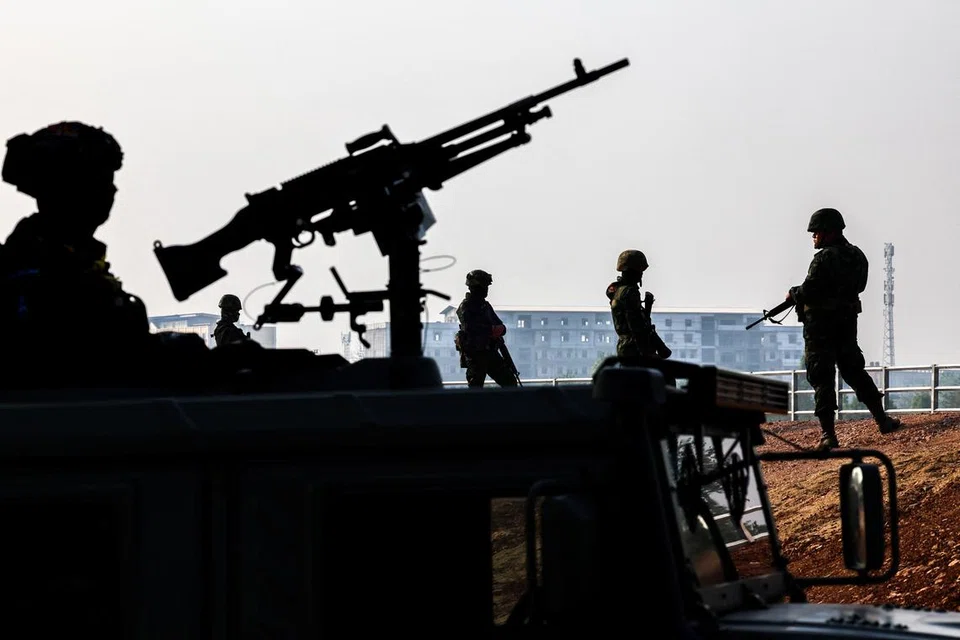
Thai military personnel in Mae Sot in Tak province, which borders Myanmar

Dec 30, 2024, 05:00 PM

BANGKOK – Thai authorities said they found no evidence to support United Nations claims that some banks in the country helped Myanmar’s junta buy military supplies in 2023.

The Bank of Thailand and the Anti-Money Laundering Office said in a joint statement that they started immediate investigations and ordered financial institutions to review certain transactions following a June 2024 report by the Office of the United Nations High Commissioner for Human Rights.


“The investigation found that some financial institutions did conduct transactions with individuals listed in the OHCHR report, but no evidence was found linking these transactions to arms procurement,” they said.

The UN report, titled Banking On The Death Trade: How Banks And Governments Enable The Military Junta In Myanmar, noted a five-fold increase in the Myanmar military junta’s air strikes on civilian targets as it was losing outposts, territory and troops to resistance forces.

The report argued that the State Administration Council – the junta – is relying on two primary resources from abroad: weapons and money.

“Thailand became the SAC’s leading source of military supplies purchased through theinternational banking system,” the report claimed. “The transfer of weapons and related materials from companies registered in Thailand doubled from over US$60 million in FY2022 to over US$120 million in FY2023.”

The Bank of Thailand and Anti-Money Laundering Office report acknowledged there are areas where improvement is needed.

“It was noted that each of the financial institutions had varying levels of rigour in their operations,” and that there is a need to “elevate” certain counter-terrorism and anti-money laundering practices, the bank and office report said.

The UN report said it “found no evidence that the government of Thailand was involved in, nor aware of, these transfers”.

 BLOOMBERG
Activists demand 'concrete measures' to rebuild Mayotte after deadly cyclone


Issued on: 30/12/2024 - 
Video by: Morgan AYRE 
FRANCE24

French Prime Minister François Bayrou arrived in Mayotte on Monday, vowing to bring help to the Indian Ocean territory ravaged by a cyclone."[The French state] needs to take its responsibility," said Mayotte activist Syviane Amavie, who is demanding "concrete measures" to rebuild the ravaged island. Locals are enraged by the slow pace of aid and delays in the arrival of clean water, a flashpoint even before the disaster struck.

01:53
The barcode was ‘one of the 50 things that made the world economy’ but a new revolution is coming

AND THE YKK ZIPPER

Copyright Euronews
By Hannah Brown
Published on 30/12/2024 


More barcodes are scanned each day than searches on Google. But they won’t be around for much longer, here’s what’s coming next.

Ten billion barcodes are scanned every day across the world. And since their introduction 50 years ago they’ve revolutionised the way we do business.

But as demand for more information on our products increases, it’s time for a new revolution. At least that’s what the global standards agency for barcodes, GS1 thinks.

In this episode of The Big Question, Hannah Brown is joined in the studio by Renaud de Barbuat, the President and CEO of GS1 to discuss the future of barcodes.
Are QR codes the next retail revolution?

With a late 2027 target for full implementation, GS1 have created a next generation barcode. In essence, it’s a QR code with a barcode hidden inside.

Retailers will be able to scan the QR code to keep track of stock levels and use-by dates and consumers will be able to see more details about ingredients, supply chain, usage and recycling.

“One scan, infinite possibilities,” Renaud proudly declared.

GS1 already have some of the world’s retail giants on board with the transition. Companies like Carrefour, Lidl, Procter and Gamble, L'Oreal, PepsiCo and Nestlé have signed a joint statement supporting the migration to QR codes.

Why do we need to change the barcode?

Ultimately there is always a cost with infrastructure transition but Renaud is confident it’s achievable quickly for businesses of all sizes and will also reap quick returns.

“The first small retailer in the world to adopt QR codes powered by GS1 is a deli shop in Brazil with three shops.

“In two months, with the support of GS1 and solution providers, they've implemented the technology and the benefit for them was better inventory management - they have reduced waste by 50%.”

As well as business efficiency, GS1 hopes the new QR codes will also have a positive environmental impact too.

For example, manufacturers can implement the QR code during their next regular product redesign and by hosting all the information online accessible through the QR, it can easily be updated at any time without the need to reprint a product’s packaging.

A water company in South Korea completely eliminated plastic labels from their bottles by adding a QR code onto the bottle cap.

“We believe that by having more information, the consumers will be able to make smarter decisions [...] and this will influence products and the products will become more sustainable progressively,” Renaud said.


A revolution for healthcare

As well as the QR codes developed for retail, GS1 have used the same technology for the healthcare industry, in what they call the GS1 data matrix.

“We have 70 countries in the world that have regulations which require the use of GS1 data matrix to identify pharmaceutical products or medical devices,” Renaud explains.

“You not only save money by having better logistic processes in the hospital, but you can also improve patient safety because you know exactly which medicine has been given to which patient by whom. So you have full traceability and ultimately it helps to improve patient outcomes.”

The Big Questionis a series from Euronews Business where we sit down with industry leaders and experts to discuss some of the most important topics on today’s agenda.

Watch the video above for the full episode about the future of barcode technology.
Ethical Artificial Intelligence: Assessing Challenges and Opportunities

Ethical artificial intelligence (AI) is a binding point of discussion that goes across various countries due to their distinctive regulatory, cultural, and ethical frameworks.


By Maj. Vineet Kumar
December 30, 2024
photo: Unsplash


Authors: Maj. Vineet Kumar and Dr. Preethi Amaresh

Ethical artificial intelligence (AI) is a binding point of discussion that goes across various countries due to their distinctive regulatory, cultural, and ethical frameworks. It directs using of moral principles and ethical frameworks in the development, deployment, and usage of AI techniques. The fundamental notions and references in ethical AI include transparency, responsibility or accountability, rights, privacy, and security.

In AI techniques, “transparency” is paramount to guarantee the decision-making procedures are comprehensible and explicable to users. This assists in building trust and allows individuals to question and rework any biases or errors in the system. “Responsibility” involves setting precise lines of accountability for the actions and decisions made by AI techniques. This likewise includes having instruments to address any damage or unethical behavior driven by AI. “Righteousness or fairness” in AI is further crucial to prevent discriminatory or biased outcomes. It demands meticulous contemplation of data used to familiarize AI algorithms and the possible influence on various groups of individuals. “Privacy considerations” emerge from the extensive amounts of personal data gathered and processed by AI techniques. Securing privacy protection is critical in keeping up with the trust of users and respecting their rights. “Safety” is another necessary element of ethical AI, especially in applications with an immediate influence on human lives, such as autonomous vehicles etc. Also, vigorous safety standards must be enforced to minimize hazards and prevent damage to individuals.

Implementing ethical AI requires a multidisciplinary strategy comprising policymakers, AI developers, ethicists, and stakeholders from diverse backdrops. One can ensure that AI helps humanity while maintaining basic values and regard for human dignity by incorporating ethical regulations into the deployment and structure of AI systems. Furthermore, organizations and researchers to address ethical concerns can adopt ethical AI guidelines and frameworks, such as those set by the Institute of Electrical and Electronics Engineers (IEEE), The Organization for Economic Co-operation and Development (OECD), or the European Union (EU).

In addition, ethical AI practices differ across countries due to a complicated interplay of various factors involved. In this context, In India it is a critical and evolving subject that should create awareness from distinct stakeholders (state bodies, tech firms, researchers, and society). As India continues to make consequential headway in AI evolution and adoption, it is crucial to ensure that ethical considerations are at the vanguard of these advancements. In Russia, it is a matter of growing significance as advancements in AI technology offer both prospects and challenges for society. In the U.S., institutions like “Partnerships on AI” and initiatives like the “AI Ethics Guidelines” put a marked focus on transparency, accountability, and righteousness in AI approaches. In South Korea and Japan values and cultural norms recreate a momentous role in shaping ethical AI techniques where these countries highlight the importance of societal amicability further influencing how AI technologies are introduced and incorporated into different sectors while considering ethical implications. “The General Data Protection Regulation (GDPR)” in Europe as well sets an international standard for data protection and privacy, which largely impacts how AI technologies are developed and used. The European Commission’s High-Level Expert Group on AI has also laid out ethical guidelines highlighting human management, accountability and fairness. These rules and approaches shape the ethical AI landscape in Europe. In China, AI development strategy centralizes on boosting AI capabilities, leading to ethical considerations around privacy, data protection and surveillance.

Nevertheless, addressing ethical challenges demands a multifaceted strategy that comprises regulatory frameworks, ethical approaches and technological solutions. Some of the key challenges include privacy (data security, consent, personal data and possibility of privacy breaches), accountability (establishing precise lines of responsibility is important to ensure that society or organizations can be held liable for the outcomes of AI strategies), bias and rights (securing righteousness in decision-making procedures is paramount to stem bias and inequality), transparency (ensuring clarity in AI decision-making procedures is necessary to facilitate stakeholders to evaluate the reliability and right of AI approaches), data bias (addressing data bias demands meticulous consideration of data collection techniques, bias mitigation strategies and dataset diversity) and explainability (ensuring that AI systems can explain their decisions in a human-readable manner is essential in facilitating oversight and building trust).

Per contra, Ethical AI offers extensive possibilities for improving decision-making techniques, expanding human capacities, and propelling innovation across different industries. AI technologies can additionally enable societies contributing to favorable social consequences by following ethical principles. Key opportunities in Ethical AI include accountability and transparency (organizations through algorithms and systems can build trust with stakeholders and users while also ensuring accountability for the outcomes of AI-driven decisions), improved decision-making (AI can assist in ethical decision-making by examining extensive amounts of data to provide understandings that consider both societal values and ethical implications), privacy protection (prevent unauthorized access or misuse and safeguard sensitive user data), inclusion and empowerment (incorporating ethical consideration into AI design, marginalized societies, deployment and development processes can benefit from AI technologies and participate in shaping more unbiased and inclusive systems) and bias mitigation (ethical AI presents the possibility to detect and address biases in algorithms and data sets, ensuring righteousness and equity in decision-making procedures).

In a nutshell, by prioritizing ethical considerations in AI evolution and deployment, one can construct a more responsible and restorative future for societies at the global level. To a greater extent, striking symmetry between ethics and innovation is central to realizing the maximum potential of AI while protecting human rights and values. Embracing “Ethical AI” thus offers effective prospects to harness the transformative power of AI while ensuring that it aligns with ethical regulations and values.


Maj. Vineet Kumar is the Founder and Global President of CyberPeace.