Monday, December 30, 2024

'Green' ferry emits more CO2 than old diesel ship

Calum Watson
BBC News Scotland
30/12/2024
PA Media
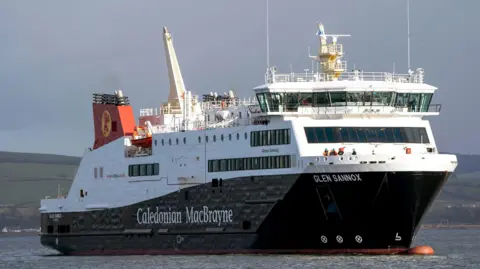
Glen Sannox brings greater car capacity to the Arran route but a bigger carbon footprint


The carbon footprint of a long-delayed new "green" ferry will be far larger than the 31-year-old diesel ship that usually serves the route between the Scottish mainland and the island of Arran.

An emissions analysis by CalMac has calculated MV Glen Sannox will emit 10,391 equivalent tonnes of CO2 a year compared with 7,732 for MV Caledonian Isles.

The dual-fuel ferry has more car capacity but requires larger engines which also emit methane, a greenhouse gas with a far greater global warming effect than CO2.

Ferries procurement agency CMAL, which owns the ship, said the comparison was "inaccurate" as Glen Sannox is a larger vessel.

The size of Glen Sannox is a factor in its carbon footprint, but so too is the liquified natural gas (LNG) fuel which is less climate-friendly than previously claimed.

One expert on transport emissions told BBC News that if the "upstream" carbon cost of importing LNG from Qatar is included in the emissions calculation, it might be better to run the new ship on diesel.

Prof Tristan Smith, from University College London's Energy Institute, said: "In a best case scenario there's a negligible benefit of using LNG, and at worst there would be a deterioration."

Why was Glen Sannox so hard to build?


Were Scotland's new gas-powered ferries a bad choice?


Glen Sannox is the first ferry ever built in the UK capable of running on both LNG and marine gas oil (MGO), a low-sulphur type of diesel.

At its launch in 2017, then first minister Nicola Sturgeon said it would contribute to "Scotland's world-leading climate change goals".

But the LNG technology also added complexity. The Ferguson shipyard had to overcome many engineering and regulatory challenges before the ship was delivered last month, years late and over budget.

The size of the ship also means it cannot berth at the usual mainland harbour at Ardrossan until a major redevelopment takes place.

When it enters service next month, Glen Sannox will bring a significant increase in car capacity. It can carry 127 cars compared to about 90 for Caledonian Isles.

Air pollutants, known as NOx and SOx, will be also reduced, while its power and manoeuvrability should mean fewer weather-related cancellations.

But in terms of greenhouse emissions, the CalMac analysis - seen by BBC News - reveals the benefits of the LNG technology are quite small.
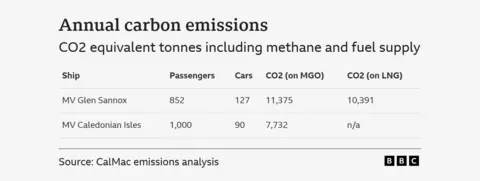


Once methane emissions are factored in, the benefit of running the ship on LNG rather than MGO-only is less than 9%.

And the increased fuel consumption of the heavier ship means its overall carbon footprint is about 35% larger than Caledonian Isles, which is due to return to the Arran route in March following repairs.

Why is the ship's carbon footprint so big?


The carbon emissions have nothing to do with the design and construction of Glen Sannox by the Ferguson shipyard - the yard simply built the ship it was asked for.

Instead they are due to decisions taken by ferries procurement agency CMAL, ferry operator CalMac and Transport Scotland before the contract was put out to tender.

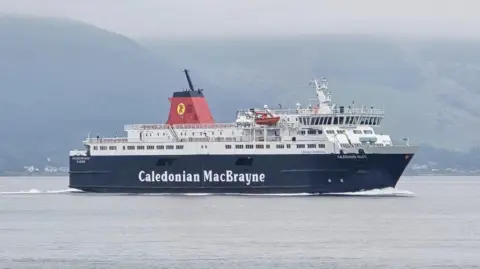
The old ferry, Caledonian Isles, was designed to carry 110 cars, but modern cars are so much wider, it can now only fit about 90.
Christopher Brindle

The former main Arran vessel Caledonian Isles will operate alongside Glen Sannox until the second LNG vessel Glen Rosa comes into service

Glen Sannox was specified to carry 127 modern cars, or 16 HGVs, and to have a higher top speed (although this is not necessary for Arran sailings) resulting in a far heavier ship which requires bigger engines.

When running on LNG, CO2 emissions are up to 25% lower - but this is almost entirely offset by the larger engine size and higher fuel consumption.

A second reason is methane.

The LNG fuel mostly consists of methane, a greenhouse gas with a global warming potential (GWP) 28 times more potent than CO2 over a 100-year time span.

A small proportion of methane always passes through the engines unburnt, and is released up the funnels - something known as "methane slip".

CalMac has calculated that methane slip adds the equivalent of more than 1,800 tonnes of CO2 per year.
Advertisement
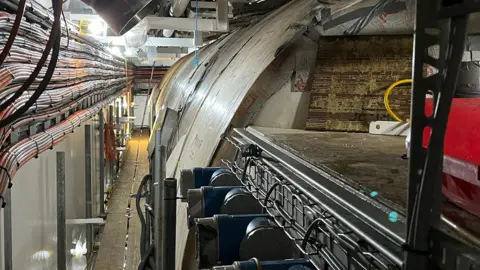

Glen Sannox has a huge cryogenic fuel tank in the centre of the ship which stores the LNG at minus 162C


There is also no local supply of LNG in Scotland, so the gas has to be brought up from a terminal in Kent using diesel road tankers.

This 445-mile road journey adds the equivalent of 140 tonnes of CO2 per year, compared to 19 tonnes for transporting MGO.

Ferries procurement agency CMAL, which owns Glen Sannox and its sister ship Glen Rosa, began proposing LNG as a lower emissions ferry fuel as long ago as 2012.

In a statement it said LNG was considered "the best option" at the time, and was always intended as a "transition fuel".

A CMAL spokesperson added: "Due to the difference in vessel size, propulsion power and expected sailing time, it is inaccurate to draw direct comparisons between the emissions of older vessels and MV Glen Sannox.

"The latter is a much newer vessel which is bigger and more powerful than the former, reflecting increased demand on ferry services."

Ferry operator CalMac said passenger and vehicle numbers on the Arran route had increased significantly over the past 30 years.

"More power is needed for the size of the vessel that can meet that demand, particularly carrying cars, and it should offer greater resilience against adverse weather," a spokesperson said.

"As a first in class vessel, we will learn more and more about MV Glen Sannox and her fuel consumption as we sail her."

Would it be better to run the ship on diesel?


CalMac's emissions analysis, carried out at the start of the year at the request of Scottish ministers, almost certainly underestimates the ship's carbon footprint.

The figures are based on ideal engine running conditions which minimise methane slip - and CalMac acknowledges that in real-life operations, emissions are likely to be higher.

The analysis also does not factor in so-called "blowdown" emissions of methane which occur every time the ship switches from LNG to running on MGO.

Any methane left in the engine crankcase and fuel lines is automatically flushed into the atmosphere - and CalMac has yet to establish how much will be released.

The report also only considers the carbon cost of transporting fuel from the LNG terminal in Kent - no allowance is made for "upstream emissions" involved in extracting the gas in Qatar and transporting it to the UK.


CalMac argues this is reasonable as it has no control over where the fuel is sourced.

But environmentalists and some academics argue that a fuller "well to wake" comparison of fuels would give a more realistic picture of the climate impacts.

"Upstream emissions are really important - especially if you are importing gas from Qatar or the US," said Prof Smith.

"The point of whether the upstream should or shouldn't be included is irrelevant – it's rearranging deck chairs on the deck of the Titanic at a point when we should be going to zero emissions."

How can Scotland's ferries become greener?


It is possible to run Glen Sannox on biogas, which is produced from organic waste such as manure or by-products from the whisky industry.

Since the carbon dioxide released when burning bio-methane originates in the atmosphere rather than underground, it is considered carbon neutral.

However, building such a plant in Scotland would require major capital investment and would also involve facilities for supercooling the gas to turn it into a liquid.

If a biogas facility were to be developed, one option would be to repurpose the Grangemouth oil refinery where hundreds of jobs are currently under threat.

Four more large CalMac ferries under construction in Turkey will have conventional MGO engines with some limited battery power for manoeuvring in harbour.

But they have a deeper draught (the amount of hull below the waterline) and lower cargo requirements - meaning a more fuel-efficient hull shape has been possible.

CMAL says they have also been designed with the possibility of retrofitting them for potential future fuels such as ammonia.

An alternative option would be to consider catamarans, which are far more fuel-efficient than single-hulled ships.

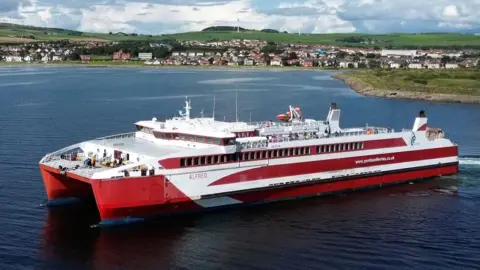
The chartered catamaran Alfred, which can carry 98 cars and cost only £14.5m to build, has been operating successfully on the Arran route for the past 20 months.
Christopher Brindle
Catamarans such as MV Alfred as generally more fuel-efficient than single-hulled ships

Its owner describes it as the most environmentally-friendly large ferry in Scotland because of its low fuel consumption.

CalMac believes advances in battery technology mean about 90% of its routes could potentially be serviced by all-electric ferries, rising to 100% if fast charging were available.

Prof Smith says this is the most climate-friendly option at the present time - although it would require significant upgrades to electricity infrastructure.

"Many other countries are putting battery electric vessels into routes similar to those serviced by these vessels," he said.

"And that's a solution which if charged with renewable electricity would be zero emissions at the point of operation.

"So it's a far more sustainable and viable investment in the long-run, and hopefully we will see more of those in the future."
Keir Starmer hits back after Elon Musk says ‘very few’ businesses willing to invest in UK


Tesla boss and close ally of Donald Trump, who is at the centre of rumours he could donate to Nigel Farage’s Reform UK, hits out at prime minister


Kate Devlin
Whitehall Editor
Monday 30 December 2024 
Independent UK

Sir Keir Starmer has hit back at Elon Musk’s claim that “very few” businesses want to invest in Britain under Labour – pointing to billions of pounds worth of money that have come into the UK since he became prime minister.

No 10 also said the government would continue to take an “unashamedly pro-growth and pro-business approach”.

The tycoon and close ally of Donald Trump claimed on his platform X, formerly Twitter, that the “current administration” was responsible for stopping cash coming into the UK.

He was responding to a call from a Scottish politician asking Tesla, his car company, to open a gigafactory in the country.

In response, Downing Street said: “If you look at what’s happened since the election, you’ve seen £63bn of traditional investment” from an investment summit the PM held in October.

Sir Keir’s official spokesperson added: “Business investment in the third quarter this year is estimated to increase 4.5 per cent compared to this time last year. I think you’ve seen reports out today suggesting that the vast majority of UK businesses expect their turnover to increase next year, up on last year.”


They added that “the government is taking an unashamedly pro-growth and pro-business approach.”

Sir Keir had clashed with Mr Musk in August after the billionaire entrepreneur claimed in a post on X that “civil war” was "inevitable" in Britain.

Mr Musk also hit out at the prime minister, calling him #twotierkeir, using the language of a right-wing conspiracy theory, which claims different types of protesters are treated differently by the police.

Nigel Farage met Mr Musk at Donald Trump’s Mar-a-Lago mansion recently, amid rumours the tech billionaire is preparing to donate up to $100m to Reform UK.

The money would be by far the largest donation in British electoral history.

According to The Sunday Times, leading businessmen and Conservative Party officials believe that Mr Musk could hand over the cash as a “f*** you Starmer” payment as part of his feud with the prime minister.

The “first buddy” of Mr Trump even shared a post on X, claiming that Reform UK will win the next general election, captioning his repost with the word “Yes”.

Asked by ITV about the reports of the massive donation, Mr Musk denied he was planning to give $100m, but his response did not rule out another amount.

Asked if he was planning to give the upstart party £80m, Mr Musk – who has been appointed by Mr Trump to lead a new government efficiency commission in the US – replied “No”.

Mr Farage has previously described Mr Musk as “very supportive”.

“He thinks that if Reform do well in the UK, we can bring about the same kind of change that he intends to do with Donald Trump in America,” the party leader said.


Elon Musk takes another swipe at Starmer as he rejects Tesla plant in UK calls

Elon Musk, fresh from voicing his support for a far-right political party in Germany, claimed 'very few companies' will want to invest in the UK amid calls to set up a Tesla gigafactory in Scotland


Elon Musk is at it again 


By Dave Burke
Political Correspondent
DAILY MAIL
 30 Dec 2024


Petty Elon Musk has ruled out a new Tesla plant in the UK with another dig at Keir Starmer.

The billionaire tech boss, who earlier this week threw his weight behind Germany's far-right AfD party, claimed that "very few companies" will want to invest in the UK while Mr Starmer is PM. Musk is set to hold a key role in the Donald Trump administration when the Republican returns to the White House.

Earlier this week Musk penned a piece in German newspaper Welt am Sonntag newspaper voicing his support for the Alternative for Germany (AfD) party. The anti-immigration AfD, which has called for mass deportations, has been classified as a suspected extremism case by Germany’s domestic intelligence agency.

Responding to Musk's latest outburst, a No10 spokesman said the Government has taken an "unashamedly pro-growth and pro-business approach". The Prime Minister's spokesman said: "We look forward to working with President-elect Trump and indeed his team to progress the UK-US special relationship, and particularly the UK-US trade and investment relationship, which supports hundreds of thousands, if not millions, of jobs both sides of the Atlantic, and tens of billion pounds of investment and trade."

He added: "I'm not going to kind of get into commentary on individual comments, but if you look at what's happened since the election, you've seen the £63 billion of additional investment from the Investment Summit. You've seen the Government respond to some of the businesses' key concerns in the UK, which is lack of stability, and the Government's brought back that stability, both politically and economically."


Hunger crisis could kill more people in Sudan than civil war violence – charity


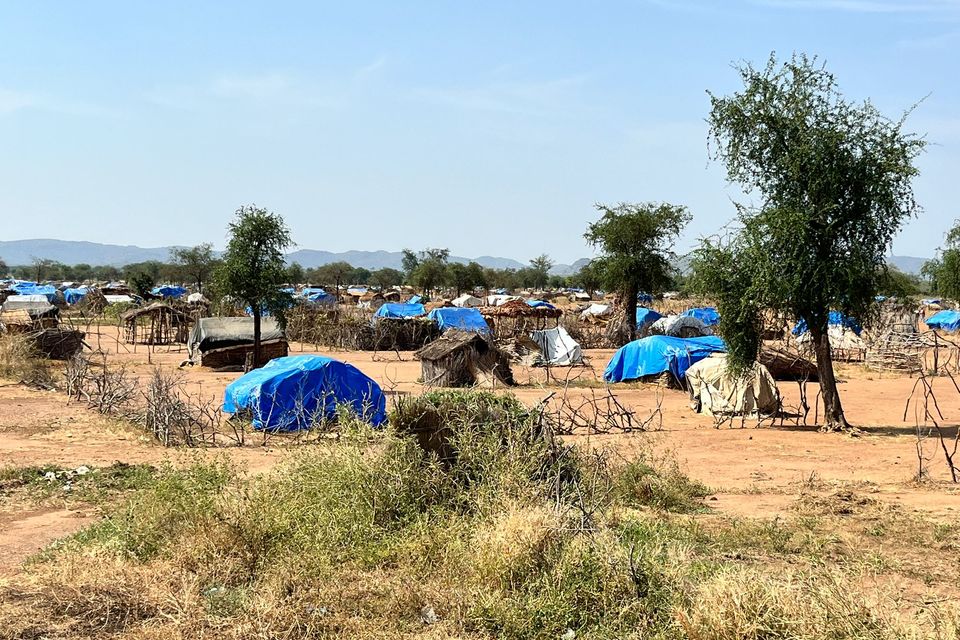
Fighting in Sudan has created what the United Nations has described as one of the largest displacement crises in history (David O’Hare/Trocaire/PA)

By Gráinne Ní Aodha, 
PAToday
30/12/2024

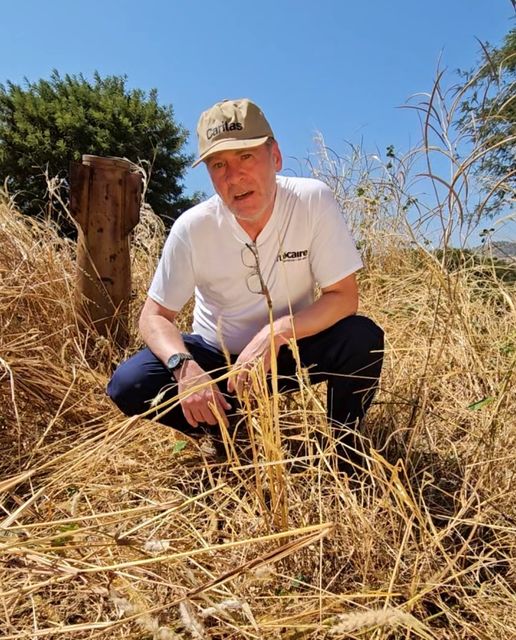
A hunger crisis could kill more people in Sudan than bullets from its “vicious” civil war, an Irish humanitarian worker who visited the country has said.

An estimated 30 million people have been affected by malnutrition, displacement and gender-based violence that has ravaged Sudan during the conflict.


The civil war has driven an estimated 14 million people from their homes, around 30% of its population, and created what the United Nations has described as one of the largest displacement crises in history.

David O’Hare, from Irish charity Trocaire, said the scale of the need in the north African nation is the worst he has ever seen and is going “totally under the radar, unfortunately”.


David O’Hare, of Irish charity Trocaire, in Sudan, where he said a hunger crisis could kill more people than bullets from the civil war (David O’Hare/Trocaire/PA)

On a recent trip, he visited an internal displaced persons (IDP) camp in Thobo and was struck by one mother in particular, Madina.

After losing her husband and son, she and her seven children walked for six days to the camp in mid-30C heat, eating leaves and grass for food.


Her youngest boy, Murimabi, was extremely malnourished and was treated at a health centre which she said saved his life.

“I would have guessed he was three – he was nine,” Mr O’Hare, who is based in Belfast, told the PA news agency.

“Severe malnutrition over a prolonged period of time had stunted his growth. The Trocaire staff told me that his health has vastly improved since he arrived, but he still obviously has many medical issues stemming from that malnutrition.”

Sudan was plunged into conflict in mid-April 2023, when long-simmering tensions between its military and paramilitary leaders broke out in the capital of Khartoum and spread to Darfur and other regions.

I've worked in the humanitarian sector for nearly 20 years, and I'm still finding it hard to get my head around the scale of the crisis that I saw first-hand in SudanDavid O'Hare, Trocaire

This has badly affected a nation heavily reliant on agriculture, where people are forced to leave their land and can no longer grow their own food.

Climate change has also led to poor harvests, due to either a lack of rain or land being flooded.

Famine has been declared in five areas across the country, with a further five areas due to enter famine conditions in the coming months.


“Around 14 million people, 30% of the inhabitants of Sudan, have been forced to flee their homes,” Mr O’Hare said.

“So, to put that in context, that’s twice the population of the entire island of Ireland.

“I’ve worked in the humanitarian sector for nearly 20 years, and I’m still finding it hard to get my head around the scale of the crisis that I saw first-hand in Sudan.

“There’s roughly 48 to 50 million inhabitants, so half the population – 25 million people – are at risk of acute malnutrition. It’s absolutely horrendous.”


David Trocaire said he thought a nine-year-old boy called Murimabi whom he met in a camp in Sudan was around three years old (David O’Hare/Trocaire/PA)

Trocaire runs 15 rural health centres and 11 nutrition outreach sites in the country to help tackle hunger and health issues.

The Amdulu Health Centre was originally set up to help 12,000 people, but that number has doubled since an IDP camp opened nearby.

Mr O’Hare said head of clinic Elizabeth Philip Kori described malnutrition as “a major problem”, particularly for women and children.

In the state where the Nuba Mountains are located, South Kordofan, a million displaced people have arrived and added to its population of two million people in an already poor area.

The scale of the need is totally outstripping available resources, which is one of the reasons why our Christmas appeal is for children in conflict, including kids in Sudan
David O'Hare, Trocaire

Juma Idris Kuku, the regional director of the Sudan Relief and Rehabilitation Association, told Mr O’Hare that in this region it is not the fighting that kills people, it is a lack of food.

“The conflict has been the driver, but that’s not what is the biggest risk to people at the moment,” he said.

Asked what it is about the crisis that makes it the worst he has seen, Mr O’Hare said: “It’s the scale that is just so vast.

“It’s when I see kids that are very obviously malnourished, they’ve got the little swollen bellies, their heads are very big. You can see obvious stunting in their growth.

“On a human level, that’s what gets me the most. It’s women and children who always seem to be the most vulnerable in these situations.”

He added: “The scale of the need is totally outstripping available resources, which is one of the reasons why our Christmas appeal is for children in conflict, including kids in Sudan.”


Mothers and children wait at a clinic in Sudan (David O’Hare/Trocaire/PA)

But he said the actions of a group of farmers in the Nuba mountains, who shared food with new arrivals to the region, had given him hope.

“They didn’t have a safety net for themselves in terms of food, and yet they still … shared what little they had with those people who were even worse off than them, who’d had to flee with nothing,” he said.

“That mutual support for someone, a stranger, but that you know they’re in a worse position than you are, and those farmers did share what little they had. That gives me hope.”
UK

State schools to receive £1.7bn from scrapping of private school VAT break


94% of children in state schools

Charlie Herbert


‘Every single penny of that money will go into our state schools’

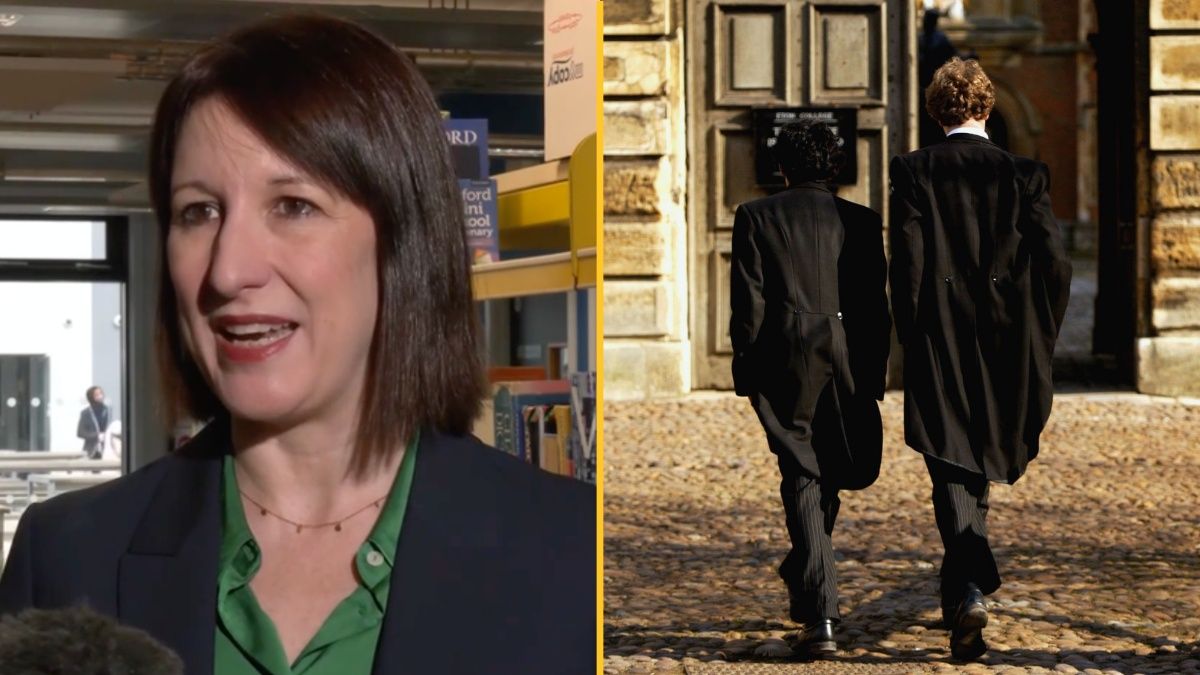
Chancellor Rachel Reeves has promised state schools will receive “every penny” raised by scrapping the VAT break on private school fees.

From January 1, private schools will no longer be exempt from charging 20 per cent VAT on their fees.

The move to scrap the VAT break is expected to raise £1.5bn in 2025, whilst the Treasury predicts it will raise an extra £1.7bn a year by 2029-30.

Chancellor Rachel Reeves has vowed to funnel “every single penny” raised from the policy into state schools, to ensure “every child gets the best start in life,” ITV reports.

She said: “I recognise a lot of parents work hard to be able to send their children to private schools but all parents are aspirational for their children, including the 94% of children in our state schools.”

Reeves added: “Every single penny of that money will go into our state schools to ensure every child gets the best start in life, and that is so often through being able to recruit and retain the best teachers.”

Labour has already announced an increase in the core schools budget worth £2.3bn next year.

Writing in the Mirror, the chancellor said this would “help us hire 6,500 new teachers, drive up standards and improve the Special Educational Needs and Disabilities System so that every child is given the backing to achieve and thrive.”

Critics of the scrapping of the VAT break on independent school fees have argued it will lead to more pressure on the state sector as parents who can’t afford the higher fees send their children to state schools instead.

However, Reeves said she did not expect to see an exodus of pupils moving out of independent schools into the state system.

She said: “In the last 25 years, private school fees have gone up by 75%, and yet the numbers at private schools have remained static.

“So that’s why the Office of Budget Responsibility and the Institute of Fiscal Studies think the number of children changing schools is likely to be quite low.”

Tory leader Kemi Badenoch has said the Conservatives would reverse the move if they returned to power, labelling the policy a “tax on aspiration.”

“Taxing education is wrong, it is against our principles, so yes that is the sort of thing that I can very easily say we would not do that,” she said.
After fleeing Syria, Assad's wife eyes native London for medical procedures

Asma Al-Assad has previously survived breast cancer but is now seeking treatment for leukaemia.

JERUSALEM POST
DECEMBER 30, 2024 
A view of a picture of Asma, wife of Syria's Bashar al-Assad at one of the rooms in Presidential Palace known as Qasr al-Shaab "People's Palace", after rebels seized the capital and ousted Syria's Bashar al-Assad, in Damascus, Syria December 10, 2024.(photo credit: Amr Abdallah Dalsh/Reuters)


After the expiration of her British passport, London-born Asma Al-Assad is unable to travel to the UK for cancer treatment, a Sunday report by The Sunday Times revealed.

Assad, 49, who also holds Syrian nationality, moved to Syria in 2000 and married former Syrian dictator Bashar Al-Assad in the same year at the age of 25.

In May 2024, the Syrian presidency announced that she had been diagnosed with leukaemia.

Asma has previously battled cancer, having recovered from breast cancer in August 2019.

The British newspaper reported that “it is unclear if ministers have proactively blocked attempts by Asma to renew her British passport when it ran out in September 2020, or whether she had allowed it to lapse.”

Due to the expiration of the British passport, the UK government reportedly can avoid considering whether to strip Assad of her citizenship. 

Syria Asma Assad and Bashar Assad vote (credit: REUTERS)

Asma Al-Assad's life-changing few months

Assad is reportedly critically ill with leukaemia, and the Telegraph previously reported that she was given a “50/50” chance of survival.

According to the report, Assad has been kept isolated and away from others in order to prevent infections or contracting other illnesses.

Sources in contact with the Assad family told the Telegraph that Asma's father, Fawaz Akhras, has been caring for his daughter in Moscow and is "heartbroken" by her condition.

After being ousted from Syria by HTS rebels, forcing her and her husband to flee to Russia, she reportedly filed for divorce from her husband, according to Turkish and Arab media reports. The decision to file came after reported dissatisfaction with her life in Moscow.
The inspiring female engineer breathing new life into Yemen’s ancient capital


30 December 2024

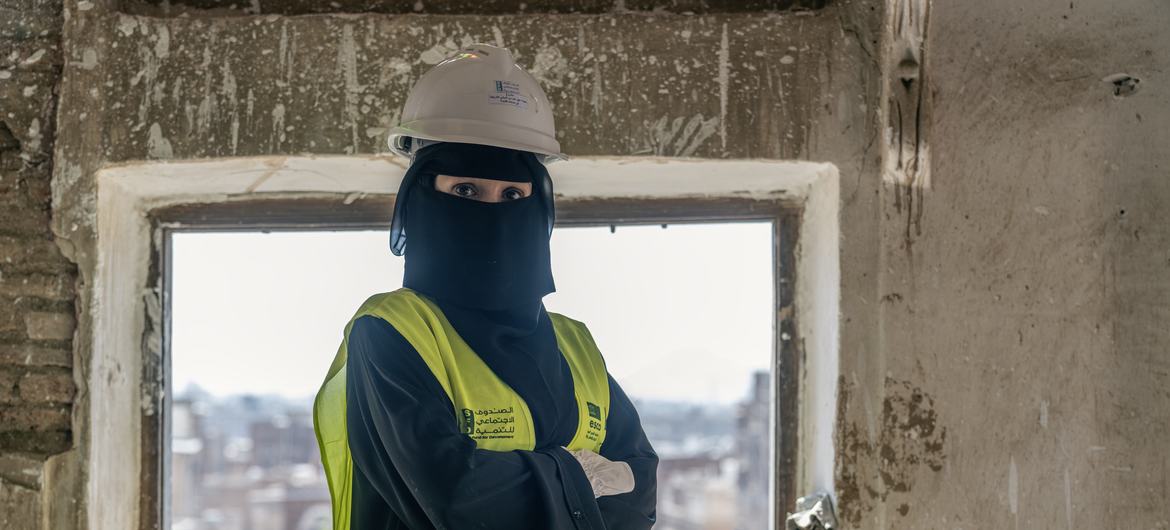
Harbia Al-Himiary has a special connection to Sana’a, whose war-damaged buildings she is helping to restore, as part of a UNESCO-supported initiative.


"There is a common language between me and the buildings. In every house I try to preserve. I feel that the city is grateful to me, and I am grateful to the city because it has taught me a lot”, says Yemeni engineer Harbia Al-Himiary, describing her relationship with the Yemeni capital.

Ms. Al-Himiary has been striving since childhood to achieve her dream of preserving the heritage of Sana'a, and ensuring “the continuity of our history, one of the greatest civilizations."

As a project officer in the Cultural Heritage Unit of the Historic Cities Authority in Old Sana'a, she is currently working on a UN-backed project to restore dozens of historic buildings in Sana'a and across Yemen.

UNESCO/Yemen
Harbiya al-Hamiry, a Yemeni heritage engineer who embarked on a mission to revive Yemen’s historical buildings.
‘There is no difference between a male and female engineer’

"There is no difference between a man or a woman when it comes to preserving this historic city,” she insists, stressing the respect between all members of the team, as well as the residents of the neighbourhoods in which they work. "It is true that we face challenges and difficulties but, by working as a team, we go beyond it. Now there are a number of female engineers in the project, proving every day that they are competitive in this field, all contributing to the preservation of this jewel."

On every project that she has worked on, Ms. Al-Himiary has tried to find opportunities for women and girls. “For example, when I was based in the old town of Zabid, we trained a number of girls in traditional building crafts, such as woodwork, wood decorations, stucco decorations, and carpentry. The more opportunities for training we opened up, the more we found an equal turnout of boys and girls. In some trades, girls outnumbered the boys."

UNESCO/Yemen
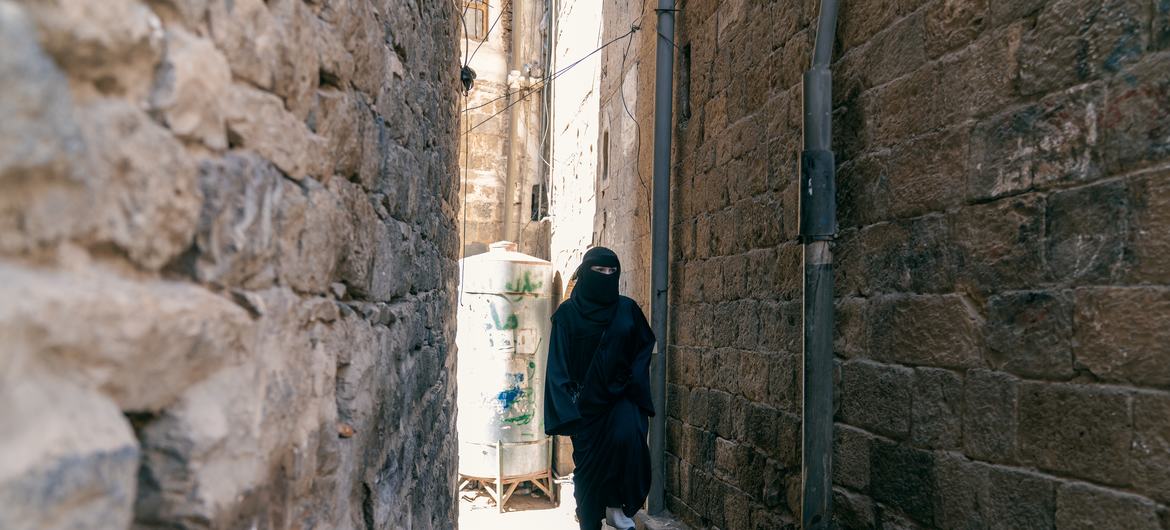
Harbiya al-Hamiry, a Yemeni heritage engineer walking around Old Sana'a.

When she asked one of the girls why she was training in traditional carpentry, she told Ms. Al-Humairi that, by restoring the wooden decorations in her home, she was both exercising her rights as one of the owners of the house, and preserving her, and her family’s, privacy.

"My advice to any girl is to choose the field she likes, because as long as she loves that field, she will definitely succeed in it,” declares the engineer. “With patience, diligence and perseverance, you will surely succeed in achieving the ambition you desire."

UNESCO
Heritage conservation engineer Harbia Al Himiary (middle),

UNESCO and Yemen’s heritage
The project on which Ms. Al-Himiary is working is part of an initiative of the United Nations Educational, Scientific and Cultural OrganizationOpens in new window (UNESCO).
It is funded by the European Union and implemented in cooperation with the Social Fund for Development in Yemen.
Source URL
The inspiring female engineer breathing new life into Yemen’s ancient capital
SPACE/COSMOS


New images show galaxy forming that is similar in mass to young Milky Way

Nasa’s James Webb Space Telescope has detected and “weighed” a galaxy that existed about 600 million years after the Big Bang


In this image from Nasa’s James Webb Space Telescope, thousands of glimmering galaxies are bound together by their own gravity, making up a massive cluster formally classified as MACS J1423 (Nasa/PA)

New images show a galaxy forming that is similar to what our Milky Way’s mass might have been at the same stage of development.

Nasa’s James Webb Space Telescope has detected and “weighed” a galaxy that existed about 600 million years after the Big Bang.

Other galaxies Webb has detected at this time period are significantly more massive, Nasa said.

This galaxy has been nicknamed Firefly Sparkle as it looks like a “sparkle” or swarm of lightning bugs on a warm summer night.

Lamiya Mowla, co-lead author of the paper and an assistant professor at Wellesley College in Massachusetts, said: “I didn’t think it would be possible to resolve a galaxy that existed so early in the universe into so many distinct components, let alone find that its mass is similar to our own galaxy’s when it was in the process of forming.

“There is so much going on inside this tiny galaxy, including so many different phases of star formation.”

The research team modelled what the galaxy might have looked like if it were not stretched and discovered that it resembled an elongated raindrop. Suspended within it are two-star clusters toward the top and eight toward the bottom.

Kartheik Iyer, co-lead author and Nasa Hubble Fellow at Columbia University in New York, said this galaxy is “literally in the process of assembling”.

Webb’s data shows the Firefly Sparkle galaxy is on the smaller side, falling into the category of a low-mass galaxy. Billions of years will pass before it builds its full heft and a distinct shape.

Professor Mowla added: “Most of the other galaxies Webb has shown us aren’t magnified or stretched, and we are not able to see their ‘building blocks’ separately.

“With Firefly Sparkle, we are witnessing a galaxy being assembled brick by brick.”

Chris Willott from the National Research Council of Canada’s Herzberg Astronomy and Astrophysics Research Centre, a co-author and the observation program’s principal investigator, said: “This galaxy has a diverse population of star clusters, and it is remarkable that we can see them separately at such an early age of the universe.

“Each clump of stars is undergoing a different phase of formation or evolution.”

The galaxy’s projected shape shows that its stars have not settled into a central bulge or a thin, flattened disk, another piece of evidence that the galaxy is still forming, Nasa added.

Researchers cannot predict how this disorganised galaxy will build up and take shape over billions of years, but there are two galaxies that the team confirmed are “hanging out” within a tight perimeter and may influence how it builds mass over billions of years.

Firefly Sparkle is 6,500 light-years away from its first companion, and its second companion is separated by 42,000 light-years. The fully formed Milky Way is about 100,000 light-years across — all three would fit inside it.

Not only are its companions very close, but the researchers also think that they are orbiting one another.

Each time one galaxy passes another, gas condenses and cools, allowing new stars to form in clumps, adding to the galaxies’ masses.

Yoshihisa Asada, a co-author and doctoral student at Kyoto University in Japan, said: “It has long been predicted that galaxies in the early universe form through successive interactions and mergers with other tinier galaxies.

“We might be witnessing this process in action.”


Moon rock donated to Ireland by Apollo astronauts was destroyed by fire


A priceless piece of Moon rock donated to Ireland following a Nasa mission was destroyed in a fire, newly released records show (Niall Carson/PA)

By Cillian Sherlock, PA
29/12/2024

A priceless piece of Moon rock donated to Ireland following a Nasa mission was destroyed in a fire, newly released records show.

Documents from the National Archives in Dublin detail the embarrassing affair, which saw the rock travel 380,000km (236,121 miles) to Earth before spending three years in a government basement and ultimately being lost in an accidental fire at Dunsink Observatory.


The lunar rock, which originated from the Apollo 11 mission in 1969, was given to President Eamon de Valera by American ambassador JG Moore in 1970.

Confidential documents from April 1984 show Irish officials were unsure where to display the specimen until the US offered to donate a second piece of lunar rock to Ireland in 1973, following another successful Apollo mission.

A memo discussing the original Moon rock notes: “This piece was given on September 4 1973, on the advice of the Department of Education, to the Dublin Institute for Advanced Studies for display at the Dunsink Observatory.

“This piece of Moon rock had lain in the basement of this department for three-and-a-half years due to indecision as to where it might best be displayed.

“It was decided to give the Moon rock to Dunsink when it became known that a second gift was to be made by the US Government and it was thought that some embarrassment would be caused if the first piece was not already on display.”

Unfortunately, rehoming the rock at Dunsink resulted in the artefact’s demise.

“The first piece was destroyed during a fire at Dunsink on October 3 1977,” documents reveal.

The second piece of Moon rock was given by the US in 1973, accompanied by a special plaque including the Irish tricolour.

“As the Moon rock was given direct to the President, it was put on display in the drawing room of Aras an Uachtarain,” one document noted.

Later, the Moon rock was loaned to Aer Lingus at the request of chief executive David Kennedy so it could be featured in the Aer Lingus Young Scientist Exhibition of 1976.

A further memo noted that a permanent display for the Moon rock at the Irish president’s official residence was felt to be inappropriate given that Aras an Uachtarain was only open to invited guests – and that the US intention was clearly for the item to be available for public viewing.

“The most appropriate museum collection in which it might be exhibited would be the geological or mineralogical collection – (but) the (National) Museum has no space to mount its geological exhibition and therefore the Moon rock would have to be put in storage, which would not satisfy the requirements,” it said.

Given the lack of suitable alternatives, it was suggested that the lunar rock be temporarily given to the operator of the national airline and major airports, Aer Rianta, where it could be displayed in its main airport exhibition space.

“Aer Rianta agreed to accept the plaque for their exhibition and the Office of Public Works (OPW) transferred the plaque to them on October 28 1975,” another memo noted.

Eight years later, a document noted that the Aer Rianta display had ended and the semi-state was no longer keen to have the Moon rock in its possession.

A new Geological Survey Office exhibition space was almost ready and the Department of the Taoiseach noted that this would represent the best future home and display for the artefact.

It was agreed that, if necessary, the Moon rock could be loaned back to the National Museum if it was a suitable inclusion for future displays.

– This article is based on documents in 2024/5/67

From new commercial Moon landers to asteroid investigations, expect a slate of exciting space missions in 2025


THE CONVERSATION
By Zhenbo Wang*, Associate professor of mechanical, aerospace and biomedical engineering, University of Tennessee
29/12/2024


A rendering of Firefly's Blue Ghost lunar lander and a rover developed for the company's third mission to the Moon as part of NASA's CLPS (Commercial Lunar Payload Services) initiative. Photo: Firefly Aerospace/NASA

In 2024, space exploration dazzled the world.

NASA's Europa Clipper began its journey to study Jupiter's moon Europa. SpaceX's Starship achieved its first successful landing, a critical milestone for future deep space missions. China made headlines with the Chang'e 6 mission, which successfully returned samples from the far side of the Moon. Meanwhile, the International Space Station continued to host international crews, including private missions like Axiom Mission 3.

As an aerospace engineer, I'm excited for 2025, when space agencies worldwide are gearing up for even more ambitious goals. Here's a look at the most exciting missions planned for the coming year, which will expand humanity's horizons even further, from the Moon and Mars to asteroids and beyond:
Scouting the lunar surface with CLPS

NASA's Commercial Lunar Payload Services, or CLPS, initiative aims to deliver science and technology payloads to the Moon using commercial landers. CLPS is what brought Intuitive Machines' Odysseus lander to the Moon in February 2024, marking the first US Moon landing since Apollo.

In 2025, NASA has several CLPS missions planned, including deliveries by companies Astrobotic, Intuitive Machines and Firefly Aerospace.

These missions will carry a variety of scientific instruments and technology demonstrations to different lunar locations. The payloads will include experiments to study lunar geology, test new technologies for future human missions and gather data on the Moon's environment.
Surveying the sky with SPHEREx

In February 2025, NASA plans to launch the Spectro-Photometer for the History of the Universe, Epoch of Reionization and Ices Explorer, or SPHEREx, observatory. This mission will survey the sky in near-infrared light, which is a type of light that is invisible to the naked eye but that special instruments can detect. Near-infrared light is useful for observing objects that are too cool or too distant to be seen in visible light.

SPHEREx will create a comprehensive map of the universe by surveying and collecting data on more than 450 million galaxies along with over 100 million stars in the Milky Way. Astronomers will use this data to answer big questions about the origins of galaxies and the distribution of water and organic molecules in stellar nurseries - where stars are born from gas and dust.
Studying low Earth orbit with Space Rider

The European Space Agency, or ESA, plans to conduct an orbital test flight of its Space Rider uncrewed spaceplane in the third quarter of 2025. Space Rider is a reusable spacecraft designed to carry out various scientific experiments in low Earth orbit.

These scientific experiments will include research in microgravity, which is the near-weightless environment of space. Scientists will study how plants grow, how materials behave and how biological processes occur without the influence of gravity.

Space Rider will also demonstrate new technologies for future missions. For example, it will test advanced telecommunication systems, which are crucial for maintaining communication with spacecraft over long distances. It will also test new robotic exploration tools for use on future missions to the Moon or Mars.
Exploring the Moon with M2/Resilience

Japan's M2/Resilience mission, scheduled for January 2025, will launch a lander and micro-rover to the lunar surface.

This mission will study the lunar soil to understand its composition and properties. Researchers will also conduct a water-splitting test to produce oxygen and hydrogen by extracting water from the lunar surface, heating the water and splitting the captured steam. The generated water, oxygen and hydrogen can be used for enabling long-term lunar exploration.

This mission will also demonstrate new technologies, such as advanced navigation systems for precise landings and systems to operate the rover autonomously. These technologies are essential for future lunar exploration and could be used in missions to Mars and beyond.

The M2/Resilience mission is part of Japan's broader efforts to contribute to international lunar exploration. It builds on the success of Japan's Smart Lander for Investigating Moon, or SLIM, mission, which landed on the Moon using a precise landing technique in March 2024.
Investigating an asteroid with Tianwen-2

China's Tianwen-2 mission is an ambitious asteroid sample return and comet probe mission. Scheduled for launch in May 2025, Tianwen-2 aims to collect samples from a near-Earth asteroid and study a comet. This mission will advance scientists' understanding of the solar system's formation and evolution, building on the success of China's previous lunar and Mars missions.

The mission's first target is the near-Earth asteroid 469219 Kamoʻoalewa. This asteroid is a quasi-satellite of Earth, meaning it orbits the Sun but stays close to Earth. Kamoʻoalewa is roughly 131-328 feet (40-100 meters) in diameter and may be a fragment of the Moon, ejected into space by a past impact event.

By studying this asteroid, scientists hope to learn about the early solar system and the processes that shaped it. The spacecraft will use both touch-and-go and anchor-and-attach techniques to collect samples from the asteroid's surface.

After collecting samples from Kamoʻoalewa, Tianwen-2 will return them to Earth and then set course for its second target, the main-belt comet 311P/PANSTARRS. This comet is located in the asteroid belt between Mars and Jupiter.

By analysing the comet's materials, researchers hope to learn more about the conditions that existed in the early solar system and possibly the origins of water and organic molecules on Earth.
Solar system flybys

Besides the above planned launch missions, several space agencies plan to perform exciting deep-space flyby missions in 2025.

A flyby, or gravity assist, is when a spacecraft passes close enough to a planet or moon to use its gravity for a speed boost. As the spacecraft approaches, it gets pulled in by the planet's gravity, which helps it accelerate.

After swinging around the planet, the spacecraft is flung back out into space, allowing it to change direction and continue on its intended path using less fuel.

BepiColombo, a joint mission by ESA and the Japan Aerospace Exploration Agency, JAXA, will make its sixth flyby of Mercury in January 2025. This manoeuvre will help the spacecraft enter orbit around Mercury by November 2026. BepiColombo aims to study Mercury's composition, atmosphere and surface geology.

NASA's Europa Clipper mission, which launched in October 2024, will make significant progress on its journey to Jupiter's moon Europa. In March 2025, the spacecraft will perform a flyby manoeuvre at Mars.

This manoeuvre will help the spacecraft gain the necessary speed and trajectory for its long voyage. Later in December 2026, Europa Clipper will perform a flyby of Earth, using Earths gravity to further increase its momentum so it can arrive at Europa in April 2030.

The ESA's Hera mission will also perform a flyby of Mars in March 2025. Hera is part of the Asteroid Impact and Deflection Assessment mission, which plans to study the Didymos binary asteroid system. The mission will provide valuable data on asteroid deflection techniques and contribute to planetary defense strategies.

NASA's Lucy mission will continue its journey to explore the Jupiter Trojan asteroids, which share Jupiter's orbit around the Sun, in 2025. One key event for Lucy is its flyby of the inner main-belt asteroid 52246 Donaldjohanson, scheduled for April 20, 2025.

This flyby will provide valuable data on this ancient asteroid's composition and surface features, which can help researchers gain insights into the early solar system. The asteroid is named after the paleoanthropologist who discovered the famous "Lucy" fossil.

ESA's Jupiter Icy Moons Explorer, or JUICE, mission will perform a Venus flyby in August 2025. This manoeuvre will help JUICE gain the necessary speed and trajectory for its journey to Jupiter. Once it arrives, JUICE will study Jupiter's icy moons to understand their potential for harbouring life.

2025 promises to be a groundbreaking year for space exploration. With NASA's ambitious missions and significant contributions from other countries, we are set to make remarkable strides in humanity's understanding of the universe. These missions will not only advance scientific knowledge but also inspire future generations to look to the stars.

*Zhenbo Wang receives funding from NASA.
A BIKE IS FREEDOM

WOW: How a driving school programme empowers Pakistani women


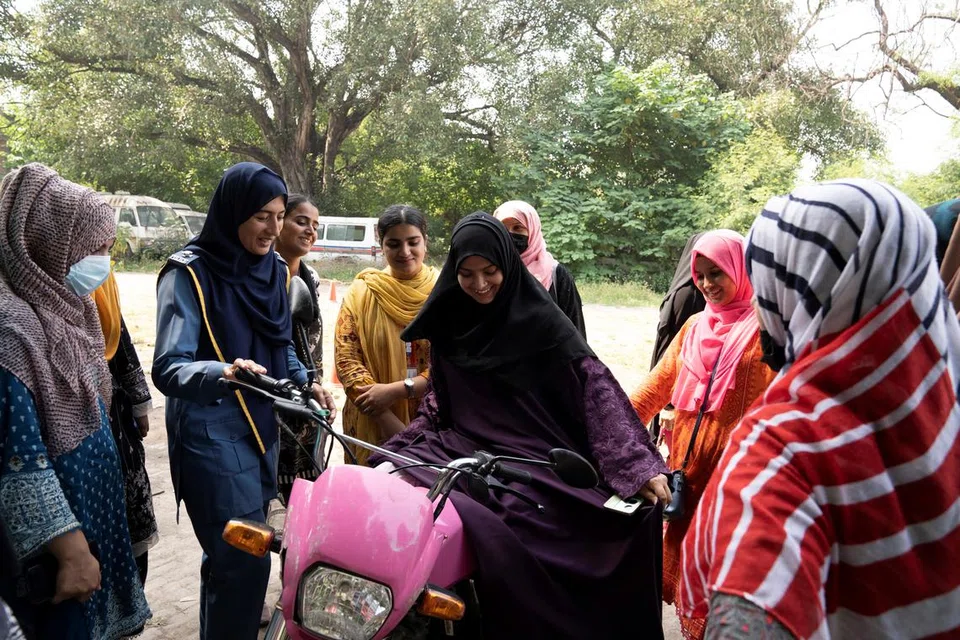
Traffic warden Humaira Rafaqat teaches women how to ride a bike while wearing an abaya.
PHOTO: REUTERS

UPDATED Dec 30, 2024, 

LAHORE – Pakistani student Laiba Rashid, 22, hopes her life will change once she learns how to drive a motorcycle after undergoing a training programme that teaches women how to operate two-wheelers in the bustling eastern city of Lahore.

Although the programme is seven years old, it is rare to see women driving motorcycles. Women driving cars or riding pillion on two-wheelers driven by a male relative is more socially acceptable in the conservative, Islamic nation.

“I hope this will change my life because I am dependent on my brother to pick me up and drop me to college,” Ms Rashid said on her first day at the Women on Wheels (WOW) driving programme offered free by the Lahore traffic police.

She said she wants to buy a motorcycle to go to college, adding that, previously, there were no women drivers in her family.

“Now, everybody is convinced that women should be independent in their movement to schools, jobs and markets,” she said.

Women driving two-wheelers has been a cultural and religious taboo, said Ms Bushra Iqbal Hussain, a social activist and director of Safe Childhood, an organisation advocating the safety of female children.


But more women are now changing the culture, she said, like they did in the 1980s with regular cars, in a bid to reduce their reliance on men to commute.


The WOW programme has been in operation since 2017, but has become increasingly popular in recent months as car prices have soared and motorcycles offer a cheaper alternative.

“Stagnant wage growth and high inflation have eroded the purchasing power of the middle class, leaving motorcycles as the only viable option for many households,” said auto sector analyst Muhammad Abrar Polani of investment house Arif Habib.

The cheapest four-wheeler in Pakistan, where the annual GDP per capita is US$1,590 (S$2,156), costs about 2.3 million rupees (S$11,100) compared with about 115,000 rupees for the most affordable China-made two-wheeler.

Ms Sohail Mudassar, a traffic warden, said the WOW programme has trained at least 6,600 women, and Ms Rashid’s batch was the 86th since it started.

“Women of different ages and segments of society join our camp,” said female trainer Humaira Rafaqat, a senior traffic warden who has trained about 1,000 women. “Young women are quick learners because they are enthusiastic and take risks.”

One of them, Ms Ghania Raza, 23, who is pursuing a doctorate in criminology, said learning to drive a two-wheeler gave her a deep sense of achievement and empowerment.

“It was like breaking a glass ceiling,” she said.


Teacher Shumaila Shafiq, 36, prepares to ride a motorcycle during a training session in Lahore.
PHOTO: REUTERS

Ms Shumaila Shafiq, 36, a mother of three and a part-time fashion designer, said she has been driving her husband’s motorcycle to the market and other places after graduating from the programme.

She has designed a special short-length abaya, a dress used by conservative Muslim women, to wear while operating the motorcycle.

“Wearing a long abaya with loose fitting poses risks as it may get entangled in the wheels,” she said, adding that she intends to market the design to fellow women riders. REUTERS
Indian workers slowly replacing Palestinians in Israeli construction industry

16,000 laborers have come to Israel from India in the last year, but analysts say it still does not make up the shortfall caused when most Palestinians were barred after Oct. 7

By Ruth Eglash
Today,  TOI


Indian builders work on a construction site in the Israeli coastal city of Tel Aviv on December 23, 2024. (Menahem KAHANA / AFP)

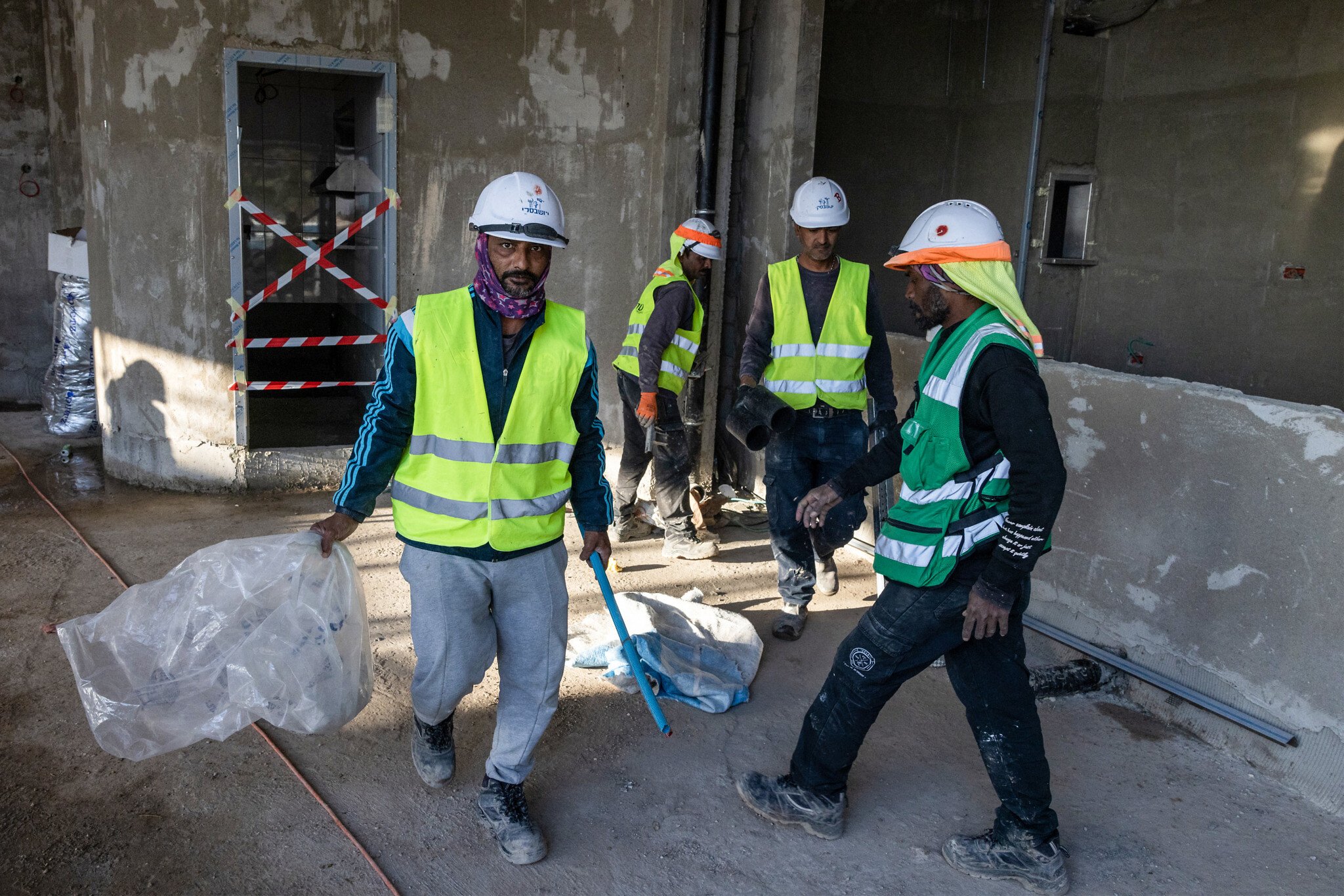
AFP – Wearing a safety belt, helmet and work boots, Raju Nishad navigates the scaffolding, hammering blocks that will form part of a building in a new neighborhood in central Israel’s town of Beer Yaakov.

While he and other Indians working alongside him do not look out of place on the expansive construction site, they are relative newcomers to Israel’s building industry.

They are part of an Israeli government effort to fill a void left by tens of thousands of Palestinian construction workers barred from entering Israel since Hamas’s unprecedented October 7, 2023 attack.

If that attack had not happened, this site, with its slowly emerging high-rise towers, homes, roads and pavements, would have teemed with laborer’s speaking Arabic — unlike the Hindi, Hebrew and even Mandarin of today.

The Hamas attack, which saw terrorists kill some 1,200 people, mostly civilians, in southern Israel and take 251 hostages, triggered the deadliest war yet between Israel and the Hamas terrorist organization in the Gaza Strip.

It later spread to include other Iran-backed groups including Hezbollah in Lebanon and Houthi rebels in Yemen, and even direct confrontation with the Islamic Republic itself.

An Indian builder works on a construction site in the Israeli coastal city of Tel Aviv on December 15, 2024. (Photo by Menahem KAHANA / AFP)

None of this deterred Nishad, 35, from coming to Israel.

“There’s nothing to be afraid of here,” he said, despite several air raid warnings that have sent him running for the shelters.

“Once it (the siren) stops, we just resume our work,” he told AFP.

High earnings in Israel, where some workers can make three times what they would back home, are the key to why people like Nishad flock here, thousands of kilometers (miles) away.

“I’m saving for the future, planning to make wise investments and do something meaningful for my family,” Nishad said.

He is just one of around 16,000 workers who have come from India over the past year – and Israel has plans to bring thousands more.

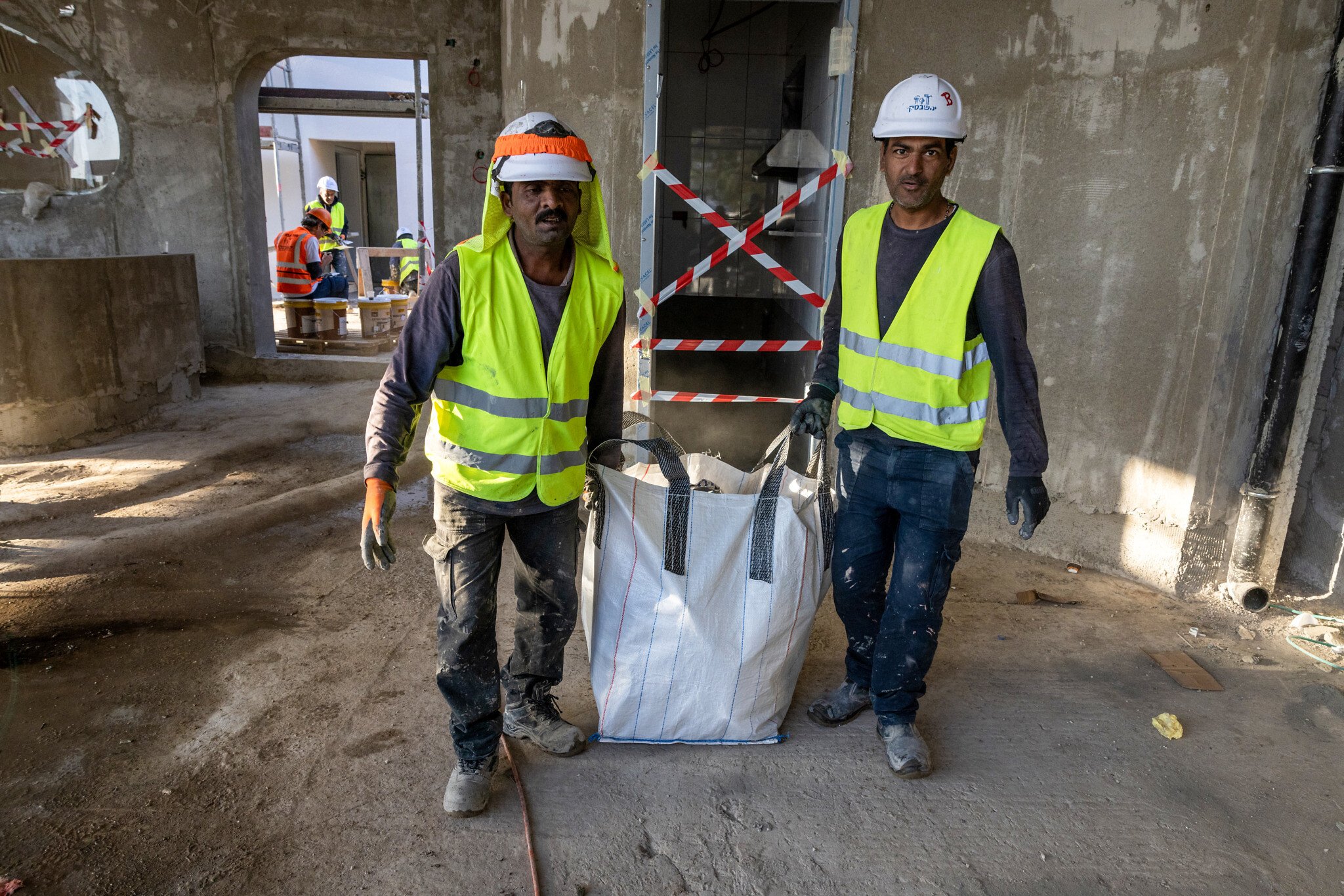
Indian builders work on a construction site in the Israeli coastal city of Tel Aviv on December 15, 2024. (Menahem KAHANA / AFP)


New recruitment drive

India is the world’s fifth-largest economy and one of the fastest growing, but it has also struggled to generate enough full-time jobs for millions of people.

Indians have been employed in Israel for decades, thousands as caregivers looking after elderly Israelis, while others work as diamond traders and IT professionals.

But since the war in Gaza escalated, recruiters have launched a drive to bring Indians in for Israel’s construction sector also.

Samir Khosla, chairman of Delhi-based Dynamic Staffing Services, which has sent about 500,000 Indians to work in more than 30 countries, has so far brought more than 3,500 workers to Israel, a new market for him.

Khosla himself arrived for the first time a month after the October 7 attack, after the authorities appealed for foreign workers in the construction industry, which ground to a halt when the Gaza war broke out.

“We didn’t know much about the market, and there wasn’t an incumbent workforce from India here,” Khosla said.

Indian builders work on a construction site in the Israeli coastal city of Tel Aviv on December 23, 2024. (Menahem KAHANA / AFP)

“We really had to move around and understand the needs,” he said, adding that he believed India was a natural choice for Israel given their “excellent relations.”

He now hopes to bring in up to 10,000 Indian laborer’s, as he has a large pool of skilled Indian workers across all trades.


Long-term effects possible

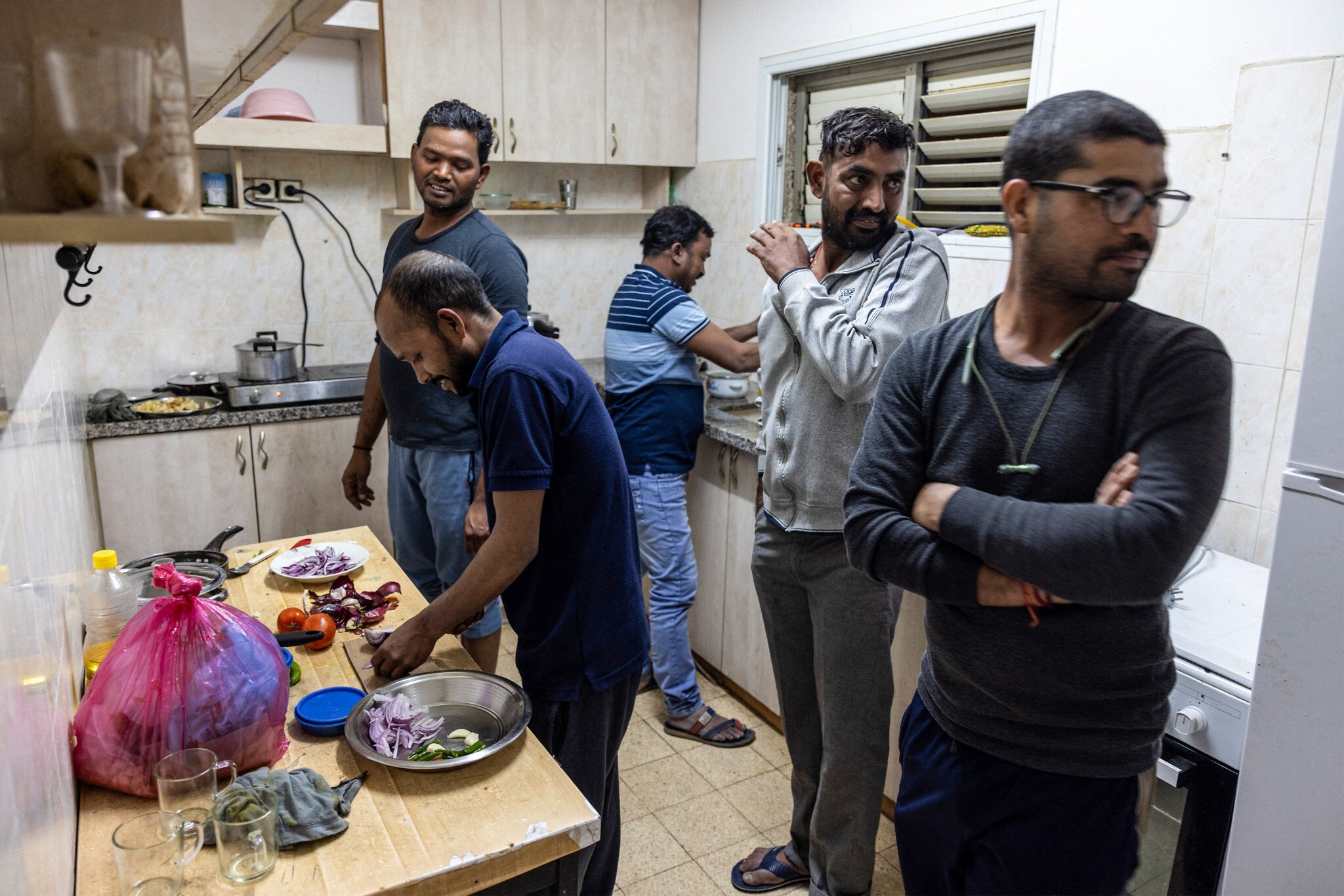
In nearby Tel Aviv, a group of Indians live in a small flat where, in addition to the construction skills they brought with them, they have also learned to cook the familiar spicy dishes they miss from home.

“In a short time, one can earn more money” in Israel, said Suresh Kumar Verma, 39. Like Nishad, he is from India’s most populous state, Uttar Pradesh. Verma works on a construction site north of Israel’s commercial capital.
Advertisement

“Making money is also necessary… It’s important to continue working hard for the family’s future.”


Indian nationals working in the construction industry prepare a meal in their flat in the Israeli coastal city of Tel Aviv on December 23, 2024. (Menahem KAHANA / AFP)

Israeli researchers believe the number of Indians working in construction still does not match the number of Palestinians who did so before the war, and this is hampering the sector’s overall growth.

Before the Hamas attack, around 80,000 Palestinians, mostly from the West Bank, were employed in construction, along with some 26,000 foreigners, Eyal Argov of the central Bank of Israel said.

Now there are about 30,000 foreigners employed, far fewer than the previous overall workforce figures, he said, adding that activity in the current quarter of 2024 is about 25 percent below pre-war levels.

“These numbers (of Indians) are still very low,” Argov said.

While this does not create an immediate “shortage of housing, it may cause delays in the supply of new housing,” he said.

“Israel has a growing population, increasing by two percent annually, and this delay might lead to some shortage in the future.”

Times of Israel Staff contributed to this report


Pro-Palestine students lodge complaint against University of Michigan

Pro-Palestine students lodge complaint against University of Michigan
News code : ۱۵۷۴۰۳۴

The current and former students of the University of Michigan in the United States have filed a complaint against the university authorities for suppressing pro-Palestinian protesters and violating the right to freedom of expression.

According to UK-based Middle East Eye (MEE), the federal lawsuit was filed on Friday in the US District Court in Detroit.

“The plaintiffs allege that the school violated the students’ constitutional rights to free speech, due process and equal protection under the law,” it added.

“The six current and former students also allege that the University of Michigan initiated discipline proceedings against the students for speech-related conduct that other groups weren’t punished for,” it noted.