Saturday, February 15, 2025

Musk & the Myth of USAID

February 13, 2025
Source: Consortium News


A shuttered USAID in Washington, D.C., on Sunday. (Ted Eytan, Flickr, CC BY-SA 2.0)

What hath the MAGA movement wrought? I doubt the archest of Donald Trump’s arch-enemies ever imagined that in his second term he would take things this far in the direction of dangerous or dumb or both.

To be clear straightaway, Trump’s full-frontal attack on the Deep State and the liberal authoritarians who collaborated to subvert his first four years in the White House is wholly warranted.

In particular, purging the Justice Department and the Federal Bureau of Investigation while exerting some measure of civilian control over the intelligence apparatus are not only well-grounded undertakings: They are necessary if the foundations of the decadent republic are to be restored after the wanton misuse of these institutions during the Biden years.

But let us be clear in all directions: A lot of what Trump is getting up to this time merits principled objection in the name of reason, decency, democracy, and a genuine global order — but not, I add immediately, in defense of liberal ideology and (its close cousin) an imperium that conducts its business in a more cosmetically acceptable fashion.

Ownership of the Gaza Strip? Wresting control of the Panama Canal from the sovereign Republic of Panama? I read last Friday Trump has issued yet another executive order, this one to halt aid to South Africa and offer the country’s notoriously racist Afrikaner farmers refugee status as victims of a “massive human rights VIOLATION,” as he put it in a social media post — adding that he considers them “racially disfavored landowners.”

Just when you think you’ve heard everything, Donald Trump says something else. As in every day at this point in the proceedings.

On Monday Trump said in an interview with Fox News that the Palestinians who live in the Gaza Strip will not be permitted any right to return home after he turns it into some kind of glitzy West Asian version of Palm Beach. “I’m talking about building a permanent place for them,” he told Fox’s Bret Baier.

“A permanent place”: Trump just confirmed he is on for the ethnic-cleansing of Gaza he previously proposed in all but name. The force required to get this done, and the direct role he plans to play in executing the project, will make the president of the United States guilty, by all internationally accepted definitions, of crimes against humanity and very possibly war crimes.

As Joe Lauria, Consortium News’ editor-in-chief, astutely pointed out in a conversation the other day, during Trump’s first term the more thoughtful of our independent media were so taken up with defending him against the anti-democratic fabrications of the Russiagate hoax that there was neither the time nor the column inches to attend to all that was objectionable or condemnable about the Trump of 2017 to 2021.

Writing Off the Wall



U.S. House Speaker Mike Johnson, Musk and Trump on Nov. 16, 2024. 
(Office of Speaker Mike Johnson, Wikimedia Commons, Public domain)

Now, as Trump and his people pounce with ferocity on the liberal authoritarians and their various totems, icons, and virtue-signaling programs, there is some sorting out to do. Nothing makes the plainer than the running battle in Washington over the life or death of the U.S. Agency for International Development.

The USAID case is worth some consideration. In it we find … the bluntness of Trump and Musk, the blindness of liberals.

USAID’s fate has been a cause célèbre since Elon Musk, who runs Trump’s government efficiency program, said publicly earlier this month that he had the president’s agreement that “we should shut it down.” It has been tears and the gnashing of teeth ever since.

Musk, who I count the most dangerously anti-democratic figure in the cabal of the mostly mal-intended Trump has gathered around him, sent a team of underlings from his Department of Government Efficiency into USAID’s building, a few blocks from the White House, shortly after he declared the president’s assent to begin closing the agency.

Employees were locked out of their offices and email accounts and told to stay home; USAID websites were blocked or taken down. All full-time USAID people were placed on leave and orders went out to recall the thousands of people USAID has in the field around the world. The New York Times reported last Thursday that the White House’s intent is to cut USAID’s staff from more than 10,000 to fewer than 300.

The USAID case now seems headed for court. A federal judge, Carl Nichols of the District Court in Washington, issued a restraining order at the end of last week temporarily blocking parts of the Trump–Musk plan. This was in response to a lawsuit filed by two unions — one representing federal employees and the other Foreign Service officers.

But there is a telling detail here that is not to be missed: Last weekend a variety of mainstream media — NBC News, The New York Times, and others — published a photograph of a federal government maintenance worker high on a ladder as he chiseled off USAID’s name above the entrance to its building at 1300 Pennsylvania Avenue.

The writing, let’s say, is off the wall. I do not see America’s premier dispenser of foreign aid and humanitarian assistance surviving Elon Musk’s Storm Trooper-esque sweep — not as the agency has long been known.

And how has USAID been known? This is our question. It is what makes this case worthy of some scrutiny.

Kennedy’s Idea

It was John F. Kennedy who established the Agency for International Development in 1961, his first year in the White House. He gave the State Department authority over it, gave USAID a generous budget, and sent it forth in the world to address the countless problems of others we can file under the heading “Underdevelopment.”

Kennedy was no stranger to self-interest, but this project, like the Peace Corps, was in some good measure an expression of the altruism we find threaded through many of his speeches and policies.

(Can self-interest and altruism co-exist in the same mind, the same heart, the same institution? It seems a contradiction in terms, given altruism is defined as selfless concern for others, but I give Kennedy some rope on this question:

The evolution of his vision and understanding in the course of his thousand days was decisively in the direction of an America that could finally reject its idea of itself as an empire. He paid for this evolution with his life, let us remind ourselves.)

Social and economic development programs, health and nutrition programs, irrigation and drainage projects, disease eradication, environmental remedies: Kennedy wanted USAID to make life for others better in all these ways and many more. But note: Among its missions was one to promote democracy.

It is this last assignment that has made USAID a very sad story. By the time the agency sponsored the founding of the

National Endowment for Democracy, during Ronald Reagan’s first term, “altruism” was a Boy Scout’s term for a lot of the business USAID got up to.


Graffiti on a USAID sign in the occupied West Bank, 2007. 
(David Lisbona, Wikimedia Commons, Public domain)

The aid and humanitarian programs remain, and millions of disadvantaged people in more than 100 countries depend on them. But USAID is all about American self-interest now — acting as an instrument of the imperium’s foreign policies with no exceptions that come readily to mind.

Along with the National Endowment for Democracy, it has taken over the coup function from the C.I.A. when this is possible — infamously in NED’s case.

Promoting democratic governance, fighting corruption, helping newspapers and broadcasters do good, professional work, funding all manner of “civil society” groups: What’s not to like is the question you are supposed to ask. Whad’y’a mean, not altruistic?

You have some infamous cases. The “color revolutions” in the former Soviet republics, Venezuela, Ukraine for many years prior to (and since, indeed) the coup the U.S. cultivated in 2014: USAID was the man for all seasons, if I can put it this way.

Russia is a notable case. Reflecting Washington’s regret that Vladimir Putin did not turn out to be another pliant tool when he assumed power from the inebriated Boris Yeltsin in 2000, USAID’s subterfuge got so out of hand in the ensuing years that Putin expelled all of its operatives in 2012.
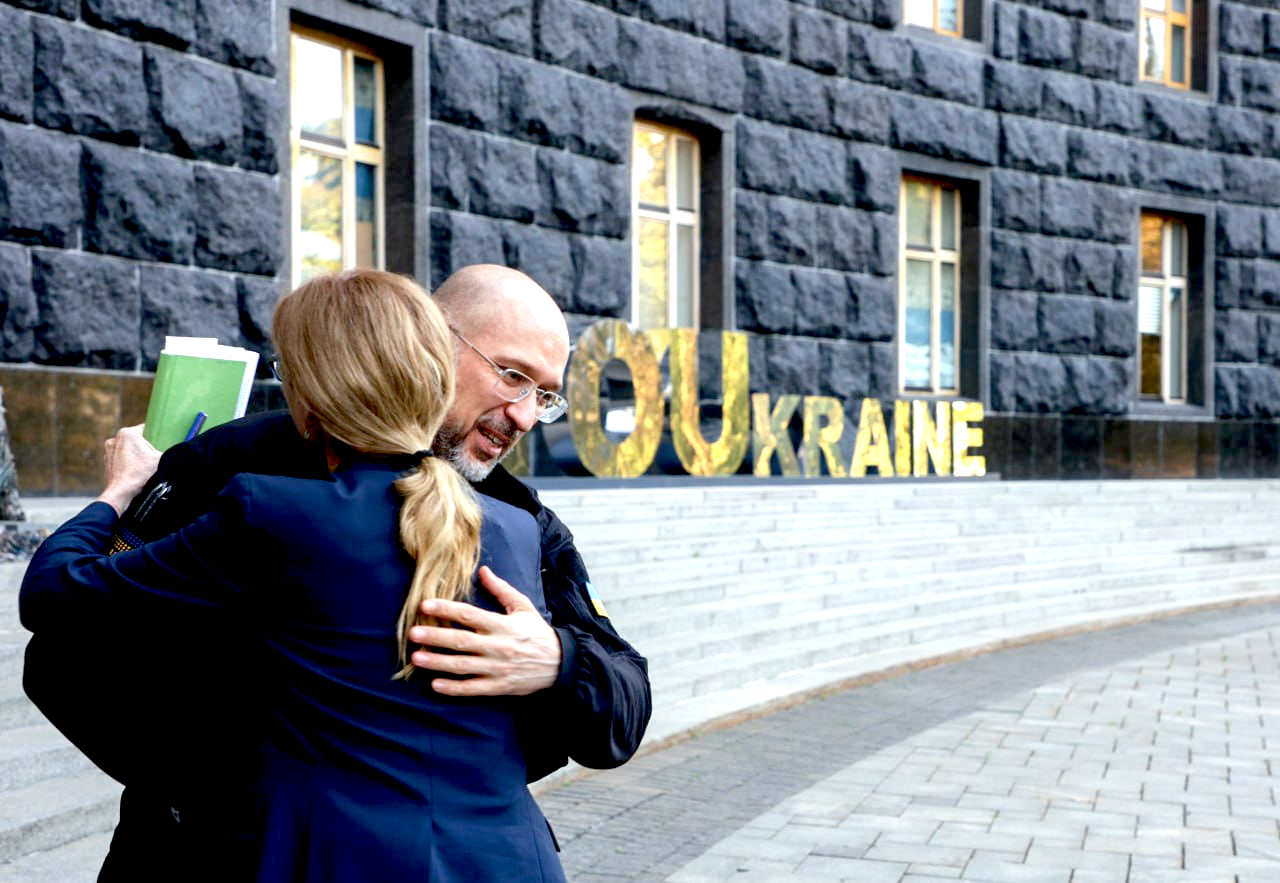

Ukraine’s Prime Minister Denys Shmyhal with USAID Administrator Samantha Power in Kiev, Oct. 2, 2024. (Kmu.gov.ua, Wikimedia Commons, CC BY 4.0)

Georgia is another just now. USAID shrieked and shouted foul last August, when the Parliament in Tbilisi passed a law requiring NGOs receiving a fifth or more of their funding from abroad to register as foreign agents. Some $95 million in U.S. funding, a good bit of it going to “civil society operations” via USAID, has since been on hold.

What? We’re here to manipulate your political process to tilt Georgia Westward, and you, the elected government in Tbilisi, object? How undemocratic of you. How authoritarian. How… how “pro–Russian.” Netted out, this is USAID’s position on the question.

Preserving the Imagery

There are other dimensions to USAID’s doings worth a mention. Its budget so far in this century has averaged something more than $20 billion. The Washington Post reported last week that in 2020 (the latest figures available, presumably) $2.1 billion of that went to corporate farming operations.

USAID ships food aid to poor nations. USAID subsidizes what we call Big Ag. Both of these statements are true. This is altruism with American characteristics, let’s say.

It is instructive to hear the protests of those now standing in defense of USAID. They run consistently to the good the agency does via its overseas operations, and this reality must be honored. There is no question but that countless people in Africa, Asia and Latin America will suffer if Trump and Musk shutter this institution.

There is another photograph that tells an interesting story. It appears atop a Times piece headlined, “Falsehoods Fuel the Right–Wing Crusade Against U.S.A.I.D.” It shows a group of people protesting the Trump plan on Capitol Hill last week.

The protesters carry aloft a wall of placards. One carried by a young boy reads, “Both my parents lost their jobs thanks to President Musk.” O.K. Self-interest is alive and well and living in Washington. Another, held above it, says, “USAID: national security investment.” Some honesty here, but it has been a long day’s journey for American altruism.

I look at the people in the photo — the dress, the demeanor. They seem to me a latter-day gathering of counterculture folk, intent on doing good and keeping their hands clean. It is good to know such people are still among us.

But they are either lost or they are liars. Assuming the former, their references are to an aid agency that long ago succumbed to ideology and corruption. Their USAID is a mythological object at this point, a museum piece.

They are not, in a phrase, facing up to what USAID has become since, as I think of its decline, the Reagan years and the birthing of the straight-out malevolent NED, a C.I.A. op in very thin disguise. This is to say they do not seem to face up to what has become of America since the altruistic Kennedy days.

And facing it, facing it all, is high among the responsibilities of my generation and all those that follow it.

Mainstream media and all manner of political and public figures have rushed to the side of those Capitol Hill protesters this past week. It makes for an amusing spectacle, this effort to preserve the old imagery of USAID and pretend, as the Times does in the piece linked above, that all the talk of USAID’s not-very-democratic promotions abroad are conspiracy theories and — what would we do without this? — Russian disinformation.

Pitiful. The simple fact is that all the commotion Trump and Musk have prompted has caught USAID with its pants down.

There is no saying the outcome of Trump and Musk’s evangelical crusade against USAID. There is no telling even what their motives are, what they are after. There is something more than efficiency at work in what seems to resemble a vendetta in its severity, it seems to me.

Will Trump and Musk choose to forego all the foreign subterfuge with which they can project American power via the agency’s plethora of pernicious programs? I doubt this, without much grounding for my doubt.

Is the intent somehow to attack Samantha Power, USAID’s done-for director and a Deep State operative if ever there was one? I doubt this, too, allowing for a slim possibility.

I doubt altogether that Trump and Musk have mounted their campaign against USAID for the right reasons, whatever they may be.

The rump contingent of USAID staff that will remain after the purge, I read, will be those dedicated to humanitarian assistance. This is curious, certainly.

But it is always this way with Trump. We are left to wonder what he is trying to do and why he is trying to do it.

Patrick Lawrence a correspondent abroad for many years, chiefly for The International Herald Tribune, is a columnist, essayist, lecturer and author, most recently of Journalists and Their Shadows. Other books include Time No Longer: Americans After the American Century.

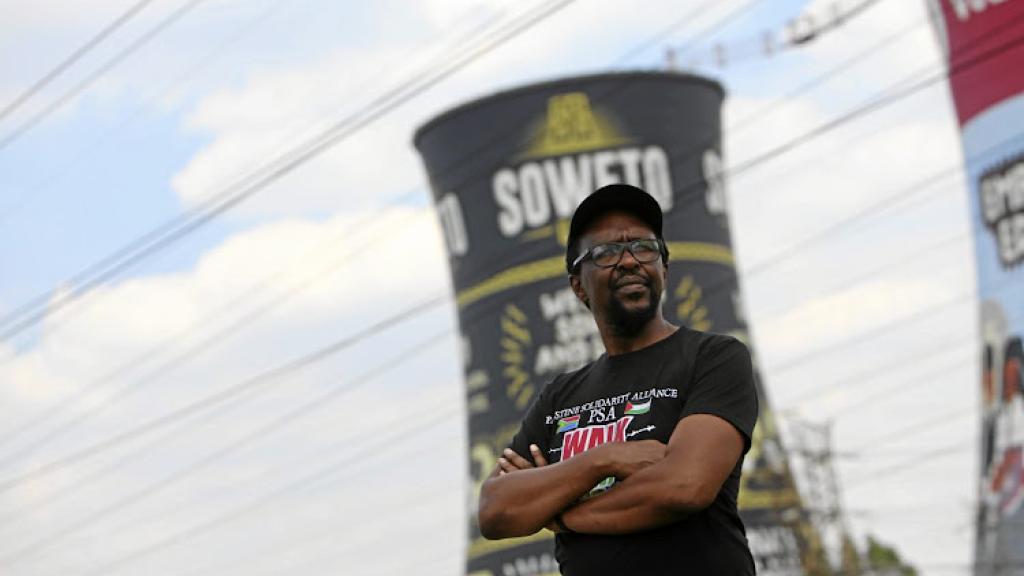
 

Trevor Ngwane: ‘Barbarism is no longer an abstraction. We can see it right in front of our eyes’


Published 

Trevor Ngwane

[Editor’s note: The following is an edited transcript of the speech given by Trevor Ngwane on the “Repression and the threat to intellectual freedom: Russia and beyond” panel at the “Boris Kagarlitsky and the challenges of the left today” online conference, which was organised by the Boris Kagarlitsky International Solidarity Campaign on October 8. Ngwane is a South African socialist, anti-apartheid activist, author and teacher at the University of Johannesburg. Transcripts and video recordings of other speeches given at the conference can be found at the campaign website freeboris.info.]

We are living in difficult times. Rosa Luxemburg said the sharpening of the class struggle in the context of a rolling capitalist crisis would soon put a stark choice before humanity: socialism or barbarism? I think today that moment has come.

Barbarism is not an abstraction. It is not a speculation. We see it right there in front of our eyes with the genocide in Palestine and the murderous invasion of Ukraine.

Today, it is normal that a decision made by a government somewhere in the world, or indeed even by a single techno-capitalist in New York — say, South African born and Trump groupie [and now member of Trumps administration] Elon Musk — can lead to the suffering and even death of thousands of people in many parts of the world.

Capitalist violence is the order of the day. It comes in many forms. It can be a bullet or a bomb. It can be an economic policy. Austerity. Structural violence. Let the children die. Killing thousands of people has become a news item you think about before your train of thought is rudely disrupted by a commercial.

British singer David Rovics sang these lines in a song he called “As the Bombs Rained Down”:

See the homes apartment blocks. 
See the mosques reduced to rocks. 
Spill the oil and feel the shock. 
As the bombs rained down.

This is happening in Palestine and in Ukraine. I categorically oppose the illegal occupation of Palestine and the massacre and hardships the Zionist government is visiting upon Palestinians, including men, women and children. 

I also denounce, in the strongest terms, the invasion of Ukraine by Putin’s armies. He is dropping bombs on residential and industrial areas where the working class lives and works, with the resultant death, injury and displacement of thousands and millions of people.

I also recognise that the same is happening in Asia and other parts of the world.

South Africa: 30 years after apartheid

Thirty years after the end of apartheid, poverty, unemployment and inequality have become normalised. The three social ills have become an acronym: PUI. Most political and economic analysts and their audiences will know what you mean when you refer to the PUI challenge facing the country in the name of national liberation.

The party of Nelson Mandela, the African National Congress (ANC), supervised the country into normalising a neoliberal capitalist hell. South Africa is regularly labelled the most unequal society in the world. In 2023, the Gini coefficient was 63, the highest in the world.

Another notorious acronym in South Africa, which is used daily, is GBV (gender-based violence). South Africa has one of the highest rape rates in the world, with 132 incidents per 100,000 people. A woman is raped in South Africa every 12 minutes. One in four men admit to committing a rape. Life is a nightmare for women.

South Africa has one of the highest rates of stunted child growth in the world, with 27% of children under five years of age affected. Stunting is a form of chronic malnutrition which impacts cognitive development and has severe implications for learning, earning, and the general well-being of a person, including their health. Let the children cry.

I can say from my own observation of life in Soweto, the biggest township in South Africa, that there is an alcoholic and substance abuse epidemic in South Africa. The working class is facing a severe socio-economic crisis. Is there a political solution?

One step forward, two steps backward

No one was surprised when, in the last general elections, the ANC lost its parliamentary majority. Its mismanagement of the country as it ruthlessly implemented pro-capitalist and anti-working-class policies, including its policy of creating a Black bourgeoisie, has ensured that the rich have gotten richer and the poor poorer.

It has also made working class voters turn against it. The ANC got 40% of the vote. Instead of finding a partner to form a coalition government, it opted for a government of national unity. This was a ploy to work together with right and centre-right political parties. The aim is to use the politics of compromise and consensus associated with governments of national unity as a fig leaf to allow the ANC to continue implementing the very same pro-capitalist policies that made it lose its majority.

In truth, the main concern of ANC leaders is to keep in the running and to be part of the racket, as Frantz Fanon described the post-liberation national bourgeoisie in Africa. Many of the leadership changed their residences from jail cells in Robben Island, guerrilla camps in Angola and dingy flats in London, to palatial mansions, as many of them became the first Black millionaires and billionaires. They became a nouveau bourgeoisie at the expense of the working class — and they have no intention of stopping now.

South Africa's working class

The working-class movement was never defeated in South Africa. Instead, the ANC used the moment of liberation to demobilise, demoralise and contain organised labour and the militant Black working-class movements that successfully challenged the apartheid regime and led to its defeat.

The tripartite alliance between the ANC, South African Communist Party (SACP) and Congress of South African Trade Unions (COSATU) became a tool to ensure that working class leaders committed class suicide. Not the class suicide envisaged by Amilcar Cabral, the revolutionary leader of Guinea-Bissau and Cape Verde, but rather their embourgeoisement. Many of them, such as the current ANC president of the country, Cyril Ramaphosa, organised workers in the mines during the anti-apartheid struggle and then became mine owners in the so-called New South Africa. They crossed the class line.

Of course, many ANC leaders were members of a radicalised Black petite bourgeoisie. Race-based capitalism pushed them to join the national liberation movement and even dabble in working-class politics. They justify their bourgeois aspirations and greed for riches on the grounds of the racial and class frustrations engendered by racial capitalism.

Attacks on the right to strike

The right to strike was under attack from year one, 1994, the year of liberation. Indeed, the lead up to the first democratic elections in South Africa was marked by Communist leaders, such as the late Joe Slovo, consistently admonishing workers to stop their militancy and their strikes. The struggle is over, he argued. The strike movement was the battering ram that forced capital to seek a solution to the political and economic crisis beyond apartheid, starting with the 1973 Durban strikes.

Workers engaged in strikes without following any procedure because there was no procedure. Apartheid did not allow Black workers to form unions, let alone go on strike. Over time, the strikes became very militant, including sit down strikes that involved occupation of factories and mines, community support for strikes, consumer boycotts of buses, etc.

The solution, from the point of view of the capitalist class — back then appropriately called white monopoly capital — was the institutionalisation of industrial conflict, including implementing a Labor Relations Act that required long drawn out and complicated procedures before workers could go on strike, including cooling off periods and compulsory mediation and arbitration.

When Ramaphosa took over as president of the country in 2018, he made it his priority to further attack the right to strike, introducing various regulations to achieve this end. Managerialism, underpinned by an aggressive assertion of the managerial prerogative, has created a dictatorial regime in South African workplaces, in the public and private sectors.

The culmination of this was the Marikana massacre in August 2012, when 34 miners on strike were shot dead by the state police. The dynamics of that strike included the class collaboration of trade union leaders with the bosses. Worker leaders would sign weak agreements with bosses and then commit themselves to policing such anti-working-class policies.

All this in the context of an unemployment rate of 40%, deregulation and flexibilisation of the labour market, and political disorientation and other challenges facing workers. The position of employed workers has been severely undermined, and their power weakened.

The organic capacity of the working class

Going forward, it is important to realise the need to go back to basics — the basics of working-class politics. Karl Marx said the working class is the revolutionary class because of its structural location in the capitalist system, in the mode of production.

Workers’ power derives from their role as producers, most importantly as collective producers, despite the atomisation and decomposition dynamics introduced by capital. The class-in-itself exists and it can become a class-for-itself.

The absence of a fighting working-class movement is the denominator and chief characteristic of the reversals faced by the class and by humanity today. Our job is to revitalise this movement.

We must not sidestep this task. We must not rationalise it away. We must not play it down. The struggle for socialism is a struggle to revive and revitalise the working-class movement and its allies, to remove all obstacles that stop workers becoming what they can be.

The battle to liberate Boris Kagarlitsky

An aspect of this struggle is to recognise and denounce the capitalist restoration taking place in Russia and China. 

Boris Kagarlitsky is a comrade and hero with a long and proud track record of fighting behind the red flag for the socialist alternative. He stood up to Russian President Vladimir Putin and his totalitarian regime, refused to leave Russia and choosing to fight in the belly of the beast. 

“Let Rome in Tiber melt and the wide arc of the ranged empire fall. Here is my space” in a prison cell in Zelenograd.

He did this in solidarity with all the millions of workers who are never given the option of walking away to settle abroad. There are those who just cannot walk away, and those who try to walk away, but are followed by the assassin’s bullet or killer’s poison.

He also stood up in opposition to Russia’s invasion of Ukraine. He joined the anti-war movement in Russia and as, comrade Adam Novak said, Boris took a Leninist position: defeatism. Russia should be defeated in its war with Ukraine. 

The battle to liberate comrade Boris Kagarlitsky is part of that struggle.


Solidarity 733, 12 February 2025

What the workers wrote in Lenin's day


These three articles of workers' correspondence are from the Russian socialist newspaper Rabochaya Mysl ('Workers' Thought'), which ran from 1897-1902. These articles are from issues 15 and 16, the last two ever produced.

By this period, the newspaper was edited by Konstantin Takhtarev, and published on behalf of both the St. Petersburg Committee for the Union of Struggle for the Liberation of the Working Class ('Union of Struggle'), and the St. Petersburg Committee of the Russian Social-Democratic Labour Party (RSDLP, whose second conference was held less than a year later).

Rabochaya Mysl 15, April 1902

FROM THE OKHTENSKY MECHANICAL PLANT OF CREIGHTON AND CO.[1]

There are terrible norms in place at our plant. We are fined for lateness. Whoever fails to appear at the whistle is denied entry into the plant, they are made to lose half a day and pay a fine for absence: 50 kopecks if the worker earns less than a ruble, 73 kopecks if they earn more. When it comes time to receive pay, the workers are forced to wait outside for their money for half an hour or more, during frost and blizzards. There have been many cases of sickness from colds thanks to this waiting in the frost. One comrade from the foundry became a sacrifice to this waiting period, when it came time to collect his pay he waited outside in the frost, got sick, then died. Workers have demanded that they are given their wages on the shop floor, but Iger the manager did not agree to this demand by the workers, being scared to give them the smallest concession, in case by doing so he makes them all the more demanding. Our plant not only does not have its own hospital, it doesn’t even have a single bed designated for workers in the city hospitals, nor the private ones. The plant must have at least one hospital bed per every one hundred people, for all 600 people who work in the plant, that is a minimum of 6 beds. We are treated not by a doctor, but a feldsher[2], who knows nothing about medicine, while our workers often have unfortunate incidents which require serious help. Workers that have received injuries and lack the strength to work receive nothing for the missed time, even though their poor health may last weeks. An unfortunate sick man may be left with absolutely no help from the plant. What is he to do, what can he live on, how can he feed himself and his family?

Comrades, we must demand from the plant administration that those who suffer injuries are paid while in poor health no less than half of the shop wage, which would ensure that workers receive at least a little aid, to protect them somewhat from the hunger and cold. In response to requests for aid from the suffering, Mr. Iger says: “You’ve only yourselves to blame, you’ve received your mutilations and injuries due to carelessness. That’ll teach you well to pay more attention next time.” In the boiler room and the paint shop, they’ve started firing workers who were hired before spring just in time for the holidays; they’ve fired 10 workers already. The rest of them continue to work. Recently, one worker was given his walking papers on the order of the Okhtensky district police supervisor. In response to the worker’s question, “why am I being fired?”, Iger responded: “I don’t know anything about it. Go to the district supervisor, ask them for forgiveness, and if they give it to you, then I will take you on for work again.” The worker received his walking papers, but never went to the district supervisor after all. We must also say a few words about our impossible latrines, which are constructed hideously and without the most elementary comforts, with the aim of stopping workers from arranging “clubs” there or dilly-dallying from the job. The bosses show care and foresight everywhere – and the workers suffer from it. So then, comrades, these are our most imperative demands: payment of wages in the workshops, a plant doctor, beds for the sick, aid during time of sickness no less than half of the shop wage, abolition of fines for lateness, and improvement of water closets. 

Rabochaya Mysl 16
November-December 1902.

FROM THE OBUKHOV PLANT[3]

Comrades! You will all be aware of the declaration on behalf of the boss, put up on the walls of our workshops, to demonstrate the “heartfelt care” of our dear and loving management. This declaration announces that all workers who are taken sick for any reason may receive benefits, namely: that a married worker when sick will receive a full shop wage, and a bachelor will receive half wage. This was put up at the start of May of the current year. Generally speaking, spring is a dangerous time for management: the first of May approaches, the worldwide day of workers’ celebration, during which we feel within us the wish to express our solidarity with foreign comrades in their struggle for freedom, as well as the wish to declare to our oppressors – the government and the capitalists – that we are not only the workers’ force that creates all their innumerable wealth, but also a force that is capable of fighting to win its own freedom. In Spring, our management can feel the fragility of its own position, and hurries to make clear how much they care about us. Last year, with the blood of our comrades, we won ourselves some concessions. But the management’s memory is short-lived: having received those concessions, we calmed down; the management forgot about its former fear, and began, little by little, to take from us that which we had won. Our sick workers now no longer receive benefits when sick – the bosses receive them instead, in the form of profits and awards before the holiday season. What has our administration come to, see how true the “firm promise” of our manager Vlasyev was, made last year to the deputies on behalf of the workers, that he would not allow a moment’s delay in any work! Now, when our management feels that because of winter, the workers have nowhere to go—especially just before Christmas—they have begun to lower the pay for every job – this must be because, despite the wrecking of sick days, there still isn’t enough money to give awards to the higher administration.

Our bosses have a particular method of pilfering – so-called “fines”. Fining capital grows by the day, but how large it is, how it is spent, and any reports on the matter are kept from us. It should go to the payment of benefit and support for the sick. But our pilferers’ pockets are bottomless, there’s always more room in them, and they will spend a long time filling them to the brim if we don’t demand reports on fines – that very real form of theft – as well as their removal altogether. But, by all appearances, our bosses’ consciences are not pure, and because they also worry for their peace and for the protection of what’s theirs, they have placed soldiers on watch across the entire plant, to keep us in captivity with rifle butts and bullets. On top of that, there are rumours that 100 former worker-soldiers were invited to the gendarmerie and offered a salary of 10 rubles per month to provide information on unreliable workers. But “you won’t do anything with us”[4]: neither butts nor bullets will silence the voices of need and labour, and we have no fear of traitors, who sell their conscience to the gendarmes.

Comrades! It is time to wake up! We will remember firmly that we should expect nothing good from any bosses whatsoever! Unite, comrades, and we shall be ready for the constant, never-ending struggle. 
Rabochaya Mysl 16
November-December 1902.

THE TSAR’S WORDS FOR THE WORKERS
(A letter from the Baltiiskii shipyard)[5]

In September, the all-powerful master himself, the sovereign emperor visited our shipyard, and was met by a “delegation of craftsmen and workers”, which brought him bread and salt, and greeted him with a speech.

The delegates did not address the tsar with the following words:

“Sovereign master! You have just had arranged for you a celebratory meeting in Kursk, during military manoeuvres. Nobility, merchants, officials – all of them gave you a low bow and said the most flattering and complimentary of words. The Lord Bishop agreed that you give the residents of Kursk more pleasure and satisfaction than the sun, for they see the heavenly luminary often, but they see you, the earthly luminary, only rarely.

“Sovereign master! Do you await the same greeting from the Baltiiskii shipyard? The same such comparisons with the sun? No, we value the sun far more than Kursk’s bishop does. And we value it all the more, the further from it we must be. Our wages have fallen to 35 [rubles]. Your adjutants, mighty master, are great artists in the field of lowering pay for jobs and decreasing wages. And so, we are forced further away from the sun – into damp, sodden and dark cellars. We think that for these past three years, the food rations for beasts in the tsar’s kennels and stables have not lessened, but in the government plants with living costs ever soaring, wages have fallen so sharply!...

“Sovereign master! We understand this entirely: we understand why the tsar-government’s horses are kept, as before, in dry, bright and spacious stables, and the dogs live in warmth and comfort, while the workers of the tsar-government’s plants are chased all the more regularly to consumption, and are dragged all the more regularly to cemetery plots for their fellows who have died prematurely… Poor maintenance of horses and dogs leads to greater losses, and calls for ever more excessive expenditure on acquiring new beasts, but when it comes to a living worker machine, you can treat that however you wish… Is it any great shame when it perishes? If it’s ruined, then turn it out on the pavement like an outcast, with a five-ruble tsar’s pension… Let it be a heavy burden on its family’s shoulders, let it take up work scaring pigeons in a garden patch, let it beg under windows for crusts of bread to add to its five-ruble tsar’s pension – what does it matter? In its place we can find as much new working force as we wish, only for it to meet the exact same fate in future… The master doesn’t have to worry about that fate, he can think of the benefits to his pocket: 35 rubles, much more profitable to pay than 60!...

“The master’s accounting may be very dependable – entirely dependable, even: as sure as to say that a ruble is more than a penny! But all the same, sovereign master, what is there in your accounts that should make us greet you? After all, they leave one far too bitter and salty! Go to the kennels. Go to the stables – there you will be met with joyous snickers and playful howls – firstly, because the dog and the horse, if they do not live in the wild, are directly in need of their master; secondly, because you are to them a kind master. To us, you are no “kind master” at all, and indeed no master whatsoever could be “kind” to us. Every master has their own interests, as does every worker, and the two are entirely opposed to one another. Let us say that instead of 35 rubles we started receiving 60, as before; let us say that our average wage increased all the way to 100 – all the same, we would remain living machines, working for the capitalists, and no matter how much we received, we would have to wage a struggle to escape the position of the machine, to become people. For that, we would have to fight to win a new socialist structure, to tear the plants and the machines from the hands of the masters, and hand them over as the property of all society, of all labouring people. That is not in your interests whatsoever, sovereign master, but it is the heartfelt interests of the workers – what kind of a greeting could you hope to expect from them? Go to the gatherings of the nobility, to the merchant lunches; gather before your eyes the entirety of the bureaucratic ranks – you share with each of them aims that are substantially mutual, and in a place like that, it would be the most natural of deeds for you to receive a greeting! But for us, you and your entire government stand in the way of our struggle. When the worker raises his voice for the rights of man, when he rises against his masters, when he demands to take part in the governance of the state – it is the most casual and habitual matter for you to respond to him with prison, Siberia, and troops! Beatings for the workers in Obukhov, beatings in Batumi – those are the most recent events demonstrating, very ably, the relationship of the tsar’s government to the workers! Should we really be greeting you for that?

“No, sovereign master, do not expect a greeting from us! Here before you stand not your minions. Here stand people, ready to fight to the last drop of blood for a bright and free future! The broader their path, the narrower yours… Here is our greeting to you:

Down with police tyranny!
Down with the tsarist autocracy!
Long live the self-governance of the people!”

***

Nothing of the sort was said to the tsar. The “delegation of craftsmen and workers” greeted him otherwise. It said to him:

“Great lord of ours, tsar-father, the craftsmen and labourers, who are so boundlessly overjoyed by your visit, ask that you graciously accept from them this bread and salt and pray zealously to the All-powerful, that he may protect, for the good of Russia, your precious life for many years to come.”

This was said in the name of the workers of the Baltiiskii plant! And said in those very workshops, where last year the working people were so passionately agitated, enraptured by a sudden outburst of dissatisfaction against the vicious clamping down and harassment… The plant administration itself composed and selected the necessary delegation for the tsar, and this delegation could pin anything it wanted on the workers of the Baltiiskii plant… But, comrades, that was merely a dead body used to buttress the fence; we are alive, we cannot accept that as our voice. In our struggle against the tsarist government, we will show that we hold entirely different opinions!

Those pleasant salutations were given to the tsar from the “delegation of craftsmen and workers”, and the tsar gave to them a likewise good response:

“Thank you for your bread and salt, and for the feelings you have expressed. Labour honestly, behave calmly, and do not let yourselves be unsettled by foolish people, who are enemies to yourself, just as they are to me.”

“Labour honestly!” Until now we had been merely revelling, we’d been blockheads, it was someone else who had been working daily shifts for 10-12 hours at the Baltiiskii plant, it was the souls of policemen that had worked the machines… Or perhaps the tsar wishes to say that we must work 24 hours in a day, in order to make the master so pleased with our labour… that he halves our salaries again? What kind of mockery of the people is this – to come to those who barely let a hand rest in their working day, and advise them to “labour honestly”!

“Behave calmly!” – that is, be like mute animals, who carry everything they are saddled with! You are bent this way and that, and you can only repeat: as long as my spirit survives, I will keep heaping praise upon the Lord and singing to the glory of the Tsar! All is well, all is well – neither living nor dead, but at least not yet in the grave!

“Do not let yourselves be unsettled by foolish people”…

Comrades! Let yourself be as unsettled by these people as it is possible to be! The “foolish people” of whom the tsar speaks are the Social Democrats. The most foolish and poisonous of people! They point at the capitalists and say: ‘this is who holds the worker in a decrepit state, this is who domineers over his labour and his entire life’. They point at the tsar and say: ‘this is who obstructs the workers at every step from leading a struggle against the capitalists for a piece of bread, for a better share, this here is the master of the laws, of police tyranny, this is the defender of slavery in all its forms!’ Judge for yourselves: the Social Democrats are rebels against all of the modern order, which crushes the workers, – what foolish people they must be! You’ll be told as much by the factory owner, the priest, the district captain, the police officer, and the tsar. The only person who will not tell you so is the conscious worker, who, when addressing all of his unconscious comrades, will say to them without fail:

“Let yourselves listen to these foolish people as much as possible! Join the ranks of the Workers’ Social Democratic Party[6], and under its banner lead the struggle against the capitalists and the tsar’s government!”

Original source: archive.org
Translated by Reuben Woolley

NOTES
[1] A mechanical plant that was connected to a shipbuilding yard on the River Neva, then at the outskirts of the city.
[2] A lesser-trained medical professional, common in rural areas.
[3] The Obukhov State Metallurgy Plant was founded in 1864, and is still in operation today. In this period, it made heavy artillery and cannons (in the Soviet era, it made the first Soviet tank, the T-84). In early May 1901, a strike at the Plant led to a battle between workers and police which became known as ‘the Obukhov Defense’. Several workers died or were severely injured, and strikes spread across the city the following day. The Obukhov Defense is referenced both in this article and below, in the article from the Baltiiskii Shipyard.
[4] This may be a reference to a story of this title (‘You won’t do anything with us: a story from the life of workers’) written by the writer Sergey Nekrasov (Rubakin), and published by the press of the Socialist Revolutionaries (SRs). It had a third printing in 1905, but evidence of its earlier editions is scant.
[5] A shipyard on St. Petersburg’s Vasilyevsky island. Still in operation today. The yard was over the river from the Winter Palace, which made it a prime location for an official visit.
[6] i.e., the RSDLP


Submitted by willroberts on 9 January, 2025 - WORKERS LIBERTY


Lenin is Young Again – И Ленин Такой Молодой 
— 100 Years of a Fallen Comrade

Reviews & Culture

Animal Farm: When some are more equal than others

Animal farm was co-opted by the right, but it's an allegory for the woes of Stalinism and how the counter-revolution defeated workers


The key line from Animal Farm that shows the hijacking of the revolution
 (Photo: flickr/Kevin Lim)

By Esme Choonara
Saturday 15 February 2025
 SOCIALIST WORKER Issue

A powerful and cleverly staged new production of Animal Farm marks 80 years since George Orwell’s famous anti-Stalinist satire was first published.

The actors in this production play animals but are not in animal costumes or masks. Instead, they are dressed in the clothing of workers.

The characters appear simultaneously as animals, with animal preoccupations and mannerisms, but also as the exploited workers they represent. The only characters who appear in over-stylised, “hammed-up”, faceless costumes are the exploitative humans.

Animal Farm is an allegory for Stalin’s betrayal of the Russian Revolution. The plot centres on a group of animals who are exploited and mistreated by Jones, the human that runs the farm. An older pig, Boxer, propagates ideas of resistance. When Boxer dies, two younger pigs, Napoleon and Snowball, lead the animals in a successful revolution to take over the farm

The animals beat off attempts to retake the farm, but at a huge cost.

One of their key slogans is that all animals are equal—and their fight is for freedom, equality and genuine democracy for all. However, these ideals are eroded as the Stalin‑like Napoleon increasingly takes power and privileges for himself.

Snowball is marginalised, exiled, slandered and accused of collaboration with the humans. Democracy ends and there are brutal purges of animals who dare to question Napoleon’s direction. Napoleon consolidates his power and becomes indistinguishable from the rotten humans.

The key slogan famously warps into, “All animals are equal. But some animals are more equal than others.”

The first half of the play sharply captures the optimism of the rebellion. It depicts the electrifying moment when the animals move from timid and fearful oppression to realising their potential power and take over the farm.

The programme and publicity for the play states that this adaptation does not share Orwell’s preoccupation with the Russian Revolution and the rise of Stalinism.

However, it is hard to know what the message of the play would be if decoupled from its origins as an allegory of Stalin’s counterrevolution. Perhaps a fable about how resistance is futile?

The argument that revolutions are bound to end in tyranny was the interpretation seized upon and promoted by the right—much to Orwell’s dismay. They loved the book almost as much as the Stalinist-influenced left hated it.

Along with Orwell’s chilling dystopian novel 1984, Animal Farm was widely promoted by the CIA as part of Cold War propaganda about the dangers of socialism.

However, Orwell was clear that the book was a specific satire aimed at Stalinism, not a cynical attack on all revolution. He argued that Stalinism and the myths surrounding it were the biggest obstacle to real socialism. This conviction came in part from his own bitter experience.

Orwell first came up with the idea for Animal Farm when he returned from fighting against General Franco in the Spanish civil war in 1936. A radical Popular Front government had been elected. The right wing retaliated with an attempted military coup, but the working class rose up in revolt creating huge political upheavals.

Orwell’s experience in Spain fundamentally shaped his politics. He learned two key lessons. First was that workers’ power was possible. Second was how Stalinists brutally betrayed that revolution.

He saw first-hand the brutality and misinformation used by Stalinists against Trotskyists, anarchists and other anti‑Stalinists on the left. He and his wife were among those hunted and forced to flee Spain. Orwell remained committed to some version of democratic revolutionary change and resolutely opposed Stalinism until his death in 1950.

Eight decades after Animal Farm first appeared, do catch this lively and engaging new production if you can.Animal Farm by George Orwell, adapted by Tatty Hennessy and directed by Amy Leach is at Stratford East (London) until 8 March, Leeds Playhouse 12-29 March, and Nottingham Playhouse 2-12 April


Alex Callinicos: The capitalist state is watching Trump

As Musk and his tech bros influence the state, Trump is trying to cut "Big Government" and refashion his presidency around Nixon—but it was mass protest that took Nixon down


Trump is refashioning the capitalist state after Nixon

By Alex Callinicos
Tuesday 11 February 2025
SOCIALIST WORKER Issue 2942

As Elon Musk and his gang of techies run amok in Washington, I’ve been thinking of something Frederick Engels wrote in 1879.

“The modern state is only the organisation that bourgeois society takes on in order to support the general external conditions of the capitalist mode of production against the encroachments as well of the workers as of individual capitalists,” he wrote.

“The modern state, no matter what its form, is essentially a capitalist machine, the state of the capitalists, the ideal personification of the total national capital.”

Engels was saying that the state isn’t the tool of individual capitalists. It acts in the general interest of the capitalist class as a whole. So it taxes the bosses, regulates their activities, and sometimes even takes their assets over. Under the pressure of organised labour, it has developed extensive welfare services that maintain working class families as efficient and relatively compliant objects of exploitation.

Now one very big capitalist with the support of new president Donald Trump is seeking to reverse this process, and drastically to shrink the state. The New York Times newspaper points out that Musk is using the methods he adopted to get rid of workers at Twitter.

He’s fulfilling plans set out in Project 2025, devised by the ultra-neoliberal Heritage Foundation. Russ Vought, the scheme’s architect, has just been confirmed as Trump’s director of the Office of Management and Budget.

But more is involved than attacking “Big Government”. Edward Luce argues in the Financial Times newspaper that Trump wants “to recreate the imperial presidency that was buried in the mid-1970s after Richard Nixon’s resignation”. This is a very shrewd point, much more accurate than all the overheated commentary comparing Trump’s second presidency to Hitler’s seizure of power.

Trump as a young man had as his mentor the sinister and corrupt right wing Republican lawyer Roy Cohn. Cohn had been senator Joe McCarthy’s accomplice during his anti‑Communist witch hunt early in the Cold War. Nixon himself owed his political rise to his role in this witch hunt.

As US president between 1969 and 1974, Nixon sought to bypass the limits that the constitution put on his power. For example, faced with a Democrat-controlled Congress, he claimed the power to “impound” money that it voted for purposes he disapproved of. He also built up a vast secret apparatus of surveillance, repression, and dirty tricks to crush the anti-Vietnam War movement and secure re-election in 1972.

The gradual exposure of this apparatus in the Watergate scandal forced Nixon’s resignation in August 1974. New restrictions on presidential powers were afterwards imposed by Congress. Now Trump, politically formed in the milieu that produced Nixon, wants to get rid of them. For example, Musk and his gang, in taking control of the US Treasury and cutting off spending they dislike, are reasserting the presidential power to impound money.

Trump is greatly aided by the fact that, unlike Nixon, his supporters control both houses of Congress and the Supreme Court. He also has, for the time being at least, the enthusiastic backing of Big Tech and Wall Street. If he succeeds, the result will not be outright fascism, but a much more authoritarian and racist version of capitalist “democracy”. Political power will be concentrated in the White House.

What could stop Trump? So far the Musk hit-squad has steered clear of the core of the US welfare state—Medicare, Medicaid and social security. The attempts to purge parts of the repressive apparatus, notably the FBI, have bypassed the core of the national security state, the Pentagon and the CIA. It was when McCarthy tried to investigate the US army that he was brought down. And other bosses may tire of “the ideal personification of the total national capital” becoming the playground of one erratic and highly-subsidised tech bro.

But there’s no substitute for mass mobilisation. It was the giant anti-war movement that was responsible for Nixon’s downfall. People, initially stunned by the speed and brutality of the assault, are beginning to organise and protest.

Determined and courageous resistance can eventually rid us of this noxious bunch of crooks and fanatics.


Nixon’s Letter to Elon Musk

February 11, 2025
Source: Robert Reich


Since his death in 1994, Richard Nixon has refrained from public comments. Today, however, he has broken his silence in a letter from Hell.

Mr. Nixon offered TBR the exclusive right to publish his letter on one condition: that his expletives not be deleted.

Dear Elon,

One thing people don’t realize about life down here is that Satan has CNN playing around the clock. It’s his way of ratcheting eternal torment up a notch. After a while, the spectacle of Wolf Blitzer claiming that something you’ve already heard nineteen times is “BREAKING NEWS” makes the white-hot flames incinerating your body seem like a spa treatment.

So it should come as no surprise that I caught your Inauguration Day speech in all its fascistic glory. And let me say this: that was some fucked up shit.

I realize that you didn’t exactly grow up in the cradle of civil rights, but even by South African standards, that “straight-arm gesture,” as the mainstream media politely called it, seemed a tad extreme.

Don’t get me wrong: back in the day, no one was more racist than Dick Nixon. But I tried to be subtle about it. I said, “I’ve got a Southern Strategy.” I didn’t say, “Hey, let’s suck off the voters who want to bring back slavery.”

If I’d ever fired off two Nazi salutes like you did, those bastards at the Washington Post would have had my head on a stick. (Excuse the dated reference—there used to be a newspaper called the Washington Post.)

And let me make one thing perfectly clear: I’ve got no beef with Germans. When I was president, the White House was crawling with them. Haldeman, Ehrlichman, Kissinger—my Cabinet sounded like the cast of a Wagner opera. Still, those Teutonic fruitcakes somehow managed to get through a public appearance without turning it into the Nuremberg Rally.

I know what you’re thinking: of course Kissinger would never march around like an S.S. officer, because he was Jewish. Well, so is that sweaty weasel Stephen Miller, and that fucker seems to have gone straight from his bar mitzvah to the Hitler Youth.

Which raises another question: who the fuck is making the personnel decisions over there? I mean, no one despised Bobby Kennedy more than I did, but that commie never drove around with a whale’s head on his Volvo like his idiot spawn did.

But let’s get back to you.

You’ve probably deluded yourself into thinking you’re the Second Coming of another Nazi who liked to fire off rockets: Wernher von Braun. Well, I knew Wehrner, and, believe you me, that sneaky Kraut did everything in his power to hide the fact that he was a Nazi. When people at NASA asked him what he did during the war, he’d say he wrangled heifers at a dude ranch in Montana.


Think I’m being too hard on you? Look, if all you were doing was planning Martian colonies and enjoying the occasional goose step, I’d leave you be. But that jagoff Jake Tapper just informed me that you’ve got a ragtag team of amateurs in DC breaking into places they don’t belong. Why does that sound so familiar to me?

Mark my words, fuckface: this won’t end well. I’ll keep a place warm for you down here. Very warm.

Yours,

Dick.


Robert Reich
Robert Bernard Reich is an American professor, author, lawyer, and political commentator. He worked in the administrations of Presidents Gerald Ford and Jimmy Carter, and served as Secretary of Labor from 1993 to 1997 in the cabinet of President Bill Clinton. He was also a member of President Barack Obama's economic transition advisory board. Reich has been the Chancellor's Professor of Public Policy at the Goldman School of Public Policy at UC Berkeley since January 2006. He was formerly a lecturer at Harvard University's John F. Kennedy School of Government and a professor of social and economic policy at the Heller School for Social Policy and Management of Brandeis University.