Friday, June 20, 2025

A Known Iranian Arms Ship Heads Home Just in Time
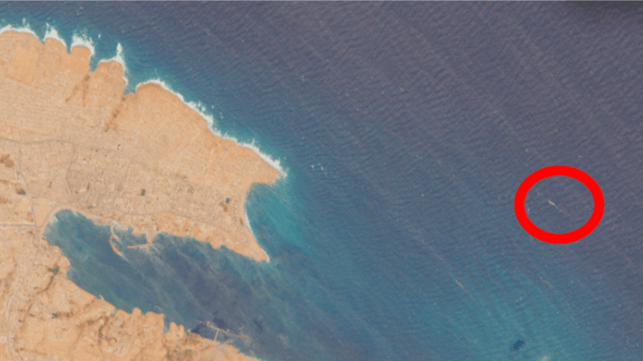
MV Elyana off Tobruk at 32.0791N 24.0617E on May 27 (Sentinel-2/CJRC)
MV Elyana off Tobruk, May 27 (Sentinel-2/CJRC)

Published Jun 19, 2025 2:31 PM by The Maritime Executive


A known Iranian arms smuggling container ship has been spotted in the Red Sea on its way home after spending three weeks loitering outside the Port of Tobruk, Libya.

The MV Elyana (IMO: 9165827) is linked to the Islamic Republic of Iran Shipping Line (IRISL) which as an entity is subject to secondary sanctions imposed by the U.S. Treasury's Office of Foreign Assets Control (OFAC). Additionally, the MV Elyana has been specifically sanctioned by name.

The ship has an established history of use by Iran’s Islamic Revolutionary Guard Corps (IRGC) for shipping arms. In June 2024, the Elyana unloaded cargo in Latakia, in Syria, which had been taken on in Bandar Abbas. Hitherto, when President Assad was in power, the IRGC used Latakia as a hub for their arms imports, IRGC cargos destined for Hezbollah and the Syrian regime were shipped into the port of Latakia, or flown in by Boeing 747 cargo aircraft flights using Latakia International Airport.

On its latest journey, the Elyana set off from Bandar Abbas on April 18, making a port call in Jebel Ali - notwithstanding the ship’s sanctioned status - from whence she departed on April 21.

It is not known what cargo, if any, the Elyana took on at Jebel Ali. But the ship then took a leisurely 13 days to reach the southern end of the Suez Canal without making any declared port call. As it is equipped with deck davit cranes, the Elyana would be capable of off-loading cargo at unsophisticated ports en route, potentially being able to do so in Houthi-controlled areas of Yemen, or in Sudan. A transit from Jebel Ali to the Suez Canal normally takes six days.

After transiting the Suez Canal, the Elyana made for Tobruk, where she anchored for three weeks. The port of Tobruk is managed by the forces of Field Marshal Khalifa Haftar, who controls Eastern Libya and Libya’s oilfields. The UN-recognized and Islamist-inclined national government controls Western Libya and the capital Tripoli.

Haftar is supported by the UAE, Egypt, Saudi Arabia and the rebel RSF faction in Sudan, not normally regarded as Iranian allies. But Haftar is also supported by Russia, which - until last week - was considered a close Iranian ally.

The main backers of the recognized government in Tripoli are Turkey and Qatar. France and the United States are ambivalently neutral, Italy resolutely so. Who therefore is sponsoring the Elyana’s cargo, or working to enable its delivery, is thus a complete mystery.

The MV Elyana left the anchorage off Tobruk on May 30, possibly having come into the port briefly on the day of its departure. By June 5 the MV Elyana was stationary in the Suez South Anchorage after a southerly transit of the Suez Canal. On June 15, MV Elyana was heading down the Red Sea adjacent to territory controlled by the Houthis, and is expected to arrrive in Jebel Ali on June 22. It remains to be seen if it cuts short its journey or stops off en route, and whether it will head home for Bandar Abbas or perhaps wait awhile in the Northern Arabian Sea.

Oil Slick in Gulf of Oman Near Shadow Tanker as Greenpeace Calls for Action

oil slick
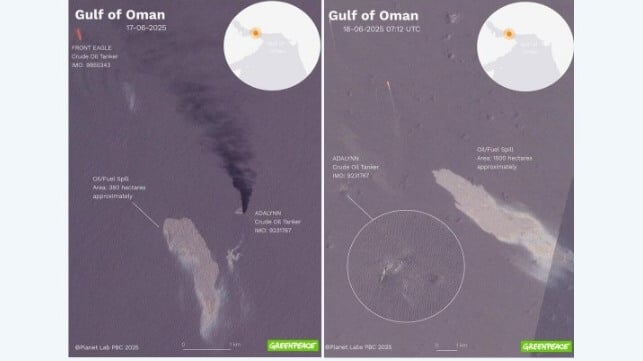
Oil slick spotted on the satellite images (Planet Labs PBC / Greenpeace)

Published Jun 19, 2025 1:31 PM by The Maritime Executive


An analysis of satellite images from the Gulf of Oman shows a potential oil slick forming in the hours after the tanker Front Eagle and the shadow fleet tanker Adalynn collided about 24 nautical miles off the coast of the UAE. Environmental activists from the Middle East and North Africa section of Greenpeace are calling for action to increase the monitoring in the region based on the increased tensions and dangers of an environmental disaster.

“Satellite imagery indicates a large plume of oil stretching up to around 1500 hectares (3,700 acres) from the site of the crash between two vessels, Adalynn and Front Eagle, in the Gulf of Oman, approximately 22 nautical miles east of Khor Fakkan, near the Strait of Hormuz,” reports Greenpeace. It is using satellite images from Planet Labs PBC.

Further, the group cites data from Veson Nautical and Lloyd’s List Intelligence to assert that Adalynn was carrying approximately 70,000 tons of crude oil “despite being officially listed in ballast condition.” This is based on an analysis that reportedly shows the tanker currently with a 9.3-meter (30.5-foot) draft. 

“Greenpeace MENA urges all concerned authorities to act swiftly to contain the spill and assess its ecological impact,” the group said in a statement from Farah Al Hattab, Campaigner at Greenpeace Middle East and North Africa. “We call on shipping companies, governments, and oil industry actors to commit to full transparency regarding environmental consequences of oil spills and the measures being taken for cleanup. Additionally, we urge governments in the region to increase investment in maritime monitoring, early-warning systems, and contingency plans to effectively respond to future oil pollution incidents. Environmental security must be treated as national and regional security.”

The statement contradicts information from the Ministry of Energy and Infrastructure in Abu Dhabi which said the incident, “resulted in minor surface damage to the outer hulls of both ships, a small oil spill, and a fire.” The ministry is saying that it continues monitoring and assessment of the situation to ensure navigational safety.

The Russian news outless TASS is quoting an official from the consulate general in Dubai saying the crew of Adalynn is now in a hotel in Fujairah. It says the crew includes seven Russian citizens, including the vessel’s captain.

The collision happened at approximately 0130 local time Tuesday, June 17. The Ministry is saying that preliminary information indicates the incident was caused by a “navigational misjudgment” by one of the vessels.

Lars Barstad, CEO of Frontline operator of Front Eagle, made a similar assertion on Wednesday speaking at Marine Money Week in New York describing the encounter with a "dark fleet" tanker. He said the company had “no information” regarding the media reports of GPS jamming. He also asserted that “ships have redundancy for navigation” meaning the officers on the bridge would have better information than the AIS signal data relayed by sites on the Internet.

The maritime AI data analytics firm Windward issued a report saying “Front Eagle experienced sustained electronic navigation interference. Persistent GPS and AIS jamming that preceded the tanker’s collision signals a new and growing maritime security threat in the region.” 

Windward acknowledges the statements pointing to no relationship between the collision and the current tension in the region. It however also asserts that GPS jamming in the Arabian Gulf and Strait of Hormuz has impacted as many as 970 ships a day over the past four days.

The authorities in Abu Dhabi are saying that the fire has been extinguished aboard the Adalynn. Barstad told the audience in New York that despite dealing with a dark fleet tanker the incident had “went well” and they avoided a far worse disaster.

Australia Imposes Its First Shadow Tanker Sanctions Following UK’s Increase

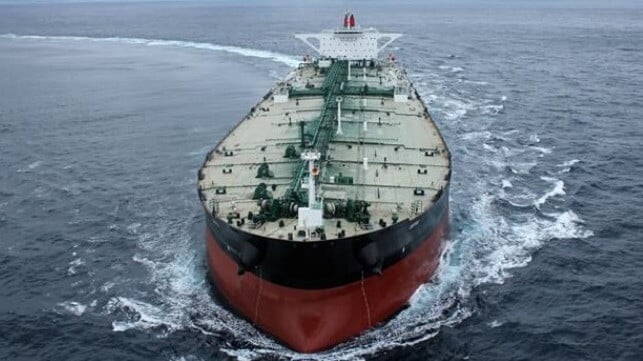
tanker at sea
Australia joins the UK, EU, Switzerland, Canada, and the US in sanctioning shadow fleet tankers (file photo)

Published Jun 20, 2025 8:56 AM by The Maritime Executive


The efforts continue to target the shadow tanker fleet as a means of choking off Russia’s oil exports. As the G7 leaders and other countries' representatives met in Canada this week, Australia launched its first sanctions on shadow tankers while the UK again expanded its efforts.

Australia joined with the other countries in calling for an immediate end to the war in Ukraine and a withdrawal from Ukrainian territory. The country’s Ministry of Foreign Affairs highlights that Australia has imposed over 1,400 sanctions in response to Russia’s invasion of Ukraine, and now it is also targeting tankers.

A total of 60 tankers were listed with the ministry highlighting that under Australian law the vessels are not required to be owned, registered, or flagged in Russia. Also, under its sanction regime, a vessel cannot escape the sanctions with a name or flag change. Australia can direct a sanctioned vessel to leave its ports and not to enter a particular port.

“These sanctions reinforce Australia’s consistent commitment to ensuring Russia, and those enabling its illegal invasion of Ukraine, face consequences,” said Foreign Minister Penny Wong.

While speaking at the G& Summit, Sir Kier Starmer, the UK’s Prime Minister, also announced his country’s latest package of sanctions. He said the new round includes 30 entities across Russia’s financial, military, and energy sectors.

“We know that our sanctions are hitting hard, so while Putin shows total disregard for peace, we will not hesitate to keep tightening the screws,” said Starmer. “His repeated refusals to engage seriously in peace has redoubled the UK’s resolve to apply a stranglehold on the Russian economy.”

The UK listed 20 additional tankers. This followed what it called its largest package launched in May which targeted up to 100 tankers. The UK had also previously listed 133 tankers, while the EU has now listed over 300 tankers.

Beyond tankers, the UK also listed two firms involved in crewing and managing the shadow fleet. It said that Orion Star Group and Valegro were helping to enable Russia’s oil trade with their efforts supporting the shadow fleet.

During the talks at the G7, the EU and UK were both advocating for a lowering of the price cap imposed on Russian oil exports. The $60 per barrel was challenged in the spring when oil prices receded but now with tensions in the Middle East oil has jumped to over $75 a barrel. Oil markets remain very nervous waiting for a possible U.S. action against Iran.


Denmark is Tracking Stateless Tanker as it Transits Straits

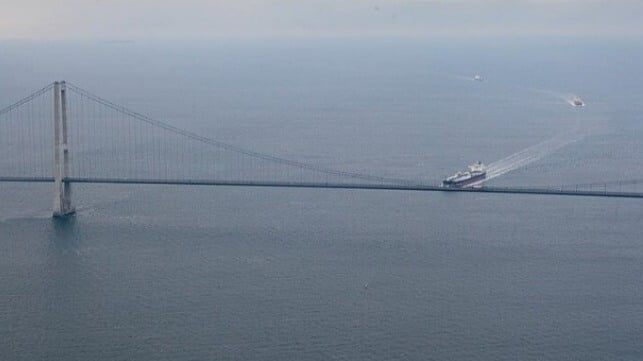
tanker in Danish waters
Stateless tanker is making its way west through the Danish EEZ (L-BBE -- CC BY 3.0 Deed)

Published Jun 19, 2025 2:58 PM by The Maritime Executive


Danish authorities confirmed that they have identified a tanker that they believed provided false information regarding its flag and possible insurance coverage. The vessel which is laden with Russian oil is being tracked as it makes its outbound transit but so far Denmark has taken no action against the vessel.

The tanker which appears to be identifying with the name Marathon, or previously Udaya, (IMO 9288746) was first identified as a suspect vessel on its inbound transit to the Baltic on June 10. According to the outlet Danwatch, the Danish patrol ship Freja approached the vessel, but there was no apparent attempt to intercept or stop the tanker. The Danish patrol boat was sailing alongside but changed course away from the tanker.

The Danish Maritime Authority told Danwatch, “During radio contact with the Defense Command, the Udaya/Marathon reported that it was flying the Comoros flag. However, during subsequent checks with the Comoros authorities, we received confirmation that the vessel was not registered in the Comoros registry.”

The vessel’s AIS signal shows it departed Primorsk, Russia on June 16 with a declared destination of the Suez Canal. Tracking data from today, June 19, shows it is transiting the Danish straits at a speed of 12 knots. The AIS signal warns its navigational status is constrained by draft. The reports suggest the vessel is carrying 100,000 tons of Russian oil likely bound for India.

Denmark, like the other nations of the region, remains on high alert monitoring shadow fleet tankers. Estonia and Germany have challenged some of the tankers based on suspicious activity or likely false flag operations while Denmark has said it also would consider intervention. Speaking on Danish TV 2 Foreign Minister Lars Løkke Rasmussen at the end of May called for tightening controls on the shadow tankers. He said legally it was difficult but that “I do not rule out the possibility that we may have to intervene to a greater extent. If you cannot show the correct insurance papers and do not have a flag state, then it is legitimate to intervene,” said Rasmussen. In February 2025, Denmark reported it would be increasing its inspection program targeting tankers.

This tanker is an example of the worst of the shadow fleet. In addition to the accusation that it is sailing without a flag state, the vessel has reported at least three other flags (Djibouti, Gabon, and St. Kitts and Nevis) in the past three years since 2022. The ship was sanctioned by the UK at the end of 2024, and the EU, Canada, and Switzerland in early 2025. 

The tanker has been tied to repeated calls in Russia, India, Lebanon, Egypt, and other ports.  Equasis lists the flag as unknown and since March 2024 ownership associated with a company in Mauritius. Management is listed in India.

The tanker according to Equasis had not undergone a Port State inspection between July 2022 and April 2025. Its most recent inspection was in Russia, where the authorities cited it for a lack of fire patrols and issues with its inflatable liferafts. The ship was not given a detention.

Danwatch reports this is at least the second vessel Denmark recently identified as being stateless sailing through its waters. The Danish Maritime Authority did not respond to media inquiries regarding the outbound passage of the tanker.
 

Top photo by L-BBE in 2013 -- CC BY 3.0 DEED


Barstad: Owner of Shadow Fleet Tanker Couldn't Be Found After Collision

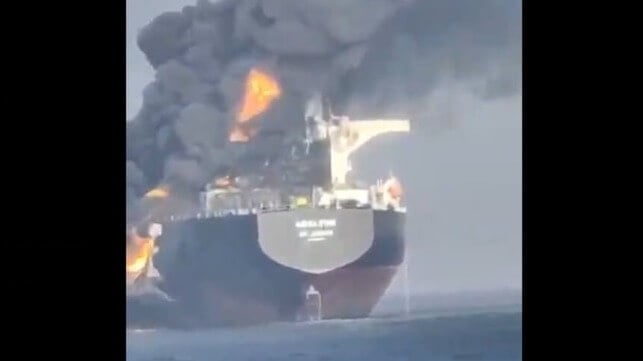
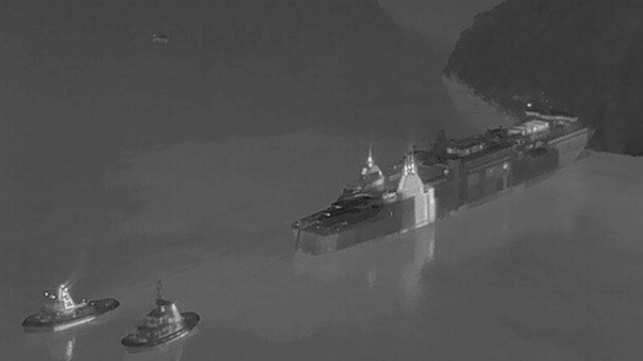
Adalynn ablaze, June 16 (Ed Finley-Richardson)
Adalynn ablaze, June 16 (Ed Finley-Richardson / social media)

Published Jun 18, 2025 4:23 PM by The Maritime Executive


After the tanker Front Eagle collided with the "dark fleet" tanker Adalynn in the Gulf of Oman earlier this week, operator Frontline couldn't even find a way to reach Adalynn's owner to talk about the casualty, boss Lars Barstad said at a panel at Marine Money on Wednesday. The Adalynn's anonymous controlling interests made no response. 

“This was the first time Frontline was exposed directly to the dark fleet," Barstad said. “It is an insane situation that we cannot conduct contact."

Adalynn and the tanker Front Eagle were in collision at a position about 22 nm off the coast of Khor Fakkan, UAE early Tuesday morning (local time). The impact sparked fires aboard both vessels; Front Eagle's crew was able to extinguish the blaze aboard their ship, but Adalynn's crewmembers did not have success in containing the fire. They abandoned ship, and all 24 were safely rescued by first responders. 

All told, the response to the casualty was successful, Barstad said, and it was not a worst-case scenario. He said that time will tell when it comes to the root cause of the collision, and suggested that it could have been a mechanical casualty aboard the Adalynn. Barstad denied that AIS jamming played any role. 

After the collision, Frontline attempted to get in touch with Adalynn's owners, but found that it could not find an individual to talk to. Frontline had to find out from a local agent - not the shipowner - that Adalynn's crew made it safely ashore and were lodged in a hotel. 

The Adalynn's listed operator has an address in an older office complex in Navi Mumbai, India. The building is home to multiple logistics, seafarer training and ship management firms, but has no public directory to confirm whether the Adalynn's operator is a tenant. 

The Indian company operates two aging tankers - Adalynn, flagged in Antigua, and Carcharodon, which is sanctioned by the United Kingdom for moving Russian oil. Both Adalynn and Carcharodon are sanctioned by the government of Ukraine for involvement in Russia's shadowy oil trade. 


Samsung Terminates $3.5B in Orders from Russia’s Zvezda and Plans Lawsuit

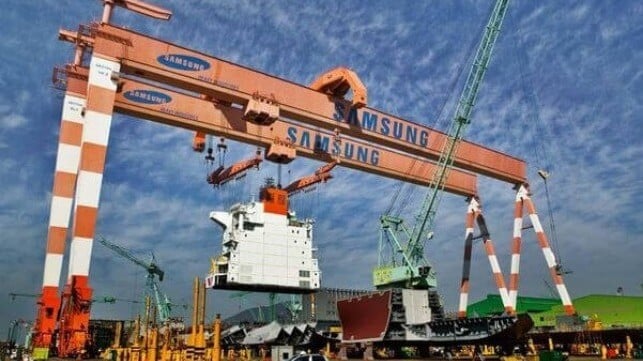
shipbuilding
Samsung was contracted to build blocks for Russia's Arctic tanker fleet (SHI file photo)

Published Jun 19, 2025 7:34 PM by The Maritime Executive


The fight between Samsung Heavy Industries and Russia’s Zvezda shipbuilding is continuing with the South Koreans now saying they have terminated the contracts and plan to seek compensation. The dispute has been developing as Western sanctions mounted against Russia including Zvezda and ends what had once been hailed as the largest contract in the history of Samsung Heavy Industries.

In stock exchange filings on June 18, Samsung Heavy Industries reports it notified Zvezda that it was terminating two contracts, one for blocks for 10 icebreaking LNG rankers and a second for blocks to assemble seven icebreaking shuttle tankers. The first of the contracts was awarded in November 2020 valued currently at $2 billion and a second in October 2021 valued at $1.5 billion. As part of the notices, SHI says it plans to retain $800 million in advance payments.

The problem is that Zvezda backed out of the contracts a year ago citing what it said were the failures of Samsung Heavy Industries. It demanded repayment, with interest, on the advance payments. SHI launched an ongoing Singapore International arbitration process but has now decided to take additional steps.

The problems began in February 202 as the United States and South Korea began imposing increased strict sanctions on Russia and its companies. One of the first limited the ability to pay for work but in April 2022 Samsung reported it had been able to complete the delivery of a new Aframax shuttle tanker to Russia’s state-run shipping company Sovcomflot. Samsung had total contracts calling for the blocks for 22 vessels with a combined value of approximately $5.7 billion. 

Five vessels under the 2019 contract were delivered, but the 2020 and 2021 agreements were hampered by the increasing sanctions. Samsung was designing the vessels when the first sanctions were imposed after the invasion of Ukraine. Competitor Daewoo Shipbuilding canceled three contracts with the Russians in 2022 citing failure to make installment payments while initially, Samsung Heavy Industries sought to continue its projects. 

Samsung Heavy Industries reported in 2022 that it invoked Force Majeure, suspending the design work for 10 LNG carriers and seven shuttle tankers. It said the companies were discussing future implementation plans for the contract. However, when Zvezda was designated by the U.S. in February 2024, Samsung said it was blocked from working with Zvezda. Both companies are claiming a breach of the contracts.

The vessels were part of Russia’s ambitious plans to expand its oil and gas sector in the Arctic. With the sanctions, Russia has said it would shift the production work domestically with a plan to invest more than $6 billion to build more than 1,600 commercial ships over the next decade. The yards however have struggled to even complete the assembly process using the blocks from South Korea for these highly technical vessels. 


Maritime NZ Charges KiwiRail Over Ro/Ro Grounding

Aratere refloat
Aratere aground, 2024 (MaritimeNZ)

Published Jun 18, 2025 8:51 PM by The Maritime Executive


New Zealand’s inter-island ro/ro ferry operator KiwiRail is facing charges following accusations of endangering the safety of passengers after one of its ferries grounded in June last year.

Maritime NZ said it has filed two charges against KiwiRail after completing investigations on the grounding of ro/ro ferry Aratere north of Picton on June 21, 2024. At the time of the incident, the ferry had 47 people on board. Luckily, all the passengers and crew were safely returned to shore with the ferry being refloated the following evening using two harbor tugs.

Following the completion of what it is describing as “comprehensive and wide-ranging” investigations, Maritime NZ highlights that it has filed charges against KiwiRail under the Health and Safety at Work Act 2015. The charges relate to alleged failures by the operator to keep crew and passengers safe while onboard the ferry.

Though Maritime NZ said it cannot talk about what its investigation found, the Transport Accident Investigation Commission (TAIC) released its interim factual report on the incident in October last year. The report indicated that the 25-year-old Aratere grounded because the crew did not know how to turn off the vessel’s autopilot when they realized she was heading towards the shore.

The incident occurred just weeks after Aratere had received a new steering control system to work with the ship’s autopilot and integrated bridge navigation system. On the day of the incident, a master who was re-familiarizing himself with the ferry after commanding other vessels was controlling the engines and piloting.

“This was a complex incident and an important investigation given it focused on KiwiRail bringing in new systems to older vessels and broader safety management. It required us to look at systems, policies and procedures, culture, within KiwiRail in relation to the incident,” said Kirstie Hewlett, Maritime NZ Chief Executive.

The lawsuit is the latest facing KiwiRail. In September last year, the operator was ordered to pay US$266,000 in fines and costs in relation to a January 2023 incident involving its ferry Kaitaki.

KiwiRail is facing Aratere-related charges at a time when it is planning to take the vessel out of service. In May, the operator announced that the ferry will retire in August after a career spanning a quarter of a century. Having entered service in 1999, Aratere has been Interislander’s only rail-enabled ferry-making 24 crossings on the Cook Strait route per week. The 184-meter (604-foot) ferry has a capacity of 600 passengers, 30 trucks or 230 cars, and 28 rail cars.

The 17,816-tonne ferry has had a troubled career characterized by technical problems, engine failures, and the grounding in June last year. Due to her troubled history, some suggest that the ferry is jinxed, resulting in the nickname “El Lemon.”


Plaintiffs Claim That Boxship Dali Had "Inoperable" Port Anchor Controls

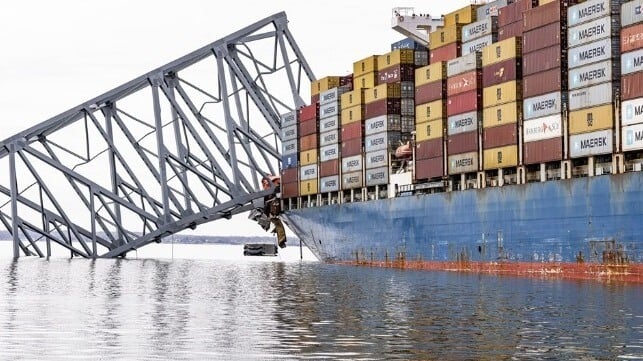
Dali's port anchor chain is visibly deployed in this post-casualty survey image (USACE)

Published Jun 19, 2025 4:37 PM by The Maritime Executive


The container ship Dali had issues with its auxiliary power system in the days before its fateful voyage down the Patapsco River last year, but that wasn't all, according to new claims from plaintiffs. In a new filing, plaintiffs in the civil suit against Dali's owner and operator allege that one key piece of deck equipment may also have had known issues before the ship hit and destroyed the Francis Scott Key Bridge.

According to the attorneys, the hydraulic brake control on Dali's port anchor windlass was inoperable, and had not worked for two weeks prior to the casualty voyage. This may not have been an immediate concern under normal circumstances, since the brake could still be operated by hand. 

However, the lawyers allege that the manual brake control needed two people to operate. Only one crewmember was posted on the bow of the Dali during the outbound transit, and when called upon to deploy the port anchor, "he was unable to do so," the attorneys claimed. 

The anchor windlass figured prominently in the final minutes of the voyage in the early hours of March 26, 2024. After Dali lost power and drifted towards a bridge pylon, the master gave an urgent order to deploy the port anchor "fast fast" at 0127:14 - but the sound of the anchor chain was not picked up on the VDR bridge audio recording until 0129:00. The Dali hit the bridge 37 seconds after the sound of the chain beginning to run. Quicker deployment of the port anchor would have exerted steering forces to port for a longer period of time, in addition to any effects in reducing the ship's forward momentum. 

In addition, the attorneys noted that Dali had two auxiliary generators up and running before the back-to-back power losses that led up to the allision. If the ship had been running three generators during the transit, "the second blackout would never have occurred," the attorneys argued, citing testimony from Dali's chief engineer.  

The owner of the Dali, Grace Ocean, has filed a federal suit to limit its liability to the value of the ship post-salvage, which it estimates at $44 million. Dozens of claimants - families of the deceased, local government bodies, the federal government, cargo interests and others - oppose the motion and seek to recover far greater amounts of compensation. The cost of bridge replacement alone is expected to come to several billion dollars. 


Kerala High Court Orders Arrest of an MSC Boxship Over Elsa 3 Sinking

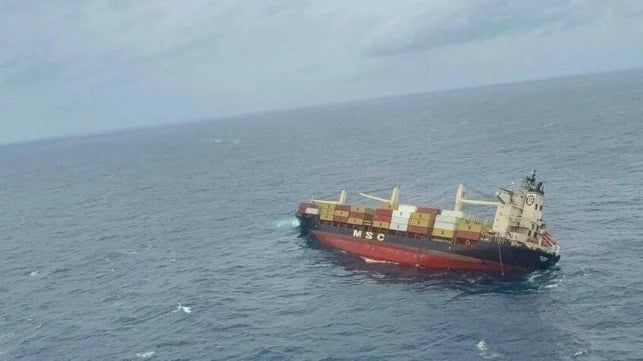
MSC Elsa 3 sinking
Courtesy Indian Coast Guard

Published Jun 19, 2025 6:39 PM by The Maritime Executive


Drifts of miniscule plastic nurdles are washing ashore in Kovalam, Kerala after the sinking of the container ship MSC Elsa 3, which took on a list and sank off the coast on May 25. As the environmental damage from the casualty racks up, the High Court in Kerala has ordered the detention of another MSC ship to ensure that the market-leading container line can pay compensation.

An Indian exporter, Sans Cashew India Private Ltd., has filed suit seeking $85,000 for the loss of a container of cashew nuts that was aboard MSC Elsa 3. The plaintiff alleged unseaworthiness, and filed for the arrest of a second MSC vessel - the MSC Polo 2 - to ensure repayment. 

MSC's counsel countered that MSC Polo 2 was outside of India's 12-nautical-mile territorial sea, beyond the jurisdiction of local authorities, according to local media. However, the court sided with the plaintiff and issued a conditional arrest order to be carried out at Adani Vizhinjam Port (unless MSC posts a bond for the amount of the claim). The Hindu reports that MSC deposited a demand draft for the amount of the bond later in the day. 

The state of Kerala is also in talks with MSC over compensation, and negotiations are ongoing. The state has signaled that it plans to file an admiralty suit against MSC, but has not yet done so and has formed a negotiating committee to talk with MSC over terms, according to Indian media. 

In a rare development, the High Court of Kerala's chief justice and a second court judge issued a warning from the bench, cautioning the state government that these behind-closed-doors, out-of-court negotiations were irregular. Typically such talks between parties would take place within the context of an admiralty suit or arbitral process. "Various questions arise for consideration—whether such a negotiation will result in a binding agreement, whether it can ensure transparency, and whether the court's jurisdiction would be impacted," the judges wrote. "It would be appropriate that the avenue of negotiation is deferred at present."

India's government is concerned about the recent uptick in casualties off the coast - not just MSC Elsa 3, but also the ongoing fire aboard Wan Hai 503 and two smaller, previously unreported shipboard fires. In recent weeks, cargo fires related to misdeclared containerized freight have broken out aboard the Interasia Tenacity and the Wan Hai 613, Indian representatives told IMO's Marine Safety Committee this week. 


UK Completes First Round for Float Wind Power in the Celtic Sea

floating offshore wind farm
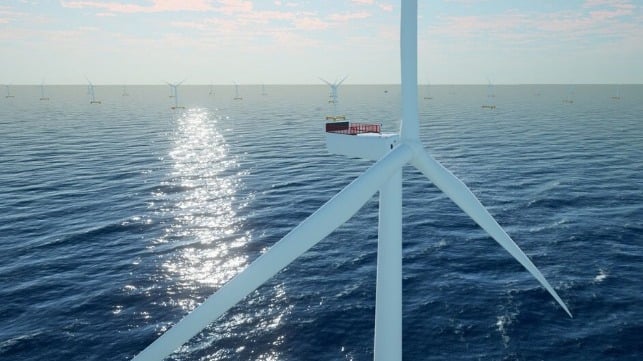
UK completed its first round focused on floating offshore wind power (Gwynt Glas)

Published Jun 20, 2025 8:55 AM by The Maritime Executive


The UK completed its fifth round process for selecting projects with this effort focusing on the development of pioneering projects in the Celtic Sea. The Crown Estate which manages the offshore property is calling the contracts for projects among the largest of their kind and a step in developing the UK’s leadership for floating offshore wind power generation.

The first two projects are being awarded to Norway’s Equinor and a partnership called Gwynt Glas, a JV between EDF Renewables and Irish energy company ESB. Each received rights to an area of seabed which the Crown Estate estimates can support 1.5 GW. The plan for a third site for a further 1.5 GW is still being developed with the Crown Estate reporting it is working on a range of options and expects to set out the next steps by the end of September.

Equinor and Gwynt Gas have to complete contracts and begin a multi-year process for gaining consent. It is expected the approval process could take three to five years with the projects becoming operational in the early 2030s.

The process for this round began in 2024. It is the first floating-specific leasing round in the UK.

The Round 5 process also asked bidders to set out their plans for working with ports to support the final assembly of their projects, with specialist infrastructure needed to mount the turbines on floating platforms before being towed out to the final project sites. As part of their submissions, the preferred bidders have identified Port Talbot and Bristol ports as the likely locations for this activity.

“Floating offshore wind will be transformative for economic growth in Wales and the South West, unlocking thousands of jobs in places like Port Talbot and Bristol, bolstering our energy security and delivering industrial renewal,” said Energy Secretary Ed Miliband.  "The Celtic Sea has huge untapped potential to support our mission to become a clean energy superpower, so we can get energy bills down for good through our Plan for Change.”

The Crown Estate views this as the first phase of a new industry in the Celtic Sea. It reports it has identified the potential for a further 4 to 10 GW of power to be developed in the region. It projects this could be brought to market by the end of the decade.

The government of Sir Kier Starmer is supporting the development of offshore wind power. The UK remains the leader in Europe and second only to China in total installed capacity. The government has outlined a plan calling for as much as 50 GW of offshore renewable energy by the end of the decade. The UK currently has approximately 16 GW installed.

The next major auction is planned for September. Analysts had said the UK must move aggressively with the next auction playing a critical component in the ability to meet the long-term goals.

Morocco Moves Ahead with Africa’s First Offshore Wind Farm

iStock
iStock

Published Jun 17, 2025 11:46 PM by The Maritime Executive


While Africa has been missing in the global offshore wind scene, Morocco has become the first country in the continent to unveil an offshore wind project. The initiative was announced last week at an event hosted by the Union for the Mediterranean (UfM) during the United Nations Ocean Conference in France. The UfM-supported multi-donor fund, the Blue Mediterranean Partnership (BMP), raised extra financing that will see investments in key blue economy initiatives in the Mediterranean region.

One of the selected initiatives is the offshore wind project near Essaouira city in Morocco, a first of its kind in the country. The project has the potential to generate up to 1 GW, with construction scheduled to begin in 2029.

“This project is part of a dynamic that combines energy independence, industrial attractiveness and economic competitiveness,” said Leila Benali, Morocco’s Minister of Energy Transition.

Last year, Morocco (with support from a $2.1 million grant from the European Investment Bank) issued a call for a feasibility study on offshore wind development. The exercise is spearheaded by the Moroccan Renewable Energy Agency (MASEN), which is tasked with achieving a national target of sourcing half Morocco’s electricity supply from renewable energy sources by 2030.

Morocco is on course to hit this target, with government data showing that wind energy capacity reached 2.4 GW by the end of last year. This capacity came from onshore projects, but offshore wind resources present the best opportunity for expansion.

According to World Bank estimates, Morocco has a potential of 200 GW of offshore wind capacity, of which 22 GW are best suited for bottom-fixed turbines while the rest would be floating wind farms. With a vast coastline of 3,500 kilometers, some regions along the Atlantic coast - such as Tangier, Tetouan, Essaouira and Dakhla - have been identified as the best places for offshore wind development. Wind speeds in these regions is estimated to reach 11 meters per second (m/s), ideal for wind energy generation.

BAE Systems Ordered to Improve Fire Safety at Nuclear-Sub Shipyard

BAE Systems
Image courtesy BAE Systems

Published Jun 18, 2025 8:37 PM by The Maritime Executive

]

The defense and security contractor building the next-generation nuclear submarines for the Royal Navy has been ordered to improve its safety measures after a fire broke out at its Barrow-in-Furness shipyard in October last year.

BAE Systems Marine, which is building the UK’s largest and most powerful fleet of attack submarines, has been served with an enforcement notice demanding improvements on its safety practices. The notice, served by the Office for Nuclear Regulation (ONR), gives BAE Systems until September 12 to put in place measures that “ensure the protection of workers in the event of a fire."

The notice follows a fire that broke at the company’s Barrow-in-Furness site in Cumbria, where the Astute- and Dreadnought-class boats are being built. ONR found that five employees entered an area in the Devonshire Dock Hall facility when the fire was still raging in the early hours of October 30. As a result, two employees were taken to hospital for treatment, though they were discharged and returned to work on the same day.

Inquiries concluded that BAE Systems' arrangements for ensuring workers did not enter places of danger without the appropriate safety instructions were inadequate. In essence, the company lacked guidance to inform staff on the required actions in the event of a fire.

The UK nuclear industry regulator has gone ahead to serve BAE Systems with an enforcement notice under the Regulatory Reform (Fire Safety) Order 2005. “We will continue to engage with BAE Systems Marine during the period of the enforcement notice to ensure positive progress is made to address this shortfall,” said Bruce Archer, ONR’s Head of Propulsion Sites Regulation, Operating Facilities Directorate.


UK’s Demonstrator Project for Dismantling Nuclear Subs Moves Forward

Submarine dismantling
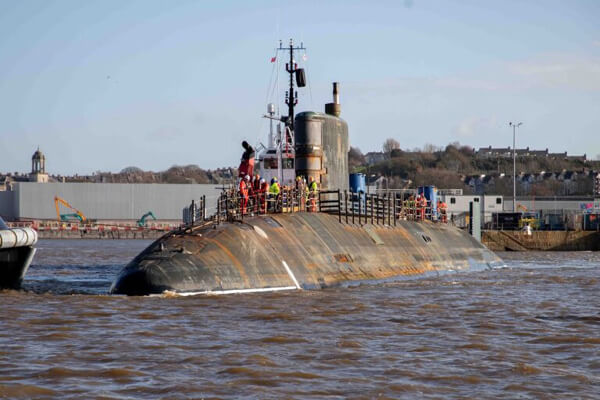
First large section cut away from the Swiftsure (Babcock)

Published Jun 20, 2025 9:01 AM by The Maritime Executive


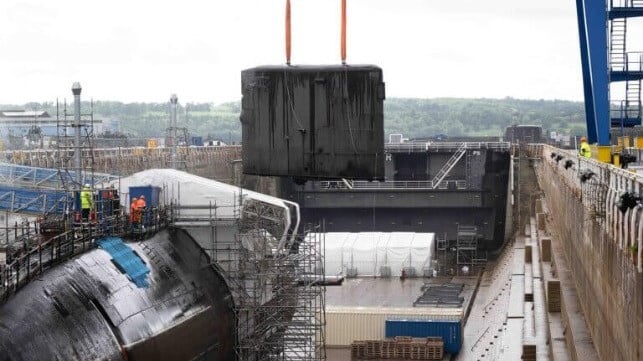
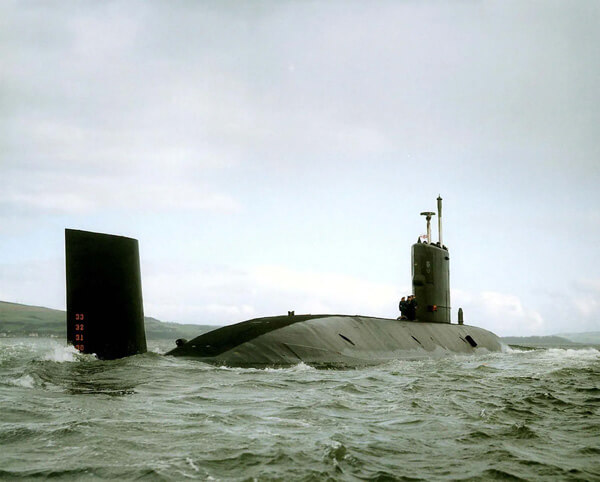
The UK marked a milestone early in June in its efforts to develop a program for dismantling and recycling its fleet of decommissioned nuclear submarines. The first large section was cut from the former HMS Swiftsure as the final stage of the first dismantling project for a British nuclear sub moves forward.

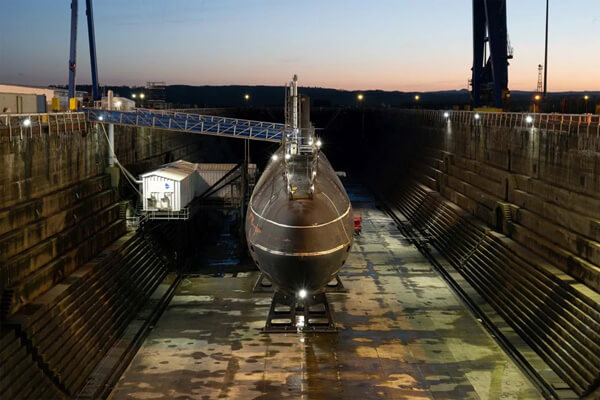
The first major cut on HMS Swiftsure was the removal of the sub’s fin (sail or tower section) of the nearly 5,000-tonne submarine. The large structure was removed from the hull and lowered to the dry dock. Cutters have been working on the submarine since late 2024 after she entered a dry dock in Rosyth, Scotland at the Babcock facility. While they have begun removing smaller elements within the hull, this was the first exterior cut into the vessel.

The project is scheduled to be completed by the end of 2026, and they estimate as much as 90 percent of Swiftsure’s total weight will be recycled. Some of the high-quality steel will be repurposed into components for future Royal Navy submarines.


Swiftsure is being dismantled in a dry dock in Scotland (Royal Navy)


The UK has been working to develop a process for the recycling of the submarines for nearly a decade with critics pointing out they are dramatically behind schedule. The country currently has a total of 23 decommissioned nuclear submarines stored between Rosyth and Devonport in England and many still have their nuclear fuel on board. They require regular maintenance and surveys. 

Critics point out the UK moved to rapidly decommission nuclear submarines at the end of the Cold War with no plan for how to address the ships. One proposal called for scuttling the vessels in deep water. By comparison, the United States has a well-developed process undertaken at the yard in Bremerton, Washington which completes the recycling of a Los Angeles class attack submarine in less than two years.

The UK established the Submarine Delivery Agency in 2013 with the objective of developing a dismantling and disposal solution for 27 decommissioned nuclear submarines.  The plan calls for a multi-stage approach starting with the removal of radioactive parts that contain low-level radioactive waste. The second stage is the removal of the Reactor Pressure Vessel and that is followed by the clearing of all radioactive materials.


Swiftsure was operational from 1972 to 1991 (Royal Navy)


Swiftsure was ordered in 1967 and built by Vickers-Armstrongs Barrow-in-Furness shipyard. She was 83 meters (272 feet) in length and commissioned as the first of her class in April 1972. She was active for 19 years but retired after they reportedly found cracks in the structure as she was prepared for her second life-extension overhaul. There were five other vessels in the class with the final one decommissioned in 2010.

Swiftsure is designed as a demonstrator project for dismantling. She was moved to a dock at Rosyth on July 27, 2023. In the first phase, they worked to identify and remove any remaining classified items and check that she was free of any radioactive material.


UK looks to accelerate the disposals to deal with the backlog of laid up nuclear submarines (Babcock)


The Submarine Delivery Agency highlights that with subsequent vessels they have been able to move at a faster pace and lower cost. HMS Resolution which has 50 percent greater tonnage completed her first stage cleaning in three-quarters of the time of Swiftsure.

Babcock announced at the beginning of June that it had been awarded a three-year contract to prepare for the first nuclear defueling of a decommissioned Trafalgar Class submarine in over 20 years. The £114 million ($155 million) contract from the Ministry of Defence will see the defueling process begin for four decommissioned submarines, with activities getting underway starting in 2026.


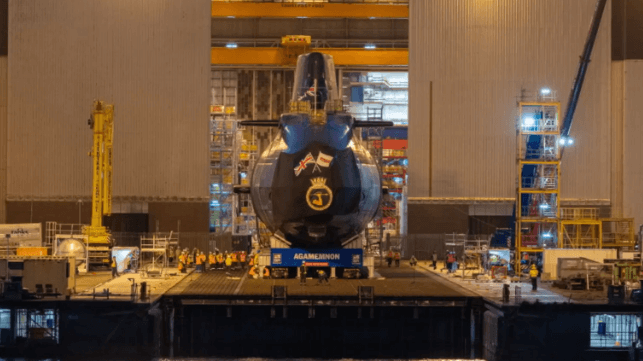
BAE Systems is tasked with building the next generation submarines for the Royal Navy and has since handed over five of the Astute class boats. A further two boats named Agamemnon and Agincourt are currently under construction. The company is also building the Dreadnought class submarines that will replace the Vanguard class when they enter service in the early 2030s. Work on the first two boats is underway in Barrow.

Covering about six acres, the Devonshire Dock Hall facility is the second-largest indoor shipbuilding complex of its kind in Europe and is critical in the delivery of the boats. The facility was opened about four decades ago.

BAE Systems reckons it has invested more than £1 billion ($1.3 billion) in advanced technology and upgraded infrastructure at the shipyard to enable it to deliver Dreadnought. The company also intends to invest a further £450 million ($605.6 million) over the life of the program. Approximately 10,000 people work on the Dreadnought and Astute submarine program at the Barrow site.