It’s possible that I shall make an ass of myself. But in that case one can always get out of it with a little dialectic. I have, of course, so worded my proposition as to be right either way (K.Marx, Letter to F.Engels on the Indian Mutiny)
Monday, November 17, 2025
Lethal aggression, territory, and fitness in wild chimpanzees
A team of anthropologists, led by UCLA’s Brian Wood and University of Michigan’s John Mitani, discover clear links between lethal aggression, territorial expansion, and increased reproductive success in wild chimpanzees
New research led by UCLA and the University of Michigan has shown that chimp communities that kill their neighbors to gain territory also gain reproductive advantages.
The Ngogo group of wild chimpanzees in Uganda expanded its territory after its members killed at least 21 chimpanzees in neighboring groups.
In the three years after the territorial expansion, the fertility of Ngogo females doubled and the survival rates of their offspring dramatically increased.
The study offers rare evidence linking intergroup lethal conflict to reproductive benefits, providing insight into the evolution of coalitionary violence.
The Ngogo chimpanzees of Uganda’s Kibale National Park have long been known for violent clashes with neighboring groups, often resulting in deaths — a phenomenon sometimes described as “chimpanzee warfare.”
Now, a new study led by UCLA anthropologist Brian Wood, in collaboration with John Mitani of the University of Michigan, provides the clearest evidence yet that territorial expansion after lethal conflict can directly boost reproductive success. Following a series of coordinated attacks that claimed at least 21 lives, the Ngogo group’s territory grew by 22%. In the years that followed, females gave birth more often, and their infants were far more likely to survive.
Published in Proceedings of the National Academy of Sciences (PNAS), the study provides valuable evidence about the evolutionary roots of intergroup aggression and its fitness consequences for chimpanzees. The research was funded in part by the National Science Foundation.
“Our findings provide the first direct evidence linking coalitionary killing between groups to territorial gain and enhanced reproductive success in chimpanzees.” said Wood.
The numbers tell a striking story. In the three years preceding the territorial expansion, Ngogo females gave birth to 15 offspring. In the three years after, they gave birth to 37 — more than doubling their fertility rate. Infant survival also improved dramatically: from a 41% chance of death before age 3 to just 8% afterward.
"In retrospect, we knew what happened. We were observing all these births and there are good theoretical and empirical reasons for thinking something like this might happen," said Mitani, who is professor emeritus of anthropology at U-M. Still the extent to which births and survival rates ballooned was a surprise. “What we saw were very high numbers," said Mitani.
Mitani has been part of a team that's observed this group of chimpanzees for more than three decades. About 15 years ago, the researchers witnessed the chimps overtake the territory of neighboring chimps that they had killed. The question remained as to what evolutionary advantage this behavior might provide, which the team has now shown to be these reproductive benefits.
After ruling out other explanations, the research team, which also includes David P. Watts of Yale University and Kevin E. Langergraber of Arizona State University, concluded that territorial expansion improved female nutrition and overall health, leading to higher fertility and survival rates among their young.
The team also tested alternative hypotheses. One possibility was that females reproduced more frequently because infant mortality was high — a pattern sometimes seen in primates — but the data showed the opposite: both fertility and infant survival improved. Another possibility was that changes in food availability might explain the results, but fruit abundance in Ngogo’s core (pre-expansion) territory remained stable or even declined slightly after the expansion.
“These findings help us understand why chimpanzees, and perhaps our own early ancestors, evolved a capacity for coordinated violence. When food is scarce, territorial gains can translate into real reproductive advantages. Humans have, thankfully, evolved an extraordinary capacity to resolve and avoid such conflicts, offering a way to escape cycles of food scarcity, territorial violence, and zero-sum competition among neighboring groups," said Wood.
The research was performed with permission from the Uganda Wildlife Authority, the Uganda National Council for Science and Technology and the Makerere University Biological Field Station.
Journal
Proceedings of the National Academy of Sciences
ALCHEMY
Polish archaeologists discover 7,700-year-old kilns and artefacts in joint research with Kuwait
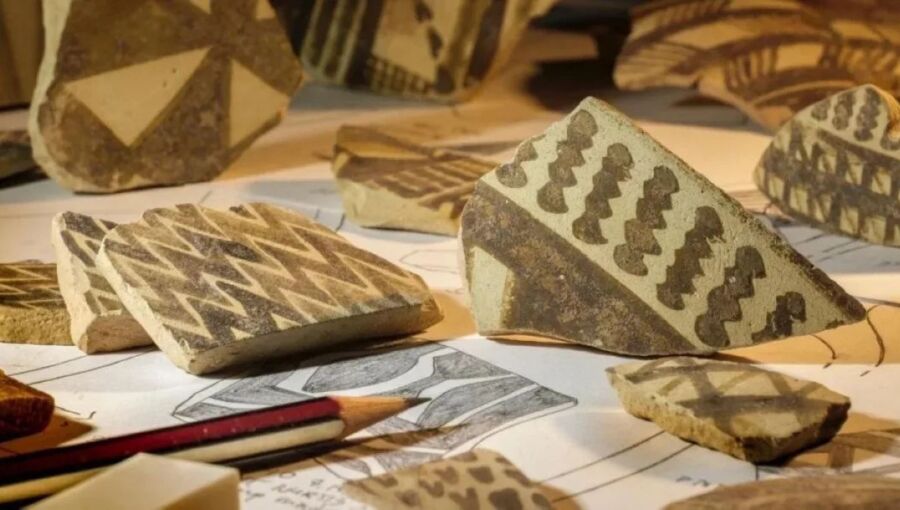
Imported Ubaid ware potsherds from 2024 dig. / Photo: A.Oleksiak / PCMA UW
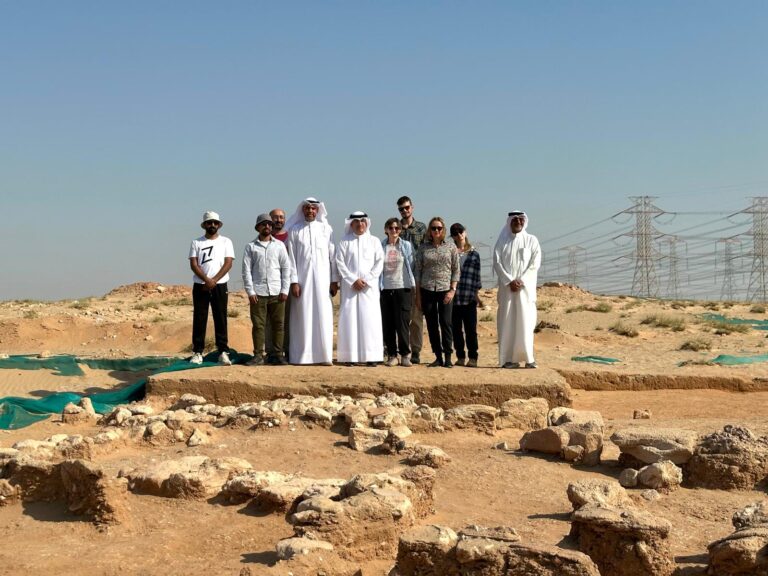
Kuwaiti and Polish archaeologists have announced the discovery of more than 20 kilns dating back around 7,700 years, alongside a collection of artefacts at the Bahra 1 site in the Subiya area of northern Kuwait near the current border with Iraq.
The area now known as Kuwait and Iraq was home to the Ubaid culture, a prehistoric Mesopotamian civilisation that extended from southern Iraq into parts of eastern Arabia. Not much is known about the ancient civilisations in the Kuwait research area, and with the joint research project with Poland, the programme is discovering new and interesting finds.
Finds include a half‑model of a winged owl, remains of local barley dating back 7,500 years, pottery vessels broken during firing, a small clay human head, miniature figurines, a model ship and pottery used for food preparation.
Mohammed bin Redha, Acting Assistant Secretary‑General for Antiquities and Museums, told KUNA that “the Bahra 1 site is the oldest and largest known settlement in the Arabian Peninsula from the Ubaid culture period, dating back to around 5700 BC. The discoveries reflect the life of the local community thousands of years ago.”
He explained that the latest Polish excavation season focused on field and laboratory analyses, including ground‑penetrating radar surveys that revealed buried cultural remains likely to guide future digs.
Hassan Ashkanani, Assistant Professor of Archaeology at Kuwait University, said the new discoveries mark a significant addition to understanding the development of the community in Al‑Sabiyah, building on earlier seasons that uncovered jewellery and shell ornament workshops.
Agnieszka Bienkowska, Deputy Director of the Polish excavation team, noted that the findings shed light on daily practices, food preparation methods, the production of pottery from clay mixed with wild plants, and the use of bitumen as fuel.
Professor Anna Smogorzewska highlighted the pottery workshop as one of the most important discoveries at the site in recent years.
Bahra 1 has been a focal point of archaeological research since 2009, through collaboration between Kuwait’s National Council for Culture, Arts and Letters and the Polish Centre for Mediterranean Archaeology at the University of Warsaw. The current mission is supervised by Professor Piotr Bielinski, with Bienkowska serving as deputy director.
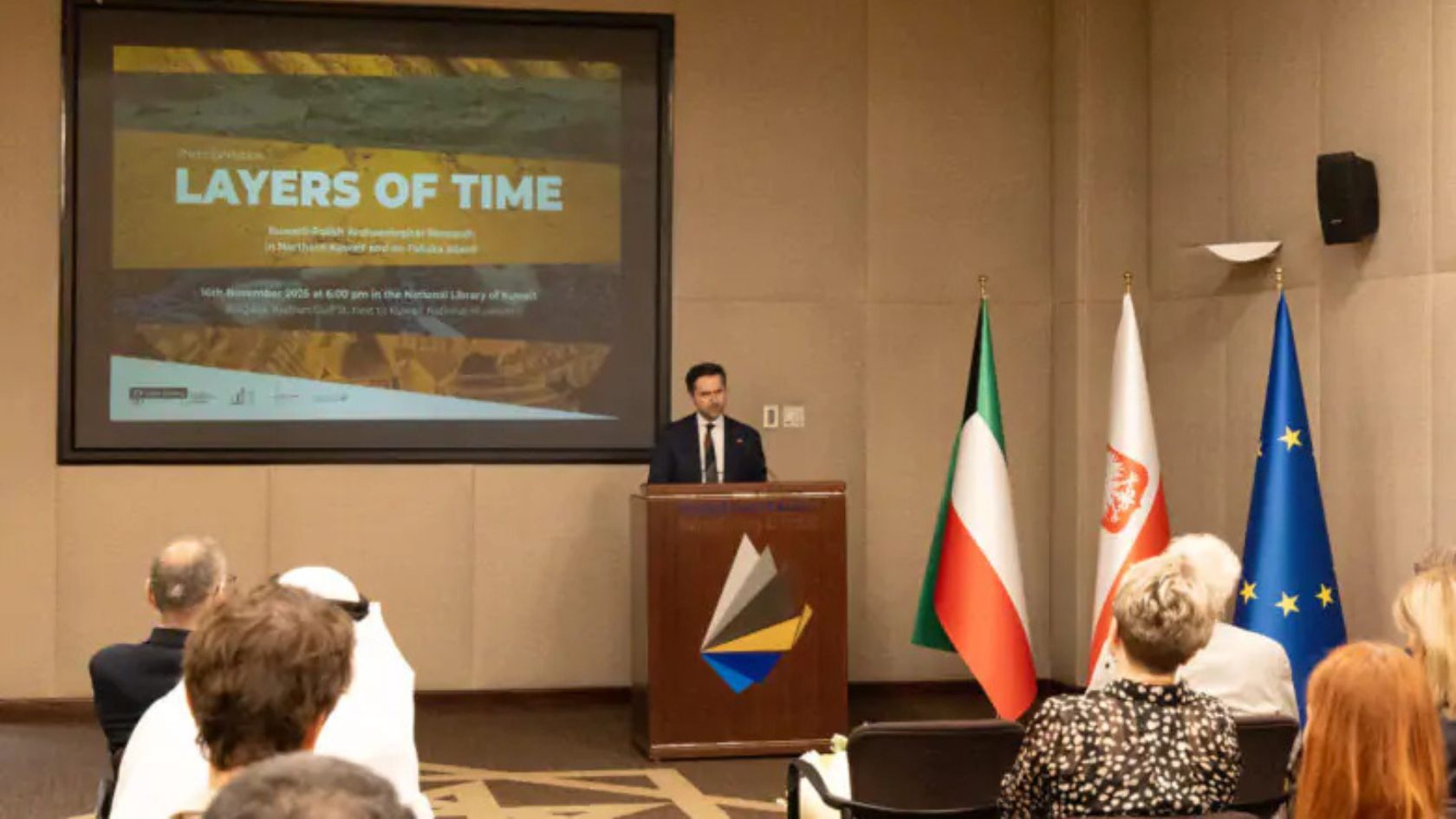
As part of the showcasing of the discovered items on November 16, the Embassy of Poland in Kuwait, in collaboration with the Polish Centre of Mediterranean Archaeology at the University of Warsaw (PCMA UW), organised a special exhibition highlighting decades of Polish archaeological research in Kuwait.
Earlier in April, bne IntelliNews previously reported neighbouring Iraq had announced it secured three rare ancient artefacts from New York as part of a deal with the US.
The Iraqi embassy in Washington noted that the items date back to the Sumerian and Babylonian civilisations and described the move as “a new achievement that reflects the tireless diplomatic efforts to safeguard Iraq’s cultural legacy.”
The recovery was coordinated with the Antiquities Trafficking Unit in the Office of the New York District Attorney. The embassy stressed that this step “demonstrates Iraq's firm commitment to retrieving its looted antiquities and returning them to their homeland.”
That retrieval is the latest in a string of returns reported by the country, with the items recently turning up in February.
"It was a significant challenge to recover these Iraqi artefacts, including the Sun God statue and textile panels dating back centuries," said Hussein. "These archaeological pieces are not mere remains but our cherished heritage."
Since 2008, the United States has returned more than 1,200 pieces to Iraq, whose cultural properties and museums were looted after 2003.
In May 2023, President Abdul Latif Jamal Rashid announced the recovery of 6,000 artefacts on loan to the United Kingdom since 1923 for research purposes.
Unearthing the City of Seven Ravines
The remains of an extensive Bronze Age settlement on the Kazakh Steppe that was likely once a major regional hub for large-scale bronze production more than 3,500 years ago, have been revealed by an international team of archaeologists.
The remains of an extensive Bronze Age settlement on the Kazakh Steppe that was likely once a major regional hub for large-scale bronze production more than 3,500 years ago, have been revealed by an international team of archaeologists co-led by researchers from UCL.
Published in Antiquity Project Gallery and co-led by Durham University and Kazakhstan’s Toraighyrov University, the paper presents the first detailed archaeological survey of Semiyarka—a vast, 140-hectare planned settlement and the largest known ancient site of its kind in the region. Although first identified in the early 2000s by researchers at Toraighyrov University, the site has only now been investigated in depth. Dating from around 1600 BC, Semiyarka offers insight into an important period of history when local nomadic communities began transitioning into permanent, urbanised settlements.
Lead author Dr Miljana Radivojević (UCL Archaeology) said: “This is one of the most remarkable archaeological discoveries in this region for decades. Semiyarka changes the way we think about steppe societies. It shows that mobile communities could build and sustain permanent, organised settlements centred on a likely large-scale industry — a true ’urban hub’ of the steppe.”
Today, what remains of the city are two rows of rectangular earthen mounds about a metre high that were the foundations of enclosed homes with multiple rooms. Nearby, the researchers also found the remains of a larger, central structure twice the size of the homes. Though its exact purpose is unclear, it could have been the site of rituals, a common communal space or may have been the home of a powerful family.
The scale and permanence of the settlement is surprising, as researchers had understood the people that lived in the region at the time to be semi-nomadic, living in mobile camps or small villages.
Co-author Professor Dan Lawrence of Durham University said: “The scale and structure of Semiyarka are unlike anything else we’ve seen in the steppe zone. The rectilinear compounds and the potentially monumental building show that Bronze Age communities here were developing sophisticated, planned settlements similar to those of their contemporaries in more traditionally ‘urban’ parts of the ancient world.”
Semiyarka was likely a major centre for tin bronze production in the region – a rare discovery in the Eurasian Steppe. On the southeast end of the city, researchers unearthed evidence of an ‘industrial zone’ dedicated to tin bronze metallurgical production, the main bronze alloy that defined the Bronze Age. Excavations and geophysical surveys revealed crucibles, slag, and tin bronze artefacts, providing the first firm evidence that Semiyarka metallurgists operated complex production systems rather than small-scale workshops.
Currently, little is known little about tin bronze production in the Eurasian Steppe Bronze Age, despite hundreds of thousands of tin bronze artefacts preserved in museum collections. Only one other settlement in eastern Kazakhstan, a Late Bronze Age mining site of Askaraly, has been linked to tin bronze production. Semiyarka shows an entire settlement zone dedicated to tin bronze making —suggesting a highly organised, possibly limited or controlled, industry of this sought-after alloy. The researchers hope that the site can offer more insights into the region’s poorly understood ancient production practices.
The city is located on a promontory above the Irtysh River in northeastern Kazakhstan and was first discovered in the early 2000s. Its name means “Seven Ravines,” taken from the network of valleys it overlooks. Its strategic location suggests that Semiyarka was once both a centre of exchange and a regional power. It’s also situated in the vicinity of copper and tin deposits in the nearby Altai Mountains which supplied the raw materials for its bronze manufacturing.
Co-author Dr Viktor Merz of Toraighyrov University in Kazakhstan, who first discovered the site, said: “I have been surveying Semiyarka for many years with the support of Kazakh national research funding, but this collaboration has truly elevated our understanding of the site. Working with colleagues from UCL and Durham has brought new methods and perspectives, and I look forward to what the next phase of excavation will reveal now that we can draw on their specialist expertise in archaeometallurgy and landscape archaeology.”
Excavated finished metallic artifacts and pottery shards indicate that the Alekseevka-Sargary people predominantly inhabited the site, a group that were some of the first to construct permanent dwellings in settlements in the region. Other items are reminiscent of the Cherkaskul people, another group that lived throughout the region but were thought to be more nomadic, indicating the inhabitants of Semiyarka likely traded with these and other local peoples.
The researchers hope in the future to examine how Semiyarka’s communities organised production and trade with their neighbours, as well as the environmental impact of these activities. In addition, the team also identified several nearby burial sites and temporary settlements from the same timeframe which could provide additional insight into the region’s ancient culture.
The research was funded by the British Academy, Kazakh Ministry for Science and Higher Education and the ERC awarded/UKRI-funded DREAM Project.
Notes to Editors
For more information or to speak to the researchers involved, please contact Michael Lucibella, UCL Media Relations. T: +44 (0)75 3941 0389, E: m.lucibella@ucl.ac.uk
Miljana Radivojević, Dan Lawrence, Victor K. Mertz, Ilya V. Mertz, Elena Demidkova, Mark Woolston-Houshold, Richie Villis and Peter J. Brown, ‘A Major City of the Kazakh Steppe? Investigating Semiyarka’s Bronze Age Legacy’ will be published in Antiquity Project Gallery on Tuesday 18 November 2025, 00:01 UK Time, 17 November 2025, 19:01 US Eastern Time, and is under a strict embargo until this time.
UCL is a diverse global community of world-class academics, students, industry links, external partners, and alumni. Our powerful collective of individuals and institutions work together to explore new possibilities.
Since 1826, we have championed independent thought by attracting and nurturing the world's best minds. Our community of more than 50,000 students from 150 countries and over 16,000 staff pursues academic excellence, breaks boundaries and makes a positive impact on real world problems.
The Times and Sunday Times University of the Year 2024, we are consistently ranked among the top 10 universities in the world and are one of only a handful of institutions rated as having the strongest academic reputation and the broadest research impact.
We have a progressive and integrated approach to our teaching and research – championing innovation, creativity and cross-disciplinary working. We teach our students how to think, not what to think, and see them as partners, collaborators and contributors.
For almost 200 years, we are proud to have opened higher education to students from a wide range of backgrounds and to change the way we create and share knowledge.
We were the first in England to welcome women to university education and that courageous attitude and disruptive spirit is still alive today. We are UCL.
A 12,000-year-old clay figurine unearthed in northern Israel, depicting a woman and a goose, is the earliest known human-animal interaction figurine. Found at the Late Natufian site of Nahal Ein Gev II, the piece predates the Neolithic and signals a turning point in artistic and spiritual expression. Combining naturalism, light manipulation, and symbolic imagination, it reveals how early communities used art to explore the relationship between humans and the natural world.
At a prehistoric village overlooking the Sea of Galilee, archaeologists led by Dr. Laurent Davin have uncovered a clay figurine unlike any found before. The 12,000-year-old artifact, depicting a woman and a goose in what appears to be a mythological or ritual scene, offers a rare window into the symbolic and spiritual world of early sedentary peoples in Southwest Asia.
Discovered at the site of Nahal Ein Gev II (NEG II), a project led by Prof. Leore Grosman of the Institute of Archaeology at the Hebrew University of Jerusalem, with Prof. Natalie Munro, they describe the find as the earliest known figurine showing human and animal interaction and the first naturalistic depiction of a woman in the region. The study, recently published in PNAS, combines advanced analytical techniques to reconstruct both the artifact’s composition and its cultural significance.
The Find: A Figurine of Clay and Light
The figurine, only 3.7 cm tall, was modeled from local clay and heated at about 400°C, suggesting deliberate control of early pyrotechnology. Microscopic and chemical analyses revealed red pigment residues (ocher) on both woman and goose, along with a preserved fingerprint likely left by the young adult or adult female artisan. The sculptor used light and shadow to create depth and perspective, foreshadowing artistic innovations that would not fully flourish until the Neolithic.
Depicting a woman crouched beneath a goose perched on her back, the scene suggests more than a simple act of daily life. The goose, common in the Natufian diet but also imbued with symbolic value, appears alive rather than hunted. Researchers interpret the composition as an imagined or mythological encounter consistent with animistic beliefs, a worldview that saw humans and animals as spiritually interconnected.
Context and Meaning
The figurine was found in the fill of a semicircular stone structure containing burials and ceremonial deposits, part of the Late Natufian settlement at Nahal Ein Gev II dated to approximately 12,000 years ago. The Natufian culture, spanning roughly 15,000 to 11,500 years ago, marks humanity’s transition from nomadic foragers to settled communities. The discovery reveals that long before agriculture, these early villagers were already experimenting with narrative art, symbolic expression, and clay modeling techniques.
Faunal remains from the site reinforce the connection between geese and ritual life. The birds’ feathers were used for decoration, and certain bones were fashioned into ornaments. The artistic focus on a goose and a woman, the researchers argue, points to an early mythic imagination, a symbolic vocabulary that later blossomed in Neolithic cults and figurative traditions across Southwest Asia.
A Glimpse into the Origins of Belief
"This discovery is extraordinary on multiple levels," says Dr. Laurent Davin, leading author of the paper. "Not only is this the world's earliest figurine depicting human-animal interaction, but it's also the earliest naturalistic representation of a woman found in Southwest Asia."
“The NEG II figurine captures a transformative moment,” says Prof. Grosman. “It bridges the world of mobile hunter gatherers and that of the first settled communities, showing how imagination and symbolic thinking began to shape human culture.”
Beyond its craftsmanship, the piece embodies the earliest seeds of myth, storytelling, and spiritual connection, articulated in clay by hands that lived millennia before the rise of civilization.