Wednesday, March 04, 2026

How exposed is China to the Hormuz crisis?
How exposed is China to the Hormuz crisis?
/ bne IntelliNews
By Newsbase March 3, 2026

A prolonged closure of the Strait of Hormuz would hit China’s energy security hard, threatening to sever roughly half of its crude imports and a significant share of its LNG supply.

WHAT: China could lose access to about half of its oil imports and roughly 30% of its LNG if Hormuz remains blocked.

WHY: Much of China’s Gulf crude and discounted Iranian barrels transit the strait, and replacing them would mean fiercer competition, higher prices and pressure on refiners and economic growth.

WHAT NEXT: Beijing is likely to draw on strategic reserves, seek alternative suppliers and intensify diplomatic efforts to restore flows if the disruption persists.


China is acutely exposed to a prolonged closure of the Strait of Hormuz. It is the world’s largest oil importer and it is also the world’s largest LNG importer, with a particularly heavy reliance on Gulf supply – both directly via Qatari LNG and Saudi crude, and indirectly, via sanctioned Iranian barrels whose flow would also be disrupted by a lengthy blockage, as well as broader fallout from the US-Iran conflict.

Tehran has been clear. “The strait [of Hormuz] is closed. If anyone tries to pass, the heroes of the Revolutionary Guards and the regular navy will set those ships ablaze,” Ebrahim Jabari, a senior adviser to the Revolutionary Guards commander-in-chief, said, according to Iranian state media.

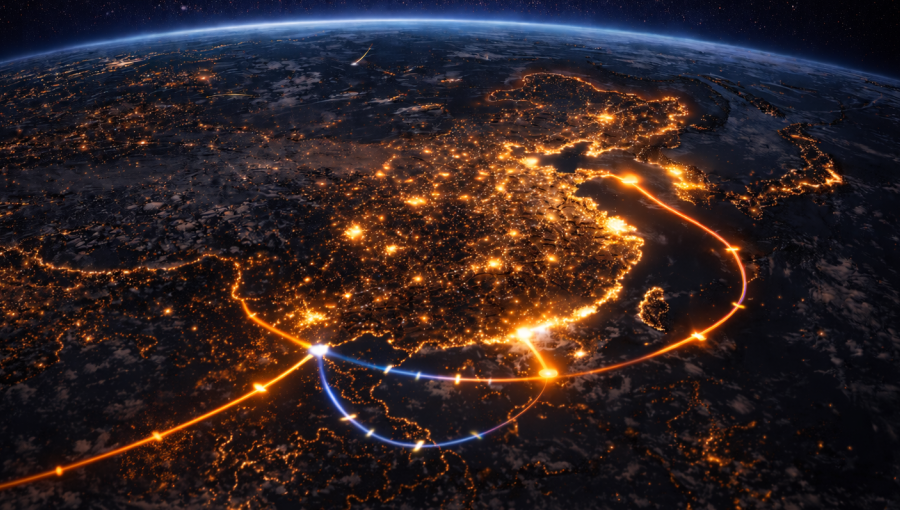
The waterway handles around a fifth of global oil and LNG supply. For China, its closure cuts the country off from around half of the crude supply it typically imports. It is also equivalent to around a third of the total oil that China consumes. China also receives roughly 30% of its LNG via the Strait of Hormuz from Qatar. No surprise then that Beijing is urging Tehran to lift its blockade.


Oil exposure

In 2025, Chinese oil imports hit a record high of 11.6mn barrels per day (bpd). Of that amount, Saudi Arabia delivered 1.62mn bpd, according to state customs data. It was the country’s second-largest supplier after Russia, which delivered 2.09mn bpd.

A further 1.3mn bpd came from Iraq – shipments which also go through the Strait of Hormuz and around 930,000 bpd from Brazil.

Also listed among the top suppliers in the customs data is Malaysia, which is recorded to have delivered 1.3mn bpd. But there is a catch. That is more than double the amount of oil that Malaysia actually produces. In reality, much of that amount is believed to be redirected sanctioned crude, primarily from Iran. 

How does this opaque practice work? Iranian crude is typically loaded at terminals such as Kharg Island and transferred ship-to-ship in waters off Malaysia or in the wider South China Sea. During these transfers, tankers may disable or manipulate their automatic identification system transponders, obscure cargo origin in shipping documents, or change vessel names and flags. The cargo is then relabelled as Malaysian blend.

Tanker-fracking firms including Kpler, Vortexa and S&P Global Commodity Insights have repeatedly identified these “dark fleet” movements.

So how much Iranian oil does China in fact import? Though difficult to determine, Kpler estimates it amounted to 1.38mn bpd last year, which would put Iran in third place behind Russia and Saudi Arabia among China’s top suppliers.

First there is the obvious crisis that China will face in scrambling for alternatives to its loss of Gulf crude in the event of a lengthy Hormuz blockade, outbidding other buyers facing the same difficulty for cargoes. Higher prices will impact the economy, which is already on track to see a slowdown over the next two years, with the IMF predicting in mid-February GDP growth of 4.5% this year versus 5% in 2025.

Fortunately China has a buffer against supply shortages in the form of 900mn barrels of oil in storage, which is equivalent to about 78 days of consumption, which is not far below the 90 days recommended by the International Energy Agency (IEA) for major oil importers. Beijing made the stockpiling of oil a strategic priority over two decades ago, massively expanding its storage facilities as a hedge against any disruption in oil trade. In particular it was mindful of the risk of the US one day blockading the Malacca Strait – another marine chokepoint.


Losing discounts

The loss of Iranian crude is particularly painful, given the deep discounts at which those sanctioned barrels were being purchased. Recent estimates place the discount for Iranian Light at between $8-10 per barrel versus Brent. Smaller independent, so-called “teapot” refineries in China relied on that discount to make any money at all, as they traditionally operate on very slim margins versus their larger state-owned competitors.

This also follows China’s loss of discounted Venezuelan crude in January, following the US seizure of President Nicolas Maduro. Washington has lifted sanctions on the country’s oil, but with the caveat that those supplies can only be bought and sold by US companies, presumably no longer at a discounted price. China took around 390,000 bpd of sanctioned oil from Venezuela in 2025, according to Kpler.

If the US and its allies can succeed in better enforcing sanctions on Russian crude – through targeting an increasing number of shadow fleet tankers and in some cases even detaining vessels, China would lose a further 800,000 bpd of sanctioned crude from Russia, as estimated by Kpler. 


Stronger on gas

In the case of gas, China’s situation is not so precarious, though it still presents challenges. 

Firstly, China is not as exposed to international LNG markets as it is to international oil markets. The country relies on LNG imports only to cover around one-fifth of its gas demand, with the rest covered by either domestic production or stable pipeline supply primarily from Russia and Central Asia. Secondly, natural gas is a relatively small part of its energy mix — around 7-8% versus 18-20% for oil and oil products. Thirdly, its gas inventories are also fairly high though not as high as its oil stockpiles, at around 50 days. Fourthly, it can always fall back on domestic coal in power generation if global gas supply is scarce and exorbitantly expensive. 

China also can fall back on its US LNG supply contracts to ease the loss of Qatari shipments. Although it has avoided direct US LNG imports since placing a tariff on those supplies amid trade tensions with Washington a year ago, Chinese companies still hold long-term US contracts totalling around 25mn tonnes per year, with a significant portion of these deliveries scheduled to begin this year. Any US imports China is currently contracted to receive it simply resells to Europe.

Secondly, China can tap increased supplies from Russia’s Arctic LNG-2 plant. Despite US sanctions on the project, it began taking cargoes last autumn. Limited by Arctic shipping constraints, it could ramp up those shipments to around 4mn tonnes.


COMMENT: Iran's oil war could reshape the global economy — and Europe has the most to lose

COMMENT: Iran's oil war could reshape the global economy — and Europe has the most to lose
Iran's Azadi Square with smoke behind from Israeli strike on city's old Mehrabad airport March 3. / CC: IRNA Akbar Tavakoli
By bnm Tehran bureau March 4, 2026

Iran's retaliatory strikes on American and British oil tankers and, most dramatically, on oil storage facilities in the United Arab Emirates, have pushed an already fragile global energy market to breaking point. The Strait of Hormuz remains effectively blocked. Oil and fertiliser prices are surging. Fuel costs in Britain have doubled. And the reverberations are only just beginning, with people fleeing the UAE and Qatar as fast as they can. 

The immediate consequences are stark enough: 800-plus Iranians are dead and a growing number of Americans, Kuwaitis, Lebanese, Israelies and others. Even if hostilities were to cease tomorrow -  purely hypothetical scenario - the damage to freight rates and insurance premiums would persist for months, if not years. Ships and their cargoes are insured separately, and underwriters have no appetite for risk in what has become the most volatile chokepoint in global trade. Every barrel transiting the Persian Gulf now carries a hefty geopolitical surcharge, and that cost will be passed directly to consumers at a record-breaking speed. Probably the fastest increase since the 2020 Coronavirus (COVID-19) spike. 

The latest numbers speak for themselves. Roughly 20% of the world's natural gas and up to 30% of its oil passes through the narrow mouth of the Hormuz Strait, connecting the Persian Gulf to the Gulf of Oman and on to the Indian Ocean. Of the cargo that reaches the Indian Ocean, some 80% is bound for South-East Asia - principally China, India, Japan and South Korea. Only 15-20% heads to Western Europe and elsewhere, but don't let that calm readers in London into thinking that risk price is spreading far and wide.

This matters enormously. China absorbs between 30% and 40% of that 80% share. India takes a substantial portion of the remainder. These are the two great locomotives of global economic growth, and both now face a sharp and unavoidable increase in the cost of energy. Beijing may have stockpiled strategic reserves and developed alternative supply routes - including the Power of Siberia pipeline and shipments via Vladivostok - but restructuring supply chains is a process, not an event. In the near term, the hit is real.

The likely outcome is not collapse but deceleration. China's growth rate could slip from 5% to 4%, still impressive by Western standards, but a meaningful slowdown for an economy on which much of the developing world depends. India faces a similar trajectory. And when the world's primary growth engines lose momentum, the drag is felt everywhere. Countries teetering on the edge of positive growth risk tipping into contraction, with all the social and political instability that entails.

Europe's position is particularly precarious, as Tucker Carlson remarked on his latest podcast this week. On paper, only 10-15% of Persian Gulf energy supplies are destined for European markets. But context is everything. The continent entered the winter heating season with underground gas storage already below 30%. The Netherlands, once a pillar of European gas security, has seen reserves plummet to a catastrophic 11%. With a month and a half of winter still ahead, every percentage point of supply matters.

For Britain, the unlucky Chancellor of the Exchequer, Racheael Reeves, was blindsided by events (again) despite careful planning for the spring financial statement. British homes are particularly vulnerable at the moment, as around 20% of the country's gas supply comes from Qatar as liquid natural gas (LNG), which could add around GBP500 to households' annual bills, already under immense pressure. For them, a sigh of relief, however, as spring appears to be a saving grace as thermostats turn down. 

There is no evidence that summer will bring relief for the rest of Europe. The EU's increasingly brutal heatwaves drive air-conditioning demand that rivals winter heating loads. The continent faces the unenviable task of replenishing its depleted reserves amid sustained global supply disruption - and must do so while drawing down strategic stocks once considered untouchable.

On currency markets, predictions of a dollar crash appear premature. The greenback remains anchored to the fundamentals of the American economy, which continues to post roughly 3% growth with inflation contained below 4%. The United States' $921bn trade deficit - near its post-2022 record - is a structural vulnerability, not an acute crisis. The dollar's real weakness is not economic but political: Washington's aggressive use of dollar-denominated sanctions has accelerated de-dollarisation, not because the currency is unsound, but because it is feared as a weapon.

The gold market tells a more revealing story. Prices have surged past $5,500 per troy ounce, with some analysts forecasting $5,600 in the near term. Gold's role as the ultimate safe haven is being reaffirmed in spectacular fashion, and these elevated levels are unlikely to retreat even if a ceasefire materialises.

For oil-producing nations outside the conflict zone, the picture is mixed. Higher prices mean higher revenues, and the prospect of increased supply volumes to China, India and - eventually - a chastened Europe is commercially attractive. But no economy is hermetically sealed. Higher global energy prices feed through into domestic inflation, squeeze industrial margins and invite tighter monetary policy. For countries already struggling with anaemic growth, the net effect may be negative even as headline oil revenues climb.

The geopolitical implications are perhaps the most consequential of all. A Europe pushed to the wall on energy security will find it increasingly difficult to sustain support for Ukraine (US isn't helping). With reserves dwindling and prices climbing, the fiscal and political space for continued military and economic assistance is shrinking by the week.  What is clear is that Iran's strikes have altered the calculus for every major economy on earth. This is not a regional skirmish with localised consequences. It is a systemic shock to the architecture of global energy trade, and its effects will be measured in slower growth, higher prices and harder choices for years to come.

The Strait of Hormuz crisis may yet prove to be the United States' "Suez Crisis" and Europe's final jolt to break free from Washington's increasingly insane actions. 


Tusk hints Poland could seek own nuclear deterrent

Tusk hints Poland could seek own nuclear deterrent
Poland's Prime Minister Donald Tusk favours European cooperation on nuclear deterrence. / gov.pl
By Wojciech Kosc in Warsaw March 4, 2026

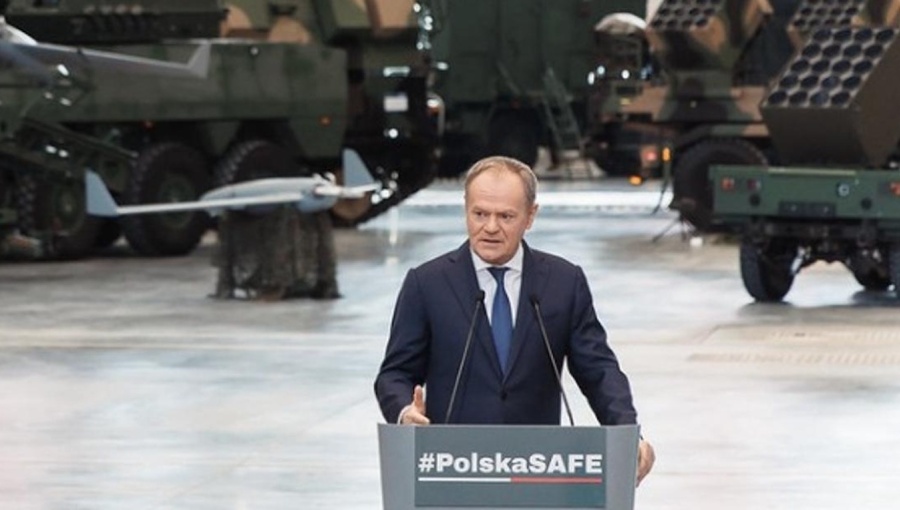
Poland will seek greater autonomy in nuclear security and may in future pursue access to nuclear weapons, Prime Minister Donald Tusk said on March 3.

Following the US-Israeli war with Iran and Russia’s invasion of Ukraine, now in its fifth year, European countries are stepping up deterrence efforts amid uncertainty over long-term US security guarantees.

“Poland takes nuclear security very seriously. As our autonomous capabilities grow, we will strive to prepare Poland for the most autonomous actions possible in this matter in the future,” Tusk said before a weekly cabinet meeting.

Tusk said earlier this week that Poland was ready to hold talks with France after President Emmanuel Macron proposed a “nuclear umbrella” by deploying nuclear-capable aircraft to allied states. Several other EU member states, including Germany, Sweden and Denmark, also expressed interest in the initiative.

The next stage of discussions is due at a nuclear energy summit in Paris on March 10, Tusk said.

Tusk has favoured European cooperation on nuclear deterrence, while President Karol Nawrocki has indicated a preference for cooperation with the United States.

Nawrocki said last month that he was “a big supporter of Poland joining the nuclear project.” 

However, the president’s foreign policy chief, Marcin Przydacz, said this week that he doubted whether “the French side has an adequate nuclear arsenal to actually provide a protective umbrella” and argued that the United States possessed the most credible deterrent capability.

Poland has been a signatory to the nuclear Non-Proliferation Treaty since the 1960s and has committed not to seek or acquire nuclear weapons. Last year, however, Warsaw signed a treaty with France that opened the possibility of coming under French nuclear protection.

The debate over deterrence has intensified since Russia’s full-scale invasion of Ukraine in 2022. That year, then-President Andrzej Duda said Poland was open to hosting nuclear weapons and had discussed the issue with Washington. 

Two years later, Duda reiterated Poland’s readiness to host weapons from NATO allies and, in 2025, said that he welcomed Macron’s idea of extending France’s “nuclear umbrella” to European partners.

In March last year, in an address to the parliament, Tusk said Poland would examine gaining access to nuclear weapons. 


Ukraine endures harshest winter of war as energy grid holds under Russian assault


Ukraine endures harshest winter of war as energy grid holds under Russian assault
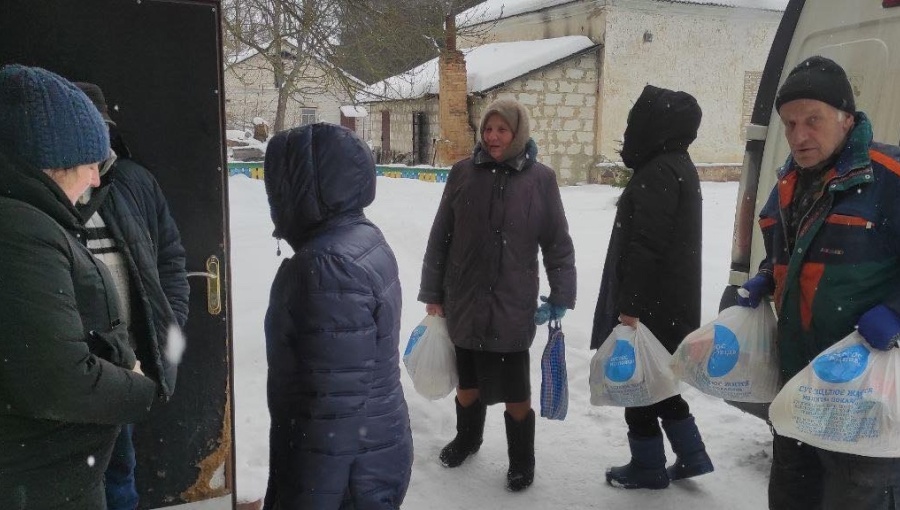
Food kits are distributed to families in the Sumy region as part of Hope for Ukraine's humanitarian efforts. / Hope for Ukraine via Facebook
By bne IntelliNews March 4, 2026

Ukraine has emerged from what officials describe as the most punishing winter since the war began in 2022, after months of record sub-zero temperatures and an intensified air campaign that pushed the country’s energy system to the brink, reported The Kyiv Independent.

In the first three months of 2026 alone, Russia launched more than 1,700 attack drones and 700 missiles, according to Ukrainian authorities. President Volodymyr Zelenskiy said that during the final week of winter, Moscow fired over 1,720 drones, nearly 1,300 guided aerial bombs and more than 100 missiles of various types.

Over the entire winter period, Russia launched more than 14,670 guided aerial bombs, 738 missiles and nearly 19,000 attack drones, most of them Iranian-designed Shahed models, Zelenskiy said.

“But despite everything, Ukrainians made it through this difficult winter, when Russia did not even try to seek justification for its bestial strikes on civilian critical infrastructure,” Zelenskiy wrote on X.

The winter of 2025–2026 combined heavy Russian strikes on the energy system with severe frosts that saw daytime temperatures plunge to minus 20 degrees Celsius, bringing parts of the country close to a humanitarian crisis.

In January and February, repeated attacks on power plants and substations forced grid operators to move from scheduled outages to emergency blackouts lasting more than eight hours at a time. Kyiv, particularly districts on the eastern bank of the Dnipro River, was among the hardest hit, with hundreds of high-rise apartment blocks left without heating as centralised systems struggled to operate until the end of March.

Russia carried out its most severe strike on February 7, targeting substations connected to Ukraine’s nuclear power plants. The attack temporarily reduced electricity output from the nuclear fleet by around 50%, according to Vitaliy Zaichenko, head of state grid operator Ukrenergo.

The assaults were part of a broader energy campaign. State oil and gas company Naftogaz said Russia conducted 229 attacks on its facilities last year – more than in the previous three years combined.

Yet despite the scale of the bombardment, the grid held. Analysts and Ukrainian officials describe this as a strategic setback for the Kremlin, which they say had hoped to trigger a humanitarian collapse that would sap morale and force Kyiv to negotiate from a position of weakness.

Instead, officials are framing the end of winter as a psychological turning point – a “March of Hope” that marks a shift from survival to adaptation.

According to Yuriy Boyechko, chief executive of humanitarian organisation Hope For Ukraine, the country is now entering a phase of industrial and military transformation. “Russia bet on darkness and despair. It did not get either,” he said.

While front lines remain largely static in a high-casualty stalemate, Ukraine is increasingly relying on technological innovation to offset manpower shortages. The domestic defence sector is projected to double production capacity in 2026, officials say, with tens of thousands of first-person-view (FPV) drones rolling off assembly lines alongside domestically produced long-range cruise missiles.

Zelenskiy has linked Russia’s use of Iranian-designed drones in Ukraine to their deployment in the Middle East amid a new regional conflict.

“The same Iranian drones are now being used elsewhere,” he said. “Evil must be confronted in every part of the world.”

He added that when the United States and its partners show sufficient resolve, “even the bloodiest dictators ultimately pay for their crimes”.

The coming months will test whether Ukraine’s transition from winter resilience to industrial mobilisation can alter the strategic balance. Although Russia retains numerical advantages in personnel and ammunition, Kyiv’s leadership argues that precision strikes, drone swarms and improved air defences could erode Moscow’s ability to sustain its offensive.

For now, the survival of the energy system – despite record bombardment and freezing temperatures – stands as a symbol of endurance. As the frost thaws, Ukraine’s focus is shifting from simply keeping the lights on to reshaping the tools of war itself.

Local And Regional Media In Russia Play Major Role In Promoting Putin’s War In Ukraine As ‘A Given’ And Entirely ‘Normal’ – OpEd


March 4, 2026 

By Paul Goble


When people talk about propaganda on the war in Ukraine, they typically focus on outrageous statements of Moscow TV personalities; but the NeMoskva portal suggests that local and regional media play a major role in delivering the message that the Kremlin now wants, that the war is “a given” of Russian life and entirely “normal.”

The portal examined more than 200 outlets in regions and localities across the country and spoke with numerous experts on the Russian media scene and said that the propaganda in this part of the Russian scene is less propagandistic and often isn’t even recognized as such by viewers and readers (nemoskva.net/2026/02/26/propaganda-dlya-normisov/).

That is because local and regional media do not cover the war as such and seek to include stories about those from the region who have been touched by it within the normal flow of coverage about life more generally. That encourages Russians to think about the war as something “entirely normal” and more simply “a given.”

In reporting the study and especially its conversations with media experts who appear to be in universal agreement, NeMoskva says there are a number of ways in which these outlets are promoting such a view: They talk about how the area is “making its own contribution;” their main hero is “the local soldier, ‘one of us;” they celebrate as “another hero the regional volunteer;” they “heroize those who have died” in the conflict; and they either “idealize” or at least minimize the problems of veterans coming home.

Such messaging is calmer and more reassuring that the comments of Moscow figures like Vladimir Solovyev and thus corresponds to the way most Russians want to think about it: “They simply want to live their own lives” and see the war as something in the background, according to several commentators.


One of these commentators pointedly notes that “the regional media do not ‘sell’ the war directly but ‘combine’ it with the whole information flow.” That gives the media at the local and regional levels a kind of “therapeutic effect,” one that makes the war something very much like the weather: it just is – and no one needs to do more than support it.

And NeMoskva concludes: “Regional propaganda integrates into normalcy and creates a context that becomes acceptable to the audience. All of this, taken together, “holds together the social fabric” in the face of prolonged conflict and helps people feel at least some sense of support.”

As a result, for the consumers of this media, “the fighting becomes a backdrop and that helps the authorities achieve both of their goals: ensuring an influx of people and resources and preventing people from thinking that what is going on in Ukraine is an all-out war” that is going to radically change their lives or even force them to do more than they are doing now.


Paul Goble

Paul Goble is a longtime specialist on ethnic and religious questions in Eurasia. Most recently, he was director of research and publications at the Azerbaijan Diplomatic Academy. Earlier, he served as vice dean for the social sciences and humanities at Audentes University in Tallinn and a senior research associate at the EuroCollege of the University of Tartu in Estonia. He has served in various capacities in the U.S. State Department, the Central Intelligence Agency and the International Broadcasting Bureau as well as at the Voice of America and Radio Free Europe/Radio Liberty and at the Carnegie Endowment for International Peace. Mr. Goble maintains the Window on Eurasia blog and can be contacted directly at paul.goble@gmail.com .


Makhno and the GAK quickly established a system of social organizations under their control: a peasant union (later a Soviet), trade unions, factory committees, ...

Nov 19, 2025 ... Ukrainian anarchist Nestor Makhno was among the factions who took advantage of the power vacuum left by the collapse of the Russian Empire ...

Aug 23, 2025 ... What do we think of Nestor Makhno? recently got into the Russian revolution and thus into the Ukrainian free territory so i wonder what do most ...

Makhno was the commander of the Revolutionary Insurrectionary Army of Ukraine, commonly referred to as the Makhnovshchina (loosely translated as "Makhno ...


NATIONALIST BULLSHIT

Because of the injustice he experienced Makhno joined an anarcho-communist group. As a result of the group's terrorist activities Makhno was twice arrested; the ...