Sunday, April 26, 2026

DOJ Denaturalization Referrals Spark Fear of ‘Expansive’ Effort to Strip Citizenship From Americans

Trump and his Republican allies have routinely targeted their political opponents and entire ethnic and religious groups with threats of deportation and denaturalization.
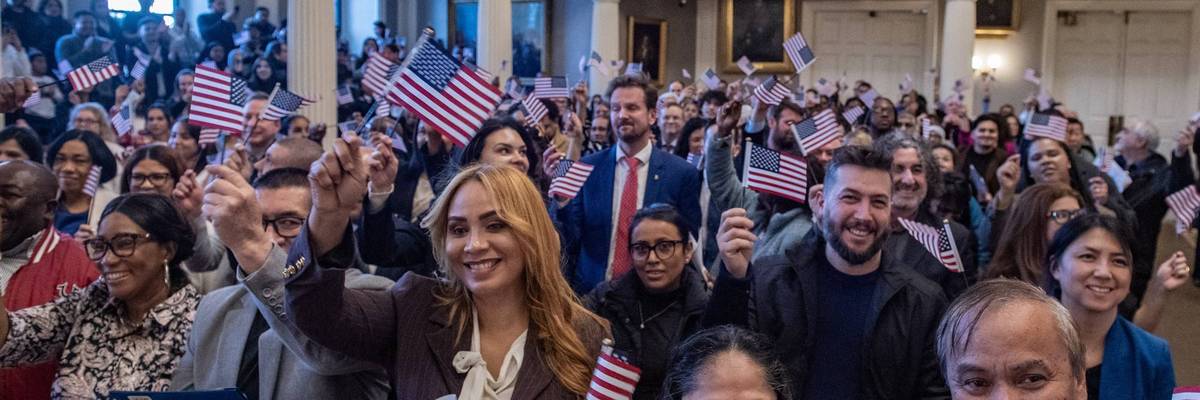


New citizens take the Pledge of Allegiance during a naturalization ceremony at Faneuil Hall in Boston, Massachusetts on January 8, 2026.
(Photo by Joseph Prezioso/AFP via Getty Images)

Stephen Prager
Apr 23, 2026
COMMON DREAMS

The US Department of Justice has referred hundreds of citizens for denaturalization, beginning what some fear will be a massive effort to strip Americans of their citizenship.

Months ago, it was reported that the Trump administration would seek to enlist the DOJ in its effort to revoke the citizenship of hundreds of people each month.

On Thursday, The New York Times reported that the effort to carry out what DOJ spokesperson Matthew Tragesser called “the highest volume of denaturalization referrals in history” had begun.

The paper reported that the DOJ had identified 384 foreign-born Americans whose citizenship it wants to take away and had assigned the cases to prosecutors in dozens of US attorneys’ offices across the country.

President Donald Trump is trying to dramatically expand a process that Sameera Hafiz, policy director at the Immigrant Legal Resource Center, told the Houston Chronicle is typically reserved for “very rare extreme circumstances.”

Federal law allows the government to ask courts to strip citizenship from those it can prove obtained it fraudulently. In some rare cases, people found to have committed egregious offenses like war crimes or the financing of terrorism have also been stripped of citizenship.

Between 2017 and the end of 2025, the federal government attempted to denaturalize just 120 citizens, less than a third of the number the Trump administration referred for denaturalization in just this first batch.

According to the Times, it is not clear why the 384 individuals referred to federal courts have been singled out. Tragesser said the administration was “laser focused on rooting out criminal aliens defrauding the naturalization process.”

Aaron Reichlin-Melnick, a senior fellow at the American Immigration Council, said that these cases “are not exactly easy for the government to win,” because “they have to go to a bench trial in front of a federal judge and prove material fraud.”

But the DOJ has indicated that the range of people targeted for denaturalization could be much broader than just those found guilty of fraud.


The Trump administration’s plans to pursue mass denaturalization first came to light last June when Assistant Attorney General Brett Shumate issued an internal memo calling on the DOJ’s Civil Division to “prioritize and maximally pursue denaturalization proceedings in all cases permitted by law and supported by the evidence.”

In addition to the fraudsters and human rights violators who have typically been subject to denaturalization, Shumate urged the department to go after those “who pose a potential danger to national security” and “any other cases... that the division determines to be sufficiently important to pursue,” which suggested that much broader categories of people may be targeted.

“The way the memo suggests they’re going to apply it is very broad and expansive, and it’s shockingly dramatic because that’s not the intention behind denaturalization,” Hafiz said.

The Trump administration has frequently targeted protesters and activists, including those with legal status in the US, for deportation for expressing political opinions opposite those of the government.

Last year, hundreds of foreign-born students who participated in protests against US support for Israel had their visas stripped by the US State Department. Some—like Columbia student activist Mahmoud Khalil—were deemed a danger to “national security” based solely on their articulation of beliefs out of step with the Trump administration’s foreign policy.

Trump and several members of the Republican Party have also called for the denaturalization of foreign-born political opponents, including the Somali-American Rep. Ilhan Omar (D-Minn.) and the Ugandan-American New York City Mayor Zohran Mamdani.

Earlier this week, Rep. Chip Roy (R-Texas) introduced legislation titled the “MAMDANI Act,” which would deport and denaturalize any immigrant who “advocates for socialism, communism, Marxism, or Islamic fundamentalism.”

Rep. Andy Ogles (R-Tenn.), who has also pushed for the deportation of Mamdani, who is Muslim, recently said that non-Christians should not be allowed in America.

“We’re not a melting pot,” he said. “If you’re building temples or mosques and undermining Christianity, you’re not assimilating.”


Trump, meanwhile, has expressed a desire to go after certain ethnic groups, particularly Somali-Americans, whom he has said have “low IQs” and described as “garbage”. Most people of Somali descent living in the US are citizens, but Trump has said “I don’t want them in the country” and said they should “go back where they came from.”

Many Somali-American citizens were detained, often brutally, during US Immigration and Customs Enforcement’s (ICE) massive operation in Minneapolis earlier this year.

Around the same time, the US Department of Homeland Security endorsed the idea of pursuing “100 million deportations,” which would entail the removal of tens of millions of American citizens from the country, including many who were born in the United States. Ex-Border Patrol Commander Gregory Bovino, who oversaw Trump’s mass deportation crusade for months, recently said he had a “master plan” to make this sweeping purge a reality.

Hafiz said the Trump administration’s conduct has raised the possibility that the denaturalization push will be carried out in a “very broad and expansive way.”

“That’s very concerning,” she said. “And we’ve seen in so many of the tactics that the Trump administration is using, what a slippery slope it is, how they say, ‘This policy is to target one set of individuals,’ and how that set of individuals just becomes broader as it’s applied.”
Press Freedom Groups Demand International Probe Into Israel’s Killing of Journalist Amal Khalil

“Responsibility for these crimes also lies with Israel’s allies, who continue to allow the Netanyahu government to commit them with impunity.”


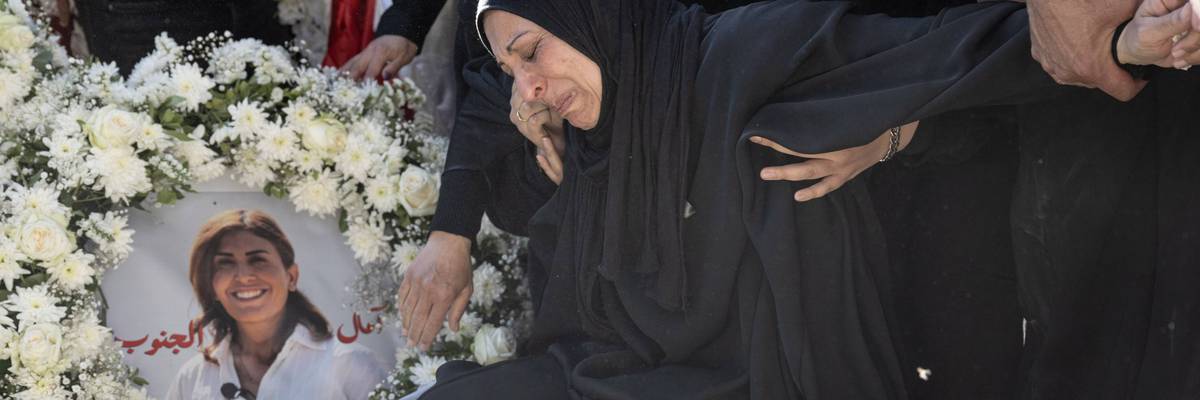
People attend a funeral ceremony for journalist Amal Khalil, who was killed in an Israeli strike in southern Lebanon on April 23, 2026.
(Photo: Anadolu via Getty Images)

Jake Johnson
Apr 25, 2026
COMMON DREAMS

Global press freedom organizations are demanding an immediate international probe into the Israeli military’s apparently targeted killing of Lebanese journalist Amal Khalil, who died trapped under the rubble of a home bombed by Israeli forces earlier this week.

The calls for an urgent independent investigation came as the details surrounding Khalil’s killing in southern Lebanon continued to emerge. Khalil’s body was recovered by the Lebanese army and Red Cross rescue workers around six hours after the Israeli military bombed the house in which she took cover with fellow journalist Zeinab Faraj—who was badly injured in the attack—following an Israeli strike near their car. Israeli forces obstructed rescue operations by continuing to attack the area.

Lebanese PM Condemns Israel’s Killing of Journalist Amal Khalil as ‘Clear-Cut War Crime’


Reporters Without Borders, known internationally as Reporters Sans Frontières (RSF), published an in-depth timeline of events, making the case that the Israeli military intentionally targeted Khalil and interfered with rescue efforts:At around 14:30 [Paris time]: a first Israeli strike targets a car near the vehicle carrying Amal Khalil and Zeinab Faraj. The two journalists survive the attack and manage to exit their vehicle.


14:52: Amal Khalil is contacted by Al Jazeera’s correspondent in southern Lebanon, Carmen Joukhadar. The call lasts nine seconds. “I could clearly hear that she was running and out of breath while speaking to me, but she told me she was fine,” he told RSF.

Between 15:00 and 16:00: rescuers await authorization from the diplomatic committee—known as the “mechanism”—which, among other roles, serves as guarantor and mediator for the ceasefire between Lebanon and Israel, in order to access the site. The committee, established in November 2024 under the auspices of France and the United States, also includes the United Nations Interim Force in Lebanon (UNIFIL).

Around 16:00: a second strike targets the journalists’ car. Hiding nearby, Amal Khalil calls her colleagues to inform them of the attack, then takes refuge, with Zeinab Faraj, in a three-story house located nearby.

16:22: last contact with Amal Khalil. According to her sister, who was on the phone with her at the time, Amal Khalil was unharmed. After this call, the journalist’s phone went dead.

16:27: a third Israeli strike targets the house. According to RSF, the strike was carried out by a military aircraft, not a drone. Smoke was captured in a photograph taken by Carmen Joukhadar from the neighboring village of Khiam.

Around 16:40: Lebanese army and nearby rescue teams are unable to reach the location of the two journalists due to ongoing strikes.

Around 18:00: the Red Cross finally manages to evacuate Zeinab Faraj, who was suffering from fractures. According to the Lebanese TV channel LBCI, a flash grenade fired by Israeli forces forced the ambulance to retreat without being able to save Amal Khalil. Zeinab Faraj was taken to the local hospital in the nearby village of Tibnin.

Around 19:20: the Lebanese army decides to accompany the Red Cross despite lacking authorization from the “mechanism” given the urgency of the situation.
Around 20:20: the Red Cross returns to the scene, accompanied by the Lebanese army and bulldozers begin rescue operations.

23:10: the army and the Red Cross publicly announce that they have found Amal Khalil’s lifeless body on the ground floor of the building. The exact time of her death is yet to be determined.

Jonathan Dagher, head of RSF’s Middle East desk, said in a statement that “so long as impunity prevails, crimes will continue to be committed.”

“The Israeli army has very likely committed two more war crimes on 22 April, by targeting journalists who were identified as such, obstructing rescue operations, and continuing strikes that killed one journalist and injured another,” said Dagher. “Responsibility for these crimes also lies with Israel’s allies, who continue to allow the Netanyahu government to commit them with impunity.”

“We call on the international community to take firm measures to ensure that the Israeli government brings its massacre of journalists in Lebanon and Palestine to an end,” Dagher added. “We also call on the Lebanese government to investigate this crime, which took place on Lebanese territory, and will continue to work to ensure that justice is served for Amal Khalil and every single other journalist killed in Lebanon and the wider region.”


The Committee to Protect Journalists (CPJ) also demanded an independent investigation into Khalil’s killing, which the group described as a possible war crime.

CPJ noted that Khalil “received numerous threats prior to her killing, including a reported death threat in September 2024, and public incitement against her by an Israeli military official days before her killing, leading to widespread accusations that she was deliberately targeted. The reported obstruction of rescue operations, claimed by Lebanese government officials, constitute an additional grave violation of international humanitarian law.”

Jodie Ginsberg, CPJ’s chief executive, said in a statement that “this is not the first time that Israel has prevented emergency services from reaching journalists injured in their strikes.”

“Journalists are civilians and protected under international law,” said Ginsberg. “Israel’s blatant disregard for such norms—and the international community’s failure to hold them accountable—is abhorrent.”

A spokesperson for the United Nations High Commissioner for Human Rights told reporters on Friday that “deliberately targeting” journalists or rescue workers “would amount to a war crime,” pointing specifically to Israel’s killing of Amal Khalil and obstruction of emergency teams.

“UN High Commissioner for Human Rights Volker Türk calls for prompt, thorough, independent, and impartial investigations into all incidents involving allegations of violations of international humanitarian law,” said the commissioner’s spokesperson. “Findings must be disclosed, and those responsible held to account.”


Israel Condemned for Bombing Rescue Workers Trying to Reach Journalist Buried Under Rubble

“Israel treats journalism as a crime,” said one Beirut-based editor.


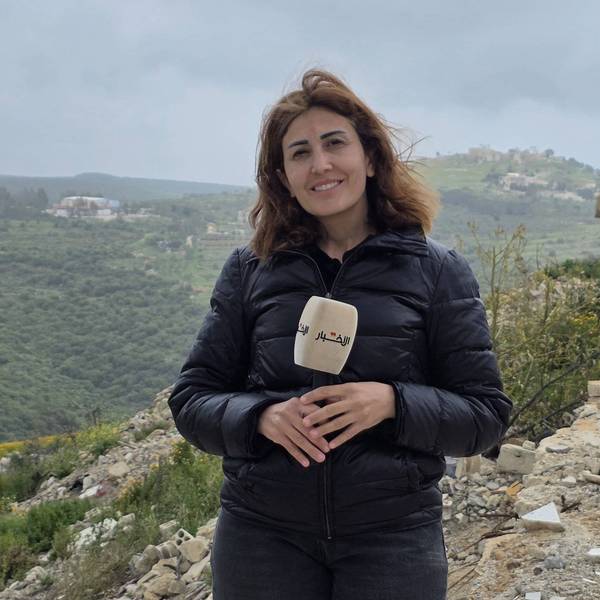
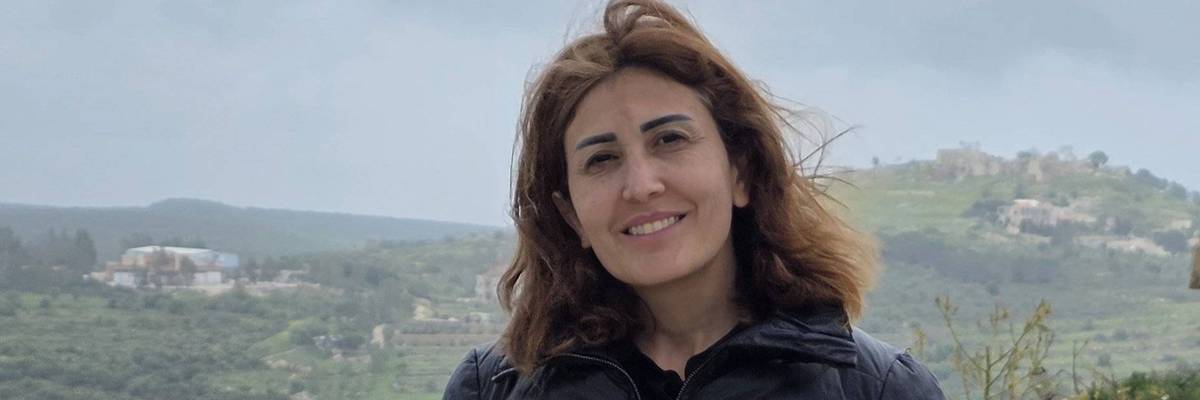
Al-Akhbar journalist Amal Khalil stands overlooking the shrine of the Prophet Shimon al-Safa in the village of Shamaa in southern Lebanon in a photo posted to social media on April 20, 2026.
(Photo by Amal Khalil/X)


Stephen Prager
Apr 22, 2026
COMMON DREAMS

The Israel Defense Forces were condemned on Wednesday following reports that the IDF dropped a grenade on Red Cross workers as they attempted to rescue a Lebanese journalist believed trapped beneath rubble in southern Lebanon.

Two journalists from the local media outlet al-Akhbar, Amal Khalil and Zeinab Faraj, were attacked by the IDF after arriving to report at the scene of a previous strike that had killed two civilians in a car in the village of Al-Tiri, according to Al Jazeera correspondent Heidi Pett.

The journalists, who were wounded, found that their own car was stuck under rubble from the second strike and that they were unable to leave.

Red Cross workers then spent hours attempting to reach the reporters. But according to the National News Agency (NNA), other Israeli attacks targeted a major road leading to the village “to prevent ambulance teams from reaching the two journalists.”

Faraj was rescued and brought to the hospital, where she is being treated for severe injuries that require surgery. The NNA and other Lebanese outlets reported that as she was transported to the hospital, the Red Cross vehicle came under Israeli fire, leaving visible bullet holes.


While Faraj was evacuated, however, Khalil remained trapped. According to Reuters, the Lebanese army asked the Israeli military to allow rescuers to retrieve her.

Lebanon’s president, Joseph Aoun, also urged the Lebanese Red Cross to cooperate with the Lebanese army and United Nations peacekeepers to “carry out the rescue operation in the shortest possible time.”

But as the rescue workers lifted Khalil from the rubble, an Israeli drone dropped a stun grenade on them, believed to be a warning, which forced the workers to withdraw from the town, according to the Lebanese outlet LBCI. The Red Cross is expected to return later to continue the search for Khalil.


A recent profile of Khalil in the Beirut-based Public Source magazine celebrated her more than two-decade career, which began shortly before Israel invaded Lebanon in 2006. Though she resisted the label of “war correspondent,” much of her work since 2023 has again focused on covering what she’s described as “resistance” to Israeli aggression.

“I always highlight the steadfastness of ordinary people in their border villages, like the farmers who continued tending their land while the Israeli settlements across from them in northern Palestine were empty,” Khalil said. “I debunk the enemy’s narrative of targeting only military sites by showing evidence of them bombing homes, farms, and killing children. After the [2024] ceasefire, I also started documenting how the destruction that followed was many times greater than what had occurred during the war itself.”

According to Reporters Without Borders, Khalil previously received death threats from an Israeli phone number in September 2024, while she was reporting on the war that broke out between Israel and Lebanon earlier that year.

She received a message reading, “We know where you are, and we will reach you when the time comes.” The message concluded, “I suggest you flee to Qatar or somewhere else if you want to keep your head connected to your shoulders.”


The deliberate killing of journalists who are civilians constitutes a war crime under international humanitarian law.

The IDF said it was aware of reports that journalists were injured in Wednesday’s attacks, but did not confirm them to The Associated Press. The IDF denied that it was preventing rescue teams from reaching the area. The military also said it “does not target journalists and acts to mitigate harm to them.”

The Committee to Protect Journalists (CPJ) found that last year was the deadliest year for journalists in the more than three decades since they began collecting data. An unprecedented 129 journalists and media workers were killed on duty last year. Israel was responsible for two-thirds of the press killings in 2024 and 2025, most of whom were Palestinians in Gaza.

Lara Bitar, editor of Public Source magazine, wrote on social media Wednesday that Khalil and her rescuers had come under attack “because Israel treats journalism as a crime.”

Bitar said, “Amal has been tirelessly and lovingly covering communities impacted by war, occupation, and displacement for decades.”
Jailed US-Kuwaiti Journalist Ahmed Shihab-Eldin Acquitted on All Charges

The head of the Committee to Protect Journalists has called Shihab-Eldin’s arrest for social media posts about the Iran war part of a trend of “increasing restrictions on freedom of expression” in the Gulf states.


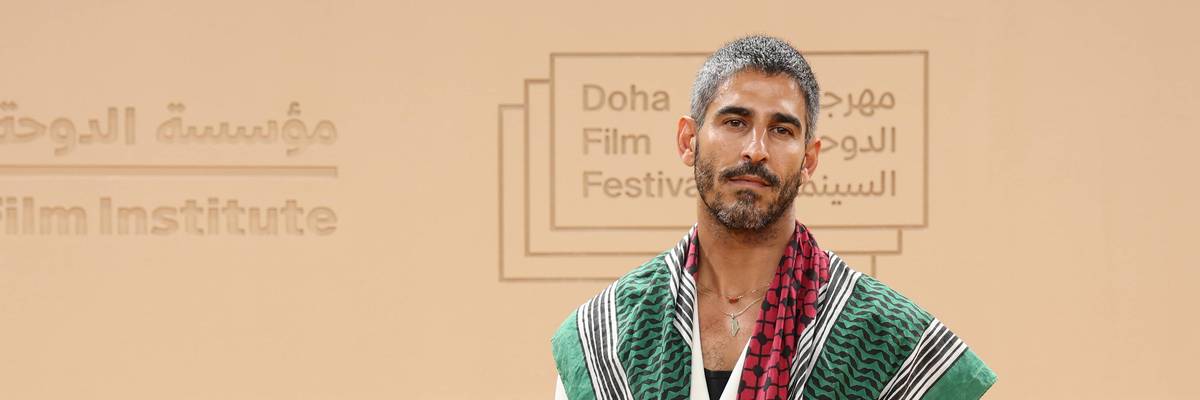
Ahmed Shihab‑Eldin during the Doha Film Festival 2025 on November 24, 2025, in Doha, Qatar.
(Photo by Tristan Fewings/Getty Images for Doha Film Festival)

Stephen Prager
Apr 23, 2026
COMMON DREAMS


US-Kuwaiti journalist Ahmed Shihab-Eldin is expected to be released after more than seven weeks in jail following his acquittal by a Kuwaiti court on Thursday.

The 41-year-old Shihab-Eldin, an award-winning reporter and documentarian who has worked at HuffPost, The New York Times, and Al Jazeera English, was detained by Kuwaiti authorities on March 2, just days after the US and Israel launched the opening salvos of their aggressive war against Iran, which was met with retaliatory strikes against US military bases across the Persian Gulf, including in Kuwait.

Shihab-Eldin, a US and Kuwaiti citizen who was in Kuwait to visit family, frequently commented on his public Substack account about news related to the war. One of his recent posts included a geolocated video, which was already public, of an American F-15 Strike Eagle jet falling from the sky near a US air base.

CNN later confirmed the video’s authenticity, while the US military confirmed it was one of three American planes downed that day in what was described as a “friendly fire incident.”

But shortly after posting the video, Shihab-Eldin found himself detained by Kuwaiti authorities on charges of “spreading malicious information online” and “harming national security.”

The Committee to Protect Journalists (CPJ) called these “vague and overly broad accusations that are routinely used to silence independent journalists.”

Legal counsel hired by Shihab-Eldin’s sisters said on Thursday that he had been declared innocent of the charges by a Kuwaiti court and was expected to be released imminently, though some details were still being finalized.

“We are relieved that Ahmed Shihab-Eldin has been found innocent after 52 days in detention,” said Jodie Ginsberg, CEO of the CPJ. “Ahmed’s freedom and safety remain our topmost priority, and we will continue to closely monitor his case.”


Kuwait has come under heavy fire from Iran since the war began. In addition to attacks against American air bases, which have killed at least six US soldiers, Iran has targeted Kuwait’s main airport and facilities at the Kuwait Petroleum Corporation.

Shihab-Eldin’s arrest came as the Kuwaiti government began an aggressive clampdown on the sharing of video and other information related to Iranian attacks.

On May 2, Kuwait’s Ministry of Information warned the public “not to photograph or publish any clips or information related to missiles or relevant locations.”

Days later, the ministry announced that it was referring several “media law violators” for prosecution. It said, “Freedom of opinion and expression is guaranteed within the framework of the law and is coupled with professional responsibility, accuracy, credibility, and obtaining information from official sources.”

On March 15, Kuwait introduced a censorship law stating that companies and individuals were “obligated to preserve the supreme interests of the military authorities.” It imposed prison sentences of up to 10 years for anyone who “disseminates news, publishes statements, or spreads false rumors related to military entities” with the intent to undermine confidence in them.

The verdict in Shihab-Eldin’s case was just one of 137 handed down on Thursday by a new court meant to oversee crimes related to national security and terrorism. Those defendants have been accused of “inciting sectarian strife on social media platforms,” according to Drop Site News, which cited Jordan’s Al-Rai newspaper.

Shihab-Eldin was just one of nine defendants to be acquitted, though in 109 of the cases, no criminal punishment was handed down. Seventeen defendants received three years in prison, while another 10 received one year.


Ginsberg said Kuwait’s repressive clampdown is part of a trend of “increasing restrictions on freedom of expression” that has been observed across the wider Middle East, and particularly the autocratic Gulf states that host American military bases, since the war’s outbreak.

The governments of Qatar, Bahrain, and the United Arab Emirates have each arrested hundreds of people for filming or sharing content relating to Iranian strikes or other information related to the war or protests against the government, according to a report by Democracy for the Arab World Now (DAWN).

“This wave of repression reflects a deeper trend among Arab regimes: growing public frustration with US policy in the region and their governments’ alignment with Washington,” said Yara Bataineh, an editorial associate at DAWN’s Democracy in Exile. “This crackdown did not begin with the war on Iran. Across several Arab states, authorities had already moved to suppress pro-Palestinian activism during Israel’s genocide in Gaza—a pattern that has since intensified.”

Israel’s genocide in Gaza and expansionist military campaign into Lebanon have also proven historically deadly to journalists—including the Lebanese journalist Amal Khalid, who died under a pile of rubble on Wednesday from an attack by Israeli forces, who also attacked Red Cross workers attempting to rescue her. She is among hundreds of journalists and media workers who have been killed by Israeli attacks since 2023, according to the International Federation of Journalists.

“Almost inevitably, during a war, we see countries try to impose restrictions in the name of national security, and almost always that doesn’t just target genuine national security issues, but ends up covering a broad range of issues that are essential for us to understand what is happening,” Ginsberg told MS NOW. “That’s why we need journalists. We need journalists on the ground who can be our eyes and ears when we can’t get into these places and see for ourselves, so that we can understand what’s happening.”

She added, “It is an incredibly challenging time to be a journalist, and Ahmed’s case is emblematic of that.”
The Movement That Saved a Nation

How a revolution in approaches to collective action can build a different future.


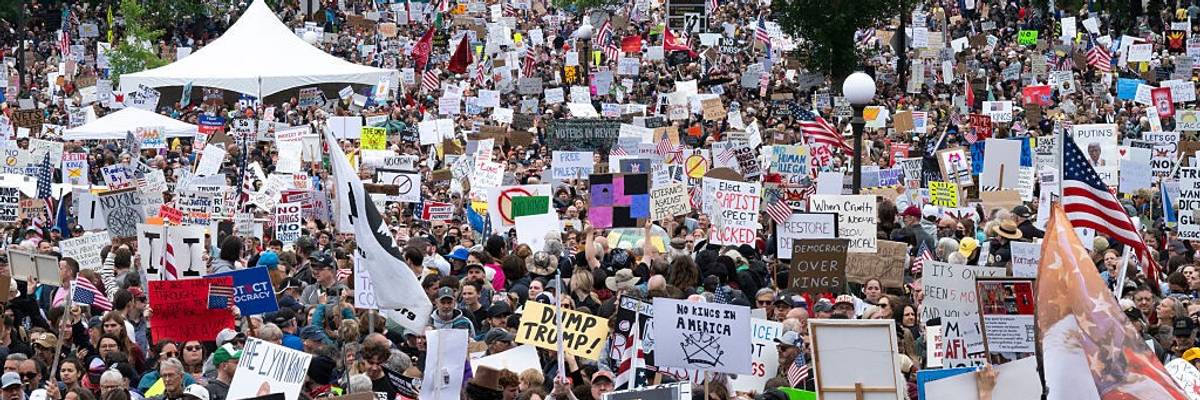
Demonstrators rally outside the Minnesota State Capitol building during a “No Kings” protest on June 14, 2025 in St Paul, Minnesota.
(Photo by Stephen Maturen/Getty Images)


Joe Mccannon
Apr 26, 2026
Common Dreams


For anyone breathlessly wondering what artificial intelligence will achieve in the coming years, yesterday provided me with a remarkable answer.

Time travel.

Early in the morning, I received an email message from me in the year 2035, made possible by an AI agent that identified a suitable wormhole in the Canis Major Dwarf Galaxy. So far it can only send bits and bytes, but organic material seems just a matter of time. (I expect to bump into myself at the store any day now.)

The gist of the message from my future self? The United States in 2035 is actually doing okay.

Rather than writing shrill jeremiads to decry the current state of affairs and finishing them with vague admonitions to “act now,” the left needs to cultivate a habit of curiosity about alternative methods of collective action, drawing inspiration from around the world.

Apparently authoritarianism, greed, and disinformation reached all-time highs by the summer of 2026. Relentless attacks on democracy and voting rights, a spate of climate-related disasters, and a rise in unemployment caused by AI led to broad despair. The United States’ 250th birthday on July 4 was marked not by celebration but by simmering tension and polling that suggested the highest levels of pessimism in the nation’s history.

And then something unexpected occurred. Things got better—and fast. In fact, by some measures, Americans in 2035 are doing better than they ever have before. How did it happen?

It started with successive feats of staggering collective action, taking the spirit of Minnesota’s activists and multiplying it nationally. Responding to a leaked Trump administration memo that revealed a clear plan to use Immigration and Customs Enforcement forces to suppress midterm voting, millions moved beyond demonstrations, staging a general strike just after Labor Day that was then echoed by business across the country. The resulting economic disruption drew widespread attention, as well as concern from Wall Street and large corporations, who persuaded the government to completely stand down.

Then, on Thanksgiving, a coalition of 200 civil society organizations and labor unions (cumulatively representing more than 40 million people) announced that they had created a massive “health security fund” to cover health expenses for those in the United States expected to lose coverage because of the Trump administration’s One Big Beautiful Bill Act. Matched by high-net-worth individuals who agreed to donate their tax breaks from the bill to the fund, they pooled over $600 million and created an easy way for those facing medical emergencies to access it. The following spring they created a similar fund for those in areas rocked by climate catastrophes where insurance markets had collapsed.

This work drew enormous attention, and the group awakened to its power, realizing that the only chance it stood against unprecedented concentrations of power and wealth—and a sclerotic political system—was to keep combining in unprecedented ways. Calling itself the Movement of Movements (“MoM”), it became a perpetual engine for progress, joining forces behind a single charismatic action every quarter.

In one instance, the group orchestrated a major sell-off of AI-related stocks to protest the lack of safety standards for the new technology, resulting in the rapid introduction of new federal and state regulations. In another, it funded the construction of 25,000 affordable housing units in critical areas across the country and purchased over 600,000 acres of adjacent land, roughly the size of Rhode Island, for conservation. In another still, it enlisted its widely distributed membership to map threats to safe voting in real time, significantly reducing voter intimidation during the 2028 election. Next up, they will be carrying out a “coordinated unfollow” of the 200 most incendiary propagandists on social media (from both the political right and left) and buying out three major corporate polluters to shut down their plants (while providing compensation for all affected employees).

The organizations making up this coalition left behind their fragmented organizational agendas and competition for resources, first temporarily and then permanently. Their leaders—among them some of the most charismatic influencers in the social sector—expertly managed the territorialism and fights over credit that had undermined them in the past, creating something intentionally big and charismatic. A group of innovative young billionaires, many of them wealthy heirs, cast off the conventions (and self-aggrandizement) of their parents’ philanthropy to jointly underwrite the work, shoring up operational gaps for organizations joining the collaboration.

The group also benefited from a simple, overarching objective to guide its work—a return to decency, care, and well-being in American life. That translated into action in three areas, each embraced by more than 70% of Americans. The first is reducing autocracy and corruption in American government; by 2035, 99% of candidates running for office have signed a pledge to follow the rule of law, support fair elections, and recuse themselves from any policy questions that would directly enhance their family’s wealth. The second is catalyzing pro-social investment in science and technology, addressing the self-defeating disinvestment of the Trump administration by funding gaps in critical research that can save lives and stimulate the economy while introducing clear global safety standards for AI and similar advances. The third is making sure that everyone has access to free education, healthcare, and emergency recovery support—period.

The values and vibes of the movement have had as much resonance as its accomplishments. Always nonviolent and favoring in-person interaction, its leaders have summed up their operating principles in two sentences: “Ours is a movement rooted in two things: taking back power for the people and caring for our neighbors by sharing what we have so that no one suffers. There will be no violence, nastiness, or assertions without facts and we will respect all people.” While this fairly generic statement drew criticism from some quarters, the way the group carried out its work and generated real results for disenfranchised groups—rather than merely nodding to them—converted most of those critics.

Above all, they made it fun. Jettisoning the rhetoric of despair, they got people in the country to once again believe that they had power, and they made exercising it collaborative and joyful. They realized that charismatic actions—increasingly sourced directly from the public—were important but perhaps less so than the habit of doing big things together, escaping from isolation and rampant mistrust. Older people made way for younger people, richer people made way for poorer people, whiter people made way for other people. They invested strenuously in joy and meaning and celebration, seizing the crisis to rebuild the solidarity and community that have deteriorated so much in recent decades. Their confidence and sense of security grew as their numbers did, and they created a permanent mindset shift in the American electorate, forming the basis for a permanent revival in Democratic politics and governing. Regularly joined and emulated by other groups (e.g., universities, supportive businesses, a surprising collection of progressive male athletes), their momentum now seems unstoppable.

I cannot wait for the next dispatch from the future.

* * *

Fanciful? Maybe.

But consider that every single one of the actions imagined above has already happened somewhere in the world, and often on a much larger scale. In the last decade alone, farmworkers in India achieved a 250-million person general strike, soccer fans in Europe joined together to put an immediate halt to a greedy scheme to defund all but the richest clubs on the continent, and donors pooled funds to relieve over $40 billion in medical debt for more than 27 million Americans. Fueled by incredible connectivity and growing worry, these efforts have shown that massive, sustained change is possible when action is sufficiently concentrated. They recognize the paramount importance of focus and cooperation in emergencies and gain confidence and safety through their numbers.

They have also introduced a remarkably innovative set of new tactics, jointly investing in financial markets (e.g., the “wallstreetbets” Reddit community), combining purchasing power (e.g., cooperative ownership and “buycotts”), withholding labor and attention (e.g., coordinated unfollowing and digital walkouts), and providing safety for those under political attack (e.g., protection funds for activists and whistleblowers) to foster great progress. The greatest examples of recent, massive collective action are captured here in a newly released report. While some of these approaches might be hard to reproduce—and all require hard work and organizing—none are out of reach.

They also build “on-ramps” for broader participation since traditional approaches like protests and petitions cannot alone meet the moment. Only a fraction of the public is comfortable taking to the streets—with a skew toward liberal elites—so these methods provide other options and give youth, in particular, new ways to engage. The best of these movements utilize hundreds of fresh techniques, which is especially important as suppression and surveillance from those in power become more sophisticated and pervasive.

Rather than writing shrill jeremiads to decry the current state of affairs and finishing them with vague admonitions to “act now,” the left needs to cultivate a habit of curiosity about alternative methods of collective action, drawing inspiration from around the world. This breaks us free of tired dogma about how change happens, building hope and agency and stimulating other new ideas. Activists from the Global South and former Eastern Bloc countries, consistently challenged by autocratic regimes, have particularly powerful insights to share.

Thorough analysis and intellectual fatalism won’t meet the moment. Simply put, President Donald Trump, his administration toadies, and a cabal of billionaires are hellbent on controlling the nation and, to the degree possible, the world. The only way to stop them is to come together—rapidly, morally, and joyfully—on a scale larger than anyone has seen before.


Our work is licensed under Creative Commons (CC BY-NC-ND 3.0). Feel free to republish and share widely.


Joe Mccannon
Joe McCannon is an expert on large-scale social movements, having led graduate courses on the topic at the UPenn School of Social Policy and Practice and the Harvard Chan School of Public Health having directed several himself (e.g. the Institute for Healthcare Improvement's 100,000 Lives Campaign). He also served in the federal government during the Obama and Biden administrations.
Full Bio >
‘Communities Not Cages’: 200+ Actions Across US Protest ICE Warehouse Detention

“Warehouse facilities are built for storing products, not people.”


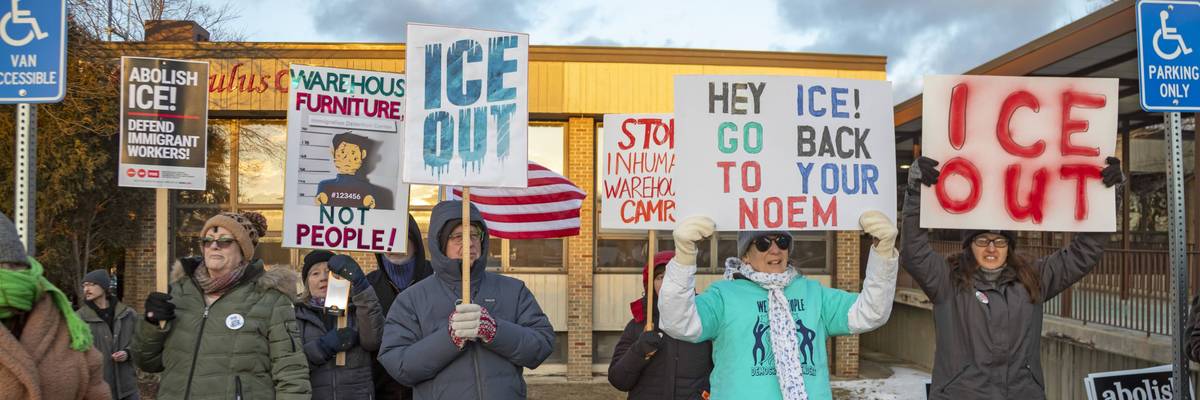
Hundreds rallied at Romulus City Hall to oppose the opening of an ICE detention center in the Detroit suburb on February 23, 2026.
(Photo by Jim West/UCG/Universal Images Group via Getty Images)

Jake Johnson
Apr 25, 2026
COMMON DREAMS

Communities across the United States are mobilizing on Saturday to protest Immigration and Customs Enforcement’s aggressive expansion of warehouse detention projects nationwide, as deaths in ICE custody continue to soar under the Trump administration.

Saturday’s day of action is expected to include over 200 demonstrations, from Atlanta, Georgia to Salt Lake City, Utah to Alexandria, Louisiana, according to organizers, who said the events will elevate local opposition to President Donald Trump’s mass detention and deportation agenda. The groups behind the day of protests include the Disappeared In America coalition, Detention Watch Network, Indivisible, MoveOn, Public Citizen, and Workers Circle.

“Detention is deadly,” said Nanci Palacios, organizing and membership director at Detention Watch Network. “People in immigration detention are describing it as ‘hell on earth’ because it is. What we’re seeing now is heightened cruelty under the Trump administration. People are not commodities to be shipped, discarded, and profited off of in detention warehouses or any detention facility—full stop. We demand an end to Trump’s cruel mass detention expansion and that detention facilities be shut down for good.”

Enabled by tens of billions of dollars in funding that congressional Republicans and Trump approved last summer, ICE has been buying up commercial warehouses and moving to convert them into detention centers with the capacity to hold up to 10,000 people. Business Insider reported earlier this month that since January, ICE “has spent hundreds of millions of dollars buying at least 11 massive facilities in eight states,” including Utah, Georgia, and New Jersey.

But the American Immigration Council noted earlier this year that “local advocacy and outrage” have blocked ICE attempts to purchase at least a dozen warehouses.

Saturday’s actions aim to build on that local opposition. “Communities are fed up with ICE’s brutality, chaos, and terror,” said Katie Bethell, executive director of MoveOn Civic Action. “Across the country, everyday people are rising up against the Trump administration’s plans to cage tens of thousands of immigrant kids and families in their backyards.”

“Backlash to ICE converting warehouses into massive detention centers has been swift, vocal, and growing,” Bethel said. “We will not stop protesting until contracts and expansion plans are canceled. With gas prices skyrocketing, healthcare premiums exploding, and the cost of living growing exponentially unaffordable, we need elected leaders to invest in our communities, not in cages.”

Leah Greenberg, co-director of Indivisible, added that “warehouse facilities are built for storing products, not people.”

“Converting them into detention centers exposes our neighbors to unsafe, degrading, and inhumane conditions, harms surrounding communities, and locks states into long-term infrastructure without public input,” Greenberg added.

Nearly 50 people have died in ICE custody during Trump’s second term in the White House, which has seen a massive and lawless expansion of immigrant detention and deportation efforts.

Ahead of Saturday’s demonstrations, Rep. Rashida Tlaib (D-Mich.) introduced legislation that would prohibit ICE from “establishing, operating, expanding, converting, or renovating any warehouse or similar building or structure for the purposes of detaining people.” Tlaib’s office noted that “ICE is actively scouting, purchasing, and planning to convert approximately 23 warehouses nationwide into new immigration detention and processing facilities,” which would “rapidly increase detention capacity to 92,600.”

“We do not want ICE cages in our communities,” said Tlaib. “ICE and [Customs and Border Protection] are murdering people in the streets, tearing families apart, abducting our neighbors, and locking them in cages. Now they are attempting to buy and convert warehouses across our country into massive prison camps to expand their operations, despite strong local opposition in communities like mine.”

“This will only increase the serious human rights abuses and trauma on immigrant families, including medical neglect, inhumane conditions, and rising deaths,” Tlaib continued. “The Ban Warehouse Detention Act would stop this expansion by prohibiting the use of warehouses for immigration detention.”
‘Workers Over Billionaires’: Over 3,000 Events Planned for May Day Across US

“The American people are done grinding to get by while our tax dollars fund wars abroad and concentration camps at home.”


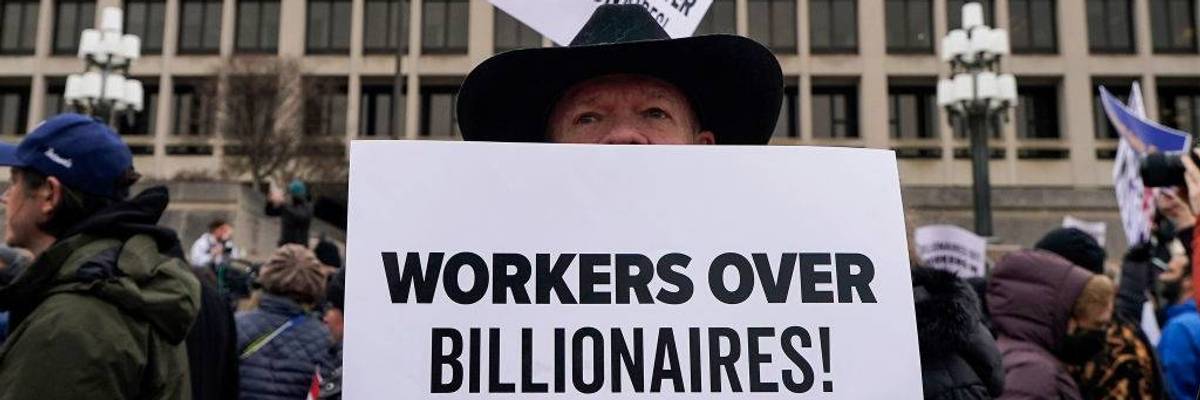
Workers and supporters protest against the Department of Government Efficiency in front of the US Department of Labor on February 5, 2025 in Washington, DC.
(Photo by Al Drago/Getty Images)


Brad Reed
Apr 23, 2026
COMMON DREAMS

A broad coalition of organizations is banding together to stage thousands of planned May Day events across the US based around the theme of building an economy for “workers over billionaires.”

May Day Strong, an initiative anchored by 500 labor and community organizations, is set to host more than 3,000 events throughout the country to demand higher taxes on the wealthiest Americans, an end to US Immigration Customs Enforcement (ICE) and the war with Iran, and an expansion of democracy over corporate rule.

Organizers of the events are asking participants to refrain from engaging in any economic activity on May 1, which means “no work, no school, no shopping.” This particular action was inspired by the one-day general strike that residents of Minneapolis waged in January to protest against the occupy of their city by federal immigration enforcement officers.

Flagship demonstrations will be held in major US cities from coast to coast, with thousands of smaller events scheduled to take place in all 50 states.

Neidi Dominguez, executive director of Organized Power in Numbers, said the rallies are being organized to ensure “our tax dollars going to good jobs, schools, and housing, not to sending federal agents into our cities to attack our neighbors.”

Rebecca Winter, executive director of Mass 50501, framed the events as a way for Americans to exert economic leverage to protest injustice.

“The American people are done grinding to get by while our tax dollars fund wars abroad and concentration camps at home,” said Winter. “We pay more for everything while those in power cash in. On May 1, we hit back with our wallets—no work, no school, no shopping. We the people are the economy, and we decide when it stops.”

Greg Nammacher, president of Minnesota-based Service Employees International Union Local 26, drew on the Minneapolis experience to explain what the May Day protests are trying to achieve.

“In January in Minnesota this year we experienced the power when community and workers act together to defend our rights and shared values,” Nammacher said. “This May Day is a chance for us locally, and nationally, to build on those lessons: We are ready to fight to protect our families and our cities from the billionaire agenda of division and hate.”

Angelica Salas, executive director of the Coalition for Humane Immigrant Rights (CHIRLA), said the protests would also highlight inhumane US immigration policies and demand a pathway to citizenship for undocumented immigrants.

“On May Day, we rise because worker justice is immigrant justice,” Salas said. “It’s been 40 years since the last time this nation recognized the contributions of immigrants by approving a pathway to citizenship. And it’s been 20 years since La Gran Marcha—when millions of people took to the streets to reject exclusion, racism, and criminalization of immigrant communities—and we are still facing the same forces, especially under the Trump administration.”

Braxton Winston, president of the North Carolina State AFL-CIO, described the demonstrations as a good way to bring new people into the movement and strengthen future actions.

“Now is the time to build coalitions between unorganized workers, unions, and community members for mass actions to disrupt the well-organized, joint efforts of corporations and the White House to exploit American workers,” Winston said. “The actions we take on International Workers Day are about building the political, social, community, and labor coalitions needed to disrupt the status quo. The power we flex this May Day will fuel our unwavering commitment to building a bigger, more effective, unified labor movement to win victories for working families.”
Exposing the University of Michigan’s Violence Against Chinese Scholars

UM research Dr. Danhao Wan reportedly committed suicide after being questioned by federal authorities, revealing a broader pattern of political discrimination.


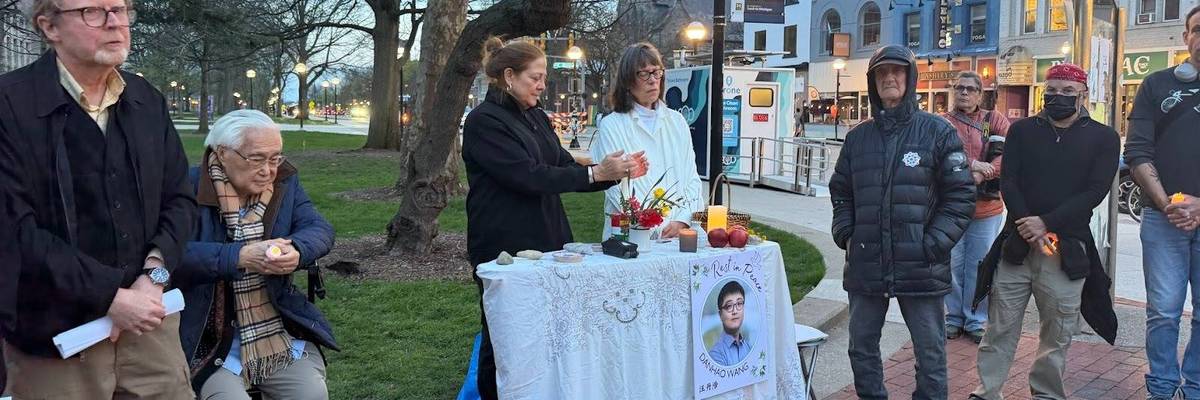
People hold a vigil on April 17, 2026 on the one-month anniversary of the death of Chinese University of Michigan scholar Danhao Wan.

(Photo by CODEPINK)

Megan Russell
Apr 26, 2026
Common Dreams

On April 17, CODEPINK and the local University of Michigan community gathered to hold a vigil in honor of UM researcher Dr. Danhao Wan on the one-month anniversary of his death. According to reports, Dr. Wang died after jumping from an upper floor of the G.G. Brown Building on North Campus, shortly after being targeted and questioned by federal authorities.

Over 30 members of the local community attended the vigil, bringing candles and flowers. They joined in a traditional Chinese bowing ceremony. During the vigil, CODEPINK and US Peace Council member Bob McMurray spoke to the crowd: “Tonight, I want us to remember there is a Mom and Dad mourning the loss of their son; there are people here in the university research community feeling his absence every day; and we, as the human family, have lost a brother.”
RECOMMENDED...


Univ. of Washington Removes Mideast Center Director Who Criticized US-Israeli War on Iran


Iran Confirms at Least 60 University Students and 10 Professors Killed by US-Israel Bombings

For weeks, Dr. Wang’s death went uncovered by the media. By the time it hit the news, the Chinese Consulate in Chicago had already confirmed the incident as a suicide and demanded an investigation of the “unwarranted interrogations and harassment of Chinese students and scholars.”

This is not the first time a Chinese scholar has been targeted at the University of Michigan; it is part of a broader pattern of political discrimination. In the last year, five Chinese scholars have been accused of various crimes, detained for months on end, and ultimately deported after the quiet dismissal of their cases due to a lack of evidence.

When individuals like Dr. Wang are targeted, it is not only their livelihoods that are threatened, but the very purpose and meaning they have built their lives around.

This discrimination is not new. In 2018, the Trump administration launched the China Initiative, a deeply flawed and racially biased program that targeted Chinese and Chinese Americans for “suspected espionage.” More often than not, federal authorities targeted individuals with no evidence of wrongdoing—simply for their identity. As a result, a new climate of suspicion and fear took root across academia. Though few convictions were made, many Chinese scholars suffered permanent professional and personal harm. They began to self-censor, withdraw from collaborations, or leave the United States entirely. For them, the US was no longer safe.

Although the China Initiative was formally ended under the Biden administration due to widespread criticism of its racial bias, its underlying logic has not disappeared. Instead, it has evolved into a broader atmosphere of suspicion directed at Chinese scholars, particularly in fields tied to advanced technology and science. At the University of Michigan, this pattern is especially visible.

Take the case of Dr. Chengxuan Han, a Chinese PhD student who was arrested for mailing roundworms commonly used in biological research. In most academic contexts, such an error would result in a minor administrative penalty. Instead, she was jailed for months and subjected to a full criminal prosecution. This outcome was wildly disproportionate to the alleged offense and one that effectively ended her academic trajectory.

Another scholar, Dr. Yunqing Jian, was accused of “agricultural terrorism” for breaking protocol and shipping materials to the US without the proper paperwork. Renowned biologists refuted this claim, saying it was impossible to use Fusarium graminearum, the fungus Dr. Jian studied, as a bioterrorist weapon. In the world of research deadlines and red tape, scholars say it’s typical to try to streamline research by acquiring your own materials, even if that means skipping some paperwork. Dr. Jian has spent years researching how to mitigate the harm caused to crops by Fusarium graminearum, which is native to North America. While she did break protocol, it is absurd to accuse her of weaponizing the fungus, especially without any evidence.

Similarly, the cases of UM scholars Xu Bai, Fengfan Zhang, and Zhiyong Zhang demonstrate how ordinary research practices were reframed as criminal acts merely because of the identity of the scholars. Even though charges against them were dropped and the cases dismissed, the damage had already been done.

The three scholars had spent months in jail awaiting their trial. In a letter, Zhiyong Zhang spoke of his confusion over the situation:
I like the research atmosphere in the University. I like the people here. They are kind and polite. I am living a happy life here. However, unfortunately and apparently, some people don’t like us. They want to connect us with politics. But what is politics? I didn’t know what politics is when I was 13 years old, at which age I decided to study biology. Now I am also confused about what politics is. It’s so abstract. We didn’t hurt anyone, and we don’t want to hurt anyone, either. We just want to do research and find something that can benefit humanity. That makes me feel my life is meaningful, although I can not make much money.

Zhang decided to study biology because his grandfather and father were both diagnosed with Parkinson’s disease in their mid-30s: “I thought I could change to study neuroscience to cure the disease of my family and all the people who are suffering the pain from the disease… So this is what I am doing here.” At 32, he worries he will soon suffer the same fate.

Originally, the three scholars were informed by the University of Michigan that they had 30 days to pack and leave. Since they’d spent all their free time in the laboratory, they decided to use their last few weeks to visit the Grand Canyon. While there, the UM administration backtracked on their words, informing the scholars they had to leave immediately. At the airport, while attempting to return home, they were intercepted by Immigration and Customs Enforcement and arrested.

This was no coincidence. The UM administration not only provided the wrong information, but they also had terminated their SEVIS status, which gave them permission to live and study in the US, making them vulnerable to federal authorities at passport control.

The repeated pattern points to a system in which Chinese researchers are treated as potential threats merely on the basis of their identity—which is all a part of the larger campaign to paint China as an enemy of the United States.

Dr. Danhao Wang’s life and work stand in stark contrast to this narrative. An assistant research scientist in the University of Michigan’s College of Engineering, Dr. Wang dedicated his career to advancing semiconductor technology. His research focused on gallium nitride, a material critical to modern electronics and essential for improving the speed, efficiency, and energy consumption of devices ranging from smartphones to renewable technology systems.

He made significant contributions to understanding how these materials behave at the atomic level, correcting long-standing assumptions and helping to unlock new possibilities for high-performance electronics. His work also explored how next-generation semiconductors could remain stable under extreme electrical conditions, paving the way for more efficient energy systems and emerging technologies.

We must put increased pressure on the University of Michigan and other universities to do more to protect their international students.

The repercussions of this research are vast. Semiconductors with such high performance potential could potentially make the data center industry obsolete by enabling a smaller device to do what normally takes an entire facility. For the US, gallium nitride semiconductors are the key to significantly improving its high-power weapons systems, and China’s current dominance over the material is considered a looming threat. This is all part of the US preparation for war against China, and the ongoing arms race around strategic resources and technology.

It’s reported that Dr. Wang was planning to return to China in May and already had a job set up. This raises even more questions over the circumstances of his death, and many Michigan locals have begun calling for an independent investigation.

Like most scientists, Dr. Wang’s research stemmed from deep intellectual commitment and passion. Years of specialized training, long hours in the lab, and a singular focus on discovery defined his life’s work. When individuals like Dr. Wang are targeted, it is not only their livelihoods that are threatened, but the very purpose and meaning they have built their lives around.

His death is a profound tragedy. And while the full circumstances remain unclear, it occurred within an environment where Chinese scholars have repeatedly been subjected to intense surveillance and unfair targeting.

The broader political climate cannot be ignored. Increasingly, US policy and rhetoric have framed China as a primary geopolitical adversary, particularly in areas like technology and national security. This framing has filtered down into academic spaces, where international collaboration between the US and China is now essentially criminalized.

The Chinese Consulate in Chicago has criticized the US for “overstretching the concept of national security” and has called for a full investigation and accountability. These demands should not be dismissed.

There must be transparency around the circumstances leading to Dr. Wang’s death. There must also be concrete safeguards to prevent discriminatory investigations targeting international scholars. This includes stronger legal protections, clearer institutional accountability, and accessible mental health support for those under investigation.

Universities, in particular, have a responsibility to protect their students and researchers. The University of Michigan is clearly doing the opposite. They are not protecting their students; they are instead actively targeting them by aiding these discriminatory investigations, putting all international students at risk.

We must put increased pressure on the University of Michigan and other universities to do more to protect their international students, to preserve the integrity of academic research, to protect international collaboration, and to ensure that scientific progress is not undermined by federal discrimination. If institutions fail to act, the cost will not only be measured in lost careers but in lost knowledge, lost innovation, and lost lives.


Our work is licensed under Creative Commons (CC BY-NC-ND 3.0). Feel free to republish and share widely.


Megan Russell
Megan Russell is CODEPINK's China is Not Our Enemy Campaign Coordinator. She graduated from the London School of Economics with a Master’s Degree in Conflict Studies. Prior to that, she attended NYU where she studied Conflict, Culture, and International Law. Megan spent one year studying in Shanghai, and over eight years studying Chinese Mandarin. Her research focuses on the intersection between US-China affairs, peacebuilding, and international development.
Full Bio >
Iranian Group Submits Evidence of US-Israeli War Crimes to International Criminal Court

“All cases of attacks on civilians are being legally pursued based on the Geneva Conventions,” said the head of the Iranian Red Crescent Society.


Representatives from more than a dozen foreign diplomatic missions, United Nations offices, and the media view damage at sites bombed by the US and Israel on April 20, 2026 in Tehran, Iran.
(Photo by Majid Saeedi/Getty Images)


Jake Johnson
Apr 26, 2026
COMMON DREAMS

The head of the Iranian Red Crescent Society said Saturday that his organization has submitted evidence of US-Israeli war crimes to the International Criminal Court and other global bodies, seeking accountability for massive attacks on civilian infrastructure and other violations.

“The ICC prosecutor announced that the documents provided by the IRCS are accepted as official evidence,” said Pir-Hossein Koulivand, the head of the Iranian Red Crescent Society. “All cases of attacks on civilians are being legally pursued based on the Geneva Conventions.”

The IRCS estimates that US and Israeli airstrikes have destroyed more than 132,000 civilian structures throughout Iran, including hospitals, apartment buildings, universities, research facilities, and bridges. US President Donald Trump has repeatedly threatened to destroy all of Iran’s bridges and power plants if the country’s leadership does not succumb to his administration’s demands in negotiations to end the war.

Luis Moreno Ocampo, the founding chief prosecutor of the ICC, said earlier this month that Trump could be indicted if he follows through on his threats.

“My suggestion: You read the indictment of the Russians, change the name, and it is very similar,” said Ocampo, referring to ICC arrest warrants issued against senior Russian officials in 2024 for alleged war crimes in Ukraine.

In a series of social media posts on Saturday, the IRCS provided video footage and photographic evidence of what the group described as war crimes committed by the US and Israeli militaries.

“Among the most bitter war crimes of America and Israel in Iran is the attack on the home of 19-month-old Helma in Tabriz, in which four members of her family were martyred,” the IRCS wrote Saturday. “The only survivor of this family is Helma.”


The ICC is tasked with investigating and prosecuting individuals for war crimes, crimes against humanity, and other grave violations of international law. Iran is not currently a party to the Rome Statute, which established the ICC—so the court does not have jurisdiction over war crimes committed on Iranian territory.

Human rights organizations and advocates have implored Iran to grant the ICC jurisdiction to pursue justice for war crimes committed during the illegal US-Israeli assault that began on February 28. On the first day of the war, the US bombed an elementary school in southern Iran.

“From the killing of over 150 students and teachers to strikes on hospitals full of newborns, every day more and more evidence emerges pointing to the commission of grave war crimes in Iran since the start of the war,” said Omar Shakir, executive director of DAWN. “Victims deserve justice. The mechanisms exist, and the US has no veto over them.”

Kenneth Roth, former executive director of Human Rights Watch, wrote earlier this month that “the Iranian government could join the court now and grant it retroactive jurisdiction, similar to what Ukraine did to allow prosecution of Russian war crimes.”

Last month, the IRCS formally requested that the ICC initiate “an investigation into war crimes arising from attacks by the United States of America and the Israeli regime against civilian objects.”

“According to field reports from relief workers, operational documentation, and data recorded by the Iranian Red Crescent Society, a wide range of residential areas, medical facilities, schools, humanitarian facilities, vital urban infrastructure, and public places were directly or indiscriminately targeted during the recent military attacks,” the group wrote in a letter to the ICC’s top prosecutor.
Bannon associate's scam sent MAGA victims into dark despair: 'One of the nation's worst frauds'

Nicole Charky-Chami
April 24, 2026 
RAW STORY

A MAGA fraudster's elaborate scheme left his victims suicidal after he stole hundreds of millions from his followers, according to a Mother Jones report published Friday.

Guo Wengui, a Steve Bannon associate who secretly funded a pro-Trump social media company, claimed he was a billionaire Chinese dissident with deep knowledge of corruption among China's top leaders. He won over a group of immigrants with promises to launch a news organization, the "New Federal State of China," with Bannon, which they announced in 2020 on a boat in the New York City Harbor near the Statue of Liberty.

"On the boat, Guo joined Bannon in reading a declaration of principles, told the former Donald Trump aide he loved him, and kissed him," Mother Jones reported. "Then Guo bit his own index finger and signed the declaration with his blood."

This ordeal led to a series of corrupt moves. Nearly six years later, at an upcoming hearing on Monday, prosecutors will ask Judge Analisa Torres to sentence Guo to more than 30 years in prison for running one of "this nation’s worst and most rampant frauds."

"The new organization was wildly ambitious. Guo and Bannon called it a 'government-in-waiting,' prepared to step in and run China following what they claimed was the imminent collapse of ruling Chinese Communist Party, or CCP," according to Mother Jones. "At the same time, Guo was also seeking investments in GTV, an online streaming site he claimed would compete with companies like Amazon and TikTok, make investors rich, and air reporting that would fulfill his oft-stated goal: 'Take down CCP.'"

A jury in 2024 convicted Guo of stealing hundreds of millions from his followers.

"The New Federal State of China, the harbor ceremony, the nonprofits, and the media companies were all part of an elaborate con Guo used to 'lock in' those supporters before hitting them up for investments, prosecutors said in a sentencing memo last week," Mother Jones reported.

It has left his victims in difficult positions — and at times in mental turmoil.

"Another person wrote that the fraud 'stripped away' much of the savings their mother had worked to pass on to her family and 'exacerbated her health conditions, robbing her of peace in her final years,'" according to Mother Jones.


"Many of the victims reported experiencing anxiety and depression as a result of the fraud. A half-dozen of the victims quoted by prosecutors said they thought about suicide."