Thursday, May 28, 2026


Better than AI slop and piracy: Spotify co-CEO’s stance on new AI-generated music feature

The Spotify logo on a flat-screen TV
Copyright Thibault Penin/Unsplash

By Indrabati Lahiri
Published on

Spotify’s latest move to allow AI-generated music on its platform has led to widespread concerns about human artists being pushed out and royalty dilution.

The co-CEO of music streaming platform Spotify, Alex Norström, has continued to claim that the company’s decision to move to AI-generated music is a better option than AI slop and piracy.

The company recently unveiled a new feature which will allow premium users to make their own, AI-generated song covers and remixes with music from other artists who choose to take part.

This new paid add-on is part of a deal with Universal Music Group and will be available on Spotify’sapp. According to the platform, the tool could create an additional income stream for songwriters and artists, on top of royalties.

However, it is unknown which artists will take part in this licensing deal at the moment, with Universal Music also representing major artists like Arianda Grande, Taylor Swift and Billie Eilish.

“Solving hard problems for music is what Spotify does, and fan-made covers and remixes are next,” Norström said in a statement. “What we’re building is grounded in consent, credit, and compensation for the artists and songwriters that take part.

“Through each technological transformation, we have worked together with Sir Lucian [Grainge, Chairman and CEO of Universal Music Group] and his team to evolve the music ecosystem into a richer, more beneficial experience for fans and a more rewarding outcome for artists and songwriters.”

However, exact details about how this new service will work, such as whether AI remixes will be private or shareable, are yet to be revealed. Another concern is how Spotify could label shareable user-generated AI content.

“The most valuable innovations in the music business always bring artists and fans closer together,” Grainge said. “That principle is at the heart of this pioneering AI-enabled superfan initiative, which is designed to support human artistry, deepen fan relationships, and create additional revenue opportunities for artists and songwriters.”

Euronews Next has contacted Spotify for comment.

Could Spotify’s new move marginalise human artists?

Despite Norström insisting that Spotify’s new feature is an attempt to distinguish carefully curated AI music from slop, several artists continue to be concerned that human artists may be pushed out of the industry.

One of the biggest concerns is that greater competition from AI-generated music could lead to more and more artists reluctantly taking part in the feature, which may create a vicious cycle of sorts.

“I think if you are going to have AI music, it’s clearly better that you have AI music that is rooted in consent,” Ed Newton-Rex, a composer and campaigner for artists’ copyright said, as reported by The Guardian.

“The big question will be whether fans can share remixes they make for other people to listen to,” he added. “If they can, I think you get into dangerous territory. These AI remixes will flood Spotify and drown out other songs, which will in turn put pressure on more musicians to sign up to the AI remix feature.”

This comes as more listeners appear unconcerned about whether a track is created by a human or generated using AI – so long as they enjoy the music. AI-generated songs have already been topping music charts in the last year, highlighting growing demand.

Major tech companies like OpenAI and Meta have already been sued for allegedly using content from newspapers, books and other copyrighted sources without consent to train AI models.

There are also concerns of AI music diluting royalties, leaving even less income for human artists, as well as impersonation of styles, voices, and likeness without consent.

Currently, Spotify uses a Verified by Spotify badge and internal detection technology to help users distinguish human artists from AI and spam.


NATO Strengthens Relations With Key Cyber Industries

May 28, 2026
By Eurasia Review


NATO is joining forces with Microsoft, Palo Alto Networks and ESET to enhance resilience to cyber threats and promote free, open, peaceful and secure cyberspace in line with international obligations.

These strategic and non-commercial partnerships were formally announced today [27 May] at the International Conference on Cyber Conflict (CyCon) in Tallinn, Estonia, building new momentum for NATO-industry cyber cooperation. The partnerships will help facilitate dialogue, information sharing, exchange of best practices, as well as coordinated activities to address issues of common interest.

“Deterrence and defence in cyberspace and the digital sphere are not only a matter of reliable hardware and software, but they are also about shared norms and principles,” Jean Charles Ellermann-Kingombe, NATO’s Assistant Secretary General for Cyber and Digital Transformation, said at the Conference. “This is particularly true at a time when critical infrastructure essential for our societies to function is under attack, and malicious actors take advantage of technological developments to rapidly evolve their tactics,” he underlined.

At the 2023 NATO Summit in Vilnius, Allies agreed to expand cooperation with the cyber private sector, recognising the crucial expertise and experience that industry has in preventing, defending against and responding to ever more sophisticated and diverse malicious cyber activities. NATO’s enhanced cooperation with industry partners like Microsoft, Palo Alto Networks and ESET will help make systems more secure, more resilient and quicker to recover from attacks.


The International Conference on Cyber Conflict is an annual event organised by NATO’s Cooperative Cyber Defence Centre of Excellence. The 2026 edition (26-29 May), themed “Securing Tomorrow,” brings together 800 decision-makers, cyber experts, academics and industry representatives from 48 countries.


Google engineer charged in alleged $1.2mn Polymarket insider trading scheme

FILE - A phone displays sports trades on Polymarket on Thursday, April 16, 2026, in Portland, Ore. (AP Photo/Jenny Kane)
Copyright AP Photo

By Una Hajdari
Published on

A Google engineer has been arrested for allegedly using his employer's secret search trend data, as landmark case tests whether prediction markets are subject to the same rules as Wall Street.

Betting on Polymarket is supposed to be a fun, low-intensity gamble whereby you buy 'yes' or 'no' shares for the outcome of a real-world event and hope to correctly predict how it resolves — at which point your winning share pays out $1 and your losing one pays nothing

That is, unless you are an employee at Google and federal prosecutors allege you already know the answers — in which case it could amount to insider trading, one of the most aggressively prosecuted white-collar offences on the books that can carry a maximum prison sentence of 20 years.

According to the US Attorney for the Southern District of New York, Michele Spagnuolo, a staff software engineer at Google, allegedly used his employer's most confidential annual trend data compilation to pocket more than $1.2 million (€1.1mn) on Polymarket. His alias was known as “AlphaRaccoon.”

Spagnuolo has now been charged with commodities fraud, wire fraud and money laundering by federal prosecutors in New York.

The Spagnuolo case is the second high-profile prosecution for insider trading on a prediction market in just over a month, part of a largely unexplored legal frontier as prosecutors grapple with how existing fraud and commodities law applies to platforms like Polymarket, which operate nothing like a traditional stock exchange.

How Google's 'Year in Search' became a trading tip

Every December, Google publishes its "Year in Search" — a splashy, carefully choreographed reveal of the year's top trending searches. It drives traffic, generates significant media coverage and, as the filing notes, serves as a "high-profile vehicle" through which Google demonstrates its reach to advertisers.

The whole point, commercially speaking, is the surprise. Google guards the underlying data closely and even internally, access is restricted to a limited number of employees.

Spagnuolo, who has worked at Google since around 2014, allegedly had access to an internal software tool bearing a banner reading "Google Confidential" that gave him sight of the Year in Search results before anyone outside the company did.

Enter AlphaRaccoon

On the prediction market platform Polymarket, users can bet on the outcome of real-world events such as elections, sports results, and cultural moments using cryptocurrency. In October 2025, Polymarket began offering markets on who would be Google's most-searched person of the year.

Around the same time, a Polymarket account called "AlphaRaccoon" started placing bets.

Between October and December 2025, FBI Special Agent Brandon Racz alleges, Spagnuolo accessed Google's confidential Year in Search data and then, sometimes within hours, placed wagers on Polymarket that reflected exactly what he had seen.

On or about 15 October 2025, Spagnuolo allegedly accessed the internal tool. The following day, the AlphaRaccoon account wagered approximately $403 (€373) on Kendrick Lamar being the number one searched person of 2025 at the implied odds of just 3% and roughly $10,807 (€10,022) against Pope Leo XIV taking the top spot.

He allegedly knew this, according to prosecutors, because the internal data already told him so.

Betting against the crowd

What makes the alleged scheme particularly striking is how it worked in practice. Because Spagnuolo allegedly knew who would not top the rankings, he could bet heavily against the crowd's favourites and collected winnings when popular picks failed to materialise.

The AlphaRaccoon account wagered approximately $937,688 (€869,083) on the "no" side of the question of whether Bianca Censori would be the number one searched person at a time when the market put her odds at around 85%.

It bet roughly $613,587 (€568,628) against Pope Leo XIV at 56% implied probability, and approximately $509,149 (€471,741) against Donald Trump at around 90%.

In total, across roughly 25 bets on Year in Search outcomes, AlphaRaccoon risked approximately $2.75mn (€2.55mn).

When Google published its results on 4 December 2025, confirming its global top five trending people as d4vd, Kendrick Lamar, Jimmy Kimmel, Tyler Robinson and Pope Leo XIV, the account walked away with approximately $1.2mn (€1.11m) in profit.

The cover-up

Once the markets resolved, roughly $3.9mn (€3.6mn) in USDC.e — a cryptocurrency tied to the value of the US dollar — was released to the AlphaRaccoon account. On 10 December, the account transferred approximately $5mn (€4.6mn) to a linked cryptocurrency wallet.

Polymarket used USDC.e as its main payment currency for trading and settlements on the Polygon blockchain network.

From there, according to the complaint, the funds passed through at least two cryptocurrency swaps before being moved into a service that prosecutors say was designed to make the transactions harder to trace.

Meanwhile, online communities on Discord and X had already begun speculating that AlphaRaccoon was a Google insider. Shortly afterwards, the username was quietly removed from the account, reverting it to an anonymous alphanumeric string.

The FBI traced the wallet anyway.

Prosecutors allege cryptocurrency records linked the AlphaRaccoon account to a wallet that had sent approximately $149,980 (€138,916) to a payment processor account registered in the name of Michele Spagnuolo using an Italian government identification card.

The charges

Spagnuolo faces three charges. The first is commodities fraud, based on allegations that he used material nonpublic information to execute trades on Polymarket, which prosecutors are treating as a platform offering commodity-linked contracts.

The second is wire fraud, relating to the alleged misuse of Google's confidential commercial information for personal gain. The third is money laundering, tied to prosecutors' claims that he took steps after December 2025 to conceal the source and ownership of the proceeds.

The complaint was sworn before US Magistrate Judge Sarah Netburn in the Southern District of New York.

The case follows that of US Army Special Forces Master Sergeant Gannon Ken Van Dyke, who was charged in April with allegedly using classified information about a US military operation targeting Nicolás Maduro to place winning bets on Polymarket.

Prosecutors say Van Dyke turned roughly $33,000 in wagers into more than $400,000 in profit. He has pleaded not guilty.


Dell lands $9.7bn Pentagon contract just weeks after Trump said 'go out and buy'

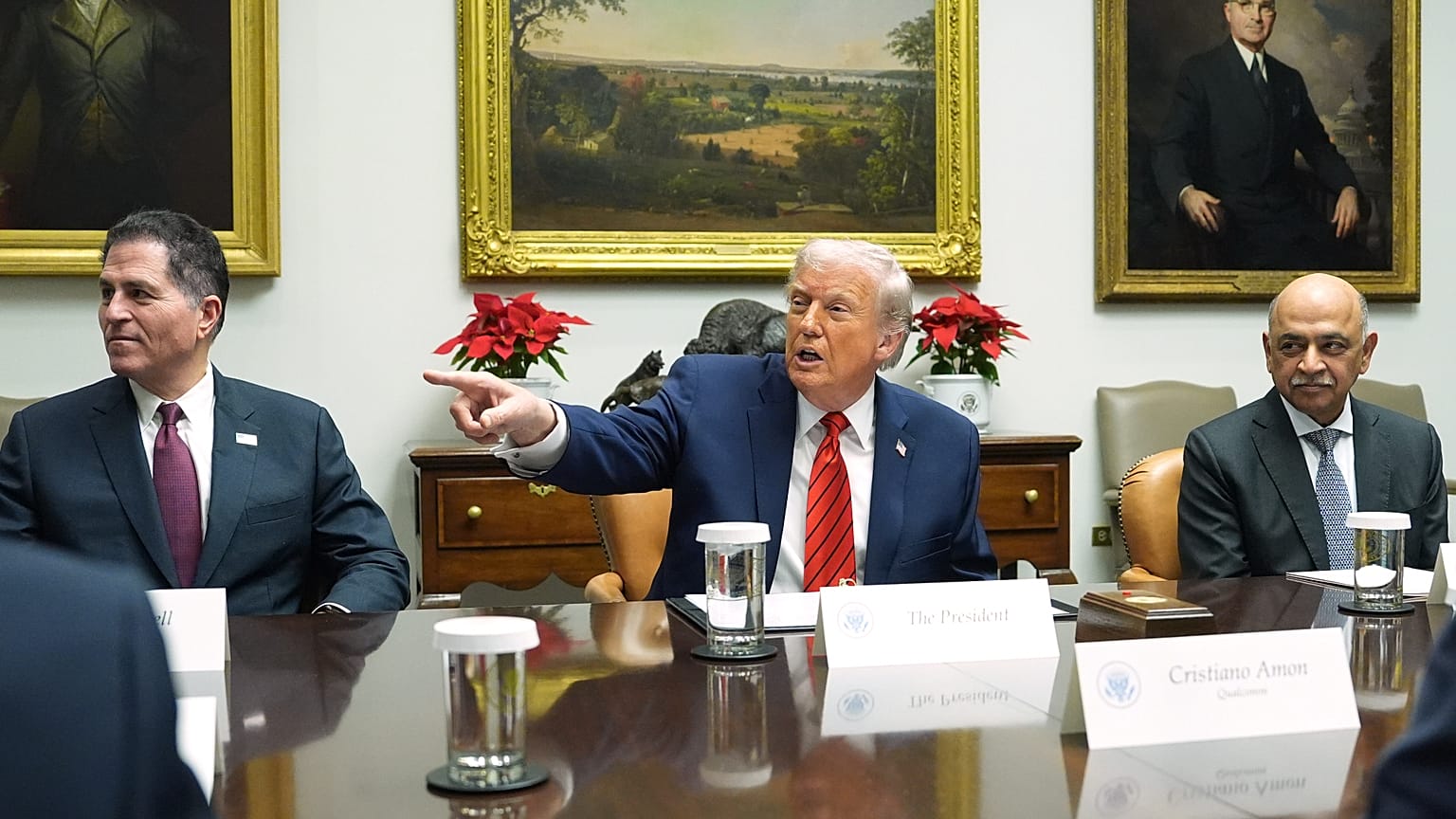
FILE. CEO of Dell, Michael Dell, left, and CEO of IBM, Arvind Krishna, right, as US President Donald Trump speaks during a roundtable at the White House, Dec. 2025
Copyright AP Photo/Evan Vucci

By Quirino Mealha
Published on

Dell Technologies has secured a $9.7 billion (€8.3bn) defence contract to supply Microsoft software across the entire US military, just weeks after US President Donald Trump publicly endorsed the company at the White House.

On Wednesday, the US Department of War confirmed it had awarded Dell Federal Systems, the government-focused unit of Dell Technologies, a five-year, $9.7 billion (€8.3bn) contract to supply the Pentagon.

As part of the Core Enterprise Technology Agreement (CETA), a Pentagon-wide Microsoft licensing and software procurement framework, the company will provide and manage Microsoft software licences, cloud subscriptions and on-premises software licensing across the US military, intelligence agencies and the US Coast Guard.

Dell Technologies' shares were up around 5% in pre-market to $320 due to the announcement after closing Wednesday's session at roughly $305.

The company is set to report its earnings for the first quarter of this year on Thursday, with analysts from Zacks Investment Research forecasting revenues of approximately $35 billion (€30bn), representing annual growth of about 50%.

According to US DoW Chief Information Officer Kirsten Davies, who briefed reporters at the Pentagon, the CETA is expected to save the department roughly $422 million (€360.9mn) annually by consolidating fragmented technology budgets from across the military services into a single purchasing structure.

The contract was granted less than three weeks after US President Donald Trump stood at a White House event and urged Americans to "go out and buy a Dell. They're great."

Davies and acting US Navy Chief Information Officer Barry Tanner were both clear that the award followed a competitive process.

"The vendors were all evaluated based on competition, comparison to GSA schedule pricing and overall chain of value to the department," Tanner noted.

Dell holds a long-standing commercial partnership with Microsoft and is one of its major buyers of Windows licences. Nonetheless, the contract arrives at the culmination of a period of visible alignment between CEO Michael Dell and the Trump administration.

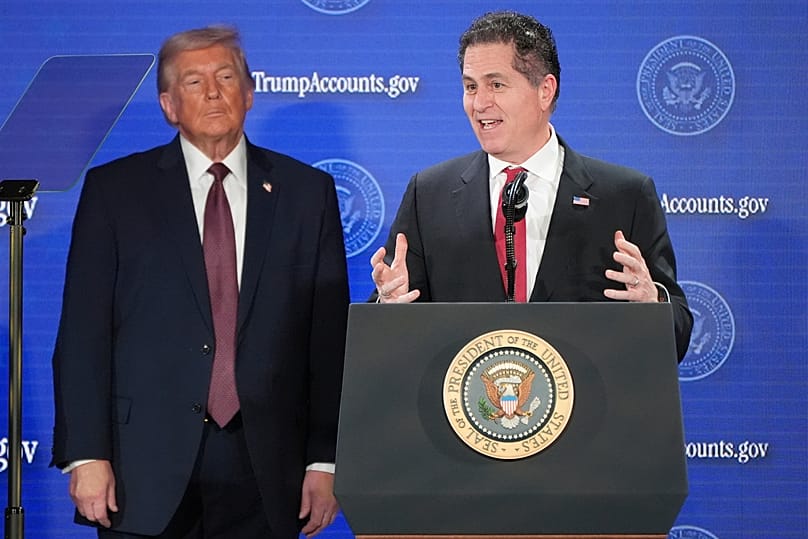
In December 2025, Dell and his wife Susan appeared alongside Trump at the White House to announce a $6.25 billion (€5.3bn) donation to "Trump Accounts," a tax-advantaged investment programme for children created under the "One Big Beautiful Bill".

The pledge will provide $250 (€214) to roughly 25 million American children aged 10 and under from households with a median income below $150,000 (€129,000) and was described by Invest America, the nonprofit organisation spearheading the initiative, as the largest ever private commitment devoted to American children.

Michael Dell speaks during the launch of 'Trump Accounts' in Washington, Jan. 2026
Michael Dell speaks during the launch of 'Trump Accounts' in Washington, Jan. 2026 AP Photo/Jacquelyn Martin

Michael Dell also sits on Trump's Council of Advisors on Science and Technology, informing public policy regarding the economy, public health, national security, energy and emerging technologies.

The convergence of public presidential endorsements and subsequent federal contract awards is attracting scrutiny beyond Dell.

Financial disclosures released this month by the US Office of Government Ethics showed that investment accounts associated with President Donald Trump held Dell Technologies shares during the first quarter of 2026. The disclosures indicate some purchases were made before Trump publicly praised the company at a White House event.

The Trump Organisation has said the accounts are managed independently by third-party financial institutions and that neither Trump nor his family directs individual trades.

Last week, responding to questions about Trump’s financial disclosures at a White House briefing, Vice President JD Vance said the president’s investments are handled by independent wealth advisers and rejected suggestions that Trump personally directs individual stock trades. “He’s not making these stock trades himself,” Vance said.

Commentators and ethics critics have also pointed to trading activity involving companies such as Intel and Palantir, whose shares have at times moved sharply following public comments by Trump or announcements linked to government technology spending.

The Pentagon has said Dell’s selection followed a competitive procurement process.

Even so, the timing of the award alongside Trump’s public praise of the company and financial disclosures showing investments linked to Dell is likely to draw renewed scrutiny from ethics observers and political critics.

Did the EU-Mercosur trade agreement allow ‘worm-infested’ Brazilian coffee into Europe?


 Published on


Posts by French and Polish politicians have falsely connected a rejected shipment of Brazilian coffee to the EU-Mercosur trade deal.

Widely-shared social media posts have falsely linked a rejected shipment of Brazilian coffee in Poland to the EU-Mercosur agreement, claiming that the deal has allowed contaminated products to enter Europe.

The claims emerged after Poland's Agricultural and Food Quality Inspection Agency (IJHARS) announced on Facebook that it had blocked 63,000 kilograms of raw green coffee from entering Poland.

The shipment, which inspectors said was halted in Poznań, contained "damaged beans" and "live pests".

Polish far-right MEP Ewa Zajączkowska-Hernik and former French MEP and founder of the Eurosceptic Patriots party, Florian Philippot, both linked the rejected shipment to the EU-Mercosur trade agreement, which began provisional application on 1 May.

According to Zajączkowska-Hernik, the shipment is an example of the trade agreement "in practice", accusing the EU-Mercosur deal of "poisoning people for the sake of German economic interests".

Philippot said the the shipment, which never made it into Poland, was "worm-infested", despite Polish inspectors not stating which live pests were in the cargo.

Zajączkowska-Hernik's post was picked up by Polish right-wing political commentary website wPolityce, which also claimed the shipment was "worm-infested".

However, official responses and publicly available trade data reviewed by The Cube, Euronews' fact-checking team, show that claims the shipment was linked to the EU-Mercosur trade deal are unsubstantiated.

Green coffee already entered EU tariff-free

Critics of the EU-Mercosur deal, which removes import duties on goods traded between the EU and Mercosur countries, argue that reduced tariffs will flood Europe with agricultural products that do not meet European standards, and place additional pressure on European food inspection systems and farmers.

But publicly available documents show that green coffee — the separated, raw seeds of coffee cherries that are then roasted — already entered the EU tariff-free long before EU-Mercosur's provisional application began.

According to UN Comtrade data, Brazil exported more than 15 million kilograms of green coffee to Poland in 2024 alone.

A report published in 2011 by the International Coffee Organization notes that "non-decaffeinated green coffee can be imported tariff-free into the European Union", while processed coffee incurs a higher tariff.

A separate trade analysis, published in February 2026, by the United States Department of Agriculture also stated that "green coffee beans, which make up 97 percent of Brazil’s coffee exports to the EU, already enter the European market tariff-free".

Did the shipment enter under EU-Mercosur rules?

In response to Euronews, IJHARS said the shipment underwent "standard commercial quality inspection", carried out under existing national rules.

The agency did not say the shipment entered Poland under preferential trade conditions linked to the EU-Mercosur agreement, adding that customs-related matters fall under the responsibility of tax and customs authorities.

IJHARS also said that it's not unusual for it to intercept food products that do not meet standards. The agency issued 95 decisions blocking imported food shipments in 2025 alone, impacting 121 batches of food that were set to enter Poland from non-EU countries.

Brazil's ambassador to the EU, Pedro Miguel da Costa e Silva, rejected claims linking the shipment to the EU-Mercosur agreement.

“Green coffee already entered the EU under a zero tariff rate. Nothing changed,” he told Euronews. He added that Brazil had exported green coffee to Europe “since the 19th century”.

Critics of the EU-Mercosur agreement have continued to raise concerns about food safety, agricultural imports and the financial security of European farmers, who have argued that cheaper agricultural products from Mercosur countries, which include Brazil, Argentina, Paraguay, Uruguay and Bolivia, could undercut their livelihoods.

However despite online claims, the available evidence does not show that this specific coffee shipment was in any way connected to the EU-Mercosur trade agreement.


Trump Board of Peace's official Gaza reconstruction fund is empty, source says

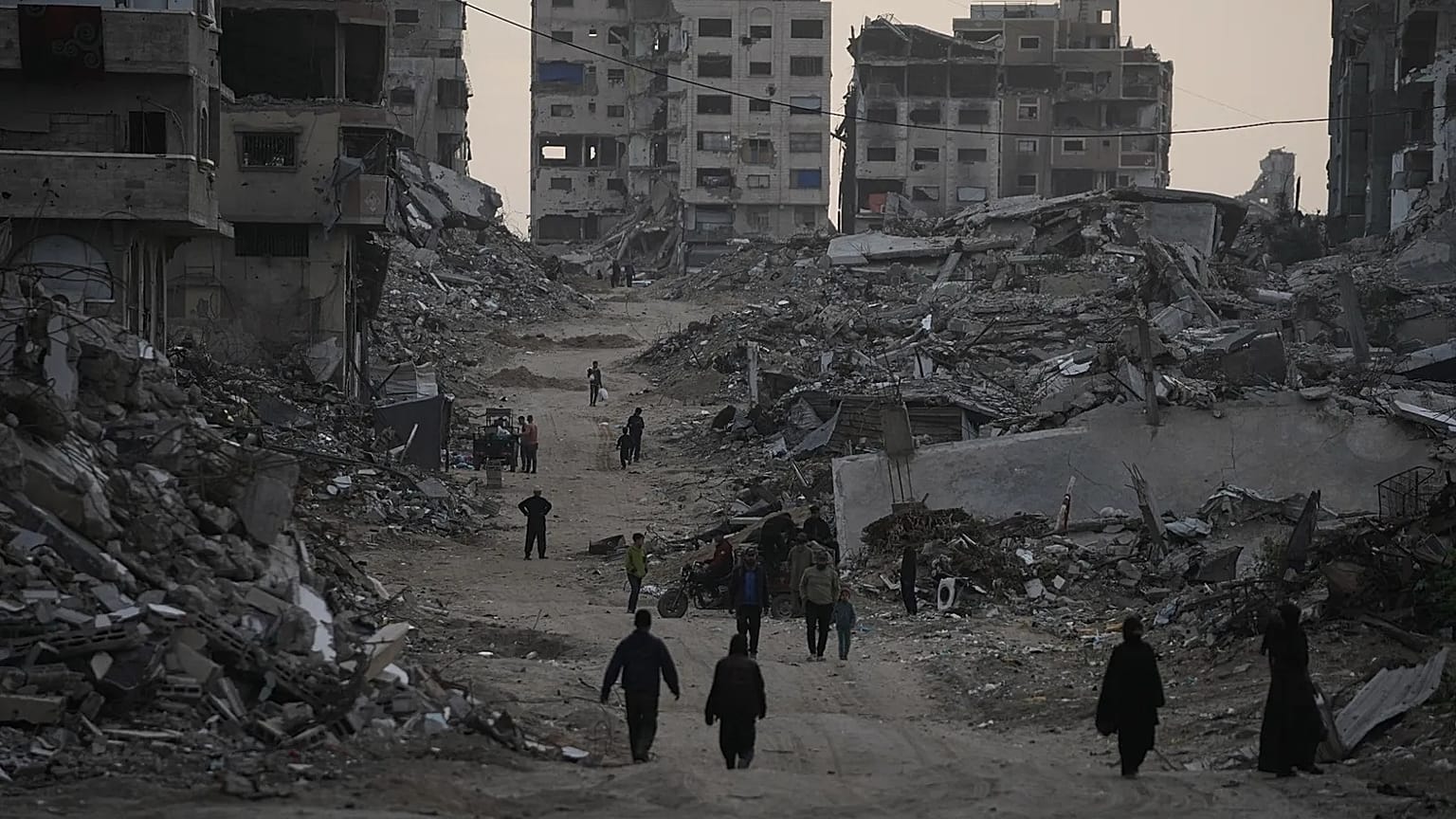
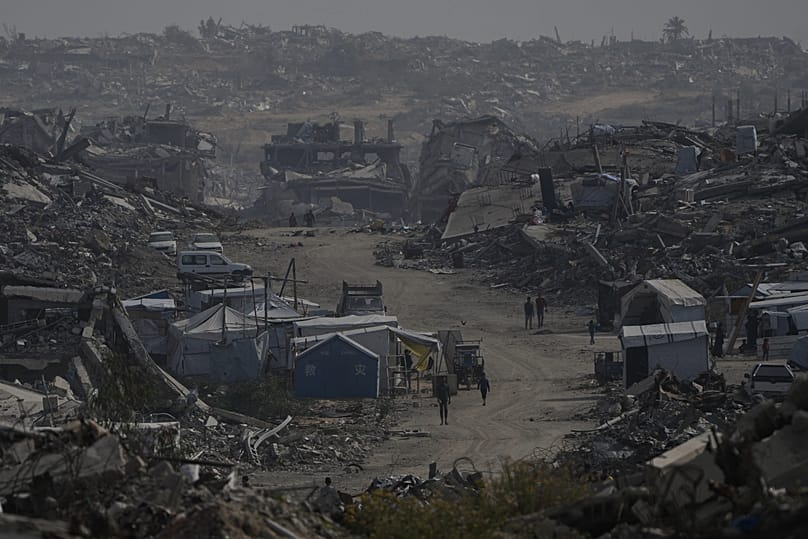
Palestinians walk through the destruction in the Al-Karama neighbourhood of Gaza City, 30 November, 2025
Copyright AP Photo

By Gavin Blackburn
Published on

The board is unambiguously led not just by the United States but by Trump personally, who holds the final say and can remain in charge past his presidency.

US President Donald Trump's Board of Peace has no cash in its official Gaza reconstruction fund, despite member countries pledging billions of dollars, a source familiar with the board told the AFP news agency on Wednesda

Trump conceived the board to coordinate the rebuilding of Gaza, after Israel and Hamas agreed to a US-backed ceasefire in October which stopped two years of devastating war.

But he quickly raised eyebrows by sending out wide invitations, including to Russian President Vladimir Putin and to countries far removed from traditional Middle East diplomacy.

Since the board was set up, its fund, administered by the World Bank and endorsed by the United Nations, has received no money from donors, the source familiar with its operations told AFP.

The source said money had not been deposited because the fund was designed for the reconstruction and development phase, which has not yet been reached.

Israeli military operations in Gaza have continued despite the ceasefire, with at least 910 people killed since then, according to the territory's health ministry.

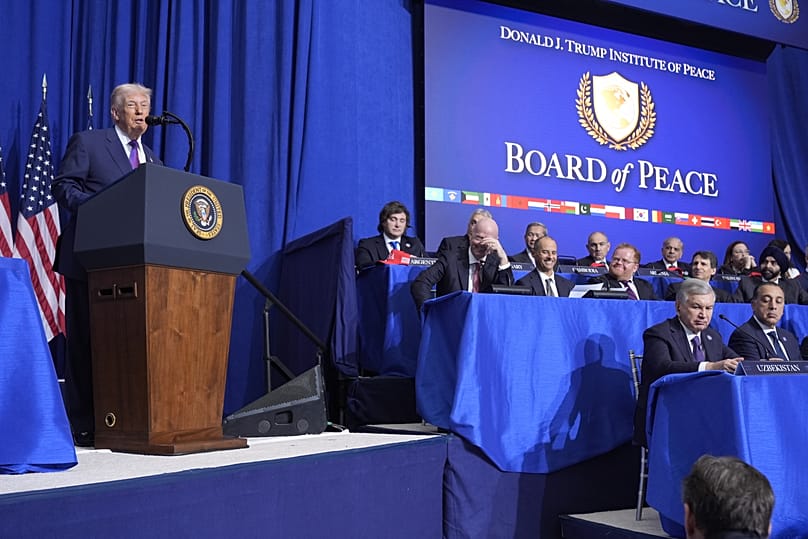
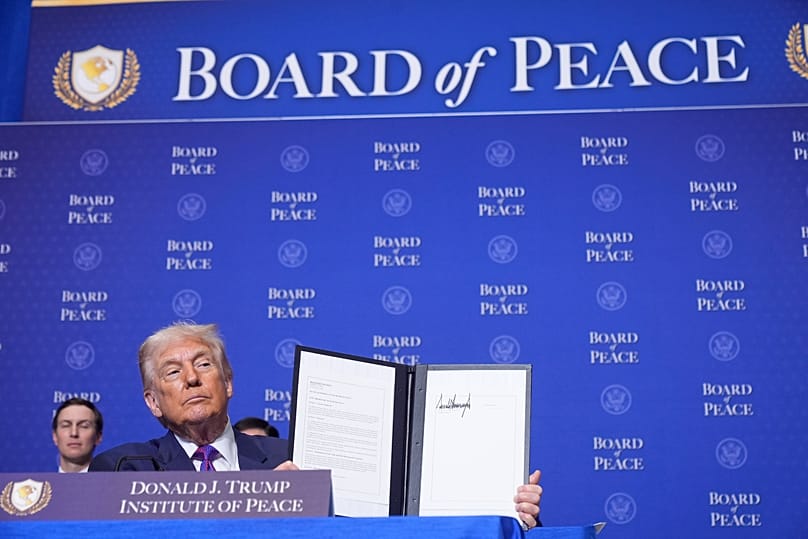
US President Donald Trump speaks during a Board of Peace meeting at the US Institute of Peace in Washington, 19 February, 2026
US President Donald Trump speaks during a Board of Peace meeting at the US Institute of Peace in Washington, 19 February, 2026 AP Photo

Israel still retains control of over 60% of the Gaza Strip, including all entry and exit points, while the population is concentrated on the coast.

Earlier on Wednesday, the Financial Times (FT) newspaper reported that the board had received donations directly into a JPMorgan account, citing the board's spokesperson.

There are no "independent transparency requirements" in place for the JPMorgan account, the FT noted.

Major European nations have shunned the board, which is heavy on longstanding US partners in the Middle East, ideological allies of Trump and smaller countries eager for Trump's attention.

The board is unambiguously led not just by the United States but by Trump personally, who holds the final say and can remain in charge past his presidency.

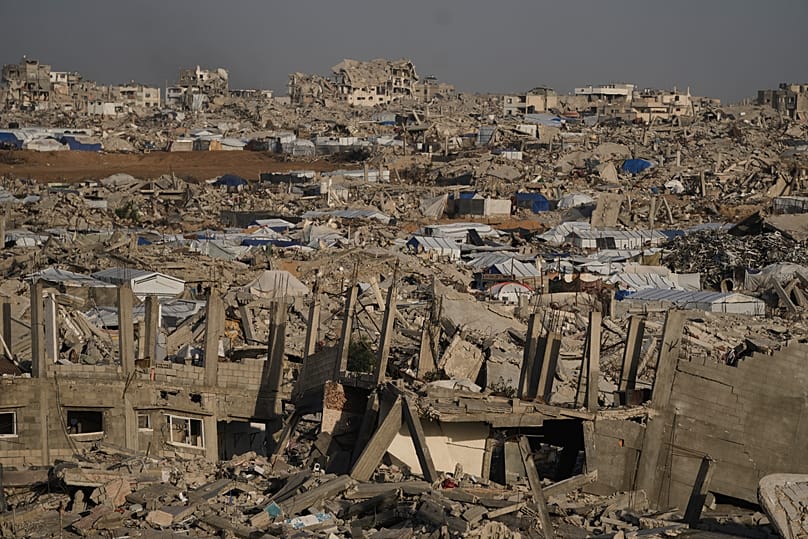
Palestinians walk through the destruction left by the Israeli air and ground offensive in Gaza City, 5 December, 2025
Palestinians walk through the destruction left by the Israeli air and ground offensive in Gaza City, 5 December, 2025 AP Photo

Trump previously said that the United States would contribute $10 billion (€8.5 billion) to the board, while Qatar, Saudi Arabia and the United Arab Emirates each promised at least $1 billion.

Members of the board are required pay $1 billion for a permanent spot, according to its charter.

An EU-UN assessment published in April estimated that more than $71 billion (€60 billion) will be needed over the next decade for the reconstruction of Gaza, where the UN says the humanitarian situation is "critical."

Plans for Gaza International Stabilisation Force in question as troop pledges stall


Copyright AP Photo

By Gavin Blackburn
Published on 28/05/2026

The Iran war has made it more difficult for Arab and Muslim leaders to openly cooperate with the United States and Israel, which many in the region view as aggressors.

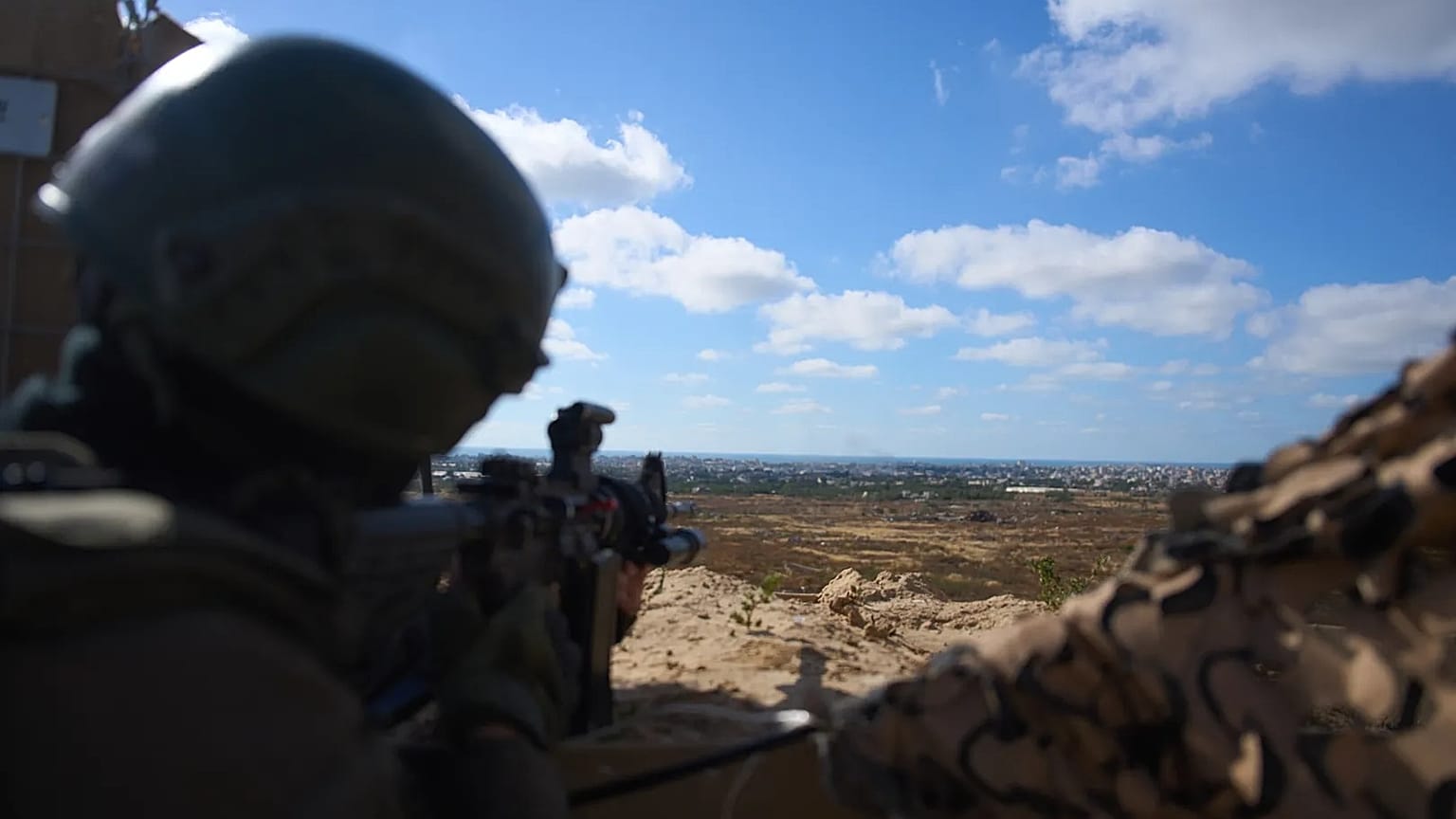
The International Stabilisation Force for Gaza was announced at the inaugural meeting of US President Donald Trump's Board of Peace in February but three months on, none of the five countries that pledged troops have come through with any significant contributions.

Efforts to shore up the fragile ceasefire between Israel and the Gaza-based militant group Hamas have stalled, with Hamas refusing to disarm and Israel continuing to strike what it says are militant targets, often killing civilians.

Meanwhile, the Iran war has made it more difficult for Arab and Muslim leaders to openly cooperate with the United States and Israel, which many in the region view as aggressors and the resulting global energy crisis has put a strain on their resources.

The biggest blow to the planned force came about a week after the US and Israel attacked Iran on 28 February, when Indonesia put its commitment of 8,000 troops on indefinite hold.

Some 1,000 were to have been sent in April, followed by the remainder in June.

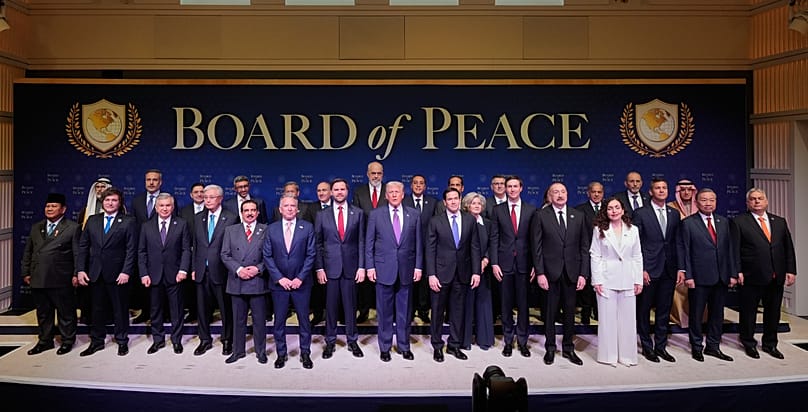
US President Donald Trump holds up a signed resolution during a Board of Peace meeting in Washington, 19 February, 2026 AP Photo

Indonesia's pledge was by far the largest of the group, which also includes Morocco, Kazakhstan, Kosovo and Albania. US Major General Jasper Jeffers, who spoke at the Board of Peace event, was to command the force.

Indonesia suspended its plans over what Defence Minister Sjafrie Sjamsoeddin said last week seemed to be a lack of commitment from a distracted Washington, saying “we have not yet received any implementation guidelines.”

“New dynamics have emerged,” he told parliament. “Because the intensity of the conflict between US and Iranian forces remains very high, the BoP has tended to be left behind. Since the BoP has been left behind, the ISF has also been left behind.”

Domestic issues may have factored into Indonesia's decision, said Muhammad Zulfikar Rakhmat, director of the Indonesia-Middle East/North Africa desk at Jakarta's Centre for Economic and Law Studies.

The Iran war is extremely unpopular in Indonesia, the world’s most populous Muslim country. The economy is suffering from soaring prices as a result of the conflict and there is widespread scepticism about the Board of Peace.

“If you talk to the people on the street, I don’t think they believe that the Board of Peace will actually help the people of Gaza,” Rakhmat said. There are also concerns about sending troops to the Middle East when the economy is faltering, he added.

Indonesia lost four peacekeepers who were part of the United Nations mission in Lebanon during fighting between Israel and Iran-backed Hezbollah. That has further soured public opinion on such international commitments, he said

Tents are scattered among the widespread destruction in Jabalia, 7 December, 2025 AP Photo

Forces committed but none known to be deployed

Kazakhstan has said its support for the stabilisation force would be limited to “the humanitarian component,” including sending medical units with a field hospital. Its Foreign Ministry did not respond to a request for comment.

Albania's Defence Ministry also declined to comment on its troop commitment, saying it was a “dynamic and ongoing process.”

Earlier this month, its chief of staff Lieutenant General Arben Kingji told reporters that while the military had “participated in reconnaissance activities,” no troops had yet been sent.

US President Donald Trump stands with other world leaders before a Board of Peace meeting in Washington, 19 February, 2026 AP Photo

He said only a few would be dispatched as part of the stabilisation force headquarters, without giving numbers, adding that further contributions would be considered.

Kosovo, which is expected to send 20 troops, said in April that it was in the “final phase of preparations.” The Defence Ministry did not reply to a request for an update.

Morocco's Foreign Ministry also did not reply. At the inaugural meeting of the Board of Peace, Foreign Minister Nasser Bourita said it would deploy “high-level military officers to the joint military command of the ISF.”

Board of Peace blames stalled ceasefire on Hamas

The US military’s Central Command declined to comment or make Jeffers available for an interview, referring all queries to the Board of Peace.

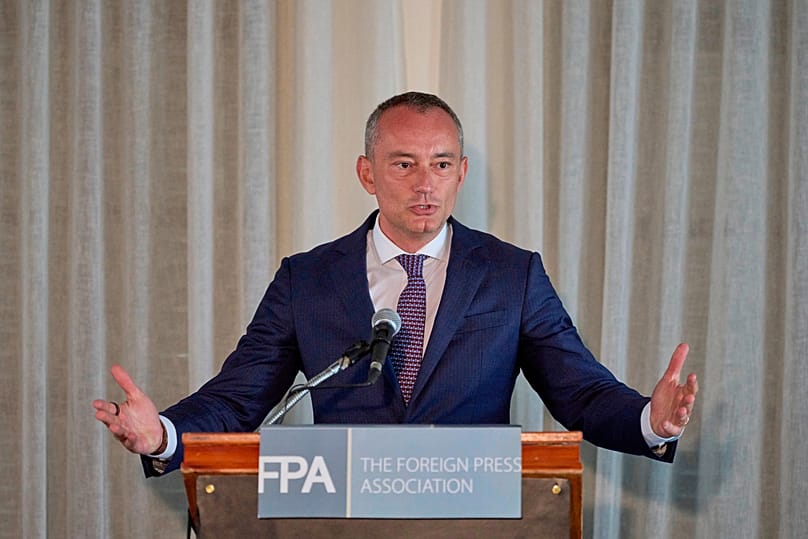
Board of Peace spokesperson Brad Klapper also declined to comment on Indonesia's decision or the future of the force, pointing instead to 21 May remarks at the UN by Nickolay Mladenov, a former Bulgarian defence minister who Trump appointed as the board’s director.

Mladenov said the international force would not be able to begin operations until there was agreement and implementation of a second phase of the ceasefire, which would see Hamas disarm and Israel begin to withdraw. Israeli troops control some 60% of Gaza.

High Representative for President Donald Trump's International Board of Peace Nickolay Mladenov speaks to the media in East Jerusalem, 13 May, 2026 AP Photo

Mladenov has blamed the deadlock on Hamas, saying its disarmament is “non-negotiable” and is holding up progress on other fronts, including Israel's withdrawal and reconstruction.

“You cannot build a future with armed groups running the streets, hiding in tunnels and stockpiling weapons,” Mladenov said in Jerusalem this month.

“You cannot deliver reconstruction with militias on every corner.”
Hamas blames delays on Israel

Hamas says Israel has repeatedly violated the ceasefire, holding up its further implementation, and has accused Mladenov of siding with Israel.

Israeli strikes have killed more than 880 Palestinians since the ceasefire, according to local health officials. Israel says it was responding to violations of the truce.

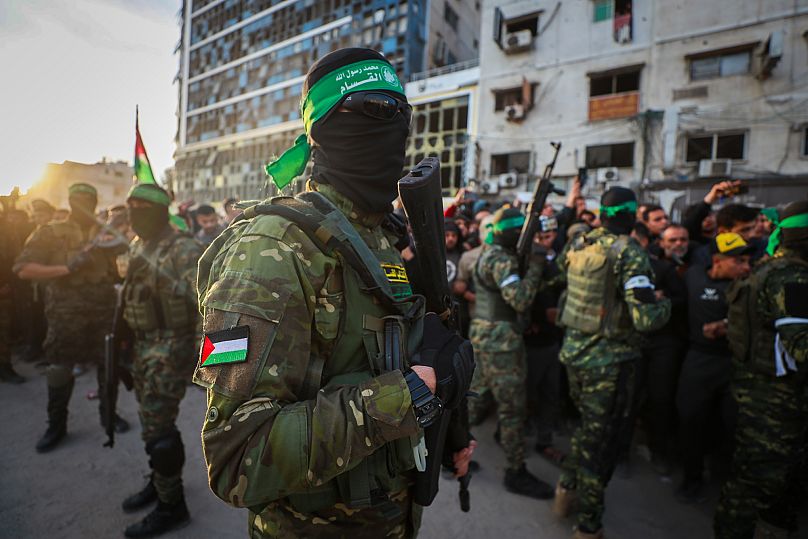
Fighters from Hamas’ Qassam Brigades seen in Gaza City, 19 January, 2025 AP Photo

Hamas is also demanding Israel withdraw from areas seized since the start of the ceasefire, according to an Egyptian official with knowledge of the discussions, speaking on condition of anonymity to discuss closed-door talks. Egypt has long served as a mediator with Hamas.

Many of the countries that have pledged forces have refused to send troops without a deal on Hamas disarming, the official said.
Rescuing The Gaza Ceasefire: What To Do With Hamas’s Weapons – Analysis


Members of Hamas. Photo Credit: Fars News Agency

May 28, 2026 
 ECFR
By Muhammad Shehada

President Donald Trump’s 20-point Gaza plan is at risk of falling apart because of American and Israeli maximalism over how, and how quickly, Hamas gives up its weapons. Trump’s Board of Peace, created to oversee the plan’s implementation, is conditioning progress on the Gaza Strip’s full demilitarisation—namely, that all armed factions and individuals immediately and unconditionally surrender their weapons and military capabilities. Israel is threatening a new offensive on the Strip unless Hamas accepts. But the Islamist group is refusing to budge before Israel fulfils its own commitments under the deal, including allowing full unimpeded humanitarian access to Gaza.

Europeans should step in, acting promptly and jointly with influential members of the Board of Peace such as Turkey and Saudi Arabia to nudge the White House towards a more realistic, and ultimately more successful, approach, to Hamas’s weapons. This begins with the completion of Israel’s responsibilities under the first phase of the plan and should take the form of a Northern Ireland-like model of phased decommissioning which precedes full disarmament and a final peace agreement.

The Gaza plan and decommissioning

The Gaza ceasefire announced by Trump in September 2025 was intended to end the war in Gaza and end Hamas’s security and governance role in the Strip over three phases. The first phase includes the cessation of hostilities, emergency relief and early recovery, and was conditioned on a prisoner swap between Israel and Hamas. The second phase focuses on reconstruction and long-term arrangements in Gaza and includes gradual Israeli withdrawal. This phase would also see the decommissioning of Hamas’s weapons, including “placing weapons permanently beyond use” —though the original plan was vague on what exactly this meant in practice. The final phase would see the Palestinian Authority (PA) take over Gaza and involve a “credible pathway to Palestinian self-determination and statehood” once an undefined PA reform programme “is faithfully carried out”.

Six months after the Gaza plan was signed, it is yet to bear fruit for Palestinians. In that time, Israel has killed over 5,500 Palestinians, according to the World Health Organization. It is still restricting the flow of food and medicine and is carrying out nonstop demolitions in the 59% of Gaza under its control. Meanwhile, the International Stabilization Force (ISF) and National Committee for the Administration of Gaza (NCAG), intended to replace Hamas governance and security control in the enclave, exist in name only and are yet to deploy. Additionally, Israeli efforts to block a two-state solution through rapid settlement expansion in the West Bank are accelerating.

When the Trump plan was announced, Hamas indicated support for sequenced decommissioning that proceeds in tandem with reciprocal steps by the Board of Peace and Israel. The group had previously indicated to mediators that it would be willing to suspend military activities and store its heavy weapons in warehouses under third party supervision or even hand them over to the PA.

But Israel’s unwillingness to abide by its own obligations, combined with its continuing assassination of Hamas leaders—most particularly the recent killing of its more pragmatic military head Ezz al-Din al-Hadad—is empowering a younger and more headline generation within the movement opposed to making any concessions on the group’s weapons.


Given its lack of trust in US and Israeli guarantees, Hamas views its weapons as its main source of leverage.[1] It has maintained that it will not disarm or surrender its light weapons (such as AK-47s) until there is a two-state solution—that is, at the very end of a peace process.[2] It has also demanded Israel fulfil its obligations under the first phase of the deal. Without this, Hamas says it will not start discussions on decommissioning or disarmament. (See table below on Israel’s Phase 1 obligations.) In Gaza’s current dire circumstances, Hamas’s political leadership would also struggle to convince the rank-and-file members of its military wing, and other more hardline factions such as Palestinian Islamic Jihad and the Popular Resistance Committees, to disarm.[3]

Hamas eyes Northern Ireland


Hamas negotiators have been eying the Northern Ireland peace process as a model.[4] As part of the 1998 Good Friday agreement, the nationalist Irish Republican Army (IRA) and unionist Ulster Volunteer Force (UVF) committed to a full cessation of hostilities. Decommissioning, and eventually full disarmament, were framed as the outcome of peace, not as a prerequisite. [5] The IRA only fully disarmed in 2005 and the UVF in 2009.

In 2006, Hamas officials met with IRA and UVF leaders during a tour of Northern Ireland. A senior Hamas leader described this experience as “enlightening”, since most of the group’s leadership has never been exposed to the world outside the occupied territory.[6] The group has now commissioned an internal study to draw lessons and parallels from the Northern Ireland decommissioning process, particularly on the sequencing.[7]

Some Hamas leaders have a similar sequencing in mind: that all weapons would be strictly locked away in depots with a clear policy of no use, no display and no production of those weapons. This policy would be verifiable by international monitors and the NCAG would be authorised to arrest or engage any individual that violates this policy. This phase would also include full mutual cessation of hostilities and suspension of Hamas’s armed activities or parades. In return, Israel would withdraw from Gaza and allow reconstruction. All weapons would remain locked away for 5-10 years or more, to give a chance for a political process to end the overarching Israeli-Palestinian conflict (including the West Bank).

The Board of Peace’s all or nothing condition

However, Israel has successfully moved the goalposts by interpreting the ambiguous language of the Trump plan to demand Hamas’s immediate and full disarmament. The Board of Peace’s high representative, Nickolay Mladenov, has followed this more hardline interpretation. In his first report to the UN Security Council, Mladenov blamed Hamas for the lack of progress on the Trump plan, depicting it as the single obstacle in the path of unlocking reconstruction.

This was reflected in a roadmap drawn up by Mladenov in March 2026 to implement the second phase of the ceasefire plan. This demanded that Hamas and all other Palestinian armed groups give up all of their weapons entirely within 250 days. This includes surrendering all weapons, including rifles, as well as destroying all tunnels, production sites and military infrastructure within 90 days before any Israeli withdrawal. Without this, Mladenov maintained, there will be no movement on the second phase: no Israeli withdrawal to Gaza’s peripheries, no ISF deployment, no NCAG governance transition and no start to reconstruction. According to Israeli media, Mladenov even offered the Israeli government “official authorization” to resume the war on Gaza if Hamas does not accept his proposal.

Where to go from here

In an effort to find a compromise, Egyptian and Qatari mediators put forward a bridging proposal in April, which Mladenov ultimately outlined to the UN Security Council on 21 May. The proposal is an improvement in some aspects, offering, for example, to retain Hamas’s civil servant and police force under the NCAG subject to security vetting—something that has not only been another long-standing Hamas demand but is also critical to Gaza’s long-term governance and stability.

However, the revised Board of Peace proposal still frames full Palestinian disarmament and the dismantling of all militant infrastructure as a prerequisite for everything else in phase 2. And while it does identify Israel’s phase 1 requirements, there has so far been no indication that the US is prepared to pressure it to implement these. Finally, unlike the Northern Ireland peace process, the April bridging proposal also continues to detach the disarmament process from Israeli-Palestinian peace talks.


The impasse in the Gaza talks necessitates an urgent European move made together with like-minded Board of Peace members to persuade the White House (which in practice sets the Board of Peace’s agenda) to press Israel to implement its phase 1 obligations to unlock movement on Palestinian decommissioning.

Alongside this, the Board of Peace should adopt a more pragmatic approach to the implementation of the second phase that supports more viable immediate decommissioning steps—but decouples the question of full disarmament from the other urgent action points. Success will also require an accompanying political process that opens a genuine pathway towards statehood. This is required to move Palestinian factions from a decommissioning phase to a disarmament one as the outcome of Palestinian statehood.

Hamas negotiators have signalled to mediators the group’s willingness to decommission its heavy weapons (including rockets) and some of its tunnel network in the second phase. They are also open to negotiating broader demilitarisation within the context of peace talks. This is an opportunity that should not be squandered.


European governments, especially the UK and Ireland which have extensive experience of the Northern Ireland peace process, should now work with Middle Eastern partners to create more amenable conditions to enable decommissioning. These are the tangible steps that should now be taken along the disarmament track:

(1) the NCAG’s immediate and unconditional entry to Gaza to take over governance functions. Hamas has said it would accept such a move. This would support the full resumption of basic services and restore government functions with international support, while building trust and strengthening the NCAG’s domestic legitimacy to collect weapons from armed factions in the future.

(2) the start of reconstruction overseen by the NCAG. Beyond the humanitarian imperative, this will help create the momentum needed to persuade militants to suspend their armed activities and support a phased decommissioning process. Any concerns about Hamas diverting reconstruction material can be assuaged by enacting a model similar to that of the Qatari or Egyptian reconstruction committees that operated in Gaza after the 2014 and 2021 wars. In both cases, local staff overseeing the reconstruction process were supervised by experts, on the ground, from mediator countries. Reconstruction should also be based on a Palestinian-owned vision for Gaza’s redevelopment to garner the necessary local legitimacy and international funding.

(3) ISF deployment to create a necessary buffer between the Israeli army and Palestinians. This can help persuade the local population (and armed groups themselves) that they will not be left unprotected once Palestinians disarm, helping create the conditions for disarmament (to be overseen by the ISF) and facilitating Israel’s withdrawal from Gaza.


(4) Palestinian parliamentary and presidential elections that include Gaza. Gazans (and Gazan armed groups) will be more accepting of tough compromises such as decommissioning when sanctioned by a representative and credible leadership. A recent municipal election in Deir Al-Balah is a strong example of the existing capacity to hold free and fair elections despite the dire conditions on the ground.

(5) PA relevancy by integrating it into the above four points.None of these recommendations can succeed in isolation from the creation of a credible Palestinian national framework. The EU as the biggest donor to the PA (and possibly to Gaza’s reconstruction) has ample leverage here. The PA must be woven into every layer of this process: as the legitimate overseer of the NCAG’s entry into governance, as the convener of the proposed parliamentary and presidential elections, as the coordinator for reconstruction funds channelled through recognised Palestinian institutions, and as the political umbrella under which sequenced decommissioning leads to a unified, democratically accountable security apparatus.


Ultimately, implementing phase 2 and sustaining the Gaza ceasefire will require the Board of Peace to abandon its current maximalist approach that insists on full disarmament before governance, reconstruction or politics. The alternative will be renewed bloodshed and a missed opportunity to leverage the decommissioning process and jumpstart a serious Israeli-Palestinian peace process. For this to happen, disarmament must be the outcome of a functioning peace, not the prerequisite for one.
Phase 1 Israeli obligations (as per summary by Arab mediators, April 2026)
Type Commitment Reality
Ceasefire Suspending all military operations including aerial bombing, artillery and targeting [assassinations] At least 5,400 Palestinian fatalities since ceasefire on October 10th 2025; 312 fatalities in April 2026 (UN)

Continued assassination of Hamas members, including Azzam al-Haya, the son of senior Hamas leader Khalil al-Haya, in April 2026
Humanitarian Entry of a minimum of 600 [aid] trucks per day, 42,00 per week, and 50 trucks of fuel Israel has allowed in on average 95 trucks of humanitarian aid per day since the beginning of the ceasefire on October 10th 2025; average of 74 trucks per day in April 2026 (UN) (Includes only humanitarian relief consignments processed through the UN.)

In May 2026, MSF accusedIsrael of manufacturing a malnutrition crisis in Gaza
Rafah border crossing Operating the Rafah border crossing in both directions according to the January 19th 2025 agreement [which states that all ill and wounded Palestinian civilians will be allowed to cross] Rafah is operating with severe limitations. According to Gisha: As of February 2026 “the daily number of those exiting has not exceeded around 50, despite the fact that there are more than 18,500 patients in Gaza who require urgent medical evacuation, including more than 4,000 children.”

Palestinians crossing have also been detained by Israeli forces and Israeli-back armed groups
Withdrawal IDF withdraws to the Yellow Line [leaving 53% of Gaza’s territory under temporary Israeli control] … and will not return to areas that have been withdrawn from as long as Hamas abides by the agreement The IDF has slowly expanded the yellow line deeper into Gaza, now taking over at least 59% of Gaza
Humanitarian Priority should be given to food, medical necessities and goods related to providing shelter, clothing, footwear and other necessary materials Israel has been restricting the entry of medicine and medical equipment, as well as continued arbitrary restrictions on thousands of humanitarian items
Humanitarian Allowing the entry of 60,000 temporary homes and 200,000 tents As of May 2026, 133,724 tents have entered Gaza (Global Shelter Cluster)

As of February 2026, 864durable flat-pack shelters—commonly referred to as Relief Housing Units (RSUs) have been allowed in (UN)
Humanitarian/ infrastructure To urgently start repair work on water and sewage facilities and lines according to priority, in addition to the rehabilitation of hospitals, bakeries and roads. Gaza’s water and sewage infrastructure is in a state of severe, ongoing collapse (Oxfam; Haaretz)

24 out of 296 health points are fully functioning; 17 out of 37 hospitals are not functioning, and the other 20 are only partially functioning (Health Cluster)

26 out of 100 bakeries opened

Limited road clearance
Humanitarian/ infrastructure The rehabilitation of the infrastructure (electricity, water, sanitation, communications and roads) in all areas of Gaza, and allowing in the agreed quantity of equipment necessary for civil defense, rubble removal and completion of what was mentioned during the stages of the agreement has entered. Israel restricting entry of heavy equipment into Gaza such as diggers and bulldozers, as well as the fuel and generators to run them.

Humanitarian Israel to release all women and children (below 19 who are not militants). 53 Palestinian women and 350 children from the West Bank still held by Israel

Israeli commitments under phase 1; Annex 1 of ‘the Roadmap for the Full Implementation of President Trump’s Comprehensive Gaza Peace Plan’, Confidential bridging proposal drafted by Qatar and Egypt in April 2026. Copy with ECFR.

The European Council on Foreign Relations does not take collective positions. 

ECFR publications only represent the views of their individual authors.

About the author: Muhammad Shehada is a visiting fellow with ECFR’s Middle East and North Africa programme. He is a Gazan researcher, writer, and human rights advocate. His work focuses on investigating human rights violations in Gaza and the West Bank, and more broadly in the Middle East and Europe, with an emphasis on the treatment of migrants, refugees, and civilians in conflict zones.

Source: This article was published by ECFR

Endnotes:
Author interviews with two Hamas members, April 2026 and December 2025.
Author interview with senior Hamas member, April 2026.
Author interview with senior Hamas leader, Doha, December 2025.
Author interview with senior Hamas member, April 2026.
Address by Bertie Ahern on the Northern Ireland Peace Process at the 8th meeting of the Global Alliance, January 28th 2026, Dublin.
Author interview with senior Hamas leader in Gaza 2020.
Author discussion with senior Hamas member, April 2026.