Thursday, May 28, 2026

'We can halt warming – and we must': IPCC scientist on why Europe keeps choosing fossil fuels

Euronews
By Beatrix Asboth & Angela Symons 
Published on

'Budapest will also hit 50°C, the only question is when', predicts Hungarian climate scientist Diána Ürge-Vorsatz, a professor at CEU.

Hungary's election of Péter Magyar’s Tisza Party in April brought hope for a renewed focus on environmental protection and climate targets.

It's already starting to bear fruit: the country established the Ministry for the Living Environment this month, putting environmental protection, nature conservation and animal welfare to the top of the agenda for the first time in 16 years.

"The Hungarian scientific community has welcomed with great enthusiasm the creation of a ministry responsible for the living environment," Hungarian physicist and world-renowned climate researcher Diána Ürge-Vorsatz, a professor at CEU, tells Euronews.

Restoring soil health and wetlands, changing agricultural practices and safeguarding forests are all issues that still await solutions. Ürge-Vorsatz, who also serves as vice-chair of the UN’s Intergovernmental Panel on Climate Change (IPCC), says while environmental experts are optimistic about the future, the success of any measures will also depend on ordinary people.

Europe's energy crisis and the case for renewables

Soaring energy prices linked to geopolitical tensions in Iran have once again exposed Europe's vulnerability to fossil fuel shocks. It's led many countries to double down on efforts to boost homegrown renewable power.

Pointing out that this is the third energy crisis in a decade, following the post-pandemic rebound and Russia's invasion of Ukraine, Ürge-Vorsatz says: "That should be a strong enough signal that it is not worth relying on highly centralised regions for our energy supply when there is an alternative."

Alternatives exist for both oil-based transport and gas-based heating, she says, though industry is more challenging to decarbonise. The deeper problem, however, is how governments respond when crisis hits.

"Every time there is a crisis, instead of stopping to think that it is a serious problem that we are so exposed to these shocks – and that we should finally start laying the foundations to free ourselves from this dependence – we do something else: we adopt quick, temporary crisis measures which in fact lock us even more firmly into this dependency over the longer term."

That pattern plays out consistently, she says: rather than insulating buildings or reducing demand for natural gas, governments focus on securing supplies from elsewhere. Fossil fuel companies, meanwhile, have little incentive to change course.

"When the oil price is very high, it is of course very bad for consumers – but fossil fuel companies make huge profits, so the message they receive is not that they should exit this industry."

And the consequences of inaction are already being felt – not just in energy bills, but in rising temperatures.

Stemming Europe's record temperature rise

New heat records are expected in Budapest again this summer – the direct result of decades of rising emissions. The city's Chief Landscape Architect has previously warned that young trees may not survive the combined stress of heat and water shortage.

Copernicus data shows Europe is the fastest-warming continent on Earth, heating up at twice the global average, with Hungary warming even faster than the European average.

"We have already warmed so much that sooner or later Budapest will also see 50 degrees," Ürge-Vorsatz predicts. "The question is not whether that will happen, but when."

Air-conditioned public spaces, known as climate shelters, are one response being adopted across European cities, but Ürge-Vorsatz says they address the symptom rather than the cause. The real culprit is planet-warming emissions released by the burning of fossil fuels.

This is compounded by the urban heat island effect – a phenomenon that can make cities up to 10 degrees hotter than surrounding green spaces on a warm day.

Trees, Ürge-Vorsatz says, are the most powerful tool available to combat this: they actively cool their surroundings through transpiration in a way nothing else can replicate outdoors. Combined with better architecture and insulation, greening cities could substantially reduce dependence on energy-intensive air conditioning – and buy time against worsening heatwaves.

But adaptation has hard limits. No amount of adjustment will keep pace with warming if emissions continue to rise.

"For a while we can try this and that – plant different crops, irrigate more – but we can already see what serious problems are being caused not only by climate change itself, but also by the way we have managed our water resources, our soils and our forests," says Ürge-Vorsatz.

Adaptation will only work, she warns, alongside serious emissions reductions. "We are not only able to slow them down, we are able to halt them – and we must. If we do not bring emissions down to zero, warming will continue."

Leading change 'requires bravery'

The fossil fuel sector's political influence makes transformation difficult, Ürge-Vorsatz acknowledges. It employs large numbers of people, generates significant tax revenues, and forms a central pillar of many national economies.

"Governments do not easily say that they are going to part ways with this and turn in a completely different direction. That requires a very brave decision."

A gradual transition would be manageable, she says – but political and business cycles work against it. Governments plan over four to five year horizons; companies even shorter. What voters and shareholders want are visible results within a year or two.

"Unless we can square this circle, it will be very difficult not only to protect the environment, but also to carry out the crucial transitions in the energy sector – not because of the climate alone, but because of energy dependence, energy poverty, and economic productivity and competitiveness."

How changing behaviour can drive policy change

Individual behaviour change also matters – not because one person giving up a plastic straw saves the planet, but because collective action sends a signal, Ürge-Vorsatz argues. When enough people change their habits, they communicate to governments, businesses and local authorities that it matters to them.

Despite billionaires jetting around in private planes, sailing on yachts and "holidaying in space", the actions of everyday individuals stack up. According to the Intergovernmental Panel on Climate Change (IPCC), comprehensive shifts in human behaviour – such as adopting plant-based diets, using public transit, and reducing air travel – could theoretically reduce global emissions by up to 70 per cent by 2050.

Getting there would take reevaluation of rising trends. Digital consumption is an under-appreciated driver of energy demand, Ürge-Vorsatz argues – from streaming video to AI-generated content, the energy and water costs of the internet are largely invisible to users and borne collectively.

"We have artificial intelligence generate meaningless, pointless content that consumes enormous amounts of energy and is then stored in the cloud, which also requires huge amounts of energy and water – all this has to be paid for by someone. At the moment it is the average person who pays, but perhaps the bill should instead go to those who choose to express their creativity in this way."

Could El Niño make temperatures even higher?

On top of the long-term warming driven by human emissions, a natural climate pattern could add further pressure in the near term. Scientists are monitoring the possibility of a Super El Niño developing this year – though there is no consensus that it will occur, and the WMO has cautioned that predictive models are less reliable in spring.

A recurring natural phenomenon caused by periodic warming of the Pacific Ocean, El Niño can amplify extreme weather in the short term – bringing stronger heatwaves, worsening droughts and more intense flooding in affected regions – but it is distinct from, and dwarfed in long-term significance by, human-caused climate change.

For Europe, its direct effects are limited. Its most severe impacts fall on monsoon-dependent regions. But the knock-on effects would be felt here too, Ürge-Vorsatz warns – particularly through global food systems. "It may once again push up food inflation and cause supply problems – that is how it could show up in Europe," she says.

The distinction matters. As Dr Friederike Otto, Professor in Climate Science at Imperial College London and co-founder of World Weather Attribution, puts it: "El Niño is a natural phenomenon. It comes and goes. Climate change on the contrary gets worse as long as we do not stop burning fossil fuels. So climate change is the reason to freak out."

University of Pennsylvania climate scientist Michael Mann echoes this framing: while El Niño can boost global temperatures for a year or two, it is ultimately a short-term oscillation – the planet swings back toward La Niña, which temporarily cools things down again. The longer-term, steady warming trend driven by fossil fuel combustion is what matters, and it continues regardless.

In other words, El Niño could make an already difficult summer harder to manage. But it would not cause Europe's warming – and it will not fix it when it passes. The underlying trajectory is set by emissions, and that is where the real decisions lie.

Temperatures likely to remain at record levels until 2030, UN warns

Geneva (AFP) – Global average temperatures are likely to continue at or near record levels this year and for the next four years afterwards, the United Nations warned Thursday.

Issued on: 28/05/2026 -  RFI

Global temperatures are set to stay at or around record highs, says the WMO. © Brook Mitchell / AFP

The 11 hottest individual years ever recorded all happened from 2015 onwards and the UN's weather and climate agency said the trend was set to continue, with a new hottest-ever year "likely" before 2031.

There is a 75 percent chance that the 2026-2030 five-year mean temperature will surpass the key threshold of 1.5C above the 1850-1900 pre-industrial average, the World Meteorological Organization said.

The WMO outlook comes as western Europe swelters under a "heat dome" of warm air, breaking temperature records for May in Britain and France.

"Global average temperatures are likely to continue at or near record levels in the next five years," the agency said.

"It is likely [86 percent chance] that one year between 2026 and 2030 will surpass 2024 as the warmest year on record."

El Nino effect on 2027

"There is an El Nino predicted for the end of 2026, which increases the chances of the following year, 2027, being the next record-breaking year," said Leon Hermanson, lead author of the WMO's Global Annual-to-Decadal Update.

The last El Nino contributed to making 2023 the second-hottest year on record and 2024 the all-time high at around 1.55C above the pre-industrial average.

El Nino could develop before the end of the year, pushing temperatures higher © FADEL SENNA / AFP


El Nino is a natural climate phenomenon that warms surface temperatures in the central and eastern equatorial Pacific Ocean, bringing worldwide changes in winds, pressure and rainfall patterns.

It typically takes place every two to seven years and lasts around nine to 12 months.
1.3C to 1.9C range

The 2015 Paris climate accords aimed to limit global warming to well below 2C above pre-industrial levels – and preferably below 1.5C.

The targets are calculated relative to the 1850-1900 average, before humanity widely began industrially burning coal, oil and gas, which emit carbon dioxide – the greenhouse gas largely responsible for climate change.

A pedestrian carries an umbrella on a hot day in Chennai © R. Satish BABU / AFP


"Annual global mean near-surface temperatures during 2026-2030 are predicted to range between 1.3C and 1.9C above the 1850-1900 average," the WMO update said.

The WMO said there was a 91-percent chance that global average temperatures will temporarily exceed 1.5C above the pre-industrial baseline for at least one year between 2026 and 2030.

Furthermore, there is a 75-percent chance that the entire 2026-2030 five-year mean will exceed 1.5C above the 1850-1900 average.

However, it is considered exceptionally unlikely – less than one percent – that any single year will exceed 2C above the pre-industrial baseline in the next five years.

The World Meteorological Organization has its headquarters in Geneva, Switzerland © Fabrice COFFRINI / AFP

Arctic heat warning

The 1.5C barrier is expected to be broken with increasing frequency.

The 1.5C and 2C limits in the Paris accords refer to sustained long-term warming – typically over 20 years – so temporary breaches do not necessarily mean the long-term goal is out of reach.

Last year was one of the three warmest years on record, with the globally averaged near-surface temperature estimated at more than 1.43C above the 1850-1900 baseline.

The report was produced by Britain's Met Office national weather service and the WMO's lead centre for annual to decadal climate prediction. It compiles forecasts from 13 different institutes.

Arctic temperatures over the next five winters are predicted to be 2.8C above the 1991-2020 average © Ina FASSBENDER / AFP

The report said Arctic temperatures over the next five northern hemisphere winters (November to March) were predicted to be 2.8C above average temperatures for 1991-2020 – more than triple the global temperature anomaly for the same period.

Predicted precipitation patterns for May to September from 2026 to 2030 forecast wet anomalies in the Sahel, northern Europe, Alaska and Siberia, as well as dry anomalies over the Amazon.

Europe could become a chikungunya virus hotspot as heat expands mosquito habitats

Climate change may bring chikungunya virus to Europe.
Copyright Cleared/Canva

By Marta Iraola Iribarren
Published on

As climate change drives mosquitoes north, Europe and North America are emerging as hotspots for chikungunya virus, a new study warns.

Warmer temperatures may expand mosquito habitats, increasing chikungunya risk areas globally, a new study has found.

The research, published in the journal Frontiers in Cellular and Infection Microbiology and carried out by scientists in China, found that 139 countries or regions are risk zones for chikungunya, a mosquito-borne viral disease. This accounts for 21.3% of the world's land mass.

“But we show that under climate change models, the virus will further expand northward into temperate regions, especially northeastern North America, central Europe, and East Asia,” said Dr Ye Xu, co-author of the study.

How does climate alter mosquito behaviour?

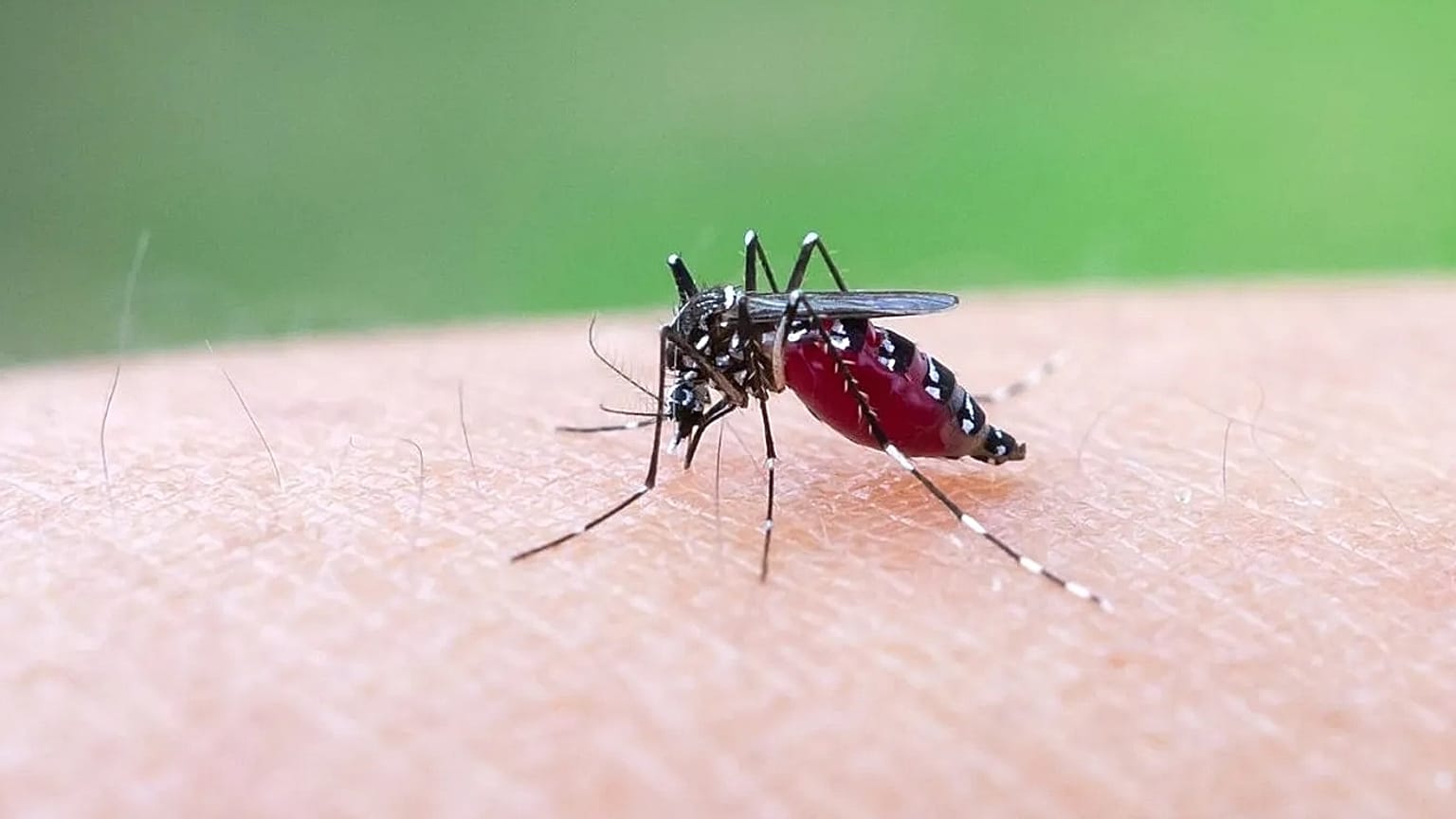
Chikungunya has been mainly transmitted by the yellow fever mosquito Aedes aegypti, a species that thrives in human settlements in the tropics.

However, in recent years, global climate change and cross-regional population mobility have influenced the expansion of disease-carrying mosquitoes and the spread of viral variants.

During a chikungunya outbreak in the Indian Ocean in 2005-2006, scientists recorded a mutation in the virus that enhanced its adaptability to a different mosquito, the Asian tiger mosquito.

“Because this mosquito can tolerate cooler conditions better than the yellow fever mosquito, warming may allow it to establish in places that used to be too cold,” said Dr Yang Wu, co-author of the study.

“When suitable mosquitoes become established, the chance of local chikungunya transmission increases.”

Researchers found that warmer temperatures also speed up how fast the virus develops inside the mosquito. With temperatures between 18C and 28C, the virus becomes ready to spread about four to five times faster, increasing outbreak risks.

How far can mosquitoes spread?

Chikungunya has become a global health threat, the researchers warned. Indigenous transmission has been reported in 114 countries, placing more than three-quarters of the world’s population at risk.

The case fatality rate is approximately 1.3 per thousand, resulting in an annual loss of approximately 284,000 disability-adjusted life years – a measure of years of healthy life lost due to illness or disability.

To address the future spread, the researchers modelled the requirements of the chikungunya virus and the two mosquito vectors from tens of thousands of geo-tagged records of their presence around the globe.

They projected how their current ranges might change between now and 2100, based on 16 climate scenarios developed by the United Nations’ Intergovernmental Panel on Climate Change (IPCC).

These scenarios simulate how greenhouse gas emissions and societal changes might interact by 2100.

While the exact expansion of the disease depended on the chosen climate scenario, north-central Europe, northeastern North America, and eastern Asia consistently emerged as future hotspots.

The virus is not currently endemic to Europe or North America; cases in these regions are restricted to travellers from tropical or subtropical regions.

The researchers found that the geographic extent and outbreak potential of chikungunya are fundamentally determined by its transmission vectors – the mosquitoes carrying the virus.

How can countries be prepared?

In 2025, there were 502,264 reported chikungunya cases globally, accounting for 186 deaths across 41 countries and territories, according to the Pan American Health Organization.

This disease burden is projected to escalate under climate change, which is profoundly altering the distribution patterns of infectious diseases, the researchers noted.

“The public does not need to panic, but health systems should prepare early,” warned Dr Xu.

Among the proposed measures, researchers include tracking mosquitoes, training healthcare workers to quickly recognise the virus, strengthening mosquito control, and setting up rapid-response plans before outbreaks occur.

“These steps are especially important in temperate regions where the disease has not been a routine public-health concern,” added Dr Xu.

To anticipate future crises, countries along the identified risk zones, such as the United Kingdom, Germany, the United States, China, and Japan, must prioritise pre-emptive vector surveillance and clinical diagnosis training before 2040, the authors noted.


A ‘brutal reminder of climate change’: Europe’s May heatwave sparks UN calls to shift to clean power

Wind turbines produce power during sundown in Emlichheim, Germany, Friday, March 18, 2022
Copyright Copyright 2022 The Associated Press. All rights reserved.


By Liam Gilliver
Published on

The United Nations is warning that the main culprit behind Europe's blistering temperatures is the world's "addiction" to burning fossil fuels.

Europe has been told to “kick the fossil fuel addiction” as huge parts of the continent continue to swelter under record May temperatures.

Weather forecasters warn that several countries are trapped under a “highly anomalous and powerful” heat dome – an atmospheric pattern that locks in heatwaves and is becoming more frequent due to human-caused climate change.

Dozens of European cities have witnessed temperatures far above the climatological normal high for this time of year, with London (+16°C) and Paris (+14°C) being hit the worst. Both France and the UK declared the hottest day in May on record this week.

Even typically cooler regions like Oslo experienced temperatures climb up to 18°C, an additional 3°C from average temperatures for late May.

“This record-breaking heat has the fingerprints of climate change all over it,” says Friederike Otto, a professor of Climate Science at Imperial College London.

“Temperatures on this scale were once exceptional even at the height of summer. Seeing 35°C in the UK during spring is absolutely astonishing, but the science is very clear – climate change makes these heatwaves hotter, longer and far more frequent.”

Europe’s heatwave a ‘brutal reminder’ of climate change

Simon Stiell, the Executive Secretary of the United Nations Framework Convention on Climate Change (UNFCC), describes the unprecedented heatwave as a “brutal reminder of the spiralling impacts of the climate crisis.”

He argues the main culprit is the world’s addiction to burning coal, oil and gas, as well as destroying vital carbon sinks like forests. The UN says that fossil fuels are by far the largest contributor to global climate change, accounting for around 68 per cent of global greenhouse gas emissions and nearly 90 per cent of all carbon dioxide emissions.

As greenhouse gas emissions blanket the Earth, they trap the sun’s heat – driving up temperatures and changing weather patterns.

“This climate-driven heatwave is a double-jeopardy, at a time when the latest war in the Middle East is showing the soaring costs of depending on fossil-fuel imports,” Stiell adds.

“But the solutions are just as clear: a faster shift to clean power, which is now cheaper than fossil fuels, and faster to produce, and hence is mission-critical for energy affordability and nations’ economic security.”

EU renewables outperform fossil fuels

Europe’s renewables have already proven to cushion households from Iran’s stranglehold on the Strait of Hormuz, a vital fossil fuel chokepoint that usually carries around one-fifth of global oil supplies.

Solar alone saved Europe a staggering €3 billion in March by lowering demand for gas imports, according to an analysis by SolarPower Europe. The report states that if gas prices remain high, Europe’s savings could reach as much as €67.5 billion by the end of 2026.

Last year, wind and solar generated more EU electricity than fossil fuels for the first time ever, despite a drop in hydropower and a slight rise in gas. A report from energy think tank Ember found that wind and solar accounted for 30 per cent of the EU’s electricity mix in 2025, overtaking fossil fuels by just one per cent.

The boom in renewables is helping drive down emissions, with some of the world’s top climate scientists now believing that a previously projected 4.5°C rise in air temperature by 2100 is no longer plausible.

Is Europe’s renewables boom enough?

However, several EU powerhouses are still lagging behind when it comes to the transition. Last month, Italy was accused of “climate neglect” after announcing it plans to postpone the permanent shutdown of its coal-fired power plants – often described as the dirtiest form of energy – until 2038, 13 years later than the initial deadline.

The Netherlands, despite generating more solar per capita than any other country in the EU, also remains heavily reliant on fossil fuels, particularly gas. The country’s stagnant rollout of large-scale wind farms means it risks missing its legally-binding target to reduce emissions by 55 per cent by 2030, compared to pre-industrial levels.

“Protecting human lives, businesses and economies from extreme heat and the many other soaring costs of climate change is core business for every nation, and it starts with kicking the fossil fuel addiction much faster,” Stiell says.

“It also reinforces the need to invest more in building resilience to climate impacts, whether extreme heat, mega-floods, wildfires or droughts, which are also hitting food production and prices.”

The Iberian blackout was a grid failure, not a renewables failure

The Iberian blackout was a grid failure, not a renewables failure
Spain and Portugal generate some of the cleanest electricity in Europe. But massive underinvestment into the grid means it is unable to cope with the volatile supplies of green energy, leading to a region-wide blcck out last year.. / bne IntelliNewsFacebook
By Ben Aris in Berlin May 27, 2026

When the lights went out across almost all of Spain and Portugal last year in one of the biggest blackouts since the war, experts quickly blamed the explosion of renewable generating capacity as the cause. They were partly right.

Europe’s electricity generating profile has been transformed in recent years with the share of renewables soaring in many countries. Almost half of all Europe’s power came from clean sources last year, but while investment has been heavy in new solar and wind generating capacity, that has not been matched by investments needed into modernising the distribution grid.

“Europe doesn’t have an energy shortage — it has a grid problem,” according to Marco Sagusstinn, President of the European Renaissance Institute. The result is that “some regions waste cheap power while others burn gas.”

Why is that a problem? Green energy may be cheap, but it is fickle. The output of solar and wind generation surges and wanes as the weather changes. While gas, coal and nuclear power output can be regulated by the turn of a dial to match demand, renewables cannot be. You get it when Mother Nature determines you get it and spikes and troughs. That is a problem for grids which were built for the traditional steady power output from traditional fuels and if the surges are too strong, that will trigger shutdowns to protect the integrity of the equipment.

That is what happened last year. Experts say that a surge in green energy supply – this year Spain produced 100% of its power needs from its renewable generating capacity – triggered a shut down that then cascaded throughout the entire peninsula.

Too much sun and too little stability has led to an unstable system that now relies heavily on the vagrancies of the weather. The Iberian blackout was not a renewable energy failure. It was a grid failure.

Spain and Portugal have built one of Europe's most solar-heavy electricity systems with impressive speed. During peak hours, solar production reaches levels that would have seemed implausible a decade ago. The surrounding grid architecture has not kept pace.

What the investigations found

Voltage instability developed faster than the system's automated responses could manage. Reactive power management — the unglamorous engineering discipline that keeps voltage levels stable across a network — proved insufficient for the conditions. Cascading inverter disconnections followed: as individual solar installations detected abnormal grid conditions and automatically disconnected to protect their equipment, the problem accelerated rather than stabilised. At the same time, Iberia's grid has limited interconnections with France, which is a well of highly stable nuclear power. The cross-border transfer capacity toward France — and through France, to the rest of continental Europe — remains relatively constrained compared to the scale of what Spain and Portugal now produce. This part of the grid also needs to be expanded to give better stable Europe-wide power backup options.

Excess solar and wind power that could, in a better-connected system, flow northeast and be absorbed elsewhere in Europe instead creates pressure within the Iberian peninsula itself as it reaches the border bottlenecks: curtailment, negative pricing episodes, and the kind of grid balancing stress that, under the wrong conditions, tips into instability. Under the existing system, Iberia still behaves partly like an "energy island."

The France problem

The interconnection deficit between Spain and France is not new, but it has acquired new urgency. For decades, the limited capacity of the Pyrenean crossing was a minor inconvenience — an occasionally frustrating constraint on cross-border trade in a system where Spain was a modest net importer of French nuclear power. Today, the asymmetry runs in the opposite direction. Spain generates more solar electricity per capita than almost any other European country. Portugal is among the continent's leaders in wind and hydro. On a clear spring afternoon, the Iberian peninsula can produce more electricity than it needs, more cheaply than anywhere else in Europe — and it cannot reliably export the surplus.

France, for its part, has been slow to prioritise the interconnection upgrades that would resolve this bottleneck. The political economy of French energy infrastructure has historically centred on the country's nuclear fleet, and EDF's challenges in maintaining and extending that fleet have consumed much of the attention and capital available for energy investment. The result is a border crossing that functions as a structural choke point in what should be one of the continent's most important renewable energy corridors.

Grid operators in Spain, Portugal and France were, at the moment of the cascade, working with information systems that were not fully adequate to the speed at which the instability developed. Modern inverter-based generation — solar panels and wind turbines feeding electricity into the grid through power electronics rather than rotating turbines — responds to grid disturbances in milliseconds. The monitoring and response infrastructure across much of the Iberian system was calibrated for a slower, more mechanical world.

The investment gap

The blackout, stripped of its political framing, is an argument for aggressive investment in grid modernisation. Europe's grid was largely built in the second half of the twentieth century to carry electricity from large centralised generators — nuclear plants, coal stations, gas turbines — to passive consumers. That architecture is in the midst of a very big shake up and a marriage of very different systems.

Iberia has millions of distributed generators, highly variable output, bidirectional power flows, as well as an increasing requirement for real-time balancing across borders. France has a powerful but predictable steady state output and is also a net exporter of power. That also makes a difference in the investment needed in scale from anything the continent has undertaken since the original grid was built.

The Iberian interconnection with France alone would require multi-bn euro investment on both sides of the border and sustained political commitment from governments that have, historically, found it easier to subsidise generation than to fund the wires that carry it.

The most recent Spain-France interconnection, a 64.5-kilometre underground direct current line through the Pyrenees completed in 2015, cost €700mn and doubled cross-border capacity from 1,400 to 2,800 megawatts. It was, at the time, considered sufficient. The renewable buildout that followed made it obsolete within a decade.

The replacement — the Bay of Biscay interconnector, currently under construction and due for completion in 2028 – was originally budgeted at €1.75bn in 2017, but costs have since soared to €2.85bn, with a further risk envelope of €250 mn, driven by surging prices for subsea cables and converter substations.

The European Investment Bank committed €1.6bn in financing in June 2025, supplemented by a €578mn EU grant. When complete, the 400-kilometre link — 300 kilometres of it underwater — will raise cross-border capacity to 5,000 megawatts. Many analysts consider even that insufficient given the pace of Spain's renewable expansion.

"EIB support for the France-Spain electricity interconnection will be key to ensuring that the Iberian Peninsula is no longer an energy island," said Nadia Calviño, president of the EIB Group, in June 2025 — a statement that, coming four months after the blackout, carried rather more urgency than its diplomatic phrasing suggested.

Independent analysis suggests that by 2040, every euro spent expanding cross-border transmission capacity will reduce system-wide generation costs by more than two euros — a return that would be considered exceptional in any infrastructure category.

The problem is time. The average lead-time for a major European interconnection project exceeds ten years. The Bay of Biscay link was conceived before the renewable surge that made it urgent, and will be completed a decade after it was needed. The next one — whatever form it takes — needs to be commissioned now, for a grid that will exist in 2035.

And the gaps are already big and growing as the green energy revolution gathers momentum. The largest constraints are found at transmission level, where large-scale wind and solar projects connect. Ember identifies a 104 GW shortfall across 17 reporting countries, with 10 already facing capacity gaps.

Of the 158 GW of renewables expected to be deployed by 2030 in these countries, as much as 66% may not materialise due to connection barriers. In several of the most constrained markets, available grid capacity can accommodate less than 10% of planned additions.

The pressure is near-term. By 2028, nine of the 17 countries are expected to face acute grid shortages, including the Netherlands, where congestion has already begun to delay projects and increase system costs.

Grid congestion is compounded bya growing backlog of projects awaiting connection. Nearly 700 GW of renewable capacity is currently in connection queues across eight reporting countries.


Heat, Inequality, And The ‘Right To Cool’ – Analysis

May 28, 2026 
Observer Research Foundation
By Soma Sarkar

Urban heat has emerged as one of the most unequal climate risks in cities. India is currently experiencing a severe heatwave, with temperatures routinely crossing 44°C in multiple cities. During the unprecedented heatwave in late April 2026, India accounted for 95 of the world’s 100 hottest cities.

Although rising temperatures affect an entire city, spatial inequalities and diverse socioeconomic conditions stratify levels of exposure and vulnerability within the population. Informal settlements, areas with limited tree cover, and neighbourhoods characterised by poorly ventilated housing tend to experience more intense thermal stress. At the same time, the ability to seek refuge from heat is unequally distributed between those who can rely on private cooling infrastructure, such as air conditioning, and those who cannot. For the underprivileged, shared urban commons, such as parks, lakes, shaded areas, and community lands, have traditionally served as places of respite that provided informal cooling refuges. However, rapid urbanisation and urban densification have engulfed even these shared spaces, concretising land into built areas and intensifying urban heat island effects.

These inequalities become more apparent when viewed through the lens of labour. Low-income populations, particularly informal workers, such as street vendors, delivery workers, sanitation workers, and construction labourers, experience higher and more intense heat exposure because their livelihoods require prolonged outdoor presence. Though they sustain the everyday functioning of urban economies, urban planning often overlooks where they can find refuge. For many, avoiding outdoor work during peak heat hours can threaten their earnings and job security. Consequently, while heat advisories may encourage residents to stay indoors, large segments of the urban workforce have little choice but to continue toiling in hazardous conditions.

This scenario raises critical questions about urban justice: If access to cooling and climate protection is mediated by income and property ownership, what does that mean for the promise of an inclusive city? Do the people whose labour sustains urban economies have a right to shade, rest, and thermal refuge?

Spatial Inequalities in Heat Exposure and Refuge


The weakening of monsoonal cooling and extension of the high-heat period across South Asia by 2026 El Niño pose a greater risk to India. Indian cities have warmed at roughly 0.53°C per decade in night-time land surface temperature. Approximately 60 percent of the increased heating in Indian cities can be attributed to urbanisation and the increase in concrete surfaces, asphalt, metal roofs, and glass curtain walls. The indicators of ward-level heat exposure are informal settlement density, low green cover, minimal tree canopy, proximity to industrial land uses, and the predominance of thin metal or asbestos roofing, all of which correlate with income conditions. For example, Mumbai has a differential of 5.6°C between settlements separated by approximately 2 kilometres, with Dharavi having a mean land surface temperature of 35.9°C, compared with 30.3°C in Matunga. Approximately 37 percent of Mumbai’s households have tin roofs that trap radiant heat, with indoor temperatures exceeding 40°C during peaks. In Mumbai’s M/East Ward, heat worsens for the marginalised population exposed to the mountains of waste at the Deonar landfill. Similarly, slum surveys in Ahmedabad revealed that 85.5 percent of the sampled households experienced significantly higher heat than households in non-slum areas.

Beyond exposure, the capacity to seek refuge from heat is itself unequally distributed. Cooling technologies impose a dual inequality: their capital and operating costs exclude the urban poor on the one hand, and their condensers raise outdoor temperatures on the other. This scenario creates segregated atmospheres and externalises the thermal cost to vulnerable groups. This dual inequality is most evident in informal settlements in cities like Delhi, which co-exist alongside affluent neighbourhoods. Low-income households may spend up to 8 percent of their budget on cooling, which can lead to energy poverty.

This dual inequality is not confined to Indian cities. In Phoenix, Arizona, for example, Hispanic majority neighbourhoods are found to be 5°C hotter than the suburbs, with tree equity gaps persisting despite heat plans. Santiago, Chile, mirrors this in its peripheries, where migrant workers inhabit heat-vulnerable hillsides.

Heat and Informal Labour

In India, the informal sector employs more than 200 million workers, many of whom work in outdoor or semi-outdoor environments with no institutional protection against extreme heat. In 2024, India lost about 247 billion labour hours due to heat, resulting in economic losses worth US$194 billion. For daily wage workers, heat-related work stoppages mean immediate income loss, with no paid leave or social protection, forcing many to continue working under dangerous conditions. Women in high-heat-vulnerability areasexperience fatigue, dizziness, dehydration, and gastrointestinal illnesses, leading to income losses during the summer months of April to June.

Street vendors, construction labourers, sanitation workers, delivery riders, waste pickers, domestic workers, and agricultural labourers in peri-urban settings are among those most exposed. Their occupational heat exposure is not simply a function of outdoor temperature, but it is intensified by the thermal properties of the surfaces they work on or under (asphalt, concrete, metal), the absence of shade, limited access to drinking water and rest facilities, and the economic perils of voluntarily withdrawing from heat-exposed work. In this context, standard heat advisories such as “Avoid getting out in the sun, especially between 12:00 noon and 03:00 pm” and “Avoid strenuous activities when outside in the afternoon” are often impractical for informal and low-income workers, for whom compliance may directly translate into wage and livelihood losses.

This shows that the urban heat crisis is a structural emergency exposing deep faultlines in how Indian cities are planned, governed, and for whom. The policy response has remained largely technocratic, fragmented, and insufficiently attentive to the dimensions of labour justice and spatial equity. Cool roof programmes, heat action plans, and early warning systems are welcome and necessary, but they are insufficient so long as they do not address the underlying conditions that make large sections of the population chronically exposed to thermal heat.

From Fragmentation to Integration: A Just Urban Climate Agenda


The heat crisis reveals an urgent need to revisit urban governance through the twin lenses of the urban commons and climate justice. Parks, lakes, tree canopies, and shaded public squares are critical life-support infrastructures. Urban heat is deeply intertwined with the water crisis as green cover vanishes, impervious surfaces expand, groundwater tables decline, and urban flooding intensifies. It is also linked to air quality, as heat inversions trap pollutants and increase respiratory risks. Moreover, heat vulnerability increases with housing precarity, as those in informal settlements lack insulated walls, cross-ventilation, or access to reliable electricity for cooling. These are not disparate crises requiring targeted solutions but interlocking symptoms of a single, deeper failure of urban planning philosophy.

Indian cities must adopt an Integrated Urban Climate Resilience Framework that would treat heat mitigation, stormwater management, urban greening, air quality improvement, and housing resilience as interdependent goals. Cities like Medellín and Singapore have demonstrated that urban ecological infrastructure, when planned holistically, can simultaneously cool cities, manage floods, enhance biodiversity, and improve liveability for all residents. Parks, lakes, urban forests, and shaded public spaces must be formally recognised in urban master plans and municipal budgets as critical climate infrastructure, ring-fenced from encroachment and commercial development.

The city-level Heat Action Plans must be expanded and reoriented to centre the rights of outdoor workers, providing statutory protection, including mandatory rest breaks, access to shade and potable water at worksites, flexible timing provisions during peak heat hours, and health insurance coverage for heat-related illnesses. Governments must also provide income security against the time lost due to heat advisories that urge people to remain indoors at certain times of the day. The lives of those who build and sustain the city must have the ‘right to cool’ and not be treated as acceptable casualties of the heat.


About the author: Soma Sarkar is an Associate Fellow with the Urban Studies Programme at the Observer Research Foundation.


Source: This article was published by the Observer Research Foundation.


How a looming Samsung AI workers’ strike in Korea led to €350,000 bonuses

A group of shareholders of Samsung Electronics Co. hold a rally
Copyright AP Photo/Ahn Young-joon

By Anna Desmarais
Published on

Samsung is only the second company known to strike a profit-sharing agreement with AI workers, according to local reporting.

Employees working on Samsung’s semiconductor AI chips are set to receive bonuses of approximately €350,000 after striking a profit-sharing agreement.

Two unions for the semiconductor producer, based in Korea, said 74% of their members, more than 60,000 people, voted in favour of a deal, which halted an 18-day strike action.

Under the deal, semiconductor workers will receive a performance bonus equivalent to 10.5% of the company’s earnings, to be paid out in stock, according to the Korean news agency Yonhap.

Bonus payments could reach 600 million won (€346,750) for more than 28,000 employees at the company’s chip division if Samsung’s operating profit surpasses the 300 trillion won (€172 billion) it is estimated to hit this year, Yonhap reported.

“Starting with the conclusion of this wage agreement, labour and management will work together with one mind to strengthen global competitiveness,” Yeo Myung-gu, vice-president of Samsung Electronics, said in a statement after the vote.

“I thank the labour union and all employees for engaging in negotiations with sincerity and never letting go of the thread of dialogue until the end.”

The deal was struck less than 48 hours after a Korean court overturned an injunction sought by five Samsung employees to suspend the collective bargaining process led by the company’s union, according to the Korea Herald.

Samsung employees have been pursuing strike action in Korea since last December, when they initially filed for a 7% wage increase.

Are other unions asking for the same thing?

Samsung’s Korean semiconductor rival, SK Hynix, has reportedly already allocated 10% of its operating profit to bonuses last year. Under this new structure, chip workers could be receiving up to 3,000% of their base salary in bonuses.​

Employees at other Korean companies, including mobile network operator LG and internet company Kakao, are now asking for AI-related bonuses as well and threaten strikes if their terms are not met, according to local media reports.

Meanwhile, Taiwanese semiconductor giant TSMC promised that employees would see an average of 30% increase in their profit-sharing bonus this year, according to Bloomberg.

A handful of European and global unions are asking that workers receive a “fair share” of profits from the AI boom, including the Communications Workers of America (CWA) and the UK’s Trade Union Congress (TUC).

The Uni Global Union asks for the economic prosperity created by AI “to be distributed broadly and equally, to benefit all of humanity”, through global and national policies.

Euronews Next followed up with these unions to see whether any collective bargaining actions had been launched to get similar guarantees for AI workers, but did not receive an immediate reply.