Saturday, May 30, 2026


Defence-driven demand powers surge in US listings by mining firms


The Pentagon, headquarters of the US Department of Defense. Credit: Wikipedia under public domain licence

There has been a surge in mining companies seeking US listings this year, but even more striking is the change in language as firms explicitly target defence-related demand for critical minerals.

At least 18 companies, mostly Canadian and Australian but ​also some US startups, have completed or are pursuing dual US listings this year, versus just three in 2025, according to exchange filings and company disclosures reviewed by Reuters.

They span ‌in value from about $25 million to $7.5 billion and mark a shift in how critical mineral producers seek access to capital markets as listings explicitly pitch for defence end-use applications.

Defence focus

This year’s transactions have brought producers of antimony, rare earths, tungsten and uranium to the NYSE and Nasdaq – all minerals designated strategic by the Pentagon and used in fighter jets, missiles and radar systems.

The firms are positioning themselves as suppliers of munitions, armour-piercing materials and of inputs for US weapons systems, ​their public filings show, departing from traditional mining IPO language focused on supply-demand fundamentals and long-term price cycles.

“Our goal is to cover direct defence demand for tungsten,” Guardian Metal Resources , CEO ​Oliver Friesen told Reuters, estimating US military annual demand at 2,000 to 3,000 metric tons.

Guardian aims to help the US rebuild its domestic tungsten supply ⁠chain, citing uses in armour-piercing ammunition. It has received $6.2 million from the Pentagon and has applied for additional funding from the US military that would be worth at least $100 million, Reuters reported in March.

United States ​Antimony secured a $245 million Defense Logistics Agency contract to supply antimony for the defence stockpile, where the metal is used in munitions and other military applications.

Rare earth developers are also emphasising defence uses. REalloy Inc ​said its project contains dysprosium and terbium used in magnets for advanced weapons systems, while Rare Earth Americas, backed by Australia’s Gina Rinehart, partly focused its IPO on “defence applications”.

Most companies have raised modest sums so far. Guardian secured $68.3 million, Rare Earth Americas $63.3 million, and Atlas Critical Minerals about $11 million, according to filings.

But several have secured government funding through Pentagon-linked programs, suggesting the listings are as much about unlocking strategic financing and investor access as upfront capital raising, analysts and lawyers said.

CompanyUS ListingPrevious / ​ConcurrentDate
Atlas Critical MineralsNasdaq: ATCXOTCQB (Jupiter Gold)Jan. 13
Blue Moon MetalsNasdaq: BMMTSXV, Frankfurt, OTCQXJan. 26
Santacruz SilverNasdaqTSX-VJan. 21
Mayfair GoldNYSE American/ NYSETSX-V → TSXJan. 27
Aris MiningNYSE: ARMNTSXFeb. 19
Versamet RoyaltiesNasdaqTSXV / private precursorMar. 6
Highlander SilverNYSE American: HSLVCSE / TSXVMar. 11
U.S. Antimony CorpNYSE (uplist)NYSE ​AmericanMar. 11
Guardian Metal ResourcesNYSE AmericanLSEMar. 20
OceanaGoldNYSE: OGCTSX, ASXApr. 7
The Metals RoyaltyNasdaq: TMCRTSX-VApr. 8
Nicola MiningNasdaq ADSs: NICMTSX-VApr. 13
Compiled by Clara Denina

Equity stakes, project funding

Some Canadian-listed miners, including Lithium Americas and Trilogy Metals, are tapping US defence-linked financing through equity ‌stakes and ⁠project funding as part of Washington’s push to secure key minerals.

That push follows a series of crises that left the United States and other Western nations racing to rebuild domestic mineral supply chains and reduce their dependence on China’s dominant production and processing.

China imposed export controls on antimony in August 2024, tightening global supply of a mineral used in military equipment and raising concerns about US defence supply chains.

By December 2025, the US military had begun testing small-scale refineries for critical minerals, shifting from funding projects to building processing capacity itself.

A 2025 Chinese export ban on tungsten has limited feedstock for US refineries built in ​the 1950s for filament light bulbs, which have production ​capacity of about 18,000 tons but are ⁠operating significantly below that, Guardian’s Friesen said.

In November 2025, China issued a one-year suspension of its export ban on antimony, gallium, germanium, and super-hard materials to the US, but kept restrictions on military users, easing commercial supply but leaving the Pentagon reliant on domestic sources.

In addition to China’s export curbs, Washington has faced restrictions on cobalt exports ​from the Democratic Republic of Congo and other risks.

CompanyUS Plan
Resolution MineralsNasdaq
Am. Rare EarthsNasdaq H2’26
Sunshine SilverNYSE (SSMR)
McEwen CopperIPO Q4’26
Jindalee / USENasdaq SPAC H2’26
Barrick / NA BarrickNYSE/TSX vehicle
Compiled by ​Clara Denina

Capital follows policy

Private capital ⁠has also responded. JPMorgan, for example, said in October it could invest up to $10 billion in sectors tied to national economic security, including critical minerals.

In February, US President Donald Trump launched “Project Vault”, a $12 billion strategic minerals stockpile initiative backed largely by the US Export-Import Bank.

The administration has also taken equity stakes in mining firms including MP Materials, USA Rare Earth and Korea Zinc.

Investors say US government equity offers more than capital, giving companies access ⁠to defence-linked contracts, ​subsidies and policy backing, and helping protect them from price cyclicality.

Still, caution remains.

“There’s absolutely a lot of money going into ​defence-driven exploration, but a lot of it is also very speculative right now,” said Rick Werner, co-chair of the capital markets and securities practice at law firm Haynes Boone.

“As long as you can gain access to the mines and the resources, I ​don’t see why they can’t break China’s chokehold over it,” Werner said, “but it’ll take time and money.”

($1 = 1.3754 Canadian dollars)

(By Clara Denina and Ernest Scheyder; Editing by Veronica Brown and Jason Neely)

South Africa’s mining lobby remains wary of regulatory shocks

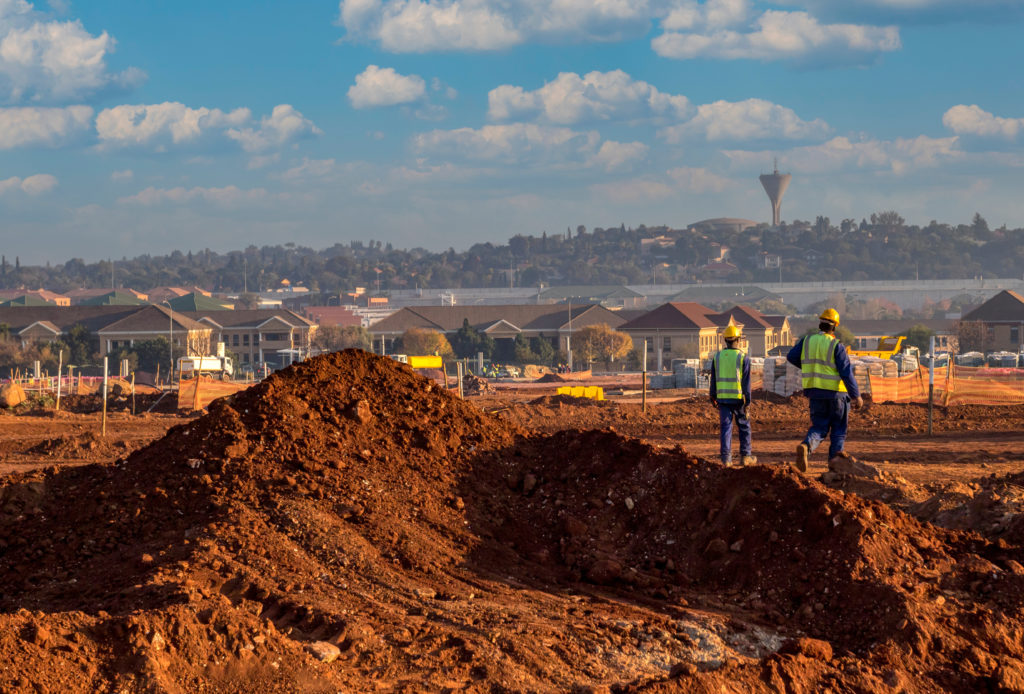
Johannesburg, South Africa. Stock image.

South Africa’s mining lobby group said it’s pleased by discussions with the government over draft legislation to regulate the sector, but remains wary about the potential for an unwelcome shock.

Minerals Council South Africa reacted angrily when the bill first appeared a year ago, complaining that its recommendations had been ignored. The state then partially backtracked by clarifying that exploration activities would be exempt from meeting minimum Black-ownership rules.

“We are encouraged by the nature of the engagements we have had” with the Department of Mineral and Petroleum Resources during the past 12 months, the council’s president, Paul Dunne, told reporters on Wednesday. “However, we do not want to be surprised by a revised version” that “does not reflect the engagements we have held,” he said.

South Africa introduced a mining charter in 2004 to distribute the benefits from mining more widely among the country’s citizens to help repair the economic impact of racial discrimination during apartheid. At the time, that included a minimum Black shareholding target of 26%.

One area where South Africa is faring particularly poorly is exploration, which is essential for identifying the mines of the future. Investment in prospecting has dropped for seven consecutive years and slumped more than 85% in the past three decades, according to data published by the country’s statistics agency.

South Africa is a major producer of gold, iron ore, coal and platinum-group metals. While the country remains the continent’s top exporter of mineral products, there’s faster growth and more dealmaking in the mining sectors of nations such as Guinea, Zimbabwe and the Democratic Republic of Congo.

Disputes with government and policy uncertainty means South Africa’s mining industry “has not delivered its full potential” in recent decades, according to Dunne, who’s also the chief executive officer of Northam Platinum Holdings Ltd. Despite the broadly positive talks with the government, there’s still “a long and challenging road ahead of us,” he said.

The Minerals Council – which counts large firms like Exxaro Resources Ltd., Sibanye Stillwater Ltd. and Harmony Gold Mining Co. Ltd. among its members – also reiterated the “urgent need” for South Africa to streamline the mining rights’ application process, which is much simpler in other African nations.

The government has repeatedly postponed the implementation of an online registry – or cadastre – that displays all mining and prospecting rights. The delays are making the mining industry “less confident” about the eagerly awaited database, the council’s CEO Mzila Mthenjane said at the same event.

(By William Clowes)


Brazil rare earth miner Viridis to sell to US, European buyers, not China


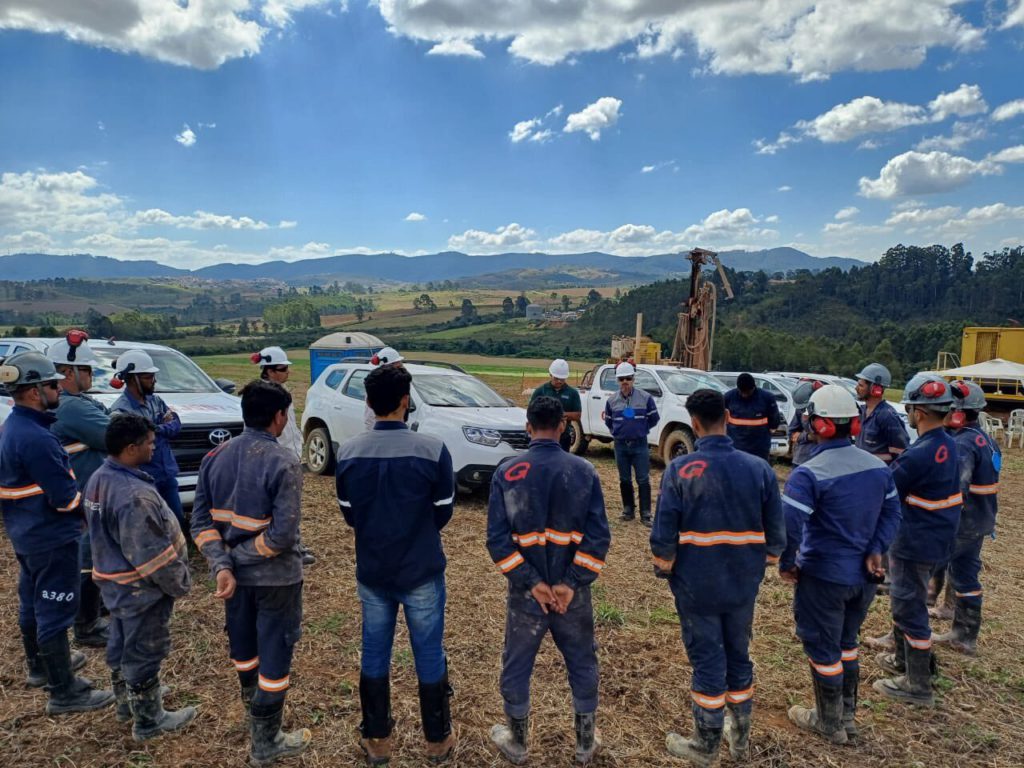
Colossus rare earth project in Brazil. Image from Viridis Mining.

Australian rare earths miner Viridis Mining and Minerals is in advanced discussions with potential offtake buyers in Europe and the US for its Colossus mine in Brazil’s Minas Gerais state, CEO Rafael Moreno told Reuters, adding that the company was not pursuing Chinese interest.

Viridis on Thursday inaugurated its rare earth research and processing center in Pocos de Caldas as it prepares the project to hit steady-state production by the end of 2028, Moreno said. The facility will produce the mine’s first mixed rare earth carbonate, containing minerals such as neodymium and terbium, among others, and help ease offtake negotiations with buyers, he said.

The center’s opening comes amid a global scramble for rare earths and critical minerals as governments in Europe and the US try to reduce their dependence on China for the materials, which are vital for electric cars and defense systems.

While Viridis has received global interest from offtakers – buyers who commit to purchasing specified volumes over time – the company will work exclusively with Western buyers, despite strong Chinese interest, the CEO added.

“We took a stance pretty early on to go down the Western route. As diversification of supply chains occurs, we believe we’ll get better value for our products versus the suppression of prices that China is able to do when all the product goes there,” Moreno said on Wednesday, adding discussions with investors and lenders have focused on the project remaining outside of Chinese supply chains.

China accounts for 60% of global mine production and 90% or more of refined production of rare earths. Beijing introduced export restrictions in April 2025 in response to US tariffs and has repeatedly defended the measures, saying it approves eligible requests.

Colossus is Viridis’ first project in Brazil, though the company also operates in Australia and Canada. The center is expected to process up to 100 kilograms of ore per hour.

The project is expected to cost $360 million to $370 million, Moreno said, adding that the investment could increase to $400 million if lenders request Viridis hold additional working capital. Project financing is expected to be completed in the third quarter, he added.

(By Oliver Griffin; Editing by Rod Nickel)

Li

Galan achieves first lithium chloride production in Argentina


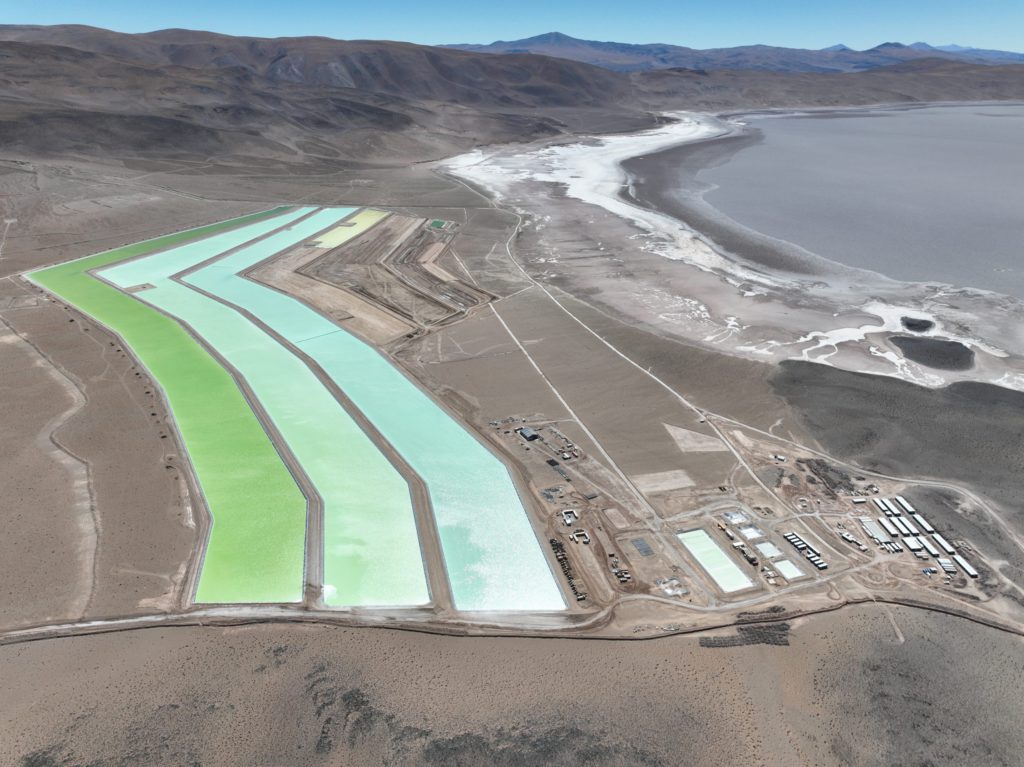
Galan’s flagship Hombre Muerto West lithium project. (Image courtesy of Galan Lithium.)

Galan Lithium (ASX: GLN) has begun lithium brine processing at its flagship Hombre Muerto West (HMW) project in Argentina following the successful wet commissioning of the nanofiltration plant.

In a statement on Thursday, the Australian miner said the Phase 1 plant, completed in March 2026, has now processed its first lithium chloride after being fed with pre-concentrated brine with 0.5% lithium content.

The processed lithium chloride was then discharged into the final evaporation ponds, where water will be removed and contained lithium will be concentrated. This evaporation period is expected to take around three months, after which lithium chloride concentrates with 6% lithium content will be produced and sold under the company’s offtake arrangements.

The impurity separation performance, according to Galan, is so far consistent with the plant design specifications, based on chemical assays undertaken on the processed lithium chloride at an independent
laboratory.

“The significance of the successful commissioning of the HMW plant cannot be overstated. The HMW mining operations have now been completely de-risked from start to finish, and in just a few months, we expect to have lithium chloride concentrate ready for sales,” Juan Pablo Vargas de la Vega, managing director of Galan, said in a press release.

Last year, the company secured an offtake deal with US-based Authium for 45,000 tonnes of lithium chloride concentrate produced from its Phase 1 operations over a period of 6-12 years. Concurrent with the offtake, Galan also received a funding package to complete construction of the plant.

“To our knowledge, Galan will be the only greenfield lithium project coming online in 2026. Becoming a new source of potential supply to the battery supply chain is very exciting and it is well timed to take advantage of a favourable lithium pricing environment,” he added.

The milestone comes amid a months-long recovery in the lithium market that led to to the resumption of several idled mines and expansions at others. Earlier this month, two of Galan’s peers — Core Lithium (ASX: CXO) and Mineral Resources (ASX: MIN) — both announced plans to reboot their key mines in Australia, while the massive Mount Holland mine, also in Australia, recently received approval to double its production capacity.

Optimization underway

Following the processing of its first lithium chloride, Galan is now undertaking an optimization phase, which it says will initially result in a variable rate of processed brine but, once complete, will stabilize at a production rate of 4,000 tonnes per annum (tpa) of lithium carbonate equivalent (LCE).

To date, Galan has accumulated a brine inventory of circa 10,000 tonnes in LCE in its evaporation ponds at HMW, providing immediate and substantial feedstock for the production ramp-up phase. This inventory, it said, positions the company to build towards rates of production consistent with the initial Phase 1
production capacity (4,000 tpa LCE) without interruption.

Pond construction works for the expanded 5,200-tpa capacity will also begin shortly, with the capacity uplift targeted for the first half of 2027, Galan said, noting that the nanofiltration plant is designed to support this expansion.

The company also holds construction permits for a Phase 2 operation (21,000 tpa) and has plans for a staged, low-risk production growth pathway across four phases to up to 60,000 tpa of LCE production.

The project, located in Catamarca province, is part of Argentina President Javier Milei’s RIGI program that went into effect in 2024 as part of nationwide efforts to encourage investment in the mining sector.


Giyani Metals reports positive feasibility study for Botswana manganese project

Proactive
Thu, May 28, 2026 

Giyani Metals reports positive feasibility study for Botswana manganese project Proactive uses images sourced from Shutterstock

Giyani Metals Corp (TSX-V:EMM, OTC:CATPF, FRA:KT9) has released a definitive feasibility study for its K.Hill battery-grade manganese project in Botswana, which outlined a projected post-tax net present value of $481.5 million and an internal rate of return of 20.3%.

The study covers the company’s 100%-owned K.Hill project in the Kanye Basin and supports the declaration of mineral reserves for the planned open-pit mine and hydrometallurgical processing facility.


The project is designed to produce high-purity manganese sulphate monohydrate (HPMSM) and high-purity manganese oxide (HPMO), materials used in electric vehicle and energy storage batteries.

According to the study, the project would have a 25-year mine life and generate estimated post-tax cumulative free cash flow of about $1.6 billion over the life of mine.

Initial capital expenditures are estimated at approximately $535 million, including contingency, while total life-of-project capital costs are projected at $679 million.

Giyani said the project is expected to achieve an operating margin of 46%, based on projected revenues of about $4.86 billion from HPMSM and $395 million from HPMO. The company estimated average realized prices of $3,220 per tonne for HPMSM and $4,004 per tonne for HPMO.

The feasibility study assumes an annual processing capacity of roughly 220,000 tonnes of dry run-of-mine ore using conventional drill-and-blast mining methods. Steady-state metallurgical recovery is projected at 87%.

The reserve estimate includes 5.35 million tonnes grading 12% manganese, consisting of 1.92 million tonnes of proven reserves and 3.42 million tonnes of probable reserves.

Measured and indicated mineral resources total 6 million tonnes grading 16.5% manganese oxide, with an additional 4.4 million tonnes classified as inferred resources.

Giyani said inferred resources were excluded from the mine plan but could provide potential mine life extensions or support higher-grade production over time.


“These results demonstrate strong economic returns and endorse K.Hill as a unique, mine-to-market battery-grade supplier of manganese to meet growing Western demand, and provide a solid foundation for further optimization and continued development of the project,” Giyani Metals interim executive chair Nigel Robinson said in a statement.


“Building on the successful production of both HPMO and HPMSM from our Demonstration Plant in Johannesburg, we are now well-positioned to meet the evolving requirements of the battery and energy storage markets.”

The company also highlighted ongoing optimization work aimed at improving project economics, including further metallurgical test work, front-end engineering and design activities, expanded use of solar power, and evaluation of lower-carbon reagent sourcing options.


Under the current development schedule, early construction activities are expected to begin in 2027, with commissioning targeted for late 2028 and first ore feed planned for March 2029. Commercial ramp-up to full production capacity is expected by mid-2029.

“Alongside the optimization work that we will now be looking to undertake in the next phase of the project's delivery; we will be progressing our discussions with strategic partners and evaluating opportunities within the battery-grade manganese sector that have the potential to enhance value for our shareholders,” Robinson added.

The study noted that global demand for battery-grade manganese products is projected to grow significantly through 2040, driven by increasing adoption of electric vehicles and energy storage systems.

Giyani cited market forecasts showing demand for contained manganese in battery applications rising from about 175,000 tonnes in 2025 to approximately 800,000 tonnes by 2040, with the market potentially entering deficit conditions by 2029.

Shares of Giyani rose 17.7% in Canada after the release.

Pt

Guangzhou exchange said to study night trading for platinum


Stock image.

China’s Guangzhou Futures Exchange is exploring launching night trading, primarily for platinum and palladium contracts, in response to trader feedback, according to people familiar with the matter.

The bourse, known as the GFEX, is studying the feasibility of night sessions to capture international dynamics that are often felt overnight, said the people, who asked not to be named as they’re not authorized to speak publicly. The considerations are at the preliminary research stage and no decisions have been made, they said.

A spokesperson from the exchange didn’t respond to requests for comments.

The GFEX currently does not offer night trading for any of its listed products, which include silicon, lithium carbonate, platinum, and palladium. This contrasts with China’s more-established commodity exchanges in Shanghai, Dalian and Zhengzhou, where futures in multiple commodities trade in active night sessions that start around 9 p.m. local time.

Trading liquidity on the GFEX has picked up in recent years, particularly since it debuted China’s first lithium carbonate futures in 2023. The bourse launched platinum and palladium futures in November, which have also attracted strong interest.

The volume of platinum futures traded on the GFEX in the first four months of the year equated to around one third of those on the New York Mercantile Exchange, the world’s dominant futures market for the white metal.

However, extreme price swings have been common, prompting GFEX to regularly step in to cap new positions or raise trading fees to rein in volatility.

(By Annie Lee and Yihui Xie)

AU

Illegal miners extract billions in Amazon gold despite Brazil crackdown, Greenpeace finds


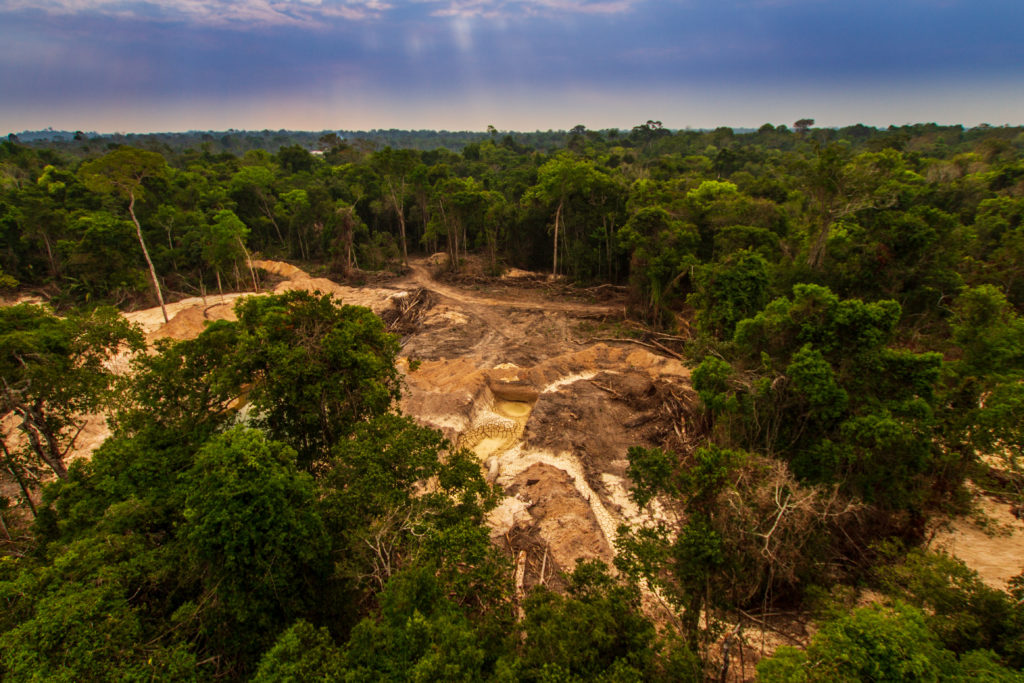
Illegal mining causing deforestation and river pollution in the Amazon rainforest near Menkragnoti Indigenous Land – Pará, Brazil. Stock image.

Billions of dollars worth of gold is still being extracted illegally from Brazil’s Amazon rainforest, a study by nonprofit watchdog Greenpeace found, despite efforts by President Luiz Inacio Lula da Silva to crack down on wildcat mining.

Lula pledged upon taking office in 2023 to eliminate illegal gold mining from Indigenous lands and protected areas after years of expansion encouraged by far-right former President Jair Bolsonaro. Last year, Brazil’s Federal Police seized a record 447 kg (985 pounds) of illegally mined gold.

But as gold prices hit record highs amid intense geopolitical instability, the Greenpeace study found that miners have adapted by using permits from places with no mining activity to falsify the origin of illegally mined gold.

Greenpeace analyzed 187 forest areas with gold mining permits issued by Brazilian mining agency ANM near Indigenous lands and protected areas in the Amazon and found that 98 of them showed no signs of mining.

Still, so-called “ghost permits” from those areas were used to justify the sale of 26.8 metric tons of gold worth an estimated $3.88 billion between 2018 and March 2026.

Reuters flew over two of the permitted areas in the dataset and verified that, despite paperwork for huge output from surface mining, there was no activity to be seen. Six minutes away by air, journalists spotted a large active illegal operation in a protected area.

It was not clear where all the gold backed by so-called “ghost permits” originated, but researchers and investigators believe much of it is extracted from protected areas and Indigenous lands, such as the Kayapo people’s territory in Para state.

Kayapo chief Megaron Txucarramae expressed frustration at the government’s failure to act.

“I don’t know what else is needed to solve illegal mining on Indigenous land,” he said. “It destroys the land, pollutes the rivers, and Indigenous people, without realizing it, end up eating poisoned fish.”

ANM said in a statement that it was monitoring the permits that Greenpeace denounced for any irregularities and added that, with thousands of permits issued, the Amazon region imposes “large-scale logistical and oversight challenges.”

“As long as it is possible to launder gold using mining permits, there will be an expansion of the activity in the Amazon,” said Greenpeace Brasil spokesperson Danicley Aguiar.

(By Ricardo Brito; Editing by Manuela Andreoni and Jamie Freed)


China’s April net gold imports via Hong Kong rise 81.2% from March


Stock image.

China’s net gold imports via Hong Kong rose 81.2% in April from the previous month, Hong Kong Census and Statistics Department data showed on Thursday.

The world’s top gold consumer imported a net 86.715 metric tons in April, up from 47.866 tons in March, and marked its 13th straight monthly increase, the data showed.

The Hong Kong data may not provide a complete picture of Chinese purchases because gold is also imported via Shanghai and Beijing. China’s bullion buying patterns can influence global trends and markets.

China’s total gold imports via Hong Kong stood at 99.327 tons in April, up around 24.8% from March’s 79.576 tons.

Earlier this month, data from the People’s Bank of China showed the central bank loaded up on gold for an 18th straight month in April.

The country’s gold reserves have added up to 74.64 million fine troy ounces by the end of April, versus the previous month’s 74.38 million.

Spot gold prices have been under pressure since the start of the US-Israeli war with Iran in late February. The effective closure of the Strait of Hormuz has prompted a surge in Brent crude prices, fanning inflation woes and propelling rate hike expectations.

(By Anjana Anil; Editing by Alison Williams and Ronojoy Mazumdar)

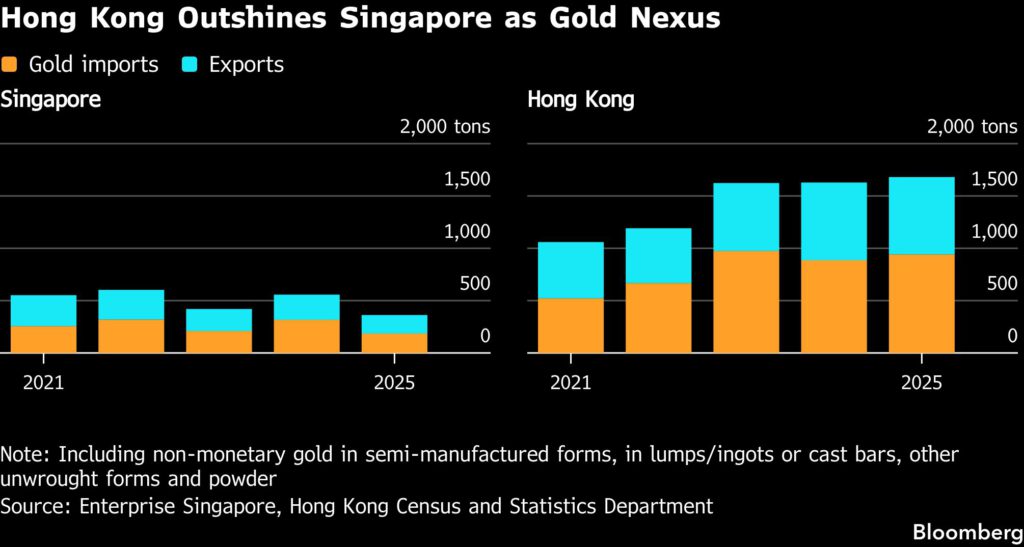
Hong Kong to get edge in Asia gold-hub push with clearing system


Hong Kong Victoria harbor at sunset time. Stock image.

By launching a gold-clearing system in the next couple of months, Hong Kong is set to secure first-mover advantage in a push to become Asia’s preeminent hub for bullion trading.

The clearing mechanism, expected to debut by July, is an important step in building the liquidity needed to influence pricing in the region. It would also take Hong Kong further down the road to creating a gold-trading center than longtime rival Singapore, which has announced similar plans without committing publicly to a timeline.

“If Hong Kong and Singapore are in a race to build clearing, it looks like Hong Kong authorities are very eager to win,” said Adrian Ash, head of research at BullionVault, an online platform that allows users to trade and store precious metals.

In recent months, both cities have advanced plans to capitalize on strong demand and challenge London’s long-held dominance as the global center of bullion trade. Gold’s protracted rally might have stalled since the war began in the Middle East, but many banks remain bullish about the long-term prospects for a metal coveted by investors as an alternative store of wealth.

In Hong Kong, the infrastructure is already being laid for a significant expansion of trading, refining and storage. China’s biggest express-delivery firm, SF Holding Co., plans to open a vault near the city’s airport this year, while precious metals traders are commanding bigger pay packages as established banks compete for talent with fintech and securities firms.

The timing for launching a clearing system is good, as a seasonal lull in demand over the summer will leave ample room to accumulate stockpiles of the metal, Ash said. The government-owned mechanism will also be underpinned by the large volumes of gold that move in and out of Hong Kong due to demand from China, the world’s biggest consumer.

These flows are supported by an existing lineup of refiners that includes Heraeus Ltd. and Metalor Precious Metals Hong Kong Ltd., among others. Point Gold International Ltd., a major Chinese refiner, said it was investing $150 million to expand its offices in Hong Kong and add a facility that’s scheduled to begin production this year. Singapore, by contrast, has only a single refinery that produces bullion with the industry-standard London Good Delivery accreditation.

“Hong Kong has refineries, jewelry manufacturers, factories, mining companies,” said Bernard Sin, regional director for Greater China at MKS PAMP SA, a trader and refiner that has also recently expanded its operations in the city. “It’s a gateway to North Asia: mainland China, Japan, Korea,” he said.

For a clearing system to thrive, the involvement of the world’s major bullion banks is key — and both Hong Kong and Singapore have taken significant steps in this direction. JPMorgan Chase & Co, UBS Group AG and Citigroup Inc. are supporting plans in both cities, while local banks are also participating in their respective locations. In Hong Kong, Chinese lenders have either grown their bullion desks, or are in the process of adding to them.

Interest in gold also extends beyond established banks. HGNH International Futures Co. is setting up a precious metals trading team in Hong Kong, the company said, amid similar moves from other Chinese brokerages. Digital newcomers such as Matrixdock are also looking to hire in the region.

London’s role as a gold hub is underpinned by the large stocks of bullion that it holds, much of it owned by central banks around the world. Though Hong Kong and Singapore are far behind in this regard, both are aiming to attract more of this official-sector business. In its search for client nations, China has prioritized countries participating in the Belt and Road Initiative, with Hong Kong presenting itself as an offshore option able to move gold in and out of mainland China with relative ease.

“People have been talking about China challenging London’s dominance of wholesale bullion trading for well over a decade,” Ash said. “Clearing is a vital step towards building the bullion-banking services which the No. 1 mining and consumer nation still lacks.”

Hong Kong’s large and active equity market, as well as recent efforts to strengthen two-way financial flows with the mainland, also gives the special administrative region an edge when it comes to developing a gold futures market that will be essential for any financial center aspiring to genuine price-setting power. Futures are important because they enable market participants to hedge price risk, establish real-time benchmarks and attract speculative capital — all of which create additional liquidity.

Carving a niche

While clear parallels exist in their ambitions, Hong Kong and Singapore may eventually carve out distinct niches in their efforts to develop regional influence in the gold business.

“Singapore is likely to focus on storage, whereas Hong Kong will promote trading” and refining, supported by logistics, said Doris Bao, founder of China-based consultancy Gold Harvest Management and an industry veteran.

Singapore can store at least 2,200 tons of gold in two privately operated, high-security vaults, according to data from the operators. That includes 500 tons at The Reserve and at least 1,700 tons at Le Freeport, a repository sometimes known as Asia’s Fort Knox. Hong Kong has around 150 tons of storage at its airport, which is owned by the government, although the city’s commercial vault capacity is not publicly known.

In Singapore, existing capacity is filling up fast. Demand for gold storage at Le Freeport has “risen steadily” in recent years, driven by existing logistics providers and new players, said Lincoln Ng, the company’s chief executive officer. The basement vaulting space, typically the preferred location for bullion storage due to enhanced security and higher load-bearing capacity, is near “full utilization,” he said.

In recent months, Singapore has taken custody of some of the gold moved out of Dubai as a result of the Iran war. Official data show the city-state imported record amounts from the United Arab Emirates in March and April. Singapore is also a favored location for gold owners wary of Chinese influence in Hong Kong.

“Investors increasingly view Singapore as a preferred location for wealth storage,” Ng said, adding that the Southeast Asian city-state’s popularity is underpinned by political stability, a robust financial system and strong rule of law.

(By Yihui Xie)


Pulsar Helium acquires 1,360 acres for $2.4M at Topaz project in Minnesota 


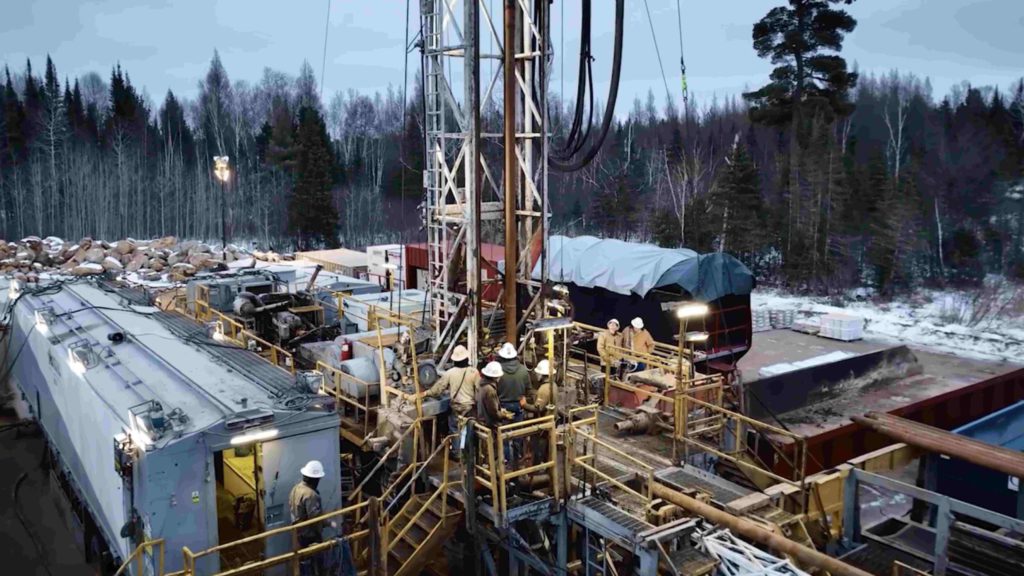
Topaz project in Minnesota. Image: Pulsar.

Pulsar Helium (TSXV: PLSR) (OTCQB: PSRHF) announced Friday that it has acquired approximately 1,360 acres of surface land in Lake County, Minnesota, within its flagship Topaz project. 

Topaz, located in Lake County near Babbitt in northern Minnesota, is Pulsar’s 100%-owned flagship project and one of the leading primary helium discoveries in the US, it said.  

The surface land was purchased in an arm’s length transaction from Wolf Lands Inc. for total cash consideration of $2.48 million. The newly acquired land lies within the mineral rights that the company holds under lease from a separate private owner, and the area includes the location of its Jetstream #7 well, Pulsar said.  

Securing direct surface ownership across a key area of the Topaz project, including the JS#7 well site, further strengthens long-term operational control as Pulsar advances toward production readiness, the company said, adding that control of the surface land provides greater certainty for future infrastructure siting, development planning and operational flexibility. 

Concentration of acreage footprint provides optimal scalability of the initial and overall resource development. 

This Acquisition, driven by our intention to develop Topaz into a significant primary helium producer, builds on growing momentum at the project as we move decisively toward production readiness, Pulsar CEO Thomas Abraham-James said in a news release.  

“It also follows recent legislative progress updating Minnesota’s permitting framework for helium extraction,” Abraham-James said. “With a clearer pathway now emerging toward future production, securing ownership of the surface land overlying our leased mineral rights…provides Pulsar with increased operational control and long-term development certainty as we continue advancing Topaz toward production.” 

The company recently concluded its Jetstream exploration and appraisal program, with all wells drilled to date having encountered gas under high pressure and is now obtaining quotes for the drilling of up to four new production wells to supplement two production-ready wells already drilled, it said.  

The news follows significant regulatory progress in Minnesota, where on May 26, Governor Tim Walz signed into law new legislation establishing a helium-specific framework for gas resource development in northeastern Minnesota, and the Minnesota Department of Natural Resources issued proposed expedited permanent rules for permitting gas resource development on May 18. 

These developments come amid a sharp tightening of global helium supply, driven by disruption to the Strait of Hormuz, attacks on QatarEnergy’s Ras Laffan facilities, Qatar supplies approximately 35% of the world’s helium, and new Russian export controls in place through the end of 2027, the company said. 

Sb

Military Metals sinks on revoked Slovak antimony project licence


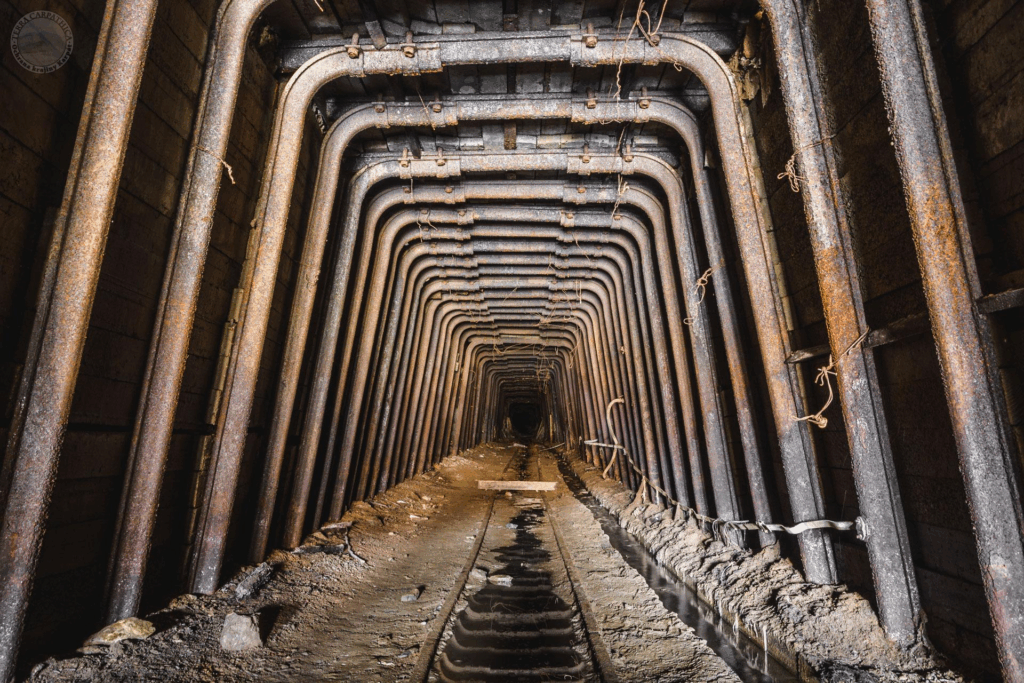
The underground workings at Trojarova. Credit: Molten Metals

Military Metals (CSE: MILI) is contesting a decision by Slovakian environmental authorities to revoke the company’s exploration licence on the Trojarova antimony-gold project.

In a statement this week, the Canadian explorer said the Ministry of the Environment of the Slovak Republic had cancelled the Trojarova licence “without appropriate justification”, and that it will “pursue all legal avenues” to fight the decision.

Shares of Military Metals sank on the news, falling as much as 60% to a 52-week low of C$0.16. By Friday afternoon, it had recovered some losses, trading at a market capitalization of C$21.6 million ($15.7 million).

Soviet-era project

Trojarova, located near the capital city Bratislava, represents an advanced exploration stage project with considerable mining history. According to company website, the project is likely a continuation of the former Pezinok mine, one of Europe’s most significant antimony producers with a history going back over 200 years.

Military Metals acquired the project in late 2024, acting on the growing significance of antimony supply across the globe in light of export restrictions by top producer China. At the time, the company said it saw opportunity in the project for its potential for fast advancement, citing its past history as a key supplier to the Soviet Union as well as Slovakia’s strong mining infrastructure.

The Trojarova project currently has a historic resource defined during the Soviet Era, totalling 415,000 tonnes grading 0.162% antimony as well as 1.148 g/t gold based on underground exploration data.

‘Unexpected’ decision

In its press release dated May 28, Military Metals noted that the Slovak environmental ministry had previously included the Trojarova project as one of the country’s designated exploration areas under the European Commission’s critical raw materials framework.

As such, the company said it regards the decision to cancel the permit in respect “as unexpected and inconsistent with the goals of protecting the supply of critical minerals in Europe.”

In addition to Trojarova, Military Metals also acquired two other projects in the country: the earlier-stage Tiennesgrund antimony project and the Medvedi tin project. Both projects have extensive development/exploration history dating back to the Soviet era.


CHARTS: How the sulphuric acid crunch is driving up critical minerals costs


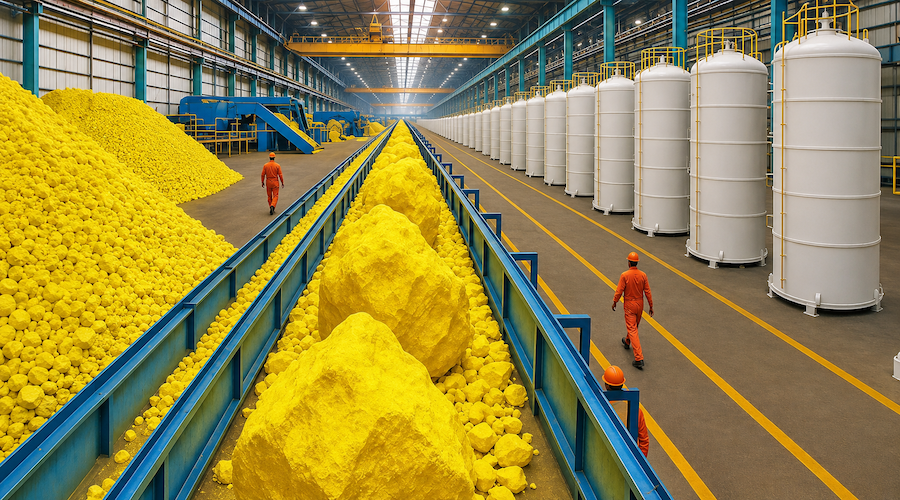
Toxic hydrogen sulfide, a byproduct of oil and gas refining, is turned into pure yellow sulfur.(Screenshot of The Factoran video.)

Conflict in the Middle East and the closure of the Strait of Hormuz have sent sulphuric acid prices soaring, sharply increasing production costs for lithium, nickel and other critical minerals essential to the energy transition.

Benchmark Mineral Intelligence said sulphur prices have climbed more than 50% since the start of the Iran war, while sulphuric acid prices have more than doubled in some regions, disrupting supply chains for battery metals and forcing some refiners to curb production amid shortages of physical sulphur supply.

“Sulphuric acid is a vital feedstock for many critical minerals, and the disruption to the sulphur market from the ongoing Middle East conflict has had knock-on effects across key markets,” Benchmark raw materials research manager Will Talbot said. “The outstanding risk is that more critical minerals players cut production or even shut down operations entirely.”

Lithium squeeze

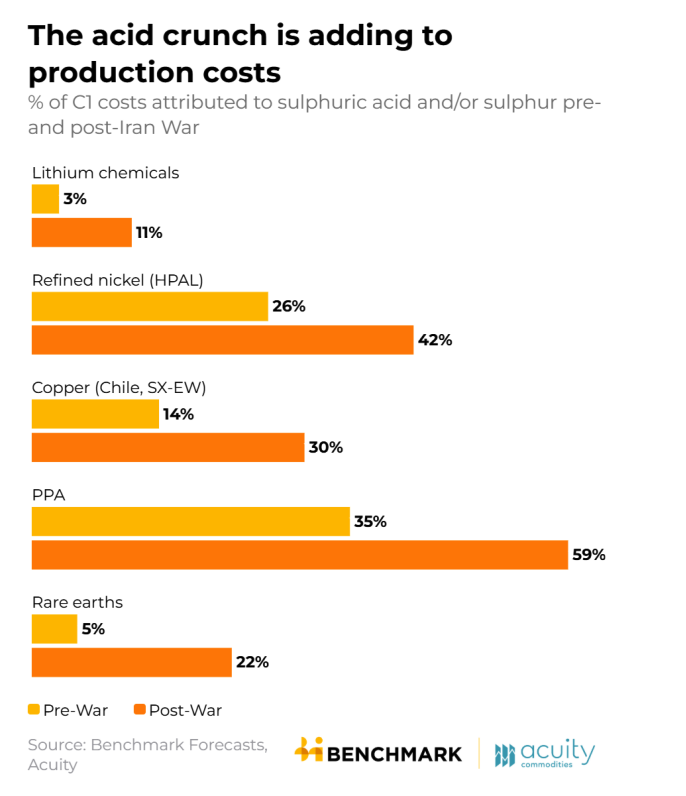
The supply shock is reshaping the economics of battery materials production. Benchmark said sulphuric acid previously represented about 3% of the cost of producing lithium chemicals from hard rock sources but now accounts for 11%, overtaking energy as the largest individual C1 cost component. The consultancy’s special report said sulphuric acid now contributes 22% of total hard-rock lithium conversion costs and has become “the single most volatile and material input” in lithium processing.

Nickel production via high-pressure acid leaching has also become heavily exposed to sulphur markets. Benchmark said sulphur now represents 42% of HPAL nickel costs, up from 26% before the conflict. Indonesia, the world’s largest nickel producer, sourced 76% of its sulphur imports from the Middle East last year, while more than 10 tonnes of sulphur are required to produce one tonne of nickel through HPAL processing.

Supply risks

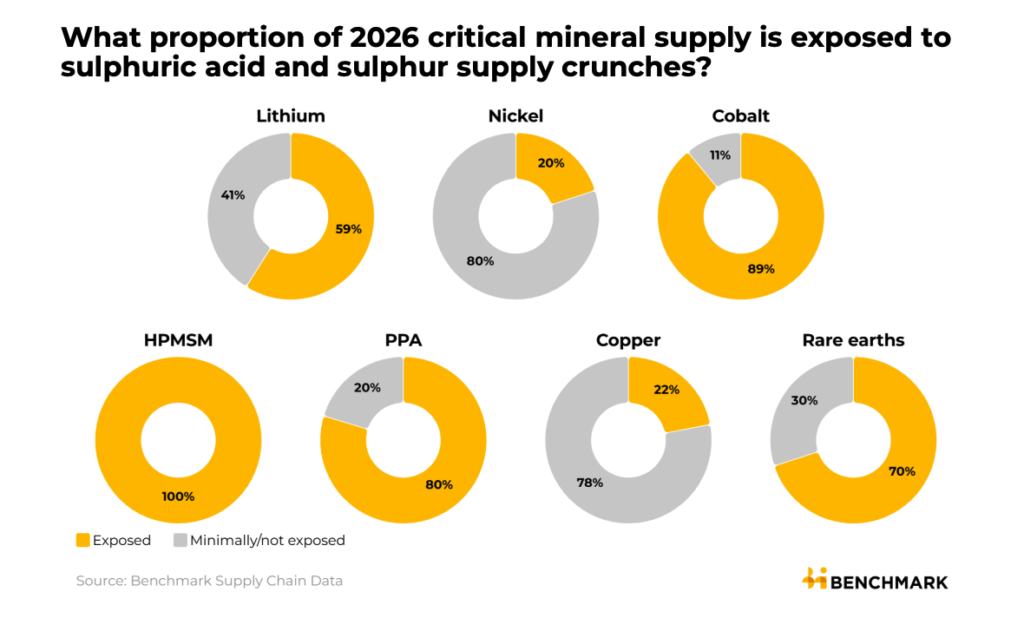
The report warned that physical availability, not just pricing, has become the industry’s biggest risk because at least half of global seaborne sulphur trade passes through the Strait of Hormuz. More than half of global lithium, cobalt, rare earth and purified phosphoric acid production expected in 2026 is exposed to sulphur and sulphuric acid disruptions, according to Benchmark. High-purity manganese sulphate monohydrate, used in EV batteries, is entirely dependent on sulphuric acid supply.

China’s unofficial restriction on sulphuric acid exports has compounded the pressure on refiners outside the country. Benchmark said spot acid prices in Indonesia and Chile have climbed above $380 and $440 per tonne respectively as converters scramble for alternative supplies. Battery-grade lithium carbonate prices in China have already risen about 65% this year in US dollar terms.

Wider fallout

Copper producers are feeling the impact unevenly. While solvent extraction and electrowinning operations that account for 22% of global mined copper output require large volumes of acid, copper smelters are benefiting because sulphuric acid is a profitable byproduct of the smelting process. Benchmark said treatment and refining charges for copper concentrate have dropped sharply since strikes on Iran as rising acid prices improve smelter economics.

The supply squeeze highlights how geopolitical conflict is increasingly colliding with energy transition supply chains. Benchmark said countries with domestic sulphur and acid production capacity, such as the US, are likely to be more insulated than import-reliant jurisdictions including Australia.

Even if the Strait of Hormuz reopens quickly, the firm warned damaged Gulf refining infrastructure could take significant time and investment to restore, prolonging pressure across global critical minerals markets.