Thursday, June 04, 2026

‘Surprise’ election result poses new challenges for Colombia’s left


De La Espriella

Having supported Ivan Cepeda as the candidate to succeed Colombian President Gustavo Petro, most left-wing and democratic Latin Americans were not surprised by the meteoric rise of a Javier Milei-style far-right candidate in the final weeks of the presidential campaign. Libertarian lawyer Abelardo de la Espriella not only managed to rapidly rise in the polls, but got through to the second round just ahead of Cepeda, a reserved university philosophy lecturer and human rights defender. Cepeda was preselected by Petro’s Pacto Histórico (Historic Pact) to preside over a second term of centre-left progressive government.1

De la Espriella, nicknamed El Tigre (the Tiger), secured 43.72% of the vote against Cepeda’s 40.92% (a difference of 600,000 votes). Paloma Valencia — an aristocrat, a former president’s granddaughter and former right-wing president Álvaro Uribe supporter — secured 6.9% as the Centro Democrático (CD, Democratic Centre) candidate, well below the 15% polls predicted. In the end, El Tigre’s tank steamrolled the CD.

The reality is that neither Colombia nor any of the other 35 Latin American and Caribbean countries are immune to the global neo-fascist far right wave. The country’s history attests to a longstanding right-wing presence in politics, which until May 31 had been occupied by Uribe’s CD (never centre-right to begin with). But de la Espriella’s vote is also reflects the current regional and global climate.

His support came from bourgeois-oligarchic factions (agribusiness, the financial markets, big business and social media platforms), with de la Espriella swiftly overtaking Valencia as their darling. The Colombian Milei was also backed by US President Donald Trump and far-right parties in government across the region.

Moreover, in a country where social media regulation is virtually non-existent, de la Espriella benefitted from a deluge of fake news — largely originating from the US and Spanish state2 — that spread blatant lies about Petro and Cepeda’s supposed links to guerrillas and organised crime. Rounding off de la Espriella’s perfect storm was his hiring of a political marketing firm — the same one that worked on social influencer Pablo Marçal’s almost successful 2024 São Paulo mayoral campaign — and manipulation of Colombia’s, at best, fragile electoral system.

To understand the impact of the fake news, one must remember that Colombia endured six decades of civil war,3 which left 450,000 dead, 121,000 missing and 7.7 million internally displaced, and saw countless bomb attacks against authorities and civilians and the kidnapping and murder of politicians. An agreement was signed in 2016 between the government and the Fuerzas Armadas Revolucionarias de Colombia (FARC, Revolutionary Armed Forces of Colombia) to disarm and reintegrate guerrilla fighters into civilian life.

Petro’s government and the Pacto advocate a policy of “Total Peace,” which seeks dialogue with the remaining guerrilla group, the Ejército de Liberación Nacional (ELN, National Liberation Army), and even criminal armed groups willing to lay down their guns. This policy is vehemently opposed by the CD, agricultural sectors and the urban middle class. De la Espriella skillfully manipulated these sectors, accusing Petro and Cepeda of being bloodthirsty guerrillas and friends of drug traffickers.

A semi-privatised electoral system

Colombia’s electoral system rests on three-prongs. The first is not an electoral court, but rather the National Electoral Council (CNE), which is composed of nine members appointed by parliament, with quotas filled through complex mathematical calculations that give a majority to whoever holds a majority in parliament. The second is the Registrar’s Office, which functions as a large civil and electoral registry office. Only those who are registered can vote.

The third, and most questionable, leg of the tripod is the semi-privatised vote counting system. Counting of the about 120,000 ballot boxes is done manually, with party observers present. However, once ballot box results are processed at the district, department (state) and national level, a tally is carried out by a private Colombian security firm, Thomas Greg & Sons, which does not disclose the source code for the count, meaning there is no way to verify their tally.

It is therefore not surprising that Petro questioned the May 31 results, and has said he will press ahead with his allegations of irregularities. This comes amid reports that de la Espriella co-opted company employees and Electoral Registry staff (as well as members of the police and Armed Forces). According to the president’s social media posts, 800,000 votes for the neo-fascist candidate cannot be verified.

For there part, Cepeda and his campaign team decided on June 1 to endorse the result. According to Pacto leaders this was to allow the election process to continue. The contradiction between Petro and Cepeda’s position could reflect a rift between the two or a deliberate division of labour. Either way, the outlook for the second round remains in limbo.

A young progressive movement with a grassroots base

Despite not achieving Cepeda’s aim of winning the first round, the Pacto and its allies in the Alianza por la Vida (Alliance for Life) obtained the best ever election result for Colombia’s left, surpassing Petro’s 2022 vote.

The strength of this coalition of left-wing and centre-left groups and individuals, along with social movements, can be explained by the momentum and unity forged as a result of the 2019 and 2021 social uprisings. At the time — and in parallel with Chile's anti-neoliberal uprising — the country rebelled against then-president Ivan Duque (CD) for his fiscal austerity policies and mishandling of peace agreements with the FARC and ELN, as well as murder of social leaders and repression of protesters that occurred under his watch. 

The movement managed to weather the pandemic, with political figures and organisations identified with the protests coming out stronger. Petro — who leads Colombia Humana (Humane Colombia), a force within the Pacto — won the 2022 presidential elections on the back of that wave. 

His government, like all progressive centre-left movements, has been characterised by its strictly constitutional action — it has operated exclusively within the framework of the existing bourgeois-democratic regime. At the same time, it has distinguished itself from similar governments, such as those of Lula da Silva (Brazil), Gabriel Boric (Chile) and Uruguay’s Frente Amplio (Broad Front), by calling popular mobilisation in support of key policies, such as with the 23% minimum wage rise at the end of 2025.

Petro has governed with a parliamentary minority, but has managed to largely circumvented this by channelling significant portions of the national budget to projects submitted by juntas vecinales (neighbourhood associations) and their regional federations.4 Cepeda’s campaign, for its part, decided to capitalise on this tradition of neighbourhood organisation by focusing on a proactive policy-based campaign (rather than attacking opponents), grassroots mobilisation, and the idea of a first-round victory (a debatable choice).

The impression shared by international left party observers is that the campaign did not give enough importance to social media and did not prepare enough for the very high likelihood that the far right would wage an aggressive and widespread campaign of fake news and disinformation, all within the continental context of a renewed Monroe Doctrine5 and Trump’s “Shield of the Americas”.6 The campaign lacked a media command centre dedicated to defending Cepeda and the alliance’s program against de la Espriella’s lies — something that would have been perfectly feasible, with the support of intellectuals and digital activists from across the region. 

There were also many complaints within the Pacto, including from leaders, about the absence of lawyers and observers at all 120,000 polling stations.

Pacto Histórico becomes a party

The Pacto decided to register as a political party in December 2024 and obtained legal recognition in mid-2025. This involved unifying the legal entities of the Polo Democrático Alternativo (Alternative Democratic Pole, Cepeda’s former party), the Unión Patriótica (Patriotic Union, which is backed by the Partido Comunista Colombiano/Colombian Communist Party) and Colombia Humana (led by Petro and Senator Gloria Flores).

Also part of the Pacto are a political faction that emerged from the Organización Nacional Indígena de Colombia (ONIC, National Organization of Indigenous Peoples of Colombia) and formerly known as the Movimiento Alternativo Indígena y Social (MAIS, Alternative Indigenous and Social Movement); Unidad Democrática (Democratic Unity, eco-socialist), the Partido del Trabajo de Colombia (Colombian Labour Party, Maoist) and Todos Somos Colombia (We Are All Colombia, affiliated to the Progressive International); and feminism and environmentalist forces — which have broad backing on the local left — as well as the significant Palanquero Black movement (the Colombian name for rural communities made up of former Black slaves and Afrocolombian people).

Colombia’s progressive centre-left movement is a young political force, with just one presidential term under its belt and still in the process of consolidating a unified party for its political project. Given its youth — less experienced than even Mexico’s Morena party, not to mention Partido dos Trabalhadores (Workers Party), Uruguay’s Frente Amplio and Argentina’s Peronist movement — the Pacto has maintained a certain reluctance towards direct confrontation. Cepeda appears to be seeking to overcome this, challenging de la Espriella to a debate the day after the first round. 

Its youthfulness is also reflected in an apparent overconfidence in the institutions of the 1993 Constitution, as evidenced by the lack of questioning of the electoral system prior to the results.

The second round

Cepeda’s alliance involved forces beyond the Pacto, including the indigenous movement, represented by vice-presidential candidate Aída Cilcuyé (of the Nasca people); the Green Alliance (a kind of Green Party); En Marcha (On The March, a party formed in 2018 by dissident liberals); former Bogotá mayor Claudia López; independent dissident liberals; and even, according to the reactionary media, CD conservatives unhappy with Valencia. All share a commitment to peace after decades of armed conflict.

A left-wing victory in the second round will be no easy feat, although the more experienced Pacto members and leaders believe Cepeda can win, provided that: (1) problems with vote monitoring are rectified, and communication and legal work on social networks and online platforms is strengthened; (2) as Cepeda said on the night of the first-round vote, even more young people are mobilise to reduce abstention; and (3) if new key endorsements can be secured.

Cepeda will have to secure new votes from supporters of centrist former Medellín mayor Sergio Fajardo, who received 1 million votes in the 2025 primaries; officially negotiate with the Partido Liberal; and develop a strategy to win over CD sectors. Indeed, Valencia’s running mate, Juan Daniel Oviedo, has already declared he will not support or vote for de la Espriella.

The battle is not over. Young people have already begun to take to the streets in Bogotá. An exciting second half is still to come. Rather than making doomsday predictions that the Pacto has lost before the fight even started, the regional and international left would do well to offer assistance, whether through their physical presence in Colombia or online, to help ensure the tide turns in the left’s favour.

  • 1

    Colombian law prohibits re-election.

  • 2

    According to research by the Pacto Histórico campaign

  • 3

    These figures are from the Truth Commission and refer to the armed conflict between the state and the FARC that began in 1964. There have been numerous other civil wars in Colombia’s history including 19 conflicts between liberals and conservatives between 1812–86, and the famous La Violencia (The Violence) between 1948–58, immortalised in the pages of Gabriel García Márquez’s One Hundred Years of Solitude.

  • 4

    For more information on Colombia's neighbourhood associations movement, see articles by Brazilian historian Tamis Parron in Rosa Magazine www.revistarosa.com.

  • 5

    As exemplified in the Trump administration's National Security Strategy, which states: "the United States will reassert and enforce the Monroe Doctrine to restore American preeminence in the Western Hemisphere, and to protect our homeland and our access to key geographies throughout the region." 

  • 6

    A military and political coalition of right-wing and far-right governments in Latin America, organised by the Trump administration under the guise of fighting drug cartels

The end of the 6x1 work week: A working-class victory in Brazil

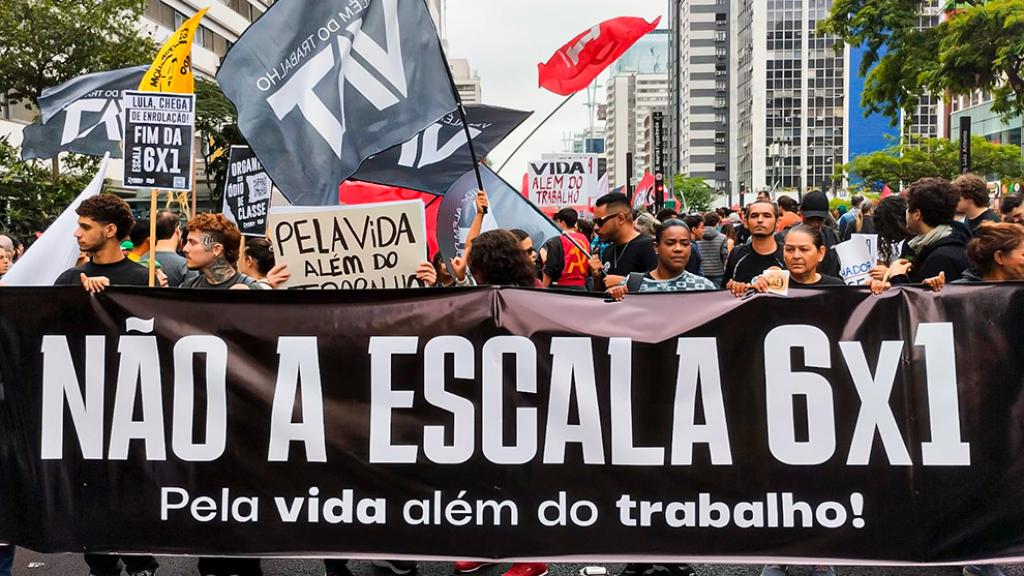
No 6x1 protest

First published in Portuguese at Revista Movimento. Translation by Federico Fuentes for LINKS International Journal of Socialist Renewal.

What seemed impossible a few years ago is becoming inevitable. Reflecting broad social opinion, the lower house of Brazil’s parliament has voted to end the odious “6x1” work week (six day/44-hours of work). Starting 60 days after the Senate passed it, the work week will be reduced by one day to five, and to 40 hours. This is undoubtedly an historic victory for the Brazilian working class, one that will have a political impact on the upcoming national election.

The parliamentary vote was overwhelming, with 472 in favour in the first round and only 22 against — mostly MPs from far-right parties such as Novo (New Party), Partido Liberal (Liberal Party), and Missão (Mission Party). The second round vote was 461–19.

The far-right tried all kinds of manoeuvres to obstruct the reform, even proposing a 10-year transition period. The coup plotters’ attempts to generate confusion was defeated, and the bill is now in the Senate. Vigilance and mobilisation are needed, as the bosses remain unhappy with the bill. We must also take advantage of the politicising effect this has had in the streets and on social media.

Popular support

A broad popular majority, expressed in the streets and on social media, celebrated this victory. The much-talked-about WhatsApp family groups this time were not filled with messages of support for conservatism. The proposed work week reduction resonated deeply with tens of millions of Brazilians — an impressive 70% plus of the population supporting it, an unusually high figure in such a politically fractured society.

The persistence of the VAT movement (Movimento Vida Além do Trabalho or Life Beyond Work Movement) succeeded in pushing its progressive agenda amid capitalism’s crisis, which currently offers few or no reforms. The movement helped sway Congress, which is usually aligned with the bosses’ interests and dominated by the Centrão (Big Centre, a centre-right parliamentary bloc). Up against the wall, and with about 120 days until the election, very few parliamentarians wanted to risk being listed as an enemy of the working class.

The government successfully tapped into popular sentiment, knowing this would be a crucial battle as part of its electoral strategy, where every vote matters. It ran advertising campaigns highlighting the importance of free time for all workers. President Lula da Silva spoke publicly about this too. Society became immersed in a discussion around a central issue for workers: the struggle for free time and the work week.

Despite this energy, there were no significant demonstrations in support of the proposal. Why? Leaving aside the paralysis of the main trade union leadership and the Workers Party government’s policy of avoiding actions that generate “street heat”, the new working class, mostly young and concentrated in certain sectors, instead expressed themselves via an unstoppable torrent on social networks. They did not express themselves that much in the streets, due to the lack of a tradition of struggle and a coherent strategy — there was not even a call for a united May Day event. Nevertheless, we have seen an important shift in the political pendulum, if not to the left at least towards a greater sense of class consciousness and class demands. An opening has been created.

This was a struggle with a “national political character,” which also set the agenda for the upcoming election, even if there are also important local struggles. There have been strikes by municipal teachers in state capitals such as São Paulo, and there is an ongoing strike in Belo Horizonte. There was also the strike at São Paulo state universities, which mobilised about 12–15,000 people in opposition to Governor Tarcísio Freitas.

Far-right on backfoot

As the dispute was more political than anything else, it has influenced — and, at the same time, been influenced by — the election campaign. The election campaign is coming to the end of a first period, which will likely last until the “mini-recess” for the World Cup, according to analysts such as Vinicius Torres Freire writing in Folha de São Paulo. The defeat of the 6x1 work week is part of this first period.

The Bolsomaster scandal, which links the Bolsonaro family to the Banco Master financial scandal, has also changed the dynamics of the election campaign. Directly damaging Flávio Bolsonaro, the scandal halted his upward trajectory and has left the far right at an impasse. Confidence among Flávio allies in him has plummeted, as has his voting intentions.

What seemed like the start of a favourable trend has stalled and is now going backwards. Some are even questioning the viability of his candidacy. Amid the unpredictability of our times, nothing is certain, but Flávio is clearly struggling to regain momentum.

Flávio managed to take a photo with Trump, which means a lot for him amid the crisis. He wanted Trump’s blessing to run with the same priorities as his father, Jair, did before. But the right-wing opposition is suspicious of him. Brazilian entrepreneur and Missão party presidential pre-candidate Renan Santos wants to channel the youth vote, while Partido Social Democrático (PSD, Social Democratic Party) pre-candidate Ronaldo Caiado and Novo pre-candidate Romeu Zema are trying to forge a possible alternative in case Flávio’s campaign falters.

Trump’s designation of Primeiro Comando da Capital (PCC, Capital's First Command) and Comando Vermelho (CV, Red Command) as terrorist organisations represents a very serious threat, and raises the spectre of more direct US interference in Brazil’s election.

There is logic behind taking a photo with Trump, as foreign policy will be a key issue in this campaign, and will only gain in importance as time goes on. US imperialism’s quagmire in Iran, its attacks on Cuba, and the popular rebellion in Bolivia are vying for people’s imagination just months out from the election. The far right is gambling its future on the Brazilian and Colombian elections, along with Trump's strategic bid to win the November US midterm elections.

Support for radical left

In all this, we cannot ignore the strong support shown for Partido Socialismo e Liberdade (PSOL, Socialism and Liberty Party) and its leaders on social media as a result of the 6x1 issue. This support will no doubt also express itself politically and electorally. But it is up to PSOL’s left wing to organise this support into a militant social force.

The support on social media has been incredible, especially for PSOL MPs Sâmia Bomfim and Fernanda Melchionna, but also for PSOL MP Erika Hilton and PSOL Rio city councillor Rick Azevedo, who founded the VAT Movement. Sâmia’s ironic takedown of far-right MP Nikolas Ferreira went viral. It takes a lot of nerve to deal with the sheer audacity of such far-right leaders.

We need to mobilise if the Senate threatens to weaken the bill. Trade unions, the UNE (National Union of Students) and the UBES (Brazilian Union of Secondary Students) would need to call for a plan of action and strikes.

Although the working class is not yet mobilised enough to organise a general strike in the immediate term, this option should not be ruled out if the Senate seeks to undo the victory. In that scenario, the social majority that supports ending the 6x1 work week could generate the conditions for a more decisive national action, with large marches and demonstrations. The idea of ​​paralysing the country could serve as a demonstration of the need to go all the way in order to achieve victory, as proposed by STILASP, the trade union who led the successful Pepsico strike.

But we cannot stop there. The millions who have been discussing options for the country and workers in schools, neighbourhoods, shopping centres, universities, factories and workplaces, could become a fundamental asset for building a real instrument of the new working class, one that would vote for Lula as a containment tactic against the far right, but go much further in terms of agenda and methods of struggle.

Trump’s action the day after the significant victory indicates that the polarisation will continue, including in the election campaign. We must throw ourselves into it, taking advantage of the enormous support PSOL has received, to build a movement that guarantees Lula’s victory and the election of a parliamentary bloc committed to present and future struggles.

The Bolivian rebellion teaches us that the far right and capitalists must be defeated through the strength of the working class and the people as a whole, and its program.

Israel Dutra is a sociologist, PSOL Secretary of Social Movements, a member of the party's National Committee, and a Socialist Left Movement (MES/PSOL) leader.

The anti-capitalist left surge in Argentina and the letter that sparked a crucial debate

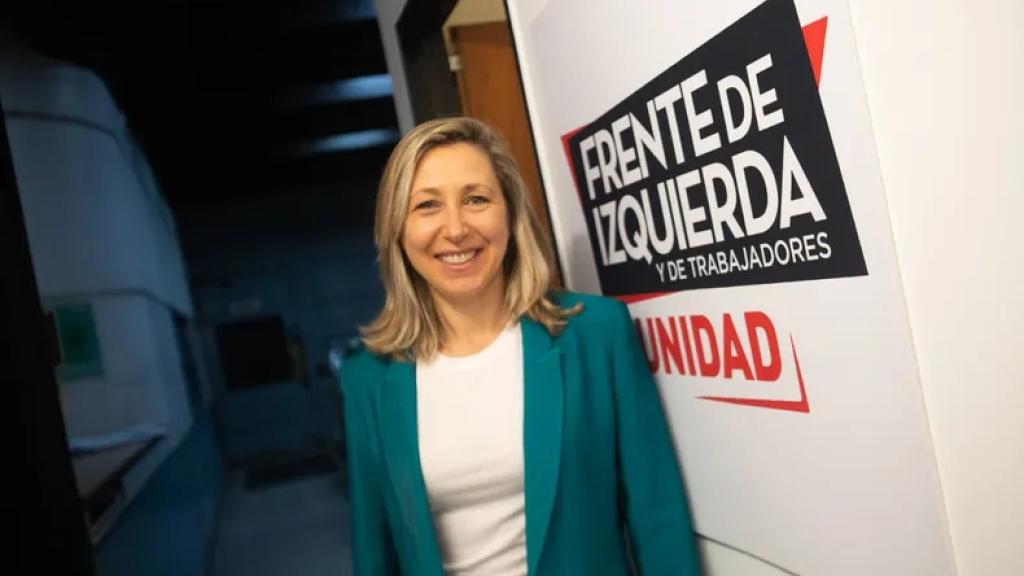
Myriam Bregman

A version of this interview was first published in Spanish at Revista Movimento. Translation by Federico Fuentes for LINKS International Journal of Socialist Renewal.

Against the backdrop of a Javier Milei government in crisis and Peronism’s1 decline, polls are showing a surge in support for Myriam Bregman, a Workers’ Left Front – Unity (FIT-U) MP. With between 9–14% support and a strong social media presence, the FIT-U is emerging as an alternative for millions. However, historic difficulties that have plagued Argentina’s radical left have also re-emerged. Despite its combativeness, the radical left remains fragmented and, in some cases, very sectarian.

Israel Dutra interviewed veteran Argentine revolutionary Eduardo Lucita about Argentina’s emerging political landscape. Lucita is a Fourth International member and co-coordinator of Argentina’s Left-Wing Economists (EDI) collective. Lucita, along with other comrades, initiated a debate with an open letter addressed to the parties in the FIT-U, “The Left Faces a Major Challenge”. The letter has been circulating in Argentina for over a month and was recently followed by a second letter, also signed by well-known left-wing activists.2

As we believe it is important to raise awareness internationally about what is happening in Argentina, we interviewed Lucita, a signatory to both letters, on May 27. He discussed this process, provided an overview of the international situation and argued the case for building on the successful anti-fascist conference recently held in Porto Alegre in Brazil.

Your open letter addressed to the parties in the FIT-U has had a big impact within left-wing circles and beyond. Its impacts have even been felt here in Brazil. Could you give us an overview of the letter’s purpose and why it was published now?

I will focus on the letters’main points. To start, there is a broader context to bear in mind: the deepening social crisis and young people’s sense of a lack of future; the president’s declining popularity and strong rejection of his government’s actions; the serious difficulties Peronism has resolving its internal crisis; and the rise of the anti-capitalist left, embodied in the figure of Myriam Bregman. This general context seemed to us a turning point in the political situation, as well as both an opportunity and a challenge for the left.

So, the first objective was initiating a debate about this juncture, which I view as exceptional. Judging by the comments, criticisms and suggestions we have received, and that the Socialist Workers’ Party (PTS), Workers’ Socialist Movement (MST) and Socialist Left (IS) [all parties within the FIT-U] published the first letter on their websites, I think this first objective was achieved.

Beyond the analyses and characterisations, the letter also puts forward concrete proposals, such as creating “Committees of Struggle and Support for Myriam Bregman,” and establishing technical working groups to develop the left’s program with greater precision. We believe this would help consolidate its rise.

As for why now, the idea flowing through the text is that, for the first time in more than 40 years, the chance exists to mobilise sections of the masses to support a workers’ government and, within a broader perspective, raise the idea of contesting for real power. As we say, the committees could play an important role in this. It strikes me as an unprecedented situation that we must capitalise on.

Polls show surging support for Bregman, in terms of her image, approval and voting intentions. Did this surprise you?

Well, Bregman’s profile has been rising for several years. She is a left-wing activist with a long track record around human rights, and supporting trade union and social struggles. She is also a very powerful voice in the National Congress.

But I would be lying if I said that the surge in support for her over the past two months did not take me by surprise. She is the only political figure in the country with a positive approval rating and has an average voting intention of 10%. I am pleasantly surprised by all this.

What do you think explains this explosive rise in the polls? Is it her personal qualities, the policies she proposes, or rather the political and social situation being ripe for a figure as disruptive as Milei was in his day?

It is a combination of several factors. On the one hand, there is no doubt that the socio-economic situation carries significant weight. This is reflected in Milei’s falling approval ratings — now at their lowest point since he came to office [in 2023]— and, above all, by the 60% disapproval of his government’s performance.

The shift to the right within Peronism is also important. The party’s leaders have drifted a fair way from its historic base, which is fragmented, leaderless and disoriented. In a recent conversation with colleagues from some outer Buenos Aires suburbs, they said they had observed a shift in voting intentions within Peronism away from traditional figures towards Juan Grabois [who leads a progressive wing of Peronism closely linked to sectors of the Catholic Church], but now, for reasons unknown, Grabois’s rise had stalled and people were looking to vote for Bregman. I do not know if that is exactly the case, but such anecdotes are worth bearing in mind.

I believe her role as an uncompromising opposition figure who has never made deals with any government (just like the other FIT-U MPs) has been decisive. Her personality and charisma also carry weight. She is pleasant to deal with, always smiling, cultured and intelligent. She is also not afraid to speak out in parliamentary debates, to put her body on the line on the streets and to speak with the media, becoming the most sought-after figure these days.

I would also add that she has been a member of a Trotskyist party [the PTS] for 20 long years. You, as a full-time party activist, and I know full well the demands such parties entail. Bregman’s personality stems from her DNA, but I also believe it comes from being shaped and raised within that party.

The first open letter disagreed with statements by Bregman and Christian Castillo [another PTS leader and FIT-U MP] that the conditions do not exist for a left-wing government, nor for contesting power, as there is no powerful social movement or organs of dual power.

In my opinion, those statements were rather unfortunate. It is not that they are entirely wrong, but they failed to account for the context and came across as defensive, whereas we believe — and the letter makes this clear — that the conditions exist for a more active stance, putting forward proposals and seeking to overcome resistance.

Fortunately, our comrades have not repeated those statements. I think there was a process of reflection, and Bregman recently said in an interview: “Of course we want to be in government, of course we want to have the power to transform this situation at its roots.”

You also controversially characterised the current moment, saying that “an electoral breakthrough is more likely than an insurrectionary one”, before proposing “Committees of Struggle and Support for Myriam Bregman”. Is this not a sign of electoralism? How does this fit with the PTS’s proposal for a new workers’ party? And is the open letter not overly optimistic?

Well, in the face of so much resignation and despair that others want to impose on us, we have opted for the optimism of the will. But not in the abstract; rather, an optimism based on the shifting situation.

As for a workers’ party, I cannot answer definitively, as I am not clear what they are proposing. Speaking at the Ferro stadium on May 1, Bregman referred to a workers’ party, then to an instrument of the workers, then a party of the new working class, and finally a new historic movement. I suppose this proposal will be more defined in time and be discussed within the FIT-U, whose coordinating committee I understand is due to meet in the coming days.

As for electoralism, no one doubts that capital, led by Milei, is waging an offensive against working people’s living conditions, environmental protections and women’s rights, the LGBTQ+ community and various minorities in the country involved in multiple resistance movements.

But a common feature of these struggles — which all indications suggest will intensify — is that they are dispersed, fragmented and often influenced by identity politics, which hinders attempts to unify and centralise them. To make matters worse, leaders such as those of the CGT [General Confederation of Labour] favour negotiation over confrontation, or simply look the other way.

No one believes a social uprising is imminent, although the class struggle is obviously unpredictable. Otherwise, we would have all predicted the 2001 uprising [against neoliberal policies that forced the resignation of several presidents]. As I am older, I remember the 1959 conflict at the Lisandro de La Torre meat-processing plant, which culminated in a general strike organised via word of mouth. But it is a fact that the polls show electoral progress is far more likely to occur today than an uprising.

In the second letter, “Some reflections on the tasks ahead”, you place great emphasis on the committees, presented under the slogan “For a workers’ government: Myriam Bregman for president”.

Yes. The proposal for committees — which, it must be acknowledged, Bregman took up in her May 1 speech when she spoke of “organising support” — seeks not only to unite activists from parties in the FIT-U or other organisations and movements, but also intellectuals, artists and, above all, those leading the currently scattered and fragmented struggles. It aims to call for the broadest possible unity so that we can discuss together a minimum program to address the emergency we face and opens possibilities for profound transformations.

In recent days, the PTS launched its public call of “We need you.” We support this as a step forward, which invites people to organise around the idea of a workers’ government. It also raises the idea of a workers’ party and/or a new historic movement, but as I said, this requires more in-depth discussions.

Logically, these committees, convened by and rallying behind Bregman, should also be involved in election campaigning. The reality is that we will most likely enter a lull period now, due to the World Cup. But elections will be happen soon after it finishes. And they will be important, not only because many think things cannot go on as they are, but because within the ruling classes there is a sector already doubting that Milei will be re-elected, or if it is even in their interests if he is. So, there is no shortage of people wanting to drop him to save their project, and are already looking for a replacement.

So, for me, this is not electoralism. It is about seizing an unprecedented opportunity. But looking at the two open letters, you will see that they insist on not abandoning the struggles or the streets. The electoral arena is just another battlefield. As they used to say in the past, we must not ignore the battles on the terrain that the rulers dominate.

You also talk about shifting from defence to offence. I find this interesting, and not just for the Argentine left. Can you explain what this might look like?

It is clear that Bregman’s support and the shift in public sentiment that I have described — and it is not just me talking about this — will not automatically translate into organised support or votes. Achieving this political objective requires a sort of cultural shift on the left, here and around the world. It involves leaving behind a simply self-serving or self-referential politics and prioritising the general interests of the workers’ and popular movement. That is to say, less vanguardism and more mass politics to reach broad sectors hit hard by the crisis, including those who do not identify with anti-capitalism or socialism.

In our case, we need to reach out to the many groups and sectors within Peronism that are now directionless — without a project, program,or clear leadership — and who have repeatedly expressed their intention to vote for Bregman, to ask them to join the committees.

This leads us to the need for left unity, not simply because together we are more, but because it allows us to jointly think and act. This unity cannot simply be declared, it has to put aside fruitless arguments and create independent, democratic and autonomous committees as a common space for uniting the activist energy currently dispersed across multiple, often ineffective, spaces.

Making progress on this front requires a change in attitude among the members of the various parties in the FIT-U. If we manage this, we can leave behind the defensive position we have been stuck in for a long time, and go on the offensive. This would allow us to go beyond just resisting to envisioning ways to transform this intolerable reality, deal with the problem of power and forge the alliances needed to make this possible.

We have an unprecedented window of opportunity that also poses a major challenge for the left. This opportunity is not open-ended. We know politics abhors a vacuum. If the left does not occupy that space, others will. There is no time to lose.

I also have the international situation in mind. In that sense, how do you see what is happening in Argentina, but also in Bolivia, fitting into a world marked by geopolitical tensions, the rise of the right, and a figure like Donald Trump?

Well, Argentina is, to some extent, an exceptional case. We have a president who defines himself as an anarcho-capitalist and is at the ideological vanguard of the right’s global rise. As if that was not enough, he has also subordinated the country’s foreign policy to Trump’s US and Netanyahu’s Israel.

On the other hand, we have an anti-capitalist left, I believe, unlike any other in the world at the moment. It is spearheaded by an electoral alliance (the FIT-U) of four Trotskyist parties, which has existed for 15 years now, something equally unprecedented.

Bolivia is undergoing a severe political crisis fuelled by a workers’, indigenous and peasant uprising that has blocked the country’s main roads and cities. They demand the Rodrigo Paz government, elected just over six months ago, resign. If this happens — and we should not rule out that something similar could happen in my country, given the critical social situation — it would have a tremendous impact internationally.

Even defeating Milei in the 2027 presidential elections would be significant. It would concretely demonstrate that, whether through insurrection or the ballot box, the far right can be defeated. And if the anti-capitalist left plays a decisive role in these movements, it would serve as an example for the left internationally.

As for Trump, it is clear that he heads a decaying empire seeking to take refuge in the “Western bloc” and that, as it declines, has become more aggressive and predatory. This was demonstrated by the military invasion of Venezuela and kidnapping of its president, the threats and strangulation of Cuba, and his remarks about annexing Canada and Greenland.

Trump allowed Israel to drag him into the Middle East war, while letting Israel run rampant in Gaza, the West Bank and Lebanon. Trump became involved in the war without a clear entry or exit strategy. It is now clear that he will emerge weakened from this self-inflicted chaos. This could have consequences for the US November mid-term elections.

The flip side is the rise of China, now the main reference point on the global chessboard, as a Spanish political scientist put it. In just under a week, China’s president Xi Jinping received Trump and Vladimir Putin on state visits to Beijing and signed various trade and political agreements with both, granting neither anything of significance. He forced Trump to back down on arms sales to Taiwan and made clear to Putin that China is more important to Russia than Russia is to China.

We face a changing world order, and everything indicates that we are heading towards a division of spheres of influence. This may stabilise the situation for a while, but tensions will return, especially considering that global capitalism’s unresolved crisis underlies all this.

Finally, here in Porto Alegre, we held the 1st Anti-Fascist Conference for the Sovereignty of Peoples in March, with a significant delegation from Argentina. What were your thoughts on this event and how do you see it developing in the future?

I do not know if you are aware, but I collaborated with Eric Toussaint in organising the conference. I no longer travel, but from the reports I received and comments from various comrades, the conference was a success in terms of participation and the diversity of topics debated in the various panels and self-organised activities.

There is no doubt that this success stemmed from focusing on the common objective of an international convergence to confront far-right forces across the world, an objective shared by various parties and social movements in Brazil and internationally by organisations such as CADTM [Committee for the Abolition of Illegitimate Debt], the Fourth International, Jubilee South and the Rosa Luxemburg Foundation.

A large delegation from my country took part, comprising members of anti-capitalist organisations and centre-left and/or progressive movements, as well as some prominent intellectuals.

I believe the conference must be followed up. This was also the view of the International Committee, which decided to organise two events, one in Mexico and another in Argentina. We will see when these can take place. The decision has been made and it is our duty to carry them out.

  • 1

    Peronism has been the dominant political force in Argentine politics since the rise to power of President Juan Domingo Perón in 1946. Currently in opposition, it has also been the main ruling party since the end of the military dictatorship in 1983. As a broad political movement, it encompasses a wide spectrum of politicians (from right-wing to centre-left and progressive), including the previous centre-left administrations of Nestor Kirchner (2003-07) and Cristina Fernandez de Kirchner (2007-15).

  • 2

    Among the signatories of these open letters are also Ariel Petruccelli, a renown intellectual; Juan Pablo Casiello, a well-known teachers’ union leader from Rosario, and Aldo Casas, a lifelong revolutionary socialist.

In Sudan, Perpetrators of War Crimes Are Rewarded While Civilians Languish

War criminals, tyrants, and their enablers have rarely faced consequences, helping maintain a cycle of abuses.

By Mat Nashed
June 3, 2026

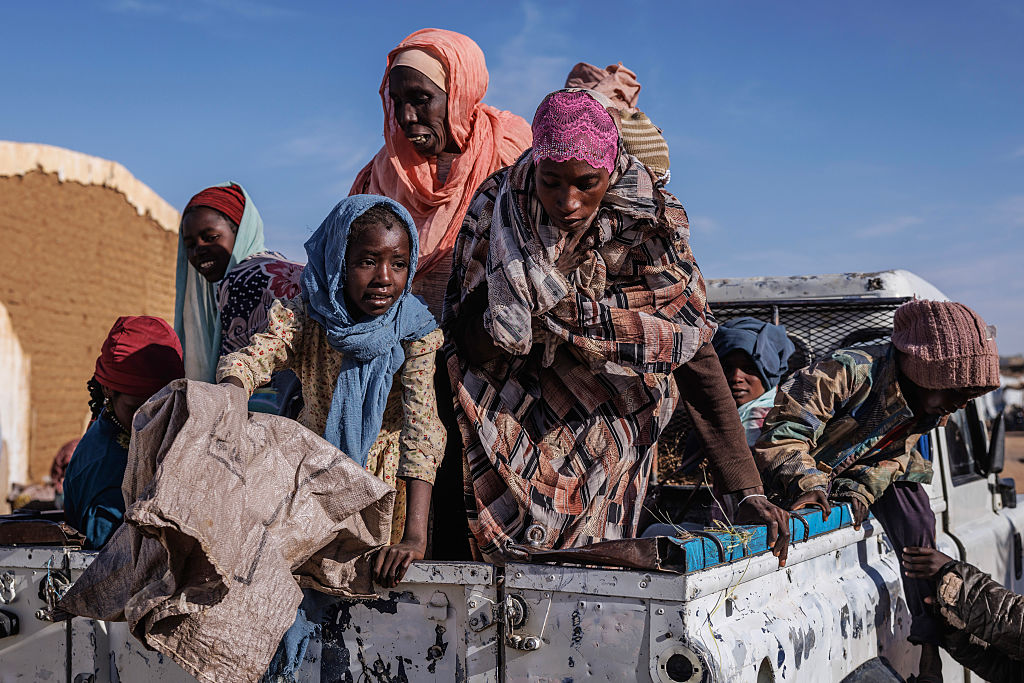
Recently arrived Sudanese refugees arrive at a food distribution center at the Oure Cassoni refugee camp on February 24, 2026, in Oure Cassoni, Chad.Dan Kitwood / Getty Images
On a warm night in July 2024, soldiers from the Sudanese Armed Forces (SAF) stormed into Yasser’s home in the eastern city of Kassala. They climbed over the gated walls and barged through the front door carrying batons and Kalashnikov rifles. They told Yasser, who requested pseudonyms for himself and his family out of fear of reprisal, that his 21-year-old daughter Hind was accused of collaborating with the Rapid Support Forces (RSF), a paramilitary at war with the SAF, Sudan’s army, since April 2023.

After Hind was whisked away, Yasser visited the detention facility where she was being held. An officer there said a photo of a dead RSF fighter was found on Hind’s phone, along with a caption that read: “Rest in Peace.”

“I asked Hind if she had such a photo on her device and she said no,” Yasser told Truthout over the phone. “But three months later in November, she was sentenced to death. Our entire family was stunned.”

After an appeal, Hind’s sentence was reduced to five years in prison. She remains one of thousands of people jailed for their alleged ties to the RSF. According to victims’ families and human rights groups, most are snatched from their homes or off the streets based on flimsy evidence. They are then subjected to severe mistreatment, torture and denied due process — many are interrogated without a lawyer and prohibited from seeing family.

Those targeted are typically from humble backgrounds and originally from the sprawling western region of Darfur, the RSF’s stronghold. However, many belong to specific communities that the RSF and SAF have traditionally persecuted.


Interview |
Sudanese Activists Are Fighting US and UAE Complicity in Sudan’s Genocide
The US acknowledged Sudan’s genocide in January but continues to send arms to the UAE, one of the war’s main drivers.  By Shireen Akram-Boshar , Truthout February 25, 2025


The sweeping detentions contrast sharply with SAF’s recent embrace of RSF defectors. Since April, three high-profile RSF commanders — implicated in mass atrocities — were given vehicles, weapons and amnesty for switching sides. The double standard reinforces perceptions that the RSF and SAF have a vested interest in upholding a climate of impunity as they wage a war on civilians.

“There is no rule of law in Sudan — neither in RSF nor SAF areas,” Mohamed Osman, the Sudan researcher for Human Rights Watch (HRW), told Truthout.
“Legacy of Impunity”

Throughout Sudan’s history, war criminals and tyrants have rarely faced real consequences from national or international courts, helping maintain a cycle of abuses.

The RSF epitomizes this cycle, having emerged from the Arab militias that spearheaded mass atrocities in the vast region of Darfur in 2003. At the time, SAF mobilized these militias to crush an insurgency by non-Arab fighters, who were rebelling against the political and economic marginalization of their communities. Arab and non-Arab are slippery categories in peripheral Sudan as they denote a communal lifestyle more than a rigid ethnicity: The former tend to be nomadic traders or pastoralists while the latter are sedentary farmers. Both are Black and Muslim and have historically intermarried and shared land for centuries.

However, the counterinsurgency exacerbated tensions over resources and land, culminating in campaigns of ethnic cleansing and allegations of genocide. The International Criminal Court (ICC) eventually indicted four senior Sudanese officials on accounts of war crimes or genocide, including then-President Omar al-Bashir. None of them have been surrendered to the court.


“What is the message that SAF is trying to send here? That you can kill whoever you want, but as long as you carry weapons and switch sides, there will be no consequences?”

By 2013, al-Bashir integrated many of the nomadic Arab militias into the RSF, giving them official titles, weapons and legal cover. A popular uprising sparked by acute austerity and rising bread prices finally culminated in his unseating six years later, leading to the formation of a military-civilian transitional government. Determined to cling to power, SAF and the RSF upended the transition by overthrowing the civilian administration in a coup in October 2021. Less than two years later, they turned on each other, igniting the civil war in April 2023.

Both sides have since committed summary executions, enforced disappearances and blocked or impeded food aid to cities and towns. The RSF has committed additional atrocities, including genocide and systemic sexual violence against women and girls. Still, SAF has absorbed RSF defectors to incentivize others to follow suit.

“What is the message that SAF is trying to send here?” said Osman. “That you can kill whoever you want, but as long as you carry weapons and switch sides, there will be no consequences?”

“What we are seeing today is the legacy of impunity,” said Osman.

Allegations of impunity have been directed not only at the forces wielding the arms but the ones providing them as well. The United Arab Emirates has bought billions of dollars in weapons from the United States and funneled them to the RSF. Attempts by U.S. congressmembers to introduce legislation prohibiting weapons exports to the UAE have not led to a vote.
Double Standard

One of the defectors is Al-Nour Ahmed Adam — better known as Al-Gubba — who spearheaded atrocities in North Darfur’s capital, el-Fasher, during the RSF’s capture of the city in October 2025.

The Yale School of Public Health’s Humanitarian Research Lab, which provides satellite imagery analysis, said blood was visible from space due to the scale of mass killing in el-Fasher and that the RSF burned corpses to conceal their crimes.

In February 2026, a UN fact-finding mission concluded that the RSF committed genocide against non-Arab communities in el-Fasher. Bedour Zakaria, a survivor and human rights monitor from Darfur, said Al-Gubba played a major role in the killing.

“Al-Gubba was responsible for five different brigades during the RSF’s takeover of el-Fasher,” she told Truthout. “This means he is directly responsible for many of the crimes committed there.”

Al-Gubba defected in April, partially out of spite that the RSF did not appoint him top commander of North Darfur after conquering the state. Like so many people, Yasser was appalled when SAF’s chief commander Abdel Fattah al-Burhan embraced Al-Gubba and other defectors.

After hearing that al-Burhan gifted Al-Gubba a vehicle as a gesture of gratitude, he was unable to reconcile how his daughter was still in prison while perpetrators of war crimes and genocide were being rewarded.

“This is all deeply unjust. People who committed documented crimes — killings and massacres — are granted immunity and accepted back into our society without accountability,” Yasser said.

“Meanwhile, my innocent daughter is imprisoned … for an image that she didn’t even have on her phone,” he added.

Truthout sent WhatsApp messages to SAF spokesman General Assim Awad requesting comment on the disparity between the army’s treatment of defected RSF commanders and that of civilians accused of supporting the RSF.

He did not respond by publication.
Revenge and Score Settling

Many of those charged with treason are women who were too poor to flee to SAF areas after the RSF invaded and occupied their cities and towns. Poverty pushed many to work in markets and sell tea and coffee to RSF fighters to survive, especially if their male relatives and partners were disappeared or killed, explained Osman.

When SAF recaptured cities, they rounded up local aid activists and those suspected to be from western Sudan. Men were often executed while women were arrested, sometimes due to false allegations made to settle personal scores.

According to Osman, a man accused one woman of being a collaborator because she refused to have sex with him. Yasser also suspects that his neighbors in Kassala slandered his daughter as a spy after they got into a dispute.

Originally from Darfur, he suspects his neighbors are prejudiced. Like the security forces, many communities in central, eastern, and northern Sudan perceive anyone from the west as sympathizing with the RSF. Still, Yasser is grateful that his lawyers convinced a judge to overturn his daughter’s death sentence.

Others have not been so lucky. In April 2025, the International Service for Human Rights, a non-profit from Geneva, Switzerland, identified at least 25 women charged with treason, some of whom face execution. Most are between the ages of 19 and 26 and one is a minor.

Yasser fears that many more people will be killed or arrested with a veneer of legality while war criminals go free.

“Sometimes I ask myself: are we even human beings? Human beings are supposed to have reason, ethics, and conscience. But what’s happening to me and so many others is deeply immoral,” he said.


This article is licensed under Creative Commons (CC BY-NC-ND 4.0), and you are free to share and republish under the terms of the license.


Mat Nashed

Mat Nashed is an award-nominated journalist who has covered the MENA region since the Arab Spring. He was previously the feature’s print correspondent for Al Jazeera English and has written and reported for various other platforms, including Newlines Magazine, TIME, The New Humanitarian, the Committee to Protect Journalists, the Carnegie Endowment, and many others. He has extensively covered politics and conflict in the Nile Basin and the Levant.

Why Trump May Actually Have Told Netanyahu ‘Everybody Hates You!’

by | Jun 4, 2026

Reprinted with permission from Trita Parsi’s Substack.

“You’re fucking crazy. You’d be in prison if it weren’t for me. I’m saving your ass. Everybody hates you now. Everybody hates Israel because of this.”

According to Axios, this is what Donald Trump said to Israeli Prime Minister Benjamin Netanyahu in “an expletive-laden call” earlier today.

Trump also accused Netanyahu of ingratitude since Trump had helped keep Netanyahu out of jail. At the heart of the matter was Trump’s frustration with Netanyahu not caving to his demands to cease bombing Lebanon, as Israel’s aggression risked jeopardizing Trump’s diplomacy with Iran.

The story has understandably been met with considerable skepticism. After all, there is a long and well-documented pattern of American presidents privately expressing anger and frustration with Israeli prime ministers while publicly standing shoulder-to-shoulder with them and continuing to support their policies.

Take Joe Biden as an example. In late December 2023, Axios reported that Biden’s frustration with Benjamin Netanyahu had become so intense that he abruptly ended a phone call with the Israeli leader, reportedly concluding the exchange with the terse remark: “This conversation is over.” Yet in practice, Biden remained firmly aligned with Israel’s conduct of the war in Gaza.

Two months later, NBC News reported that Biden had repeatedly referred to Netanyahu as an “asshole” in private conversations with aides and donors. But even as he vented his exasperation behind closed doors, Biden continued to arm Israel lavishly and shield it from mounting diplomatic and political pressure at the United Nations. The gap between private frustration and public policy could hardly have been more striking.

According to Bob Woodward’s 2024 book War, Biden’s frustrations became intensely personal during the Rafah dispute and Biden told an associate: “That son of a bitch, Bibi Netanyahu, he’s a bad guy. He’s a bad f***ing guy.” No policy change followed.

There are plenty of other examples.

There are, however, a few important counterexamples – particularly from Trump’s second term – that suggest the Axios story is not entirely implausible. (Indeed, the report would have been far more difficult to believe had Axios claimed that Trump told Netanyahu, “Everybody loves you.”)

On June 24, 2025, after Israel and Iran had agreed to a ceasefire following their twelve-day war, Israel almost immediately violated the agreement, infuriating Trump. Before boarding Marine One on the South Lawn of the White House, Trump delivered an unusually blunt and public rebuke, declaring that Israel and Iran “don’t know what the f*** they’re doing” and adding that he was “really unhappy with Israel.”

The outburst was not merely rhetorical. Trump reportedly intervened directly with Netanyahu, after which Israel halted its planned escalation and the ceasefire held for several months. Ironically, however, Trump himself would restart the conflict in February 2026, after sustained pressure from Israel and its supporters in Washington.

Another notable episode came after Israel bombed the Qatari capital, Doha, killing a Qatari security guard and jeopardizing Qatar’s role as a key mediator in the Gaza negotiations. In an extraordinary and arguably unprecedented move, Trump arranged a phone call from the Oval Office and had Netanyahu apologize directly to the Qatari Emir.

When Netanyahu later denied that he had apologized, the White House responded by releasing a photograph from the Oval Office showing Trump holding the phone while Netanyahu appeared to be reading from a prepared script. A Qatari diplomat was also present in the room, observing the apology as it unfolded.

The only comparable example that comes to mind is from 2013, when Barack Obama pressed Netanyahu to apologize to Turkish Prime Minister Recep Tayyip Erdoğan over the Mavi Marmara flotilla raid. Even then, however, the apology took place privately. By contrast, the Qatar episode was so unusually public that the White House itself effectively documented Netanyahu’s compliance.

None of this, of course, proves that the Axios story is true, but it suggests that it may not be as implausible as some may otherwise believe. What is also plausible, however, is that Trump will once again fail to sustain the pressure and, by that, allow for Netanyahu’s potential retreat to prove temporary.

Trita Parsi is the Executive VP of the Quincy Institute for Responsible Statecraft and an award-winning author. Washingtonian Magazine has named him one of the 25 most influential voices on foreign policy. Noam Chomsky calls him “one of the most distinguished scholars on Iran”

Visit Trita Paris’s Substack and subscribe.

Canada is failing the Jewish community and Jews are being targeted, Prime Minister Carney says

WHAT ABOUT THE ISLAMOPHOBIA THAT IS GROWING?!

TORONTO (AP) — Carney said antisemitism plagues Europe, Australia and the United States. But he said the crisis of antisemitism in Canada is "specific, severe and demands a targeted response.”


Rob Gillies
June 3, 2026


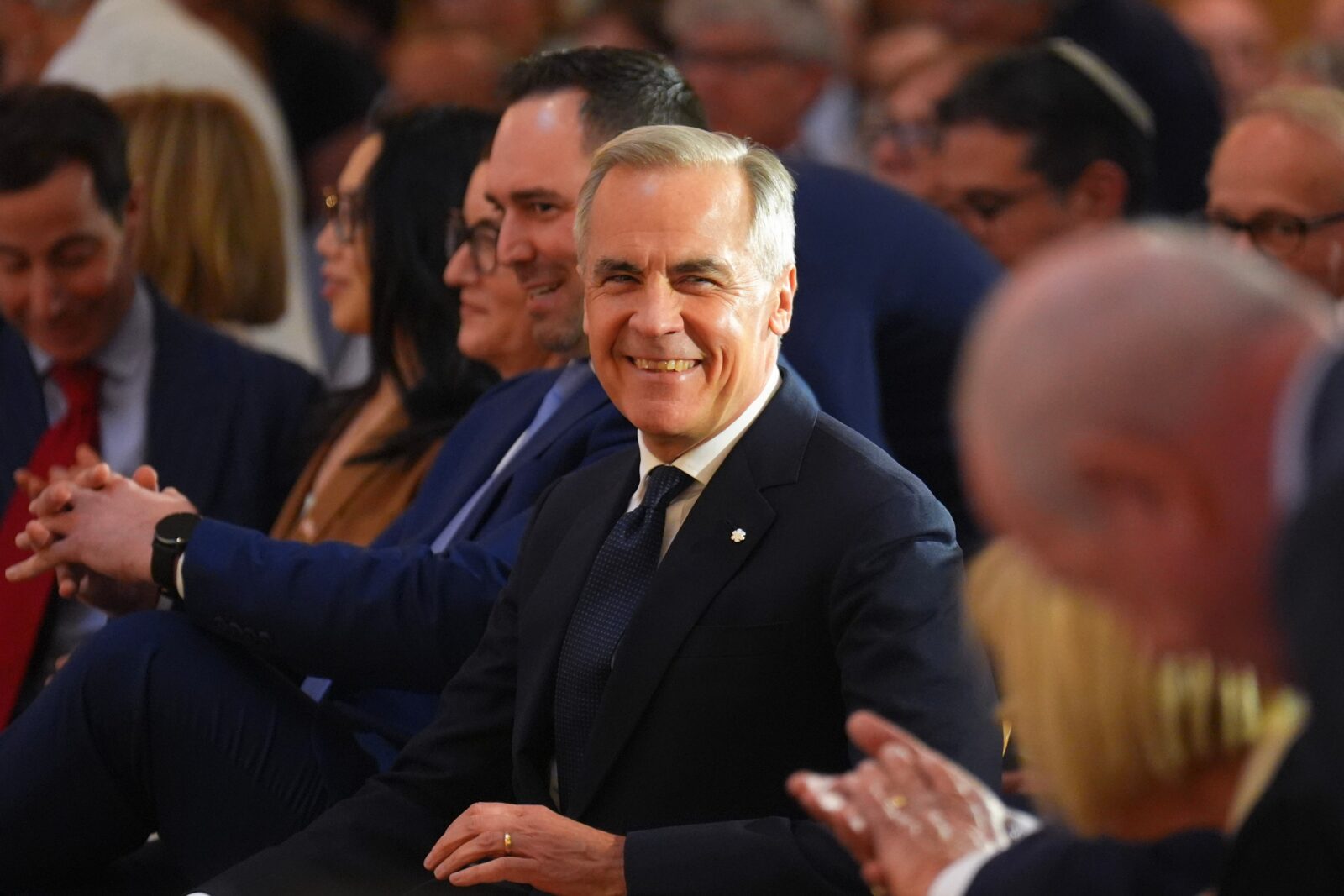
TORONTO (AP) — Canada is failing Jewish Canadians and the community is being brutally targeted by hate, Prime Minister Mark Carney said Monday.

Carney said across Canada, antisemitism has surged to levels not seen in the post-World War II era. He noted that last year over two-thirds of all religion-motivated hate crimes were directed at Jewish Canadians. Jews make up only 1% of the population.

“The horror and shame are global. Our actions must be local. They start with clearly admitting that Canada’s civic compact is failing Jewish Canadians,” Carney said at Holy Blossom Temple in Toronto.

Carney said antisemites in Canada have fired bullets at Jewish schools and thrown firebombs at synagogues and attacked community centers. He said they have targeted Jewish-owned businesses and drove Jewish students from common spaces on university campuses.

Carney said antisemitism plagues Europe, Australia and the United States. But he said the crisis of antisemitism in Canada is “specific, severe and demands a targeted response.”

There has been a sharp rise in antisemitic incidents globally since the Israel-Hamas war began on Oct. 7, 2023.

“Something important happened: Canada finally said the quiet part out loud,” Harley Finkelstein, a prominent Jewish Canadian and president of the e-commerce company Shopify, posted on social media.

Noah Shack, the CEO of the Centre for Israel and Jewish Affairs, said before the speech that the Canadian government must do more to strengthen community security and combat hate.

Carney said his government has introduced legislation over the last year to combat antisemitism and other forms of hatred. He said $75 million (US $54 million) in funding will provide faith-based institutions with things like security infrastructure and additional security personnel.

“It pains me that we had to commit $75 million to this, any dollar to this,” Carney said.

The prime minister also said a new Ministerial Advisory Council on Rights, Equality and Inclusion will examine the nature, scale and drivers of antisemitism. It will measure its impacts and investments in education, prevention and community safety will follow, his office said.

“I want to be clear about what these potential measures are, and what they are not. They are not curtailments of freedom of expression. They are not constraints on legitimate criticism of any government on any subject anywhere,” Carney said.

“They are the basic standards we owe one another, in our shared public institutions, to ensure that no Canadian community is driven from those institutions by hatred.”
ANTI ZIONIST PROTESTS

Ultra-Orthodox protesters block roads and trains across Israel over military draft

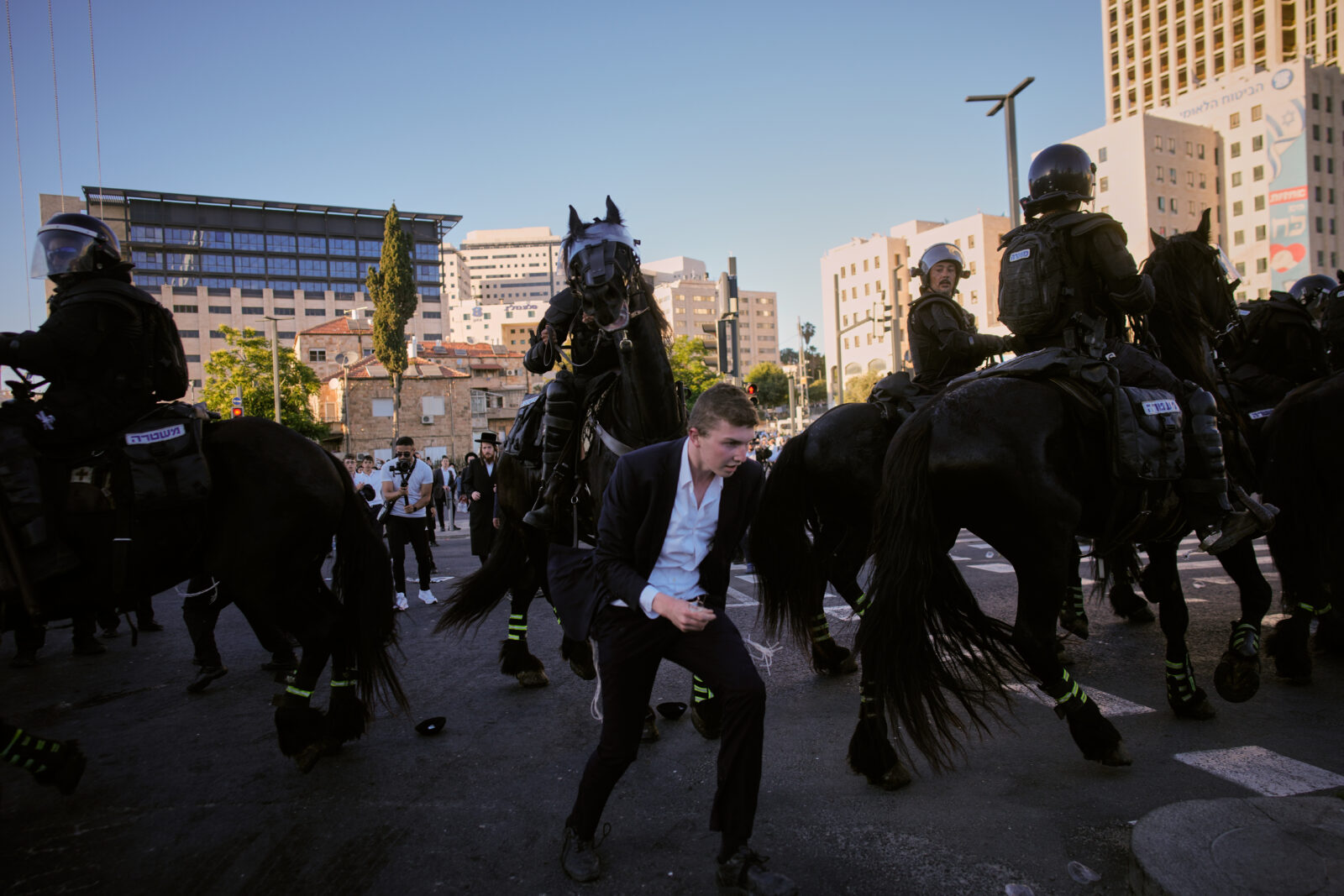
JERUSALEM (AP) — Israel’s police said demonstrators blocked major intersections and attacked a soldier who disembarked from a bus near a protest. Police struggled to control the crowds with water cannons and horses.


Alon Bernstein and Melanie Lidman
June 3, 2026 

JERUSALEM (AP) — Tens of thousands of ultra-Orthodox demonstrated across Israel on Monday, blocking roads and trains and setting cars on fire to protest mandatory enlistment in Israel’s military.

Israel’s police said demonstrators blocked major intersections and attacked a soldier who disembarked from a bus near a protest. Police struggled to control the crowds with water cannons and horses.

The protest largely crippled the country’s center, with highways closed and public transportation halted by the massive crowds in both Jerusalem and the Tel Aviv metro area.

Military service is compulsory for most Jewish men and women in Israel. The politically powerful ultra-Orthodox parties have won exemptions for their followers to forgo military service and instead study in religious seminaries, but those exemptions are under threat.

Many Israelis are tired of the longstanding system that has allowed ultra-Orthodox men to skip military service at a time when the military is stretched to its breaking point and many have served multiple tours of reserve duty. The issue is tearing apart Prime Minister Benjamin Netanyahu’s governing coalition, possibly moving elections up by several weeks this fall after the ultra-Orthodox parties withdrew their support for Netanyahu.

Each year, roughly 13,000 ultra-Orthodox men reach the conscription age of 18, but less than 10% enlist, according to a parliamentary committee.

Faced with severe shortages of soldiers, the military is looking to extend the period of mandatory service. Most Jewish men are required to serve nearly three years of military service, followed by years of reserve duty. Jewish women serve two mandatory years.

“This public is determined, they see this as a war for their lives,” said Israel Tropper, a demonstrator in Jerusalem. “From their perspective, going into the Israeli army means giving up religion … we don’t want to give up our religion, so from our perspective it’s a war for our lives.” He added that there is no way to force tens of thousands of people vehemently opposed to the idea to serve in the military.

Some protesters held signs condemning Israel saying “We would rather die as Jews than live as Zionists” and “We refuse to serve an army for the sake of the Zionist religion.”

The ultra-Orthodox, who make up roughly 13% of Israeli society and are the fastest growing sector, have traditionally received exemptions if they are studying full-time in religious seminaries. The exemptions date back to the birth of the state in 1948, when a small number of students sought to revive the Jewish scholarship system after it was decimated by the Holocaust.

Those exemptions — and the government stipends many seminary students receive up to the age of 26 — have infuriated many Israelis. Israel is currently maintaining a simultaneous military presence in Gaza, Lebanon and Syria, in addition to fighting a war with Iran, which has stretched its robust military to the breaking point.

The Supreme Court said the exemptions were illegal in 2017, but repeated extensions and government delay tactics have left them in place.

Among Israel’s Jewish majority, mandatory military service is largely seen as a melting pot and rite of passage. Many in the insular ultra-Orthodox community fear that military service would expose young people to secular influences.
'Bush league': Megyn Kelly turns on Bari Weiss over Scott Pelley's firing at CBS

Robert Davis
June 3, 2026 
RAW STORY

Megyn Kelly speaking with attendees at the 2023 Turning Point Action Conference at the Palm Beach County Convention Center in West Palm Beach, Florida. (Photo credit: Gage Skidmore)

MAGA radio host Megyn Kelly sounded off on CBS News chief Bari Weiss during a new episode of her show over the decision to fire veteran journalist Scott Pelley.

Pelley was let go from CBS News on Tuesday "for cause," according to a letter obtained by NBC News. In the letter, CBS executive Nick Bilton said Pelley had shown contempt for the organization when he accused senior leadership of "murdering" the acclaimed show "60 Minutes" by firing journalists and producers.

Kelly said on Wednesday that Pelley's firing was probably "overdue" because of his attitude, but she took issue with the way Weiss and CBS News handled the issue, which she described as "bush league."

"There has to be some massaging of the team of talent and producers who are there or fire them all," Kelly said. "Do one or the other, but don't just try to say, 'I will parachute in somebody with zero experience, and you will respect him or else.' That's just not going to work."

"It's been a blood bath over there," Kelly added.