Thursday, June 11, 2026

'Children are dying,' Cuba says as US blockade hampers delivery of UN aid

Photos of former President Raúl Castro and Fidel Castro decorate a front door in Havana, 3 June, 2026
Copyright AP Photo

By Gavin Blackburn
Published on

The blockade, coupled with expanded US sanctions that punish companies doing business with the Cuban state, has intensified the worst economic and energy crisis on the island in over a generation.

Cuba's government said on Wednesday that the US oil blockade that has crippled the island is preventing the United Nations from distributing 170 containers of humanitarian aid.

US President Donald Trump has set his sights on ending more than six decades of communist rule in Cuba.

In January, he cut off oil supplies to Washington's arch-foe from its main supplier Venezuela and threatened other countries with sanctions if they came to Cuba's rescue.

Since then, only one oil tanker, from Russia, has made it through.

Cuba's Foreign Minister Bruno Rodriguez said that 170 containers of UN aid worth $6.3 million (€5.4 million) "is not reaching beneficiaries due to the fuel shortage."

Writing on X, he stressed that the blockade was "not only hampering the performance of the Cuban economy" but also affecting the work of international organisations.

An electric tricycle transports customers during a blackout in Havana, 21 March, 2026 AP Photo


The blockade, coupled with expanded US sanctions that punish companies doing business with the Cuban state, has intensified the worst economic and energy crisis on the island in over a generation.

Parts of Havana have been without power for up to 30 hours at a time in recent days, and food, running water and medicine are in increasingly short supply.

Trump claims that Cuba, which lies 150 kilometres off Florida's coast, poses a major threat to US national security and floated the possibility of a "friendly takeover" of the island of 9.6 million people.

On Monday, the UN's High Commissioner for Human Rights Volker Türk called for the US sanctions to be "lifted immediately."

"Children are dying because doctors lack access to essential medical supplies and medicines. This is unacceptable," he said.

Pretext for military action

Recent US sanctions targeting Cuba’s leadership and the indictment of former President Raúl Castro are a “pretext” for the Trump administration to persuade the American people to support a military intervention, Cuba’s top diplomat to the United States said on Tuesday.

Ambassador Lianys Torres Rivera repeated accusations against the Trump administration made by other Cuban officials, including the foreign minister and the president, and complained that the US is targeting Cuban civilians with its decades-old embargo and new blockade of energy shipments to the island.

Chargé d'Affaires of the Embassy of Cuba Lianys Torres Rivera speaks in Washington, 9 June, 2026 AP Photo


“The sanctions against our leaders, we see as a pretext to make the American people think we are a threat,” she said at Cuba's embassy in Washington.

“We are not a threat to the US and we don’t want confrontation.”

Torres Rivera, who holds the formal title of chargé d’affaires, described the situation as “a war without bombs.”

She said efforts to change Cuba’s government by coercion or force would be met with fierce resistance.

“Raúl is sacred,” she said of the indictment by a federal grand jury last month of Castro.

The 95-year-old former president faces conspiracy and murder charges related to the 1996 downing of two unarmed civilian planes operated by the Miami-based exile group Brothers to the Rescue while he was serving as Cuba’s defence minister.

“Raúl is a sacred symbol of the revolution, and we will defend Raúl — as we will the country — until the end,” Torres Rivera said. “If we are attacked, we are going to respond and we are prepared for that. But we don’t want it.”

Trump, Secretary of State Marco Rubio and other administration officials have repeatedly denied that Cuba’s economic strife is America’s fault and repeatedly cast the blame on the government’s socialist policies.

They have not ruled out military action against the island but have said they are willing to give Cuban authorities time to make reforms.


Earthquake rattles Cuban capital Havana: 


AFP reporters

AFP
June 8, 2026

The 6.1-magnitude earthquake off the coast of Cuba forced people out of their homes
 – Copyright AFP YAMIL LAGE

A strong earthquake struck off the coast of western Cuba on Monday, with AFP journalists in Havana reporting 20 seconds of shaking that forced Cubans out of buildings and into the streets.

The US Geological Survey said that the quake was 6.1 magnitude and struck about 62 miles (100 kilometers) off the island’s western tip.

No injuries or significant damage were recorded.

People milled around Havana’s city center, checking their phones after the tremor which according to Cuban authorities was felt “throughout the entire west of the country.”

“At first I just felt dizzy — it didn’t occur to me it was an earthquake, I’d never experienced that before,” Carmel Delgado, a 47‑year‑old economist, told AFP.

“But once we realized what it could be, we got out quickly.”

AFP reporters as far away as Florida also felt the tremble.

The US Tsunami Warning Center ruled out a significant tsunami threat following the quake.

But there was a “very small possibility” of tsunami waves along the coasts located near the epicenter, it said.

Francis Ruiz, a 41-year-old actor, was recording a radio drama in a fifth-floor studio in Havana’s historic center when he felt the tremor.

“We were recording in an office and all of a sudden the table moved and we all looked at each other,” Ruiz told AFP.

“The building shook, and right then chaos broke out, everyone running down the stairs,” he added.



ANOTHER GRENFELL

Hong Kong charges seven people and two firms over massive fire that killed 168

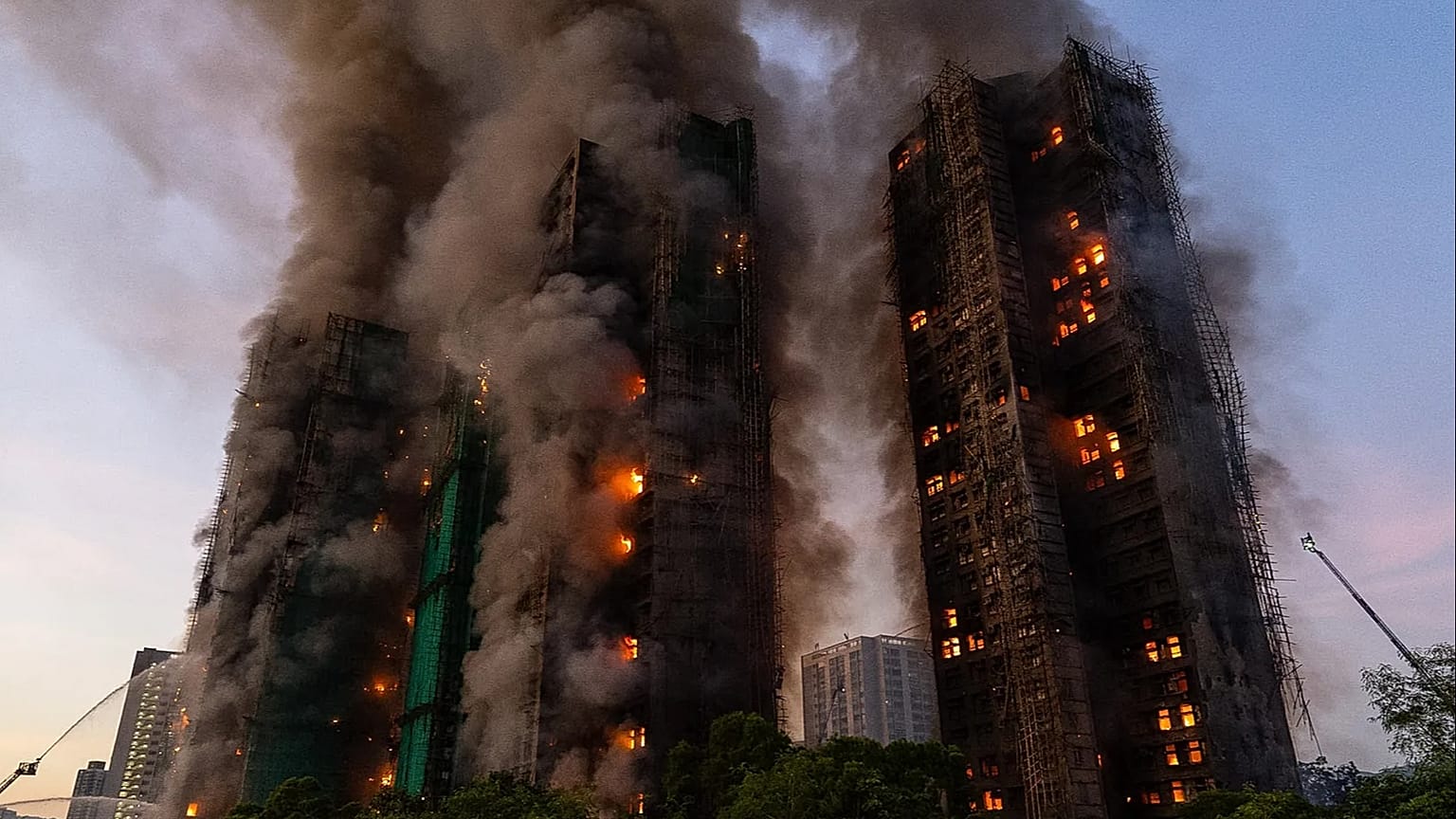
Smoke rises after a fire broke out at Wang Fuk Court in Hong Kong, 26 November, 2025
Copyright AP Photo

By Gavin Blackburn
Published on

The massive blaze, which engulfed seven of the eight high-rise apartment blocks at the Wang Fuk Court estate in November, prompted a months-long investigation into the cause.

Hong Kong filed manslaughter charges against several people and companies on Wednesday over the world's deadliest residential building fire in decades, which killed 168 people at a public housing estate last year.

The massive blaze, which engulfed seven of the eight high-rise apartment blocks at the Wang Fuk Court estate in November, prompted a months-long investigation into the cause.

Public hearings were told that almost all life-saving fire safety measures had failed on the day of the blaze because of human errors.

The directors of the construction contractor and the consultant firm involved in Wang Fuk Court's renovation at the time of the fire, as well as an inspector, were accused of manslaughter along with their companies, according to charge sheets seen by the AFP news agency.

Seven individuals in total were charged with laundering money and evading tax.

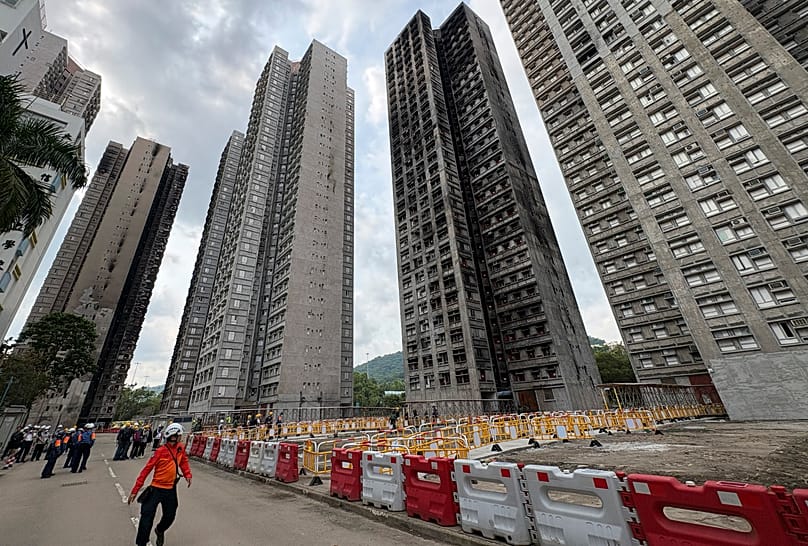
A worker walks by the remaining shell of the buildings of Wang Fuk Court in Hong Kong, 22 April, 2026
A worker walks by the remaining shell of the buildings of Wang Fuk Court in Hong Kong, 22 April, 2026 AP Photo

The defendants appeared in court on Wednesday and told the judge that they "understood" the charges.

The court heard those accused of manslaughter "unlawfully" killed 168 from the residential buildings in November, including residents and a firefighter.

The cases were adjourned until September.

A Hong Kong police representative said on Wednesday that the force had arrested 35 people in connection with the fire, working with Hong Kong's anti-graft watchdog, ICAC.

"We suspect that this unfortunate incident was caused by individuals acting in their own self-interest...with complete disregard for the safety of residents' lives and property," ICAC's principal investigator Hazel Law told reporters.

Substandard construction safety netting and cigarette butts were focal points of the probe into the causes and rapid spread of the deadliest residential building fire globally since 1980.

A man takes pictures of a charred family album found at their flat at Wang Fuk Court in Hong Kong, 20 April, 2026
A man takes pictures of a charred family album found at their flat at Wang Fuk Court in Hong Kong, 20 April, 2026 AP Photo

Fire alarm systems for seven of eight blocks had also been deactivated, which "greatly shortened the time for residents to evacuate," leading counsel Victor Dawes had told an independent committee conducting the probe.

Required fire-retardant nets were not used in many places and the windows were covered by foam boards, which may have contributed to the spread of fire into the flats, the panel heard earlier this year.

The Fire Investigation Task Force had maintained that an ignited cigarette caused combustible material to catch fire, sparking the blaze.

Thousands of residents lost their homes in the blaze and relocated into temporary housing.

Myanmar’s Rare Earth: The Hidden Costs Of The Global Green Transition – Analysis

June 11, 2026 
Shwetaungthagathu Reform Initiative Centre
By Htay Su Wai

The global transition toward renewable energy and electric vehicles has accelerated demand for rare earth minerals, placing Myanmar’s conflict-affected borderlands at the center of emerging critical mineral supply chains. As rare earth extraction expands in Kachin State following the 2021 coup, environmental degradation, weak regulation, and fragmented governance structures have increasingly shaped the country’s role in the global green economy.

Key Takeaways:

Myanmar has become the world’s third-largest producer of rare earth elements, after the US and China, for advanced renewable energy technologies, as China increasingly shifts environmentally destructive extraction beyond its borders into Myanmar’s weakly regulated frontier regions.

The rapid expansion of rare earth mining in Kachin State after the 2021 coup reflects fragmented governance systems involving militias, armed actors, informal taxation networks, and opaque cross-border business arrangements operating with limited environmental oversight or accountability.

Myanmar’s rare earth frontier exposes a deeper contradiction within the global green transition: while wealthier societies pursue cleaner energy and “greener” cities, the environmental and human costs of extracting critical minerals are increasingly displaced onto conflict-affected and politically fragile regions, creating zones of ecological sacrifice that remain largely invisible within global climate narratives.


Introduction

Rapidly reducing dependence on fossil fuels and accelerating the transitiontoward renewable energy have become central to global climate strategies and the pursuit of a net-zero future. Electric vehicles, wind turbines, batteries, and other low-carbon technologies are increasingly viewed as essential tools for addressing climate change and advancing sustainable development goals. Yet the technologies driving this transition depend heavily on critical minerals, particularly rare earth elements essential for renewable energy systems and advanced manufacturing industries.


As global demand for critical minerals intensifies, governments and industries face growing challenges surrounding supply chain security, environmental sustainability, and geopolitical competition. While the expanding critical mineral economy presents economic opportunities for resource-rich developing countries, it also risks reproducing patterns of environmental degradation, corruption, conflict, and unequal resource governance commonly associated with the “resource curse.”

Myanmar has emerged as an increasingly important supplier within regional rare earth supply chains linked to China’s processing industries. According to Global Witness, Myanmar’s exports of rare earth minerals to China increased dramatically from approximately US$1.5 million in 2014 to nearly US$780 million by 2021. Much of this extraction has concentrated in Kachin State along Myanmar’s northern borderlands, where long-standing conflict dynamics and contested territorial authority continue to shape local governance systems.

As extraction rapidly expands, Myanmar’s rare earth frontier increasingly reveals a deeper contradiction at the heart of the global green transition: while renewable energy technologies are promoted as environmentally sustainable solutions, the environmental and governance costs associated with critical mineral extraction are increasingly displaced onto fragile border regions affected by conflict and weak regulation.

Myanmar’s Rare Earth Boom and China’s Supply Chain Shift

Rare earth minerals have become strategically important because of their essential role in renewable energy technologies and advanced manufacturing industries. Heavy rare earth elements such as dysprosium and neodymium are particularly valuable because they are used in permanent magnets essential for electric vehicles, wind turbines, batteries, smartphones, and high-performance electronics. As governments accelerate climate goals and low-carbon industrial strategies, global demand for these minerals has surged dramatically.

China has dominated the global rare earth industry since the 1980s and continues to control much of the world’s processing and refining capacity. However, the environmental consequences of rare earth extraction within China became increasingly severe over the past decade. Illegal mining, toxic waste, poisoned waterways, and long-term ecological degradation generated mounting environmental concerns, particularly in Jiangxi Province, often referred to as China’s “rare earth kingdom.”

In response, Chinese authorities intensified environmental enforcement measures after 2016 and shut down many domestic heavy rare earth mining operations. Yet while China reduced environmentally destructive extraction within its own territory, global demand for rare earth minerals continued to rise rapidly. Rather than reducing extraction overall, mining activities increasingly shifted across the border into Myanmar’s weakly regulated frontier regions. While China argues for a non-interference policy in the Myanmar crisis for Western powers, they are exploiting the Myanmar Civil War as a tool to increase China’s influence in Myanmar by dealing with both the military-led government and the ethnic military. China’s cooperation with KIA for rare earth minerals from Kachin state is evidence of China’s double standard in its own foreign policy towards Myanmar.

A six-month investigation by Global Witness documented how this highly polluting industry expanded rapidly into Myanmar’s Kachin Special Region 1, a semi-autonomous territory controlled by militia groups affiliated with Myanmar’s military establishment. Within just a few years, the region became one of the world’s largest suppliers of heavy rare earth minerals.

Reports indicate that thousands of Chinese workers and technicians crossed into Myanmar between 2016 and 2019 to establish and operate mining sites using the same in-situ leaching methods previously employed in Jiangxi. The mines continue to supply Chinese state-owned processing companies that dominate the global rare-earth refining industry. Commodity research firm Roskill noted in 2021 that nearly all major Chinese state-owned enterprises involved in heavy rare earth processing had become dependent on Myanmar as a source of raw materials.

The expansion of extraction into Myanmar demonstrates how stricter environmental governance in one country can displace ecological harm into weaker regulatory environments elsewhere. As one industry expert cited by Global Witness observed, “the environmental challenges that come with this type of mining in China have spread to a neighbouring nation.”

Fragmented Governance After the Coup

The rapid expansion of rare earth extraction in Myanmar cannot be understood solely through global market demand. It is also deeply connected to fragmented governance systems that intensified following the 2021 military coup.

Rather than producing a simple absence of governance, the post-coup crisis generated overlapping systems of competing authority involving military actors, militias, ethnic armed organizations (EAOs), border business networks, and informal economic actors. In many extraction zones across northern Myanmar, governance operates through negotiated control, informal taxation systems, and localized power arrangements rather than centralized state regulation.

In Kachin Special Region 1, mining operations reportedly function through opaque agreements involving militia-controlled authorities and cross-border commercial actors. Although foreign investment in small- and medium-scale mineral extraction is technically illegal under Myanmar law, enforcement remains limited in conflict-affected borderlands where competing systems of authority overlap.

The Institute for Strategy and Policy-Myanmar (ISP) reported that militia leaders and affiliated business networks have become central brokers in the rare-earth economy, facilitating mining operations, granting access to extraction sites, collecting informal taxes, and controlling cross-border trade routes into China. In many cases, Myanmar-registered companies reportedly function as fronts for Chinese investment operating through informal and opaque commercial arrangements.

The post-coup political environment has further weakened environmental oversight and institutional accountability. Under fragmented governance conditions, extraction activities continue with limited regulatory monitoring, while armed actors and border business networks benefit economically from the rapid expansion of rare earth mining.


Myanmar’s rare earth sector, therefore, illustrates how conflict-affected borderlands can become integrated into global supply chains through systems of shadow governance and informal extraction economies operating beyond effective environmental regulation.
Environmental Consequences in Kachin State and Beyond

The environmental consequences of rare earth extraction in Myanmar increasingly mirror the ecological devastation previously witnessed in China’s Jiangxi Province, where decades of poorly regulated mining contaminated waterways, destroyed forests, and generated massive long-term cleanup costs. China’s “Take profit without responsibility” policy in neighbouring countries for Rare-earth mining clearly downgrades China’s role as a global normative actor.

Mining operations in Kachin State commonly use in-situ leaching methods that inject chemical solutions such as ammonium sulfate directly into mountainsides to extract rare earth minerals. While highly profitable and relatively inexpensive, this process leaves behind toxic wastewater, contaminated soil, deforested landscapes, and unstable terrain vulnerable to erosion and landslides.

Global Witness documented how mining sites across Kachin State have expanded rapidly across mountainous terrain, with thousands of chemical collection pools identified near river systems and forest areas. Local communities have reported worsening access to clean water, dying fish populations, contaminated farmland, and the disappearance of wildlife from nearby forests. Residents also described growing fears about surrounding toxic exposure, respiratory illnesses, and long-term environmental destruction linked to chemical leaching processes.

The environmental consequences are no longer confined to isolated mining zones. Recent environmental monitoring in Thailand detected alarming levels of arsenic contamination in transboundary river systems linked to mining activities upstream in Myanmar, including areas associated with rare earth extraction. Investigations reported by Mongabay found growing concerns along the Salween River basin, where communities increasingly fear the impacts of toxic contamination on fisheries, agriculture, drinking water systems, and local livelihoods.

These developments highlight how environmental harm generated within Myanmar’s conflict-affected borderlands increasingly carries regional ecological and human security consequences. The contamination of shared river systems demonstrates that the environmental costs of weak extraction governance do not stop at national borders.

The long-term implications may prove severe. In China’s Jiangxi Province, authorities estimated that environmental cleanup costs linked to rare earth mining could exceed US$5.5 billion, with ecological recovery potentially taking up to a century. Myanmar currently lacks both the institutional capacity and regulatory mechanisms necessary to manage environmental remediation on a comparable scale.

The Hidden Contradiction of Global Green Transition


Myanmar’s rare earth frontier reveals a critical contradiction at the heart of the global green transition. Renewable energy technologies are frequently presented as environmentally sustainable solutions to climate change. Yet, the extraction systems that support these industries often impose severe environmental and social costs in politically fragile regions.

The environmental burdens associated with critical mineral extraction are not distributed equally. Instead, they are increasingly externalized onto vulnerable borderland communities where governance systems remain weak, fragmented, and conflict-affected. A green transition that ignores the social and environmental impacts on local communities is not truly green; it is simply greenwashing under the language of sustainability. While industries and consumers elsewhere benefit from electric vehicles, renewable energy infrastructure, and advanced technologies, the ecological and political consequences of extraction are concentrated in frontier regions such as northern Myanmar.

This dynamic raises broader questions about environmental governance, supply chain accountability, and the political economy of climate transition policies. Efforts to accelerate renewable energy adoption without addressing extraction governance risk reproduce new forms of environmental injustice and conflict-linked resource exploitation.

Myanmar’s rare earth frontier ultimately reveals a critical paradox at the heart of the global green transition: technologies designed to secure a sustainable future increasingly depend upon extraction systems rooted in environmental destruction, fragmented governance, and conflict-affected borderlands. Without stronger environmental accountability and conflict-sensitive supply chain governance, the pursuit of clean energy risks reproducing new forms of ecological injustice under the banner of sustainability.
Policy Recommendations

Addressing the environmental and governance challenges of rare earth extraction in Myanmar requires stronger international cooperation, conflict-sensitive environmental governance, and improved supply chain accountability.

Key priorities include:

Strengthening environmental monitoring in conflict-affected extraction areas and tightening regulations on rare earth trade linked to environmentally harmful practices, particularly within Chinese-linked supply chains.

Improving transparency and traceability in critical mineral supply chains, including the potential use of blockchain technologies to reduce illicit trade and improve accountability.
Expanding responsible sourcing standards for companies and governments reliant on rare earth minerals for renewable energy, electric vehicles, and advanced manufacturing.

Enhancing regional cooperation to address transboundary environmental impacts such as river pollution and ecological degradation. Local actors, including the NUG and EAOs, should also consider long-term environmental consequences in governance decisions.

Encouraging ASEAN to take a more active role in addressing regional environmental risks stemming from Myanmar’s extractive and ecological crises.


About the author: 
Htay Su Wai is a Junior Research Fellow at the Sustainability Lab of the Shwetaungthagathu Reform Initiative Centre (SRIc) and holds a Master of Public Policy (MPP) from the Hertie School of Governance in Berlin, Germany.

Source: This article was published by The Sabai

About Shwetaungthagathu Reform Initiative Centre
The Shwetaungthagathu Reform Initiative Centre (SRIc) is a hybrid think tank (non-partisan) and consultancy firm that advances sustainable governance, policy innovation, and sustainability literacy in Myanmar. Through its Sustainability Lab, SRIc conducts in-depth public policy research and analysis to promote sustainable development and guide Myanmar toward a more resilient, equitable, and environmentally conscious future. SRIc provides strategic policy advocacy, CSR consultation, and the development of sustainability roadmaps grounded in Environmental, Social, and Governance (ESG) principles. These services support public institutions and private sector actors in aligning their operations with the Sustainable Development Goals. By integrating rigorous research with actionable consultancy, SRIc supports responsible business practices, fosters innovative CSR strategies, and designs impactful sustainability pathways. SRIc contributes to local transformation & global sustainability efforts through this dual approach.
View all posts by Shwetaungthagathu Reform Initiative Centre →
Trump’s Iran Predicament Is His Own Fault – OpEd

LIBERTARIAN ANTI-IMPERIALISM


June 10, 2026 
MISES
By Connor O’Keeffe

Over the weekend, Iran and Israel launched direct strikes on each other for the first time since all parties agreed to a ceasefire back in early April.

It began with an Israeli strike on Beirut after a US-brokered ceasefire between Israel and the government of Lebanon was rejected by Hezbollah—the actual combatant that is fighting Israeli forces. Iran responded as they warned they would, with a wave of ballistic missiles aimed at targets in Israel. The Israeli government claimed all those missiles were intercepted—though videos posted to social media appear to show at least some getting through.

After the attack, Trump reached out to reporters and claimed he was going to call Israeli PM Netanyahu and tell him not to attack Iran in response. The president told a Financial Times reporter that he, not Netanyahu, was calling the shots.


However, a few hours later, Israeli forces did exactly what Trump had publicly demanded they not do and launched airstrikes on targets across Iran. Afterward, Trump called on both sides to “stop shooting” and, at the time of writing, it appears that both have for the moment.

But the situation remains just as fragile as it had been before the exchange.

One of the main sticking points holding back Trump’s attempt to reach a lasting peace deal continues to be the fighting in Lebanon. Days after US and Israeli strikes killed Iran’s supreme leader, the militant group Hezbollah began launching rockets into Israel, presumably to help exhaust interceptor stocks and to take some heat off their allies in Iran.

In response, Israel launched a ground invasion of southern Lebanon. The Israeli government ordered the evacuation of all territory up to the Litani River. Israel’s defense minister claimed none of the 600,000 residents would be allowed to return to their homes until Israel felt that its security was guaranteed (meaning when Hezbollah was no more).

Eventually, as US and Israeli interceptor stockpiles dwindled and the global economic consequences of the war became more acute, Trump backed down from his original demand of an “absolute surrender” and pursued a ceasefire with Iran.

However, despite all the tactical successes of US and Israeli forces, on the strategic level, time was more on Iran’s side. US and Israeli missile defenses were running dangerously low. And Iran had made it clear to everyone that they are the dominant power controlling the Strait of Hormuz and that it was rather straightforward for them to use that power to cause worldwide economic pain—something that gave them, arguably, even more leverage over their opponents than they had before Trump launched the war.

What appears to have convinced the Iranians to agree to a ceasefire despite a position that was getting stronger with time was both an assurance from Trump that the fighting would also stop between Israel and Hezbollah in Lebanon and some signaling that the US was willing to unfreeze Iranian assets or deliver some form of financial compensation to the Iranian regime.

Trump may have succeeded in convincing the Iranians of both, but that was the easy part. If he is genuine about wanting to reach a deal, he faces several difficulties that make a lasting peace agreement highly unlikely in the near future.

For starters, Lebanon, being a key part of not only a potential future deal but of the ceasefire itself, has kicked off what is, in effect, a game of chicken between Israel and Iran. The Israelis seem to want either for the war to restart and continue until the Iranian regime collapses or, at least, for Iran to abandon Hezbollah. And the Iranians appear to want the US to step in and restrain the Israelis.

Towards those ends, Israel has continued to launch attacks in southern Lebanon. In fact, they have recently pushed north of the Litani River and occupied territory beyond the already massive “temporary” buffer zone they announced back in the spring. And Iran has launched strikes across the region in response to signal their continued support for Hezbollah and their willingness to return to a full-on war if Trump doesn’t keep the Israelis in line. As the Iranians probably intended, the current setup highlights and amplifies the differences between Trump and Netanyahu’s aims.

The regime currently in power in Tel Aviv has invested a lot of time, energy, and money in the last few decades into steering US military power towards Israel’s regional rivals. The American warfare state, which is always in need of new enemies to justify its existence, has been happy to oblige on a number of occasions.

However, although the Israeli government and its official and unofficial lobbying entities in Washington are among the most effective interest groups active in modern DC, they are not the only ones. Sometimes things don’t go the way Tel Aviv wants, such as when Obama reached a nuclear deal in 2015 with Iran, Israel’s biggest regional rival at the moment.


But then came Donald Trump. Pro-Israel groups poured millions of dollars into his campaign and, after winning back in 2016, he governed as a bombastically pro-Israel president—withdrawing from the JCPOA and pivoting to a “maximum pressure” posture against Iran that moved the region closer to war. However, despite some direct engagements, a full-on US war on Iran did not break out.

But when Trump returned for his second term last year, the situation was more urgent from the Israeli perspective since support for Israel among the American public was collapsing after the IDF’s brutal response to the Hamas attack on October 7.

Being pro-Israel is already nearly disqualifying for Democratic candidates. And support among (especially young) right-wingers is also falling quickly. The prospect of the next president being anybody even close to as pro-Israel as Trump was clearly growing dimmer, which may have been why Netanyahu made such a push for Trump to launch a war on Iran now.

Israeli war hawks and their ideological allies here in the US are clearly not pleased that Trump has been unwilling to go all the way and wage war until the Iranian regime collapses. Many are still agitating for Trump to stop trying to make a deal and do just that. But Trump does appear to have been rattled by the economic consequences of the Strait of Hormuz being closed. And understandably so.

Gas prices have jumped up to the Biden-year levels he campaigned against, with oil prices likely to rise a lot higher soon as the market’s temporary shock-absorbers are exhausted. Also, food prices are likely to follow as the war-induced fertilizer shortage during the spring planting season carries over into a food shortage and a new parasite threatens the country’s beef supply. A lot of future economic pain has already been locked in, and the Strait remains closed.

However, if Trump prioritizes the country’s economic well-being and abandons this war, he risks running afoul of the pro-Israel donors, lobbyists, and commentators that have so far been some of his most enthusiastic and financially-generous supporters. And that is especially true if he follows through and agrees to unfreeze some or all of the $12 billion in frozen Iranian assets that Tehran has demanded as a prerequisite for ending the war and opening the Strait. That would be a political disaster for Trump after he spent years decrying Obama for sending “pallets of cash” containing less than $2 billion in unfrozen Iranian assets to Tehran as part of the JCPOA.

It is hard to see how Trump could possibly reach some lasting peace agreement in the near future that all sides will abide by. Just about anything the Iranians are willing to agree to will be a political disaster domestically, but so is any prolonged closure of the Strait if Trump can’t deliver something the Iranians will accept. And everything that even appears like a step towards ending the war rather than restarting it will probably be resisted, if not sabotaged, by the Israelis—barring some major escalation against Hezbollah that Iran would never agree to or allow.

Trump is in a genuinely difficult position. But it’s important to remember that it’s entirely his fault.

None of these challenges are surprising or even unexpected. The danger of a closed Strait and the escalatory nature of the conflict were all things skeptics and restrainers have been citing as a reason to avoid a war with Iran for decades. Trump dismissed those concerns and charged ahead under the delusional assumption that it would all work out. He deserves no sympathy.

But he’s also not the only one who deserves blame. Many people over many years have worked hard to push the US towards a war with Iran. The Israel lobby was instrumental, of course, but they were not the only ones. The weapons industry, other Gulf countries, hawkish think tanks, the intelligence agencies, the establishment press, and, really, the entire political establishment were instrumental in kicking off and escalating the interventionist project that marched the country up to the brink of war with Iran.


Now, as it’s becoming harder and harder to pass this war off as anything other than a disaster, several hawkish figures such as Robert Kagan and Max Boot have tried to distance themselves from a conflict they helped prepare the political, ideological, and institutional ground for. Their criticisms are often sound. But the attacks are always focused on Trump and Trump alone. And deliberately so.

As things get worse, the political establishment will want the public to think of this episode as an out-of-the-blue, madman-led diversion from what had been decades of sound foreign policy. But that isn’t true. The political class has spent decades propagandizing the public into thinking of the US military as a global police force that had, not just the ability, but the duty to intervene anywhere in the world to liberate the oppressed and overthrow tyrants.

The tragedy of this war is not that Trump abandoned America’s foreign-policy consensus, it is that he followed it all the way to its logical conclusion.


About the author: Connor O’Keeffe (@connorokeeffe) writes a weekly column for the Mises Wire, hosts Guns & Butter a weekly podcast on current trends, and co-hosts the Power & Market podcast. He has a master’s in economics and a bachelor’s in geology.


Source: This article was published at the Mises Institute


About MISES

The Mises Institute, founded in 1982, teaches the scholarship of Austrian economics, freedom, and peace. The liberal intellectual tradition of Ludwig von Mises (1881-1973) and Murray N. Rothbard (1926-1995) guides us. Accordingly, the Mises Institute seeks a profound and radical shift in the intellectual climate: away from statism and toward a private property order. The Mises Institute encourages critical historical research, and stands against political correctness.
View all posts by MISES →
The European Parliament And U.S. Interests – Analysis


The European Parliament (EP) is the only directly elected institution of the 27-country European Union (EU). The EP’s current 720 members represent the EU’s roughly 450 million citizens. The EP has accumulated more power over time (most recently with the 2009 Lisbon Treaty) as part of EU efforts to improve democratic accountability in EU policymaking. Congress-EP ties are long-standing, and the EP’s potential to shape or otherwise influence aspects of U.S.-EU relations—such as trade, digital rules, and policies on Russia and China—may be of interest to Congress. The most recent EP elections were in June 2024.

Role and Responsibilities

The EP plays a role in the EU’s legislative and budget processes and has a degree of oversight responsibility. The EP works closely with the two other main EU institutions: the European Commission, which represents the interests of the EU as a whole and functions as the EU’s executive, and the Council of the European Union(informally the Council, or Council of Ministers), which represents the interests of the EU’s national governments. Although the European Commission has the right of legislative initiative, the EP shares legislative power with the Council of the EU in most policy areas, giving the EP the right to accept, amend, or reject the vast majority of EU laws (with some exceptions, such as taxation and most aspects of foreign policy). Both the EP and the Council of the EU must approve a European Commission proposal for it to become EU law in a process known as the ordinary legislative procedure or co-decision. The EP must approve the accession of new EU members and international agreements (including on trade) and may issue nonlegislative resolutions (used, for example, to provide opinions on foreign policy issues).

With the Council of the EU, the EP decides how to allocate the EU’s annual budget (fixed as a percentage of the EU’s combined gross national income). The EP has a supervisory role over the European Commission, limited oversight over the Council of the EU, and monitors EU policies, including through investigations and public hearings. EU member states are required to take EP election results into account in choosing the European Commission president, and the EP must approve each new slate of European Commissioners, including the president, every five years.

Structure and Organization

Members of the European Parliament (MEPs) serve five-year terms. Voting for the EP takes place on a national basis, with the number of MEPs elected in each EU country based roughly on population size.
Political Groups

Once elected, MEPs caucus according to political ideology (rather than nationality) into groups, which span the political spectrum and typically represent over 200 national political parties. In the 2019-2024 EP, there were seven political groups; in the current EP, there are eight, as well as a number of “nonattached” or independent MEPs (see Figure 1). Although the majority of MEPs hail from political parties that support the EU project, some are considered to be antiestablishment and euroskeptic—that is, critical of the EU or anti-EU to varying degrees. Most euroskeptic parties in the EP are on the right or far right and hold predominantly nationalist and anti-immigration views.

No single group in the EP has an absolute majority, making compromise and coalition-building key features of the EP. Historically, the two largest groups—the center-right European People’s Party (EPP) and the center-left Progressive Alliance of Socialists and Democrats in the European Parliament (S&D)—have tended to dominate the EP by cooperating in unofficial “grand coalitions.” At the same time, voting blocs may vary on specific pieces of legislation. The relative size of the political groups also helps determine EP leadership and committee posts.

EP Leadership, Committees, and Delegations

MEPs elect a president of the EP every two-and-a-half years (twice per parliamentary term). The president oversees the work of the EP and represents it externally. Roberta Metsola, a Maltese MEP from the EPP, was reelected to a second term as EP president in July 2024. The EP has 22 standing committees that are key actors in the adoption of EU legislation. Each committee considers legislative proposals that fall within its jurisdiction and recommends to the full EP whether to adopt, amend, or reject proposed legislation. The EP also may establish temporary committees on specific issues or committees of inquiry on breaches of EU law. Forty-eight EP delegations maintain parliament-to-parliament relations throughout the world (including with the U.S. Congress).
Location and Administration

The EP’s official seat is in Strasbourg, France (a location near Germany symbolic of postwar peace), where plenaries typically are held once per month. Committee meetings and some part-plenary sessions occur in Brussels, Belgium. A Secretariat of over 7,000 nonpartisan civil servants and contract staff, based in both Brussels and Luxembourg, provides administrative and technical support. MEPs and political groups also have their own staff assistants (around 3,000 personnel total). The EP has faced criticism that its multiple locations entail a wasteful duplication of resources and sizeable commuting costs, as well as calls for greater transparency about MEPs’ office and travel expenses. The EP tightened ethics rules in 2023 following the so-called Qatargate corruption scandal involving alleged bribes paid to several MEPs and staffers. In 2025, allegations of corruption and bribery within the EP involving China’s Huawei technology company renewed questions about EP lobbying and transparency rules.


Source: Created by CRS, drawn from European Parliament data. For current EP seats, see https://www.europarl.europa.eu/meps/en/search/table, updated regularly. For 2019-2024EP seats, see https://results.elections.europa.eu/en/european-results/2019-2024/outgoing-parliament/.


The 2024 EP Elections


In the June 2024 elections, the overall size of the EP increased to 720 MEPs due to EU demographic changes. Pro-EU center-right EPP and center-left S&D retained their positions as the two largest groups. Voter concerns about migration, the economy, and EU climate policies helped drive increased support for euroskeptic parties and a loss of seats for the centrist, economically liberal, pro-EU Renew Europe (RE) group and the Greens/European Free Alliance (Greens/EFA), composed of pro-environment parties and leftist regional parties (e.g., Catalonian, Corsican). Despite the gains by euroskeptics, the EPP, S&D, RE, and Greens/EFA hold a combined 450 seats (63%). Average turnout across the EU was 51% (same as the 2019 election).

Euroskeptic parties in the EP hold a range of views, including on EU reforms and attitudes toward Russia. The largest euroskeptic group in the new EP is Patriots for Europe (PfE), an alliance of far-right parties. The Europe of Sovereign Nations (ESN) is farther right and more stridently euroskeptic. The European Conservatives and Reformists (ECR) is considered a more moderately euroskeptic group. The Left group includes former communist parties and some far-left EU critics.

In the new EP’s first year, one analysis indicated that the EPP, S&D, and RE voted alike in 88% of decisive EP plenary votes. The EPP also has cooperated with ECR (regarded by the EPP as pro-Europe, pro-Ukraine, and pro-rule of law) and with PfE and ESN on selected issues (including a resolution on Venezuela, changes to an EU deforestation rule and corporate sustainability reporting rules, and measures to facilitate migrant returns). The EPP’s willingness to partner at times with ECR, PfE, and ESN reportedly has generated tensions with S&D, RE, and the Greens/EFA.

The United States, Congress, and the EP

With the Lisbon Treaty, the EP gained a more prominent role in some aspects of U.S.-EU relations, particularly with the right to approve or reject international agreements. In 2010, the EP initially rejected a U.S.-EU accord on countering terrorist financing due to concerns about U.S. data privacy safeguards; the EP subsequently approved this accord and other U.S.-EU information-sharing and data protection agreements. EP approval of some regulations is necessary to fully implement EU commitments on tariffs under the 2025 U.S.-EU framework agreement on trade, tariffs, and other issues; the EP considered and negotiated some changes to the regulations amid broader U.S.-EU tensions and U.S. legal and policy developments.


More generally, the EP’s role in EU lawmaking may affect certain U.S. interests. The EP was central to shaping and approving the EU’s General Data Protection Regulation, which applies to many U.S. companies doing business in Europe. In the 118th Congress, some House and Senate Members voiced concern that EU digital rules approved by the EP could target U.S. technology firms; such concerns persist in the 119th Congress, and Trump Administration officials and some Members also have criticized EU digital rules as censoring free speech. Meanwhile, some EP positions on China have aligned with U.S. concerns, for example, about China’s military provocations against Taiwan. Many MEPs support Ukraine and EU sanctions on Russia (although decisions on sanctions rest with the member states). Some MEPs also have welcomed EU efforts to help boost member states’ defense spending and Europe’s defense industry.

Interparliamentary exchanges between Congress and the EP date back to the 1970s. The Transatlantic Legislators’ Dialogue (TLD) has been the formal mechanism for engagement between the U.S. House of Representatives and the EP since 1999. TLD meetings are intended to take place twice a year to discuss various political and economic issues. Some MEPs and analysts have long argued for further enhancing cooperation with Congress, suggesting that closer ties could help strengthen U.S.-EU relations and reduce frictions. At the same time, structural and procedural differences between Congress and the EP could pose challenges to greater legislative cooperation.


About the author: Kristin Archick, Section Research Manager

Source: This article was published by Congressional Research Service (CRS).

About CRS
The Congressional Research Service (CRS) works exclusively for the United States Congress, providing policy and legal analysis to committees and Members of both the House and Senate, regardless of party affiliation. As a legislative branch agency within the Library of Congress, CRS has been a valued and respected resource on Capitol Hill for nearly a century.


View all posts by CRS →