Friday, June 12, 2026

Trump mocked on CNN for 'flat-out untrue' claim about 'secret' oil movements in Iran

Matthew Chapman
June 10, 2026 
RAW STORY


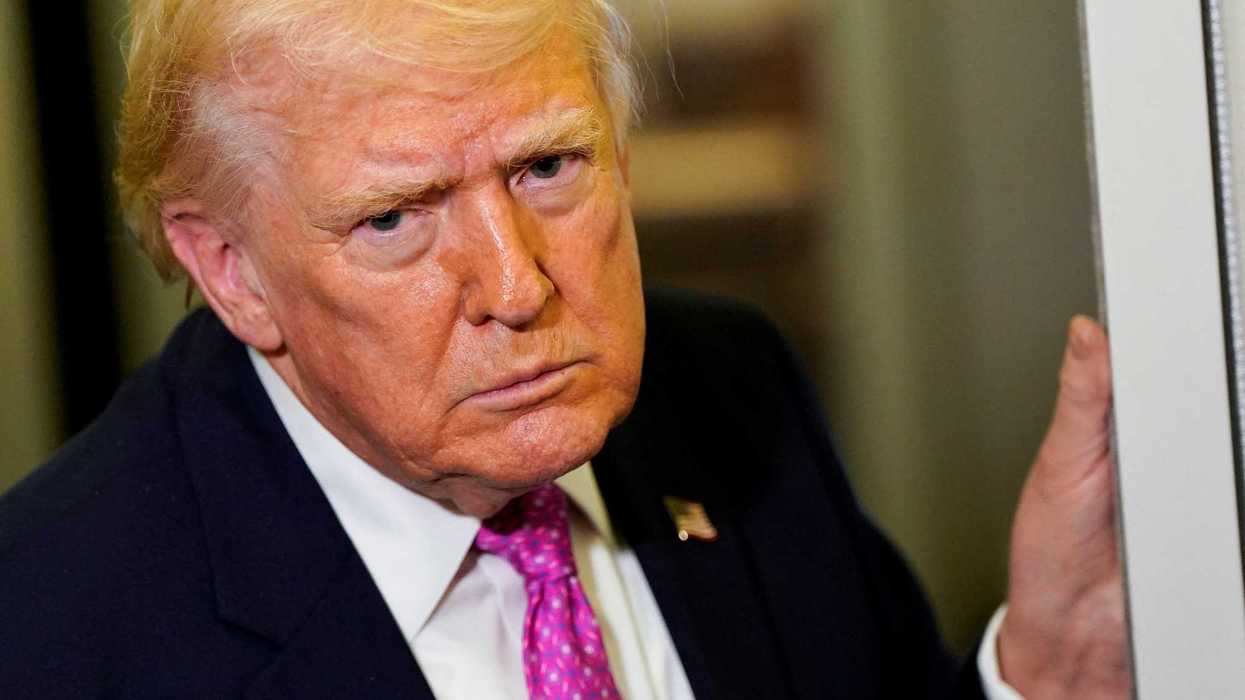
U.S. President Donald Trump speaks in the Oval Office as he signs the Secure America Act, at the White House in Washington, D.C., U.S., June 10, 2026. REUTERS/Evan Vucci

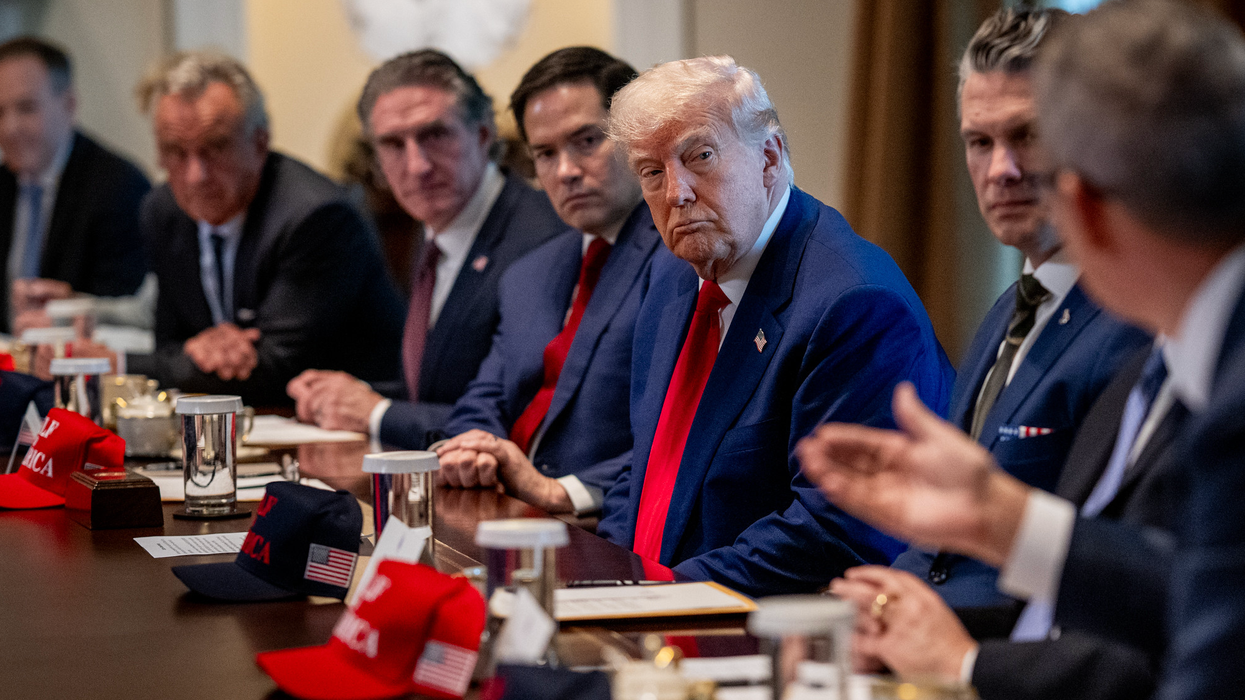
President Donald Trump proclaimed on Wednesday that he executed a "secret mission" in the Strait of Hormuz that saw 100 million barrels of oil make safe passage through the crucial shipping artery — but ranking House Intelligence Committee member Rep. Jim Himes (D-CT) cried foul on this on CNN, saying none of it made any sense.

Following the clip, anchor Erin Burnett appeared genuinely confused about exactly what Trump was trying to say.

"Guess he's implying millions of their barrels that they are selling at, obviously, hugely inflated prices to finance the Iranian regime," she said, asking Himes what he had to say about Iran allegedly being unaware of the "100 million barrels that Trump says he's actually helped get through the Strait."

Himes bluntly said that Trump's claim is "flat-out untrue."

"Remember the record here, right?" said Himes, pointing out Trump had initially vowed the Iran war would be over in a couple of days, and that "for the last three months, the Iranians have been two or three days, or maybe a week or two weeks away from striking a deal," to hear it from the president.

"So let's just agree that the president has precisely zero credibility on anything that he says about the Iran war," he said.

Furthermore, Himes added, "You don't need to be an intelligence expert to understand that the Strait of Hormuz, you're not moving anything in secret. With a good pair of binoculars on either coast, you can see what's happening — set aside the satellite imagery that people have access to."


'Bitter disappointment': Bloomberg tears apart Republicans for wrecking the economy


President Donald Trump dances during the National Republican Congressional Committee (NRCC) annual fundraising dinner in Washington, D.C., March 25, 2026. 
REUTERS/Ken Cedeno

June 11, 2026
ALTERNET

The Republican-led Congress has been a “bitter disappointment,” the Bloomberg Editorial Board argues. It points to the body’s “lackluster effort,” its “ham-handed” cuts to medical coverage, and how it dropped much of its agenda “in favor of writing big checks.”

“After two years in charge of a unified federal government, what has the Republican Party accomplished? If current polling is any indication, not enough,” the Editorial Board writes. It points to the Senate’s $70 billion budget reconciliation bill — which passed the House of Representatives — “that will mostly add to a glut of immigration funding.”

This GOP Congress has “fattened the budgets of immigration authorities while doing little to fix the broken incentives that lure unauthorized migrants in the first place (let alone to rationalize the legal immigration system).”


The Board accuses Congress of pledging to fight inflation, while standing “aside as the president has imposed a costly global tariff regime. After coming into office promising ‘massive reform’ to the health-care system, they’ve mostly cut coverage in ham-handed ways.”

Saying Congress “has done nothing to rein in long-term liabilities,” the Board calls the trajectory of the federal government’s debt “unsustainable.”


“More egregiously, the party that flatters itself as fiscally responsible hasn’t lifted a finger to rein in budget deficits,” it writes. “Last year’s tax cuts alone increased projected deficits by $4.7 trillion over the next decade. For all the turmoil engendered by the Department of Government Efficiency, the country’s spending problem has worsened decisively.”

The Board warns that the midterms are just months away, and Congress shouldn’t “congratulate themselves prematurely” — but it could take several steps.

Among them, it could “commit to respecting the Federal Reserve’s independence under new Chairman Kevin Warsh,” and promote permitting reform “to slash red tape, reduce costs, and accelerate energy and infrastructure projects.”


Congress could work on expanding housing supply and medical transparency, or “remind the president that his tariffs are harming workers and inflating consumer prices.”

And in an apparent rebuke, Bloomberg writes, “With federal spending threatening to slow income growth and drive up interest rates — or indeed prompt a fiscal crisis — they could take the minimum step of empaneling a commission to ponder the problem.”
Trump's economy grows on borrowed money as household debt hits 2008 crisis levels

June 09, 2026


US economic growth is picking up again after a slowdown towards the end of 2025. According to price data released on May 28, US GDP grew by 1.6% year-on-year in the first quarter of 2026. This is despite energy prices rising and consumer confidence falling since the US president, Donald Trump, went to war with Iran in February.


Confronted by higher prices for gasoline and a range of other everyday products, US households are spending more in total, rather than cutting back on their purchases. This defies the many economic forecasters who expected that paying more for the basics would discourage consumers from spending money on less essential items, holding back expenditure and GDP growth overall.

Kevin Hassett, the director of the US National Economic Council, has hailed the rise in consumer spending – and the associated surge in borrowing – as signs of an economic boom. It seems hard to argue that people are better off if they are having to pay more for the same goods and services as before, and are taking on more short-term debt to fund the extra spending.

Hassett is statistically correct, however. If people pay more for everything, and the higher prices are not entirely matched by extra cost for producers, more value is being created in the economy and GDP will rise in real terms. To the extent that higher bills are affordable to consumers and generate more profit for producers, the cost of living crisis may actually be promoting GDP growth in the US.

This contradicts the conventional economic opinion that views inflation as harmful to economic growth. But growth can happen under these conditions when consumers cannot or will not switch away from goods or services whose price rises faster than average.

This effect has long been visible in performing arts and other creative industries. These industries depend on individuals who, even with technical help, are unable to keep producing more in a day without losing quality.

While audiences often complain about the ever-rising cost of tickets for live music or sport, these events still sell out. So long as audiences keep paying, the real output of these industries keeps growing, even if there is no increase in the number of matches or concerts played.
Uneven growth

There are other reasons why recent GDP growth has not made the average US household feel better off, or revived the fortunes of Trump and his governing Republican party. Polling by the Economist suggests that 58% of Americans currently disapprove of Trump. This makes him the most unpopular US president since 2009, when Barack Obama was grappling with intense public anxiety over the global financial crisis, despite the uptick in growth.

GDP is a measure of total economic output. It is calculated by adding up the sum of all final incomes earned within a country’s borders, including wages, profits and taxes on imports. The calculation does not account for how much – or how little – individuals receive.

Much of the recent gain in the US has flowed to people already high up the income and wealth scale, shifting the distribution of GDP from wages towards profits. Expectation of a continued profit boom is one reason stock markets have continued to rise despite Trump’s tariff regime and wars, as well as other global turbulence since 2021.

At present, US growth is fragile. This is because of its reliance on borrowed money to fuel consumer spending. Household debt in the US was already at levels that trouble some economists before the latest cost-of-living squeeze. Total US household debt is greater now than when it reached crisis proportions in 2008, tipping the US and the world into recession.

US company debt is also higher now than in 2020, when the COVID pandemic began, though it has been declining since 2021 as firms have used recent profits to pay it down. There are fears that companies’ debt-to-income ratio may be higher than officially measured, due to a recent sharp rise in private credit. This form of debt is not monitored or regulated as heavily as debt from traditional sources.

The situation for indebted households and firms will improve if interest rates fall, as Trump has demanded from his newly nominated Federal Reserve chair, Kevin Warsh. But financial markets are anticipating the opposite, as higher prices and government borrowing generate inflation that typically pushes interest rates up.

This leaves it doubtful that the bright start to US growth in 2026 can last through the rest of the year. Any rises in borrowing costs or a fall in stock markets would begin to squeeze consumer spending and business investment, even if the high oil prices have subsided by then.

Alan Shipman, Senior Lecturer in Economics, The Open University

This article is republished from The Conversation under a Creative Commons license. Read the original article.
Trump's bumbling attempt to rob American taxpayers is backfiring


Former President Donald Trump speaking at a MAGA rally, hosted by Turning Point Action, at the Arizona Federal Theatre in Phoenix, Arizona on July 24, 2021, Gage Skidmore

June 11, 2026

Whoever designed President Donald Trump's $10 billion lawsuit against the Internal Revenue Service and the Treasury Department must be a fan of the Ocean’s Eleven movie franchise. The multi-act plot lines are strikingly similar: Put together a motley crew of risk takers; pick a seemingly invincible target rich in treasure; infiltrate the target; exploit its weaknesses; and get away with an improbable heist while the guards are asleep, distracted, or otherwise occupied.

Act One of Trump’s story arc began on January 29, when he and his eldest sons and the Trump Organization filed the lawsuit in federal district court in Miami. If only briefly, it seemed like the plan just might work. In 2019, an IRS contractor named Charles Littlejohn leaked multiple years of the Trumps’ confidential tax records, along with those of over 7,000 other wealthy individuals, to The New York Times and ProPublica. The Trumps alleged in their complaint that the IRS and the Treasury Department had willfully failed to safeguard their tax information, and that each viewing of a news article mentioning the data constituted a separate $1,000 violation. The total—accounting for harm from embarrassment and reputational and financial injury—ran into the stratosphere.

There is no doubt that Littlejohn broke the law. In October 2023, he pleaded guilty to the unauthorized disclosures and was later sentenced to five years in prison.


But a few things stood in the way of a courtroom victory for Trump and his family: First and foremost, Trump filed his complaint in his individual capacity, placing himself, as the nation’s chief executive, on both sides of the litigation, with his former personal lawyer and now-acting Attorney General Todd Blanche representing the defense.

Neither Blanche nor Trump has backed away from the addendum to the settlement agreement reached in the Miami case that confers civil and criminal immunity on the president and his sons.


The arrangement came to the attention of various public watchdog groups that quickly filed amicus briefs in the case, decrying the litigation as collusive and riddled with irreconcilable conflicts of interest. Collusive litigation is illegal and, if proven, warrants dismissal and court-ordered sanctions. It could also conceivably lead to a future criminal prosecution for conspiracy to defraud the United States, in addition to other offenses. And, because Trump filed the case in his individual capacity, he would not be protected from future prosecutions by the immunity the Supreme Court accorded him two years ago for actions taken within the scope of his official duties.

Another problem for Trump: The case was assigned to Judge Kathleen Williams, a no-BS jurist appointed by Barack Obama. On April 24, Judge Williams ordered the parties to submit briefs on the collusion issue by May 20. The order specifically mentioned remarks made by Trump in press interviews that indicated he understood the nature of the case and that if the litigation were to be settled, he would be in the unique position of negotiating with himself, an admission that could prove critical in future investigations to establish criminal intent.

The order prompted Blanche, Trump, and the Department of Justice (DOJ) to open the second act of their Ocean’s Eleven ploy. Instead of filing the requested briefs, they submitted a request to voluntarily dismiss the case on May 18. Believing she no longer had jurisdiction over the case, Judge Williams granted the request.


Later that same day, Blanche announced that the lawsuit had been resolved with the DOJ entering into a “settlement agreement” that created a $1.776 billion “anti-weaponization” slush fund to be drawn from the Treasury Department’s general “judgment fund,“ created by Congress in 1956 as a permanent appropriation to pay litigation judgments entered against the United States. Under the agreement, Trump’s allies, including the January 6 insurrectionists, would be authorized to file claims for monetary compensation due to the alleged weaponization of President Joe Biden's Justice Department against them. The claims would be adjudicated by a committee, selected by the attorney general, that would operate in secrecy with no public reporting requirements and whose members could be fired at will by the president.

The following day, Blanche tacked on an “addendum” to the settlement that ordered the IRS and the DOJ to permanently end all current and possible future tax audits and investigations into the Trump family that were or could have been pending at the time of the settlement. The actual language of the addendum is so nebulous, according to some analysts, that it could be read to immunize the Trumps from any future investigations, civil or criminal, initiated by any and all federal agencies, including the Securities and Exchange Commission and the FBI.

The settlement prompted immediate and uncommon bipartisan criticism in Congress and outrage in the media. It also sparked additional litigation with new lawsuits aimed at blocking the anti-weaponization fund filed in Virginia and the District of Columbia. On May 29, District Court Judge Leonie Brinkema, sitting in Alexandria, Virginia, issued a temporary restraining order preventing the transfer of any money from the Treasury Department to the fund, and precluding the DOJ from taking any further action on the fund. The judge set a June 12 hearing date for oral arguments on the TRO.


Meanwhile, on May 27 in Miami, a group of 35 former federal judges filed a motion to reopen the case, urging Judge Williams to investigate whether the parties had perpetrated a fraud on the court. The judge responded swiftly with an order requiring Trump and his sons to submit a reply brief by June 12. This highly unusual step was necessary, she explained, in light of the “grievous allegations [raised by the 35 judges] that Plaintiffs voluntarily dismissed this litigation solely to avoid judicial scrutiny of a lawsuit that ‘was collusive from the start’ and was only filed to provide the imprimatur of legality for an unlawful settlement.”

We are now in Act 3 of the administration’s Ocean’s Eleven drama, the part where Trump and his minions back down and regroup. In a hearing before a House Appropriations subcommittee on June 2, Blanche said that the administration would not go forward with the anti-weaponization fund. On June 5, in filings in both the DC and Virginia cases, the DOJ put Blanche’s pledge in writing in motions requesting that both cases be dismissed as moot.

To date, however, neither Blanche nor Trump has backed away from the addendum to the settlement agreement reached in the Miami case that confers civil and criminal immunity on the president and his sons. That benefit, if implemented, would accord the Trumps even more protection than a presidential pardon. It may also have been the real goal of the litigation from the outset.

But the scheme is unlikely to succeed. Whether Judge Williams or her colleagues in DC and Virginia strike down the addendum, the granting of immunity remains an act of blatant corruption. There is no reason to believe a future Department of Justice in a Democratic administration will honor the grant. It may take a few years for the curtain to fall on the president’s Ocean’s Eleven heist, but in the end, he may emerge as the caper’s biggest loser.
Trump's self-inflicted wound is the worst 'in American history': Economist.


U.S. President Donald Trump speaks in the Rose Garden at the White House in Washington, D.C., U.S., November 25, 2025. REUTERS Nathan Howard

June 11, 2026
ALTERNET


President Donald Trump’s wars against Venezuela and Iran, as well as his seemingly-planned war against Cuba, have constituted one of the worst self-dealt economic wounds a president has voluntarily inflicted upon themselves in American history, according to economic experts.

In an MS NOW interview on Thursday, Iraq war veteran and entrepreneur Paul Rieckhoff described the rampant inflation exacerbated by Trump’s wars as “the thing he can't spin out of. No matter how many times he says the Iran war is going to be over, his base remembers that. He said no new wars. He said no regime change wars, and they're still ongoing. His base also remembers that he was going to bring down the price of milk, and every day they see that gas prices are still high — and that's going to continue throughout the summer.”

Rieckhoff added, “This is dragging down the Republican brand even more than it's dragging down him personally. That's why I think there is an opportunity this fall for the Democrats. I'm not counting on them to take advantage of it, but there is a tremendous opportunity, maybe around this issue more than anything else.”

When the MS NOW host added that 76 percent of voters say they are concerned with their personal finances, and 77 percent say their incomes are not keeping up with inflation, Rieckhoff pointed out that Republicans are unwilling to stop Trump even though most of the rest of America is fed up with him. Then economist Ed Elson, the co-host of “Prof G Markets” podcast, compared Trump’s attempts to walk back inflation and the Iran war as analogous to his TACO approach to tariffs — with TACO standing for “Trump Always Chickens Out.”

“I’d say it's a lot harder to TACO about a war than it is to TACO about tariffs,” Elson explained. “Let me break down what's happened: back in April of last year, before the tariffs, we had 2.3 percent inflation. Then the tariffs came — we all said they would be inflationary — and inflation rose to 3 percent within the year, roughly a four percentage point added to inflation because of the tariffs. Then Trump decided to bomb Iran without clear objectives and without any contingency plans if this thing doesn’t work out. We do that, oil prices skyrocketed, and now we're at 4.2 percent.”

Elson added that Trump could reduce inflation by getting out of Iran and eliminating his tariffs, “but it's never going to happen, because that would mean admitting defeat, which is something he will never do. This is one of the greatest self-inflicted economic injuries in American history, and because of his pride and ego, I think it's only going to get worse.”

A conservative commentator writing for The Bulwark also noted on Thursday that Trump seems determined to spin his way out of America’s inflation problem — and that this will not work.

“Inflation rose to 4.2 percent in May, the highest increase since a 2023 surge under President Joe Biden in the aftermath of the COVID-19 pandemic,” The Bulwark’s Joe Perticone wrote on Thursday. “President Trump, who pledged to ‘quickly defeat inflation’ upon returning to the White House, and who in September lied that the economy had ‘no inflation,’ responded to the news with yet another callously stupid Trumpism.”

He later added “You might be able to try to spin inflation rates, as [South Carolina Republican Sen. Tim] Scott does here, but ultimately, you can’t argue with them—just ask Kamala Harris or Joe Biden,” Perticone explained, referring to the Democratic president and vice president who lost the 2024 election. “Even if voters don’t follow the latest CPI or PPI reports, they notice the climbing prices when opening their wallets.”


Whistleblower warns a devastating bubble is about to pop Trump’s rotten economy

U.S. President Donald Trump looks on as he speaks to members of the media aboard Air Force One en route to Joint Base Andrews, Maryland, U.S., March 29, 2026. REUTERS Elizabeth Frantz

June 11, 2026
ALTERNET


President Donald Trump has significantly boosted AI throughout his second term — and a whistleblower confirms that major economic bubble is about to burst, and take many Americans' fortunes with it.

“We've spent something like $1.4 trillion dollars building data centers in this country, and the revenues on AI are $600 billion,” said Alexis Goldstein, a former financial regulatory expert for the Consumer Financial Protection Bureau (CFPB) and Maryland Democratic congressional candidate to The Left Hook’s Wajahat Ali on Thursday. “So the tech industry has earned not even half of what they've spent building these data centers.”

Goldstein then compared the AI bubble to the housing bubble that led to the Great Recession.

“If you remember the 2008 financial crisis, the asset at the back of all that complicated financial engineering was a house, and the saying was, ‘Well, you'll always have the house, and so it will always have some value,’” Goldstein told Ali. “And that turned out not to be true, because there was just such an oversaturation and so much predatory lending — not every house did end up having value.”

She added, “So what do you want to guess the asset is behind the financial engineering right now, building out these data centers? I'll give you a hint: it's not a house. What is it? It's the graphics card that they fill up these data centers with to run all of these large language models — the Nvidia graphics card that they're using to do all of this ChatGPT generation, predicting something that sounds kind of like something you might say in the future, or helping you produce a piece of artwork like a Pikachu blowing bubbles at the Apple logo, or whatever it is that you use ChatGPT for. It's these graphics cards that get obsolete really fast. They're taking an accounting tax break over six years, but these graphics cards last two to three years max, and then they either burn out or they become obsolete.”

Because AI technology is so unsustainable, Goldstein argued that AI tech moguls like Mark Zuckerberg are engaged in billions of borrowing in order to keep building their investment. Despite their massive investment, however, few people are paying for AI, and when they do — such as the military-industrial complex that bombed an Iranian school — they tend to find it less effective than promised.

“Nobody is paying for this except the military, and when the military is paying for it, it is creating lethal, horrible consequences,” Goldstein said. “There is a lot of reporting on this in the financial press, though less of it has made its way to the mainstream press. But I think we're seeing that the public sort of gets it. The data centers raise utility bills. They often pay very little in local taxes. They can lead to bad health outcomes. I visited one in Maryland's 6th district, in Adamstown, and it actually smells bad, in addition to everything else.”

She continued, “So the public is saying, ‘We don't want these.’ You see executives at graduation ceremonies talking about AI being the future, and they get booed by the students. The public, I think, is very informed about this. The people who aren't informed — and unfortunately this is common — is Congress. It's sort of like in 2008, when the people on the ground were saying, ‘Well, this is kind of crazy. This mortgage thing seems to be going out of control. My friends seem to be getting really predatory mortgage loans, or cash-out on their houses, especially in communities of color — this seems really messed up.’ And Congress, of course, was the last to know, and then the crisis happened and there was so much money lost in the economy.


So I'm really afraid that this is all that over again.”

Speaking to this author for Democracy at Work in 2025, linguist Emily Bender discussed a book she co-authored with sociologist Alex Hanna called “The AI Con.” In it, she explained that AI does not do all of the things that the corporations that promote it say it can do.

“We call the book ‘The AI Con’ because there's a con happening here and it's happening at many levels,” Bender explained. “At the base, you have what's effectively a parlor trick, the systems that everyone's excited about. Right now, the large language models or chatbots are systems designed to do exactly one thing, which is to output plausible looking text. They mimic the way we use language.”

In a December article, The Conversation pointed out that philosopher Karl Marx actually broke down the same dynamics that are at play with the AI boom.

“Marx argued that an economy becomes unstable when the mass of accumulated capital can no longer be profitably reinvested,” The Conversation observed. “An overproduction of capital, he explained, occurs whenever additional investment fails to generate new surplus value. When surplus capital cannot profitably be absorbed through the production of goods, it is displaced into speculative outlets.”
Big Oil execs 'doing everything they can' to warn Trump of inflation surge


President Donald Trump holds a Cabinet meeting, Wednesday, April 30, 2025, in the Cabinet Room. (Official White House Photo by Molly Riley)

June 11, 2026 
ALTERNET


Inflation is primed to become catastrophically worse in one of the most important sectors, and according to The Washington Post, executives are still "doing everything they can" to get that fact across to President Donald Trump before it is too late.

As the Post laid out in a Thursday report, executives in the oil industry are sounding the alarm about prices at the pump shooting up to a degree even higher than they already have, and are working to make sure Trump hears those warnings as he attempts to negotiate a deal with Iran to reopen the Strait of Hormuz.

"Oil and gas executives have warned the White House that gasoline prices could surge in the coming months as fuel inventories fall to critical lows, complicating the Trump administration’s efforts to contain inflation that has already rattled American consumers," the report detailed.


It continued: "Industry officials say they are doing everything they can to sound an alarm that prices are about to soar as the commercial and government inventories that have mitigated price rises so far are rapidly depleting, according to multiple people familiar with the conversations, who spoke on the condition of anonymity for fear of retaliation from the administration. Some inventories could be wiped out within weeks, the executives have warned, coinciding with the peak summer travel season."

While the dwindling shipments out of the Gulf States has so far caused gas prices to increase well over $1 on average across the U.S., if the key shipping route remains closed or unsafe for much longer, it will quickly reach the point where stockpiles begin to reach critical levels. At that point, prices will potentially increase to astronomical levels, and gas rationing might also have to be implemented.


For the time being, some of the sources that the Post spoke to are trying to remain optimistic.

“I have absolutely no doubt the White House — from the president on down — is fully aware of the nearly universal alarm among oil companies and analysts about the direction of travel for oil prices this summer,” Bob McNally, a former energy adviser under George W. Bush and founder of the research firm, Rapidan Energy Group, said in a statement to the outlet.

“We’re sounding the alarm on these inventories going to record lows,” American Petroleum Institute CEO Mike Sommers said during an appearance on a Fox Business show that Trump is known to watch. “We should be concerned about what prices we’re going to see over the next few weeks. We have to solve this problem in the Strait of Hormuz.”
'Highly emotional man': CNBC's Jim Cramer rips Trump as Iran war drives up prices

Bennito L. Kelty
June 11, 2026 
RAW STORY


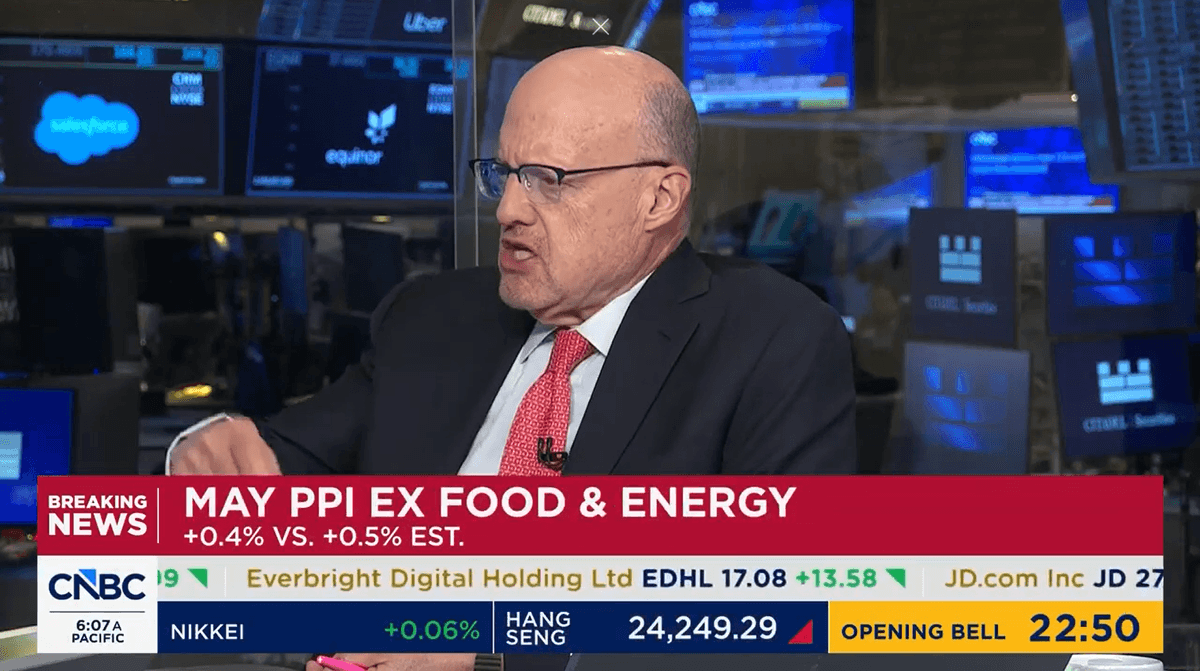
CNBC's Jim Cramer had strong words for Trump over high prices from the Iran war
 (CNBC/Screenshot)

CNBC's Jim Cramer had strong words for President Donald Trump while talking about the economic pressures brought on by the Iran war.

"Is the president stepping it up in order to end the war? Or is he just stepping it out because he's had it?" Cramer asked during an appearance on "Squawk on the Street," where he spoke about inflation from the conflict. "That's the question, because he is a highly emotional man that's running a military."

Trump is "the opposite" of World War II General George Marshall, Cramer added. The comments came as Cramer broke down how the Iran War is driving up prices.

"We've got this problem. It's energy," Cramer said. "Then it's all the surcharges to get our food into the store...who pays that surcharge? We do. And we pay it when we go to the supermarket."

Cramer and CNBC anchor Carl Quintanilla were also reacting to a 6.5 percent annualized increase in the Producer Price Index, a marker of worsening inflation. The European Central Bank also hiked interest rates.

"ECB today becomes the first G7 central bank to hike rates in response to the energy shock," Quintanilla said, adding that the 6.5 percent PPI increase "is not a great print."

‘This Is Oligarchy’: Nearly 100 Billionaires Are Funding Susan Collins’ Reelection Bid

“While Susan Collins’ campaign is backed by billionaire donors, our campaign is built on a movement funded by the people, with an average donation of $26,” said Graham Platner’s campaign manager.
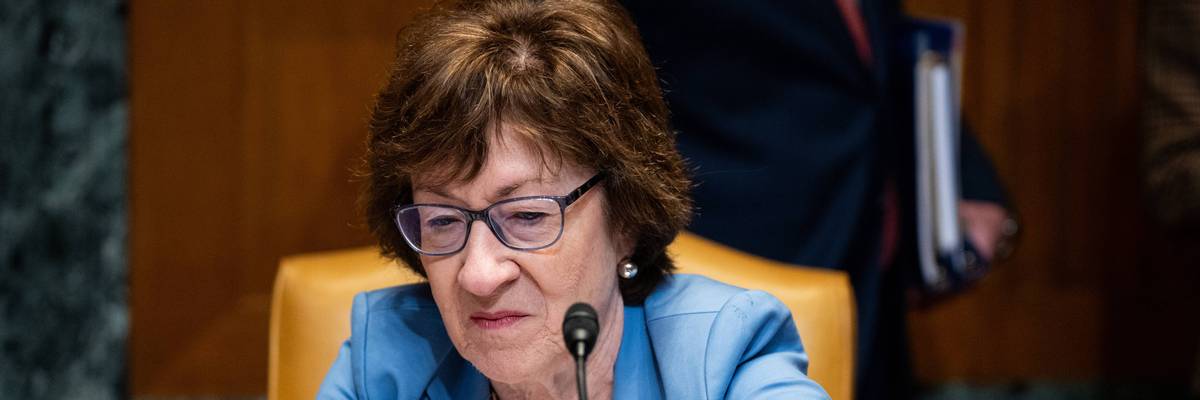


Sen. Susan Collins (R-Maine) attends a Senate hearing on May 14, 2026.
(Bill Clark/CQ-Roll Call, Inc via Getty Images)

Jake Johnson
Jun 12, 2026
COMMON DREAMS

A new analysis of campaign finance data shows that nearly 100 billionaires and their spouses have contributed to Republican Sen. Susan Collins’ reelection bid so far, funneling nearly $10 million to the incumbent’s campaign committee and PACs supporting her effort to fend off progressive challenger Graham Platner.

The Maine Monitor on Thursday published a list of billionaires who have donated to Collins and Platner, who has called his Republican opponent a “corrupt” protector and beneficiary of an oligarchic political system. The outlet noted that Collins’ billionaire donation total “stands in stark contrast with the fundraising of her opponent... whose campaign has mostly attracted smaller amounts of funds but from many more people.”
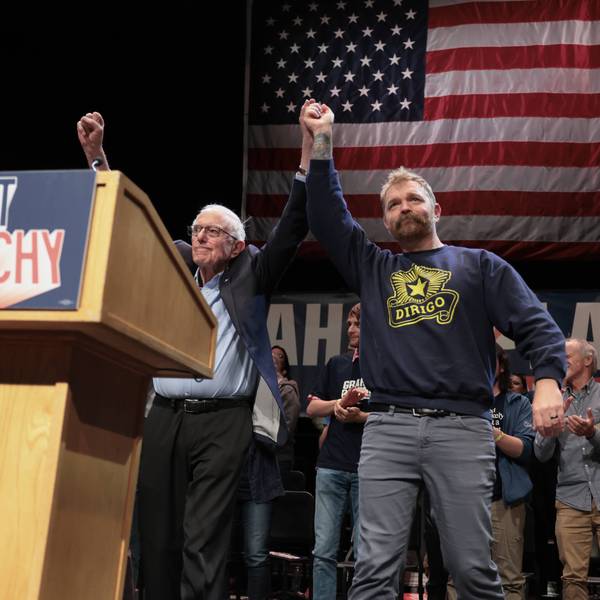


Rallying With Sanders, Platner Condemns ‘Corrupt Politicians and the Corporations That Bought Them’
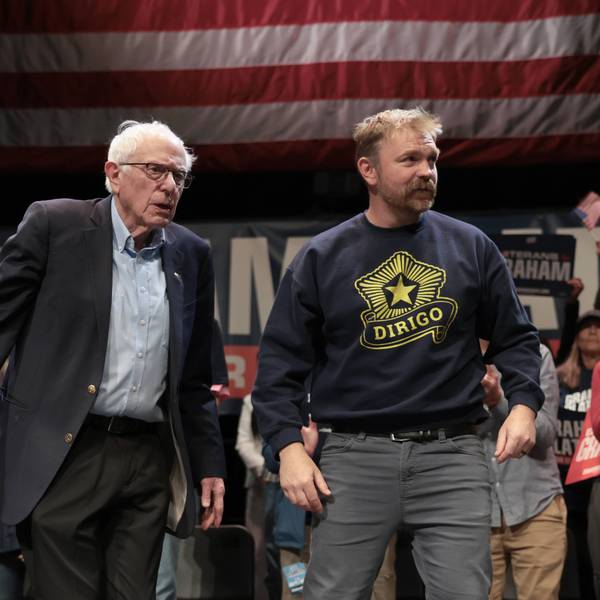

‘Super PACs Should Be Outlawed,’ Says Platner, as Pro-Collins Corporate Dark Money Pours Into Maine to Attack Him

The $9.8 million that Collins’ fundraising network received from billionaires and their spouses between January 2025 and late May 2026 represents “a third of what groups supporting Collins raised from all donors,” according to The Maine Monitor’s analysis.

Platner’s reelection bid has received donations from billionaires George Soros, Pat Stryker, Jon Stryker, Christy Walton, and Jennifer Pritzker. Those contributions represent “a fraction of 1% of his total haul,” The Maine Monitor noted. The Democratic candidate’s campaign said Thursday that “grassroots donors chipping in $200 or less have given Graham Platner $9.6 million.”

“While Susan Collins’ campaign is backed by billionaire donors, our campaign is built on a movement funded by the people, with an average donation of $26,” Ben Chin, Platner’s campaign manager, said in a statement. “The establishment can bring it on—they cannot defeat the will of working Mainers, 15,000+ volunteers, and a campaign powered by small-dollar donors from nearly every zip code in Maine.”

Collins’ largest billionaire donor to date came from Ken Griffin, a hedge fund manager who pumped $2.5 million into Pine Tree Results, a Super PAC supporting the five-term Republican incumbent. Collins’ network has also received at least $1 million from Blackstone CEO Stephen Schwarzman, New Balance chair James Davis, and hedge fund manager Paul Singer.


The Maine Monitor observed that “the majority of the billionaire donations to Collins this cycle are from billionaires who made their money in alternative investments, including hedge funds and private equity.”

In 2017, Collins voted for legislation that delivered massive tax breaks to large corporations and American billionaires, whose collective wealth surged to $8.1 trillion last year. ProPublica reported that private equity became Collins’ “most reliable source of donations” after she withdrew an amendment to the 2017 legislation that would have targeted one of the industry’s beloved tax breaks.

On top of billionaire funding, Collins’ campaign has benefited from massive ad spending by dark-money groups such as One Nation. The group, which is aligned with Sen. Mitch McConnell, has spent more than $19 million on advertising for Collins so far.
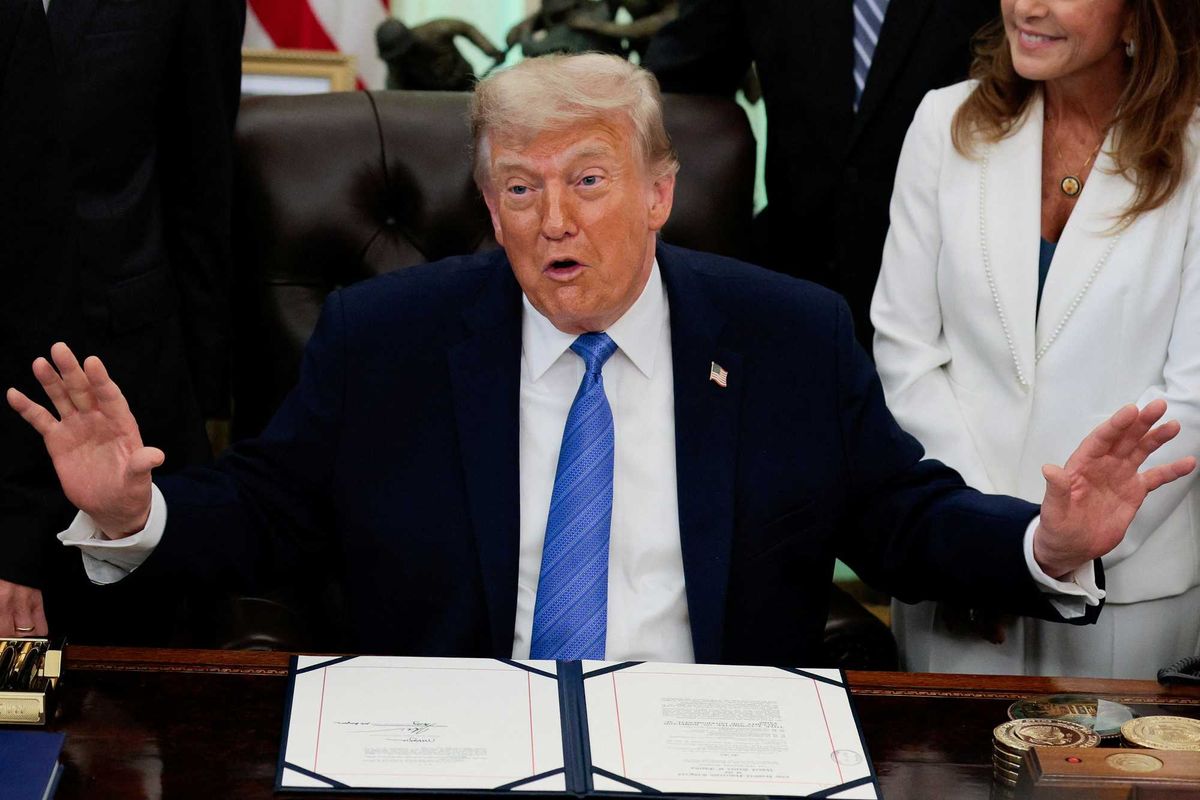
88 Corporations That Paid No US Federal Income Tax in 2025 Spent $852 Million on Recent Lobbying, Elections


“The result,” said the author of a new Public Citizen analysis, “is a self-reinforcing loop where corporate cash buys policy, and policy pays cash back.”


Brett Wilkins
Jun 11, 2026
COMMMON DREAMS


Eighty-eight corporations that paid no federal income tax last year spent roughly $852 million on US campaign contributions and lobbying during recent election cycles, a report published Thursday revealed.

The report, “The Current Price of Zero,” was authored by Eileen O’Grady, a researcher at Public Citizen’s Congress Watch division. The publication draws upon an analysis published in April by the Institute on Taxation and Economic Policy (ITEP) showing that at least 88 of the nation’s largest companies paid no federal corporate income tax in fiscal year 2025, despite reporting combined US pretax income of around $105 billion.


“Using data from OpenSecrets, which compiles and publishes campaign finance and lobbying data, we found that from the 2020 election cycle through the 2024 cycle, these 88 companies have spent nearly $852 million on lobbying and campaign contributions,” O’Grady wrote. “We highlight the companies that spent the most money on lobbying, hired the most lobbyists, lobbied specifically on tax issues, and contributed the most cash to political campaigns.”

The federal corporate income tax rate is 21%, indicating that the 88 companies in the report dodged a combined $22.1 billion in taxes last year. Additionally, they received $4.7 billion in tax rebates, bringing their total tax breaks to approximately $26.7 billion.

“The largest and richest corporations in the country are paying zero in federal income tax, and that is a slap in the face to the American taxpayers who are struggling to afford necessities like groceries and healthcare,” O’Grady said in a statement.

“Meanwhile, these companies are spending money that could have gone to the public good on lobbying for even more special advantages and tax breaks,” she added. “In this backwards, cash-fueled system, the deck is being stacked ever higher in favor of corporations, and against working people.”

The report’s key findings include:The 88 corporations that paid no federal corporate income tax in 2025 spent $712 million on lobbying and $140 million on campaign contributions over the last three election cycles;
Comparing the taxes the corporations saved against the cost of their political spending, they collectively made a 3,000% return on investment;
Coinbase Global spent the most of any company—$89 million—followed by CVS Health ($66 million), Honeywell International ($56 million), American Electric Power ($47 million), and Duke Energy ($35 million);
On average each year, these companies together have sent 1,119 lobbyists to influence the federal government, including on tax issues and legislation that changed the tax code in favor of corporate giveaways; and
Since the beginning of 2025, these companies have collectively laid off at least 21,200 workers and announced plans to lay off thousands more.
"Our findings suggest that while Republicans lawmakers rewrote the tax code to enshrine massive giveaways to wealthy corporations, those same corporate tax dodgers poured millions into lobbying and political campaigns that yielded further tax breaks, which in turn has bankrolled even more political influence," O'Grady wrote. "The result is a self-reinforcing loop where corporate cash buys policy, and policy pays cash back."


The report singles out two related pieces of legislation—President Donald Trump’s 2017 Tax Cuts and Jobs Act, and the so-called One Big Beautiful Bill Act (OBBBA), signed into law by Trump last July 4—which enabled “several common strategies the companies used to get tax breaks and rebates.”

“The most commonly used corporate tax giveaway, accelerated depreciation, enabled more than half of the companies to collectively avoid $11.4 billion in taxes by allowing them to write off capital investments immediately,” O’Grady noted.

“In addition, a tax break supercharged under the Big Ugly Law allowed more than 30 companies to immediately write off research and development expenses, which alone netted them at least $4.4 billion in savings,” she added, using a common liberal epithet for the OBBBA.

Since the US Supreme Court’s 2010 Citizens United v. Federal Election Commission ruling—which affirmed that political spending by corporations, nonprofit organizations, labor unions, and other groups is a form of free speech protected by the First Amendment—nearly $20 billion has been spent on US presidential elections and more than $53 billion on congressional races, according to data compiled by OpenSecrets. Spending on 2024 congressional races was double 2010 levels, while presidential campaign contributions were more than 50% higher in 2024 than in 2008, the last election before Citizens United.

Ultrawealthy and corporate megadonors played a critical role in Trump’s 2024 victory. Fossil fuel interests spent more than $445 million during the 2024 election cycle on campaign donations, lobbying, and other efforts to elect Trump and his Republican allies, plus pass policies that benefit their climate-wrecking businesses. Artificial intelligence and cryptocurrency are fast emerging as some of the most prolific lobbyists. Trump and Republicans in Congress have promoted policies and legislation boosting these sectors and shielding them from government regulation.


Elon Musk—the CEO of Tesla and SpaceX and majority owner of X who could soon become the world’s first trillionaire—is the most prominent of the numerous Trump donors who have been rewarded with Cabinet nominations and other key appointments in “an administration dominated by billionaires and corporate interests,” as Americans for Tax Fairness executive director David Kass described it.

O’Grady wrote that “corporate tax dodgers spend lavishly on lobbying and campaign contributions that feed into more tax breaks, which in turn fund even more political spending on policies that serve to pad corporate profits—and the cycle continues.”

To remedy this, the report asserts: “It is imperative that Congress undo the Republican tax giveaways to corporations like bonus depreciation and research and development write-offs. In addition, the corporate rate must be increased to at least the 35% rate that stood before the 2017 law.”

“Corporations should not be able to deduct multimillion-dollar bonuses. And Congress must prevent multinational corporations from avoiding taxes by booking profits in offshore subsidiaries by equalizing the domestic and international tax rates,” the publication concludes. “With these and other reforms to our tax code, our nation could have more than enough revenue to breinvest in American communities and make life more affordable for everyone. It’s time to finally put people over corporate profits.”