Wednesday, June 24, 2026


Digital euro clears key hurdle as EU seeks to break free from U.S. credit cards


Published:
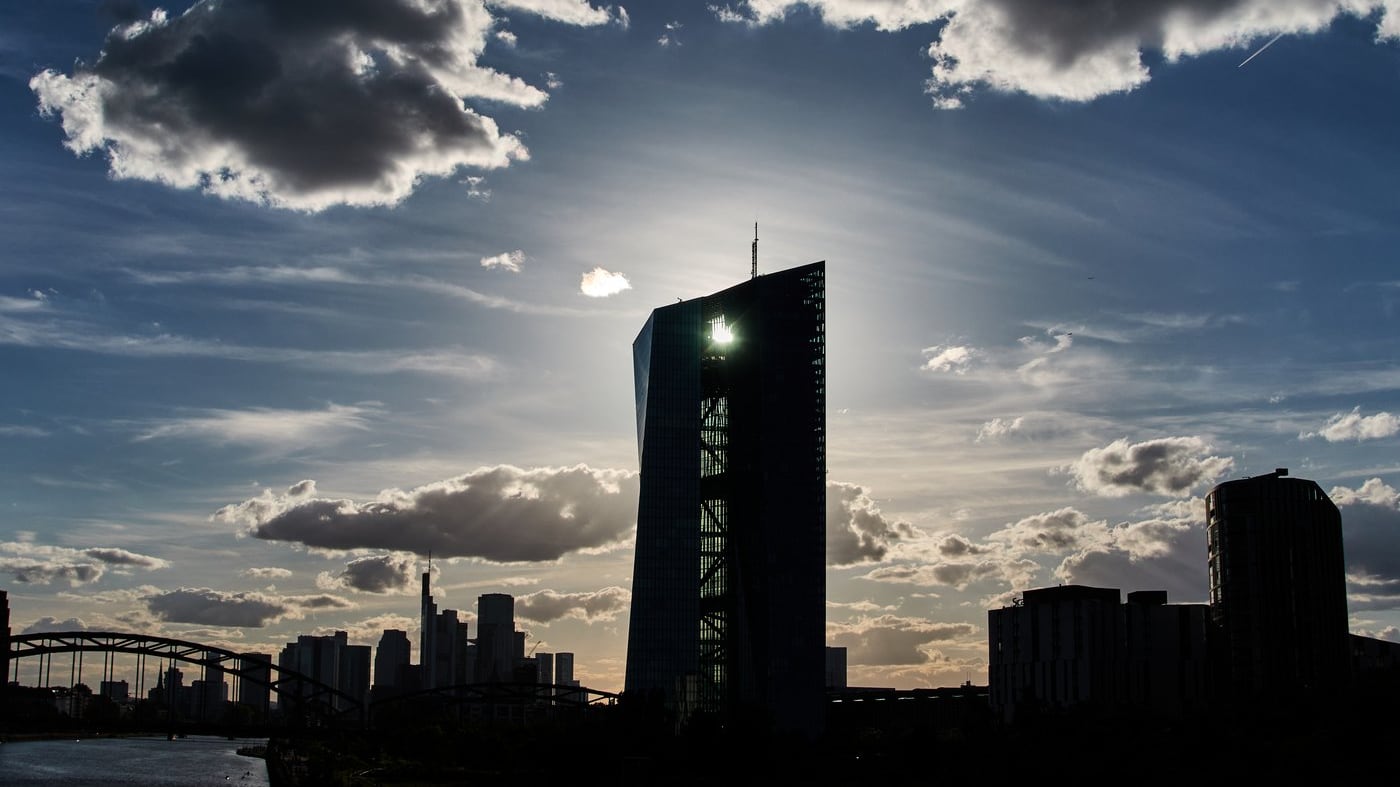
The European Bank is pictured in Frankfurt, Germany, Tuesday, June 9, 2026. (AP Photo/Michael Probst)

FRANKFURT — The European Central Bank secured key parliamentary backing on Tuesday for the launch of a digital euro, an electronic means of payments aimed at making the euro zone less reliant on U.S. credit cards at a time of fraying transatlantic relationships.

The digital euro, essentially an electronic wallet guaranteed by the central bank but marketed by banks or fintech companies, will allow all euro zone residents to make payments online and in person.

Six years in the making, the ECB’s digital cash has become a more pressing issue since Donald Trump returned to the White House, slapping tariffs on even established trade partners such as the European Union and raising fears that the U.S. could one day weaponize its dominance over payment networks like Visa and Mastercard.

The approval of draft rules by the economic committee of the European Parliament comes after three years of wrangling between the ECB and banks, which have been concerned about deposit outflows and lost revenues and sought to limit the scope of the project.

“The introduction of the digital euro would... reduce overreliance on non-European providers by becoming a pan-European means of payment and would bring the single currency into the digital era by giving Union citizens the freedom to opt to pay with central bank money in their daily transactions,” the draft regulation says.

FINAL APPROVAL BY YEAR-END?

Siegbert Frank Droese of the far-right Europe of Sovereign Nations, a political group in the European Parliament, said his group had voted against the proposal, raising the likelihood that a further vote would be needed at the Parliament’s plenary.

Barring an objection at the plenary, lawmakers should start negotiating with the European Council of EU governments and the European Commission next month, aiming for final approval by the end of the year.

The ECB, which plans to run a 12-month pilot of the digital euro starting in the second half of next year before a full launch in 2029, said it looked forward to Parliament adopting its final position.

Outside the euro area, China has been piloting a digital yuan at scale, while countries like India and Brazil have conducted trials. Britain has focused on research, amid concerns over privacy, financial stability and banking-sector impact, while U.S. President Trump has forbidden the Federal Reserve from issuing a digital currency.

HOLDING LIMITS, POLITICAL OVERSIGHT POINT TO COMPROMISE

Like the European Council before it, the EU’s Parliament laid out key safeguards for banks fearing deposit flights.

Lawmakers proposed in the draft regulation that the European Commission decide how many digital euros every user could own, based on an ECB recommendation, and review that ceiling at least every two years.

Businesses would not be allowed to hold digital euros for longer than 24 hours. The digital euro would not earn any interest or cost anything to its users.

“The proposal reflects political compromises,” Laura Casonato, head of policy at Positive Money Europe, an advocacy group for monetary reform, said. “It keeps commercial banks at the center of distribution, with only a limited role for public channels and other providers, and does not go as far as presenting the digital euro as a true alternative to bank deposits.”

Such concessions were likely crucial to win over critics such as Fernando Navarrete Rojas, the parliament’s negotiator on this file, who only recently dropped his opposition to making the digital euro available online.

ECB simulations show depositors could withdraw up to 699 billion euros ($795.88 billion) from euro zone banks if a limit on digital euro holdings was set at 3,000 euros each. This is equal to 8.2 per cent of all retail sight deposits, although the impact would be greater for small market lenders and retail banks.

COSTS, COMPENSATION AND EXEMPTIONS ARE OPEN QUESTIONS

AukeZijlstra of the far-right Patriots for Europe Group said the only main discussions with other European institutions would revolve around how participating companies should be compensated for the set-up costs, which the ECB put at between four billion euros and six billion euros spread over four years.

But he added the digital euro may prove “obsolete” by the time it launches given competing initiatives by the private sector. These include instant payment service Wero, backed by a consortium of major European banks.

Damian Boeselager of the Greens said the digital euro should be cheap for merchants, many of whom will be forced to accept the new means of payments. The Parliament’s proposal contains an exemption for small-business owners and the self-employed.

($1 = 0.8783 euros)

(Additional reporting by Jesus Aguado in Madrid; Editing by Andrew Heavens and Susan Fenton)


Western Balkans coal plants continue to breach pollution limits despite legal deadlines, report says

Western Balkans coal plants continue to breach pollution limits despite legal deadlines, report says
Report's findings highlight the continued environmental and public health cost of the Western Balkan region’s dependence on coal. / Photo by Ottr Dan on UnsplashFacebook
By Clare Nuttall in Glasgow June 23, 2026

Coal-fired power plants across the Western Balkans emitted sulphur dioxide at more than six times legal limits in 2025, with dust pollution reaching its worst level since current emissions rules came into force eight years ago, according to a report published on June 23 by environmental watchdog Bankwatch.

The report, the latest edition of Bankwatch’s annual Comply or Close assessment, said ageing coal plants in Bosnia & Herzegovina, Kosovo, North Macedonia and Serbia continued to violate pollution ceilings agreed under the Energy Community Treaty, despite years of warnings and multiple legal proceedings.

Bankwatch said sulphur dioxide (SO2) emissions from plants covered by National Emissions Reduction Plans (NERPs) were collectively 6.6 times higher than permitted in 2025, marking the highest relative breach since pollution controls took effect in 2018.

Nitrogen oxides (NOx) emissions also remained above legal limits, while dust pollution surged sharply, reaching 2.9 times the permitted ceiling, up from 1.9 times in 2024.

The findings highlight the continued environmental and public health cost of the region’s dependence on coal, even as economic pressure from the European Union’s carbon policies and ageing infrastructure increasingly undermine coal’s commercial viability.

“The pollution levels eight years after the deadline for implementing the Large Combustion Plants Directive remain appalling,” the report said.

Bosnia recorded the highest SO2 emissions in the region for the second consecutive year, with its coal plants releasing 196,940 tonnes, or 12.7 times the national limit. Serbia followed with 177,756 tonnes, equivalent to 5.1 times its legal ceiling.

The single biggest polluter in the region remained the Ugljevik coal plant in Bosnia, which emitted 115,079 tonnes of sulphur dioxide, its highest level since the current rules began. The plant’s continued pollution is especially striking because it already has desulphurisation equipment installed, raising questions over why emissions remain so high, the report said.

Bankwatch said the plant operator had admitted the desulphurisation system was not functioning properly because it represented an economic burden, casting doubt over whether the expensive retrofit would ever be fully used.

“Ugljevik’s SO2 emissions have been increasing since 2022,” the report noted, despite an €85mn pollution-control investment.

Five coal units exceeded their individual sulphur dioxide ceilings by more than tenfold in 2025, according to the report. These included the Bitola B1 and B2 units and Bitola B3 in North Macedonia, along with Ugljevik, Gacko and Kakanj 6 in Bosnia.

Dust pollution, meanwhile, worsened significantly, driven largely by the Bitola plant in North Macedonia. Bankwatch said dust emissions from North Macedonia more than doubled compared with 2024. Bitola’s units emitted a combined 7,675 tonnes of dust, exceeding the total dust ceiling allowed for all four Western Balkan countries combined.

The report said the plant “single-handedly exceeded the sum of NERP ceilings for dust of all four countries.”

Bosnia’s Gacko plant remained the worst performer relative to its legal dust limit, emitting 15.1 times the allowed level despite a slight year-on-year decline.

NOx emissions also continued to exceed legal thresholds. Total emissions from covered coal plants were 1.4 times above permitted levels, unchanged from 2024.

Serbia’s Nikola Tesla B plant produced the highest absolute NOx emissions at 11,247 tonnes, while Kosovo’s Kosova A remained the worst relative emitter.

Beyond pollution from plants covered under emissions reduction plans, the report also highlighted continued illegal operation of several older coal units that were supposed to shut down under “opt-out” derogations. These exemptions allowed older plants to operate for a limited number of hours before mandatory closure. The deadline expired at the end of 2023. Yet plants in Bosnia, Montenegro and Serbia continued operating throughout 2025.

Montenegro’s Pljevlja plant, which has undergone a controversial retrofit, remains under scrutiny. “Montenegro’s Pljevlja plant has been operating illegally since late 2020,” Bankwatch said, adding that no clear evidence exists that the retrofit has brought the plant into compliance.

Coal units Tuzla 4, Kakanj 5, Morava, and Kolubara A are also still operating more than two years after their closure deadline.

The Energy Community Secretariat has opened multiple infringement cases against the countries involved. However, Bankwatch said national authorities have failed to impose penalties. “Eight years after the Large Combustion Plants Directive compliance deadline passed in the Energy Community, national authorities have not fined a single plant operator for these breaches,” the report said.

Environmental campaigners say the lack of enforcement reflects broader governance failures. Davor Pehchevski, Balkan energy coordinator at Bankwatch, said governments were tolerating pollution while failing to prepare communities for the inevitable decline of coal.

“In some Western Balkan countries we now have the worst of both worlds: a decline in coal-fired electricity generation without a clear plan to mitigate the socio-economic fallout, combined with high — and in some cases even worsening — pollution levels,” he said.

“Instead of enforcing pollution control safeguards, governments are turning a blind eye. This goes far beyond human health and the environment, right to the heart of fundamental principles such as equality before the law.”

Coal has long been promoted by governments in the region as a source of energy security, but Bankwatch argues that narrative no longer matches reality. The average age of coal power units in the Western Balkans is now 49 years, with outages becoming increasingly common. 

Coal supply constraints have also worsened. Serbia and North Macedonia have increasingly relied on imports to compensate for domestic shortages, while Bosnia and Herzegovina has also struggled with supply issues. As a result, coal-based electricity generation has been declining in several countries even without formal plant closures.

At the same time, the European Union’s Carbon Border Adjustment Mechanism (CBAM), whose definitive phase began in January 2026, is raising the cost of electricity exports to EU markets. The mechanism imposes carbon-related charges on imports including electricity, making high-emission generation less competitive.

Bankwatch said CBAM is likely to further erode the profitability of coal generation, particularly for utilities that rely on exports to offset domestic inefficiencies.

According to the Energy Community Secretariat, electricity exports across borders with EU member states fell by 25% in the first quarter of 2026, even amid favourable hydropower conditions.

Despite mounting pressure on coal, campaigners warned governments risk replacing one fossil dependency with another. Bankwatch criticised growing interest in gas infrastructure across the region, saying it could divert investment from cleaner alternatives such as wind, solar, geothermal energy and heat pumps.

Ioana Ciută, strategic area leader for Beyond Fossil Fuels at Bankwatch, said the European Union must also apply stronger pressure.

“Although the Western Balkan governments clearly bear the main responsibility, the EU institutions need to step up as well, conditioning EU financing and accession progress on compliance; sending clear, public messages; and securing financing for a just transition of coal regions and a switch to sustainable heating,” she said.

“Stronger enforcement tools are also needed in the Energy Community Treaty, to protect human health and the environment, including dissuasive penalties for breaches.”

Bankwatch warned that without credible transition planning, the region faces the risk of an unmanaged collapse of coal generation rather than an orderly phase-out. “There is now a serious danger of an uncontrolled coal phase-out, with unnecessarily harsh impacts on coal-dependent communities that could have been avoided by proper planning,” the report said.

The group urged governments to use upcoming updates to their long-term climate strategies and energy plans to establish realistic closure timelines and transition measures.

For many plants, Bankwatch argued, the window for costly retrofits has effectively closed. “Now it is too late to initiate costly projects like desulphurisation as they will not be feasible,” the report said. “The only real choice for many plants now is between controlled, gradual closure or collapse.”


India looks to increase its unmanned warfare capabilities

India looks to increase its unmanned warfare capabilities
/ Lt. Col. Leslie Pratt - PDFacebook
By IntelliNews June 23, 2026

The Indian military is on a long and arduous journey to modernise its capabilities and force structure. Under its new direction, the Indian Ministry of Defence, in all three services is pivoting away from traditional methods of human surveillance and toward autonomous systems across all domains.

However autonomous and semi-autonomous platforms are not the only driving factor, as localised production and sourcing under India’s flagship “Aatmanirbhar Bharat” initiative as well as wider insights gained from contemporary international conflicts are also driving the agenda.

While New Delhi frames it as a framework and calculus to establish native supply chains, it isn’t about autarkic backsliding into a pre globalisation paradigm of limited capability. In a pragmatic world of complex value and supply chains, the shift represents a transition from exclusively importing to structured, multi-tiered domestic production. Furthermore, India’s own operational lessons from past conflicts and skirmishes including Operation Sindoor and the hostilities with Pakistan in May 2025 which have been absorbed into the guiding principles.

Largely beginning with the 2020 Nagorno-Karabakh conflict between Armenia and Azerbaijan, despite existing for decades before, Unmanned Aerial Vehicles (UAV)s signalled a special strategic and tactical importance in modern warfare. Similarly, due to the effective employment of sem-autonomous unmanned naval surface craft by Ukraine against the Russian Navy, this has elevated what was once seen mainly as a surveillance and Search And Rescue (SAR) tool to a strike role against capital warships.

According to a report by DW, the cornerstone of this structural change is going to be a large procurement order to the tune of $2bn. While the amount is noteworthy, the suppliers being exclusively India’s own private defence firms including Adani Group (NSE:ADANIENT), Tata Advanced Systems, and Larsen & Toubro (NSE:LT), the timelines are also reportedly relatively short, spanning around 18 to 24 months.

While India’s state owned defence structure including Hindustan Aeronautics Limited (NSE:HAL) have their own armed UAV designs, and some have even passed trial, none have received large procurement orders with any plans for induction into the inventories and arsenals of any of India’s defence forces as of June 2026.

The three main categories of unmanned vehicles that are likely to be part of the $2bn order are likely to be, High Altitude Long Endurance (HALE), Long Range Maritime Patrol (LRMP), Electronic Warfare (EW) suite platforms especially in a companion configuration aimed at operating in conjunction with a manned multirole fighter aircraft and its pilot, and loitering munitions especially those intended for Suppression of Enemy Air Defences (SEAD).

India has also pursued procurement of foreign origin platforms such as Israel’s IAI industries's series of Heron UAVs procured between 2000-2016, and the US General Atomic’s MQ9 between 2020-2026.

The US supplied MQ9 platforms have been a capability boost with their high endurance and combat radius, as well as the ability to be fitted out for modular mission profiles ranging from surveillance over vast swathes of ocean, to strike any surface cruising maritime or land based threats.

These contracts for foreign origin platforms have cost over $10bn in the past 26 years. However, as things shift into a decisively indigenous direction for procurement, India is looking for greater utility for a fraction of the price. This would include leveraging the economies of scale and not having to pay a premium for foreign Original Equipment Manufacturer (OEM) profit margins, currency exchange rate related costs, as well as much more scalable and available after sales support, as well as overhauls and retirement costs over the system and platform’s life cycle.

However, these expectations and specifications are not easily fulfilled as the consistent pattern of underinvestment in Research and Development (R&D) by both state owned entities and the private sector has been the proverbial achilles heel of India’s defence industrial complex.

Even when a programme which has produced a solid product for a replacement or upgrade of a capability away from a foreign vendor, India’s procurement agencies have repeatedly changed the specifications and demanded constant iterative changes without paying for the now inflated costs owing to these value additions.

This approach of shifting goalposts and in some cases even using defence procurement as a tool to court favour with geopolitical partners such as the US and Russia, has inevitably downgraded capability as a second priority over relationship building.

While this approach has its own merits, the negatives when weighed against the fundamental goal of developing its own defence industrial base, leaves New Delhi few options but to continue dependence on historical suppliers and partners as a strategic necessity.

Nevertheless, the awareness that future military conflicts will involve highly sophisticated, yet fast produced and equally fast depleted stockpiles of cheap, disposable unmanned platforms with an attrition rate in the hundreds of thousands in a given month is resonating with New Delhi and its strategic planners just as soundly as those in any other consequential state with a military.

However, the delicate dance of balancing, ambition, autonomy, and technology and diplomacy with budgetary concerns may be what makes or breaks India’s push for unmanned systems in all domains.


Russia's war economy grinds towards a halt despite oil windfall - KSE

Russia's war economy grinds towards a halt despite oil windfall - KSE
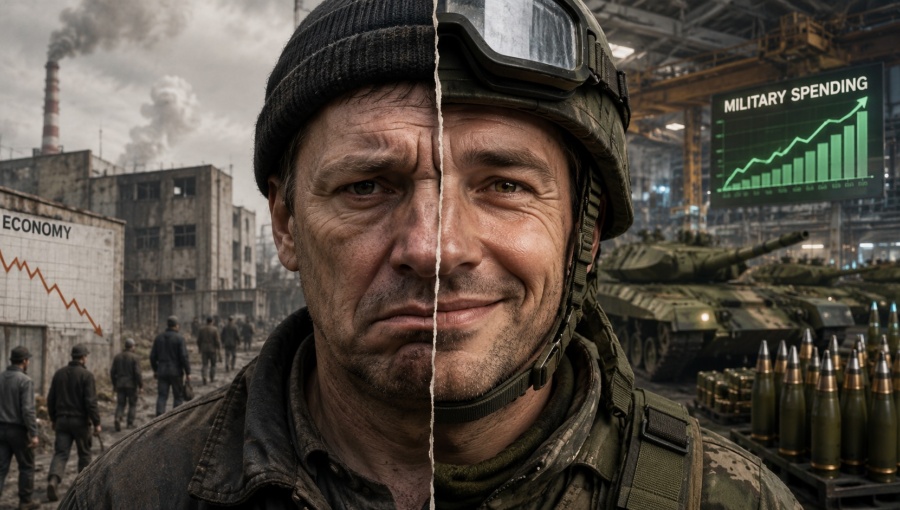
Russia’s economy is increasingly split into two: a booming military industrial complex and a dilapidated civilian sector that has fallen into recession. KSE analysts argue the gap between these two is now so big that a commodities boom won’t be enough to fix it. / bne IntelliNewsFacebook
By Ben Aris in Berlin June 23, 2026

Russia is enjoying an unexpected energy windfall from the conflict in Iran, but soaring oil revenues are proving insufficient to offset mounting fiscal pressures and a rapidly slowing economy, according to the latest Kyiv School of Economics (KSE) Institute Russian chartbook for May.

The report paints a picture of an economy increasingly dependent on wartime spending and high commodity prices while facing deepening structural weaknesses that even the surge in Gulf war-related oil revenues may not be able to resolve.

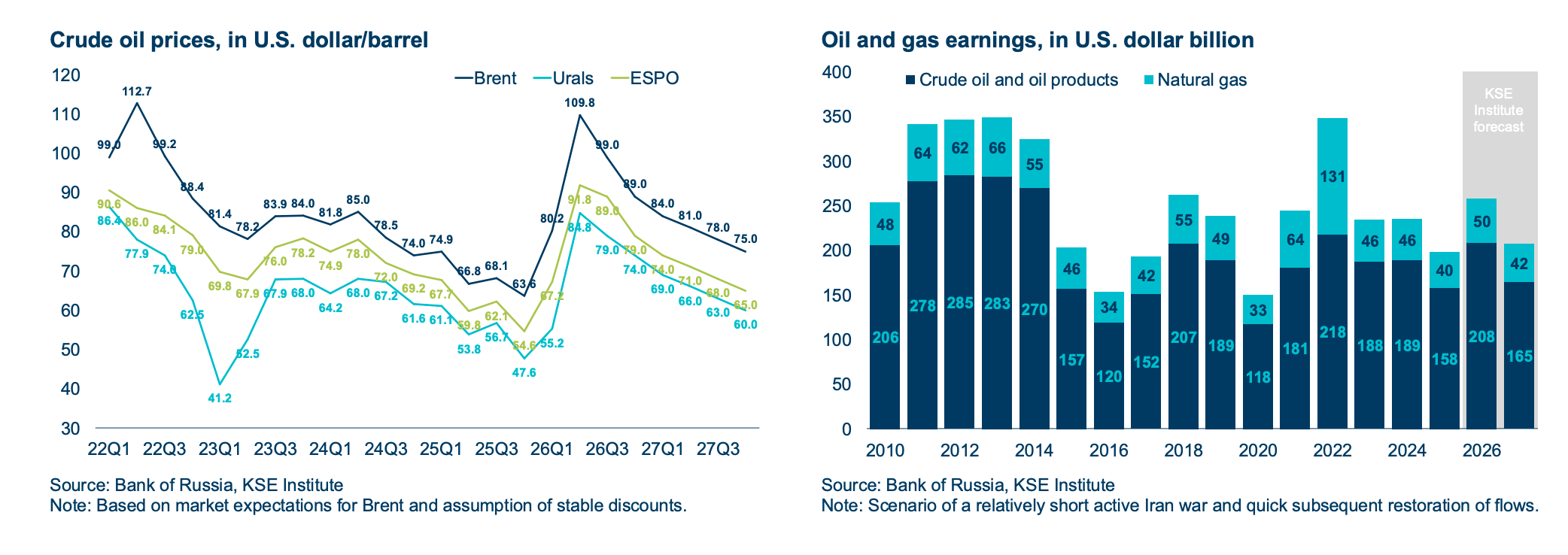
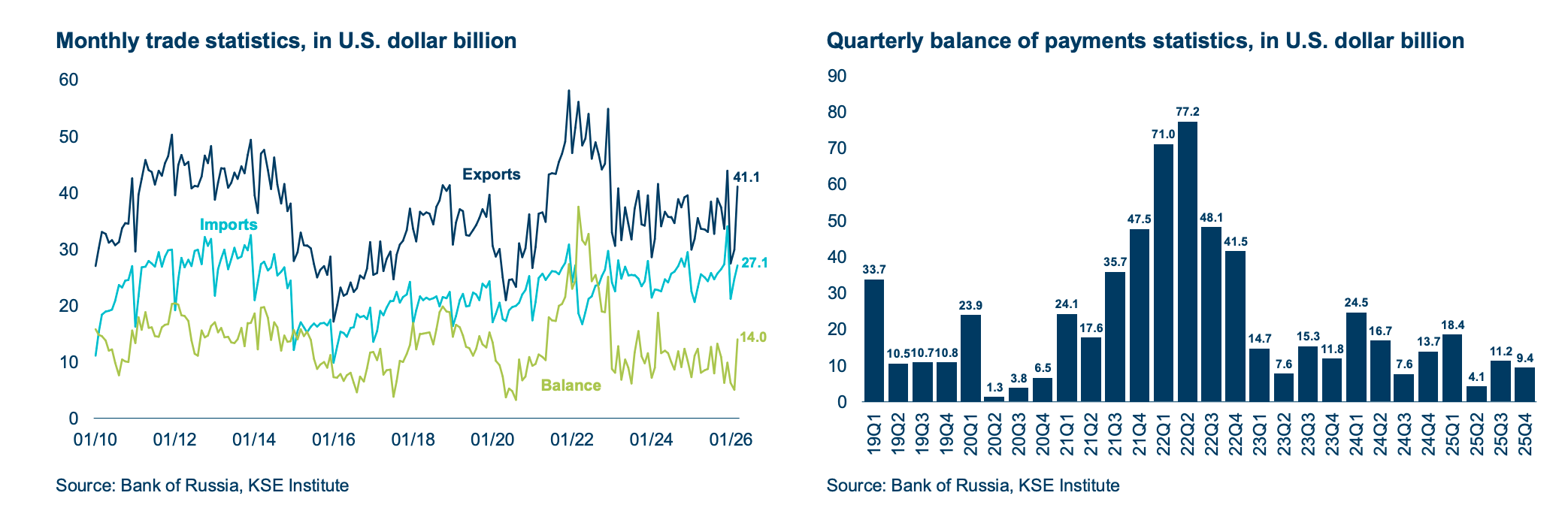
The immediate beneficiary of the conflict in the Middle East has been Russia's oil sector. As fears of supply disruptions pushed global crude prices sharply higher, the price of Russian oil rose from $43.7 per barrel in January and $47.4 in February to $78.3 in March and $95.1 in April.

The increase translated directly into higher export earnings. Russia's oil export revenues rose from an average of $10.4bn per month in January and February to approximately $19.1bn-$19.2bn in March and April, nearly doubling within two months.

"The Iran war's impact on Russia is increasingly materializing," the report said, but unless the high prices are sustained all year, the windfall will not be enough to close the burgeoning budget deficit.

Because Russia's taxation system calculates oil extraction taxes using the previous month's prices, the benefit only appeared in public finances with a delay. Base oil and gas revenues doubled in April compared with March as the earlier rise in export prices filtered through to the budget.

The surge in foreign currency earnings has also strengthened the ruble, which appreciated to around RUB71 against the dollar, its strongest level since early 2023. While that helps contain inflation, it also limits the budgetary benefits of higher oil prices because export revenues convert into fewer rubles. Because oil prices in the budget are denominated in dollars, but spending is denominated in rubles, the government is the biggest loser from a strong ruble as it means less ruble-cash to spend.

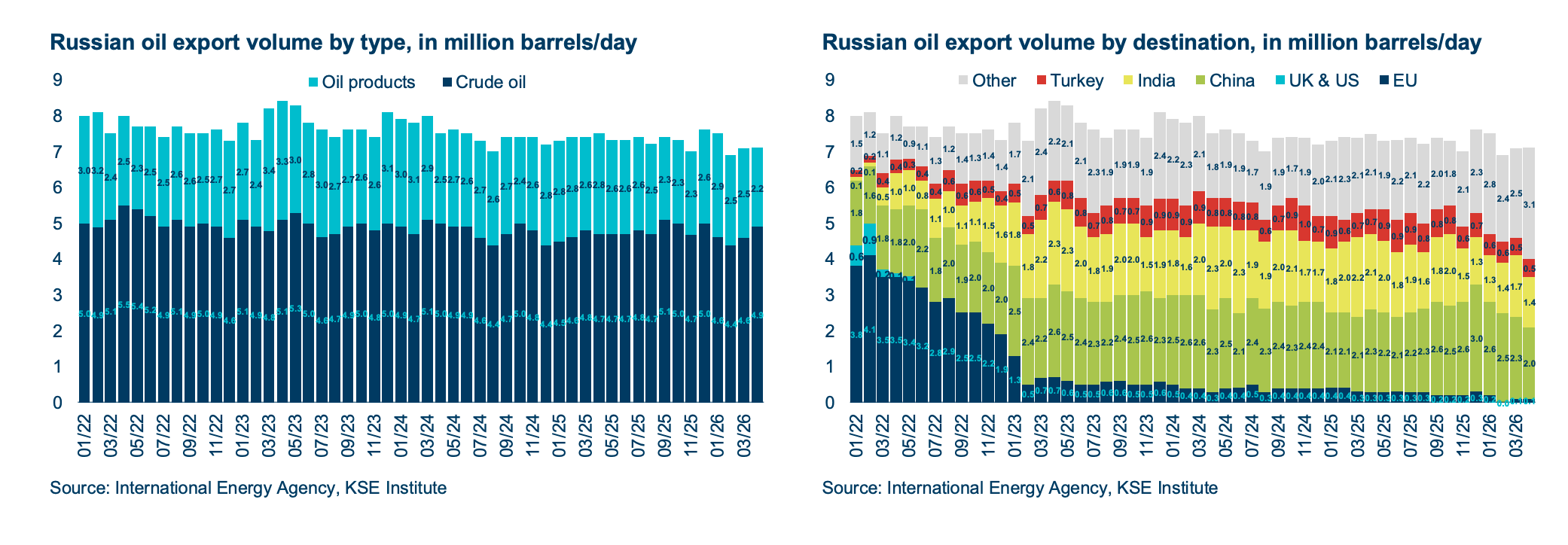
Moreover, sanctions continue to constrain Russia's ability to increase production volumes, preventing the country from fully capitalising on the higher price environment.

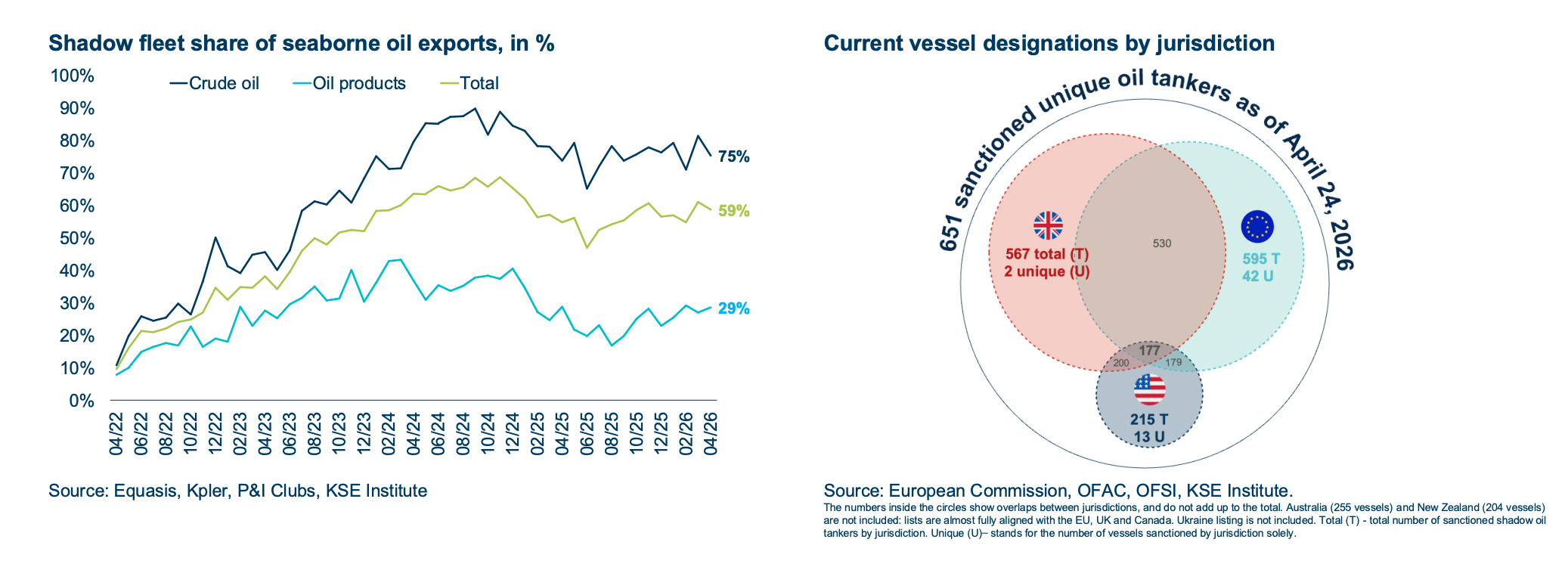
"Russia has not been able to benefit more from high prices as production expansion is hindered by sanctions," KSE noted. The EU's ban on petroleum products refined from Russian crude oil in third countries has sharply reduced the flow of Russian-linked fuel into Europe, but significant loopholes remain and products derived from Russian oil continue to reach other Western markets, KSE reports.


The temporary boost from energy markets has done little to address the government's growing fiscal challenges. According to the report, non-oil-and-gas revenues remain weak as economic growth stalls – VAT is by far the most important source of budget revenues, making up 40% of the total, while oil and gas revenues account for about 25% -- while spending continues to rise as an increasing share of the cost of the war is transferred directly onto the federal budget.

Higher oil prices have also created an additional burden. The government has been forced to increase subsidies designed to shield domestic consumers from rising fuel prices, offsetting some of the gains from stronger export earnings.

As a result, the federal budget deficit continues to widen. The government recorded a deficit of RUB1.3 trillion in April alone, bringing the cumulative shortfall for the first four months of the year to RUB5.9 trillion, or roughly $75bn and 2.4% of GDP. The official budget deficit target for this year was 1.6%, but Russian Finance Minister Anton Siluanov has already admitted that the Ministry of Finance (MinFin) is going to miss that target. The deficit figure is already double the level recorded during the same period in 2025 and already stands 55% above the government's full-year deficit target.

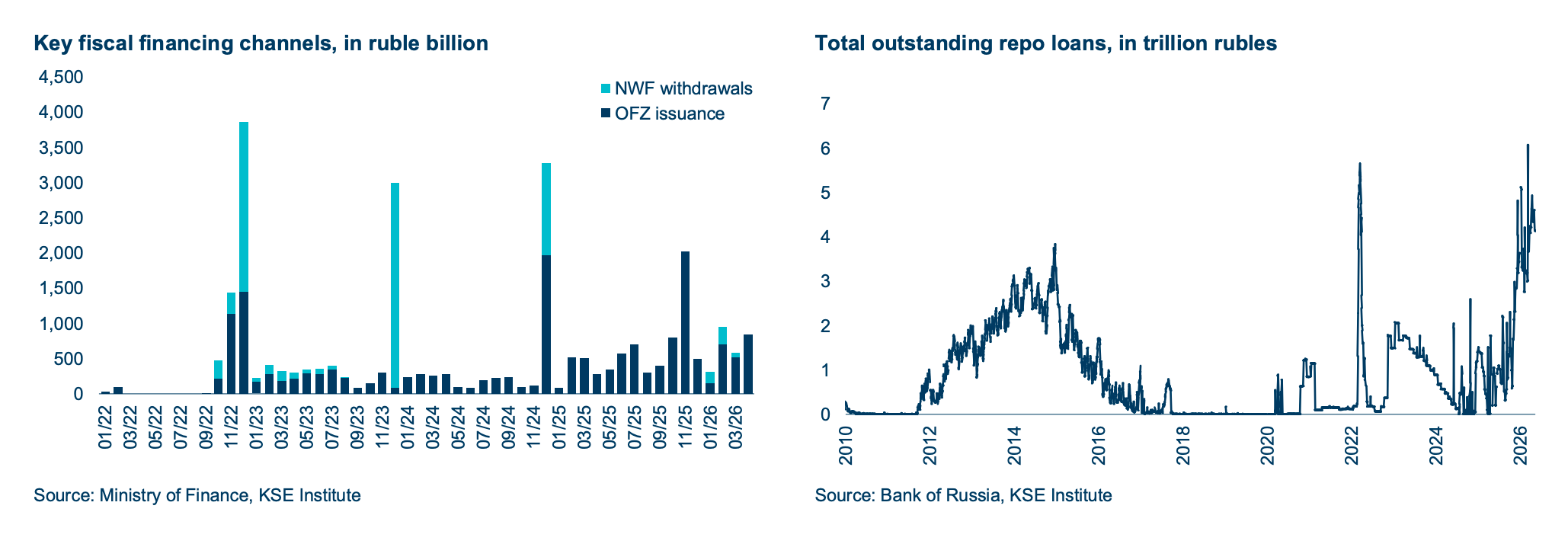
To finance the gap, MinFin has increased issuance of increasingly expensive OFZ domestic government bonds and drawn funds from the National Wealth Fund (NWF), Russia's sovereign wealth vehicle. Yet these sources have proven insufficient. The total outstanding OFZ volume has risen from RUB20 trillion and is now approaching RUB30 trillion during the last four years.

According to KSE, the government was forced to draw an additional $41bn from other sources, including Treasury accounts, to cover funding needs during the first quarter.

"As these decline and there is no end in sight for Russia's budget challenges, domestic borrowing and/or NWF utilization will need to increase in the coming months," the report said.

Behind the fiscal deterioration lies an economy that is rapidly losing momentum.

After expanding by more than 4% annually in both 2023 and 2024, Russia's growth slowed sharply to just 1% in 2025. Preliminary estimates from Rosstat indicate that GDP contracted by 0.2% y/y in the first quarter of 2026.

KSE argues that the real decline was likely significantly larger because the contraction occurred against the weakest comparison period of the previous year.

"The economy is grinding to a halt," the report concluded.

The slowdown reflects a growing divide between Russia's military and civilian economies. Defence-related sectors continue to expand thanks to state spending, but large parts of the civilian economy have entered recession. High borrowing costs, labour shortages and declining private investment are weighing on activity as companies compete with the military-industrial complex for workers.

The Central Bank of Russia has succeeded in bringing inflation under control through a prolonged period of tight monetary policy. However, KSE warns that worsening fiscal conditions may prevent policymakers from cutting interest rates aggressively enough to revive private-sector growth.

"While war-related sectors still perform well, the civilian economy has entered a recession as the cost of capital remains high and businesses compete with the military for labour," the report said.

For now, higher oil prices are providing the Kremlin with a temporary reprieve. But KSE's analysis suggests that Russia's underlying economic problems have grown too large to be solved by another commodity boom. Even with oil prices near $100 per barrel, economic growth has stalled, the budget deficit is widening and the government is increasingly relying on debt issuance and reserve funds to sustain wartime spending.

In previous crises, Russia's vast energy resources often provided an escape route. This time, the report argues, the structural costs of war are proving far harder to overcome.


 France, Germany reach deal on arms maker KNDS, opening door to stock market


France and Germany announced Monday a deal for the joint governance of Amsterdam-headquartered arms maker KNDS, paving the way for a blockbuster share offering as they seek to boost faltering European defence cooperation.


Issued on: 22/06/2026 - RFI

A view of a Leopard 2 tank at a production line in Unterluess, Germany, 12 February, 2024. AP - Fabian Bimmer

The deal envisages Paris and Berlin holding equal stakes in the maker of tanks and other military gear, at a time when the continent is contending with a hostile Russia and worsening US ties.

KNDS has a portfolio ranging from Leopard 2 and Leclerc tanks to artillery and armoured vehicles, and is a key supplier to European militaries.

The announcement comes just weeks after the collapse of the Franco-German FCAS project to build a next-generation fighter jet, which dealt a severe setback to efforts to strengthen Europe-wide defence initiatives.

The KNDS deal "reflects the shared determination of France and Germany to strengthen Europe's industrial and defence capabilities, to support their armed forces, and to reinforce European sovereignty in an enduring fashion," according to a joint statement issued by the French presidency.
The German government also said the deal would bolster Europe's defence capabilities.

"The government aims in particular to strengthen bilateral and European armaments cooperation. Cooperation with France plays a key role in this regard," it said in a statement.


Leclerc tanks drive down the Champs-Elysees avenue during the Bastille Day parade, Monday, July 14, 2025 in Paris AP - Christophe Ena

Strategic importance

KNDS, created in 2015 through a merger of French and German companies, is currently half-owned by the French government via a holding company, with the rest of the shares owned by the Wegmann family of Germany.

The German owners are seeking to sell their stake and have been negotiating with the German government.

After much internal wrangling, Berlin announced in May that it would seek to acquire a 40-percent holding when the company goes public.

In Monday's announcement Berlin and Paris said they were aiming to become shareholders in KNDS, with equal stakes.

Merz and Macron agree to scrap FCAS joint fighter jet programme

KNDS chief executive Jean-Paul Alary said the agreement "confirms the strategic importance of KNDS for Europe's defence capability, industrial base and technological sovereignty".

The deal would allow KNDS to move forward with a dual stock market listing in Paris and Frankfurt, in one of Europe's most hotly anticipated IPOs of the year.

The company has previously voiced frustration at alleged foot-dragging by the German government, which reports say has threatened to delay a listing that could value the company at 15 to 20 billion euros ($17 to $23 billion).
Tight timeline

KNDS is a key player in a joint Franco-German project to develop a new battle tank, dubbed the Main Ground Combat System (MGCS) initiative.

The agreement Monday and subsequent IPO boosts the chances that this delayed programme might go ahead, after the FCAS failure fuelled fears it might also be scrapped.

But the timeline is tight if KNDS wants to launch its IPO in July as hoped, according to a confidential German defence ministry document outlining the latest details of the deal, circulated to lawmakers and seen by French news agency AFP.

'Under destruction': Europe's future security in question at Munich conference

The ministry said parliament's budget committee would have to approve Berlin's stake acquisition when it meets on Wednesday for the IPO to proceed next month.

The committee has to sign off on any substantial defence procurements.

The ministry acknowledged the "tight schedule" and also noted that "agreement with the Wegmann family on the purchase contract must be reached".

Multiple regulatory approvals for the IPO are also needed and there is a risk they might not be ready in time, it said.

(with AFP)


Rheinmetall sinks as Germany axes mega-warship project after spending €2.3bn

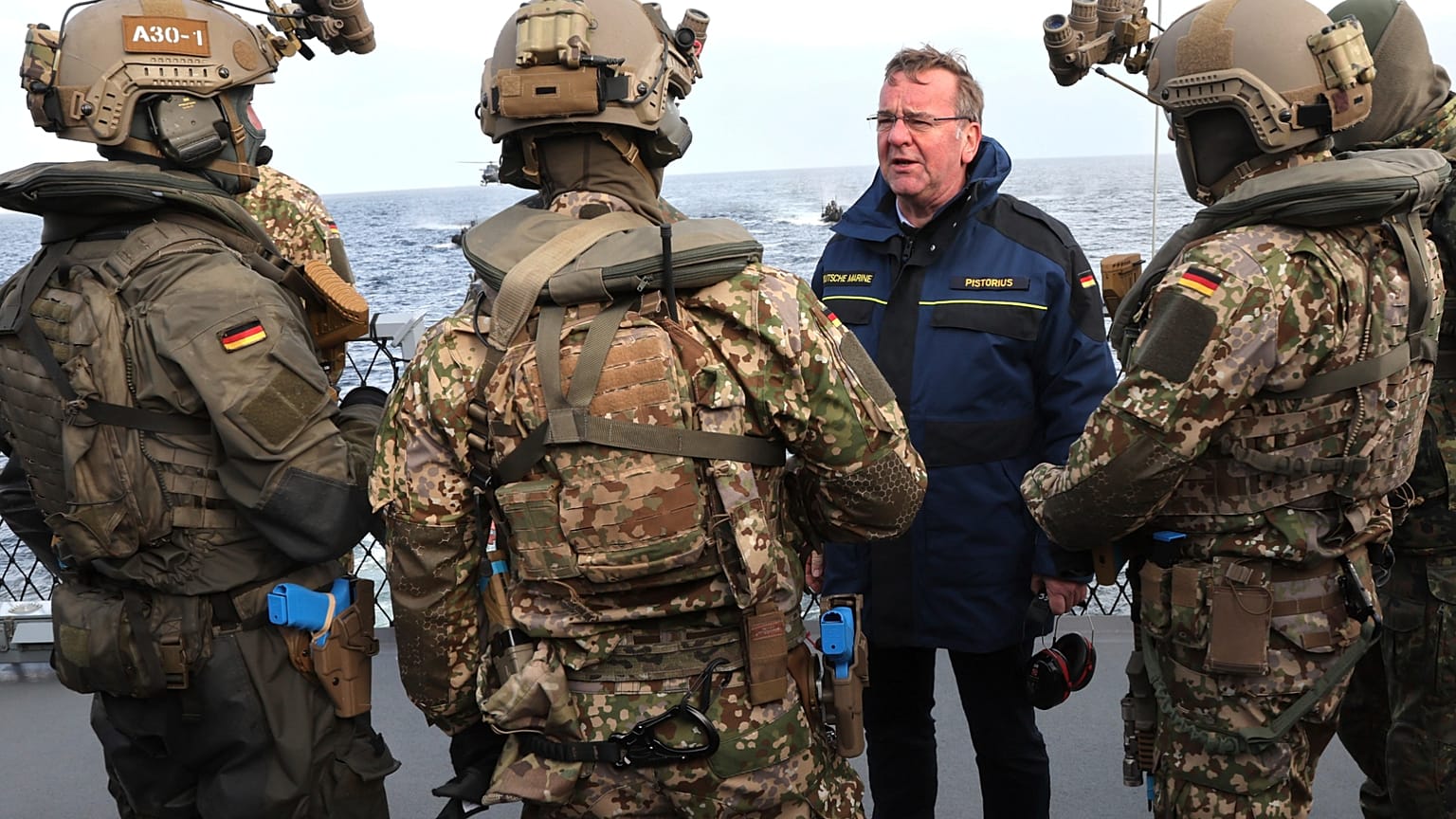
Defence Minister Boris Pistorius aboard the frigate Hessen with a naval special forces unit in 2023
Copyright AP Photo


By Kirsten Ripper & Euronews, SPIEGEL
Published on

Rheinmetall shares fell sharply after Berlin scrapped its F126 frigate programme, a project that has already cost taxpayers around €2.3bn.

Rheinmetall shares fell as much as 13% after the German government scrapped plans for a major warship order from the firm, which would have been the biggest warship commission since the Second World War.

The news magazine "Der Spiegel" reported on Tuesday that the multi-billion-euro project to build six of the world’s largest frigates, the F126, had been cancelled.

The ministry in Berlin said the decision was a response to significant delays, foreseeable cost increases and other risks. However, cancelling the contract could prove costly for taxpayers.

At the same time, Defence Minister Boris Pistorius wants to procure eight smaller frigates instead. To that end, Berlin awarded new contracts to defence contractor TKMS, whose shares rose about 10% in early trading on Wednesday.

According to the newspaper, the warship project was first launched by Ursula von der Leyen (CDU) when she was defence minister. In 2020, her successor, Boris Pistorius (SPD) ordered the super-frigate F-126 in the Netherlands from the Damen shipyard.

However, because of delays and other problems, German shipbuilder Lürssen Naval Vessels – since taken over by Rheinmetall in March 2026– was put in charge of the project.

In March 2026, Berlin approved the procurement of four TKMS-built MEKO A-200 frigates, estimated to cost about €1bn each, according to FT reporting, amid mounting concerns over delays to the six-vessel F126 programme.

More than €2bn already invested in the project

According to reporting by Die Welt, citing the German Defence Ministry, the F126 programme had already incurred around €2.3bn in costs before its cancellation. These costs include design work, software development, construction activities and payments to contractors.

The ministry says that continuing the programme would have pushed total costs above €18bn, compared with an original programme value of roughly €10bn for six frigates.

Instead of the F126 frigates, which were most recently scheduled for delivery in 2029, a total of eight smaller MEKO A-200-class frigates are now expected to be ordered from TKMS, extending the original order for four vessels placed in March.

The warships now being considered, at around 120 metres in length and with a displacement of 4,200 tonnes, are much smaller than the F126, which was designed to be 166 metres long with a displacement of 10,500 tonnes. Originally, six warships were to be procured; now there could be eight.

The navy's top brass has reportedly backed the defence minister's decision to revise the frigate plans.

Will the Bundeswehr be deployed in the Strait of Hormuz?

Most recently, Germany, the United Kingdom and France have discussed whether and how they could take part in clearing mines in the Strait of Hormuz, so that this vital global shipping lane can once again be used without hindrance after the Iran war.

How important the German navy could become in future is also evident from the fact that the frigate "Fulda" and the support vessel "Mosel" were dispatched towards the Middle East weeks ago. On board are around 140 Bundeswehr soldiers. Off the Iranian coast, the German navy would receive support, among others, from the French aircraft carrier "Charles de Gaulle".

In the event of a lasting ceasefire, 57% of respondents in the ZDF Politbarometer poll said they were in favour of deploying the Bundeswehr in the Strait of Hormuz, while 38% opposed such a mission.


LA REVUE GAUCHE - Left Comment: Search results for permanent arms economy


Exceptionally good condition: Second World War assault gun found

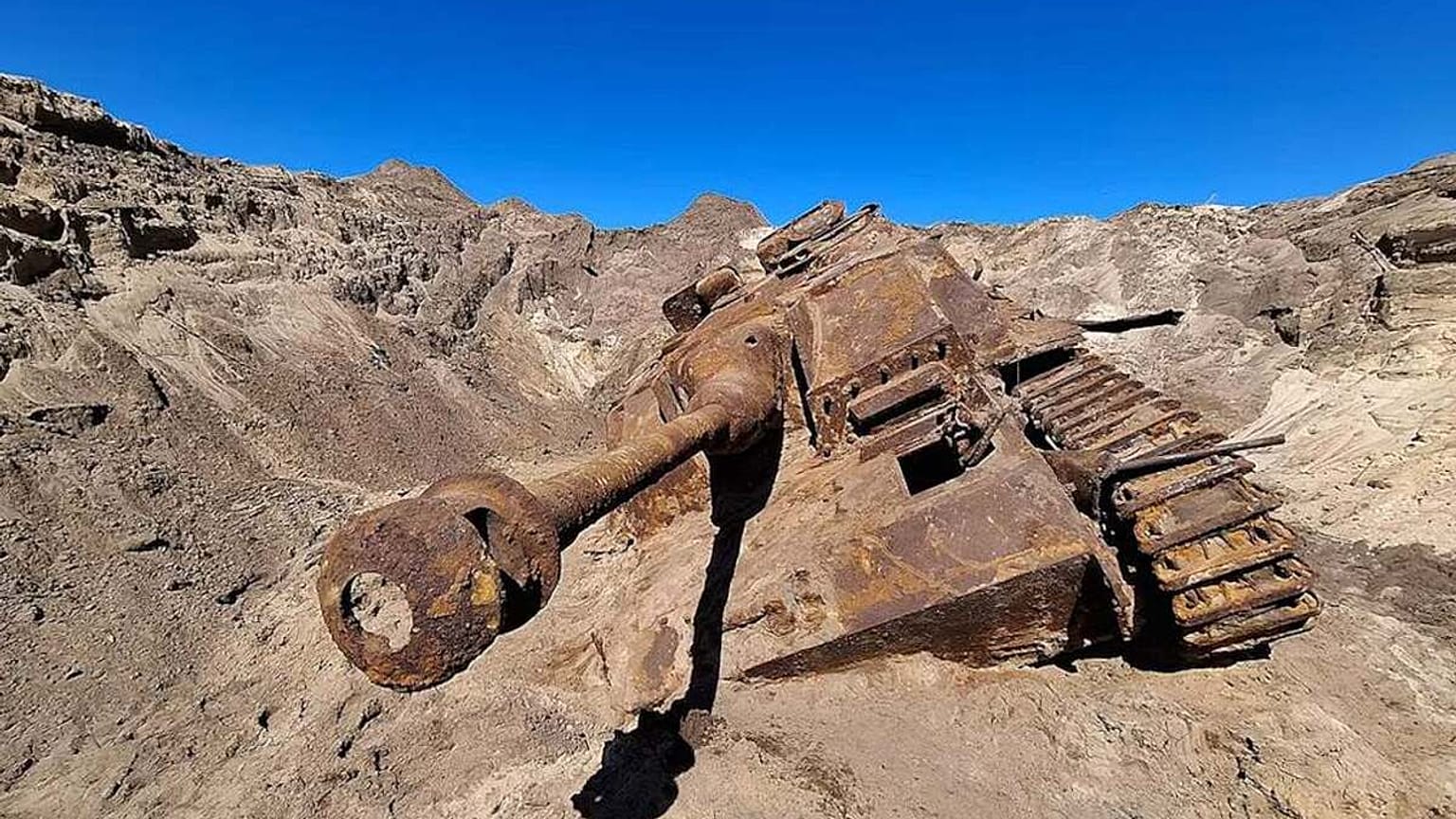
Unexpected find during construction work at Nordholz naval air base: a StuG III assault gun from the Second World War
Copyright A. Hüser/Archäologische Denkmalpflege Landkreis Cuxhaven

By Nela Heidner
Published on

During construction work at the Nordholz naval air base on the North Sea, workers uncovered a surprise: an almost intact 29‑tonne StuG III assault gun from WWII, buried in the sand for 80 years.

According to Germany’s Federal Agency for Real Estate, such finds usually only yield isolated remains or vehicle parts. In this case, however, workers came across an almost completely preserved assault gun – a rare relic from the final months of the Second World War in north-west Germany

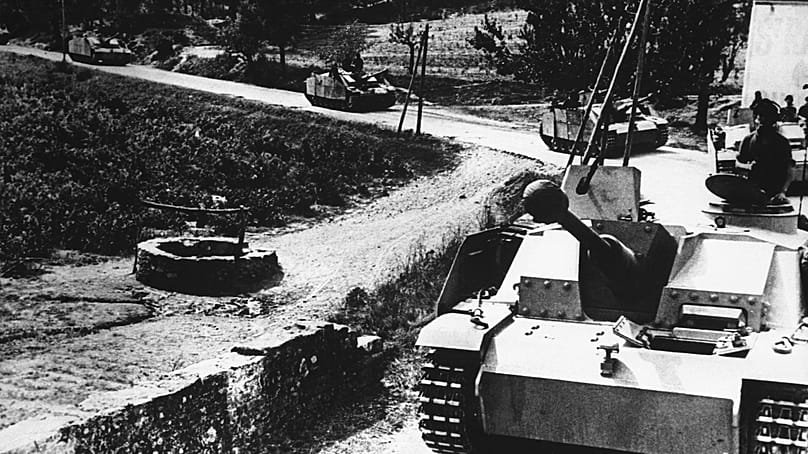
German Sturmgeschütz III on its way to a new position on the French Mediterranean coast, 2 Oct. 1943. (AP Photo) AP Foto

The vehicle found is a StuG III assault gun, one of the Wehrmacht’s most widely produced tracked vehicles. Unlike conventional tanks, the vehicle did not have a rotating turret. Instead, the gun was fixed facing forwards, so the entire vehicle had to be manoeuvred in order to aim.

The armaments group Rheinmetall built more than 9,300 of them at the time, and the weapon was highly regarded. Production continued into the final weeks of the war and did not end until April 1945. The assault guns were used primarily to combat enemy tanks.

The vehicle that has now been uncovered belonged to a brigade based in Nordholz that was deployed mainly in France. It has not yet been possible to prove conclusively whether this particular assault gun also saw action there. Experts believe, however, that the vehicle was in service for an extended period. This is suggested by at least 17 white markings on the gun barrel. According to the archaeologists, such markings were probably added for every enemy tank destroyed.

Crew of four soldiers: "Oppressively cramped"

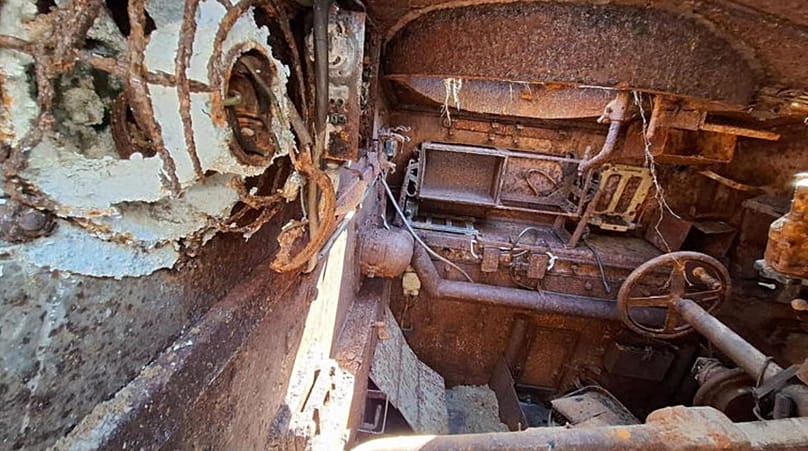
The vehicle can be opened without difficulty, archaeologist Andreas Hüser told dpa: "The view inside is very impressive." The driver’s seat has been preserved, as have the mountings for the gun. "It really is oppressively cramped."

A look inside the StuG III discovered in Nordholz A. Hüser/Archäologische Denkmalpflege Landkreis Cuxhaven


The assault gun’s crew consisted of four soldiers. While the driver sat in the front section of the vehicle, another soldier operated the gun. The commander coordinated the operation and gave the order to fire, while a fourth man was responsible for reloading the weapon.

Archaeologists believe the assault gun was buried by the Allies shortly after the end of the war, together with other military equipment. Excavations also brought to light remains of ammunition and small grenade fragments.

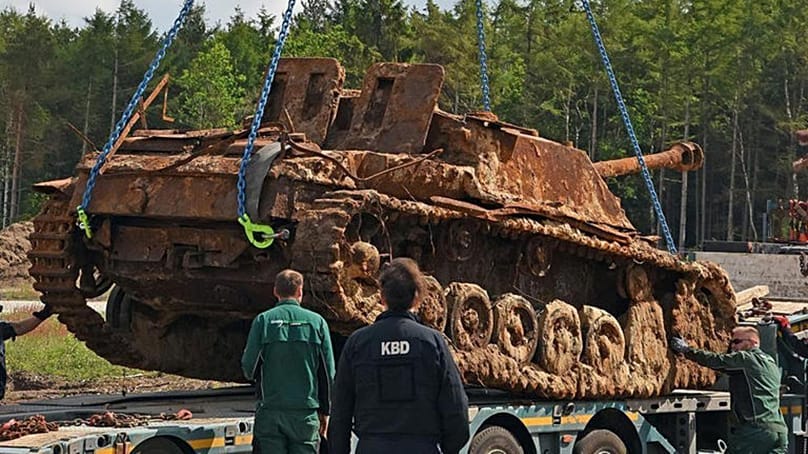
After recovery, the assault gun is loaded up A. Hüser/Archäologische Denkmalpflege Landkreis Cuxhaven

Because the vehicle lay at the edge of an embankment in dry sand, it has been preserved exceptionally well. In several places, remnants of the original camouflage paint are still visible, and parts of the running gear appear almost unscathed despite having lain in the ground for decades.

In August, the assault gun is to be taken to Munster in the Lüneburg Heath, where specialists will stabilise and restore it. It is then due to be handed over to the Bundeswehr Military History Museum in Dresden, where it will be put on public display.