Wednesday, June 24, 2026

Cuba has been abandoned by those who claim to challenge the unipolar order
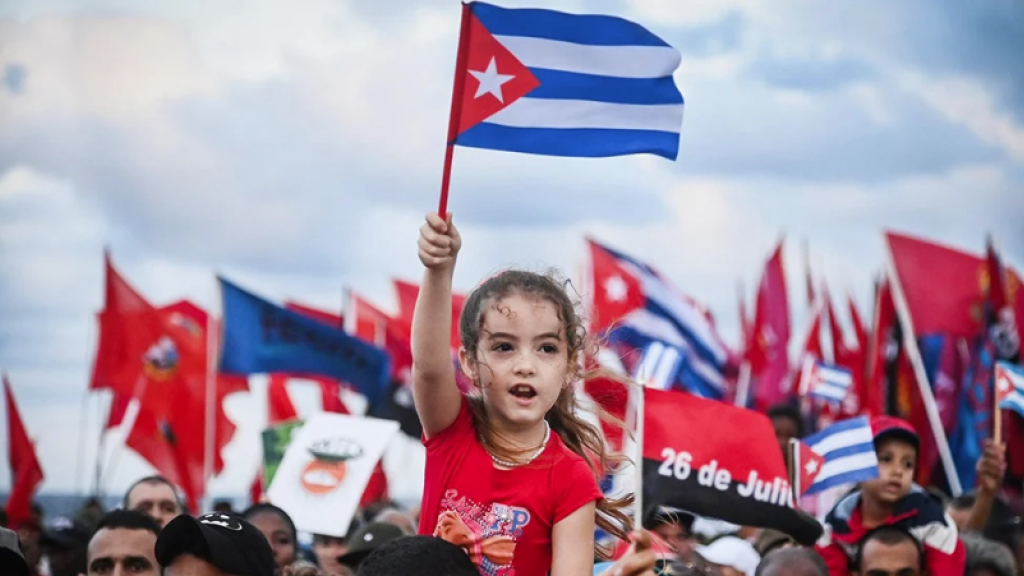
Cuba flag at rally

First published at CADTM.

The title is taken from Josué Veloz Serrade’s important article1 published by the Cuban website La Tizza, “Cuba at the crossroads of hypocritical multilateralism”, written in March 2026 and subsequently published by CADTM (in Spanish and French). It was Aurélio Tejeda who sent it to me from Havana. In sending me the article by Josué Veloz Serrade, whom I did not know, Aurélio wrote: “This is the best thing I’ve read in recent months.” (“Esto es lo mejor que he leído en estos últimos meses”). This endorsement from Aurélio convinced me to read the article. 

Aurelio Alonso Tejada, born in Havana in 1939, has been one of Cuba’s leading Marxist intellectuals and social analysts since the 1959 Revolution. A sociologist, philosopher and essayist, he is known for his work on Cuban socialism, religion, geopolitics and the transformations of contemporary Cuban society. I have known him personally for over 30 years. He has often expressed critical views on the situation in Cuba, and at times this has not been appreciated by the authorities, but he has always remained true to his revolutionary commitment and has stayed in Cuba, where his worth is widely recognised. Aurélio is one of the leading figures in contemporary Cuban critical thought. I met him at the same time as Fernando Martínez Heredia (1939–2017),2 Juan Valdés Paz (1938–2021), Rafael Hernández (1946), and Luis Suárez (1950).

Josué Veloz Serrade’s article is based on a fundamental idea: the current crisis facing Cuba, particularly the energy crisis, is not primarily the result of internal failings — although there are some — but the culmination of more than six decades of an economic blockade imposed by the United States. According to the author, the aim of this policy is not merely to sanction the Cuban government, but to gradually bring about an economic and social implosion with a view to bringing about regime change. One might add that Washington is seeking a surrender similar to that which it secured from the Venezuelan authorities in January 2026.

One of the central themes of the article is a critique of what the author calls “hypocritical multilateralism”. He argues that the major powers which present themselves as defenders of a multipolar world — in particular Russia and China — confine themselves to mere declarations of solidarity. They condemn the blockade in international forums, but refuse to take sufficiently strong concrete measures that would enable it to be circumvented, for example by supplying more oil, creating genuinely effective alternative financial mechanisms or ensuring the protection of supplies destined for the island. For the author, this attitude reveals that they seek above all to improve their position within the existing world order rather than to transform it.

The article also criticises the progressive governments of Latin America, notably those of Brazil and Colombia. Although they publicly express their support for Cuba, they are reportedly unwilling to engage in a genuine confrontation with US policy. The author considers this caution to be a strategic error, as abandoning Cuba actually weakens all the forces that claim to defend the sovereignty of the countries of the Global South. The author sums it up: 

By allowing a sovereign project to be destroyed by the Empire without any consequences, they are sending a message to their own populations as well as to other secondary actors: solidarity is a luxury we cannot afford; when your turn comes, you will be on your own.

Another important idea is the rejection of the myth of self-sufficiency. According to the author, no country in the world is truly self-sufficient, not even the United States, China or Russia. Demanding that Cuba develop autonomously despite the blockade is therefore an unfair and unrealistic demand. This demand serves primarily to shift the blame for the crisis onto the Cuban authorities and to downplay the role of sanctions.

The author also challenges the narrative that portrays Cuba as a “failed state”. In his view, this characterisation confuses cause and effect. Economic difficulties, shortages and emigration are interpreted as evidence of the failure of the Cuban system, whereas, according to him, they are largely the result of external economic aggression. The “failed state” narrative thus serves the political function of justifying the abandonment of Cuba, or even of paving the way for future intervention.

To support its argument, the article draws several historical parallels. In particular, it compares Cuba’s situation to that of the Spanish Republic, which was abandoned by the Western “democracies” in the face of Franco, whilst Hitler and Mussolini intervened militarily to secure Franco’s victory. The article also refers to the experiences of Vietnam and Iran, which are said to illustrate the capacity to resist external aggression. These examples aim to show that abandoning a country under attack can have geopolitical consequences far broader than its national fate alone.

Josué Veloz Serrade presents Cuba as a political symbol. The author considers that the island stands as proof that it is possible to resist the world’s leading power for decades whilst preserving significant social achievements, particularly in the fields of healthcare, education and culture. It is precisely this capacity for resistance that makes Cuba a troubling example for the dominant international order.

The author also analyses the changes that have taken place within the Cuban diaspora, particularly that based in Miami. In his view, the Cuban community settled in the United States is no longer the same as it was in the 1960s. At that time, the exiles consisted largely of members of the former Cuban elites — landowners, entrepreneurs, professionals and political opponents who had left the island after the 1959 Revolution. This first generation formed the hard core of anti-Castro sentiment and played a central role in the formation of the powerful Cuban-American lobby in favour of maintaining the blockade.

The author argues that today the sociological composition of the diaspora has changed profoundly. The majority of Cubans living in the United States are now economic migrants who have arrived over the past few decades. They have generally maintained very close family, emotional and cultural ties with Cuba: parents, children, brothers and sisters still live on the island, and many regularly send remittances to their families.

Building on this demographic shift, Josué Veloz Serrade develops a political argument: in the event of a major escalation or even a hypothetical US military intervention against Cuba, Washington could no longer count on the unanimous support of the Cuban-American community, as might have been the case in the 1960s. For many Cuban-Americans, bombing or attacking Cuba would amount to putting their own families, loved ones and places of origin at risk.

The author goes even further by referring to a sort of “reverse fifth column”: whilst Miami was once seen as a rear base for the opposition to the Cuban Revolution, it could now, under certain extreme circumstances, become a hotbed of opposition to US policy towards Cuba. Emotional and family ties would then take precedence over ideological divisions.

Finally, the article concludes with a call to action. Declarations of solidarity are deemed insufficient. The author calls on those states that claim to support Cuba to take concrete measures: supplying oil, creating alternative financial mechanisms, safeguarding supplies and exerting genuine diplomatic pressure against the blockade. He also calls on international solidarity movements to put pressure on their governments so that support for Cuba ceases to be merely symbolic and becomes an effective policy.

Comments on the article ‘Cuba at the crossroads of hypocritical multilateralism’

I broadly agree with the analysis and views expressed by Josué Veloz Serrade. I would add the following observations.

1. Russia and China’s abandonment of Cuba.

The attitude of Russia and China is indeed as described by the author. The consequences of their inaction could be dramatic. Putin’s Russia is abandoning Cuba in the face of Washington and using this in its negotiations with Trump to ensure that the latter allows it maximum room for manoeuvre in Ukraine.3 Putin has done the same with regard to Venezuela, Iran, Lebanon and the Palestinian people. 

Since the start of his second term, Donald Trump has secured an agreement from Vladimir Putin that, beyond verbal protests, he will not react to acts of aggression and war perpetrated by Washington against Moscow’s allies, be it Venezuela or Iran, or in relation to the total blockade of Cuba in place since the end of January 2026. Trump has marked a shift from the policy adopted during his first term, in which he treated China and Russia as equals, viewing them as adversaries seeking to challenge the Washington-dominated international order.

Donald Trump is sending a message to Putin that he is prepared to accept Moscow’s use and abuse of force in its geographical sphere of influence – notably in Ukraine — just as Washington does in the Americas, the Middle East and elsewhere. Trump asserts his right to use force anywhere in the world and effectively recognises Putin’s right to do the same within a more limited sphere corresponding to part of the territory of the former Russian Empire during the Tsarist era and the former Soviet Union. This follows the classic logic of an implicit division of spheres of influence between major imperialist powers. Putin has stated that the international strategy document published by Trump in December 2025 largely coincides with Moscow’s vision.4 

During the lengthy speech he delivered in St Petersburg in early June 2026 at the International Economic Forum before an audience of international figures (state representatives and business leaders), Putin made no reference to Cuba, Iran, Venezuela or Gaza.5 And he mentioned what he called the “conflict in Ukraine” only once. His speech as a whole confirms the criticism expressed by Josué Veloz. 

As for China, although Trump has launched an offensive against it, China has decided not to react and not to come to Cuba’s aid, with a view to limiting Washington’s economic, tariff and military aggression and retaining maximum room for manoeuvre in its sphere of influence, including with regard to Taiwan.

During the G7 summit in Évian-les-Bains (June 2026), Donald Trump publicly stated that he was grateful to Chinese President Xi Jinping and Russian President Vladimir Putin for their ‘neutrality’ in the war with Iran;6 he could have added Cuba and Palestine to the list.

Failing to come to the aid of the Cuban people in danger serves as a bargaining chip for Russia and China in their negotiations with the United States. Russia and China could, either jointly or separately, challenge the total blockade imposed by Washington on Cuba without taking insurmountable risks.

2. The governments of Lula in Brazil and Claudia Sheinbaum in Mexico

As regards the progressive governments of Latin America, I agree with the strong criticism levelled at them: their failure to take decisive action against Washington’s blockade of Cuba is detrimental. Josué’s criticism of Brazil is entirely justified. To place the stance of Petro’s Colombia in the same category as that of Brazil strikes me as an exaggeration. The Colombian government does not have the same power nor does it have a scope for manoeuvre comparable to that of Brazil.

Whilst Josué does not do so in his article, it is also legitimate to direct criticism at Claudia Sheinbaum’s government. However, the facts need to be clarified. Until the end of 2025, Cuba’s main oil supplier remained Venezuela. Reuters reported in January 2026 that in 2025 Venezuela had supplied the island with around 26,500 barrels per day, compared with around 5,000 barrels per day from Mexico, which was then in second place.7 It was only after Venezuelan shipments were halted, in late 2025 and early 2026, that Mexican deliveries became a particularly important source of energy for Cuba.8 Claudia Sheinbaum herself subsequently acknowledged that, in this new context, Mexico had become a “major supplier” to the island, whilst pointing out that this role had previously been played by Venezuela.9 

Faced with the tariff and financial threats brandished by Donald Trump, Mexico then suspended its direct shipments of crude oil and redirected its aid towards humanitarian deliveries and diplomatic efforts.10 The criticism that can be levelled at the Mexican presidency is that it ceased a supply that had become crucial following the breakdown in relations with Venezuela. At the same time, Claudia Sheinbaum is actively negotiating with Washington to secure special exemptions so that Cuba can once again receive energy supplies.

As oil-producing and exporting countries led by progressive governments, Brazil and Mexico should send oil to Cuba even if the pressure, tariff reprisals and threats from Trump are intense. It should be noted that Brazil’s crude oil exports generally amount to between 1.5 and 2 million barrels per day. Mexico’s oil exports amount to between 0.5 and 0.8 million barrels per day. Cuba needs to import 80,000 to 100,000 barrels per day. Supplying Cuba with oil is therefore feasible.

The best option would be an agreement between Lula’s government in Brazil and Sheinbaum’s government to jointly defy the blockade and regularly supply the oil Cuba needs, in addition to the humanitarian aid in the form of food, medicines, etc., which is currently being provided by these two governments. Ships carrying oil and other aid to Cuba should be jointly protected by the Mexican and Brazilian navies.

3. The trio of Spain, Brazil and Mexico has so far confined itself to verbal protests, whilst Cuba is in urgent need of practical support

In mid-April 2026, a summit entitled Global Progressive Mobilisation (GPM) was held in Barcelona. The figurehead was the Spanish Prime Minister, the socialist Pedro Sánchez. Also present were Luiz Inácio Lula da Silva, Claudia Sheinbaum, Gustavo Petro and the Uruguayan President Yamandú Orsi, as well as Cyril Ramaphosa, the South African President.

The Mexican, Spanish and Brazilian governments adopted a joint declaration in defence of Cuba against Trump’s policies, but they did not decide to jointly supply the oil that Cuba so desperately needs.

A solidarity front with Cuba led by the trio of Spain, Brazil and Mexico, with a view to jointly supplying oil to Cuba, would make it much more difficult for Trump to respond harshly. But as Josue Veloz makes clear in his article, merely issuing statements of support for Cuba is absolutely not commensurate with the stakes and the very real threats endangering the survival of the unique experiment that Cuba represents in the eyes of the world today.

A mobilisation campaign is needed in these three countries to put pressure on their governments so that, either separately or together, they supply the oil Cuba needs, in addition to delivering humanitarian aid (food, medicines) and equipment such as solar panels.

4. Solidarity among peoples

Josué Véloz is right to write: 

Cuba can count on something that no blockade can completely strangle: the peoples of the world, more so than states. It can count on the solidarity movements which, in every country, come together, organise themselves and prepare aid shipments.

Solidarity campaigns with Cuba have a long history and are deeply rooted in the practices of a wide range of movements. Very soon after Trump’s announcement in late January 2026 that the blockade against Cuba would be tightened, an initiative for a flotilla of boats bound for Cuba emerged, somewhat in the mould of the Sumud flotilla for Gaza, and arrived in Cuba in March. Protests outside US embassies have taken place on several occasions in various countries. 

In Mexico, a number of initiatives have been launched, notably by fishermen’s cooperatives, trade unions and political parties. In Brazil, trade unionists from the oil sector are calling on the government to supply oil to Cuba, as are left-wing parties and the Landless Workers’ Movement (MST). In May 2026, an oil workers’ trade union demonstrated outside the headquarters of the state-owned company Petrobras to demand that Brazil directly break the oil blockade by sending fuel to Cuba.

In Spain, the Rumbo a Cuba campaign was launched in March 2026. It brings together more than 20 social and political organisations to deliver emergency energy supplies to the island. These are organisations to the left of the Socialist Party, which leads the government but is taking no concrete action. The mission aims to supply and install photovoltaic solar panels at the Juan Manuel Márquez Paediatric Hospital in Havana. This initiative ensures the energy self-sufficiency of the intensive care unit, the laboratory and the intermediate care unit in the face of repeated power cuts in the Cuban electricity grid.

The operation relies on the chartering of the vessel Astral, owned by the maritime rescue NGO Open Arms. The ship set sail from the port of Barcelona in May 2026 and made solidarity and loading stops in Valencia, Málaga, Cádiz, Las Palmas de Gran Canaria and Lanzarote. It is heading for Cancún in Mexico and is expected to reach Havana in mid-July 2026. 150,000 euros have been raised to purchase the equipment being transported to Cuba.

It is also worth noting that more than 40 Spanish local authorities have resumed cooperation with Cuba. Furthermore, there are many aid initiatives being organised by various movements in the Basque Country.

However, it must be acknowledged that, so far, the solidarity movement amongst social movements and political organisations with the Cuban people has been far too weak, whilst the humanitarian situation on the island is deteriorating. Unfortunately, there has so far been no major protest movement in the United States against Trump’s criminal policy towards Cuba.

Under pressure and threats from Trump, major Spanish companies operating in the tourism sector, such as the Meliá hotel group, have announced that they are pulling out of the island. The flow of tourists has fallen sharply, further reducing foreign exchange earnings. Faced with the inaction of Russia, China, progressive Latin American governments, the Spanish government and the traditional left, the authorities in Havana find themselves at an impasse. Economic measures in response to Trump’s blackmail have been announced by the Cuban presidency.11 These will need to be analysed rigorously.

There is an urgent need to strengthen united initiatives of solidarity with Cuba in the face of the blockade. A race against time has begun.

The author would like to thank Christian Dubucq for his review of this article


Humanitarian aid provided by Lula’s Brazil and Sheinbaum’s Mexico

Between February and June 2026, Mexico chartered six official humanitarian aid convoys to Cuba. The first major shipment (February 2026): On the President’s direct instructions, two Mexican Navy logistics support vessels (the Papaloapan and the Isla Holbox) transported over 814 tonnes of supplies (including 536 tonnes of essential foodstuffs and hygiene items, as well as 277 tonnes of powdered milk). 

The second major shipment (late February 2026): The navy vessels transported 1,193 tonnes of food, including a large proportion of beans and infant formula. Further deliveries (May–June 2026): Other cargo ships, such as the Asian Katra, which arrived at the port of Havana on 7 June 2026, continue to supply the island with basic foodstuffs to alleviate food shortages.

Humanitarian aid provided by Brazil. In February 2026, Brazil urgently airlifted 2.5 tonnes of essential medicines to Havana. During March, Brazil dispatched a further emergency consignment comprising 80 tonnes of medicines.

Mexico’s humanitarian aid to Cuba is, on the whole, more substantial, more frequent and more direct than that provided by Brazil.

Mexico is deploying its own military: President Claudia Sheinbaum is directly using Mexican Navy warships (such as the Papaloapan, the Isla Holbox and the Huasteco) to break Cuba’s maritime isolation. These government military vessels deliver cargo from port to port.

Brazil, to avoid yet another conflict with Trump, goes via the UN: Brazilian aid takes the form of a pledge of foodstuffs channelled through the multilateral channels of the World Food Programme (WFP). Brazil supplies the goods, but their distribution depends on third-party logistics or on the ability of Cuban vessels to collect them.

Brazil is protecting itself legally: To prevent its companies (such as Petrobras) from being targeted by US sanctions, Brazil strictly classifies its shipments as multilateral ‘humanitarian donations’.

Mexico sends its military vessels directly into Havana Bay. Brazil, by contrast, delegates the entire management of the supplies to the UN and the World Food Programme (WFP). This is essential but ‘neutral’ aid, which does not carry the same political connotations.


Cuba: An urgent, but risky, reform

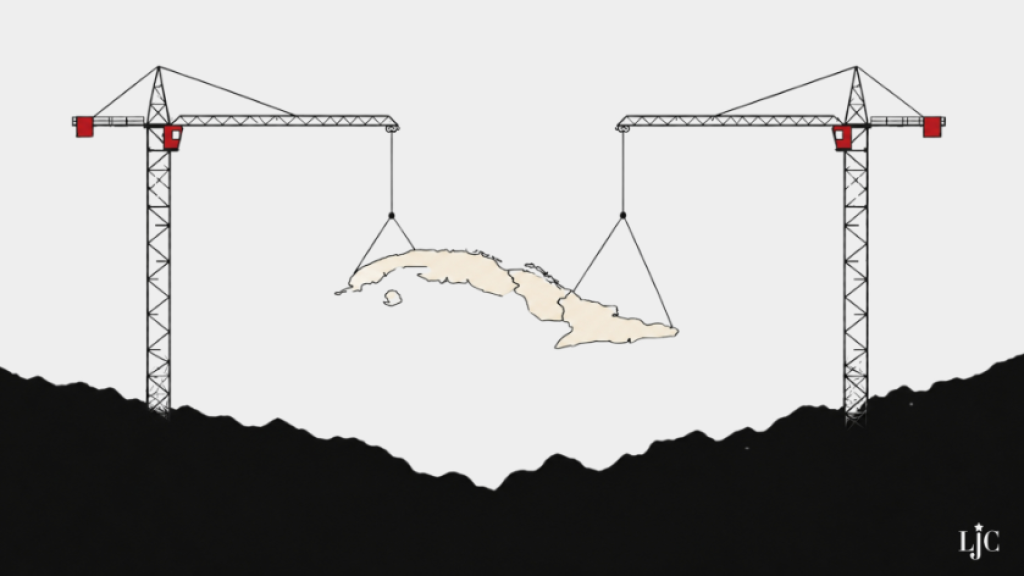
LJC graphic cuba reform

First published in Spanish at La Joven Cuba.

Cuba faces not just another reform, but a make-or-break decision. The government has announced some of the most far-reaching economic and social reforms in the country’s post-1959 history. It comes as the country has no more room to manage the crisis with stopgap measures, slogans or delays.

Various economists have repeatedly recommended many of the measures. That they are finally being heeded is a positive sign, but also confirms how much time was wasted. Cuba faces one of the most severe socioeconomic crises in its recent history, with an energy crisis devastating daily life, production, services, family care, mental health and people’s ability to sustain a dignified existence. Added to this is the real, profound and growing impact of the United States’ sanctions. These have intensified in recent years and aim to cut off funding sources, foreign income, access to fuel, international operations and economic room for manoeuvre.

Acknowledging this impact, however, does not absolve the government of its domestic responsibilities. Precisely because the island faces such severe external pressure, the government had less right to waste time, less room for improvisation and a greater obligation to make the changes needed to build a stronger economy.

There lies a paradox of our times. The economic war makes reform riskier, because it is implemented under conditions of extreme scarcity, institutional decay, low social trust and impoverishment. Yet it is also clear that, indirectly, this pressure ultimately propelled a transformation that had been continuously postponed. Many of the measures now presented as essential could have been adopted during the opening promoted by the Barack Obama administration, when there was a less hostile international environment, greater domestic wealth and a less exhausted society.

The outcome of this process will not just depend on internal decisions. The role of the US, as well as powers with strategic ties to Cuba such as China and Russia, will be key to the transformation’s success or failure. If the reform sends credible signals of openness, legal certainty and economic rationality, they could help stimulate foreign investment and partially reduce the country’s financial isolation. However, if sanctions are maintained or tightened, and if international allies limit themselves to political support without significant economic commitments, the scope for reform will be much narrower. Cuba needs to play its part, but the international environment can accelerate, limit or profoundly distort its results.

Overall, the package contains measures that point in the right direction. It is correct to recognise the need to grant state-owned enterprises greater autonomy, expand the scope for private-sector activity, reduce absurd prohibitions, facilitate access to inputs, open more diverse financing channels, review pricing policy, and give greater decision-making power to producers, enterprises and local communities. It is also important that it opens a discussion on wage reform, regular pension and benefit rises, and better-targeted subsidies.

For too long, the Cuban economy operated under a combination of shortages, prohibitions, ineffective controls and delayed decisions, which ultimately pushed millions of people into precarity, informality or emigration. Opening up space for initiative, the market and diverse ownership and management forms should not be seen as a concession. Rather it is a minimum condition to restore productive capacity and sustain any viable social policy.

These potential benefits, however, coexist with significant risks. This reform could expand production, attract capital, revitalise regions and reduce red tape; but if not implemented with clear rules, they could also increase inequalities, further affect those who depend on an income in national currency, facilitate asset concentration and create new areas of inequality.

The difference between a transformation geared towards national wellbeing and a simple redistribution of privileges will depend on transparency, citizen participation and effective protection of those unable to compete in the new market. The debate must not be reduced to for or against the reform; the key is what kind of reform is implemented and in whose interest. This requires looking beyond the measures' general outline and focusing on practical scenarios for their implementation.

In this sense, the transition from subsidising goods to subsidising people may be needed, but it will only be considered legitimate if it translates into concrete and enforceable social protection. It is not enough to announce a fund or set out general objectives; it must define who will be protected, with what resources, through which institutions, and with what safeguards against potential price rises and further dollarisation of the economy.

In today’s Cuba, the effects of a state withdrawing from its role guaranteeing basic services without creating decent redistribution mechanisms are already being felt. New forms to access income have emerged — such as the sale of gas for foreign currency amid the energy crisis and shortages of subsidised services — creating alternatives for one part of the population while closing the door on most workers and pensioners. It may be better to have this option than none at all, but if an essential good is available to only part of the population — and not necessarily those who work, or have worked, the most — daily life becomes organised around a stark divide between those who can survive and those left destitute.

That is why every step towards liberalisation must be accompanied by redistributive measures. It is not a question of preventing new supply channels from emerging, but of ensuring that access to basic needs is not completely out of reach for those on average incomes. If the state withdraws from certain areas without putting effective safeguards in place, the reform will not be a social lifeline, but rather the unequal management of scarcity.

The announced measures do provide for an annual adjustment of the minimum wage, pensions and benefits in line with inflation, as well as a public sector pay rise, but these will prove insufficient if they remain far below the real cost of living.

Another critical issue is privatisation. In this context, it means the part transfer of management, ownership, shares, assets and accumulation opportunities to domestic and foreign private actors. This may be needed in some areas, particularly where the state has not efficiently managed underutilised assets, companies have suffered sustained losses, or in sectors requiring capital, technology and expertise. However, we must remember that privatising, leasing, selling shares or granting usufruct rights without transparency can open a dangerous door.

Without measures such as transparent final beneficiaries, public tenders, independent audits, or conflict-of-interest declarations, the transfer process could lead to oligarchic appropriation of public assets. We must clearly define the rules for how opportunities are distributed, who has access to them and how, and the measures taken to prevent wealth accumulated over generations from being opaquely transferred to new networks of privilege. This cannot be achieved without citizen access to information, civil society organisations and a media genuinely capacity of scrutiny — all shortcomings of the Cuban political model.

Municipal decentralisation also deserves close attention. In principle, transferring powers to municipalities can bring decision-making closer to the local level and promote local solutions. However, many of these structures are underfunded, lack qualified staff and are plagued by management problems. Delegating economic, urban planning, budgetary and investment powers to them without strengthening their capacities or citizen oversight creates a perfect breeding ground to exacerbate corruption.

Oversight cannot rest solely with the state. Institutions have important responsibilities, but cannot substitute for citizen oversight. This means civil society, independent media outlets, trade unions that truly represent workers, community organisations, and the general public, with access to data, processes, contracts, tenders, budgets and results. Likewise, there must be effective mechanisms to influence decision-making, demand accountability and recall elected officials who fail to act in the interests of those they represent.

Unleashing productive forces without also unleashing civic forces would be an extremely dangerous contradiction right now. The history of several former socialist republics shows that economic liberalisation without transparency, pluralism, accountability and popular control can lead to deeply unequal oligarchic capitalism that is captured by power networks. Cuba is not immune to this risk; quite the contrary, particularly with its political culture permeated by secrecy and the systematic dismissal of criticism.

Finally, another worrying element is the implementation timeframe. The announcement said the reform will affect more than 100 legal provisions, including regulations to be repealed, amended and created. This raises the question of how long it will take to translate these general statements into concrete policies, regulations and operational mechanisms. For now, the direction is supposedly clear, but the timetable and sequence are not. In a crisis of this magnitude, time is a decisive political and social factor.

***

This may be the Cuban government’s last chance to reverse the erosion of the basic material foundations underpinning the social gains of the nation’s project. But this project will not be salvaged with slogans, appeals to the past or repeating that the reform is not abandoning socialism. It will only be salvaged if people’s lives concretely improve.

Resistance to change has already caused too much suffering. Persisting with it would only make things worse. But, alongside unleashing productive forces, we must unleash civic forces to ensure the fruits of that production benefit the majority, and do not impoverish those who have worked for years for the country’s development. That will be the true measure of reform; beyond what it achieves in terms of macroeconomic indicators, how much dignity does it manage to preserve and rebuild.


Socialism with a twist or crony capitalism? Cuban reforms spark debate

Havana (AFP) – Cuba's communist president has cited China and Vietnam as models for a historic shift towards a market economy that was hurriedly pushed through last week to try to end a severe crisis.


Issued on: 24/06/2026 - RFI

New cars and SUVs are an increasingly common sight in Havana, where the private sector is fast replacing state enterprises in the supply of food, clothing and fuel © Pablo PORCIUNCULA / AFP

But some worry that Russian-style crony capitalism could be on the menu instead.

Under immense pressure from US sanctions, including a crippling fuel blockade, Cuba's government last week drew a line under nearly seven decades of central planning.

Unveiling 176 reforms that represent a seismic change to the island's socialist model, it said state-owned enterprises would be converted into joint-stock companies and opened up to private investors, private banks would be authorized and private developers would be allowed to build tourist infrastructure.

President Miguel Diaz-Canel said the measures, which also included sweeping changes to land use, aimed to "preserve" socialism rather than bury it.

But economists warned that a politically-connected elite would profit most from a rushed transition implemented without any semblance of democratic reforms.

Spain-based Cuban economist Pedro Monreal warned that a quick-fire sale of state enterprises "without robust legal safeguards" could result in "the capture of state assets by insiders well-connected to those in power."

"I inevitably think of the "crony capitalism" of the Russian transition," he wrote on X, referring to the former communist officials who snapped up state assets at knock-down prices after the break-up of the Soviet Union.

Fellow Cuban economist Ricardo Torres, a research fellow at the American University in Washington, issued a similar warning.

The "structural conditions for insider capture are present," he told AFP, noting that there are "no independent valuation mechanisms, no competitive bidding requirements, and no oversight body insulated from party control."

Socialism with Cuban characteristics


A man offers pineapples for sale out of the back of a car at a market in Havana, where affordable food has become scarce © Pablo PORCIUNCULA / AFP

Former president Raul Castro, Fidel's brother, who led the country from 2006 to 2018, regularly cited Vietnam as an inspiration for his timid reform effort starting in 2010, when he boosted small private businesses and legalized home sales.

Communist Vietnam has become one of southeast Asia's fastest growing economies since introducing market-led reforms in the 1980s.

In China, meanwhile, Deng Xiaoping's "socialism with Chinese characteristics" has produced hundreds of billionaires and major homegrown companies such as internet giants Alibaba and Tencent.

London-based Cuban economist Daniel Torralbas argued that neither China nor Vietnam served as a useful comparison for Cuba because their transformation was "much more gradual."

"Both began with agricultural reforms that lasted several years, and then the reforms expanded to promoting foreign direct investment, international capital, the creation of special economic zones, and, of course, the expansion of the role of private property in the economy."

Cuba's opening up, by contrast, comes "at its worst moment," he said, when the economy is at rock bottom and US sanctions, including the fuel blockade, have caused an exodus of foreign investors and tourists.

From centralism to capitalism


Alexei, a 52-year-old building supervisor in Havana, recalled Mikhail Gorbachev's 1989 visit to Cuba, when the Soviet leader touted his perestroika reforms to a skeptical Fidel Castro and suggested that Cuba, too, needed to adapt.

"The best time to implement these reforms was in the 1990s," Alexei, who did not wish to be identified when talking about government policy, said, echoing a sentiment voiced by many Cubans about what they saw as wasted years.

Santiago, an engineer who worked in the Soviet Union in the 1980s, said the move to privatize chunks of the economy was long overdue, "because the state can't be dealing with simple things like fixing a television."

But the 59-year-old, like many Cubans who spoke to AFP, was worried about the pace of the changes and the risk of the island's most vulnerable being left behind.

In a recent opinion article in Time magazine, Torres, the economist, urged Havana to "resist the temptation to leap from bureaucratic centralism to a harsh, socially detached form of capitalism."

He called for the preservation of Cuba's core values: "that education is a fundamental good, that access to healthcare should not depend solely on purchasing power, and that exclusion of whole communities, whole generations, is not an acceptable price for growth."

© 2026 AFP

Cuba oil lifeline hinges on Mexican firms willing to brave US sanctions

Cuba oil lifeline hinges on Mexican firms willing to brave US sanctions
Mexico's prior oil relationship with Cuba was commercially structured and paid. But the sanctions environment that private firms would now navigate bears little resemblance to what Pemex faced before January, when the US captured Venezuela's Nicolas Maduro and started ramping up pressure on Cuba.Facebook
By Alek Buttermann June 24, 2026

Mexico is gearing up to resume oil shipments to Cuba through privately owned companies rather than state entities, President Claudia Sheinbaum announced on June 22, floating a manoeuvre that would sidestep Washington's blockade while leveraging Havana's newly enacted economic liberalisation measures. The initiative, though, faces a materially harder sanctions environment than when Mexico first suspended its deliveries in January.

The backdrop is a near-total collapse in Cuban energy supply. Cuba produces only around 40% of the petroleum it requires domestically and has historically depended on imports from Venezuela, Russia and Mexico. That structure disintegrated on January 3 when a US military operation resulted in the capture of Venezuelan president Nicolás Maduro, halting Caracas' subsidised deliveries. Mexico stepped into the breach but suspended its own Pemex-operated shipments after the Trump administration issued an executive order on January 29 declaring a national emergency over Cuba and threatening tariff penalties on any country supplying hydrocarbons to the island. Only one oil shipment has reached Cuba since: a Russian tanker docking on March 30 carrying 730,000 barrels of crude. A second Russian vessel turned around off the coast of Brazil on May 27 without arriving. Cuba's Ministry of Energy and Mines warned on May 14 that the country had run out of oil and diesel entirely.

The humanitarian toll is severe and worsening. The record power deficit was registered on May 13 and 14, reaching between 2,153 and 2,174 MW and leaving 70% of the country without power. Grocery store shelves are empty, hospitals can barely function, and the lack of diesel has stalled the agricultural sector, marine vessels and trucks. Cuba's economy is forecast to contract by between 6% and 15% this year, according to estimates cited by multiple analysts.

Sheinbaum's proposed workaround pivots on the 176 economic reforms approved unanimously by Cuba's National Assembly on June 18 under Prime Minister Manuel Marrero. Among them, documented under the "Energy Transformations" section, is a provision allowing private domestic companies, cooperatives, joint ventures and foreign investors to participate in fuel importation and distribution — a sector historically monopolised by the state entity Unión Cuba-Petróleo (CUPET).

Sheinbaum argued this reform creates legal space for Mexican private operators to engage commercially with the island without routing supply through state channels. "The mechanism would be through private companies that have permits to transport fuel to Cuba," she said at her daily press conference, without naming firms or specifying a timeline. Her foreign ministry has indicated it can facilitate introductions for interested businesses.

The sanctions deterrent, however, has grown considerably more severe since January. The Trump administration's original tariff threat was subsequently invalidated: on February 20, the US Supreme Court ruled that IEEPA does not give the president authority to impose tariffs. Washington's response was to escalate through a different instrument. On May 1, President Trump signed Executive Order 14404 establishing a new Cuba sanctions authority under IEEPA, authorising OFAC to impose blocking sanctions on foreign persons determined to operate in Cuba's energy sector — covering oil and gas supply, electricity generation, distribution and fuel trading — as well as defence, metals and mining, and financial services.

Critically, the order extends secondary sanctions risk to foreign financial institutions that process transactions on behalf of designated Cuban entities. Any Mexican private company with US dollar banking exposure or American investors faces the prospect of SDN designation and loss of access to the US financial system.

OFAC has released no guidance on what constitutes "operating in" Cuba's energy sector for the purposes of secondary sanctions exposure, and there is no price-cap carve-out comparable to the Russia framework. That ambiguity will almost certainly be read conservatively by compliance officers at any firm with material US exposure.

Whether Mexican companies will accept the commercial risk remains the article's open question. Unlike the state-backed Pemex, which has the sovereign weight of the Mexican government to cushion geopolitical friction, private mid-sized transporters and fuel traders possess no such safety net; losing access to US dollar clearing accounts represents an overnight death sentence.

Sheinbaum is offering political cover and ministry-facilitated introductions, but no indemnification against US enforcement action. Cuban authorities themselves cautioned that implementation of the reforms could be slow, and acknowledged that the measures will not be viable if the US maintains its current posture. The designation of GAESA, the Cuban sprawling military's commercial conglomerate, as an SDN under the May order further narrows the universe of Cuban counterparties any Mexican firm could legally transact with, particularly now that OFAC's wind-down period for existing GAESA relationships expired on June 5.

Mexico's prior oil relationship with Cuba was commercially structured and paid. Pemex's then-director Víctor Rodríguez Padilla stated in February that Cuba had paid $496m for crude and refined products during 2025 with no overdue invoices. But the sanctions environment that private firms would now navigate bears little resemblance to what Pemex faced before January.


The Hidden Cost of the U.S. Military: The Real Budget is Far Larger Than Reported


 June 23, 2026

Columbia Class Ballistic Missile Submarine. Image: U.S. Naval Systems Command.

U.S. President Donald Trump has proposed a $1.5 trillion military budget for the fiscal year 2027, which would increase by 44 percent the acknowledged budget for 2026. While a roughly $500 billion increase would be unprecedented in modern U.S. history, the idea that the military budget only recently hit $1 trillion is incorrect. U.S. military spending has exceeded $1 trillion for many years. Adding $500 billion (and potentially $200 billionmore to fund war in Iran), as the president has proposed, would take the total military budget up to $2 trillion to $3 trillion.

A new report from the Project On Government Oversight (POGO), written by David Vine, John Bellamy Foster and Gisela Cernadas, argues that this widely reported number dramatically understates the true cost of maintaining the U.S. military. Using five different methodologies, the report estimates that total military spending in 2025 was between $1.5 trillion and $1.8 trillion and could be as high as $2.3 trillion when interest payments associated with military-related debt are included. The report concludes that the United States has been spending well above $1 trillion on military activities for many years, contrary to the common perception that this threshold was only recently crossed.

According to the analysis conducted by the POGO, the Hartung/Smithberger methodology produces the highest base estimate at $1,766,172,000,000, followed by the Wheeler approach at $1,727,634,000,000 and the figure reported by USAspending.gov at $1,717,989,509,643. The Cernadas/Foster and National Priorities Project methodologies yield comparatively lower base estimates of $1,494,236,125,000 and $1,477,081,000,000, respectively. When interest is incorporated, the totals increase substantially, ranging from $1,713,283,160,060 under the National Priorities Project methodology to $2,284,383,842,468 under the Cernadas/Foster approach. It should be noted that the National Priorities Project figure focuses on discretionary spending and excludes mandatory forms of spending; were the latter included, this estimate would align far more closely with the others.

Whether intentionally or otherwise, Congress, presidents, and the Pentagon have hidden the true size of the U.S. military budget for decades. Journalists, think tank analysts, academics, and other experts have, with rare exceptions, perpetuated the problem by reporting only a portion of true military spending; most are unaware of the costs they’re overlooking.

The problem with most conventional reporting is that there are hundreds of billions of dollars in military spending outside the Pentagon’s annual budget appropriated by Congress. Even a generally authoritative source of global military spending data such as the Stockholm International Peace Research Institute (SIPRI) underestimates U.S. spending by overlooking significant sums outside what Trump calls the Department of War and related budgets.

One major example is nuclear weapons spending, which represented around $33.5 billion in net spending for FY 2025. Although nuclear forces are controlled and deployed by the U.S. military, a significant portion of the budget for maintaining and modernizing the nuclear arsenal is allocated through the Department of Energy rather than the Pentagon.

Another large category of hidden spending involves veterans and military retirees. The costs of pensions, health care, disability benefits, survivor assistance, and other long-term obligations are primarily funded through the Department of Veterans Affairs and other federal accounts. These expenditures are direct consequences of maintaining military forces and fighting wars, yet they are typically excluded from military budget calculations.

Beyond veterans’ benefits and nuclear weapons, military-related spending can also be found within the budgets of the Department of Homeland Security, the Department of State, and several other agencies. Programs ranging from military aid to foreign governments to certain homeland security functions contribute to national military capacity but often fall outside official defence budget totals.

A major significant issue is debt financing. Since the wars launched after 11 September 2001, the United States has relied heavily on borrowing rather than taxation to finance military operations. For this reason, some refer to the post-2001 wars as ‘credit card wars’. While analysts disagree on how much of the national debt should be attributed to military activities, including these costs pushes 2025 military expenditures well above $2 trillion under some methodologies.

Despite differences in definitions and data sources used by the authors, all five methodologies arrive at a similar conclusion: the commonly cited military budget substantially underestimates what the United States actually spends on war, military forces, and related activities. This suggests that the issue is not a matter of partisan interpretation but rather the result of longstanding budget practices that disperse military costs across numerous federal agencies.

Understanding the true scale of military spending is essential for democratic accountability. Citizens cannot effectively debate national priorities if they are presented with incomplete information about how public funds are allocated. If major expenses associated with military activities are distributed across multiple departments, the public may struggle to compare military expenditures with spending on other priorities such as education, housing, infrastructure, health care, or climate resilience.

If the United States is already spending between $1.7 trillion and $2.3 trillion annually on military-related activities, proposals for additional increases should be evaluated against that broader fiscal reality rather than against the narrower Pentagon budget alone.

Unfortunately, there remains ambiguity about the full scale of military spending given the poor state of Pentagon accounting practices, including its inability to pass a financial audit. Members of the public and members of Congress need a full accounting of the military budget to analyse, discuss, and debate the proper size of military spending both on its own and in relation to other non-military funding priorities.

To provide accurate spending figures, Congress should reform its budgeting practices and provide a true total military budget that combines all forms of military and war spending in one place and one true total figure. Congress also should stop appropriating, and thus hiding, money for the military in other agencies’ budgets. Until Congress begins reporting accurate numbers, members of the media and other analysts should stop repeating incomplete congressional spending data and tell the public what the country is really spending on the military and war.

This article was produced by Globetrotter and No Cold War.

Gisela Cernadas is an economist at the Centre of Economic Development Studies, National University of San Martin, Argentina, and a Member of the No Cold War collective. 

David Vine is a fellow at the Transition Security Project and former professor of anthropology at American University. 

John Bellamy Foster is an emeritus professor of sociology at the University of Oregon.


LA REVUE GAUCHE - Left Comment: Search results for PERMANENT ARMS ECONOMY