Wednesday, June 24, 2026

Russian army on the defensive, Ukrainian people on the offensive

Tuesday 23 June 2026, by NPA-A Ukraine Solidarity Intervention Group
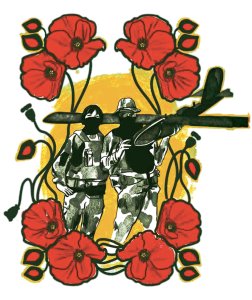


Russia is continuing its war of attrition against the Ukrainian people, but is struggling to make significant progress on the ground. In response, Kyiv is intensifying its strikes against Russian military infrastructure while civil society continues to keep democratic and social mobilizations alive.

On 3 June, Ukrainian missiles hit energy and military sites at the opening of the St. Petersburg International Economic Forum, where Russia’s political and economic elite received their foreign guests under plumes of black smoke. Responding to the deadly attacks of the previous day, Kyiv thumbed its nose at Putin’s arrogance while demonstrating its growing ability to break through Russian air defenses.

On 2 and 3 June, hundreds of drones and dozens of missiles reached residential areas in Kyiv, Dnipro, Kharkiv, Zaporizhzhia (40 dead and 250 injured). Following hundreds of deaths and thousands of injuries in April and May, these attacks target homes, civilian infrastructure and public services. Putin is seeking to break the morale of the Ukrainian people. In vain.

Increasing pressure on Russian rear

On Ukrainian soil, the army succeeded in blocking Russia’s spring offensive, neutralising attempts to regroup men or equipment. The Russian occupying forces, despite the multiplication of assault operations, made little progress. “600 km2 of Ukrainian territory have been liberated since the beginning of the year,” said Oleksandr Syrsky, the commander-in-chief of the Ukrainian armed forces.

For several months, the Ukrainian army has been conducting offensive operations on Russian territory, destroying refineries, industrial facilities, weapons factories and military bases in order to disrupt Russian logistics lines and war capabilities. These strikes, deep into Russian territory and on the rear of the occupied territories, are shaking a civilian economy already weakened by inflation and the war economy.

Kyiv has increased the use of strike systems combining medium-range missiles and combat drones to reach the Russian rear up to 200 kilometers. The Ukrainians are holding important supply routes under constant fire: Crimea is particularly affected, which has consequences for supplies to the southern zone of the fighting. The authorities ofBastopol have limited fuel purchases to twenty litres per vehicle. Prices of food and services are already rising.

The state of the global balance of forces does not currently open up the prospect of a victorious offensive on the ground. By multiplying devastating air incursions, the Ukrainian leadership is forcing Moscow to come to the negotiating table from a more balanced position.

A committed and combative society

Ukrainian civil society, which is very involved in the defence of the country, is active and vigilant (fighting against corruption and oligarchs, defending living and working conditions). After the demonstrations in May against the draft of the new Civil Code (which infringes on the rights of sexual minorities and allows the plundering of common goods), two examples of struggle illustrate the permanent mobilization, despite the state of war, of citizens.

In Kyiv, during the public discussion on public transport, the Kyiv Passengers Association, which organises quality checks on the routes and even discusses the choice of vehicles, gathered the opinion of almost 1,500 people opposedto the quadrupling of prices. The student union Priama Diia has joined this struggle, denouncing a new blow to students.

Teachers and parents of students in Rivne, in northwestern Ukraine, are opposing the closure of several schools. The soldiers on the front, from their city, sent a video of support. The municipality backed down.

Despite the war, despite the mourning and fatigue, civil society, committed and concerned about the future of the country, is speaking out publicly about the economic, political and legal orientations that are dangerous for the rule of law, social and democratic achievements — essential battles for the reconstruction of the country once it has regained its democratic sovereignty.`

11 June 2026

Translated by International Viewpoint from l’Anticapitaliste.

Russian socialists: ‘Solidarity means accepting Ukrainians’ pain and suffering as our own’

Podil’ shopping centre in Kyiv after Russian shelling in March 2022. Photo: State Emergency Service of Ukraine

First published in Russian on the Russian-Speaking Leftists Telegram Channel. Translation by Simon Pirani for People and Nature.

Russian-Speaking Leftists, a group based in Germany, published this interview with a socialist activist living in Russia who, they write, “stands for revolutionary defeatism,” on May 19.1 

Please tell us a little about yourself.

I am a Communist. I worked in various proletarian and quasi-proletarian jobs. I support the Left For Peace Without Annexations coalition.

Tell us about the coalition.

For me and some of my comrades, the full-scale war that started in February 2022 did not come as a surprise. But all the same, the war disrupted the left-wing movement. Not everyone took a correct position.

Pretty quickly, a “left” that supports Russian state power took shape. Moreover, it was the Communist Party of the Russian Federation (CPRF) that had initiated a vote in the Duma [parliament] calling on Putin to recognise the Luhansk and Donetsk “people’s republics” as independent states.2

A few days after the all-out invasion, a declaration by “Socialists Against the War” appeared. It was fairly abstract, and many centrist organisations, such as the Trotskyist Workers Revolutionary Party signed it.3 There were even a few members of the CPRF who signed it. But it did not lead to any serious joint activity.

After the first wave of repression came the designation of the Russian Socialist Movement as “foreign agents”,4 and many activists emigrated. Practical anti-war activity by leftists in Russia ground to a halt, having hardly got started.

This situation was reflected in attitudes and policies — with the emergence of a tendency that equated Russia and Ukraine, and considered that there was no need to support Ukraine. As a rule, these organisations and activists did not consider the annexation of parts of Ukraine by Russia to be acceptable.

These centrists simply abandoned the anti-war declarations they had made at the start, and were completely separated from the anti-war movement. An exception was the honest centrists of the Russian Communist Party (Internationalists).

For myself, I was convinced from the start of the all-out war that Ukraine was waging a just, defensive war against revanchist Russian imperialism.

I tried to make contact with other defeatists in the Russian Federation. But the situation was such that we were unable to do anything effective. And then I was annoyed to learn that the left-wing centrist émigrés [in November 2024] were organising a forum of the left emigration in Köln [Cologne, Germany]. They wanted to present themselves as representative of the whole Russian left, including the defeatists. But at the same time I realised that this forum presented an opportunity to the revolutionary defeatists, to make our presence known and to join together.

And so the open letter by the Left for Peace Without Annexations appeared, addressed in the first place to the forum in Köln. Some activists inside the country, and some who had emigrated, both participated in putting it together. [See below for a translation of the open letter.] 

It was important for us to show that, among leftists, there is a significant group who consider Russia’s war to be unjust, who do not accept annexations and who believe that Ukrainians have an immutable right to defend themselves.

The Left for Peace Without Annexations alliance brought together people from a range of political traditions, activists who are more or less radical. What unites us is the conviction that we will not connive with “our” imperialism, and that the struggle of an oppressed nation against aggression is a just one.

Why did you decide to amplify the voices of people in Russia with regard to the supply of weapons to Ukraine? After all, Russian activists have practically no influence on European politicians.

The open letter was not really about weapons supply. Or to be accurate, weapons supply was mentioned, but that was not for us the main point. The letter was in the first place about solidarity – which means working people in Russia accepting Ukrainians’ pain and suffering as their own pain and suffering. It means the left in the oppressor nation recognising the rights of the oppressed nation to its own separate state and to defence of that state.

For those in emigration, that way of putting the question might seem a bit abstract, while in Russia — for obvious reasons — it is impossible to make public statements along those lines. So for activists in Russia, the [Köln] forum and the open letter gave us a way to present our position — for resistance to the Putin regime and support for the Ukrainian people — “from inside”.

To comrades in other countries we signalled that: in Russia there are left wingers who recognise that defeat is the best outcome; that the left in the west should not think that everything in Russia is fine and dandy; and that people should not think that in the Russian left unanimous support for, or acquiescence in, the so-called “special military operation”, holds sway.

And of course all this is important in explaining the situation to working people in the western countries.

What processes going on in Russian society currently do you think are important to highlight?

In Russia there is a process of mounting contradictions, and to some extent a thaw.5

Instability is mounting. And that has started in the Z-osphere,6 which, it seems, can in the fifth year of all-out war no longer envisage victory built on mountains of dead bodies.

Ilya Remeslo,7 Igor Strelkov-Girkin and Pavel Gubarev8 have all had their say. And now we are hearing political and quasi-political statements from public figures who previously stayed out of politics, such as the blogger Victoria Boni, the actor Dmitry Nagiev and others.

The blocking of the internet and restrictions on the use of Telegram are causing serious discontent throughout society. And the authorities have clamped down brutally on attempts to protest – not only by forbidding public gatherings, but also by arresting those who announce their intention to organise such gatherings on trumped-up charges (for example, “disobeying police officers”).

Another big scandal resulted from the large-scale slaughter of farm animals in Siberia, conducted without any clear explanation. In other words, the state is allowing, or creating situations — quite apart from the war — that cause dissatisfaction across the whole of society.

Putin’s popularity rating consequently fell in the first months of this year, before VTsIOM9 changed the methodology of their surveys.

How has Russian society reacted to the more frequent attacks by Ukrainian drones, for example those that we saw recently in Tuapse, Perm and the Moscow region?

There wasn’t much of a reaction. Such attacks are not new. And of course the state gives the impression that everything is fine. After the escalation of drone attacks in mid-May, one could hear people talk about the fact that they were not going to change their plans and did not feel threatened.

Obviously, even though the Ukrainian drones aim for military targets, and targets related to Putin’s war economy, there can be, and have been, civilian victims. The three deaths resulting from the drone strikes in Moscow region were, of course, a tragedy. But in Kyiv at the same time more than 50 people were killed.

There is a massive difference between the Russian Federation and Ukraine, not only in the logic, but also in the precision, of drone strikes behind the front lines. Russia pays no attention to “collateral damage” to the civilian population; it actually flaunts it and uses it as an instrument of terror.

We all saw how the Russian government, having demanded from Ukraine the right to hold its military parade on May 910 undisturbed, threatened to bomb Kyiv if this demand was rejected. And, so that there could be no doubt as to the criminality of such bombing under humanitarian law, they added that the population of Kyiv would need to evacuate.

Are you not worried that your position on the supply of weapons to Ukraine might alienate even those Russians who are against the war?

In my view, excessive attention to this question of weapons supply to Ukraine is an intra-left and émigré phenomenon. For those in emigration, it is indeed a real political issue: we see European populists, centrists and pro-Putin elements using the narrative about weapons supply to win electoral support from reactionary voters.

What do you think of sanctions? In my view, this is a complex issue. On one hand, there is an inter-imperialist trade war, which hits ordinary Russians hard; on the other, sanctions is a way of weakening Russia’s military capability.

I think that sanctions should, above all, be focused on the military industrial complex. But sanctions on other parts of the economy is also not a simple question. If propaganda can link people’s deteriorating living standards to sanctions, and not to the war, to bad policies, and to the capitalists’ greed, then dissatisfaction can to some extent be used [by the state] to strengthen anti-western prejudices.

Moreover, sanctions that “disentangle” the Russian and western economies from each other could increase the danger of a large-scale war. And this problem could get even more serious if there are restrictions on travel by Russian citizens to EU countries, further complications in receiving visas, and so on. Instead of undermining xenophobia, this could drive Russians further into isolation.

“Slow” sanctions, to which the Putin regime is successfully adapting, are of little use. I think that the EU is preparing for a situation in which it is necessary to wage war with Russia, rather than increasing aid to Ukraine to a level sufficient to end this war.

The problem is that neither the USA nor the EU wants a Ukrainian victory. They want to preserve the Russian Federation. Being afraid of a serious confrontation with Russia and of Russia drawing closer to China, Ukraine’s western allies are actually bringing such prospects closer, with their half-measures.

What is the state of the anti-war movement in Russia?

It is in an illegal, or semi-underground, state. On one hand, the majority of people who pay at least some attention to politics are against the war. On the other, the left has been rendered impotent. It has been crushed. It can not organise anything substantial. But there remain hopes in the emergence of new generations of activists, who are able to work even in these conditions.

The liberals are relying on the prospect of a high-level coup in which those elites that want to make peace with the west stop the “special military operation”. If you compare that prospect to the continuation of the war and of Putin’s rule, that would be some sort of improvement from a left-wing point of view too.

But the only serious chance of the left movement developing is to find a way to connect with the mass of people who are dissatisfied and disillusioned as a result of the impoverishment, the deaths and injuries and the shame of a lost war.

Are activists in Russia ready for a complete shutdown of the internet? How could activists in emigration help?

We are not ready. Convince [Pavel] Durov [the owner of Telegram] to enable messaging via Telegram with bluetooth and wi-fi direct? Use Starlink in some way that it is not blocked for activists?

If you consider the possibility of a complete shutdown, then support could mean: we need good VPNs, and good agitators on social media who are not at risk of prosecution; we need spaces in which activists inside Russia can safely speak out; and we need spaces for the publication of material that is illegal in Russia.

Maybe a Youtube channel could be set up. Money is needed too, because it is difficult to combine active political work with earning money full time. In my opinion, providing these conditions for activists in Russia is the duty of émigrés, who of course live in relative safety.

What else should Russian-speaking activists in Germany do?

Collect donations and send them to those in struggle, and to support political prisoners. Undertake a consistent battle against the centrists and pro-Putin elements. Explain to German people that, today, the solidarity of working people means supporting the resistance by Ukrainians, and supporting Russia’s left-wing anti-war opposition. And inform people of the real state of affairs in Russia.


Open Letter from Russian Socialists to the Anti-War Left Emigration Forum

Leftists for Peace without Annexations, October 31, 2024. 

Preamble

Russia has been in a state of large-scale war with Ukraine for more than two and a half years (more than 10 years since the start of the undeclared war).

This brings incalculable suffering, first of all, to Ukrainians. Their cities are being destroyed, industry and infrastructure facilities are being destroyed, millions have become refugees, tens of thousands of civilians and soldiers who defend the country are dying.

The Russians themselves are also suffering, whom the Putin regime sends by force and bribery to seize and die in the territory of a neighbouring country. They are faced with a decline in their standard of living and the elimination of almost all political freedoms, who have been saddled with the shame of an unjust war against a kindred people.

In this situation, the "Forum of the Anti-War Left Emigration" is planned for November 2-3 in Cologne. Unfortunately, its preparation is not entirely democratic, and among its organizers there are Russians who intentionally or unintentionally play along with Russian imperialism.

It is also obvious to us that many European leftists, accustomed for years to being against NATO and the US, in the current situation, which does not fit into the old patterns, have consciously or unconsciously become allies of Putin's dictatorship. They need to hear the voice of Russians who are unconditionally against "their" imperialism.

However, this voice must be heard, first of all, by the Russians themselves. For too long, in the name of leftist unity, serious contradictions were hidden between those who spoke from formally anti-war positions and those who sincerely wished for the defeat of the imperialist aggressor.

In addition, this open letter will form the basis for a draft resolution at the "Forum of Anti-War Left Emigration".

The nature of the war


The war on the part of the Russian Federation is imperialistic and was started based on the interests of capital, imperialistic logic and the opportunistic political interests of its ruler, the usurper Putin. Russia bears responsibility for inciting and continuing the war.

The Kremlin's military aggression began back in 2014. At that time, the Russian Federation lost to the European Union in the imperialist struggle for Ukraine (the Ukrainians themselves were more pro-European). Hopes for the subjugation of Ukraine collapsed when the Ukrainian people, during the Maidan, overthrew Yanukovych, who had finally turned to the Russian Federation (by that time, his dictatorial tendencies had clearly manifested themselves). Such an example from a kindred people was terrible for the Putin regime.

The Euro-Association instead of joining the Customs Union became inevitable. In addition, Ukraine independent from the Kremlin does not fit at all into the imperial and revanchist sentiments of the ruling class and parts of the Russian population.

Then the Russian government decided to try to keep Ukraine in its zone of influence by military means (to remove concerns about the operation of the naval base in Crimea), to prove that revolutions do not lead to anything good. The Russian Federation annexed Crimea, ignited a war in Donbass, using a limited contingent of the Russian Armed Forces, imperialist-minded volunteers, and internal contradictions in Ukraine.

The West, since 2014, has pursued a policy of appeasement of Putin, played the "Normandy Four" and the "Minsk Agreements".

The Putin clique, seeing the dead end of the "Minsk Agreements", the expulsion of its capital from Ukraine, the connivance of the West and hoping for an easy victory, began a full-scale aggression on 24 February 2022.

The adventurous nature of this step is a consequence of inevitable degeneration, loss of adequacy and full feedback with the world, as well as the political system of the Russian Federation, built on an irreplaceable dictatorship and personalism.

Our decision and actions


- Russia started the war and its end depends on it, by withdrawing troops from the territory of Ukraine.

- Therefore, the Russian left should concentrate on bringing this condition closer - the real struggle of Russians for peace can consist, first of all, in the struggle for the withdrawal of Russian troops from Ukraine, for Russia's exit from the war.

- It is unacceptable to demand from the Ukrainian people a truce, capitulation or concessions of any parts of Ukraine, even (and especially) under the cover of slogans of a speedy peace.

- We unconditionally recognize the right of the Ukrainian people to defend themselves from Russian imperialism. Only the Ukrainian people have the right to decide how long and how to continue the struggle.

- The left should not sabotage aid to Ukraine (including weapons). It must criticize the US and EU for insufficient support, readiness to surrender Ukraine for the sake of profit, secret diplomacy behind Ukraine's back.

- The left and workers of the West must expand workers' and public control over aid supplies to Ukraine in order to increase their effectiveness, as well as to prevent capital from enriching itself on supplies.

- The left must demand the writing off of all debts to Ukraine and compensation for damages from the Russian Federation, primarily at the expense of capital involved in unleashing the war.

- Fight for the dismantling of Putin's dictatorial state-monopoly regime.

- Work with all categories of Russian citizens to bring them closer to anti-war, leftist organizations, to explain the reasons for the war and ways out of it.

Criticism of the centrists


Knowing about the idea, widespread in some circles, to force Ukraine to recognize the annexations through an immediate ceasefire and new “referendums” in the occupied regions, we declare:

- The Ukrainian people implemented their self-determination in 1991. All regions, including the Donetsk and Lugansk regions and Crimea, voted for independence and the creation of an independent Ukrainian state.

- It is unacceptable to demand a ceasefire from Ukraine. The demand for an immediate ceasefire without preconditions, directed from Russian politicians to Ukraine (when Russian troops are on Ukrainian territory), looks like imperial impudence and is an attempt to consolidate the annexations.

- The Ukrainian state renounced nuclear weapons, counting on guarantees of sovereignty and territorial integrity. Consequently, in the current situation, it has the right to restore its nuclear status.

- The principle of the right of nations to self-determination cannot be used to legitimize Russian annexations, since the occupied zones are part of the Ukrainian nation (in the overwhelming majority of cases, the Ukrainian population predominates and/or they are integrated into the Ukrainian economy and Ukrainian culture). In addition, since the very question of self-determination of individual parts of Ukraine arose as a consequence of the use of camouflaged and overt military force, it should be perceived as a continuation of aggression against Ukraine.

- Russian anti-war forces cannot and should not welcome Russia's withdrawal from the war while it continues to keep parts of the internationally recognized territories of Ukraine annexed.

We also ask why Russian politicians who raise the issue of self-determination for regions of Ukraine (mostly populated by Ukrainians) do not raise the issue of the right of nations to self-determination in relation to regions of Russia that are mostly populated by non-Russians, but by other peoples?

Humanitarian aspect

Since the Russian regime, having seized the Ukrainian regions, forced collaboration on a large part of the population, forcibly drove men to war, we, as Russians, also consider ourselves partly responsible for the fate of these people. Therefore, we ask the Ukrainian people for leniency and the implementation of the principle of broad amnesty (with the exception of the leadership of the so-called "people's republics", malicious collaborators, participants and organizers of war crimes, etc.).

Prospects


If the Russian regime manages to somehow retain the seized regions, this will mean, on the one hand, suffering and national oppression in relation to the Ukrainian population, and, on the other hand, the Russians themselves will find themselves in a position of triumph of imperialism (the regime will pass off these acquisitions as a great victory) and an even greater strengthening of the regime. Here it is absolutely appropriate to recall the famous phrase: "A nation that enslaves another nation forges its own chains." This scenario would also create a threat of new wars in the post-Soviet space initiated by the Russian Federation and would strengthen the right-wing forces in Europe.

And, conversely, the liberation of the occupied territories by Ukraine, the defeat of the Putin government and Russia's withdrawal from the war would allow millions of Ukrainians to return to their homes, begin to restore what was destroyed, and would give a chance for the weakening or fall of the current Russian regime.

Another positive development scenario is also possible: The Russian people, tired of war and injustice, dismantle the Putin regime, and establish a revolutionary democratic power of the working classes, and withdraw Russia from the war with Ukraine.

This would also make the space of the former Soviet Union more secure, deprive the right-wing forces in Europe of support from Russia and make it possible to restore solidarity between Ukrainian and Russian ordinary wage workers.

In order for this scenario to become possible, we must wake up Russia. Now it is captured by the dictatorial regime of Putin, who on behalf of Russia, on behalf of you and me, commits his crimes both outside and inside the country. But tens of millions of ordinary employees, workers, entrepreneurs, youth, and intellectuals do not want this madness to continue! For now, they are inactive. For now, Russia of employees and workers is dormant. But it will wake up, it is already waking up. And our task is to wake it up!

Who is the letter from?


For security reasons, with the exception of some emigrants, we are forced to use pseudonyms. But you can judge the support and significance of this open letter by the resources and pages on which it is posted.

Pavel Kudyukin (socialist and trade unionist)

Ilya Budraitskis

Nikolay Petrov (Leninist)

Elmar Rustamov (Russian communist, political emigrant in France since 2022)

Igor Filippov (LevSD)

Dmitry K. (socialist and former trade unionist)

Dmitry Kovalev (RCIT supporter, trade unionist)

Heinrich Deymann (socialist and labor activist from Russia)

Irina Belova (journalist)

Alexander Zhelenin (journalist, socialist)

RCIT-Russia (Revolutionary Communist International Tendency)

Sergei Kasochnik (worker)

V. Bukvoyedov (trade unionist, social democrat)

Georgy Losev (anti-authoritarian Marxist)

Guzel Yunusova (student, anarchist)

Gigi Bitsadze (service sector)

Yaroslav Smolin (worker, welder, leftist, TGC "YaroslavAvstriya")

Korsanna (political activist)

Shnur (student, Leninist)

August Sternberg

Vladimir Plotnikov (psychoanalyst)

Artem Langenburg (LevSD)

Valentin (worker with Marxist views)

Georgy Shelike (pensioner, Marxist)

Elijah Sundress (history student, social democratic views)

Vladimir Kardail (journalist, social democrat)

Mark Romanov (psychoanalyst, tattoo artist)

Boris Gunko (Russian Maoist)

Kit Golovich (revolutionary Maoist)

Antiwar Block Catalonia

Evgeny T. (student, communist)

Azamat Ismailov

Ivan Rukodeltsev (Trotskyist)

Yuri Fedorov (social democrat)

Kuprum Yarmozhenny (Russian Maoist)

Rakhil Fayanson (Trotskyist, researcher)

Yogor (software developer, Marxist-Leninist)

Igor Bronshteyn (programmer, socialist)

Felix Levin

  • 1

    Note by Simon Pirani (SP): In the Marxist tradition, “revolutionary defeatism” signifies those socialists who during war hope for the defeat of their own nation’s ruling class, and the emergence from war of opportunities to overthrow it. The term started to be widely used during the first world war. The Russian Bolsheviks and German Spartacists were the most prominent representatives of this trend, along with e.g. John Maclean in Scotland and James Connolly in Ireland.

  • 2

    Note by SP: The CPRF deputies put this proposal in the Duma on 19 January 2022, and it was approved on 15 February. On 21 February, Putin announced Russian recognition of the “republics”; this was regarded as a key step towards the all-out invasion three days later. In September 2022 Russia declared that it had annexed Donetsk and Luhansk, along with two other Ukrainian regions – Zaporizhye and Kherson. Russia had annexed Crimea in 2014.

  • 3

    Note by Russian-Speaking Leftists (RL): “Centrist” here signifies left-wingers, taking a mid-way position between revolutionaries and opportunists. 

  • 4

    Note by SP: The Russian Socialist Movement was one of the largest socialist organisations outside the group of “official” Communist parties. Many of its active members left Russia in 2022, and continued to denounce the war. Declaring an organisation a “foreign agent” is a standard repressive tactic by the Russian regime against its opponents, and strips them of many legal rights.

  • 5

    Note by RL: Thaw of political life, on the basis of increasing economic problems, the lack of progress at the front and the authorities’ crude interference with the internet.

  • 6

    Note by RL: The active supporters of the war.

  • 7

    Note by RL: A well-known enemy of the opposition, who recently sharply criticised Putin.

  • 8

    Note by RL: Leaders of the so-called “Russian spring” of 2014 in the Donbass, who are now blaming the Kremlin for its failure to win the war.

    Note by SP: The “Russian spring” was the separatist uprising, supported by Russia, in Donetsk and Luhansk in March-April 2014. Gubarev was a leader of an extreme right-wing separatist Ukrainian militia and held political office in Donetsk; Girkin led a right-wing Russian nationalist militia that crossed the border to support the uprising.

  • 9

    Note by RL: A state agency that conducts opinion polls.

  • 10

    Note by SP: May 9 is “Victory day” in Russia, on which the Soviet defeat of Germany in the second world war is marked with a holiday and military parades. This year’s parade in Moscow was smaller than usual, and held without the usual tanks and armoured vehicles


A soldiers’ union is formed in Ukraine

Sunday 14 June 2026, by Collective


The Confederation of Free Trade Unions of Ukraine (KVPU) has announced the creation of a new organisation: the All-Ukrainian Union of Combatants, Military Personnel and Veterans. [1]

The trade union confederation states that “this is a historic event for the independent Ukrainian trade union movement and the veterans’ movement, as it opens up new prospects for the systematic protection of the rights of military personnel, veterans, combatants and their families.”

According to the union, “in the current context of large-scale war and a difficult post-war period, the social protection of Ukraine’s defenders is of strategic importance. The unification of independent trade union structures and veterans’ organisations constitutes an essential step towards establishing a strong civil platform capable of effectively defending the rights of those who have fought in defence of Ukraine.”

During a meeting, discussions focused on the development of joint programmes to support veterans and the families of Ukraine’s fallen defenders, as well as on the legal and social protection of military personnel.

The President of the KVPU, Mykhailo Volynets, emphasised that the accession of the All-Ukrainian Union of Combatants, Military Personnel and Veterans demonstrates the strengthening of Ukrainian society’s solidarity with the military and veterans. He also stressed that modern veterans’ movements and trade unions must be independent, strong and capable of genuinely influencing state policies on social protection and respect for workers’ rights. Veterans and military personnel must not only enjoy society’s respect, but also have effective mechanisms to influence state policy and defend their civil rights.

The creation of this trade union for serving and former military personnel is of considerable importance, particularly because it has emerged from the ranks of the labour movement. Once again, from the ranks of the Ukrainian army, the banner of democracy within the armed forces is being raised, inseparable from the struggle against Russian fascism.

8 June 2026

Footnotes

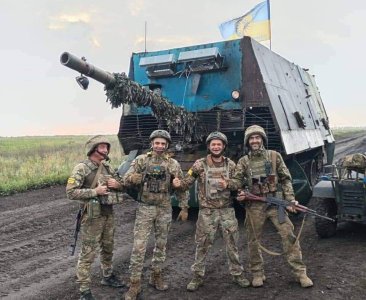
[1] Photo: Ukrainian soldiers with captured Russian tank.


Lenin and the politics of broken time

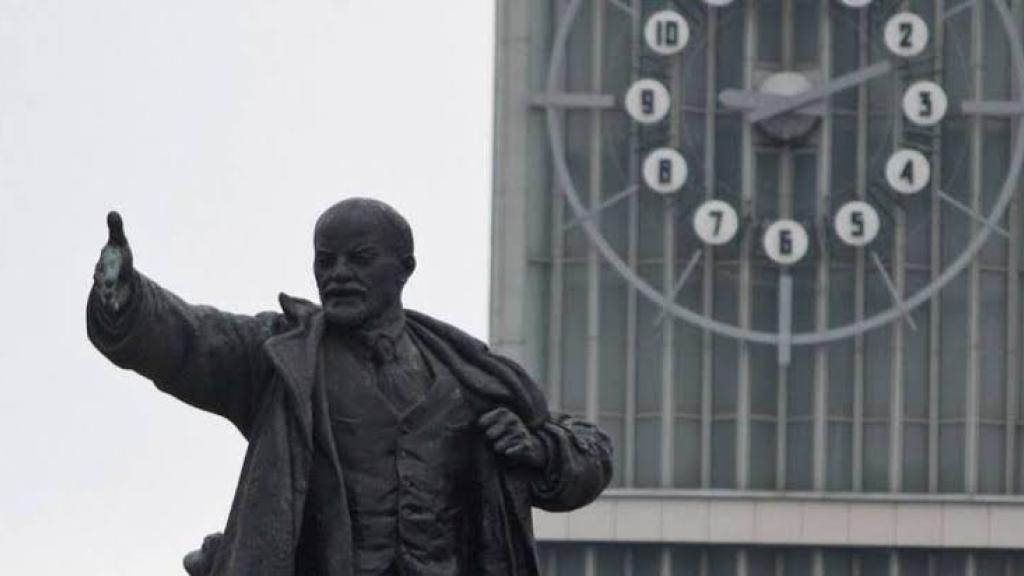
Lenin and clock

First published in French at Contretemps. Translation and footnotes by Adam Novak for Europe Solidaire Sans Frontières.

The term “Leninism” is now used loosely and carelessly, without even recalling that it was originally codified by Zinoviev at the Fifth Congress of the Communist International to justify bringing the young Communist parties to heel under cover of Bolshevisation. Yet far more than a form of discipline and centralisation, Lenin’s guiding idea targets what he calls the “disorganising” confusion between party and class. The distinction thus introduced between class and party was part of the major debates of the socialist movement of the period and, more specifically in Russia, against the populist, “economist”, and Menshevik currents. On fundamental questions such as the provisional government or alliances, in those formative years of Russian social democracy, the Mensheviks and “economists” sometimes jointly defended positions that appeared more uncompromising in appearance — more in keeping with the idea of a “pure socialism” — than the Bolsheviks. This orthodoxy in fact derived from a vision of the democratic “bourgeois” revolution against despotism as a necessary and inevitable stage, during which the nascent workers’ movement should remain an auxiliary force without compromising itself with any power, while awaiting a capitalist modernisation of society.

In neighbouring Germany, Kautsky was advancing the parallel idea of a “passive accumulation” of forces and non-participation in government, until the proletariat’s electoral majority, catching up with its social majority, allowed it to govern alone. This kind of socialism of the march to power, trusting in the logic of progress, has been termed “socialism outside time.” It was more precisely a socialism abandoned to the flow of time: a flattening of properly political struggle in favour of sociological determinism.

Lenin’s opposition to this reduction of politics to the social was entirely original for the period. Like a psychoanalyst attentive to the “displacements” and “condensations” at work in neuroses, he understood that economic and social contradictions do not express themselves directly, but in the specific, deformed, and transformed shape of politics. This is why one of the party’s tasks is to listen closely, to decipher within the political field the often unexpected ways in which these contradictions manifest themselves — a student struggle, the Dreyfus Affair, an electoral question, an international incident. Their untimely irruption at an unforeseen point becomes a symptom. It condenses and reveals a latent global crisis of social relations. That is the miracle of what constitutes, as distinct from the ordinary news item, the political event proper.

It is also why Lenin’s conception of the revolutionary militant is not that of the combative trade unionist but that of the “tribune of the people,” intervening “in all strata of the population” to grasp the concrete way in which a multiplicity of contradictions are knotted together. This question is at the heart of the famous debate on party rules, minutely analysed in One Step Forward, Two Steps Back. The definition of party membership — whether the member simply identifies with the party, assists it, or sympathises... or whether they actively participate in one of its bodies, pay dues, and hold themselves responsible for decisions taken collectively — is not a formal or administrative quarrel. What is at stake in this apparently minor difference is the demarcation of the party from the class. It is precisely the party form that makes it possible to intervene in the political field, to act on the possible, not passively to submit to the ebbs and flows of the class struggle.

This is the essential core of the “revolution within the revolution” according to Lenin. Through this distinction between party and class, between the political and the social, it becomes possible to think the relationship between the two — “the representation of the social in the political” — which Badiou identifies as “the key point.” It may be that in 1902 the thesis was stated too forcefully in the heat of internal polemic; its excesses were corrected by Lenin himself. The controversial question of “democratic centralism,” deformed by the practice of real bureaucratic centralism installed after 1924, derives in large part from this demarcation of party and class. It logically implies the selection of militants and the concentration of forces, alongside a democracy permitting the assimilation of all the party’s social experiences. Democracy serves reflection and decision; centralism serves action aimed at shifting the lines, at displacing the balance of forces. These are general necessities. They are irreducible to any particular technique of organisation.

In his discussion with Rosa Luxemburg about One Step Forward, Two Steps Back, Lenin explicitly distinguishes the “principles of organisation,” linked to the general conditions of struggle under capital’s rule, from the “system of organisation,” which varies with the concrete conditions of legality, repression, and development.1 In the light of the 1905 experience, Lenin insists in his collected writings Twelve Years that the party, however sharply delineated, lives in continuous exchange and dialogue with the experiences of the class — notably the unforeseen innovation of the soviets. What persists, through all these nuances and variations, is that the party is not one organisational form among others — trade union or associative — but the specific form in which the class struggle inscribes itself in the political field. This idea of the specificity of the political reappears in the notion of revolutionary crisis, which is not the result of a simple social movement but of a “national crisis” — a general crisis of the reciprocal relations between all classes of society. What Lenin wrote on this from What Is to Be Done? onwards is very clear: “the self-knowledge of the working class is indissolubly bound up, not solely with a fully clear theoretical understanding — or rather, not so much with the theoretical, as with the practical, understanding — of the relationships between all the various classes of modern society, acquired through the experience of political life.”2 It is through the experience of political life that this knowledge of reciprocal relations is acquired. It is a matter of following “the pulsations of the whole of political life.”3 This is why “our revolution is that of the entire people.”

The party is the privileged vehicle of this specifically political experience. Its mediation links strategy and tactics within a kairotic time4 — no longer the homogeneous and empty time of progress and electoral patience, but a dense, knotted time, rhythmed by struggle and punctured by crises: “Revolution itself must not be conceived as a single act, but as a rapid succession of more or less violent explosions, alternating with phases of relative calm. The essential activity of our party, the essential focus of its activity, must therefore be work that is possible and necessary both in the most violent periods of explosion and in those of calm, namely unified political agitation throughout Russia.”5

The party is thus the element of continuity within the fluctuations of collective consciousness. History is not the triumphal march of some quiet force towards a guaranteed historical resolution but a tissue of struggles, crises, and fractures. The party does not simply illuminate an organic and natural process of social emancipation. It is constitutive of relations of forces, a generator of initiatives, an organiser of politics not in the simple future tense [“will do”] but in the future perfect [“will have done”]. It is, in other words, an organiser of multiple durations, the condition of strategic thought that surpasses the immediate horizon of day-to-day, case-by-case, thoroughly unprincipled politicking. This approach, original in relation to the dominant culture of the Second International, makes conceivable the choices and attitudes adopted during the crucial July Days of 1917: the party is called on to engage in an action it had not sought in order to limit its negative effects, absorb its lessons, stem the retreat, and prepare the counter-offensive.

The principal reproach addressed, less to “Leninism under Lenin” — to Lenin’s real ideas — than to the vulgate of Stalinised “Leninism,” bears on the conviction held after the fact that the notion of a vanguard party contained in germ, from the outset, all the degrees of the substitution of apparatus for the real social movement, and all the circles of bureaucratic hell. It would be indecent to minimise this aspect of the question, which demands a more thorough discussion than the usual settling of accounts. But this very real dimension of the problem generally masks another, no less important one — all the more effectively because Lenin himself gropes his way and does not always grasp the scope of his own innovations. Thus, believing he is paraphrasing a canonical text by Kautsky, he modifies it essentially. Where Kautsky writes that “science” comes to the proletarians “from outside the class struggle,” carried by “bourgeois intellectuals,” Lenin translates that “political consciousness” (not science) comes “from outside the economic struggle” (not the class struggle, which is as much political as social), carried not by intellectuals as a sociological category but by the party as a specifically political actor. The difference is significant.

Once again, it bears on the specificity of the political.

This thought breaks with the dominant tradition of the socialist movement of the period. In his commentary for the anniversary of the Communist Manifesto, Antonio Labriola flatly asserts in 1898 that “the desired conjunction of communists and proletarians is henceforth an accomplished fact.” With the entry onto the scene of the “worker mass,” the movement had become slower, and the mass party appeared as a kind of political incarnation of the class. The idea drew on formulations of Marx according to which the progressive organisation of the proletariat into a political party and into a class are synonymous, its social being and its political being converging in the party.

Lenin, on the contrary, emphasises the discontinuity between the immediate “economic” conflict and the mediated political conflict. He refuses still more explicitly to “mix the problem of classes with that of parties,” to confuse social content with its political expression. The class struggle is not reducible to the conflict of the worker against a particular employer, “but against the capitalist class as a whole.” Thus, revolutionary social democracy as a political party “represents” the working class in its relations not only with a given group of employers but also with “all classes of modern society and to the state as an organised political force.”6 The task is to fuse into an indissoluble whole this spontaneous movement with the activity of the revolutionary party; hence the decisive role of the press as collective organiser in unifying struggles and inscribing them within an overall vision. Politics is therefore no longer the simple extension and reflection of the economic struggle, but a particular art of initiative and movement, of delimitation and combination of forces. It means demarcating before uniting, and in order to unite — “making use of all manifestations of discontent and elaborating even the smallest elements of a protest, however embryonic” — conceiving political struggle as “much broader and more complex than the workers’ struggle against employers and government.”7

When Rabocheye Dyelo8 deduces political objectives from the economic struggle, Lenin charges it with “lowering the level of the multifarious political activity of the proletariat.” He considers it illusory to believe that the “purely workers’ movement” is by itself capable of elaborating an independent ideology. The spontaneous development of the workers’ movement alone leads “to its subordination to bourgeois ideology.” The dominant ideology is not a matter of manipulation of consciousness but an objective effect of the commodity fetish. The only way out of the iron circle of fetishism and its involuntary servitude is through the elaboration of categories of rupture, crisis, and revolution, and through the political struggle of parties.

The distinction between the political and the social

All of this leads, in Lenin, to the understanding that politics has its own grammar and syntax. It is the site of an elaboration, an appearance, a representation, where the task is to present what is absent: “The division into classes is certainly, in the last analysis, the deepest foundation of political grouping,” but this “last analysis” is established “by political struggle alone.”9 Thus “communism surges literally from every point of social life; it clearly breaks out everywhere. When a particular exit is blocked with particular care, the contagion finds another, sometimes the most unforeseeable one.”10 This is why “we do not know and cannot know which spark will kindle the fire.” Hence the watchword that summarises, for Tucholsky,11 the full political attitude of Lenin: “Be prepared!”

Be prepared for the unforeseeable, the improbable, the event!

If politics is sometimes defined as “the concentrated expression of economics,” it can only “have primacy over economics.” By “advocating the fusion of the economic and political standpoints,” Bukharin had “slid into eclecticism.” This is also why, in 1921, even the name of the Workers’ Opposition is criticised as “an ugly name” that once again reduces the political to the social, and claims that the management of the national economy falls directly to the “producers grouped in a union of producers.”

For Lenin, the history of revolutions is “always richer in content, more varied, more multiform, more lively and ingenious than is imagined by even the best parties, the most conscious vanguards of the most advanced classes.”12 There is a profound reason for this: “The best vanguards express the consciousness, will, passion, imagination of tens of thousands of men, while revolution is — in moments of particular exaltation and tension of all human faculties — the work of the consciousness, will, passion, imagination of tens of millions spurred on by the sharpest class struggle.”

From this he draws two practical conclusions of great importance: that the revolutionary class must be able to master all forms and aspects of social activity, and must know how, “with the maximum rapidity, to supplement one form with another, to substitute one for another, and to adapt our tactics to any such change.”13

Within this problematic, political language has its revealing slips of the tongue. It permits a non-sociological interpretation of the role of students and intellectuals in social struggles. This is why “the most rigorous, most complete, and most clearly defined expression of the political class struggle is the struggle of parties.”14 In the 1915 debate on the question of ultra-imperialism, Lenin perceives the danger of a new, apolitical economism, according to which the maturity of capitalist relations and their worldwide centralisation would make certain political forms impossible and would usher in a quasi-natural collapse of the system. For Lenin, the resolution plays out in the specific terms of political struggle. The same concern reappears, against every reduction of the political to the social or to history, in the discussions with Trotsky on the characterisation of the Soviet state. Trotsky speaks of a workers’ state, “but this state, Lenin corrects, is not quite a workers’ state — that is the trouble.”15 To grasp its singularity, sociological categories are less appropriate than properly political categories. His formula is then more descriptive and more complex, reducible in any case to no unilateral social content: it is a workers’ and peasants’ state with “bureaucratic deformations,” and “that is the transition in all its reality.”

The implications of this vision of the political are confirmed in almost all the major controversies of the period. In the debate on the trade unions — where Trotsky, in the name of war communism, defends the militarisation of the unions — Lenin takes an original position.16 Because they are not a political organ of power, the trade unions cannot be transformed into a “coercive state organisation.” They stand in the system “between the Party and the State,” Lenin notes, “if one can put it that way.”17 In the early years of the revolution there was no restriction on the right to strike, and the Council of People’s Commissars even established a strike fund.18 Similarly, the national question is approached in its political specificity, as a democratic question, outside any abstract sociological schema. One must allow for psychology. If the slightest compulsion enters into this question, it “soils, mars, and reduces to nothing the indisputable progressive significance of centralisation.”

A breakthrough towards the plurality of representation

Such constant insistence by Lenin on the distinction between party and class, on the particularity of political struggle and its own language, logically opens towards the thought of plurality and representation. If the party is not the class, it follows that one and the same class can represent itself politically through several different parties. It also follows that “the representation of the social in the political” must be governed by an elaboration of rules and institutions. Lenin does not go that far; none the less he opens an original space of the political and begins to explore its paths.

He thus submits representation to rules inspired by the experience of the Commune, aimed at limiting the professionalisation of politics: wages identical to those of a skilled worker, vigilance against privileges of function, accountability to the represented. Contrary to a persistent legend, he does not advocate the binding mandate. Not within the party: “The powers of delegates must not be limited by binding mandates”; in the exercise of their powers “they are completely free and independent.” Nor at the level of state organs, where the “right of recall of deputies” must not be confused with a binding mandate that would reduce representation to the simple corporatist reflection of particular interests and local visions, without possible synthesis, emptying democratic deliberation of all substance and all stakes.

As for plurality, Lenin consistently affirms that “the struggle of nuances” within the party is “inevitable and necessary,” so long as it takes place within limits “approved by common accord.” He also upholds “the necessity of securing, in the party statutes, the rights of every minority, so as to divert from the habitual philistine course of scandal and petty quarrels the continuous and inexhaustible sources of discontent, irritation, and conflict, and to bring them into the still unfamiliar channel of a regular and dignified struggle for the defence of one’s convictions. Among these absolute guarantees we include the granting to the minority of one (or more) literary groups, with the right of representation at the congress and the right of complete expression.”19 More generally, he does not hesitate to advocate a referendum within the party on important questions.

Even the famous discipline in action is less inviolable than legend would have it. One recalls the supreme indiscipline of Zinoviev and Kamenev, who publicly took a position in September 1917 against the insurrectionary plan without being lastingly removed from their responsibilities. Lenin himself, in these extreme circumstances, claimed a personal right to disobedience. He contemplated resigning his responsibilities in order to recover his “freedom of agitation” in the party’s ranks, and wrote to the Central Committee at the critical moment: “I have gone to the place you do not wish me to go [to Smolny]. Farewell.”

Pushed by his own logic to elaborate the plurality of representation, Lenin none the less does not go so far as to lay the theoretical foundations of a principled pluralism. There are at least two reasons for this. First, he inherits from the French Revolution the illusion that, once the oppressors are overthrown, the process of homogenisation of the class is only a matter of time. No contradictions within the people are conceivable. It would take Trotsky and the 1930s for pluralism to be grounded in principle on the recognition of the durable heterogeneity of social forces in a determinate international context: because a class remains “torn by internal antagonisms,” it can form “several parties.”20 Second, the distinction between the social and the political does not prevent an inversion of the traditional thesis according to which the political dissolves into the social. With the establishment of the dictatorship of the proletariat, the symmetrical risk of the absorption of the social into the political now appeared. Did Lenin himself not take up the ambiguity of the extinction of politics and the state, forecasting “the extinction of the struggle of parties within the soviets”?21

Marcel Liebman notes that in The State and Revolution, parties lose their function to the benefit of a direct democracy that is no longer quite a separate state. Contrary to the initial revolutionary hopes, with the bureaucratic counter-revolution, the statisation of society would prevail over the socialisation of the state. It was Trotsky who drew the most striking conclusion: “’L’État c’est moi’ is an almost liberal formula compared with the realities of Stalin’s totalitarian regime... Unlike the Sun King, Stalin can justly say: Society, c’est moi!”22

Paradoxically, Lenin like Marx is undone as much by his libertarian tendencies as by his authoritarian side. That is their weakness. The question is tragically complicated. It is a matter of founding a new legitimacy, irreducible to the ordinary game of parties and parliamentarism, of inventing a form of representation reconciling man and citizen, representative and represented. Confronted with the exhaustion of the “incredibly thin” layer of advanced workers, decimated by civil war and famine, Lenin resigns himself to a party dictatorship, to an inversion of the pyramid of power, which is not his original project. Henceforth the revolution rests on its tip, in a catastrophic equilibrium, pathetically illustrated by his last struggle.23

The narrow gate of the revolutionary crisis

Whether it is representation, organisation, or strategy, Lenin’s political thought is throughout an elaboration of a specific temporality. It culminates in the understanding of crises, wars, and revolutions, and of the decisive insurrectionary moment.

From the majority reformist point of view within the Second International, war is not a founding event in its own right but a parenthesis to be closed as quickly as possible in the unfolding of human progress. It must therefore cease as soon as possible so that things can return to their normal course. This pacifism differs strikingly from the revolutionary defeatism advocated by Lenin at the time. For him, the point is not to restore class struggle, through peace, to a supposed normality. War is part of the struggle, and it is a matter of seizing the unprecedented nature of this agonistic form of conflict in order to open a revolutionary situation. Two opposed visions of the world, of history, and of political temporality are here expressed in contradictory practical orientations.

Karl Kautsky is the most prestigious representative of the classic reformist position, then dominant in international social democracy. In his celebrated The Road to Power, he affirms that the socialist goal can certainly be achieved only through revolution, but “it does not depend on us to make a revolution.” The party contents itself with accompanying and enlightening, in a pedagogical spirit, the struggles of the exploited. This thesis has, of course, its share of truth. Struggles cannot be decreed. They erupt: “it” happens, “it” occurs. But in Kautsky the objective phenomenon detaches itself from revolutionary subjectivity. When he speaks of strategy and war of attrition, it is with the concern never to have to give battle.

This orthodoxy of before 1914 claims the legacy of Marx and Engels. In 1851, in a context of revolutionary ebb, the latter defined revolution as “a purely natural phenomenon, governed by physical laws.” Class consciousness appears then as a kind of natural product of historical development and the sociological growth of the proletariat. It is through the tendential fusion between the class and its party that the inextricable contradiction between its revolutionary vocation and its subjection to commodity fetishism and workplace despotism seemed to be resolved: “For the final victory of the propositions set out in the Manifesto, Marx relied solely on the intellectual development of the working class, which had to result from common action and discussion.”24 If its struggle against the bourgeoisie “begins with its very existence,” the proletariat passes “through different phases of evolution.” With industrial development, “the strength of the proletarians grows and they become more conscious of it.” The solution to the strategic enigma is thus found in “the gradual and spontaneous organisation of the proletariat into a class.” Thus “the proletariat of each country must first of all conquer political power, establish itself as the leading class of the nation, constitute itself as the nation.” Yet this “organisation of the proletariat into a class, and therefore into a political party, is ceaselessly broken up again by the competition among workers.”

Vicious circle. No solution within a uniform temporality.

Rosa Luxemburg was among the first to understand, from the controversies of 1901-02, what was at stake in this discourse of orthodoxy. Linear time of progress seemed to play in favour of social democracy, which nibbled at terrain and won institutional positions, but simultaneously secreted a heavy conservative bureaucracy whose fate became dependent on that of the state. Rosa Luxemburg was best prepared to understand the deep springs of the disconcerting capitulation of August 1914. This is why she was also attentive to the ruptures and innovations that arose from the struggle itself. 1905 in Russia opened, in her eyes, “a new epoch in the history of the workers’ movement,” and brought to light a new element: “the manifestation of proletarian struggle in the revolution.”

Under what conditions can the proletariat break the stranglehold of oppression and alienation? The general strike is the irruptive form that makes strategy thinkable. A sudden liberation of accumulated energy then allows a rapid modification of the balance of forces and displaces the pieces on the chessboard.

Slower to become aware of bureaucratic conservatism and its relation to a uniform conception of historical time, Lenin none the less draws more radical consequences. The state constitutes a decisive strategic node of revolutionary struggle. But it cannot be changed at any moment. To harp on this objective outside of time would amount simply to opposing an arbitrary will to an inert passivity, an absolute subjectivity to a dead objectivity, as if the question of power were permanently posed in its paroxystic form. Both approaches rest on a dualist metaphysics of subject and object. This is why parliamentary routine and leftist posturing are complementary.

Lenin instead disengages, with greater clarity than any predecessor, the strategic notion of “revolutionary crisis.” In certain particular and exceptional circumstances, the state becomes vulnerable, the balance of forces becomes critical. Not at just any moment: in every struggle there is a rhythm, pulsations, and beats that the notion of crisis makes it possible to think: “Every disruption of rhythms produces conflictual effects. It throws out of kilter and disturbs. It can also produce a hole in time, to be filled by an invention, a creation. Which happens, individually and socially, only by passing through a crisis.”25

While parliamentary politics knows only one temporal dimension — the monotonous succession of sessions and legislatures — the time of revolutions is concentrated, coiled in upon itself. It happens that “months of revolution accomplish better and more completely the education of the citizens than decades of political stagnation.”26 In 1905, Lenin joins Sun Tzu in praise of swiftness. One must then “begin at once,” “on the spot”: “Form, immediately, everywhere, combat groups.”

The revolutionary crisis is pluri-temporal. Several times mix and combine within it. The revolution in Russia is not the simple prolongation or delayed outcome of the bourgeois revolution but “an entanglement” of two revolutions. This idea summarises the spirit of the famous April Theses of 1917. It follows logically from the uneven and combined development of the space-time of an epoch.

Politics then appears moulded on rhythms and reliefs. The art of the slogan is an art of conjuncture. Whether catastrophe can be averted depends on this sharp sense of the moment. A given watchword, valid yesterday, is no longer so today, but will be again tomorrow: “Up to 4 July [1917], the slogan of transferring the whole of power to the soviets was correct.” After that, it was no longer so. Likewise: “At this moment, and at this moment only, perhaps for a few days at the most, or for a week or two, such a government could...”27

A few days, a week!

On 29 September 1917, Lenin writes to the Central Committee, which is wavering: “The crisis is ripe,” waiting has become a crime. On 1 October he urges it “to take power at once,” to “pass at once to insurrection.” A few days later: “I am writing these lines on 8 October... The success of the Russian revolution depends on two or three days of fighting.” And again: “I am writing these lines on the evening of the 24th; the situation is critical to the last degree. It is now clear that to delay the insurrection is death. Everything hangs by a thread.”

One must act “this evening, tonight.”

It is striking to note how much the elaboration of this problematic in the years of war, and the now conscious opposition to reigning orthodoxy, are linked in Lenin to a rereading of Hegel’s Logic, which Marx too had reread “by chance” at the moment of the economic crisis of 1857-58.28 From 1915 onwards, he systematises the idea of revolutionary crisis that obsesses him throughout the decisive year of 1917. It is this idea that makes conceivable the improbable conquest of power by a class ordinarily subjected to the iron circle of exploitation and alienation.

It is the key to the vertiginous question: how to pass from nothing to everything?

But what exactly is the crisis? Lenin gives no precise definition. He rather enumerates its algebraic general conditions: when those above can no longer...; when those below no longer want...; when those in the middle hesitate and can tip... The three conditions are inseparable and combined. What is at stake, then, is not a social movement that deepens, but specifically a political crisis of domination, a general crisis of social relations, whose form is that of a “national crisis.” This last expression appears frequently in his writings.

Why “national crisis” and not simply “revolutionary crisis”? For Lenin, it is necessary to destroy the bourgeois state as a separate body. But with what to replace it? This is where the “national crisis” enters. Practically, the duality of power inherent in the revolutionary situation can resolve itself victoriously only if certain vital functions of the old, paralysed or partially dislocated state apparatus — provisioning, transport, security — are performed by new, more democratic and more effective organs: the Paris Commune, the soviets of 1905, the workers’ councils of Turin... These organs are original creations of the struggle itself, without predetermined norms or models.

But for the crisis to lead to victory, three conditions must be supplemented by a fourth element combining all three: a political project and will capable of deciding, at the critical instant, between several possibles. The political party thus does not have, for Lenin, the almost exclusively pedagogical function Kautsky assigns to it. It is neither the simple reflection of the social movement nor a modest carrier of ideas, but a central piece of the strategic apparatus. Strategy implies decision, project, relations of forces. Education is part of this. But strategy also implies battles, trials in which time no longer flows uniformly, where it counts double, triple. If the revolution is social and political, its fate, in the final analysis, is settled militarily — specifically in the insurrectional action of October, which seizes the occasion by its hair, in the precariousness of the instant.

Experience is eloquent. The choice of the moment is absolutely crucial, as attested by Lenin’s entreaties to the reluctant Central Committee during September and October. Now is the moment! A decision must be made! Now. Not tomorrow, not the day after. Today. Because, precisely, time is not uniform. The opportune moment must be seized.

And in this, Lenin does politics and elaborates its proper temporality.

That of a broken time.

The bureaucrat dreams of holding the event in his grip. He awaits, without surprise, the coming of what has been announced, and cannot conceive that what has been announced might fail to arrive. The revolutionary watches for the latent event within the crisis. At the moment of decision, judgement manifests the present of a presence. This irrevocable event-character inaugurates radically new situations where “our inheritance was preceded by no testament,”29 for the event itself illuminates the conditions of its appearance. This is why revolution constitutes, for Hannah Arendt, “the true event, whose significance does not depend on victory or defeat.”

Daniel Bensaïd (1946-2010) was a philosopher, co-founder of the Revolutionary Communist League (Ligue Communiste Révolutionnaire, LCR), and a leader of the Fourth International for many years. He was professor of philosophy at the University of Paris VIII. His works include Marx for Our Times, Walter Benjamin: Sentinelle messianique, Le Pari mélancolique, and the posthumously published autobiography Une lente impatience (An Impatient Life, Verso, 2013). For a bibliography of his writings in English and other languages, see Europe Solidaire Sans Frontières.

  • 1

    On Bensaïd’s earlier elaboration of these questions alongside Alain Naïr, see Daniel Bensaïd and Alain Naïr, “À propos de la question de l’organisation : Lénine et Rosa Luxemburg”, Partisans, no. 45, December 1968/January 1969, with a 2008 preface by Bensaïd. Available at: https://www.europe-solidaire.org/spip.php?article10230

  • 2

    Lenin, “What Is to Be Done?”, Collected Works, vol. V, pp. 337—343 (Moscow: Foreign Languages Publishing House, 1961). Available at: https://www.marxists.org/archive/lenin/works/1901/witbd/iii.htm

  • 3

    Lenin, Collected Works, vol. IX, p. 119 and vol. XV, p. 298 (Moscow: Foreign Languages Publishing House, 1961).

  • 4

    From the Greek kairos: the opportune or decisive moment, as distinct from chronos, undifferentiated clock-time. For Bensaïd, kairotic time is political time --- dense, uneven, punctuated by crises that open and close the horizon of action.

  • 5

    Lenin, Collected Works, vol. VIII (Moscow: Foreign Languages Publishing House, 1962).

  • 6

    Lenin, “What Is to Be Done?”, Collected Works, vol. V (Moscow: Foreign Languages Publishing House, 1961). Available at: https://www.marxists.org/archive/lenin/works/1901/witbd/iii.htm

  • 7

    Lenin, Collected Works, vol. V, pp. 440—463 (Moscow: Foreign Languages Publishing House, 1961).

  • 8

    Rabocheye Dyelo (Worker’s Cause): journal of the Union of Russian Social-Democrats Abroad, published 1899—1902, associated with the “economist” tendency that Lenin polemicised against in What Is to Be Done?

  • 9

    Lenin, Collected Works, vol. VII, p. 41 (Moscow: Foreign Languages Publishing House, 1961).

  • 10

    Lenin, Collected Works, vol. XXXI (Moscow: Progress Publishers, 1966).

  • 11

    Kurt Tucholsky (1890—1935): German satirist, journalist, and pacifist, associated with the left of the Weimar Republic.

  • 12

    Lenin, “Left-Wing” Communism: An Infantile Disorder (1920), Collected Works, vol. XXXI, pp. 17—118 (Moscow: Progress Publishers, 1966), chapter “Several Conclusions”. Available at: https://www.marxists.org/archive/lenin/works/1920/lwc/ch10.htm

  • 13

    Lenin, “Left-Wing” Communism: An Infantile Disorder (1920), Collected Works, vol. XXXI (Moscow: Progress Publishers, 1966), chapter “Several Conclusions”. Available at: https://www.marxists.org/archive/lenin/works/1920/lwc/ch10.htm

  • 14

    Lenin, Collected Works, vol. X, p. 15 (Moscow: Foreign Languages Publishing House, 1962).

  • 15

    Lenin, Collected Works, vol. XXXII, p. 16 (Moscow: Progress Publishers, 1965).

  • 16

    See Pierre Broué, Trotski (Paris: Fayard); see also Ernest Mandel’s writings on the trade union debate.

  • 17

    Lenin, Collected Works, vol. XXXII, p. 12 (Moscow: Progress Publishers, 1965).

  • 18

    See Marcel Liebman, Le Léninisme sous Lénine (Paris: Seuil, 1973), vol. II, p. 198.

  • 19

    Lenin, Collected Works, vol. VII, p. 470 (Moscow: Foreign Languages Publishing House, 1961).

  • 20

    Leon Trotsky, La Révolution trahie (1936); English edition: The Revolution Betrayed (New York: Doubleday, Doran, 1937). Available at: https://www.marxists.org/archive/trotsky/1936/revbet/

  • 21

    Lenin, Collected Works, vol. XXV, p. 335 (Moscow: Progress Publishers, 1964).

  • 22

    Leon Trotsky, Stalin (Paris: Grasset, 1948).

  • 23

    See Moshe Lewin, Lenin’s Last Struggle (Paris: Minuit, 1967).

  • 24

    Friedrich Engels, preface of 1890 to the Communist Manifesto.

  • 25

    Henri Lefebvre, Éléments de rythmanalyse (Paris: Syllepse, 1992), p. 63.

  • 26

    Lenin, Collected Works, vol. VIII, p. 572 (Moscow: Foreign Languages Publishing House, 1962).

  • 27

    Lenin, Collected Works, vol. XXV, pp. 17, 277 (Moscow: Progress Publishers, 1964).

  • 28

    On this question, see Lenin’s Philosophical Notebooks, Collected Works, vol. XXXVIII (Moscow: Progress Publishers, 1976). Available at: https://www.marxists.org/archive/lenin/works/cw/volume38.htm; also Michael Löwy, “De la grande logique de Hegel à la gare finlandaise de Petrograd” (1970), in Dialectique et révolution : essais de sociologie et d’histoire du marxisme (Paris: Éditions Anthropos, 1973). Available at: https://fourth.international/en/europe/595; and Daniel Bensaïd, Stratégie et parti (Montreuil: Presse Édition Communication-La Brèche, 1987; revised edition Paris: Éditions Amsterdam, 2016). A partial English translation of the core text was published as “Strategy and Politics: From Marx to the Third International,” trans. Darren Roso, Historical Materialism 28:3 (2020), pp. 230—266, with an introduction by Darren Roso, “Introduction to ’Strategy and Politics’,” Historical Materialism 28:3 (2020), pp. 197—229.

  • 29

    The phrase is René Char’s: “Notre héritage n’est précédé d’aucun testament” (from Feuillets d’Hypnos, 1946), used by Bensaïd and others in the Marxist tradition to evoke the rupture with inherited categories that revolution demands.