Sunday, July 05, 2026

 BRAZIL

Boliden in talks to buy Votorantim’s controlling stake in Nexa


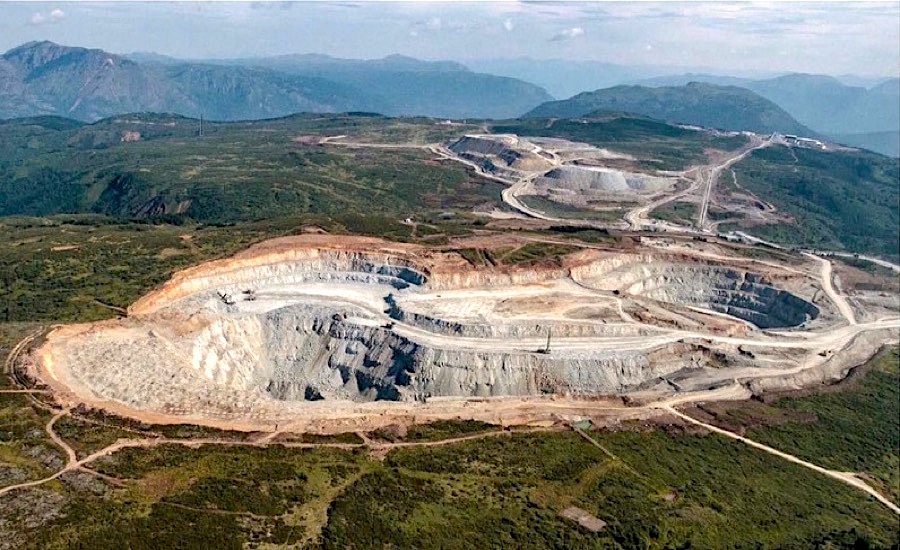
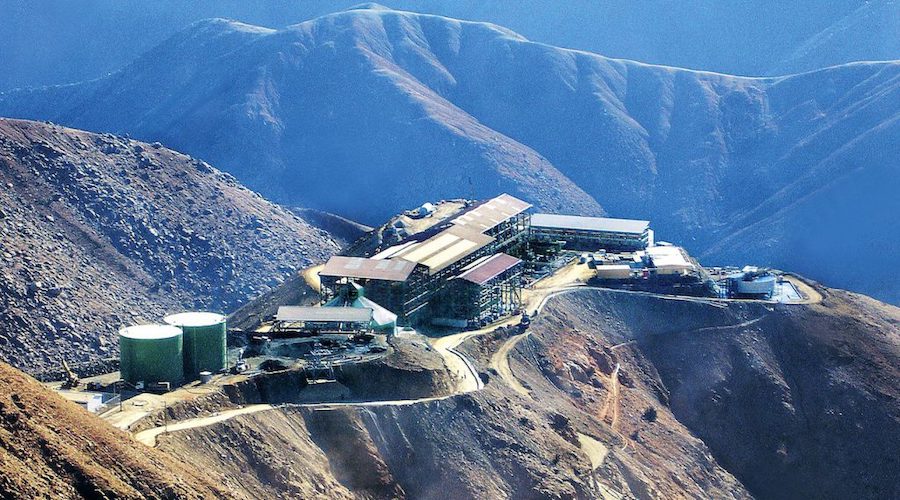
Cerro Lindo, in Peru, is one of Nexa’s most important mines. (Image courtesy of Nexa Resources | Flickr.)

Boliden (STO: BOL) is discussions to acquire a majority stake in zinc miner Nexa Resources (NYSE: NEXA) from Brazilian investment group Votorantim.

In their statements issued late on Thursday, both Boliden and Nexa confirmed that these talks are taking place, following earlier speculation. The companies did not provide further details, and cautioned that there is no certainty that a deal would materialize from these talks.

Shares of Nexa jumped 2.8% during after-hours trading, giving it a market capitalization of about $1.8 billion.

The announcements follows reports earlier this year that Votorantim is close to selling its controlling stake in Nexa. In April, the group told local newspaper Estadao that a deal to sell its 64.7% interest would come in the region of 7 billion reais ($1.4 billion). Before that, it had already sold aluminum producer CBA to Chinalco and Rio Tinto for about 4.7 billion reais.

A deal with Votorantim would further enhance and broaden Boliden’s base metals exposure. Nexa is one of the world’s leading zinc producers, operating five polymetallic mines and three smelters across Brazil and Peru.

GOOD OLD US IMPERIALISM

US envoy says Cook Islands minerals are a top priority


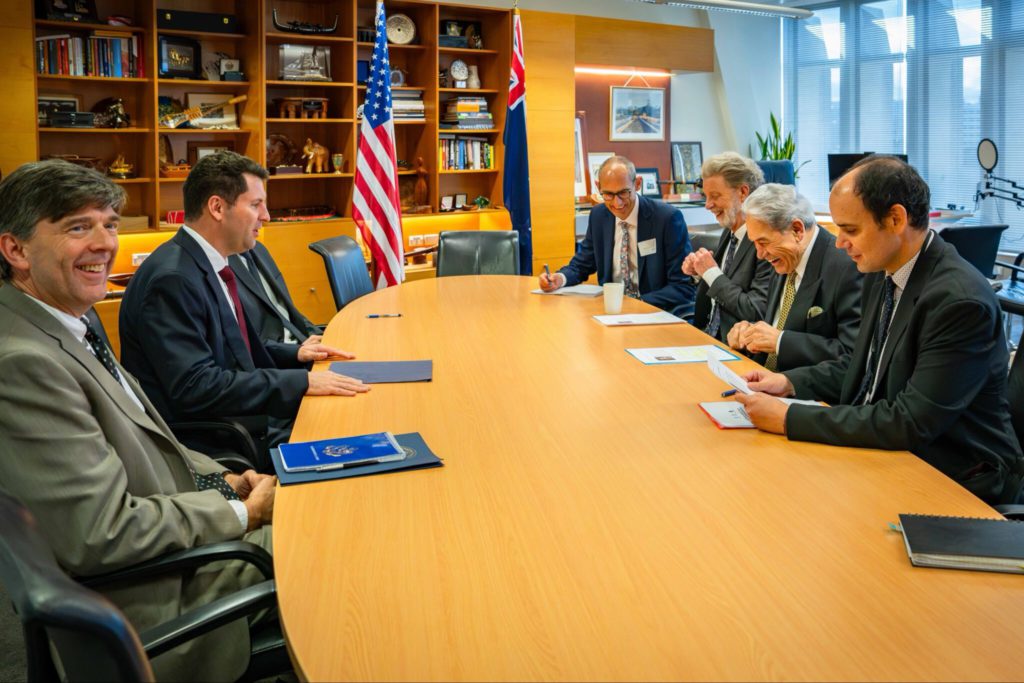
US Ambassador Jared Novelly (top left) held his first official meeting with New Zealand’s Foreign Minister, Winston Peters, this week. Credit: US Embassy NZ | X

The new US ambassador to New Zealand and several Pacific island nations said on Friday that securing Cook Islands seabed minerals was a top priority, and that China’s push for influence in the Pacific carried risks for small island states.

Jared Novelly, US ambassador to New Zealand, the Cook Islands, Niue and Samoa, said in a press conference that critical minerals had moved rapidly up his agenda over the last year.

“When I was getting briefings in October, November last year, the critical minerals thing was kind of a lesser item,” Novelly said. “Fast forward to February, March of this year, critical minerals, and particularly in the Cooks, is either 1A or 1B of my priorities.”

Washington has made securing critical minerals a strategic priority as it seeks to reduce its reliance on China-dominated supply chains and support defence and clean-energy industries.

The Cook Islands’ waters contain deposits of polymetallic nodules, sought for batteries and other technologies, and the government has allowed exploration, but not commercial extraction. In February, the Cook Islands and the US signed a non-binding framework on critical minerals research and supply-chain security, including deep-sea minerals in Cook Islands waters. It has also signed an exploration and research agreement with China.

Novelly, a Missouri businessman and sports team owner who is the inaugural US ambassador to the Cook Islands, said he planned to spend time in the country and would look to introduce US companies that could help with the minerals’ extraction.

The Cook Islands government did not immediately respond to a request for comment.

He said he also believed he needed to warn Pacific countries to be cautious in dealings with Beijing.

“China has made no bones about they want a base in the Pacific, they want an expanded presence there,” he said, adding that island nations needed to understand “what a debt trap is” and that “there can be strings attached”.

China in recent years has become a major player in the region, in development finance, ports, airports and telecommunications, and has sought a greater role in the military, policing, digital connectivity and media. Beijing says its relationships in the region are based on mutual respect and delivering benefits to the Pacific people.

Novelly said he was also exploring ways to support Pacific economies beyond aid, including by reducing the cost of remittances.

US faces more skeptical Kiwis

Novelly arrived in New Zealand earlier this week and presented his credentials to the governor general on Wednesday before hosting the embassy’s annual July 4 party.

Novelly said Washington respected New Zealand’s role in the South Pacific, including defence cooperation, but said partners needed to spend more on security.

“It’s important that you care as much about your defence as we care about your defence,” he said, echoing US policy towards partners and allies around the globe.

Novelly arrives as New Zealanders’ views of the United States have fallen. A June survey by the Asia New Zealand Foundation found that, for the first time in a decade, they viewed Washington as more of a threat than China.

But Novelly said it was not something he had experienced on his visits to the country and “there seems to be a very friendly camaraderie that occurs between folks from the US and Kiwis.”

On New Zealand’s nuclear-free policy, which restricts visits by nuclear-powered or nuclear-armed vessels, Novelly said any change was a decision for Wellington but that he would like to see a US aircraft carrier visit in Auckland harbour.

“I would really like the opportunity to work with New Zealand on that,” he said.

(By Lucy Craymer; Editing by Kate Mayberry)
 

Japan buyers agree on higher aluminum fees Due to war disruption


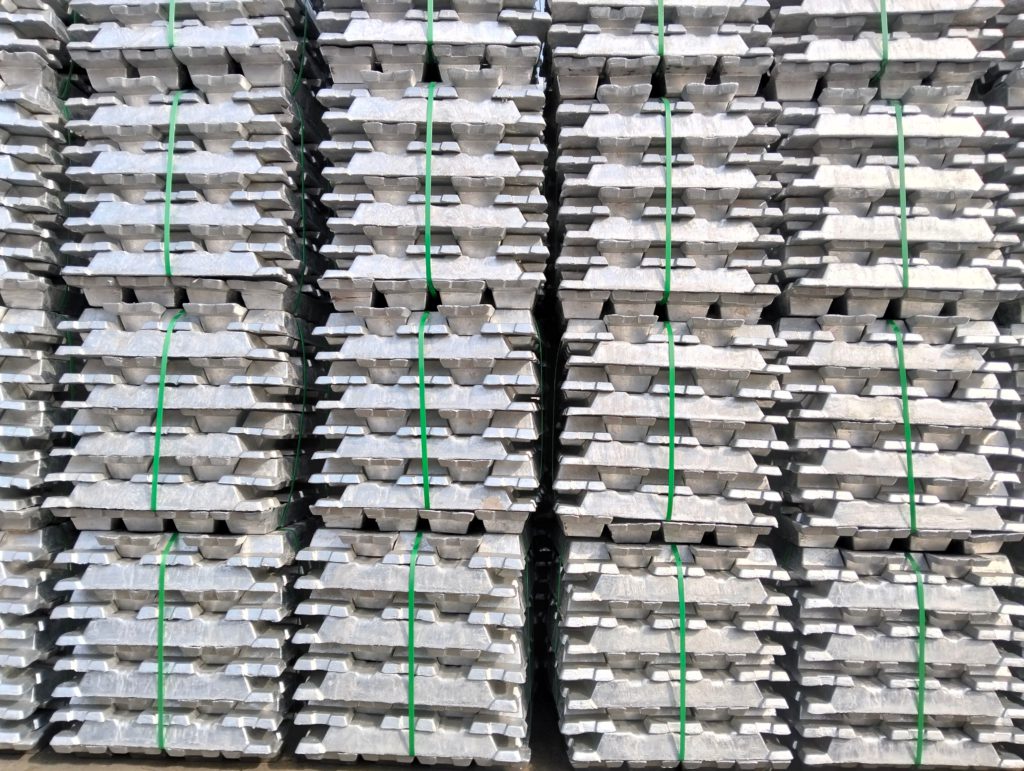
Aluminum ingots. Stock image.

Aluminum buyers in Japan, where the automobile industry is heavily dependent on metal imports, agreed to pay a sharply higher premium for third-quarter shipments after two producers lowered their initial demands.

Rio Tinto Group and South32 Ltd. reached an agreement with at least one Japanese customer to set the third-quarter premium at $395 a ton over London Metal Exchange prices, according to traders familiar with the negotiations. The fee, while above second-quarter levels, was less than suppliers’ initial offers of more than $400 a ton, they said, asking not to be named as the discussions are private.


Japan’s reliance on the Middle East for high-end aluminum is forcing companies to cut back on production and scramble for alternative supplies, leaving it vulnerable to demands for higher prices from producers. The agreed fee compared with a premium of $350 a ton for second-quarter shipments from Rio Tinto and $353 a ton from South32.

Rio didn’t immediately respond to a request for comment, while South32 declined to comment. The two companies initially offered premiums of between $460 and $480 a ton, the traders said.

There looks to be some relief coming for Japanese buyers, however. While the longer-term outlook for aluminum is bullish, traders say sentiment is weakening in the short term as supply conditions improve. That also helps explain why aluminum has retreated nearly 20% on the LME after climbing to a four-year high a month ago.

Emirates Global Aluminium, the Middle East’s top producer of the metal and a major supplier to the Japanese market, said this week that it aimed to speed up resumption of output at its Abu Dhabi facility that was damaged during the Iran war, with repairs of the main smelter ongoing.

About 7% of the aluminum production pots at the company’s Al Taweelah smelter are back online, Emirates Global’s chief financial officer Pal Kildemo said in an interview. The company is exporting metal by drawing down inventories and aims to get stockpiles back to normal levels by the end of the year, he said.

In China, some smelters and merchants have been maximizing overseas sales of stranded aluminum wire, typically used in power cabling for its strength and flexibility, and the buyers included Korean and Japanese firms, according to Chinese customs data. Much of the wire being shipped is probably being remelted abroad into aluminum ingots, which China has largely stopped exporting directly due to tariffs, traders have said.

(By Alfred Cang)


Chile’s Novandino Litio seeks environmental approval for $3B Atacama lithium project


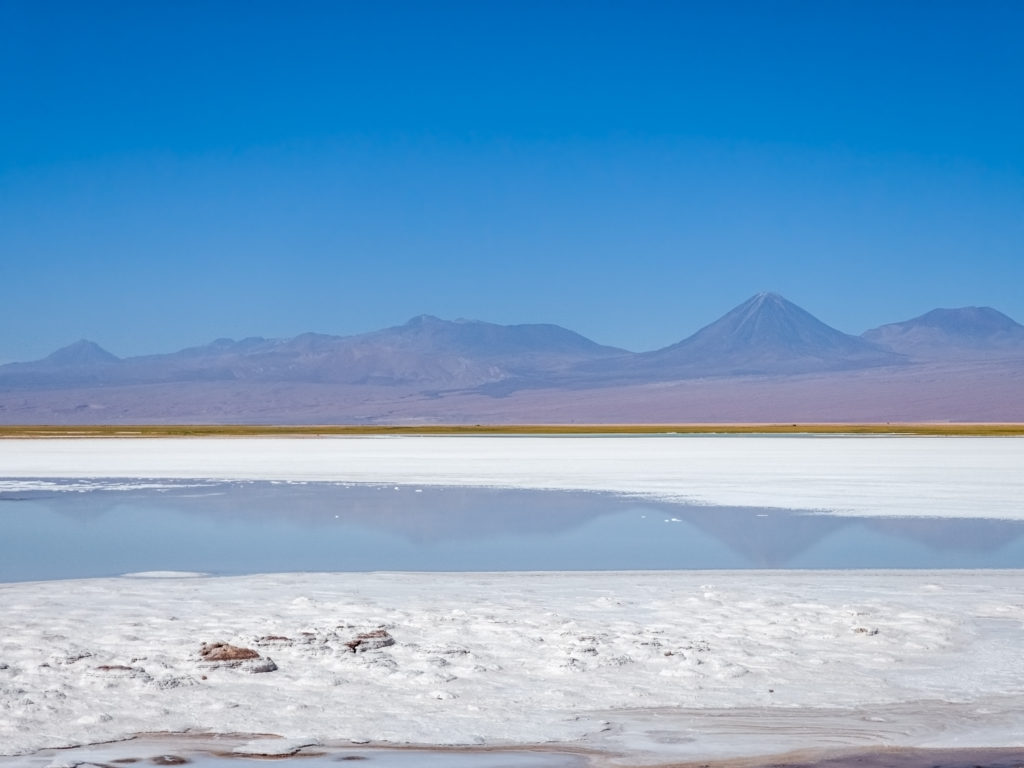
Stock image.

Novandino Litio, the joint venture between Chilean lithium producer SQM and state-owned copper miner Codelco, filed for environmental approval on Friday for a $3 billion project aimed at extending lithium production in the Atacama salt flat until 2060, a regulatory filing showed.

The “Operational Continuity and Future Mining Development Project in the Atacama Salt Flat” is part of the SQM-Codelco partnership, forged under Chile’s plan to boost state involvement in the lithium sector, a critical source of battery materials for electric vehicles.

The project would maintain current operations while gradually introducing new infrastructure and technologies aimed at improving efficiency in lithium production, as well as the extraction of potassium salts and other brine-derived products.

The plan calls for a gradual shift to new processing technologies aimed at reducing freshwater use from company-owned wells, while improving resource efficiency through treated brine reinjection and enhanced environmental monitoring.

SQM CEO Ricardo Ramos said in May he expected final approval for the initiative to be secured in 2029, with investment beginning in 2030.

(By Fabián Cambero and Fabiola Arámburo; Editing by Alexander Villegas)


SQM-Codelco Venture Targets 70% Lithium Output Surge in Chile

Chile's two biggest lithium players, SQM and state-owned Codelco, are laying the groundwork for a major expansion that could lift production from their joint venture by more than 70%.

In an environmental impact study tied to a planned $3 billion overhaul of operations in the Atacama Desert, the Novandino venture said it is targeting annual lithium production of up to 470,000 metric tons, compared with guidance of roughly 270,000 tons for 2026.

The project is designed to capitalize on expected long-term growth in lithium demand as electric vehicles and grid-scale battery storage continue expanding globally. If achieved, the higher output would further cement Chile's position as one of the world's most important suppliers of battery materials and could add pressure on higher-cost producers elsewhere.

However, the increase will take years to materialize. Under the current development plan, production is expected to rise gradually to around 300,000 tons before the venture begins a seven-year transition to an integrated production system that includes direct lithium extraction (DLE) technologies.

Analysts said the 470,000-ton target was larger than many in the industry had expected because the project had previously been presented primarily as an environmental modernization effort rather than a major capacity expansion.

Benchmark Mineral Intelligence analyst Federico Gay said reaching that level would require additional engineering work, further studies, potential changes to production quotas, and successful deployment of DLE technologies aimed at reducing water consumption in the Atacama salt flats.

"It will take several years, certainly not this decade, to achieve that capacity," Gay said.

The SQM-Codelco partnership is a cornerstone of Chile's strategy to increase state participation in lithium production while expanding output from the country's world-class brine resources.


BHP seeks to restart Cerro Colorado mine with $1.5B investment

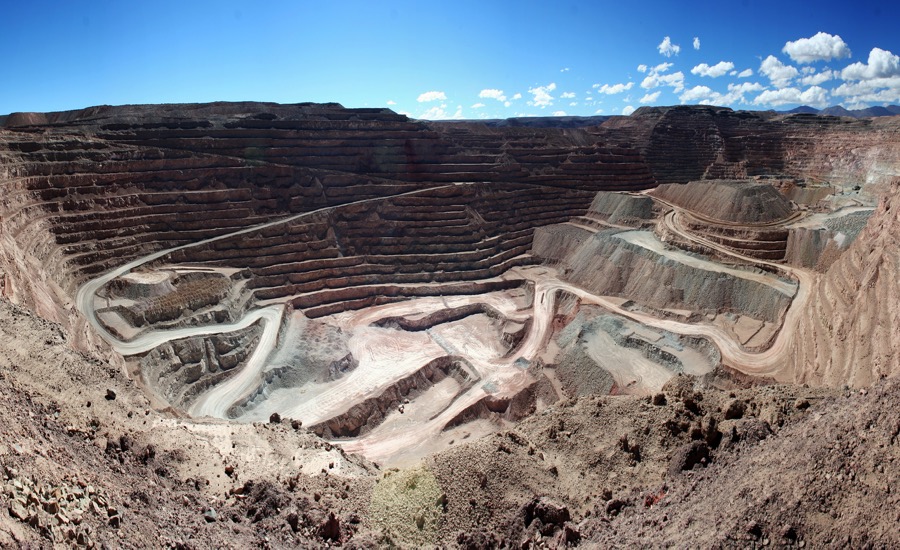
Cerro Colorado mine in Chile. (Image by Zwansaurio | Flickr Commons)

BHP (ASX: BHP) has begun the process to reopen the Cerro Colorado copper mine in Chile, targeting an investment of $1.5 billion to keep the operation running for 20 years.

On Wednesday, the Australian miner said it has applied for a new environmental permit for Cerro Colorado. Located in the Atacama Desert, the mine is part of BHP’s Pampa Norte division in northern Chile that also includes the Spence operation.

The copper mine has been closed since late 2023 after it was denied its water permit following protests by local communities.

In an attempt to restart the operation, BHP said it would explore the use of leaching technologies and desalinated water. Under its application, it laid out plans to use treated wastewater transported through a pipeline of more than 100 km from the municipality of Alto Hospicio to the mine site.

This initiative, according to the company, would enable the mine to run for 20 years. Its total cost is estimated at $1.5 billion.

BHP had previously planned to reboot the Cerro Colorado operation by the end of this decade. The mine represents a small part of its Chilean portfolio, in comparison to the giant Escondida mine and the nearby Spence growth project.

Canada commits $352M to Red Chris mine expansion in British Columbia


Newmont’s Red Chris copper-gold mine. Credit: Newmont

The Canadian government confirmed on Thursday C$500 million ($352 million) in financial support for the Red Chris Block Cave expansion project in British Columbia — part of a push to fast-track major mining projects in the country.

“We will invest $500 million to expand Red Chris mine, which will increase Canada’s annual copper production by more than 15%, support critical minerals demand for clean energy and manufacturing, and reduce greenhouse gas emissions by over 70% once operational,” it said in a statement.

The Red Chris porphyry deposit in BC’s Golden Triangle has a massive mineral endowment containing an estimated 20 million oz. of gold and 13 billion lb. of copper across its measured, indicated and inferred resources.

Newmont (NYSE: NEM, TSX: NGT), the world’s largest gold miner, holds a majority ownership and operates Red Chris in partnership with Canada’s Imperial Metals (TSX: III), which holds a 30% joint venture stake.

Last month, the project received crucial regulatory approvals, paving the way for a transition from open-pit mining to an underground operation and extending its lifespan into the mid-2040s.

“Newmont welcomes the government of Canada’s announcement of a C$500 million contribution to support the Red Chris Block Cave project,” the Colorado-based miner said in a statement.

“As we advance through our approval process toward a final investment decision, this commitment strengthens the business case for the development of a world-class copper-gold operation.”

Newmont is currently completing a definitive feasibility study for the project. The Red Chris Block Cave is expected to create more than 1,800 jobs during construction and sustain a total approximate workforce of 1,500 peak-season operational roles.


India Objects to Adani’s Handling of MSC’s $1.4B Investment

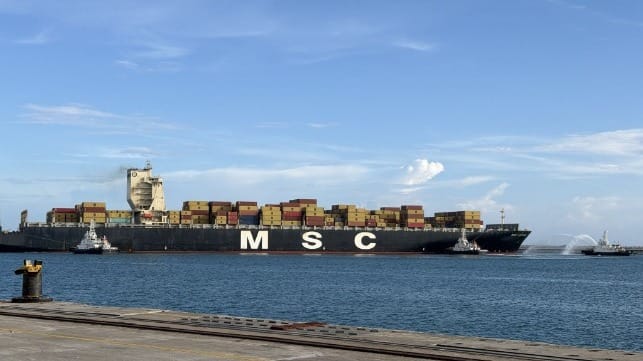
MSC containership arriving in India
MSC Luciana became the 1000th ship to arrive at the Indian ports days before the announcement of the investment (Vizhinjam International Seaport)

Published Jul 3, 2026 1:59 PM by The Maritime Executive

Global shipping giant Mediterranean Shipping Company (MSC) is poised to make the largest foreign private investment in India’s port infrastructure, but the $1.4 billion deal is not without controversy. Adani Ports developed the Vizhinjam port and announced it had struck a deal with MSC, but the local government is expressing its “strong displeasure” that it was not consulted about the proposed investment.

MSC, which has been aggressively expanding its terminal operations through its subsidiary Terminal Investment Limited (TiL), entered into a definitive agreement with Adani Ports and Special Economic Zone (APSEZ) to acquire a 49 percent stake in Vizhinjam port. Adani, which holds a 40-year concession for the port secured in 2015, will retain a 51 percent stake at the facility.

The State Government in Kerala, where the port is located, however, said late on Thursday that a change in the ownership of the concession requires government approval. They said the deal would be examined “strictly under the provisions of the concession agreement and anticipated regulations.

Adani announced the deal on June 29 saying it would cement Vizhinjam’s emergence as a dominant transshipment gateway in the Indian Ocean. The investment by TiL comes barely two years after Vizhinjam port was commissioned in December 2024.  

Despite being in operation for less than two years, Vizhinjam port’s profile has been on the rise driven by its strategic location just 10 nautical miles from the East-West shipping route connecting Europe, the Persian Gulf, and the Far East. Officials highlight that the port features a natural draft of 18–20 meters (59-65 feet), a 2.9-kilometer breakwater, an 800-meter berth, and advanced infrastructure, including eight quay cranes and 24 fully automated yard cranes.

With a total capacity of 1.6 million TEU, Vizhinjam has been described as India’s first deep-draft mega transshipment port. In its first year of operation, the port handled 1.3 million TEU and 615 vessels, becoming the fastest Indian port to cross the 1 million TEU milestone. Last week, the MSC Luciana became the 1000th commercial vessel to arrive at Vizhinjam International Seaport. 

Vizhinjam is being touted as India’s first automated port that combines cutting-edge container handling systems, a world-class IT platform, and an AI-enabled indigenous vessel traffic management system that is designed to drive operational efficiency, safety, and reliability. An ongoing expansion project is expected to increase the port’s capacity to 5.7 million TEU by December 2028.

Adani Group secures $15 billion capital as US legal clouds clear

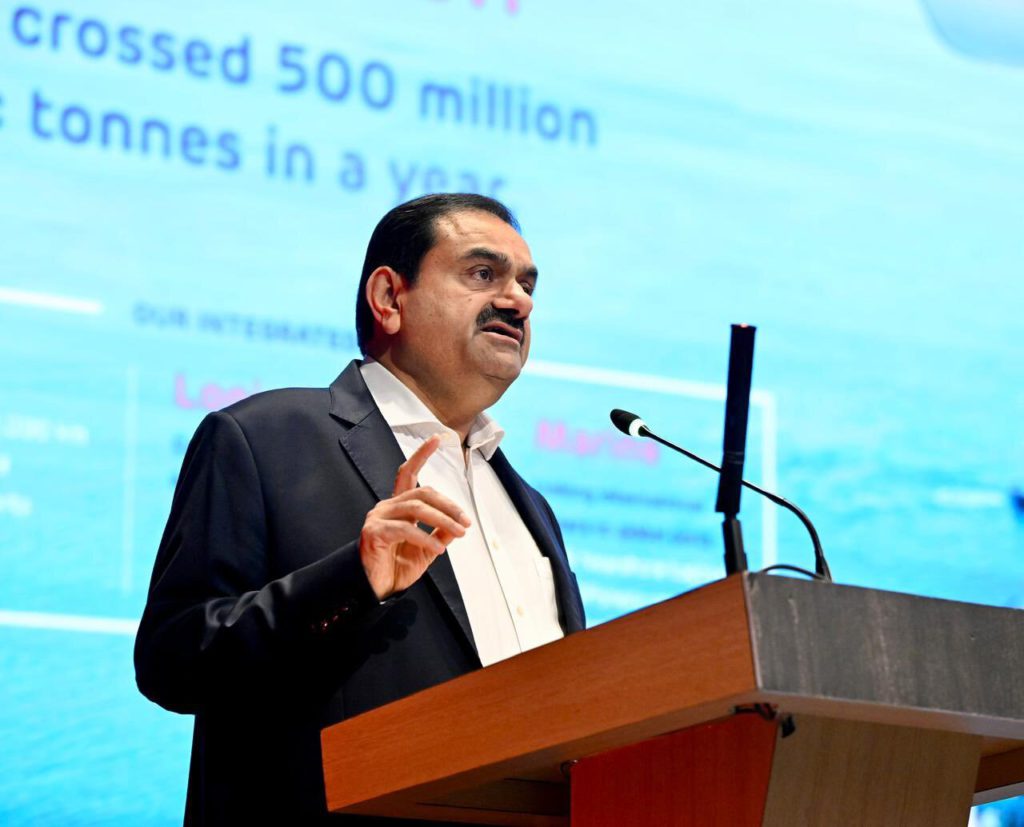
Indian billionaire Gautam Adani. Credit: Gautam Adani | X

In one week, billionaire Gautam Adani has announced nearly $15 billion in investment commitments across its ports, mining and flagship businesses.

The string of announcements signals that the group helmed by Asia’s richest person is back on the front foot after drawing a line under its US regulatory and legal woes. It also shows the conglomerate is rapidly regaining ground with investors, including US-based banks who will now have a free hand to do business with one of India’s most important conglomerates.

Adani Enterprises Ltd., the parent of the ports-to-power group, upsized its share sale by 50% to 150 billion rupees ($1.6 billion) and saw marquee American investors like The Capital Group, Goldman Sachs Group Inc., Vanguard Group Inc. and BlackRock Inc., Bloomberg News reported Friday citing people familiar with the matter.

The successful share sale, where the order book was fully filled up before the launch, was announced less than a day after the Ahmedabad-based company signed a pact with Abu Dhabi’s International Holding Co. to invest $11.5 billion in an aluminum project in the eastern India.

On Tuesday, Adani Ports and Special Economic Zone Ltd. announced a $1.4 billion deal with MSC Mediterranean Shipping Company SA in return for a 49% stake in its transshipment port in Vizhinjam.

“The Adani Group appears to have decisively shifted from defense to offense,” said Sunil Chandiramani, Mumbai-based chief executive officer of Nyka Advisory Services. The flurry of capital raising and strategic investments “indicates that global investors are once again willing to back the group’s long-term infrastructure story.”

An Adani Group representative did not immediately comment on this week’s deals spree.

Dropped charges

The investment announcements come weeks after a sweeping set of resolutions with the US authorities who had indicted the group’s founders — Gautam and his nephew, Sagar Adani — in November 2024 in a $250 million bribery scheme in India.

In May, the US Department of Justice moved to drop criminal charges against the Adanis in the bribery probe. This followed an agreement by Adani founders to pay a combined $18 million to settle a parallel civil fraud case with the US Securities and Exchange Commission.

Separately, Adani Enterprises agreed to pay $275 million to resolve an Office of Foreign Assets Control sanctions probe. The Adanis and the company did not admit any wrongdoing.

Yet it’s not all smooth-sailing for the group.

The chief of the southern Indian state of Kerala, where Adani’s Vizhinjam port is located, has objected to MSC buying into the Adani-run terminal saying this was done without prior consultation with the state government.

The Swiss firm is under scrutiny after a May 2025 incident when one of its vessels capsized and spilled its fuel oil cargo off the Kerala coast.

This week’s investments reflect renewed investor confidence. Adani stocks were roiled by a scathing short-seller report in early 2023 and a US bribery probe in 2024 but a euphoric share rally this year has already added more than $40 billion to the group market value this year.

As a result, the combined market value of nine Adani Group firms has surged past $202 billion, according to data compiled by Bloomberg.

This has also flowed through in Gautam Adani’s net worth estimates. It has ballooned by almost $36 billion this year to little over $120 billion, toppling Mukesh Ambani from the no.1 spot in Asia wealth rankings, according to Bloomberg Billionaires Index.

With the US legal overhang no longer dictating its growth agenda, Chandiramani says the group is stepping on the gas.

“This renewed expansion is significant because it gives Adani the financial firepower to accelerate its next phase of growth across infrastructure, logistics and manufacturing,” he said.

(By P R Sanjai)


LME approves Adani’s major copper smelter in India as listed brand

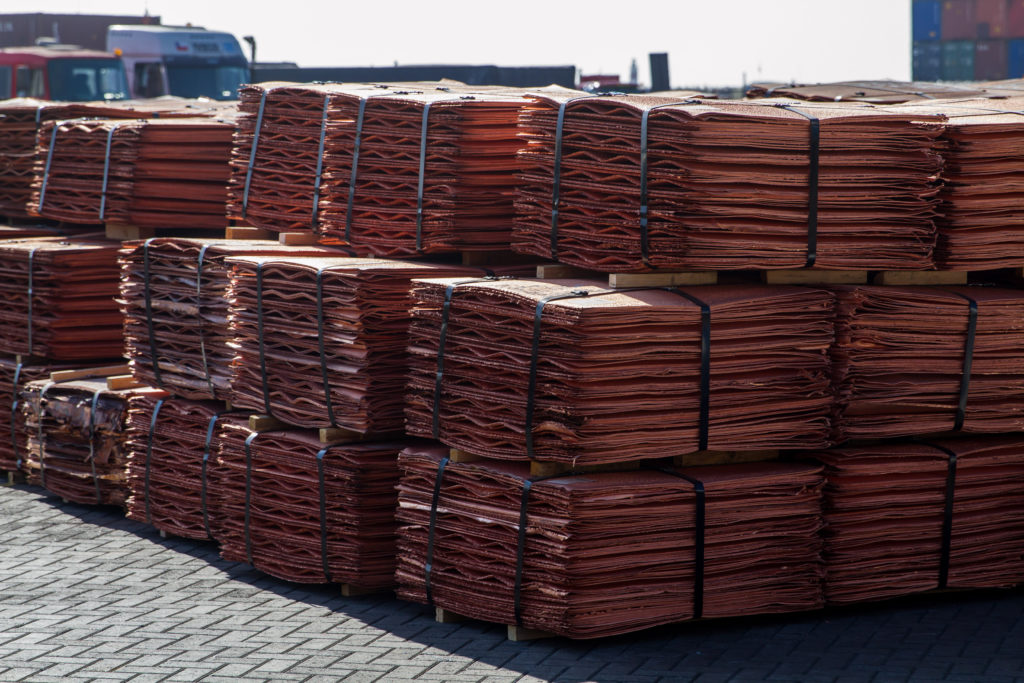
Stock image.

The London Metal Exchange has approved the Adani Copper brand for delivery against its copper contracts, the exchange said on Friday.

Warrants for the brand can be issued from July 10, although the LME-registered warehouses holding Adani Copper metal must include the brand in their off-warrant stock reports with immediate effect, the LME added.

The brand is produced by Adani Enterprises-owned Kutch Copper, one of India’s largest copper smelters, with annual production capacity of 500,000 metric tons. The company applied for LME registration in August 2025.

According to Adani, this $1.2 billion Kutch Copper facility in the western state of Gujarat is the world’s biggest single-location plant of its type, expected to reduce India’s reliance on imported copper.

India imported 238,080 tons of refined copper in 2025, down 18% from a year earlier, according to Trade Data Monitor data, with Japan remaining the country’s largest supplier.

(By Polina Devitt; Editing by Louise Heavens)


Congo plans first stock market as AI mineral boom draws interest


Downtown Lubumbashi, Democratic Republic of the Congo. Credit: Wikipedia.

The Democratic Republic of Congo is drawing up plans for its first stock exchange as it seeks to attract more investment to an economy that’s benefiting from soaring demand for minerals critical to the artificial intelligence buildout.

The new exchange will list securities denominated in both the Congolese franc and the US dollar, Finance Minister Doudou Fwamba Likunde Li-Botayi told Bloomberg News. In the meantime, the government is working with the International Finance Corp. to create a capital markets framework, he said.

The planned Kinshasa Stock Exchange is part of the government’s strategy to capitalize on growing foreign interest in Congo’s economy and broaden companies’ sources for capital, Li-Botayi said. Authorities also hope the dual-currency exchange will encourage greater use of the Congolese franc over time.

“The reality of our economy is that it is strongly dollarized,” Li-Botayi said in emailed comments, noting that more than 95% of total banking system deposits and over 80% of public securities are held in dollars. “We cannot design a stock exchange that ignores that reality.”

“We are building for the market as it exists today, while keeping sight of where we want it to go,” he added.

The move will add to other reforms the Central African nation has embarked on to spur wider market participation. They include liberalizing the mining sector, transforming state enterprises into commercial companies, opening the insurance market to private investors and creating a Treasury bond market, Li-Botayi said.

The International Monetary Fund said this week that the reforms are progressing well although an “accelerated pace is necessary.”

Congo is the latest African nation to try and establish an equity market, following launches in Ethiopia and Somalia in 2025. Prior to that, Zimbabwe set up an exchange in 2020 to allow trading in dollar-denominated securities.

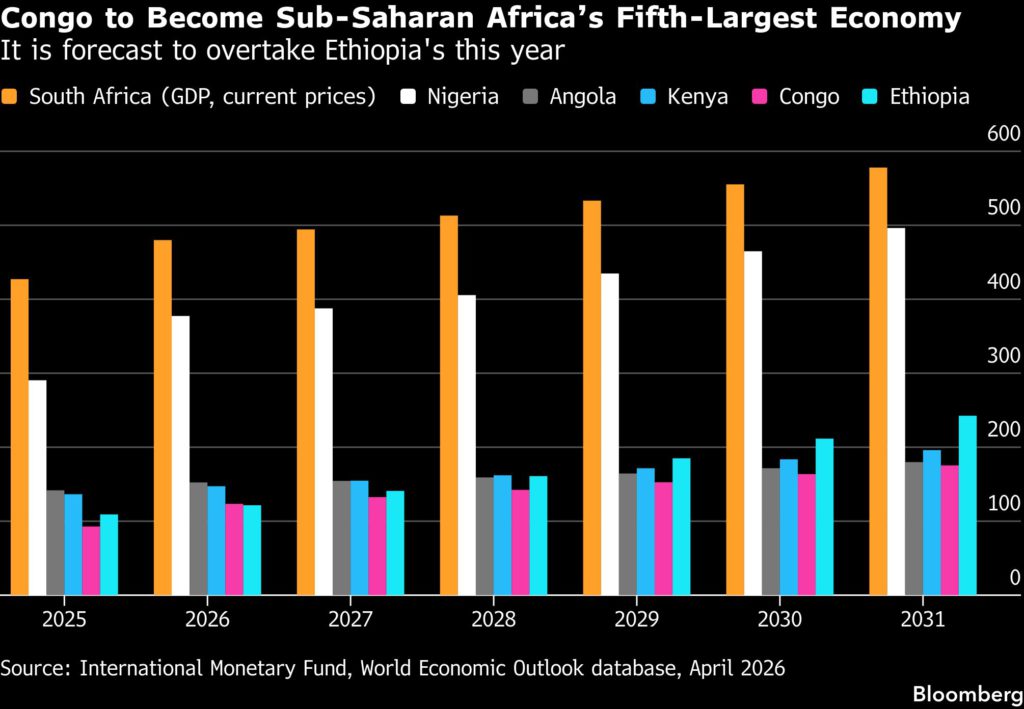
The timing may be in Congo’s favor. It is Africa’s largest copper producer and a major source of cobalt and lithium, all of which have spurred investor interest, amid rising demand for the minerals crucial for AI infrastructure. Booming metals exports are expected to make the economy sub-Saharan Africa’s fifth largest this year, according to IMF projections.

African stocks are also currently in vogue, benefiting from high commodity prices and inflows from investors keen to diversify from Asian technology heavyweights. Ghana, Nigeria, Zambia and Kenya all rank in the 20 best-performing indexes globally this year, adding to 2025’s stellar run.

The government is also on a drive to open its economy to foreign investors, striking deals with overseas firms for exploration and production. Its debut $1.25 billion eurobond in April was heavily oversubscribed and has handed investors returns of about 3% since, outperforming the emerging-market average. While the Congolese franc has weakened this year against the dollar, that comes after a 21% surge in 2025.

A finance bill establishing legal frameworks for markets is now before the country’s Senate and is expected to be signed off by year-end and the Finance Ministry is finalizing a decree to set up an independent regulator, which will license the exchange operator.

Li-Botayi identified mining firms as an priority target for stock-market listings, but said authorities will also work with the wider business community to build a pipeline of initial public offerings. While publicly traded companies will benefit from lower corporate income tax rates, the aim is also to boost public participation in markets.

“We want Congolese people to be able to own a piece of the companies that drive this country’s economy,” he said.

(By Ray Ndlovu)


Congo cobalt exporters fear losing quotas due to administrative glitch

Processing facilities at Tenke Fungurume mine in 2016 before the CMOC acquisition. (Image courtesy of Lundin Mining.)

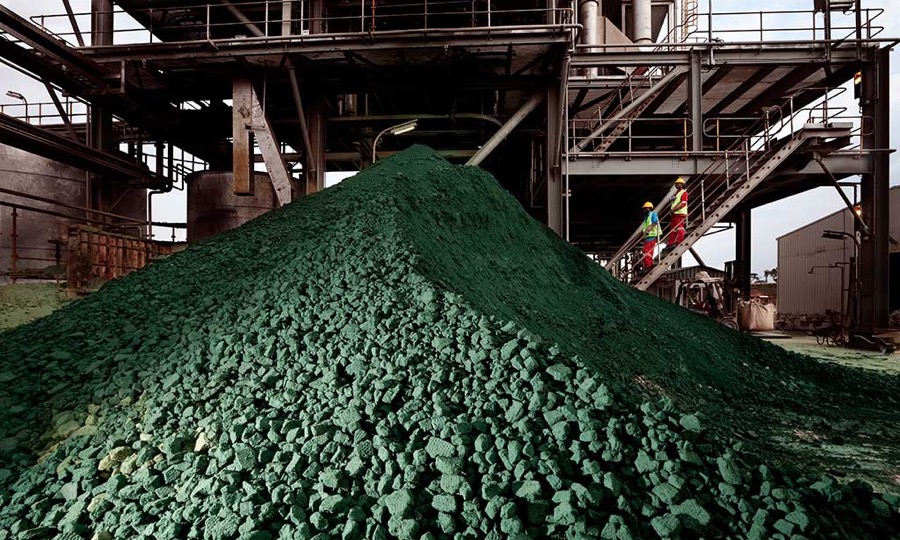
Major cobalt producers in the Democratic Republic of Congo risk losing some of their first-half export quotas due to an administrative glitch affecting a customs platform, according to industry officials and a letter seen by Reuters.

Due to newdirectives withdrawing unused quotas, the disruption threatens exports of the battery metal from leading global producers and could result in as much as 20,000 metric tons of missed shipments worth $1.1 billion at current prices, one industry source estimated.

Congo produces about 70% of the world’s cobalt and hosts operations by China’s CMOC and London-listed miner Glencore, the world’s largest and second-largest cobalt producers, as well as Eurasian Resources Group and Huayou Cobalt.

Congo tightens export controls

Congo has tightened control of the market through export suspensions and quotas to support prices, which have surged 160% since February 2025 to $26 a pound, or $57,320 a metric ton.

ARECOMS, Congo’s strategic minerals regulator, set a July 5 deadline for exporters to use their first-half quotas, after which unused volumes would be withdrawn and reallocated.

About 60-75% of companies are unlikely to meet the deadline due to administrative delays, a mining executive said.

The regulator has also set a 96,600-ton annual export cap for 2026 and 2027.

A July 2 letter from Congo’s Chamber of Mines to ARECOMS, seen by Reuters, said producers have been unable to register export declarations as required on the customs platform since July 1.

The letter said the blockage on the platform was due to the absence of a formal notification from ARECOMS authorizing customs to continue processing export quotas.

Mining companies have urged ARECOMS to resolve the issue and extend the deadline, the executive said, adding that they had also asked the prime minister to intervene.

ARECOMS, the Mining Ministry and the industry chamber did not immediately respond to requests for comment.

A source at CMOC said the company had requested an extension of the July 5 deadline from ARECOMS but had yet to receive a response, adding that a one-month extension “would be enough”.

CMOC did not immediately respond to a request for comment.

CMOC could lose almost all its second-quarter export quota if the issues are not resolved quickly, the source added. Like the other industry sources, the source spoke on condition of anonymity because they are not authorized to speak to the media.

(By Ange Adihe Kasongo, Tom Daly, Pratima Desai and Maxwell Akalaare Adombila; Editing by Helen Popper)

POLAND

KGHM launches $8.55 billion investment plan


ALL CAPITALI$M IS STATE CAPITALI$M


Polkowice-Sieroszowice mine. Credit: KGHM

Polish state-controlled copper and silver producer KGHM on Friday set a new strategy committing more than 32 billion zlotys ($8.55 billion) in investment through the end of the decade while setting new output and profit targets.

The plan, called “Strategy 2055+,” targets average annual adjusted core profit, measured as earnings before interest, taxes, depreciation and amortisation (EBITDA), of 12 billion zlotys, paid copper output of 730,000 tonnes and silver production of 1,290 tonnes between 2026 and 2030.

“After 2035, we want KGHM to be a modern, multi-raw material industrial group,” chief executive Remigiusz Paszkiewicz said, adding the company planned to build a new mine dubbed “KGHM 2.0” in Poland.

The plan reflects KGHM’s push to secure ore supplies closer to its Polish smelters and to cut logistics costs. The company expects about 80% of copper output to come from domestic assets, with the rest from mines abroad.

The strategy also places fresh emphasis on overseas operations.

KGHM said nearly 80% of planned investment would go to its core Polish business, with the rest allocated to assets in Chile, the US and Canada. Overseas assets generated about 48% of the group’s EBITDA in 2025, helped by the Sierra Gorda mine in Chile, in which KGHM owns a 55% stake, and the Robinson mine in Nevada.

“We want the position of our foreign assets to grow, because this builds the company’s global credibility and resilience to structural changes,” deputy chief executive for foreign assets Anna Sobieraj-Kozakiewicz said.

She said the company would seek new opportunities based on efficiency analysis.

($1 = 3.7415 zlotys)

(By Alicja Surdy and Rafal Nowak; Editing by Matt Scuffham)


Mining Firm Acquires Cruise Ship to House Project Workers in Greenland

cruise ship used as housing for a mining camp in Greenland
The company plans to use the cruise ships as housing in Greenland (Critical Metals Corp.)

Published Jul 3, 2026 3:28 PM by The Maritime Executive

A U.S. mining, exploration, and development company has become the latest owner of a former Soviet passenger ferry that was later converted to a cruise ship. In recent months, the ship gained prominence for housing troops and personnel in Greenland.

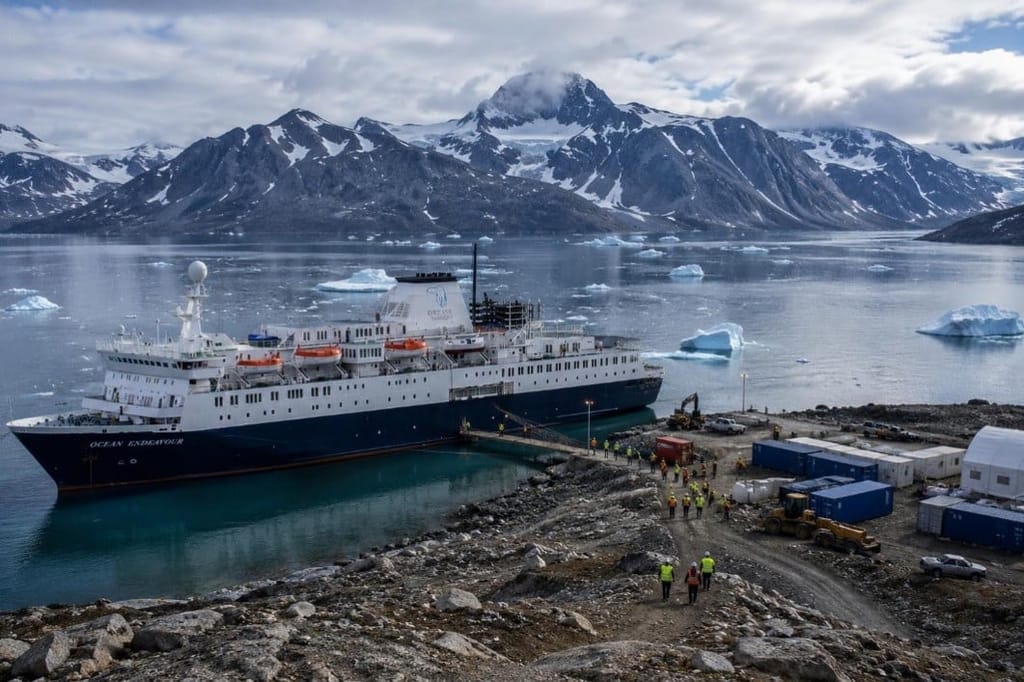
Critical Metals Corp., which is undertaking a major rare earth mineral project in Greenland, has acquired the former expedition cruise ship Ocean Endeavour at a cost of €7.5 million ($8.5 million) to house about 300 workers for its Tanbreez project in Greenland.

The vessel was owned by SunStone Marine Group and has been chartered to various companies. Early this year, the Danish Defence chartered the 12,900 gross ton vessel that has a capacity to accommodate 190 passengers and a crew and staff of 124 to house Danish and NATO troops during the Arctic Endurance exercise.

The Ocean Endeavour has an interesting history, having been built in Poland in 1982 as a Soviet passenger ferry. The vessel originally operated as Konstantin Simonov in the Baltic Sea and has changed ownership several times. In the early 2000s, she was converted to a cruise ship and briefly operated for an Israeli company before being outfitted for polar cruising in 2015. Last month, SunStone announced that the 137-meter vessel was up for sale.

The Nasdaq-listed Critical Metals said it has purchased the ice-strengthened vessel owing her proven operating history in both the Arctic and Antarctic environments. It said it would make the ship well-suited to support year-round activities associated with the development of the Tanbreez critical minerals project.

The company highlighted that Ocean Endeavour will provide flexible housing capacity for up to 300 project personnel, in effect minimizing demand on local housing and hotel capacity in Greenland. For Critical Metals, providing self-contained accommodation for its workforce means there will be minimal strain on the limited hotel and tourism infrastructure in Qaqortoq and the surrounding region. The vessel will be moored adjacent to the Tanbreez project.

“The Ocean Endeavour provides us with a flexible, proven platform that will support our workforce, improve logistics, and enhance operational efficiency as we continue to progress our development activities in Qaqortoq,” said Tony Sage, Critical Metals Chairman.

He added that the vessel strengthens the company’s ability to execute its long-term growth plans while maintaining a strong focus on safety and operational excellence in a geographically and culturally sensitive area with limited infrastructure capacity.

In 2024, Critical Metals acquired a controlling stake in the Tanbreez project that has been touted as one of the world’s largest undeveloped rare earth projects. Located in southern Greenland, the project is said to contain significant concentrations of heavy rare earth elements that are critical for defense applications, clean energy transition, and next-generation technologies.