Congo plans first stock market as AI mineral boom draws interest

The Democratic Republic of Congo is drawing up plans for its first stock exchange as it seeks to attract more investment to an economy that’s benefiting from soaring demand for minerals critical to the artificial intelligence buildout.

The new exchange will list securities denominated in both the Congolese franc and the US dollar, Finance Minister Doudou Fwamba Likunde Li-Botayi told Bloomberg News. In the meantime, the government is working with the International Finance Corp. to create a capital markets framework, he said.
The planned Kinshasa Stock Exchange is part of the government’s strategy to capitalize on growing foreign interest in Congo’s economy and broaden companies’ sources for capital, Li-Botayi said. Authorities also hope the dual-currency exchange will encourage greater use of the Congolese franc over time.
“The reality of our economy is that it is strongly dollarized,” Li-Botayi said in emailed comments, noting that more than 95% of total banking system deposits and over 80% of public securities are held in dollars. “We cannot design a stock exchange that ignores that reality.”
“We are building for the market as it exists today, while keeping sight of where we want it to go,” he added.
The move will add to other reforms the Central African nation has embarked on to spur wider market participation. They include liberalizing the mining sector, transforming state enterprises into commercial companies, opening the insurance market to private investors and creating a Treasury bond market, Li-Botayi said.
The International Monetary Fund said this week that the reforms are progressing well although an “accelerated pace is necessary.”
Congo is the latest African nation to try and establish an equity market, following launches in Ethiopia and Somalia in 2025. Prior to that, Zimbabwe set up an exchange in 2020 to allow trading in dollar-denominated securities.
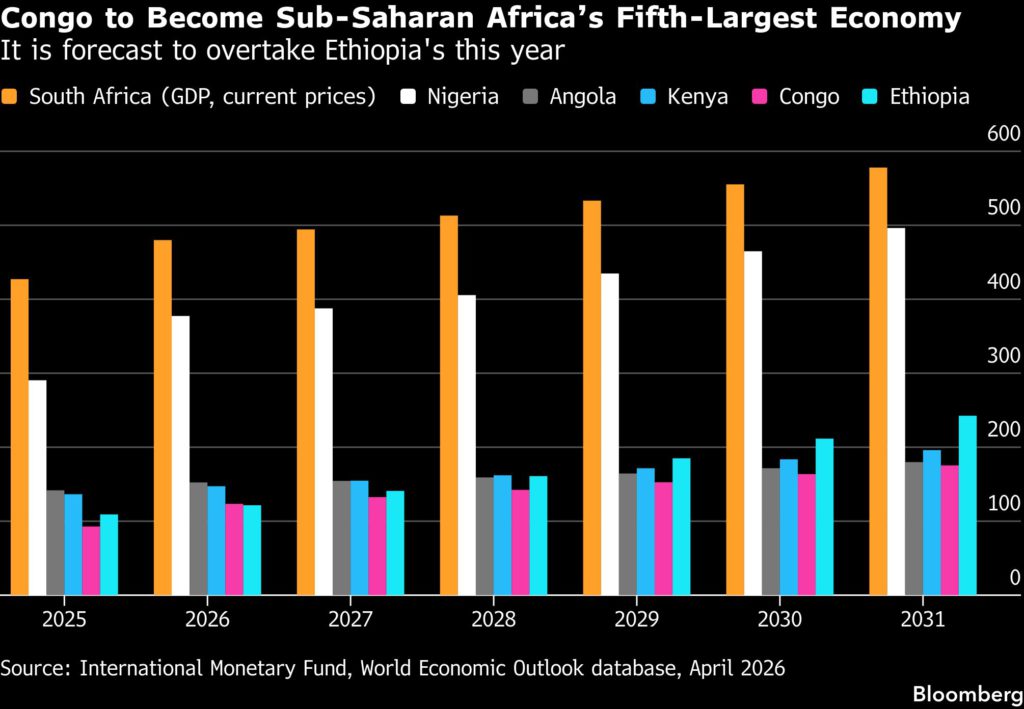
The timing may be in Congo’s favor. It is Africa’s largest copper producer and a major source of cobalt and lithium, all of which have spurred investor interest, amid rising demand for the minerals crucial for AI infrastructure. Booming metals exports are expected to make the economy sub-Saharan Africa’s fifth largest this year, according to IMF projections.
African stocks are also currently in vogue, benefiting from high commodity prices and inflows from investors keen to diversify from Asian technology heavyweights. Ghana, Nigeria, Zambia and Kenya all rank in the 20 best-performing indexes globally this year, adding to 2025’s stellar run.
The government is also on a drive to open its economy to foreign investors, striking deals with overseas firms for exploration and production. Its debut $1.25 billion eurobond in April was heavily oversubscribed and has handed investors returns of about 3% since, outperforming the emerging-market average. While the Congolese franc has weakened this year against the dollar, that comes after a 21% surge in 2025.
A finance bill establishing legal frameworks for markets is now before the country’s Senate and is expected to be signed off by year-end and the Finance Ministry is finalizing a decree to set up an independent regulator, which will license the exchange operator.
Li-Botayi identified mining firms as an priority target for stock-market listings, but said authorities will also work with the wider business community to build a pipeline of initial public offerings. While publicly traded companies will benefit from lower corporate income tax rates, the aim is also to boost public participation in markets.
“We want Congolese people to be able to own a piece of the companies that drive this country’s economy,” he said.
(By Ray Ndlovu)
Congo cobalt exporters fear losing quotas due to administrative glitch
Major cobalt producers in the Democratic Republic of Congo risk losing some of their first-half export quotas due to an administrative glitch affecting a customs platform, according to industry officials and a letter seen by Reuters.
Due to newdirectives withdrawing unused quotas, the disruption threatens exports of the battery metal from leading global producers and could result in as much as 20,000 metric tons of missed shipments worth $1.1 billion at current prices, one industry source estimated.
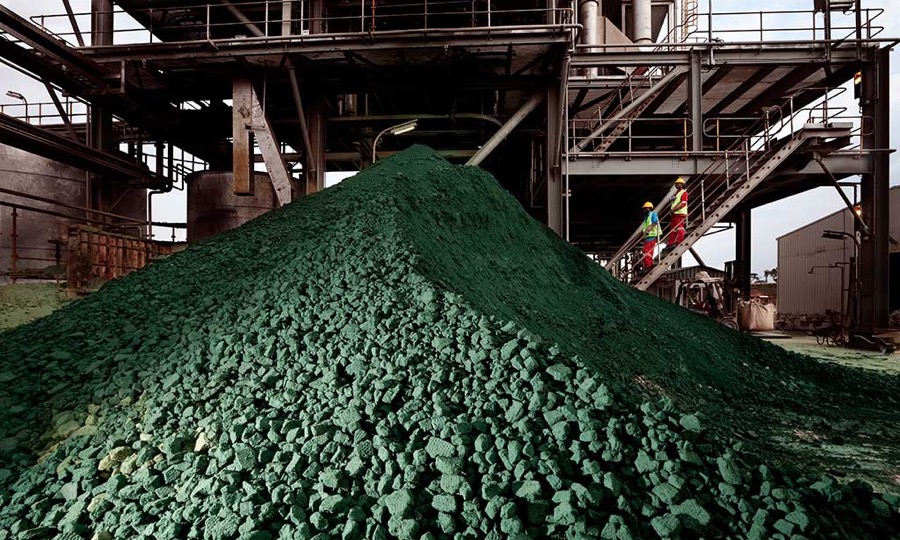
Congo produces about 70% of the world’s cobalt and hosts operations by China’s CMOC and London-listed miner Glencore, the world’s largest and second-largest cobalt producers, as well as Eurasian Resources Group and Huayou Cobalt.
Congo tightens export controls
Congo has tightened control of the market through export suspensions and quotas to support prices, which have surged 160% since February 2025 to $26 a pound, or $57,320 a metric ton.
ARECOMS, Congo’s strategic minerals regulator, set a July 5 deadline for exporters to use their first-half quotas, after which unused volumes would be withdrawn and reallocated.
About 60-75% of companies are unlikely to meet the deadline due to administrative delays, a mining executive said.
The regulator has also set a 96,600-ton annual export cap for 2026 and 2027.
A July 2 letter from Congo’s Chamber of Mines to ARECOMS, seen by Reuters, said producers have been unable to register export declarations as required on the customs platform since July 1.
The letter said the blockage on the platform was due to the absence of a formal notification from ARECOMS authorizing customs to continue processing export quotas.
Mining companies have urged ARECOMS to resolve the issue and extend the deadline, the executive said, adding that they had also asked the prime minister to intervene.
ARECOMS, the Mining Ministry and the industry chamber did not immediately respond to requests for comment.
A source at CMOC said the company had requested an extension of the July 5 deadline from ARECOMS but had yet to receive a response, adding that a one-month extension “would be enough”.
CMOC did not immediately respond to a request for comment.
CMOC could lose almost all its second-quarter export quota if the issues are not resolved quickly, the source added. Like the other industry sources, the source spoke on condition of anonymity because they are not authorized to speak to the media.
(By Ange Adihe Kasongo, Tom Daly, Pratima Desai and Maxwell Akalaare Adombila; Editing by Helen Popper)

No comments:
Post a Comment