Writers union sues to block US Paramount deal
AFP
July 14, 2026

AFP
July 14, 2026
Le logo du studio hollywoodien Warner Bros Discovery à Culver City, le 5 décembre 2025 en Californie – Copyright AFP/File Patrick T. Fallon
The Writers Guild of America (WGA) filed a lawsuit Tuesday to block Paramount Skydance’s proposed takeover of Hollywood studio Warner Bros. Discovery, arguing the $110 billion acquisition would violate federal antitrust law and harm writers.
This latest hurdle comes a day after California and 11 other states launched separate suits to block the merger.
With Tuesday’s lawsuit, one of Hollywood’s powerful labor unions hopes to undo the US Department of Justice’s approval.
Many fear the merger will result in massive job cuts in an industry that has been under siege from consolidations and layoffs.
“The proposed Paramount-Warner Bros. merger threatens the economic and creative health of the American entertainment industry,” the WGA complaint said, adding the merger “would eliminate competition for buying film and television writing, resulting in suppressed compensation, worse deal terms, and reduced programming volume and diversity.”
The owners of Paramount Skydance, the Ellison family, are close to US President Donald Trump and the deal would give them control of CBS News and CNN, along with film studios Paramount Pictures and Warner Bros., and streaming platforms Paramount+ and HBO Max.
“With fewer competitors, the merged Paramount-Warner Bros. entity would have both the incentive and the ability to lower costs by suppressing writers’ wages and reducing output. Writers will be paid less and have fewer employment opportunities,” the Writers Guild said in its complaint.
Paramount engaged in a bidding war against Netflix to land Warner Bros., and argues the deal will create a strong rival to Netflix, Amazon and Apple.
To win support, the conglomerate has pledged to release at least 30 films a year that will remain in theaters for a minimum of 45 days.
The US legal proceedings are being watched in the United Kingdom and European Union, where regulators have yet to approve the deal.
rfo/sla/tc
The Writers Guild of America (WGA) filed a lawsuit Tuesday to block Paramount Skydance’s proposed takeover of Hollywood studio Warner Bros. Discovery, arguing the $110 billion acquisition would violate federal antitrust law and harm writers.
This latest hurdle comes a day after California and 11 other states launched separate suits to block the merger.
With Tuesday’s lawsuit, one of Hollywood’s powerful labor unions hopes to undo the US Department of Justice’s approval.
Many fear the merger will result in massive job cuts in an industry that has been under siege from consolidations and layoffs.
“The proposed Paramount-Warner Bros. merger threatens the economic and creative health of the American entertainment industry,” the WGA complaint said, adding the merger “would eliminate competition for buying film and television writing, resulting in suppressed compensation, worse deal terms, and reduced programming volume and diversity.”
The owners of Paramount Skydance, the Ellison family, are close to US President Donald Trump and the deal would give them control of CBS News and CNN, along with film studios Paramount Pictures and Warner Bros., and streaming platforms Paramount+ and HBO Max.
“With fewer competitors, the merged Paramount-Warner Bros. entity would have both the incentive and the ability to lower costs by suppressing writers’ wages and reducing output. Writers will be paid less and have fewer employment opportunities,” the Writers Guild said in its complaint.
Paramount engaged in a bidding war against Netflix to land Warner Bros., and argues the deal will create a strong rival to Netflix, Amazon and Apple.
To win support, the conglomerate has pledged to release at least 30 films a year that will remain in theaters for a minimum of 45 days.
The US legal proceedings are being watched in the United Kingdom and European Union, where regulators have yet to approve the deal.
rfo/sla/tc
Bennito L. Kelty
July 14, 2026
RAW STORY
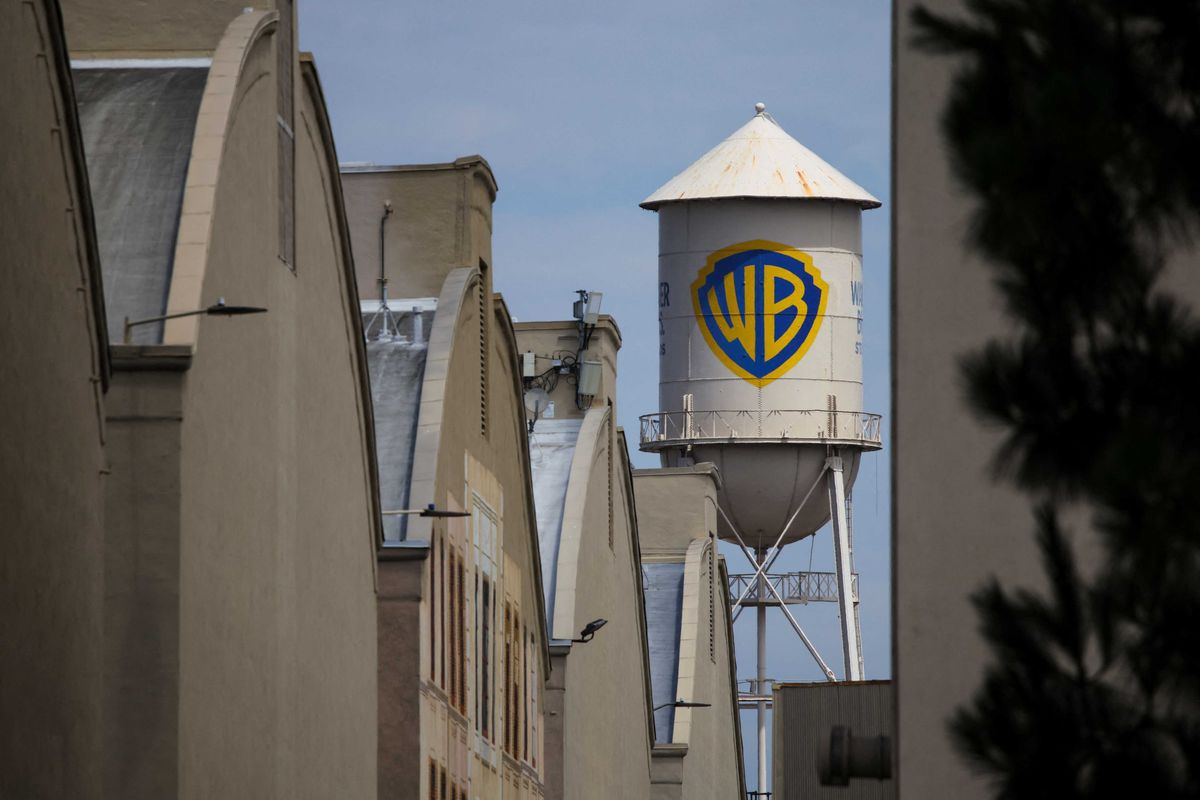
The Warner Bros. Water Tower is pictured at Warner Bros. Studios in Burbank on the day it was announced that California and 11 states are suing to block Paramount's $110 billion acquisition of Warner Bros. Discovery in California, U.S. July 13, 2026. REUTERS/Daniel Cole
A red state is capitalizing on a major Hollywood studio's rift with California over a Trump-backed merger, per reports.
According to a Tuesday article by The Hollywood Reporter, Tennessee is courting Paramount Skydance as it sets its sights on a new home. Paramount Skydance has threatened to leave California after a coalition of a dozen attorneys general filed a lawsuit to block a $111 billion merger with Warner Bros. Discovery. The Trump Department of Justice greenlit the merger earlier this year.
The Tennessee Department of Economic and Community Development sent a letter on July 2 to Paramount Skydance CEO David Ellison, in which it tried to woo the Trump-allied chairman.
"Congratulations on this remarkable new chapter for Paramount Skydance. Few leaders have the opportunity to redefine an iconic company while simultaneously shaping the future of an industry," reads the letter, signed by Tennessee Deputy Governor Stuart McWhorter. "As you look ahead, I encourage you to consider Tennessee as the home for that future."
The Hollywood Reporter noted that Ellison used to live on and off in Tennessee for 11 years from 2014 to 2025. The Reporter added that Oracle, the tech company owned by Larry Ellison, plans on building a massive campus in Nashville, and Clay Magouyrk, the co-CEO of Oracle, lives in Tennessee.
Warner Bros. Discovery also used to maintain an office complex in Knoxville after a 2017 Scripps Network deal. Warner Bros. Discovery, the parent company of the historic Hollywood studio, sold the property in 2023, according to The Hollywood Reporter.
"Tennessee offers a compelling proposition: a state where creativity and technology converge, where talent is developed intentionally, and where innovation is embraced," the letter promised.
Busted: Paramount gave FCC officials gifts while seeking approval for billion-dollar deal
July 15, 2026
The rich and famous who filed into the Kennedy Center’s opera house in December were there to enjoy one of the nation’s most exclusive celebrations of the performing arts: the center’s annual honors gala.
The black-tie event, hosted by President Donald Trump, prioritized tickets to people who donated more than $75,000 to the center. This year, it feted Hollywood icon Sylvester Stallone, the legendary glam rock band Kiss and the Grammy Award-winning disco pioneer Gloria Gaynor.
Among the attendees that evening were two lower-profile government officials whose regulatory decisions had been crucial to the future of the gala’s broadcast sponsor, CBS, and its parent company, Paramount.
Five months earlier, Federal Communications Commissioner Olivia Trusty cast a decisive vote approving Paramount’s historic $8 billion merger with Skydance Media. Now, the commissioner and a guest enjoyed the star-studded celebration thanks to tickets gifted to her by Paramount worth more than $12,000, according to ethics disclosure records obtained by ProPublica.
The other commissioner who approved the merger watched from a prized perch. FCC Chair Brendan Carr and his wife sat in a private skybox with Paramount CEO David Ellison and other executives from Paramount and CBS. Such seats sold for $125,000 a ticket, according to Kennedy Center guidelines.
It’s unclear if Paramount gifted Carr the premium seats because the FCC has yet to make public his financial disclosure for last year.
However, past disclosures show Carr and Trusty are among seven FCC commissioners who have accepted Kennedy gala tickets from CBS or its parent company over the last decade. Ethics experts told ProPublica this poses a blatant conflict of interest since the commission regulates the network. Carr’s previous financial statements show he has accepted tickets at least seven times since his 2017 appointment, totaling over $63,000 in gifts.
Last December’s ceremony attended by Trusty and Carr took place as Paramount was launching a hostile takeover bid for Warner Bros. Discovery, a move that would later result in a merger agreement that requires FCC approval.
Federal ethics rules ban employees from taking gifts from any entity that does business with, is regulated by or seeks official action from their agency.
Four ethics experts told ProPublica that by accepting the premium tickets Trusty and Carr compromised the FCC’s impartiality and should not take part in any upcoming decision on the merger.
“There’s no way that any top federal regulator should ever, ever accept a gift from a regulated company with interests their work will foreseeably affect,” said Walter Shaub, who led the federal Office of Government Ethics from 2013 to 2017. “The appearance of taking gifts like that is terrible. What’s at stake is nothing less than the public’s trust in government.”
Virginia Canter, who served as an ethics lawyer at the White House, Treasury Department, and Securities and Exchange Commission during the presidencies of George H.W. Bush, Bill Clinton, George W. Bush and Barack Obama, said the commissioners who accepted tickets cannot participate in this matter without damaging the integrity of the government’s decision-making process.
“This is shocking. Pretty disturbing, that’s what I would say. I just don’t understand what they were thinking,” said Canter, who now works as chief counsel for ethics and corruption at the nonpartisan government watchdog group Democracy Defenders Fund.
The FCC’s review of the merger is one of the final hurdles facing a historic $110 billion consolidation of two of the five largest film studios in Hollywood. The deal would unite Paramount Skydance with Warner Bros., bringing under the control of one company Paramount+ and HBO Max streaming services; CBS and CNN; and scores of other major broadcast channels, cable networks, and digital platforms.
The new megacorporation, which could reshape how millions will access news, movies, sports and video games, faces fierce opposition from inside and outside Hollywood. More than 5,000 actors, producers and entertainment workers — including stars such as Robert De Niro, Javier Bardem, Joaquin Phoenix and Glenn Close — signed an open letter decrying how the consolidation would eliminate jobs and compromise “the integrity, independence, and diversity of our industry.”
On Monday, California, New York and 10 other Democratic states filed a lawsuit seeking to block the merger under federal and state anti-monopoly laws.
American and international regulators are evaluating the deal for its potential national security implications and impacts to consumers worldwide. Last week, the British government signaled it planned to investigate whether the new entertainment titan that would emerge from the union would unfairly stifle competition. The FCC’s ongoing review includes examining the Middle Eastern sovereign wealth funds backing the deal, including from Saudi Arabia, Qatar and Abu Dhabi.
The FCC usually has five commissioners — all appointed by the president and confirmed by the Senate to serve five-year terms — but the agency currently has only three. Any vote by the full commission would likely be decided by Republicans Carr and Trusty over Democrat Anna Gomez. Gomez was not at the December 2025 show but has accepted tickets from Paramount in the past. Because the FCC requires a three-commissioner quorum for a vote, any recusal could leave the panel unable to decide on the merger. Carr could decide to ask staff to approve the deal rather than bring it to a commission vote, but the ethics experts said he should recuse himself from any decisions affecting the Paramount merger.
The experts warned the commissioners’ gifts might become central in legal challenges and said the Justice Department should investigate potential violations of federal rules or laws.
Neither Carr nor Trusty responded to ProPublica’s requests for comment. Gomez said in a statement that she followed agency advice when she attended the event in 2023 and 2024. Her statement did not elaborate or otherwise address why taking gifts from Paramount did not pose a conflict of interest.
An FCC spokesperson said agency ethics officers have for years cleared commissioner appearances, finding it consistent with ethics law.
“FCC Chairs and officials have attended the same event, in the same ways, consistently from the Trump Administration to the Biden Administration to the Obama Administration,” the FCC said in a statement. “There has been no change in recent years.”
Shaub called the justification outrageous.
“It’s no excuse to say that you took the gift because everyone else was doing it or that your agency has had a bad habit of indulging in gift taking for a long time,” Shaub said. “That kind of explanation doesn’t work for school children, and it sure as hell doesn’t work for government officials who are supposed to have better judgment than a fifth grader.”
Despite their oversight role, FCC members have long enjoyed a night out at the Kennedy Center courtesy of CBS or its parent company. Seven of the 10 commissioners who served since 2016 accepted tickets worth more than $260,000, according to a ProPublica analysis of ethics disclosures.
Carr’s predecessor, Jessica Rosenworcel, who was appointed FCC chair by President Joe Biden and stepped down in January 2025, attended regularly.
Rosenworcel and several other former commissioners who accepted the tickets did not respond to requests for comment. The one commissioner who didn’t accept a single gift, Nathan Simington, said he received the Kennedy Center invites from CBS and Paramount but turned them down because it “wasn’t my cup of tea.”
A review of 10 years of disclosures shows commissioners accepted paid trips from various sponsors to appear at banquets and speak at conferences. Some of those gifts came from other media companies regulated by the FCC. NBCUniversal, ABC-Disney and Fox News, for instance, paid for commissioners to attend White House Correspondents’ Association dinners, records show. The total value of the combined gifts topped $308,000. But the vast majority came from CBS and its parent company.
Melissa Zukerman, Paramount’s chief communications officer, said it was a decades-long “CBS practice to invite government officials from both parties” to the Kennedy Center show. She didn’t address why the practice continued after new ownership took over last year, the purpose of the gifts or whether the tickets posed a conflict of interest.
Carr, who joined the FCC as a staffer in 2012 and rose to become the agency’s general counsel, was appointed to serve as a commissioner by Trump during his first term. Since then, Carr has accepted tickets annually, except when the 2020 event was postponed due to the COVID-19 pandemic, according to his public disclosures.
Carr did not respond to an email request from ProPublica for his latest ethics report, which would indicate whether Paramount also paid for him to attend last December’s gala. The FCC referred us to the Office of Government Ethics, which told us that the FCC had not yet provided the disclosure. The FCC did not respond to our subsequent requests for the record.
A 2009 Office of Government Ethics memo gave federal employees the right to attend Kennedy Center events but explicitly said officials cannot accept free attendance “offered by persons other than the Kennedy Center and its trustees, officers and employees.” In 2016, the ethics office tightened its gift requirements, warning officials to avoid any appearance “of loss of impartiality.”
There is an exemption to the gift rules that allows free entry to gatherings that are widely attended and paid for by third parties, but only if certain conditions are met.
The event must “further agency programs or operations,” and the agency’s interest in an official attending must outweigh “concern that the employee may be, or may appear to be, improperly influenced in the performance of official duties,” according to the federal rules.
As an example, the Office of Government Ethics said an industry-wide seminar attended by more than 100 people could be allowed if the employee’s participation would be in the agency’s interest. But those attending should “represent a range of persons interested in a given matter” and the event must provide a “structured opportunity” to exchange ideas and views among invitees.
The office clarified in a 2007 memo that performing arts presentations would not count even if they, like the honors gala, have a reception before or afterward at which officials can mingle with other attendees.
Canter, the former White House ethics lawyer, said it would be a “stretch” for the FCC to argue the exemptions apply to the Kennedy Center’s annual show, where famous musicians perform and celebrities laud those who are being honored. “It’s not what we would consider a widely attended gathering,” she said.
Kedric Payne, general counsel and senior director of ethics at the Campaign Legal Center, a nonpartisan watchdog group, noted that federal rules also require agencies to weigh the market value of the attendance, its relevance to the agency, any sensitive pending matters involving the donor and whether accepting free tickets creates an appearance of preferential treatment.
“The ethics rules are designed to prevent this exact situation,” he said, adding that it is an “obvious conflict of interest” for an official to “accept expensive gifts from anyone with decisions pending before the agency. This matters because it makes the public question whether official decisions are free from the improper influence of wealthy special interests.”
An FCC official familiar with the legal guidance given to the commissioners said they were told the event met the criteria for the “widely attended gathering” exception. (The source was not authorized to talk publicly about agency legal discussions.)
Shaub, the former Office of Government Ethics head, disagreed, saying it would be “hard to understand what compelling interest the FCC could think it had in letting its commissioners” attend the gala.
“What possible reason could have outweighed the obvious ethics concerns?” he asked.
Federal rules require written authorization for an official to accept free entry to a widely attended gathering. The FCC did not respond to our requests to provide the authorizations for the Paramount tickets or say who authorized them. Two senior ethics officials at the agency, Kathleen Fulp and Lauren Northrop, did not respond to requests for comment.
While December’s event came at a particularly sensitive time for Paramount and the FCC, it wasn’t the first.
More than a year earlier, in September 2024, Paramount had filed paperwork seeking the commission’s approval for its merger with Skydance Media. A month later, the FCC launched an investigation of CBS after a conservative group complained about a “60 Minutes” interview with Democratic presidential candidate Kamala Harris. Trump later filed a lawsuit alleging the network deceptively edited the interview — an accusation CBS denied.
Then in November, less than two weeks after his election victory, Trump declared he would appoint Carr as FCC chair. Almost immediately, Carr accused CBS of biased election coverage and said it would be an obstacle to approving the Paramount-Skydance merger.
That December, Carr and three other commissioners — Rosenworcel, Gomez and Geoffrey Starks — accepted Kennedy Center gala tickets from Paramount worth a combined $48,156.
On Jan. 16, 2025, just days before Rosenworcel stepped down from the commission, she announced the agency was dismissing the election complaint against CBS. She and Gomez called the outcome a victory for the First Amendment.
But days later, Carr, the incoming FCC chair, reopened the investigation.
To resolve Trump’s lawsuit, CBS agreed to pay the president $16 million, a decision criticized by legal experts who decried Trump’s claims as baseless.
Two days after Trump posted on social media that he had received the settlement money, the FCC took up the Paramount-Skydance merger. To meet Carr’s demands, Paramount agreed to appoint an independent ombudsperson who would evaluate claims of bias. The company also pledged to eliminate its diversity, equity and inclusion initiatives.
By then, Starks and Simington had unexpectedly stepped down from the commission. Trusty, a Trump appointee, had been confirmed by the Senate the previous month.
Trusty and Carr voted in favor of the merger. Gomez voted against, blasting the approval for requiring “never-before-seen forms of government control over newsroom decisions and editorial judgment.”
Experts said that while Trusty had no conflict yet, Carr and Gomez did. The fact that Gomez voted against Paramount did not mean she didn’t face a conflict under the rules, Shaub said.
Federal rules only require those who accept improper gifts to make a prompt reimbursement, but Shaub and the other experts said Carr and Gomez should have abstained from the vote.
“If you repay the face value of the ticket, the gift rules don’t require you to recuse — though common sense and any kind of conscience might lead you to recuse voluntarily for the good of the country,” Shaub said. “But if you refuse to repay the donor, I don’t see how anything short of recusal could remotely remediate the problem.”
With the Paramount-Skydance merger greenlit by the FCC, Ellison, the new company’s CEO, then set his sights on acquiring Warner Bros. Discovery.
Warner at first rebuffed Paramount’s overtures and on Dec. 5 — two days before the Kennedy Center gala — accepted a bid from Netflix to buy its studio and streaming assets. Ellison responded by making numerous calls to administration officials and had a long talk with Trump, according to The Wall Street Journal.
On the night of the gala, Trump told reporters the Netflix deal “could be a problem” and that he planned to get directly involved with the regulatory approval. Inside the Kennedy Center, Carr and his wife sat with Ellison in an exclusive skybox, Bloomberg reported. (Gomez said in her statement to ProPublica that she declined Paramount’s “invitation because of serious concerns about press independence connected to conditions Paramount agreed to as part of its merger transaction before the FCC.”)
Hours after the gala ended, Paramount announced it was launching its hostile takeover bid of Warner Bros. Discovery.
About three months later, Carr publicly endorsed Paramount over Netflix on CNBC, promising swift approval.
If one or more commissioners choose to abstain from a merger vote because of ethical concerns, what would happen next is unclear. Under federal conflict of interest rules, an agency designee could theoretically permit commissioners to vote after considering several factors, including “the difficulty of reassigning the matter,” the nature of the relationship between the commissioners and Paramount, and the “effect that resolution of the matter would have upon the financial interests” of the firm.
Carr could bypass a full commission vote entirely, as he did with the recent acquisition of Tegna by Nexstar Media Group. In that case, Carr delegated authority to FCC staff to approve the takeover.
But any decision on the Paramount deal — whether by the full commission or by staff at the direction of the chair — is likely to be challenged.
Richard Painter, a former White House ethics attorney in the administration of George W. Bush, said while courts often defer to the government’s judgment, they also can become skeptical if a regulatory agency is shown to have violated ethics rules.
“A judge may very well say that the merger decision of the FCC isn’t worth jack because the process was corrupted,” he said.
