Saturday, July 25, 2026


Eramet signs MOU with Gabon on manganese ore processing

Image from Eramet.

Eramet and its Gabonese subsidiary Eramet Comilog signed a memorandum of understanding on Monday with the Gabonese government, targeting a road map to enable the processing of up to 700 kilotons per year of manganese ore by end-2031 in Gabon, the company said in a statement.

The nickel, manganese ​and lithium producer said the agreement is aimed at increasing the share of manganese ore processed by Eramet Comilog in the Central African country.

Eramet and its Comilog subsidiary will also commit to developing a local biochar production sector, it added.

As part of the MOU, Eramet and Eramet Comilog will also launch “Made in Gabon,” a seed fund that aims to create 3,000 jobs in the industrial sector.

(By Hyunsu Yim; Editing by Matthew Lewis)


Sibanye fights to save US palladium output from ‘dumped’ Russian metal


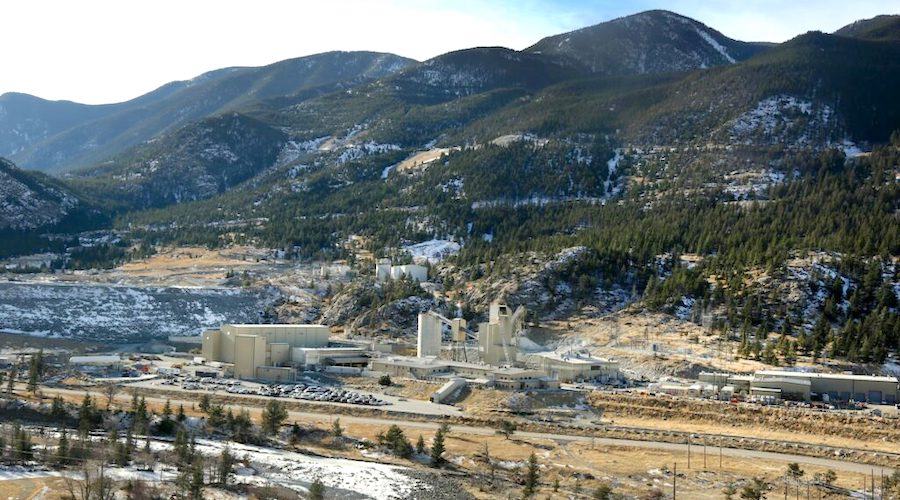
Stillwater and East Boulder mines are located on the front range of the US Beartooth Mountains. (Image courtesy of Sibanye-Stillwater.)

Sibanye-Stillwater (JSE: SSW) (NYSE: SBSW) is appealing a US trade ruling that found Russian palladium imports do not threaten domestic production, arguing the decision overlooks evidence of illegal dumping and subsidization that have depressed prices.

The South African miner, the only primary producer of palladium in the US, said the International Trade Commission (ITC) failed to properly consider legal issues surrounding Russian imports. 

The commission ruled on May 29 that the US industry was “not materially injured or threatened with material injury” by Russian palladium shipments. 

Sibanye-Stillwater first petitioned US authorities in July 2025 to impose tariffs on Russian imports to support the long-term viability of domestic production.

“Given the ongoing importance of ensuring a resilient and responsibly sourced domestic supply of this critical mineral, the company will continue to pursue all available US trade remedies to protect and sustain a viable domestic palladium industry,” Sibanye said in a statement.

Price pressure

The appeal comes as low palladium prices continue to pressure North American producers. 

US imports of Russian palladium climbed 35% between 2022 and 2024 while palladium prices fell about 50% over the same period. The metal, widely used in automotive catalytic converters, has largely escaped US sanctions imposed on Russia following its 2022 invasion of Ukraine.

Weak prices have already forced Sibanye to restructure its US palladium business by suspending production in parts of its Montana operations and focusing on higher-grade mining areas to reduce costs.

Spot palladium has fallen about 22% since the start of the year and traded near $1,285 an ounce on Tuesday.


Kalshi seeks approval to list perpetual futures tied to gold


Stock image.

Kalshi Inc. is seeking approval to expand precious metals trading on its platform with a popular type of derivative that never expires for gold, silver and platinum.

The company filed for regulatory approval with the Commodity Futures Trading Commission to expand its perpetual contracts outside of crypto.

Kalshi’s request was filed under a process that gives the regulator 45 days to approve or disallow the contract. Typically most event contracts are “self-certified” by exchanges as meeting CFTC requirements, but new products such as perps on registered exchanges have become subject to greater scrutiny by the agency.

The precious metals contracts would initially trade 24 hours a day, five days a week, matching the hours of the underlying markets, rather than the 24/7 schedule offered for crypto-linked perpetuals, Kalshi chief risk officer Udesh Jha said. The prediction-market platform will also assess whether to expand those hours, he said.

A representative for the CFTC didn’t immediately respond to requests for comment.

Perpetual futures, or “perps,” are a type of derivative with no expiration date and built-in leverage that allow customers to amplify the risk they are taking with each trade. The contracts, largely confined to crypto markets for a long time, have surged into the mainstream during the Iran war, when they became one of the only ways for retail investors to trade oil while traditional futures exchanges were closed.

Most perpetual products are offered on offshore exchanges and aren’t regulated in the way traditional commodity exchanges such as Intercontinental Exchange Inc. and CME Group Inc. are in the US. Competition from upstart venues such as Hyperliquid, which offers contracts tied to real-world assets including gold and crude oil, has accelerated traditional exchanges’ efforts to widen their trading hours.

The never-expiring contracts have also become a source of tension between CME and its top regulator. The Chicago-based exchange sued the CFTC in June after the agency allowed Kalshi to launch crypto-linked perps, making it the first US-regulated venue to offer the products.

“We have spent a huge amount of time looking at these products and determining the appropriate classification,” Kalshi Chief Compliance Officer Sudhir Jain said in an emailed statement. “CME’s lawsuit does not change that.”

Not long after its lawsuit, the CFTC blocked a CME bid to offer round-the-clock trading in oil futures, contracts that would expire unlike perpetuals. The regulator said it’s still reviewing a separate request for continuous oil futures trading that CME filed through a different process that allows the regulator to give formal approval over a longer timeline.

Separately, the Chicago-based exchange is also launching gold futures trading 24/7 this week, putting them in competition with Kalshi’s new perpetuals offering. Representatives for CME didn’t immediately respond to a request for comment.

Kalkshi’s Jha said there are different use cases for each product.

“The marketplace has different needs,” he said. “Perpetuals are very important, and will thrive because they will help improve risk-management, alongside a lower cost to traditional futures.”

The company is seeing growing demand for perpetual contracts in other asset classes such as foreign exchange and equities, and is actively evaluating those areas, according to Jha.

“The market is evolving on all aspects,” he said. “We have to evolve, and be ready to evolve.”

(By Katherine Doherty and Mia Gindis)


BHP, Port Hedland union make progress, talks to resume next week


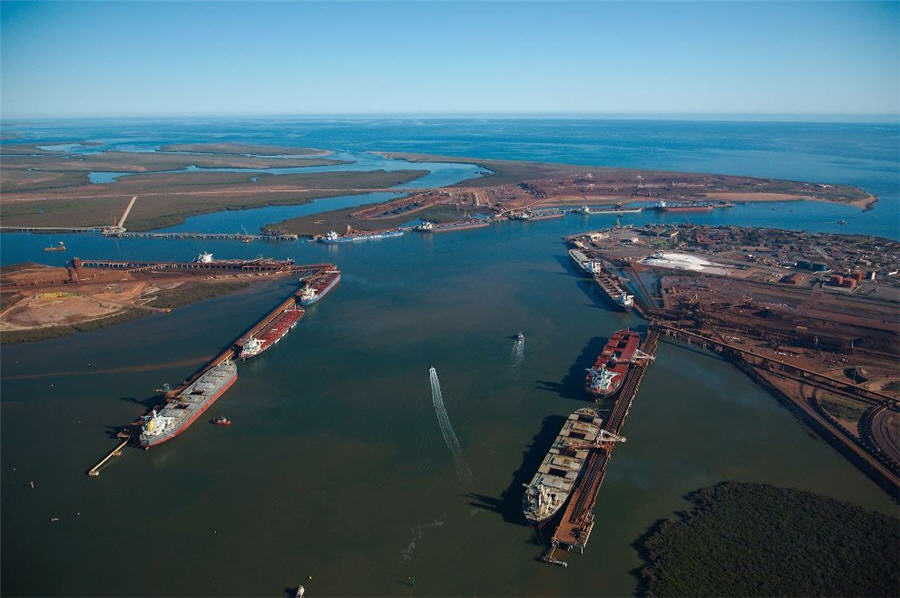
Image courtesy of  Pilbara Ports Authority

BHP and unions representing workers at Western Australia’s Port Hedland, the world’s largest iron ore export hub, edged closer to a deal on Tuesday, though talks ended without an agreement and will resume next week, the union said.

Port Hedland is a major artery for Australia’s iron ore, through which $80 million of BHP’s products transit each day.

“Some progress was made, though no agreement was reached,” said the Combined Ports Unions in a statement. “We will continue negotiations for a safe, fair and productive iron ore industry on 28 July.”

Progress in the discussions suggests a lower chance that fresh industrial action will be announced before next Tuesday.

The world’s largest-listed miner has been in negotiations for more than seven months with unions representing around 450 operators and maintenance workers for a four-year enterprise agreement.

Last week, “well over” 100 workers at its Port Hedland iron ore operations downed tools for an eight-hour stoppage on Thursday, according to a union estimate. Combined Ports Unions, which represents three unions, had previously estimated as many as 200 workers would join the action.

“Our focus remains on making constructive progress towards fair and reasonable agreements,” BHP said earlier in a statement.

“We are committed to continuing to bargain in good faith on new workplace agreements across our iron ore operations and believe that the involvement of the independent Fair Work Commission for Port bargaining is the most constructive way to achieve the best outcome.”

The Fair Work Commission is an industry regulator that can be brought in to assist in the bargaining process and can ultimately become the final arbiter of any deal.

“It hasn’t seemed to have disrupted operations too much at the moment,” said portfolio manager Andy Forster of Argo Investments, which holds BHP shares.

“It’s clearly concerning if it starts to lead to further action and more interruptions,” he said, adding that for now, any impact appeared to be contained, and that BHP appeared hopeful an agreement could be reached.

The Electrical Trades Union, which represents electrical workers at Pilbara port, estimated that on average it was asking for an extra A$25,000 ($17,510) per worker for the 450 workers.

Fly-in-fly-out roles, where workers commute by plane to remote mine sites, missing family time, could no longer compete with city conditions, the ETU said in a statement. “In the past, workers could double Perth wages if they worked in the Pilbara … This is no longer the case.”

Its analysis found that wages for long-standing employees across BHP’s iron ore operations remained largely stagnant over the last five to six years, despite consistent corporate growth and rising living costs in regional and remote areas.

“In contrast, new hires are being offered higher rates to attract them to site, often creating a two-tiered workforce where experience is undervalued and equity is undermined,” it said.

Last week, electricians maintaining BHP’s high-voltage power network in Western Australia’s Pilbara region overwhelmingly backed strike action, escalating labour unrest. They will meet with BHP for talks on Thursday.

($1 = 1.4278 Australian dollars)

(By Melanie Burton; Editing by Thomas Derpinghaus and Jacqueline Wong)
  

Trump says he signed proclamation to adjust tariffs on aluminum imports

Reuters | July 20, 2026 | 


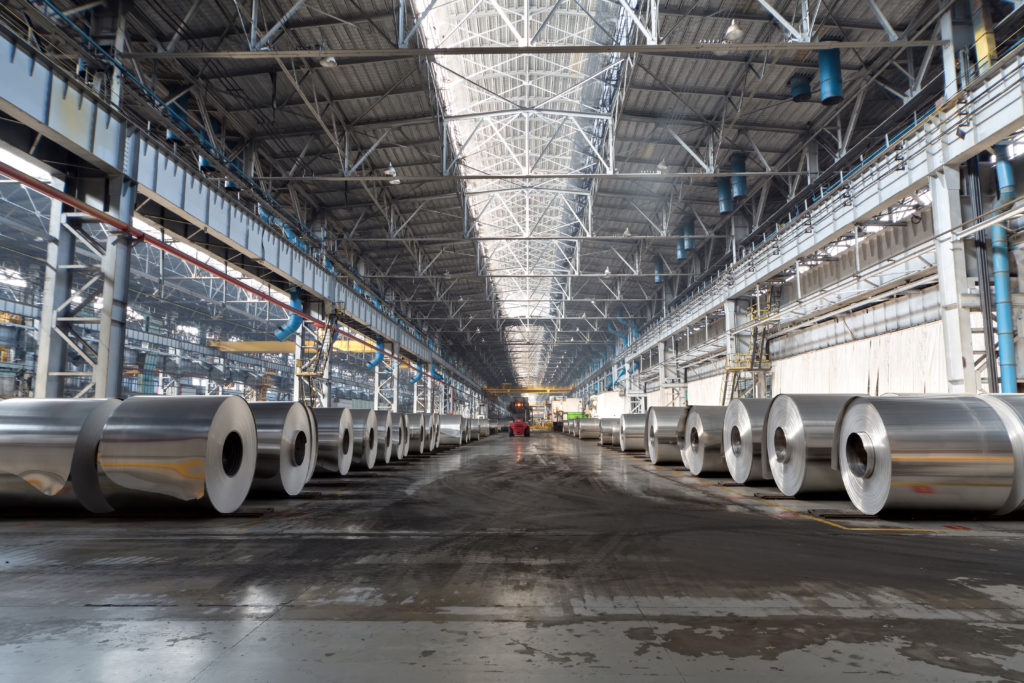
Aluminum plant. Stock image.

President Donald Trump said on Monday he signed a proclamation to adjust tariffs on imports of aluminum into the United States, adding the domestic production of primary aluminum in the U.S. was currently insufficient.

In the (Commerce) Secretary’s view, it is important to modify the aluminum tariff regime in a way to more effectively encourage increased domestic production of primary aluminum,” Trump said in the proclamation released by the White House.

U.S. demand for primary aluminum currently outpaces the production capacity of U.S. smelting facilities, according to the proclamation.

Trump described aluminum as being critical to the U.S. economy and defense industrial base.

The proclamation directed the U.S. commerce secretary to establish an incentive program for companies that will invest in building, expanding, or refurbishing aluminum smelters in the United States, the White House said.

The program will request onshoring plans from companies that, if approved, will be eligible to import a commensurate level of primary aluminum into the United States at a reduced tariff rate equal to half of the otherwise applicable Section 232 rate, the White House said in the proclamation.

Section 232 of the Trade Expansion Act of 1962 authorizes the president to adjust imports found to threaten U.S. national security.

(Reporting by Kanishka Singh and Ismail Shakil; Editing by Jasper Ward)

Rio Tinto exits aluminum composites business, transfers customers to Canada’s Cymat


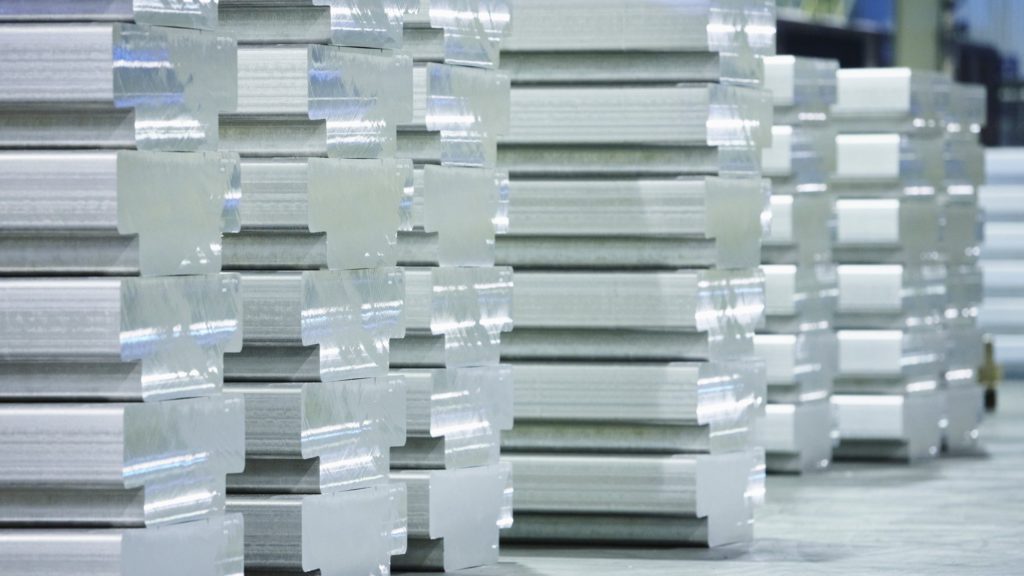
Rio Tinto produces some of the highest quality, lowest-carbon footprint aluminum in the world. Credit: Rio Tinto

Rio Tinto has agreed to transfer customers from its aluminum metal matrix composites (MMC) business to Canada’s Cymat Technologies, as the world’s largest iron ore producer exits the business, Cymat said on Tuesday.

Cymat and Rio Tinto Alcan, the miner’s aluminum division, signed a commercial deal, according to which Rio will hand over its commercial customer base to the Canadian firm.

The deal is for Cymat to pay Rio Tinto $750 per metric ton of MMC sold or used over five years, capped at $500,000.

Rio Tinto has produced and sold the proprietary ceramic-infused aluminum material, which is used primarily in automotive and rail applications, for more than 40 years, Cymat said in its statement.

Rio Tinto’s MMC customers include European brake disk manufacturers supplying commercial vehicle and rail markets, Cymat added.

Rio Tinto didn’t immediately respond to Reuters‘ request for comments.

(By Rajasik Mukherjee; Editing by Joyjeet Das)


China’s rare earth clampdown backfired: CSIS analyst 

CSIS critical minerals expert Gracelin Baskaran. (Image courtesy of MINING.COM.)

China’s decision to weaponize rare earth exports has accelerated the international cooperation that could ultimately weaken its grip on the sector, according to the head of the critical minerals security program at the Center for Strategic and International Studies.

The export restrictions extended beyond the US to Japan, the European Union, Australia and South Korea, prompting governments to coordinate investments in mining, processing and manufacturing outside China, Gracelin Baskaran told MINING.COM anchor Devan Murugan on Top of Mine.

She pointed to a February meeting convened by US Secretary of State Marco Rubio that brought together representatives from 55 countries for what she called the largest State Department ministerial focused solely on critical minerals. Malaysia has also become the first country outside China to separate heavy rare earths, with more projects expected to follow.

“China certainly retains leverage now, but that leverage will only go down,” Baskaran said.

China still controls about 90% of global heavy rare earth separation and produces roughly 93% of the world’s permanent magnets, leaving governments racing to build alternative supply chains. Baskaran said Beijing’s restrictions have encouraged unprecedented collaboration among allies, making long-term diversification more likely even if China remains dominant in the near term.

Two chokepoints

The United States faces two major challenges despite being a significant rare earth producer.

Baskaran said US deposits are dominated by light rare earths, forcing Washington to secure heavy rare earth supplies through partnerships with projects in countries including Brazil, Angola and Australia. At the same time, the US is attempting to develop mines, separation facilities and magnet manufacturing simultaneously after China banned exports of rare earth processing technology in 2023, requiring domestic producers to develop expertise while constructing new plants.

“We are flying the plane as we build it,” Baskaran said.

Rather than seeking complete independence from China, Baskaran argued the objective should be resilience. She said reducing China’s share of heavy rare earth separation from about 90% to roughly half would leave the US and its allies far less vulnerable to future export restrictions. That thinking underpins a G7 agreement reached in France last month under which members aim to source no more than 60% of their rare earths from any single non-G7 country by 2030.

The Pentagon has already backed that strategy by taking a 49% equity stake in a planned Saudi Arabian rare earth refinery while supporting domestic processing through MP Materials (NYSE: MP) and projects being advanced by Lynas (ASX: LYC) and Alkane Resources (ASX: ALK). Baskaran said the remaining gaps are securing sufficient heavy rare earth feedstock and expanding magnet manufacturing, warning that neither mines nor processing plants are viable without the other.

Japan’s lesson

Japan offers the clearest example of how long diversification can take.

China halted rare earth exports to Japan during a 2010 territorial dispute, forcing Tokyo to rethink its supply chains. Since then, Japan has acquired a 50% stake in Namibia’s Lofdal rare earth project, financed Lynas’s Malaysian separation facility and begun piloting deep-sea rare earth mining this year. Even so, it remains China’s largest importer of permanent magnets.

The experience illustrates that rebuilding integrated supply chains takes years rather than political cycles. Baskaran said China’s dominance stems from controlling every stage of the value chain, not simply mining or processing, meaning companies pursuing only one segment risk being left behind.

“A mine without a processing facility is a stranded asset,” Baskaran said. “A processing facility without a manufacturer to buy that is a stranded asset.”


US Departments of Energy and Labor ink MoU to accelerate AI deployment in mining sector  


Credit: Adobe Stock

The U.S. Department of Energy (DOE) and the U.S. Department of Labor (DOL) signed on Tuesday a Memorandum of Understanding (MOU) establishing a framework to accelerate the deployment of artificial intelligence (AI), automation, advanced sensors, and other emerging technologies across the US mining sector. 

The five-year agreement strengthens federal coordination to advance mining innovation while improving worker safety, increasing productivity, and supporting the secure domestic production of critical minerals, the DOE said.  

 By combining expertise in energy technologies and resource recovery with DOL’s longstanding leadership in mine safety, the partnership aims to advance the commitment to strengthen critical mineral supply chains, support high-paying American jobs, and unleash American energy dominance.  

“America’s security and economic future depend on developing a strong domestic mining sector,” U.S. Secretary of Energy Chris Wright said in a news release.  

“By pairing the Energy Department’s technical expertise with the Labor Department’s leadership on mine safety, we can support American miners, secure domestic supply chains, and put cutting-edge technology to work for the people who power our nation.” 

Under the agreement, DOE’s Hydrocarbons and Geothermal Energy Office (HGEO) and Office of Critical Minerals and Energy Innovation (CMEI) will collaborate with DOL’s Mine Safety and Health Administration (MSHA) to share non-proprietary data, research, and technical expertise that supports the deployment of next-generation mining technologies. 

The partnership will focus on conducting joint research, testing, and demonstration projects involving AI, automation, advanced sensors, and other technologies that improve mining operations; working with DOE’s National Energy Technology Laboratory Coal Center of Excellence to accelerate technology development and deployment.  

The initiative will also apply advanced technologies to strengthen hazard detection, reduce mining accidents, and enhance emergency preparedness and response and identify future workforce needs. 

It will also support education and training opportunities that equip miners with the skills needed for technology-driven operations to digitize legacy mining data and improve public datasets that support characterization of domestic mineral resources, including on federally managed lands. 


Coal sector urges Trump admin to provide financing for existing, new power plants


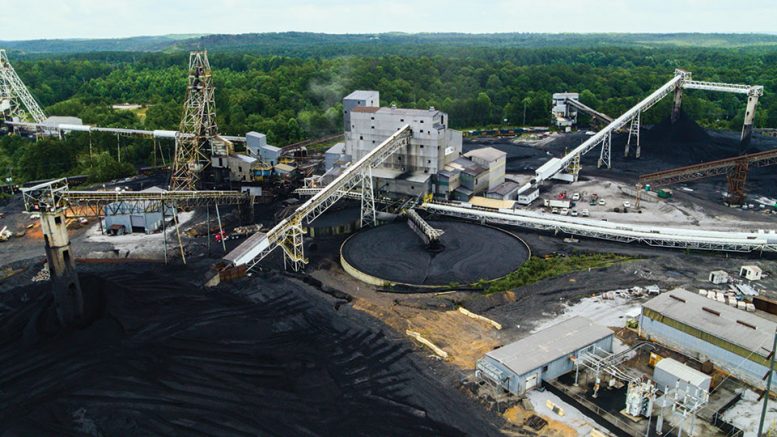
The preparation plant at Warrior Met Coal’s No. 4 met coal mine in Alabama. Credit: Warrior Met Coal.

A coal council that advises the Trump administration on Tuesday urged the US Department of Energy to provide financial support including loan guarantees and grants to help existing coal plants and get new ones built.

President Donald Trump, who wants to boost the US coal industry, reinstated the National Coal Council last year after it lapsed during the administration of former President Joe Biden. Its membership includes executives from coal companies Peabody Energy, Warrior Met Coal and Core Natural Resources.

At a meeting in Washington, the council made 19 recommendations to the administration including financial support including DOE grants and loans, for existing and new coal plants and supply chains.

It also recommended that the federal government enter power purchase agreements, and investments in coal infrastructure.

The DOE’s loan office, now known as the Office of Energy Dominance Financing, had been used by Democratic administrations mainly to finance emerging energy businesses such as solar and wind power and electric vehicles and electricity transmission.

The DOE did not immediately respond to a request for comment on the council’s ask for agency financing for coal plants.

The council also recommended identifying and removing regulatory, financial, and other barriers to constructing new plants.

US coal production rose about 3% last year to about 528 million tons on increased power demand and higher gas prices. Increased US coal consumption helped boost global carbon emissions last year.

The council also called on the Environmental Protection Agency to finalize the repeal of greenhouse gas regulations for new and existing coal plants and the streamlining of federal coal leasing by the Department of the Interior.

Coal generated about 17% of US electricity in 2025, up slightly from the previous year.

(By Timothy Gardner; Editing by Nick Zieminski)


Vale shareholders elect Oliveira chairman after governance tensions


Stock image.

Shareholders of Vale on Wednesday elected Manuel Lino Oliveira as chairman of the Brazilian miner’s board, a move backed by top shareholder Previ after weeks of governance tensions.

Oliveira’s election comes after former chairman Daniel Stieler resigned earlier this month, about a month after pension fund Previ requested a shareholder meeting to vote on his removal.

Previ, which holds about a 7% stake in Vale and manages retirement plans for employees of state-run lender Banco do Brasil, had argued that Oliveira would help strengthen governance at one of the world’s largest iron ore producers.

Oliveira, known as Ollie, already served on Vale’s board as lead independent director.

The vote also follows a clash between Previ and the mining giant’s board over the proposed leadership change.

Last month, the board recommended that shareholders reject Previ’s proposal to remove Stieler, although three directors – including Oliveira – abstained from the vote.

Stieler, who had served as Vale’s chairman since 2023 and as a board member since 2021, ultimately resigned in early July.

Shares in Vale were up more than 3% after the shareholder meeting, outperforming Brazil’s benchmark stock index Bovespa, also supported by strong second-quarter iron ore output figures released late on Tuesday.

(By Marta Nogueira and Gabriel Araujo; Editing by Chizu Nomiyama)


Lynas shares fall to five-month low after revenue miss

(Image courtesy of Lynas.)

Lynas Rare Earths Ltd. shares dropped to a five-month low after Australia’s largest rare earths producer reported quarterly sales that missed analysts’ expectations.

Revenue increased 9% to A$288.9 million ($202 million) in the fourth quarter, according to an exchange filing Wednesday, below the A$391 million average of analyst estimates compiled by Bloomberg. Rare earth sales volumes declined during the three-month period.


Lynas shares slumped as much as 9.1% to A$14.51, the lowest since early February, before paring some losses. That compares with a marginal gain in the benchmark S&P/ASX 200 Index.

The Perth-based miner — one of only two major producers of rare earths outside China — rallied to the highest level in 14 years in April. Lynas shares have steadily retreated over the past few months as a standoff eased between the US and China over critical minerals.

Lynas is also facing scrutiny in Malaysia over a deal to supply rare earth oxides to the Pentagon. The miner operates a massive refinery in Malaysia that helps it produce essential magnet metals that make up the backbone of modern technology.


Lynas reported rare earths oxide production of 3,481 tons, an increase from the prior quarter, although sales volume for the oxide declined, the filing said.

Production of neodymium and praseodymium, which combine to make powerful magnets used in everything from aircraft to headphones, came in at 1,857 tons, declining from the previous quarter.


(By Carmeli Argana)