Friday, June 12, 2026

NEUTERING NATO SERVES PUTIN

Washington plans to slash fighter jets and warships to NATO in Europe, US media report

The NATO logo at a meeting of the alliance’s foreign ministers in Helsingborg, 22 May, 2026
Copyright AP Photo

By Shona Murray
Published on

The reported cutbacks come as European nations race to bolster their defence capacities since Russia's full-scale invasion of Ukraine in 2022 sparked fears that Moscow could attack a NATO country.

The US is planning to withdraw access to deep strike capabilities for NATO allies as part of its wider plan to pull out of Europe's security architecture.

The Trump administration informed NATO allies last year it would cut military assets available to Europe even during times of war or invasion, but until now, the details of exactly how the Pentagon intends to scale back access to such assets were unclear.

According to sources, everything linked to deep strike capabilities will be cut, Euronews has learned. Specifically, this includes US long-range bombers such as the B2 and B-52. Naval assets, including missile-launching submarine and aircraft carriers, will also be withdrawn and re-directed to other theatres.

According to reporting from the New York Times, the US is also planning on reducing the number of F-16 and F-15E fighter jets available to NATO from roughly 150 to 100 and maritime reconnaissance aircraft from 26 to 15, as well as withdrawing all eight aerial refuelling tanker jets previously available to Europe.

A Turkish F16 fighting jet flies over naval ships during an annual NATO naval exercise in the Mediterranean, 15 September, 2022 AP Photo

The significant changes to US commitments are being undertaken within NATO’s so-called Force Model system, which allows allies and military planners identify troops and capabilities available to NATO operations based on deterrence and threat assessment.

Confirming its plans, the US European Command said in a statement last week that it would “right size” its contributions to the NATO Force Model.

'Paper tiger'

While senior NATO personnel have been planning for the downsizing of US assets available for Europe for several months, senior officials have publicly downplayed the implications, arguing that European allies are now contributing far more to the continent’s deterrence and will be able to compensate for gap left by the US.

"We know that adjustments will take place, the US has to pivot toward, for example, Asia,” Rutte told journalists last month.

However, the lastest announcement comes at a particularly difficult moment in US-NATO relations.

US President Donald Trump is still fuming at European allies' refusal to join in the US and Israel's war in Iran, issuing warnings that he will “remember” how countries such as Spain, Italy and France refused to allow US planes headed for Iran to use their airspace and bases on their territory.
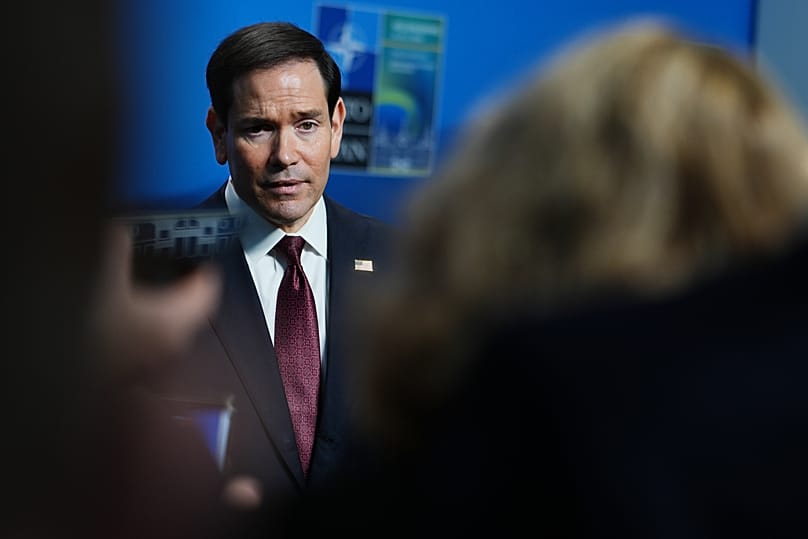
US Secretary of State Marco Rubio speaks with reporters during a meeting of NATO foreign ministers in Helsingborg, 22 May, 2026 AP Photo

“The solution would be to open the Strait of Hormuz," Trump wrote on social media in March, complaining allies “don’t want to help" and warning that “Without the U.S.A., NATO IS A PAPER TIGER!”

“COWARDS,” he concluded. “We will REMEMBER!”

Since then, a coalition of NATO allies and other countries including South Korea and Australia have been formulating a strategy to reopen the strait once hostilities come to an end, with several countries sending frigates and personnel to the region for pre-positioning ahead of the war's end – though it remains unclear when that might come.

 

Ukraine's drone strikes are methodically cutting Crimea off from Russia

UKRAINE'S WAR OBJECTIVE HAS ALWAYS BEEN
IN THE SOUTH


By Sasha Vakulina
Published on

Ukraine has significantly intensified its strikes on military and energy sites in and around Russia-occupied Crimea in what is seen as Kyiv’s deliberate strategy of cutting the annexed Ukrainian peninsula off from Russia.

Russia’s initial invasion of Ukraine, launched 12 years ago, started with the annexation of Crimea, a strategically important peninsula in southern Ukraine jutting into the Black Sea.

Since then, Ukraine repeatedly said that for Kyiv the war will not be considered fully over until Crimea is liberated and restored to Ukrainian sovereignty and returned to its indigenous Crimean Tatar community.

For Moscow, Crimea is the most prized trophy of its invasion and the war against Ukraine, and is the territory Russia is likely to relinquish last if at all.

But with Ukraine’s strengthened intensity and efficiency of drone strike campaign, Kyiv is now trying to cut Crimea off from Russian control and make life for Russian invaders on the peninsula as impossible as it can be.

Since the early days of the full-scale invasion Russia launched in February 2022, Ukraine has repeatedly fired missiles and drones to try to dislodge Moscow’s hold on the territory.

The Ukrainian military sank several Russian warships in the Black Sea and at their Crimean bases, crippling Moscow’s naval capability and forcing it to redeploy its fleet to Novorossiysk.

Ukraine has also methodically targeted munitions depots, airfields and Putin’s prized asset, the Kerch bridge — the only link between annexed Crimea and Russia.

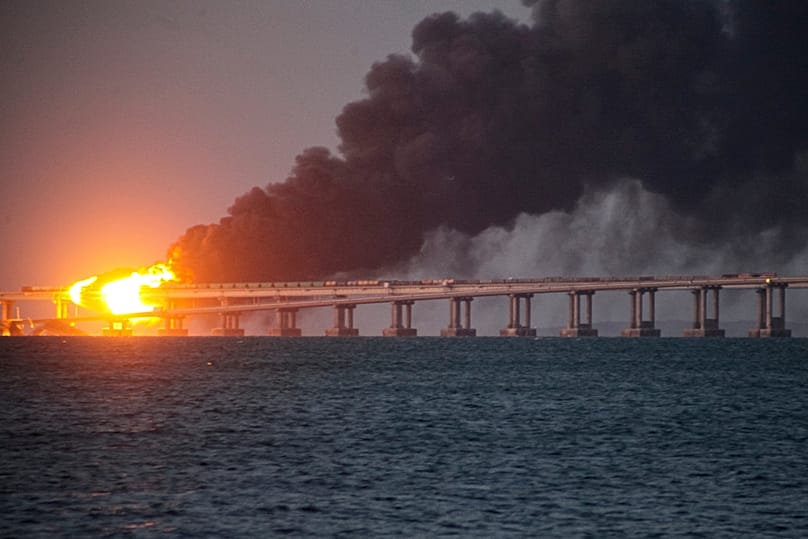
The span was struck in October 2022 by a truck bomb, killing five people, blowing up two sections of the bridge and resulting in months of repairs. More attacks on the bridge followed in 2023 and 2025.

Now Kyiv is targeting Russia’s ability to sustain its forces in Crimea, making military operations and Moscow’s presence on the peninsula progressively untenable

 
Flame and smoke rise from Crimean Bridge connecting Russian mainland and Crimean peninsula over the Kerch Strait, in Kerch, Crimea, on Oct. 8, 2022. AP Photo

Cutting ground line of communication

Crimea’s geographic position is both strategically important and unusually complex, sitting between mainland Ukraine, Russia and the wider Black Sea region.

In the north, Crimea is tied to Moscow‑occupied southern Ukraine by a narrow land corridor across the Perekop isthmus and a web of roads and rail lines running through the parts of Kherson region that have been under occupation since 2022.

Moscow is using these ground lines of communication to move troops, ammunition and fuel to the peninsula.

This is the area that Kyiv has been systematically targeting to disrupt those flows.

On Thursday, Ukraine confirmed a strike that destroyed 50 military cargo vehicles carrying fuel and ammunition on the Russian-occupied Armiansk bridge linking Crimea with mainland Ukraine.

Ukrainian military command stated that Kyiv forces were able to strike this concentration of vehicles at least in part due to the previous Ukrainian strikes against Mariupol and the road to Berdyansk - cities under Russian occupation on the coast of the Sea of Azov.

Moscow-installed head of occupied Kherson region Vladimir Saldo confirmed more hits, saying that Ukrainian forces struck several bridges connecting the occupied Kherson region and Crimea: a bridge over the North Crimean Canal near occupied Preobrazhenka and Myrne, the Perekop-Armyansk Road Bridge and the Stavky Road Bridge.

These bridges run over the North Crimean Canal and along the M-17 Armyansk-Oleshky highway.

The US-based Institute for the Study of War think tank (ISW) confirmed that Ukrainian forces are increasing their mid-range strike campaign against Russian ground lines of communication across occupied southern Ukraine.

The ISW says Kyiv is disrupting Russia’s ability to safely use supply routes from southwestern Russia to occupied Crimea.

“Continued Ukrainian strikes against Russian GLOCs will likely have cascading battlefield effects and may complicate Russian preparations for offensive operations.”

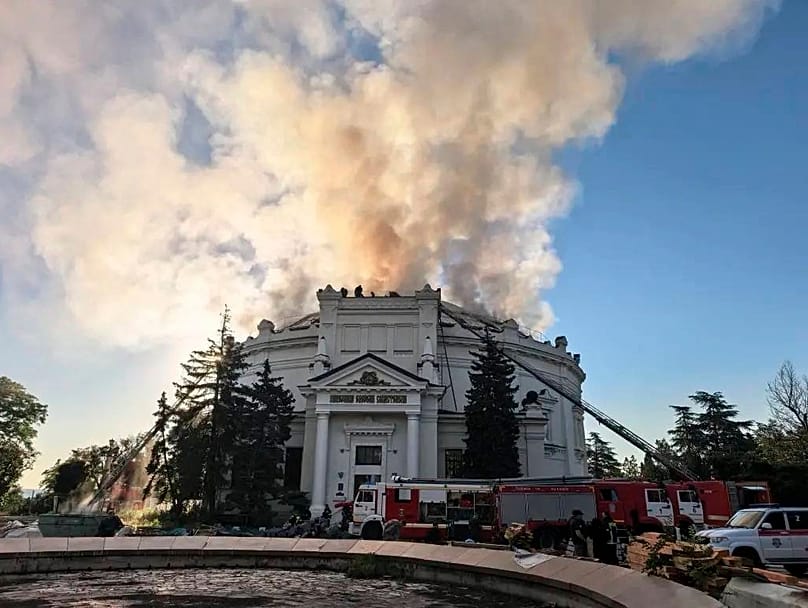
In this photo provided by Russian occupation authorities firefighters put out a blaze after a Ukrainian drone hit a building in Sevastopol, Crimea, Ukraine, June 10, 2026 AP Photo

Fuel crisis worsens

Russia provides its forces in Crimea with petrol, diesel and aviation fuel through three main channels: road and rail tankers over the Kerch Bridge from Russia, shipments by sea, and overland routes running through occupied parts of southern Ukraine.

As Ukraine increasingly targets these links with drones and precision strikes, Kyiv forces have triggered the worst fuel crisis on the Black Sea peninsula since it was illegally annexed by Russia in 2014.

In a rare public acknowledgement, the Kremlin has recognised the scope of the problem.

Moscow-installed Crimean occupation authorities have been increasingly tightening restrictions on gasoline purchases in recent weeks.

Sevastopol occupation so-called governor Mikhail Razvozhaev stated on Wednesday that the Sevastopol occupation administration was unable to issue a new batch of QR codes for fuel purchases because fuel trucks were unable to reach Sevastopol on Tuesday for “unspecified reasons.”

Razvozhaev introduced a policy on 6 June requiring customers to use a pre-purchased QR code, which citizens can only access via the Russian state-controlled Max messenger app, to purchase gasoline in occupied Sevastopol.

Occupation authorities have also tightened restrictions to 20 litres per week, down from the previous 20 litres per day, as shortages continue to worsen.

Ukraine aims to isolate Crimea from Russia, drone commander says

Commander of Ukraine’s Unmanned Systems Forces Robert Brovdi said Ukraine’s aim is to isolate occupied Crimea from Russia by disrupting key military supply routes to the peninsula.

Brovdi, known by the call sign "Madyar," said Russian military cargo traffic along the R-280 "Novorossiya" highway, which connects Russia with occupied Crimea through occupied Mariupol, Berdiansk, and Melitopol on the coast of the Sea of Azov, has fallen by 71% over the past two weeks due to Ukrainian strikes.

"Within another month, we will have total control over the road," Brovdi said.

He explained that Ukraine's broader objective is to make it increasingly difficult for Russian troops and defence industry personnel to operate in Crimea and other occupied territories of Ukraine.

"We will create conditions that will make it extremely difficult for any military personnel or those working in the defence industry to remain in Crimea, in the temporarily occupied territories, or use the access routes to them," Brovdi said.

"We will isolate Crimea in the near future.”

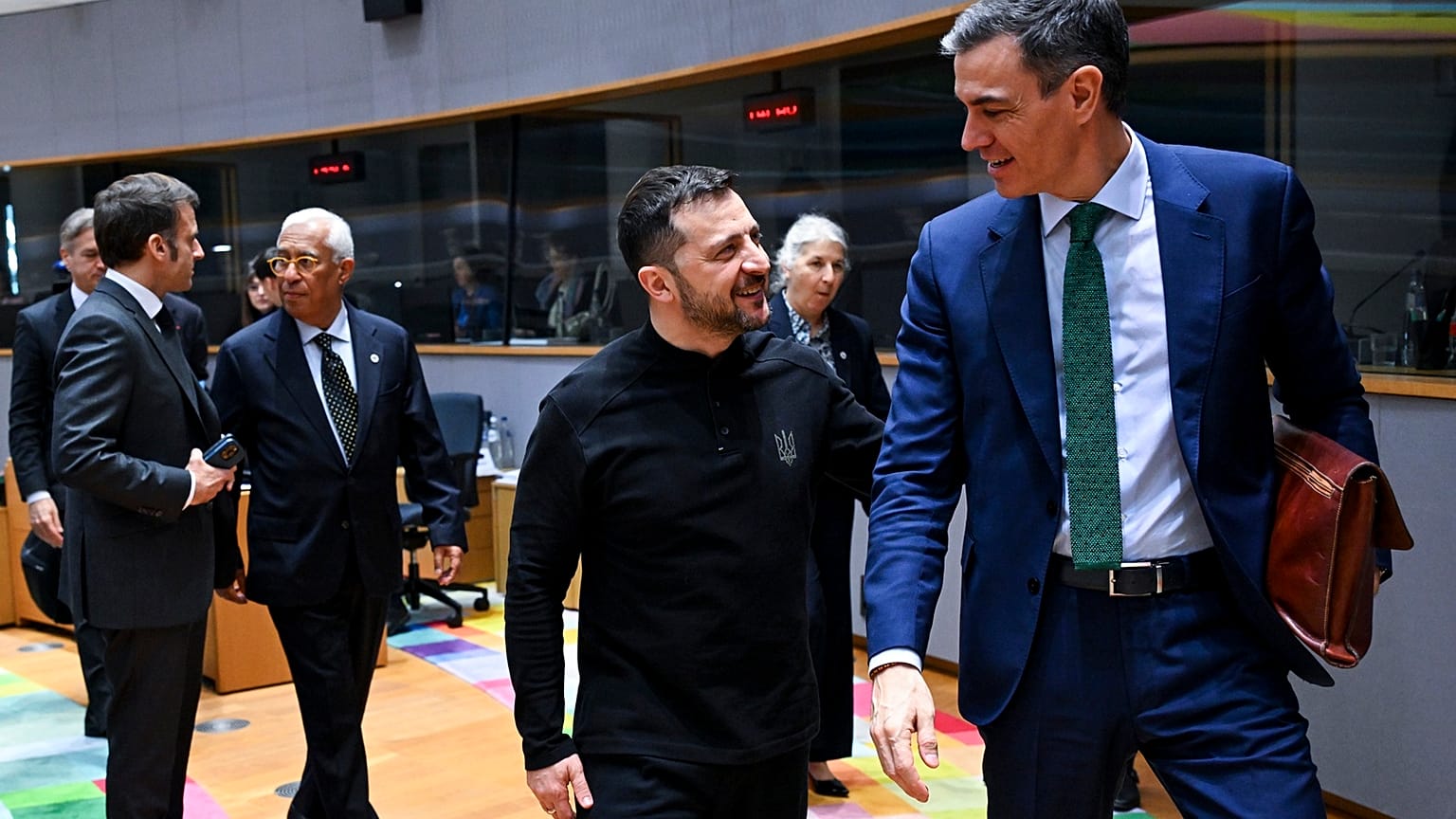
EU countries agree to unblock accession talks with Ukraine and Moldova

EU countries reached a deal on Ukraine's EU accession.
Copyright European Union

By Jorge Liboreiro
Published on

Friday's agreement allows Ukraine and Moldova to formally open the first cluster of accession negotiations, known as "Fundamentals".

The 27 countries of the European Union have reached an agreement to open the first cluster of accession talks with Ukraine and Moldova, building on the momentum created after Hungary lifted its two-year veto last week.

The breakthrough was achieved on Friday evening by ambassadors in Brussels, who endorsed a common position to go ahead with the next phase of negotiations.

The position comes with a rule-of-law roadmap and an action plan on minority rights, the main bone of contention between Budapest and Kyiv. The action plan was amended to reflect the outcome of the consultations between the two sides.

The formal step will take place on Monday 15 June in Luxembourg, where the EU will hold separate intergovernmental conferences with the two candidates.

"This is a recognition of the determination, courage and hard work shown by both countries in advancing reforms, even in the face of immense challenges," European Commission President Ursula von der Leyen and European Council President António Costa said in a joint statement.

"Enlargement is a strategic choice. By bringing our nations closer together, we strengthen peace, security and prosperity across our continent."

Responding to the statement, Ukrainian President Volodymyr Zelenskyy said the decision provided "significant political and moral support" for his people.

"Ukraine is defending itself and, in doing so, all of Europe – the idea that European nations can live united, free, and in peace," Zelenskyy wrote on social media.

"As we have said, Ukraine is doing what is necessary, and it is important that the EU is also keeping its word."

In total, the road to accession consists of six thematic clusters and 33 chapters.

The first cluster, known as "Fundamentals" because it covers the rule of law, human rights and the judiciary, marks the start of the complex process.

Ukraine is keen to open all the clusters this summer to show its war-weary population that the prospect of EU membership is within reach.

The ambitious goal is shared by the European Commission and several member states. Cyprus, the country holding the rotating presidency, aims for an additional cluster before the end of the month.

"The quicker we open the other clusters, the better it is," a senior EU diplomat said.

"Despite the difficult circumstances that Ukraine finds itself in, it's important that the progress on reforms is maintained, because in the end, that's the best guarantee for a smooth and quick accession process."

However, the unlocking of the first cluster does not mean Ukraine's accession will be fast-tracked to compensate for the two years under Hungary's veto.

Member states want to preserve the integrity and credibility of the negotiations, which are supposed to be "merit-based", and avoid experimental ideas like the "associate membership" recently proposed by the German Chancellor.

Friday's decision also raises the question of how long Ukraine and Moldova will remain coupled as candidates.

Any change to EU protection scheme for Ukrainians should be 'gradual', UNHCR deputy chief says


By Mared Gwyn Jones
Published on

Kelly Clements tells Euronews that any planned changes to EU protections for Ukrainian refugees should be carried out "very gradually", as some EU capitals push for excluding military-age men from the scheme.

Any tweaks to the EU's current protection scheme for those fleeing war in Ukraine should be implemented "very gradually", the UN's Deputy High Commissioner for Refugees Kelly Clements has told Euronews, as EU capitals reportedly mull removing protections for Ukrainian men of conscription age.

"The war has not abated. It has become more intense, with more civilians caught in the middle," Clements explained. "The circumstances that created the conditions for the European Union to issue temporary protection have largely not ended."

It comes as a handful of EU countries, including Poland and Germany, are pushing to exclude men of military age from the temporary protection scheme triggered by Brussels in response to Russia's invasion of Ukraine in 2022.

The scheme, which allows Ukrainians to secure refugee-like protection without applying for asylum, currently provides refuge for 4.37 million Ukrainians across the EU.

EU home affairs ministers last week held an initial discussion around narrowing the scheme, with a proposal to exclude Ukrainian men aged 23 to 60 who are eligible for military service gaining most traction.

Nonetheless, most Ukrainian men aged 23 to 60 are currently barred from leaving the country, with certain exemptions for certain groups such as people with disabilities, those deemed unfit for military service, fathers of three or more children under 18, and individuals providing full-time care for sick relatives.

Ukraine’s formal conscription age begins at 25.

Adult men account for 26.6% of Ukrainian refugees in Europe, although there are no figures showing how many are of military age or how many arrived irregularly.

"I realise it's an active debate," Clements said, "but hopefully, until the war ends, there would be an opportunity to keep those temporary protections in place so that people can support themselves and so that the responsibility doesn't fall unduly on other nations."

"Until then, if there's any sign of (the protection scheme) lifting, it should be done very gradually with other options for those that need to take care of themselves when it's not possible to go back safely or voluntarily."

Last November, German Chancellor Friedrich Merz told Ukrainian President Volodymyr Zelenskyy in a phone call that he needed to curb the number of young Ukrainian men fleeing to Germany, saying that they were "needed there".

The German Interior Minister Alexander Dobrindt has since said that Berlin has noticed an uptick in Ukrainians of "compulsory military age" in Germany in recent months.

Clements told Euronews that the priority should be to "find peace" so that "people don't have to flee".

Big Bang Inside A Star: How A Gravastar Forms

An expanding mini universe could counterbalance the collapsing matter of a star, thereby creating a stable gravastar. 

CREDIT: Daniel Jampolski and Luciano Rezzolla, Goethe University Frankfurt


June 12, 2026
By Eurasia Review


Stars shine because atoms fuse in their interiors, releasing energy. When a very massive star has exhausted its nuclear fuel, radiation pressure can no longer provide sufficient counterforce to gravity. The star then collapses under its own mass until only a single point remains: the singularity.

While the formation of a black hole appears plausible, black holes themselves continue to pose major challenges for science. How can ten billion solar masses concentrate on a single tiny point? How can spacetime be curved infinitely at that point, the singularity? At this stage, the laws of physics break down, making it impossible to predict what happens. Moreover, black holes conceal all information from observation: everything, including light, disappears irretrievably beyond the event horizon.

Filled with dark energy

It is therefore possible that black holes are in fact entirely different objects, such as ultra-compact stars, which cannot be seen because of their intense gravity and are therefore also called gravastars. In addition to ordinary matter present in their outer layers, they would be filled with dark energy, which exerts an outward pressure and stabilizes their mass, which wants instead to collapse. Gravastars are easier for physicists to accept than black holes because they do not possess a singularity nor an event horizon and, yet are almost as massive and compact as black holes. What had remained unclear, however, was how such gravastars could form in practice.

The two theoretical physicists, Daniel Jampolski and Professor Luciano Rezzolla, have now presented for the first time a dynamic solution to the field equations of Albert Einstein’s General Relativity describing the collapse of a star that could lead to the formation of such a gravastar. The solution has shown that the collapse may trigger the creation of a mini universe inside the collapsing matter not very different from the Big Bang from which our universe has emerged. Like our own universe, its expansion is driven by dark energy. In this way, the expansion of the new universe counteracts the gravitational forces and halts the collapse of the star before a black hole can form. In this process, an equilibrium is established between the expanding mini universe and the collapsing matter and this equilibrium is what leads to a stable gravastar. With this solution to General Relativity, the Frankfurt physicists have provided the first answer to a question that scientists have been debating for 25 years: how do gravastars form during the collapse of ordinary matter?

Room for new physics

Daniel Jampolski, who discovered the solution in his master’s thesis supervised by Luciano Rezzolla, explains: “The Big Bang of the emerging universe can unfold once the star has already collapsed almost to the point of becoming a black hole.” The unresolved behavior of extremely compressed matter leaves room for new physics: “It is easier to imagine that the Big Bang occurs only at a very late stage, when matter has already been compressed to an extreme degree, thereby giving rise to new effects.”

Rezzolla, Professor of Theoretical Astrophysics at Goethe University, adds: “Looking for alternatives to black holes should not suggest a skepticism towards black holes, which still represent the most natural and simplest solution to the fate of gravitational collapse. However, as scientists in general, and as theoretical physicists in particular, it is essential to maintain an unbiased approach towards what we do not know and hence explore both the accepted wisdom and the more exotic interpretations. History teaches us that it is not unusual for the latter to become the former.”

Tracking Infectious Bacteria From Raccoons Via Rivers To Humans With DNA


By

The emerging infectious bacterium Escherichia albertii has caused outbreaks of severe food poisoning and hospitalized people through contaminated water and foods, such as salad ingredients. Now, a new study from Osaka Metropolitan University (OMU) has gathered evidence from river, animal and genetic samples that suggest a pathway by which invasive raccoons (Procyon lotor) transmit infections to humans.

This creates a problem as raccoons thrive everywhere from forests and rivers to farms and dense urban neighborhoods. Recently, the small omnivores have started foraging near people, livestock, and waterways, increasing the risks of their feces contaminating irrigation systems, animal feed, and rivers.

Because raccoons are closely tied to water sources, contaminated water has long been suspected to be behind some human outbreaks. This led a research team headed by Associate Professor Atsushi Hinenoya from the Graduate School of Veterinary Science at OMU to carry out a large-scale survey of wild raccoons and environmental water in Osaka Prefecture, where raccoon populations are particularly high.

They detected the bacterium in 77% of water samples and in six of eight river systems tested. Notably, all the negative samples were collected during winter and early spring, which is a period when the number of raccoons carrying the bacterium typically declines.

Usually, riverborne bacteria accumulate downstream, but the researchers also found E. albertii upstream and near water sources, including areas far from residential districts, farms, and recreational facilities. This strongly suggested that wildlife, rather than human activity, was introducing it into the rivers.

“Overall, these findings suggest that E. albertii is widely distributed in environmental waters,” Professor Hinenoya said. “Much of this contamination was strongly associated with wild animals.”

Supporting this idea, analysis of 122 wild raccoons showed that 56% carried the E. albertiibacterium.

Whole-genome analysis of the samples revealed a mix of bacterial strains, many of which matched those in water samples. This diversity suggested a pathogen that was firmly established in the ecosystem rather than originating from a single outbreak.

A closer look revealed that every sequenced strain carried genes linked to human disease, including factors reported to be found in patients with severe diarrhoea. Some strains were also similar to strains previously isolated from infected patients.

“The key takeaway is that all isolates possessed virulence genes associated with human pathogenicity, and some were closely related to strains derived from human patients,” Professor Hinenoya explained. “These findings are strong indicators that these pose a potential risk to public health.”

The concern is that if E. albertii strains can persist in rivers and wildlife populations, humans may repeatedly encounter them through contaminated food or water. Such environmental circulation could also make outbreaks far more difficult to trace.

The researchers stress that monitoring only human infections is no longer enough and instead advocate a “One Health” approach that treats human health, wildlife, agriculture, and environmental systems as interconnected.

The team now plans to investigate the precise contamination routes linking raccoons, environmental water, agricultural products, and food.

“The approach used in this study can be applied to other zoonotic diseases,” Professor Hinenoya explained. “So, we hope to expand this research toward the development of comprehensive strategies for infectious disease control.”

Do Organic Farms Use Pesticides? How Organic And Conventional Farming Differ – Analysis

June 12, 2026 0 Comments
By Caroline Cox

Many consumers assume organic food is pesticide-free. In reality, both organic and conventional farms use pesticides, but the types of products, regulatory standards, and pest-management strategies differ significantly.

Many consumers assume that food labeled organic is grown without pesticides. The reality is more nuanced. Organic farmers can and do use pesticides, but the types of pesticides they use, the circumstances under which they use them, and the regulatory standards governing their use differ significantly from those in conventional agriculture.

Understanding those differences matters because pesticides affect more than the crops on which they are applied. They can influence the health of farmworkers and rural communities, the quality of soil and water, the well-being of pollinators and other wildlife, and the amount of pesticide residue that remains on food.

Pesticides are substances designed to prevent, destroy, repel, or control pests. Because they are intended to affect living organisms, they can also pose risks to people and the environment. Reducing those risks while maintaining productive farms has become one of the central challenges of modern agriculture.

The differences between organic and conventional farming offer two distinct approaches to that challenge—and reveal why pesticide use remains one of the most debated issues in modern food production.

What Are Pesticides?

When you think about pesticides, probably insecticides come to mind first. These are products designed to kill insects. But legally, “pesticides” have a much broader definition. In the US, pesticides are substances intended for “preventing, destroying, repelling, or mitigating any pest, or intended for use as a plant regulator, defoliant, or desiccant, or any nitrogen stabilizer.” Weed killers, rodenticides, and products to control plant diseases are all examples of pesticides.

US farmers use large quantities of pesticides each year. Most government estimates are outdated, but total pesticide use on US farms is about 600 million pounds per year. Some pesticides are used on both organic and conventional farms, but the types of pesticides that may be used, the circumstances under which they may be applied, and the rules governing their use differ significantly. Organic growers do not use synthetic pesticides or fertilizers unless approved through a comprehensive public process. All pesticides are used according to a plan approved by an organic certifier. Overall, current research suggests that organic farms use significantly less pesticide than conventional farms—about 30 percent less, according to a 2021 study. Organic growers may also use certain “natural” pesticides, with ingredients derived from naturally occurring plant, animal, or mineral sourcesrather than the synthetic chemicals found in most conventional pesticides. Understanding those differences requires a closer look at how pesticides are used in conventional agriculture.

Conventional Farming’s Reliance on Synthetic Pesticides

Pesticide use has been controversial since Rachel Carson’s landmark Silent Spring was published in 1962. Yet pesticides remain a central feature of modern industrial agriculture. Farmers use them to control insects, weeds, plant diseases, and soil-borne pests that can reduce yields and damage crops.

Supporters of pesticide use argue that these products help farmers produce large quantities of food efficiently and economically. However, critics point out that pesticide-dependent farming systems can create risks for farmworkers, nearby communities, wildlife, pollinators, soil health, and water quality.

According to the United Nations Food and Agriculture Organization (FAO), plant pests and diseases reduce global crop yields by 20 to 40 percent each year, despite global agricultural pesticide use of approximately 3.7 million metric tons of active ingredients in 2023—roughly double the level recorded in 1990. At the same time, the FAO recognizes pesticide hazards as a global concern and promotes less hazardous approaches to pest management. The organization also notes the growing role of organic agriculture, which now includes millions of farmers worldwide.

Conventional agriculture relies on several major categories of synthetic pesticides:


– Insecticides are used to kill insects that damage crops. Common examples include chlorpyrifos, malathion, imidacloprid, permethrin, carbaryl, and spinosad. Many insecticides have been linked to concerns ranging from impacts on pollinators and aquatic ecosystems to developmental and reproductive effects in humans and wildlife.

– Herbicides are designed to control weeds that compete with crops for sunlight, nutrients, and water. Glyphosate is the most widely used herbicide worldwide, while atrazine, 2,4-D, dicamba, and glufosinate are also widely used. Concerns associated with herbicides include contamination of waterways, damage from chemical drift, and possible links to cancer, endocrine disruption, and other health effects.

– Fungicides help protect crops from molds and plant diseases. Common examples include chlorothalonil, mancozeb, captan, and propiconazole. While these products can reduce crop losses, some have been associated with cancer risks, reproductive harms, and toxicity to aquatic organisms.

– Fumigants are among the most intensive forms of pest control. Products such as methyl bromide, chloropicrin, and metam sodium are used to sterilize soil or storage areas before planting or storing. Because fumigants are designed to kill a broad range of organisms, they often pose significant risks to farmworkers and nearby communities if not carefully controlled.

The US Environmental Protection Agency (EPA) establishes allowable residue limits, known as tolerances, for pesticides used on food crops. The US Department of Agriculture (USDA) and the US Food & Drug Administration (FDA) help enforce these standards. Some public health and environmental advocates argue that the pesticide regulatory system does not always adequately address cumulative exposures, vulnerable populations, or emerging evidence about long-term health effects.

Pesticide Use in Organic Farming

Organic growers and processors in the United States are regulated by the USDA’s National Organic Program (NOP). Under NOP standards, pest management begins with prevention, primarily through building healthy soil. Organic farmers are expected to control pests, weeds, and plant diseases primarily through physical, mechanical, and biological methods rather than relying on pesticides. If those approaches are insufficient, growers may use botanical, biological, or approved synthetic pesticides that have undergone the NOP’s public review process.

More than 1,000 pesticide active ingredients are registered for use in the United States, but only a small fraction are permitted under organic standards. Many organic-approved pesticides are derived from naturally occurring plant, animal, or mineral sources, although natural does not automatically mean risk-free. Common examples include neem oil, copper sulfate, Bacillus thuringiensis (Bt), corn gluten, and vinegar-based products.

Organic farming emphasizes managing the farm ecosystem in ways that reduce pest problems before they occur. USDA describes this approach as responding to “site-specific conditions by integrating cultural, biological, and mechanical practices that foster cycling of resources, promote ecological balance, and conserve biodiversity.” In practice, that can include crop rotation, encouraging beneficial insects, improving soil health, selecting resistant crop varieties, and using pesticides only when other measures are insufficient.

Comparing Residue Levels on Food


One of the most common questions consumers ask is whether choosing organic food reduces exposure to pesticide residues. Research suggests that it does.

A comprehensive 2021 study by the US Department of Agriculture on pesticide residues in conventional versus organic produce yielded clear results. Conventional vegetables were contaminated with 2 to 17 times as many pesticides as were organic vegetables. Conventional fruits were contaminated with 6–75 times as many pesticides as organic fruits.

Researchers also used a metric called the Dietary Risk Index, which considers both the amount of pesticide residue and the toxicity of the detected pesticides. The dietary risk index was more than 50 times higher for conventional vegetables than for organic vegetables, and more than 130 times higher for conventional fruits. Consumer Reports regularly does a user-friendly comparison of pesticides on conventional and organic produce and found similar results.

The presence of a pesticide residue does not necessarily mean that a food exceeds regulatory safety limits. However, residue testing can provide a useful way to compare the relative pesticide burden associated with different farming methods.

The Environmental Working Group performs a similar analysis of USDA data, considering the number of pesticides detected, their detection frequency, and their toxicity. EWG uses its results to identify the Dirty Dozen and Clean Fifteen lists as tools for consumers to use when deciding which produce to buy.

Health Considerations

Health concerns about pesticides are not distributed equally across the population. Farmworkers, children, pregnant people, and rural communities often face the greatest potential exposure.

The EPA’s Recognition and Management of Pesticide Poisonings identifies farmworkers as a population of particular concern because they are more likely than most people to encounter pesticides directly during mixing, application, harvesting, and other agricultural work. The manual also notes that children may be more vulnerable because their bodies are still developing, while pregnant and nursing women face additional concerns because pesticide exposures can affect fetuses and infants.

Research reviewed by the Annual Review of Public Health and by organizations such as the American Academy of Pediatrics and the American College of Obstetricians and Gynecologists has examined links between pesticide exposure and a range of health outcomes, including developmental, reproductive, neurological, and respiratory effects. Although scientists continue to debate some specific risks and exposure thresholds, concern about pesticide exposure among vulnerable populations is widespread across the public health community.

One area of active research involves endocrine-disrupting chemicals (EDCs), substances that interfere with the body’s hormonal systems. Because hormones help regulate growth, metabolism, reproduction, and other essential functions, disruptions can have significant consequences. Some pesticides have been identified as potential endocrine disruptors, although the strength of evidence varies among different chemicals. The Endocrine Society has argued that even very low levels of exposure may affect human health and has called for greater attention to the cumulative impacts of endocrine-disrupting chemicals.

Environmental and Ethical Impacts

Pesticides affect not only human health but also the health of the ecosystems that support agriculture, including pollinators, healthy soils, and clean water. Researchers and international organizations have identified pesticide use as a significant environmental concern. The United Nations Environment Program (UNEP), for example, notes that agricultural pesticides can reduce pollinator abundance and diversity. UNEP has also identified pesticides as one of several factors contributing to declining soil health worldwide. And, in 2021, the US Geological Survey found 17 pesticides in all 74 streams and rivers studied nationwide. Aquatic life benchmarks were exceeded in half of the rivers and streams studied, meaning that the pesticides were toxic to fish and other aquatic plants and animals.

Organic farming helps the entire ecosystem stay healthy. According to FAO, organic agriculture seeks to promote biodiversity, healthy soils, and biological cycles while reducing reliance on synthetic inputs. The approach emphasizes long-term ecosystem health and the use of farming practices that work with natural systems rather than against them.

Documenting the impact of pesticides on farmworker health and community well-being is not simple. One of the best studies is the CHAMACOS study in Salinas, California. University of California researchers began working with a group of about 600 pregnant women from farmworker families in 1999 and have since studied their children’s health. The results have been sobering. A few examples: Exposure of pregnant mothers to organophosphate insecticides was linked to reduced IQ in their children. Childhood exposure to organophosphate insecticides was linked with asthma symptoms. Use of the fumigant methyl bromide near pregnant mothers’ homes was linked with smaller babies. Childhood exposure to the herbicide glyphosate was linked to liver and metabolic disorders in teenagers.

Cost, Accessibility, and Trade-Offs

For many consumers, the biggest challenge is not understanding the differences between organic and conventional farming—it is affordability. Organic food often costs more because organic farmers may incur higher production costs, especially labor, and because organic production generally operates on a smaller scale than conventional agriculture.


The good news is that the price premium for many organic products has narrowed in recent years. Consumer Reports and other organizations regularly track organic food prices and have found that the price difference between organic and conventional options varies widely by product, season, and retailer.

Cost is only one part of the equation. Access also matters. Not all communities have the same access to fresh produce, farmers’ markets, or stores that carry a wide range of organic foods. For many households, especially those facing food insecurity, the most important goal is simply increasing fruit and vegetable consumption, regardless of whether the produce is organic or conventional.

Consumers who want to reduce pesticide exposure without dramatically increasing their grocery budget have several options. Comparing prices, shopping sales, purchasing in bulk, and buying seasonal produce can help. Some states and communities also offer programs that increase the value of SNAP benefits when used to purchase fresh produce, including organic produce in certain locations.

Some shoppers choose to prioritize organic purchases for foods that tend to carry higher pesticide residues. The Environmental Working Group’s Dirty Dozen and Clean Fifteen lists, as well as analyses published by Consumer Reports, can help consumers decide where organic purchases may provide the greatest benefit. Also, Eating with a Conscience, a consumer resource produced by Beyond Pesticides, a nonprofit, is helpful for understanding environmental issues and farmworker health.

Ultimately, there is no single right approach. Any shift toward supporting farming systems that reduce pesticide use can help strengthen demand for those practices. Even small changes in purchasing habits can contribute to healthier food systems, healthier communities, and healthier ecosystems.

Choosing What You Support

Organic and conventional farming take different approaches to managing pests, weeds, and plant diseases. Organic agriculture generally uses fewer pesticides, relies more heavily on preventive and ecological pest management strategies, and permits only a limited number of approved pesticides when other methods are insufficient.

These differences have implications for pesticide residues on food, farmworker exposure, environmental health, and the long-term sustainability of agricultural systems. At the same time, questions of cost, access, and food security remain important considerations for consumers and policymakers alike.

For consumers, understanding how food is produced can make it easier to make informed choices that reflect their values, priorities, and budgets. Whether that means buying organic whenever possible, prioritizing certain products, or simply learning more about how food is grown, individual decisions can help shape demand for the kinds of farming systems people want to support.

Something as ordinary as grocery shopping can influence not only our own health, but also the health of rural communities, the vitality of soils and waterways, and the resilience of the ecosystems on which agriculture depends.


Author Bio: 

Caroline Cox is a pesticide scientist whose work has focused on the health and environmental impacts of pesticides. She served as a staff scientist at the Northwest Coalition for Alternatives to Pesticides from 1990 to 2006 and as research director and senior scientist at the Center for Environmental Health from 2006 to 2020. She has written about pesticides, environmental health, and agricultural sustainability for more than three decades. Cox is a contributor to the Observatory.

Credit Line: This article was produced by Earth | Food | Life, a project of the Independent Media Institute.