It’s possible that I shall make an ass of myself. But in that case one can always get out of it with a little dialectic. I have, of course, so worded my proposition as to be right either way (K.Marx, Letter to F.Engels on the Indian Mutiny)
Friday, July 31, 2026
Ms. Rachel Signals Support for El-Sayed, Jackson, McKinney, and Other Candidates Who ‘Care About All Kids’
“I think all kids and people should have medical care, I don’t think anyone needs a billion dollars ever, I think all kids should be safe from violence, I think parents should be able to afford high-quality childcare if they want it.”
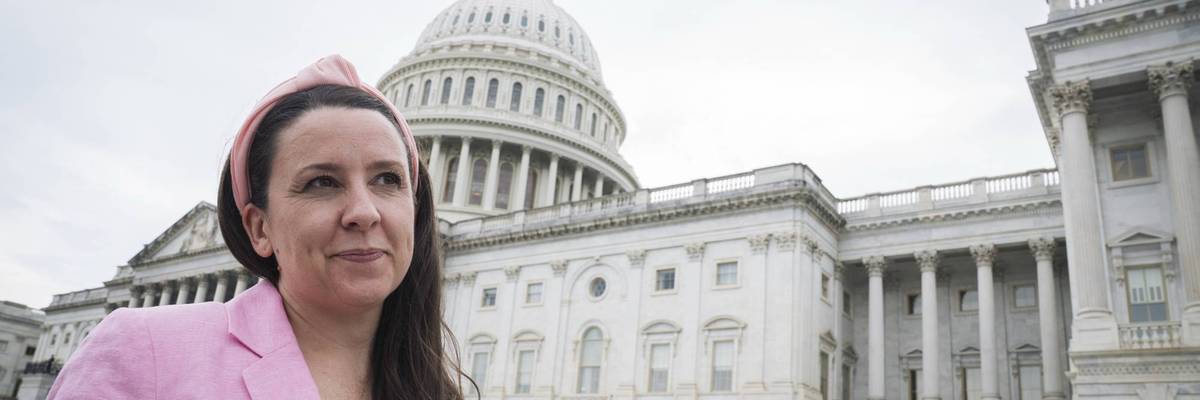
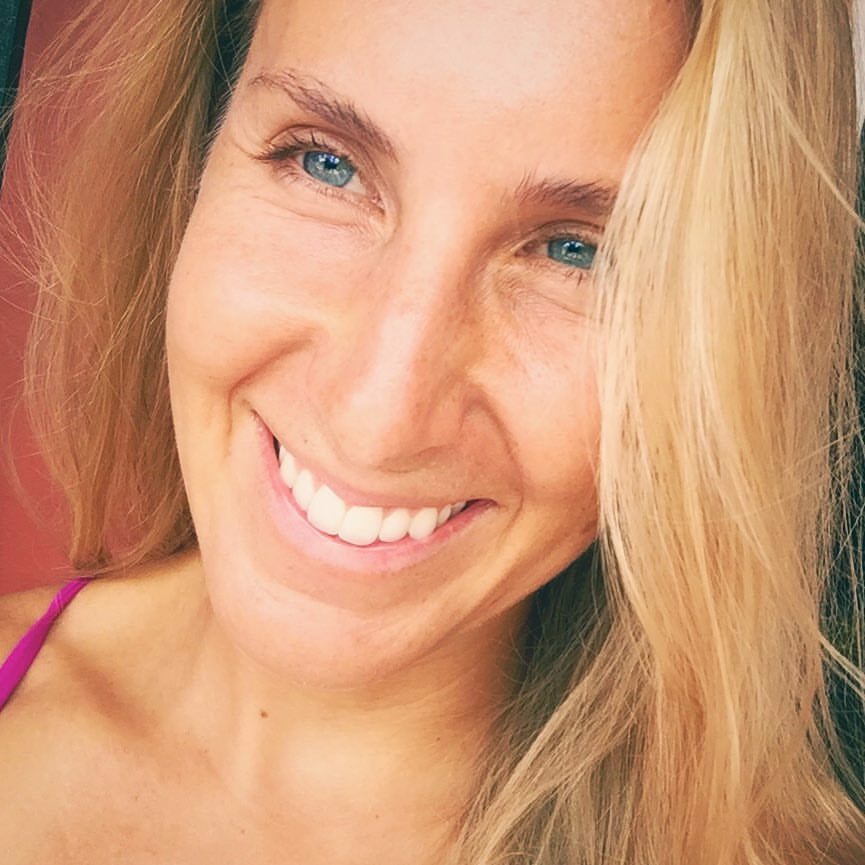
Rachel Accurso, better known as Ms. Rachel, poses for a portrait in front of the United States Capitol on June 9, 2026, in Washington, DC. (Photo by Maxine Wallace/The Washington Post via Getty Images)
The online child educator known as Ms. Rachel on Friday used her massive platform on Instagram to promote a dozen progressive Democrats running for seats in the US Senate and House of Representatives.
“These are the folks I believe care about all kids,” wrote Rachel Accurso, whose wildly popular videos are designed to encourage language development. She asked her more than 5 million followers to share “which candidates you’re voting for and why.” .
Accurso is supporting:
Becca Balint in Vermont’s At-Large Congressional District; Cori Bush in Missouri’s 1st Congressional District; Abdul El-Sayed for US Senate in Michigan; Peggy Flanagan for US Senate in Minnesota; Troy Jackson for US Senate in Maine; Jarrett Keohokalole in Hawaii’s 1st Congressional District; Oliver Larkin in Florida’s 25th Congressional District; William Lawrence in Michigan’s 7th Congressional District; Elijah Manley in Florida’s 20th Congressional District; Donavan McKinney in Michigan’s 13th Congressional District; Angie Nixon for US Senate in Florida; and Justin Pearson in Tennessee’s 9th Congressional District.
“I think politicians shouldn’t attack each other and I don’t think big groups should be able to use millions to attack candidates,” Accurso asserted. From her home state of Maine to Michigan, super political action committees (PACs) and billionaires have spent big to boost “moderate” Democrats and Republicans amid a recent series of progressive primary victories.
“I’m for peace and kindness always but that doesn’t mean not telling the truth and not standing up against injustice,” said the educator, who has outraged right-wingers for speaking out against Israel’s assault on Palestinian children in the Gaza Strip.
Accurso wrote that “I’m for the kids, I’m for the people—I think all kids and people should have medical care, I don’t think anyone needs a billion dollars ever, I think all kids should be safe from violence, I think parents should be able to afford high-quality childcare if they want it/a parent should be able to stay home if they want to.”
“I think everyone should be able to feed their kids and have high-quality schools without stress—I just love literally everyone,” she added.
Balint is seeking a third term in the House. As the presumptive Democratic nominee, she is expected to face the Republican who wins the August 11 primary—likely Gerald Malloy, an Army veteran and defense contractor who previously ran for Senate, according to recent polling.
Bush—who was previously part of the progressive “Squad” in Congress—is hoping to reclaim the seat she lost last cycle to Democratic Rep. Wesley Bell, who was financially backed by the American Israel Public Affairs Committee’s super PAC, the United Democracy Project (UDP). Their primary is August 4.
During this cycle, UDP is targeting El-Sayed, who is facing Congresswoman Haley Stevens in Michigan’s August 4 Democratic primary. After Accurso contributed $3,000 to El-Sayed, Samantha Cantrell, a spokesperson for the National Republican Senatorial Committee told the New York Post last Saturday that “Abdul El-Sayed and Ms. Rachel are one and the same, forcing their socialist, they/them, anti-America agenda on our children, and parents should be worried when they head to the ballot box.”
Flanagan, Minnesota’s lieutenant governor, is running to replace Democratic Sen. Tina Smith, who decided not to seek reelection and is supporting the progressive. Polling conducted in the lead-up to the August 11 primary for the Democratic-Farmer-Labor Party shows Flanagan ahead of Congresswoman Angie Craig.
Maine Democrats last weekend nominated Jackson, a former state Senate president and logger, to challenge longtime Republican Sen. Susan Collins in November. He replaced Graham Platner, who stepped aside after sexual assault allegations, which he denied. Platner’s surge in popularity and series of scandals have drawn national attention to the race.
Keohokalole is running to oust incumbent Democratic Rep. Ed Case, who is currently leading in polls. According to Hawaii Public Radio, the state senator “decided to run for Congress after seeing how Case reacted to immigration agents holding teachers at gunpoint on Maui.” Their primary is August 8.
Larkin is challenging another Democratic incumbent: Florida Congressman Jared Moskowitz. As the South Florida Sun Sentinel reported Friday, Larkin is “a democratic socialist inspired to get involved in politics by progressive icon US Sen. Bernie Sanders,” a Vermont Independent. Their primary is August 18.
Lawrence, a co-founder of the youth-led climate organization Sunrise Movement, is hoping to beat former Navy SEAL Matt Maasdam and Bridget Brink, who was previously US ambassador to Slovakia and Ukraine, in Michigan’s primary on August 4.
Manley aims to represent a Florida district impacted by Republicans’ mid-decade map-rigging at the request of President Donald Trump. Longtime Democratic Congresswoman Debbie Wasserman Schultz has faced criticism for opting to run in this primary, scheduled for August 18.
Backed by progressives in Congress including Sanders and Rep. Rashida Tlaib (D-Mich.), McKinney is running to unseat Democratic Michigan Congressman Shri Thanedar, who has support from key party leaders in the House. The pair faces off in the August 4 primary.
Nixon “is running an unapologetically progressive campaign” against Alex Vindman, a retired US Army lieutenant colonel who was a key witness in Trump’s first impeachment trial. The winner of the August 18 primary will face Republican Sen. Ashley Moody, who was appointed last year and is now seeking a full term.
Pearson, known nationally for being expelled from the Tennessee House of Representatives by Republicans over his protest for stricter gun laws, is running in the Memphis district targeted by GOPgerrymandering efforts. After the redistricting, Democratic Rep. Steve Cohen opted to retire. The primary is August 6.
‘Slap in the face’: GOP torpedoes bid to stop Trump from raising childcare costs
U.S. President Donald Trump delivers remarks on the economy, at the General Motors Proving Ground in Milford, Michigan, U.S. July 27, 2026. REUTERS/Carlos Osorio
In what Democratic Sen. Patty Murray described as a “slap in the face to moms and dads,” Republicans have blocked her proposed resolution to restore a rule that could have saved low-income parents thousands of dollars per year on childcare before the Trump administration axed it.
Under a rule that went into effect earlier this month, the Department of Health and Human Services (HHS) rescinded a Biden-era rule that capped families’ copayments at 7% of their household income for the Child Care and Development Fund (CCDF), which helps about 994,000 low-income families pay for childcare so parents can work, attend school, or participate in job training.
The program is administered at the state level, and under the abandoned rule that was enacted in 2024, all states were required to begin phasing in the 7% cap, which is considered a federal affordability benchmark.
Under the Trump policy change, states will not be required to cap parents’ copayments as long as they continue to use a sliding scale based on income level and don’t present a “barrier” to receiving assistance, though it’s not specified what that means.
As of March 2026, 19 states had not lowered their maximum copayment to 7%.
An April analysis by the Center for American Progress found that, by eliminating the federal cap, families in 10 states that have not enacted it would lose between $450 and more than $15,000 in potential annual savings, depending on how high their state sets the threshold.
In Ohio, which caps copayments at 27% of household income, families could lose up to $15,482 in annual savings under the maximum copayment. In Vermont, which caps copayments at 14.9% of household income, families could lose up to $11,712.
Murray (D-Wash), the former chair of the Senate Committee on Health, Education, Labor, and Pensions (HELP), introduced a resolution last month under the Congressional Review Act, which would have nullified the administration’s elimination of the 7% cap.
It also would have restored other Biden-era requirements that were reversed under the same rule, including requirements that states pay childcare providers based on enrollment rather than attendance, pay them in advance, and use grants and contracts to fund childcare for infants, children with disabilities, and those in underserved communities.
In a speech on the Senate floor before the resolution came to a procedural vote on Thursday, she told her colleagues bluntly, “You are either voting to lower childcare costs or to increase them.”
She challenged the senators who planned to vote against the resolution to “go home and tell the parents in your state you voted to raise their childcare bill,” adding that “you cannot call yourself pro-family while voting to make it more expensive to raise one.”
In a party-line vote on Friday, the bill was blocked from advancing by a margin of 52-47, with every Republican voting against it except for Sen. Mitch McConnell (R-Ky.), who is absent after being hospitalized in June.
After the vote failed, Murray described it as an example of Republicans taking money away from American families struggling to afford the basics of life while pushing for lavish spending on war and tax cuts for corporations and the wealthy.
“How about instead of a $1.5 trillion war budget, we make sure every working family in America can afford childcare?” Murray said. “If Trump had simply done nothing, and left the 7% cap in place, some of these families would have ended up saving as much as $15,000 a year for their family.”
According to a Century Foundation analysis of Bureau of Labor Statistics data, childcare costs increased by 5% from August 2024 to August 2025 and now average more than $13,000 per child per year across age groups.
Trump has been surprisingly open about the fact that, under his control, and in direct contrast with his campaign promises, the federal government is prioritizing spending on his war in Iran instead of providing government subsidies for Americans’ basic needs, including daycare.
“We’re fighting wars. We can’t take care of daycare,” he said during a speech in April. “You gotta let a state take care of daycare, and they should pay for it too. It’s not possible for us to take care of daycare, Medicaid, Medicare, all these individual things.”
“Trump says we can’t afford childcare. But he is wrong,” said Murray, who has co-introduced legislation to expand federal childcare subsidies and cover nearly all costs for low-income families. “The truth is we can’t afford to ignore childcare.”
Trump alarms with 'massive gutting' of program meant to pull kids out of poverty: NYT
The Trump administration's threat to a program meant to pull kids out of poverty is alarming advocates, the New York Times reported. According to reporting by The Times, the Trump administration is teeing up a "major rollback" of the federal requirements for Head Start, an early education and antipoverty program created in 1965. Advocates and experts told The Times that the rollback threatens to upend the 60-year-old program.
Ruth Friedman, a child care policy expert, told The Times that the proposed changes to Head Start are a "massive gutting." The Times noted that the program currently serves about 700,000 kids under the age of 6 and has served more than 30 million children since 1965.
The White House is eyeing changes that would remove most of Head Start's requirements for math and literacy curricula, class sizes, medical screenings, home visits, and even that children brush their teeth after meals, according to The Times, which spoke with three anonymous sources familiar with the plan.
"Eliminating Head Start's performance standards guts the science-backed standards that ensure our youngest learners get what they need to arrive at kindergarten ready to succeed," Friedman said.
The White House last year called the Head Start program "radical" as it tried to cut off spending for it, and a White House budget document said that ending Head Start would help end the "radical indoctrination of our children," The Times noted. An anonymous White House official told The Times that the federal funding for Head Start will stay in place, and that the Trump administration will support efforts to reduce the administrative burden of running it.
Obama's expletive-laden take on Trump Jr.'s intellect exposed in Fauci diaries
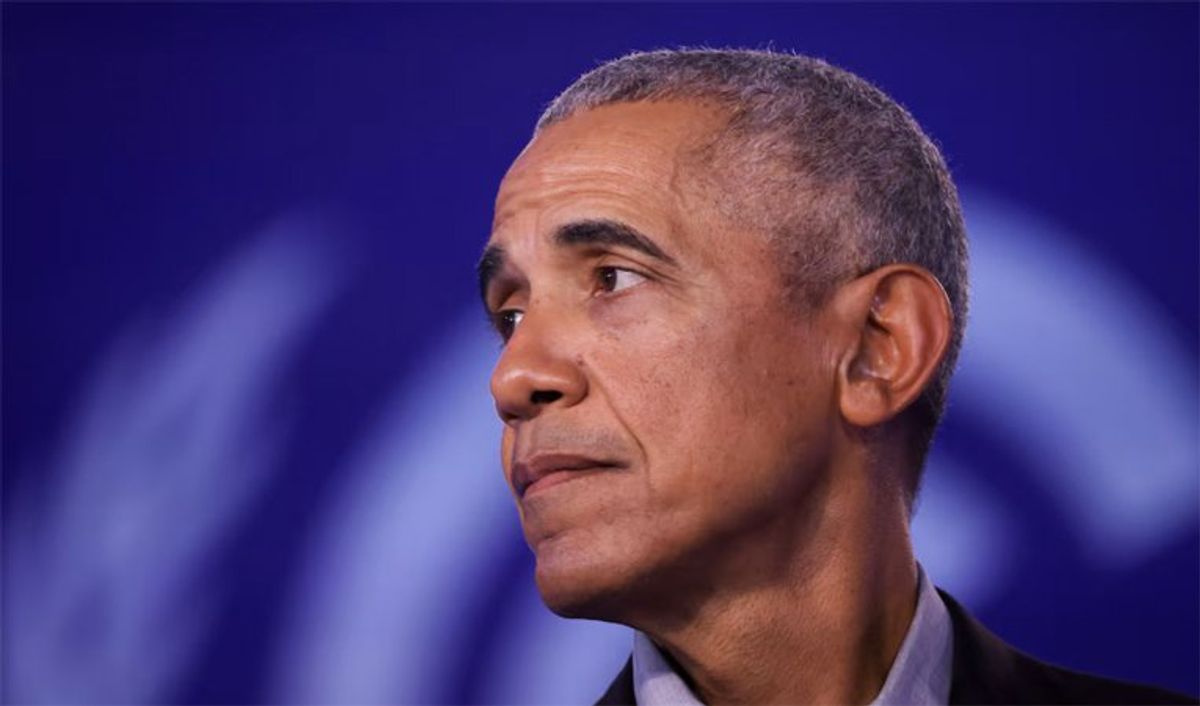
U.S. former President Barack Obama looks on during the UN Climate Change Conference (COP26), in Glasgow, Scotland, Britain, November 8, 2021. REUTERS/Yves Herman
Former President Barack Obama resorted to expletives to express his disdain for Donald Trump Jr.'s intellect, Dr. Anthony Fauci's newly released diary reveal.
Obama apparently sought to comfort Fauci in November 2021 after Trump Jr. decided to sell merchandise mocking Fauci with slogans referencing false claims about puppy experiments, reported The Daily Beast.
"Obama reassured him that Trump Jr. is 'a f---ing moron' before apologizing for using crude language," the Beast reported.
"[Obama] went on to say that Donald Trump was a hopeless idiot who was a pathologic liar,” Fauci added. “He was very upset that none of the moderate Republicans were actually speaking out on my behalf and were distancing themselves from all of this terrible, slanderous behavior against me.”
The diary, spanning more than 1,000 pages, was released by Sen. Rand Paul (R-KY), who has long feuded with Fauci and is pushing to pin the blame on him for the pandemic's origins, including unproven allegations tied to a lab-leak theory in China,
Fauci's office reportedly received thousands of hostile calls within days of Trump Jr. amplifying the false claims, forcing staff to stop answering the phone. Fauci has remained a frequent target of MAGA criticism over his pandemic-era advocacy for vaccines, masking and lockdowns.
Tensions between Fauci and Trump date back to the pandemic's early days, when the two frequently disagreed publicly.
This week, Fauci invoked his Fifth Amendment right over 100 times during Senate testimony, accusing Paul of orchestrating the hearing solely to secure statements that could support his repeated calls for Fauci's imprisonment.
Inside the Nationwide Resistance to the ICE Invasions
The mass popular opposition to ICE “surges” led to a sea change in public opinion. Now organizers are asking: What’s next?
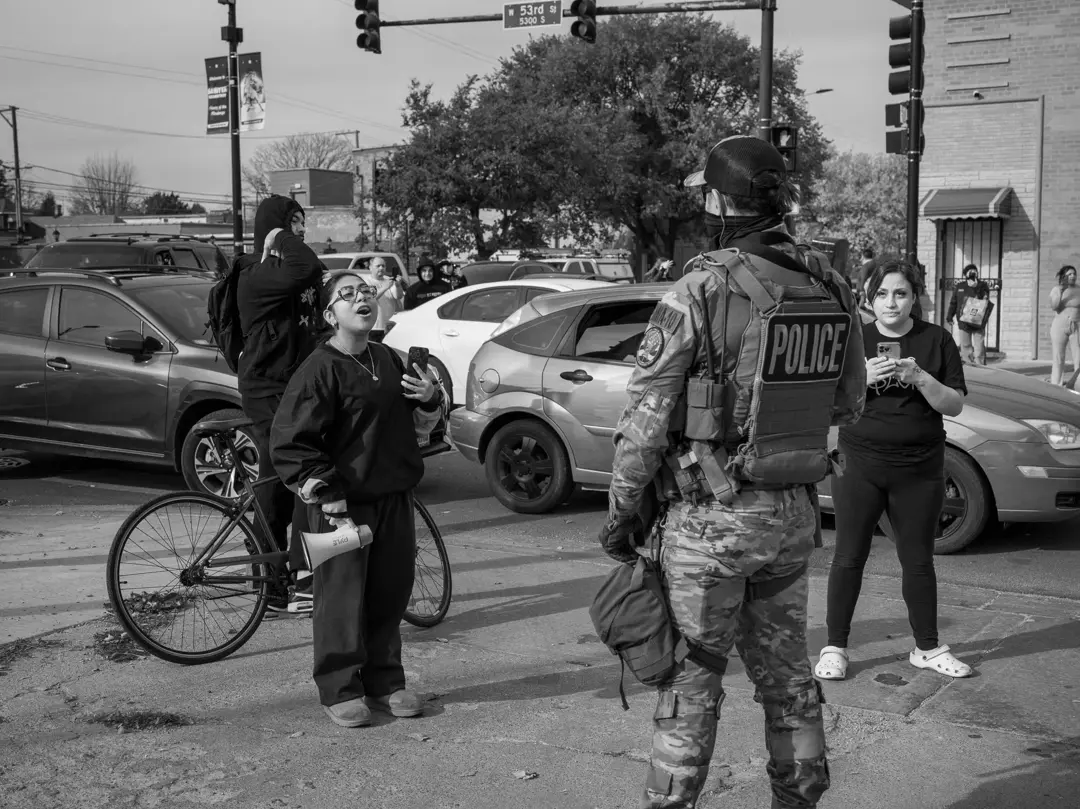
Community members confront federal agents who stopped at a gas station in the Gage Park neighborhood on the Southwest Side of Chicago, Nov. 6, 2025. Photograph by Ashley Gilbertson/VII for Hammer & Hope.
The mass popular opposition to ICE “surges” led to a sea change in public opinion. Now organizers are asking: What’s next?
Jan. 5 is a day that Marie will never forget. Minneapolis public schools had just reopened after winter break, and the Trump administration’s invasion of federal immigration agents was in full swing. Marie (not her real name), a community organizer and the daughter of immigrants, had connected with her neighborhood’s rapid-response network in the south Minneapolis community of Powderhorn. Alerted by a report of “a weird vehicle lurking,” she arrived at a street corner to find an ICE agent sitting in a white Durango. Marie said she realized the agent was “watching a mom about to put her kid on the bus” and waiting to abduct the mother. “I’m a single mom,” she told me. “I put my kids on the bus. I say bye to my kids every day, you know. The thought of that infuriated me.”
Marie laid on her horn until the agent left. But before she got to the end of the block, she witnessed another abduction, and this time she couldn’t stop it. Minutes later came a report about another woman pulled over by ICE. When Marie got to that corner, she saw ICE agents taking the woman from her car. “It broke my heart,” she said. “I saw my mom. I saw so many of my aunts and uncles, who accepted less than they deserved just to make ends meet for themselves and their families.” That night, she said, “I pulled into my driveway, and I cried, I cried, I cried, before I walked into my house to hug my kids.”
Two days later, Marie was out on patrol again when she heard about a shooting. She arrived on the scene to find Renee Good’s wife crying in the passenger seat of the couple’s car, with blood covering her face. Marie said she looked down the block and saw an ambulance “leaving with no lights on, and that’s how I knew she died.” She heard an agent say, “Come on, we’re going to go get some more.”
For more than a year, hundreds of thousands of people of color have been terrorized by the Trump administration’s campaign of detentions, deportations, and violence. This reign of terror — centered on “surges” of heavily armed, masked agents carrying out aggressive arrests in urban centers, rather than the previous focus on detentions at the border and transfers from jails — led to a quadrupling of immigration arrests and a fivefold increase in deportations during the first year of Trump’s second term. The war on immigrants is taking place everywhere, but the administration had especially cruel treatment prepared for liberal sanctuary cities: first Los Angeles last summer; then the federal takeover in Washington, D.C.; then ICE surges in Chicago and Portland, Ore.; and finally Minnesota’s Twin Cities.
In interviews with more than two dozen organizers in Minneapolis, St. Paul, Chicago, Washington, and Los Angeles, I learned about the structures that were built on the fly, as well as the existing relationships among diverse organizations that helped ground the resistance. Across the country, large numbers of people — some of them veterans of social movements, others newly activated — tackled longstanding questions about spontaneity and organization, silos and lanes, openness and security, and burnout and long-term organizing. Debates and disagreements that weren’t aired in the heat of the moment are now being taken up. And then there’s the million-dollar question: What’s next?
“I can’t stop checking plates,” a Minneapolis rapid responder I’ll call Nora told me in late April. Nora had shown me the Whipple Federal Building compound that served as ICE’s base of operations and was pulling into a Speedway gas station when she glanced in her rearview mirror and saw a car that she thought looked suspicious. She entered the car’s license plate number into a Signal chat and verified that it wasn’t an ICE vehicle. The hypervigilance that so many Minnesotans adopted out of necessity during the winter surge clung on, and for good reason: Federal agents — more than 600 as of March — remain in the state, doing their dirty work in more subtle and covert ways.
As a St. Paul teacher, Mara Solis, told me, “The surge has ended, but the impact hasn’t. Our students have lost some of their parents, or their parents are having a hard time paying bills, or the students themselves have self-deported back home.” She added, “And just like with Covid, just like with George Floyd, we will not know the full impact for who knows how long.”
That impact is physical, economic, emotional, and political. The arrest of 15 activists in Minneapolis in June — with more indictments threatened — brought the point home. “If you are actively conspiring to impede law enforcement,” said Daniel Rosen, the U.S. attorney for Minnesota, “you ought to go on the assumption that we’re watching you, and that we’ll get you.”
The surge may be over, but organizers cannot simply move on.“When a creepy car drives by,” Solis said, “we’re all still looking over our shoulder, making sure it’s not stopping for us or stopping for our kids.” But at the same time, she said, “we’re asking: How do we build on the movement that’s been started?”
In early October, at the height of Operation Midway Blitz in Chicago, children playing at recess at Funston Elementary School had to be brought indoors as tear gas wafted into the schoolyard from a nearby confrontation with ICE. Teachers at the school, which is located in a predominantly immigrant neighborhood on the northwest side of the city, had been building up an infrastructure of “sidewalk solidarity” for weeks, going out regularly before and after school to provide eyes and ears for students and parents.
Maria Heavener, a first-grade teacher at Funston, told local newscasters that she heard car horns honking outside the school and then got a notification that a fifth-grade teacher on a lunch break had seen ICE agents and blew her whistle to alert neighbors. A person riding a moped saw a car full of agents behind him and stopped in the street to block them. As a crowd gathered, the agents responded by launching multiple tear gas canisters. Heavener alerted the rapid-response groups that she’s part of. By the end of the school day, about 100 community members had shown up outside the school and formed lines up and down the sidewalks to create a safe passage for children and families going home.
The resistance to ICE is made up of thousands of moments like this one. The very public nature of the ramped-up street arrests produced a true “whirlwind moment” of direct actions. Agents faced countless confrontations and challenges, whether they were rounding up immigrants on the street or simply eating at a local restaurant or staying at a hotel. This not only made it difficult for the agents to operate effectively but also precipitated overreactions — like using tear gas near an elementary school in a densely populated neighborhood. These violent overreactions, in turn, deepened the anger at the agents’ presence and spurred more resistance.
Developing parallel to the rapid-response patrols were other forms of resistance, including mutual-aid efforts to support vulnerable populations. Harking back to a refrain that emerged during the 2020 George Floyd uprising — “Who keeps us safe? We keep us safe!” — and often relying on infrastructure developed at that time, mutual-aid networks organized food drives and fund-raisers, deliveries of necessities from groceries and medicine to diapers, coordinated rides to and from school and work, and underground networks for child care and doulas delivering babies at home. “The words ‘mutual aid’ don’t cover it,” Doran Schrantz, an organizer in Minneapolis, told Hammer & Hope earlier this year. “It reminded me of reading about the Polish Home Army resistance during World War II,” which, together with civilian support efforts, maintained an extensive network of clandestine medical, welfare, and social services.
Mutual-aid and rapid-response networks were often kept separate for safety purposes, but both provided entry points into the movement. In some cases, the networks were launched by existing formations: political organizations, tenants unions, even informal parent groups. Other times, it was just neighbors talking to neighbors. As Paige, a rapid responder from Washington, said, “You would come upon a scene because you could hear the shouting from down the block. Neighbors would just come out, and that’s how folks would meet each other and start these Signal groups.” Organizers in Minneapolis and Chicago said they pre-emptively reached out to neighbors with a QR code to join a Signal or WhatsApp chat and posted fliers with the codes.
Minnesota had the benefit of learning from other cities that endured a surge. Marie — who helped launch a mutual-aid network around the time of the protests against Floyd’s murder — said she started out in December distributing a zine about responding to ICE that she had received from friends in Chicago and adapted for Minneapolis. Soon she began patrolling. After federal agents killed Renee Good in January, the thousand or so rapid responders like Marie who had gotten involved in December multiplied tenfold. Neighborhood Signal chats quickly reached their 1,000-person capacities and had to split into smaller and smaller geographies — first local chats, then hyperlocal chats, and then hyper-hyperlocal chats often covering just a block or two.
The sudden, explosive growth of rapid response forced participants to develop infrastructure on the fly, tweaked and reworked as needed, often with no central direction. People came out of the woodwork to manage the proliferating networks of Signal chats, build databases, analyze data, dispatch patrols, and coordinate legal and aftercare support for those abducted or left behind. Lines of communication were developed to connect different neighborhoods with one another and the mostly English-speaking Signal chats with the mostly Spanish-speaking WhatsApp chats.
In Minneapolis, one woman — who said she got involved to make a safer world for her biracial child — developed a system to quickly dispatch rapid responders to places where ICE was present; more than 1,300 people across the state were trained to use it. Other participants built an easily searchable database containing about 2,600 license plate numbers of known ICE vehicles. At the height of Operation Metro Surge, rapid responders on patrol held continuous live group calls on Signal. Trained dispatchers moderated them, keeping track of where patrollers were to make sure neighborhoods had full coverage. The dispatchers took time-stamped notes and later refined strategies for directing the patrols based on an assessment of the data. In Washington, patrols tended to be simpler; the rapid responders that I spoke with worked in large groups in specific locations and at times when ICE activity tended to be high.
Patrollers known as commuters took on the dangerous work of following known ICE vehicles. Federal agents would pull hazardous stunts like stopping suddenly on a highway, risking an accident. At times, caravans of ICE vehicles would box in commuters against a curb or the side of a building. “They can pin you with a car in front, a car behind, and a car on the side and make it impossible for you to leave,” said Nora, who spent hours on commuter patrol every day. “Then they can do whatever the hell they want to you. Sometimes they yell at you, sometimes they bust your window, and they rip you out of the car and abduct you.’’ Joe (not his real name), also from Minneapolis, told me that he got caught in a caravan of ICE vehicles doing a loop in his neighborhood when he was out on his own on foot. When he walked onto a crosswalk in front of the vehicles, they accelerated toward him, and agents jumped out of their vehicles with guns drawn, yelling, “This is your first warning!” He walked away.
The need to develop organizing structures quickly led to tactical debates that could reach different conclusions across cities or neighborhoods. One question that emerged early on centered on internal security and the process of vetting new participants. Careful vetting stood in tension with the need to expand activism as fast as possible.
In Los Angeles and Washington, existing organizations at the heart of rapid-response networks tended to have a tighter security culture and a rigorous onboarding process. As a result, one Washington activist told me, large bottlenecks developed in the D.C. area, and people who couldn’t get into existing networks often ended up setting up their own separate patrols. In L.A., Guadalupe Carrasco Cardona of Unión Del Barrio, a political organization that does immigrant defense work, told me that vetting new participants is one of the most time-consuming tasks for organizers. The Community Self-Defense Coalition in L.A. has just seven individuals, representing organizations on the coalition’s steering committee, doing all the group’s administrative work — from vetting to making copies of fliers and reserving meeting spaces for trainings. The coalition has been active for more than a year; its biweekly trainings draw anywhere from 60 to 200 people. Maintaining that level of organization without expanding the core at its center has led to some burnout and slowed down the development of block-by-block organizing, Carrasco Cardona said.
In Chicago and Minneapolis, the vetting of participants was less rigorous, leading to quicker growth. Some organizers I spoke to emphasized that not even thorough vetting can ensure that the government doesn’t infiltrate WhatsApp groups or Signal chats, so trainings need to teach rapid responders to operate knowing that what they are doing is legal but making sure not to say anything they wouldn’t want repeated in court or the media. According to Diego Morales from Pilsen Unidos por Nuestro Orgullo (PUñO), an organization rooted in the Mexican American neighborhoods of Chicago’s Southwest Side, a looser vetting process led, surprisingly, to greater centralization. He thinks cities with tightly knit central organizing ended up with competing rapid-response groups disconnected from more established networks. “It made it messy and inefficient,” Morales said. In Chicago, by contrast, the Illinois Coalition for Immigrant and Refugee Rights provided resources and support to local grassroots networks. Groups like Morales’s could harness mass energy in their neighborhoods while also participating in a citywide effort to centralize and analyze data and tap into legal aid networks that connected families to pro bono lawyers.
PUñO grew to about 400 trained and active members. “We were one of the first teams to grow to that kind of size because of the way in which we embraced the public,” Morales explained. The more people who are involved in rapid response, the more eyes and ears are available to stop or slow abductions, he said. “You have members who are just walking up and down the street, going to work, going grocery shopping,” he said. “Maybe it’s the bus driver or a guy that does Uber deliveries around the neighborhood, and he’s always got his eyes open.”
Longstanding organizing debates came up, including whether to engage with the media and how confrontational rapid responders should be in encounters with ICE. But ordinary people, whether plugged into a network or not, often made those decisions for themselves. In scenes that became commonplace and broadcast nightly, crowds of people challenged raids and abductions across the country, phones in hand to record the agents. When ICE descended on immigrant vendors on Canal Street in New York City last October, hundreds of people swarmed the agents, recording with their phones, blocking vehicles with their bodies, and yelling “Shame” and “Fuck you” in equal measure.
Morales believes that those scenes fueled more opposition. “We should be talking to journalists,” he said. “And we shouldn’t be talking to journalists in a way that’s like, Oh, woe is me, we’re such victims, we’re helpless. Actually, we’re organizing, we’re preventing people from being abducted, we’re getting people out of detention.” That attitude helps to counter the culture of fear that he says only empowers the government. “We have much more power than they want you to think,” he said, “and they have much less power than they want you to believe.”
For all the movement’s organic spontaneity, the anti-ICE resistance developed inside an ecosystem of existing organizations, political relationships, and local experiences. Some of the first people to initiate rapid-response networks had already been through know-your-rights trainings after Donald Trump’s first election in 2016. In Minneapolis, earlier iterations of mutual-aid networks and neighborhood patrols arose during the uprising after George Floyd’s murder. Longer-term relationships among labor and movement organizations played a vital role when the anti-ICE resistance reached a new level after the killing of Renee Good.
Twin City organizers had 10 days to mobilize people across the state for the Jan. 23 Day of Truth & Freedom. According to a survey commissioned by movement organizations, roughly one in four people in Minnesota participated in the day of “no work, no school, no shopping” or had a loved one who did. Tens of thousands of people braved dangerous temperatures, with the wind chill reaching as low as minus 35, to march in downtown Minneapolis. The turnout showed the deep well of outrage over the ICE surge — but also the commitment of longstanding labor, community, and social movement organizations.
Greg Nammacher, the president of SEIU Local 26 — which represents janitors, security officers, airport staff, Uber and Lyft drivers, and window cleaners in the Twin Cities — told me how his local helped bring together the forces that made Jan. 23 a reality. “We have been in close relationship with some of the Twin Cities’ most progressive, militant unions and community organizations for over a decade,” he said. After Trump was elected to a second term, Nammacher said, 300 leaders of different organizations met to discuss possible scenarios and contingencies. Nammacher emphasized the importance of aligning groups with existing bases in labor and communities of color, rather than just relying on broad, big-tent organizing. “I wouldn’t say it was easy to come together,” he said, acknowledging the divides along class, race, and gender lines that exist among and within left and progressive forces in every big city. “But there was a muscle,” he said, developed over the course of more than 15 years working together.
In Chicago, the Illinois Coalition for Immigrant and Refugee Rights has played a central role in immigrant rights organizing for decades. When Operation Midway Blitz began in September, the organization devoted funding, staff, and infrastructure to organizing trainings and supporting newly formed networks — including running a widely used hotline to report ICE sightings. The Chicago Teachers Union, with its record of fighting for “common good” demands beyond bread-and-butter labor issues, also played an important role. The union’s former president Jesse Sharkey said, “For at least a decade, the CTU has developed a cadre of Latino immigrants or sons and daughters of immigrants who made the union their social justice home.”
Critical to that work was Rebecca Martinez, an organizer in the Southwest Side neighborhood of Little Village. She had joined the CTU’s staff on the heels of the union’s historic 2012 strike. “As a Mexican woman,” she told me, “I thought that a lot of people who are educators like me feel a connection to their community but don’t quite feel it in their union.” After giving the union leadership grief about the disconnection, she said she decided that a base of rank-and-file teachers was necessary to raise issues that mattered to them and left her union job to work in a classroom. During Trump’s first term, Martinez, with the help of the union’s executive board, planned trainings for teacher-led sanctuary teams at schools throughout the city. She also helped launch a Latino caucus to lead on promoting bilingual education and lobbying the city to dismantle its anti-gang database.
When ICE invaded Chicago during Trump’s second term, Martinez said, “We were able to just kind of hit go. We had materials ready and were in a position to explain, ‘This is what a sanctuary team is, and this is what you do.’” The union went beyond supporting school-based efforts and connected teachers to community organizations and networks where needed. “It didn’t just happen,” Martinez said. “It’s been over a decade of the union working with community folks, nonprofits, organizations, and groups to make that possible.”
There are, of course, limitations to relying on established organizations, many of which operate in top-down ways or exert control in movements that they believe are on their turf. While tensions between and among traditional organizations and grassroots formations mostly took a back seat during the height of ICE surges, questions have emerged in the weeks and months since. “I almost think [Chicago] sometimes is a little too organized,” Morales said. “There are certain old ways that get set in, and it can be hard to be dynamic.” In Minneapolis, Joe thought that top-down organizing might achieve a big turnout on a single day, but what happens on the second or third day? “It just dissipates when it’s not led by the community,” he said. How to collaborate among different types of organizations is one of the questions that activists will need to continue to hash out.
Institutional resources and infrastructure are clearly necessary for coordinating mass action and long-term organizing that can go beyond heat-of-the-moment crescendos in the struggle. Organized labor has a vital role to play. Unions representing millions of workers around the country have the power to disrupt the economy and shift society-wide narratives.
When the ICE assaults began last year, there were early indications that the labor movement could be a leading part of the resistance. When federal agents descended on L.A. over the summer, they violently arrested David Huerta, the president of the SEIU-Social Service Workers West and the SEIU’s California State Council, at an anti-ICE protest and charged him with a felony. Following his arrest, the country’s main union federation, the AFL-CIO, and the national unions the United Auto Workers, American Federation of Teachers, and AFSCME joined the SEIU in condemning and protesting Huerta’s arrest, as well as Trump’s mass deportation agenda. The charge against Huerta was downgraded to a misdemeanor in the face of this pressure. These actions were a stark contrast to the labor movement’s not-so-distant history of opposing immigration. The AFL-CIO reversed its longstanding support for immigration restrictions and enforcement only in 2000. Now it looked as though unions could become a bulwark against ICE’s crimes.
On the ground in Minnesota, labor was an integral part of the resistance. Greg Nammacher said many local unions that had not previously come out against ICE’s occupation “ended up endorsing the day of no work, no school, no shopping after Renee’s murder” in early January. Other unions whose members were hit hard by ICE raids had already gotten involved. Geof Paquette, the lead internal organizer at the hospitality union UNITE HERE Local 17, said he began getting phone calls around Christmas from airport workers saying that immigrants were being abducted at work despite passing significant background checks to get their jobs. Many UNITE HERE members stopped coming to work, Paquette said.
Other union members, like Feben Ghilagaber, an Eritrean immigrant and Local 17 shop steward, jumped into action to help her co-workers. She began daily deliveries to reach co-workers who couldn’t leave their homes. Many kept their lights off and sat in the dark, she remembered, in the hopes that ICE wouldn’t come knocking. “The more I saw, the more I’m like: I have to keep going. I can’t think about myself,” Ghilagaber said. She and Paquette devised a vast food distribution system for vulnerable members. At its height, Paquette said, 200 families were receiving food support, being driven to work, and having other needs met, from diapers to pads and tampons to children’s birthday gifts. The local also raised money so that it could offer rental assistance — support that it still provides today, since workers who had to miss work have fallen behind financially.
Labor’s participation reached a new pitch when Customs and Border Protection agents killed Alex Pretti, a nurse at the Minneapolis Veterans Affairs Medical Center and a member of American Federation of Government Employees Local 3669. That prompted the AFL-CIO to join the call for ICE to immediately leave Minnesota. The American Postal Workers Union had already demanded that ICE stop using postal facilities as staging areas earlier in the month. National Nurses United held a week of actions calling for ICE to be abolished entirely. Pretti’s national union, AFGE, includes not only nurses but also ICE and Border Patrol agents, but even it demanded the resignation of Homeland Security Secretary Kristi Noem and organized a nationwide day of remembrance for Pretti. AFGE locals held vigils outside VA hospitals in 23 cities; national President Everett Kelley spoke at the vigil at the Minneapolis facility where Pretti worked. Jake Romans, the Minneapolis local’s president, remembered speaking with Pretti, a union supporter respected by his co-workers, a few days before his murder about the state of the union. Now there is a movement among some AFGE locals to get ICE agents out of the union, according to Romans.
As known and trusted community members, union teachers often played particularly critical roles, Mara Solis, the St. Paul teacher, told me. Solis and her fellow teacher Alli Kildahl were leaders in their school district’s Immigrant Defense Committee. The night after Renee Good was killed, she said, “We had like 500-plus people trying to get on the Zoom call with us, signing up to be a regional captain or a site lead or whatever other roles we asked for.” From there, Signal chats were set up, parents came to trainings at the St. Paul Federation of Educators union hall, families in need were connected to mutual-aid networks, and a school patrol network was established, with parents in safety vests showing up every day outside schools. Union members ran weekly meetings and webinars and raised hundreds of thousands of dollars for rental assistance. Each school site led its own work, but centralization across the district led to important information and resources being shared and schools in more affluent neighborhoods being paired with those with scant resources.
Labor solidarity with the ICE resistance has gone furthest at the local level. National unions have issued statements and organized some protests, but — whether out of fear that they will alienate conservative locals or simply because they are out of practice — they have yet to wield the much deeper institutional resources and infrastructure at their disposal. Nammacher believes the labor movement needs to step up as a matter of self-defense. “There’s no way through these next few years without politicians and the current administration and their billionaire agenda running directly at unions,” he said. If mobilized, organized labor could activate hundreds of thousands of members nationwide. “I don’t think the U.S. labor movement is up to that task,” Nammacher said. “But that said, I do feel very hopeful.” He went on, “I haven’t talked to a labor leader anywhere in the country who isn’t open to and hungry to think about new ways that we can use our institutional power in this moment,” adding, “Those conversations happening at the local level will be the most decisive examples as we continue to move the full national apparatus into a more aggressive stance.”
The ICE surges in blue-state cities last year and this winter have waned. But federal agents continue to detain immigrants in record numbers. In L.A., says Carrasco Cardona of Union Del Barrio, “It’s ongoing. It’s every single day.” Street vendors are still being harassed and kidnapped outside Home Depots and in the callejones (alleys) in the downtown market area, she said. “It’s the same thing. It’s snatch and grab — grabbing children and using them as bait.” In Minneapolis, rapid responders fear that thousands of agents may still return. One dispatcher told me that responders have seen several hundred black, Ford Expedition–style SUVs parked in a lot, apparently “staged and ready for their next big push.”
At the height of the surges, the anti-ICE resistance benefited from both momentum and movement unity. The situation was so dire that there simply was no time to worry about organizational turf or get wound up about tactical differences, organizers told me. But in this next phase of the movement, debates are surfacing. Organizers hope that there will be space to flush out the discussions positively. After the surges, “expectations became a little bit less clear,” said Joe. “Some people just left, went back to their day job, went to other organizing. This is all normal and healthy, I think. The important part is recognizing that we had such unity for this moment. It might not be required all the time. But how do we make sure that we are able to build that back?”
The movement against ICE reinforced some of the historical divisions within left and progressive movements. Because the people most vulnerable to ICE abductions necessarily had to stay outside of visible organizing spaces, many of the rapid-response and mutual-aid networks were dominated by white participants. That was a vital show of solidarity that helped turn the tide against Trump’s anti-immigrant agenda. But the process exposed limitations and fissures. May Day demonstrations in Minneapolis, for instance, included several different events across a couple of days, each organized by different parts of the movement, with only some crossover. A march against ICE down Lake Street in the Powderhorn neighborhood — the site of countless abductions — included many leftists, few unionists, and even fewer immigrant participants.
Marie told me that she’s one of the only Black people in her mutual-aid and rapid-response networks, despite living in a neighborhood that is almost half Black and Latino. “I went to a rapid-response meeting, and one of the things that I said is, ‘I think we have to be talking about how we make amends with Black Americans right now,’” she said. “Because we mobilized at a scale that we haven’t done for them, right? People saw the level of resources that came into the city that never came to them, and they were suffering long before this.”
Martinez of the CTU said that organizers and members of vulnerable communities have a tendency “to look at these things separately, as if they have no relationship.” She added, “I think it’s really easy for folks on all sides to say: Well, you didn’t come out for me. Why should I come out for you?”
At the same time, though, the movement provided inroads to connect struggles and communities. As Joe pointed out, when the state can inflict violence on the most vulnerable communities among us, no one is truly safe, as the killings of Good and Pretti showed. Nora has been reflecting on this. “One of my deep regrets is that I wasn’t activated before Renee Good was murdered,” she said. “It’s a shame of mine that it took the murder of someone who looks like me. I’m a mom of two small children. I drop my kid off to a school just blocks away from where she was murdered. You could have spun the wheel, and it could have been my car with stuffies in it. It could have been me who was murdered.”
Yet the activation of so many people in the aftermath of Good’s killing has strengthened the movement against racism and state repression. In cities and towns across the country, participants are finding spaces to have important conversations, while practical work continues. For some, this means adopting new ways to challenge ICE’s more covert operations. Others are working to connect the government’s attack on immigrants with police repression of Black and Latino people. Still others are focused on political education and infrastructure. At PUñO, Morales says, the organization has built up about a dozen committees for everything from book clubs and creating literature to ongoing mutual aid. By necessity, some of the work will require defending organizers targeted by an administration trying to reclaim the offensive. The June indictment of the 15 Minneapolis activists specifically cites rapid-response networks and the use of Signal chats to monitor ICE.
The movement against ICE showed what’s possible in building bases, creating infrastructure, and forging relationships among different movement forces and communities. In cities around the country, people risked their own safety and well-being over and over again to defend their neighbors. That resistance helped to drive a sea change in public opinion. And now demands that previously seemed out of reach — to defund and eventually abolish ICE — seem possible.
This article was originally published by Hammer and Hope; please consider supporting the original publication, and read the original version at the link above.Email
Hadas Thier is a writer, journalist, and activist based in Brooklyn, N.Y. She is the author of A People’s Guide to Capitalism: An Introduction to Marxist Economics.
The Real Story Behind Immigration, Work, and Power
Why people migrate, who profits from division, and how working people can build power together
Most immigration debates focus on the border. But the real story starts much earlier — with trade deals, war, inequality, climate breakdown, corporate globalization, and political systems that force people from their homes while concentrating wealth and power in fewer hands.
This educational resource explores why migration happens, how immigrant labor is exploited while immigrants are scapegoated for problems they didn’t create, and how systems like ICE and programs like 287(g) expand fear, surveillance, and repression across entire communities.
It also examines why division between immigrant and non-immigrant workers benefits the powerful, how solidarity can improve life for all working people, and what organizing for labor rights, community defense, economic democracy, and human dignity could look like in practice.
Introduction: The Question We’re Not Supposed to Ask
When immigration comes up in politics or the news, the conversation usually starts at the border. Who crossed? How many? Legal or illegal? Who gets deported? Who gets detained?
Today, many people are hearing about immigration through stories of workplace raids, deportations, ICE operations, and local police departments entering agreements with federal immigration authorities through programs known as 287(g).
In communities across the country, these agreements allow local law enforcement to take on immigration enforcement functions that were once primarily federal responsibilities.
Supporters say these programs improve public safety. Critics argue they undermine trust, make communities less safe, and pull local governments deeper into systems of detention and deportation.
Whatever someone’s opinion on immigration may be, these policies raise a bigger question: Why are so many people migrating?
If we only look at what happens after someone reaches the border, we’re starting the story too late.
So why are people leaving their homes in the first place?
Because migration doesn’t happen in a vacuum. Most people don’t wake up one morning and casually decide to leave behind their language, their family, their community, and everything familiar to travel thousands of miles into uncertainty.
People migrate because something pushed them. And because something else pulled them.
To understand immigration, we have to look upstream. That means looking at trade policy, war, climate change, corporate power, labor markets, and political decisions made over decades. It means understanding how the global economy works — and who benefits from it.
And if we do that honestly, something becomes clear very quickly: The same system hurting immigrants is hurting working-class people almost everywhere.
That’s why immigration isn’t just about immigrants. It’s about work. Housing. Healthcare. Democracy. Wages. Fear. Power. And ultimately, it’s about whether ordinary people will be divided against each other — or organized together.
Migration Is Usually Forced — Even When It’s Called “Voluntary”
There’s a phrase often used by economists and politicians: “Economic migrants.” It sounds neutral. Technical. Like migration is just a lifestyle choice.
But what does “economic migrant” really mean?
Usually, it means someone can no longer survive where they are.
A farmer whose family had grown corn for generations, only to discover they could no longer compete against heavily subsidized imports selling for less than the cost of production. A worker whose town’s public utility was privatized, leading to layoffs, rising prices, and fewer stable jobs. A family trapped between rising debt, stagnant wages, and cuts to public services, where working full time no longer covers basic necessities. A rural community displaced when a mining project contaminated local water supplies, bought up surrounding land, or transformed farmland into an industrial extraction zone. A village facing years of drought where crops repeatedly fail and families can no longer count on harvests to survive.
These aren’t abstract economic trends. They’re the kinds of stories that often appear in local newspapers, labor reports, environmental investigations, and community meetings.
When enough of these stories happen at once, migration becomes less a choice and more a survival strategy.
Take trade agreements like NAFTA. When NAFTA took effect in the 1990s, heavily subsidized U.S. corn entered Mexico at prices small farmers couldn’t compete with. Millions of rural livelihoods were devastated. Entire communities were economically shattered.
At the same time, factories along the border expanded using low-wage labor to produce goods for U.S. corporations.
This is important: The system didn’t stop migration. It redirected it to its own benefit. People displaced from stable livelihoods became part of a labor force that corporations could exploit across borders.
And this pattern repeats all over the world. Global South countries are often pressured into debt arrangements, austerity programs, privatization, and export-oriented economies that enrich multinational corporations while weakening local stability.
Trade and debt policies aren’t the only forces that shape migration. Military intervention and foreign policy often play a role as well.
Consider Guatemala. In 1954, a democratically elected government pursuing land reforms that threatened powerful corporate interests was overthrown with support from the United States. The decades of instability, repression, and violence that followed helped create conditions that contributed to migration for generations.
The point is not that every migrant story traces back to a single event. It’s that migration often emerges from long histories of political and economic decisions made far from the communities most affected by them.
Then, when people migrate because survival at home becomes impossible, they are blamed for the consequences of the very system that displaced them.
As Eduardo Galeano once wrote: “People were imprisoned by poverty and arrived imprisoned by borders.”
The Border Is Not Just a Line — It’s a Labor System
Listen to enough immigrant stories and a pattern emerges.
A construction worker leaves his hometown because years of economic hardship made it impossible to support his children. A mother takes agricultural work because it’s the only job available, despite long hours and dangerous conditions. A teenager grows up fearing that a routine traffic stop could separate their family.
These stories are different. But they share something in common: People are trying to build stable lives under conditions they did not create.
It’s easy to talk about immigration as numbers, statistics, or political slogans. It’s harder to look at individual lives and see how economic systems, labor markets, and public policies shape the choices people face.
One of the biggest myths about immigration is that governments genuinely want to stop undocumented immigration entirely. If that were true, many industries would collapse overnight.
The reality is more contradictory. The economy often depends on immigrant labor while the political system criminalizes the workers providing it.
Why? Because vulnerability is profitable.
A worker who fears deportation is easier to underpay. Less likely to report abuse. Less likely to organize. Less likely to strike. Less likely to demand healthcare or safer conditions.
This is not accidental. It creates a labor force that is economically essential but politically disposable.
And this doesn’t just hurt immigrants. It lowers standards for everyone. When employers can exploit one section of workers through fear and precarity, it puts downward pressure on wages and conditions across entire industries.
This is why many labor organizers argue that immigrant rights are labor rights.
Because the real conflict is not between immigrant and non-immigrant workers. It’s between working people and systems that profit from division and insecurity.
The Biggest Lie: “Immigrants Are Taking Your Jobs”
This idea has been repeated for generations.
Irish immigrants. Italian immigrants. Chinese railroad workers. Jewish refugees. Mexican laborers. Muslim immigrants. Refugees from Central America.
Different groups. Same story.
“They’re taking jobs.” “They lower wages.” “They’re ruining the country.”
But when researchers actually study immigration, the picture is far more complicated — and often the opposite of what people are told.
Immigrants are workers, consumers, neighbors, taxpayers, caregivers, and organizers. They start businesses at high rates. They fill essential jobs. They contribute more into many systems than they take out.
More importantly, wage stagnation in the United States didn’t happen because immigrants crossed borders. It happened because unions were attacked. Because corporations outsourced jobs. Because billionaires gained enormous political power. Because labor protections weakened. Because housing became financialized. Because healthcare became privatized. Because wealth concentrated at the top.
A CEO moving factories overseas for profit can destroy thousands of jobs overnight. A private equity firm can gut an entire town. A landlord company can raise rents across a city. A corporation can automate jobs while paying executives millions.
But immigrants become the scapegoat because they are visible, vulnerable, and politically convenient. It’s easier for elites to point downward than upward.
And fear works. When people are economically insecure, they search for explanations – and the powerful often provide targets instead of solutions.
That’s one reason solidarity matters so much. Because when workers blame each other instead of concentrated wealth and power, the people benefiting from inequality remain untouched.
What About Culture?
For many people, concerns about immigration aren’t only economic.
Sometimes the concern sounds more like this: “Will my town still feel like home?” “Will we lose our shared culture?”
These feelings are real, even if people draw different political conclusions from them.
Communities change. They always have. The United States itself is the product of centuries of migration, cultural exchange, conflict, adaptation, and reinvention.
The question is not whether culture changes. Culture is always changing.
The question is who gets to participate in shaping it.
The same neighborhoods where people worry about losing community are often places that have also lost local newspapers, union halls, public gathering spaces, family farms, locally owned businesses, and democratic institutions.
In other words, many people are experiencing a genuine loss of community.
But immigration is often blamed for changes that have much deeper causes.
When a factory closes, when rents double, when a town loses stable jobs, when young people leave because they can’t afford to stay, people naturally feel disoriented.
The problem is that immigrants did not cause those changes.
In many cases, immigrants arrive in communities already being transformed by forces neither they nor longtime residents control.
The challenge is not choosing between preserving community and welcoming newcomers. The challenge is rebuilding communities where everyone has a stake, a voice, and the ability to belong.
Because at the end of the day, culture is not a museum exhibit. It’s something people create together.
And communities are strongest not when they’re frozen in time, but when people have the power, security, and democratic voice needed to shape their future collectively.
ICE, Fear, and the Expansion of Repression
After 9/11, immigration enforcement expanded dramatically under the language of national security.
Over time, immigration enforcement became deeply tied to policing, incarceration, and private profit. Private prison companies began making billions from immigrant detention. Entire local economies became financially dependent on detention facilities.
Politicians competed over who could appear tougher on immigration. And fear spread far beyond undocumented people.
Mixed-status families live with constant anxiety. Children fear parents disappearing. Workers fear speaking up. Communities fear cooperation with schools, hospitals, or local government.
This damages democracy itself. Because democracy depends on trust, participation, and collective life. Fear destroys all three.
And history shows that systems built to target one population rarely stay limited to that population forever. As Pastor Martin Niemöller warned in his famous “First They Came” reflection, whatever you allow your government to do to others, they will eventually do to you.
When a society becomes comfortable with mass detention, militarized policing, and normalized dehumanization, everyone becomes less free.
What 287(g) Means for Communities
One example of this expansion is something called 287(g). Most people have never heard of it. But its impact is enormous.
287(g) agreements allow local law enforcement agencies to collaborate directly with federal immigration enforcement.
In practice, this means local police can act as immigration agents in various ways.
Supporters claim this improves safety. But many studies and community organizations have found the opposite.
Why? Because when immigrants fear police contact could lead to deportation, they become less likely to report crimes. Less likely to cooperate as witnesses. Less likely to seek help during emergencies. That makes entire communities less safe.
Domestic violence survivors may stay silent. Workers may not report exploitation. Families avoid institutions altogether.
And there’s another problem.
Programs like 287(g) increase the risk of racial profiling. When immigration enforcement becomes tied to local policing, ordinary traffic stops can become gateways into detention and deportation systems.
People get targeted because of language, accent, neighborhood, or appearance. That erodes trust not just for immigrants, but for everyone living in those communities.
And once local governments normalize cooperation with expanding federal surveillance and enforcement systems, democratic accountability weakens further.
It’s worth asking who benefits when neighbors become suspicious of one another. When workers fear reporting wage theft. When witnesses avoid reporting crimes. When communities stop trusting public institutions.
The result is not just more deportations. It’s weaker civic life. Weaker worker power. Less public safety. And less democratic participation for everyone.
In that sense, programs like 287(g) don’t only affect immigrants. They reshape the social fabric of entire communities.
This is not only an immigration issue. It’s a civil liberties issue. A labor issue. A community issue. A democracy issue.
Climate Change and the Future of Migration
One of the biggest migration stories of the future is climate change.
Rising seas. Extreme heat. Crop failures. Water shortages. Storm devastation. Millions of people are already being displaced.
And here’s the uncomfortable reality: The countries most responsible for historical carbon emissions are often not the ones suffering first and worst.
Meanwhile, wealthy countries increasingly respond not by addressing root causes, but by militarizing borders.
In other words: The same economic model contributing to ecological collapse is preparing and enacting repression to manage the human consequences.
Instead of justice, we get walls. Instead of redistribution, we get detention. Instead of cooperation, we get fear.
But no border wall can stop climate breakdown. No detention center can solve drought. No deportation policy can reverse ecological collapse.
The question is whether societies will respond through solidarity and transformation — or through escalating cruelty and authoritarianism.
Why Solidarity Matters
The most powerful thing working people have is each other.
That’s true whether someone was born in Texas, Mexico, Haiti, Palestine, or the Philippines.
Because most ordinary people want similar things: Safety. Dignity. Healthcare. Time with family. Decent work. Housing. Community. A future for their children.
And historically, the biggest gains for working people happened when solidarity expanded rather than contracted.
The ruling idea has often been: Keep workers divided. Native-born versus immigrant. Black versus white. Citizen versus undocumented. Urban versus rural. Because divided people are easier to govern. Easier to underpay. Easier to manipulate.
But solidarity changes the equation.
When immigrant workers organize, labor standards rise. When unions include undocumented workers, employers lose leverage. When communities resist fear politics together, repression becomes harder to sustain.
The question is not whether immigrants and non-immigrants compete.
The question is: Who benefits when they do?
What a Different Vision Could Look Like
A humane immigration system would start upstream. It would mean reducing the forces that displace people in the first place.
That includes: Ending exploitative trade arrangements. Supporting labor rights globally. Addressing climate change seriously. Reducing militarism and intervention. Canceling crushing debt structures. Protecting indigenous land and food sovereignty.
Domestically, it would mean: Pathways to citizenship. Strong labor protections for all workers. Universal healthcare. Housing guarantees. Union rights. An end to mass detention systems. Demilitarizing immigration enforcement. Protecting civil liberties.
And maybe most importantly: Building institutions where ordinary people actually have democratic power over the conditions shaping their lives.
Because migration crises are often really democracy crises. Economic crises. Ecological crises. Crises of concentrated power.
A society where people have secure housing, healthcare, meaningful work, democratic voice, and strong communities is also a society where fear has less power. When people feel secure, they’re less likely to look for scapegoats. They’re more likely to look for solutions. And when communities have real control over the decisions affecting their lives, migration becomes something that can be managed humanely rather than exploited politically.
What Can People Actually Do?
It’s easy to feel overwhelmed by all of this. The problems are global. The systems are enormous. The forces involved can seem impossible to challenge.
But history changes when ordinary people organize together.
That can mean: Supporting immigrant worker centers. Joining unions. Fighting wage theft. Opposing local cooperation with abusive enforcement systems. Showing up at city council meetings. Supporting sanctuary policies. Helping neighbors know their rights. Building multilingual organizing spaces. Creating relationships across communities that fear and propaganda try to divide.
It can also mean joining organizations already doing this work — groups fighting for economic democracy, political democracy, labor rights, housing justice, immigrant solidarity, and community self-defense. For many people, that might mean getting involved with a local chapter of the Democratic Socialists of America, labor and tenant organizing projects, immigrant justice organizations, faith-based community groups, or grassroots mutual aid networks rooted in their own communities.
For people wondering where to even begin, resources like the All of US Directory can help connect you with local grassroots organizations, worker centers, immigrant justice groups, labor campaigns, and community defense efforts already active nearby.
And it also means changing how we talk about immigration. Not reducing people to statistics. Not treating migration as an invasion. Not accepting narratives built around fear and punishment. But asking deeper questions. Why are people displaced? Who profits? Who benefits from division? What kind of society are we building together?
Those questions don’t just help us understand immigration. They help us understand power.
And once people start asking questions about power, new possibilities begin to emerge.
Conclusion: The Real Border
There’s a story we’re often told: That the biggest threat to working people is other working people crossing borders.
But maybe the real border is something else. Maybe the real border is between those who profit from exploitation and those who live with its consequences. Between concentrated wealth and democratic life. Between systems organized around profit and systems organized around human needs.
Migration reveals those contradictions very clearly.
Because immigrants are not outside the system. They are often the people most exposed to its violence and instability.
The worker laboring under threat of deportation. The family displaced by economic policies they never voted for. The community targeted by surveillance and policing. The farmworker harvesting food while struggling to access healthcare. The refugee fleeing conditions shaped by decisions made thousands of miles away.
These are not separate stories. They are connected stories.
And the response to those realities will shape all of our futures. Whether democracy will continue to shrink under the pressures of concentrated wealth, repression, and fear — or expand through participation, organization, and collective action.
In the end, the future will not be shaped primarily by walls or borders. It will be shaped by whether ordinary people can recognize themselves in one another, build power together, and demand a society organized around human dignity instead of fear and exploitation.
The most important question is not who crossed a border. It’s why the border became the story in the first place.
When we start looking upstream, we discover that many of the problems blamed on immigrants were never caused by immigrants at all.
Once we understand that, we can stop fighting one another over the consequences of a broken system and start changing the system itself.
Originally from the US, Alexandria has lived most of her life in the Caribbean, as well as in Egypt and Central America. A sailor, writer, organizer, and street medic, she has been involved in community organizing, media, and education for over 20 years. Alexandria is currently a staff member of ZNetwork.org, a writer for Extinction Rebellion, and is active with Caracol DSA and Food Not Bombs. Her work has appeared on ZNet, Common Dreams, Foreign Policy in Focus, CounterPunch, LA Progressive, Waging Nonviolence, Antiwar.com, The African, The Socialist Project, mÎtaCPC, DiEM25, PeaceNews, Green Left, Popular Resistance, Resilience.org, Grassroots Economic Organizing, Shareable, Dissident Voice, Democratic Underground, and various other outlets.