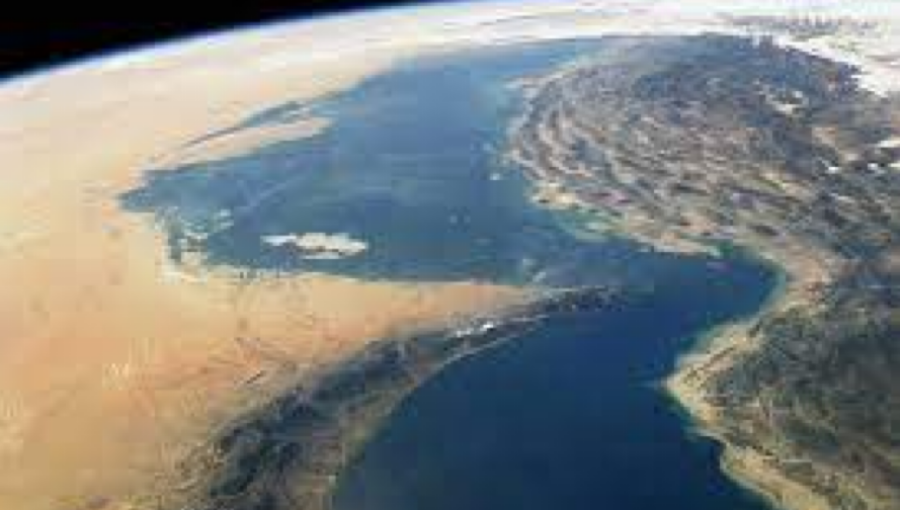
Iran and Oman have almost closed a deal to split control of the Strait of Hormuz into two: a northern part controlled by Iran and a southern part supervised by Muscat.
The two have reached a preliminary agreement on the geographic coordinates for shipping lanes through the Strait, and a joint announcement is being finalised provided certain third parties do not interfere, Iran's foreign ministry spokesperson Esmaeil Baghaei said on August 5.
France 24 reported that Iranian and Omani negotiators have finalised a draft deal and are awaiting final approval from Iran's Supreme Leader Ayatollah Mojtaba Khamenei, citing two regional officials briefed on the talks.
The agreement is the clearest signal yet that five months of war over the world's single most important oil chokepoint is edging toward a negotiated pause.
The deal on the table is not the one Washington set out to enforce when it started this war. US President Donald Trump had a long list of demands at the start of Operation Epic Fury on February 28, but those have now been whittled down to one: reopen the straits and lets go back to normal. He is unlikely to even get that.
The proposal on the table would give Tehran control over ships entering the Gulf through the strait - one of the biggest concessions yet to Iran, a senior Iranian source and two regional officials told Reuters - even as Trump insists a deal reopening the strait is imminent.
Vessels would enter through Iranian waters and leave mostly through Omani ones, with Iran first sending its own ships, including oil tankers, through the route to clear it of mines before other shipping resumes. A fight over exactly this kind of arrangement - and over who gets to charge ships for using it - is now playing out on four separate fronts at once: the diplomacy itself, the question of who is actually in charge in Tehran, a widening war along the Red Sea, and an open revolt by the global shipping industry against the idea of paying tolls to sail through at all.
Strategic humiliation for Trump
Donald Trump and his aides have said more than a dozen times over the past five months that the US is “close” to a deal with Iran, the Financial Times reported. But if one materialises from the Iran-Oman talks, it falls well short of the objectives Trump laid out when he launched the war in February. His demands have shrunk from a sprawling list covering Iran's nuclear programme, ballistic missiles and proxy militias to a single one: that Iran allow the strait to return to its prewar state.
“The denuclearisation of Iran is the ultimate deal,” US Secretary of State Marco Rubio told reporters on August 4. “The immediate deal, and the one that you've seen a lot of focus on, is the strait.”
Even that narrower deal would mark something close to strategic humiliation, in the words of critics: Iran exploited its leverage over the strait only after Trump attacked it, and any settlement now on the table could hand Tehran a degree of control over the waterway - and the ability to eventually charge fees on vessels using it - that would have seemed unthinkable to US strategists a year ago.
“What was once free and unfettered is no longer,” said Aaron David Miller, a former Middle East peace negotiator for both Republican and Democratic administrations. “And there is almost nothing that Trump can extract from an agreement that the Iranians are willing to accept that changes that reality... I do not see right now a way to create a balance of interests where the Trump administration walks away with something that normal humans would regard as a win.”
The war has already cost Trump politically at home. US petrol prices above $4 a gallon are about 35% higher than before the war, and diesel prices under Trump have exceeded the average struck during the Biden years, while missile-interceptor stockpiles have dwindled and allies are exhausted.
A deal granting Iran some measure of control of the Strait of Hormuz will aggravate everybody from Gulf allies to American taxpayers. Trump's challenge has become not just how to fight this new type of asymmetrical war – something that has eluded him - but now how to explain this deal he is cutting to end it.
Iran expert Vali Nasr of Johns Hopkins University put it more bluntly: “Trump is stuck. He cannot win militarily at this level... He cannot resolve this diplomatically without paying a political cost at home. And periodically, he's lashing out because this is not as simple and as straightforward as he had calculated.”
Ali Vaez, an Iran expert at the International Crisis Group, said the mechanics of the talks reflect that shift in leverage: “It's not really a deal between Iran and the US. This is a deal between Iran and Oman.”
A White House spokesperson, Anna Kelly, pushed back, insisting the strait remains “completely controlled” by the US Navy and that Iran's degraded state made a deal the wise course - “otherwise, they know what will happen,” she said.
US Vice President JD Vance, asked about the state of the talks in an interview with Fox News' Laura Ingraham broadcast on August 5, described Iran as having a “fractured system” rather than a single decision-maker to negotiate with.
“The Iranians are extraordinarily difficult people, and number two, they have a fractured system within their system,” Vance said. “Some want the war to be over, and some who are crazy radicals want the war to continue... I know where we ultimately will land. It is going to be messy and it is going to take some time to get there.”
The wounded Supreme leader in the dark
That “fractured system” has a specific, unresolved problem at the very top: the man whose approval the deal is said to be waiting on has not been seen in public for months.
Ayatollah Mojtaba Khamenei succeeded his father, Ayatollah Ali Khamenei, as supreme leader after the elder Khamenei was killed in the US-Israeli strike that opened the war on February 28 - but Mojtaba himself is believed to have been seriously wounded in that same strike and has not appeared publicly since, as IntelliNews reported in April, when his formal confirmation as supreme leader was itself still being pieced together from official signals rather than a public appearance.
That uncertainty has not gone away in the four months since. Two regional officials briefed on the current Iran-Oman negotiations told the Associated Press, that the draft deal on the strait is still awaiting Khamenei's personal sign-off before it can be finalised - no one outside Iran's own leadership appears to have confirmed his condition or whereabouts since February. It leaves the deal's central approval step resting on a figure whose capacity to actually give it remains, by the negotiators' own account, an open question.
Iran's own diplomatic push on the strait has been running for weeks: chief negotiator Mohammad Bagher Ghalibaf, also speaker of parliament, travelled to Muscat in June to discuss Iranian arrangements for administering the strait directly with Oman's ruler, Sultan Haitham bin Tariq.
The war widens from Gulf to the Red Sea
Even as the Hormuz talks purportedly near a conclusion, the conflict's other maritime front is heating up rather than cooling down. A second chokepoint was closed after Houthi rebels in Yemen claimed on August 5 that they had fired ballistic missiles at a Saudi oil tanker in the Red Sea off the port of Yanbu, without providing evidence, France 24 reported; there was no immediate comment from Saudi Arabia.
A separate vessel in the Gulf of Aden reported a loud explosion nearby, with the British military's UK Maritime Trade Operations centre confirming the crew was safe. Shipping traffic through both Hormuz and the Bab-el-Mandeb strait - the two chokepoints most exposed to a widening Gulf-to-Red-Sea conflict - fell significantly on August 5 from the previous day, according to shipping data cited by Reuters.
The Houthi threat to Saudi shipping is not new but is escalating: the group announced in July that it was closing the Bab el-Mandeb Strait to Saudi-linked shipping, adding pressure on a route that has become a key alternative for Saudi oil exports since the Hormuz blockade began. A renewed flare-up between the Houthis and Saudi Arabia now threatens to reignite Yemen's civil war, which pitted the group against a Saudi-led coalition before the current war began.
The regional picture is fraying on a third front too. Israel's military carried out strikes in southern Lebanon on August 5 after accusing Hezbollah of violating a US-brokered truce that has largely held since June 20, issuing an evacuation warning to the village of Mansouri - the first such warning in weeks - though it gave no details of the alleged violation.
The strikes came as Lebanese and Israeli negotiators were meeting in Rome for a second day of talks on an Israeli withdrawal from southern Lebanon in exchange for Hezbollah's disarmament; a US State Department official said the talks ended early “due to events on the ground” but described the discussions as “extremely productive” and said they could resume on August 6.
No one wants to pay the toll
Peace talks are one thing, but for most the bigger question is if tankers will have to pay a hefty fee to pass through the straits after the war ends.
Eight of the world's largest shipping industry associations - including the International Chamber of Shipping, BIMCO and the World Shipping Council - wrote a joint letter dated August 3 to UN Secretary-General Antonio Guterres and International Maritime Organization Secretary-General Arsenio Dominguez urging them to oppose any compulsory tolls or transit charges in the strait, Bloomberg reported. The associations warned that a Hormuz toll would undermine the international legal framework governing navigation through international straits and set a precedent that could be copied at other chokepoints.
“Once such a precedent is established, it becomes increasingly difficult to resist similar measures elsewhere, creating uncertainty for international shipping and global commerce,” the group wrote.
Tehran has moved to tighten its grip on strait traffic since the war began, warning ships they need its permission to transit and threatening permanent transit fees or mandatory insurance requirements; it has at times sought ad-hoc payments of as much as $2mn per voyage, according to Bloomberg.
Washington has resisted Iran's attempts to assert control, backing a southern route along the Omani coast and deploying forces to help protect commercial vessels - though Trump himself briefly floated the idea of imposing his own 20% charge on cargo shipments crossing with US assistance in July, before dropping the plan after Gulf allies objected - a proposal Brazilian President Luiz Inacio Lula da Silva branded as “piracy” at the time.
Oman, the mediator whose waters would carry much of the outbound traffic under any deal, has told the IMO it opposes mandatory transit charges but is open to a voluntary arrangement modelled on the Strait of Malacca, where non-profit organisations are encouraged to make voluntary contributions toward navigational safety and environmental protection rather than paying a fixed toll. The US, Iran and Oman are said to be nearing a 60-day agreement on shipping through Hormuz involving no tolls or fees at all, though it remains unclear what happens once that window closes.
That unresolved question - a temporary, toll-free arrangement now, with Iran's insistence on eventually charging “service fees” for passage left for a second phase of talks it has not yet agreed to enter - is the clearest sign of how provisional any Hormuz deal in its current form actually is.
Iranian deputy foreign minister Kazem Gharibabadi has said reopening the strait carries “requirements of its own” and that Tehran will not accept “foreign interference” in the waterway, even as it holds out the prospect of a temporary window during which ships would sail free of charge.
Diplomats are hoping the arrangement can revive a June 17 memorandum of understanding between Washington and Tehran that collapsed after Iran attacked ships transiting the strait's Omani-side route - the same dispute over which routes ships should use that triggered the tit-for-tat strikes this deal is now trying to defuse.
US, Britain Emphasize Commitment To Safe Navigation In Strait Of Hormuz As Iran And Oman Advance Route Agreement

August 6, 2026
By RFE RL
Key Takeaways:
Iran and Oman near deal on safe shipping route: Tehran said talks with Muscat have advanced, with agreement on the route’s coordinates and a joint announcement nearly finalized, provided third parties do not interfere.
Trump warns of hard action if Iran blocks reopening: President Trump said the strait would reopen “soon” and threatened to hit Iran “very hard” if it refuses to negotiate, while Iran denied any recent direct talks with Washington.
US Secretary of State Marco Rubio and British Foreign Secretary Ed Miliband met in Washington on August 5 and emphasized their countries’ commitment to ensuring safe passage through the Strait of Hormuz and preventing Iran from ever acquiring or developing a nuclear weapon.
According to a statement from the US State Department, the two sides also discussed the importance of Europe playing a greater role in ensuring the security of the vital waterway.
The development came as Iranian officials said Tehran was close to reaching a deal with Oman to establish a safe route through the Strait of Hormuz, while warning against “third-party” intervention in the negotiations.
The continued disruption of traffic through the strait has been a major source of tension in the war between the United States and Iran and has complicated diplomatic efforts to end the wider conflict in the Middle East.
Iran, Oman Make Progress On Strait Of Hormuz Route Agreement, Tehran Says
Iran and Oman made progress on August 5 in talks on a shipping route through the Strait of Hormuz, agreeing on the route’s geographical coordinates, Iranian Foreign Ministry spokesman Esmail Baqaei said.
Tehran and Muscat have been in talks for the past couple of months, discussing various aspects of the proposed route, Baqaei said, adding that the two countries have nearly finalized a joint announcement, “provided that certain third parties do not obstruct the process.”
Earlier in the day, US President Donald Trump said the vital waterway would be reopened “soon,” threatening to hit Iran “very hard” if Tehran refuses to negotiate its reopening. “They understand that. I have no choice,” he added.
Speaking to Fox News, Trump also said that “very good discussions” were underway with Iranian authorities. However, Iran’s state news agency IRNA reported that, according to the country’s Foreign Ministry, no talks had been held between Washington and Tehran in recent days.
However, Baqaei said any agreement between Iran and Oman on a safe route through the Strait of Hormuz would not, by itself, guarantee security there.
The effective closure of the strait has long been one of the central issues in the war between the United States and Iran and one of the main obstacles to a negotiated settlement aimed at ending the broader conflict in the Middle East.
From the early days of the war, Tehran kept access to the waterway restricted, disrupting global oil markets and sending prices soaring.
In the following months, it also sought to impose a toll on vessels passing through the Strait, a move that the United States described as unacceptable.
About RFE RL
RFE/RL journalists report the news in 21 countries where a free press is banned by the government or not fully established.
Why The Gulf Wants To Preserve Iran—Not Defeat It – Analysis
.jpeg)
By Dr. Shehab Al-Makahleh
Key Takeaways:
Economic transformation (Vision 2030 and similar diversification agendas) has redefined Gulf security: regional stability is now an economic imperative essential for investment, energy markets and long-term development.
The emerging Gulf approach combines strong deterrence, diplomatic engagement and strategic hedging — aiming for competitive coexistence rather than regime change or full accommodation.
Gulf states are moving from confrontation toward strategic containment, seeking to prevent Iranian collapse while limiting Tehran’s regional power.For more than 40 years, the strategic rivalry between the Arab Gulf monarchies and the Islamic Republic of Iran has been framed as a zero-sum geopolitical contest. Tehran’s support for armed non-state actors across the Middle East, its ballistic missile capabilities, its nuclear ambitions, and its repeated threats against Gulf energy infrastructure have led many observers to assume that Gulf governments would welcome any scenario that significantly weakened the Iranian state. However, recent regional developments reveal a more complex reality.
The Arab Gulf states remain deeply concerned about Iran’s military posture and regional influence; they have increasingly opposed strategies that could trigger the collapse of the Iranian state or produce a wider regional war. Rather than seeking Iran’s defeat, Gulf governments appear to be pursuing a different strategic objective: the containment of Iranian power within a stable regional order. This distinction is essential. The Gulf states are not moving toward strategic accommodation with Tehran, nor are they abandoning deterrence. Instead, they are adopting a form of pragmatic statecraft based on the recognition that Iran is a permanent geopolitical actor whose collapse could generate consequences more dangerous than its continued existence.
Recent diplomatic efforts demonstrate this shift. Saudi Arabia, the United Arab Emirates, and Qatar urged the Trump administration to prioritize diplomacy and avoid military escalation against Iran, particularly regarding nuclear facilities. Saudi Defense Minister Prince Khalid bin Salman warned Tehran that diplomatic engagement was necessary to prevent another destructive regional conflict. The logic behind this position is not sympathy toward the Iranian government. It reflects a broader transformation in Gulf strategic thinking: regional stability has become a national security priority.
From Regime Change to Strategic Management
For decades, Middle Eastern security calculations were dominated by ideological competition and military confrontation. States attempted to weaken rivals through proxy conflicts, political pressure, sanctions, and military alliances. However, the geopolitical environment facing the Gulf today is fundamentally different. Saudi Arabia, the United Arab Emirates, Qatar, Oman, Kuwait, and Bahrain are undergoing historic economic transformations. Their national strategies increasingly prioritize investment, technology, artificial intelligence, tourism, logistics, renewable energy, and global connectivity. These ambitions require a stable regional environment.
A military confrontation that destabilizes Iran would not remain confined within Iranian borders. Given Iran’s geographic size, population, military capabilities, and regional networks, state collapse could create a security vacuum with consequences extending across Iraq, the Gulf, Central Asia, the Caucasus, and the Levant. The Gulf states have witnessed similar dynamics elsewhere. The collapse of Iraq after 2003 demonstrated how the destruction of state institutions can create prolonged instability. The emergence of extremist organizations, sectarian conflict, and foreign intervention transformed Iraq into a major regional security challenge.
Libya’s fragmentation after 2011 contributed to weapons trafficking networks reaching North Africa and the Sahel while Syria’s civil war produced one of the largest humanitarian and geopolitical crises of the twenty-first century. For Gulf policymakers, Iran represents a far larger strategic variable. A sudden collapse of Iranian institutions could potentially lead to massive refugee movements; uncontrolled weapons proliferation; intensified proxy warfare; disruption of global energy markets; maritime insecurity in the Persian Gulf; and increased competition among regional and external powers. Therefore, preventing Iranian state collapse has become less a question of political preference and more a matter of strategic risk management.
Economic Transformation Has Redefined Gulf Security
The Gulf’s evolving Iran policy cannot be understood only through military calculations. Economic transformation has fundamentally changed how Gulf governments define security. For much of the 20th century, security policy centered on territorial defense, regime survival, and military deterrence. Today, Gulf governments increasingly view economic modernization as inseparable from national security. Saudi Arabia’s Vision 2030 represents the clearest example of this transformation. The strategy seeks to reduce dependence on hydrocarbons and position the Kingdom as a global hub for investment, tourism, technology, logistics, and innovation.
The United Arab Emirates has pursued a similar model through diversification, international investment, and economic connectivity, while Qatar has leveraged energy wealth into global infrastructure, finance, and diplomacy. However, economic transformation requires predictability. International investors are reluctant to commit capital to regions threatened by repeated military escalation. Maritime insecurity increases shipping costs. Missile attacks threaten industrial zones and energy infrastructure. Political instability raises insurance premiums and reduces investor confidence.
Research from major international economic institutions has consistently demonstrated the relationship between political stability and economic development. For Gulf leaders, avoiding a regional war with Iran is therefore not simply a diplomatic preference. It is an economic imperative.
Containment Is Not Appeasement
The Gulf’s diplomatic engagement with Iran has sometimes been interpreted as a sign that Arab states are reducing their concerns about Tehran. This interpretation misunderstands the strategic logic behind the policy. The Gulf is not abandoning deterrence. It is redefining deterrence. Following the Chinese-brokered restoration of Saudi-Iranian diplomatic relations in 2023, Riyadh and Tehran entered a period of cautious engagement. This does not represent the disappearance of strategic rivalry. Instead, it reflects what scholars might describe as competitive coexistence: maintaining channels of communication while preserving military readiness.
Saudi Arabia, the UAE, Bahrain, Qatar, Kuwait, and Oman continue to invest heavily in integrated air defense systems; missile defense capabilities; naval modernization; intelligence cooperation; cybersecurity; and partnerships with global powers. At the same time, they seek mechanisms that reduce the possibility of accidental escalation. This approach resembles a broader shift in international relations theory from confrontation toward risk management. In an interconnected global economy, even adversaries increasingly require communication channels to prevent crises from becoming uncontrollable conflicts.
The Gulf strategy is therefore based on three pillars. First, deterrence by maintaining military capabilities to discourage aggression. Second, diplomacy by preserving communication channels to manage disputes. Third, economic integration by reducing incentives for prolonged confrontation. The objective is not Iranian victory or Gulf surrender. The objective is strategic equilibrium.
Iran’s Strategic Dilemma
While Gulf governments have recalibrated their approach toward Iran, Tehran’s strategic outlook remains shaped by a different security philosophy. The Iranian leadership continues to view regional influence as a central component of national defense, particularly through the concept of forward defense. According to this doctrine, Iran’s security cannot be guaranteed solely through territorial defense. Instead, Tehran seeks strategic depth by cultivating partnerships and influence networks beyond its borders, particularly in Iraq, Syria, Lebanon, and Yemen.
Iran views its regional relationships not simply as ideological alliances but as elements of a broader deterrence strategy designed to prevent military pressure against the Iranian homeland. This creates a fundamental strategic mismatch between Iran and the Gulf states. Gulf governments increasingly define security through economic growth; investment flows; regional connectivity; technological development; and maritime stability.
On the other hand, influential elements within Iran’s security establishment continue to emphasize asymmetric warfare; proxy networks; missile capabilities; strategic pressure against adversaries. This divergence has repeatedly produced cycles of escalation. Iranian officials have often warned that any conflict involving the United States or Israel could have consequences for Gulf energy infrastructure, military facilities, and maritime routes. Such threats are based on Tehran’s belief that regional economic vulnerability can function as a deterrent against external military action.
However, from the Gulf perspective, these threats reinforce the argument that Iran’s regional behavior must be constrained. The International Institute for Strategic Studies (IISS) has highlighted the importance of Gulf military modernization and the changing security environment surrounding the Persian Gulf. The Center for Strategic and International Studies (CSIS) has similarly examined Iran’s missile capabilities, proxy networks, and the vulnerability of regional infrastructure. The result is a paradox: Gulf states want Iran contained, but they also recognize that a weakened or collapsing Iran could generate even greater instability.
Iraq, Turkey, Egypt, and the Wider Regional Equation
The Gulf’s Iran strategy cannot be understood in isolation from the broader Middle Eastern balance of power. Iraq remains the central arena where Iranian influence and Arab security interests intersect. Since 2003, Iraq has become both a partner and a battleground for competing regional visions. For Gulf states, a stable and sovereign Iraq represents a strategic buffer that can prevent excessive Iranian influence while avoiding confrontation between major regional actors. Saudi Arabia, the UAE, and other Gulf countries have increased diplomatic and economic engagement with Baghdad, seeking to integrate Iraq into broader Arab economic networks. The objective is not to isolate Iran but to create a regional environment in which no single power dominates.
Turkey also plays a critical role. Ankara maintains complex relations with Tehran, combining economic cooperation with strategic competition. Turkey and Iran compete over influence in Iraq, Syria, the Caucasus, and Central Asia, while also cooperating on trade and energy. This relationship demonstrates the complexity of Middle Eastern geopolitics: regional states are simultaneously competitors and economic partners. Egypt, meanwhile, remains concerned about any regional escalation that could affect energy markets, maritime security, and political stability. The security of the Red Sea, the Suez Canal, and the eastern Mediterranean links Gulf security directly to Egyptian national interests. The same applies to Yemen, where years of conflict have demonstrated how local disputes can become arenas for wider geopolitical competition. A sustainable regional order requires addressing these interconnected security dilemmas rather than treating each crisis separately.
The New Gulf Doctrine: Strategic Autonomy Through Stability
The transformation of Gulf foreign policy represents one of the most significant strategic shifts in the Middle East. For decades, Gulf security depended heavily on external military guarantees, particularly from the United States. While Washington remains the region’s most important security partner, Gulf governments have increasingly sought greater strategic autonomy. This does not mean abandoning alliances. Instead, it reflects a desire to diversify partnerships and reduce dependence on any single external actor.
The Gulf states are expanding relationships with a number of countries including the United States; Europe; China; India; and Asian economic powers. The is not neutrality but flexibility and diversification. This approach has been described by some analysts as strategic hedging—maintaining multiple partnerships while avoiding complete alignment with competing great powers. The International Crisis Group has repeatedly emphasized the importance of diplomatic mechanisms and communication channels in reducing the risk of conflict escalation in the Gulf. The emerging Gulf doctrine can therefore be summarized as strength without confrontation, diplomacy without illusion and engagement without surrender. This represents a significant departure from previous decades, when regional competition was often managed primarily through military pressure.
The Limits of Gulf Patience
Gulf diplomacy has clear boundaries. Saudi Arabia, the United Arab Emirates, Bahrain, Qatar, Kuwait, and Oman continue to strengthen their military capabilities because they recognize that diplomacy without deterrence is insufficient. The Gulf states have invested heavily in advanced air defense; missile interception systems; naval capabilities; cybersecurity; and intelligence cooperation. The reason is straightforward: regional dialogue can reduce tensions, but it cannot eliminate security threats.
Therefore, the Gulf’s strategic patience depends on Iranian behavior. If Tehran continues to threaten energy infrastructure, destabilize neighboring states, or use proxy groups to pressure Gulf governments, support for engagement could weaken. A major attack on Gulf infrastructure would likely transform current diplomatic strategies and produce stronger demands for collective security measures. The stakes are global. The Strait of Hormuz remains one of the world’s most important energy chokepoints. Any prolonged disruption would affect energy prices, inflation, and global economic stability.
The U.S. Energy Information Administration has repeatedly highlighted the strategic importance of the Strait, through which a significant share of global oil supplies transit. For this reason, Gulf security is not merely a regional issue. It is a central component of international economic security.
A Regional Order Still in Formation
The Middle East is entering a period of strategic transition. The old regional order was defined by ideological confrontation, proxy conflicts, and competition between external powers. The emerging order is increasingly shaped by economic transformation, connectivity, and pragmatic diplomacy. This does not mean rivalry will disappear as competition between Iran and the Gulf states will continue because their strategic interests remain different. However, competition does not inevitably require war. A more stable regional architecture would require respect for sovereignty; limits on proxy warfare; maritime security agreements; economic integration; and crisis communication mechanisms. The alternative is a cycle of escalation that benefits neither side.
Repeated military confrontations would damage investment, weaken economic transformation, and deepen insecurity across the region. The Gulf states appear to understand this reality. Their preference for diplomacy with Iran is not based on trust in Tehran’s intentions. It is based on an assessment of costs and consequences. The Gulf does not seek Iranian dominance. It does not seek Iranian collapse. It seeks an equilibrium in which Iranian power is constrained but regional stability is preserved.
The Gulf’s evolving Iran strategy represents one of the most important geopolitical adjustments in the contemporary Middle East. For decades, regional competition was driven by ideological confrontation and assumptions that security required defeating adversaries. Nowadays, Gulf governments increasingly recognize that the survival of regional states—even adversarial ones—may sometimes serve national interests better than their collapse. The paradox is therefore clear: countries that have spent decades resisting Iranian influence are now among the strongest supporters of preventing uncontrolled instability inside Iran. This is strategic calculation.
The Gulf’s objective is to create a regional balance in which deterrence prevents aggression, diplomacy prevents escalation, and economic integration creates incentives for stability. The success of this strategy, however, depends on Iranian choices. If Tehran continues to rely on coercive pressure, proxy competition, and threats against regional infrastructure, Gulf efforts at engagement will remain fragile. If Iran concludes that economic integration and predictable relations offer greater benefits than confrontation, a new regional security framework may gradually emerge. The central question facing the Middle East is no longer whether Iran and the Gulf can defeat one another. It is whether they can manage their rivalry in a way that allows the region to move beyond permanent crisis. For the Gulf states, the strategic goal is no longer victory over Iran. It is equipoise and symmetry.
References
https://www.axios.com/2025/05/29/saudi-qatar-uae-oppose-iran-strikes-trump
Carnegie Endowment for International Peace. (2026). Renminbi internationalization, the Strait of Hormuz, and the limits of China’s role in the Iran war.
https://carnegieendowment.org/research/2026/06/renminbi-internationalization-hormuz-iran-war-limits
CNN. (2026, August 1). Iran war and Trump: Live updates and latest developments.
https://edition.cnn.com/2026/08/01/world/live-news/iran-war-trump
International Crisis Group. (2020). Middle East between collective security and collective breakdown.
https://www.crisisgroup.org/rpt/middle-east-north-africa/gulf-and-arabian-peninsula/212-middle-east-between-collective-security-and-collective-breakdown
International Crisis Group. (2025). The Middle East’s metastasising conflicts.
https://www.crisisgroup.org/qna/middle-east-north-africa/east-mediterranean-mena/middle-easts-metastasising-conflicts
International Institute for Strategic Studies. (2026). The challenge for the Gulf states: Rearming after the war.
https://www.iiss.org/online-analysis/online-analysis/2026/05/challenge-for-the-gulf-states-rearming-after-the-war/
Reuters. (2023, April 6). Foreign ministers of Iran and Saudi Arabia meet in China as ties are restored.
https://www.reuters.com/world/foreign-ministers-iran-saudi-meet-china-2023-04-06/
Saudi Vision 2030. (n.d.). Vision 2030: Kingdom of Saudi Arabia.
https://www.vision2030.gov.sa/en
Vatanka, A. (2026, June 9). Iran’s new security doctrine and its old dilemma. Middle East Institute. https://mei.edu/commentary/irans-new-security-doctrine-and-its-old-dilemma
U.S. Energy Information Administration. (2019, November 21). The Strait of Hormuz is the world’s most important oil transit chokepoint.
https://www.eia.gov/todayinenergy/detail.php?id=42338
About Dr. Shehab Al-Makahleh
Dr. Shehab Al-Makahleh is a senior political advisor for a number of countries and president of Canada-based Geostrategic Media Center and director of the Jordan-based Middle East Institute. Al-Makahleh is a non-resident fellow at a number of British, American and Middle Eastern think-tanks. He has contributed many policy papers and op-eds to many international think-tanks in different languages. He has been a keynote speaker at world political, security and military conferences. Al-Makahleh has published 10 books on political and economic developments and world leadership. He is the author of Into the Terrorist Mind and His Majesty King Abdullah II’s Trait: Teacher and Leader. He has published many policy papers in the US, Russia and the UK. He has published scores of articles, Op-Eds in American, Chinese, British, Russian, French, South Korean and Middle Eastern outlets. He has been lecturing at well-known universities in the Middle East and abroad. You may follow him [ @Geostrat_ME] and [@ShehabMakahleh].
View all posts by Dr. Shehab Al-Makahleh →

No comments:
Post a Comment