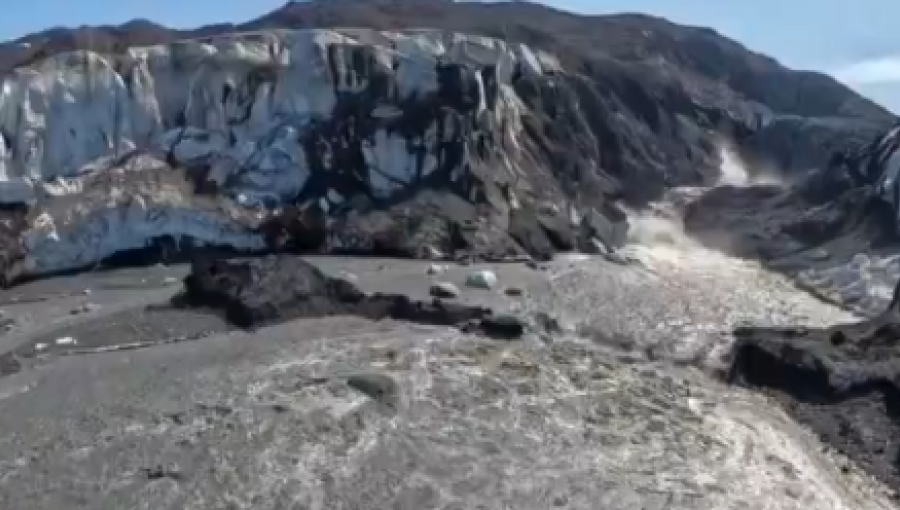
The area stricken area is known to be popular with pilgrims and trekkers. Nepal’s tourist board said more than 500 tourists were currently missing in the country, including more than 100 from India, 54 from the US, 33 from the UK and more than 100 from Nepal itself, the BBC reports.
In Tibet, Chinese government media, however, reported three deaths and 265 people missing with CCTV footage showing a wall of water and mud hitting buildings at the Gyirong border crossing.
Dozens of Nepalese police and army personnel are also reported missing, along with power workers. The scale of the disaster is expected to become clearer as rescue teams reach affected areas in the days ahead.
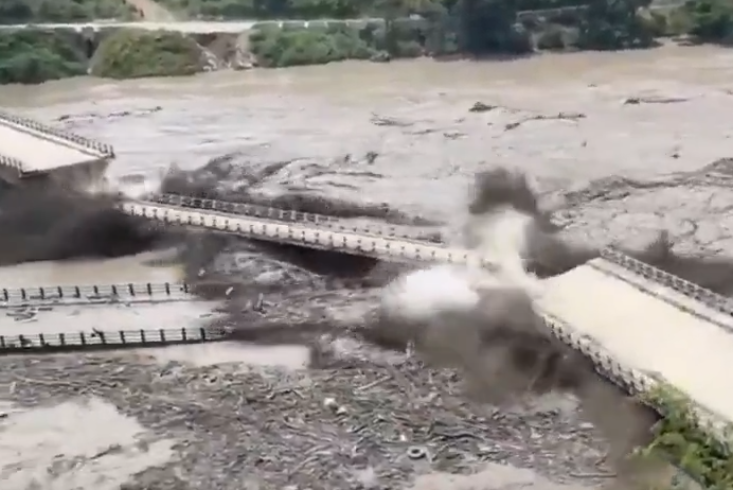
The flooding caused widespread damage to homes, roads and other infrastructure. Video footage shows thick brown water surging through the landscape and destroying bridges. At the border crossing, people were seen fleeing before floodwater hit the building.
Authorities initially believed an earthquake may have preceded the flooding although reports say the US Geological Survey now says the seismic energy was generated by a landslide, rather than an earthquake triggering the disaster.
Nepal’s Prime Minister Balendra Shah said the country has been shocked and deeply distressed by the disaster.
One woman told the BBC that her family had been swept away in front of her. She and her son survived by climbing onto a rooftop.
The Australian government said a number of Australians had been in the flood area but had not confirmed how many were among those reported missing.
Meanwhile, a trekking company operating tours across the Nepal-Tibet border has also been trying to establish the whereabouts of missing customers. The manager told the Press Association that around a dozen Britons from one excursion were missing and that the company had received thousands of calls from their families. Four Nepalese guides working for the company were also missing.
International governments have offered support. India’s Prime Minister Narendra Modi said the country was prepared to provide humanitarian assistance to Nepal. The US State Department said it was in contact with the Nepalese government and ready to assist.
European Commission President Ursula von der Leyen has also said the EU was ready to mobilise further assistance. UK Foreign Secretary Ed Miliband too said Britain’s consular team was working with local authorities on the emergency response and supporting those affected.
Around 1,300 people missing in Nepal and Tibet after catastrophic floods caused by a glacial collapse
Officials in Nepal earlier said 826 people, including some 341 foreigners, are missing after the Bhotekoshi-Trishuli floods.
At least 162 were killed in Nepal and three others in Tibet after massive flash floods in a border area of Nepal and China swept through communities on Wednesday, China’s state media reported, saying more than 1300 people remain missing from the disaster.
Mudslides in Tibet left three people dead and 558 missing; some 260 of the 558 missing people in Tibet were foreigners, both China's state news agency Xinhua and broadcaster CCTV reported Thursday morning.
On Thursday morning, officials in Nepal said around 826 people, including some 341 foreigners, are missing after the Bhotekoshi-Trishuli floods.
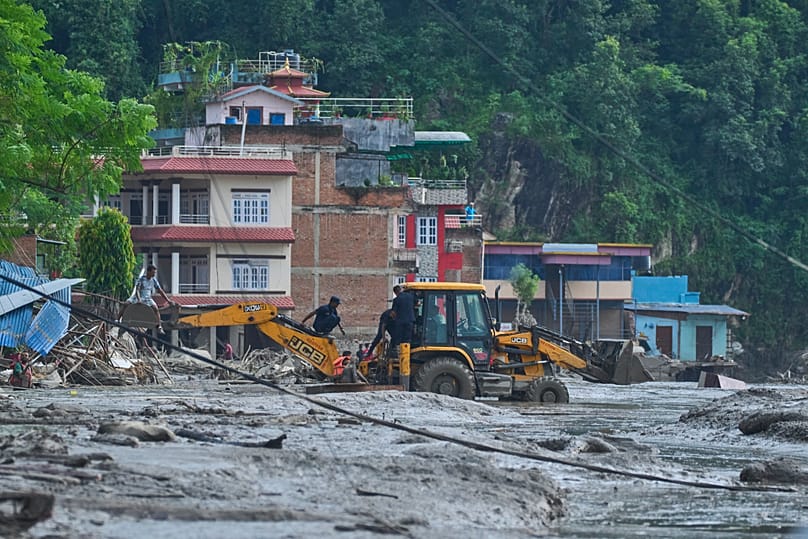
Drone footage in Nepal showed roads destroyed and buildings buried by thundering water the colour of wet cement.
“When I reached Dhunge bazaar, in half an hour, the flood came and damaged all the market. People were preparing to go to the office then,” a resident, Shoyam Rajbhandari, said. “How many people are missing or dead, we don’t know.”
At least 162 were killed in Nepal and three others in Tibet after massive flash floods in a border area of Nepal and China swept through communities on Wednesday, China’s state media reported, saying more than 1300 people remain missing from the disaster.
Mudslides in Tibet left three people dead and 558 missing; some 260 of the 558 missing people in Tibet were foreigners, both China's state news agency Xinhua and broadcaster CCTV reported Thursday morning.
On Thursday morning, officials in Nepal said around 826 people, including some 341 foreigners, are missing after the Bhotekoshi-Trishuli floods.
Drone footage in Nepal showed roads destroyed and buildings buried by thundering water the colour of wet cement.
“When I reached Dhunge bazaar, in half an hour, the flood came and damaged all the market. People were preparing to go to the office then,” a resident, Shoyam Rajbhandari, said. “How many people are missing or dead, we don’t know.”
Foreign nationals are among those missing
The international response began to trickle in Thursday after Australia, which reported some of its citizens missing, offered help, while South Korea said it sent a rapid response team to Nepal Thursday to support search and rescue efforts for nine of its nationals who remain unaccounted for.
At least 34 Australians on pilgrimages and hiking tours were missing, Australia’s Foreign Minister Penny Wong told reporters on Thursday.
“We understand these Australians were part of separate pilgrimage and tour groups,” Wong told reporters in Adelaide, Australia.
The Nepalese government had not yet requested help, but Australia was coordinating with Nepal, the United Nations, the Red Cross and other organisations on a humanitarian response, she said.
Malaysia also reported 55 of its citizens in Kathmandu are now unreachable, according to Malaysia's Foreign Ministry, which increased the number of missing on Thursday.
It stated that it is closely collaborating with authorities to determine the safety and locations of Malaysian casualties, but there is no formal confirmation of their presence.
The Bhotekoshi-Trishuli floods started on Wednesday after a sudden outburst in Nepal's Bhotekoshi River in Rasuwa district.
The US Geological Survey reported a magnitude 4.4 earthquake about 66 kilometres north of Kathmandu, near the border.
The USGS later updated its analysis to say the seismic event it measured was a magnitude 5.2 glacial collapse that sent debris flowing downstream with catastrophic impact on communities.
It said its determination was based on data from nearby seismic stations, long-period seismic waves and satellite imagery, and that no earthquake had occurred
The international response began to trickle in Thursday after Australia, which reported some of its citizens missing, offered help, while South Korea said it sent a rapid response team to Nepal Thursday to support search and rescue efforts for nine of its nationals who remain unaccounted for.
At least 34 Australians on pilgrimages and hiking tours were missing, Australia’s Foreign Minister Penny Wong told reporters on Thursday.
“We understand these Australians were part of separate pilgrimage and tour groups,” Wong told reporters in Adelaide, Australia.
The Nepalese government had not yet requested help, but Australia was coordinating with Nepal, the United Nations, the Red Cross and other organisations on a humanitarian response, she said.
Malaysia also reported 55 of its citizens in Kathmandu are now unreachable, according to Malaysia's Foreign Ministry, which increased the number of missing on Thursday.
It stated that it is closely collaborating with authorities to determine the safety and locations of Malaysian casualties, but there is no formal confirmation of their presence.
The Bhotekoshi-Trishuli floods started on Wednesday after a sudden outburst in Nepal's Bhotekoshi River in Rasuwa district.
The US Geological Survey reported a magnitude 4.4 earthquake about 66 kilometres north of Kathmandu, near the border.
The USGS later updated its analysis to say the seismic event it measured was a magnitude 5.2 glacial collapse that sent debris flowing downstream with catastrophic impact on communities.
It said its determination was based on data from nearby seismic stations, long-period seismic waves and satellite imagery, and that no earthquake had occurred
Avalanche from glacier caused disaster, experts say
Climate experts at the Kathmandu-based International Centre for Integrated Mountain Development said an avalanche from a glacier likely caused Wednesday’s flash flood.
“Hydrological observations indicate the exceptional speed and magnitude of the flood wave,” they said in an emailed statement, noting that water levels at one point on the Trishuli river rose by as much as 9 metres over half an hour.
The Lhende Khola River, a tributary of the Bhotekoshi, had maximum flooding, they said.
While the scale of the disaster is huge, the catastrophe in Tibet and Nepal is not a one-off. Over the past year, the Lhende Khola river system has flooded twice, and in one of the most heavily inhabited areas of the globe, populations, infrastructure, and water supplies are at risk due to the increasingly unstable Himalayan glacier system.
“The Lhende Khola has flooded twice in 14 months, this time triggered by an ice rock avalanche from a glacier on the Nepal side that blocked the river and released a sudden surge downstream,” said Saswata Sanyal, a disaster risk reduction specialist at the climate research group.
The region saw similar flash floods in August last year, when a glacial lake in Tibet overflowed because of high temperatures.
Nine people were killed, and critical infrastructure, including a bridge connecting Nepal and China, was damaged at the time.
Climate experts at the Kathmandu-based International Centre for Integrated Mountain Development said an avalanche from a glacier likely caused Wednesday’s flash flood.
“Hydrological observations indicate the exceptional speed and magnitude of the flood wave,” they said in an emailed statement, noting that water levels at one point on the Trishuli river rose by as much as 9 metres over half an hour.
The Lhende Khola River, a tributary of the Bhotekoshi, had maximum flooding, they said.
While the scale of the disaster is huge, the catastrophe in Tibet and Nepal is not a one-off. Over the past year, the Lhende Khola river system has flooded twice, and in one of the most heavily inhabited areas of the globe, populations, infrastructure, and water supplies are at risk due to the increasingly unstable Himalayan glacier system.
“The Lhende Khola has flooded twice in 14 months, this time triggered by an ice rock avalanche from a glacier on the Nepal side that blocked the river and released a sudden surge downstream,” said Saswata Sanyal, a disaster risk reduction specialist at the climate research group.
The region saw similar flash floods in August last year, when a glacial lake in Tibet overflowed because of high temperatures.
Nine people were killed, and critical infrastructure, including a bridge connecting Nepal and China, was damaged at the time.
At least 150 people have been killed and hundreds of tourists are missing after a massive flash flood and mudslide struck the Nepal-Tibet border on August 26.
Nepal's Ministry of Finance said international partners have offered coordinated financial support for flood response and rebuilding efforts across affected regions, as the government moves to channel emergency aid following widespread damage.
According to a report by The Rising Nepal, World Bank Country Director David Sislen told Nepal's Finance Minister Swarnim Wagle that approximately NPR25bn ($163mn) could be made available as urgent emergency support, marking one of the largest pledges disclosed so far among the international assistance offers.
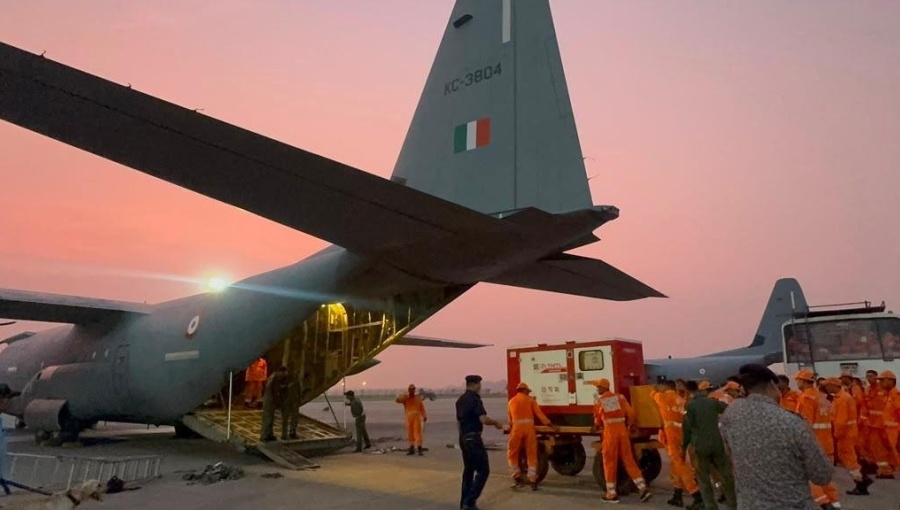
India's government reportedly requested an inventory of critical items needed for disaster victims and the Indian Airforce posted pictures and details on social media platform X of their C-130J aircraft being dispatched with 10 tonnes of relief supplies.
China's Ambassador to Nepal, Zhang Maoming, separately informed officials that Beijing intends to deliver prompt monetary assistance, asking Nepal's Ministry of Finance to begin transfer procedures for the funds.
Both India and China have a competing interest in providing humanitarian aid to Nepal as it reflects the reach of their soft power and geopolitical influence in the region.
Wagle acknowledged the international support offers and has initiated inter-agency consultations to establish distribution channels for the incoming resources, as the government works to coordinate the arrival and deployment of aid across multiple bilateral and multilateral sources.
Nepal's Cabinet formally declared affected municipalities within Rasuwa, Nuwakot and Dhading districts as disaster crisis zones, authorising deployment of both domestic and foreign relief assets to support recovery operations.
The designation is expected to expedite logistical coordination as international pledges convert into on-the-ground assistance, with authorities likely to face continued pressure to demonstrate transparent and efficient distribution of the incoming funds across the disaster-affected districts in the coming weeks.
Hundreds of tourists among victims in Nepal as Europe issues travel advice
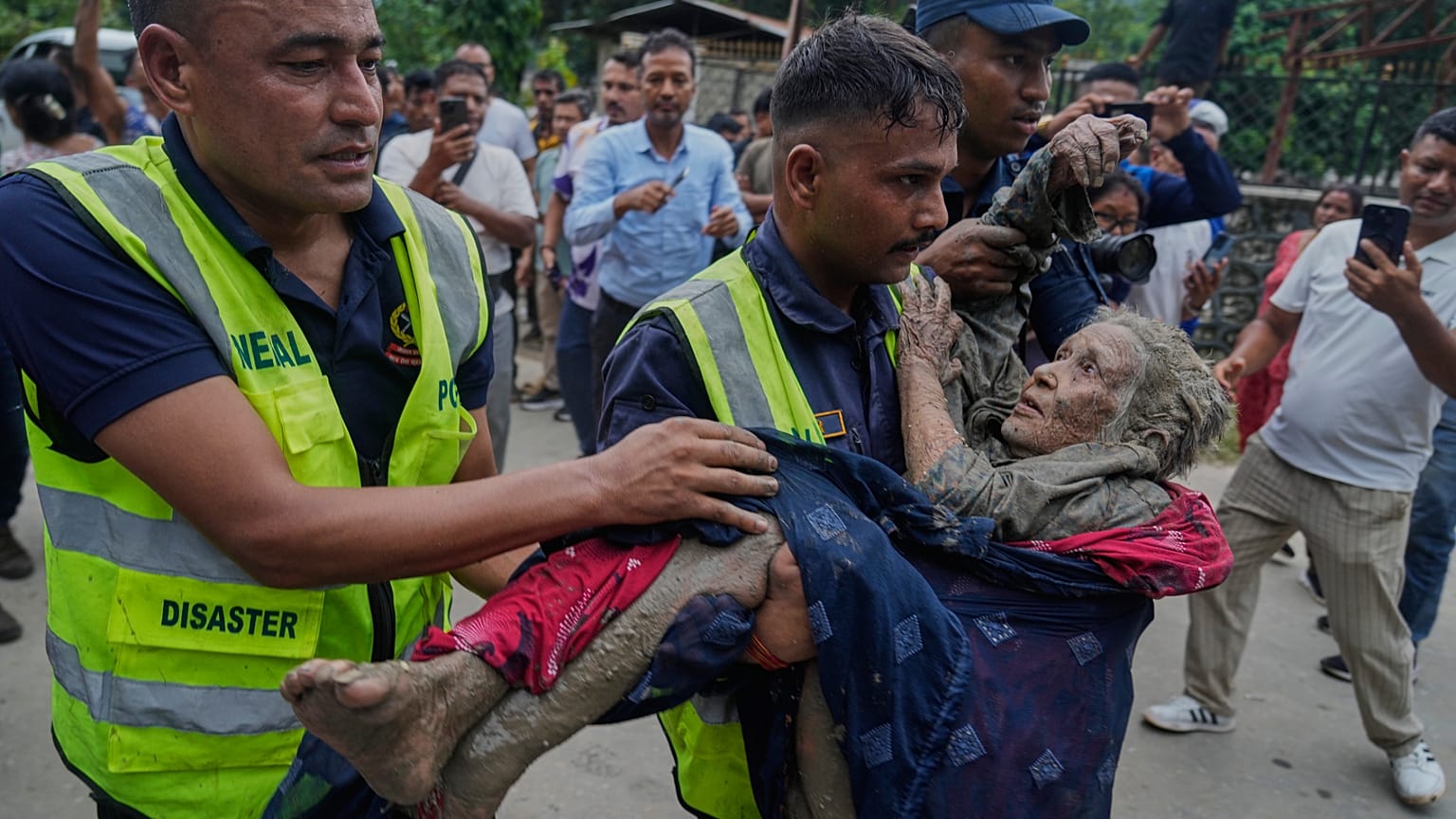
European governments have issued safety guidance and emergency contacts for travellers as flooding and landslides disrupt transport across parts of Nepal.
Hundreds of foreign tourists are reported missing after devastating flooding in Nepal struck an area popular with international travellers.
The Nepal Tourism Board said on Thursday that 644 tourists were out of contact, including 517 foreign nationals. They include visitors from 19 European countries as well as China, the United States and Australia.
Eight German nationals are among those reported missing, according to trekking agencies cited by Nepal Tourist Police chief Bishow Raj Adhikari, although Germany's Foreign Office said it had no confirmation that any German citizens were affected. Portugal's Foreign Ministry has confirmed that two Portuguese nationals, a man and a woman, have been reported missing following the disaster.
Nepali officials are urging travellers to inform the nearest police or security authority, local administration, travel agency, guide or tour operator of their location and in a statement said "please remain calm, stay informed and follow official safety instructions".
The disaster has particularly affected Rasuwa and neighbouring Nuwakot, north of Kathmandu and close to Nepal's border with Tibet.
Nepal has long been one of Asia's most popular destinations for backpackers, hikers and adventure travellers, attracted by its dramatic Himalayan landscape, relatively affordable travel and combination of mountain trekking, historic cities and Buddhist and Hindu culture.
The country is home to eight of the world's 10 highest mountains, including Mount Everest, and official figures show 1.16 million international tourists visited Nepal in 2025, including more than 165,000 who went trekking.
What should travellers in Nepal do?
European governments and other foreign embassies are advising travellers to follow instructions from Nepalese authorities and closely monitor local conditions.
The embassies of Finland, France and the UK, together with Australia, Norway and Switzerland and the EU Delegation in Nepal, issued a joint statement urging people in affected areas to "follow the guidance of local authorities and official safety advisories as the situation continues to evolve".
France warns that due to flooding and landslides telephone networks and internet connections can be cut for several days. Travellers are advised to check with local authorities before making journeys and to follow their instructions.
The Netherlands advises people caught in flooding to move to higher ground, avoid bridges and not attempt to walk or swim through floodwater. Travellers should be prepared to evacuate and keep passports, medication and other essential belongings together in a waterproof bag.
Foreign travellers should also:
- Avoid flood and landslide-affected areas and do not travel simply to observe the damage.
- Stay away from rivers, riverbanks, bridges, unstable slopes and damaged buildings.
- Check local weather, flood warnings and road conditions before travelling.
- Contact their tour operator, trekking company, guide or accommodation provider before attempting to change location.
- Keep relatives or friends informed of their location and condition, preferably by text or online if telephone networks are congested.
- Keep phones charged and passports, medication and essential documents readily accessible.
- Contact their travel insurer as soon as possible if their journey has been disrupted or they require medical treatment, evacuation or repatriation.
Nepal's Department of Hydrology and Meteorology provides weather and flood information through the toll-free number 1155, with callers able to select weather forecasts or early flood warnings.
Nepal emergency numbers
Police: 100
Fire: 101
Ambulance: 102
Tourist Police: 1144
Flood and extreme weather information: 1155
The Tourist Police service is particularly useful for foreign visitors and has officers with English-language skills.
Help for EU nationals
EU citizens requiring consular help should first contact their own country's embassy, consulate or foreign ministry.
Not every EU country has an embassy in Nepal but under EU consular protection rules, an EU citizen whose own country is not represented can seek assistance from the embassy or consulate of another EU member state. Belgium's foreign ministry, for example, identifies Germany, Finland and France as EU countries with embassies in Kathmandu.
Some useful European emergency contacts include:
France: French nationals in Nepal can contact the French Embassy in Kathmandu on +977 980 101 7201. France is asking its citizens to follow local-authority instructions and, where possible, tell relatives that they are safe.
Italy: Italian nationals requiring emergency assistance can contact the Italian Foreign Ministry Crisis Unit on +39 06 36225, the Italian Consulate General in Kolkata on +91 9831212216, or the Honorary Consulate General in Kathmandu on +977 1 4538388 / +977 1 4529089. Italy is also asking nationals in the area to register through its Dove siamo nel mondo service or Viaggiare Sicuri app.
Spain: Spanish nationals requiring urgent consular assistance can call +91 98101 74160. Spain advises its citizens in Nepal to follow instructions from local authorities and monitor updates from its embassy.
Belgium: Belgians can contact the Honorary Consulate in Kathmandu on +977 985 10 32 785 for emergencies. The Belgian Embassy in New Delhi, which is responsible for Nepal, has an out-of-hours emergency number of +91 98101 17931.
Travellers from other EU countries should check their national foreign ministry's latest Nepal advice for the appropriate emergency consular number.

No comments:
Post a Comment