There Is No Timeless Eritrea or Ethiopia
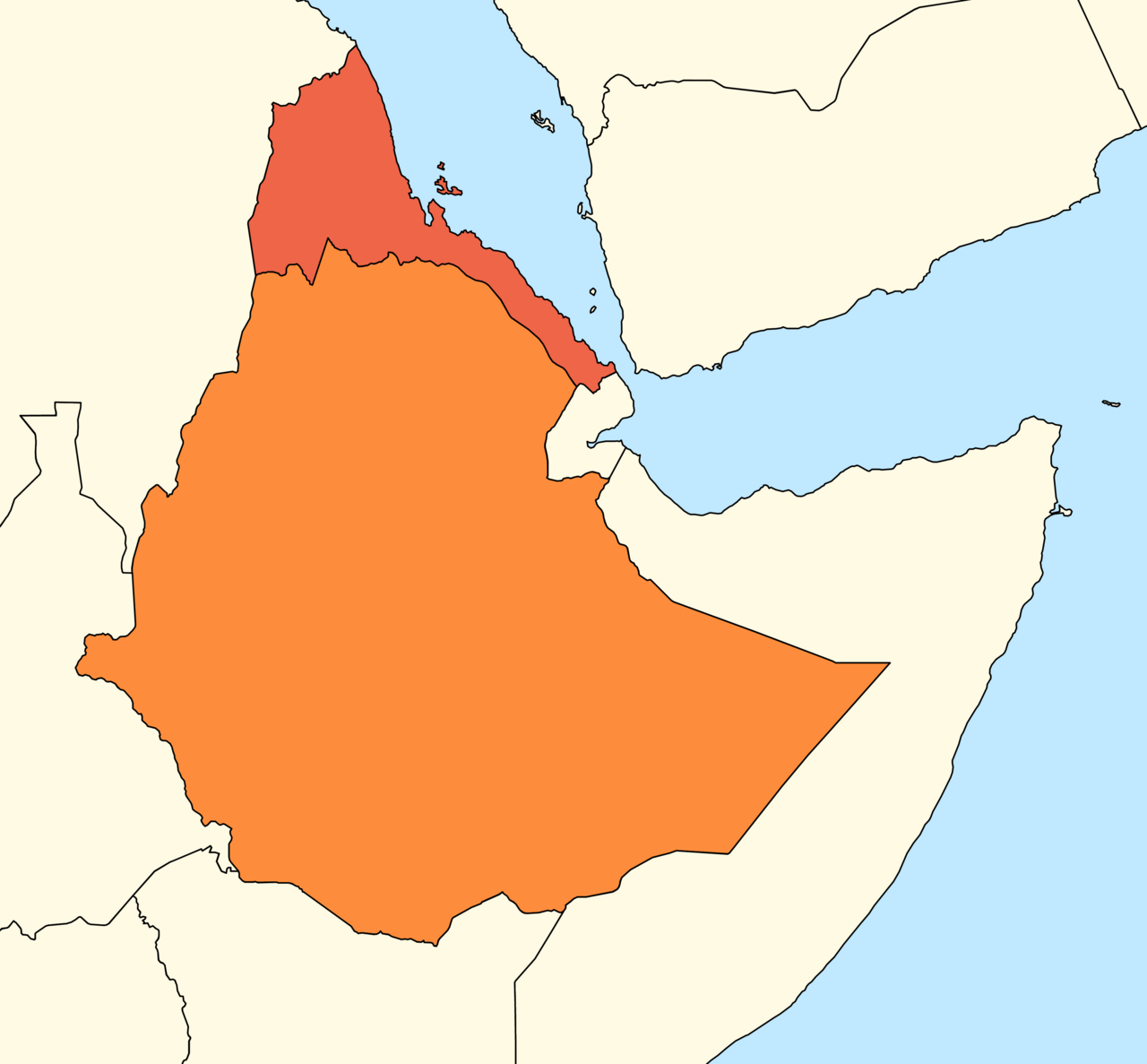
There is something peculiar about the way history enters political arguments in the Horn of Africa. It is rarely allowed to remain history.
Ancient civilizations become evidence of modern sovereignty. Old maps are treated like property deeds. Dynasties become proof that a country has existed forever. Political formations that disappeared centuries ago are made to fit neatly inside the borders and ambitions of the present.
This has become especially dangerous as Ethiopian Prime Minister Abiy Ahmed has turned the Red Sea into a central political question.
Ethiopia certainly has legitimate reasons to want dependable access to the sea. It is a large landlocked country. Trade routes matter. Transportation costs matter. Dependence on one corridor creates economic and strategic vulnerability.
But access to the sea and ownership of somebody else’s coast are entirely different things.
Ports can be leased. Transit rights can be negotiated. Railways can cross borders. Countries all over the world use ports they do not own. International law itself recognizes the special needs of landlocked countries. Part X of the United Nations Convention on the Law of the Sea specifically provides for access to and from the sea and freedom of transit.
The problem begins when a practical economic issue is transformed into a historical grievance.
Ambassador Andebrhan Welde Giorgis raises this danger forcefully in his recent commentary, “Abiy Ahmed’s Declaration of War on Eritrea”. His warning about the increasingly aggressive language surrounding Eritrea and the Red Sea deserves to be taken seriously.
I agree with his central concern. My difference is narrower. It concerns how we use history to answer the argument.
When Eritrea is confronted with claims based on an allegedly continuous Ethiopian past, there is an understandable temptation to establish an equally deep Eritrean political continuity. Eritrea has so often been dismissed as a colonial creation while Ethiopia is presented as ancient, natural and almost timeless.
But Eritrea does not need to answer on those terms.
We do not need to counter the myth of a timeless Ethiopia with a timeless Eritrea.
There was no timeless Eritrea.
There was no timeless Ethiopia.
And Eritrean sovereignty is no weaker for saying so.
History
One of the easiest mistakes in nationalist history is to begin with the modern map and work backward.
We know where Eritrea and Ethiopia are today, so we look into earlier centuries and begin labeling old kingdoms, territories and peoples Eritrean or Ethiopian.
But people living centuries ago did not inhabit our political map.
Consider Aksum, one of the great civilizations of the ancient Red Sea world. It was a major political and commercial power, connected to Arabia and the wider Red Sea and Mediterranean worlds.
But Aksum was not a modern nation state.
Calling it simply “ancient Ethiopia” projects the geography of a contemporary country backward into antiquity. Calling it “ancient Eritrea” would make exactly the same mistake.
Aksum should be studied because it was Aksum.
We do not have to recruit the dead into twenty first century border disputes.
Even the name Ethiopia has accumulated a mythology that needs to be unpacked. The antiquity of a name is not proof of the antiquity of a territorial state.
The word comes from the Greek Aithiopia. In classical usage it did not refer neatly to the present day Ethiopian state. Greek writers used it much more broadly and imprecisely for peoples and lands south of Egypt. Modern scholarship on Greek representations of Aithiopia and the Aithiopes makes clear how misleading it is to treat the ancient word as though it were simply the name of today’s Ethiopia.
A name can survive while its political meaning changes completely.
There is also an irony here.
The name Eritrea has a Greek origin too. It derives from the Greek term associated with the Red Sea, Erythra Thalassa. UNESCO’s historical material on Eritrea discusses this origin.
But nobody should claim that the existence of an ancient Greek word connected to the Red Sea proves that the modern Eritrean state existed in antiquity.
That would be absurd.
The same standard should apply to Ethiopia.
Names travel through history. Political communities change. States expand and contract. Territorial meanings shift. A word that is two thousand years old is not a two thousand year old border treaty.
Much of the territory incorporated into Ethiopia today was also not part of the older political and geographical core commonly known as Abyssinia. During the nineteenth century, especially under Emperor Menelik II, the Ethiopian empire expanded dramatically to the south, southwest and east. Peoples and territories entered the expanding state through conquest, submission, negotiation and incorporation.
Recognizing this does not make Ethiopia illegitimate.
It simply means Ethiopia has a history.
My late friend, Eritrean scholar Professor Okbazghi Yohannes, wrote perceptively about what he called the mythical image of Ethiopia.
Part of that image grew from something genuinely remarkable.
At the Battle of Adwa in 1896, Ethiopian forces defeated an invading Italian army. Adwa became much more than an Ethiopian military victory. For generations of Africans and people of African descent around the world, it became a powerful symbol of resistance to European colonial conquest.
That history deserves respect.
But it also created a blind spot.
Because Ethiopia became such a powerful symbol of African resistance to European imperialism, it became difficult for many outsiders to recognize that a state that resisted European empire could itself have an imperial history.
There is no contradiction.
A country can resist one empire and expand over other peoples.
The late Ethiopian scholar Elleni Centime Zeleke was particularly good at challenging the comforting image of one political Ethiopia moving unchanged through centuries.
Ethiopia was made and remade.
So was Eritrea.
If Eritrea must be historicized, Ethiopia must be historicized too.
Borders
There is a deeper problem with projecting modern countries backward.
The territorial state itself is relatively recent.
Today we look at a political map and see precise lines. Eritrea ends here. Ethiopia begins there. Sovereignty reaches a boundary and stops.
We are so accustomed to this way of seeing political space that it is easy to imagine that states have always worked this way.
They have not.
Even in Europe, the Peace of Westphalia of 1648 is conventionally associated with the long development of the modern sovereign state system. Historians rightly point out that the territorial state did not suddenly appear in 1648. The process was gradual.
That only strengthens the basic point.
Precisely bounded territorial sovereignty is historically recent.
Earlier political systems often had frontiers rather than borders in the modern sense.
A border is a line.
A frontier is a zone.
Authority could be strong close to a political center and become weaker as one moved farther away. Taxation might be regular in one area and occasional in another. Local rulers could retain substantial autonomy. Allegiances could change. Pastoral communities could move across wide areas. Political influence could overlap.
There was not always a precise point where one ruler’s sovereignty ended and another ruler’s sovereignty began.
Sometimes there were broad areas of diminishing contact.
This matters enormously when discussing the history of the Horn.
Kingdoms expanded and contracted. Dynasties rose and disappeared. Political centers moved. Communities migrated. Authority was uneven.
The clean line on a modern political map was generally not there.
Neither was the modern concept of sovereignty represented by that line.
This is why Eritreans should not waste time debating which medieval ruler reached which coastline, who used which port or what kingdom exercised influence over a particular territory centuries ago.
We do not even need to go there.
Doing so gives the argument more dignity than it deserves.
Historical influence is not modern sovereignty. Tribute is not a border. A military expedition is not a title deed. A medieval kingdom does not acquire permanent property rights on behalf of a modern country that appears centuries later.
History is not a property registry.
The modern political history of Eritrea is much more relevant.
In 1950, United Nations General Assembly Resolution 390(V) provided for Eritrea to constitute an autonomous unit federated with Ethiopia.
It did not simply declare Eritrea an Ethiopian province.
The late Eritrean scholar Professor Tekie Fessehatzion examined this period closely in his work on Eritrea’s transition from federation to annexation.
The sequence matters.
There was a federation.
There was later an annexation.
The federal arrangement was steadily hollowed out. Eritrean autonomy and institutions were weakened. In 1962 Eritrea was incorporated into Ethiopia. Armed resistance had already begun.
Eritreans themselves had disagreed intensely about their political future. Some favored independence. Some favored federation. Others supported union with Ethiopia.
There is nothing unusual about that.
Nations develop through political experience and struggle.
What followed was not some romantic relationship that eventually went sour.
It was one of Africa’s longest and bitterest armed struggles for independence.
This is why describing Eritrea and Ethiopia as an “unfinished divorce” is so misleading.
Divorce presupposes a marriage.
There was nothing romantic about Eritrea’s struggle to extricate itself from Ethiopian rule after the destruction of the federal arrangement. Generations of Eritreans lived through war under Haile Selassie and later the Derg.
After roughly thirty years of armed struggle, Eritrea achieved de facto independence in 1991. In 1993, following an internationally observed referendum in which independence received overwhelming support, Eritrea was admitted to the United Nations as a sovereign state.
There is no divorce left to finish.
If there is unfinished business, it is Ethiopia’s political acceptance that Eritrean sovereignty is permanent.
African leaders understood the danger of endlessly reopening questions like this very early.
At its 1964 summit in Cairo, the Organization of African Unity committed African states to respect the borders existing when they achieved independence.
They did not do this because colonial borders were fair.
They knew perfectly well that many of them were arbitrary.
They did it because the alternative could be catastrophic.
If every African government could search precolonial history for a more favorable map, almost every border on the continent could become negotiable.
Which century should count?
Which kingdom?
Which conquest?
Which migration?
There is no neutral answer.
The empire remembered proudly by one people was often experienced as conquest by somebody else.
This African approach is often loosely described through uti possidetis juris, the doctrine commonly associated with the preservation of inherited boundaries at independence.
But the distinguished Somali jurist Judge Abdulqawi Ahmed Yusuf offered an important qualification. In his separate opinion in the Burkina Faso and Niger frontier case, Yusuf cautioned against treating Africa’s own border principle as simply identical to classical uti possidetis juris.
His distinction is important.
African states were not declaring colonial boundaries morally just.
They were making a political and legal judgment that endlessly reopening borders through competing histories of empire, conquest and migration would invite endless conflict.
The achievement was not finding the perfect historical border.
It was putting a limit on what history could be allowed to do.
That principle protects Eritrea.
It also protects Ethiopia.
Modern Ethiopia itself contains territories incorporated at very different historical moments. If ancient control, cultural affinity or former imperial authority can override contemporary boundaries when doing so enlarges Ethiopia, there is no logical reason those principles could not also be turned against Ethiopia.
A historical principle cannot be valid when it makes a country larger and suddenly irrelevant when it might make the same country smaller.
The Present
This brings us back to Abiy Ahmed.
It is increasingly misleading to describe his Red Sea campaign simply as a search for access.
If access were really the issue, there would be little controversy.
Ethiopia can negotiate access. It already conducts much of its foreign trade through neighboring Djibouti. It can negotiate additional port agreements, railway connections, customs arrangements and transit corridors.
None of this requires territorial ownership.
The late Ethiopian scholar Professor Dereje Zeleke Mekonnen, a prominent specialist in international law, understood this distinction particularly well. Dereje was Ethiopian. He was not making an Eritrean nationalist argument. His academic work included serious engagement with international law and Ethiopia’s own national interests.
Yet when the Assab question was being politically mobilized, he rejected the idea that Ethiopia could turn its strategic need for a port into legal ownership of Eritrean territory. His position was captured in the strikingly direct formulation “No way to make Assab part of Ethiopia”.
That matters precisely because of who said it.
One does not have to admire the Eritrean government, embrace Eritrean nationalism or feel any particular affection for Eritrea to understand a basic principle of international law.
National interest does not create territorial title.
Abiy’s rhetoric, however, has moved beyond commercial access.
In 2025, he increasingly described Ethiopia’s loss of the Red Sea as a historical mistake to be corrected. More importantly, the International Crisis Group’s 2026 assessment of tensions among Ethiopia, Eritrea and Tigray recounts an October 2025 parliamentary address in which Abiy questioned the legitimacy of the process through which Eritrea separated from Ethiopia.
That changes the nature of the discussion.
Once Eritrean independence itself is presented as the product of an illegitimate or illegal process, we are no longer talking merely about access to a port.
We are talking about Eritrea’s right to exist as an independent state.
And that makes the current rhetoric much more dangerous.
It also reveals another profound irony.
The Ethiopian political center is reaching rhetorically beyond Ethiopia’s existing borders at precisely the moment when its authority within those borders is deeply contested.
The federal government remains powerful. It controls the main institutions of the state and possesses formidable military capacity. But formal state power should not be confused with uncontested political authority.
In Amhara, the Fano insurgency has challenged federal forces across substantial areas. In Oromia, armed conflict with the Oromo Liberation Army has continued. Tigray remains unsettled after the catastrophic 2020 to 2022 war.
Ethiopia’s center is therefore speaking expansively about territory outside the state while struggling to establish political consent and durable authority inside it.
That is not a minor contradiction.
It helps explain why Red Sea nationalism is politically so attractive.
There are few cheaper ways to divert attention than to tell a population that something important has been taken from it.
A coast.
A port.
A piece of territory.
A supposedly natural border.
The domestic questions are much harder.
Why has the Ethiopian political center been unable to produce a durable settlement in Amhara?
Why does armed conflict persist in Oromia?
Why does Tigray remain politically unresolved after such a devastating war?
Why has Ethiopia moved from one major internal conflict to another?
Those questions require difficult answers.
They require negotiation, accountability, political compromise and perhaps a fundamental reconsideration of how Ethiopia itself is governed.
Pointing toward the Red Sea requires none of that.
The map becomes the problem.
Eritrea becomes the problem.
Landlockedness becomes the problem.
And the crisis of the Ethiopian state can momentarily disappear behind the grievance of an imagined historical loss.
That is why language about Red Sea “ownership” or an “unfinished divorce” should not be dismissed as colorful political rhetoric.
It performs political work.
It transforms another country’s sovereignty into Ethiopia’s grievance.
It converts independence into loss.
It turns the consequences of history into an injustice supposedly awaiting correction.
This is also why I think Ambassador Andebrhan Welde Giorgis is right about the seriousness of the danger, even if I would answer the historical argument somewhat differently.
Eritrea does not need an ancient pedigree.
It does not need to prove that an Eritrean nation state existed centuries ago.
It does not need an Eritrean answer to every Ethiopian medieval kingdom.
It does not need to establish that its antiquity is greater than Ethiopia’s antiquity.
That would concede too much.
The stronger answer is simpler.
There was no timeless Eritrea.
There was no timeless Ethiopia.
There were kingdoms, empires, communities, trading networks and changing frontiers. Political authority expanded and contracted. People moved. Dynasties disappeared. States were constructed and reconstructed.
That is history.
Modern Eritrea was historically constructed.
Modern Ethiopia was historically constructed.
Neither fact makes either state less sovereign today.
And none of this requires defending the Eritrean government.
Eritrea is not Isaias Afwerki.
A government and a country are not the same thing. One can oppose authoritarian rule in Eritrea completely while insisting just as completely on Eritrean sovereignty. If a bad government invalidated sovereignty, much of the international system would disappear.
Ethiopia needs dependable access to the sea. Eritrea needs economic opportunity. Both societies would benefit enormously from trade, transportation links and regional economic cooperation.
A port does not have to belong to Ethiopia in order to serve Ethiopia.
A railway does not require political union.
Economic integration does not require territorial incorporation.
What real regional cooperation requires is something more basic: sovereign acceptance.
Ethiopia does not have to like the history that produced Eritrean independence. It does not have to approve of the Eritrean government. It does not have to celebrate becoming landlocked.
It simply has to accept that Eritrean independence is not provisional.
The people of the Horn already have more than enough history.
What they need now is the political maturity to stop using it as a deed of ownership.

No comments:
Post a Comment