Trump Pledges to Make Hormuz a "Territory of the United States"
Amidst the ongoing Iranian campaign to control and close the Strait of Hormuz, President Donald Trump promised Friday to make the waterway a "territory of the United States" - the first American overseas territory comprised of water rather than land.
"After we finish defeating Iran, which is being very badly defeated, pretty soon I’ll be declaring the Hormuz Strait a territory of the United States," Trump said in a speech Friday in New York. "We have the blockade. No ships get through unless we want them to . . . Essentially, [a territory is] what it is."
Legal and political questions aside, practical matters remain on the question of U.S. sovereign control, starting with lack of presence and tactical vulnerability. Iran is rapidly reconstituting its ballistic missile force, according to Israeli intelligence, and it routinely hits merchant tankers in the southern stretch of the strait with drones. On Friday evening, it struck a vessel belonging to UAE state oil company Adnoc for the 19th time, Emirati media reported.
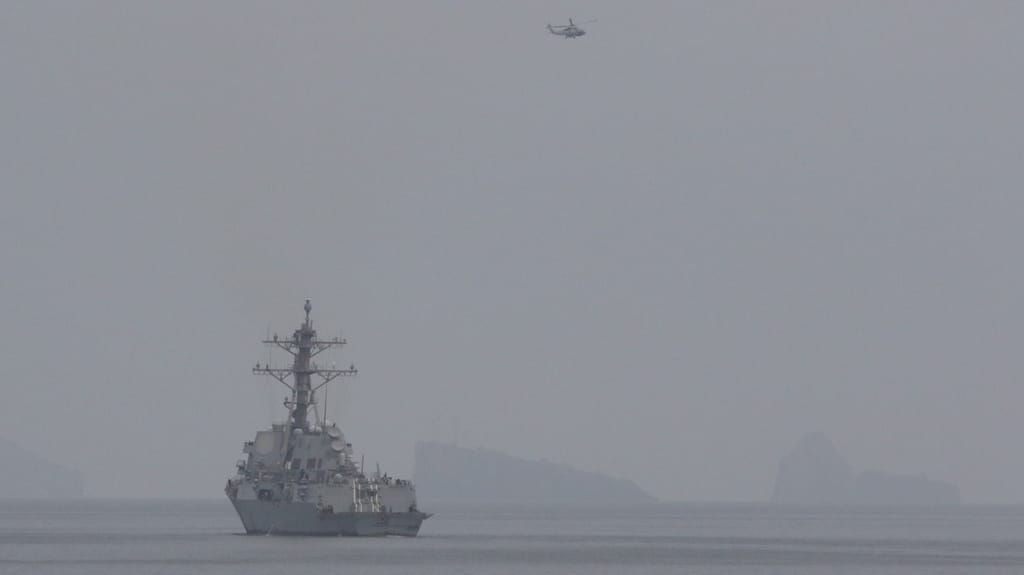
Meanwhile, U.S. Navy warships do not operate in Hormuz. The Navy operates a successful blockade of Iranian traffic in the Gulf of Oman, outside the strait, but no publicized U.S. Navy surface transits of the strait itself have occurred in four months. The service's top leaders have described the lack of access to Bahrain's storehouses as an obstacle to resupply operations for its Arabian Sea task force, implying that U.S. Military Sealift Command auxiliaries do not access the Gulf.
"It’s clear the US president, with a chuckle as he said that, even himself, is not taking this particularly seriously," Al Jazeera reporter Kimberly Halkett said. "What the US president is not backing down on is the fact that there is a naval blockade by the United States in effect."
Iran maintains that it should have the right to fully control navigation in the strait, including the right to levy fees for passage. At minimum, it believes that control should belong jointly to Iran and Oman (the strait's coastal states), and it is negotiating with Omani officials on a mechanism for shared management.
"The Strait of Hormuz has been Iranian, is Iranian, and will remain Iranian; this strait will only be closed and opened under Iran’s command," responded Iranian deputy foreign minister Kazem Gharibabadi in a statement aimed at Trump. "As long as you do not accept the reality of defeat and cease your fanciful delusions, Iran will continue to enforce the blockade."
Despite the Iranian blockade, oil continues to flow out of the strait at a reduced rate. U.S. Energy Secretary Chris Wright estimates the volume at 9 million barrels per day, while independent analysts put it at 4-5 million barrels daily. Adnoc is known to be supply logistics for not only its own oil, but for Iraqi volumes as well, largely by the use of a trans-Hormuz shuttle program it operates using its own tanker fleet.
Bloomberg's Javier Blas suggests that these covert flows are part of the reason that oil prices remain well below $100 per barrel, despite the ostensible shutdown. In addition to demand destruction and a sharp (and as-yet-unexplained) drop in Chinese imports, pipeline volumes to Fujairah and Yanbu have soared and the Adnoc shuttle route is moving more crude than previously believed - all despite Iranian efforts to shut off its GCC neighbors from the sea.
Iran Claims to Have Seized Tanker as It Continues Targeting UAE Shipping
Iranian media is carrying unconfirmed reports on Monday, August 17, that it has detained a tanker linked to the UAE for violations of its rules for the Strait of Hormuz. It comes after the UAE’s Ministry of Foreign Affairs at the end of last week “strongly condemned and denounced” Iran’s attacks, calling them piracy.
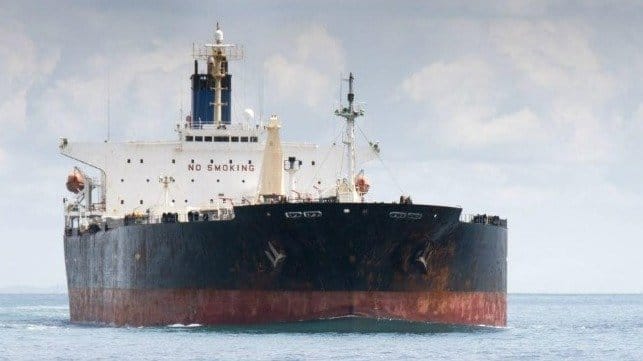
Farh News Agency is repeating the reports from Iranian state TV of the seizure without providing the name or details on the tanker. It says the vessel was seized in the Strait of Hormuz for “violating Iranian maritime laws.” It cites the need to follow the Iranian route as one condition and “payment for services and Iran’s permit” as other conditions. The tanker was reportedly taken toward Qeshm Island.
The rumors immediately rattled global oil markets, which were already on edge. The price of a barrel of Brent crude futures quickly jumped above $91 a barrel. It compares with a price of below $70 a barrel before the U.S. and Israel started the campaign against Iran at the end of February.
The Emirates has been one of the targets of Iranian aggression. The Ministry of Foreign Affairs responded to the reports of attacks on vessels affiliated with ADNOC, the Abu Dhabi National Oil Company. It demanded that Iran halt these unprovoked attacks.
“Using the Strait of Hormuz as a tool of economic coercion or blackmail represents acts of piracy by Iran’s Revolutionary Guard Corps,” the Ministry wrote in its statement.
Two tankers linked to ADNOC reportedly came under attack on August 14 while attempting a dark transit of the Strait of Hormuz. Maritime AI data firm Windward is identifying them as a Singapore-flagged oil product tanker and a Liberian-flagged Aframax tanker. A third ADNOC tanker was attacked on August 8, with other reports saying as many as 19 vessels, including bulkers and other types, linked to ADNOC have been targeted by Iran.
Despite the U.S. assertion that traffic continues to move through the Strait, Kpler data shows a dramatic fall-off over the weekend after news of the latest targeting of the ADNOC tankers. Kpler data cited by Reuters says only five tankers exited with their AIS signals transmitting on Saturday, August 15, and none on Sunday. That is down from 31 tankers the previous weekend.
Kpler notes that its data does not include tankers traveling “dark.” Bloomberg separately contends in its reporting that the majority of tankers are transiting in the dark, and that is what was keeping oil prices in check.
Donald Trump told reporters on Monday afternoon that he would not be extending the so-called memorandum of peace with Iran, which expires today. He asserted that Americans are paying “only a little more” for gasoline and that it was worth it because Iran was being defeated.
U.S. Central Command reports that as of August 17, U.S. forces have redirected 64 commercial vessels, disabled three, and boarded two to ensure compliance with the blockade. It calls it “America’s US steel wall blockade,” with U.S. officials saying it can be maintained indefinitely.

No comments:
Post a Comment