It’s possible that I shall make an ass of myself. But in that case one can always get out of it with a little dialectic. I have, of course, so worded my proposition as to be right either way (K.Marx, Letter to F.Engels on the Indian Mutiny)
Saturday, February 19, 2022
LUXURY ECOCIDE
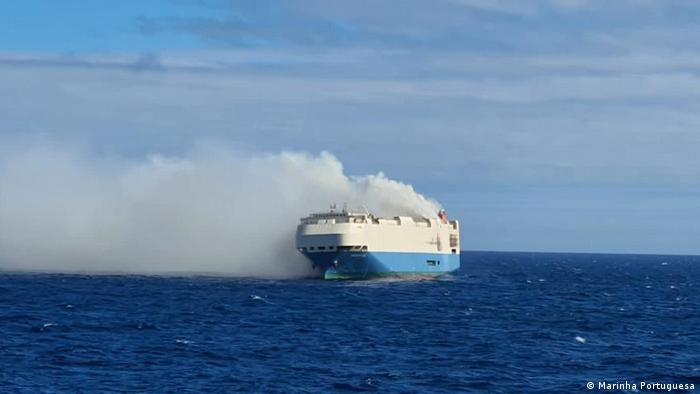
Cargo ship with Porsches, Lamborghinis burning in the Atlantic
Freighter Felicity Ace was carrying almost 4,000 cars bound for the US. The ship's crew was rescued, but the vessel was left unmanned and drifting at sea.
The ship was transporting VW-group cars, including luxury vehicles, from Germany
Nearly 4,000 cars, including Audis, Porches and Lamborghinis, were going up in smoke on a freighter that caught fire in the Atlantic Ocean near the coast of Portugal's Azores islands.
The Panama-flagged Felicity Ace was carrying Volkswagen Group vehicles from Germany to the US, a VW spokesperson said on Friday.
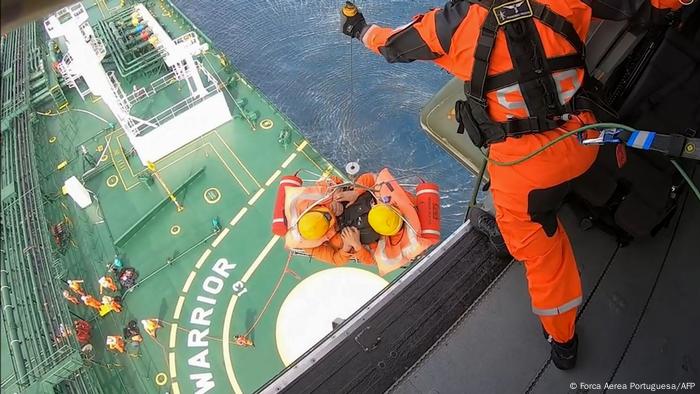
It caught fire on Wednesday evening, and Portugal's navy and air force rescued its 22-strong-crew.
Rescuers used a helicopter to evacuate 22 crew members
Felicity Ace adrift near Azores
An internal email from Volkswagen US said the ship carried 3,965 vehicles of the VW, Porsche, Audi and Lamborghini brands.
A Porsche spokesperson confirmed nearly 1,100 Porsche vehicles were on board. Audi also said some of its cars were on the ship but did not state how many.
The Portuguese navy was keeping an eye on the burning ship.
A Dutch salvage company would examine the possibility of towing the ship to a port, according to the Portuguese news agency Lusa.
lo/dj (Reuters, DPA)
Photos show Felicity Ace, the burning cargo
ship loaded with luxury cars, smoldering at
sea
Photos show Felicity Ace, the burning cargo ship loaded with luxury cars, smoldering at sea Rebecca Cohen Fri, February 18, 2022
Photos show the Felicity Ace, a cargo ship carrying thousands of cars, ablaze in the Atlantic Ocean.
The massive boat caught fire on Wednesday near Portugal. All 22 crew members were rescued by the Portuguese Navy.
The ship was transporting about 4,000 cars from Volkswagen's factory in Germany to the US.
The Felicity Ace, a cargo ship carrying cars from Germany to the US, that caught on fire near Portugal earlier this week is still ablaze in the Atlantic Ocean.
Photos released by Reuters on Friday show that the ship is still loaded with thousands of cars that won't make it to their owners.
The massive ship was evacuated by the Portuguese Navy on Wednesday, saving all 22 crew members on board.
The ship was traveling to Rhode Island from Emden, Germany, where a Volkswagen factory is located, with thousands of cars in tow.
The 650-foot-long ship was carrying nearly 4,000 cars built by Germany's Volkswagen Group to North America, including one YouTuber's brand new Porsche. The ship, Felicity Ace, which was traveling from Emden, Germany, where Volkswagen has a factory, to Davisville, in the U.S. state of Rhode Island, burns more than 100 km from the Azores islands, Portugal, February 18, 2022.Reuters
Both Volkswagen and Porsche have confirmed to Insider that they are looking into what went wrong and how the fire started.
The ship, Felicity Ace, which was traveling from Emden, Germany, where Volkswagen has a factory, to Davisville, in the U.S. state of Rhode Island, burns more than 100 km from the Azores islands, Portugal, February 18, 2022.Reuters
The carmakers said it is too soon to determine whether any of the vehicles can be salvaged and what next steps are, but the boat remains ablaze Friday, with little hope for the cars on board. The ship, Felicity Ace, which was traveling from Emden, Germany, where Volkswagen has a factory, to Davisville, in the U.S. state of Rhode Island, burns more than 100 km from the Azores islands, Portugal, February 18, 2022.Reuters
Just a Few Months in Space May Permanently Rewire Your Brain
Miriam Fauzia Fri, February 18, 2022 NASA
As humans look toward the vast unknowns of space to better understand our galactic neighborhood and stake out potential habitats, there’s one big question scientists are asking: How will the human body hold up outside Earth?
For the most part, research from NASA’s trailblazing Twins Study and other investigations show that free-floating thousands of miles above solid ground can cause big changes on immune system function, gene expression, metabolism, and even gut bacteria. Most of these physiological changes, however, reverse themselves once an astronaut is back on Earth. Others can be offset through diet, exercise, and other actions.
In a collaborative effort between the European Space Agency (ESA) and Russian space agency Roscosmos, a team of researchers found that long-duration spaceflight leads to very small but widespread changes in regions of the brain involved in sensorimotor integration—the parts of our brain that help us pick up sensory information and use it to interact with our external environment. These changes were particularly notable in a type of brain tissue called white matter, which acts as a sort of network cable connecting the brain’s computing centers (gray matter) together.
The study, led by physiologist Floris Wuyts of the University of Antwerp, scanned the brains of 12 male Russian cosmonauts using a 3D-modeling technique called fiber tractography. When combined with an MRI, this modeling can give researchers an inside look at the “sort of wiring scheme of the brain,” Wuyts said in a press release.
Between Feb. 2014 and Feb. 2020, cosmonauts who were set to undergo long-duration missions aboard the International Space Station (which, according to NASA, are about six months long) had MRIs taken three months before they launched, and another about 10 days after they returned to Earth. A final MRI was collected around seven months post-mission.
After spaceflight, Wuyts and his team identified tiny “microstructural” changes that occurred not only in the sensorimotor tracts of the brain but also in regions like the cerebellum, which plays a big role in movement and mediating social behavior.
Changes were also seen in white matter tracts connecting the corpus callosum (the communication bridge between our left and right brain hemispheres) and regions involved in language processing and executive function.
On the final MRIs taken seven months later, some microstructural changes reverted to pre-flight conditions—but not all of them. It’s one of the first major pieces of evidence to demonstrate that space can permanently alter the human brain.
Wuyts’ team thinks the space environment (and its microgravity conditions) causes fluid cavities in the brain to dilate, pushing adjacent neural tissue around.
What these findings mean for the long-term health of astronauts and potential space tourists is hard to say. Dr. Jan Stepanek, a physician specializing in space medicine at the Mayo Clinic, told The Daily Beast that just because an anatomical change happens in one part of your brain doesn’t necessarily mean the actual function is changing in an untoward way.
“The sort of big million dollar question that now stands in the room is how much of this is a favorable adaptation and how much of the adaptation—that may occur to deal with an extreme environment—may turn out to be potentially detrimental or maladaptive,” he said.
Stepanek and Jennifer Fogarty, a space medicine researcher at Baylor University, do think the new study opens the door for understanding how an altered environment like Earth's orbit or a new planet like Mars can affect our brains, and how those transformations could possibly be tracked and measured with diagnostic imaging.
“It gets complicated [to measure change and adaptation],” Fogarty told The Daily Beast. “But now, understanding that, from a functionality standpoint, we can start to understand why and how the body is going through these mechanistic sorts of investments and changes to [align brain function] with a new environment.”
More work is needed before we can generalize the findings to space travelers of all health statuses, gender, and age (the study only looked at healthy men who were on average in their mid-40s). The next stage of this field of study will be to connect the structural changes of the brain to behavioral and psychological changes—and whether any of these things might be signs of more severe neurological ailments.
“These findings give us additional pieces of the entire puzzle,” said Wuyts. “Since this research is so pioneering, we don’t know how the whole puzzle will look yet. These results contribute to the overall understanding of what’s going on in the brains of space travelers. It’s crucial to maintain this line of research, looking for spaceflight induced changes from different perspectives and different techniques.”
Climate change: Covid shutdown linked to record rainfall in China Matt McGrath - Environment correspondent Fri, February 18, 2022 This aerial photo taken on 16 July 2020 shows a flooded area near the Poyang Lake due to torrential rains in Poyang county, Shangrao city, in China's central Jiangxi province
Scientists say that a rapid drop in emissions because of Covid played a key role in record rainfall in China in 2020.
The decline in greenhouse gases and small particles called aerosols caused atmospheric changes that intensified the downpours.
Hundreds of people died and millions more were evacuated during a summer of record rainfall.
But long-term cuts in emissions are unlikely to trigger similar events.
Many parts of eastern China experienced severe flooding in June and July in 2020. The researchers say the reductions in emissions contributed about one third of the extreme summer rain. floods
The Yangtze river saw the heaviest rainfall since 1961, with a 79% increase in June and July compared to the average for the period over the previous 41 years.
A number of scientific studies have looked at what caused the flooding events, some pointing to the extreme conditions in the Indian Ocean.
Now an international team has put forward a new theory. They argue that the abrupt reduction in emissions of greenhouse gases and aerosols, caused by shutdowns during the Covid-19 pandemic, was a key cause of the intense downpours.
In their study the authors show that over the past four decades summer rainfall over eastern and central China has decreased significantly due to the increase in the number of aerosols in the atmosphere.
These particles, often associated with the burning of coal, can reduce the occurrence of large-scale storms which resulted in lower rainfall.
Aerosols are generated from human activities including the burning of coal
This new study says that the absence of these particles, and lower greenhouse gas emissions in 2020 caused the opposite effect - a major increase in rain.
However, the chain of events that connects the pandemic shutdown to the floods is quite complex.
"There was heating over land due to aerosol reductions but also cooling over the ocean due to a decrease in greenhouse gases, which intensified the land/sea temperature difference in the summer," explained lead author Prof Yang Yang from Nanjing University of Information Science and Technology, in China.
"This in turn, increased sea level pressure over the South China/Philippines sea and intensified the winds bringing moist air to eastern China which then saw intense precipitation."
Diggers open a channel to let flood waters flow
Most governments around the world are looking to reduce emissions of warming gases and aerosols through shifting their energy systems away from fossil fuels. Is there a danger that in making this shift they could provoke extreme events like the ones experienced in China in 2020?
"It's a good question," said Prof Yang.
"Because emissions were reduced dramatically in early 2020 when the Covid-19 pandemic emerged, it caused an immediate and abrupt change in various components of the climate system."
"Such sudden change of the climate system would be very different from changes in response to continuous but gradual policy-driven emissions reductions."
The new study has been published in the journal, Nature Communications.
NEWARK, N.J. -- Rutgers University recently conducted a study on marijuana usage to help guide state policy.
CBS2's Meg Baker has more on the possible impact of pot retail sales on children.
Usage overall in New Jersey is lower than the nationwide average, but a scary statistic shows younger people are using more now than ever.
"Marijuana use among those 12-17-year-olds is actually going up, which really ... that resonates in terms of we need to be more proactive. If the rate is already going up, what are we going to do now that recreational marijuana is legalized?" said Charles Menifield, dean of the School of Public Affairs at Rutgers-Newark.
Menifield, the study's principal investigator, looked at the impact of legalization and identifying disparities among different communities.
"Both in terms of public safety, education, and health, there's no question based on our finding that African-Americans could be disproportionately impacted in a negative way when cannabis retail sales actually begin."
He said the likelihood that retail outlets will be in communities of color is high. Data indicates that racial differences in school discipline could be linked to marijuana usage.
"Black kids were suspended at a rate that was more than twice that of any other group. Substance abuse was the third-highest reason for suspensions, right behind bullying and intimidation," Menifield said.
The report is a baseline of where the state is now, Menifield said annual research is needed to connect the dots between where marijuana usage is highest, and how legalization and the potential for increased usage will affect those communities, especially teens.
"We are No. 1 in graduation rates right now, in terms of having a good one. What we're saying is it could affect graduation rates because kids are getting high instead of studying," Menifield said.
He said a lot of focus has been on the revenue the marijuana business will make for the state. He suggests a percentage of those funds go into prevention education, and more research like this.
The study also looked at health factors of legalization, such as suicide rates, and he number of people entering treatment facilities for marijuana addiction.
Experts rate 12 vaccine claims by Robert Malone, the doctor catapulted to fame on Joe Rogan's podcast
Hilary Brueck,Andrew Dunn
Dr. Robert Malone in his office on his Virginia horse farm on July 22, 2020.AP Photo/Steve Helber
The scientist Robert Malone raises questions about the safety of COVID-19 vaccines.
Some of what he says about mRNA vaccines is true, while other claims are baseless or leave out info.
We asked 10 leading experts to separate the facts from the fiction in what he says.
Robert Malone, the self-proclaimed inventor of mRNA vaccines and a skeptic of the COVID-19 vaccines that use mRNA technology, has skyrocketed to celebrity status in recent months.
He is a frequent guest of Tucker Carlson's on Fox News, and his message reached his biggest audience yet in December when he appeared on Joe Rogan's podcast for three hours to discuss his fears about vaccination against COVID-19.
Malone says he's not against all vaccines. He says he's just concerned that the proper, usual precautions haven't been taken with the mRNA vaccines for COVID-19 and doesn't think people should be required to take them.
While Malone developed some of the first mRNA vaccines that mice took in the late 1980s, experts say some of his claims about mRNA-vaccine dangers are not rooted in fact. Malone does say some things about vaccines, and about infectious disease, that are accurate and should be discussed — in context.
One issue is that Malone's statements tend to come out of context. He often uses jargon and vague terms to skirt over inconsistencies about vaccine safety or cherry-picks data that makes the vaccines, and what they do to a person's body, sound scarier than the reality. And he tends to downplay the dangers of coronavirus infections.
We asked 10 leading experts, from infectious-disease pediatricians to sports cardiologists and health-policy professionals, to vet some of the most common claims Malone makes — whether in a podcast appearance with Rogan, in his Substack newsletter, on Fox News, or in front of an anti-vaccine crowd on the National Mall in Washington, DC.
The objective of this fact-check is to provide a fair assessment of Malone's claims based on all the evidence and knowledge these experts have in their respective fields.
CLAIM: Vaccines may be damaging to children
"On average, between one in 2,000 and one in 3,000 children that receive these vaccines will be hospitalized in the short term with vaccine-caused damage," Malone said at a January 23 rally in Washington, DC, against vaccine mandates.
RATING:
Alex Ford/Insider
EXPERT: Dr. C. Buddy Creech, a professor of pediatrics at Vanderbilt University School of Medicine and the president of the Pediatric Infectious Diseases Society
EXPLANATION: Malone did not provide a citation for this statistic at the rally, but there are only a couple of data sources that even approach the kind of hospitalization rates he cites. One was a retracted Canadian study, based on bad math, and the other was a study of all vaccinated adolescents in Hong Kong, where each hospitalized patient had very mild symptoms and, the study authors said, "required only conservative management" out of an abundance of caution.
"We actually have the data to be able to know what the likelihood of hospitalization after vaccination is" from mRNA vaccines, Creech said, adding: "And it is astonishingly small."
"We're talking about one in 100,000, one in a million," Creech said, referring to rates of myocarditis, a type of heart inflammation rarely seen after vaccination.
There is also good emerging evidence that spacing the two initial vaccine doses further than a month apart reduces the risk of developing myocarditis and makes the vaccine more effective. Myocarditis developed as a result of a COVID-19 infection is more severe and more often deadly.
CLAIM: We can't really be sure these vaccines are safe until they've been studied in people for several years
"Only the passage of time will we know what long term damage may occur to these children," Malone said at a January 23 "Defeat the Mandates" rally in Washington, DC.
"These vaccines can damage your children. They may damage their brains, their heart, their immune system, and their ability to have children in the future."
RATING:
Alex Ford/Insider
EXPERT: Dr. C. Buddy Creech, a professor of pediatrics at Vanderbilt University School of Medicine and the president of the Pediatric Infectious Diseases Society
EXPLANATION: "That time frame is completely made up," Creech said. "This idea that something's going to pop up 10 years from now, 30 years from now, 50 years from now, it illustrates a basic misunderstanding of how vaccines work."
Creech said all vaccine side effects "happen primarily in the first month after vaccination."
Generally speaking, he's right. Most of the things a vaccine can do to a person's immune system take days, not weeks, months, or years to surface. It is possible for rare complications from a vaccine to surface after 30 days, though they generally take place no more than 42 days afterward, according to federal compensation rules for vaccine injuries. That's because there are three main ways that a body reacts to vaccination, and they all happen relatively fast.
That's "15 to 30 minutes," Creech said, adding: "You have swelling, and we deal with it there in the office."
The second type of vaccine reaction a person can have is an inflammatory response. Most people experience this in the days to week after they're vaccinated.
"That's why a lot of people have arm pain, and fatigue, and fever, and achiness in the day or two after a vaccine," Creech said.
Finally, the third way a vaccine might trigger some issue in the body would be through some kind of abnormal response to vaccination. This can happen as the body is refining its response to a vaccine in the weeks to month after a vaccination. There may be genetic risk factors at play, or medical reasons some people have an unusual immune response at this point, Creech said.
"This is where we might see Bell's palsy after a vaccine, or we might see Guillain-Barré syndrome."
But can those things happen years after a vaccine has been administered?
"There's nothing left to continue to cause problems," Creech said. That's because the vaccine has left the body (for mRNA COVID-19 vaccines, it takes about 36 hours), and the subsequent immune responses it has triggered are all complete.
"If you can get to three months after vaccination, and you haven't had any side effect whatsoever, you're not going to now have a side effect," Creech added.
That's why the Food and Drug Administration requires six months of follow-up safety data on all vaccines before they receive full approval. (For emergency use authorization during a time of crisis, like the pandemic, two months of safety data is, temporarily, allowed.)
"When someone says, 'Why did we think these vaccines would be safe in the first place?' My answer is: 'We didn't, and that's why we did the clinical trials,'" Creech said. "We never know if a vaccine coming out of development is going to be safe. And that's why we have a system that is well-regulated, well-monitored, and open for scrutiny to be able to judge whether a vaccine is safe and effective.
"And if it is, we use it. And if it's not, it either never sees the light of day. Or if that side effect is so rare that it doesn't come to light until after it is given to millions of people, we remove it from the market."
Only one vaccine in recent history was taken off the US market because of safety concerns. RotaShield was removed from shelves in 1999 after 14 months of use because some babies developed rare but treatable bowel issues, generally within one week after a jab. RotaShield had been tested for nearly 20 years in 25 clinical trials carried out both in the US and around the world, but the side effect was so rare that it affected an estimated one in 10,000 babies vaccinated, which made it such an uncommon event that it was impossible to screen for during the clinical trials, with fewer than 15,000 participants.
CLAIM: There is a rise in 'sudden deaths' among athletes, and it's partially because of the vaccines
"Sudden deaths in high-performing athletes that are being observed all over the world, particularly in footballers where they're just suddenly dropping, is it because they've been infected or because they've been jabbed? And I think it's a mixture of both," Malone said on Rogan's December 31 podcast.
RATING:
Alex Ford/Insider
EXPERT: Dr. Ankit Shah, a Baltimore sports cardiologist at MedStar Heart & Vascular Institute and assistant professor of medicine at Georgetown University
EXPLANATION: "I don't know of any credibly reported case of an athlete having cardiac arrest either after a COVID illness or after vaccination for COVID — zero reports that I'm aware of," Shah said.
Many studies have been done on the risk of myocarditis, or the swelling of the heart muscle, and its risk in athletes. Those studies have found that about 0.6 to 0.7% of collegiate athletes who hadn't been vaccinated developed myocarditis after being infected with COVID-19. The highest rate of vaccine-related myocarditis among the general population comes in men ages 20 to 29. One study estimated the frequency of myocarditis in that group at 40.6 cases per million, or about 0.004% — a fraction of the risk of myocarditis among unvaccinated people who catch COVID-19.
Even those extremely rare cases of myocarditis are manageable. They haven't led to any uptick in deaths among athletes, Shah said.
"I haven't seen anything. None of my colleagues around the country have reported anything," he said. "Everyone has their own agenda, but in terms of the science, there's nothing there that supports it."
CLAIM: Ivermectin and Pepcid work to treat COVID-19, but the US government and healthcare workers don't want people to have access to them
"Ivermectin must be initiated immediately for people in high-risk categories in the United States and worldwide. This includes individuals with one or more co-morbidities and the middle-aged or elderly. Our 'design-to-fail' government-funded clinical trials for early treatment and governmental obstructionism regarding life saving treatments to patients must end now," Malone wrote on Substack.
As for the claim that these trials are designed to fail, Boulware said monoclonal-antibody treatments — an antiviral remedy that has been widely embraced by vaccine-hesitant people — were also tested in the same style of government-sponsored studies.
"Although government-funded, the trials are run by academic institutions and collaborate with doctors and hospitals around the country," he said.
In fact, there is a government-sponsored study under way testing ivermectin, along with two other repurposed drugs, fluvoxamine and fluticasone, as treatments for COVID-19. That study has been ongoing since the summer, and Boulware said results from that and other randomized controlled studies should help inform these questions in the next few months.
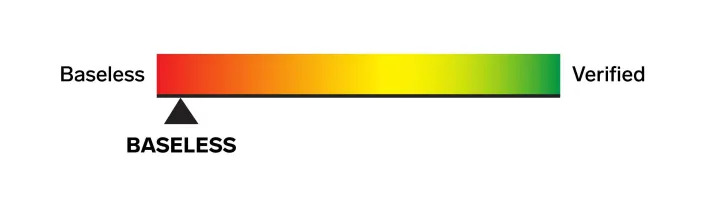
No randomized trial has found a clinical benefit to using ivermectin alone as a treatment for COVID-19. Until the results of this latest study are available, Malone's claims are baseless opinions, Boulware said.
While study results published on February 10 in The BMJ showed COVID-19 patients seemed to have their symptoms resolve faster when taking Pepcid instead of a placebo, Boulware said he wasn't convinced. The trial enrolled only 55 people, and other measurements showed no benefit from taking Pepcid.
"This is too small a trial to say much of anything," he added.
CLAIM: Masks don't prevent infection
"Neither masks nor vaccines prevent infection, replication or transmission of the Omicron strain of SARS-CoV-2," Malone wrote in a February 1 Substack post.
RATING:
Alex Ford/Insider
EXPERT: Ashley Styczynski, an adjunct clinical assistant professor in the Division of Infectious Diseases & Geographic Medicine at Stanford University
EXPLANATION: Styczynski conducted one of the only randomized controlled trials, aka RCTs, of masking during the pandemic. Though only about 40% of those offered masks for the purposes of the study put them on, infections among people over the age of 60 were slashed by 35%, which suggests masks help keep vulnerable people safe.
"Biologically, we have a lot of evidence about the way that masks do reduce infections, and we have good studies that look at the ability of particles of viral size that are airborne to pass through different mask materials," she said. "Then, we do have more empirical evidence through, for example, the RCT that we did. The tricky part is that none of these have been done in the era of Omicron, specifically."
Styczynski added: "We have a very solid foundation by which to say that we believe masks are effective against SARS-CoV-2 infections and transmission. What we can't say is what that efficacy number is for Omicron."
A well-fitted N95 mask, she said, "should offer as much protection against Omicron as it would against any other variant."
"Other masks that don't seal to your face, there is some degree of leakage, and we don't know how much that will impact differences in Omicron transmission as opposed to other variants," she added. "But we know it reduces it across the board.
"We use N95s for diseases that are far more transmissible than even Omicron is. And we have high levels of confidence that they continue to offer protection. Things like measles, for example. So I don't think that there's any argument to be made that Omicron is somehow constitutionally different in a way that masks would not protect against its transmission."
CLAIM: The FDA's system to monitor vaccine side effects is far weaker than the European data, which shows tens of thousands of deaths and nearly 2 million injuries
"Each of the major vaccines can cause a wide range of serious side effects — or kill people outright. Yet, the FDA's system to monitor such 'adverse events' appears to undercount such events dramatically. In contrast, the European Union's far more accurate system yields alarming statistics: As of July 31, 2021, the Eudravigilance10 database has recorded 20,525 deaths and 1,960,607 injuries," Malone wrote in a Washington Times op-ed, September 2021.
RATING:
Alex Ford/Insider
EXPERT: Deborah Fuller, a microbiologist and vaccine researcher at the University of Washington
EXPLANATION: "This is baseless," Fuller said. "The European website reports deaths by any cause after a medicine or vaccine is taken regardless of whether there is a link.
"That would be like counting the number of people who got in a car accident after eating a bowl of Wheaties for breakfast in the morning and then claiming eating Wheaties for breakfast causes car accidents."
CLAIM: 'A viral gene will be injected into your children's cells'
"Both physical damage and death of our children from injecting them with genetic vaccines in order to protect the elderly from a virus is occurring," Malone said at the January 23 "Defeat the Mandates" rally in Washington, DC.
RATING:
Alex Ford/Insider
EXPERT: Dr. C. Buddy Creech, a professor of pediatrics at Vanderbilt University School of Medicine and the president of the Pediatric Infectious Diseases Society
EXPLANATION: Malone's claim that a "viral gene" will be injected into children is wrong, Creech said.
"There's not a viral gene being inserted into the cells," Creech said. "There's a recipe. There's an mRNA recipe that's made of sugars that get placed into the cell in the exact way that you would see it if you were infected with COVID. The difference being, we're doing it in a purified, controlled manner rather than getting a wild-type infection."
Creech added: "This notion that kids don't spread it, or kids aren't infected, is false. What Dr. Malone really needs to do is meet the parents of the child that develops severe brain dysfunction from the disease, or who can't go to school any longer because of long COVID, or who had multisystem inflammatory syndrome and now has coronary damage.
"Until he sees and cares for those patients and families, he needs to temper, in my opinion, his claims that children aren't affected by this pandemic virus and don't need a vaccine."
CLAIM: The coronavirus' spike protein interacts with the 'blood-brain barrier,' with a risk of brain inflammation
"These genetic vaccines are leaky" Malone said at the January 23 "Defeat the Mandates" rally in Washington, DC.
Malone also often says the virus' spike protein can permeate the blood-brain barrier:
"It has to do with the structure of the cells that line the blood vessels in your brain and what it allows to go through and doesn't go through. Spike causes that to become more like an open sieve, so things can go into your brain that shouldn't go into your brain. So that can trigger brain inflammation … whether it's the vaccine, the virus, or the adenovirus, you know the mRNA, the virus itself, or the adenoviral vectored spike. Those toxicities are there, and the common variable is the spike protein," Malone said on Rogan's podcast.
RATING:
Alex Ford/Insider
EXPERTS: Michelle Erickson, a research-assistant professor at the University of Washington's medical school and a research biologist at the Veterans Affairs Puget Sound Health Care System. Erickson has published research on the spike protein and blood-brain-barrier interactions in Nature.
David Walt, a pathology professor at Harvard University and coauthor of a Brigham and Women's Hospital study that Malone often cites when talking about the spike protein
EXPLANATION: Erickson is a clear authority on this topic, as she has extensively researched it through the pandemic.
Her group has found the spike protein can cross the blood-brain barrier of mice, and it has also shown it can cause inflammation in rats. But she wrote in an email to Insider: "There is also information out there that has convinced me that vaccines are safe for the brain, and indeed should prevent harmful effects on the brain if one was to become infected with SARS-CoV-2."
Overall, Malone's claim is based on research about the coronavirus' spike protein — the part of the virus it uses to infect cells. Erickson said she would be much more worried about spike-protein levels in the blood of people who aren't vaccinated and catch COVID-19.
While that finding has been used by Malone to raise alarm, Walt said his research was exactly what he would hope to see from a safe and effective vaccine.
"All we're saying in this paper that this person and others have cited is that the vaccine is actually working exactly as it was intended. It's being injected into the muscle. It is being converted from the RNA into the protein," Walt said, referencing the spike protein.
"In every one of these individuals, within a couple of days, we see the production of antibodies, which is exactly what's supposed to happen. And the protein disappears. The antibodies that are being produced are sopping up the protein," he added.
Importantly, no spike protein was detected in vaccinated people after their second shot, a sign their immune systems had been properly primed to fight the virus.
On top of that, the levels of spike protein found in Walt's study were incredibly low. Erickson said the amount would need to be about 200 times higher to enter the brain.
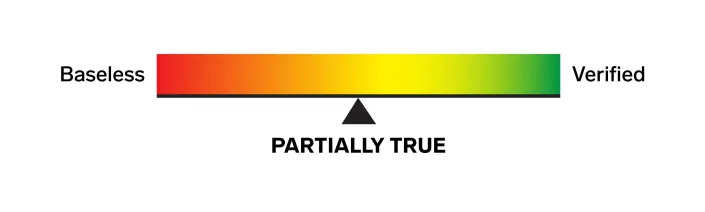
Ultimately, Erickson said she'd rate this claim as partially true. The spike protein, she said, "can do some of the things that Malone states but probably does not do any of those things in the case of vaccination." Getting vaccinated would help reduce the unpredictability of what a spike protein might do, she added.
This is one of Malone's more complex claims. To sum it up, he's not wrong in acknowledging the spike protein is detectable in the blood of some vaccinated people. But those levels are incredibly small — too tiny to be toxic — and go away in a few days as the vaccine produces antibodies that wipe away those proteins. Antibodies, either from vaccination or previous infection, stop those proteins from ever reaching the blood-brain barrier.
CLAIM: Pharmaceutical companies never have to pay for the damages vaccines cause
"Pharmaceutical companies and the government are almost fully protected from any damages these products might cause to them."Malone said at a Washington, DC, rally on January 23.
RATING:
Alex Ford/Insider
EXPERT: Dorit Reiss, a University of California law professor and an expert on vaccine litigation
EXPLANATION: "It's true that pharmaceutical companies are protected from almost any damage from COVID-19 vaccines until February 2024. That's under a PREP (Public Readiness and Emergency Preparedness Act) declaration that the secretary of health and human services issued in March 2020," Reiss said.
The PREP declaration isn't just for vaccines, though. It covers any medical countermeasures against COVID-19, which may include drug treatments, diagnostics, and devices.
"That's a general emergency provision to make sure manufacturers are acting in an emergency. It's not just for vaccines — it's for all kinds of products," Reiss said.
This means pharmaceutical companies are essentially "all protected from liability until 2024," she added.
"It's also true that it's going to be hard to sue the government on this because the government is protected from liability for decisions within this discretion," she said.
But there are other ways that both the government and pharmaceutical companies can be held to account if something goes wrong with a vaccine.
"The government has a compensation program, the Countermeasures Injury Compensation Program, CICP, that will compensate people that can show their harm is caused by vaccines. The government will be on the hook for that," Reiss said, adding: "Tort liability isn't the only way companies can face sanctions.
"If there's a problem with a vaccine, there are other tools to impose potential penalties."
CLAIM: Hospitals are receiving a 'death benefit' for COVID-positive patients
"There's something like a $3,000, basically, death benefit to a hospital if it can be claimed to be COVID,"Malone said on Rogan's podcast.
"So that it really is true that if someone has a gunshot wound, and they're dying of that gunshot wound, and you check them for COVID, and if they're COVID-positive and they die, they marked it off as a COVID death?" Rogan asked.
We reached out to the Kaiser Family Foundation, an independent nonprofit focused on national health issues, to vet this claim.
While KFF didn't want to rate the claim on our scale (saying it would rather "stick to explaining policy"), its assessment of the claim suggests that it has some truth behind it but is misleading.
EXPERT: KFF
EXPLANATION: "Medicare provides a bump in payment for COVID-related DRGs for Medicare beneficiaries, unrelated to whether the person died in the hospital," KFF said, referring to diagnosis-related group payments. "There's no evidence of hospitals gaming the system to boost payments inappropriately, and there needs to be a documentation of a positive lab test for COVID-19 in the patient's medical record in order to qualify for the 20% payment bump. If they did falsify records to get a pay bump, that would be fraud."
CLAIM: Children shouldn't be vaccinated for COVID-19. Mandates are wrong.
RATING: Because this is Malone's opinion, we didn't rate it
But we did get Dr. C. Buddy Creech, who's an expert on childhood vaccines, to weigh in.
EXPERT: Creech, a professor of pediatrics at Vanderbilt University School of Medicine and the president of the Pediatric Infectious Diseases Society
EXPLANATION: "Should children be mandated to receive the vaccine? I think it's worthy of lively debate," Creech said. "I think it's going to change depending on where in the pandemic we are.
"In March of 2020, should children be mandated? Nope. Now with Omicron, I don't know, maybe. A lot more kids are in the hospital now."
Creech added: "I think we can entrust people to make decisions that are best for them.
"But I'll tell you this: It needs to be available to them. It needs to be available to our high-risk kids."
"The effects of the legacy media and Big Tech promote a clear and psychological manipulation, which has deeply distorted public-health policy," Malone told the crowd gathered at the January 23 DC rally against vaccine mandates.
"The Davos oligarchs have demonstrated their gross incompetence to all the world over the last two years," he added.
"I sincerely believe that we can break through the effects of the madness of crowds, the mass formation," he said.
RATING: This is an unverifiable theory. Here's what an expert on crowd psychology and another on conspiracy theories had to say about it.
EXPERTS: Stephen Reicher, a professor of social psychology at the University of St. Andrews who has studied crowd psychology for more than four decades
Karen Douglas, a professor of social psychology at the University of Kent who studies conspiracy theories
EXPLANATION: Reicher previously told Reuters that the idea Malone suggested here was really more of a 19th-century concept of crowd psychology, which is not in line with current research or modern-day reality.
"The claim was that people in the mass lose their sense of identity and their ability to reason. They regress to an inferior mental state where they are manipulable by unscrupulous leaders," Reicher said. "It has been totally discredited by contemporary work on groups and crowds."
Reicher added: "What is true is that people do have to make sense of a confusing and complicated world with different accounts coming from different sources.
"We are not vaccinologists, so when people tell us contradictory things about vaccines, who do we listen to? That is a matter of trust and of our social relationship to the source of information.
"But telling people who disagree with you that they are deluded and in a state of psychosis is essentially a device to silence them and a form of disrespect. It alienates and, hence, undermines an attempt at dialogue. It isn't an explanation of the problem — it is part of the problem."
Douglas, likewise, said people were often attracted to conspiracy theories "when one or more" of their "psychological needs are frustrated."
These needs include:
The need to know the truth and have clarity and certainty.
The need to feel safe and have some control over things that are happening around us.
The need to maintain our self-esteem and feel positive about the groups that we belong to.
"Anyone can fall prey to conspiracy theories if they have psychological needs that are not being met at any particular time," she said. "This is perhaps one explanation why we seem to be seeing a lot of conspiracy theories about COVID-19. People are scared and uncertain about the pandemic and are looking for ways to cope with the uncertainty, insecurity, and loss of social contact."