Saturday, November 11, 2023

CNN Fires Gaza-Based Photojournalist Discovered to Be Embedded With Hamas

Benjamin Lindsay
Thu, November 9, 2023 

CNN has severed ties with Gaza-based photojournalist Hassan Eslaiah after he was discovered to be embedded with terrorist group Hamas.

The news network said in a statement Thursday that their working relationship with the freelancer began after the Oct. 7 terrorist attacks on Israel — attacks that the organization maintained it “had no prior knowledge of.”

“We had no prior knowledge of the Oct. 7 attacks. Hassan Eslaiah, a freelance journalist who has worked with a number of international and Israeli outlets, was not working for the network on Oct. 7. As of today, we have severed all ties with him,” the statement read.

The decision came following a report from the pro-Israel watchdog group Honest Reporting that named several Gaza-based photojournalists working for major news media companies including CNN, The New York Times, the Associated Press and Reuters and raised “ethical questions” regarding their proximity and relation to Hamas.

Of Eslaiah, Honest Reporting wrote that he “crossed into Israel, took photos of a burning Israeli tank and then captured infiltrators entering Kibbutz Kfar Azza.” The group also said that it “obtained screenshots of Eslaiah’s now-removed tweets on X in which he documented himself standing in front of the Israeli tank. He did not wear a press vest or a helmet, and the Arabic caption of his tweet read: ‘Live from inside the Gaza Strip settlements.'”

Additionally, an undated photo of Eslaiah posing in an embrace with Hamas leader Yahya Sinwar (pictured above) resurfaced Wednesday, further raising concerns over the photographer’s relationship with the organization. Sinwar masterminded the Hamas attacks that killed 1,400 Israelis last month.

The watchdog group also leveled what The New York Times categorized as “vague allegations” against the Western news outlets of having preexisting knowledge of the Oct. 7 attacks — an accusation that the companies uniformly denied Thursday.

AP, which also had a working relationship with Eslaiah, also ended their relationship with the photographer in the aftermath of the Honest Reporting’s findings.

“We are no longer working with Hassan Eslaiah, who had been an occasional freelancer for AP and other international news organizations in Gaza,” the AP said in a statement.

Violence captured by Hassan Eslaiah during Hamas’ Oct. 7 attack on Israel (Credit: AP)

According to Mediaite, newly minted CNN CEO Mark Thompson addressed the claims against Eslaiah and their relationship with the freelancer in a Thursday morning editorial call, saying it was “unfortunate news.”

“We’ve discovered that a stringer may have been there during the attack with Hamas on Oct 7. CNN had no prior knowledge of the attack,” Thompson reportedly said.

The post CNN Fires Gaza-Based Photojournalist Discovered to Be Embedded With Hamas appeared first on TheWrap.

Major News Outlets Refute Notion They Had ‘Advance Knowledge’ of Hamas Attack

Natalie Korach
Thu, November 9, 2023 a


Multiple news outlets sought to distance themselves from freelance photojournalists previously employed by the outlets, amid allegations that the Gaza-based reporters were present during the Oct. 7 attack by Hamas on Israel.

A pro-Israel watchdog group Honest Reporting published an article that claimed that the work of several photojournalists prompted “ethical questions,” about how much information they had ahead of the attack, especially considering their working ties to Western outlets. The outlets in question included CNN, The New York Times, The Associated Press, and Reuters.

The outlets responded to the claims with various statements, distancing themselves from the work of the Gaza-based freelancers.

“The accusation that anyone at The New York Times had advance knowledge of the Hamas attacks or accompanied Hamas terrorists during the attacks is untrue and outrageous,” the Times said in a statement. “It is reckless to make such allegations, putting our journalists on the ground in Israel and Gaza at risk.”

“The advocacy group Honest Reporting has made vague allegations about several freelance photojournalists working in Gaza, including Yousef Masoud,” the statement continued. “Though Yousef was not working for The Times on the day of the attack, he has since done important work for us. There is no evidence for Honest Reporting’s insinuations.”

“We are gravely concerned that unsupported accusations and threats to freelancers endangers them and undermines work that serves the public interest,” the Times’ statement concluded.

The AP said the outlet had “no knowledge of the Oct. 7 attacks before they happened.”

“We are no longer working with Hassan Eslaiah, who had been an occasional freelancer for AP and other international news organizations in Gaza,” said the AP.

According to Mediaite, newly minted CNN CEO Mark Thompson addressed the claims in a Thursday morning editorial call, saying it is “unfortunate news.”

“We’ve discovered that a stringer may have been there during the attack with Hamas on Oct 7. CNN had no prior knowledge of the attack,” Thompson continued.

Reuters also released a statement saying that the outlet “categorically denies that it had prior knowledge of the attack or that we embedded journalists with Hamas on October 7.”

The outlet said that they “acquired photographs from two Gaza-based freelance photographers who were at the border on the morning of October 7, with whom it did not have a prior relationship.”

The post Major News Outlets Refute Notion They Had ‘Advance Knowledge’ of Hamas Attack appeared first on TheWrap.

New York Times and CNN deny their Gazan freelancers knew about Hamas plan to attack Israel

Ben Farmer
Fri, November 10, 2023

The claims made by pro-Israel site, HonestReporting, have been called 'outrageous and irresponsible'
- Shutterstock/HAITHAM IMAD/EPA-EFE/Shutterstock

The New York Times, CNN and other major international news outlets have strongly rejected Israel’s accusations that Gaza-based freelance photographers were accomplices in Hamas’s Oct 7 attacks.

A report by HonestReporting, a pro-Israel site, earlier this week suggested photojournalists working with Reuters, The Associated Press, CNN and The New York Times could not have taken photos of the attacks without prior knowledge and being “part of the plan”.

Pictures filed by the photographers that day included Hamas gunmen escaping to Gaza with kidnapped Israeli citizens, Hamas attackers climbing on a disabled Israeli tank, images of Hamas invaders outside a kibbutz and buildings burning.

The HonestReporting claims led the office of Benjamin Netanyahu, Israel’s prime minister, to declare the journalists were “accomplices in crimes against humanity” and “their actions were contrary to professional ethics”.

Benny Gantz, a member of Israel’s war cabinet, declared the photojournalists should be treated as terrorists if it was proven they had advance knowledge of the Hamas attacks, which killed 1,400 Israelis.

Danny Danon, an MP for the ruling Likud party, went on to say they had taken “an active part in the massacre” and “we will hunt them down together with the terrorists”.

“Is it conceivable to assume that ‘journalists’ just happened to appear early in the morning at the border without prior coordination with the terrorists?” HonestReporting wrote on its website on Wednesday. “Or were they part of the plan?”
No evidence to back up claim

Gil Hoffman, the executive director of HonestReporting, later admitted the group had no evidence to back up the suggestion the reporters had prior knowledge of the Hamas attacks.

He claimed that “some people with an agenda” had made HonestReporting “look bad”.

“They acted as if we were stating facts instead of asking questions,” Mr Hoffman said.

The media organisations all said they had no prior knowledge of the attacks, and had not embedded journalists with Hamas.

They said they had no arrangements in advance with any of the journalists to provide photos and the pictures were taken some time after the attacks first began.

The New York Times dismissed the claims as “untrue and outrageous”.


Yousef Masoud filed this photograph 90 minutes after the attack began - Yousef Masoud/AP

The newspaper said that Yousef Masoud, whose photographs of an Israeli tank captured by Hamas were used by the newspaper and AP, did not know in advance of Hamas’s plans. His first photographs that day were filed 90 minutes after the attack began.

Reuters used pictures credited to Mohammed Fayq Abu Mostafa and Yasser Qudih, two freelancers it had no prior relationship with.

Its first photo was published more than 45 minutes after Israel said gunmen had crossed the border, the news agency said.

Besides Mr Masoud, AP used photos that day credited to Hassan Eslaiah, Ali Mahmoud and Hatem Ali.

AP and CNN said on Thursday that they would no longer work with Mr Eslaiah, one of the freelance photographers, after HonestReporting posted a photo of Mr Eslaiah being kissed by Yahya Sinwar, the Hamas leader.

The CPJ said these claims put journalists at further risk - Hatem Ali/AP

Meanwhile, the Committee to Protect Journalists (CPJ) warned the Israeli government’s rhetoric could endanger journalists.

Gypsy Guillén Kaiser, CPJ’s advocacy and communications director, said: “Targeting journalists with disinformation only endangers them.

“Attempts to smear, delegitimise and criminalise journalists who are doing their job, are outrageous and irresponsible, and they put journalists at further risk.”

At least 39 journalists and media workers have been killed in the conflict so far, according to the Committee to Protect Journalists. The deadliest month-long period for journalists since the committee began tracking such figures in 1992.

Israel minister accuses Gaza-based journalists of having prior knowledge of Hamas attack

Maroosha Muzaffar
Fri, November 10, 2023 

Israel’s communications minister accused Gaza-based journalists of four western media outlets of having “prior knowledge” of the Hamas attacks on 7 October.

The accusations were levelled against journalists of the New York Times, Reuters, CNN, and the Associated Press. All of the four organisations have categorically denied the allegations.

In a letter to these organisations, Shlomo Karhi claimed that the journalists, including photojournalists, “may have maintained a troubling connection with the perpetrators”. He added: “It is alleged that some of your employees were present, documenting these horrors, effectively becoming participants in this horrifying event”.

The New York Times in its statement said there was “no evidence” to support such claims about its freelancer in Gaza. “The accusation that anyone at The New York Times had advance knowledge of the Hamas attacks or accompanied Hamas terrorists during the attacks is untrue and outrageous. It is reckless to make such allegations, putting our journalists on the ground in Israel and Gaza at risk.”

Reuters said it “categorically denies that it had prior knowledge of the attack or that we embedded journalists with Hamas on Oct 7”.

The Israeli government demanded clarifications from the four media outlets after an article titled “Broken Borders: AP & Reuters Pictures of Hamas Atrocities Raise Ethical Questions” was published by Honest Reporting. This website claims to expose “anti-Israel media bias”.

The article claims that “on October 7, Hamas terrorists were not the only ones who documented the war crimes they had committed during their deadly rampage across southern Israel. Some of their atrocities were captured by Gaza-based photojournalists working for the Associated Press and Reuters news agencies whose early morning presence at the breached border area raises serious ethical questions”.


Mr Karhi wrote on X: “Terrorists disguised as journalists? I demand immediate clarifications from the international media bodies published in the investigation.”


Reuters clarified in its statement: “Reuters acquired photographs from two Gaza-based freelance photographers who were at the border on the morning of Oct 7, with whom it did not have a prior relationship.

“The photographs published by Reuters were taken two hours after Hamas fired rockets across southern Israel and more than 45 minutes after Israel said gunmen had crossed the border. Reuters staff journalists were not on the ground at the locations referred to in the Honest Reporting article.”


Associated Press also denied the claim that it had any “prior knowledge” of the Hamas attack. Julie Pace, senior vice president and executive editor of AP, said: “It was a fast-moving development in a very small territory. We carried out a very typical news-gathering process when a big event, a big moment, is happening and we need to figure out what it is and inform the world about it.”


“We had no prior knowledge of the October 7th attacks,” a CNN spokesperson said.

However, the Associated Press and CNN said on Thursday that they would no longer work with one of the freelancers, Hassan Eslaiah, whose picture with the Hamas chief and allegedly the mastermind of the 7 October attacks was published by the pro-Israel media watchdog.


“Hassan Eslaiah, who was a freelance journalist working for us and many other outlets, was not working for the network on October 7th. As of today, we have severed all ties with him,” CNN said.

Reuters rejects allegations of foreknowledge of Hamas attack

The New Voice of Ukraine
Thu, November 9, 2023 

Reuters denies allegations that it was aware of Hamas terrorists' preparations for an attack on Israel

In a recent report, media watchdog HonestReporting accused Reuters of potentially having advance knowledge of a Hamas attack on Israel – a claim the news agency vehemently denies.

According to the report, on the morning of Oct. 7, at least four photojournalists, including ones whose photographs were later used by Reuters, were allegedly accompanying Hamas militants.

The journalists identified are Hasan Eslaiah, Yusef Masoud, Ali Mahmud, and Hatem Ali.

HonestReporting obtained screenshots of deleted tweets from Eslaiah, including a selfie with a burning Israeli tank and a caption in Arabic stating, “Live from inside the Gaza Strip settlements.”

The report also highlights a photo of Eslaiah with a Hamas leader, raising ethical concerns about the role of journalists in conflict zones.

Read also: Israel's political challenges in the war with Hamas

Reuters refutes these allegations, stating they had no prior relationship with the freelance photographers involved.

“Reuters acquired photographs from two Gaza-based freelance photographers who were at the border on the morning of Oct. 7, with whom it did not have a prior relationship. The photographs published by Reuters were taken two hours after Hamas fired rockets across southern Israel and more than 45 minutes after Israel said gunmen had crossed the border,” they stated.

The agency also emphasized that its staff journalists were not present at the locations mentioned in the HonestReporting report.

Read also: Ukraine backs Israel's right to defend itself, urges political resolution to conflict with Hamas

On Oct. 7, Hamas attacked Israel with rockets, leading to casualties and hostage-taking. In response, the Israel Defense Forces initiated Operation Iron Swords, intensifying strikes on the Gaza Strip.

By the night of Oct. 8, Israel announced control restoration over most infiltrated areas, declaring a state of war for the first time since 1973. Prime Minister Benjamin Netanyahu vowed to eliminate Hamas terrorists, and Defense Minister Yoav Galan announced a full-scale offensive in Gaza.

Netanyahu declared the second stage of the war on Oct. 28, with the Israeli government approving the expansion of the ground invasion into Gaza.

We’re bringing the voice of Ukraine to the world. Support us with a one-time donation, or become a Patron!

Read the original article on The New Voice of Ukraine


News outlets deny Israeli claim that freelance journalists knew of Hamas attack

BBC
Fri, November 10, 2023 


A number of news outlets have strongly rejected Israeli accusations that four freelance photographers they worked with in Gaza had prior knowledge of the Hamas attacks on 7 October.

Israeli minister Shlomo Karhi said "certain individuals" who had worked for Reuters, AP, CNN and the New York Times "had prior knowledge".

All four outlets have denied the claims, which have since been debunked.

The NYT said the "outrageous" accusations endangered freelancers.

Hamas launched devastating and unprecedented attacks on southern Israel on 7 October, killing more than 1,400 Israeli civilians and soldiers, and kidnapping more than 240.

Mr Karhi's comments followed a report on the pro-Israel website Honest Reporting, which suggested - without supporting evidence - that the photographers' presence may have been "part of the plan".

It said that the presence of the photographers on October 7 in the early hours of the attacks "raised ethical questions".

However, Gil Hoffman, Honest Reporting's executive director, has since confirmed the lack of evidence. AP quoted him on Friday as saying he was satisfied by explanations given by some of the journalists that they had no prior knowledge.

But he maintained that the site's questions were "legitimate", adding that "we don't claim to be a news organisation".

Images filed by the photographers included a burning Israeli tank, Palestinians breaching a fence at the Kfar Aza kibbutz and scenes from the attack itself.

In a statement made on X, formerly known as Twitter, the Israeli government's press office said the website's "disturbing findings" showed the photographers had crossed "every professional and moral red line".

Reuters, AP, CNN and the New York Times all issued statements saying there had been no arrangements in advance with any of the journalists to provide photos.

The New York Times described the accusations as "reckless".

"The Times has extensively covered the Oct. 7 attacks and the war with fairness, impartiality, and an abiding understanding of the complexities of the conflict," it said.

It also defended the work of freelance photojournalists in conflict areas, adding their jobs "often require them to rush into danger to provide first-hand witness accounts and to document important news.

"This is the essential role of a free press in wartime."

It said one of the photographers, Yousef Massoud, had not been working with the paper on that day but had "since done important work for us".

Associated Press said: "No AP staff were at the border at the time of the attacks, nor did any AP staffer cross the border at any time."

"When we accept freelance photos, we take great steps to verify the authenticity of the images and that they show what is purported," it added.

The agency said it was no longer working with one of the journalists, Hassan Eslaiah, who was found to have been pictured with Hamas Gaza leader Yahya Sinwar.

CNN said it had no prior knowledge of the attacks, but said it also would suspend its ties with Eslaiah.

Reuters also denied that it had prior knowledge of the attack or had "embedded journalists with Hamas" on 7 October.

On Thursday, Honest Reporting said they "did not accuse Reuters of collusion" but was rather raising "serious ethical issues regarding news outlets' association with these freelancers".

After the website's initial report, Benny Gantz, a member of Israel's war cabinet, said the photojournalists should be treated as terrorists if it was proven they knew in advance of the 7 October attacks.

An MP for the ruling Likud party, Danny Danon, also said the journalists would be added to a list of people marked for assassination because of their participation in the attacks.

Journalists are protected under international law which says they must be treated as civilians and protected as such during conflicts.

The Committee to Protect Journalists (CPJ) says at least 39 journalists and media workers have been killed since the current war began, including 34 Palestinians, four Israelis and one Lebanese.

"Journalists in Gaza face particularly high risks as they try to cover the conflict in the face of an Israeli ground assault on Gaza City, devastating Israeli airstrikes, disrupted communications, and extensive power outages," it said.

News organizations deny photojournalists had prior knowledge of Hamas attack

Muri Assunção, New York Daily News
Thu, November 9, 2023 

Jack Guez/AFP/Getty Images North America/TNS

The Associated Press, Reuters and The New York Times have denied suggestions their photojournalists had prior knowledge of the Oct. 7 attack on Israel, after Israeli Communications Minister Shlomo Karhi demanded an investigation into “the possible actions and/or collusion of (their) employees” with Hamas.

Karhi published an open letter on Thursday expressing his “deep concern regarding recent reports about (the outlets’) employee’s alleged involvement in the tragic event in southern Israel” early last month when more than 1,400 were killed.

The letter, addressed to the AP, Reuters, the New York Times and CNN, was referring to a story published Wednesday by the advocacy group HonestReporting that raised questions about the presence of “Gaza-based photojournalists” working for the outlets at the “breached border area” in the early hours of Oct. 7.

The organization — a New York-based media watchdog whose goal is to “combat ideological prejudice in journalism and the media, as it impacts Israel” — said photos taken at the time of the attack suggest the photographers may have had advance knowledge of the deadly assault.

“What were they doing there so early on what would ordinarily have been a quiet Saturday morning? Was it coordinated with Hamas? Did the respectable wire services, which published their photos, approve of their presence inside enemy territory, together with the terrorist infiltrators?” the article read.

Karhi, when requesting the news outlets conduct “a thorough investigation into this matter,” said Israel was aware that “certain individuals within your organizations, including photographers and others, had prior knowledge of these horrific actions and may have maintained a troubling connection with the perpetrators.”

The New York Times slammed Honest Reporting’s “vague allegations” made against freelance photographer Yousef Masoud. After reviewing his work, the outlet found he was simply doing what photojournalists do: “documenting the tragedy as it unfolded.”

“The accusation that anyone at The New York Times had advance knowledge of the Hamas attacks or accompanied Hamas terrorists during the attacks is untrue and outrageous,” the outlet said, adding the “reckless” allegations put “our journalists on the ground in Israel and Gaza at risk.”

The AP said it had “no knowledge of the Oct. 7 attacks before they happened,” adding the first images it received were taken more than an hour after the attacks began.

Reuters “categorically” denied the allegations, saying it had no prior relationship with the Gaza-based freelance photographers. The photos were taken “two hours after Hamas fired rockets across southern Israel and more than 45 minutes after Israel said gunmen had crossed the border,” the organization added.

On Thursday, HonestReporting said on X it hadn’t accused Reuters of collision, but rather “raised some serious ethical issues regarding news outlets’ association with these freelancers and asked important and relevant questions that everyone deserves answers to.”

CNN said it had “no prior knowledge” of the attack, but in a statement to Mediaite, the network announced it had “severed all ties” with freelance photojournalist Hassan Eslaiah.

Speaking with the network’s staff in a Thursday morning call, CEO Mark Thompson called the allegations “unfortunate news.”

News outlets deny advance knowledge of Hamas attack on Israel

Dominick Mastrangelo
Thu, November 9, 2023


Several of the world’s leading news organizations are denying having prior knowledge of the Oct. 7 Hamas attack on Israel, following explosive allegations from a pro-Israel media watchdog this week.

The HonestReporting group published an article Wednesday suggesting several freelance journalists working for The New York Times, The Associated Press, CNN and Reuters either had advanced knowledge of the planned Hamas attack or did not do enough to warn their media companies or government officials about an imminent threat to Israel.

“What were they doing there so early on what would ordinarily have been a quiet Saturday morning? Was it coordinated with Hamas?” the group asked, attaching photos it said showed a number of photographers on the ground near the Israeli border shortly before the attack. “Did the respectable wire services, which published their photos, approve of their presence inside enemy territory, together with the terrorist infiltrators? Did the photojournalists who freelance for other media, like CNN and The New York Times, notify these outlets?”

“Judging from the pictures of lynching, kidnapping and storming of an Israeli kibbutz, it seems like the border has been breached not only physically, but also journalistically.”

Throughout the day Thursday, each of the news organizations mentioned in the article responded with forceful denials they had advance knowledge of the attack.

“The accusation that anyone at The New York Times had advance knowledge of the Hamas attacks or accompanied Hamas terrorists during the attacks is untrue and outrageous,” the Times said in a statement. “It is reckless to make such allegations, putting our journalists on the ground in Israel and Gaza at risk.”

“There is no evidence for Honest Reporting’s insinuations,” the outlet continued. “Our review of his work shows that he was doing what photojournalists always do during major news events, documenting the tragedy as it unfolded.”

In a statement of its own, the AP said “the first pictures AP received from any freelancer show they were taken more than an hour after the attacks began.”

“No AP staff were at the border at the time of the attacks, nor did any AP staffer cross the border at any time,” the wire service wrote.

Reuters, meanwhile said it “categorically denies that it had prior knowledge of the attack or that we embedded journalists with Hamas on Oct. 7.”

The allegations have nonetheless sparked outrage in Israel, with Prime Minister Benjamin Netanyahu saying in a string of social media posts Thursday the Israeli government “views with utmost gravity that photojournalists working with international media joined in covering the brutal acts of murder perpetrated by Hamas terrorists on October 7th in the communities adjacent to the Gaza Strip.”

“These journalists were accomplices in crimes against humanity; their actions were contrary to professional ethics,” he said, noting it sent “an urgent letter to the bureau chiefs of the media organizations that employed these photographers and sought clarifications on the matter.”

Tensions between Israel and international news organizations remain high as the country’s ongoing war with Hamas stretches weeks and has killed thousands.

Earlier this month, Reuters Editor-in-Chief Alessandra Galloni called on the Israeli government to investigate the death of video journalist Issam Abdallah, who witnesses said was killed in Lebanon by a shell that came from Israel.
Outrage grows after ‘chilling call for genocide’ by Florida Republican

Erum Salam
Fri, November 10, 2023 

Photograph: Phelan M Ebenhack/AP

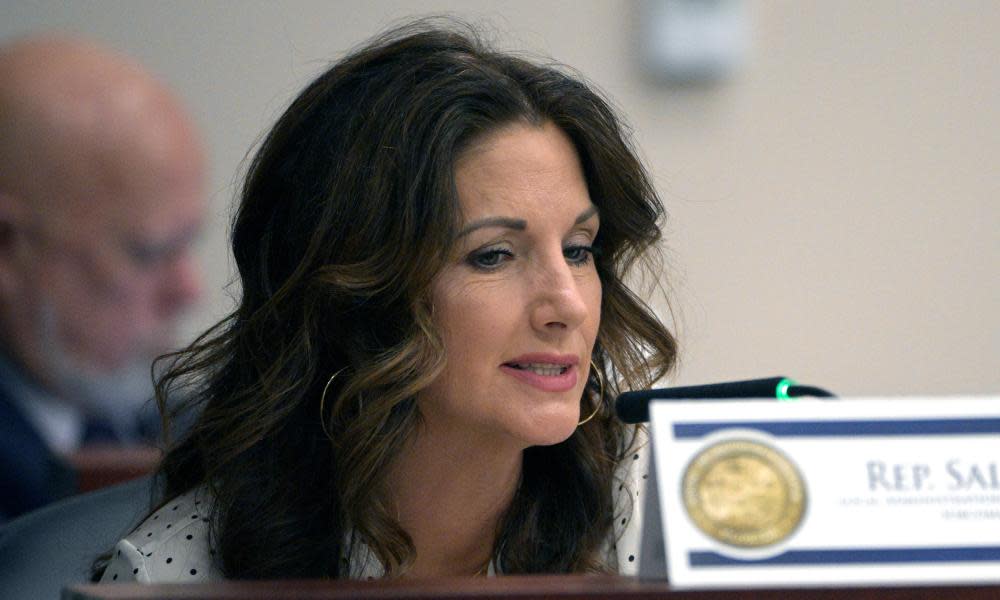
Outrage continues to grow over a public comment made by a Florida state Republican lawmaker calling for all Palestinians to die.

The remarks came during a debate in the state legislature about calling for a ceasefire in Israel’s invasion of Gaza, which has so far killed more than 10,000 Palestinians, many of whom are children. The assault came after Hamas fighters attacked Israel from Gaza, killing at least 1,400 people and taking more than 200 hostage.

In the speech in support of the ceasefire resolution, the Democratic Florida state representative Angie Nixon said: “We are at 10,000 dead Palestinians. How many will be enough?”

“All of them,” Michelle Salzman called in reply.

Nixon acknowledged the interruption and said: “One of my colleagues just said, ‘All of them.’ Wow.”

The Florida state house later voted 104-2 to reject Nixon’s resolution.

Salzman’s office did not respond to a request for comment.

The Florida chapter of the Council on American-Islamic Relations (Cair-Florida), the US’s largest Muslim civil rights and advocacy organization, said in a statement that Salzman’s remarks were a “chilling call for genocide” and a “direct result of decades of dehumanization of the Palestinian people by advocates of Israeli apartheid and their eager enablers in government and the media”.

The news comes on the heels of the censure of the Michigan congresswoman Rashida Tlaib, the only Palestinian American in the US Congress, after Tlaib echoed a popular rallying cry for Palestine that some have called antisemitic but others say is a call for Palestinian civil rights.

The censure resolution, which was supported by 22 Democrats, punishes Tlaib for allegedly “calling for the destruction of the state of Israel” and “promoting false narratives” about the 7 October attack by Hamas on Israel.

In Florida, calls for Salzman to be censured are being made by those opposed to her comments.

“Salzman’s words are incredibly dangerous and dehumanizing to Palestinians here at home and under the Israeli occupation,” the Cair-Florida executive director, Imam Abdullah Jaber, said. “She must face her party’s censure and a public repudiation from all Florida legislators.”

Hours before Nixon’s speech, Israel agreed to daily four-hour humanitarian pauses. But Benjamin Netanyahu, the Israeli prime minister, reportedly rejected a deal for a five-day ceasefire with Palestinian militant groups in Gaza in exchange for the release of Israeli hostages.

On Thursday, Joe Biden said there was “no possibility” of a ceasefire.

We asked every US Senator for their position on a ceasefire in Gaza. Here’s what they said

Eric Garcia,Richard Hall,Andrew Feinberg and John Bowden
Fri, November 10, 2023 


Israel’s war in Gaza has killed more than 10,000 Palestinians, including more than 4,000 children, according to the Gaza health ministry. In one month, Israel has imposed a total siege of the densely packed territory, carried out relentless airstrikes and artillery, and cut off electricity and water to the 2.3 million people who live there.

Israel says the goal of the operation, which was launched in response to the massacre of 1,400 people by Hamas just over a month ago, was to destroy the group entirely.

As the humanitarian crisis in Gaza has worsened, calls for a ceasefire have grown. The United Nations secretary general, Antonio Guterres, warned this week that Gaza was becoming a “graveyard for children”, and that “the unfolding catastrophe makes the need for a humanitarian ceasefire more urgent with every passing hour”.

But despite the high civilian death toll, only one US Senator has called for a ceasefire.

Senate Majority Whip and Judiciary Committee Chairman Dick Durbin, a Democrat representing Illinois, said he supported a ceasefire “at least in the context of both sides agreeing”.

“For example, the release of those who have been kidnapped should be part of this – immediate release. That should be the beginning of it,” he told CNN.

Mr Durbin has not pushed other Democrats to join him, however.

“They’re taking their own approach to it, I respect it,” he told The Independent. “It’s a complicated issue, tough call. I made my decision.”

The Independent emailed every US senator to ask their position on a ceasefire in Gaza; only 20 responded, and no one besides Mr Durbin supported a ceasefire. Where possible, The Independent’s reporters asked senators in person for their comments.

Of the remaining senators, 19 have called for a humanitarian pause — a position the Biden administration also supports. At least 11 senators have come out in opposition to a ceasefire, and the remainder did not respond to The Independent’s request for comment.

The Biden administration, meanwhile, has continued to offer its unqualified support for Israel’s war, both practically and morally. President Joe Biden has asked Congress to approve $14.3bn in aid for Israel in the wake of the Hamas attack, much of which would be spent on air and missile defence.

Below are the responses from US Senators when asked whether there should be a ceasefire in Gaza. Positions outlined in other public statements are also included. This may not be comprehensive.
Have called for a ceasefire

Dick Durbin (D-Ill)

“I think it is [time for a ceasefire], at least in the context of both sides agreeing.

“For example, the release of those who have been kidnapped should be part of this – immediate release. That should be the beginning of it," he said. "An effort should be made to engage in conversation between the Israelis and the Palestinians. Let’s face it. This has gone on for decades. Whatever the rationale from the beginning, it has now reached an intolerable level. We need to have a resolution in the Middle East that gives some promise for the future.”
Have called for a humanitarian pause

Edward Markey (D-Massachusetts.) joined Tim Kaine (D-Virginia.), Mark Warner (D-Virginia), Dick Durbin (D-Illinois), Jeff Merkley (D-Oregon.), Tammy Duckworth (D-Illinois), Peter Welch (D-Vermont), Elizabeth Warren (D-Massachusetts), Cory Booker (D-New Jersey) Chris Van Hollen (D-Maryland.), Tina Smith (D-Minnesota), Chris Murphy (D-Connecticut), Jeanne Shaheen (D-New Hampshire), and Amy Klobuchar (D-Minnesota) via joint statement.

“[W]e join President Biden in his call for a short-term cessation of hostilities that pose high-risk to civilians, aid workers or humanitarian aid delivery in Gaza[…]

Catherine Cortez Masto (D-Nevada)

“Israel has the right to defend itself and must be able to hold Hamas accountable. I will continue to support the administration’s calls for a humanitarian pause to deliver aid to innocent Palestinians, including the women and children who are being used as human shields by Hamas terrorists, and to ensure the hundreds of Israeli hostages are released. The rise of antisemitism and Islamophobia in Nevada and across the country is unacceptable, and we must condemn this violent rhetoric and keep our communities safe.”

John Hickenlooper (D-Colorado)

“Israel must defend itself against the threat of Hamas, but the toll in civilian deaths in Gaza makes clear we urgently need a humanitarian pause.”

Bernie Sanders (I-Vermont) via CNN

“You’ve got to have a pause in the bombing. You’ve got to take care of the immediate disaster. Israel’s got to change its strategy. I don’t know how you can have a cease-fire — permanent cease-fire — with an organization like Hamas, which is dedicated to turmoil and chaos and destroying the state of Israel.”

Sheldon Whitehouse and Jack Reed (D-Rhode Island) via a joint statement

“We support President Biden’s call for a humanitarian pause. Pauses in military operations should be for specific purposes like providing additional humanitarian assistance for the Palestinian people or releasing the innocent hostages kidnapped by Hamas. The US is taking action to help save innocent Israeli and Palestinian lives and prevent the conflict from spreading.”
Have called for no ceasefire

Ted Budd (R-North Carolina)

“The ceasefire ended on October 7th when Hamas terrorists committed the deadliest massacre of the Jewish people since the Holocaust and the worst foreign terror attack against Americans since 9/11. This is a battle of good versus evil, period. The United States must stand shoulder to shoulder with Israel until the hostages are released and Hamas is eradicated.”

Ted Cruz (R-Texas) via X.

“The U.S. must ensure Israel has all the weapons and the time it needs to utterly destroy Hamas. Calling for premature ceasefires means siding with Hamas and absolving Hamas of murder, rape, torture, and unspeakable war crimes.”

Markwayne Mullin (R-Oklahoma) via a spokesperson.

“Senator Mullin does not support a ceasefire nor a pause in hostilities in Gaza. The Senator is extensively on the record with his support for Israel and their right to self-defense.”

Marco Rubio (R-Florida) via X.

“Israel’s ceasefire with Hamas ended on 7 October when Hamas butchered innocent civilians. There can be no “pause” in destroying savages who openly admit they will repeat what they did on 7 October as many times as necessary until Israel is destroyed”

Steve Daines (R-Montana)

“No ceasefire.”

John Fetterman (D-Pennsylvania) via X.

“Now is not the time to talk about a ceasefire. We must support Israel in efforts to eliminate the Hamas terrorists who slaughtered innocent men, women, and children. Hamas does not want peace, they want to destroy Israel. We can talk about a ceasefire after Hamas is neutralized.”

Kirsten Gillibrand (D-New York)

“I disagree [with a ceasefire].”

Lindsay Graham (R-South Carolina) via X.

“If you had proposed a ceasefire between America and Japan four weeks after Pearl Harbor, you would’ve been run out of town. To our friends in Israel: Do whatever you have to do to defend yourselves. We are behind you 100%.”

Josh Hawley (R-Missouri)

“I think it’s a bad idea. Once Israel has cleared out Hamas, rescued their hostages, achieved their military objectives, I think we can have that discussion. But until then I’m and I think that it’s grossly premature.”

Rick Scott (R-Florida) via X.

“This is why calls for a ceasefire are insane and dangerous. Members of Hamas are terrorists who hate Israel. This disgusting terror threat must be destroyed.”

Jon Tester (D-Montana)

“I think that we need much more information.”

Tommy Tuberville (R-Alabama)

“To me, a ceasefire is a surrender. A ceasefire means Hamas gets to kill civilians without any consequences after what they did on October the seventh.”

Roger Wicker (R-Mississippi )

“We should remember amid calls for a ceasefire who the Israelis are fighting – terrorists who call the Jewish state their sworn enemy. Let’s show American resolve and stand with Israel during this fight.”

Pakistani police cracking down on migrants are arresting Afghan women and children, activists claim


ADIL JAWAD
Sat, November 11, 2023 


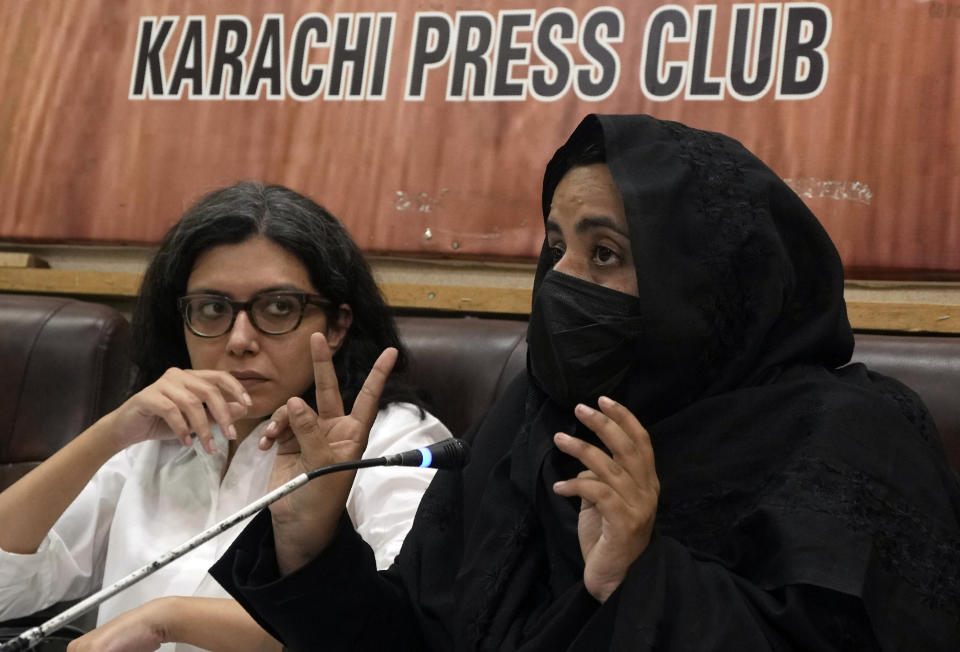
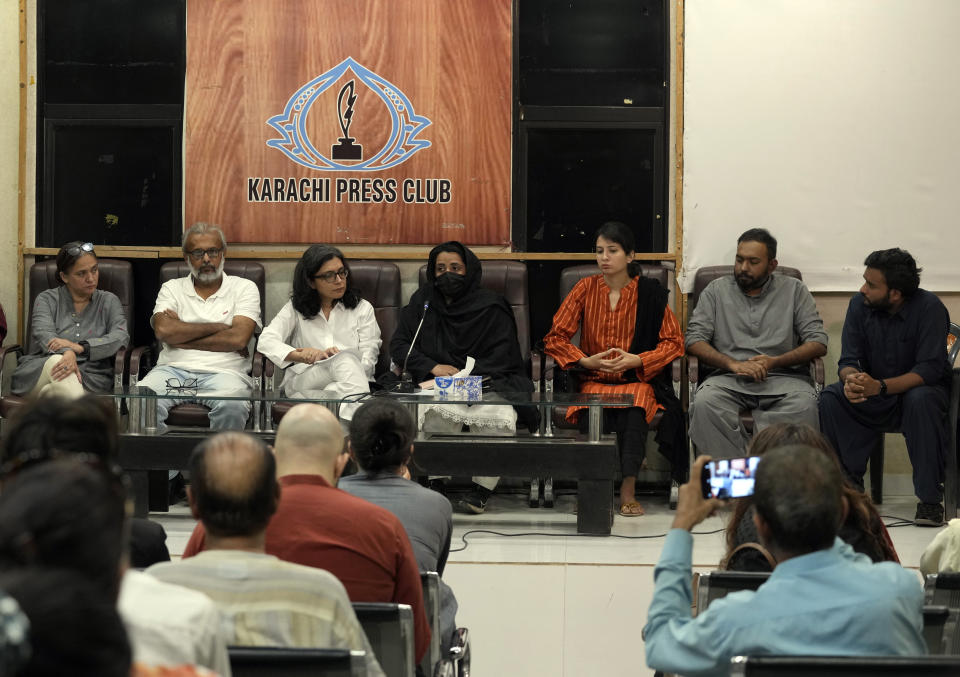
Human rights lawyer Moniza Kakar, center, speaks during a news conference at Karachi Press Club, in Karachi, Pakistan, Saturday, Nov. 11, 2023. Kakar said police in Sindh launch midnight raids on people's homes and detain
 Afghan families, including women and children. (AP Photo/Fareed Khan)

ASSOCIATED PRESS

KARACHI, Pakistan (AP) — Pakistani police are arresting Afghan women and children in southern Sindh province as part of a government crackdown on undocumented migrants, activists said Saturday.

More than 250,000 Afghans have left Pakistan in recent weeks as the government rounded up, arrested and kicked out foreign nationals without papers. It set an Oct. 31 deadline for undocumented migrants to leave the country voluntarily.

The expulsions mostly affect Afghans, who make up the majority of foreigners living in Pakistan. Authorities maintain they are targeting all who are in the country illegally.

Human rights lawyer Moniza Kakar said police in Sindh launch midnight raids on people’s homes and detain Afghan families, including women and children.

Since Nov. 1, she and other activists have stationed themselves outside detention centers in Karachi to help Afghans. But they say they face challenges accessing the centers. They don’t have information about raid timings or deportation buses leaving the port city for Afghanistan.

“They’ve been arresting hundreds of Afghan nationals daily since the Oct. 31 deadline, sparing neither children nor women,” Kakar said.

Last December, Afghan women and children were among 1,200 people jailed in Karachi for entering the city without valid travel documents. The arrests brought criticism from around Afghanistan after images of locked-up children were circulated online.

In the latest crackdown, even Afghans with documentation face the constant threat of detention, leading many to confine themselves to their homes for fear of deportation, Kakar said. “Some families I know are struggling without food, forced to stay indoors as police officials continue arresting them, regardless of their immigration status.”

She highlighted the plight of refugee children born in Pakistan without proof of identity, even when their parents have papers. Minors are being separated from their families, she told The Associated Press.

A Pakistani child who speaks Pashto, one of Afghanistan's official languages, was detained and deported because his parents were unable register him in the national database, according to Kakar.

The head of the Human Rights Commission of Pakistan, Hina Jilani, said Pakistan lacks a comprehensive mechanism to handle refugees, asylum-seekers, and undocumented migrants, despite hosting Afghans for 40 years.

She criticised the government’s “one-size-fits-all approach” and called for a needs-based assessment, especially for those who crossed the border after the Taliban seized control of Afghanistan in 2021.

Violence against Pakistani security forces and civilians has surged since the Taliban takeover. Most attacks have been claimed by the Pakistani Taliban, the Tehreek-e-Taliban Pakistan or TTP, a separate militant group but a close ally of the Afghan Taliban.

On Saturday, the TTP claimed responsibility for an attack that killed three police officers and injured another three in northwest Khyber Pakhtunkhwa province bordering Afghanistan.

Pakistan accuses the Taliban of harboring militants from groups like the TTP — allegations that the Taliban deny — and said undocumented Afghans are responsible for some of the attacks.

Jilani highlighted the humanitarian aspect of dealing with Pakistan’s Afghan communities, saying they shouldn’t be solely viewed through a security lens.

The Sindh official responsible for detention and deportation centers in the province, Junaid Iqbal Khan, admitted there were “initial incidents” of mistaken identity, with documented refugees and even Pakistani nationals being taken to transit points or detention centers. But now only foreigners without proper registration or documentation are sent for deportation, Khan said.

Around 2,000 detainees have been taken to a central transit point in the past 10 days, with several buses heading to the Afghan border daily through southwest Baluchistan province.

Khan said he wasn’t involved in raids or detentions so couldn’t comment on allegations of mishandling.

Pakistan has long hosted millions of Afghans, most of whom fled during the 1979-1989 Soviet occupation. More than half a million fled Afghanistan after the Taliban takeover.

___

Riaz Khan contributed from Peshawar, Pakistan.

Kenya says it won't deploy police to fight gangs in Haiti until they receive training and funding

EMMANUEL IGUNZA and DÁNICA COTO
Thu, November 9, 2023 

Residents flee their homes to escape clashes between armed gangs in the Carrefour-Feuilles district of Port-au-Prince, Haiti, Aug. 15, 2023. Kenya’s government said Nov. 9, 2023 that its police will not be deployed to Haiti until all conditions on training and funding are met in line with last month’s approval from the U.N Security Council to give the eastern African country command of a multinational mission to combat violent gangs in Haiti. (AP Photo/Odelyn Joseph, File) (ASSOCIATED PRESS)More

NAIROBI, Kenya (AP) — Kenya’s government said Thursday that its police officers will not be deployed to Haiti until all conditions on training and funding are met in line with last month’s approval from the U.N Security Council to give the eastern African country command of a multinational mission to combat violent gangs in the troubled Caribbean country.

Interior Minister Kithure Kindiki told Parliament’s Departmental Committee on Administration and Internal Security that “unless all resources are mobilized and availed, our troops will not leave the country.”

He said U.N. member states are securing resources and have identified how funds will be mobilized and made available to Kenya for the mission. However, it was not immediately clear when the forces would be fully trained and funded to allow for deployment.

Meanwhile, Haiti is reporting a fresh round of gang-related killings and kidnappings as it awaits help.

On Wednesday, Haiti’s Superior Court of Auditors and Administrative Disputes said five of its employees were kidnapped in the capital, Port-au-Prince, forcing the agency to temporarily postpone all hearings.

“The court hopes that the civil servants, who do not receive a salary that allows them to meet the financial demands of the kidnappers, will be quickly released,” it said in a statement.

Also this week, the U.N.’s International Organization for Migration said that nearly 2,500 people in the coastal town of Mariani located west of the capital were displaced by violence as gangs inltrate previously peaceful communities.

Nearly 200,000 Haitians have now lost their homes to gangs who pillage neighborhoods operated by rivals in their quest to control more territory. Many of the displaced are now sleeping outside or in makeshift settlements that are crowded and extremely unsanitary.

“In a country where security is not a priority for the government, each time you go out, you don’t know if you’re going to be shot at,” said Mario Volcy, a 40-year-old construction worker as he waited for a bus in Port-au-Prince. “These guys have machine guns in their hands. They could surprise you by doing something crazy and dumb.”

Volcy travels from his hometown of Les Cayes, west of Port-au-Prince, to the capital on public transportation amid fears that he could be killed or kidnapped. He said bus fares have spiked because drivers now must pay gangs a “toll” for safe passage.

More than 1,230 killings and 701 kidnappings were reported across Haiti from July 1 to Sept. 30, more than double the figure reported during the same period last year, according to the U.N.

Gangs continue to overwhelm Haiti’s National Police, which remains understaffed and underfunded despite the international community supplying training and resources. In late October, two more police officers were killed, according to a police union, with a total of 32 officers slain so far this year.

Haitian Prime Minister Ariel Henry first requested the immediate deployment of foreign armed forces more than a year ago, but it wasn’t until early October that the U.N. Security Council voted to send a non-U.N. multinational force to Haiti that would be funded by voluntary contributions.

But even if the Kenyan forces arrive, it won’t change much, said Pierre Espérance, executive director of the Haitian National Human Rights Defense Network.

“The biggest problem right now in Haiti is the absence of the government and rule of law, and also all key state institutions have collapsed, even the police,” he said. “How will the force be able to operate in Haiti if we don’t have a functional government?”

Espérance also noted Haiti’s government has long been linked to gangs, compounding the problem.

A spokesperson for the prime minister’s office did not immediately respond to a request for comment.

It’s not clear when exactly Kenya’s police would be deployed. In addition to waiting for training and funding, Kenya’s government is awaiting resolution of a local court case blocking the deployment.

A judge was expected to rule Thursday on a petition filed by former presidential candidate, Ekuru Aukot, who argued the deployment is unconstitutional. However, the case was pushed back for the second time in less than a month because the judge is attending a training.

The case is now scheduled to be heard on Nov. 16.

Kenya’s Parliament also has to approve of the deployment.

The country’s National Security Council petitioned Parliament on Oct. 25 to approve the deployment. The petition is currently with the Departmental Committee on Administration and Internal Security. It will be presented to the House later this month.

___

Coto reported from San Juan, Puerto Rico. Associated Press reporter Evens Sanon in Port-au-Prince, Haiti, contributed.

Siemens Gamesa scraps plans to build blades for offshore wind turbines on Virginia's coast

BEN FINLEY
Fri, November 10, 2023

Two of the offshore wind turbines stand off the coast of Virginia Beach, Va., Monday, June 29, 2020. The company Siemens Gamesa said Friday Nov. 10, 2023, that it canceled plans to build blades for offshore wind turbines in coastal Virginia. It was the latest sign of struggle within the U.S.'s nascent offshore wind industry. 
(AP Photo/Steve Helber, File)

NORFOLK, Va. (AP) — A European company has canceled plans to build blades for offshore wind turbines in coastal Virginia, the latest sign of struggle within the U.S.'s nascent industry.

Siemens Gamesa confirmed the cancellation in a statement Friday. The company's proposed $200 million factory at the Port of Virginia in Portsmouth would have created more than 300 jobs and aided the state in its aspirations to become a hub for offshore wind projects as part of the nation's efforts to tackle climate change.

The change in plans by the Spain-based firm comes at a time when inflation, raised interest rates and supply chain issues have cut into the profitability — and even the viability — of some offshore wind projects in the U.S.


For example, Danish energy developer Orsted recently scrapped two large offshore wind power projects off the coast of New Jersey, citing supply chain issues and rising interest rates.

A handful of other projects have been canceled. They include the Park City Wind project off the coast of Massachusetts. Avangrid, a subsidiary of Spanish utility company Iberdrola, and several Connecticut utilities scrapped a long-term power purchase agreement.

Siemens Gamesa said Friday that it had called off building the Virginia factory because "development milestones ... could not be met.” It did not elaborate.

The nixed plans, however, will not impact the construction of Dominion Energy's enormous wind farm off the coast of Virginia Beach. Those turbines will come from Siemens Gamesa facilities in Europe.

Dominion said its 176-turbine project will be the largest offshore wind farm under development in the U.S.

The administration of President Joe Biden said it wants to build 30 gigawatts of offshore wind energy by 2030 — enough to power more than 10 million homes.

The main appeal of offshore wind for supporters, including environmentalists and many state governments, is that it doesn't burn fossil fuels and thereby drive climate change. But opponents claim offshore wind is inherently unworkable without massive financial subsidies.

Robert McNab, an economist with Old Dominion University in Norfolk, Virginia, cautioned that projects being canceled now may come back — and even expand — once inflation and corresponding interest rates fall.

He noted that offshore wind isn't the only industry that's been affected. The calculus has changed for various other infrastructure projects, including those within the natural gas and petroleum industries.

“I know that some people will want to hang their hats on this and say, ‘We should ignore renewable energy,’” McNab said.

But the costs of renewable energy — wind, solar, and other forms — have been declining, while becoming increasingly competitive, he said.

“At the end of the day, as the costs of generation fall ... we’ll see projects like this come back in similar or even expanded force,” McNab said.


Siemens Energy Secures Provisional Guarantees Deal, Reuters Says

Wilfried Eckl-Dorna
Thu, November 9, 2023 


(Bloomberg) -- Siemens Energy AG has reached a provisional agreement with the German government and main shareholder Siemens AG to cover billions in project-related financial guarantees, Reuters reported.

Some details of the deal, which also involves additional parties, are still being discussed, Reuters said, citing people familiar with the talks. Siemens Energy shares rose as much as 7.4% on Thursday, while Siemens traded roughly 2% higher.

A deal would end weeks of talks and pave the way for Siemens Energy to win large-scale contracts for electricity grids and gas turbines. The company has been seeking the backing after its credit rating was downgraded in July and Siemens, its former parent with a 25.1% shareholding, indicated it was no longer willing to help it weather a string of losses at its Gamesa wind-turbine unit.

Talks involved loan guarantees for about €15 billion ($16.1 billion). A spokesman for Siemens Energy declined to comment. Siemens didn’t immediately respond to a request for comment.

Read more: Germany Pressures Siemens to Support Troubled Wind-Turbine Maker

Siemens Energy’s share price has slumped roughly 45% this year, as problems at Gamesa mounted. Faults in thousands of wind turbines have left the company with a repair bill of at least €1.6 billion ($1.7 billion), though the company is still conducting a broad review of the issues to determine a final cost. Siemens Energy now expects a €4.5 billion net loss for the year.

Government officials have said the company is critical for the nation’s transition to renewable energy as it fends off green-technology competition from China.

Read more: Siemens Energy Weighs New Turbine in Bid to End Troubles

--With assistance from Petra Sorge, Kamil Kowalcze, Arne Delfs and Eyk Henning.

©2023 Bloomberg L.P.

Germany To Bail Out Siemens’ Struggling Wind Turbine Division

Editor OilPrice.com
Fri, November 10, 2023

Reuters reports the German government, Siemens AG, and other parties will provide billions of euros in project-related guarantees to support Siemens AG's struggling wind turbine division. This financial assistance comes just weeks after the company warned about mounting losses amid a meltdown across wind and solar industries.

Three people familiar with the talks said that Siemens Energy's top shareholder, Siemens AG, with a 25.1% stake, is prepared to provide some guarantees. Details are still scant, and nothing has been decided, as an agreement needs to be formally drawn up and supported by all stakeholders.

Last month, Reuters said Siemens Energy was discussing state guarantees with the German government.

Here's more on the report:

As a result, Siemens Energy fears it will struggle to secure guarantees from banks, and has approached the government and Siemens to obtain a guarantee framework, business news weekly WirtschaftsWoche said.

The weekly, which first reported the talks along with Spiegel magazine, said Siemens Energy is seeking up to 15 billion euros in guarantees.

The German state would assume liability for 80% of an initial 10 billion euro funding tranche, while banks would be liable for the remaining 20%, WirtschaftsWoche said.

A Siemens AG spokesperson said the company remained in "very constructive talks to define the best possible solution in the interests of all parties involved."

Siemens Energy shares in Germany have crashed more than 70% since mid-June as it has abandoned its 2023 profit outlook after a review of its wind turbine unit revealed a billion euro problem. Shares were up 5% on Reuters' report today.


Meanwhile, a financial crisis continues to accelerate across the wind industry, with the world's largest offshore wind farm developer, Ørsted, pulling out of major US projects due to soaring inflation costs and a high-rate environment. And the renewable energy meltdown in wind has spread to solar as several solar power company stocks crashed on sliding demand.

And so, hot on the heels of Germany's bailout of Siemens, Bloomberg reports that the UK government is preparing to offer significantly higher subsidies for new offshore wind farms to get the country’s clean-power strategy back on track after developers shunned a previous auction, because the price was too low for offshore wind to be viable.

Denmark’s Orsted A/S, the world’s largest offshore wind builder, will decide by December whether to proceed with a UK development, while Sweden’s Vattenfall AB shelved a giant project off the English coast earlier this year in response to soaring costs.

While higher subsidies in the next auction round, known as AR6, may well reinvigorate offshore wind development, it will likely feed through to increased electricity costs for consumers still burdened with sky-high bills in the wake of last year’s energy crisis.

The energy transition to renewables across the Western world is cracking. Remember, the Biden Administration's Inflation Reduction Act was all about 'sustainable' wind power... Time for another bailout?

By Zerohedge.com

France's Macron says melting glaciers are 'an unprecedented challenge for humanity'

Associated Press
Updated Fri, November 10, 2023


French President Emmanuel Macron delivers a speech at the Paris Peace Forum, in Paris, Friday, Nov. 10, 2023. The Peace Forum is an annual event involving governments, NGOs and others seeking dialogue around global problems such as climate change, children's exposure to online violence, and threats to human rights. 
(Stephanie Lecocq, Pool via AP)

PARIS (AP) — Melting glaciers are an “unprecedented challenge for humanity,” French President Emmanuel Macron said on Friday, as he launched a call for nations to work together on slashing planet-warming emissions, protecting the environment and collaborating on scientific research into the Earth's icy ecosystems.

Such a united effort is desperately needed, even though the war in Ukraine and the latest Israel-Hamas war are taking away much of the international focus and hamper global unity and cooperation, Macron said.

The French leader spoke at the Paris Peace Forum, an annual event involving governments, nongovernmental groups and others seeking dialogue around global problems such as climate change, children’s exposure to online violence, and threats to human rights.

The world, Macron said, is witnessing “the collapse of the cryosphere under the impact of climate change,” referring to parts of the Earth where water is in solid form, including glaciers.

“The most immediate and visible effect is the melting of the ice caps ... it represents an unprecedented challenge for humanity,” Macron said.

Melting ice surfaces worldwide have an impact on biodiversity, rising sea levels and coastlines and they contribute to scarcity of drinking water, migration, greater release of CO2 and the risk of a new pandemic, he added.

“All these threats are real,” Macron said and called for urgent cooperation.

“Conflicts are once again on the agenda, in the Middle East and elsewhere and this makes our relations fragile, but we have to do our best to work closely together, in a peaceful way,” he added.

Heads of states, governments and diplomats from about 40 states attended the summit in Paris, including China. Russia was not invited, even though its territory includes part of the Arctic.

States issued a call to action to address human-caused climate change and biodiversity loss caused by melting ecosystems. Summit participants also launched a high-level group that will focus on the impact the melt will have on coastal towns facing rising sea levels and dwindling water resources in mountainous regions.

Ruth Mottram, a climate scientist at the Danish Meteorological Institute, welcomed the call for scientific collaboration in the polar regions, but said Russia's war on Ukraine has disrupted that.

“It is hard to see that any normalization of relations will happen (or even be desirable) until the war is over,” Mottram said in an e-mail.

She added that the loss of glaciers and ice sheets would have “impacts on vulnerable populations very far from the polar regions” such as through sea level rise, which showed “how important it is to understand the earth system as a whole.”

Ahead of Macron's comments, Miriam Jackson, a climate scientist with the Kathmandu-based International Centre for Integrated Mountain Development, called for politicians “to listen to the scientists and people and implement the necessary changes.”

She said the impact of melting glaciers are felt by billions in the form of rising sea levels, floods and unpredictable river flows.

“There is a huge human component to this rapid warming of our earth and it is our responsibility to slow down and reverse these changes, if possible," Jackson said.

In mountains from the Alps to the Himalayas, glaciers are disappearing at alarming rates due to warming temperatures, with many predicted to disappear entirely by the end of the century, according to studies.

While human-caused climate change means the loss of glacier mass is irreversible in the short term, scientists say drastically reducing the burning of planet-warming coal, oil and gas could minimize the melt in the future.

It’s a similarly stark picture on the Earth’s poles. The Arctic is rapidly losing sea ice as global warming causes the ice to weaken and disappear. The frozen Antarctic has also seen dramatic ice sheet melt, disappearing glaciers and unusually high temperatures as the world heats up.