Thursday, December 07, 2023

Biden now regrets the strength of his support for Netanyahu – he must act before it’s too late

Simon Tisdall
Guardian
Wed, 6 December 2023 
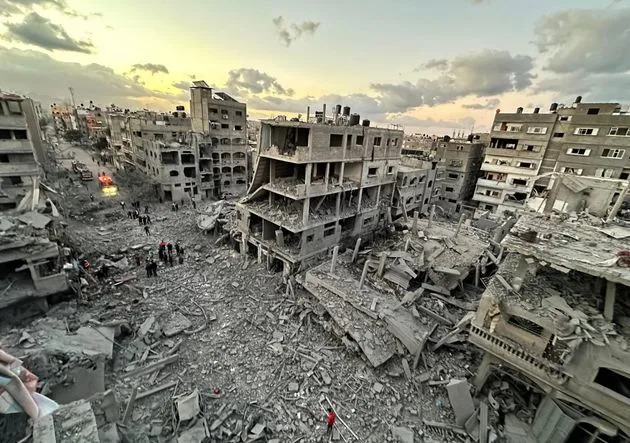
Photograph: Ibraheem Abu Mustafa/Reuters

Joe Biden has a Benjamin Netanyahu problem – and how he deals with it grows more urgent with each brutal, bloody day that passes. Thousands of Palestinian lives hang on the answer to this question. So, too, do hopes of stopping this hugely destructive war spreading beyond Gaza, and of progress towards a lasting peace.

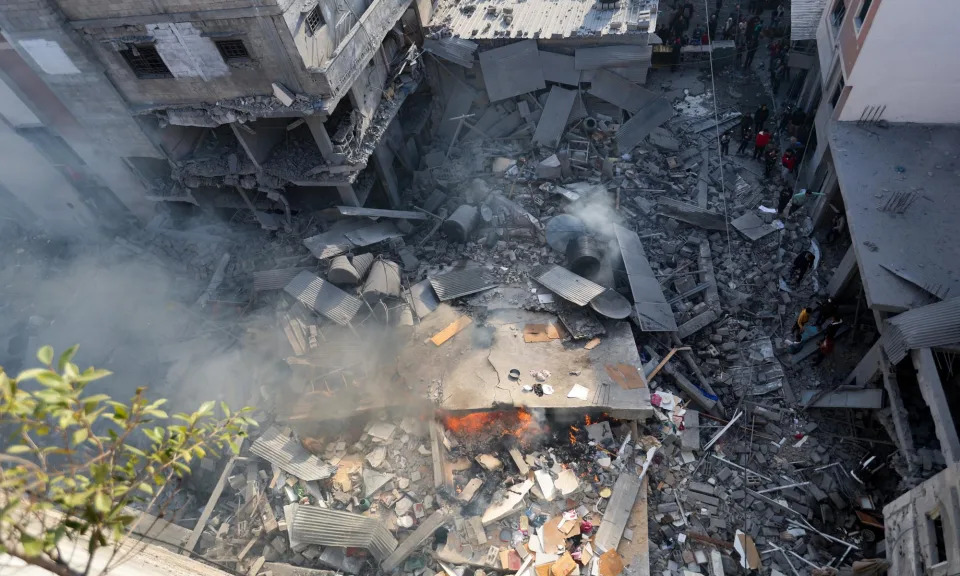
The Israeli prime minister’s post-truce bombardment and ground invasion of southern Gaza is shaping up to be even more “hellish”, in a UN official’s words, than the indiscriminate mayhem in the north that preceded it. The US president has the potential leverage and clout to rein him in where European and Arab leaders do not. Biden must take the lead.

It was apparent long before the 7 October Hamas terrorist attacks on southern Israel, which killed about 1,200 people, that Netanyahu and Biden were barely on speaking terms. The usual White House invitation following last autumn’s election, which brought Netanyahu’s hard-right coalition to power, was withheld.

A principal reason was Biden’s disquiet over the extremist, anti-Palestinian policies espoused by the new government, notably in the occupied West Bank. Yet when Hamas attacked, Biden, being at heart a decent and honourable soul, set differences aside. His mistake, or perhaps his wilful self-deception, was to believe Netanyahu was a man of similar mettle. Biden immediately proposed $14bn in military aid, deployed aircraft carrier battlegroups and flew to Tel Aviv. His moving speech to a grieving nation offered the sort of solace and empathy wholly foreign to Netanyahu.

Yet this show of almost unconditional support was promptly interpreted by Netanyahu as carte blanche to do whatever he pleased in pursuing Hamas in Gaza. His main “achievement” to date, given that the terrorists remain undefeated, is an unprecedented slaughter of Palestinian civilians, reportedly totalling nearly 16,000 deaths.

Related: IDF campaign in southern Gaza has created ‘apocalyptic’ conditions, top UN official says

After initially doubting the sheer scale of the carnage, Biden has slowly – far too slowly – adjusted his stance, issuing increasingly strongly worded calls for proportionality, access for humanitarian assistance, and respect for international law.

Partly he is responding to Arab pressure and fears of a wider war, partly to growing dismay among Democrats and younger voters over Netanyahu’s actions. But he does seem to have been genuinely shocked. This is not the Israel he once knew and supported for decades in Congress.

Yet Netanyahu and his generals, while claiming to be listening to Biden, are really not. Their terrifying, post-truce targeting of Khan Younis, southern Gaza’s biggest city and the supposed base of Hamas leader Yahya Sinwar, is producing mass casualties again.

Antony Blinken, US secretary of state, told Netanyahu last week that Washington was losing patience. “The massive loss of civilian life and displacement of the scale we saw in northern Gaza [must] not be repeated in the south,” he said.

Blinken’s demand that Israel stop breaking international law, which it demonstrably does on a daily basis, was forcefully echoed by US vice-president Kamala Harris in Dubai. Defence secretary Lloyd Austin warned Netanyahu he was “replacing a tactical victory with a strategic defeat” by driving Palestinians into the arms of Hamas.

Netanyahu is within his rights to resist outside advice, even from Israel’s indispensable military, diplomatic and financial friend and partner. But that only makes sense if it serves Israel’s interest. This is the crux. From the beginning of this crisis, Netanyahu, as usual, has put his personal and political interests before his country’s.

After overseeing the worst security failure in 56 years, he hopes to salvage his reputation and his job by conducting a successful war – and preferably a long one. Right now, Netanyahu is deliberately, even proudly, rejecting US urgings to eschew tactics that will prospectively cause huge additional casualties in southern Gaza.

He continues to break promises not to obstruct aid supplies from Egypt. Meanwhile the army’s Orwellian QR code phone system for evacuating civilians to supposedly safe areas – apparently the best it can do in response to American pressure – is plainly unworkable amid telecoms blackouts.

More disobliging still, from the point of view of Arab neighbours and the international community, Netanyahu wants to create a permanent buffer zone in overcrowded Gazan territory. Preferring open-ended military occupation, he flatly rejects Biden’s view that the Palestinian Authority is best-placed to take charge of Gaza after the war and scoffs at talk of reviving the two-state solution.

On top of all that, he is ignoring, even courting, the risk of wider regional escalation – the nightmare Washington most fears. Since the Gaza truce ended on Friday, related violence has predictably flared anew from the West Bank and southern Lebanon to the Red Sea.

Netanyahu may calculate there is political advantage in being able to claim he “stood up” to the Americans. Biden must swiftly disabuse him of this notion – and of the bigger, pernicious idea that he can carry on prosecuting a war that collectively punishes a defenceless population, that increasingly harms US and western interests, and that is damaging to Israel’s long-term security.

Biden cannot continue to stand back or hide behind his officials. He must step in personally – and draw a line. What’s needed from the White House is less of the sympathetic uncle act, less of the soppy Joe, and more of the hard-headed pater familias and superpower commander-in-chief.

Biden needs to stop pleading and wheedling, spell out the concrete costs of this reckless course (including mooted US sanctions), and talk directly, as he did in October, to Israelis and the anti-Netanyahu, anti-extremist majority. Possible prime ministerial replacements include Yair Lapid and Benny Gantz. Biden must bang some heads together.

Netanyahu is not a fit person to lead Israel in this crisis. He cares not how many people die, as long as he survives. Weaponising the memory of October’s victims and endangering the remaining hostages, he is drawing Israelis into a deadly cul-de-sac over the heaped bodies of the people of Gaza.

Simon Tisdall is a foreign affairs commentator. He has been a foreign leader writer, foreign editor and US editor for the Guardian
Generation after generation, Israeli prison marks a rite of passage for Palestinian boys


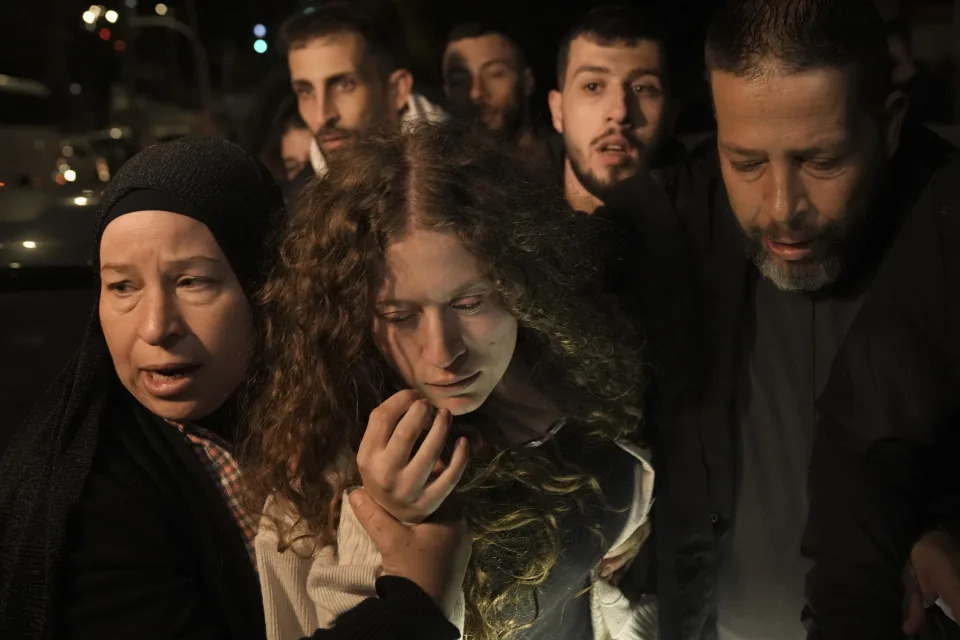
Well-known Palestinian activist Ahed Tamimi, center, is supported by her mother after she was released from prison by Israel, Thursday, Nov. 30, 2023, in the West Bank town of Ramallah. Tamimi's homecoming, along with her cousin, Wisam Tamimi, touched every home in the village of Nabi Saleh, where prison is a grim rite of passage for Palestinian boys. 


ISABEL DEBRE
Updated Wed, 6 December 2023 

NABI SALEH, West Bank (AP) — For all Palestinian parents, Marwan Tamimi said, there comes a moment they realize they're powerless to protect their children.

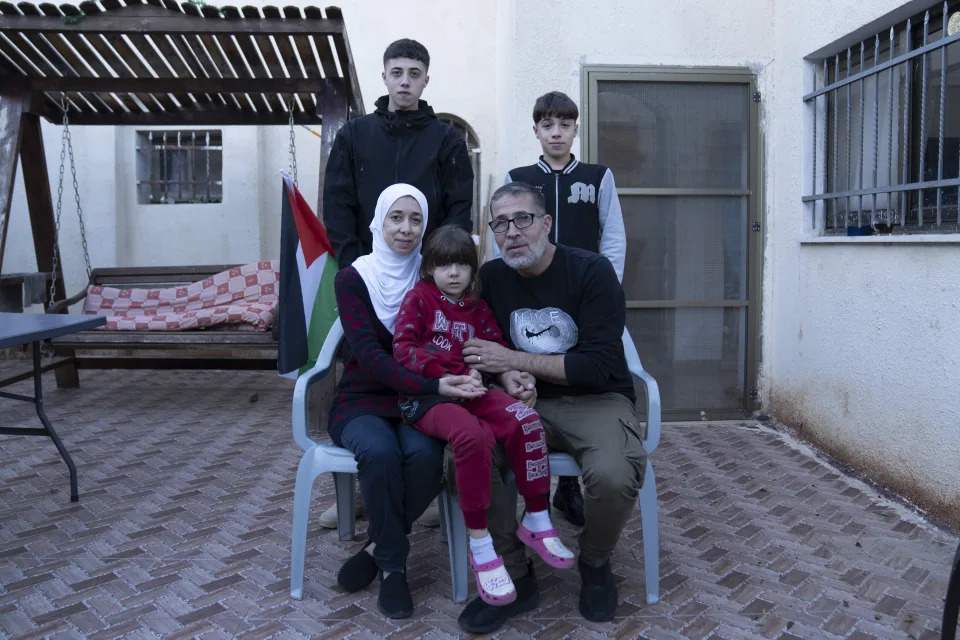
For the 48-year-old father of three, it came in June, when Israeli forces fired a large rubber bullet that struck the head of his eldest son, Wisam, as he watched a raid unfold from his grandmother's rooftop with his family. A week later, Marwan said, soldiers came for the 17-year-old, dragging him out of bed with a fractured skull as his mother cried.

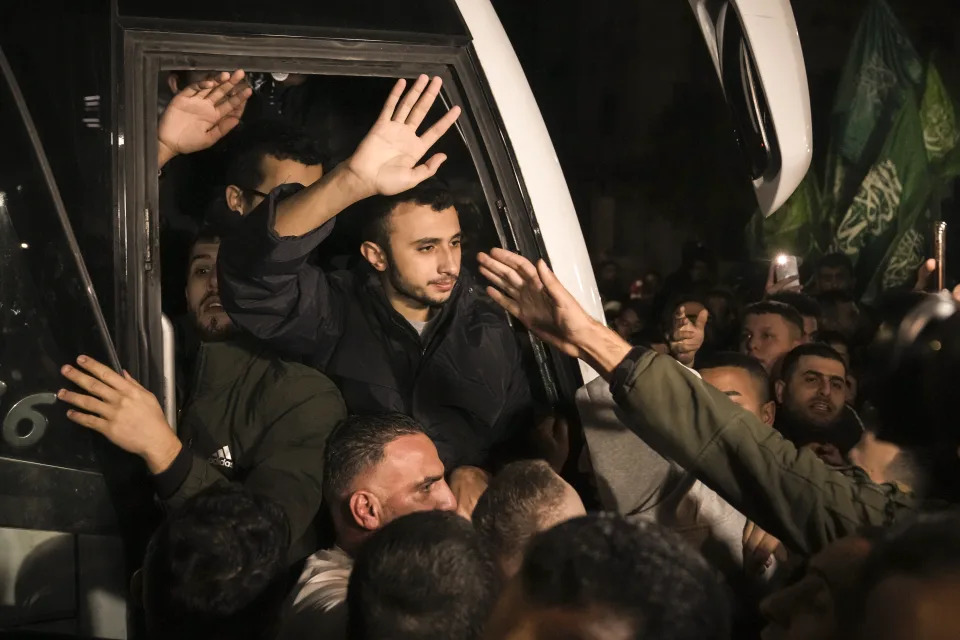
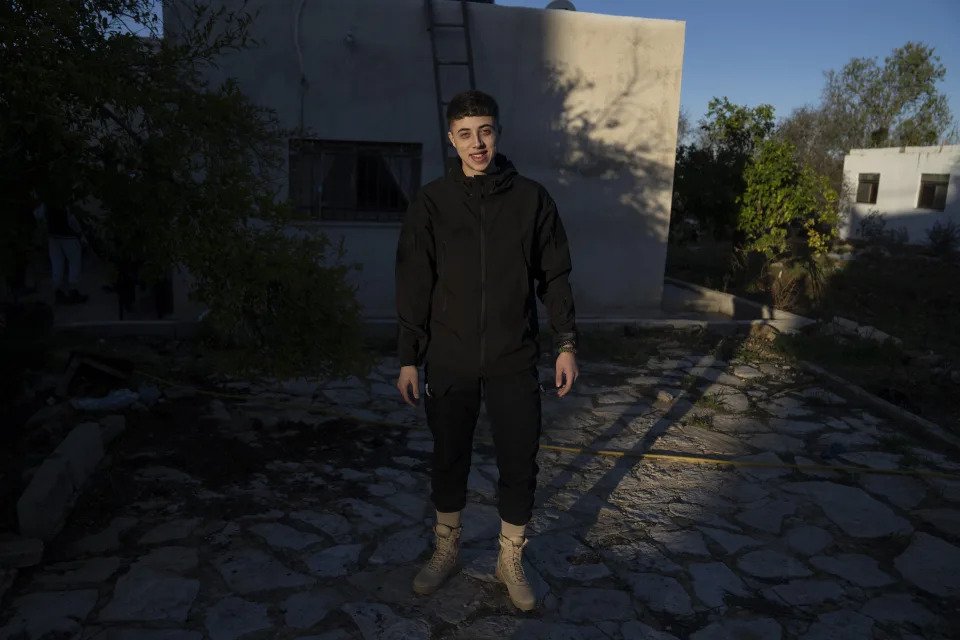
Wisam was later charged with a range of offenses he denied — throwing stones, possessing weapons, placing an explosive device and causing bodily harm. He was sent to Israel's Ofer Prison. Last Saturday, after six months behind bars, he returned home with 38 other Palestinians in exchange for Israeli hostages released from Hamas captivity in Gaza — part of a temporary cease-fire in the war that started after Hamas' Oct. 7 attack on southern Israel.

His parents said they hadn't seen or heard from him in two months, since the war started. Wisam said he spent that time in an overcrowded cell and was denied adequate food and medication, was interrogated about his friends, and was beaten repeatedly.

“I yelled, ‘No, he’s my boy, you can’t take him, he’s injured,’” Marwan Tamimi said. “That’s when I realized they will take him. And if I stop them, they will put his life in danger.”

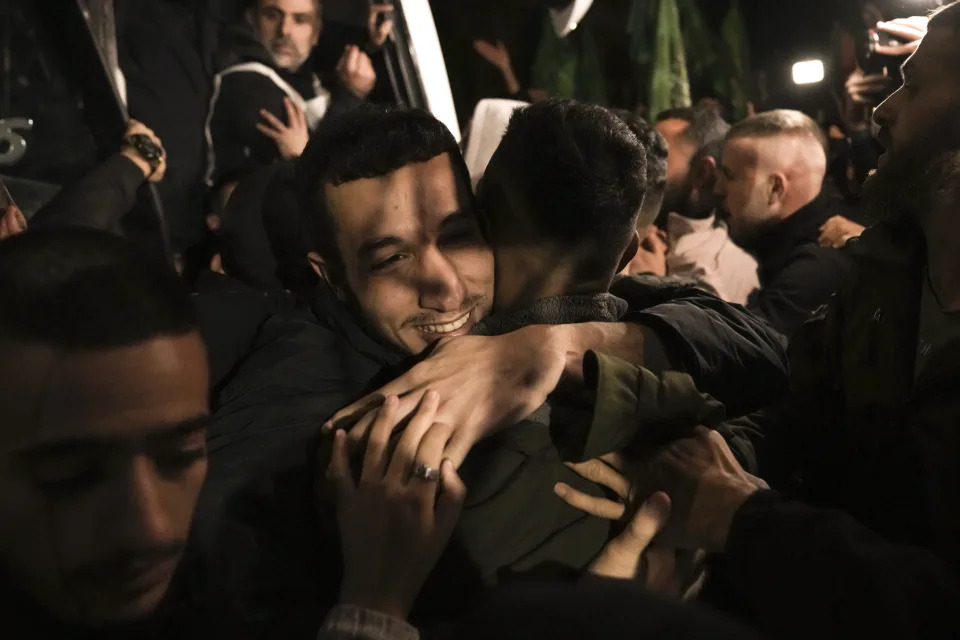
Wisam's homecoming last week, along with the release of his well-known activist cousin, Ahed Tamimi, touched every home in the village of Nabi Saleh, where prison is a grim rite of passage for Palestinian boys.

People clapped. Tears fell. Wisam hugged friends and family, one by one. But the euphoria spoke to pain as much as to joy in the occupied West Bank, where the United Nations estimates 750,000 Palestinians have been arrested since Israel captured the territory in the 1967 Mideast war.

The competing claims of Palestinians and Israelis have left their scars on Nabi Saleh, home to charismatic activists, journalists and lawyers known for their refusal to submit to occupation. Once an idyllic village on a hilly stretch of farmland growing grapes and green olives, it serves today as a powerful example of how Israeli prison over decades of war has crushed families, constrained lives and stamped out popular resistance.

Israel's security service didn't respond to questions about Wisam’s case. But the military defended large-scale arrests of Palestinians, including minors, as necessary to prevent militant attacks. In a statement to The Associated Press, the army said it aims to “preserve the rights and dignity" of Palestinian suspects during court proceedings and detention and that convicting a minor “requires a burden of proof of guilt beyond reasonable doubt."

Palestinian activists and human rights watchdogs say Israel's mass detentions seek to sow fear among the youngest, breaking communities that continue to defy Israeli military rule, now in its 57th year.

“We've seen that this system suppresses and intimidates the majority of children,” said Salwa Duaibis, co-founder of Military Court Watch, a Palestinian legal advocacy group. “It crushes their spirit so that even when they're 40, they'll be running away when they see soldiers."

IN EVERY HOUSE, A STORY

Most of Nabi Saleh's 550 residents are related by blood or marriage, and nearly all share the surname Tamimi. Most boys — like their fathers and grandfathers — have landed in prison at some point, as the close-knit village became known for its grassroots protest movement.

“We live in a village of resistance,” Wisam said. "Every house has its own story."

Wisam was raised on the history of his activist grandfather’s deportation to Jordan in 1970 and his triumphant return to Nabi Saleh as part of the 1993 Oslo Accords.

Wisam's father, Marwan, served time at the height of the second Palestinian intifada, or uprising, in 2002. His journalist uncle, Bilal, was locked up four times starting in the late 1980s, during the first intifada.

His neighbor, 45-year-old pastry chef Haitham Tamimi, said he was once held up and questioned in the street by a soldier who "found it suspicious I was from Nabi Saleh and hadn't been imprisoned." Haitham's explanation: He'd lived mostly in Jordan.

Before Israel and Hamas resumed their war Friday, the militant group had pushed for the release of high-profile prisoners in exchange for the remaining Gaza hostages.

But the vast majority of Palestinians passing through Israel’s ever-revolving prison door, experts say, are teenage boys and young men who mostly go unnamed, plucked from bed in the middle of the night for throwing stones and firebombs or associating with militants in towns and refugee camps near Israeli settlements. Most of the international community considers Israeli settlements illegal and obstacles to peace.

Under the weeklong cease-fire agreement, Israel released 240 Palestinian minors and women. Most of 14- to 17-year-olds freed had been detained for investigation and not convicted of a crime, reported the Palestinian Prisoners’ Club, an advocacy group, based on data from the Israeli Prison Service. Over that same week, Israel arrested 260 other Palestinians, the group said.

Every year, the Israeli military court sentences hundreds of minors to prison, mostly for throwing stones, according to Military Court Watch. Most are 16 or 17.

Israel argues that stone-throwing can be dangerous and even deadly.

“The victim who gets hit in the head by stones doesn't care how old the person throwing it is,” said Maurice Hirsch, Israel's top military prosecutor from 2013 to 2016. “There are very young terrorists who commit very violent offenses.”


 Men wave after being released from prison by Israel, Thursday, Nov. 30, 2023, in the West Bank town of Ramallah. 

‘AN ORCHESTRA’ OF ARRESTS

The conviction rate for security offenses in the West Bank is more than 99%. Defense lawyers often encourage young clients to plead guilty to avoid lengthy trials and detentions. Some are never formally charged or tried, held under a practice known as “administrative detention” that allows Israeli authorities to arrest Palestinians based on secret evidence and renew detention indefinitely.

The pace of arrests — already quickening over the past two years — soared after Hamas' Oct. 7 rampage that killed 1,200 people and resulted in the abduction of more than 240.

Israel has arrested 3,450 Palestinians across the West Bank since the war erupted, according to the Israeli military, in a sweeping campaign aimed to deter militant attacks. An all-time high of 2,873 Palestinians are now held in administrative detention, according to Israeli rights group HaMoked.

“The crackdown in a way contradicts our intention not to open another front in the West Bank,” said Ami Ayalon, former director of Israel’s Shin Bet security service. “On one hand, we understand the more people killed and arrested, the more hatred rises. But on the other hand, we don't want to pay the price in terrorist attacks.”

Lawyers say the crackdown affects Palestinians of every stripe, branding people as security threats for even mild social media posts.

“It was an orchestra, as though a composer led all the courts across the country to understand they had a duty to arrest young men,” said Lea Tsemel, a prominent Israeli human rights lawyer. “We saw police stopping youngsters and checking phones to see if they could find anything constituting incitement.”

Israeli forces have ramped up deadly raids in the northern West Bank, such as in the flashpoint Jenin refugee camp, using airstrikes to target militants with unprecedented force.

The intensifying violence and constraints on Palestinian freedom of movement have generated fear in Nabi Saleh. New Israeli checkpoints have turned a 15-minute drive to the Palestinian city of Ramallah into a nauseating two-hour maze.

In recent months, Israeli troops repeatedly stormed the village. An explosive tear gas canister set Marwan Tamimi's SUV on fire in mid-October. A rubber projectile, much larger than a bullet, slammed into Wisam's head, causing brain bleeding and sending him to intensive care for a week. Four bullets sliced through Haitham Tamimi's car door, piercing his shoulder and killing his 2-year-old son, Mohammed, in June — an incident the army admitted was a mistake.

It's the latest chapter in the tumultuous history of a village once at the center of a spirited protest movement that began in 2009, inspired other villages and made global headlines. Each week, residents rallied over the loss of their ancestral lands and freshwater spring to the fast-growing Israeli settlement across the road.

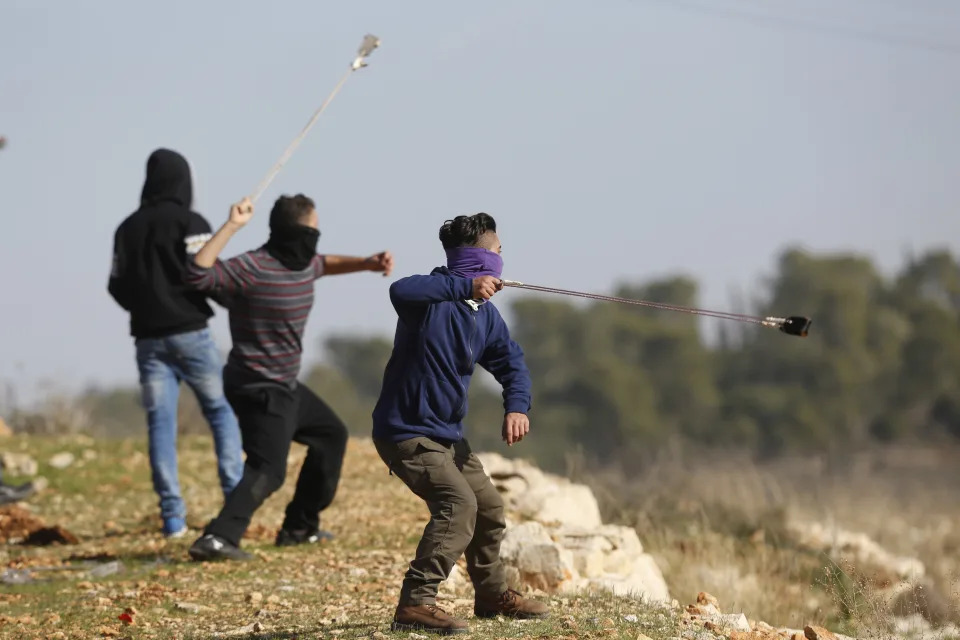
The Friday marches, just after the midday call to prayer, became family affairs. Villagers waved national flags, clapped and crooned Palestinian songs while trying to reach their spring that had become a picnic spot for settlers. Inevitably, boys pelted Israeli jeeps with stones.

“We were showing the world what was really happening here, and it felt so good, so important,” said Janna Jihad, now 17, who became an internet fixture filming herself reporting on protests at just 7 years old.

Israel says troops responded only after protesters started throwing stones and trying to enter a military zone around the village. “The Tamimi family trained and organized these children to ambush soldiers,” said Hirsch, the former military prosecutor.

Troops sent protesters fleeing with tear gas, rubber-coated bullets, blasts of noxious liquid and live fire. They carried out nighttime raids, arresting most young men, and killed six Palestinian villagers during protests, all young men, residents said.

PARENTAL PLEAS AND THE ‘RESISTANCE’


Marwan Tamimi begged his sons to stay away from what Palestinians call the “muqawama,” or resistance.

Sensitive and studious, his youngest, Kenan, said he’d rather run on a soccer field than away from bullets. Now 14, he's resisted peer pressure to join protests.

“I don’t like going out,” he said, huddled over a princess coloring book with his 6-year-old sister last week.

Wisam had friends who confronted Israeli soldiers, like his cousin Ahed, whose arrest for slapping Israeli soldiers five years ago transformed her into a symbol of Palestinian resistance.

“All of us here, we care so much about our children. We tell them, ‘Look, don’t go and throw stones, you don’t need to prove yourself,’” Marwan Tamimi said.

But parents' pleas often go unheeded.

"There was nothing I could do to stop the boys,” said 56-year-old Imtithal Tamimi, mother of nine. Her son Mohammed, was disfigured at 14 when Israeli forces fired a rubber bullet that lodged in his head.

“Mohammed had no job, he wasn’t in school," she said. “He was trying to let off steam.”

All the men in her household got sucked into Israel’s prison system, she said, and she noticed a change in each when they emerged. Mohammed, now 21, couldn't shake his state of rage. Tamim, her eldest, locked himself in his bedroom for three months after serving a year. Her 64-year-old husband, Fadel passed in and out of prison for decades and struggles with a central nervous system disorder.

Mohammed, arrested for the third time the same night as Wisam, remains in jail. Imtihal hasn’t heard anything of his condition or whereabouts since the war started, when Israeli authorities banned prisoners from using phones or receiving visitors.

Wisam, his eyes sunken and face gray and gaunt, lost 12 kilograms (26 pounds) in prison, where he said he shared two daily meals of undercooked chicken and stale bread with 11 others, an account supported by prisoner rights groups. They were packed like teeth into a cell that held half that number before the war, he said, and on the rare occasions they were let out, guards ordered them to walk with wrists bound tight under their knees.

In response to questions, the Israeli Prison Service denied authorities were crowding cells or reducing meals. But national security minister Itamar Ben-Gvir has publicly promoted harsh disciplinary treatment of Palestinian prisoners. Parliament passed a temporary measure allowing prisons to fill beyond legal capacity.

For Wisam, 45 days in solitary confinement was the real torment. Every night, authorities blasted air conditioning in his tiny cell. He shivered in the darkness, homesick, imagining his mother warming him with her hug and cooking mansaf — milky mountains of rice with mutton. His only human contact came in the punches raining down on his head during daily interrogations, he said.

The Prison Service said Palestinians are detained according to law and had the right to file complaints over conditions. Palestinians say their complaints are not taken seriously and rarely yield results.

A week after his release, Wisam still winces when he catches sight of a grated door, even in his house. He fills shelves beside his bed with chocolate bars and chips, for his “canteen.” He spends his days quietly weaving lighter cases from plastic and string, a prison habit, and taking driving classes in hopes of preventing arrest even for traffic offenses.

When 22-year-old cousin Ahed emerged from prison last week, she also looked exhausted, her typically self-assured voice halting and frail in TV interviews.

“This is what I was trying to prevent,” said Marwan Tamimi, who moved his family to Ramallah at the height of the Nabi Saleh protests in 2014 so his boys could attend school and play without encountering soldiers.

The family returned home in 2021, after the military’s harsh response brought the rallies to an end. There were too many killed, wounded and imprisoned — and too few achievements, residents said.

An uneasy calm prevailed over Nabi Saleh and other villages that had become symbols of civil disobedience. Without progress toward a political solution, protest leaders insist the relative quiet shouldn't be mistaken for acceptance.

Beneath the surface, pressure builds. More minors pass through Israel's jailhouse door.

“I expected to die in there,” Wisam said. “I don’t want to go there ever again."

___


Palestinian Wisam Tamimi, 17, a released prisoner under the Israel Hamas cease fire agreement last week, poses for a photo at the family house in the West Bank village of Nabi Saleh, northwest of Ramallah, Thursday, Nov. 30, 2023. The release of Palestinian prisoners under the Israel-Hamas cease-fire agreement last week has touched nearly everyone in the occupied West Bank, where 750,000 Palestinians have been arrested since 1967. In negotiations with Israel to free hostages in Hamas captivity in Gaza, the militant group has pushed for the release of high-profile prisoners. But experts say most Palestinians passing through Israel's ever-revolving prison door are young men arrested in the middle of the night for throwing stones and firebombs in villages near Israeli settlements. 

 Palestinian demonstrators throw stones during clashes with Israeli troops following a demonstration in support of Palestinian prisoners in Nabi Saleh, Jan. 13, 2018, near the West Bank city of Ramallah. In negotiations with Israel to free hostages in Hamas captivity in Gaza, the militant group has pushed for the release of high-profile prisoners. But most Palestinians passing through Israel’s ever-revolving prison door are young men arrested in the middle of the night for throwing stones and firebombs in villages near Israeli settlements. Nabi Saleh is one such village, long known for its grassroots protest movement. 

The Palestinian Tamimi family pose for a photo with their son Wisam, 17 rear left, a released prisoner under the Israel Hamas cease fire agreement last week, at the family house in the West Bank village of Nabi Saleh, northwest of Ramallah, Thursday, Nov. 30, 2023. The release of Palestinian prisoners under the Israel-Hamas cease-fire agreement last week has touched nearly everyone in the occupied West Bank, where 750,000 Palestinians have been arrested since 1967. In negotiations with Israel to free hostages in Hamas captivity in Gaza, the militant group has pushed for the release of high-profile prisoners. But experts say most Palestinians passing through Israel's ever-revolving prison door are young men arrested in the middle of the night for throwing stones and firebombs in villages near Israeli settlements. 

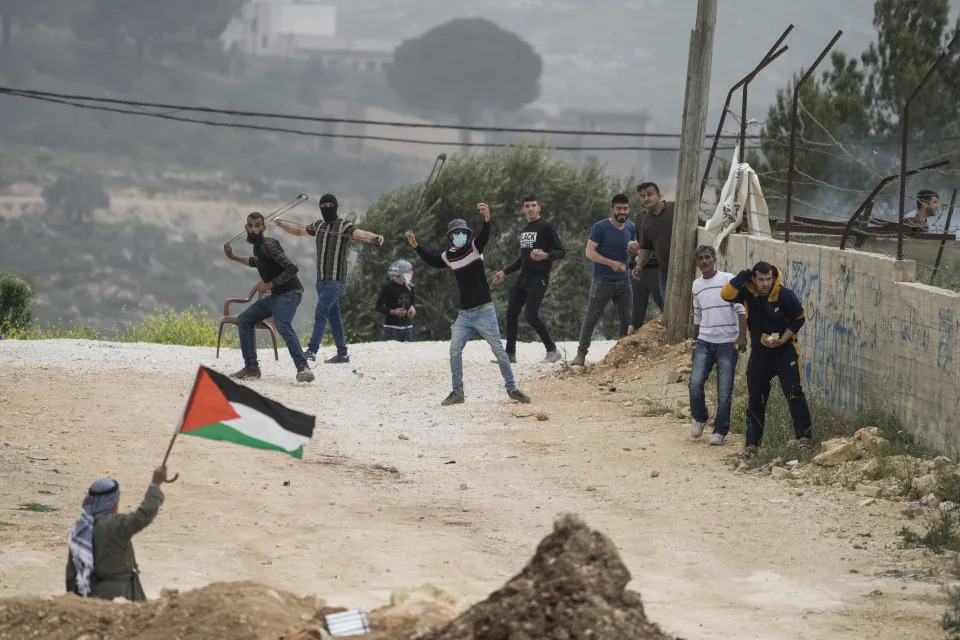
 Palestinians hurl stones and wave a Palestinian flag toward Israeli soldiers to protest a march by Israeli settlers on April 10, 2023, in the West Bank village of Beita. In negotiations with Israel to free hostages in Hamas captivity in Gaza, the militant group has pushed for the release of high-profile prisoners. But most Palestinians passing through Israel’s ever-revolving prison door are young men arrested in the middle of the night for throwing stones and firebombs in villages near Israeli settlements. 
(AP Photo/Majdi Mohammed, File)

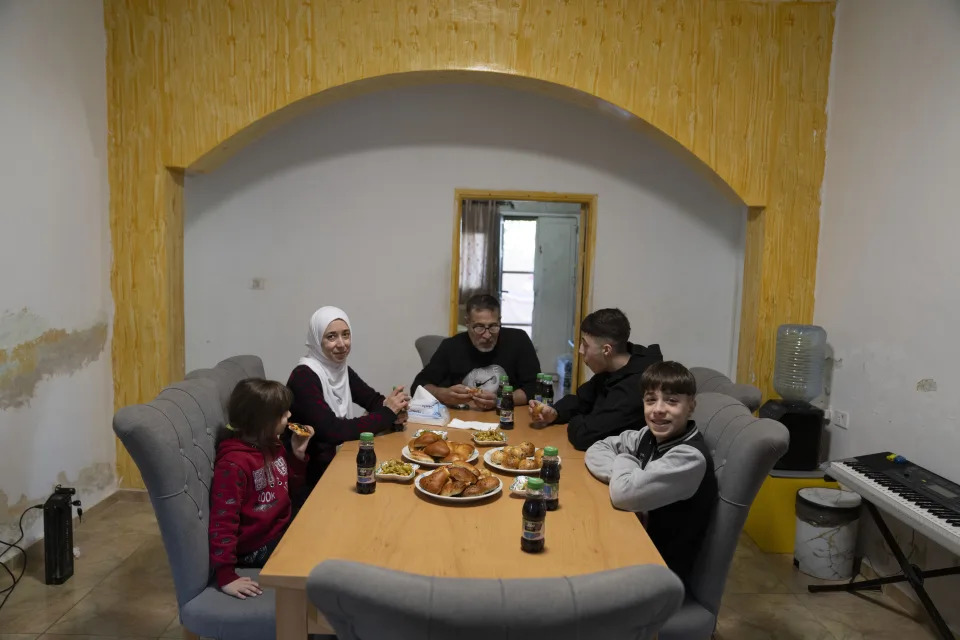
Palestinian Tamimi family gather for a meal with their son Wisam, 17 second right, a released prisoner under the Israel Hamas cease fire agreement last week, at the family house in the West Bank village of Nabi Saleh, northwest of Ramallah, Thursday, Nov. 30, 2023. The release of Palestinian prisoners under the Israel-Hamas cease-fire agreement last week has touched nearly everyone in the occupied West Bank, where 750,000 Palestinians have been arrested since 1967. In negotiations with Israel to free hostages in Hamas captivity in Gaza, the militant group has pushed for the release of high-profile prisoners. But experts say most Palestinians passing through Israel's ever-revolving prison door are young men arrested in the middle of the night for throwing stones and firebombs in villages near Israeli settlements.

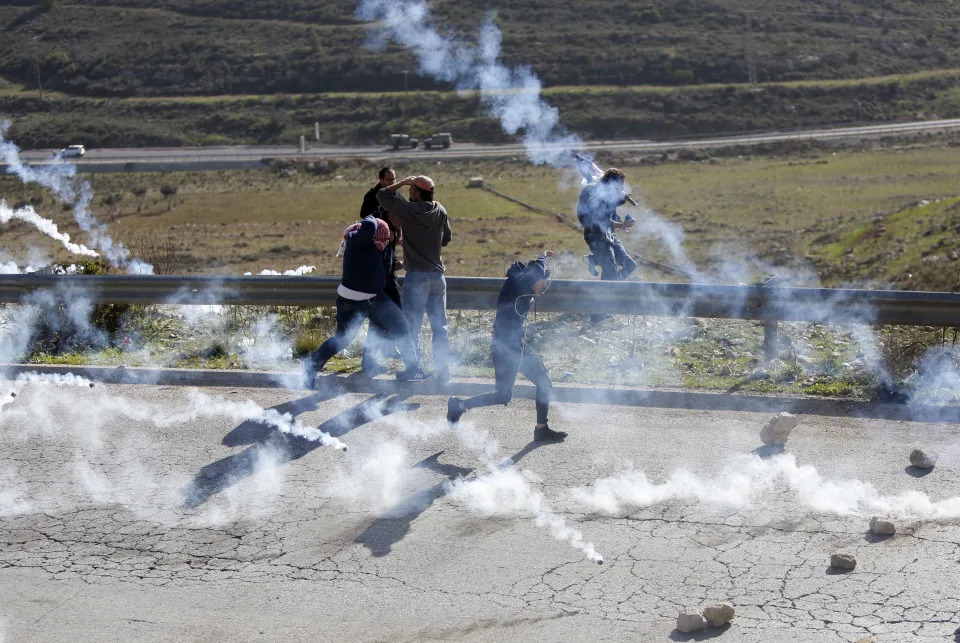
 Palestinian demonstrators run from tear gas fired by Israeli troops during clashes following a demonstration in support of Palestinian prisoners in Nabi Saleh, Jan. 13, 2018, near the West Bank city of Ramallah. In negotiations with Israel to free hostages in Hamas captivity in Gaza, the militant group has pushed for the release of high-profile prisoners. But most Palestinians passing through Israel’s ever-revolving prison door are young men arrested in the middle of the night for throwing stones and firebombs in villages near Israeli settlements. Nabi Saleh is one such village, long known for its grassroots protest movement. (AP Photo/Majdi Mohammed, File)

A man smiles as he is welcomed after being released from prison by Israel, Thursday, Nov. 30, 2023, in the West Bank town of Ramallah. The release of Palestinian prisoners under the Israel-Hamas cease-fire agreement last week has touched nearly everyone in the occupied West Bank, where 750,000 Palestinians have been arrested since 1967. In negotiations with Israel to free hostages in Hamas captivity in Gaza, the militant group has pushed for the release of high-profile prisoners. But experts say most Palestinians passing through Israel’s ever-revolving prison door are young men arrested in the middle of the night for throwing stones and firebombs in villages near Israeli settlements. 

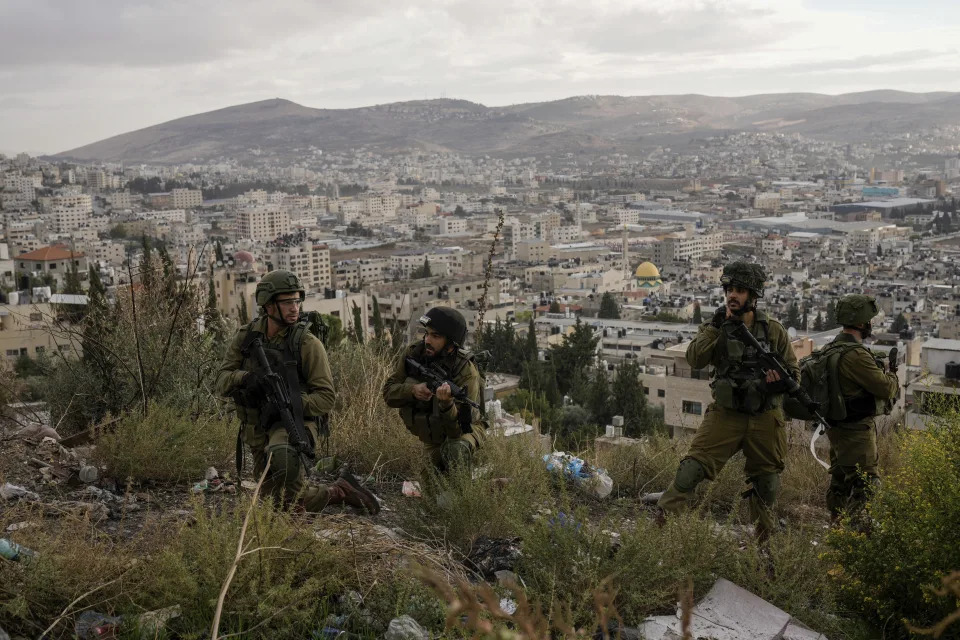
 Israeli soldiers are seen during a military operation, Nov. 19, 2023, in the Balata refugee camp, West Bank. The release of Palestinian prisoners under the Israel-Hamas cease-fire agreement last week has touched nearly everyone in the occupied West Bank, where 750,000 Palestinians have been arrested since 1967. In negotiations with Israel to free hostages in Hamas captivity in Gaza, the militant group has pushed for the release of high-profile prisoners. But experts say most Palestinians passing through Israel’s ever-revolving prison door are young men arrested in the middle of the night for throwing stones and firebombs in villages near Israeli settlements. (AP Photo/Majdi Mohammed, File)

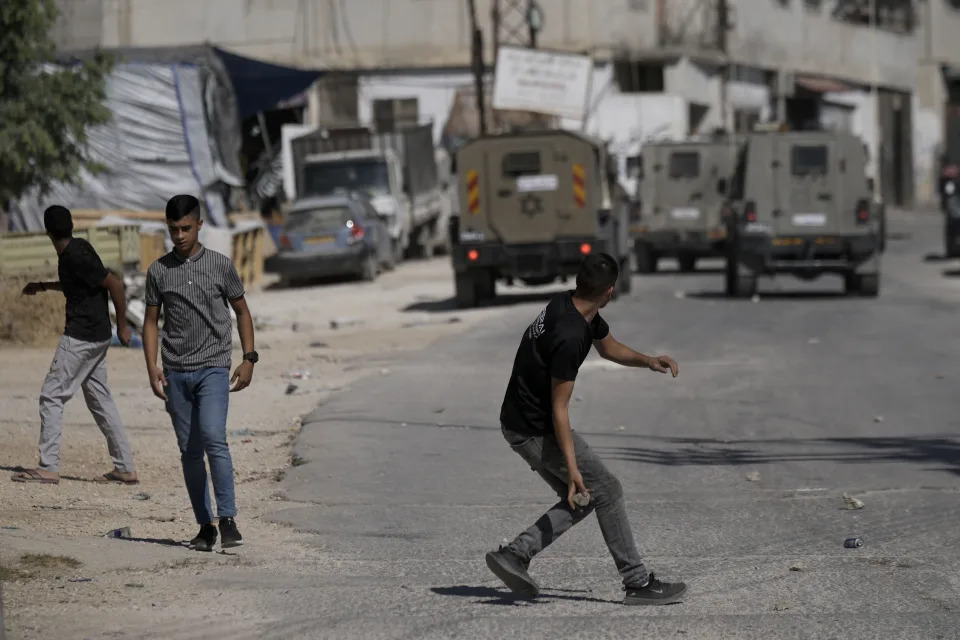
Palestinians throw stones at an Israeli military vehicle following a military raid of the Askar refugee camp, July 24, 2023, in the West Bank city of Nablus. In negotiations with Israel to free hostages in Hamas captivity in Gaza, the militant group has pushed for the release of high-profile prisoners. But most Palestinians passing through Israel’s ever-revolving prison door are young men arrested in the middle of the night for throwing stones and firebombs in villages near Israeli settlements. (AP Photo/Majdi Mohammed, File)

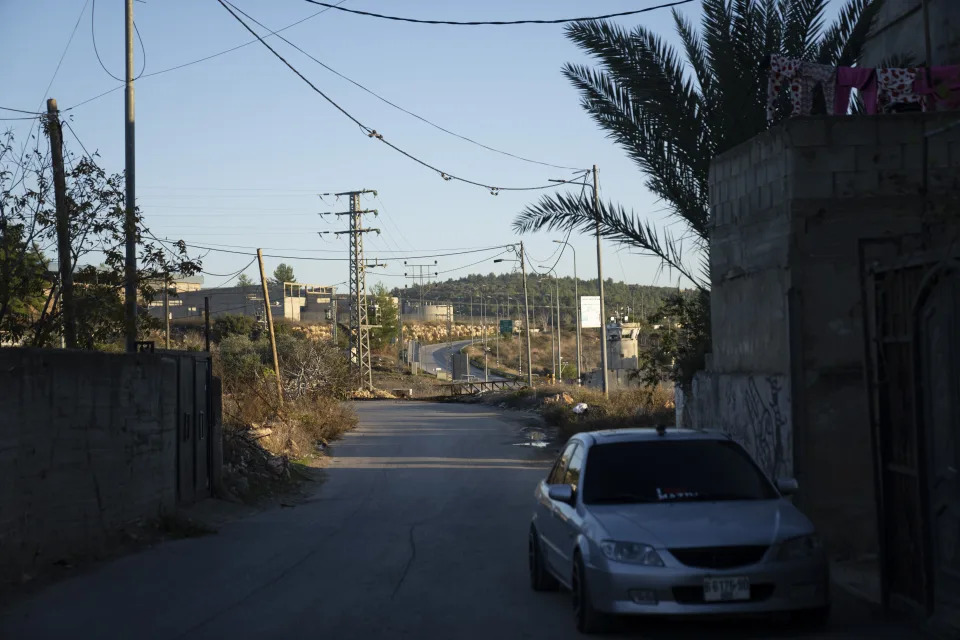
A security metal gate near an Israeli army post, closes the road at the main entrance of the West Bank village of Nabi Saleh, northwest of Ramallah, Thursday, Nov. 30, 2023. The release of Palestinian prisoners under the Israel-Hamas cease-fire agreement last week has touched nearly everyone in the occupied West Bank, where 750,000 Palestinians have been arrested since 1967. In negotiations with Israel to free hostages in Hamas captivity in Gaza, the militant group has pushed for the release of high-profile prisoners. But experts say most Palestinians passing through Israel's ever-revolving prison door are young men arrested in the middle of the night for throwing stones and firebombs in villages near Israeli settlements. 

(AP Photos/Nasser Nasser)


Angry relatives of Hamas captives and ex-hostages confront Netanyahu


Peter Beaumont in Jerusalem
Tue, 5 December 2023 

Photograph: Reuters

Recently released hostages and relatives of Israelis still held by Hamas in Gaza have confronted Benjamin Netanyahu at an angry meeting in which some of those present reportedly called on the Israeli prime minister to resign.

The meeting on Tuesday was addressed by relatives of those still in captivity and by recently returned hostages, some of whom reportedly described mental and physical abuse at the hands of their captors.

Reuven Yablonka, whose son Hanan Yablonka is still being held by Hamas, told the Hebrew daily Maariv that “there was chaos and yelling,” at the meeting in which some representatives of the hostage families are said to have walked out as Netanyahu read from pre-prepared remarks.


“They shouted that they want all the hostages to come home. The female captives talked about unpleasant things that happened to them,” he said.

By the latest count, 138 Israelis and other nationals are still being held by Hamas in Gaza even as Israel has expanded its ground offensive into Gaza’s south, targeting the southern city of Khan Younis.

During a week-long ceasefire that expired on Friday, 105 civilians were freed from Hamas captivity in Gaza – including 81 Israelis, 23 Thai nationals and one Filipino – in return for the release of 240 Palestinian women and minors held in Israeli jails.

What was described as leaked audio from Tuesday’s meeting appeared to record Netanyahu saying that it had not been possible to free all the hostages in a single deal.

“I’m telling you the facts, I respect you too much. We couldn’t bring them all at once. If we could have done it, we would have,” Netanyahu reportedly said. “If there was a chance to bring them all in one fell swoop, do you think anyone here would object?”

Excerpts from audio – which the Guardian has not been able to verify – were broadcast by Kan, the Israeli public broadcaster.
According to a report on the Israeli news website Ynet, the daughter of one of the remaining hostages, Chaim Peri, 79, told Netanyahu that those still held in Gaza were “living on borrowed time,” adding that bringing the hostages home should be the government’s main priority.

Securing the return of the remaining hostages remains one of Israel’s principal stated war aims. But according local media, several at the meeting suggested that Israeli tactics were endangering the hostages.

One woman, who said that she and her husband had been separated days before she was returned to Israel, challenged Netanyahu over reports that Israel is considering using seawater to flood the network of tunnels where Hamas leaders – and the remaining hostages – are believed to be sheltering.

“He was taken to the tunnels, and you talk about flooding the tunnels with seawater. You prioritise politics over the hostages,” the woman said, according to Haaretz.

Related: UN hears accounts of sexual violence during 7 October attacks by Hamas

In an excerpt broadcast on Channel 12, the mother of a hostage reportedly shouted at defense minister Yoav Gallant: “I’m not prepared to sacrifice my son for your career … My son did not volunteer to die for the homeland. He was a civilian abducted from his home and his bed … Promise me that you’ll get back my son and all the other hostages, alive.”

After the meeting, Netanyahu told a press conference that he had heard allegations from returned hostages of sexual abuse during their captivity. “I heard, and you also heard, about sexual abuse and incidents of brutal rape like nothing else,” he told a news conference later.

Dani Miran, whose son Omri was taken hostage, was one of those who walked out of the meeting. “I won’t go into the details of what was discussed at the meeting but this entire performance was ugly, insulting, messy,” he told Israel’s Channel 13, saying the government had made a “farce” out of the issue.


Leaked audio of heated meeting reveals hostages’ fury at Netanyah


Irene Nasser, Tim Lister and Richard Greene, CNN
Wed, 6 December 2023 

Editor’s Note: A version of this story appears in CNN’s Meanwhile in the Middle East newsletter, a three-times-a-week look inside the region’s biggest stories. Sign up here.

Leaked audio recordings of a meeting between freed Israeli hostages and Prime Minister Benjamin Netanyahu have revealed considerable anger at the government’s conduct, as well as the enduring terror of captivity by Hamas in Gaza.

Audio of the meeting between the former hostages, relatives of some still being held, and Israel’s war cabinet on Tuesday was leaked, with parts of it published on Israeli news site ynet.

It comes amid building pressure on Netanyahu to secure the release of the remaining captives, and scrutiny of Israel’s intensifying military campaign in Gaza.

Ynet also reported that Netanyahu’s efforts to respond to the hostages and relatives were met with tense and angry remarks.

A female abductee freed with her children – but without her husband, who remains in captivity – is heard on one recording saying: “The feeling we had there was that no one was doing anything for us. The fact is that I was in a hiding place that was shelled and we had to be smuggled out and we were wounded. That’s besides the helicopter that shot at us on the way to Gaza.”

She adds: “You have no information. You have no information. The fact that we were shelled, the fact that no one knew anything about where we were… You claim that there is intelligence. But the fact is that we are being shelled. My husband was separated from us three days before we returned to Israel and taken to the [Hamas] tunnels” under Gaza.

Israel has launched intense air bombardments on Gaza since Hamas’ October 7 attacks on the country, which resulted in the capture of more than 240 people. The conflict has resulted in a humanitarian crisis in Gaza, and led to the deaths of more than 15,000 Palestinians, according to the Palestinian Ministry of Health in Ramallah, which cites sources from the Hamas-controlled enclave.

The former abductee continues: “Do you think the men are strong? My husband would beat himself every day, punch his face until it bled because it was too much for him, and now he is alone, and God knows under what conditions.”

A demonstration demanding the release of Israeli hostage in Tel Aviv. - Ahmad Gharabli/AFP/Getty Images

“And you want to topple the Hamas government, to show that you have bigger balls? There is no life here that is more important than others,” she adds. “None of us there deserve any less treatment than any resident of Israel. Return them all and not in a month, two months or a year.”

Referring to reports that the Israeli military is considering flooding Hamas tunnels in Gaza, she continues: “And you are talking about washing the tunnels with sea water? You are shelling the route of tunnels in the exact area where they are. The girls ask me where is their father? And I have to tell them that the bad guys don’t want to yet release him.”

The woman adds: “You put politics above the return of the kidnapped.”
‘We felt abandoned’

Netanyahu has been under intense pressure for weeks over the status of the Israelis still being held hostage by Hamas.

A deal with Hamas has since seen dozens of captives – mostly women and children – freed, but the government remains under pressure to secure the release of the remaining captives, and has faced questions over the time taken to strike a deal. The IDF said Friday that there are 136 hostages still being held in Gaza, including 17 women and children.

According to the ynet account of the meeting, one man related what family members had told him after being freed. “They were under constant threat from the IDF shelling. You sat in front of us and assured us that it does not threaten their lives. They also roam the street and [are] not only in the tunnels. They are mounted on donkeys and carts. You will not be able to recognize them on the street and you are endangering their lives. It is our duty to return them now.”

And according to ynet, a parent whose son was kidnapped told the meeting it was his son’s birthday, and asked, “What do you have to say to him? He saved people there. You abandoned him.”

Referring to Defense Minister Yoav Gallant, a member of the war cabinet, the parent adds: “You are arguing, Gallant, at a press conference. Enough. Bring them home.”

Testimonies from released captives have shed some light on the conditions in which captives were held. Many referred to limited supplies and food; some said they were unaware of the fate of their loved ones during captivity, and a number of hostages required hospital care for days after their release.

One woman who had been a hostage said in the meeting that those remaining in captivity were living “on borrowed time. All day, they lie on a mattresses, most of them need glasses and hearing aids that were taken from them when they were kidnapped, they have difficulty seeing and hearing, which affects their functioning even more. While I was there, I helped them slowly get up off the mattresses and be a little active. I don’t know what they manage to do since I have left,” the woman said, according to the audio released.

“In addition to their physical condition, I feel that I left them in a very poor mental state. I and those who were released before me – I was young and active, I took care of them, I helped them to maintain optimism. They know they must survive, but they are on the verge of losing hope.”

In addition to scrutiny over the release of hostages, Netanyahu and his government have been criticized for failing to prevent Hamas’ October 7 attack.

The attack was widely seen as a major Israeli intelligence failure, with a number of top defense and security officials coming forward in October to take responsibility to some extent for missteps that led to the attacks.

The woman heard in the recording added during the meeting: “Throughout the time we were there we felt abandoned twice, once on Saturday (October 7), when you did not protect us. And a second time every day that passes that we are not released. We didn’t believe we would be there for so long.”

She issued an appeal to the war cabinet. “Every day that pass is a game of roulette in their lives, why don’t you release (Palestinian) prisoners? Release them all and bring them (hostages) back. They live on borrowed time. Their lives are in your hands, and I ask you, in the light of my testimony and what we hear from other released people and what we hear in the media, that there were all kinds of possibilities. If you can commit, each and every one of you, that you don’t give up on any opportunity, to bring everyone home and not postpone it by a day or an hour.”

Comments at the meeting by Israeli Prime Minister Netanyahu were not released but were reported by ynet. CNN cannot verify they are accurate.

Netanyahu has come under scrutiny over the October 7 attack and the ensuing captivity of more than 200 Israeli hostages. - Maya Alleruzzo/AP

Netanyahu is reported to have told the hostages: “I came together with my friends to hear you. There is still darkness to get rid of. And we need to bring them all back. I heard the anxiety, the humiliation, the suffering, the torture, the rape. This thing that shakes the whole world and it is important to continue to tell. It is important that we listen. You are right: there is a huge enterprise that collects evidence, trying to reach each and every one. How to bring everyone in.”

At that point, there was heckling, with some people saying “Shame.”
Netanyahu’s reported response

Referring to a dog tag with the name of a hostage that he had been given, Netanyahu said: “The dog tag you gave me is by my bed, it’s in my heart.”

But the father retorted: “You don’t put it on your neck because you’re ashamed,” to which Netanyahu responded: “Absolutely, absolutely not.”

Netanyahu continued: “The first thing you asked is whether we have the possibility to bring them home all at once. It is important to know, and my friends can reinforce that, that this thing didn’t exist. Until we started the ground maneuvers there was nothing. Nothing, nada, zero. Just talk.

“Only when we started the ground maneuvers, only then was the pressure created that began to exert its signals on Hamas and this created the possibility of releasing hostages. With God’s help, we were able to increase the list and with the help of [US] President [Joe] Biden, who we asked him to help him with the matter.”

When Netanyahu said Hamas was to blame for the end of the truce, an individual identified by ynet as a family member of a released hostage replied: “Nonsense.”

Netanyahu responded: “No bullsh*t. What I’m saying here are clear facts. I respect you too much. I heard your heartbreak. We couldn’t release everyone at once. The price they want is not prisoners. The price they want is not only the prisoners.”

The Prime Minister went on: “It is shocking to hear about what you went through in the face of our shelling and our activity, of the IDF, and it still continues.”

“I can tell you that it penetrates not only the heart, it affects, as you will surely hear from my friends, also the considerations of our actions and if you wanted to bring this message - you brought it.”

Netanyahu’s office declined to comment on the leaked recordings.

CNN’s Rob Picheta contributed reporing

For more CNN news and newsletters create an account at CNN.com
Sen. Bernie Sanders Opposes Unconditional Military Aid To Israel In Funding Bill

An additional $10.1 billion in "unconditional military aid" to Israel would be "irresponsible," the senator from Vermont said.


By Daniel Marans
Dec 4, 2023

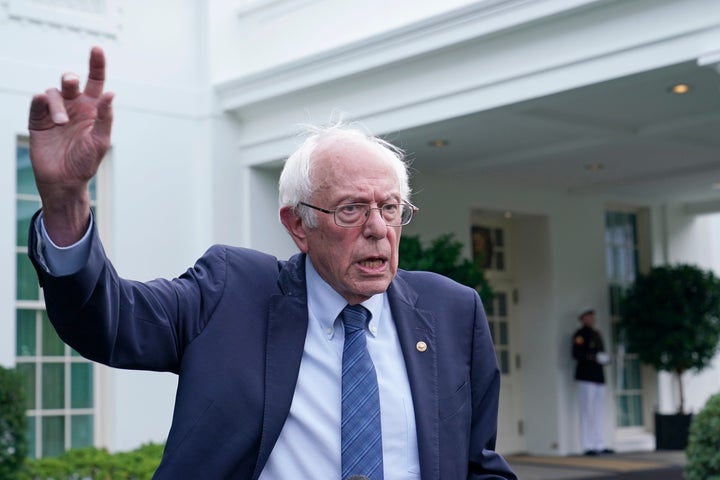
Sen. Bernie Sanders (I-Vt.) talks with reporters following his meeting with President Joe Biden at the White House on Aug. 30.

SUSAN WALSH/ASSOCIATED PRESS

Sen. Bernie Sanders (I-Vt.) announced Monday evening that he opposes what he sees as the unconditional military aid to Israel that President Joe Biden has requested as part of a supplemental spending bill due for a vote this week.

Sanders, who drew left-wing ire in recent weeks for stopping short of endorsing a permanent cease-fire in the Israel-Hamas war in Gaza, cited his concerns about the scale of Palestinian civilian deaths and displacement.

He repeatedly invoked what he sees as illegal actions taken by Israeli Prime Minister Benjamin Netanyahu, leader of the most right-wing Israeli government in history.

“What the Netanyahu government is doing is immoral,” Sanders said in remarks on the Senate floor. “It is in violation of international law ― and the United States should not be complicit in those actions.”

Sander also clarified that he still supports funding for Israeli defensive technologies ― presumably including the Iron Dome missile defense system that Israel has used to stop rockets fired by Hamas, the Palestinian militant group that governs Gaza.

“I believe it is appropriate for us to support defense systems that will protect Israeli citizens from incoming missile and rocket attacks,” he said. “But I believe that it would be irresponsible for us to provide an additional $10.1 billion in unconditional military aid that will allow the Netanyahu government to continue its current offensive military approach.”

The clock is running out for Sanders to secure changes to the supplemental funding bill. Also on Monday evening, Senate Majority Leader Chuck Schumer (D-N.Y.) announced that he would put Biden’s funding requests ― more than $60 billion in aid to Ukraine, $14 billion in aid to Israel and $14 billion to beef up border enforcement ― up for a vote on Wednesday. Ahead of that vote, he plans to have the entire Senate hear from Ukrainian President Volodymyr Zelenskyy via video on Tuesday about “what’s at stake” for Ukraine if the funding is not appropriated.

“We can’t ever put a price on defending democracy in its hour of need, because if Ukraine falls, Putin will keep on going, autocrats around the world will be emboldened, democracy ― this grand and noble experiment ― will enter an era of decline,” Schumer said.

It is unclear whether Schumer, who is counting on bipartisan support for the bill, needs Sanders’ vote to pass the overall legislation.

Strictly speaking, Sanders has not ruled out voting for the supplemental spending bill but merely laid out his conditions for supporting the component of the bill explicitly made up of military aid to Israel.

Those conditions are that Israel “dramatically” change its military approach to save the lives of Palestinian civilians, articulate a plan for a “political process” that can secure peace and guarantee those Gaza residents displaced by the war the right to return to their homes. He would further have Israel provide clear assurances that it would end its 16-year blockade of Gaza and not re-occupy the territory, cease killing Palestinians in the occupied West Bank and enact a freeze on settlement expansion.

Sanders also said that he wants more funding in the bill for child care, health care and housing. And he argued that much of the military funding for Ukraine ― and with proper strings attached, Israel ― could come from the upcoming National Defense Authorization Act, which allots Pentagon funding.

“There are pieces of this bill that I strongly support, but in its present form, I do not think it serves the interests of the American people,” he said at the start of his remarks.

It is unlikely that Sanders’ demands will play a major role in stopping the passage of a massive supplemental spending bill to top off U.S. aid to Ukraine and Israel.

Nor was Sanders’ announcement ― in an impassioned floor speech that lasted nearly 10 minutes ― very surprising. He has been ratcheting up his criticism of the Israeli government in recent weeks as the costs of the country’s bombardment and ground invasion of Gaza have grown.


The Vermont independent, a leftist who caucuses with Democrats, called for conditioning U.S. aid on changes in Israeli military practices, a freeze on West Bank settlement growth and other reforms in a late November opinion piece in The New York Times. “This blank check must end,” he reiterated in a Friday floor speech. Monday night’s remarks just confirmed that the supplemental spending bill does not meet his criteria for stricter conditions on aid.

Sanders’ announcement was instead significant because of the influence that Sanders retains, both on the American left and as a representative of that faction in the mainstream media.

Sanders emphasized that he supports continuing to arm Ukraine as it seeks to drive out Russia but noted that Israel has apparently killed more women and children in two months in Gaza than have been confirmed as killed in the Ukraine-Russia war in almost two years’ time (though Ukrainian and international officials believe the figure is higher than official estimates).

“Count me in 100% for the humanitarian support that we need, not only in Gaza but all over this world. … Count me in for serious discussions about how we improve border security. Count me in to help the people of Ukraine withstand Putin’s terrible invasion. But do not count me in to give another $10 billion to a right-wing, extremist government in Israel” led by a prime minister facing a number of criminal corruption charges, he concluded.

Sanders, who is Jewish and spent time on an Israeli kibbutz ― or farm commune ― as a young man, delighted progressives, Arab Americans and Muslim voters during his 2016 run for president when he brought concerns about Palestinian human rights to the presidential debate stage. In the critical state of Michigan, many Arab American voters rewarded him with their votes in both the 2016 and 2020 Democratic presidential primaries; in the former contest they helped him pull off an upset against former Secretary of State Hillary Clinton.

But Sanders’ views on Israel and the Palestinians have long been more moderate than those of many of his supporters on the left or in the Arab American community. Even prior to the Oct. 7 Hamas attack on Israel and the taking of hostages and the subsequent Israeli invasion, Sanders’ support for a two-state solution to the conflict ― rather than a single bi-national state ― and opposition to the Boycott, Divestment and Sanctions (BDS) movement put him at odds with some younger progressives in particular.

After the Oct. 7 terrorist attack, Sanders rankled many supporters with his qualified support for Israel’s right to defend itself, even as other progressive lawmakers called for a permanent cease-fire and end to Israel’s war in Gaza. He even won praise from the American-Israel Public Affairs Committee, a pro-Israel group with which Sanders has often clashed, for validating Israel’s right to pursue the goal of removing Hamas from power in Gaza.

But the mounting toll of Palestinian civilian deaths and displacement has clearly had an effect on Sanders, who is no longer confident that Israel is pursuing its stated military goals with adequate regard for civilians. Sanders voiced criticism of Netanyahu’s prosecution of the war early on, becoming the first senator to call for a humanitarian pause in fighting in late October.

Netanyahu’s refusal Friday to extend the weeklong cease-fire amid an impasse in hostage negotiations with Hamas angered Sanders anew.

Israel and the United States have blamed Hamas for the breakdown in the cease-fire, noting that Hamas engaged in a fatal shooting of Israeli civilians in Jerusalem and fired rockets from Gaza on Thursday, the last day of the cease-fire. Sanders still faulted Netanyahu for escalating his bombardment of southern Gaza the moment that the cease-fire ended on Friday rather than continuing to bargain for hostages.

“Netanyahu’s resumption of bombing in Gaza is beyond the pale,” he wrote on the social media app X. “Two million people are now in south Gaza. Many have fled earlier fighting in the north. The pause must be extended to get more humanitarian aid in and more hostages out.”


'At Least' 9 Relatives Of CNN Journalist Killed In Israeli Airstrike: Report

Marco Margaritoff
Tue, 5 December 2023


Nine relatives of a CNN photojournalist were killed in an Israeli airstrike on Gaza, the network reported Monday.

“Awful news about our colleague Ibrahim Dahman’s family: at least nine of his relatives have been killed,” CNN anchor Christiane Amanpour wrote Monday on X, the platform formerly known as Twitter. “He’s been fearlessly reporting for CNN from Gaza since well before this war began.”

The conflict between Israel and militant group Hamas, which rules the Gaza Strip, was reignited earlier this year after decades of tension. Israel says the Hamas attack on Oct. 7 killed 1,200 people, while Gaza health officials say Israel’s military response has killed over 15,000 Palestinians — thousands of whom are children.

Dahman, a Palestinian photojournalist and producer, continued his coverage from the ground for nearly a month after Oct. 7. The 36-year-old ultimately escaped to Egypt with his wife and children. He learned about his family’s losses from a group chat.

Dahman reportedly lost his uncle, the uncle’s wife, daughter and two grandchildren, in addition to his aunt, her husband and their two children. The airstrike on his aunt’s building in Beit Lahia also left two more relatives in critical condition.

“They were extremely peaceful and simple people, and their entire lives were devoted solely to work and raising their sons and daughters,” Dahman told CNN. “They have no affiliation with any organization or group… Pray to God to have mercy on them all.”

Dahman’s uncle had moved into the house just days prior — and only relocated his family from their home in Sheik Zayed to flee intensified bombings there. Dahman, meanwhile, had renovated his childhood home three months before it was destroyed.

“I will never be able to forget every stone and corner of the house in which I was born and raised and in which my children were born,” he told CNN.


The aftermath of an Israeli airstrike in Beit Lahia, where Dahman's relatives died, 
on Nov. 21.

The aftermath of an Israeli airstrike in Beit Lahia, where Dahman's relatives died, on Nov. 21.

Human rights organizations and activists have been calling for a permanent cease-fire in the war, as 1.8 million Palestinians have been forced to evacuate, per the United Nations. Entire city blocks, including hospitals, have been turned into rubble since Oct. 7.

While a humanitarian pause in fighting allowed for hostages and prisoners to be released from both sides, Gaza civilians continue struggling to find essentials — including food, shelter and water. On Sunday, renewed airstrikes reportedly hit a local refugee camp.

Dahman chronicled life in the besieged territory for weeks before sharing his escape to Egypt in footage for CNN. While his wife and kids are settled in Cairo, the terror of the ongoing conflict remained unavoidable as his loved ones stayed behind.

“I’ve covered many wars through the years,” Dahman said at the time. “Nothing compares to the current conflict. Entire quarters in Gaza have been eviscerated, thousands of women, children and elderly have perished. What have civilians done to deserve this?”
Author Reveals Most ‘Surprising’ Findings When He Asked Evangelicals About Trump

Josephine Harvey
Wed, 6 December 2023 

The author of a new book about the American evangelical movement said he was taken aback by the way prominent evangelical leaders responded to his questions about former President Donald Trump.

“I would say one of the most surprising and discouraging things that I encountered time and again was when I would really press some of the high profile evangelical figures,” The Atlantic’s Tim Alberta told MSNBC’s Katy Tur on Tuesday.

“When you get these guys one on one Katy, and you really press them on specific things, specific beliefs, they’ll sort of back off a little bit, and they’ll even do a little bit of a wink and a nod and kind of signal to you that like, yeah, I get you, like, it’s been over the top. It’s overkill. This guy, you know, it’s not OK,” he said.

However, these figures would still justify supporting Trump because “the ends of preserving Christian America justify the means of enlisting this uncouth, boorish, conspiracy-spouting individual who is issuing these casual calls to violence and saying and doing things every day that are not Christ-like,” Alberta said.

“He fights for us; he’s our champion, and therefore, we can ignore the rest because the ends ultimately justify those means,” he continued, summarizing what he was told in interviews.

Alberta, a practicing Christian and the son of an evangelical pastor, parsed how Trump’s presidency and an extreme political environment have influenced the evangelical movement in “The Kingdom, the Power, and the Glory: American Evangelicals in an Age of Extremism,” which was released Tuesday.

Evangelical voters helped Trump to victory in 2016 and largely stuck by him again in 2020.

Trump, however, has reportedly disparaged those voters in private. In his book, Alberta describes the “colorful language” Trump has used to describe the evangelical community over the years, according to The Guardian.

Several key evangelical figures have distanced themselves from Trump during his third presidential bid. Bob Vander Plaats, an influential Iowa evangelical leader, recently endorsed Trump’s Republican rival, Florida Gov. Ron DeSantis.

Watch Alberta’s MSNBC interview below.


Ex-Trump Aide Reveals How He Threatened To Execute His Own Staff Member


Ed Mazza
Updated Wed, 6 December 2023 


The View” co-host Alyssa Farah Griffin, who served as White House communications director under Donald Trump, said he once threatened to have a member of his own staff executed.

“Right before I resigned, I was in an Oval Office meeting with a dozen other staffers, and somebody had, he thinks, leaked a story about him going to the bunker during the George Floyd protests,” she said on Tuesday’s broadcast. “And he said, ‘Whoever did that should be executed.’”

Trump was rushed to a bunker as protests erupted near the White House over relentless cases of police brutality against Black victims that too often result in deaths, including the May, 25, 2020, police killing of Floyd in Minneapolis.

When word got out of the bunker move, Trump insisted he was only “inspecting” the bunker, a claim that was widely mocked.

The anecdote on “The View” confirms an incident first reported by Wall Street Journal reporter Michael Bender in his 2021 book, “Frankly, We Did Win This Election.”

“Trump boiled over about the bunker story as soon as they arrived and shouted at them to smoke out whoever had leaked it. It was the most upset some aides had ever seen the president,” Bender wrote.

“Whoever did that, they should be charged with treason!” Trump reportedly yelled. “They should be executed!”

A spokesperson for Trump at the time denied that he wanted the staffer executed.

But as Farah Griffin noted on “The View” on Tuesday, Trump has made similar threats publicly. Earlier this year, Trump suggested that Gen. Mark Milley ― who at the time was chairman of the Joint Chiefs of Staff ― should be executed
Thunberg reiterates support for Palestinians after criticism

AFP
Tue, 5 December 2023

Swedish branch of environmental activist Greta Thunberg's movement defends its pro-Palestinian stance
 (HENRY NICHOLLS)

The Swedish branch of climate movement Fridays for Future (FFF), best known for activist Greta Thunberg, Tuesday reiterated its support for Palestinians in Gaza following criticism of its stance on the Israel-Hamas war.

At the end of October, several politicians in Germany urged the German branch of the movement to cut ties with its international branch over its and Thunberg's outspoken pro-Palestinian remarks.

"Contrary to what many have claimed, Fridays for Future has not 'been radicalised' or 'become political'," FFF Sweden wrote in op-eds published in Swedish daily Aftonbladet and British newspaper The Guardian.


"We have always been political, because we have always been a movement for justice."

"Advocating for climate justice fundamentally comes from a place of caring about people and their human rights," it wrote.

"That means speaking up when people suffer, are forced to flee their homes or are killed – regardless of the cause."

"Standing in solidarity with Palestinians and all affected civilians has never been in question for us," it added.

Fridays for Future's international group has blasted the "genocide" in Gaza, and slammed "Western support and misinformation machines".

Luisa Neubauer, who heads the German chapter of Fridays for Future, said in a recent interview with Die Zeit weekly that Thunberg's view of the conflict was one-sided.

"I'm disappointed that Greta Thunberg had nothing concrete to say about the Jewish victims of the massacre of October 7," she said.

FFF Sweden wrote on Tuesday that "the horrific murders of Israeli civilians by Hamas cannot in any way legitimise Israel's ongoing war crimes."

"Genocide is not self-defence, nor is it in any way a proportionate response," it said.

The movement also condemned a "sharp increase in antisemitic and Islamophobic statements, actions and hate crimes in Sweden and the world", stressing the need "to distinguish between Hamas, Muslims and Palestinians; and between the state of Israel, Jewish people and Israelis."

Israel launched an air and ground assault on Gaza after the Hamas militant group October 7 crossed into Israel, killing 1,200 people, mostly civilians, and taking around 240 hostages, according to Israeli authorities.

In retaliation for the worst attack in its history, Israel has vowed to eradicate Hamas and secure the release of all the hostages held in the Gaza Strip.

The Hamas-run health ministry in Gaza says the war has killed nearly 15,900 people in the territory, around 70 percent of them women and children.

nzg/po/gv
UPDATED
UK

Campaigners blockade BAE Systems site in Glasgow over ‘Israel ties’


Lucinda Cameron, PA Scotland
Thu, 7 December 2023 at 1:34 am GMT

Campaigners are staging a blockade at a defence company’s shipyard in Glasgow in protest over its ties to Israel as they call for a ceasefire.

The blockade at the entrances to the BAE Systems site in Govan in Glasgow has been organised by a local group in co-ordination with Workers for a Free Palestine.

The demonstration is one of four across the UK on Thursday morning, with campaigners saying more than 1,000 workers and trade unionists have blockaded four arms factories in England and Scotland.


Protesters form a blockade outside Eaton Mission Systems in Wimborne near Bournemouth
 (Andrew Matthews/PA)


They are urging BAE and other companies to end their ties with Israel and cease all weapons, defence and supplies trading with them.

They are also calling on the UK Government to back a permanent ceasefire in Gaza and are calling for an end to the occupation of the Occupied Palestinian Territories.

More than 600 trade unionists have blocked Eaton Mission Systems in Wimborne near Bournemouth, and hundreds of others have shut down arms factories in Brighton, Lancashire and Glasgow which produce components for the F-35 stealth aircrafts, campaigners said.

The group Workers for a Free Palestine said it is escalating its tactics by targeting four factories at once in different parts of Britain as part of a coordinated international action today.

Jenny, a spokeswoman for the Workers for a Free Palestine group, who did not give her surname said: “The fighter jets these factories help to produce are being used to imprison the people of Gaza in a death trap.

“They are ordered to evacuate when they have nowhere safe to go, while our Government still refuses to back a ceasefire.

“Workers all over Britain are rising up for Palestine, saying we will not allow arms used in a genocide to be supplied in our name and funded by our taxes.

“Our movement is growing rapidly and gaining more momentum each day.

“We are escalating our tactics and today’s blockades are seeing unprecedented numbers of people take part in the disruption of Israeli arms manufacturing in Britain, in concert with workers targeting Israeli arms suppliers around Europe.

“We won’t stop shutting down these factories until they stop supporting Israel’s murderous war machine.”

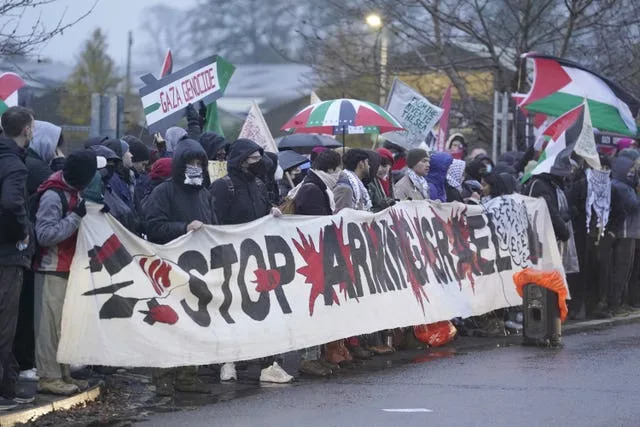
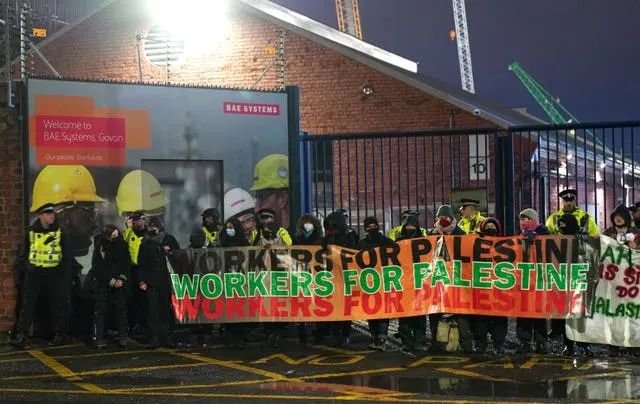
Protesters form a blockade outside BAE Systems in the Govan area (Jane Barlow/PA)

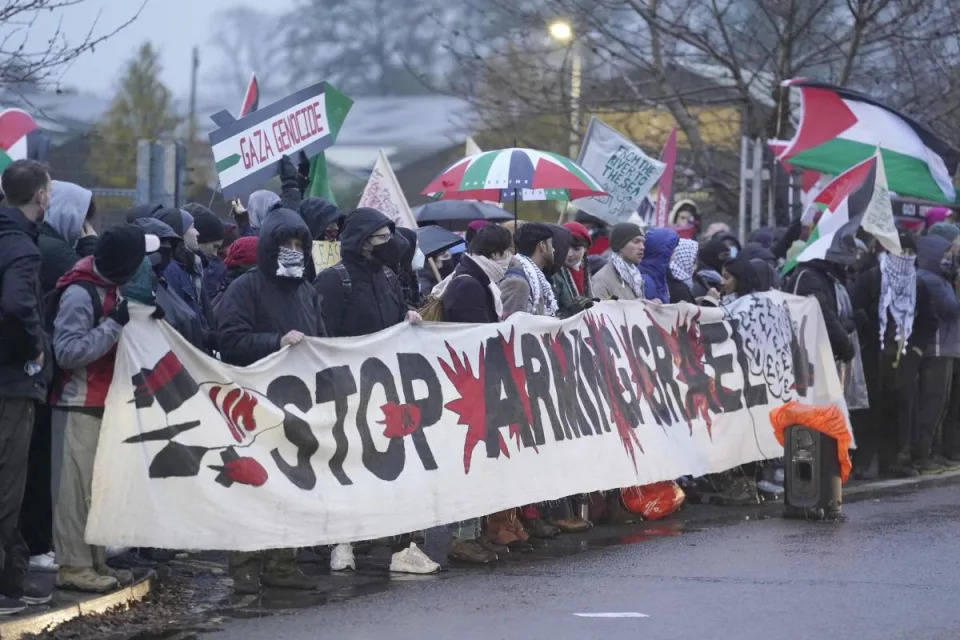
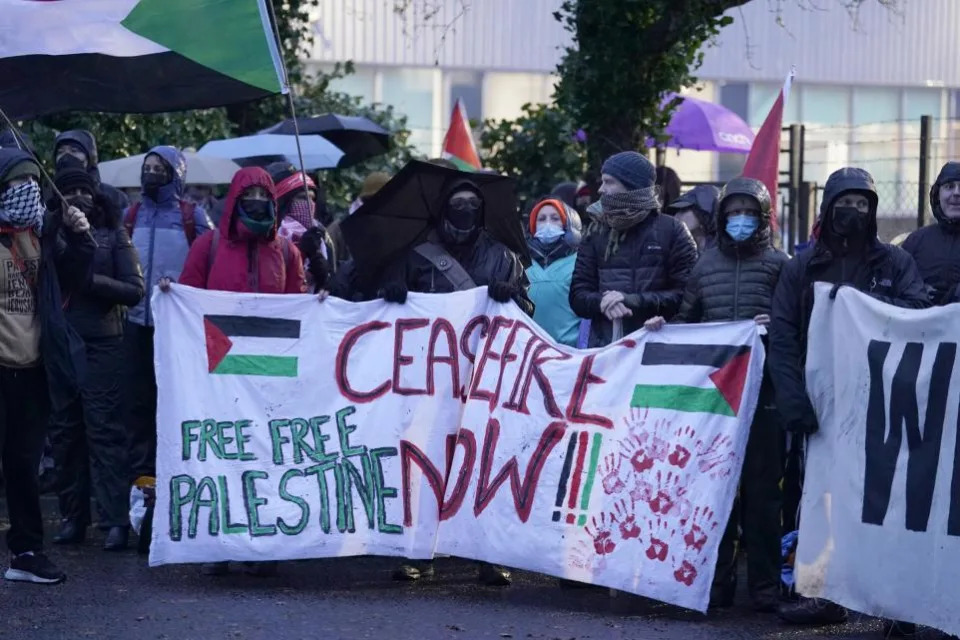
Activists holding a banner saying “Stop Arming Israel” could be seen at one of the entrances to the Govan factory, while at another demonstrators held Palestinian flags.

They claim that BAE systems produces components of weapons sold to Israel, such as the F35 combat aircraft and the Mk 38 Mod 2 machine gun system.

Scott, a youth worker aged 26, who did not wish to give his surname, said: “We are not here to shame or blame workers at BAE.

“The company’s management decides what to produce and who to sell to – it is them we hold accountable for being part of the chain of killing.”

Jay, a visual artist aged 24, said: “I came here today to show that direct action is for everyone and that together, we can change the way the world turns.”

A BAE Systems spokesperson said: “We’re horrified by the situation in Israel and Gaza and the devastating impact it’s having on civilians in the region and we hope it can be resolved as soon as possible.

“We respect everyone’s right to protest peacefully. We operate under the tightest regulation and comply fully with all applicable defence export controls, which are subject to ongoing assessment.”

Hundreds protest outside defence factories against arms being sent to Israel


Lucinda Cameron and Alan Jones
Thu, 7 December 2023 

Hundreds of campaigners have staged protests outside a number of defence factories in the latest demonstration against arms being sent to Israel.

The campaign group Workers for a Free Palestine said it had blockaded sites in Bournemouth, Glasgow, Brighton and Lancashire, some of which are operated by defence giant BAE Systems.

The company’s shipyard in Glasgow was targeted in the early morning protests on Thursday, which the campaign group said demonstrated it was escalating its action after previous blockades.

The demonstrators are urging BAE and other companies to end their ties with Israel and cease all weapons, defence and supplies trading with them.

They are also calling on the UK Government to back a permanent ceasefire in Gaza and are calling for an end to the occupation of the Occupied Palestinian Territories.

Protesters form a blockade outside Eaton Mission Systems in Wimborne near Bournemouth (Andrew Matthews/PA)

The biggest protest was at Eaton Mission Systems in Wimborne near Bournemouth where around 600 people took part.

Jenny, a spokeswoman for the Workers for a Free Palestine group, who did not give her surname, said: “The fighter jets these factories help to produce are being used to imprison the people of Gaza in a death trap.

“They are ordered to evacuate when they have nowhere safe to go, while our Government still refuses to back a ceasefire.

“Workers all over Britain are rising up for Palestine, saying we will not allow arms used in a genocide to be supplied in our name and funded by our taxes.

“Our movement is growing rapidly and gaining more momentum each day.

“We are escalating our tactics and today’s blockades are seeing unprecedented numbers of people take part in the disruption of Israeli arms manufacturing in Britain, in concert with workers targeting Israeli arms suppliers around Europe.

“We won’t stop shutting down these factories until they stop supporting Israel’s murderous war machine.”

Activists holding a banner saying “Stop Arming Israel” could be seen at one of the entrances to the Govan factory, while at another demonstrators held Palestinian flags.

They claim that BAE systems produces components of weapons sold to Israel, such as the F35 combat aircraft and the Mk 38 Mod 2 machine gun system.

Scott, a youth worker aged 26, who did not wish to give his surname, said: “We are not here to shame or blame workers at BAE.

“The company’s management decides what to produce and who to sell to – it is them we hold accountable for being part of the chain of killing.”

Activists blocking one of the site entrances in Govan chanted “free, free Palestine” and “from the river to the sea, Palestine will be free”.

Protesters form a blockade outside BAE Systems in the Govan area of Glasgow (Jane Barlow/PA)

One of those demonstrating in Govan, who gave his name only as Oli, said people in Glasgow are saying “enough is enough”.

He told the PA news agency: “We wanted to stop business and to tell BAE we are prepared to do this as long as we can to make you think twice about the decisions you make.

“Glasgow does not need to make war machines. Glasgow and the people of Glasgow are saying we want to make things that are useful for people, not harmful.”

Jay, a visual artist aged 24, said: “I came here today to show that direct action is for everyone and that together, we can change the way the world turns.”

A BAE Systems spokesperson said: “We’re horrified by the situation in Israel and Gaza and the devastating impact it’s having on civilians in the region and we hope it can be resolved as soon as possible.

“We respect everyone’s right to protest peacefully. We operate under the tightest regulation and comply fully with all applicable defence export controls, which are subject to ongoing assessment.”

A Police Scotland spokesperson said: “We are aware of a protest outside premises in Govan Road and officers are in attendance.”

Similar protests were held in other European countries on Thursday including France and Denmark.

Activists in Glasgow shut down BAE Systems in Govan in call for Palestine ceasefire


Gabriel McKay
Wed, 6 December 2023 

Activists outside the factory this morning (Image: PA)

More than 100 activists have blockaded a factory in Glasgow in protest over its ties to Israel as they call for a permanent ceasefire in the Gaza strip.

A blockade is in place at the BAE Systems factory in Govan by a group of pro-Palestinian demonstrators in co-ordination with the organisation Workers For A Free Palestine.

They are calling on the company to cut all ties to the state of Israel and cease all weapons, defence and supplies trading with the country.


The group are also calling for the UK government to back a permanent ceasefire, and for an end to the occupation of Palestine. Both the West Bank and Gaza are defined by the UK government as occupied territories.

Read More: Defence giant creates 300 new shipbuilding jobs in Glasgow

Simultaneous action is taking place at three other arms factories in the UK, in Bournemouth, Lancashire and Brighton, as well as in France, Denmark and the Netherlands.

BAE produces various components of weapons which are sold to Israel, including the F35 combat aircraft and the MK 38 Mod 2 machine gun system.

In November, HMS Diamond, a ship made at BAE Govan, was deployed to the Persian Gulf in response to 'rising tensions in the Middle East', while armour for the second batch of Type 26 frigates being built at the site for the Royal Navy was provided by the Israeli defence company Plasan.

Scottish Enterprise has given close to £10m to arms firms which supply weapons to Israel between 2016 and 2020, including £1.6m to BAE Systems.

The defence giant announced on Wednesday that it would add 300 more apprentices and graduates to its workforce in Scotland in 2024.

Those involved in the action said they were not looking to target the workers at the Govan plant, but rather the company itself.


The Herald:

Harsha, a carer aged 35, said: “It’s not right that BAE Systems profit from the genocide in Gaza.

"I’m also disgusted that whilst the Scottish Parliament have voted to back a ceasefire and the First Minister has spoken up in support of the Palestinian people, Scottish Enterprise has given funding to BAE.

"This public money, our money, should be invested in caring, not killing.”

Scott, a youth worker aged 26, said: “We are not here to shame or blame workers at BAE.

"The company’s management decides what to produce and who to sell to – it is them we hold accountable for being part of the chain of killing.”

Jay, a visual artist aged 24, said: “I will not stand by while civilians are murdered with weapons from companies like BAE, Thales and Leonardo, which all have significant presence in Scotland.

"I came here today to show that direct action is for everyone and that together, we can change the way the world turns.”

A Police Scotland Spokesperson said: "We are aware of a protest outside premises in Govan Road and officers are in attendance."

1,000 Americans are dying every week from Covid, CDC says
HEY FOLKS IT'S STILL A PANDEMIC

Bevan Hurley
Wed, 6 December 2023


Nearly four years into the pandemic, hundreds of Americans are still dying every day from Covid, according to the Centers for Disease Control and Prevention (CDC).

The virus is responsible for around 1,000 deaths and 15,000 hospitalisations each week, CDC Director Mandy Cohen said during a media briefing on 2 December.

Death rates briefly dipped below 500 per week in July, the lowest rates since the pandemic began, before steadily increasing to as high as 1,400 in September.


The latest CDC data shows emergency doctor visits and hospitalisations spiked by 10 per cent over one week in mid-November, the first major increase in the virus’s spread for several months.

The CDC is due to released updated data next week which will reveal whether Thanksgiving-related travel contributed to a traditional bump in cases of respiratory illnesses.

The largest accelerations were seen in Midwest and Mid-Atlantic states, the CDC said in its latest weekly report, though nearly every region is reporting higher positive test cases and hospitalisations.

Michigan, Illinois, Indiana, Ohio and Wisconsin are showing the fastest increases, according to data from wastewater sampling and emergency room admissions.

Seasonal respiratory viruses such as influenza and RSV are contributing to increased rates of illness, but cases of RSV appear to have peaked, Dr Cohen said.

Covid remains the primary cause of new respiratory virus hospitalisations and deaths, she added.

Nearly two million Americans spanning states such as Arizona, Arkansas, Oregon, Colorado and Montana are now living in counties deemed to have “high” levels of Covid hospitalisations.

CDC Director Mandy Cohen says Covid remains the primary cause of new respiratory virus hospitalisations and deaths 

In these areas, the CDC recommends mask use and avoiding non-essential indoor gatherings to prevent the spread of Covid.

An estimated 10 per cent of new cases are attributed to the highly mutated BA.2.86 strain, dubbed the “Pirola” variant. Health officials are closely watching the spread of the strain, which was first identified in August.

The HV.1 subvariant accounts for around 31 per cent of new cases, while the EG.5 strain makes up 13 per cent, according to the CDC.

Contributing to the recent spike is a low uptake in Covid booster shots. Just 16 per cent of US adults have received a fourth booster shot which was formulated to counter new variants, according to the latest CDC figures.

A new Emerson College-CUNY poll found just under half of Americans planned to get the latest Covid vaccine. That figure fell to 43 per cent in 22 “Heartland” states, the survey found.

“While almost three Heartland residents in five say they are unlikely to get the new version of the COVID-19 vaccine, rejection rates of 74 per cent in Wyoming and 68 per cent in Idaho are particularly startling,” Kenneth H. Rabin, founder of the Council for Quality Health Communication said in a statement.

“These findings should be a wake-up call to health communicators, as we can no longer rely on mandates and must engage people in real conversations to encourage them to vaccinate themselves and their families,” Dr Rabin added.

The CDC no longer tracks national Covid cases, instead relying on analysis of wastewater and emergency room data to determine trends.

A total of 1.16 million Americans have died from Covid since the start of the pandemic, according to official data.
500,000 THANKS TO TRUMP AND GOP