It’s possible that I shall make an ass of myself. But in that case one can always get out of it with a little dialectic. I have, of course, so worded my proposition as to be right either way (K.Marx, Letter to F.Engels on the Indian Mutiny)
Wednesday, February 25, 2026
Chinese Ship Completes First Autonomous Docking and Cargo Handling
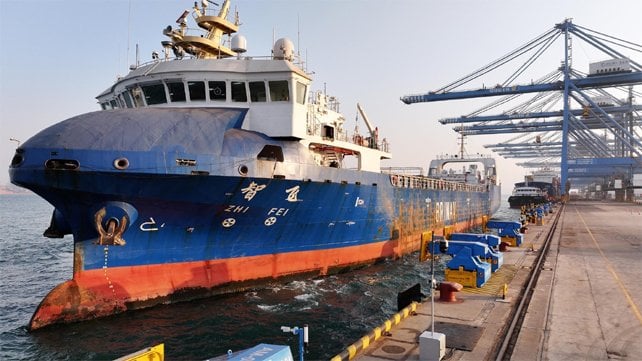
Zhi Fei with the automatic berthing system with suction cups to secure the ship (Qingdao Port)
Four years after having put what it said was the world’s first autonomous, electric container feeder ship into commercial service, Chinese officials report the ship successfully completed an autonomous docking procedure. It was the first time the vessel named Zhi Fei completed the autonomous docking procedure, with Chinese officials saying it improves efficiency and reduces the time and manpower needed for berthing.
The Zei Fei is a 300 TEU container feeder ship that entered commercial service in April 2022. It is approximately 110 meters in length. It was designed to operate in three different modes, crew-managed navigation, remote-controlled navigation from a shore station, or unmanned autonomous navigation.
The autonomous berthing took place at the Qingdao Port Terminal in Shandong Province on February 21. The autonomous navigation capability positioned the ship alongside the berth, and a vacuum-type automated mooring system using a form of suction cups adhered to the hull to secure the ship. The report said it took just 30 seconds to dock the ship, reducing the berthing time. The berth is also capable of autonomous loading and offloading with operations coordinated by an autonomous crane and autonomous trucks.
The ship is operated by Navigation Brilliance (BRINAV). It runs between Qingdao Port in Shandong Province and Dongjiakou. According to the reports, its longest single journey distance is 89 nautical miles, and it sails at speeds up to 12 knots.
BRINAV reports the ship completed 353 voyages transporting over 80,800 TEU last year. Since going into service, they report it has traveled more than 48,000 nautical miles, and the systems have made over 1 million independent decisions.
“Intelligent shipping is not merely about replacing human roles but also about making shipping safer and more efficient,” Jiang Haiying, chairman of Navigation Brilliance, told the Chinese media. “This is the essential path for China to transform from a major shipping nation to a strong maritime power.”
The company says the ship has operated with 30 percent fewer crewmembers than a conventional ship and decreased the risk of human error by 80 percent. It says it saves approximately $27,500 each month in operating costs.
To achieve autonomous operations, the company reports it had to overcome several key challenges. Because foreign radar brands are not available to China, it says it had to develop and improve domestic radar systems. This included developing “a series of wave active suppression algorithms to clear out the wrong data caused by its error or electromagnetic interference." It also had to make up for a lack of radar measurement accuracy and improve base station coverage for the 5G signal that connects the ship to the shore station. They worked with China Telecom, China Mobile, and China Unicom to adjust antenna orientation and optimize the network signal.
The ship operates on fully electric propulsion, which they noted is better suited for autonomous operations. It shortens response time and improves the accuracy of control. They also reported they were able to improve battery design to increase capacity to 80 to 90 amp hours beyond the traditional 50 amp hours.
The Zhi Fei is seen as a demonstration ship to advance the technology. The company looks to develop more autonomous systems and is also working toward ocean-going ships such as LNG carriers.
ILO, ICS and ITF Celebrate 20th Anniversary of Maritime Labor Convention
Joint statement from the International Labour Organization, the International Chamber of Shipping, and International Transport Workers’ Federation on the 20th anniversary of the Maritime Labour Convention
On the 20th anniversary of the Maritime Labour Convention, 2006, we jointly reaffirm our commitment to the principles and protections it embodies and recognise the profound impact it has had on seafarers and on global shipping.
The MLC consolidated and modernised around seventy maritime labour instruments into a single, comprehensive international framework. In doing so, it established enforceable minimum standards for wages, hours of work and rest, medical care, accommodation, repatriation and welfare, creating a clear and consistent global baseline for decent work at sea.
The adoption of the MLC was made possible through close and constructive tripartite cooperation between governments, shipowners and seafarers. That shared commitment ensured that the Convention is both ambitious in its protections and practical in its implementation across a truly global industry. This spirit of partnership has remained central to its continued strength and relevance.
Since its entry into force, the MLC has delivered tangible improvements in living and working conditions on board ships, strengthened compliance through flag and port state control, and provided a structured mechanism to address emerging challenges. Amendments adopted over the past decade enhanced financial security protections, supported seafarers in cases of abandonment and criminalisation, and reinforced safeguards in response to the Covid-19 pandemic and violence and harassment on board.
In a context of geopolitical uncertainty and climate transition which significantly affect shipping and seafarers, we reemphasise our shared resolve to ensure that the MLC remains robust and is fully implemented.
On this anniversary, we urge countries across the world to recognise seafarers as key workers. Protecting and advancing the standards of the MLC is essential for the dignity and welfare of seafarers and for the resilience and stability of global trade.
The products and services herein described in this press release are not endorsed by The Maritime Executive.
In South Korea, a New Push to Phase Out Foreign Workers in Shipyards
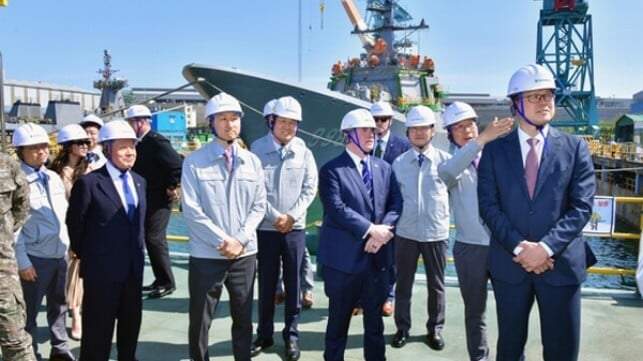
U.S. Navy officials tour HD Hyundai's yard in Ulsan. Korean reports indicate that the firm is looking to phase out guest worker labor (USN file image)
It is no secret that Korea's shipbuilders have a shortage of domestic labor, and have been recruiting immigrant workers from Southeast Asia and elsewhere to fill the gap. But the country wants to turn the corner and begin supplying its own labor pool domestically, especially as it is trying to win American orders for Korean-built tonnage under the "Make American Shipbuilding Great Again" partnership, as defined by the new White House Maritime Action Plan (MAP). The MAP envisions a role for legally-American ships built by allies, so long as foreign yards also invest in American capacity and construct follow-on vessels in the United States. Only Korea's "Big Three" firms have public strategies geared towards fulfilling that arrangement.
According to Business Korea, HD Hyundai - builder of the nation's Aegis-equipped warships - has plans to phase out its foreign immigrant workforce beginning this year. As each guest worker's visa expires, HD Hyundai will replace them with a Korean national, either a new entrant to the industry or an experienced yard worker. The policy aligns with a recent request from President Lee Jae-Myung to strengthen hiring of Korean nationals in Korean shipyards.
Korean workers offer a major advantage in that they do not have time-limited visa restrictions, which force guest workers to leave after gaining experience. The challenge lies in attracting young Koreans to the difficult labor of shipbuilding, and in convincing them to relocate to factory towns like Ulsan, HD Hyundai's home base; such locations are low on the list of desirable places to live for the new generation of workers, Business Korea reports.
Even if Korea's Big Three fully insource their labor needs for domestic yards, they will still have access to foreign labor through overseas holdings and partnerships. HD Hyundai has acquired a mega-shipyard in Subic Bay, near an abundant Philippine labor pool in the Manila metro area; it also has a new joint venture partnership with Cochin Shipyard in India, which recently secured a large boxship order from CMA CGM using Korean technology.
Zim Employees Return to Work as Union Reports Tentative Agreements
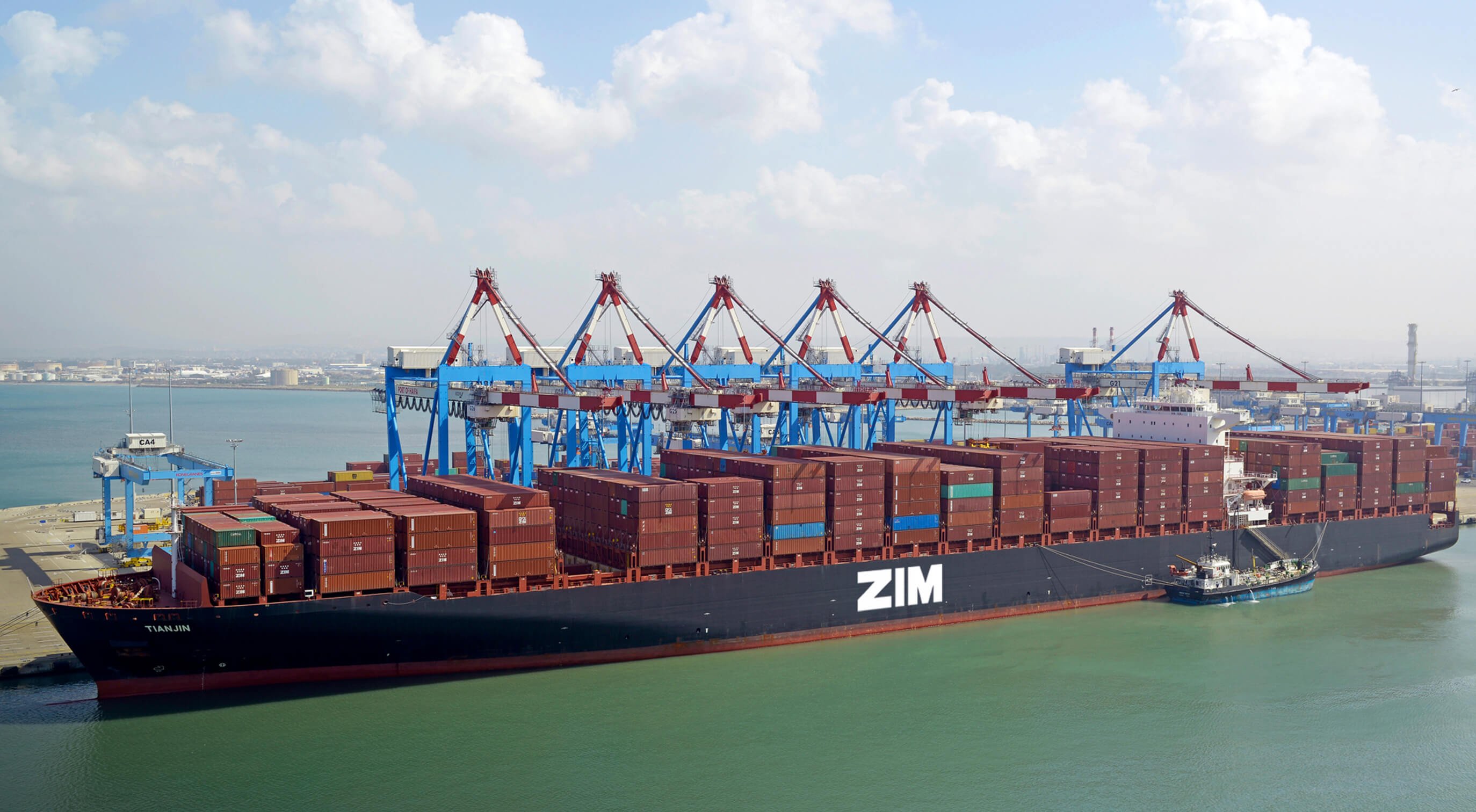
Zim's union reportedly reached an agreement clearing one hurdle toward the Hapag takeover (Zim file photo)
The union representing Zim’s Israeli workers has reportedly reached terms on a tentative agreement regarding employment, severance payments, and compensation after staging a strike that stopped port activity and work at the company’s headquarters. The union said a tentative agreement would be finalized between ZIM CEO and Hapag-Lloyd, and according to the news outlet Calcalist, it has total trust in Eli Glickman to honor the agreement.
The union had reacted to a lack of employment agreements and said it had not been consulted during the final phase of the negotiations. It asserted that of approximately 1,000 employees in Israel, only 120 would retain their jobs and that there was no consideration for the employees in the merger agreement. Last week, an initial strike of office workers had reportedly spread to Zim’s facilities in Haifa, Holon, and Ashdod. Media reports said the union was intent on barring Zim Chairman Yair Seroussi from entering the company’s facilities.
According to the report in Calcalist, Glickman and the unions agreed to terms that, in addition to the 120 employees to stay with the new ZIM owned by Israeli private investment firm FIMI, an additional 400 people will move to the Israeli headquarters that Hapag-Lloyd plans to establish.
Workers’ union chairman Oren Caspi and CEO Glickman also reached an understanding on several other key elements, reports Calcalist. Hapag-Lloyd is expected to allocate at least $300 million to finance severance payments for approximately 500 employees who will retire as part of the transaction, reports Calcalist. Employees will also receive a sale-related bonus, although its amount has yet to be determined, the outlet says, but the union will insist that the people moving to Hapag are permitted to first retire from Zim. The understanding they write also includes extending the collective agreement for an additional five years.
Employees began returning to work on Tuesday in Israel, while the report says Glickman will finalize the agreements with Hapag-Lloyd on Wednesday. Hapag had previously said it expected to provide for the Zim employees once the deal closed.
It removes one key sticking point in the lead-up to the completion of the merger agreement. However, as reported in the Israeli media, concerns are being raised about maintaining Zim as a national symbol and its ability to meet the terms of the Golden Share provided to the government. Zim has been viewed as a national asset critical to maintaining supplies during a time of war and for Israel’s survival.
FIMI CEO Ishay Davidi, however, asserted during government presentations on Sunday that the new company will be much stronger financially. He said it would be fully able to meet its obligations to Israel. He pointed out that Zim, in its 80-year history, has twice faced bankruptcy and has not been meeting the terms of the Golden Share.
Davidi has said the new company will have a modern fleet of 16 ships, no debt, and $700 million in equity, making it a strong player. He said it has FIMI’s assurances that it will meet the requirements of the Golden Share.
Hapag-Lloyd and FIMI need to receive approval from Israel’s Companies Authority, which administers the Golden Share. Calcalist reports the authority has already raised questions about the viability of the new Zim, which it says would be dependent on Hapag and international relationships. Members of the Israeli Knesset (parliament) reportedly also were skeptical during Sunday’s presentation to the Economic Committee.
Zim reports it is preparing its full presentation, which will be presented to the government, for approval of the sale. Hapag said when it announced the agreement that it expected the necessary approvals of regulatory authorities and ZIM shareholders by late 2026.
French prosecutor seeks penalty for Chinese captain in Russia shadow fleet test case
France’s crackdown on Russia’s 'shadow fleet' stepped up on Monday as prosecutors in the Breton port city of Brest demanded a one‑year prison sentence and a 150,000‑euro fine against the Chinese captain of the oil tanker Boracay for failing to comply with French Navy orders.
Issued on: 24/02/2026 - RFI
The Boracay, a tanker from Russia’s so-called “shadow fleet”, is seen in an aerial picture taken on 1 October 2025 off the western French port of Saint-Nazaire. AFP - DAMIEN MEYER
Chen Zhangjie, a 39-year-old ship captain, went on trial in Brest, north‑western France, on Monday for allegedly failing to obey orders from law enforcement when his ship, the Boracay, was intercepted by the French Navy last September. Chen did not attend the hearing in person but was represented by his lawyer, Henri de Richemont of the Richemont-Delviso law firm.
The case comes amid France’s intensified campaign to prevent sanctioned oil tankers from operating off its coast. In recent months, French authorities have seized two such vessels — the Boracay and the Grinch.
The Boracay, which has repeatedly changed name and flag, was suspected of belonging to the network of tankers used to move Russian oil in breach of Western sanctions.
On 27 September 2025, a French frigate requested permission to board the Boracay in international waters off western France to verify its flag status. The tanker was carrying Russian crude reportedly worth around $100 million, bound for India.
French authorities had already been alerted by Benin that no tanker of that name was registered under its flag.
According to statements read out in court, Chen initially told the French Navy that the ship sailed under the Benin flag, but explained during police custody that the flag had not been flown because it was raining.
The prosecution described a pattern of “deliberate obstruction” and argued that the captain had delayed the boarding under the pretext of waiting for instructions from the Hong Kong‑registered shipowner. Possible Wagner links
French naval commandos eventually boarded the Boracay without resistance from the 26‑strong crew. Among those on board were two Russian nationals employed by Moran Security Group, a Russian private security company which, according to French and European intelligence sources, provides protection teams to dozens of tankers in Russia’s shadow fleet.
One source – quoted by French press agency AFP – identified the “security crew” as Aleksander T. and Maksim D., adding that the latter was a former police officer who had worked for Russian mercenary group Wagner.
According to a “conformance certificate” published on the group’s website, it provides “maritime security, including armed security of the merchant fleet, vessels’ escorting, protection of sea ports” and other services. The certificate lists the group’s address in Belize, while it is certified by the “Russian Federal Agency of Technical Regulation and Metrology” based in Moscow.
In his statement, Chen said that he did not know what the two Russians were doing on the vessel and said it was “not common” to have such personnel on board.
He also indicated that Russian security staff had already been present during a previous voyage in July. The two men disembarked in Suez several days after the French boarding.
French prosecutors limited the case to the captain’s refusal to comply with orders. Allegations that the Boracay may have been linked to drone overflights near Danish airports in 2025 were not part of the charges, and no direct evidence has been made public to support that suspicion.
The judgment comes as the European Union is preparing a 20th package of sanctions against Russia, including measures aimed at tankers and maritime services that help Moscow export oil despite restrictions. France, which has already intercepted several suspected shadow‑fleet vessels in the Atlantic and Mediterranean, is pushing for a full ban on maritime services for Russian oil.
The Boracay now sails under the Russian flag as the Phoenix and was recently reported at anchor near the port of Rizhao in northeastern China.
The final decision of the court in Brest is expected on 30 March.
(With newswires)
France Starts Trial of Shadow Tanker Captain Charged with Disobeying Orders
Tanker detained for 15 days by Estonia in the spring of 2025 (Estonian Transport Authority)
A French court in Brest was due to begin the trial in absentia of the Chinese captain aboard the sanctioned shadow fleet tanker Boracay. France detailed the vessel in September 2025 to investigate its registration, and they allege the captain “failed to obey” orders from the French troops sent to interdict the vessel.
The tanker has been linked to shadow fleet operations dating back to 2022, and reports indicate it has made numerous trips between the Russian oil terminal at Primorsk and China. The UK sanctioned the ship in October 2024, and the EU followed in February 2025.
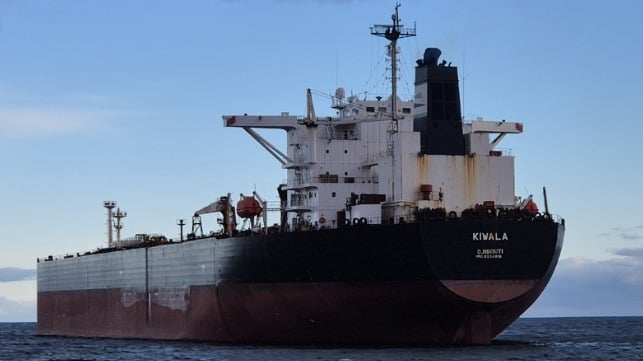
The ship has had a shadowy history of multiple names and reported flags, which led to Estonia detaining the tanker in May 2025 when it was identifying as the Kiwala. It was claiming a registry in Djibouti, which the Estonians said could not be confirmed. Djibouti, however, said it would give the ship a temporary flag to provide it time to find a new registry. Estonia also conducted a port state inspection, reporting 40 deficiencies.
In September, it showed up at the Russian terminal using the name Pushpa and claiming to be registered in Benin. There were also reports linking the tanker around the same time as one of three suspects in an incident with drones flying over Copenhagen Airport.
The French authorities stopped the ship off the coast near Saint Nazaire and ordered the ship to anchor. It ultimately complied, but France took that captain and first officer into custody and changed that they had not obeyed orders. The captain was ordered to stand trial, which was starting on February 23.
As the trial was due to start, Agence France Presse (AFP) is reporting that French authorities had discovered two Russians aboard the tanker when it was searched in September. One of them is reported to be a former police officer who had also worked for the notorious Wagner mercenary group. Both of them were working for the Moran Security Group, which AFP reports was started by former officers of Russia’s FSB security service.
Lawyers for the Chinese ship captain confirmed to AFP that the two Russians were on the tanker, saying they “represented the cargo.” The report also quotes sources that the two “security guards” were there to protect the vessel and ensure the captain followed orders “given in line with Russian interests.” There are also claims that they were gathering “intelligence.”
AFP reports that the lawyers were planning to challenge France’s jurisdiction to stop the tanker and detain the captain, a Chinese national named Chen Zhangjue. He will not be present in the court. They are claiming the ship was in international waters, and as such, the UN establishes jurisdiction as either the captain’s home country or the ship’s flag state.
As the Boracay/Pushpa likely did not have a flag state, the situation is further complicated. The ship had also previously claimed Gambia and Malawi. After claiming Benin, it is now shown as registered in Russia.
France released the ship after a few days, and it reappeared in 2026 using the name Phoenix or Feniks. Its registered owners are shown as a company in the Seychelles. The last AIS signal shows the tanker having arrived in China after another trip from Russia.
Europe’s climate policy turning into lobbyists’ playground, watchdog says
New research reveals that the EU’s Clean Industrial Deal has been transformed into a corporate-driven policy project dominated by heavy industry lobbying, resulting in a shift away from real decarbonisation toward deregulation and weakened climate rules.
The European Union's flagship initiative to cut pollution from heavy industry has hit its first birthday, but a new watchdog study claims the bloc's ambition has caved in to the biggest polluters with more than 750 meetings between lobbyists and EU officials registered in just 12 months.
The investigation by the Corporate Europe Observatory (CEO), covering the period from 26 February 2025 until 3 February 2026, shows that the EU's Clean Industrial Deal has been captured by heavy industry lobbying and reshaped into a subsidy machine for Europe’s biggest polluters.
The research couldn't be more timely, as corporate intervention in EU policymaking has already achieved tangible results. CO2 emissions requirements for cars and vans have been watered down and a ban on combustion engines has been delayed.
Environmental obligations have also been softened, and the EU's carbon border tax has been simplified and diluted, with further changes likely. The same goes for the bloc's headline climate policy, the EU carbon market, which is slated for review by the summer and already under attack by the industry.
"A year later, it is clearer than ever that in reality it is more of a Dirty Industrial Deal," reads the CEO's research. "It is championing the weakening of regulations (known as ‘simplification’) that protect the public and the environment, while creating a myriad of less than ‘simple’ mechanisms to throw money at some of the EU’s most polluting companies."
Séjourné and Hoekstra held most meetings
More than three lobbying meetings a day took place across 16 European Commission departments, the research reveals, with 90% involving corporate interests and only 8% involving civil society.
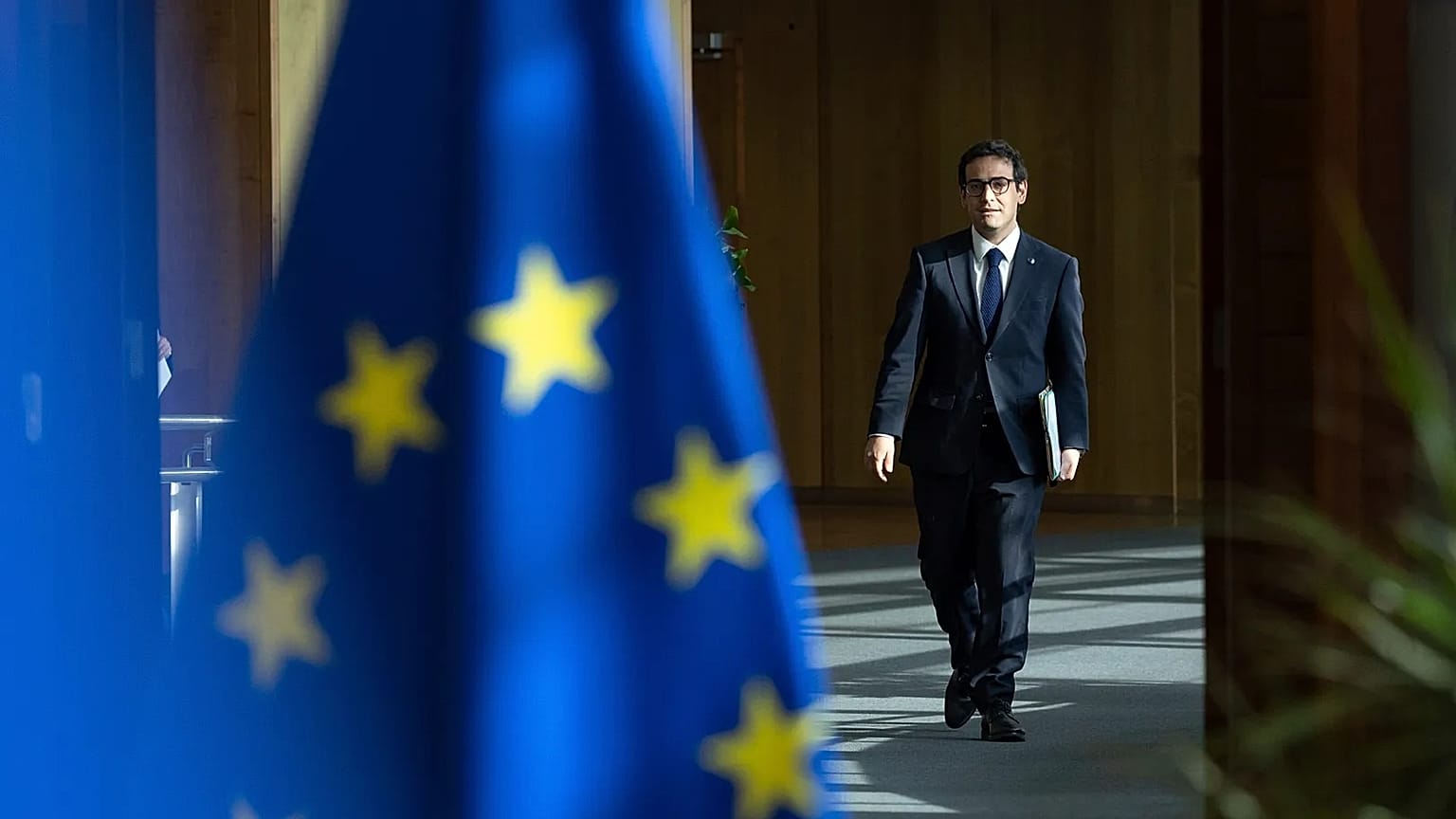
The most lobbied power centre was the office of Industrial Market Commissioner Stéphane Séjourné, with 131 meetings in a year, followed by the office of Climate Action Commissioner Wopke Hoekstra, with 60 meetings.
By contrast, the Commissioner for a Clean and Competitive Transition, Teresa Ribera, barely features, with only 20 meetings – a stark contrast with Séjourné, who, together with her, is responsible for delivering the bloc's effort to restore Europe's industry to the global forefront in the face of fierce competition from China and the United States.
The CEO's investigation is based on public records, yet the Brussels-based watchdog noted that these figures are "merely the tip of the iceberg," as lower-level staff, who are often the target of lobbying operations, are not obliged to disclose their meetings.
"That’s particularly worrying, given how aggressively business has been lobbying to weaken protections for workers and the environment, and is sidelining those who are supposed to defend those interests," CEO writes, adding the findings reflect the broader "pro-business bias that has been baked" into this Commission.
Brussels-based trade associations representing the metals and mining sector, the steel industry, nuclear energy and car giants dominate the meetings with EU officials, CEO research reveals.
Leading the charge is the steel lobby, on behalf of Europe's industrial giants ThyssenKrupp and ArcelorMittal, with trade association EUROFER topping the list with 39 meetings. Next in the ranking is the French multinational electric utility and nuclear giant Électricité de France (EDF).
And despite ranking only third, organisations from the automotive sector had the biggest lobbying firepower, employing 190 lobbyists and declaring a combined yearly lobbying budget of almost €15 million.
National politics shaping EU policies
The findings reveal that corporate influence in Brussels goes beyond corporate capture and instead amounts to strategic national industrial power politics, with France winning the race.
"The Clean Industrial Deal, and in particular its crowning jewel, the Industrial Accelerator Act, has mirrored a distinctly French economic doctrine," CEO researcher and campaigner Pascoe Sabido told Euronews: "state-backed heavy industry, deregulation in the name of “competitiveness”, and public finance used as an industrial weapon. Séjourné, with substantial industry support, has succeeded in scaling this up to the European level."
The French nuclear giant EDF has been one of the most active lobbyists shaping the bloc's industrial deal, with 12 meetings.
Marcin Korolec, Director at the Green Economy Institute and former Polish climate Minister, said industrial policy is "clearly top-tier" in the EU.
"Leaders are actively courting business and positioning themselves as part of the solution. Strong focus on ultra-short-term instruments in order to step up the pace," Krolec said, noting the "clear differences" at national level.
"France is pushing the EU debt as an investment booster, and Germany is focusing on red tape and the Emissions Trading System (the EU's carbon market). A clear absence of Poland and the entire Central and Eastern Europe region could make the choice prevailing or at least add a new perspective," said Korolec.
"This matters for shaping the narrative ahead of the EU's multi-annual budget for 2028–2034 and public procurement framework revision,” the Polish national added.
'Groundbreaking' model can calculate true impact of climate change and it’s bad news for Europe
Copyright Copyright 2022 The Associated Press. All rights reserved
Researchers have created a new mathematical solution to analyse how emission-intensive actors are responsible for increasing climate damage.
A “groundbreaking” study has lifted the lid on just how much human-made climate change is impacting extreme weather across Europe.
Climate researcher Gottfried Kirchengast and his team at the University of Graz in Austria have developed a new method for computing the hazards from extreme events such as heat waves, floods and droughts.
Using a new mathematical solution, the model can be used to compute the frequency, duration, intensity, spatial extent and other variables of extreme events. This allows researchers to analyse the extent to which emission-intensive actors such as states or companies are responsible for increasing climate damages and risks.
“If suitable long-term climate data are available, the development of climate hazard metrics for extremes of interest can be tracked year by year and decade by decade – in European countries and any other region worldwide,” says Kirchengast.
How climate change is baking Europe
Researchers used the new method to investigate changes in extreme heat events in Austria and across Europe, using datasets of daily maximum temperatures from 1961 to 2024.
The threshold for “extreme” was taken as the temperature at each location that exceeded the daily values in the period from 1961 to 1990 by one per cent. For Austria, this was 30°C, in southern Spain it was over 35°C and in Finland it was around 25°C.
The study, published in the journal Weather and Climate Extremes, found that the total extremity of heat in Austria and most regions of Central and Southern Europe has increased about tenfold in the current climate period from 2010-2024 compared to 1961-1990
“This massive increase in the total extremity metric goes far beyond its natural variability and shows the influence of human-made climate change with a clarity that even I as a climate researcher have never seen before,” says Kirchengast.
The cost of extreme weather
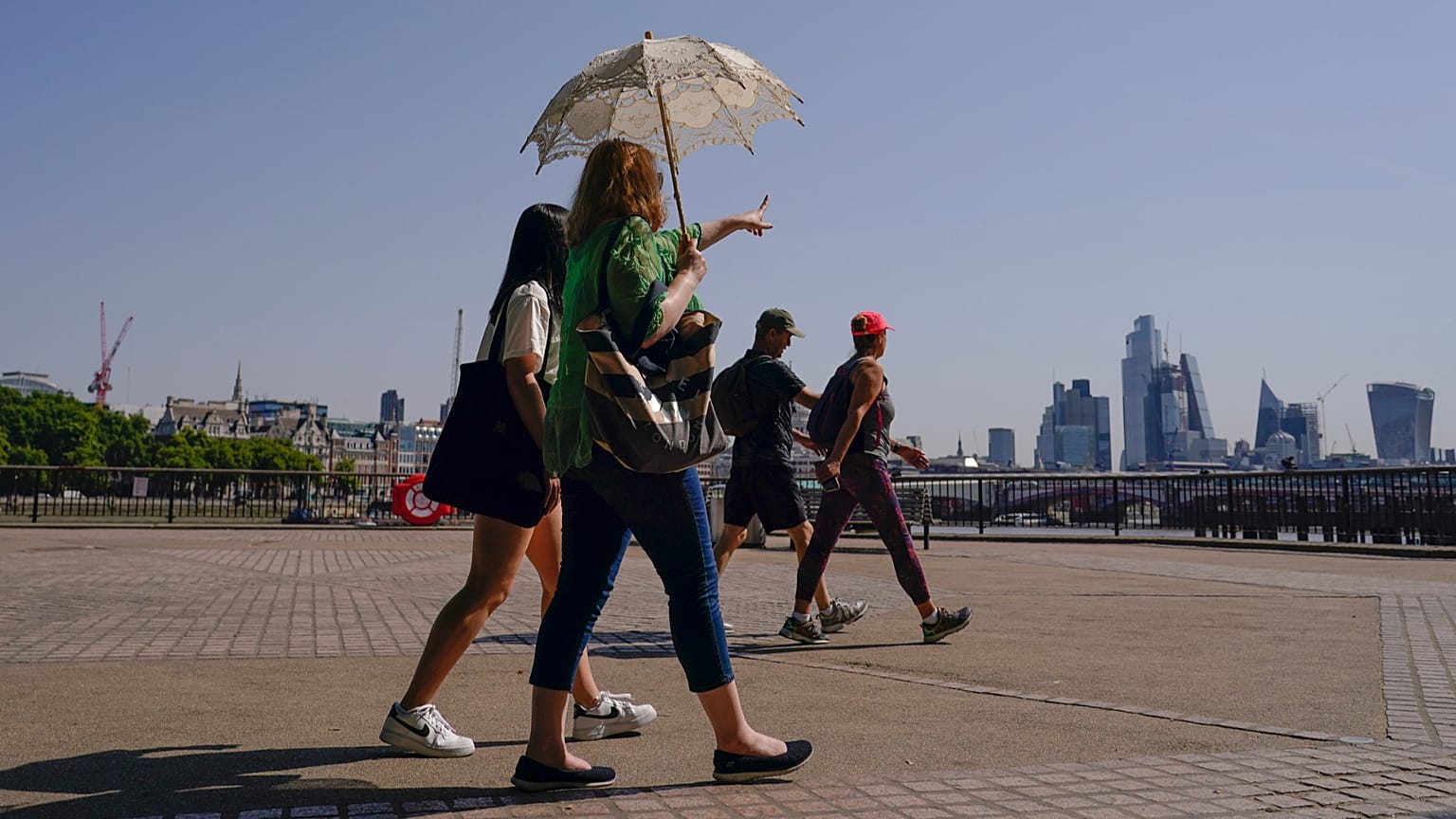
Thousands of deaths across Europe last summer were attributed to extreme heat, as temperatures soared to 40℃ across large parts of the continent and pushed several countries into drought.
Researchers at Imperial College London and the London School of Hygiene & Tropical Medicine looked at 854 European cities and found that climate change was responsible for 68 per cent of the 24,400 estimated heat deaths during this period, having raised temperatures by up to 3.6°C.
2025’s extreme summer weather also sparked short-term economic losses of at least €43 billion, with total costs slated to hit a staggering €126 billion by 2029.
A study published back in September, led by Dr Sehrish Usman at the University of Mannheim in collaboration with European Central Bank (ECB) economists, found that heatwaves, droughts and floods affected a quarter of all EU regions during the 2025 summer.
The immediate losses amount to 0.26 per cent of the EU’s economic output in 2024, but the study’s authors stress that these estimates are likely conservative as they don’t include compound impacts when extreme events occur simultaneously, such as heatwaves and droughts.
‘Everyone should buckle up’: Scientists change El Nino labelling to keep up with temperature spike
Copyright AP Photo/Channi Anand, File
By Seth Borenstein with AP
Published on
Scientists have had to update how they label El Nino and La Nina because of rapid weather changes caused by global warming.
The natural El Nino cycle, which warps weather worldwide, is both adding to and shaped by a warming world, meteorologists say.
A new study calculates that an unusual recent twist in the warming and cooling cycle that includes El Nino and its counterpart La Nina can help explain the scientific mystery of why Earth's already rising temperature spiked to a new level over the past three years.
Separately, scientists have had to update how they label El Nino and La Nina because of rapid weather changes caused by global warming. Increasingly hot waters globally have caused the US National Oceanic and Atmospheric Administration this month to alter how it calculates when the weather pattern has flipped into a new cycle. It's likely to mean that more events will be considered La Nina and fewer qualify as an El Nino for warming tropical waters.
Earth's average monthly temperature took a noticeable jump up from the long-term upward trend connected to human-caused climate change in early 2023, and that increase continued through 2025. Scientists have many theories about what's happening, including an acceleration of greenhouse gas warming, a reduction in particle pollution from ships, an underwater volcano eruption and increased solar output.
In a new study in Nature Geoscience this month, Japanese researchers look at how the difference in energy coming to and leaving the planet – called Earth's energy imbalance – increased in 2022. An increased imbalance, or more trapped heat, then leads to warmer temperatures, scientists say. The researchers calculate that about three-quarters of the change in Earth's energy imbalance can be attributed to the combination of long-term human-caused climate change and a shift from a three-year cooling La Nina cycle to a warm El Nino one.
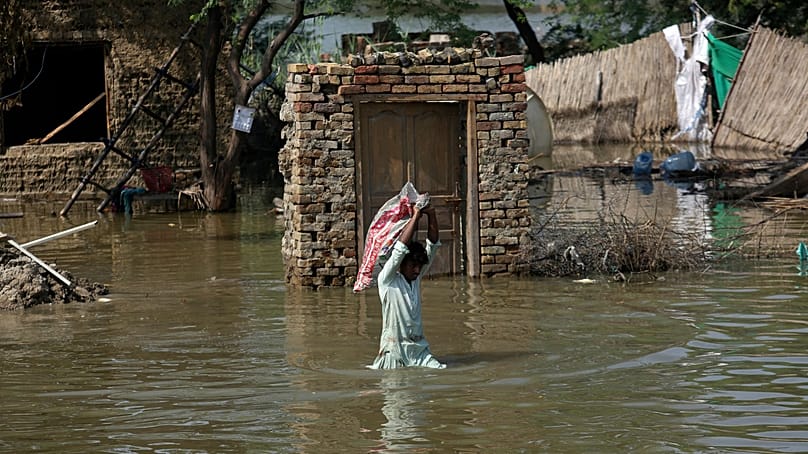
A man carries usable belongings salvaged from his flood-hit home across a flooded area in Shikarpur district of Sindh province, of Pakistan, Wednesday, Aug. 31, 2022. AP Photo/Fareed Khan, File
What's El Nino vs La Nina
El Nino is a cyclical and natural warming of patches of the equatorial Pacific that then alters the world's weather patterns, while La Nina is marked by cooler than average waters.
Both shift precipitation and temperature patterns, but in different ways. El Ninos tend to increase global temperatures and La Ninas depress the long-term rise.
La Ninas tend to cause more damage in the United States because of increased hurricane activity and drought, studies have shown.
From 2020 to 2023, Earth had an unusual 'triple dip' La Nina without an El Nino in between. In a La Nina, warm water sticks to a deeper depth, resulting in a cooler surface. And that reduces how much energy goes out into space, says study co-author Yu Kosaka, a climate scientist at the University of Tokyo.
She compares it to what happens when people have fevers.
“If our body's temperature is high then it tends to emit its energy out, and the Earth has the same situation happening. And as the temperatures increase, it acts to emit more energy outward. And for three-year La Nina, it’s opposite,” Kosaka says.
So more energy – which becomes heat – is trapped on Earth, she says. La Ninas more typically correspond to a one- or two-year buildup of extra energy imbalance, but this time it was longer so the difference was more noticeable and included hotter temperatures, Kosaka says.
“When there is a transition from La Nina to El Nino, it's like the lid is popped off,” releasing the heat, explains former NOAA meteorologist Tom Di Liberto, who's now with Climate Central.
About 23 per cent of the energy imbalance driving the recent higher temperatures comes from this unusually long La Nina pattern, with slightly more than half coming from gases from the burning of coal, oil and gas, the study authors say. The rest can be other factors.
Scientist Jennifer Francis of the Woodwell Climate Research Center, which wasn't involved in the study, says the research makes sense and explains an increase in energy imbalance that some scientists were attributing to accelerated warming.
Changing how El Ninos and La Ninas are labelled
For 75 years when meteorologists calculated El Ninos and La Ninas, it was based on the difference in temperature in three tropical Pacific regions compared to normal. An El Nino was 0.5 degrees Celsius warmer than normal and La Nina was cooler than normal by the same amount.
The trouble in a warming world is what's considered normal keeps shifting.
Until now, NOAA used the 30-year average as normal. It updated the 30-year average every decade, which is how often it updates most climate and weather measurements. Then the water warmed so much for El Ninos and La Ninas that NOAA updated its definition of normal every five years, but that wasn't enough either, says Nat Johnson, a meteorologist at NOAA's Geophysical Fluid Dynamics Lab.
So NOAA came up with an El Nino index that's relative, starting this month. This new index compares temperatures to the rest of Earth's tropics. Recently that difference between the old and new methods has been as much as half a degree Celsius, and “that's enough to have an impact,” Johnson says.
That's because what really matters with El Ninos and La Ninas is the way the waters interact with the atmosphere. And recently the interactions didn't match the old labelling, but they do match the new method, Johnson says.
This will likely mean a few more La Ninas and fewer El Ninos than in the old system, Johnson says.
Here comes another El Nino
NOAA's forecast is for an El Nino to develop later this year in the late summer or autumn. If it comes early enough, it could dampen Atlantic hurricane activity. But it would also mean warmer global temperatures in 2027.
“When El Nino develops, we’re likely to set a new global temperature record,” Woodwell's Francis says in an email. “'Normal' was left in the dust decades ago. And with this much heat in the system, everyone should buckle up for the extreme weather it will fuel.”