Thursday, June 04, 2026

How honeybees really crown their queens


Royal cribs and ladies-in-waiting: new details about the creation of bee royalty


University of California - Riverside

Royal crib 

image: 

Hatching queen surrounded by royal guards. 

view more 

Credit: More than Honey/Markus Imhoof


For generations, scientists believed a queen honeybee was made almost entirely by diet: feed an ordinary larva enough royal jelly and a ruler emerges. But new research suggests queens are created through a more elaborate process.

Young worker bees construct specialized nursery chambers complete with custom wax, warmer temperatures, and devoted attendants that help determine whether a larva becomes royalty.

Published today in the journal Nature, the study found that wax chambers where future queens develop, called queen cells or “royal cribs,” are not simply protective shelters, but carefully engineered environments essential to producing healthy queens. Researchers identified a previously unrecognized class of young worker bees dubbed “queen cell builders” that appear uniquely adapted for the task.

“The old idea was relatively simple: take an egg, move it into a queen cell, feed it royal jelly, and you get a queen,” said Boris Baer, entomologist and director of the Center for Integrative Bee Research (CIBER) at the University of California, Riverside, whose laboratory contributed to the work. “What we found is that there’s an entire machinery behind this process. It’s much more sophisticated than we imagined.”

Honeybee queens and workers begin life the same way: as nearly identical eggs. Yet queens grow larger, mature faster, and live dramatically longer than worker bees. They are also the colony’s sole egg layer, responsible for producing the next generation of bees.

Scientists have long credited royal jelly, a milky, nutrient-rich substance worker bees feed to young larvae, as the primary force behind that transformation.

The new study suggests food is only part of the story.

Using thermal imaging, behavioral tracking, materials science, and chemical testing, the researchers found that queen cells differ sharply from the familiar hexagonal chambers used to rear worker bees.

The peanut-shaped queen cells are built from wax with distinct physical and chemical properties, making them less dense, more pliable, and better able to maintain warmth and moisture for developing larvae. The wax also differed in its fatty acids and chemical signals, creating what researchers describe as a specialized developmental environment.

To test whether the nursery itself mattered, the researchers raised developing queens in cells made either from queen wax or ordinary worker wax. Larvae raised in worker wax were more likely to die and grew into smaller queens, even when fed the same diet, suggesting that the surrounding environment plays a critical role in development.

The study also revealed the workers behind the process. Queen cell builders, typically younger than other hive workers, maintain elevated body temperatures and altered physiology while tending future queens. The extra warmth appears to speed development: queen bees mature in about 16 days, compared with roughly 21 days for worker bees, an advantage when a colony urgently needs a new ruler.

Rather than simply recycling wax, the bees actively gather, modify, and enrich materials for royal chambers. They also activate different biological processes tied to wax production, essentially changing how their bodies function while tending future queens.

Researchers even tracked how the bees repurposed material from elsewhere in the hive. By adding trace amounts of graphite to ordinary honeycomb, the team showed that darkened wax eventually appeared in queen cells, evidence that workers were selectively gathering and transforming material for royal use.

The process, Baer said, resembles something closer to a royal court than a simple insect nursery. It is clear that bees execute a tightly coordinated effort devoted to producing the colony’s next ruler.

“You can think of it as something like Buckingham Palace,” he said. “There is a dedicated group of bees focused entirely on raising the queen, and if they don’t get it right, the colony cannot reproduce.”

The researchers found the same pattern in both Asian and European honeybee species, suggesting the strategy may be deeply rooted in honeybee evolution.

This work brought together researchers with expertise ranging from behavior and physiology to materials science, chemistry, and genomics. It was led by two former UCR postdoctoral researchers, Yu Fang and Yahya Al Naggar. “In its collaborative nature, this project reflects the broader CIBER philosophy of bringing different disciplines together to tackle complex biological questions,” Baer said.

Beyond honeybees, the findings may change how scientists think about development more broadly, including the ways surroundings, social groups, and built environments shape biology.

For decades, queen bees seemed to offer one of biology’s simpler stories: special food makes a special insect. The new findings suggest that a queen emerges not from diet alone, but from an entire society working together to shape her future.

“This work highlights how much sophistication exists inside insect societies,” Baer said. “Honeybee colonies are not simply collections of individuals. They function as integrated biological systems capable of engineering their own environments.”


Queen cell 

A queen cell with the royal guard attendants. 

Credit

Fang Yu/UCR


It may not just be what’s in ultra-processed foods, but how they’re made


New observational study suggests processing itself could partly explain links to diabetes, heart disease, and early death


Tufts University

Ultra-processed foods in a grocery store 

image: 

"Addressing structural and policy-related barriers to accessing fresh and minimally processed foods remains critical for promoting dietary changes that improve the health and life span for all Americans,” said Dariush Mozaffarian, cardiologist and director of the Food is Medicine Institute at the Friedman School of Nutrition Science and Policy at Tufts University.

view more 

Credit: Imani Khayaam for Tufts University


Concerns about the health effects of ultra-processed foods are growing, as studies increasingly link them to conditions such as heart disease, diabetes, and even early death. But scientists are still debating what’s driving those risks: the nutritional quality of these foods—which are often high in saturated fat, sodium, and added sugars—or the industrial processing and additives used to make them. 

A new study from researchers at the Food is Medicine Institute at the Gerald J. and Dorothy R. Friedman School of Nutrition Science and Policy at Tufts University, published in American Journal of Public Health, suggests the processing itself may play an independent role. The researchers found that people who ate more ultra-processed foods had worse health outcomes, even after accounting for the overall nutritional quality of the foods. 

“The findings suggest ultra-processed-food factors beyond nutrients—such as changes to foods’ cellular structure, loss of beneficial chemical compounds, additives, and chemicals from packaging—may create health risks not addressed by traditional nutrition metrics or policies,” said the study’s senior author, Dariush Mozaffarian, cardiologist and director of the Food is Medicine Institute. 

For the observational study, the researchers analyzed data from 10 consecutive cycles of the National Health and Nutrition Examination Survey (NHANES) from 1999 to 2018, linked to National Death Index through 2018. Study participants had completed one or two 24-hour dietary recalls. 

Using a standard classification system, the team grouped foods based on how they were made—from minimally processed food-based ingredients like fruits and vegetables to ultra-processed products made with industrial ingredients and additives not typically used in cooking. The researchers also rated the nutritional quality of foods using a system that scores foods based on their overall healthfulness. Each participant received an overall diet-quality score based on the foods they reported eating. The team then examined how ultra-processed food consumption was linked to current health measures—such as weight, blood sugar, and cholesterol—as well as long-term risk of death.  

For every 10% increase in calories from ultra-processed foods, the researchers found worse health markers. People who ate more of these foods tended to have higher body weight, worse blood sugar control, higher blood pressure, and less favorable cholesterol levels. They were also more likely to have conditions such as diabetes, metabolic syndrome, and cancer and had a slightly higher risk of dying during the study period. 

These links remained even after researchers accounted for reported foods’ nutrient quality and the amounts of saturated fat, added sugar, or sodium present in the ultra-processed foods. The patterns were largely the same across different subgroups of people. 

“Ultra-processed foods make up a substantial portion of the American diet, accounting for more than 50% of adults’ and about 60% of children’s caloric intake,” said Juna Hatta-Langedyk, first author and an undergraduate biology student at Tufts. “Understanding how these foods affect health is a critical public health priority, given the large proportion of the population affected.” 

“Addressing structural and policy-related barriers to accessing fresh and minimally processed foods remains critical for promoting dietary changes that improve the health and life span for all Americans,” said Mozaffarian. “Our findings can help inform many current policy efforts, such as a national definition of ultra-processed foods, and multiple states’ endeavors to propose and pass laws addressing ultra-processed foods, including warning labels, bans on certain additives, and limits in school meals.”  

Lu Wang, Bingbing Fan, and Peilin Shi from the Friedman School of Nutrition Science and Policy are also co-authors on this study. Research reported in this article was supported by the National Institutes of Health’s National Heart, Lung, and Blood Institute under award number R01HL115189, as well as by an American Diabetes Association’s Pathway to Stop Diabetes award and the Laidlaw Foundation’s Laidlaw Scholars Leadership & Research Programme. Complete information on methodology, limitations, and conflicts of interest is available in the published paper. 

The content is solely the responsibility of the authors and does not necessarily represent the official views of the funders. 

CUTHULU STUDIES

Study shows octopuses' impressive ability to navigate space


Researchers demonstrate invertebrates can solve a spatial problem using a mirror.


Dartmouth College

California two-spot octopus in front of a mirror 

image: 

California two-spot octopus in front of a mirror in the Octopus Lab at Dartmouth.

view more 

Credit: Photo by Mary Kieseler.


Octopuses are remarkably intelligent creatures, as was demonstrated by Inky the Octopus's famous escape from the National Aquarium of New Zealand through a drainpipe back to sea in 2016.

A new Dartmouth study shows octopuses can use mirrors to find food out of sight, demonstrating spatial cognitive abilities. The results are published in Current Biology.

"Our findings are the first to demonstrate that invertebrates can use mirrors to understand their environment to find prey," says lead author Mary Kieseler, Guarini '25, who conducted the research as a PhD student in the Department of Psychological and Brain Sciences at Dartmouth and is now a postdoc at Switzerland’s University of Fribourg. "It's a skill that previously has only been documented in vertebrates, such as in some mammals and some birds."

The researchers trained three California two-spot octopuses (Octopus bimaculoides) in the Octopus Lab at Dartmouth to not attack a crab image that they see in a mirror but instead to infer and move to where the hidden stimulus was displayed behind them.

First, the octopuses were acclimated to the mirror in their habitat. Then, they were trained to understand how a mirror works using a live food reward—crab—which was placed in a glass jar that they could see in the mirror. To obtain the crab, the octopus had to make a 90-degree turn around a corner.

"We don't enter the world knowing how to use a mirror but learn how to use a mirror," says senior author and cognitive neuroscientist Peter Tse, a professor of psychological and brain sciences at Dartmouth. Just as new drivers learn to use a rearview mirror to track other vehicles, "Octopuses can also learn how to use a mirror to infer where things are in the world."

Octopuses have chemoreceptors that enable them to smell and taste by touch. So, for the experiment, the team used a virtual crab stimulus rather than a live crab. 

The octopus was placed in a start box open to the top and front and shown the virtual crab image in a mirror directly in front of the animal. The virtual crab image was projected from behind the octopus on the left or right side. Instead of the octopus going to the mirror to try and obtain the virtual crab, it went to the projection site, requiring a 180-degree turn, where it then received a live crab reward. In some cases, the octopus would climb up and over the box to the side where the crab was projected rather than exiting the box and swimming around to the side.

The results show that octopuses travelled to the correct side approximately 73% of the time.

During the trials, the team manually tracked a spot between the eyes on the mantle, which is like the head of the octopus, from overhead. The researchers also calculated the length of the paths the octopuses used to seek the reward. While they did not always choose the shortest way of travel, they became faster at going to where the stimulus was based.

"Octopuses are among the most evolutionarily distant animals from humans, as our last common ancestor was a worm that lived 350 to 500 million years ago," says Kieseler.  "Given that such a remote organism has independently evolved the means to use a mirror as a tool to process spatial cognition suggests that the underlying cognitive processes might be subject to convergent evolution, where different species evolve similar neural solutions to the same challenge."

The world in which octopuses live, mainly coral reefs and the ocean seafloor, are complex environments.

"Octopuses are like cats: they will sneak up on their prey and pounce, and they want to do so as fast as possible, so that they don't become preyed upon," Tse says.

"Hunters are very effective when they have a mental map of their territory, so that they know where they are in relation to their environments," says Tse. "Our work suggests that octopuses might also have internal maps, an internal representation of space." 

However, according to the co-authors, additional research is needed to prove this.

Kieseler is available for comment at: Marie-luise.Kieseler@dartmouth.edu.

###

Experiment setup 

Experiment setup for testing the octopuses’ ability to utilize the mirror.

Credit

Graphic by Mary Kieseler and Marvin Maechler.

Mexican designer blends soccer and pre-Hispanic culture ahead of the World Cup

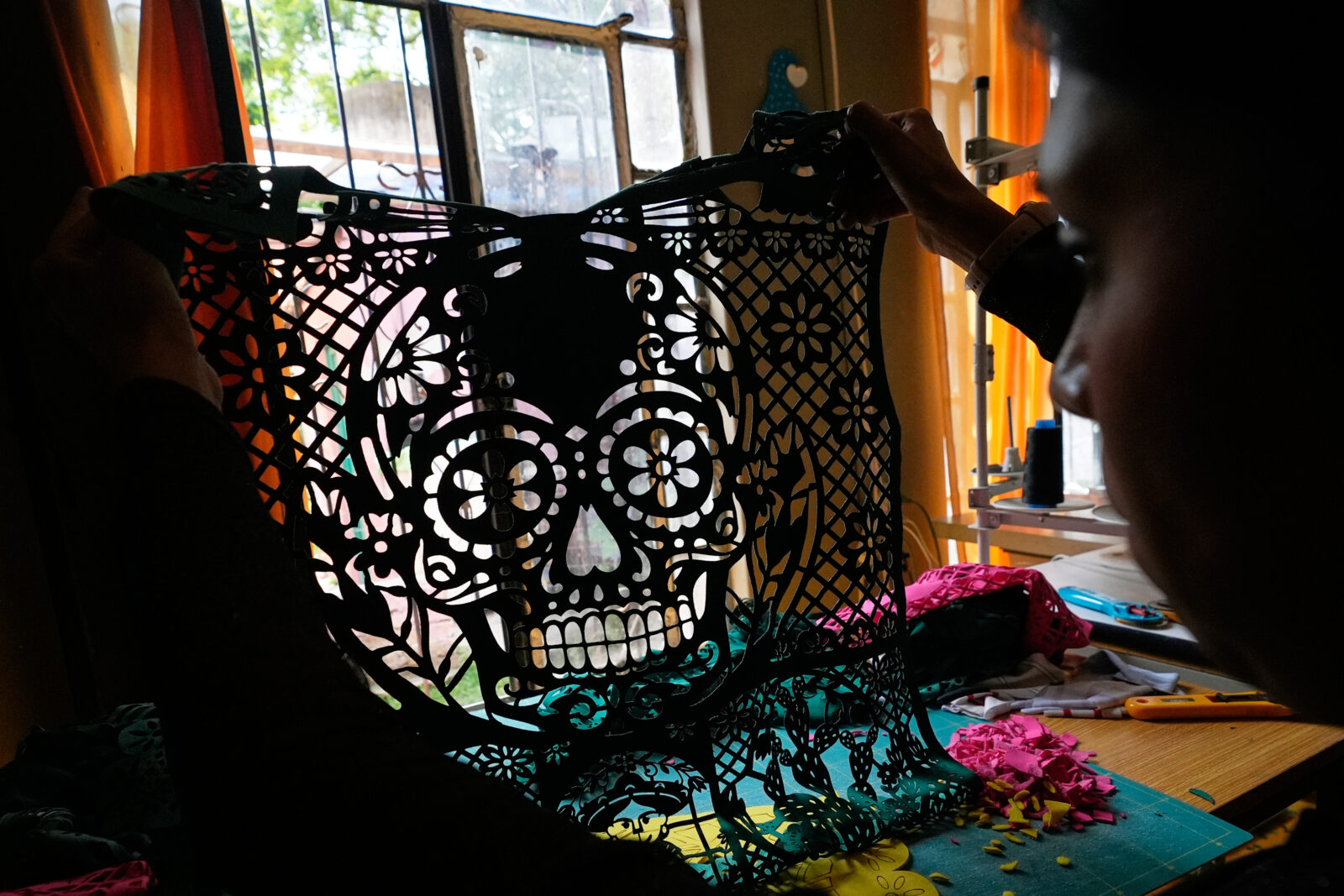
MEXICO CITY (AP) — The collection is called “Calados del Alma” or “Cutouts of the Soul.” It draws inspiration from ancient Mexican beliefs and papel picado, the delicate cut-paper ornaments commonly used during local celebrations and holidays.


Maria Teresa Hernandez
June 2, 2026 

MEXICO CITY (AP) — It’s no coincidence that Hugo Rosas’ jersey designs ahead of the World Cup resemble some of Mexico’s most iconic decorations. His work fuses soccer and Mexican identity to showcase his country’s culture beyond its borders.

His latest collection is called “Calados del Alma” or “Cutouts of the Soul.” It draws inspiration from ancient Mexican beliefs and papel picado, the delicate cut-paper ornaments commonly used during local celebrations and holidays.

“We try to create concepts that resonate with us and convey traditions that make Mexicans feel proud,” said Rosas, who has run a workshop with his brother Andrés near Mexico City since 2022. “The country’s best is reflected in papel picado, colors and town celebrations.”

The first jersey sketched by the brothers portrayed Quetzalcoatl, the feathered serpent deity revered by several pre-Hispanic civilizations. That garment remains Andrés’ favorite to date.

“Quetzalcoatl represents a balance that sees the world as a system, not as something extractive that human beings can simply benefit from,” said Andrés, who oversees the brand’s marketing. “I connect with that pre-Hispanic worldview, which is why most of our products are deeply rooted in that vision.”

Ancient beliefs, modern jerseys

Hugo’s World Cup collection builds on an earlier set of designs he called “Ofrenda Viva,” or “Live Offering.”

Its aesthetics and concept are rooted in Mexico’s Day the Dead — that the living remember and honor their dearly departed with celebration instead of sorrow.

“It’s a garment resembling papel picado so that a person can offer their actions, thoughts and passions as an homage to those who are already gone,” Rosas said.

The jerseys are made of polyester so the fabric can be cut like papel picado without becoming vulnerable to tears or rips. Rosas and his team once experimented with natural fibers, but the material could not withstand the weight and structure required after production.

Designing each jersey can take up to three weeks, while sewing and cutting requires between eight and 10 hours of work.

Rosas’ first step is deciding the symbols he wishes to depict. He then determines the size and shape of each figure so the stitching aligns with his vision. Once a design is ready, the team’s seamstresses patiently cut and sew each piece of clothing.

A modern armor

The Rosas brothers operate on a modest scale and are proud of that approach. They value the care and time devoted to each jersey, keeping the process as artisanal as possible.

Since the World Cup garments went on sale in April, their Mexclart brand has crafted about 30 jerseys. Hugo Rosas expects demand to increase as the opening ceremony approaches.

Among his other collections is one devoted to pre-Hispanic gods. His favorite portrays Mictlantecuhtli, the Aztec ruler of the underworld, who is often depicted in skeletal form.

“Putting on a garment like this is like wearing a modern armor through which we can carry that pride and passion for our roots and show it to the world,” Rosas said.

He sometimes turns to books about Mexico’s history while developing his designs. However, the source of inspiration he enjoys the most is traveling to Indigenous communities where ancient ceremonies and customs remain alive.

“If it were up to me, I’d use gold or another material that could accurately represent our gods the way our ancestors did,” he said. “All the garments we create are meant to give Mexicans the chance to bring those deities into the present.”

___

Associated Press religion coverage receives support through the AP’s collaboration with The Conversation US, with funding from Lilly Endowment Inc. The AP is solely responsible for this content.


For 2 centuries, Latter-day Saints have revered religious freedom – but their definition is evolving

(The Conversation) — Latter-day Saints have long valued the US Constitution’s promise of religious freedom – but the church has also tested its boundaries.


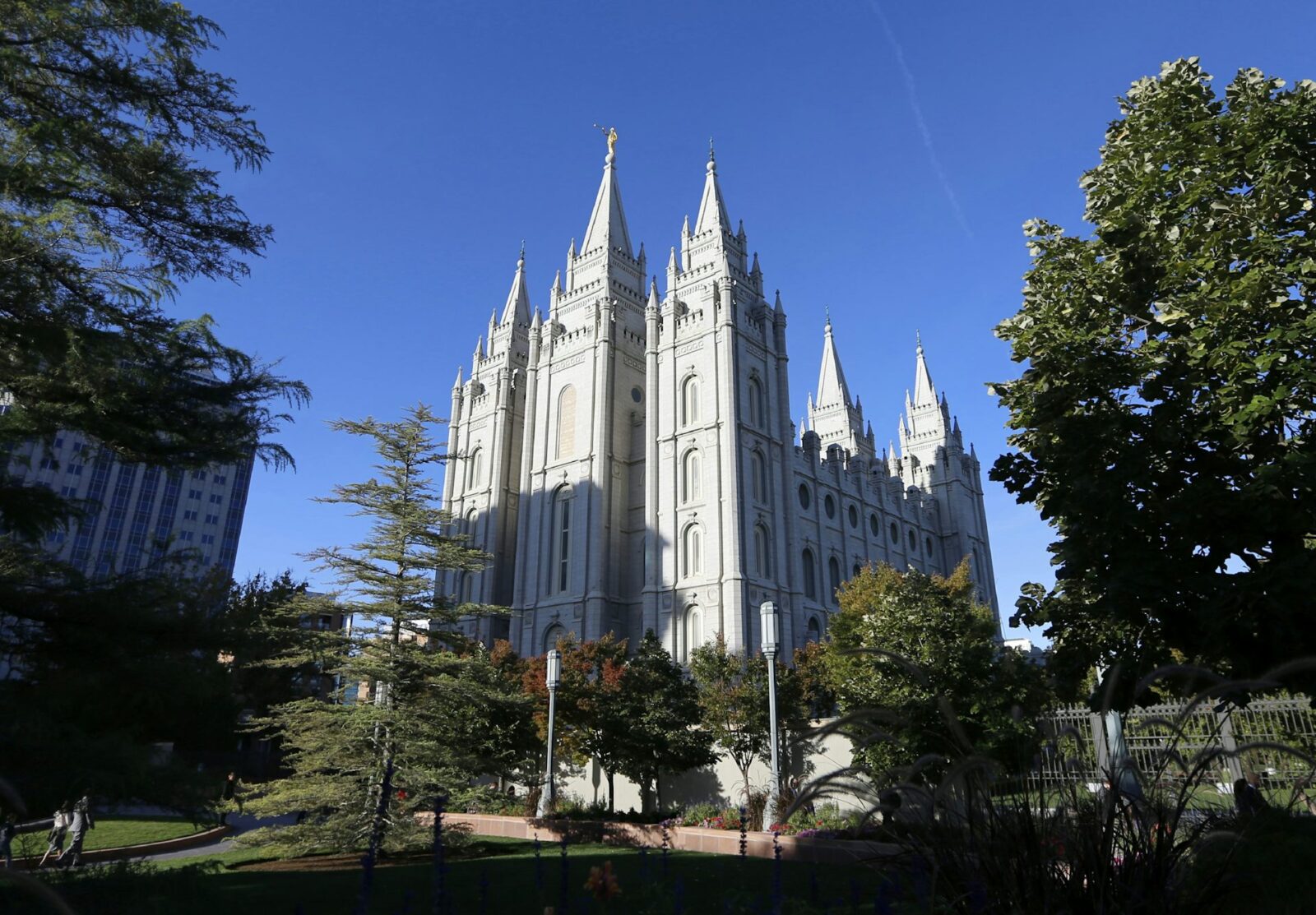
Leaders of the Church of Jesus Christ of Latter-day Saints have called for a fast on July 5, 2026, to give thanks for religious liberty. (AP Photo/Rick Bowmer)

Nicholas Shrum and Benjamin Park
June 2, 2026 at 1:48 p.m. ET


(The Conversation) — On July 5, 2026, the Church of Jesus Christ of Latter-day Saints is encouraging its American members to participate in a special fast: a day to “express gratitude for religious liberty and to pray that it be strengthened throughout the world,” in the words of its top three leaders.

The fast will coincide with the United States’ semiquincentennial celebrations. For Latter-day Saints, the 250th anniversary commemorations are not merely a historic milestone for the country, but an opportunity to reflect on their faith’s relationship to the American experiment. In the church’s early decades, that relationship often tested the boundaries of religious liberty – and the church’s own understanding of that principle has been evolving ever since.
Divine plan

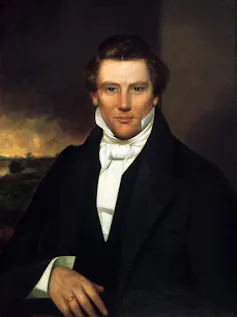
From the faith’s beginnings in the 1830s, founder Joseph Smith frequently emphasized the significance of religious liberty. In one 1843 sermon, for example, Smith explained that “civil and religious liberty … were diffused into my soul by my grandfathers,” both of whom had fought in the war of independence.


Joseph Smith published the Book of Mormon in 1830.
Wikimedia Commons

Smith’s personal connection to the Revolution and the nation’s founding documents were central to the faith’s developing theology. Latter-day Saints believe that their church is a restoration of Jesus’ “only true and living church,” and that America’s founding helped make that possible. In other words, Mormonism exists because of the United States, specifically its tradition of religious freedom enshrined in the Constitution’s First Amendment.

According to this logic, America’s founding was a crucial part of God’s divine plan, accomplished by chosen servants. Its founding documents are treated with reverence, especially the Constitution.

One of Smith’s own revelations declared that God “established the Constitution of this land, by the hands of wise men whom I raised up unto this very purpose,” suggesting divine intervention.

‘Kingdom of God’

However, Latter-day Saints soon came to doubt whether the United States was truly a land of religious freedom.

Early on, the small Mormon church faced persecution – especially in Missouri and Illinois, where state-sanctioned mobs forced members to flee. After Smith was killed by a mob in 1844, his successor, Brigham Young, decided to lead Latter-day Saints outside the country’s borders into present-day Utah, which was then northern Mexico.

Yet on their path to the Great Basin region, the federal government enlisted a group of church members to serve in the Mexican-American War. Known as the Mormon Battalion, they marched into Mexican territory under an American flag with only 13 stars. It was a symbolic protest: the U.S. they hoped to represent was the one that existed during the American Revolution, not the one with 28 states that had chased them out. They saw their own church, not the current government, as the revolutionaries’ true inheritor.


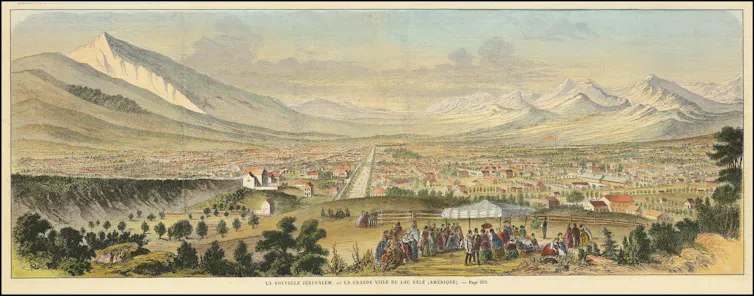
An 1863 depiction of Salt Lake City, which had been founded about 15 years earlier.
Wikimedia Commons

Once the war was over, the U.S. annexed much of Mexico’s land, including the Utah region. For about two decades the church had latitude to establish what it called its “Kingdom of God” in the West, in line with church doctrine. But the federal government soon cracked down, particularly on the church’s commitment at the time to polygamy and theocracy: beliefs that Mormons insisted were protected by the First Amendment.

The ensuing legal and political battles lasted for four decades, testing the boundaries of American religious liberty. Only after the Supreme Court ruled against a church member with two wives in 1879, and Congress passed legislation to further enforce anti-polygamy laws, did the church publicly forfeit the practice in 1890.

Yet even amid these struggles, Latter-day Saint devotion to the founding generation continued. In 1877, for example, Wilford Woodruff, who later became president of the church, declared that he had received a vision of the signers of the Declaration of Independence. The signers “gathered around me, wanting to know why we did not redeem them” by offering them Latter-day Saint ordinances for the deceased.


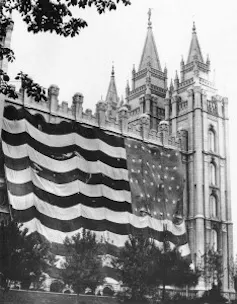
An American flag draped over the Salt Lake Temple in 1896, the year Utah became a state.
Charles Ellis Johnson/Wikimedia Commons

Though Woodruff’s vision has become the subject of Mormon folklore, it represents how deeply a certain strain of Americanism became woven into church culture in the 19th century. Just as Smith’s revelations had done a generation before, this vision and the sentiments behind it elevated the Declaration of Independence and the U.S. Constitution to quasi-scripture.

Shifting focus

During the 20th century the church continued to “Americanize,” such as by embracing U.S. capitalism and participating in the two-party system. Talk about religious freedom shifted away from primarily seeking protection for religious minorities toward protection for their own theological commitments as part of a Christian mainstream.


Ezra Taft Benson, then president of the church, delivered an address in 1987 on the Constitution’s sacred significance.

By the mid-1900s, church leaders had embraced a conservative view of politics and law that championed limited government. Paralleling broader American attitudes during the Cold War, which pitted “godless” Soviet communism against American democracy and freedom of religion, Latter-day Saints used the language of religious freedom to advocate for their own interpretations of religion’s role in the public square.

Latter-day Saint leaders’ list of perceived threats evolved from New Deal legislation and civil rights protections to abortion, the Equal Rights Amendment and, finally, homosexuality – similar to other conservative Christian groups’ concerns. The church got involved in a number of legal cases and campaigns opposing same-sex unions.

Since the 2015 Supreme Court decision in Obergefell v. Hodges, which legalized same-sex marriage across the United States, the church’s public policy stance has focused on compromise, balancing protection of religious liberties with protection against discrimination for LGBTQ+ people in housing and employment.


Dallin Oaks, a former Utah Supreme Court justice who is now president of the church, delivered a landmark speech on religious liberty at the University of Virginia in 2021.


A global church

What becomes clear across the past two centuries is that definitions of religious freedom have substantially changed, including for Latter-day Saints. In the 19th century, church members focused on protecting all minority religious groups like themselves against the Protestant majority. Today, the church’s messaging on religious freedom, at least in the United States, usually concerns protecting beliefs that clash with secular progressivism and LGBTQ+ protections. Overall, its approach has largely aligned with the religious right.

Equally significant, a majority of the church’s members now live outside the United States, and it is eager to present an image that is less American and more universal. Instead of elevating the Declaration of Independence and the Constitution as quasi-scripture, leaders tend to highlight principles of religious freedom that are applicable across the globe.


The July fast will highlight “the importance of the Declaration of Independence and the Constitution and how these documents support religious freedom,” but it will also call for expanding liberty around the world. The day will be an opportunity for Latter-day Saints to reflect on their own place in the American story – a place that is still being defined.

This article has been updated to clarify how Joseph Smith was killed.


(Benjamin Park, Associate Professor of History, Sam Houston State University. Nicholas Shrum, Doctoral Student in Religious Studies, University of Virginia. The views expressed in this commentary do not necessarily reflect those of Religion News Service.)
Opinion

At Union seminary, I saw the power of religious pluralism. It offers the US a better path.

(RNS) — As I prepare to step down from the presidency, I see a blueprint for a flourishing, interreligious America. But when I turn to the headlines, I see our nation barreling toward a far more destructive vision.


People attend Rededicate 250 on the National Mall in Washington. (RNS photo/Jack Jenkins)

Serene Jones
June 2, 2026 
RNS


(RNS) — Nearly every day, dozens of religiously diverse students — Christian, Jewish, Buddhist, spiritual, agnostic, atheist and beyond — walk the halls of Union Theological Seminary, the Manhattan school I’ve been proud to lead for almost two decades. They share dorms, take classes and enjoy meals together. They engage in lively discussions about theology. They organize peaceful demonstrations to advance a more just world. And they host events to celebrate their different religious traditions.

As I prepare to step down from the presidency next month, I look at this community and see a blueprint for a flourishing, interreligious America. But when I turn to the headlines, I see our nation barreling toward a far more destructive vision.
RELATED: As seminaries shuttered, Union grew. For Serene Jones, controversy was the price of survival.

President Donald Trump and his far-right allies are taking a wrecking ball to the foundations of our pluralistic society and purposely sowing discord between people of different religious traditions. Ultimately, they aim to impose a narrow, exclusionary version of Christianity on the entire nation — one that views difference as a threat rather than a strength.

Case in point: The Trump administration and other far-right leaders have consistently expressed a desire to make America a conservative Christian nation — and have pushed policies that reflect those beliefs. They’ve spewed rhetoric that frames Muslims and other marginalized religious communities as enemies rather than neighbors. And now, as we mark the 250th anniversary of the signing of the Declaration of Independence, the administration is holding events steeped in far-right Christian symbolism.

I’ve got news for Trump — this isn’t how you make a nation strong. On the contrary, when you create spaces for diverse religious communities to come together and collaborate, true strength emerges. I’ve witnessed this at Union Theological Seminary time and time again.

One of my most poignant memories happened in 2024, during the height of pro-Palestine protests. Police officers at Columbia University across the street stormed that campus and arrested student demonstrators.


Pro-Israel demonstrators, center, raise signs while pro-Palestinian supporters protest outside Columbia University, Sept. 3, 2024, in New York. (AP Photo/Yuki Iwamura)

Instead of ostracizing these students, we welcomed them to campus for a seder. The service, led by Columbia’s Jewish students, brought together students of diverse religious traditions to share a meal — a meal full of laughter, prayer and deep thought. It was a beautiful display of how different religious communities could come together for a shared moment of understanding and peace.

In my time at Union, a historically Christian seminary, we’ve also expanded programs devoted to multiple religious traditions. We now have classes in Buddhism, Islam and more. We also continue to partner with our long-standing neighbor, Jewish Theological Seminary. Additionally, we instituted requirements for students to learn about religious traditions other than their own. When our graduates enter the world, they don’t “tolerate” the imam or the Buddhist priest — they work alongside them. Indeed, they often are them.

And we’ve ensured that campus spaces encourage interreligious dialogue. We transformed a former finance office into a multifaith prayer and meditation hall. The wood grain of the floor points toward Mecca, ensuring every student knows they have a place to turn. Meanwhile, our campus hosts an array of events from different religious communities.

All of these moments and initiatives may seem small in the grand scheme of our world. But when people have the skills and desire to engage with different religious communities, they can make a difference. Throughout our nation’s history, interfaith communities have come together to advance humanitarian aid, sanctuary for immigrants, criminal justice reform and more.

As an example, every Monday, members of the Union community gather with other faith groups at Columbus Circle in New York City for Multifaith Mondays — an anti-fascist public witness that proves faith is a tool for love and peace, not a weapon of division. The gatherings started small but have continued to grow. These demonstrations have offered space for reflection, boosted community connections and inspired people to take action.

Meanwhile, during immigration enforcement raids in Minnesota, we saw a breathtaking surge of interreligious solidarity. With this collaboration, religious communities — including Union graduates — were able to stall Immigration and Customs Enforcement agents and save immigrants from their clutches.

Make no mistake: Navigating religious differences involves friction. But when met with respect, those disagreements make us more understanding, inclusive and effective.

I can’t help but see a grand irony in this political moment. As we at Union have strengthened our campus infrastructure and built a more inclusive community, Trump is taking a sledgehammer to the so-called People’s House. He is attempting to dismantle the basic structures of our democracy to build a home layered in gold and exclusion.

We are proof that there is an alternative house being built in America — a multireligious and deeply diverse community that is growing rapidly and refuses to be silenced.

As I step down from Union at the end of this school year, my hope is that our seminary serves as a powerful example of the power of interreligious engagement. President Trump believes our strength lies in a single, narrow religious perspective. But after nearly two decades at Union, I know the truth: Religious diversity and, indeed, all of our beautiful differences are not threats. They are the only thing capable of holding the roof up.

(The Rev. Serene Jones is president and the Johnston Family Professor for Religion & Democracy at Union Theological Seminary, a globally recognized seminary and graduate school of theology in Manhattan where faith, spirituality and scholarship meet to reimagine the work of justice. The views expressed in this commentary do not necessarily reflect those of Religion News Service.)
Why Mary, as the Immaculate Conception, became the patron saint of the US in the 1840s

(The Conversation) — Mary, as the Immaculate Conception, became patroness of the United States before the Vatican officially defined that belief as dogma.


Bridget Retzloff and Stephanie Shreffler
June 3, 2026 


(The Conversation) — Every year in March, tens of thousands of Americans take to the streets – and bars – to celebrate St. Patrick, the patron saint of Ireland. Similarly, Mexican Americans celebrate the Feast of Our Lady of Guadalupe, Mexico’s patron saint, in December.

But did you know that the U.S. has its own patron saint? Nearly 200 years ago, in May 1846, Catholic priests and bishops named the Virgin Mary patroness of the United States of America – specifically, under her title as the Immaculate Conception, referring to the belief she was conceived without sin.

According to the Catechism of the Catholic Church, which summarizes doctrine, a saint is a holy person who “leads a life in union with God through the grace of Christ and receives the reward of eternal life.” Catholics may venerate saints and ask them to intercede with God on their behalf. Some are recognized, whether formally or informally, as “patrons” of particular situations, conditions, identities or places, often inspired by their life on Earth.


We are librarians at the University of Dayton who work in the Marian Library and the U.S. Catholic Special Collection. We recently created a digital exhibit with objects pointing to the history of this devotion to Mary as the Immaculate Conception in the United States – objects that reflect both patriotism and faith.

The Immaculate Conception


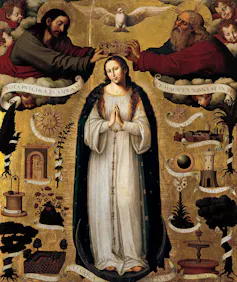
‘The Immaculate Conception,’ by 16th-century painter Juan de Juanes.
Fundacion Banco Santander/Google Art Project via Wikimedia Commons

Mary is known by many names and titles, including the Virgin Mary, Mary of Nazareth, Our Lady of Lourdes, Holy Mother of God, Queen of Heaven, Seat of Wisdom and Mystical Rose.

One important title is Immaculate Conception, referring to the Catholic belief that Mary was free of “original sin” and therefore suitable to be the mother of Jesus Christ. The Catholic Church teaches that all other people are conceived with original sin as a result of Adam and Eve’s disobedience to God in the Garden of Eden.

Originally, the idea that Mary was free of original sin was widely debated within the Catholic Church. But the teaching was defined as dogma on Dec. 8, 1854, by Pope Pius IX. The feast day of the Immaculate Conception is now celebrated by Catholics on Dec. 8 each year. Even before its official acceptance, devotion to the Immaculate Conception influenced the art and teachings of the Catholic Church.


Patroness of the United States


How did Mary, as the Immaculate Conception, become patroness of the United States?

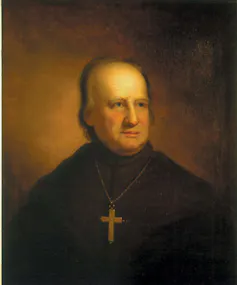
John Carroll, who became the first American bishop in 1790, was devoted to Mary throughout his life. In 1791, he and other American Catholic clergy consecrated the Diocese of Baltimore to Mary, asking her to “[preserve] from all evil” the people of the diocese.


Rembrandt Peale’s portrait of John Carroll, the first Catholic bishop from the United States.
Wikimedia Commons

Half a century later, in 1846, a council of priests and bishops from across the country officially named Mary, under her title as the Immaculate Conception, the patroness of the entire United States, asking her for “the aid of her prayers.”

Devotion to the Immaculate Conception has remained an important part of the faith lives of many American Catholics, even if they are unaware of her patronage of the United States. This devotion is demonstrated by the many churches that are named for the Immaculate Conception, jewelry depicting the Immaculate Conception and the inclusion of the Feast of the Immaculate Conception as a holy day of obligation in the U.S. – a day when Catholics are expected to attend Mass.

On Feb. 7, 1847, the Vatican approved the request to make Mary, as the Immaculate Conception, the patroness of the United States. This was seven years before the dogma was defined by the pope, pointing to the popularity of this devotion even before official recognition.


Bicentennial holy card


Many items in the Marian Library’s collection, such as holy cards, also demonstrate American Catholics’ devotion to Mary as the Immaculate Conception. A holy card is a small portable devotional tool, often including an image of Jesus or a saint on the front. Typically, a prayer, devotion, scripture passage or commemoration of an important event is printed on the reverse side.

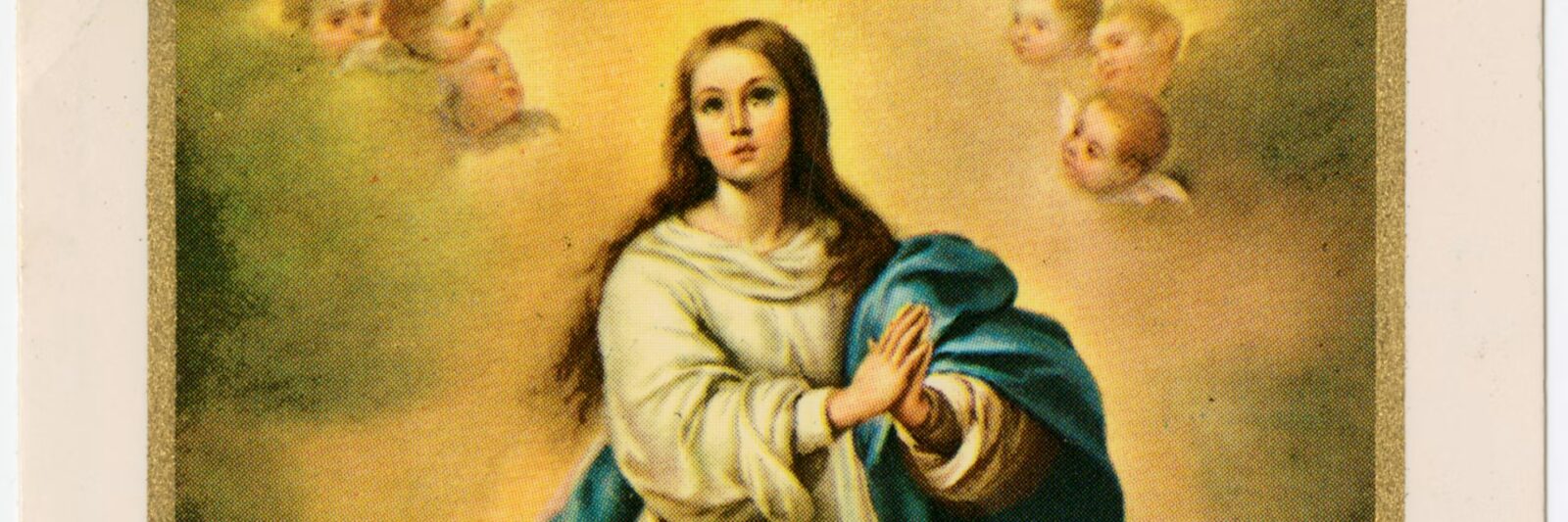
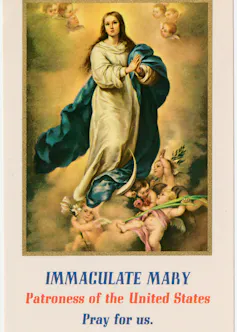
One of our cards features an image of Mary as the Immaculate Conception above the words: “Immaculate Mary, Patroness of the United States, Pray for Us.” The reverse commemorates the bicentennial of the United States in 1976, followed by the motto of the United States, “In God We Trust.”

The image of Mary is a reproduction of “The Immaculate Conception of El Escorial,” a painting by 17th-century Spanish painter Bartolomé Esteban Murillo in the collection of Madrid’s Museo del Prado. The painting reflects artistic traditions that symbolize the theology behind the Immaculate Conception.


This holy card draws on symbols from the Book of Revelation.
The Marian Library, University of Dayton

Mary is shown with a blue garment: a color associated with faith, humility, the heavens and the sea. Since blue pigments were very expensive during the Renaissance, the color was reserved for important figures, particularly paintings of Mary.

Other symbols, though, are specific to Mary as the Immaculate Conception. She stands with a moon beneath her feet, inspired by the “apocalyptic woman” from the Bible’s Book of Revelation: “a woman clothed with the sun, with the moon under her feet, and on her head a crown of twelve stars.” Catholic theologians interpret this figure as a reference to Mary, establishing her as mother of all Christians.

In other artwork of the Immaculate Conception, Mary is depicted with a snake beneath her feet, a crown of 12 stars or a dragon – also inspired by Revelation, Chapter 12.


American rosary

Another important object of Catholic devotion, the rosary, encourages reflection on the lives of Jesus and Mary. The word can refer to a physical object – a set of 50 beads or knots on a string – or certain sets of prayers, including Hail Mary and Our Father. Touching the beads as they pray helps Catholics keep track as they recite the prayers.


This rosary mixes religious devotion with patriotic colors.
The Marian Library, University of Dayton

The “American Rosary” in our collection was designed by Marie George of New York in 1956, though archivists do not know exactly who she was. It uses beads in the patriotic colors of red, white and blue, and it includes a Miraculous Medal, which depicts Our Lady of the Immaculate Conception. A card included with the rosary encourages Catholics to offer prayers “for World Peace, with Justice and Charity.”
Across centuries

For much of U.S. history, Catholics in the United States often faced prejudice and discrimination. In the mid-19th century, when Mary as the Immaculate Conception was named patroness, the Protestant majority of the U.S. was deeply suspicious of Catholics’ loyalty to the pope.

The bicentennial holy card and the American rosary from the following century, both dedicated to the Immaculate Conception, reveal how American Catholics still sought to demonstrate that their faith and their patriotism did not conflict with each other.

In 2026 – the 250th anniversary of the United States, and the 180th anniversary of Mary’s patronage – some of that history may feel distant. The Catholic Church elected the first American-born pope, Leo XIV, in 2025, and the United States has seen a surge in Catholic conversions in 2026. But Catholics still ask Mary, as patroness of the U.S., for her intercession: not only in their lives, but for their country.


(Stephanie Shreffler, Religious Collections Librarian/Archivist and Associate Professor, University Libraries, University of Dayton. Bridget Retzloff, Assistant Professor and Coordinator of Art Collections and Exhibits, University of Dayton. The views expressed in this commentary do not necessarily reflect those of Religion News Service.)


The Conversation religion coverage receives support through the AP’s collaboration with The Conversation US, with funding from Lilly Endowment Inc. The Conversation is solely responsible for this content.
AP exclusive: Under Notre Dame cathedral, a 'dig of the century' unearths 1,700 years of history

PARIS (AP) — For archaeologists, the cathedral dig is a rare treat. In France, like elsewhere, they work only where building work is about to begin — a bit like how industrial quarry workers end up unearthing dinosaur remains.


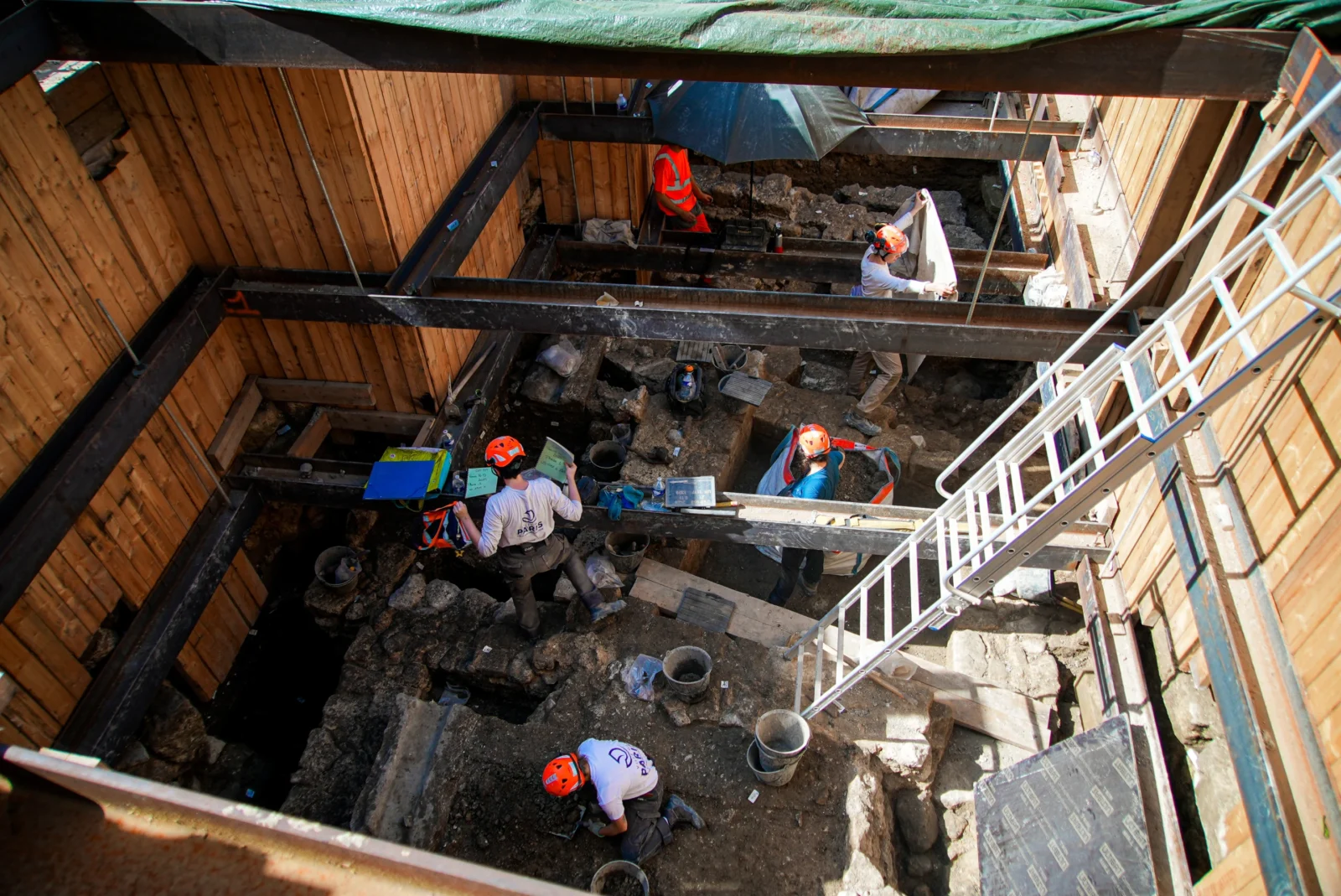
Archaeological workers wearing hard hats dig 4 meters (13 feet) underground during excavations outside Notre-Dame Cathedral in Paris, Monday, June 1, 2026. 
(AP Photo/Nicolas Garriga)

Jeffrey Schaeffer and Thomas Adamson
June 3, 2026 


PARIS (AP) — Wilting in the summer sun, a line of tourists waits to climb Notre Dame cathedral and meet its gargoyles.

Four meters (13 feet) beneath them, a team of archaeologists is digging the other way — straight down and back in time, to Roman Paris 2,000 years ago.

In 2019, fire brought Notre Dame’s spire crashing down as the world watched. The cathedral was rebuilt and reopened in late 2024, and now Paris wants to soften the hot, bare square in front of it with trees and shade.

But in a city this old, the soil cannot be turned until what lies beneath it is excavated, in case it is damaged during works.

So a slice of Notre Dame’s forecourt has become an excavation site — an open pit ringed by barriers and crossed by a wooden walkway, a few steps from the line-up.

A modern Da Vinci Code

French media have dubbed it the “dig of the century.”

“It’s a rare opportunity for us to work on something that’s tangibly going to make a difference to the history of Paris,” Lucie Altenburg, a conservator with the Paris archaeology unit, told The Associated Press.

Among the hundreds of objects already found: a fourth-century coin stamped with the face of the Emperor Constantine, and shards of medieval pottery painted on the inside with marks no expert has yet deciphered — like a modern Da Vinci Code.

“It makes Notre Dame feel alive again,” said Emily Carter, 34, a tourist from Manchester waiting in line with her two children. “You come to see the cathedral, then realize there’s another city under your feet. That’s almost more moving.”

The first traces appear 50 centimeters (20 inches) down; 4 meters (13 feet) lower, the team is still pulling up the past. Some days they fill 15 crates — from ground that has lain untouched for decades.

Ancient cities have archaeologists monitoring digs

This is the bargain in every old city: The past is not in a museum down the street — it is under the street.

Cities rise. Each age builds on the rubble of the last, and the ground climbs with it; in Rome, it has risen about 9 meters (30 feet) since the empire fell in the fifth century AD.

When Athens built its metro for the 2004 Olympics, it set off the largest excavation in Greek history and turned up tens of thousands of objects, now shown in the stations themselves. Paris is no different.

It all comes from the island in the Seine, the Ile de la Cite, where Paris began.

Centuries later, Notre Dame rose on the same ground.

At the cathedral’s birth in 1163, the entire square was packed with medieval houses, split by a single street, said Camille Colonna, the archaeologist leading the dig.

Digging down, her team has reached their cellars — and therefore also the time in history they represent.

Below them lie Merovingian and Carolingian grain pits, from the sixth to the 10th centuries; below those, darker and deeper still, a dense Roman quarter from the fourth and fifth centuries.

Twenty centuries are stacked in 4 meters (13 feet) of earth — or about the height of two-and-a-half Napoleon Bonapartes standing on top of one another.

“Here you can see the layers — medieval Paris, Roman Paris, maybe even before that,” said Yasmine Benali, 22, an archaeology student watching from behind the barriers. “It makes the city feel less like a postcard and more like something still being discovered.”

Coins, ceramics and mysterious markings

The richest finds here come from the foulest place: the deep pits beneath the medieval houses, old latrines that doubled as rubbish dumps.

Out of them the team keeps lifting whole jugs and cups — thrown away centuries ago, yet still intact — among the broken plates and animal bones.

It’s “rare to find complete ceramics,” said Valentine Breloux, an archaeologist with the unit.

Here the soft waste cushioned them, and centuries later they miraculously came up whole.

Then some other objects came that confounded experts. As conservators cleaned what looked like ordinary medieval pottery, they found faint reddish writing painted on the inside — the same mysterious markings on shard after shard.

What they mean has yet to be deciphered.

Of everything she has cleaned from Notre Dame, Breloux said, these are the most “astonishing.”

Coins can help date the layers

The coins came up as black discs, eaten by rust. But under an X-ray, a face returned: it was Constantine, the Roman emperor who ruled in the early 300s AD.

Such objects also “can be invaluable in giving us the date of the (underground) layer,” Altenburg said.

The Roman finds are the ones the archaeologists value most — the deepest, oldest and least understood. In Roman times, the town was called Lutetia, and its center lay across the river, on the Left Bank.

As the Roman empire collapsed, people pulled back to the Ile de la Cite, where Notre Dame would later rise, and fortified the island with walls of stone taken from earlier buildings.

Colonna’s team found some proof: a Roman doorstep found in the dig, taken from a much bigger building, carried over, turned upside down, and laid in a road as paving.

Paris houses thousands of finds in an archaeology center

Every find leaves the pit and travels north, to the city’s archaeology center — what Colonna calls “a huge archaeological store,” a treasure house of Paris.

For archaeologists, the cathedral dig is a rare treat. In France, like elsewhere, they work only where building work is about to begin — a bit like how industrial quarry workers end up unearthing dinosaur remains.

“This only happens because the city of Paris decided it wanted to beautify the area,” Altenburg said.

The new square should be mostly finished by 2028: a kind of woodland clearing, with 160 new trees and a thin film of water sliding over the stone to cool it in summer — part of how Paris is bracing for ever hotter summers induced by global warming.

The tourists who now wait in the bare sun beneath the gargoyles will, in a few summers, line up in the shade.

The old underground parking lot will reopen as a visitor center looking onto the Seine.

Until then, the Notre Dame team wants to go deeper still — past the Romans, toward whoever came before them, the Gauls who gave the city its first name.

“The hope is that we are able to go back in time even further than we’ve ever been before,” Altenburg said.

___

Nicolas Garriga in Paris contributed.