Monday, June 08, 2026

Nine EU countries rebel against EU's green targets for corporate cars and vans
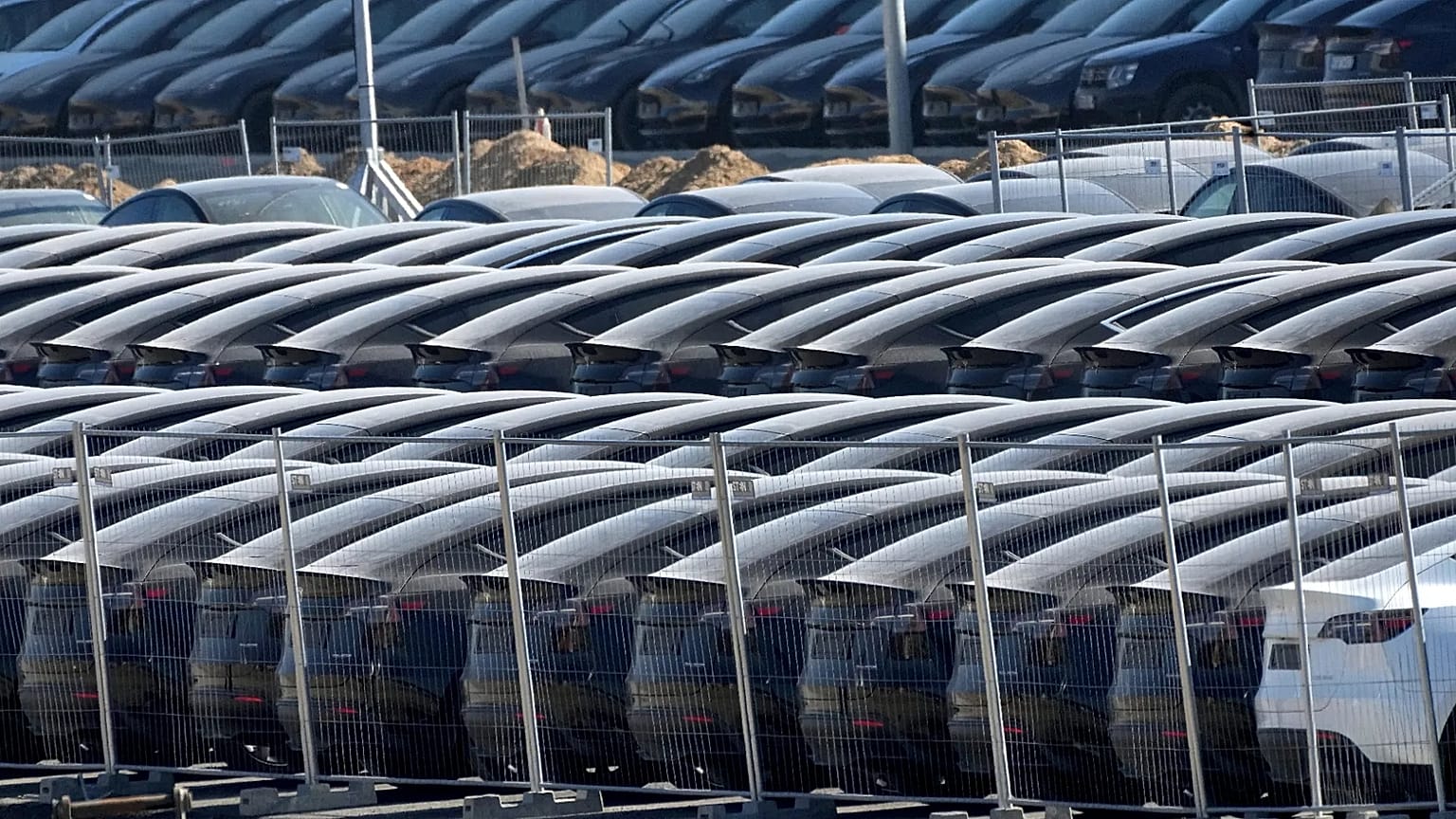
Tesla cars are parked at the new Tesla Gigafactory for electric cars in Gruenheide near Berlin, Germany, Tuesday, March 22, 2022.
Copyright AP Photo / Michael Sohn


By Marta Pacheco
Published on

While stopping short of opposing fleet decarbonisation itself, the member states argue that Brussels should resist the tendency to regulate and instead construct more incentives for large companies to invest in zero or low-emission cars and vans.

Nine European capital cities have joined forces to oppose a European Commission proposal that would require large corporate vehicle fleets to switch to electric vehicles, according to a document seen by Euronews.

A coalition led by Poland and including Bulgaria, the Czech Republic, Estonia, Hungary, Italy, Latvia, Slovakia and Romania has launched a coordinated challenge to the Commission's proposed law, which would compel companies with more than 250 employees or more than €50 million turnover to decarbonise their fleets of cars and vans.

The topic is set to be discussed at a gathering of EU transport ministers in Luxembourg on Monday.

The Commission is proposing that by 2030, large companies' fleets will be subject to two separate mandatory quotas: that roughly 69 percent of all new purchased vehicles be plug-in hybrids and that around 45 percent battery-electric or hydrogen-powered cars. The precise targets would vary by member state.

The nine EU governments acknowledge that corporate fleets can play a major role in accelerating the shift to cleaner vehicles and reducing Europe's dependence on imported oil, which accounts for almost 60 percent of the bloc's imports, but they also argue that mandatory quotas risk undermining competitiveness and placing additional burdens on businesses.

On that basis, they call for the bloc to use incentives instead of regulation.

"Priority should be given to an enabling EU framework based on guidelines, exchange of best practices, targeted incentives, and technical support, rather than the proposed regulation," they write.

A recent analysis by the campaign group Transport & Environment (T&E) claims that in 18 of 27 EU countries, the tax gap between electric and fossil-fuel cars is insufficient to offset higher EV prices.

Stef Cornelis, fleets and freight director at T&E, said the EU's largest car markets – Germany, Spain, Italy and Poland – are failing to incentivise companies to go electric.

“The EU fleets regulation is the catalyst needed to break this inertia. The EU Council and EU Parliament should inject more ambition into the Commission’s proposal to ensure Europe can reduce oil imports rapidly,” said Cornelis.

T&E noted that cars and vans linked to corporate businesses account for 59 percent of new car registrations and 78 percent of oil imports consumed.

Another major concern among the nine governments is the uneven readiness among EU countries. They point to significant differences across Europe in charging infrastructure, leasing markets, taxation systems, grid capacity and administrative frameworks, arguing that a one-size-fits-all target risks penalising countries where the supporting ecosystem for electrification remains underdeveloped.

"The preparation of Commission guidelines, combined with a structured exchange of best practices, could enable member states to tailor implementation to their specific circumstances," the document reads.

Avoiding collateral damage

Although the Commission's proposal formally targets large companies, the nine governments argue that the burden could cascade through leasing and rental markets because any small businesses rely on leasing rather than direct vehicle purchases. Fleet obligations imposed on leasing companies, they say, could effectively be imposed on SMEs.

"Covering leasing companies with targets, without exceptions for certain groups of their clients, would lead in practice to exposing SMEs to these targets," reads the document, noting that around 80 percent of cars acquired by SMEs are not purchased vehicles.

The dissenting capitals also insist that special-purpose vehicles and fleets linked to critical infrastructure, emergency response and public preparedness require greater flexibility than the Commission proposal currently appears to provide.

Operational readiness, they argue, must not become collateral damage in the pursuit of climate targets.

"The greening of corporate fleets should also be pursued in a manner consistent with the Union’s broader objectives of resilience, emergency preparedness and economic security, particularly in light of the current geopolitical situation," reads the document.

Raising Awareness Of Greener Chemistry


June 7, 2026 
By Eurasia Review

The COST Action Mechanochemistry for Sustainable Industry (MechSustInd) is a powerful example of how collaboration can support Europe’s ambition for a low-emission, circular, and resource-efficient industry. By rethinking how chemicals are produced, the Action helped place mechanochemistry at the centre of Europe’s transition to greener manufacturing.

Mechanochemistry replaces heat and solvents with mechanical energy to trigger chemical reactions. This simple but revolutionary approach has the potential to reduce waste and emissions while improving safety and efficiency across multiple industrial sectors.

The Action generated significant scientific output, contributing to over 200 research outputs, including publications in leading journals and open-access platforms. It also produced an educational book on practical mechanochemistry and created a database of experimental facilities, expertise, and skills within the network to encourage collaboration.

Direct contact with industry partners was particularly successful. Several companies opened their facilities to COST members, offering access to specialised equipment and large quantities of chemicals for testing and training purposes. This cooperation has bridged the gap between academic research and industrial application, providing scientists with hands-on experience of real production processes.


While the Action produced technical results such as new mechanochemical reactors and analytical devices, Dr Evelina Colacino, the Action Chair from the University of Montpellier in France, believes that its most valuable outcome was a change in mindset.

“For me, the most tangible output is the awareness we’ve raised around using mechanochemistry as a disruptive technology to make organic chemistry more sustainable.”

When the Action began, many companies regarded mechanochemistry as “strange or irrelevant” for its implementation in organic synthesis. Through consistent communication, workshops, and collaboration, this perception has shifted dramatically.

“Now, companies are curious. They want to know what this technology can do. That change in attitude is a long-lasting impact.”

Academia has done its job. Now it’s time for industry and policymakers to build on that foundation. COST paved the way.” Dr Evelina Colacino, Chair of MechSustInd
From COST to a €7.7 million project

This growing confidence led directly to the Horizon Europe project IMPACTIVE, a €7.7 million initiative which aims to make pharmaceutical production greener.

For science communicator Dr Fernando Gomollón-Bel, who is now a full partner in IMPACTIVE, the COST Action opened a door to a vibrant and collaborative research community.

Fernando also highlighted the growing importance of mechanochemistry in the wider scientific community, citing the COST Action as a model of cooperation across Europe: “COST is a great catapult for creating strong networks of collaboration. It helped turn an idea into a real European innovation ecosystem.”
Young scientists, big ideas

Beyond its scientific achievements, MechSustInd was above all about people. COST inclusive networking approach gave young researchers the tools, confidence, and visibility to help lead Europe’s green transition.

Many early-career scientists, particularly those from less research-intensive countries, gained access to new collaborations, facilities, and training opportunities that would otherwise have been out of reach. Working Group leaders reflect on this human dimension.

Dr Ivan Halasz, of the Ruder Boskovic Institute in Croatia, said: “We built a collaborative community that enabled experts from diverse fields to share perspectives and shape new approaches in process engineering.” It was particularly rewarding to see young researchers gain the tools, networks, and confidence to pursue innovative directions.”

Dr Bilge Baytekin of Bilkent University in Turkey adds: “Action gave me my identity as an organic chemist back, and of course, it planted new, captivating research questions in my mind.”

“I find working on green and sustainable chemistry very motivating. The chemistry of our project is for a good cause!”

Evelina Colacino is particularly proud of the Action’s impact on young scientists: “The first international prize for a young scientist in mechanochemistry came from our collaboration with the European Young Chemists’ Network. We showed that young scientists can build careers in this field.”


This strong and inclusive community nurtured new talent and laid the foundation for establishing mechanochemistry as a recognised discipline within the global scientific landscape.

According to Evelina, “Training a new generation of scientists in mechanochemistry is an unprecedented achievement for the field. Thanks to the COST Action, more and more academic institutions around the world are now implementing the teaching of mechanochemistry in undergraduate and graduate curricula, and five Action training schools are now a ‘source of inspiration’.”
Building bridges for a lasting legacy

The Action helped create the first Working Party on Mechanochemistry within the European Chemical Society (EuChemS) and collaborated with the International Union of Pure and Applied Chemistry (IUPAC) to develop international standards and terminology. These steps give mechanochemistry the structure and visibility needed for industrial adoption.

“COST allowed us to raise awareness about mechanochemistry and make the network sustainable,” says Evelina, “We now have an IUPAC task group setting definitions, EuChemS recognising mechanochemistry as a professional network, and an international association continuing our mission. That’s an extraordinary legacy.”

Today, mechanochemistry is no longer just a research topic. Thanks to the COST Action MechSustInd, it has become a recognised tool for achieving the European Green Deal and the European Mission to make industry climate-neutral and resource-efficient.

“Academia has done its job. Now it’s time for industry and policymakers to build on that foundation. COST paved the way.”
How overexploitation of sand is threatening ecosystems and livelihoods

In Morocco alone, an estimated 40 to 50 percent of sand extraction is believed to occur illegally.

Found on beaches, in rivers, across deserts and on the seabed, sand has long been seen as abundant and virtually inexhaustible. But it has become the world's second most exploited natural resource after water, and scientists warn rising demand will cause "enormous environmental damage".


Issued on: 07/06/2026 - RFI

Miners shovel sand into trucks in an area destroyed by sand mining on the outskirts of Gunjur in the Gambia. © AFP - JOHN WESSELS


From concrete towers and motorways to glass, microchips and cosmetics, modern economies depend on sand. Yet the vast scale of sand extraction remains largely ignored, despite mounting concerns among scientists over its environmental and social consequences.

According to the latest report from the United Nations Environment Programme (UNEP), nearly 50 billion tonnes of sand are extracted worldwide every year, and demand for buildings is expected to rise by 45 percent by 2060.

"To give an idea of the scale, it would be equivalent to building a wall 27 metres high and 27 metres wide that circles the entire Equator every year," says Pascal Peduzzi, director of GRID-Geneva, UNEP's environmental data centre. "You cannot extract that much material without causing enormous environmental damage."

Warnings of a sand shortage may seem counterintuitive. But not all sand is suitable for construction.


Desert sand, shaped by wind erosion, is too fine and too smooth to bind effectively in concrete. The construction industry instead relies on angular grains found in quarries or produced by the erosion of glaciers, rivers and coastlines.

As a result, extraction is concentrated in riverbeds, estuaries, coastal zones and shallow seabeds – areas that also play a vital role in maintaining ecosystems.


Damage beneath the surface

Sand performs essential functions in nature. It filters water, stabilises rivers and provides habitats for countless species, from crabs and turtles to birds and other wildlife.

"If you dig into a riverbed, you change its shape," says Peduzzi. "That alters how water flows."

The consequences can include increased flooding, drought, falling groundwater levels and the degradation of aquatic ecosystems.

Scientists also warn of implications for food security. Excessive extraction can increase water acidity, reducing soil fertility and making farmland less productive.

In some regions, the problem is already visible. Researchers have documented rising saltwater intrusion in major rivers, particularly in the Mekong Delta, where millions depend on fresh water for cultivating rice.

"With rising sea levels and riverbeds being lowered through sand dredging, the Mekong is becoming increasingly saline," says Nelo Magalhaes, an economist and environmental historian.

A similar process has been observed in France's Loire River since the 1970s, although the impacts are now far more pronounced in Southeast Asia.

A farmer pulls up dying rice plants from a paddy filled with salt water at Que Dien commune in Vietnam's Ben Tre province in July 2010. © AFP - HOANG DINH NAM


At sea, industrial dredging vessels pose another threat. By scraping the seabed, they destroy microscopic organisms that form the foundation of marine food chains. Fishing communities are already feeling the effects.

"In parts of Africa and Southeast Asia, beaches have been stripped down to the bedrock," says Peduzzi. "Virtually every major river system in Asia has been affected by large-scale sand extraction."

Sand also serves as a natural barrier against rising sea levels. As beaches are depleted, coastlines become increasingly exposed to erosion and flooding linked to climate change.

Small island states are among the most vulnerable. In places such as the Maldives, scientists say the consequences are already becoming apparent.

"Today, we can directly link the disappearance of some beaches to overconsumption of sand," Peduzzi says.

Cheap, yet valuable

The problem is often associated with developing countries, but Europe and North America are also major consumers of sand.

Researchers have documented large-scale river dredging across industrialised nations since the 1960s.

"When river levels fall, extraction intensifies," says Magalhaes. "That alters river profiles, damages ecosystems and destroys spawning grounds where fish lay their eggs."

The growing scarcity of suitable sand is also fuelling political tensions.

"There's a paradox," says Grégory Salle, a social scientist at France's National Centre for Scientific Research. "Sand is both a cheap, ordinary resource and, in some places, an increasingly valuable one."

Labourers transport sand from boats to the shore after excavating it from the bed of River Yamuna in Allahabad, India, 22 May 2007. © AP - Rajesh Kumar Singh

That value has led to disputes over access and supply. While unlikely to trigger conflicts on the scale of those linked to oil or water, sand has already become a source of diplomatic friction in Southeast Asia.

Singapore, which has expanded its territory through land reclamation projects, imports vast quantities of sand from neighbouring countries. The trade has generated tensions with countries including Cambodia, Vietnam and Malaysia, alongside allegations of environmental destruction and illegal trafficking.

Elsewhere, sand provides profits for organised crime. In countries such as India, Kenya, Morocco and Colombia, illegal networks known as "sand mafias" control parts of the trade.

Because sand is relatively easy to extract, enforcement is often weak and corruption widespread.

"People investigating these activities can face serious risks," says Peduzzi, citing cases involving violence and intimidation linked to illegal mining operations.

In Morocco alone, an estimated 40 to 50 percent of sand extraction is believed to occur illegally.

Overlooked resource

Experts disagree over whether the world is facing an actual shortage of sand.

UNEP argues that extraction has already exceeded the natural replenishment rate of some deposits.

China illustrates the scale of modern consumption. The country uses more than half of all the sand extracted globally and consumes around 33 times more than the United States each year.

Others urge caution. Magalhaes argues that vast reserves remain available, particularly offshore. The issue, he says, is not the imminent exhaustion of supplies but the increasingly destructive methods required to obtain them.


Ultimately, the debate goes beyond sand itself and raises broader questions about economic development and consumption.

Recycled concrete, alternative building materials and more sustainable construction practices are frequently proposed as solutions. But for some researchers, such measures will only go so far unless accompanied by a deeper reassessment of growth-driven models of development.

UNEP is now calling for stronger global governance of sand resources, including national inventories, improved monitoring and recognition of sand as a strategic material.

Yet when the European Commission recently published its list of critical raw materials, sand was notably absent – a sign, perhaps, that the world's dependence on this seemingly ordinary substance has yet to fully register among policymakers.

This article was adapted from the original in French by Claire Laville.
What Is El Nino And How Will It Affect Asia? – Analysis


June 7, 2026 
By P. K. Balachandran


El Nino is a periodic disturbance in the Eastern Pacific Ocean off South America, but its effects are felt acutely in many parts of the world, including Asia

On June 3, Sri Lanka’s Meteorological Department issued a warning about drought in the island during July and August this year due to El Nino. El Nino is a weather condition originating in the equatorial Pacific Ocean off South America. But it is so big that it affects the weather all over the world including Asia.

El Nino has an 80% chance of forming before September and a 90% chance before November, the World Meteorological Organization (WMO) said last week. Asia is predicted to be one of the regions most exposed, with intensifying heat and drought predicted to put major stresses on agriculture, power grids and water supplies.


What is El Nino

El Nino is a natural weather fluctuation, not directly caused by climate change or global warming. Essentially, it is a short-term alteration of atmospheric pressure and wind patterns, which shifts rainfall belts and causes extreme weather events worldwide.

El Niño means the “Little Boy”, or “Christ Child” in Spanish. It was first noticed in the 1600s by Spanish fishermen off the coast of South America near Peru and Ecuador. It was so named because it typically occurred around Christmas.

The weather depends a lot on ocean temperatures. Where the ocean is warm, more clouds form, and more rain falls in that part of the world. In the Pacific Ocean, near the equator, the sun makes the water especially warm on the surface in December and El Nino follows.

Normally, the trade winds blow from East to West, pushing the warm surface waters of the Pacific Ocean towards Indonesia and the Western Pacific. This process creates a pool of warm water in the Western Pacific and a cooler pool in the Eastern Pacific near South America. But during El Nino, something different happens. The trade winds weaken, or may even reverse, causing the warm surface waters to flow back eastward towards South America instead of going to Indonesia! As a result, the eastern Pacific becomes unusually warm.

Due to the heat, many fish that live in the normally cooler waters off the coast of South America move away or die. When El Nino happens, lots of rain clouds form over the warm part of the ocean. These clouds then move inland and dump a lot of rain in South and Central America and in the United States.

Meanwhile, weather patterns all over the world may take an unusual turn. Some places may see draughtand others may see floods and storms.

Impact on India

According to “The Guardian”, the core concern is that El Nino might intensify heat conditions and weaken the oncoming monsoon, the months of heavy rain that come every year around June, which is already predicted to deliver “below average” rainfall. That would be disastrous for India and the wider subcontinent, which has already been grappling with deadly heatwaves, and an energy crisis due to the crisis in the Middle East.

A shortage of rains would prove particularly devastating for farmers, who rely on the rains for their next crop planting season. The heatwave in May has already caused damage to wheat and mustard crops and it is feared El Niño could worsen drought conditions and have a worrying effect on food security in the country.

Farmers across India are already worried about an impending shortage of fertiliser for planting, due to the Middle East crisis.

El Niño could also have severe consequences for India’s cities, most Mumbai which relies solely on seven rain-fed lakes to provide water for its more than 22 million inhabitants. The lakes currently only have 45 days of water left, and if the monsoon rainfall is delayed in El Niño conditions, Mumbai could find itself facing a significant water crisis, “The Guardian” warned.

Impact on China


China often suffers from flooding as well as droughts in the summer months. This year the challenges will be bigger as El Niño is set to cause further havoc.

On Friday, the National Climate Centre said El Niño’s effects would peak in autumn and winter, and that it could lead to increased rainfall in southern China and higher temperatures across the country. Rainfall in some parts is expected to be 20% higher than average this year, according to “Xinhua”.

Certain parts of China are expected to experience extremely heavy rainfall this week, with some areas of southern and eastern China set to see more than 200 mm of rain. Parts of Hubei province have been particularly badly hit.

Impact on South East Asia


El Nino will make South-East Asian countries vulnerable to surging temperatures that jeopardise public health, overwhelm electrical grids, and rapidly deplete vital water reserves. Countries that depend heavily on agriculture, like Indonesia, Malaysia, Thailand, and the Philippines are particularly vulnerable.

The region is already in the midst of energy and fertiliser shortages due to the Middle East crisis and has had to turn increasingly to dirty fuels to cover the shortfall, “The Guardian” said.

Parched soils could threaten staples, particularly rice and palm oil, and spark food shortages and inflate market prices, dealing a heavy blow to local economies and threatening the nutritional security of lower-income households.

The region’s vital tourism sector could also be affected. Famed destinations from Bangkok to Da Nang are bracing for daytime temperatures climbing well past 40 degrees, rendering outdoor attractions, cultural sites, and beaches practically unusable during peak hours.

The dry spell could also ignite agricultural and peatland fires in places like Sumatra and Kalimantan. The resulting toxic smoke plumes could blanket financial and transit hubs like Singapore and Kuala Lumpur, “The Guardian” said.

Effects On Sri Lanka

According to the Acting Director General of Meteorology, Ajith Wijemanna, current forecasts indicate an over 82% probability of El Niño conditions developing in Sri Lanka in the coming months.

“If an El Niño condition develops, rainfall is expected to decrease significantly during July and August. We are likely to experience drought conditions during that period. Forecasts currently show more than an 82% probability of an El Niño event occurring during July and August,” Wijemanna told newsmen.

He noted that El Niño events typically last between 9 to 12 months, with impacts on Sri Lanka potentially continuing until early next year. “If such an El Niño event occurs, its effects could remain until around February next year,” he warned.

The Dry Zone in Sri Lanka may see a severe drought with reduced monsoon rains. Water for irrigation could be scarce. Crops like paddy, tea could be affected. Farmers in regions like Anuradhapura, Polonnaruwa, and Monaragala are particularly vulnerable to drought.

Since, Sri Lanka relies heavily on hydropower, reduced rainfall would mean lower water levels in major reservoirs like Castlereagh, Maussakelle, and Victoria. When these reservoirs run low, the ability to generate affordable electricity plummets, forcing reliance on more expensive and polluting thermal power.

El Nino can cause a drinking water shortage. Communities, especially those in rural areas, will face immense challenges in accessing clean water for domestic use.

Reduced agricultural output can drive up food prices, impacting household budgets across the country. Increased spending on thermal power generation would strain national finances, and the overall economic activity can slow down due to resource constraints.

Prolonged heatwaves due to El Nino can increase the risk of heatstroke, dehydration, and other heat-related illnesses. Water scarcity can also lead to poor sanitation and an increased risk of water-borne diseases.

Solutions


The website slbuilds.lk has given a list of do’s and don’ts during El Nino. Irrigation infrastructure should be improved, with leaks plugged. New water sources should be tapped. Development of new reservoirs should be undertaken. The Ministry of Agriculture should promote drought-resistant crops. Techniques like drip irrigation and precision agriculture should be promoted. Crop insurance schemes also help farmers recover from losses. Local government bodies and NGOs could urge the public to take to rainwater harvesting efficient water use practices

Steps could be taken to reduce reliance on hydropower, by going in for solar, wind and biomass. Rooftop solar power for homes and businesses, along with large-scale solar farms, should be promoted.

People should drink plenty of clean water, and keep Oral Rehydration Salts handy. They should avoid the midday sun, limit outdoor activities during the hottest parts of the day to prevent heatstroke. If water is to be stored, the containers should be clean and covered to prevent contamination.

More broadly, the overall eco-system of Sri Lanka should be preserved. Forests, wetlands, and coastal areas are natural defences against extreme weather and these should be protected.


About P. K. Balachandran

P. K. Balachandran is a senior Indian journalist working in Sri Lanka for local and international media and has been writing on South Asian issues for the past 21 years.

View all posts by P. K. Balachandran →
‘Cooling Poverty’ Affects 2Bln As Heat Risks Swell


Children cooling off with piped water in Khan Village, Lao PDR in 2015. The World Meteorological Organization has warned of hotter than normal temperatures across the globe in the coming months due to the El Niño effect.
Copyright: Asian Development Bank (CC BY-NC-ND 2.0)

June 8, 2026 
By Mohammed El-Said


More than 2 billion people in some of the poorest communities face significant levels of “cooling poverty”, where they are exposed to life-threatening heat without safe or affordable ways to cool themselves, according to new analysis.

Increasingly frequent and intense hot spells are causing spikes in health risks and deaths globally and those most at risk are those with the least resources to adapt, a study published in Nature Sustainability warns.

It comes as parts of India and Pakistan are grappling with temperatures topping 45 degrees Celsius.

The World Meteorological Organization has also warned of hotter than normal temperatures across the globe in the coming months due to the El Niño effect.

“Cooling poverty and what we call systemic cooling poverty refers to conditions in which individuals are prevented from attaining thermal safety, not simply because they lack an air conditioner,” Giacomo Falchetta, a scientist at the Euro-Mediterranean Center on Climate Change and the study’s lead author told SciDev.Net.

Heat risk is compounded when people lack not only cooling devices, but also adequate housing, healthcare and information about heat risks, he explained.

The study analysed data from more than a million households in 28 countries, most of them in low- and middle-income countries. Of nearly three billion people covered, about 1.2 billion live in areas with moderate cooling poverty, around 550 million face severe cooling deprivation, and about 600 million experience high deprivation across multiple dimensions, the study calculated.

Aziza Mohamed, professor of human geography and urban studies at Cairo University in Egypt, says the study shifts the debate on heat from a purely climatic issue to a developmental, social and spatial one.

“The real danger does not come from climate alone,” she told SciDev.Net. “It comes from the interaction between heat, poverty, housing quality, weak health services and the absence of suitable infrastructure.”

South Asia and Sub-Saharan Africa are the two regions most affected, for different reasons. In South Asia, almost 80 per cent of the population in the sample live in regions where the systemic cooling poverty index exceeds 55 out of 100.

In countries such as India, Nepal and Bangladesh widespread heat and humidity exposure combines with large outdoor labour forces and gaps in education, information access and cooling policy, says Falchetta.

Harjeet Singh, climate activist and founding director of the Satat Sampada Climate Foundation, says South Asia is “at the absolute frontlines of the climate crisis”, facing “a lethal combination of geographic vulnerability and systemic economic inequality”.

The danger is not heat alone, but humid heat, which makes the body less able to cool itself through sweating, explains Singh. In a region of high population density and informal labour, retreating into an air-conditioned room is not an option for most.

In Sub-Saharan Africa, the study finds that extreme heat risks are driven by weak protective infrastructure. Falchetta named Ethiopia, the Democratic Republic of Congo (DRC), Rwanda and Malawi as countries with extremely high deprivation in housing quality, water and sanitation, energyaccess, and cooling green and blue spaces.

Even where heat and humidity is less extreme, he warned, “the near-total absence of protective infrastructure means any intensification of heat would be catastrophic”.

The study estimates that about 1.5 billion people live in areas with inadequate infrastructure, and health conditions to deal with heat. More than 90 per cent of people living in Ethiopia, DRC, Rwanda, Malawi and Zambia fit this category.

In contrast, Egypt had relatively low levels of “cooling poverty” (40 out of 100), despite 82 per cent of its population being exposed to hazardous heat and humidity. It performed well across infrastructure, social and policy dimensions.

Risk factors

Poor housing multiplies heat risk, as homes built from rudimentary roof, floor and wall materials can become heat traps rather than refuges, the research highlights.

Singh points out that millions of urban poor people live in settlements with tin or asbestos roofs, which can make indoor temperatures up to five degrees Celsius hotter than outside. Unreliable electricity, unsafe water and poor sanitation also limit cooling, hydration and protection.

Weak healthcare further increases the danger, according to the study. It identified Nepal, Yemen, Pakistan, Bangladesh and Guatemala among the most deprived countries in this regard. Limited healthcare access, explains Falchetta, means treatable heat-related illness can be fatal.

Outdoor workers in agriculture, construction, transport and informal trade are particularly at risk, spending long hours under direct sunlight.

Women, ethnic and religious minorities, elderly people, poorer households and children are disadvantaged because they are more likely to live in poor housing, lack information and healthcare, and have fewer resources to adapt, Falchetta notes.

Education and working standards were the most widespread form of cooling poverty identified in the study. Around 2.2 billion people, about 75 per cent of those studied, live in deprived areas under this lens. India ranks highest, with 95 per cent of its population facing deprivation, followed by the DRC, Nepal, Rwanda and Malawi.

The study and experts agree that air conditioning, which consumes large amounts of energy and strains fragile grids, cannot solve the problem.

“Addressing cooling poverty by distributing air conditioners alone would be neither sufficient nor sustainable,” Falchetta said.

Singh is in no doubt: “We absolutely cannot air-condition our way out of this crisis.”
Cooling strategies

Instead, the study calls for coordinated, low-cost policies across housing, water, health, labour and urban planning.

Falchetta says better housing design can reduce indoor temperatures without energy inputs. Expanding trees, parks and water bodies can provide community-level cooling, while improving water and sanitation works as both a cooling and health intervention.

Coating tin or concrete roofs with solar-reflective white paint can reduce indoor temperatures by two to five degrees Celsius, says Singh, while straw and clay offer affordable insulation. He calls for public cooling shelters with free drinking water for outdoor workers, restoring urban green spaces and water bodies, and expanding efficient BLDC (brushless direct current) fans.


Chandni Singh, associate professor at the Indian Institute for Human Settlements, says policy is crucial. Protection of blue and green infrastructure and climate-sensitive building codes, such as India’s Cool Roofs Policy, can help, she says.

Falchetta believes heat-health action plans could reduce cooling poverty, especially in Sub-Saharan Africa, where they are largely absent.

Cities in India, Pakistan and Bangladesh have introduced heat action plans, but many lack legal force and budgets, says Harjeet Singh. Governments, he argues, should adopt mandatory rest breaks for outdoor workers, climate-resilient building codes for affordable housing, and financial compensation for daily-wage workers when heat advisories force them indoors.

But Chandni Singh warned: “You cannot adapt your way out of extreme heat endlessly. There are limits to extreme heat adaptation.”

This piece was produced by SciDev.Net’s Global desk.
Mohammed El-Said writes for SciDev.Net.
View all posts by Mohammed El-Said →


More than 1.5 million people die and 860 million fall ill from unsafe food, the WHO warns

Unsafe food causes 866 million illnesses and 1.5 million deaths annually.
Copyright Cleared/Canva


By Marta Iraola Iribarren
Published on


The World Health Organization warns that unsafe food harms millions of people worldwide, with children being particularly impacted.

More than 860 million people fall ill and 1.5 million die worldwide every year due to unsafe food, the World Health Organization has warned.

In a new report published ahead of World Food Safety Day on 7 June, the WHO estimates that millions of people across the world suffer severe health consequences as a result of contaminated or poorly handled food.

“Food safety is not an abstract issue — it touches every meal, every family, every day,” said Dr Tedros Adhanom Ghebreyesus, WHO Director-General.

“Unsafe food has always been a major public health concern, but until now we lacked the bigger picture of its staggering human and economic toll.”

“For the first time, countries have their own data to see where the burden is highest. With that knowledge, governments can prioritize the actions needed to protect people’s health.”

The report estimates that in 2021, foodborne disease led to approximately $310 billion (€267bn) lost productivity due to illness.

Many of these illnesses and deaths, the organisation adds, could be prevented through improved water, sanitation and hygiene, food safety practices such as pasteurisation and access to health care for vulnerable populations.

The WHO also cautions that climate change is expected to have a large impact on food safety. Extreme weather events, rising air and water temperatures, and shifting precipitation patterns will heighten the risks posed by existing and emerging foodborne illnesses.

Children are especially vulnerable

The most affected are children younger than five years old, who face three times the risk compared with older children and adults. They account for 29% of the health burden linked to unsafe food and 143,000 deaths in 2021 alone.

“Despite being just 9% of the global population, young children suffer from nearly one third of all cases of foodborne diseases, particularly diarrhoeal diseases, which can be deadly for this vulnerable age group,” the WHO said.

Young children are also more susceptible to chemical exposure through food, which can impair brain development and cause lifelong neurological and developmental harm.

The report also highlights deep inequalities within food systems. Those living in low-resource communities bear the greatest health burden, particularly in low- and middle-income countries.

The African and South-East Asian regions together account for nearly three-quarters of all foodborne illnesses and 60% of deaths globally.

What are the main causes of foodborne illnesses?

Foodborne illnesses are infectious or toxic in nature, caused by bacteria, viruses, parasites, or chemical substances entering the body through contaminated food. In Europe, the most common include the following:

Campylobacteriosis: mainly linked to raw or undercooked poultry, unpasteurised milk, ruminant meat and contaminated water. According to the European Food Safety Authority (EFSA), this bacterium shows clear seasonality, with a peak of cases in the summer months.

Salmonellosis: most frequently associated with eggs and raw meat from pigs, turkeys and chickens. Symptoms include fever, diarrhoea and abdominal cramps. It can be life-threatening if the bacterium enters the bloodstream.

STEC infection: connected to the consumption of raw and undercooked meats, dairy products made from unpasteurised milk, raw leafy greens, and unpasteurised juices.

Listeriosis: a rare infection, often severe with high hospitalisation and mortality rates.

Could tackling climate change and levelling inequality go hand in hand?

The world can raise income, reduce inequality and limit global warming, according to an ambitious roadmap presented this week by economists in France. Making the case for a radical transformation of economies and lifestyles, they call on rich countries to slow growth, phase out fossil fuels and tax the wealthiest to help poorer countries fund development and mitigate the effects of climate change.


Issued on: 06/06/2026 - RFI

The Makoko shantytown in Lagos, Nigeria's commercial capital, where the gap between rich and poor is stark. © AFP - PIUS UTOMI EKPEI

By:RFI
ADVERTISING


Published on Thursday by the World Inequality Lab, the Global Justice Report presents a vision of a fairer world built within the planet's limits.

Based on data from around the world, it makes the case that it is possible to “reconcile planetary habitability with wellbeing for all” – but only by making deep structural changes. These include rapid decarbonisation, sharp reductions in wealth disparities and shifts in consumption patterns, particularly in high-income countries.

Co-directed by French economist Thomas Piketty, the Paris-based research group proposes a long-term scenario in which people around the world earn an average monthly income of around €5,000 by 2100. Currently, that figure ranges from roughly €290 in sub-Saharan Africa to nearly €4,600 in North America.

Under the plan, the share of global wealth held by the poorest half of the world’s population would rise from just 2 percent today to 30 percent, while the proportion held by billionaires would fall dramatically.

At the same time, the researchers argue, global warming could be limited to 1.8 degrees C – well below current trajectories that exceed 4 degrees.


A reforestation assistant measures a newly planted tree in a field damaged during illegal gold mining in Madre de Dios, Peru, on 29 March 2019. @ AP - Rodrigo Abd


They say this requires three major shifts: a rapid phase-out of fossil fuels in favour of renewable energy; rebalancing economic activity away from carbon-intensive sectors such as manufacturing and transport towards services like education and healthcare; and significant changes in diets, including cutting back on meat, to allow for large-scale reforestation.

The report also calls for a reduction in working hours in wealthier regions, alongside efforts to equalise incomes both within and between countries.

According to its authors, this would mean near-zero per capita growth in richer economies, while poorer regions would grow faster to close the gap.

Taxing the rich

To finance the transition, the economists propose the creation of a “global justice fund”, initially funded through steep taxes on the wealthiest individuals – up to 20 percent annually on billionaires’ fortunes and income tax rates of up to 90 percent.

Over time, the fund would evolve into a global sovereign wealth mechanism, redistributing resources to support both social development and climate mitigation.

Spending from the fund would average more than 10 percent of global GDP annually between 2026 and 2060, with a strong focus on the Global South. Allocations would be tied to both social and environmental conditions, with priority given to health, education and energy transitions.

Demonstrators carry banners with pictures of France's biggest billionaires during the traditional May Day march in Paris on 1 May 2021. © REUTERS - GONZALO FUENTES

With geopolitical tensions rising and international cooperation on the decline, the report's proposals may struggle to gain political traction.

The authors acknowledge resistance from wealthy individuals and governments is likely, and suggest that an initial coalition of willing countries could impose tariffs on non-participants.

They point to the dramatic reduction in inequality and working hours in 20th-century Europe as evidence that transformative change is possible.

The publication coincides with WIL's World Inequality Conference in Paris, where researchers and policymakers are set to debate the findings.
Russia And Belarus Preparing For Potential Escalation With Ukraine And NATO – Analysis


June 8, 2026 
By The Jamestown Foundation
By Alexander Taranov

On May 15, following consultations with the leadership of the Ukrainian Armed Forces (AFU) General Staff, the Defense Intelligence of Ukraine (HUR), the Foreign Intelligence Service, and the Security Service of Ukraine (SBU), Ukrainian President Volodymyr Zelenskyy stated that Russia is seeking to draw Belarus more deeply into the war against Ukraine. Zelenskyy also said that Russia is examining operational plans for actions from Belarusian territory against either Ukraine or a North Atlantic Treaty Organization (NATO) member state. Ukraine says it has obtained intelligence regarding ongoing negotiations between Russian and Belarusian leadership on this matter.

According to this intelligence, Russia is assessing operational plans to be launched from the south or north border of Belarus—either against the Chernihiv–Kyiv axis in Ukraine, or against a NATO member state. Zelenskyy cautioned that Ukraine would defend itself should Belarusian President Alyaksandr Lukashenka allow these operations. Zelenskyy has directed Ukraine’s Defense Forces (UDF) to reinforce Ukraine’s border with Belarus and to submit a contingency plan (Telegram/@ V_Zelenskiy_official, May 15). Zelenskyy’s statements came in the wake of a telephone conversation between Lukashenka and Putin, during which the two leaders discussed defense cooperation (Telegram/@pul_1, May 15).

AFU Commander-in-Chief General Oleksandr Syrskyi regards the threat of a Russian offensive from Belarusian territory as credible. According to Syrskyi, the Russian General Staff is actively war-gaming and planning offensive operations from the Belarus–Ukraine border with the objective of stretching the front line to exploit Russia’s numerical superiority in manpower and equipment (Telegram/@milinua, May 22).


According to Ukrainian intelligence, the Russian General Staff is developing five scenarios for expanding the war through northern Ukraine. These plans may encompass both the use of Belarusian territory in proximity to the Russian border and operations conducted directly from Russian soil without Belarusian involvement. According to Ukrainian intelligence assessments, the most credible of these five scenarios—should Russia decide to launch a new offensive operation—is an attempt to establish a buffer zone in Chernihiv oblast extending 10 to 20 kilometers (6 to 12 miles) into Ukrainian territory. The least credible scenario is an advance on Kyiv. Under all potential courses of action, the Russian Armed Forces would not be able to initiate offensive operations before autumn at the earliest. To this end, the Kremlin is planning a new mobilization wave of an additional 100,000 soldiers (RBC-Ukraine, May 22).

On May 21, Zelenskyy visited Slavutych in northern Ukraine, where he met with the heads of the Kyiv and Chernihiv oblasts. He stated that Ukraine is reinforcing its defenses along its northern border with Belarus, including its protective infrastructure and the defense and security forces deployed in that direction. Zelenskyy noted that Ukraine possesses the capability to act pre-emptively against Russian territory from which threats may emanate, and against Belarusian leadership (Telegram/@V_Zelenskiy_official, May 21).


The next day, in Rivne, he said that there is a threat of an attack from Belarus against Volyn, Zhytomyr, and Rivne oblasts in addition to the Kyiv and Chernihiv oblasts (Telegram/@V_Zelenskiy_official, May 22). Ukraine receives some supplies from Western partners through these regions, making a potential attack particularly problematic. Moreover, the Rivne Nuclear Power Plant, which supplies electricity to Kyiv and surrounding areas, is located just 60 kilometers (37 miles) from the border with Belarus. Russian control over this area would open the way for the encirclement of Kyiv and create a potential axis of advance toward Lviv oblast—a key logistic hub via which Ukraine gets almost all military and economic support from the West.

Kyiv has already transmitted the relevant intelligence through diplomatic channels to its NATO partners and has tasked the relevant agencies with developing diplomatic pressure and conveying direct signals to the Belarusian leadership (Telegram/@V_Zelenskiy_official, May 20; X/@andrii_sybiha, May 21). According to Ukrainian intelligence assessments, activity along the Chernihiv–Kyiv axis and the overall threat level from Belarus remain low. Ukrainian leadership is, however, tracking several indicators that may point to Russian preparations for potential offensive action there (RBC-Ukraine, May 22).

The first indicator is that four battalions—approximately 1,900 troops—of the Belarusian Armed Forces (BAF) remain deployed on a continuous rotation basis at the Belarus–Ukraine border. At present, however, there are insufficient Russian forces on Ukraine’s border with Belarus or Russia’s Bryansk oblast to conduct offensive operations (RBC-Ukraine, May 22). The second indicator, which has not yet been openly observed, is an intensification of reconnaissance and sabotage-reconnaissance activity on the part of Belarus and Russia along the axis of a potential strike.


The third indicator is Belarus’ expansion of logistics routes and the construction of training ranges and bases near its border with Ukraine that could be utilized by Russian forces within the framework of their Union State treaty. Ukrainian intelligence indicates that road construction toward Ukrainian territory and the preparation of artillery positions are underway in the Belarusian border zone (Telegram/@V_Zelenskiy_official, April 17). Ukraine has also reported that Russia has deployed ground control stations for long-range drones in Belarus for strikes against Ukraine’s Kyiv oblast (Unian, April 5). Furthermore, Serhii “Flash” Beskrestnov, adviser to the Ukrainian Ministry of Defense on defense technologies, stated that Russian Shahed-type unmanned aerial vehicles (UAVs) are utilizing Belarusian cellular roaming in the border area during strikes against Ukraine (Facebook.com/@Serhii.Flash, April 17).

During recent large-scale strikes against Ukraine, Russia once again used Belarusian airspace for drone transit (Telegram/@kpszsu, May 13). Russia could therefore once again employ air attack assets on a large scale from Belarusian territory—especially given their significant qualitative and quantitative expansion compared to 2022—even without deploying ground forces into Ukraine. Russia and Belarus are close to completing the implementation of two new military infrastructure programs, indicating preparations for more large-scale conflict. These were developed because of operational shortcomings encountered during the first phase of Russia’s full-scale invasion of Ukraine launched from Belarusian territory in 2022:Improvement of military infrastructure facilities designated for joint use in support of the Regional Troops Grouping (RTG) of the Republic of Belarus and the Russian Federation in 2023–2026;
Modernization of rear support facilities designated for joint use in support of RTG of the Republic of Belarus and the Russian Federation in 2023–2027 (Belarus Segodnya, November 14, 2024).

The fourth indicator comprises joint Belarusian–Russian nuclear exercises. Some of these exercises have taken place on Belarusian territory, designed as a demonstration of force as well as preparation for nuclear strikes directed at Ukraine and neighboring NATO member states (see EDM, April 30, June 17, 2024, April 17, 2025; President of Russia, May 21). Under the cover of such exercises, Belarusian and Russian forces may increase their troop presence along Ukraine’s borders. To this end, and for the purpose of rehearsing joint operations, Belarus and Russia may attempt to conduct additional unscheduled exercises similar to Zapad-2025 or Souznaya Reshimost-2022 (Union Resolve-2022), which served as cover for the large-scale concentration of Russian forces ahead of the full-scale invasion of Ukraine in February 2022. Putin has already announced a joint exercise with Belarus designated Schit Soyuza-2027, and the possibility of a snap exercise along the lines of Soyuznaya Reshimost-2022, which the Kremlin used as cover to mass troops, equipment, and logistics in Belarus for the full-scale invasion of Ukraine from February 10–20, 2022, cannot be ruled out (Interfax, May 21). In such a scenario, the primary indicator of preparations would be the planning of a mass railway transfer of Russian forces into Belarus. The redeployment of a 100,000-strong grouping would require approximately three to four weeks and some 15,000 railcars and flatcars—at least twice the volume recorded ahead of the Souznaya Reshimost-2022 exercise (see EDM, September 15, 2025).


In April, former Ukrainian Foreign Minister Dmytro Kuleba said that Belarus is systematically preparing for military escalation, and is examining the possibility of opening a second front against Ukraine or the Baltic states under Russian direction (YouTube/@Dmytro_Kuleba, April 18). He identified five key signs of Belarusian military preparation: continuous combat training conducted under Russian instructors, an emphasis on combat mobilization readiness and large-scale command-and-staff exercises, the reinforcement of air defenses with Russian systems, and the deepening of command coordination between Russian and Belarusian military structures. According to Kuleba, Moscow views potential activation of the Belarusian front as a way to stretch AFU resources, compelling Kyiv to redeploy experienced units from other sectors of the frontline to defend the northern border. Kuleba does not exclude the possibility that Belarusian military activity may be directed at intimidating the Baltic states and Poland, generating additional pressure on the region in the event of further Russian escalation (YouTube/@Dmytro_Kuleba, April 18).

Moscow may be pursuing several additional objectives simultaneously. Preparations in Belarus are an element of Putin’s plan to establish a “buffer zone” around Russia’s border with Ukraine. The Russian president assigned this objective to his military commanders two years ago. Military buildup in Belarus also creates psychological pressure on the Ukrainian population, with the aim of rendering Kyiv more amenable to Moscow’s terms. Finally, should Putin ultimately decide to advance on Kyiv from Belarus, he would attempt to decapitate and seize Ukraine’s military–political leadership. Currently, however, this scenario appears to be the least probable (RBC-Ukraine, May 22).

In a May 21 statement, Lukashenka was quick to assert that he has no intention of attacking neighboring states and even proposed holding talks with Zelenskyy to dispel Ukrainian concerns. He stated that Belarus would be drawn into Russia’s war against Ukraine only if aggression were committed against its territory. In such a scenario, Belarus and Russia would conduct military operations jointly (BelTA, May 21). Given that Belarusian political and military leadership were involved in a strategic disinformation campaign denying even the possibility of an attack being launched from Belarusian territory in the run-up to Russia’s full-scale invasion of Ukraine in 2022, such assurances are met with little trust in Kyiv (RBC-Ukraine, May 21).

If Russian forces use Belarusian territory as a staging ground for an attack on Ukraine, the Armed Forces of Ukraine would then conduct retaliatory strikes against Belarusian territory, thereby “legitimizing” the involvement of the Belarusian Armed Forces in the conflict. Two parallel combat readiness inspections conducted from January to April—one ordered by Lukashenka and the other initiated by the Belarusian Ministry of Defense—indicate that the Belarusian leadership is preparing for the possibility of a major regional escalation. In an article released on April 17, Belarusian Defense Minister Viktar Khrenin stated that the comprehensive inspection of Western Operational Command, responsible for Belarus’ border with Poland and Lithuania, provided a cross-sectional assessment of the overall level of readiness of the BAF to repel aggression, which he claimed persists on the European continent (BelTA, April 17). On April 1, Lukashenka said that Belarus is preparing for a war and underlined the need for the BAF to adapt to highly maneuverable, high-intensity combat operations concepts (President of Belarus, April 1). Such statements indicate anticipation of escalation involving the expansion of Russia’s war against Ukraine. In this context, preparations are underway for the involvement of the BAF in military operations against Ukraine and for potential military actions against NATO’s eastern flank.


During a May 12 briefing from Khrenin regarding the comprehensive combat readiness inspections of the BAF, Lukashenka stated that he intends to continue selectively mobilizing military units to prepare them for war (President of Belarus, May 12). The fact that the Immediate Reaction Forces, a grouping of the most combat-ready formations and permanently ready units of the Belarusian military, are being transitioned to a wartime footing serves as another indicator of Belarus’ preparation for military engagement (Telegram/@Tsaplienko, May 22).

Ukraine accordingly views the possible reopening of a northern front as a credible threat. Should this happen, Kyiv would likely seek to transfer military operations onto Belarusian territory as rapidly as possible. These developments, if they occur, could destabilize the Lukashenka regime and deprive Russia of the ability to continue using Belarusian territory as a staging area for operations against Ukraine and NATO’s eastern flank states.


About the author: Alexander Taranov is an expert on Russian military and nuclear affairs.


Source: This article was published by The Jamestown Foundation

About The Jamestown Foundation

The Jamestown Foundation’s mission is to inform and educate policy makers and the broader community about events and trends in those societies which are strategically or tactically important to the United States and which frequently restrict access to such information. Utilizing indigenous and primary sources, Jamestown’s material is delivered without political bias, filter or agenda. It is often the only source of information which should be, but is not always, available through official or intelligence channels, especially in regard to Eurasia and terrorism.

View all posts by The Jamestown Foundation →

Inside Amazon’s busiest European warehouse, where robots, lasers and humans deliver the future


Euronews
By Roselyne Min
Published on 07/06/2026


Amazon says robots will make work safer and deliveries faster. 


Amazon used its Delivering the Future event on Thursday in the United Kingdom to make a series of major announcements for Europe, promising billions in new investment, thousands of jobs and a new generation of robots that could reshape the lives of consumers, warehouse workers and the wider logistics economy.

More than a hundred journalists and creators gathered at Amazon’s busiestwarehouse in Europe, LCY3, located in Dartford, to see how technology is already being used to speed up the journey from click to doorstep, and what else the American giant is bringing to the continent.

At more than 216,000 square metres, the facility delivers 4 million units per week, according to the company.

The massive facility gives the impression of an industrial amusement park, with 32 kilometres of conveyor belts carrying millions of boxes and totes above your head at warp speed, with warning and safety signs affixed to scaffolds throughout the building.

The LCY3 facility already uses robotics and AI software that Amazon says has helped employees work faster and safer.

On the second floor, above the conveyor belts, is a floor full of Hercules Drives, a mobile robot built by Amazon. On each floor, 1,660 of them move around 21,700 tall, yellow storage towers known as pods, which human workers have stocked with items following directions from AI software.


Beyond a barrier that journalists were not allowed to enter for safety reasons, a swarm of them dashed around quickly and simultaneously, swapping positions with choreographed precision.

The blue robots, which resemble oversized robot vacuum cleaners, can lift up to 567 kg, using sensors, 3D cameras and a navigation software to move around the warehouse floor.

"[The robot] uses an AI to help navigate the building called Deep Fleet… a bit like going into a city and you have 5,000 cars on the road, and there's no traffic lights to manage all of them. Deep Fleet is there to help coordinate these robots," said Martin Newton, Amazon Tours leader, who took Euronews Next on a guided tour.

The robots can also self-report issues for engineers to look at, the tour guide said.

Amazon says the robotics and software help optimise space and speed, as well as reduce walking distances and improve accuracy.

Once an order is packed by a human, the package passes through a gigantic scanner beaming vibrant neon colours. In the grey, overly lit industrial warehouse, the scanner looks like an unexpected floating disco. Amazon says it is one of the smartest pieces of technology in the entire building.

Amazon says the SICK scanner is used to measure the 3D dimensions of each package, read shipping labels and send parcels into the correct lane corresponding to a specific delivery station.

“All of that in milliseconds. The package never stops moving. Thousands an hour, every hour, with near-perfect accuracy,” Amazon told Euronews Next.

From there, packages move through the shipping sorter, which travels 180 km a day inside the facility.


How new robots will help humans ‘side by side’

Amazon's warehouses in Europe, like LCY3, still rely on human hands. Thousands of employees and associates work at the Dartford site each day. They carry out quality control on items, pick orders from inventory towers and pack them at more than 200 stations across each floor.

With the new investments, Amazon says the next generation of its Proteus autonomous robot will be able to handle heavy lifting up to 400 kg, reduce physical strain on workers and help support site safety.

“You tell it what needs to be done. It figures out the priority, the route, the timing,” said Scott Dresser, vice president of Amazon Robotics. “It becomes your assistant for material movement.”

Euronews saw the previous generation of Proteus, which is currently being used in the United States. But the newer version, which Amazon said would be able to understand conversational prompts from employees, was not presented during the demo.

Amazon said the robot is currently being piloted in Amazon’s labs, with deployment in Europe planned for the first half of 2027.

However, labour organisations and experts have previously warned that warehouse automation can increase pressure on human workers to keep up with machine-driven pace.

“We build our machines in service of people,” Tye Brady, chief technologist at Amazon Robotics, told Euronews Next.

“We build the machines to match the rates of people in their natural movements. We build it as a system of people and machines working together,” Brady added.

Brady said more robotics would allow employees to focus more on critical thinking, such as spotting a leaking pallet of Nutella before a robot moves it through the sortation area and ends up “covered in chocolate”.

“When we have great employees and have great machines working together, we can gain the productivity and efficiency gains that we see inside of Amazon while creating a safer environment.”

For more on this story, watch the video in the media player above.