
‘I’ve Never Seen This’: Massive Collapse in Support for AI Data Centers Captured in New Poll
“If you can think of a cohort of Americans, there’s a good chance they wouldn’t welcome a data center in their area.”
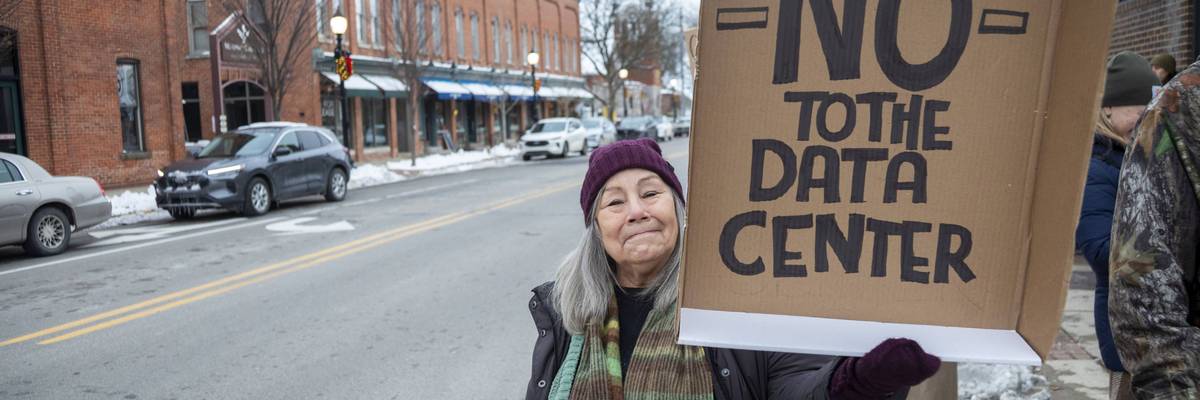
Residents in Saline, Michigan rally against the $7 billion Stargate data center planned on local farm land on December 1, 2025.
(Photo by: Jim West/UCG/Universal Images Group via Getty Images)
Brad Reed
Aug 20, 2026
COMMON DREAMS
A poll released on Thursday shows a massive collapse in support for building artificial intelligence data centers among Republican, Democratic, and independent voters.
The poll, which was conducted by Embold Research and published by Heatmap Pro, shows that 75% of Americans now oppose building AI data centers in their area, including 61% registering strong opposition.
Just one year before, 42% of Americans said they opposed AI data centers in their areas, compared with 43% who expressed support.
The collapse in support has also been uniform across all demographics, the pollsters found.
“If you can think of a cohort of Americans, there’s a good chance they wouldn’t welcome a data center in their area,” explained Heatmap executive editor Robinson Meyer. “The shift against the facilities is represented across age, gender, income, partisan ID, and the rural-urban divide. Data centers are 43 points underwater with Republicans, 65 points underwater with independents, and 75 points underwater with Democrats.”
Meyer further described the drop in support for data centers as “a swift, massive shift in US public opinion on a scale that I wouldn’t have once thought possible.”
Other observers expressed similar shock over how quickly US voters have turned against data centers, which President Donald Trump on Wednesday touted as a great source of jobs, even though the facilities employ very few people relative to their size once completed.
“I don’t think I’ve ever seen public opinion shift this quickly on an issue,” wrote Adam Carlson, founding partner at Zenith Polls.
Justin Slaughter, vice president of regulatory affairs at venture capital firm Paradigm, expressed astonishment at how quickly Americans’ views on AI data centers had fallen in just the span of a year.
“I’ve NEVER seen this,” Slaughter wrote. “Data center opponents are converting supporters not just to neutral but to opposition.”
Technologist Ramez Naam, a former computer scientist at Microsoft, described the shift against data centers as “crazy” and asked, “When’s the last time political opinions on an issue shifted that fast?”
The social media account for Oil PAC Tracker pointed to several reasons for US voters to distrust the AI industry, including developers forcing local government officials to sign nondisclosure agreements (NDAs) related to data center development and predictions from tech CEOs about the technology putting millions of people out of work.
“Sign secret NDAs, arrest people at city council meetings, surveil, tout job displacement, and raise utility bills and pollution,” wrote Oil PAC Tracker, “this is what you expect.”
Max Steele, senior director of communications at gun safety advocacy organization Everytown, sarcastically argued that the AI industry’s collapse in popularity was an impressive achievement.
“Credit where credit is due,” Steele wrote, “the tech sector has managed to unite a deeply divided country at a time of maximal partisanship.”
“If you can think of a cohort of Americans, there’s a good chance they wouldn’t welcome a data center in their area.”
Residents in Saline, Michigan rally against the $7 billion Stargate data center planned on local farm land on December 1, 2025.
(Photo by: Jim West/UCG/Universal Images Group via Getty Images)
Brad Reed
Aug 20, 2026
COMMON DREAMS
A poll released on Thursday shows a massive collapse in support for building artificial intelligence data centers among Republican, Democratic, and independent voters.
The poll, which was conducted by Embold Research and published by Heatmap Pro, shows that 75% of Americans now oppose building AI data centers in their area, including 61% registering strong opposition.
Just one year before, 42% of Americans said they opposed AI data centers in their areas, compared with 43% who expressed support.
The collapse in support has also been uniform across all demographics, the pollsters found.
“If you can think of a cohort of Americans, there’s a good chance they wouldn’t welcome a data center in their area,” explained Heatmap executive editor Robinson Meyer. “The shift against the facilities is represented across age, gender, income, partisan ID, and the rural-urban divide. Data centers are 43 points underwater with Republicans, 65 points underwater with independents, and 75 points underwater with Democrats.”
Meyer further described the drop in support for data centers as “a swift, massive shift in US public opinion on a scale that I wouldn’t have once thought possible.”
Other observers expressed similar shock over how quickly US voters have turned against data centers, which President Donald Trump on Wednesday touted as a great source of jobs, even though the facilities employ very few people relative to their size once completed.
“I don’t think I’ve ever seen public opinion shift this quickly on an issue,” wrote Adam Carlson, founding partner at Zenith Polls.
Justin Slaughter, vice president of regulatory affairs at venture capital firm Paradigm, expressed astonishment at how quickly Americans’ views on AI data centers had fallen in just the span of a year.
“I’ve NEVER seen this,” Slaughter wrote. “Data center opponents are converting supporters not just to neutral but to opposition.”
Technologist Ramez Naam, a former computer scientist at Microsoft, described the shift against data centers as “crazy” and asked, “When’s the last time political opinions on an issue shifted that fast?”
The social media account for Oil PAC Tracker pointed to several reasons for US voters to distrust the AI industry, including developers forcing local government officials to sign nondisclosure agreements (NDAs) related to data center development and predictions from tech CEOs about the technology putting millions of people out of work.
“Sign secret NDAs, arrest people at city council meetings, surveil, tout job displacement, and raise utility bills and pollution,” wrote Oil PAC Tracker, “this is what you expect.”
Max Steele, senior director of communications at gun safety advocacy organization Everytown, sarcastically argued that the AI industry’s collapse in popularity was an impressive achievement.
“Credit where credit is due,” Steele wrote, “the tech sector has managed to unite a deeply divided country at a time of maximal partisanship.”
Almost Overnight, the Data Centers Were Everywhere in My Community—Don’t Let This Happen to You
Virginia spent years asking how quickly it could build data centers. But Maryland and other states have an opportunity to ask a better question: How do we embrace innovation without sacrificing the affordability, environment, and quality of life that make our communities worth living in?
Virginia spent years asking how quickly it could build data centers. But Maryland and other states have an opportunity to ask a better question: How do we embrace innovation without sacrificing the affordability, environment, and quality of life that make our communities worth living in?
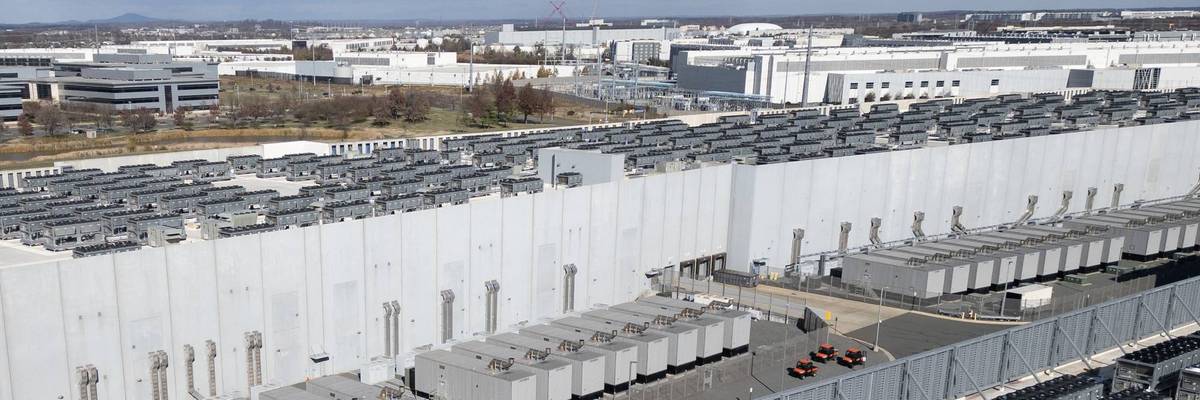
An aerial view shows cooling vent fans on the roof next to generators on
the lower level of a Digital Realty data center in Ashburn, Virginia on November 12, 2025.
(Photo by Andrew Caballero-Reynolds / AFP via Getty Images)
Danielle Johnson
Aug 21, 2026
(Photo by Andrew Caballero-Reynolds / AFP via Getty Images)
Danielle Johnson
Aug 21, 2026
Common Dreams
I’ve lived in Northern Virginia my whole life, but no one told us we would soon be living alongside one of the largest concentrations of data centers in the world.
No one asked our community whether we wanted them. No one explained what they would mean for our neighborhoods, our landscape, or our monthly bills. Then, almost overnight, they were everywhere. Massive industrial buildings rose where open space once stood. The constant hum became part of daily life. And one month, our electricity bill didn’t gradually creep upward, it nearly doubled.
We were told these projects would bring jobs, innovation, and economic growth. What we weren’t told was what residents would be expected to give up in return.
Now, as I watch Maryland debate whether to accelerate data center development, I can’t help but feel like I’ve seen this story before.
As someone living with the consequences of Virginia’s choices, my advice is simple: Don’t wait until the bills arrive, the forests are gone, and the data centers are already built to ask whether they were worth it.
For years, Virginia has been held up as the nation’s data center success story. But if Maryland leaders only see Virginia’s balance sheet, they’re missing the growing backlash from the people who live here.
I have watched forests disappear, industrial buildings replace open land, electricity demand surge, and communities be transformed by sprawling server farms. Everyone I know is asking whether the promised economic benefits outweigh the environmental and financial costs.
Maryland has a choice. You can rush to replicate Virginia’s model, or you can learn from our mistakes before it’s too late.
The conversation surrounding data centers has largely centered on artificial intelligence and economic development. But too often, what gets left out are the communities expected to absorb the costs.
Supporters frequently describe data centers as major job creators, but the reality is more complicated. Construction creates temporary employment, yet once operational, many hyperscale facilities require relatively few permanent workers. Communities are often asked to trade farmland, forests, neighborhoods, and increased pressure on utilities for projects that may never deliver the long-term economic engine they were promised.
That trade-off deserves far more scrutiny than it has received.
The race to build data centers is being driven largely by the explosive growth of artificial intelligence. Every major technology company wants more computing power, faster infrastructure, and greater capacity. But history teaches us that economic booms rarely continue unchecked. America has seen speculative waves in office construction, shopping malls, and commercial real estate that far exceeded demand before markets eventually corrected.
No one can say with certainty whether today’s data center boom will follow the same path. But uncertainty itself is reason for caution, not acceleration.
Maryland should pause before repeating Virginia’s mistakes. A statewide moratorium would give policymakers time to complete a comprehensive assessment of the environmental, economic, and energy impacts of these facilities; strengthen safeguards for communities; ensure developers bear the costs of new infrastructure; and give the public a meaningful voice in decisions that will shape their neighborhoods for generations.
Virginia spent years asking how quickly it could build data centers.
Maryland has an opportunity to ask a better question: How do we embrace innovation without sacrificing the affordability, environment, and quality of life that make our communities worth living in?
As someone living with the consequences of Virginia’s choices, my advice is simple: Don’t wait until the bills arrive, the forests are gone, and the data centers are already built to ask whether they were worth it.
By then, the answer may come too late.
Our work is licensed under Creative Commons (CC BY-NC-ND 3.0). Feel free to republish and share widely.
Danielle Johnson
Danielle Johnson is a federal contractor and community advocate who lives in Woodbridge, Virginia.
Full Bio >
I’ve lived in Northern Virginia my whole life, but no one told us we would soon be living alongside one of the largest concentrations of data centers in the world.
No one asked our community whether we wanted them. No one explained what they would mean for our neighborhoods, our landscape, or our monthly bills. Then, almost overnight, they were everywhere. Massive industrial buildings rose where open space once stood. The constant hum became part of daily life. And one month, our electricity bill didn’t gradually creep upward, it nearly doubled.
We were told these projects would bring jobs, innovation, and economic growth. What we weren’t told was what residents would be expected to give up in return.
Now, as I watch Maryland debate whether to accelerate data center development, I can’t help but feel like I’ve seen this story before.
As someone living with the consequences of Virginia’s choices, my advice is simple: Don’t wait until the bills arrive, the forests are gone, and the data centers are already built to ask whether they were worth it.
For years, Virginia has been held up as the nation’s data center success story. But if Maryland leaders only see Virginia’s balance sheet, they’re missing the growing backlash from the people who live here.
I have watched forests disappear, industrial buildings replace open land, electricity demand surge, and communities be transformed by sprawling server farms. Everyone I know is asking whether the promised economic benefits outweigh the environmental and financial costs.
Maryland has a choice. You can rush to replicate Virginia’s model, or you can learn from our mistakes before it’s too late.
The conversation surrounding data centers has largely centered on artificial intelligence and economic development. But too often, what gets left out are the communities expected to absorb the costs.
Supporters frequently describe data centers as major job creators, but the reality is more complicated. Construction creates temporary employment, yet once operational, many hyperscale facilities require relatively few permanent workers. Communities are often asked to trade farmland, forests, neighborhoods, and increased pressure on utilities for projects that may never deliver the long-term economic engine they were promised.
That trade-off deserves far more scrutiny than it has received.
The race to build data centers is being driven largely by the explosive growth of artificial intelligence. Every major technology company wants more computing power, faster infrastructure, and greater capacity. But history teaches us that economic booms rarely continue unchecked. America has seen speculative waves in office construction, shopping malls, and commercial real estate that far exceeded demand before markets eventually corrected.
No one can say with certainty whether today’s data center boom will follow the same path. But uncertainty itself is reason for caution, not acceleration.
Maryland should pause before repeating Virginia’s mistakes. A statewide moratorium would give policymakers time to complete a comprehensive assessment of the environmental, economic, and energy impacts of these facilities; strengthen safeguards for communities; ensure developers bear the costs of new infrastructure; and give the public a meaningful voice in decisions that will shape their neighborhoods for generations.
Virginia spent years asking how quickly it could build data centers.
Maryland has an opportunity to ask a better question: How do we embrace innovation without sacrificing the affordability, environment, and quality of life that make our communities worth living in?
As someone living with the consequences of Virginia’s choices, my advice is simple: Don’t wait until the bills arrive, the forests are gone, and the data centers are already built to ask whether they were worth it.
By then, the answer may come too late.
Our work is licensed under Creative Commons (CC BY-NC-ND 3.0). Feel free to republish and share widely.
Danielle Johnson
Danielle Johnson is a federal contractor and community advocate who lives in Woodbridge, Virginia.
Full Bio >
Trump alarms red state with power plant bombshell: 'Big deal'
Daniel Hampton
August 21, 2026
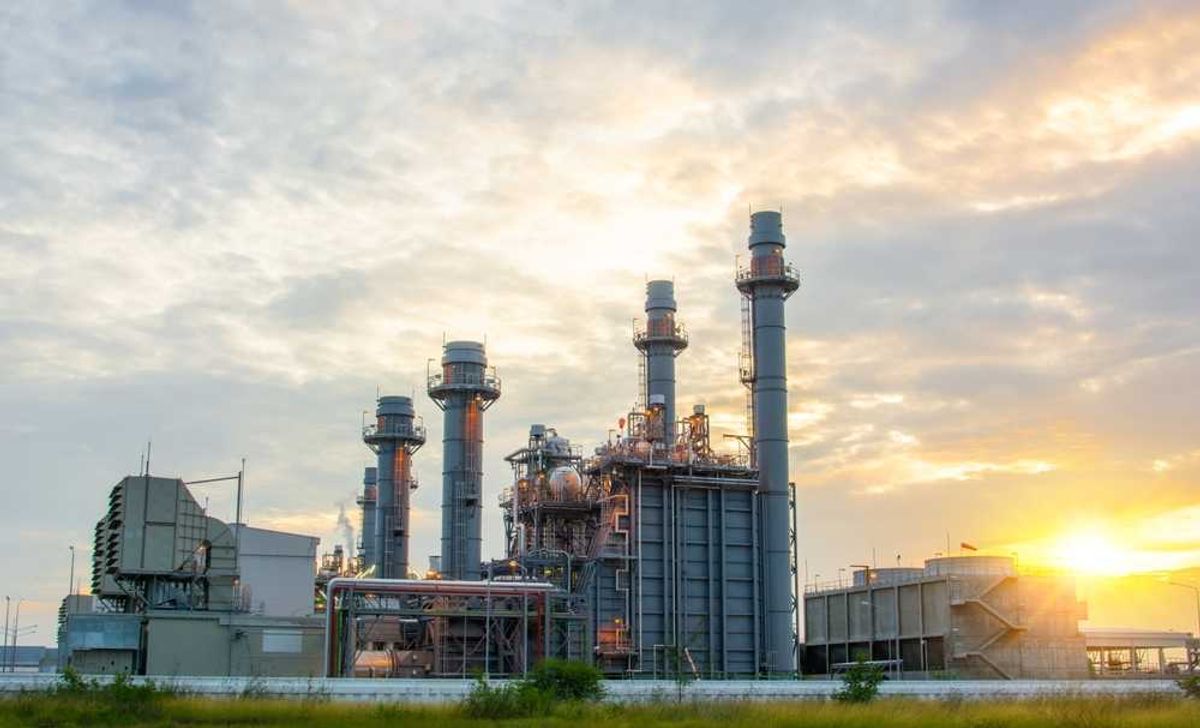
Natural gas plant. (Photo credit: tonton / Shutterstock)
The data center OpenAI is building in southern Ohio will draw its power from what would be the largest fossil-fuel power plant ever constructed in the United States, and the Trump administration is racing its environmental review to the finish.
According to Heatmap News, the federal review of the PORTS-Pike project's 9.2-gigawatt natural gas plant began July 10 and is slated to wrap by Dec. 23, roughly seven months to clear a facility bigger than five of Ohio's largest existing power plants combined. Regulators are handling it with an "environmental assessment," the lighter of the two federal review options, rather than a full environmental impact statement.
The gas plant would anchor a 10-gigawatt AI campus at the former Portsmouth Gaseous Diffusion Plant, a decommissioned uranium enrichment site on federal land in Pike County. OpenAI signed a 20-year lease for roughly 8 gigawatts last week, backed by a $105 billion guarantee from Nvidia and developed by SoftBank's SB Energy alongside the Energy Department.
OpenAI has cast the project as a rebirth for the region.
"Pike County helped power America's industrial growth in the 20th century and now, with this project, it has another opportunity to play a leading role in the next era of American industrialization," the company said.
The reaction from energy watchers was swift.
Heatmap's Jael Holzman, who broke the story, warned the scale hadn't sunk in: "y'all are not getting how big of a bfd this is yet." Her colleague Emily Pontecorvo laid out the trifecta drawing alarm: "the biggest fossil fueled power plant EVER BUILT IN THE US" getting the lighter review and clearing permitting "in just 7 months."
Energy analyst John Bistline put the size in perspective, noting that 9.2 gigawatts of new gas at one Ohio site is more generating capacity than any of 10 entire states hold — among them Montana, Idaho, Maine, Alaska and Vermont.
Longtime Ohio journalist Darrel Rowland took aim at the rushed review with a nod to the site's fraught history: "Where have southern Ohioans heard this before?"
Daniel Hampton
August 21, 2026
RAW STORY
Natural gas plant. (Photo credit: tonton / Shutterstock)
The data center OpenAI is building in southern Ohio will draw its power from what would be the largest fossil-fuel power plant ever constructed in the United States, and the Trump administration is racing its environmental review to the finish.
According to Heatmap News, the federal review of the PORTS-Pike project's 9.2-gigawatt natural gas plant began July 10 and is slated to wrap by Dec. 23, roughly seven months to clear a facility bigger than five of Ohio's largest existing power plants combined. Regulators are handling it with an "environmental assessment," the lighter of the two federal review options, rather than a full environmental impact statement.
The gas plant would anchor a 10-gigawatt AI campus at the former Portsmouth Gaseous Diffusion Plant, a decommissioned uranium enrichment site on federal land in Pike County. OpenAI signed a 20-year lease for roughly 8 gigawatts last week, backed by a $105 billion guarantee from Nvidia and developed by SoftBank's SB Energy alongside the Energy Department.
OpenAI has cast the project as a rebirth for the region.
"Pike County helped power America's industrial growth in the 20th century and now, with this project, it has another opportunity to play a leading role in the next era of American industrialization," the company said.
The reaction from energy watchers was swift.
Heatmap's Jael Holzman, who broke the story, warned the scale hadn't sunk in: "y'all are not getting how big of a bfd this is yet." Her colleague Emily Pontecorvo laid out the trifecta drawing alarm: "the biggest fossil fueled power plant EVER BUILT IN THE US" getting the lighter review and clearing permitting "in just 7 months."
Energy analyst John Bistline put the size in perspective, noting that 9.2 gigawatts of new gas at one Ohio site is more generating capacity than any of 10 entire states hold — among them Montana, Idaho, Maine, Alaska and Vermont.
Longtime Ohio journalist Darrel Rowland took aim at the rushed review with a nod to the site's fraught history: "Where have southern Ohioans heard this before?"
Trump Says Better Industry Propaganda Needed to Make Americans Embrace Widely Unpopular Data Centers
“If I were the mayor of a town or the governor of a state, and I had a chance to get a big plant in, an AI plant, or a data center, I would absolutely want it,” said the billionaire president.

US President Donald Trump holds an image showing the size of Meta’s new data center in Washington, DC on August 26, 2025.
(Photo by Mandel Ngan/AFP via Getty Images)
Brad Reed
Aug 20, 2026
COMMON DREAMS
President Donald Trump on Wednesday insisted that Americans should welcome artificial intelligence data centers in their communities, despite polls showing widespread opposition to their construction across the US, as well as mounting evidence of their negative impacts on the environment, public health, and Americans’ utility bills.
During a White House event with cryptocurrency and technology leaders, Trump was asked what he would say to working-class voters who backed him in the 2024 election but are skeptical about the benefits of AI.
Trump said he saw no reason why there should be opposition to building data centers, which have drawn criticism for producing pollution and forcing major spikes in utility bills thanks to their massive energy needs.
“If I were the mayor of a town or the governor of a state, and I had a chance to get a big plant in, an AI plant, or a data center, I would absolutely want it,” Trump explained. “The jobs are enormous and the money paid, the taxes paid, are enormous. And if you don’t take it, you’re going to be left behind because there are plenty of places that want it.”
The president then suggested that the only reason data centers aren’t popular is due to lack of effective propaganda from the tech industry.
“Maybe it could use a little public relations help,” he said.
An internal memo written by the National Republican Senatorial Committee that leaked to Axios on Wednesday warned Silicon Valley that data centers were massively unpopular throughout the country and were putting GOP candidates at risk.
In particular, the memo singled out the US Senate race in Ohio, where former Democratic Sen. Sherrod Brown has used incumbent Republican Sen. Jon Husted’s support for data centers as a cudgel.
“If voters’ perceptions of data centers are not fixed quickly,” the memo cautioned, “the campaign against them will expand far beyond Ohio.”
The New York Times reported on Thursday that the backlash to data centers has gotten so strong that it has inspired recall campaigns against officials who approved their construction in states including Missouri, Oklahoma, and Michigan.
Sen. Bernie Sanders (I-Vt.), who has proposed a nationwide moratorium on AI data center construction, told the Times that opposition to Big Tech should be a basic litmus test for any ambitious politician.
“People are standing up and saying, ‘Sorry, we don’t want these data centers in our communities for a number of reasons,’” Sanders said. “If you can’t have the guts to stand up to some large corporation, you should not continue serving in office.”
“If I were the mayor of a town or the governor of a state, and I had a chance to get a big plant in, an AI plant, or a data center, I would absolutely want it,” said the billionaire president.
US President Donald Trump holds an image showing the size of Meta’s new data center in Washington, DC on August 26, 2025.
(Photo by Mandel Ngan/AFP via Getty Images)
Brad Reed
Aug 20, 2026
COMMON DREAMS
President Donald Trump on Wednesday insisted that Americans should welcome artificial intelligence data centers in their communities, despite polls showing widespread opposition to their construction across the US, as well as mounting evidence of their negative impacts on the environment, public health, and Americans’ utility bills.
During a White House event with cryptocurrency and technology leaders, Trump was asked what he would say to working-class voters who backed him in the 2024 election but are skeptical about the benefits of AI.
Trump said he saw no reason why there should be opposition to building data centers, which have drawn criticism for producing pollution and forcing major spikes in utility bills thanks to their massive energy needs.
“If I were the mayor of a town or the governor of a state, and I had a chance to get a big plant in, an AI plant, or a data center, I would absolutely want it,” Trump explained. “The jobs are enormous and the money paid, the taxes paid, are enormous. And if you don’t take it, you’re going to be left behind because there are plenty of places that want it.”
The president then suggested that the only reason data centers aren’t popular is due to lack of effective propaganda from the tech industry.
“Maybe it could use a little public relations help,” he said.
An internal memo written by the National Republican Senatorial Committee that leaked to Axios on Wednesday warned Silicon Valley that data centers were massively unpopular throughout the country and were putting GOP candidates at risk.
In particular, the memo singled out the US Senate race in Ohio, where former Democratic Sen. Sherrod Brown has used incumbent Republican Sen. Jon Husted’s support for data centers as a cudgel.
“If voters’ perceptions of data centers are not fixed quickly,” the memo cautioned, “the campaign against them will expand far beyond Ohio.”
The New York Times reported on Thursday that the backlash to data centers has gotten so strong that it has inspired recall campaigns against officials who approved their construction in states including Missouri, Oklahoma, and Michigan.
Sen. Bernie Sanders (I-Vt.), who has proposed a nationwide moratorium on AI data center construction, told the Times that opposition to Big Tech should be a basic litmus test for any ambitious politician.
“People are standing up and saying, ‘Sorry, we don’t want these data centers in our communities for a number of reasons,’” Sanders said. “If you can’t have the guts to stand up to some large corporation, you should not continue serving in office.”
GOP Accused of Trying to ‘Pull Wool Over the Eyes of the Public’ With Data Center Shift
“They are realizing how wildly unpopular Big AI’s agenda is with the American people.”
Texas Gov. Greg Abbott speaks during a news conference on June 8, 2023 in Austin, Texas.
(Photo by Brandon Bell/Getty Images)
Jake Johnson
Aug 20, 2026
COMMON DREAMS
Corporate-friendly Republicans who are typically hostile to regulation are attempting to reshape their image in the lead-up to the November midterms in what critics say is a cynical attempt to capitalize on mounting grassroots backlash against artificial intelligence data centers.
Semafor reported Wednesday that prominent Republicans, having “cheered the AI boom,” are now “scrambling to find a new identity as middle-ground pragmatists,” even as they receive campaign contributions from companies directly involved in or benefiting from data center construction and maintenance. The National Republican Senatorial Committee recognized in an internal memo that data centers have “become a sleeper issue for the entire election cycle.”
Semafor noted that “instead of a moratorium on building new facilities, a growing number of GOP candidates have called for ‘guardrails’ to protect skeptical communities from unchecked AI growth, as well as the rollback of industry tax breaks.”
“These Republicans’ rebrand also involves a bid for the high ground by attacking Democrats with more nuanced positions on data centers,” the outlet added.
Semafor points specifically to Texas Gov. Greg Abbott’s sudden decision in June to “audit tech companies’ use of the electric grid,” as well as his vow to work with state lawmakers to repeal the companies’ tax breaks. The Houston Chronicle reported last month that “several of the Republican governor’s most generous financial backers are increasingly investing in the boom that has voters in deep-red rural parts of the state up in arms... including ”real estate titan Ed Roski, Jr., who gave $1 million in April, and energy executive Kelcy Warren, who gave $500,000 in June.“
Abbott is facing state Rep. Gina Hinojosa (D-49) in November. In an ad debuted earlier this week, Hinojosa’s campaign said Abbott “took $20 million in campaign donations from data center executives and companies, and he gave them billions in tax breaks.”
Semafor observed Wednesday that the “Republican shift is underway in Michigan, too,” but it is “most intense in Wisconsin,” where Republican gubernatorial nominee Tom Tiffany is attempting to posture as tough on data centers despite his voting record in the US House and fundraising history.
Tiffany’s campaign has tried to label Milwaukee County Executive David Crowley, Wisconsin’s Democratic gubernatorial nominee, as “Data Center David.”
“Tiffany’s social media posts that clipped Crowley’s answers to data center questions were reshared and condemned by many progressives who had supported [democratic socialist Francesca] Hong,” Semafor reported. “That obscured what are in fact minor policy differences between the candidates: Tiffany wanted community input and for data centers to pay for their electricity, and so did Crowley. Like Texas, Wisconsin has passed bipartisan tax breaks to entice companies to do business there and were losing out on revenue when the profits blew away their projections.”
Charlie Blaettler, political director of the Guardrails Alliance—a coalition working to expose the AI industry’s growing political influence—said in a statement Wednesday that “the Republican Party is panicking because they sold out to the AI industry—a while ago—and they know it.”
“But now they are realizing how wildly unpopular Big AI’s agenda is with the American people,” said Blaettler. “The GOP and AI’s unaccountable billionaires are scrambling to backtrack and find a new way to pull the wool over the eyes of the public so they can get what they want: a Congress that will do their bidding and an AI future that benefits them, not the many.”
“They are realizing how wildly unpopular Big AI’s agenda is with the American people.”
Texas Gov. Greg Abbott speaks during a news conference on June 8, 2023 in Austin, Texas.
(Photo by Brandon Bell/Getty Images)
Jake Johnson
Aug 20, 2026
COMMON DREAMS
Corporate-friendly Republicans who are typically hostile to regulation are attempting to reshape their image in the lead-up to the November midterms in what critics say is a cynical attempt to capitalize on mounting grassroots backlash against artificial intelligence data centers.
Semafor reported Wednesday that prominent Republicans, having “cheered the AI boom,” are now “scrambling to find a new identity as middle-ground pragmatists,” even as they receive campaign contributions from companies directly involved in or benefiting from data center construction and maintenance. The National Republican Senatorial Committee recognized in an internal memo that data centers have “become a sleeper issue for the entire election cycle.”
Semafor noted that “instead of a moratorium on building new facilities, a growing number of GOP candidates have called for ‘guardrails’ to protect skeptical communities from unchecked AI growth, as well as the rollback of industry tax breaks.”
“These Republicans’ rebrand also involves a bid for the high ground by attacking Democrats with more nuanced positions on data centers,” the outlet added.
Semafor points specifically to Texas Gov. Greg Abbott’s sudden decision in June to “audit tech companies’ use of the electric grid,” as well as his vow to work with state lawmakers to repeal the companies’ tax breaks. The Houston Chronicle reported last month that “several of the Republican governor’s most generous financial backers are increasingly investing in the boom that has voters in deep-red rural parts of the state up in arms... including ”real estate titan Ed Roski, Jr., who gave $1 million in April, and energy executive Kelcy Warren, who gave $500,000 in June.“
Abbott is facing state Rep. Gina Hinojosa (D-49) in November. In an ad debuted earlier this week, Hinojosa’s campaign said Abbott “took $20 million in campaign donations from data center executives and companies, and he gave them billions in tax breaks.”
Semafor observed Wednesday that the “Republican shift is underway in Michigan, too,” but it is “most intense in Wisconsin,” where Republican gubernatorial nominee Tom Tiffany is attempting to posture as tough on data centers despite his voting record in the US House and fundraising history.
Tiffany’s campaign has tried to label Milwaukee County Executive David Crowley, Wisconsin’s Democratic gubernatorial nominee, as “Data Center David.”
“Tiffany’s social media posts that clipped Crowley’s answers to data center questions were reshared and condemned by many progressives who had supported [democratic socialist Francesca] Hong,” Semafor reported. “That obscured what are in fact minor policy differences between the candidates: Tiffany wanted community input and for data centers to pay for their electricity, and so did Crowley. Like Texas, Wisconsin has passed bipartisan tax breaks to entice companies to do business there and were losing out on revenue when the profits blew away their projections.”
Charlie Blaettler, political director of the Guardrails Alliance—a coalition working to expose the AI industry’s growing political influence—said in a statement Wednesday that “the Republican Party is panicking because they sold out to the AI industry—a while ago—and they know it.”
“But now they are realizing how wildly unpopular Big AI’s agenda is with the American people,” said Blaettler. “The GOP and AI’s unaccountable billionaires are scrambling to backtrack and find a new way to pull the wool over the eyes of the public so they can get what they want: a Congress that will do their bidding and an AI future that benefits them, not the many.”
Leaked GOP Memo Warns Big Tech That AI Data Centers as Popular as ‘Nuclear Waste’
“If voters’ perceptions of data centers are not fixed quickly, the campaign against them will expand far beyond Ohio.”

Demonstrators wave signs during a nationwide protest against artificial intelligence data center expansion in Imperial, California on July 18, 2026.
(Photo by Sandy Huffaker/AFP via Getty Images)
Brad Reed
Aug 19, 2026
COMMON DREAMS
A leaked memo written by the National Republican Senatorial Committee is warning Silicon Valley that its artificial intelligence data firms are becoming a massive political liability.
Axios reported on Wednesday that the GOP memo centers on the US Senate race in Ohio, where former Democratic Sen. Sherrod Brown has made opposition to data centers central to his campaign against incumbent Republican Sen. Jon Husted.
The memo argues that if Brown’s campaign is successful in a state that President Donald Trump won by double digits in 2024, it will send a signal that support for data centers is a losing position across the US.
“If he loses and data centers get the blame, politicians across the country will take notice—and they will not go near the next one,” the memo says. “This has become a sleeper issue for the entire election cycle.”
The memo goes on to argue that the tech industry needs to do more to show Americans the benefits they will get from data centers, which have been criticized for raising people’s utility bills and generating large amounts of pollution.
“If voters’ perceptions of data centers are not fixed quickly,” the memo cautions, “the campaign against them will expand far beyond Ohio.”
According to Axios, AI CEOs and GOP insiders have become unnerved by internal polls showing that “data centers are as popular as spent nuclear waste, and more broadly have become a proxy for feelings about AI.”
A poll released in June by Echelon Insights found that only 27% of Americans said they would want an AI data center built in their nieghborhood, with 62% opposed. This made data centers even less popular than nuclear power plants, which 34% of Americans said they would welcome in their neighborhoods.
A separate Axios report published Wednesday described AI CEOs being in “full panic mode” over the backlash to data centers. What’s more, reported Axios, tech insiders privately acknowledge that “they can’t find a compelling message to shift opinion fast enough” ahead of the 2026 midterm elections.
In fact, noted Axios, Wisconsin Republican gubernatorial nominee Tom Tiffany has even come out against AI data center construction in his state, which the report described as “a striking crack” in President Donald Trump’s “pro-AI coalition.”
In a Wednesday social media post, pollster Adam Carlson predicted that any Big Tech public relations campaign to change Americans’ minds about data centers was likely doomed.
“Charm offensives from tech firms... would’ve been more effective if they did them proactively instead of in response to (very predictable) local backlash,” Carlson explained. “They got greedy. Now they’re trying to play catch-up and it’s probably too late. No one to blame but themselves.”
“If voters’ perceptions of data centers are not fixed quickly, the campaign against them will expand far beyond Ohio.”
Demonstrators wave signs during a nationwide protest against artificial intelligence data center expansion in Imperial, California on July 18, 2026.
(Photo by Sandy Huffaker/AFP via Getty Images)
Brad Reed
Aug 19, 2026
COMMON DREAMS
A leaked memo written by the National Republican Senatorial Committee is warning Silicon Valley that its artificial intelligence data firms are becoming a massive political liability.
Axios reported on Wednesday that the GOP memo centers on the US Senate race in Ohio, where former Democratic Sen. Sherrod Brown has made opposition to data centers central to his campaign against incumbent Republican Sen. Jon Husted.
The memo argues that if Brown’s campaign is successful in a state that President Donald Trump won by double digits in 2024, it will send a signal that support for data centers is a losing position across the US.
“If he loses and data centers get the blame, politicians across the country will take notice—and they will not go near the next one,” the memo says. “This has become a sleeper issue for the entire election cycle.”
The memo goes on to argue that the tech industry needs to do more to show Americans the benefits they will get from data centers, which have been criticized for raising people’s utility bills and generating large amounts of pollution.
“If voters’ perceptions of data centers are not fixed quickly,” the memo cautions, “the campaign against them will expand far beyond Ohio.”
According to Axios, AI CEOs and GOP insiders have become unnerved by internal polls showing that “data centers are as popular as spent nuclear waste, and more broadly have become a proxy for feelings about AI.”
A poll released in June by Echelon Insights found that only 27% of Americans said they would want an AI data center built in their nieghborhood, with 62% opposed. This made data centers even less popular than nuclear power plants, which 34% of Americans said they would welcome in their neighborhoods.
A separate Axios report published Wednesday described AI CEOs being in “full panic mode” over the backlash to data centers. What’s more, reported Axios, tech insiders privately acknowledge that “they can’t find a compelling message to shift opinion fast enough” ahead of the 2026 midterm elections.
In fact, noted Axios, Wisconsin Republican gubernatorial nominee Tom Tiffany has even come out against AI data center construction in his state, which the report described as “a striking crack” in President Donald Trump’s “pro-AI coalition.”
In a Wednesday social media post, pollster Adam Carlson predicted that any Big Tech public relations campaign to change Americans’ minds about data centers was likely doomed.
“Charm offensives from tech firms... would’ve been more effective if they did them proactively instead of in response to (very predictable) local backlash,” Carlson explained. “They got greedy. Now they’re trying to play catch-up and it’s probably too late. No one to blame but themselves.”

No comments:
Post a Comment