Thursday, July 02, 2026


US job growth plummets as eurozone unemployment holds at record low
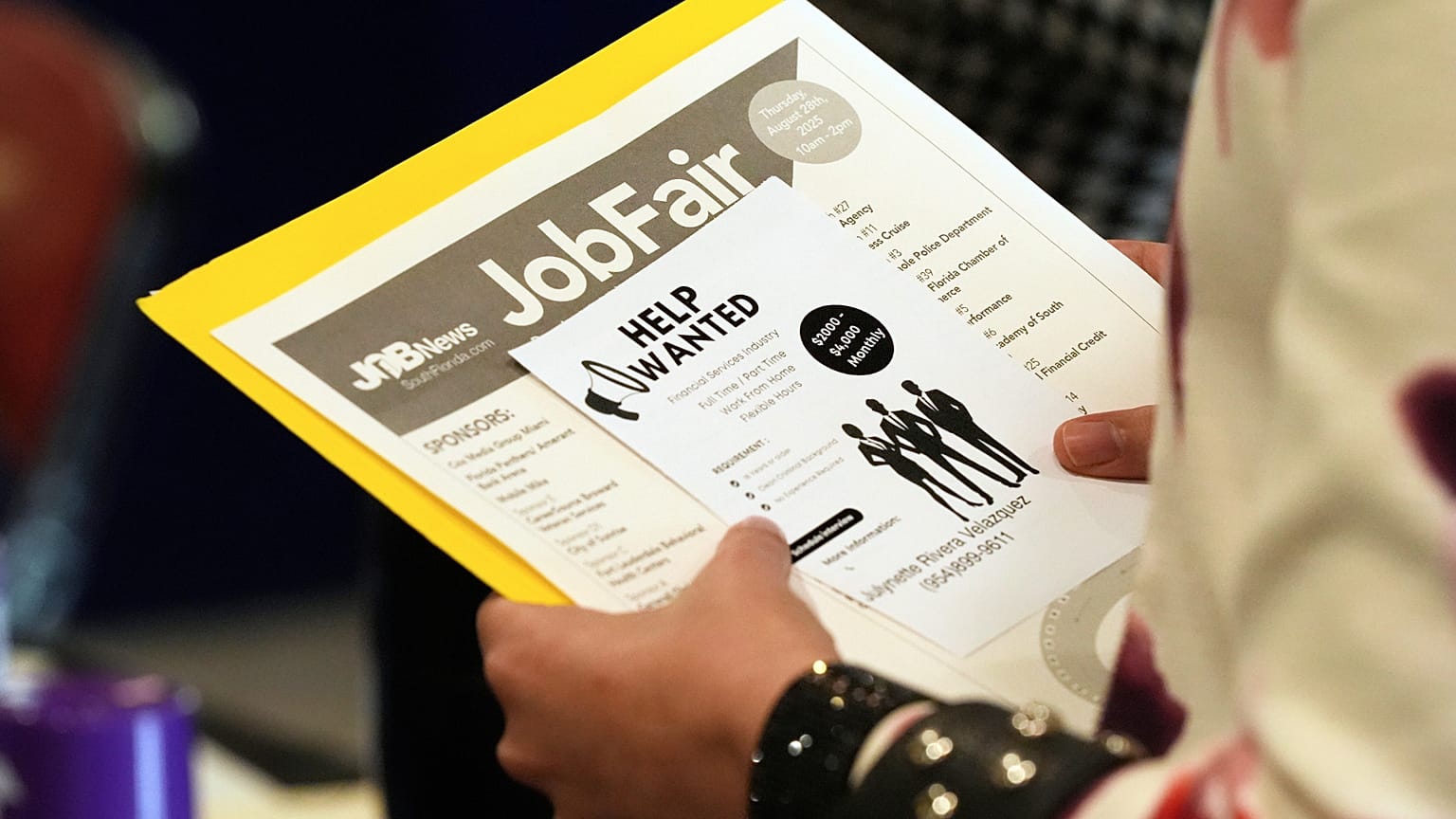
FILE. A job seeker waits to talk to a recruiter at a job fair in Sunrise, Florida, Aug. 2025
Copyright AP Photo/Marta Lavandier

By Quirino Mealha
Published on

New labour market data highlights a growing transatlantic divide, with US payroll additions slowing drastically, while the Eurozone unemployment rate remains anchored at an all-time low.

Fresh employment figures released on Thursday expose a diverging trajectory for the world's most prominent advanced economies, as severe hiring slowdowns in the US contrast with historic resilience in European labour markets.

According to the US Bureau of Labor Statistics, nonfarm payrolls increased by a mere 57,000 in June. This figure drastically missed market expectations, which had anticipated an addition of 113,000 jobs, and it marks a steep decline from the 172,000 positions created in the previous month.

Despite the sharp cooling in overall job creation, the US unemployment rate unexpectedly ticked down to 4.2%, representing a slight improvement from the 4.3% recorded in May.

Other metrics present a nuanced picture of the American economy.

Initial jobless claims remained perfectly steady at 215,000 for the week, defying analyst estimates that predicted a slight increase of around 218,000. Meanwhile, continuing claims fell slightly to 1.814 million, dipping below the projected 1.820 million.
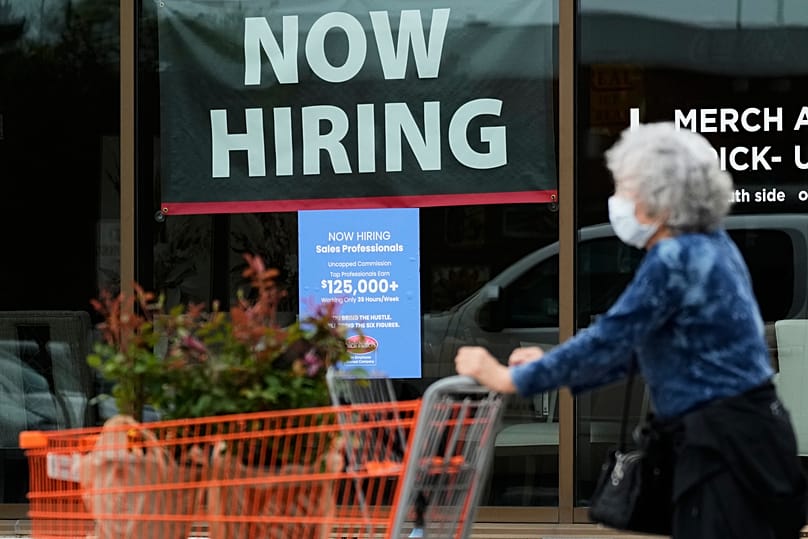
Hiring sign for sales professionals is displayed at a store in Vernon Hills, Illinois, Apr. 2026 AP Photo/Nam Y. Huh

Across the Atlantic, the European employment landscape continues to demonstrate remarkable steadfastness.

According to data published by Eurostat, the Eurozone unemployment rate remained stable at 6.2% in May, holding firm at a record low for the currency bloc.

This figure perfectly aligns with market projections and underscores the enduring tightness of the European job market, even as broader economic uncertainties linger across the continent.

Central bank implications

The latest employment reports arrive at a critical juncture for both the US Federal Reserve and the European Central Bank and their respective monetary policy outlooks.

In the US, the severe drop in nonfarm payroll growth provides compelling evidence that the labour market is finally softening under the weight of restrictive financial conditions.

The Federal Reserve opted to halt its interest rate hikes in June, keeping borrowing costs steady as policymakers evaluate the delayed impact of their previous tightening cycle.

While the drop in the headline unemployment rate to 4.2% paints a slightly mixed picture, the dismal 57,000 payroll figure is likely to reinforce the cautious stance.

Analysts suggest that if payroll numbers continue to print this low, the Federal Reserve might face pressure to discuss rate cuts later in the year to prevent a broader economic contraction in 2026, but for now a single soft print is likely not enough.

"The payrolls miss reads as a growth wobble, and the knee-jerk is to price cuts back in. That's the trap. Unemployment just fell to 4.2%, so a hawkish Fed has all the cover it needs to look through one soft payroll print, and relief may not come," said Iggy Ioppe, CIO at Theo.

"A soft print will immediately soften hike pressure, and you'll see it in the repricing before the headline settles, but weaker data is not automatically bullish. The Warsh Fed has put more weight on inflation credibility and less on forward guidance, so one soft report may not be enough to move a Fed still focused on inflation," concluded Fabian Dori, CIO at Sygnum Bank.

Conversely, for the European Central Bank there is no substantial doubt about whether there will be a change of course toward favouring rate cuts.

The unwavering 6.2% unemployment rate in the Eurozone highlights persistent domestic demand for workers and maintains inflation as a priority issue.

The ECB proceeded with another interest rate hike in June, citing stubborn price pressures. With employment hovering at historic highs, European policymakers may feel fully justified in maintaining a strict, hawkish posture.

The steadfastness of the European labour force gives the central bank a sturdy economic foundation to absorb tighter financial conditions without triggering an immediate recession.


Spain jobless total falls below 2.3 million for first time since January 2008
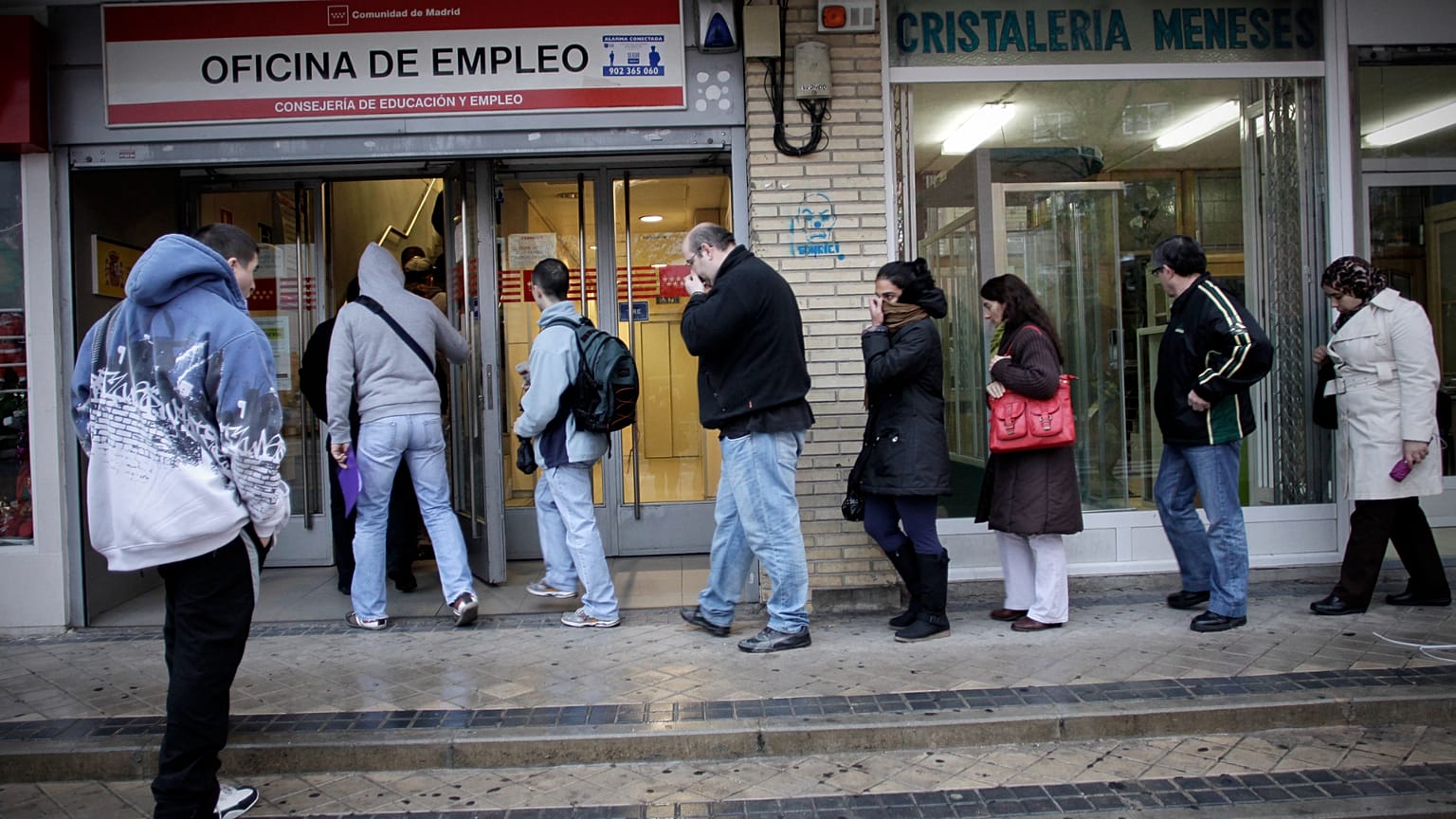
Unemployment in Spain drops to 2008 levels, file photo.
Copyright Copyright 2011 AP. All rights reserved.

By Jesús Maturana
Published on

The State Public Employment Service recorded 2,291,982 jobseekers in June, 28,739 fewer than in May, dropping below 2.3 million for the first time since January 2008. Social Security membership also hit a record high.

The figures released on Thursday by the Ministry of Labour confirm a trend that has been taking shape for months. Registered unemployment fell in June by 28,739 people compared with May, bringing the total number down to 2,291,982 unemployed people. Such a low figure had not been seen since January 2008, in other words, before the financial crisis hit.

The drop is not evenly spread across sectors. Services account for almost all of the adjustment, with 28,498 fewer unemployed, driven by the start of the tourist season.

Industry follows, with 2,829 fewer jobless, construction with 1,326, and agriculture, which records a decrease of 384. There is, however, one figure that breaks the trend: the number of people with no previous employment history has risen by 4,298, a sign that those looking for their first job, or trying to return to the labour market after time away, are finding it harder to get a foothold.

By age group, youth unemployment continues to fall: 5,155 fewer young people than in May and 6,907 fewer than a year ago, taking the total to 159,800, the lowest figure in the entire historical series for this group. The year-on-year decline is more pronounced among young women, with 4,090 fewer unemployed, than among men, with 2,817.

Women, the driving force behind the fall in unemployment

Female unemployment has fallen below 1.4 million for the first time since August 2008. There are currently 1.39 million women out of work, compared with 903,673 men. Over the past month the drop has been almost 16,000 women and 13,000 men; over the past year, 72,000 and 41,000 respectively.

Second Deputy Prime Minister and Minister of Labour, Yolanda Díaz, linked part of this improvement to the ongoing process of regularising workers’ status, which she said has allowed jobs that previously existed without legal recognition to "come to light" and now be counted both in affiliation figures and in the recognition of labour rights. In the case of women, the number of female contributors has increased by around 300,000 over the past year, bringing the total to 10.6 million, the highest figure ever recorded in Spain.

Among unemployed foreign nationals, the figure is also down: 342,086 people, 4,208 fewer than in May and 10,068 fewer than a year ago.

Social security registrations hit another record as retail drives the summer

Social Security recorded an average of 128,533 more contributors than in May, reaching 22.47 million, an all-time high. Once the calendar effect is stripped out, the seasonally adjusted figure also sets a record, above 22.2 million. Over the past 12 months the system has gained 600,595 contributors and shed 113,981 unemployed people.

Wholesale and retail trade lead monthly growth with 39,325 new registrations, ahead of hospitality, with 37,696, and administrative and support service activities, with 29,316. Looking at the full year, other sectors are providing the momentum: health and social services have added 78,373 members and construction, 66,280.

The number of self-employed workers continues to rise, reaching 3.47 million after adding 12,000 in the month and 50,800 over the year.

Affiliation of foreign workers has reached 3.45 million, more than half a million of them self-employed, with an increase of 86,630 people in June and 350,163 over the past 12 months; they now account for more than 15% of all contributors. The Minister for Social Security, Elma Saiz, pointed out that Spain has provided 54.5% of all the jobs created in the European Union during this period.


 

Keir Starmer issues state apology for decades of forced adoptions practices in UK

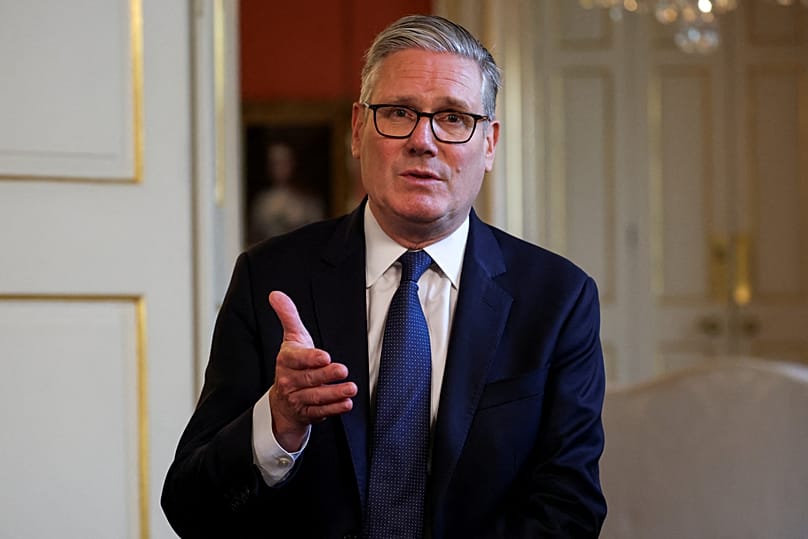
Britain's Prime Minister Keir Starmer, center, attends a meeting with campaigners to discuss historical forced adoption, at Downing Street, in London, Thursday July 2, 2026.
Copyright Isabel Infantes/Pool Photo via AP

By Evelyn Ann-Marie Dom
Published on

Previously, the then-Conservative government declined to apologise, arguing that the state had not supported these practices. Starmer has now acknowledged the government's role in forced adoptions.

UK Prime Minister Keir Starmer apologised for the state's role in decades of forced adoption of babies of tens of thousands of unwed mothers, calling it a "stain" on the country's history.

Between 1949 and 1976, roughly 185,000 babies born to unwed mothers were adopted by married couples in England and Wales.

Campaigners testified that they were pressured, misled, coerced or bullied into giving up their babies. Unmarried mothers were additionally shamed and forced to hide away in institutions while pregnant.

Starmer met some of the campaigners on Thursday, some of whom were present in the public gallery of the House of Commons where the UK leader delivered the apology.

"Children grew up believing that they were unwanted. Young mothers were told that they were immoral, and that their babies would be better off without them," he said during the government's formal apology in Parliament, acknowledging that the impact of such acts "lasts a lifetime".

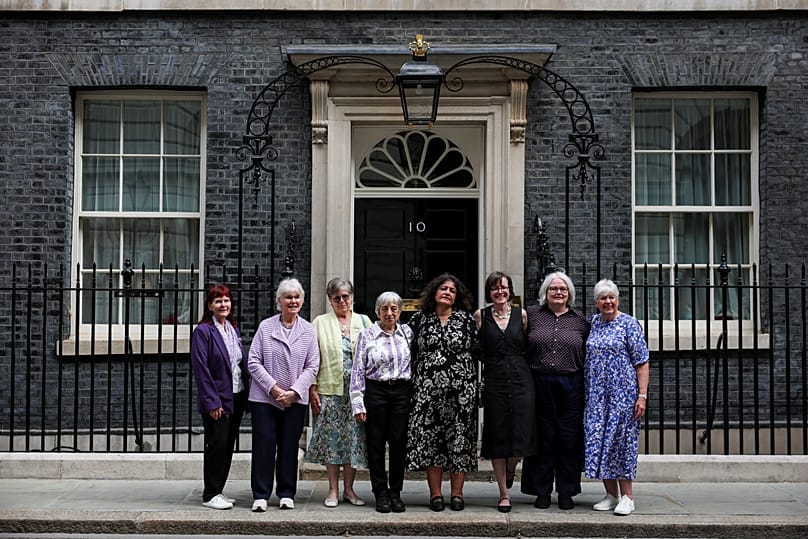
Campaigners pose for a photo after a meeting with British Prime Minister Keir Starmer to discuss historical forced adoption, outside 10 Downing Street in London, July 2, 2026.
Campaigners pose for a photo after a meeting with British Prime Minister Keir Starmer to discuss historical forced adoption, outside 10 Downing Street in London, July 2, 2026. Isabel Infantes/Pool Photo via AP

In 2022, the Parliament’s Joint Committee on Human Rights urged the British government to apologise for “the pain and suffering caused by public institutions and state employees that railroaded mothers into unwanted adoptions".

The following year, the semiautonomous governments in Scotland and Wales issued apologies, but the conservative UK government refused to do so, arguing that “the state did not actively support these practices".

'The shame is ours'

Starmer, on the other hand, did hold societal institutions accountable for the role they played in the forced adoptions.

"These were not isolated or accidental acts, they were practices embedded within systems across local authorities, across voluntary and faith-based institutions, and in health and social care services," he said.

“The state bears responsibility for the systems it funded and legitimised which enabled these practices to occur,” he added.

Britain's Prime Minister Keir Starmer meets with campaigners to discuss historical forced adoption at Downing Street in London, 2 July, 2026
Britain's Prime Minister Keir Starmer meets with campaigners to discuss historical forced adoption at Downing Street in London, 2 July, 2026 AP Photo

Campaigners have fought for years to receive an apology, what many describe as a necessary step to being released from the shame they received for giving up their babies.

"The shame is not yours, the shame was never yours. The shame is ours," Starmer concluded.

In addition to the apology, Starmer also announced support for affected mothers and children, including better access to adoption records and mental health support.


EU car industry clashes over strategy to fight Chinese competitors

Workers complete an electric car on an assembly line during a press tour at a Volkswagen AG plant in Germany.
Copyright AP Photo

By Peggy Corlin
Published on

With thousands of jobs are at stake, EU car suppliers and manufacturers disagree over the local content requirement set by the European Commission in its Made in Europe bill.

European car suppliers and manufacturers are divided over Brussels' "Made in Europe" strategy, an effort to shield the EU market from Chinese competition.

The EU car industry is facing fierce competition from China, threatening hundreds of thousands of jobs across the bloc. To address the issue, the EU is preparing the so-called Industrial Accelerator Act, which is designed to favour electric vehicles constructed mostly with European components in public procurement and public support schemes.

However, EU car suppliers and manufacturers disagree over the proposed law, currently under discussion by EU countries and the European Parliament, which sets a 70 percent local content threshold for electric vehicles.

According to the European Association of Automotive Suppliers (CLEPA), the Commission’s proposal is a step in the right direction. Based on a study commissioned from management consultancy Roland Berger that Euronews has seen, plug-in hybrid electric vehicles and battery-electric vehicles manufactured in Europe already contain between 80 percent and 90 percent made-in-Europe components.

Consequently, it considers the Commission's 70 percent threshold to be achievable.

But the European Automobile Manufacturers' Association (ACEA) is pushing for a different methodology, under which regulators would assess finished vehicles instead of the local content in vehicle components.

“A vehicle is far more than the sum of its parts. Its value also lies in the R&D, advanced engineering and highly skilled workforce behind it,” ACEA said in a position paper published on 1 July.

CLEPA responded that under this methodology, a finished vehicle would require only 50 percent EU-made parts and components, with the remaining 20 percent coming from R&D, design and other activities.

This 20 percentage-point dilution of the requirement for EU-made parts “could result in the loss of 350,000 jobs”, CLEPA warned, saying the Commission's component-level approach would “safeguard the existing manufacturing base".

“What we are looking at right now is significant competition from best-cost countries, and the dragon in the room is China,” CLEPA Secretary General Benjamin Krieger told Euronews.

"A 'Made in Europe' threshold that ignores where the actual parts are built is a label that ignores the European worker,” he said.

World Bank drops climate funding target, raising fears for Africa

The World Bank has abandoned its target of directing 45 percent of its financing to projects that help tackle climate change, prompting warnings that poorer countries – especially in Africa – could receive less support to adapt to a warming world.


Issued on: 02/07/2026 - RFI

Flooded streets in Katesh, Tanzania, on 3 December 2023. More than a third of the World Bank's climate lending last year went to projects in Africa. AP

The bank's five-year Climate Change Action Plan expired on Tuesday. Last year it put 48 percent of its lending – worth $51 billion – into projects with climate benefits, surpassing its original 45 percent target.

More than one-third of that funding went to Africa.

The change followed pressure from the United States, the bank's largest shareholder, despite European governments and many developing countries pushing to keep the 45 percent goal.

While that target has now been removed, the broader climate plan will now continue without an end date.

The bank's climate work "is and will remain firmly client-driven, supporting them in delivering on their own ambitions", World Bank president Ajay Banga wrote in an internal memo to staff.

From spending to 'results'

Speaking at the Hamburg Sustainability Conference on Tuesday, World Bank managing director Paschal Donohoe said the bank would now focus less on spending targets and more on the results projects deliver.

"By announcing the extension of this truly essential framework, we are now focusing on how we can ensure monitoring and report on the results achieved, rather than simply keeping track of the money spent," Donohoe said.

Climate action is now an integral part of the World Bank's work, a source familiar with the matter told RFI.

Fears for Africa


However, several observers expressed concern over the decision to remove the 45 percent target.

"It is extremely concerning to see that this numerical target has not been renewed," Selma Huart, an advocacy officer at the anti-poverty charity Oxfam, told RFI.

"The risk is that projects which worsen the climate crisis in Africa could be financed, while failing to protect the most vulnerable populations.

"The World Bank risks no longer helping African countries adapt to climate change at all, even though this is extremely necessary. Africa is one of the continents most affected by climate change today."

In recent years, the World Bank's climate plan has helped pay for electricity, sustainable transport and water projects in Madagascar, Tanzania and Niger.
Record-high ocean heat could fuel sea level rise and extreme weather on land

By Angela Symons
Published on 01/07/2026 
EURONEWS

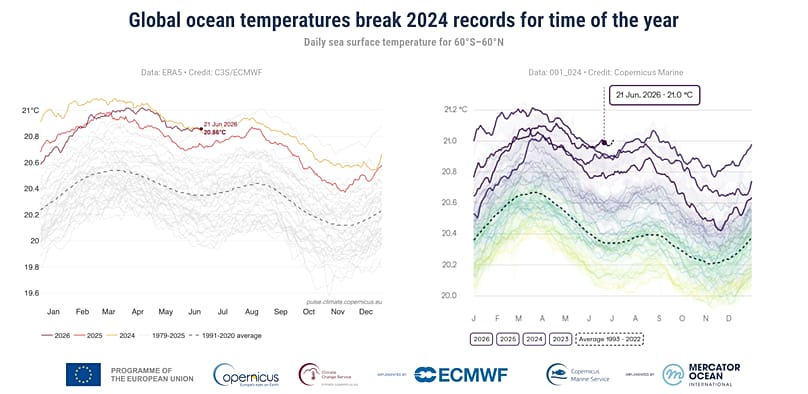
New Copernicus data reveals that daily global sea surface temperatures have broken records for the time of year.

Global sea surface temperatures have reached record highs for this time of year – the latest sign that the world’s oceans are entering what scientists describe as “uncharted territory”.

On 21 June, the global average reached 21.0°C, according to measurements taken by both the Copernicus Climate Change Service (C3S) and the Copernicus Marine Service (CMEMS). This beats the previous records from 2023 (20.83ºC) and 2024 (20.86ºC) by 0.1°C.

Although it might appear marginal, even tiny temperature shifts can wreak havoc on marine ecosystems, contribute to sea level rise and trigger extreme weather events.

While the onset of El Niño conditions in the Equatorial Pacific on 2 June has contributed to the record-breaking reading, it is part of a longer-term trend driven by climate change. Rising ocean temperatures outside the polar regions have been between 0.35ºC and 0.73ºC higher over the last three years compared with the long-term average, according to Copernicus.

“Current conditions could indicate the beginning of a new phase, leading, once more, to uncharted territory,” says Carlo Buontempo, Copernicus Climate Change Service Director at the European Centre for Medium-Range Weather Forecasts (ECMWF).

“With ocean temperatures at these levels and El Niño on the horizon, we are likely to see more temperature records fall in the coming months.”


It’s a warning that echoes recent UN projections, which found a 91 per cent chance that at least one of the next five years will exceed the 1.5°C warming threshold which the Paris Agreement warned the Earth should not surpass. The UN also predicted an 86 per cent chance that one of those years will surpass 2024 as the hottest on record.
Daily sea surface temperature for 60°S–60°N latitude. Copernicus


What is the impact of a warmer ocean?


The impact of rising sea surface temperatures isn’t confined to the oceans. By heating up the atmosphere, warm oceans provide extra energy to storms and increase evaporation, which can lead to heavy rainfall and flooding.

Ocean warming also contributes to sea level rise and ice melt, and stresses marine ecosystems.

It can also contribute to more frequent and intense marine heatwaves, which disrupt ecosystems and fisheries, affect coastal economies and can intensify extreme heat on nearby land.

El Niño worsens this by adding further heat into the atmosphere, increasing global temperatures and shifting weather patterns across the globe.

Climate scientist Friederike Otto of Imperial College London, who was not involved in the Copernicus analysis, has warned that any extended period above 1.5°C threatens “a whole range of extreme weather events that exceeds anything we’ve experienced in the past” – and that many cities remain unprepared.

Otto has also warned against placing too much emphasis on the natural El Niño phenomenon’s role in worsening global weather extremes: “It comes and goes. Climate change on the contrary gets worse as long as we do not stop burning fossil fuels,” she said in May.

Copernicus scientists are continuing to monitor the situation to assess whether the new high is temporary or longer-lasting.


Heat in Portugal: fires have already mobilised over 1,000 firefighters

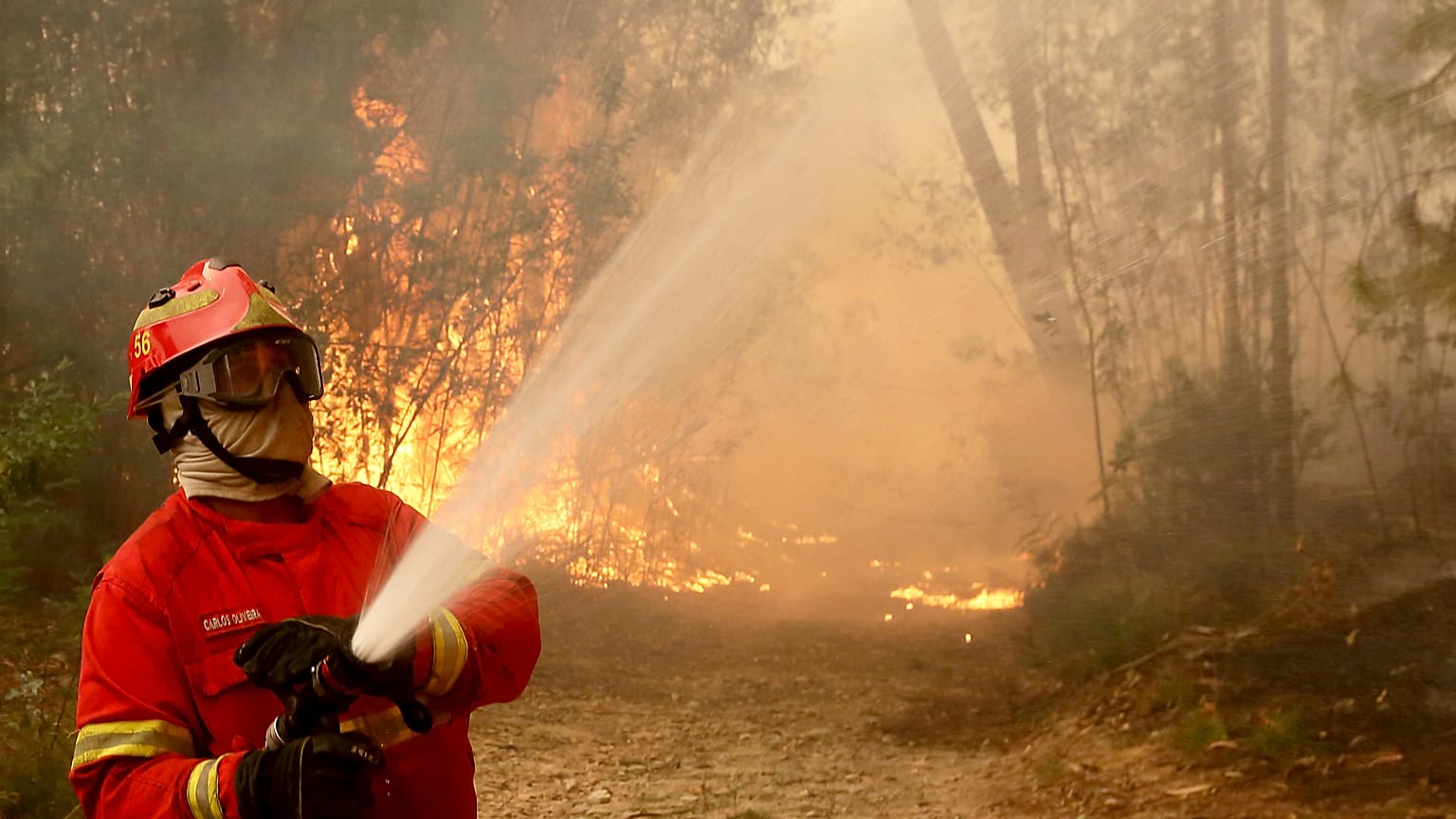
Heat in Portugal: wildfires have already mobilised more than a thousand firefighters
Copyright AP Photo

By Diana Rosa Rodrigues
Published on

From midnight to 3 p.m. Thursday, 1,995 responders and hundreds of assets tackled rural fires on the mainland; Civil Protection reports 62 incidents. The Vouzela fire remains active in a “complex area”, worrying the authorities.

With the country on alert because of the heatwave, the national territory is already seeing the first major wildfires of the season. According to the Civil Protection Authority, 62 incidents were recorded between midnight and 3 p.m. this Thursday, some of them overnight

One of them is the large fire currently burning in the municipality of Vouzela. According to Mário Silvestre, National Commander of the National Civil Protection Authority (ANPC), the blaze broke out at around 3 a.m. and is still ‘burning in a very complex area’. According to data on the Civil Protection website, at 4.15 p.m. the fire was being tackled by 303 personnel, 90 ground assets and four aerial resources.

As well as Vouzela, at 4.14 p.m. there were four other rural fires: two in Vila Nova de Famalicão, one in Montijo and another in Ourém. More than 500 firefighters and other responders are battling the flames on the ground, supported by over 140 vehicles and 10 aircraft.

Since midnight, the incidents recorded have involved a total of 1,995 personnel, 537 ground assets and 62 aircraft, according to the ANPC commander.

The ANPC has raised the special state of readiness to levels two and three across the country and is considering placing the entire mainland territory at level three tomorrow.

Mário Silvestre said the response system is being reinforced, particularly through the pre-positioning of resources across the country, ‘above all in the areas most exposed’ to fire risk. The aerial fleet has also been strengthened, with ‘two Air Force helicopters already deployed to the Vouzela fire’.

The ANPC insists that ‘all advance measures have been put in place’ but is urging the public to act with caution and responsibility. ‘We need to underline the importance of safe behaviour’, said Mário Silvestre.

The ANPC commander warned that firefighting conditions are adverse and that even nightfall is unlikely to help the crews.

‘The window of opportunity that normally gives us greater capacity to extinguish fires at night will be very narrow tonight (2 July) and in the night of 3 to 4 July’, the commander explained, adding that ‘the forecast severity and fire potential in some regions of the country will peak at 11 p.m.’ on Thursday night.

Heatwave: IPMA warns of a ‘long-lasting episode’

At a press conference that brought together several Civil Protection bodies, the Portuguese Institute for Sea and Atmosphere (IPMA) also issued a warning about a severe and prolonged heatwave.

‘Temperatures will reach 40 degrees or even higher in some regions’, explained Jorge Ponte, noting that the situation ‘affects the entire mainland’.

As well as very high daytime temperatures, nights will also be difficult, ‘with temperatures above 20 degrees and some even above 25 degrees’, particularly in Greater Lisbon and the Porto area.

IPMA said the current heatwave will be ‘a very long-lasting episode’. ‘We expect this heatwave to last up to ten days in inland regions, while in coastal areas it may end slightly earlier’, Jorge Ponte explained.

‘It is virtually a whole week of persistently high temperatures, with very unfavourable conditions for fighting fires’, the expert said, adding that humidity levels will be low, even at night, and that strong winds are expected, especially over the next few hours. ‘It is an extremely complex meteorological scenario’, he stressed.

Portugal placed on alert

The Portuguese government has declared a state of alert across the entire mainland territory, which will come into force at 00.00 on Friday 3 July and remain in place until 23.59 on Monday 6 July.

‘The declaration follows the raising of the special alert status of the Integrated System of Protection and Relief Operations (SIOPS) and the need to adopt preventive and special measures in response to the fire risk forecast by the Portuguese Institute for Sea and Atmosphere (IPMA) for much of the mainland territory’, the government said in a statement