Vampire Planet: The Billionaire Invasion of Montana

Montana, still worth fighting for. Photo by Joshua Frank.
If you have a flair for the ostentatious, the Yellowstone Club, the ultra-elite billionaires’ colony in Big Sky, Montana, may be for you. You’ll get to rub shoulders with titans of tech and capital like Mark Zuckerberg and Bill Ackman. Perhaps you’ll swap insider trading tips while knee-deep in powder on the slopes of a private 2,900-acre ski hill, on the back nine of an award-winning golf course, or as you swirl a vintage Bordeaux in the cellar at one of the club’s exclusive, gourmet restaurants.
The entrance fees aren’t cheap, of course. You’ll have to fork over a bundle of cash, starting with the purchase of a property within the Yellowstone Club’s gates, where homes can top $20 million. Then you’ll have to cut a check for a cool $400,000 deposit and tens of thousands more each year to remain in good standing. That’s just the price to gain access to the world’s only private golf and ski community, populated with some of the worst people on the planet.
This sure isn’t the Montana where I was raised, nor is it my late father’s, the son of an immigrant who grew up sharecropping sugar beets and running cattle outside a small railroad town. The Montana I used to know is also not the fetishized version portrayed in Yellowstone, Paramount’s neo-Western drama starring a grizzled, Stetson-wearing Kevin Costner as a land baron rancher. The series is supposed to be set along the Yellowstone River in the scenically perfect Paradise Valley (almost as idyllic as the Gallatin River, which doubled for the Big Blackfoot in Robert Redford’s A River Runs Through It adaptation). However, Yellowstone was primarily filmed outside Park City, Utah. This tidbit about the show’s fictitious Montana setting hasn’t slowed the influx of well-heeled transplants hoping to live out their Costner-inspired cowboy fantasies, spurs and all.
Montana has changed in more than just its cultural cache. The once-independent political spirit that swung as much to the right as to the left is now firmly lodged in MAGA-land, with two right-wing senators prone to lying (and a visceral hatred for Native Americans), a couple of loony congressmen, not to mention a wolf-killing billionaire governor from New Jersey. Bozeman, once a charming college ski town, now offers direct flights from Los Angeles and Chicago and is home to high-end hotels and boutiques. As a result of its newfound popularity, property values have skyrocketed, surging more than 100% over the last decade.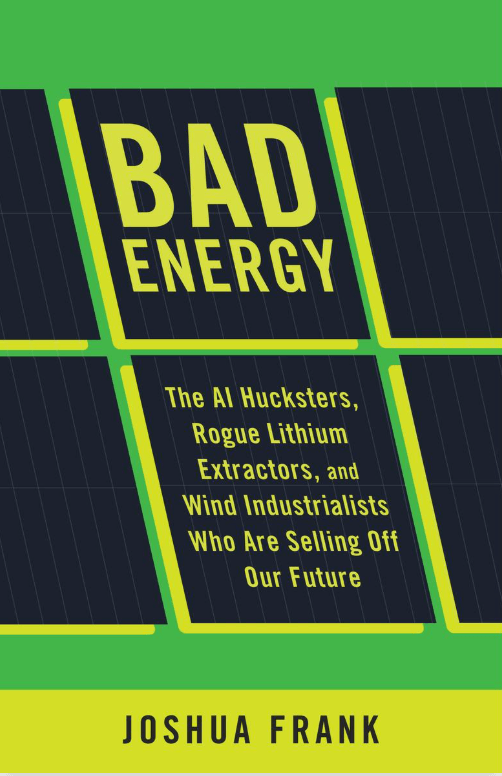
The wealthy also have another plan to reshape Big Sky country, which is to privatize the state’s public lands, exploit its rich natural resources, and, along with Idaho and Wyoming, to delist the imperiled grizzly bear so they can kill ’em for sport.
Don’t mistake my antipathy for animus. Montana remains majestic and wondrous, full of salt-of-the-Earth folks. But I do harbor a bit of hatred for the wealthy who have taken the state hostage, because it’s the super-rich who are clogging its trout streams with their drift boats and driving home values out of reach for most who live here.
Montana, the fourth-largest state in the country, is not crowded, with just over 1.14 million residents. That’s only one person per 7.8 square miles. Yet the state is home (probably second, third, or fourth) to a cadre of criminally-rich billionaires. Arthur Blank, co-founder of Home Depot, has a sprawling ranch in Paradise Valley. Rupert Murdoch holes up at his compound, the largest ranch in the state, which spans over 340,000 acres. Ted Turner lived here, and so do heavy-hitting capitalists like Felix Baker and Robert Kraft. The Rolodex of the wealthy and powerful who have land in Montana is thick for a state with such a low population. The list also includes Bill Gates, former Google CEO Eric Schmidt, Warren Buffett, Nick Woodman of GoPro fame, and investment mogul Ron Burkle, to name a few.
As you can imagine, the wealth disparity in Montana is tangible and severe. The state has the country’s worst home-price-to-income ratio, making it the least affordable in the US. The working class is hurting, as brilliantly detailed in a 2023 piece by Joseph Bullington for In These Times, where he explores how housing, especially in cities like Bozeman, is increasingly out of reach for the people who service the well-to-do. It’s the same story in many resort towns across the West.
If you didn’t already loathe the super-rich, you should, and not just for what they’re doing to places like Montana. A study published in Nature Climate Change found that the world’s wealthiest 10% were responsible, through their lavish lifestyles and extensive investment portfolios, for ⅔ of all climate warming emissions since 1990.
“This is not an academic discussion – it’s about the real impacts of the climate crisis today,” says the report’s lead author Sarah Schöngart. “Climate action that doesn’t address the outsize responsibilities of the wealthiest members of society, risks missing one of the most powerful levers we have to reduce future harm.”
If we are ever to get the climate under control (and save Montana), billionaires (and that one trillionaire) have got to go.
+++
In other news, Chaco Canyon is under attack, so take a few minutes to read up and sign this petition. You can also sign a petition to ban data centers from being built in Montana.
+++
Alright, a little good news. The endangered grizzly bear has made a remarkable comeback in Montana and Wyoming. In the mid-1970s, only 700 of these amazing animals remained in the Lower 48 states, but today there are over 2,000. And, despite record drought and record-setting heatwaves, Montana has so far avoided damaging wildfires this summer.
Lastly, Bad Energy will be out next month. Have you had a chance to pre-order your copy yet? It’d be a lot cooler if you did.

