Wednesday, August 12, 2026

ECOCIDE

Oil spill from grounded tanker reaches Oman’s mainland beaches


Oman’s Environment Authority said Wednesday that oil leaking from a tanker grounded off the country’s coast had reached mainland beaches. The spill threatened marine habitats and a nearby protected area as strong winds and monsoon currents spread the oil, raising fears it could reach other islands.


Issued on: 13/08/2026 
By: FRANCE 24

The tanker Caroline Bezengi, grounded and partly submerged off the coast of Oman, leaks crude oil into the sea on August 5, 2026. © AP

Oil leaking from a tanker grounded off the coast of Oman is not only endangering a nearby island but has now also reached beaches on the Gulf Arab country's mainland, to the north of the island, Oman’s Environment Authority said Wednesday.

Crude oil has been leaking from the tanker Caroline Bezengi – a sanctioned tanker believed to be part of Russia's "shadow fleet" – that was carrying nearly 1 million barrels of oil when it reported an explosion in June.

No party has claimed responsibility for the incident and the cause of the explosion has not been revealed.

Environmental experts said an oil spill has been spreading quickly in recent weeks from the partially submerged tanker off the shores of Qabiliyah Island, endangering a marine protected area there.

Oman’s Environment Authority said it has been monitoring the leak and found that contamination has also reached the beaches of Ras Madrakah on mainland Oman, some 200 kilometres (125 miles) to the north of Qabiliyah Island.

Cover image: Vignette Oman © France 24
00:47


The authorities also warned that the southern coasts of Masirah Island, over 300 kilometres (185 miles) north of the submerged tanker’s location, may also be affected in the coming hours.

The 247-metre (899-foot) Caroline Bezengi is believed to be part of Russia’s "shadow fleet" and has been sanctioned by the British government and the European Union for carrying Russian oil. It had left the Black Sea port of Novorossiysk, in Russia, in May, according to geospatial data tracking company SynMax Maritime.

The vessel’s owners are believed to be Shanghai-based. Recent satellite images showed the spill is covering an area of over 600 square kilometres (231 square miles), spreading quickly amid strong winds and currents of the monsoon season.

Oman, a sultanate on the southeastern coast of the Arabian Peninsula, has been a mediator in the ongoing war in Iran, which the United States and Israel launched on February 28.

(FRANCE 24 with AP)

NO USAID

Race to find Ebola vaccine as DR Congo outbreak kills more than 2,000

The latest outbreak of Ebola has killed more than 2,000 people in the Democratic Republic of Congo, according to health authorities. Meanwhile, international efforts have been stepped up to test a vaccine for the highly contagious haemorrhagic fever.


Issued on: 12/08/2026 - RFI

A health worker mops the floor of the Ebola treatment centre in Bunia General Hospital Ituri, eastern DR Congo, Tuesday, 11 August, 2026. AP Photo/Dieudonne Dirole - 

According to figures released on Tuesday by Congolese health authorities, 2,011 people have died in the latest outbreak, out of 4,381 confirmed cases of the virus.

The latest toll puts it close behind the DRC's deadliest Ebola outbreak to date in 2018 to 2020, when nearly 2,300 people died out of 3,500 recorded cases.

The DRC's 17th surge of the highly contagious disease, the current outbreak is already considered the largest in the country's history "and could well become the largest outbreak ever", Sania Nishtar, chief executive of the Gavi global vaccine alliance, has said.

Concentrated in the DRC's eastern and northeastern regions, it was declared on 15 May but is thought to have been spreading for several weeks before then.

The surge began in northeastern Ituri province and spread to several other provinces, notably North Kivu, regions subject to years of conflict where health infrastructure and a state presence are largely lacking.

Response criticised


The case fatality rate of the current outbreak is estimated by Congolese health authorities to be 45.9 percent.

"We haven't reached the peak yet," Health Minister Samuel Roger Kamba said in an interview shared on social media by his ministry on Tuesday.

"Within the next three months, we expect to have already brought the spread under control and to start seeing it decline," he added.

Insecurity due to the presence of armed groups and mistrust of the local population have hampered the response to the outbreak in the affected regions.

"We are only seeing 30 percent (of infected people), where 70 percent of people are dying at home. This is why this Ebola is different," Mohamed Yakub Janabi, the World Health Organization's regional director for Africa, told reporters in Ituri's provincial capital, Bunia, on Monday.

Congolese virologist Jean-Jacques Muyembe, who helped discover Ebola in 1976, said in an interview with Tuesday's Le Monde newspaper that the response had been "slow and ineffective".

"There is an internal problem at the level of the national coordination of the response," he said.

"Everyone wanted to show they were doing something, even though nothing had actually been organised."


Vaccine trials underway


On Friday, WHO vaccine experts recommended a full-scale human trial of the only existing approved Ebola vaccine to see if it offered cross-protection against the strain of Ebola currently spreading in the DRC, against which no specific vaccine currently exists.

The Ervebo vaccine has proved safe and efficacious against the more common Zaire strain of Ebola virus and WHO experts said that early data, notably from animal trials, showed it may also give some protection against the rare Bundibugyo strain exploding in the DRC.

The Gavi global vaccine alliance – set up in 2000 to help developing countries acquire affordable vaccines – maintains a stockpile of 500,000 Ervebo doses.

It said doses from the stockpile were to be made available for the trials, with some already in the DRC.

Two potential Bundibugyo vaccines are in the early stages of clinical trials on humans, while a third is being worked on to bring it to that stage.

The United States announced last Wednesday that it had allocated more than $242 million (€209 million) in additional funding to combat the worsening outbreak.

The new funding brings direct US financial assistance in response to the outbreak to more than $500 million (€433 million), the State Department said, underlining that the United States remained "the largest financial contributor to the Ebola response".

Ebola is spread by contact with bodily fluids and causes a haemorrhagic fever. It has killed more than 15,000 people in Africa in the last 50 years.

The WHO emergency committee is set to meet to discuss the epidemic next Tuesday.
Hungary elects Orban critic Andras Baka as first president in new political era

Hungarian lawmakers on Tuesday approved former supreme court chief Andras Baka – a prominent critic of Viktor Orban who was ousted during the ex-premier's time in power – as the country's next head of state.


Issued on: 12/08/2026 - RFI

President-elect and former Supreme Court president Andras Baka delivers a speech after being elected President of the Republic during the extraordinary plenary session of the Hungarian Parliament in Budapest, Hungary, Tuesday, Aug. 11, 2026. Szilard Koszticsak/MTI via AP - Szilard Koszticsak

The post became vacant following the contested removal last month of the previous president, an Orban ally, as pro-EU conservative Prime Minister Peter Magyar moves to dismantle his predecessor's lingering influence over state institutions.

Parliament, where the ruling Tisza party holds a two-thirds majority, elected Baka -- who served 17 years as a judge on the European Court of Human Rights (ECHR) -- with 140 votes in favour and six votes against.

Tisza on Saturday nominated Baka, 73, for the largely ceremonial role.

Magyar said Baka's life served "as an example of commitment to the democratic rule of law and constitutional principles", adding that Hungary needed to be “guided back onto the path of the rule of law and constitutional governance”


'Captured state'

The previous president, Tamas Sulyok, had his mandate cut short by a constitutional amendment adopted as part of Magyar's reform push.

Magyar's party won April elections, ending nationalist Orban's 16 years in power and promising "system change".

But rights watchdogs criticised Sulyok's removal, comparing the tinkering to the methods Orban used to build his self-styled "illiberal" system.

Orban's Fidesz party, along with its ally KDNP, boycotted the parliamentary vote, arguing Sulyok's ouster was "tyrannical" and "illegitimate".

Baka has not been critical of Sulyok's removal, despite the fact he was terminated with a similar legislative act.

"In a country governed by the rule of law, such extraordinary measures cannot be used, but Hungary became a captured state under Orban," he told AFP last month.

State officials like the president "were appointed not to restrain the government's power, but to ensure the political survival of the former system even after an electoral defeat," Baka added.


'Restoration'

Baka's election as president offers a "guarantee that the restoration of liberal democracy will proceed along a clearly defined path", Bulcsu Zsiga, from the Centre for Fair Political Analysis, told AFP.

Apart from a brief stint as a lawmaker after Hungary's democratic transition – he was elected from the conservative Hungarian Democratic Forum (MDF) party list in 1990 – Baka held no other political positions.

He was a judge at the European Court of Human Rights from 1991 to 2008.

In 2009, he was appointed head of the Supreme Court, but was ousted three years later following a restructuring of the judiciary after repeatedly criticising Orban's judicial reforms, including a move to lower the mandatory retirement age for judges from 70 to 62

The EU's top court ruled in 2012 that the abrupt reduction in the retirement age violated EU law, while in 2016 the ECHR found that Baka's premature removal had violated his rights, including his freedom of expression.

"His nomination also carries a symbolic meaning, given that Baka went all the way to prove that what happened to him was not really in line with European Union norms," analyst Zsiga said.

Last month, Magyar offered the nomination as president to chess legend Judit Polgar, but she declined after the prime minister faced mounting outrage for not consulting the public as promised.

Magyar has indicated that Baka would serve only until the Orban-era Basic Law is replaced by a new constitution drafted through broad public participation.

Magyar has estimated that drafting the new constitution would take between one year and 18 months, promising to launch consultations next month.
FRANCOPHONE #METOO
French ambassador to CAR disciplined over misconduct allegations

France’s foreign ministry has launched disciplinary proceedings against its ambassador to the Central African Republic, following allegations that he repeatedly brought young women to the official residence in Bangui and had sexual relations with some of them.


Issued on: 12/08/2026 - RFI

French Ambassador to the CAR, Bruno Foucher, allegedly invited around 30 young women to his private apartments between January 2024 and March 2026. 
© AFP

The Quai d’Orsay confirmed on Tuesday that an administrative inquiry had been carried out in the Central African capital earlier this year and that its findings had prompted formal proceedings against Ambassador Bruno Foucher.

“At the Ministry’s initiative, an administrative inquiry was carried out in Bangui in 2026. Upon receipt of the findings of this inquiry, at the minister’s request, the Ministry initiated disciplinary proceedings against the ambassador. These proceedings are ongoing,” the ministry told French news agency AFP, without giving further details.

The allegations were reported by French satirical and investigative newspaper Le Canard Enchaîné, which said Foucher had invited around 30 young women to his private apartments at the ambassador’s residence between January 2024 and March 2026.

Security concerns


According to the newspaper, the frequency of the visits prompted security officials to raise concerns over a potential security breach.

Once alerted, the Foreign Ministry sent inspectors to Bangui in April, according to Le Canard Enchaîné. Their findings subsequently led to disciplinary proceedings being opened against the ambassador.

The newspaper, which said it had seen the inspection report, reported that Foucher received an average of around 15 visits a month.

It also alleged that the ambassador had instructed staff to allow one of the young women to remain at the residence even when he was not there.

Questioned twice during the inquiry, Foucher acknowledged having had sexual relations with two young women, according to the newspaper.

No criminal allegations have been announced and the foreign ministry has not disclosed which disciplinary measures are being considered.

Under French civil service rules, sanctions could range from a reprimand to compulsory retirement or dismissal, Le Canard Enchaîné reported


Rebuilding ties


The case is particularly sensitive because of the political and security environment in the Central African Republic (CAR), where France has been seeking to rebuild a relationship that has deteriorated sharply as Russia expands its influence in the country.

Russian personnel, including members of the Wagner paramilitary network, have played a major role in the country in recent years, notably in providing security for President Faustin-Archange Touadéra and supporting government forces.

France and other Western governments have repeatedly accused Russia of using disinformation campaigns, including on social media, to stir anti-French sentiment across parts of Africa.

However, there have been signs of a diplomatic thaw since 2024. French Foreign Minister Jean-Noël Barrot visited Bangui in March, marking the first high-level visit by a French official to the country since 2018.

During the trip, Barrot welcomed what he described as “the full restoration of relations” between France and the CAR. The disciplinary proceedings against Foucher therefore come at an awkward moment for French diplomacy.

The Foreign Ministry has not said when the disciplinary process is expected to conclude or whether Foucher will remain in his post while it is under way.

As Lake Maggiore runs low, Switzerland steps in as Italy faces growing water shortage

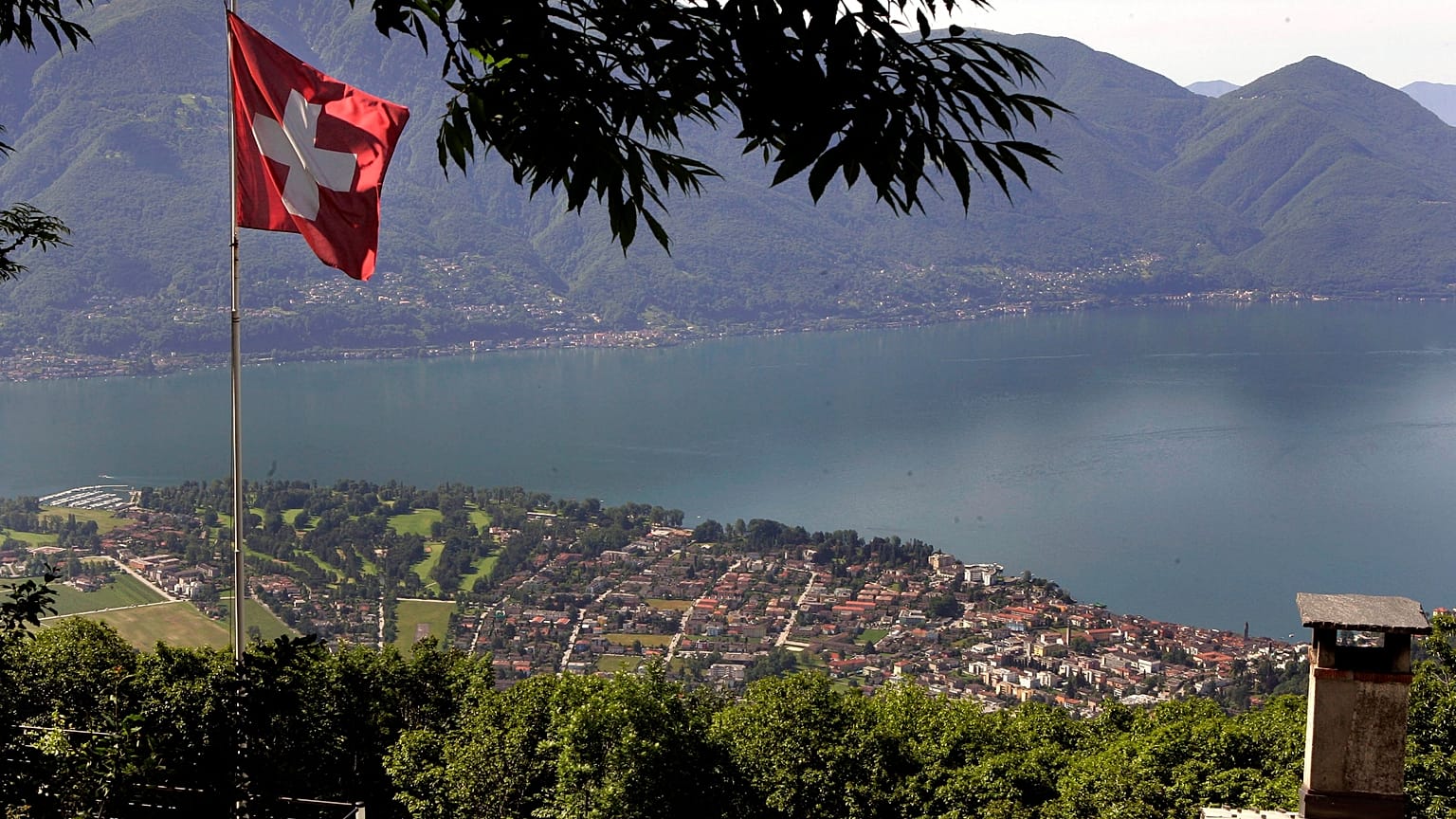
Archive photo of Lake Maggiore near Ascona, southern Switzerland
Copyright AP Photo


By Stefania De Michele
Published on 12


Lake Maggiore is suffering from drought and Switzerland is increasing releases from Lake Lugano. Water is also scarce in Piedmont, Lombardy, Veneto and the Marche: this is Italy's new emergency.

Switzerland is opening the taps on Lake Lugano to help prop up Lake Maggiore. It is an emergency solution that, more than any set of figures, shows how sensitive the water situation in northern Italy has become: more water will be released from the Ceresio towards Ponte Tresa, with the aim of supporting the level of Lake Maggiore and, above all, guaranteeing supplies for the rice fields on the plain.

The discharge will rise from the current 3 to 8 cubic metres per second. The two lakes are connected and a significant share of the extra water will flow into Lake Maggiore.

The measure was discussed within the Italian-Swiss Bilateral Consultation Body on the regulation of Lake Maggiore's levels and the management of water resources in its basin, convened urgently by the Ministry of the Environment on the basis of data from the Po River Basin Authority. The Italian delegation, made up of representatives of the ministry and the Lombardy and Piedmont regional authorities, accepted the Swiss proposal, which could be implemented as early as today.

Switzerland's help and the 'short blanket' problem

The decision taken by Canton Ticino is temporary and will be reassessed in the coming days, but its significance goes well beyond this one-off intervention. The underlying problem is that the available water is no longer sufficient to meet all needs at the same time.

On the one hand are the rice paddies of Piedmont and Lombardy, which at this stage of the season need large volumes of water. On the other are the water supply networks, rivers, lakes and ecosystems, all having to cope with ever lower flows.

It is the classic "short blanket" situation: if you increase the provision for one sector, you have to check what is left for the others. And when the overall resource shrinks, even a seemingly technical decision on how to regulate a lake becomes a strategic issue.

The case of Lake Maggiore is particularly telling. Back in July, the Po River Basin Authority was already warning that the lake was close to its minimum operating level, while agriculture in Piedmont was among the sectors under greatest strain.

The problem is not confined to irrigation water for farmland. In several parts of Italy, scarcity has also started to affect drinking water supplies.

Lake Maggiore, who is in charge?

Lake Maggiore is a transboundary basin, shared between Italy and Switzerland, but its regulation is not by joint management in the strict sense. The lake level is controlled by the Miorina dam at Sesto Calende, on Italian territory, and day-to-day management is entrusted to the Ticino Consortium.

Italy and Switzerland nevertheless discuss and coordinate decisions within the Italian-Swiss Bilateral Body, because changes in the lake's level have consequences on both sides of the border.

The picture is even more complex because the Lake Lugano, also shared between the two countries, is linked to Lake Maggiore via the River Tresa: it is through this system that Switzerland is now providing support, by temporarily increasing flows from 3 to 8 cubic metres per second. So Lake Maggiore is regulated in Italy, but managing the water resource cannot be done without coordination with Switzerland.

Water tankers fill supply gaps

In Piedmont the situation is especially sensitive. By mid-July, the regional authorities reported that around 100 municipalities had already adopted ordinances to curb water use, above all in mountain areas and more isolated hamlets. In around 50 municipalities, with a combined population of 25,000, water tankers were already being used to top up reservoirs serving the water supply networks.

Figures from Arpa Piemonte painted an equally worrying picture: surface water resources were 37 per cent below the seasonal average, while in the first ten days of July many gauging stations were showing deficits of more than 40 per cent. At Isola Sant'Antonio, the Po had an average flow of just 62 cubic metres per second, 75 per cent below its historical reference value.

The heat has made matters worse. June 2026 in Piedmont was marked by temperatures far above the average, with a regional anomaly of about +3.5 °C. Higher temperatures increased evapotranspiration, causing soil and vegetation to lose water more quickly.

The crisis spreads across the Po basin

Piedmont, however, is not an isolated case. The problem affects a far wider area.

At the end of July, the permanent observatory on water use in the Po River District raised its assessment of water stress from "medium" to "high". Flows in the Po had progressively fallen to values below those typical of low-water conditions, and the drought index was indicating severe conditions across most monitored sections, with an "extreme" situation recorded at Cremona.

As early as 21 July, the Basin Authority was reporting problems not only for agriculture but also for water destined for households. In Lombardy, 50 municipalities were struggling, 17 of them supplied by tankers; in the Marche region there were 32. Critical situations were also reported in Veneto and Piedmont.

The picture also includes the Po Delta, where reduced river flows increase the risk of saltwater intrusion from the sea. When the river carries less freshwater, saltwater can push further inland, putting ecosystems, farming activities and water supply installations under strain.

Rice fields, drinking water, rivers: who comes first?

This is where the real issue emerges. The emergency is not just about "how much water there is", but how to distribute it when there is not enough.

Agriculture needs irrigation precisely during the hottest phases of the year. The rice fields of Piedmont and Lombardy are among the most exposed sectors, and Piedmont is one of the areas where the region has most clearly flagged the risk of crop losses linked to limited water availability.

But that same water is needed for water supply networks, to maintain minimum flows in rivers, for ecosystems, for certain industrial uses and, in some areas, for energy production.

Hence the growing need for increasingly sophisticated interventions and agreements between regions and countries. The release from Lake Lugano towards Lake Maggiore is a concrete example: a resource available in one basin is temporarily used to support another water system in difficulty.

And in the South the problem has not gone away

The water crisis, however, is not confined to the North. Conditions vary from region to region and not all of Italy faces the same situation at the same time, but vulnerability remains high, especially in Mediterranean areas and in regions that depend heavily on reservoirs.

ISPRA monitors the severity of water stress in the various Italian districts and defines the "high" scenario as a situation in which, despite preventive measures, the resource may not be sufficient to avoid damage to the system.

It is a snapshot that helps explain why water is becoming one of the most sensitive issues in land management: it is no longer enough to wait for rain. Reservoirs are needed, along with more efficient networks, reduced losses in water supply systems, reuse of treated wastewater, less wasteful irrigation systems and planning that takes account of increasingly variable water availability.


Striking images: Wehrmacht motorcycle from Danube looks almost 'new'

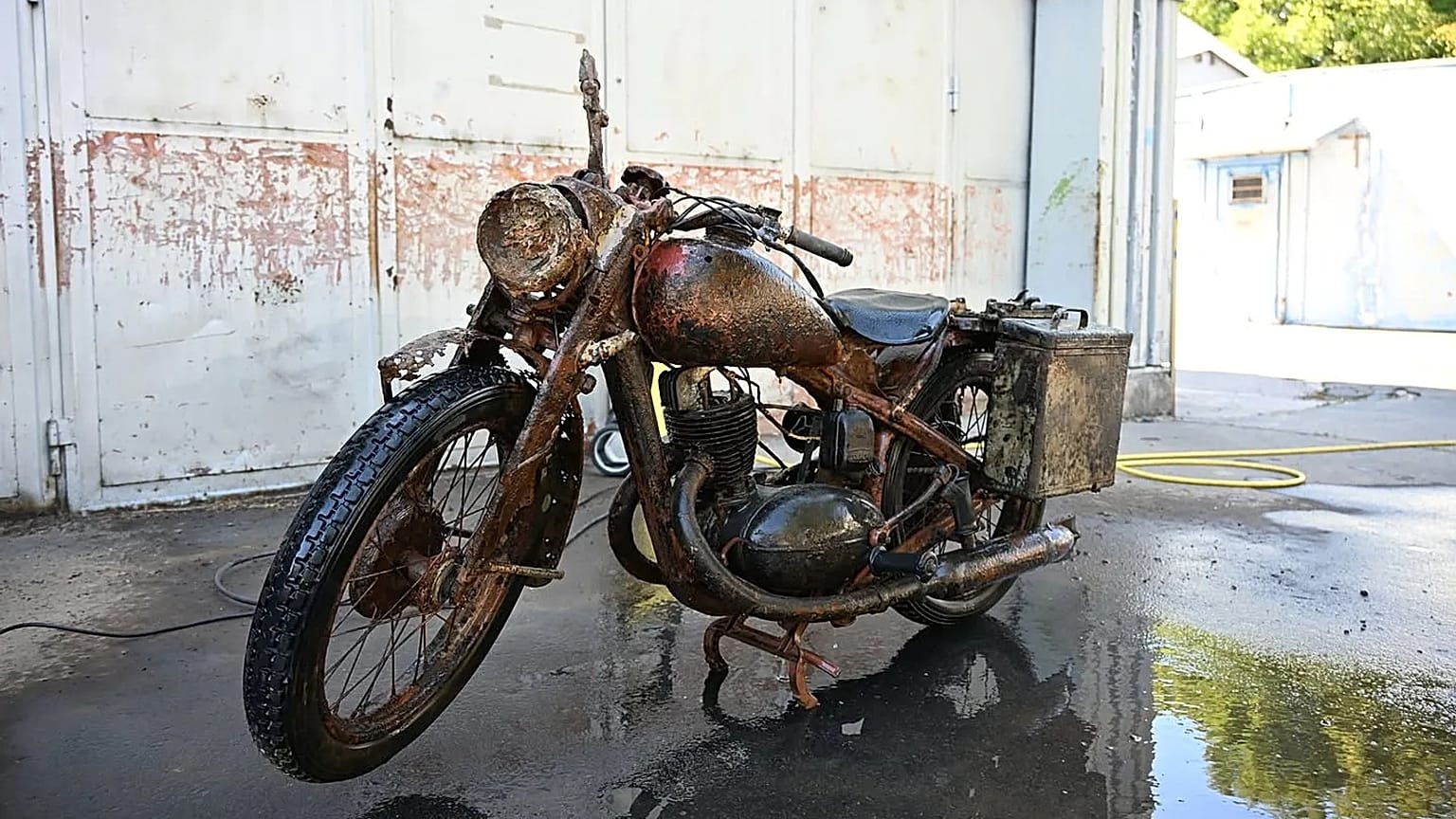
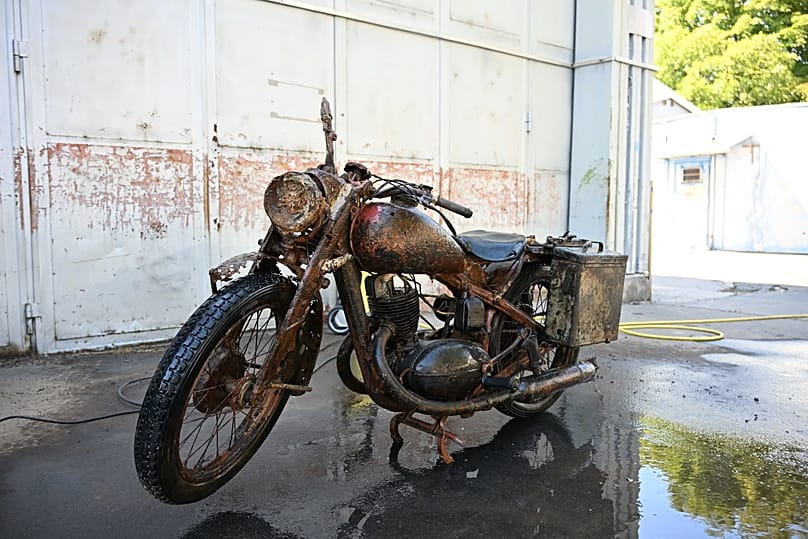
The Wehrmacht motorcycle from the Danube, a DKW NZ 350-1
Copyright  Volksbund Deutsche Kriegsgräberfürsorge e. V. / Simone Schmid


By Nela Heidner
Published on


The discovery of a motorbike wreck and the remains of two German soldiers is making headlines worldwide. Low Danube levels in Budapest exposed the Second World War machine, now cleaned and remarkably well preserved.

The photo of the Wehrmacht motorcycle recovered in Budapest is going around the world: from the "Times of India" and "Vietnam.VN" via British media such as the "Daily Mirror" to US platforms like Yahoo Autos, the spectacular find is making headlines.

According to the Hungarian Institute and Museum of Military History, the recovered motorcycle is a DKW NZ 350-1.

The DKW NZ 250 and NZ 350 models were regarded by motorcyclists at the time as particularly robust and reliable. From 1944, a version developed specifically for wartime use was therefore introduced under the name NZ 350-1.

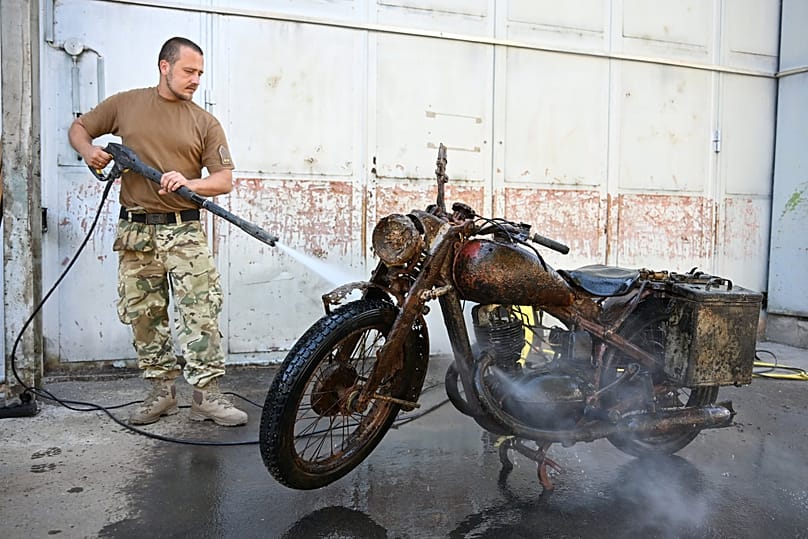
The Second World War motorcycle is being cleaned and restored in the hangar of the Museum of Military History in Budapest.
The Second World War motorcycle is being cleaned and restored in the hangar of the Museum of Military History in Budapest. Volksbund Deutsche Kriegsgräberfürsorge e. V. / Simone Schmid

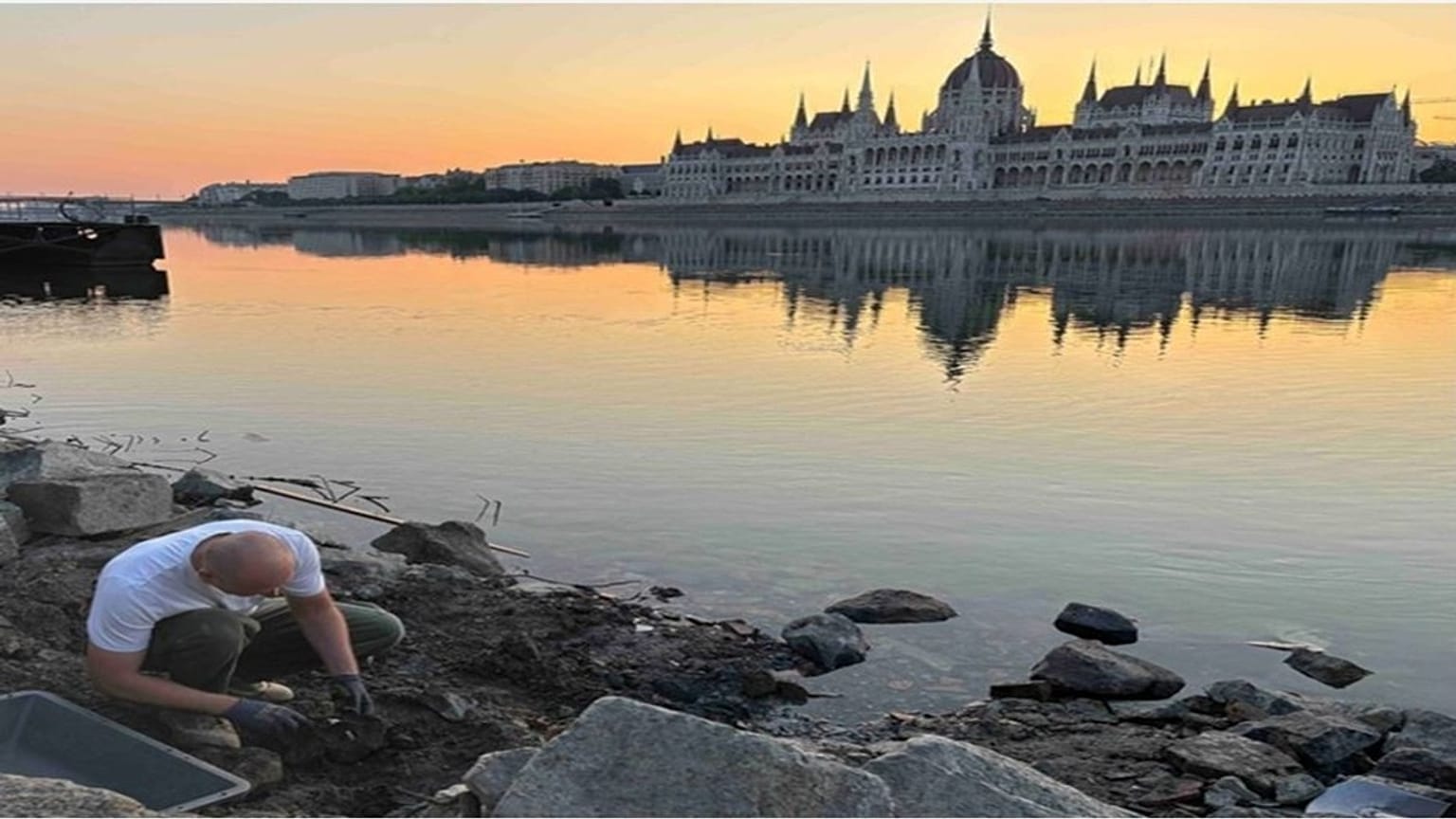
The Hungarian museum recovered the machine on 2 August at Batthyány Square, opposite parliament. The motorcycle is almost completely intact. Because it was saturated with water and mud when it was salvaged, it weighed more than 200 kilograms. The machine is currently being cleaned and conserved in the museum's hangar in Budapest.

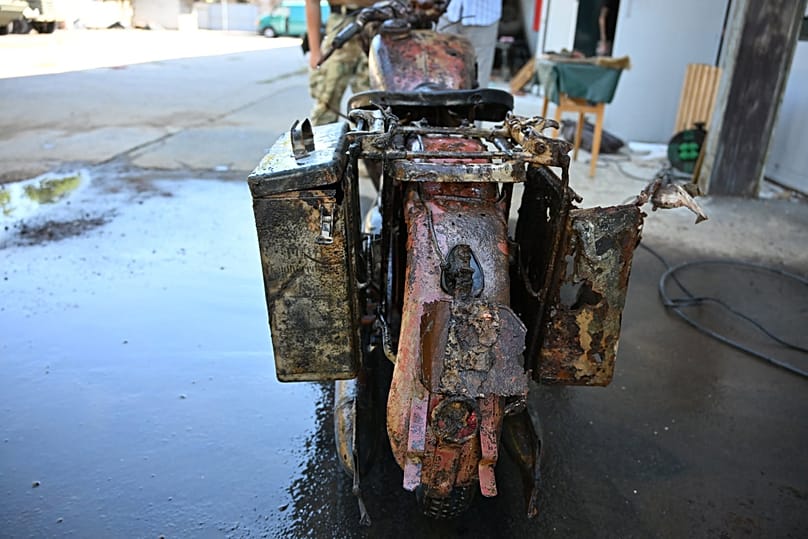
From 1944, the NZ 350-1 was fitted as standard with metal side panniers, unlike the earlier NZ models.
From 1944, the NZ 350-1 was fitted as standard with metal side panniers, unlike the earlier NZ models. Volksbund Deutsche Kriegsgräberfürsorge e. V. / Simone Schmid

The DKW NZ 350-1 was produced between 1944 and 1945, with just under 12,000 units built by the end of the war.

One particularly interesting feature is a small detail that is easy to overlook today: on the rear frame there was a kind of "fin" or mud and snow scraper. It was intended to prevent mud and snow from building up on the tyre and then getting into the chain drive. This modification apparently went back to experiences during the Russian winter.

The engine block, made of grey cast iron, a cast-iron alloy with a high graphite content, was also striking. One reason for this was the wartime shortage of aluminium. On the basis of the information published so far, however, it is not yet possible to date the specific find to a particular day or month of production.

DKW, the manufacturer of the NZ 350-1

The company DKW goes back to the Danish engineer Jørgen Skafte Rasmussen. In 1907, he initially set up a mechanical engineering and steam technology business in Zschopau in Saxony. The brand name DKW was coined later and originally stood for "Dampfkraftwagen", or "steam-powered vehicle". In 1922, the first DKW two-stroke engine was produced in Zschopau. In the years that followed, the company grew into one of Germany's most important motorcycle manufacturers.

Even now you can already imagine how impressive the machine will look once it has been restored.
Even now you can already imagine how impressive the machine will look once it has been restored. Volksbund Deutsche Kriegsgräberfürsorge e. V. / Simone Schmid

In 1932, DKW merged with Audi, Horch and Wanderer to form Auto Union AG. Within the new group, the DKW plant in Zschopau remained the centre of motorcycle and engine production.

In the 1930s, DKW became increasingly involved in German rearmament. The NZ 350 was also produced in large numbers for the Wehrmacht.

The importance of the Zschopau plant is evident from the production figures: as early as 1934, the 350,000th DKW motorcycle rolled off the production line, followed in 1939 by the 500,000th. With the start of the Second World War, civilian motorcycle production was increasingly scaled back and manufacturing shifted more and more towards military needs.

The DKW NZ 350-1, like the one now recovered from the Danube, dates from this late phase of the war.

After the end of the Second World War, the DKW plant in Zschopau was dismantled by the Soviet occupation authorities. Machinery and equipment were taken to the Soviet Union. DKW engineers from Zschopau were also sent to Izhevsk to help rebuild motorcycle production there. The story of the NZ 350 did not end there: from 1946, the IZh-350 was produced in the Soviet Union, based to a large extent on the DKW NZ 350. More than 127,000 units were built by 1951.

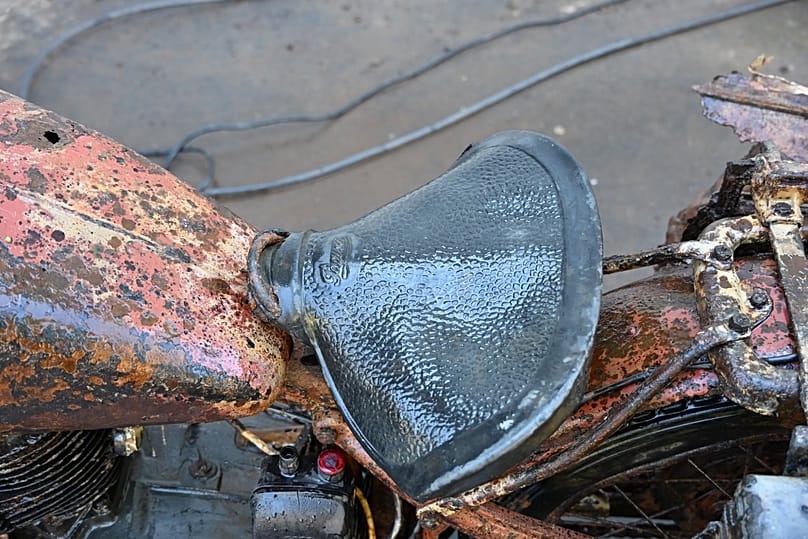
The saddle, once made of leather, is astonishingly well preserved.
The saddle, once made of leather, is astonishingly well preserved. Volksbund Deutsche Kriegsgräberfürsorge e. V. / Simone Schmid

In recent days, further parts of the original equipment have been found in the dried-up riverbed of the Danube alongside the Wehrmacht motorcycle, including a petrol can, a Y-strap and a bayonet frog.

A Y-strap was a leather harness worn over the shoulders and joined at the front and back with additional straps. It was used to attach equipment to the body, such as bread bags, ammunition pouches or canteens. The name "Y" comes from the shape of the shoulder straps.

The term bayonet frog refers to the holder for a bayonet that is attached to the belt or other equipment. The bayonet is carried in it when it is not fixed to the rifle.

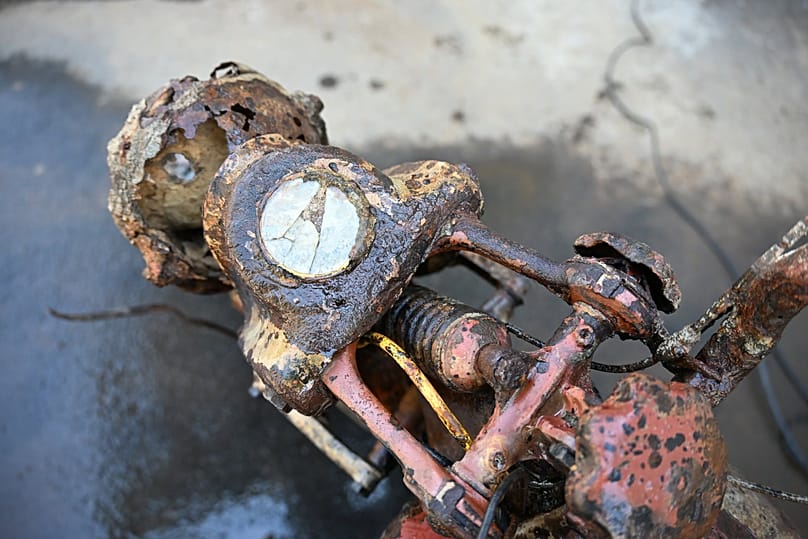
A look at the speedometer of the old Wehrmacht motorcycle.
A look at the speedometer of the old Wehrmacht motorcycle. Volksbund Deutsche Kriegsgräberfürsorge e. V. / Simone Schmid

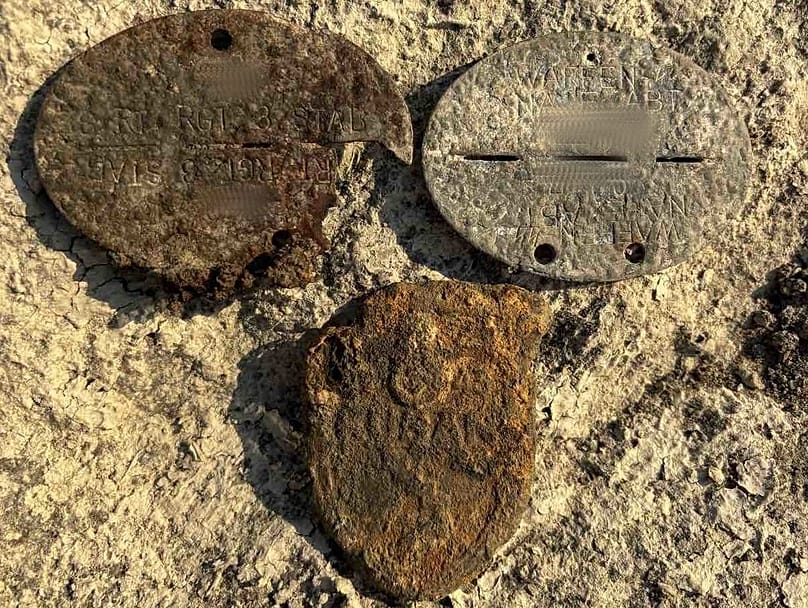
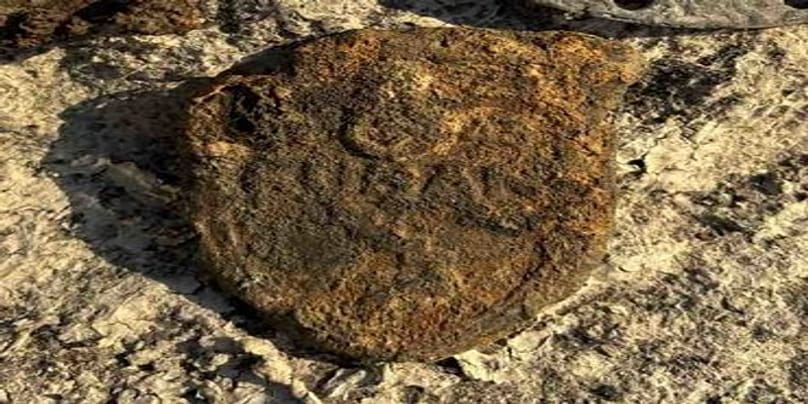
The mortal remains of two German soldiers were discovered beneath the motorcycle. Their fully preserved identity discs could, for the first time in more than 80 years, provide information about who they were and what happened to them. A so-called "Kuban" sleeve shield was also found.

This badge may indicate that its wearer had previously served at the Kuban bridgehead in the Caucasus.

It is currently assumed that the remains of the two men are those of the motorcycle's rider and passenger. However, there is a possible alternative explanation: the Hungarian Institute of Military History (source in German) (source in Hungarian) believes that the site may have been used as a wartime rubble or refuse pit created after the end of the siege. It appears that ammunition and equipment were among the items disposed of there.

The finds alone therefore do not yet allow any definitive conclusion to be drawn as to whether the two men were on the DKW at the time of their deaths.


Remains of two Wehrmacht soldiers found in Danube: one served in Waffen-SS

Reburial worker Gabor Kohlrusz
Copyright Volksbund


By Nela Heidner
Published on

A Wehrmacht motorbike is recovered from the Danube; underneath are the remains of two German soldiers with ID tags, one likely Waffen-SS. Experts now study the bones: how old were they and did they drive over a mine?

For more than eight decades, the remains of two German soldiers lay in the mud of the Danube. Only the exceptionally low water level of the river in Budapest has brought their story back to light.

Both bodies still carried intact German identity discs, giving investigators an unusually good chance of identifying the men more than 80 years on.

The discovery is closely linked to a remarkably well-preserved DKW NZ 350-1 motorcycle found at the beginning of August on the Buda bank of the Danube.

Under or right next to the motorcycle, staff from the Hungarian Institute and Museum of Military History came across the human remains. Volksbund employee Gábor Kohlrusz recovered the bones of the two men from the exposed riverbed.

For many years Kohlrusz has been working in Hungary for the Volksbund, reinterring war dead. His duties include searching for, recovering and documenting German war dead, as well as securing personal belongings and identity discs. Together with historians and local partners, he helps to establish the identities of the fallen and shed light on long-unresolved wartime fates.

Two identity discs and a Kuban sleeve shield were found with the bodies.
Two identity discs and a Kuban sleeve shield were found with the bodies. Volksbund Deutsche Kriegsgräberfürsorge e. V.

Two dead men who were likely still recorded as missing

In the Second World War, the identity disc of a fallen German soldier was split in two: one half remained with the body, the other was sent to the Wehrmacht information office in Berlin so that deaths could be registered and relatives informed.

Because both identity discs recovered from the Danube were still complete, this suggests that their families probably waited in vain for any official notification.

Alongside the identity discs, a wedding ring and a Kuban sleeve shield were also found. If the badge can be definitively attributed to one of the two dead men, it could provide an important clue to his military career. The Kuban Shield was awarded to German soldiers who served in 1943 at the Kuban bridgehead in the south of the Soviet Union. The decoration was instituted in September that year.

Kuban sleeve shield: the decoration, instituted in 1943, was awarded to German soldiers deployed at the Kuban bridgehead on the Eastern Front.
Kuban sleeve shield: the decoration, instituted in 1943, was awarded to German soldiers deployed at the Kuban bridgehead on the Eastern Front. Volksbund Deutsche Kriegsgräberfürsorge e. V. / Simone Schmid

If it is confirmed that one of the two soldiers wore the shield, it would suggest that he had been serving on the Eastern Front for several years before his death.

Arne Schrader, head of the Department for War Graves Service and International Relations, knows how difficult such an attribution can be. Several examinations are needed to establish whether the two identity discs really belong to the bodies that have been found. The names of the original bearers may be determined relatively quickly. But that alone is far from sufficient to confirm their identities.

Identifying the dead is a painstaking process

The starting point is a detailed examination of the remains. Even the length of individual bones can provide clues to the deceased's height. Wherever possible, different bones are used for this – for example, lower and upper leg bones. Taken together, these findings gradually build up a picture that can be compared with the known data on the possible bearers of the identity discs.

There are various anatomical indicators for the age of the soldiers, which allow experts, with a high degree of probability, to assess whether a bone belonged to someone under 20, between 20 and 25, or an older person up to and over 40.

How old the two soldiers were is not yet known. The anthropological analysis of the remains is intended, among other things, to use bones, epiphyses and wisdom teeth to determine their approximate age.

"Here, among other things, the sacrum and the epiphyses on the long bones can be evaluated, and the wisdom teeth can also provide information," explains Arne Schrader. Dental fillings can also give clues to a person's origins: teeth filled with amalgam indicate that the deceased probably came from Western Europe.

One of the identity discs found on the Danube belonged to a Wehrmacht soldier, the second to a member of the Waffen-SS.

It still has to be clarified whether the discs in fact match the two bodies that were recovered. Any provisional identification by the Volksbund would subsequently have to be officially confirmed by the Federal Archives.

Around 900,000 people served in the Waffen-SS over the course of the war. They included committed National Socialists and foreign volunteers, but also, especially towards the end of the conflict, conscripts and minors. The Waffen-SS was responsible for numerous war crimes and took part in the Holocaust; in 1946 the Nuremberg war crimes tribunal declared it a criminal organisation.

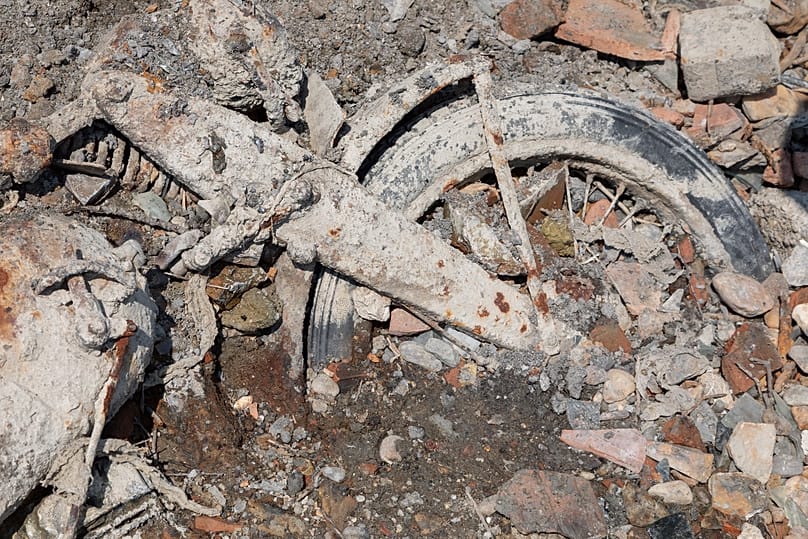
As the water level of the Danube falls, the river reveals this motorcycle.
As the water level of the Danube falls, the river reveals this motorcycle. Volksbund Deutsche Kriegsgräberfürsorge e. V.

The site lay in an area where harbour sludge had accumulated, mixed with gas oil. These unusual conditions apparently helped to preserve both parts of the motorcycle and the identity discs in remarkably good condition.

The Volksbund can now compare the details on the discs with military records, missing-person reports and its own "Gräbersuche online" service, a database that now contains around 5.4 million entries.

What does the DKW NZ 350-1 have to do with the soldiers?

According to current knowledge, the motorcycle is a DKW NZ 350-1 manufactured in Saxony. This model was developed from 1944 specifically for wartime use.

However, the mere fact that the motorcycle was found together with the two dead men does not prove that the soldiers were actually travelling on it.

Several scenarios are conceivable: the two men may have ridden the motorcycle themselves, one as the driver and the other as passenger. It is equally possible that the DKW belonged to one unit, while the two soldiers came from a different context. The motorcycle might also have reached the site only after the men's deaths. The machine could have ended up in the Danube during the fighting, or been deliberately sunk there late

A Wehrmacht motorcycle recovered from the Danube in Budapest (c) Volksbund für Kriegsgräberfürsorge
A Wehrmacht motorcycle recovered from the Danube in Budapest (c) Volksbund für Kriegsgräberfürsorge Volksbund Deutsche Kriegsgräberfürsorge e. V. / Simone Schmid

Ammunition was also lying on the riverbed

The bomb disposal service had to be called in during the recovery work because, in addition to other pieces of equipment, Type 35 Teller mines were discovered – German anti-tank mines from the Second World War.

The Hungarian Military History Institute (source in German) (source in Hungarian) considers it possible that the site is a dumping ground for war materiel and rubbish created after the end of the siege. It is not yet possible to say definitively whether the items were deliberately disposed of at this spot, or under what circumstances.

A link to the Battle of Budapest?

Historically, a connection with the fighting for Budapest is plausible.

The Battle of Budapest lasted from the end of October or beginning of November 1944 until 13 February 1945 and was among the bloodiest and most hard-fought battles of the final phase of the Second World War in Hungary. Budapest was defended by German and Hungarian units against the Soviet Red Army and Romanian forces. After the city was encircled at the end of December 1944, the battle turned into a protracted siege, ending with the capture of Budapest by Soviet troops on 13 February 1945.

The fighting was extremely fierce and claimed numerous lives on both sides.

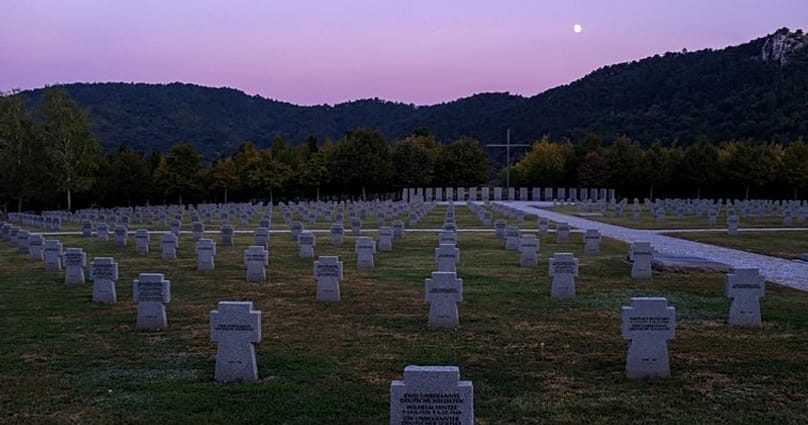
Today the German-Hungarian war cemetery at Budaörs, west of Budapest, is the largest burial site for German and Hungarian war dead in Hungary. It is the final resting place mainly for those killed in Budapest and in the areas east of the Danube. According to the Volksbund, 16,630 dead have now been buried at Budaörs.

The remains of the two Wehrmacht soldiers will be buried at the Budaörs war cemetery near Budapest.
The remains of the two Wehrmacht soldiers will be buried at the Budaörs war cemetery near Budapest. Uwe Zucchi

Whether the two men from the Danube actually fell during the Battle of Budapest is something only future research will show. What is already certain is that their remains will be laid to rest at the Budaörs war cemetery.

The discovery shows how many traces of the past are still hidden today in Europe's rivers. The Danube has been an important transport and trade route not only in times of war.

The Volksbund explicitly expects that the current low water level could also lead to more war dead being recovered from emerging shipwrecks.

The find in Budapest may therefore not be the last of its kind.