Tuesday, August 18, 2026


Florida, Alaska primaries offer early clues to battle for control of Congress


By Andy Sullivan
Tue, August 18, 2026 
REUTERS


Aug 18 (Reuters) - Voters in Florida and Alaska go to the polls on Tuesday in primary contests that could provide clues about which party will emerge with control of the House of Representatives and the Senate in November's midterm elections.

Alaska's unusual Senate primary, in particular, could serve as a preview of the ‌most competitive Senate races, as incumbent Republican Senator Dan S. Sullivan and Democratic challenger Mary Peltola will be on the same nonpartisan ballot. Democrats need to pick up at ‌least four seats from Republicans to win control of the 100-seat chamber, and analysts view Alaska as one of their strongest opportunities.

Florida's primary election, by contrast, is likely to bolster Republicans' chances of maintaining control of the House, as it ​will be the first election since the state approved a new district map that is expected to net them up to four seats.


FLORIDA'S NEW MAP

Florida's new map, pushed through by the Republican-controlled legislature this spring, could leave the state with a House delegation of 24 Republicans and only four Democrats, in a state that Republican President Donald Trump won by 13 percentage points in 2024. States usually redraw their congressional maps only at the beginning of every decade, to reflect census results. But several have redistricted over the past year at Trump's urging to shore up the Republican majority, prompting some Democratic-led states to redraw ‌their own maps in response.

The reshuffle has forced some incumbent Democrats ⁠to scramble for new footing.

Representative Debbie Wasserman Schultz, first elected to Congress in 2004, is running for a new seat in Florida's 20th congressional district, centered in Broward County, after her existing seat was redrawn to favor Republicans.

She has faced some criticism for running in the historically Black district from activists ⁠who are already worried about losing Black representation in Congress following a Supreme Court decision that weakened a landmark civil rights law.

She faces several Black candidates, including rapper Luther "Uncle Luke" Campbell, who found fame with the 1989 hit "Me So Horny," and former Representative Sheila Cherfilus-McCormick, who faces criminal charges of stealing $5 million in disaster relief funds. Cherfilus-McCormick, who has denied wrongdoing, resigned from Congress in April ahead of a possible expulsion.

Another incumbent Democrat, ​Representative ​Jared Moskowitz, has also been forced to run in a new seat. Oliver Larkin, a political activist endorsed ​by the left-wing Democratic Socialists of America, is also running for the party's ‌nomination for the 25th congressional district, which runs along the Atlantic Coast from Miami Beach to Delray Beach. The Republican primary contest features five candidates, including former Boca Raton Mayor Scott Singer.


Elsewhere in the state, seven Republicans, including entrepreneur Michael Carbonara and university executive Belinda Keiser, are running for their party's nomination in the 22nd district, which has been redrawn to favor their party. Two candidates, Pia Dandiya and Kaysia Earley, are running for the Democratic nomination.


In the Tampa Bay area, eight Republican candidates are running for the right to take on Democratic Representative Kathy Castor, whose 14th district has likewise been redrawn with a Republican tilt.

Florida voters will also select candidates for governor and U.S. Senate.

Republican Representative Byron Donalds is widely considered the frontrunner for his party's nomination for governor, while Republican-turned-Democrat ‌David Jolly is likely to win his party's nomination.

Republican Ashley Moody, who was appointed to the U.S. Senate ​to fill the seat vacated by U.S. Secretary of State Marco Rubio, is expected to win her party's nomination to ​fill out his term, which runs until January 2029.

Former U.S. Army officer Alex Vindman, who ​testified in Trump's first impeachment, is favored to win the Democratic nomination.

Nonpartisan analysts say Democrats will have an uphill climb to win either race in November.

SHOWDOWN ‌IN THE NORTH

In the Alaska Senate race, some opinion polls show Democratic candidate ​Peltola, a moderate who formerly held the state's ​sole House seat, leading Sullivan — an unusual result for a state that typically backs Republican candidates.

Sullivan also must contend with another Republican candidate with the same name, who remains on the ballot despite attempts to dislodge him. The top four candidates in the nonpartisan primary advance to the November election, which could cause further headaches for Senator Dan S. Sullivan ​if challenger Dan J. Sullivan makes the cut. Peltola also stands ‌to benefit from the state's ranked-choice voting system, which could allow her to consolidate support among independents.

In the House of Representatives, incumbent Republican Representative Nick Begich III is ​facing a challenge from former school administrator Bill Hill, who is listed as an independent but has donated to Democratic candidates in the past. Thirteen other candidates are ​also on the ballot.

(Reporting by Andy Sullivan in Washington; Editing by Michael Learmonth and Matthew Lewis)


3,700 years young: Portugal is home to hundreds of ancient olive trees that outlive many generations

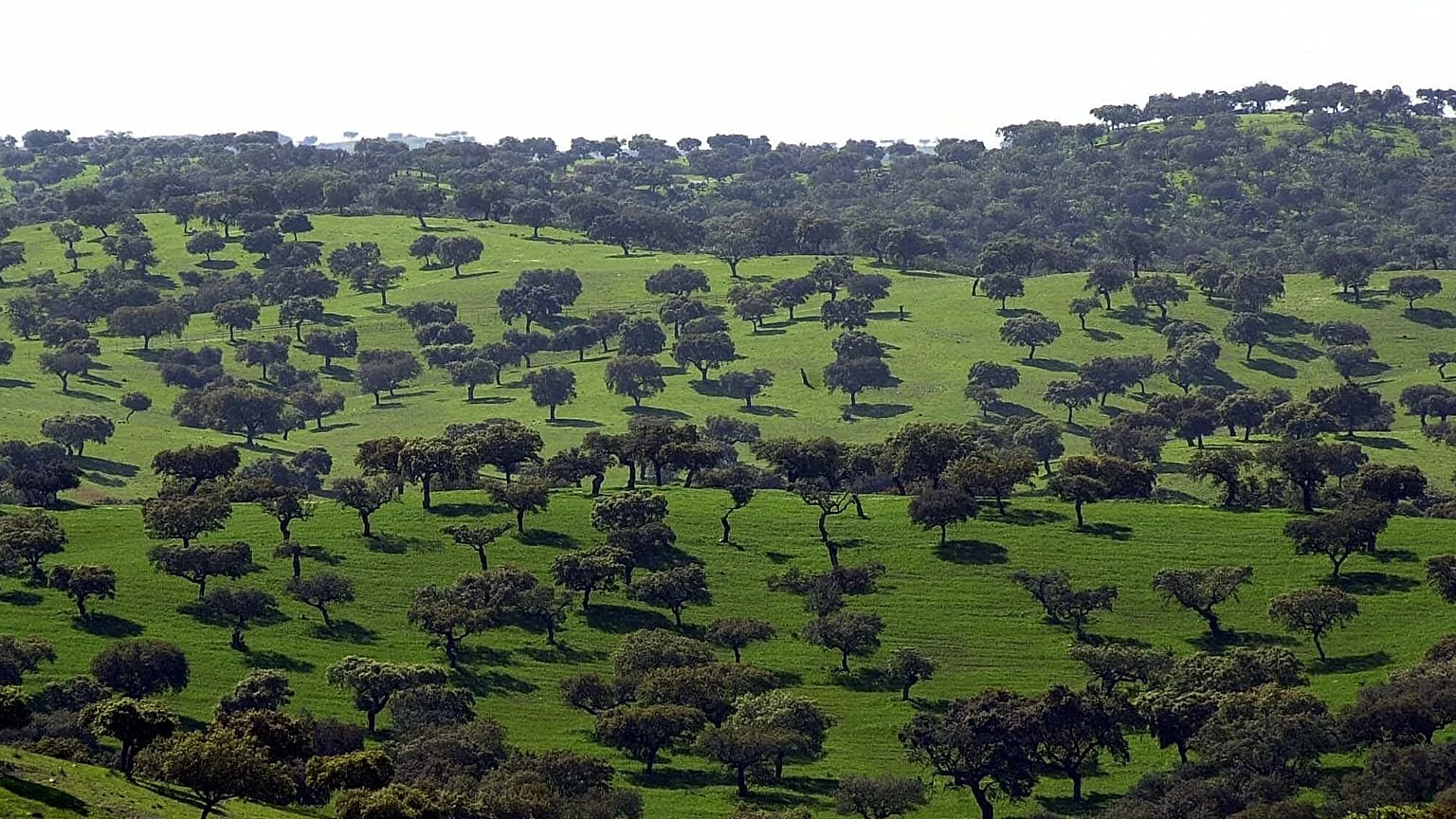
An image of olive trees near Alqueva, in southern Portugal.
Copyright GAEL CORNIER/AP

By Ema Gil Pires
Published on


How Portugal's University of Trás-os-Montes and Alto Douro works out the age of hundreds of ancient olive trees.

A tree was recently discovered in Germany which may be the oldest known in the country, at around 1,100 years old.

But in Portugal there are hundreds of trees estimated to be at least 2,000 years old, particularly olive trees, which over the years have been certified by the University of Trás-os-Montes and Alto Douro (UTAD)

The tree known as 'Oliveira do Mouchão', found in the municipality of Abrantes, is thought to be the oldest in the country at 3,350 years old.

It is an olive tree and "a contemporary of the Phoenicians, Celtiberians and Romans". According to UTAD, at the beginning of 2022 it was still "producing olives as if in the flower of youth, despite a trunk gnawed away by the ravages of time".

It has survived the passage of "invading peoples, barbarians and displaced peoples" over millennia, "thanks to the deep roots it has put down" in the soil. It was also one of the candidates in the 2022 European Tree of the Year contest, finishing fifth in the national competition.

The 3,350 year estimate was obtained using a method developed by UTAD researchers, already patented, which allows scientists to calculate the age of countless specimens, both in Portugal and abroad. It is based on a mathematical model that relates a tree's age to characteristics of its trunk, such as diameter, height or circumference, according to information published on the Florestas.pt portal, an initiative of The Navigator Company and Raiz – Forest and Paper Research Institute.

By the time the discovery in Abrantes was made, it was already possible to certify "many other millennial olive trees" spread across various parts of the country. Another noteworthy example is in Santa Iria de Azóia, in the municipality of Loures: a tree whose age was calculated at around 2,850 years at the time of analysis.

What is the oldest tree in Portugal?

Oliveiras Milenares, which has been working with UTAD on this certification mission since 2007, say that another olive tree has since been identified that is even older than the previous ones. It is in the Alentejo, more precisely on the Herdade do Peso estate, in Vidigueira, in the district of Beja, and is thought to be more than 3,700 years old, according to the assessment made in 2021.

'Oliveira do Peso', as it is known, also contested the title of Portuguese Tree of the Year 2024, a national competition in which it came third, the winner of which goes on to represent Portugal in the equivalent European competition.

Its candidacy was justified by the "heritage significance" of what is "the oldest millennial olive tree on the Herdade do Peso estate", located on a plain where there is "a group of olive trees whose combined ages exceed 7,000 years", according to a statement from the estate.

Other examples highlighted by the university are in Monsaraz, in the district of Évora, where there are several millennial olive trees, one of which is around 2,450 years old.

But there are many others in Portugal, scattered across places such as Estremoz, Montemor-o-Novo, Lagoa, Beja, Vilamoura, Évora and Serralves Park, in Porto, according to UTAD.

Abroad, the university says it has also been invited to date olive trees in countries such as Spain and France, notably in Bordeaux, Girona, Málaga and on the island of Menorca, where it has certified the existence of a tree more than 2,300 years old.

How do olive trees live for so long?

José Luís Louzada, a researcher at UTAD who developed the dating method, says that the olive tree is "without doubt one of the living beings that best withstand the passage of time, thanks to its strong capacity for rejuvenation". In this way, "a piece of trunk, no matter how old it is, has the capacity to sprout again", allowing the tree to continue "producing olives".

The researcher attributes this longevity, among other factors, to the fact that it is a species "very well adapted to our Mediterranean climate", which enables it to achieve "remarkable longevity".

In Portugal, these olive trees are found "especially to the south of the Mondego" and can, "in theory", live "for eternity", outlasting the many generations that pass through the same territory.


Hichilema wins second term as Zambia bets on copper-led growth

Hichilema wins second term as Zambia bets on copper-led growth
/ Zambian presidency via FacebookFacebook
By Brian Kenety August 18, 2026

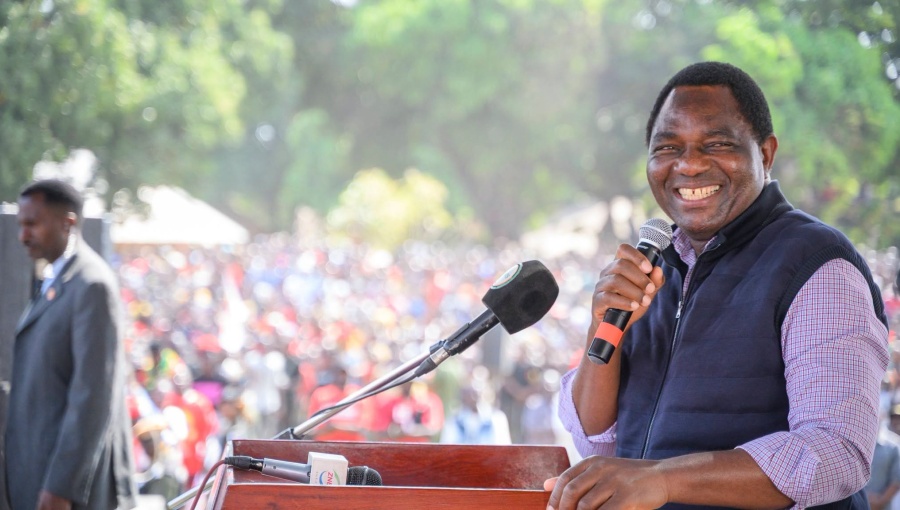
Zambian President Hakainde Hichilema has won a second five-year term with 61.4% of the vote, giving him a renewed mandate to pursue an investment-led economic programme centred on sharply expanding copper production after restructuring the country's debt.

The Electoral Commission of Zambia declared the 64-year-old incumbent the winner early on August 18 after he secured 2.97mn votes. His main opposition challenger, Brian Mundubile, received about 38%, or 1.86mn votes.

Hichilema campaigned on the economic stabilisation achieved since he took office in 2021, when Zambia was struggling with the aftermath of its 2020 sovereign default. His government restored relations with international lenders, completed a $1.7bn IMF programme and largely restructured about $13bn of external debt.

The president's second term is expected to place particular emphasis on mining. Zambia, Africa's second-largest copper producer after the Democratic Republic of Congo, produced 890,346 tonnes of copper in 2025 and is seeking to more than triple annual output to 3mn tonnes by 2031.

“Hichilema can point to a strong economic record. GDP has expanded by a solid ~5% p.a. during his term, while inflation has fallen from a peak of 24.6% y/y in 2021 to 6.5% y/y in July. This was helped by the surge in copper prices during his time in office. But the president can take some credit for the recovery in copper production, which rose to 0.89mn tonnes in 2025, the highest since Zambia’s independence in 1964,” wrote David Omojomolo, Africa Economist at Capital Economics, ahead of the vote.

“The improvement in macro stability creates good foundations for sustained growth, but what remains to be seen is whether Hichilema can move from crisis management to structural reforms. Ambitious plans to increase copper production to 3mn tonnes a year by 2031 are welcome, but we think as much emphasis needs to be placed on processing and adding value along Zambia’s mining supply chain […]. And while Zambia’s investment attractiveness is amongst the highest in the region, there is still much scope to improve the operating environment, from addressing electricity constraints to improving logistics.”

The copper mining expansion drive under Hichilema has drawn investment from companies including First Quantum Minerals (TSX: FM), Barrick Mining (NYSE: B; TSX: ABX), China's JCHX Mining Management (SSE: 603979), privately held International Resources Holding and US-backed KoBold Metals.

Achieving the 3mn-tonne target will require substantial investment beyond the mines themselves. Industry executives estimate Zambia needs at least 2,000 MW of additional power capacity to support the planned expansion, while miners have also called for improvements in exploration incentives, processing capacity and transport infrastructure. Mining accounts for around 70% of Zambia’s export earnings and more than 10% of GDP, making the sector’s expansion central to Hichilema’s broader growth strategy.

Hichilema's government has sought to revive projects, provide greater regulatory certainty and attract billions of dollars of mining investment as global demand for copper and other critical minerals rises. The sector is central to efforts to create jobs, increase export revenues and broaden an economic recovery that has yet to translate into improved living standards for many Zambians.

“By our estimates, copper export revenues are likely to be about 8% of GDP higher this year than last, more than offsetting the weaker terms of trade pressures from the energy shock. This should also keep the external position on better footing, with the current account deficit moving into surplus by 2028, meaning the kwacha does not lose too much of its 18% year-to-date gains against the dollar,” Omojomolo wrote.

“The public finances have also been repaired under Hichilema’s watch. While a long and tortuous process, Zambia has now made substantial progress restructuring external debt, including agreements with China and official creditors, alongside navigating tricky commercial creditor talks in parallel.”

The country's mineral wealth has also placed Lusaka at the centre of growing competition between the United States and China. Chinese companies have established a major position in Zambia's mining industry, while Washington has sought greater US participation in African critical-minerals supply chains.

Relations with the United States became strained earlier this year after Zambia said Washington was attempting to link a proposed health assistance agreement worth up to $2bn over five years with a separate critical-minerals agreement. Foreign Minister Mulambo Haimbe said Zambia objected to preferential treatment for US companies and insisted the health and minerals negotiations should be considered separately.

The vote nevertheless exposed political tensions that will follow Hichilema into his second term. Opposition parties and civil society organisations accused his government of restricting political activity and using state institutions to its advantage, allegations the administration has rejected.

The European Union's election observation mission said voting on August 13 was generally calm and offered voters a competitive choice but concluded that restrictions on fundamental freedoms and unequal campaign conditions had produced an uneven playing field.

“Key incumbency advantages blurred the line between state and political campaigning, creating an uneven playing field,” the mission said.

Vote counting was temporarily suspended after attacks on election workers and the theft of ballot papers. Authorities also arrested several prominent opposition figures following a nighttime raid in which gunfire was exchanged, accusing them of involvement in a planned insurrection. Opposition leaders rejected the allegations and accused the government of intimidation.

Mundubile questioned the credibility of the results and had claimed victory before the final count without providing evidence. Hichilema and his supporters rejected allegations that the election had been manipulated.

Greg Musiker, Zambia analyst at advisory firm Signal Risk, said a legal challenge by the opposition was possible but widespread instability was unlikely, Reuters reported. “While localised political violence is possible in the coming days, widespread unrest is not expected,” he said.

Hichilema now faces the challenge of converting stronger macroeconomic conditions and renewed investor confidence into broader gains for households. Despite falling inflation and progress on debt restructuring, poverty and living costs remain major concerns.

His government is also seeking to agree a new IMF programme before the end of 2026 as it tries to channel further investment into mining, energy and agriculture. The success of that strategy — and of the plan to lift copper output to 3mn tonnes — is likely to define the economic record of Hichilema's second term.

Copper squeeze builds with spreads surging and price near record

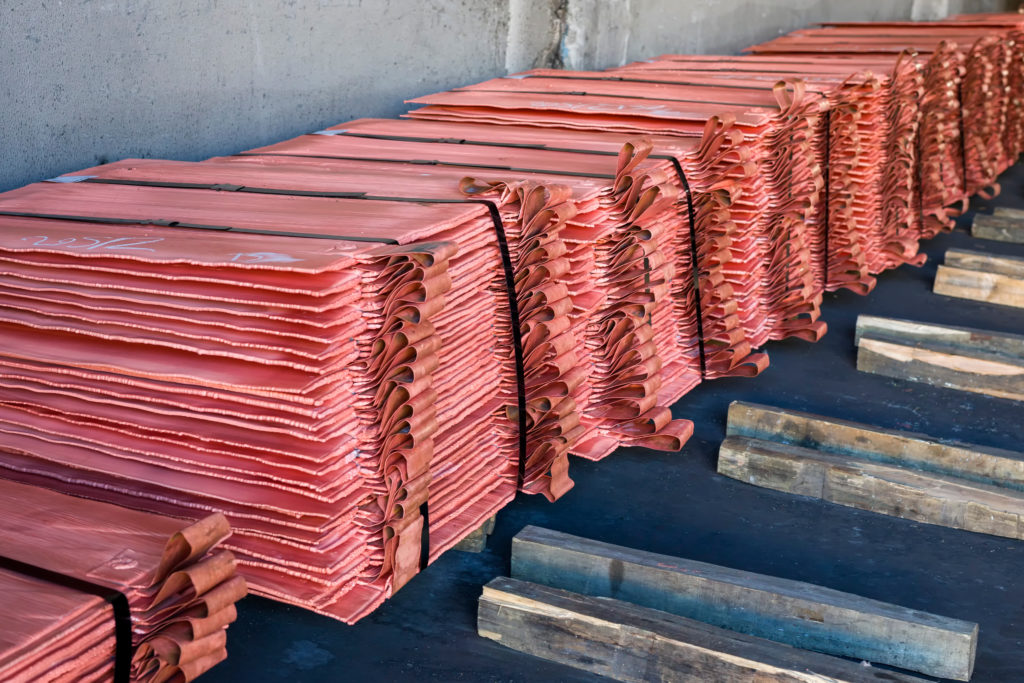
Stock image.

Copper rose toward a record on the London Metal Exchange, with soaring price spreads highlighting an increasingly acute squeeze in near-term supply.

The metal’s spot price traded as much as $545 a metric ton above the three-month futures contract, the widest backwardation since a historic squeeze in 2021 prompted the adoption of emergency measures to contain a runaway rally. Other spreads have also surged, and futures are closing in on a $14,500-plus peak reached during a spike in January. 

The current supply crunch is being fueled by a surge in shipments to the US in anticipation of a potential decision on import tariffs, while recent tightness in China has also drawn cargoes there. That has led stockpiles across the LME’s global warehousing network to shrink by almost half since mid-May.

Investors were already warming to the metal, whose biggest application is in electrical wiring. They cite longer-term themes of robust demand powered by the energy transition toward electrification, the need to build data centers and infrastructure for artificial intelligence, as well as the mounting industry challenge of finding and funding new mining pits.

The elevated premium for the near-term delivery of copper “points to continued scarcity of available metal,” said Ewa Manthey, a commodities strategist at ING Groep NV. “We expect these supply constraints to keep the market well supported in the near term, particularly if demand remains resilient.”

The fireworks on Monday came at a key moment in the LME’s calendar, just ahead of the third Wednesday of the month, which is the main focus of liquidity in the exchange’s contracts. 

Traders and brokers with short positions on that date were trying to cover their positions by buying cash contracts and selling later-dated ones, driving spreads higher, according to market participants. On the other side, owners of metal have been reluctant to relinquish it given the lucrative arbitrage opportunities presented by a surge in US prices on speculation of tariffs. 

LME warehouses are a crucial last-resort source of supply to the physical copper industry, and metal in its depots can also be used to close out expiring futures contracts. 

Global benchmark three-month futures advanced as much as 1.7% to $14,396 a ton on the LME before paring gains to trade at $14,179 as of 4:09 p.m. in London. The gains build on a seven-week winning streak.

Stockpiles tracked by the LME are currently just above 200,000 tons, the lowest volume since February. On Monday, they rose slightly after a 42-day run of declines, the longest since 2014. 

Unbalanced inventories  

A quirk of the current situation is that total global inventories are not particularly low, but are concentrated in the US as traders bet on President Donald Trump slapping tariffs on the refined metal. In addition, demand in China is not seen as particularly strong, but smelters there have struggled with feedstock supplies, increasing the need for imports.

The White House has kept the market guessing on plans for levies on refined copper, with no announcement emerging about seven weeks after a deadline for the Commerce Department to make a recommendation. Meanwhile, flows to the US have continued as markets price in a potential tariff.

With the cash-to-three month spread spiking, attention is turning to whether more copper might emerge from China, which often happens during periods of short-term supply pinches.

Among other LME metals, aluminum rose 0.6%, while zinc was up 0.3%, with advances also driven by a weaker US dollar, which aids commodities priced in the currency.

Codelco nears Pucobre deal as new leadership pushes partnerships, asset review


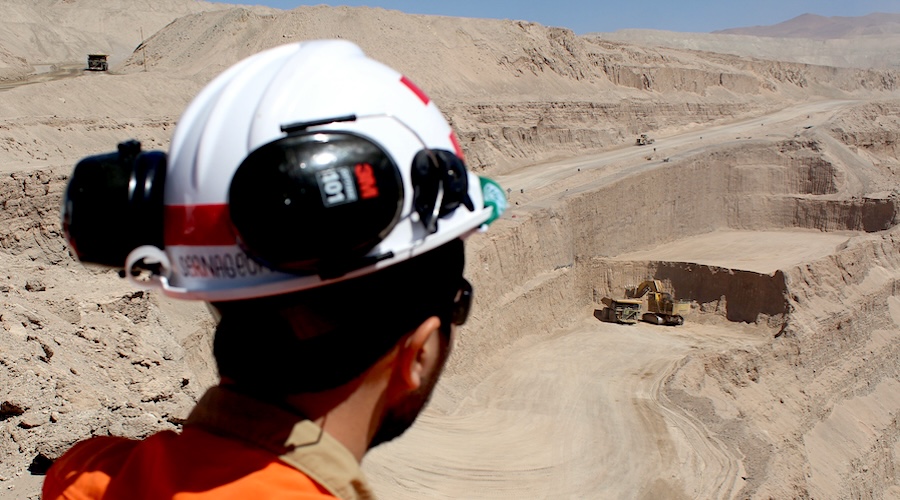
(Image courtesy of Codelco.)

Chilean state miner Codelco is close to signing an agreement with local miner Pucobre on the Tovaku copper project in northern Chile, Chairman Bernardo Fontaine said in a television interview on Sunday, as the company’s new leadership plans to rely more heavily on private-sector partnerships to drive growth.

Fontaine said alliances with private companies were essential for Codelco’s expansion because they bring capital, technology and shared risk, as one of the world’s largest copper producers tries to improve performance while limiting additional borrowing.

“We are close to signing another agreement with local miner Pucobre on a project called Tovaku,” Fontaine said in an interview with Canal 13’s Mesa Central.

The Pucobre deal would pave the way for a joint venture for Tovaku, an oxide copper project in Chile’s Antofagasta region that is under environmental review. Codelco and Pucobre first signed an exploration agreement for the property in 2009.

Pucobre holds an option to acquire 60% of the mining rights that make up Tovaku, with Codelco retaining 40% if the project advances and required investment, technical and environmental conditions are met.

Tovaku carries an estimated investment of $870 million and is expected to produce about 46,000 metric tons of copper cathodes a year. Industry estimates point to startup in 2035.

Fontaine said Codelco’s investment pipeline totals about $34 billion and cannot be financed with the company’s own resources, while additional debt is not the preferred solution. He said the company was also reviewing whether to sell some stakes it holds in private companies and reinvest the proceeds directly into Codelco, with that analysis expected by November.

He added that Codelco’s current production trend makes it difficult to achieve its 2026 target of 1.34 million metric tons, though he said the target had not been abandoned.

(Reporting by Kylie Madry, Editing by Iñigo Alexander)


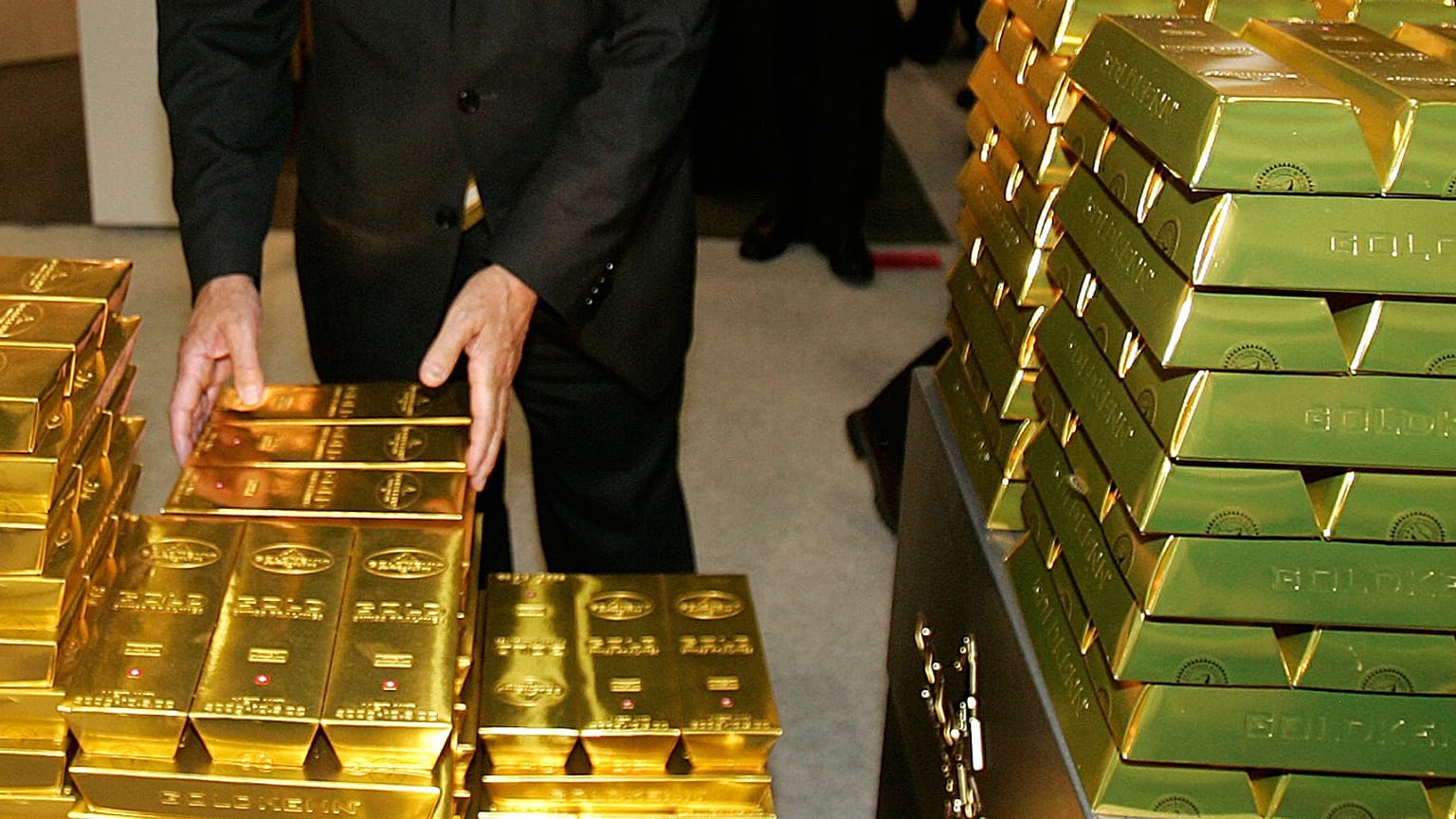
Venezuela seeks return of 31 tonnes of gold worth €4bn from Bank of England

Stock image, gold bars
Copyright LIONEL CIRONNEAU/AP

By Jesús Maturana
Published on

After two weeks of US-brokered talks, Venezuela's government and opposition agreed to jointly seek $4bn in gold held by the Bank of England since 2018, to fund reconstruction after June's earthquakes.

The government led by Delcy Rodríguez and sectors of the Venezuelan opposition have reached a rare consensus: to work together to recover the 31 tonnes of gold that Venezuela has kept in the vaults of the Bank of England for almost eight years.

The United Kingdom stopped recognising the Venezuelan government in 2018, which in practice blocked access to those assets, now tied up in a legal dispute that has yet to be resolved.

According to the joint statement released on Wednesday by both delegations, the funds are needed to support reconstruction after the 24 June earthquakes, which left more than 6,000 people dead according to the latest figures.

The MP Ramón López, a member of the 2015 National Assembly delegation taking part in the dialogue tables, told a national television channel that the release of those assets would be conditional on "all the necessary planning and control mechanisms", under a plan focused on housing, health centres and schools in the affected areas.

López added that the funds would be deposited in accounts of the US Treasury Department and subjected to audits by international firms as a condition for their disbursement.

The political leader stressed that the agreement does not involve a trade-off between the release of the gold and a reform of the Supreme Court of Justice, an issue that was also discussed at the technical meetings along with strengthening the judiciary and the electoral authority.

An economy battered by crisis and natural disaster

The Venezuelan economy, already weakened by years of mismanagement, corruption and US sanctions, continues to feel the impact of the earthquakes. The country's central bank reported that the disaster helped push monthly inflation up to 19.9% in July, from 13.8% in June, with annual inflation estimated by economists at around 575%.

Rodríguez had written to King Charles last month to request the release of the gold held in Threadneedle Street. An opposition source consulted by the 'Financial Times' said that "transparency mechanisms" will be put in place to prevent the funds "from ending up being stolen by the government", and acknowledged that "there is no naivety" about the nature of the interim administration.

For its part, the British Foreign Office made clear that the UK government is not a party to the court case that will determine control of the gold, and reiterated its support "for a democratic transition of power in Venezuela that reflects the will of the Venezuelan people". The Bank of England, which is waiting for a legal ruling before releasing the bars, declined to comment.

The context of the negotiations

The talks are taking place as the United States has suspended some sanctions on Venezuela and is working closely with Rodríguez, who served as Nicolás Maduro's vice president, to open up the country's natural resources to foreign investment.

The dialogue roundtables do not include María Corina Machado, the most popular opposition leader and winner of the Nobel Peace Prize, who has been living in Washington since late last year and was barred from returning to Venezuela after the earthquakes. The process has caused splits both within the opposition and among the hardest-line factions of the ruling party.

Since the capture of Maduro, Venezuela has gradually been regaining access to international funds, including 350 million dollars released in July from a tranche deposited at the IMF.

Rodríguez's government is also seeking access to 4.6 billion dollars in Special Drawing Rights, reserve assets of the IMF that member countries can exchange for other currencies, something the opposition had already agreed to in previous, abortive negotiations. It is estimated that the country's sovereign debt stands at around 240 billion dollars, which would make the restructuring under way the largest in history.

Venezuela's Bank of England gold to be routed through US Treasury accounts

Venezuela's Bank of England gold to be routed through US Treasury accounts
The bullion has been tied up in a legal dispute since 2018, when the Bank of England declined a request to withdraw part of Venezuela’s reserves, citing anti-money-laundering requirements. / Stevebidmead

By bnl editorial staff August 18, 2026

Venezuela’s prized gold reserves held at the Bank of England would be channelled through accounts at the US Treasury Department under an agreement aimed at financing reconstruction after the June 24 earthquakes, according to National Assembly deputy Ramón López, El Nacional reported.

López, a member of the delegation representing the 2015 opposition-led National Assembly in the US-supervised talks with the government of interim President Delcy Rodríguez, said the assets would be released only after detailed planning and oversight mechanisms are established. Funds would be directed towards housing, health centres and schools in affected areas, with “a permanent audit plan for the expenditures” involving international firms.

The arrangement is intended to ensure “the gold is used properly and audited by international companies”, López said in an interview with Venevisión. He rejected suggestions that recovering the bullion was linked to reforms of Venezuela’s Supreme Court of Justice.

“Giving the gold for the Supreme Court is not an exchange, it’s not true (…) they are not linked,” López said, adding that safeguards had been designed “so that nothing is diverted from the purpose of the spending” during reconstruction.

The agreement was struck last week between representatives of the 2015 National Assembly — the last such body to enjoy wide international recognition — and Chavista leaders now headed by Rodríguez, who became interim president after Nicolas Maduro's capture by US forces in January. It calls for the recovery of Venezuelan assets held in England and establishes transparency, traceability and auditing mechanisms for their use. A separate working group is focused on “strengthening democracy”, including issues involving the judicial and electoral branches.

The US routing of gold reserves mirrors the arrangement already in place for Venezuela's key oil revenues, which have been managed by the US Treasury since Maduro's ouster and disbursed to Caracas at Washington's discretion.

The assets include a $120mn surplus from a gold swap between the Central Bank of Venezuela and Deutsche Bank that was terminated in 2019, as well as 31 metric tonnes of gold held at the Bank of England that could be worth about $4bn. Rodriguez asked the UK to release the gold in July, arguing it was sorely needed to speed up reconstruction, boost employment, revive economic activity and restore education services in the earthquake-hit areas.

The bullion has been tied up in a legal dispute since 2018, when the Bank of England declined a request to withdraw part of Venezuela’s reserves, citing anti-money-laundering requirements. The dispute intensified after the UK recognised Venezuela’s National Assembly president as the country’s president for legal purposes in early 2019 in the wake of the previous year's disputed election where Maduro claimed victory.

British courts subsequently ruled that an ad hoc central-bank board appointed by the acting president was authorised to represent the institution before the Bank of England. Later challenges by the Maduro government failed to overturn those decisions, which remain in effect.

Rodríguez said the dialogue agreement, which also crucially includes a pledge to overhaul the country's regime-controlled judiciary, would allow the sides to jointly recover the gold and use it to rebuild areas affected by the earthquakes. “Agreements were reached where we will work together to recover the gold that is in England, which belongs to all Venezuelans,” she said.


Venezuela’s Oil Revival Accelerates as U.S. Majors Push Trump’s New Energy Order


  • Chevron targets 420,000 bpd by 2028 as Venezuela ramps up oil output.

  • Repsol, Eni and BP are expanding, particularly in oil and offshore gas.

  • High taxes and regulatory uncertainty remain key barriers to foreign investment.

Following the Washington-led removal of Venezuela’s previous president, Nicolás Maduro, from office on 3 January this year, U.S. firms are pushing hard to keep increasing oil production from the hydrocarbons giant, in line with President Donald Trump’s grand plans for the country within his new world order. The foundation for such output increases is extremely solid, as Venezuela still holds the world’s largest proven crude reserves -- roughly 303 billion barrels, or about 17% of the global total. Most of this is extra-heavy crude oil from the Orinoco Belt that requires more technical expertise to handle than lighter grades but is cheaper to lift and often more profitable to process, with the challenge lying in transporting, upgrading, and refining it, not extracting it. Moreover, of its 14 supergiant oil fields, 11 retain more than half of their original reserves. Once up and running to something approaching full capacity, the country is to play a key role in the ‘Americas’ geographical sphere -- one of three such regions, as delineated recently in the U.S.’s ‘2025 National Security Strategy’ -- so where are we now in this development arc following comments in the past week or so from U.S. oil and gas giant, Chevron?

According to chief financial officer Eimear Bonner, during a recent earnings call, the U.S. supermajor has increased its oil production in Venezuela from 40,000 barrels per day (bpd) to 250,000 bpd over the past few years. And, based solely on its three current joint ventures in the country, output has risen over just the past six months by 12% year on year to 280,000 bpd. This followed the mid-April announcement of an asset-swap agreement with Petróleos de Venezuela, S.A. (PDVSA), under which Chevron received an additional 13.21% interest in the Petroindependencia joint venture, increasing its total stake to 49%. The U.S. firm’s other two joint ventures include Petropiar (in which a Chevron subsidiary holds a 30% interest and has the rights to develop the adjacent Ayacucho 8 area in the Orinoco Oil Belt), and Petroindependiente (in which it has a 25.2% non-operated interest in the west of the country). Looking ahead, Bonner added that Chevron expects its production across Venezuela to rise by 50% between now and the end of 2028, which would bring the total up to 420,000 bpd. Across the country as a whole, July saw average crude oil production by Venezuelan state oil company PDVSA and its foreign partners increase by 20,000 bpd to 1.21 million bpd, according to Ministry of Hydrocarbons data. Nearly all of this is now exported, compared to an average of 847,000 bpd in 2025. That said, back in the early 2000s, Venezuela’s crude production was running at over 3 million barrels per day.

Moreover, Chevron is by no means the only oil major actively working with the government to look at other opportunities. Spain’s Repsol is the key non-U.S. supermajor currently pushing for major oil output rises, targeting a tripling of production there in the next two or three years, according to a recent comment from chief executive officer Josu Jon Imaz. The Spanish firm holds 40% of its Petroquiriquire Occidente joint venture with PDVSA and currently produces 45,000 bpd of crude oil, but recently it has amended its operational scope to integrate the Tomoporo and La Ceiba fields into the concession. Repsol also recently signed a memorandum of understanding (MoU) to assess and develop the Horcón Area southeast of Lake Maracaibo. It links the Barúa and Motatán fields, which Repsol already operates, with the aim of capturing new light crude reserves.

Natural gas expansion projects are also being worked on in parallel with those in oil, with Repsol and Italy’s Eni having finalised a joint strategic arrangement with the Ministry of Hydrocarbons for a major gas project at the jointly owned Cardón IV asset in the offshore Perla field, which already supplies around 30% of Venezuela’s gas demand. Moreover, following a preliminary MoU signed in April, Great Britain’s oil and gas supermajor BP officially set up a permanent office in Caracas, appointed a dedicated country manager, and secured an official license to explore and develop Phase 2 of the offshore Loran gas field. The  British firm will act as the primary operator of the venture, holding equal interest alongside Abu Dhabi National Oil Company’s international arm (XRG) and Qatar-based UCC Holding. The Loran Phase 2 block alone contains an estimated 4 trillion cubic feet (Tcf) of recoverable natural gas, but it extends across the border into the Trinidadian Manatee/Manakin fields, which are estimated to contain up to 10 Tcf of gas. According to BP, it will pipe the extracted gas directly to Trinidad, rather than building new facilities in Venezuela, whereupon it will be liquefied at the Atlantic LNG export terminal (in which BP owns a 45% stake) and shipped to global markets from there. BP has also recently finalised a separate preliminary agreement for the Carúpano East Block, located in Mariscal Sucre maritime area off Venezuela’s northeastern coast.

One problem that still constrains investment by many firms -- especially the non-majors -- is Venezuela’s historically heavy tax burden for companies, even if investors are losing money. One part of this is the fixed 30% baseline royalty on every barrel of oil extracted (tax on gross revenue, paid first), regardless of global oil market price drops. Another is the 50% corporate income tax rate (tax on net profit, paid last) way higher than regional competitors like Brazil, Guyana, or Colombia. And there is a mandatory alternative minimum tax that means the government collects 50% of the total gross value of extracted oil before operating costs are even calculated. The first attempt, post-Maduro-removal, to rectify Venezuela’s punitive tax systems for foreign oil and gas firms -- the 2026 Hydrocarbon Law Reform -- introduced by acting president Delcy Rodríguez sought to replace the web of extra levies with a single Integrated Hydrocarbons Tax (IHT) capped at 15% of gross revenue. However, this still allows the Ministry of Hydrocarbons total discretion to adjust individual contract rates and project variables, creating its own high degree of political and regulatory uncertainty. Given this, it appears that foreign oil and gas firms are looking to bypass the law entirely and instead press for customised, private contract terms (model contracts) and targeted U.S. sanctions exemptions.

This approach has so far met with broad support from Washington, given how central the build-out of Venezuela’s oil and gas sector is to Trump’s new global oil market order, as alluded to in the 2025 National Security Strategy. The U.S. President wants the world’s geopolitical system split into three geographical spheres, dominated by a major power in each. China would hold the primary role in Asia, while Russia would either dominate or significantly influence Europe, depending on how any future conflict between European NATO members and Moscow unfolds. But, at the top, the U.S. would maintain overall dominance and exert direct influence across the Americas (North and South America). Given that energy underpins the economies -- and thus politics -- of every country in the world, shifting the centre of dominance in global energy supplies to the Americas is a core part of that aim. The U.S. is playing its part toward that, pumping oil at record highs, around a baseline of 13.6 million bpd, with plans for more down the line. Of the other major oil-producing countries in the Americas, Venezuela is top of Washington’s development agenda, followed by Argentina and then Brazil.

By Simon Watkins for Oilprice.com

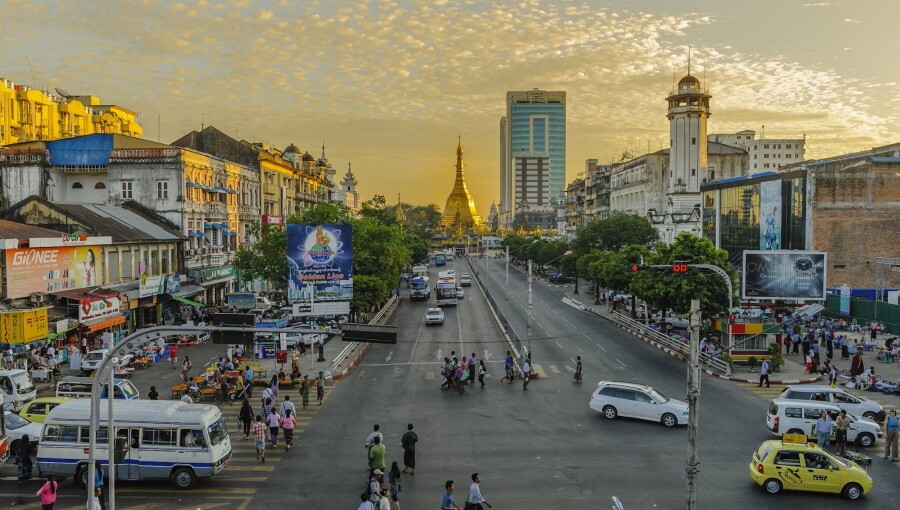
Myanmar's banks buckle under junta rule as the kyat loses three-quarters of its value

Myanmar's banks buckle under junta rule as the kyat loses three-quarters of its value
/ Alexander Schimmeck - UnsplashFacebook
By Ben Aris in Berlin August 17, 2026

Cash-strapped depositors, a collapsing currency and lenders shut out of the global financial system – Myanmar's banks are being ground down by more than five years of military rule.

The economy shrank 2% in the fiscal year to March and consumer prices rose 24.6% year on year in April, the World Bank said in June, warning that a fresh fuel shock had piled new pressure on an already fragile system.

“While there are signs that economic conditions have stabilised, Myanmar's economy remains under significant strain,” said Melinda Good, the bank's division director for the region.

Behind the figures sits a slow-motion banking crisis. Since the generals seized power in February 2021, deposits have drained from private lenders, the kyat has lost roughly three-quarters of its dollar value and the sector has been cut adrift from Western finance by sanctions and a global money-laundering blacklist.

A currency in free fall

The kyat changed hands below MMK1,500 to the dollar before the coup. By mid-2024 the black-market rate had blown past MMK6,000 and briefly touched a record above MMK7,000, even as the central bank sold dollars to importers at a pegged rate thousands of kyat lower.

The Central Bank of Myanmar still holds an official reference rate near MMK2,100 to the dollar, but almost no one trades there. The bank keeps drip-feeding hard currency into favoured sectors – $2.9mn to edible-oil importers on a single day in June, for instance – yet the sums are too small to shift the street rate, and traders complain they cannot see where the dollars end up.

Deposits people cannot reach

Public trust never recovered from the bank runs that followed the takeover. As savers queued to pull out their money, lenders including KBZ Bank, the largest private institution, shut branches, and the authorities imposed withdrawal limits that forced customers to give notice before taking out large sums.

Private banks must still report cash withdrawals above MMK100mn ($47,600) to the financial-intelligence unit, and outsized withdrawals can trigger an investigation. To coax deposits back, banks later pushed one-year fixed rates as high as 12.5%, following a central-bank rate rise meant to tame inflation.

KBZ towers over a shrunken sector

KBZ Bank (Kanbawza Bank), founded in 1994 and genuinely private rather than military-owned, dominates what is left. It accounts for nearly 40% of retail and commercial banking, with 5.2mn customers and around 500 branches. Its KBZPay wallet, claiming some 10mn users, has become the workaround of choice in a cash-scarce economy, alongside rival Wave Money.

Below KBZ sit private majors such as AYA Bank, CB Bank and Yoma Bank – the last controlled by First Myanmar Investment, the first company to list on the Yangon Stock Exchange. The insurance market, led by Grand Guardian Insurance, is similarly thin and locally owned.

The state banks are another matter. Myanma Economic Bank and Myanma Foreign Trade Bank (MFTB) sit at the heart of the junta's finances, and it was defaults on MFTB loans that saw 23 companies and their directors blacklisted in August.

Cut off from the world

Washington has tightened the screws. In June 2023 the US sanctioned MFTB and a second state lender, Myanma Investment and Commercial Bank, accusing them of channelling foreign currency to buy arms for the military. Myanmar has also sat on the FATF blacklist of high-risk money-laundering jurisdictions since 2022, and was kept there again in June.

Foreign banks are backing away. Singapore's UOB moved to sever ties with Myanmar counterparts, Nikkei Asia reported, and a UN human-rights expert has accused international lenders of helping the regime move money. The borderlands, meanwhile, host sprawling cyber-scam compounds whose fraud proceeds run into the billions of dollars, CNN has reported, washing through the region's financial plumbing.

With Western markets closed off, the central bank has turned east, deepening banking and fintech ties with Russia and studying Sberbank's payment technology.

Symptom, not cure

For ordinary people the effect is corrosive: savings that lose value by the month, banks that ration cash and a currency that buys less with every fresh shock. For the generals, a hobbled but captive financial system still helps fund the war.

Little of it is transparent. The central bank publishes sparingly, and much of what is known comes from exile media and money-changers rather than audited accounts. What is clear is that nearly six years after the tanks rolled out, Myanmar's banks remain a symptom of the country's wider unravelling, not a way out of it.