Tuesday, August 18, 2026

Ukraine Has Shattered the Myth of Russian Military Might

  • Ukraine has exposed major weaknesses in Russia’s conventional military by using drones and rapid technological innovation to offset Moscow’s advantages in manpower and equipment.

  • Russia has suffered enormous losses but continues expanding weapons production, adapting battlefield tactics, and drawing on North Korean troops, ammunition, and missiles.

  • The war increasingly extends deep into Russian territory and the Black Sea, with Ukraine demonstrating its ability to threaten strategic targets including Russia’s Novorossiysk naval base.

When President Vladimir Putin sent his forces into Ukraine, the Kremlin appeared to be betting on a familiar axiom of European security: sheer Russian mass, backed by vast Soviet-era stockpiles and nuclear power, would overwhelm resistance.

More than four years into Moscow’s full-scale invasion, that assumption has been all but obliterated. Ukraine survived, derailed Russia's expected quick victory, and turned the conflict into a high-tech war of attrition.

It has developed an innovation cycle that Joshua Huminski, senior vice president for national security and intelligence at the Center for the Study of the Presidency and Congress, said is moving faster than anything the US or other NATO countries are doing.

Yet Moscow's growing reliance on North Korea for ammunition, missiles, and troops should not be mistaken either for proof that Russia is collapsing -- or, on the contrary, that its military will emerge from the war stronger than before, experts said.

The picture they draw is more complicated.

Ukraine has inflicted severe damage on Russia's conventional forces and exposed profound failures in its planning and doctrine. At the same time, Moscow continues to adapt to the battlefield, expand weapons production, and learn from a war unlike any it had previously fought.

“Russia's conventional ground forces in Ukraine are being consistently and severely degraded," Huminski told RFE/RL. But he warned that judging Russian military power solely through that lens would be "a mistake.”

Russia's Northern and Pacific naval fleets retain important capabilities, he said, while its strategic nuclear forces have been largely untouched and Moscow still possesses capable cyber and space assets.

The question, then, may no longer simply be whether Russia remains the world's second-most-powerful military. It is what Ukraine has exposed about the limits of Russian power -- and whether adaptation can prevent those weaknesses from becoming decisive.

The Failed Blitzkrieg And The Race To Adapt

Russia's problems began with its assumptions. Putin's intelligence services, Huminski said, had portrayed Ukraine as a "house of cards" expected to collapse quickly.

Instead, Ukrainian resilience, Russian operational failures, Western assistance, and rapid adaptation produced a very different war. The defense of Hostomel, outside Kyiv, where Ukrainian forces repelled elite Russian airborne troops, became an early example of how Moscow's plans could unravel. Small-unit tactics and Western anti-tank weapons also exploited weaknesses in advancing Russian armor.

Since then, the war has become a relentless contest of adaptation. Drones, electronic warfare, and long-range strikes have transformed the battlefield, making movement increasingly dangerous and helping create the heavily surveilled "kill zone" along the front.

Maria Snegovaya, a senior fellow for Russia and Eurasia at the Washington-based Center for Strategic and International Studies, told RFE/RL that Ukraine has built significant technological momentum and increasingly used drones to compensate, at least in part, for manpower shortages.

That advantage is real, but she did not describe it as permanent. Technological momentum has shifted several times during the war, Snegovaya said. Ukraine is currently ahead in important drone technologies, but Russia has repeatedly caught up, reverse-engineered successful innovations, and developed countermeasures.

The cycle is accelerating: What once took much longer is now unfolding in a matter of months. That is why neither Huminski nor Snegovaya sees the war as a simple story of Ukrainian technological brilliance overwhelming an obsolete Russian army.

Both describe a far more dynamic contest: Ukraine has gained important technological momentum and exposed serious Russian weaknesses, while Russia continues to adapt and absorb battlefield lessons even as its conventional ground forces suffer severe degradation and extraordinary losses.

North Korea Is Filling Gaps

Moscow's partnership with Pyongyang is perhaps the clearest illustration of the war's extraordinary demands. North Korea has supplied ammunition and missiles and sent troops, some of whom were deployed in Russia's Kursk region to help fight off a surprise Ukrainian incursion in 2024.

But Snegovaya said Russia's reliance on outside help must be understood alongside its enormous domestic production effort.

Moscow is fighting a war of attrition in which losses extend far beyond manpower to ammunition and weapons systems. "Russia actually has been able to produce a lot," she said, emphasizing that Moscow has "significantly scaled up its production" of systems including drones, electronic warfare equipment, air defenses, tanks, and missiles.

But Russia's industry has not solved its problem. The demands of the war are so high, Snegovaya said, that even dramatically expanded production cannot fully satisfy the battlefield's needs or allow Russia to build up significant reserves. That helps explain North Korea's role.

Huminski also said North Korean troops help Moscow manage a politically sensitive manpower problem. Their use can hold positions and free Russian contract soldiers for other tasks without requiring Putin to undertake a politically risky full-scale mobilization.

This is therefore neither simple military collapse nor evidence of an effortless Russian resurgence. Russia is using foreign partners to fill specific gaps while straining to sustain and expand its own military-industrial base.

According to Snegovaya, the Kremlin continues to expand production facilities and prepare for a long war. But that effort comes with accumulating costs. Russia's military-industrial sector is heavily financed by the state, while the economic strain of sustaining the war continues to grow.

Ukraine Changed The Math -- But Drones Have Not Won The War

Ukraine entered the war with a severe conventional disadvantage. It could not match Russia tank for tank, shell for shell, or soldier for soldier. Its answer has been to change the cost equation.

Cheap drones and other rapidly developed systems can threaten far more expensive equipment and, Snegovaya said, Ukraine has been able to use drones to compensate to a significant degree for shortages of manpower.

But she also stressed the limits of that advantage. Drones have not made soldiers irrelevant, and Ukraine's manpower problems remain serious. The defensive "kill zone" may help hold the line, but it has not won the war.

Russia, meanwhile, is adapting its own methods. Snegovaya described a force combining Soviet-style approaches and legacy production capacity with drones, electronic warfare, and rapidly evolving battlefield practices.

Russia is suffering extraordinary losses and facing mounting pressure on its economy. But it retains some asymmetric advantages, including the capacity to deploy drones in enormous numbers, experience in using them, and a vast amount of battlefield data accumulated by combat units and operators

Western countries “must not only look at what Ukraine is doing, but also pay attention to what Russia is doing,” what lessons it is learning, and how it is adapting, Huminski said. "If we don't, and we just see that as a conventionally degraded Russian force, that could come back to haunt us in the future."

Novorossiisk Shows How The War Is Expanding

Ukraine's technological adaptation is also changing the geography of the war.

In the Black Sea, Ukraine has repeatedly threatened Russian naval forces and infrastructure despite beginning the conflict without anything close to a conventional navy capable of matching Russia's fleet. As Russian assets shifted away from Crimea, Ukraine's ability to strike Novorossiisk, its naval hub further east, demonstrated that moving farther from the front does not guarantee safety.

"The Russian fleet is definitely very much jeopardized anywhere in the Black Sea at this point," Snegovaya said.

The broader significance is strategic.

Ukraine is increasingly pairing its defensive effort at the front with deep strikes against military and other targets inside Russia, seeking to impose costs beyond the battlefield.

Snegovaya said the strikes have helped increase anxiety inside Russia and demand for the war to end. But she cautioned that public opinion plays only a limited role in the Kremlin's decision-making. Putin, not public sentiment, remains the decisive factor.

Ukraine may currently have technological momentum, she said, but Russia is continuing to respond -- including with faster jet-powered drones and efforts to overcome other technological constraints.

Degraded But Deadly

The old measures of military power have been seriously challenged by the war. Prewar tank numbers and troop totals did not predict Russia's failures in 2022. But neither do Russia's enormous losses prove that it has ceased to be a formidable military power, experts cautioned.

Ukraine has shattered the myth that Russian mass alone guarantees victory. It has demonstrated how resilience, rapid innovation, and relatively cheap technology can allow a smaller military to impose extraordinary costs on a much larger one.

Russia, however, still has substantially greater resources than Ukraine, a large defense-industrial base, nuclear forces untouched by the war, and military capabilities extending well beyond the devastated ground formations fighting in Ukraine.

That does not mean Russia is winning the process of adaptation. Snegovaya stressed that Ukraine currently has technological momentum, while Russia's economy and military-industrial network face growing strain. Nor is there, she said, an analytical consensus on whether Russia can still meaningfully be called the world's second most powerful military.

The sustainability of Western support for Ukraine may ultimately be one of the most important variables. Ukraine has repeatedly punched above its weight, Snegovaya said, but its ability to sustain the fight remains tied in important ways to outside financial, technological, intelligence, and military support.

Huminski's broader conclusion is that Russia and Ukraine will emerge as two of the world’s most battle-tested and battle-hardened militaries.

Ukraine has battered Russia’s military, destroyed vast quantities of its equipment, and exposed weaknesses that Moscow expected to hide behind its reputation for overwhelming power. Russia is paying heavily to adapt and is far from solving the fundamental problems the war has revealed.

Whether Russia’s learning is enough to compensate for its losses -- and whether Ukraine can sustain its own extraordinary pace of innovation -- may go a long way toward determining the outcome of the war.

By RFE/RL


Tanker Struck Near Black Sea Terminal as Both Sides Continue Attacks
oil tankers at offshore terminal
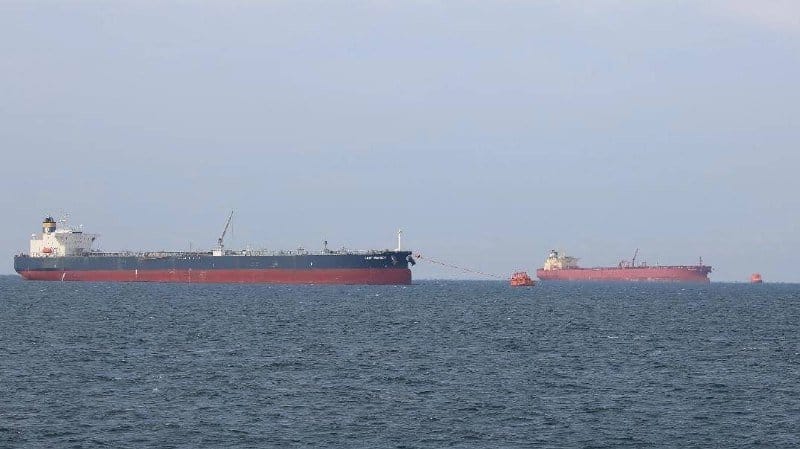
A Greek-managed tanker near Russia's Black Sea terminals was struck on Monday raising new concerns for shipping (CPC file photo)

Published Aug 17, 2026 2:53 PM by The Maritime Executive


The pace of attacks and retaliations between Ukraine and Russia is continuing, with both sides reporting striking additional ships and infrastructure. An incident with a Greek-managed tanker, however, is raising concerns after reports last week that Ukraine had agreed to suspend some attacks targeting foreign-flagged vessels.

The Greek-managed tanker Skiros is reported to have come under attack on Monday at midday from a drone. The vessel was struck with a small fire that the crew was able to contain. There were no reports of injuries to the crew. The 159,000 dwt tanker is registered in Liberia and managed by IMS, making it the second of the company’s tankers struck by the suspected Ukrainian targeting of the offshore oil terminals of Novorossiysk.

The questions, however, centered on what cargo the tanker had loaded, as the terminals at the port handle both Russian oil and oil transported by pipeline from Kazakhstan. The vessel on its AIS signal indicated it was going to CPC (Caspian Pipeline Consortium), but Bloomberg is reporting the tanker loaded a Russian cargo.

Last week, U.S. Vice President JD Vance had personally delivered a message to Ukraine, pressuring it to stop the attacks on international tankers going to or at the CPC terminal. This came as a tanker chartered to Chevron was struck. The stories indicated that Ukraine agreed not to target the CPC infrastructure or foreign-flagged tankers, provided the tankers were not sanctioned and not carrying Russian oil.

The media was indicating that loading at the CPC terminal had been briefly suspended, but Reuters is quoting sources saying it had resumed operations. The nearby Russian Sheskharis terminal was also reported to be offline after a tanker departing the terminal reported an attempted drone attack on Friday. Sheskharis is another critical terminal for Russia, with indications that Novorossiyk handles 700,000 barrels per day of Russian oil.

The Moscow Times is reporting that the repeated strikes on Novorossiysk are taking a heavy toll on Russia’s exports. In addition to interruptions of oil exports, it reports that all three of the grain terminals in the Black Sea port were suspended last week. It says only the smaller Tuapse grain terminal remains in operation for exports. Russia had previously also suspended shipping on the Sea of Azov after Ukraine repeatedly struck vessels in July.

Russia’s Ministry of Defense, however, is reporting that it struck both port infrastructure and vessels “used in the interests of the Armed Forces of Ukraine.” It said that a patrol boat and fuel tanks were struck in the port of Odesa. In the port of Izmail to the west on the Danube, Russia says it struck a terminal used for unloading military cargo as well as hangars with Western military hardware and surface drones.

Ukraine’s regional administrator, Oleg Kiper, said that a commercial ship flagged in Togo was damaged. He reported that four people were injured, including three who were hospitalized, with one in serious condition.


Russian Escort Accused of Killing Senior Russian Navy Officer in Sevastopol

Ruet
Margarita Ruet (Russian social media)

Published Aug 16, 2026 5:20 PM by The Maritime Executive

Russian authorities have arrested a Russian escort and accused her of killing a Russian Navy officer, ex-Ukrainian Navy defector Robert Shageev. 

Margarita Reut, 32, was detained in Sevastopol in connection with a covert attack. According to Russian accounts, on August 13 she placed a bomb in a trash bin on Stoljetovs'kyi (Stoletovsky) Avenue in anticipation that Shageev would walk past it. Shageev came down a flight of steps, accompanied by a friend, and the bomb detonated when he came near. The blast worked as planned and he was killed on the scene. Ukrainian tracking service Myrotvorets confirmed that he had been eliminated. 

According to Russia's FSB intelligence service, Ruet was responsible for placing the bomb, and was paid and instructed by Ukrainian intelligence. Regional governor Mikhail Razvozhayev said in a statement that she showed no remorse for the successful attack. 

Ruet is a Russian national and a resident of the resort city of Sochi. She was known to take frequent trips to Crimea, according to Russian intelligence-linked social media. 

Ruet was previously identified as a Ukraine sympathizer: she was detained in July 2025 for allegedly shouting anti-Russian statements on a train, and she was fined about $350. 

Shageev was the commander of the Black Sea Fleet's 4th Separate Submarine Brigade. Before arriving in Russia's Navy, he was the commander of the sole Ukrainian submarine, the 1970-built Foxtrot-class Zaporizhzhia; he transferred his allegiances in March 2014 during the Russian invasion of Crimea, and his submarine fell into Russian hands as well. The aging attack sub has not been seen for some time and is believed to be decommissioned.   

He was wanted by Ukraine for suspected high treason in connection with his defection and his ongoing work for the Russian Navy. He was the third high-profile target attacked by Ukrainian intelligence this month, following Russian drone-maker Vladimir Tkachuk (severely injured) and aerospace force chief Aleksandr Chayko (uninjured, but several family members and bystanders were injured or killed). 

Buzzkill: How To Defend Europe Against Drones – Analysis

LONG READ


August 18, 2026
ECFR
By Ulrike Franke


Key Takeaways

Europe faces a dual drone threat: small civilian or hybrid drones disrupting critical infrastructure (airports, energy hubs, military bases) across the continent, and military drones (often Russian Gerbera/Geran variants) regularly crossing the eastern flank into EU/NATO airspace, with attribution of intent remaining ambiguous.

Current responses remain costly and incomplete—relying heavily on expensive fighter-jet intercepts—while national, EU and NATO initiatives (including the European Drone Defence Initiative and Poland’s planned “anti-drone wall”) are fragmented and insufficient for multi-layered detection, multi-effector defence and a common operating picture.

The EU should prioritise coordinating and funding more ambitious eastern-flank systems, establishing data-sharing and common standards, then transfer proven technologies and lessons to protect critical infrastructure across the rest of Europe, while recognising that lasting security also requires broader efforts to end Russian aggression and hybrid attacks.


Today’s problem


On August 5th 2026, a small drone armed with explosives was found at Leipzig airport in Germany. The presence of explosive material marks this out from previous incidents at airports, as does the fact that authorities recovered the drone. But Europe’s new normal is for small drones to disrupt its airports and buzz around other critical infrastructure, including French nuclear submarine bases, Belgian nuclear power plants and German liquefied natural gas terminals. Some of these sightings are likely part of Russia’s hybrid war against Europe. Yet the drones are probably flown from inside European countries or from ships in the North and Baltic seas, and definitive attribution to Russia or any other actor remains elusive.

The countries along Europe’s eastern flank have another new normal to contend with. This entails the connected but different threat of military drones crossing into EU and NATO territory from Russia, Belarus and, because of the Russian aggression against it, Ukraine. The most egregious incursion so far took place in September 2025, when around 20 Russian military drones crossed into Poland’s airspace, leading it to invoke Article 4 of NATO’s Washington Treaty. That episode also prompted NATO to launch Operation Eastern Sentry to increase its vigilance at the border.

Unlike the small drones hovering over critical infrastructure, the origin of the military drones crossing into EU and NATO territory is no mystery. The attribution problem here relates to intention, as Russia can claim—sometimes plausibly, sometimes less so—that incursions at the eastern flank are accidents resulting from its war against Ukraine.

The eastern flank


Russia and Belarus are acting antagonistically towards European countries, while Ukraine is a partner nation and an EU candidate country. But incursions of military drones into EU and NATO territory come from all three countries. The term “eastern flank” thus refers to the EU’s 4,000km border with Russia, Belarus and Ukraine, as well as the Black Sea coast. The flank extends through nine countries: Finland, Estonia, Latvia, Lithuania, Poland, Slovakia, Hungary, Romania and Bulgaria.

Almost a year on from the Poland incident, the member states that line the eastern flank face military drone incursions with alarming (and increasing) regularity. The end of July, for example, saw Romania shoot down three suspected Russian drones in as many days. This followed another incursion in the country in May when a drone crashed into the roof of a ten-storey building in Galati and exploded, starting a fire in one of the apartments. A 14-year-old and his mother were injured, and 70 residents were evacuated. The Romanian military had tracked the drone and deployed two F-16 fighter jets in response to the threat. But the jets were unable to fire at the target for “operational reasons and [because of] certain legal limitations”.


The incidents in Romania lay bare some of the difficulties for Europe in defending its eastern flank against military drones. Over the past year, NATO’s operation has swiftly been joined by a hotch-potch of national and EU projects, including the bloc’s ambitious and wide-ranging European Drone Defence Initiative. But as things stand, military drones still either fly unhindered into EU and NATO territory or are intercepted through the costliest means possible, namely missiles fired from fighter jets.

Police forces across the continent, meanwhile, are struggling to mount an effective response to the problem of the small drones over their critical infrastructure. And countries farther from the eastern flank tend not to make the link between this largely civil threat and the military threat in the east: when the EU first proposed its initiative, for example, western European states were unconvinced that the bloc should fund drone defences at the eastern flank.

But, as this paper argues, all European countries need to act to secure the eastern flank—both to defend EU and NATO territory against military drones and to inform Europe’s response to small drones flying over its critical infrastructure. National efforts at the flank are promising but will likely prove insufficient. The EU will therefore have to spread the costs of defending the eastern flank, as efforts there contribute to the defence of the entire continent against military drone attacks. That small drones flying over critical infrastructure are a problem everywhere should further incentivise all Europeans to speed up their work on drone defence. And as this paper shows, the EU and member states can apply lessons learned at the eastern flank across Europe and reuse technology battle-tested in the east to protect their critical infrastructure.

The dual threat

The two sides of Europe’s drone threat are different, but they still share important similarities: they involve the same tools—drones of one type or another—and some likely have the same perpetrator—Russia. Mapping just a selection of drone overflights of critical infrastructure and incursions at the eastern flank since August 2024 lays bare the extent of the dual drone threat Europe is facing. And every time an overflight of critical infrastructure or incursion at the eastern flank happens, wherever it comes from, Russia learns something about Europe’s ability to fight (or otherwise) against these systems.
Drones over critical infrastructure

Drones are regularly spotted over critical infrastructure across Europe. The German aviation agency reported 227 drone sightings by pilots in 2025. These numbers have been rising steadily since reporting began in 2020, and the 2026 numbers are well on track to surpass last year’s.[1]Such incidents are largely a civil matter, which means responsibility for recording, identifying and countering them falls on local authorities such as police forces.

The overflights near airports tend to grab the most attention for three reasons. First, drones pose an extreme risk to aircraft and have the potential to cause mass casualty events, with the incident in Leipzig perhaps the closest call so far. German newspaper Die Zeit reports that CCTV footage from the airport shows the drone flying towards an Antonov cargo plane parked on the runway, hitting one of the wings and then falling to the ground. It was later discovered on the tarmac by a bus driver, who alerted security. Had the explosives detonated, the consequences could have been catastrophic. But even without explosives, drones have the potential to cause an air disaster if they collide with a plane, particularly if it is taking off or landing. Second, drones near airports cause significant economic harm: Copenhagen airport had to close for four hours in September 2025, while more than 30 flights were cancelled in Munich following drone sightings in March 2025. Third, airport closures tangibly affect citizens, which is likely why they are such common targets in the first place.

But from a security standpoint, equally concerning are sightings over other critical infrastructure like energy hubs and military installations. Drones can, for instance, help hostile operators gather intelligence about the security arrangements at these installations. They could then use this to enable future sabotage or attacks.

Among these sites, drone activity around military installations could be highly consequential. In early 2025, the German ministry of defence logged six instances of drone overflights at Schwesing airbase, a Bundeswehr base where Ukrainian soldiers were trained to use Patriot air-defence missile systems. It is plausible that the drones carried signals-intelligence equipment that could identify soldiers’ mobile phones. Once it had identified the phones, Russia may have been able to locate them again months later at the Ukrainian front line—and with them, the valuable and increasingly scarce Patriot batteries. This is a direct concern for the Ukrainian defence effort. But it also points to a larger problem for Europe, as it illustrates the type of information Russia could be collecting about European armed forces.


It remains unproven where most of the drones used in overflights come from and who controls them. But it is probable that at least some of the drones flying over critical infrastructure are part of Russia’s hybrid waragainst Europe. For years, Russia has conducted attacks against military and civil infrastructure as well as government entities. Some attacks take place in the cyber-realm; some involve physical sabotage, like igniting air freight packages in Britain, Germany and Poland, and damaging submarine cables in the Baltic Sea. US intelligence also helped Germany foil a plot to assassinate Armin Papperger, the CEO of arms manufacturer Rheinmetall. Sweden, meanwhile, has faced attacks on its telecommunications network. And disinformation campaigns have targeted the whole of Europe for years, including in the aftermath of drone sightings and disruption.

German chancellor Friedrich Merz has noted that Russian agents may be behind at least some of the overflights; Danish prime minister Mette Frederiksen said she could not “rule out in any way that it [was] Russia” behind the airport disruptions in Copenhagen; and Ukraine’s president, Volodymyr Zelensky, has argued that “the drone incidents across Europe clearly show that Russia is prepared to escalate this war and that it has never been just about Ukraine.” Moreover, in 2025 investigative journalists traced several drone flights back to Russian ships in the North and Baltic seas. Since then, a June 2026 report from the International Institute for Strategic Studies has assessed it is “highly likely” Russia conducted a drone campaign against Europe, largely towards the end of 2025. This research also found that the source of some of these drones may have been Russian shadow fleet vessels.

The types of drones used in these operations have not been definitively identified. However, analyses of images as well as eye-witness accounts point to fixed-wing surveillance drones, as well as quadcopter systems. In at least one incident there were reports of a “mothership” drone, a larger fixed-wing system which carries smaller quadcopter drones. The Leipzig drone has been identified as a quadcopter, roughly the size of a microwave oven.

Quadcopter drones

Quadcopter drones are systems with four rotors, which enable them to take off and land vertically, without any type of runway. They are flown via handheld console or smartphone app. Quadcopters have been the typical model for hobbyist drones as they are easy to use and do not require additional equipment. They are also particularly good at hovering in one place and flying slowly, making them the ideal system to follow and surveil people.

Their main vulnerabilities are endurance and range limitations due to weight: unlike fixed-wing systems which can glide, quadcopters require a continuous power supply to fly, thus draining their batteries quickly. As batteries are also their heaviest part, their range is limited. And heavier systems require more power, which means they need larger and heavier batteries. As more civilian systems have entered the military drone space, quadcopters and other multicopters have multiplied on the battlefield.

Still, definitive proof of the types of drone used in overflights or where they come from will depend on police forces apprehending more of them. The fact that local authorities across Europe have been unable to do this could compound a feeling among the public of failure by the state and leave the information vacuum wide open. The lack of information also means it is impossible to distinguish between real sightings and false alarms—like the 2016 case of a drone sighting from an aeroplane which turned out most likely to have been a plastic bag.


European authorities should also be able to stop drones around their critical infrastructure regardless of who flies them. The context of the Russia-Ukraine war has turned the drone threat into a geopolitical problem, yet non-state actors pose their own threat. Given the availability of drones, drone terrorism is a rising security concern—and far-right groups in the US, for example, are reportedly looking into first-person view drones to target law enforcement. But to date no major terrorist attacks by drone have taken place, only some thwarted plans, which is surprising.

But Europe’s drone problem also has a military side, and the continent seems equally unprepared to counter it efficiently and effectively.
Drones crossing the eastern flank

Alongside dealing with overflights, countries along the eastern flank must contend with military drones threatening EU and NATO territory from the east. Such incursions have taken place regularly since Russia began its war of aggression against Ukraine in 2022 and have intensified since 2025.

Only two weeks after the full-scale invasion, a drone (most likely Ukrainian) flew undetected for hundreds of kilometres over Romania and Hungary, before crashing near Zagreb in Croatia. Russian drones came down in Romania in 2023, and in Poland and Lithuania in 2025.

But the number of incidents has grown significantly in 2026. Russian and (more frequently) Ukrainian drones have veered off course since the start of the year, coming down in Finland, Lithuania, Estonia and elsewhere. In May, people took shelter in Lithuania when a drone alert brought Vilnius to a standstill; and across the border in Latvia, both the defence minister and the prime minister lost their jobs over a political response to drone incursions that was deemed insufficient. When the UN Security Council held an emergency meeting over the Galati incident in June, Romania’s minister for foreign affairs noted that it was just one of more than 40 incursions into the country’s airspace in 2026 alone—a number which has grown significantly since then.

Initially such incidents appeared to be accidents, caused by guidance-systems failures, operating errors and interference by electronic countermeasures. But the September 2025 incident in which around 20 military drones entered Poland from different places raised concerns that some might be deliberate provocations. The increasing intensity since then has done nothing to alleviate those concerns. After one May incursion in Latvia, Ukrainian foreign minister Andrii Sybiha said that Russian electronic warfare systems “deliberately diverted Ukrainian drones from their targets in Russia”—not going quite as far as to argue Russia was deliberately sending drones over NATO and EU territory, though this is a possible conclusion.

The drones that crashed in Poland were later identified as Russian Gerberas, an unarmed variant of what was originally the Iranian Shahed-136 loitering munition.

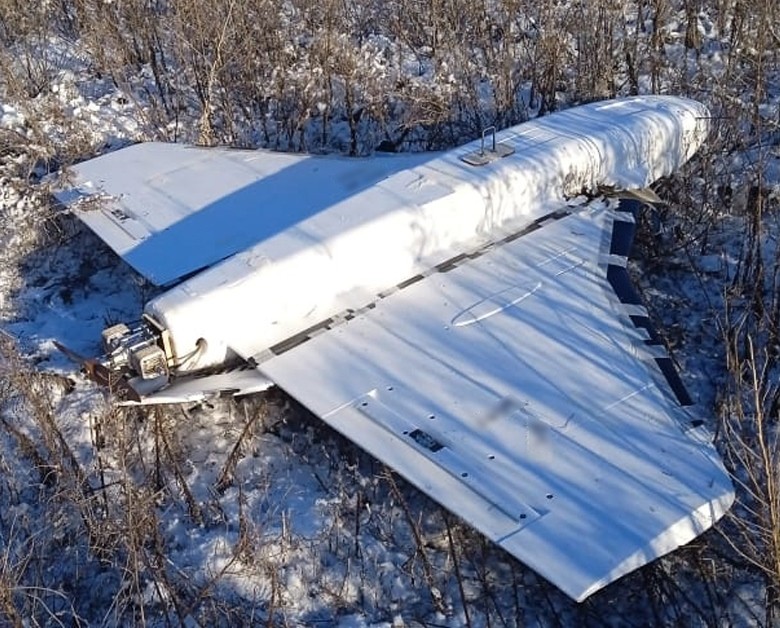
A quadcopter drone downed in Ukraine similar to those that entered Polish airspace in September 2025. [Dpsu.gov.ua]

Gerans and Gerberas

Russia manufactures its own version of the Iranian Shaheds in the Geran and Gerbera variants.

These are “kamikaze drones”, or one-way loitering munitions, which explode upon reaching their target. Russia is using the drone in ever greater numbers in Ukraine: since 2025, almost 1000 drones have been used in single-night attacks on Ukrainian cities and energy infrastructure. The current Geran iteration, the Geran-3, is a turbo-engined variant that can fly up to 800km, but many different variants exist. When employed in large numbers, they can overwhelm Ukrainian defences. The Gerbera is a lesser-known variant which is generally used as a decoy, or to relay signals for other, armed drones. The average price tag of drones like these is around €10,000.

In response to the incursions, Poland scrambled F-16 fighter jets and several military helicopters. Other NATO states provided support with aerial assets, most notably Dutch F-35s. Together they shot down three of the drones, with the rest crashing on Polish territory, luckily not causing any casualties. Debris was later found in an area spanning hundreds of square kilometres.

While NATO has not disclosed the exact costs of the operation, the missiles the jets fired cost between several hundred thousand and a million euros, depending on the type. Flight hours of F-16s and the much more expensive F-35s run into the tens of thousands of euros. So a single, only partly successful, counter-drone operation cost European countries millions, while Russia likely forked out less than €250,000 to prompt that response.

Drones continue to cross into NATO and EU territory. Sometimes they are intercepted, but more often they simply crash into the ground, occasionally even going undetected until they do. Were European countries to face an attack involving even a fraction of the numbers Ukraine regularly faces, the consequences would likely be catastrophic—and preventing them would be prohibitively expensive. Once the war ends, and if and when Ukraine becomes an EU or NATO member, defences along the western Ukrainian border—with Poland, Slovakia, Hungary and Romania—can move to Ukraine’s eastern border with Russia. In the meantime however, the EU, NATO and member states need to learn from Ukraine to secure the flank themselves.

Drones are a whole-of-Europe problem, which means all European countries need to invest in counter-drone capabilities. But starting at the eastern flank makes sense. Compared with the overflights of critical infrastructure, the flank is a more defined threat in a geographically bounded area. If the EU and member states can build an effective response here, it could inform efforts across the rest of the continent, both in terms of what can transfer to that different context and what cannot.

What a protected eastern flank looks like


Europe’s eastern flank spans different climate zones and topography, urban and rural territory, and forests and agricultural land. Given this and the drone threat discussed above, drone defences will have to be multi-layered. The eastern flank will need a detector layer with several sensor options, a defensive layer with several different countermeasures (“multi-effector”), and the ability to engage several drones at the same time (“multi-shot”). All these systems would ideally feed their data into a common operating picture to create a comprehensive view of the eastern flank. This element will be crucial to detect attacks that may be happening at the same time but hundreds if not thousands of kilometres apart.
Detector layer

The detector layer will comprise various radar and sensor systems. These will have to be spaced along the eastern flank depending on the topography and the presence of buildings, forests, agriculture and similar criteria. Today the eastern flank is monitored primarily through NATO assets and national systems, which focus more on the threat from missiles and aircraft, rather than smaller and slower drones.

Radarsoffer long-range coverage but can struggle to track smaller drones. Their sensitivity is improving all the time but birds still cause false positives; and as drones can be made from an array of materials, it is possible to manufacture them with minimal, or unusual, radar signatures. Moreover, traditional active radar systems that send an electromagnetic pulse and capture its return signal can be too easy for adversaries to identify. To overcome this problem, passive radar systems that work by sensing changes in the electromagnetic spectrum as objects move through space are in development.

Electro-optical sensors would complement radar. These can identify drones based on visual and temperature identifiers, which helps operators establish what kind of drone they are dealing with. But they require a clear line of sight, making them less usable in urban or forest environments. Unless they are AI-enabled, electro-optical sensors also require human intervention in real-time to verify whether an image is showing a drone or not, and thus increase staffing requirements. Radio frequency scanning, meanwhile, identifies drones by monitoring common frequency bands, though its accuracy is limited.


Finally, Ukraine has had considerable success with acoustic sensors and has installed thousands across the country. But Ukrainian experiences have also shown that these sensors do not work equally well in all contexts: environments with lots of sounds, like forests, urban areas and agricultural land, can hinder their usefulness.


Defensive layer

As with detection sensors, the defensive layer will have to incorporate several different features, from electronic countermeasures to kinetic solutions.

Electronic countermeasures include spoofing of positioning systems like GPS, and radio frequency jamming that blocks the connection between drone and operator. But these systems can be quite disruptive as they often interfere with all systems in range, making them less useful in urban contexts and near airports. Their effectiveness also often depends on continuous transmission, and they only work on drones that require a connection to the operator. This means they would be ineffective against autonomous, pre-programmed and tethered systems.

Electronic countermeasures have proven highly effective in Ukraine. But Russia has developed several workarounds to Ukraine’s efforts since the start of the war, and vice versa. Today Ukraine’s entire front line is GPS denied, so all drones operating there do so without relying on satellite guidance. Electronic countermeasures are also being circumvented by drones carrying with them up to 40km of fibre-optic cable through which signals are sent. This underlines the need for drone defences at the eastern flank to involve multiple systems.

Radio-frequency-based “cyber takeover”aims to take command of unwelcome drones and safely land them. This is a particularly desirable option as it preserves the drone for analysis. Yet it hinges on the cyber takeover’s ability to work on every drone system, including unknown ones.

Finally, Europe’s eastern flank will require a range of kinetic counter-drone tools—as a last resort for when electronic measures have failed to take down drones. These should include rifle-mounted systems, larger cannon-type systems, guided missiles and drones to fight drones. While generally effective, most kinetic solutions create the danger of collateral damage, as both projectile and drone come crashing down. During the Polish drone incursion in September 2025, the only property damage was caused by a missile that aimed to shoot down the drones.

Ukraine is now using interceptor drones, or drones that take out other drones. These include several systems, like drones with nets or those that ram hostile drones or blow up warheads that come near. (Incidentally, the existence of these systems has led to some confusion over the term “drone wall”, as some reports have suggested that it would be a wall made of drones, a misunderstanding helped along by the fact that a German firm had proposed such a project previously.)

Other countermeasures such as lasers, electromagnetic pulses, strong light and microwave weapons exist, but have not yet matured sufficiently and face similar limitations to those mentioned above, such as the need for line-of-sight or the risk of collateral damage.

Command and control

Crucially, Europe needs a command-and-control node to collect data. For drone defence to be truly integrated and European, the goal should be for this data to feed into a common operating picture that covers the entire flank, from Nuorgam in northern Finland to Burgas in southern Bulgaria. How to respond to a given threat should remain a more local decision, but information-sharing will still be crucial to understand any attack situation. It is equally desirable for European countries to exchange information with NATO’s Integrated Air and Missile Defence. AI and automation may also prove useful, though it will be necessary to heed the lessons of over-reliance on technology and automation, for instance, from the October 7th attacks against Israel.

Building a multi-layered system of systems like this on the eastern flank may seem a daunting task, not to mention an expensive one. But as the alternative is for EU and NATO countries to continue spending tens of thousands of euros to shoot down a single drone, or not to detect or shoot it down at all, it is a task in which the EU and all European countries have a stake.

The progress so far

The work has already begun. The European Commission has been most vocal about its plans to build up an ambitious “drone wall”, now rebranded as the European Drone Defence Initiative. NATO launched Operation Eastern Sentry in September 2025 and runs counter-drone trials with companies. At the national level, many border states are pursuing counter-drone efforts of varying ambition and scope. But the eastern flank remains a long way away from the defences described above, and the lack of coordination could undermine both the initiatives’ efficacy and their cost-efficiency.

The EU


By accident of the calendar, European Commission president Ursula von der Leyen’s State of the Union address took place just a day after the Poland incident in 2025. In her speech, she called for the EU to establish a “drone wall” that would be the “foundation of a credible European defence” and announced the “Eastern Flank Watch” to conduct real-time surveillance of the eastern border.

Von der Leyen offered more details in another speech at the European parliament a few weeks later, noting that using expensive fighter jets to take down cheap, mass-produced drones was “absolutely not sustainable”. Instead, the drone wall should be a system that performs “swift detection, swift interception, and when needed, swift neutralisation”. In October 2025, the informal European Council meeting in Copenhagen endorsed these projects.

Almost a year on, and the European Drone Defence Initiative and Eastern Flank Watch are two of four EU readiness flagship efforts, alongside the European air and space shields. Yet the Drone Defence Initiative and the Eastern Flank Watch are linked in a way that makes it difficult to distinguish between the two. The official commission communication notes, for example, that “anti-drone capabilities will form a core component of the Eastern Flank Watch flagship”. In any case, the projects aim to reach initial capacity by end of this year, and full capacity by end of 2027 and 2028, respectively.


While the intention of the EU’s effort is good, its stated scope sounds overly ambitious. For example, the October 2025 Defence Readiness Roadmap 2030 notes that “the counter-drone network will be adaptablefor civ-mil and dual use purposes and help deal with non-defence related threats or other hazards common to every EU border. This includes border protection, weaponisation of migration, protection of critical infrastructure and transnational organised crime.” Von der Leyen expressed similarly wide-ranging aspirations in her speech to parliament, and added guarding the southern flank to the mix as well as countering the Russian shadow fleet—all with the aid of autonomous systems.

Such an all-encompassing proposal appears set for failure, however, and likely only became so inflated in the first place to placate member states away from the eastern flank.

NATO

Today, NATO is the most active body in fighting drone incursions. After Poland invoked Article 4, the alliance launched Operation Eastern Sentry which increased vigilance along the eastern flank. In many instances when drones have been shot down, it was by fighter jets under NATO command.

NATO also plays a useful role in testing counter-drone technologies for member states to procure. The alliance is, for example, running exercises under its “Layered Counter-Uncrewed Aerial System (UAS) Initiative Crucible”. The first of these took place in Romania and focused on how various sensors, effectors and command-and-control systems could operate as a single, layered defence. Over 250 systems were involved, including radars, acoustic and radio-frequency detectors, electronic warfare tools, and kinetic and non-kinetic effectors. The exercise’s scenario involved drone swarms flown over the Black Sea and included representatives from Ukraine who advised on drone tactics and evolving threats.


Still, NATO’s approach remains primarily focused on fighter jets, as they are at the alliance’s disposal. Any longer-term, more cost-effective solution will depend on member state buy-in and member state efforts.

National efforts


For the moment, national-level counter-drone efforts look most promising. Yet the level of development varies significantly along the eastern flank.

Poland’s plans seem most advanced. In January 2026, the Polish government announced the launch of an “anti-drone wall”, reportedly Europe’s largest counter-drone system. The project is estimated at €3.8bn and brings together a consortium of three companies: the state-owned Polska Grupa Zbrojeniowa, the Norwegian firm Kongsberg and the Polish company Advanced Protection Systems.

According to Poland’s defence minister, the system will include 18 anti-drone batteries, 52 firing platoons, 18 command platoons, and 703 military trucks and reconnaissance vehicles. The sensor layer will include short- and medium-range radars, passive electronic detection sensors and electro-optical systems. The defensive layer will be based on Kongsberg’s “Protector” family of weapons and include 35mm anti-aircraft guns, capable of firing programmable and high-velocity ammunition; 30mm cannons; 12.7mm multi-barrel heavy machine guns, intended for short-range threats; laser-guided rockets; and interceptor drones. It will also include non-kinetic defences, including electronic warfare capabilities. Deputy defence minister Cezary Tomczyk noted that different systems would be used in different contexts. Referring to the danger from debris, he said: “Some of this is for use only in extreme or war conditions. For example, these multi-barrel machine guns are difficult to use in peacetime, because everything that goes up must go down.”


The Polish initiative’s command-and-control layer integrates fire control, system management and tactical situational awareness, enabling real-time coordination of sensors and effectors. Initial operational capabilities are scheduled for delivery before the end of 2026, with the aim of it being fully operational by the end of 2027. For Poland, the drone wall is only one element of stronger fortifications on its borders with Belarus and the Russian Kaliningrad exclave.

In cooperation with the European Commission, Poland has also announced the creation of a “drone valley”, a hub of drone-related research and testing in the south-east of the country, in Rzeszow—a city that has become the hub for logistical support to Ukraine. Companies are increasingly entering the defence field, so such a hub will host some of the trade fairs and hackathons on counter-drone measures that are becoming more common in Europe.

Further north in the Baltic countries, in February 2025, a consortium of several companies led by the Estonian Defence Industry Cluster initiated the “Baltic drone wall”. The effort includes companies from Poland and Finland, but a request for funding from the EU was rejected in March 2025. Media sources report a multi-layered short-range drone countermeasure system, and efforts to build a common operational picture. But so far, nothing comprehensive has come to pass. Still, in June Estonia began deploying its first fixed drone detection and monitoring systems along its border with Russia. The systems are installed on three sections of the border between the Luhamaa crossing and the tri-border area where Estonia, Latvia, and Russia meet.

Finland’s government announced in April 2026 that it is allocating€44m to the Border Guard to procure drone detection systems, and fixed and mobile counter-drone technologies. It has also been working on drone detection along the border for several months.

As of summer 2026, Romania is experiencing the most frequent incursions. But it only recently began looking into counter-drone systems. The country is now investing heavily in its defences, specifically its aerial defences, which include counter-drone systems. These initiatives are in part financed by EU loans through the re-armament initiative SAFE. The country has also turned to NATO as well as allied countries to help it fight against drone incursions.

In Bulgaria, drone defences have not yet become a priority. The country is, however, looking into the acquisition of counter-drone systems, funded through the EU loan mechanism. Hungary and Slovakia were absent from initial EU drone defence discussions with the other eastern flank states. Slovakia joined later exchanges and has looked into the acquisition of counter-drone systems, but it does not appear to have a more comprehensive counter-drone initiative. In July, Slovakia hosted a NATO test of emerging capabilities which included counter-drone technology, though this was not its main focus.
How to turn the hotch-potch into a whole

It is positive that the EU, NATO and the eastern flank states are working on solutions. But too many initiatives exist, which risks duplicating conceptual work and creating uncertainty for companies that do not know who to work with. The further along individual projects are, the harder it will be to combine them and to facilitate the kind of information exchange needed for a common operating picture. To ensure coherence and interoperability, especially at the data-exchange level, more coordination needs to happen now.


The EU should view this as an opportunity to fulfil its ambitious goal. Although it should drop the aim to create a drone wall that can do just about everything, it can play the coordinating role of bringing the relevant actors together. To do so, the EU should focus on the following five priorities:Support more ambitious and advanced efforts like the Polish and Baltic state counter-drone initiatives. The EU should, for example, identify where gaps or barriers remain in these efforts and where there may be risk of duplication. This would enable the EU to direct its funding, as well as its regulatory and legal expertise, in ways that accelerates those efforts.
Fund and incentivise counter-drone efforts in eastern states that are not yet pursuing drone defences with the required urgency: Bulgaria, Hungary and Slovakia, but also Romania, would benefit from European finance and guidance in scaling up the ambition and scope of their defences.
Encourage member states to share best practices, including on regulation and questions of jurisdiction, and establish links between actors and companies already in the field. For example, Germany has reworked its national law to allow the armed forces to intercept drones in extreme cases. In France, a new law allows private companies to ensure protection against drones for civilian infrastructure. There is no reason why every EU member state needs to work out these laws for itself.
Create, in cooperation with NATO, common standards and certifications for quality control and to ensure products from different companies are interoperable. This could take the form of a suitability certificate for companies whose systems have proven their usefulness in exercises.
Establish a joint operating picture by building a command-and-control node in which data from all eastern flank detection stations are collected. This would enable truly European coordination to bring together national efforts and turn a piecemeal effort into a militarily useful whole.

The EU is already organising virtual meetings between the involved states. It should now develop this coordinating role to share legal best practices and develop common rules regarding when and how military drones can be intercepted in a civilian setting. For example, one reason the drone flying into Romanian airspace in May was not intercepted was uncertainty over the legality of interception: “Ukraine is at war, but Romania is at peace”, a military representative said. All eastern flank states share the same situation. And the fact that many of the national efforts are funded with the help of the SAFE defence loan programme boosts the EU’s legitimacy in taking on this role.
And apply the lessons to the rest of Europe

Organisationally, national police forces deal with drones over critical infrastructure. And the EU is well-placed to help spread insights from counter-drone operations at the eastern flank farther west. Technologically, member states’ experiences at the eastern flank also hold several lessons for the rest of the continent: which systems work and in which environments, for example, and how different technologies can work together. Again, the EU can help to compile and share this valuable information, reducing the burden on member states to collect it themselves.


Countering drones flying over critical infrastructure will not require something quite as elaborate and unified as defences at the eastern flank:Detector layer: Lessons from the eastern flank on how best to install detection layers and which systems work best can inform local authorities’ decisions about what would work near critical infrastructure. Here, the EU and local authorities will need to take different environments into account: critical infrastructure is often in more urban areas, whereas the eastern flank is generally more rural. Yet the flank includes a multitude of different environments, including forests and swamps, and agricultural and some urban areas, which means detection systems will be tested in numerous areas that can still inform how they might perform nearer cities.
Defensive layer: The EU and local authorities should apply a similar principle to the defensive elements. This includes lessons on how to best layer countermeasures, and which systems work best in which environment. Not all systems that operate at the eastern flank will qualify for deployment in civilian contexts: kinetic systems in particular, would only be used in the most extreme cases to protect critical infrastructure from an immediate threat. But insights from electronic countermeasures and cyber takeover may be transferable to a civilian context.
Information exchange: The EU and member states should establish an information exchange on drone incidents near critical infrastructure throughout the union. Countering the threat to critical infrastructure does not require the joint operating picture that military defence does. But collecting and sharing information on drone overflights (as well as other hybrid attacks) over critical infrastructure would allow authorities to detect concerted attack operations.


Today’s solution


Europeans face a dual drone threat over their critical infrastructure and at the eastern flank. They need to address both sides of this problem. While there is no wall to be built and no umbrella to open over the entire continent, insights from one side of the threat can inform the other.

The EU should start by turning its overly ambitious Drone Defence Initiative into something operable. To do so, it should focus on supporting existing national initiatives on the eastern flank and incentivising budding ones. It should also prioritise data-sharing and establishing a joint operating picture, and collecting information on which systems work in what context. The EU should then use this information to help all member states counter drones beyond the eastern flank.

This policy brief focused drone defence—a crucial skill for all European states as drones are without question a threat they will continue to encounter. Yet, with regard to the drone threat from Russia, a better option than to defend against overflights and incursions is to stop them from happening in the first place: no build-up European defences can replace diplomatic, political and military efforts to end the Russian aggression against Ukraine and Russia’s hybrid attacks against European nations; even if better defences would contribute to deterrence by denial in the meantime.

[1] DFS Deutsche Flugsicherung, Drone Report, July 2026.


About the author:

Dr Ulrike Franke is a senior policy fellow at the European Council on Foreign Relations, based in the Paris office. Her areas of focus include German and European security and defence, the future of warfare, and the impact of new technologies such as drones and AI on geopolitics and warfare.


Source: This article was published by ECFR


The European Council on Foreign Relations does not take collective positions. ECFR publications only represent the views of their individual authors.

About ECFR
The European Council on Foreign Relations (ECFR) is an award-winning international think-tank that aims to conduct cutting-edge independent research on European foreign and security policy and to provide a safe meeting space for decision-makers, activists and influencers to share ideas. We build coalitions for change at the European level and promote informed debate about Europe’s role in the world.
View all posts by ECFR →


Germany opens new drone security centre in Saxony-Anhalt amid rising threats

 "shadow war of the 21st century".
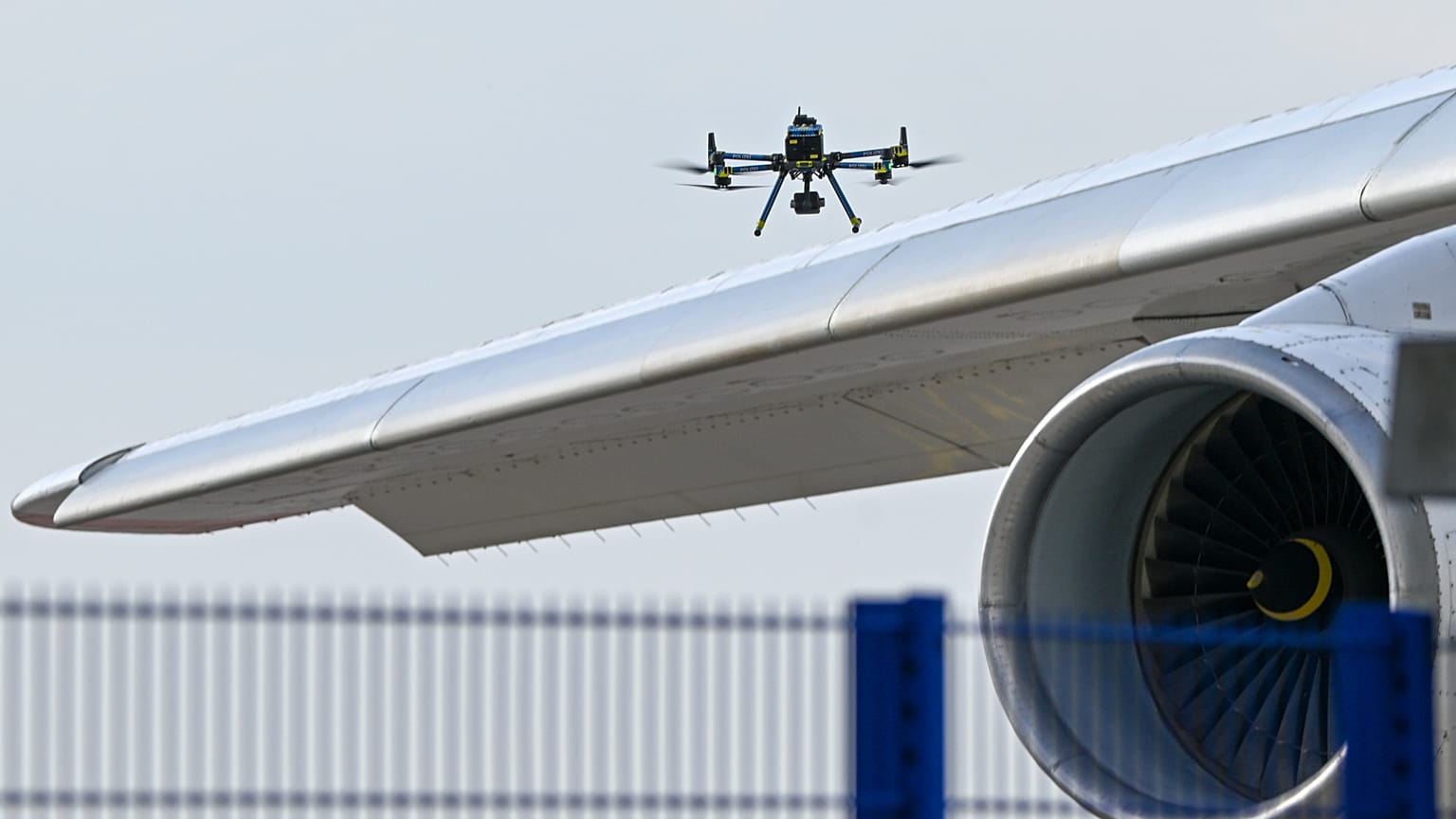
German federal police drone at Leipzig Airport in August 2026
Copyright (c) Copyright 2026, dpa (www.dpa.de). Alle Rechte vorbehalten


By Kirsten Ripper & Simon Ormiston & Euronews
Published on

The facility will research and test technology designed to detect and counter unauthorised drones around airports, major events and critical infrastructure.

Germany has opened a new drone security research centre as the country steps up efforts to protect airports and critical infrastructure from hostile and unauthorised aircraft.

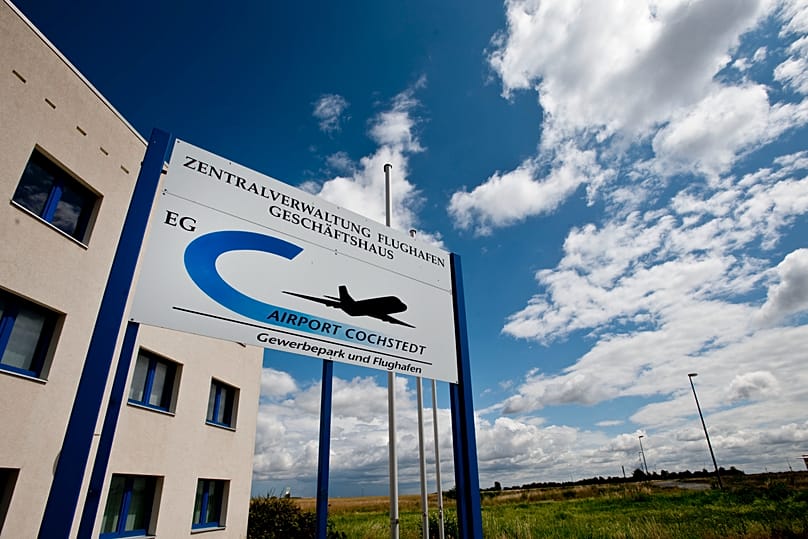
Interior Minister Alexander Dobrindt, Research Minister Dorothee Bär and Saxony-Anhalt's state premier Sven Schulze officially opened the facility on Tuesday in Cochstedt, around 40 kilometres south of the eastern state's capital Magdeburg.

The Drone Security Technology Centre forms part of the German Aerospace Centre (DLR), which has been operating at the former Cochstedt airport since 2021.

"Together with the DLR we are creating, with the new technology centre, a facility that is unique nationwide, where innovative technologies for drone security are researched, developed and tested in real-life laboratories," said Dobrindt.

He described the threat posed by drones as part of the "shadow war of the 21st century".

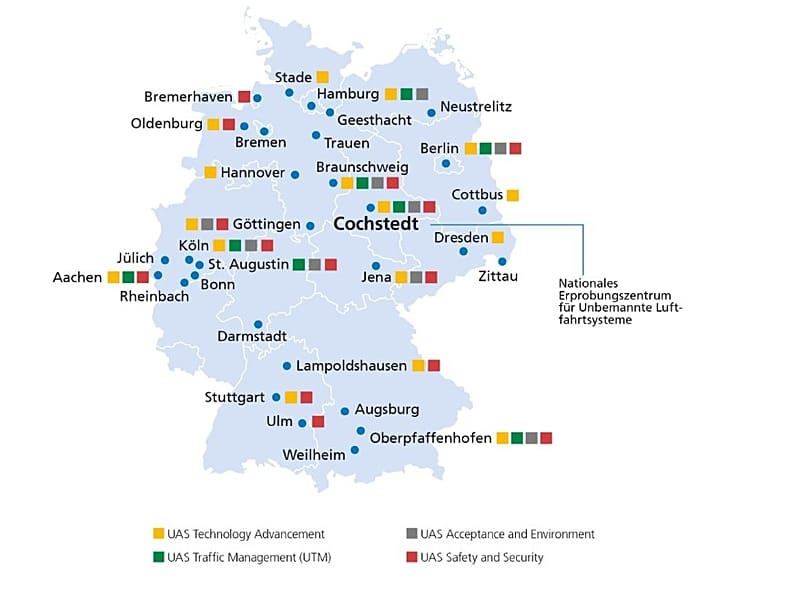
The new centre builds on the DLR's existing National Test Centre for Unmanned Aerial Systems at Cochstedt, where researchers test drone technologies in realistic conditions. Drone research is also carried out at a number of other DLR locations across Germany.

Locations of DLR drone research in Germany
Locations of DLR drone research in Germany DLR

The DLR Cochstedt website states: "Within the growing network of future test-field activities, the National Test Centre plays an integrative role as a trailblazer for future research and development of new UAS technologies within the DLR and for external partners."

Leipzig incident is a warning

Its opening comes amid heightened concern in Germany about the threat posed by drones to airports and other critical infrastructure.

Earlier this month, a drone carrying explosives was found near a runway at Leipzig Airport, around 100 kilometres southeast of Cochstedt. The airport is one of Europe's largest cargo hubs and is also used for NATO logistics operations.

Germany's federal prosecutor has opened an investigation into a suspected attack on national security over the incident.

It was later confirmed that a drone equipped with explosives and a detonator had been found near an aircraft belonging to the Ukrainian cargo carrier Antonov Airlines, a NATO spokesperson said.

Dobrindt announced the doubling of the number of posts for drone defence within the federal police.

There are systems in place at German airports and in other sensitive areas to counter unmanned aerial vehicles, but as drone technology is developing at breakneck speed, the defences also have to be constantly adapted.

Following the discovery, defence ministry spokesperson Mitko Müller warned that complete protection against drones was impossible.

"You cannot provide detection and defence capabilities around the clock along tens of thousands of kilometres of fencing. That simply will not work," he said.

"This deceptive notion of one hundred per cent security, we should not kid ourselves, will not exist."

Research Minister Dorothee Bär struck a more confident tone on Instagram, pointing to the IDAS-PRO research project, designed to detect, classify and capture unauthorised drones around airports, large events and security zones.

"Unwanted drones over an airport? Over a stadium? Over a concert? Not with us!" she wrote, adding that technological sovereignty also meant using high-tech systems to make Germany safer.

The new drone centre is on a former Soviet airport
The new drone centre is on a former Soviet airport AP Photo

Cochstedt itself has a long aviation history. The site was formerly a Soviet military airfield before eventually being taken over by the DLR and developed as a testing ground for unmanned aircraft and other aviation technologies.