Sunday, August 23, 2026

A Top Law Firm Is Suing Animal Activists So That a Restaurant Can Keep Serving Foie Gras

Force feeding is not kindness. It’s a violence against living beings that must be stopped.
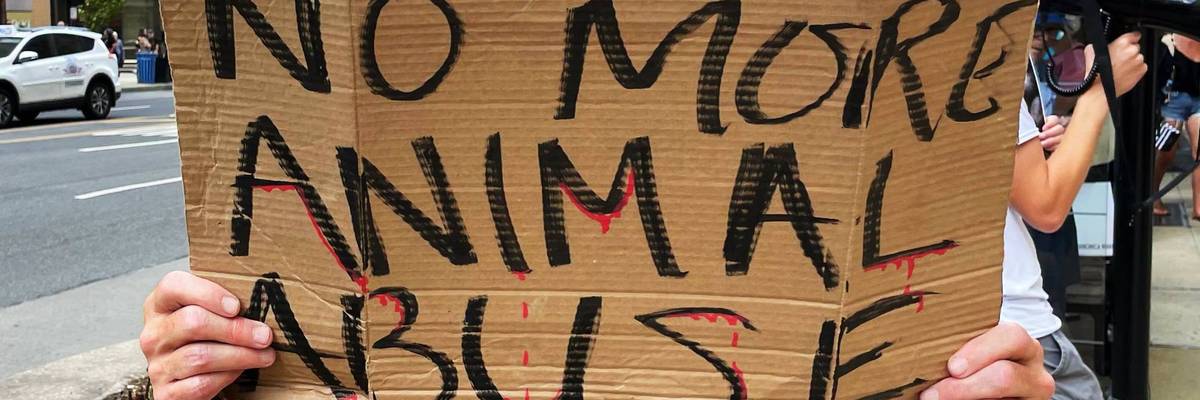


Animal rights activists in Chicago outside the Galit restaurant where foie gras, produced from ducks force fed and held in torturous conditions, is routinely served.
(Photo: Animal Activist Collective / via Facebook)


Samuel Mosley
Aug 22, 2026
Common Dreams


Since last fall, I and a group of fellow animal rights activists have been holding protests at the upscale Lincoln Park restaurant Galit, urging it to stop serving foie gras. Each weekend, activists hold signs, chant, shout through a megaphone, write on the sidewalk with chalk, and pressure Galit to remove foie gras from its menu. We are a grassroots group of people from all walks of life who care about animals. Our group is made up of people with diverse occupations and perspectives, but we are united by an opposition to the worst abuses animals face. Now, Galit and one of the top law firms in the country have dragged us into court, calling our protests “harassment.”

Our group chose to protest at Galit—after emailing the restaurant for two months, initially seeking to remove foie gras from its menu through dialogue—because of its progressive values. The restaurant prides itself on paying its workers well, and providing a robust benefits package, including paid time off, substantially subsidized health insurance, and retirement benefits. The restaurant is closed on major holidays, allowing employees to have a holiday as well. It reports inclusive hiring practices and provides harassment and bystander intervention training. Galit’s website notes that its two co-owners have Israeli and Palestinian-Cuban-Spanish backgrounds. Galit is rightly proud of these practices, which are uncommon in service industries. But all too often, such values exclude the most vulnerable of all: animals.

Foie gras is a luxury product made from the fattened liver of ducks and geese, using a process called gavage, in which birds have a pipe forced down their throats in order to force-feed them to the point that their livers become painfully engorged and diseased. It is, frankly, systematic torture. That’s why entire countries, states, and cities have banned it, including nearly all of Europe, the UK, Australia, Israel, Türkiye, India, Argentina, California, New York City and, just last month, Portland, Oregon. Each of these bans is based primarily on the cruelty involved in foie gras production.

In the US, animal rights activists have been protesting this for around 30 years. Over the last few years, these protests have intensified and largely focused on specific restaurants—holding protests just like those I’ve participated in at Galit. Our movement has succeeded in getting 400 restaurants across the world to permanently remove foie gras from their menus. Our protests urge Galit to join the ranks of restaurants that have made this ethical choice, extending the same concern to animals as it has to so many other important values.

Instead, Galit went to court. After attempting to limit our protests by urging police to issue tickets to demonstrators—each of which has been dismissed—Galit and its general manager have filed for anti-stalking orders against me and other protesters.

The restaurant is represented, for free, by the top law firm Jenner & Block. This is rather stunning. Jenner & Block is known for handling major litigation, including arguing several cases before the US Supreme Court. The firm is also notable for the stand it took early in the second Trump administration, refusing to cave to Trump’s demands that it not represent the president’s political foes, while other large law firms folded. Jenner & Block described its position as a principled stance against political interference with a client’s right to vigorous, uncompromising representation. For this, it was targeted by a Trump executive order. The firm vowed to remain “fearless.” But once again, when it comes to animals, principles go out the window. Jenner & Block knows full well that protesting is not harassment or stalking, that it is protected by the First Amendment. Yet the firm has provided its prestige legal services—and attached its name—to an effort to protect a local restaurant from a dozen animal advocates armed with megaphones and chalk.

There is yet another odd twist to this story. While Galit has refused to remove this single product, the result of extreme animal cruelty, from its menu, some have begun accusing us of protesting not to stop it from serving foie gras, but because we are antisemitic. They argue that, because we are protesting against Galit and not other Chicago restaurants that serve foie gras, we are targeting it because one of its owners is Israeli (the critics do not explain how such a motivation makes sense in light of Galit’s own website reporting that the other owner identifies at Palestinian-Cuban-Spanish). But some members of the group protesting against foie gras at Galit, too, are Jewish and Israeli, and Israel itself is among the countries that have banned the production of foie gras.

Accusations of antisemitism are cynical at worst and intentionally ignorant at best. First, it underscores how so many people simply cannot see that animals might be worthy of treatment short of torture. Apparently, it makes more sense that we would target Galit due to antisemitism than that we chose to protest there because we want it to bring its treatment of animals into line with the restaurant’s otherwise admirable values. Antisemitism makes more sense than that a commitment to values like workers’ rights, community, and equality should include a commitment to animal welfare. It is not out of hatred for Galit, but out of respect for its stated values, that we chose to press it to stop serving foie gras.

It also saddens me because I, myself, am halachically Jewish. That is to say, I am Jewish on my mom’s side of my family. In recent years, I have been a regular at a Chabad house. For a while, I was there every shabbos evening. I have spent the last year teaching middle school math at a haredi school in West Ridge, wearing a kippah every day at work.

To be clear, across the country, protests to stop restaurants from selling foie gras have proceeded one restaurant at a time. This is a decision based on strategic value and activist capacity, and it has proven remarkably successful. Were Galit to provide a written commitment to, and stick to, a foie gras free policy, we will move on to another restaurant.

In the meantime, activists will continue to protest Galit. (Unfortunately, for now, I cannot personally participate in these protests because of Galit’s baseless lawsuit against me.) The judge presiding over Galit’s request for a protection order—again, oddly, filed by the top law firm Jenner & Block—threw out the complaint. But Galit has amended its complaint and continues to seek restraints on our protests.

It is worth wondering why one of the nation’s top law firms is representing a local restaurant, pro bono, in an effort to restrain the protests of a dozen animal rights activists. We may also wonder why Galit is so committed to serving a product that multiple entire countries have deemed too cruel to allow its production. All of this, rather than simply adopting a foie gras free policy.

I do believe there will come a time when Galit sees foie gras for what it is, and agrees to a foie gras-free policy. Force feeding is not kindness. It’s not food, it’s violence.


Our work is licensed under Creative Commons (CC BY-NC-ND 3.0). Feel free to republish and share widely.


Samuel Mosley
Samuel Mosley is an animal rights activist with Animal Rights Collective of Chicago. He is represented in the Galit case by the Animal Activist Legal Defense Project at the University of Denver Sturm College of Law.
Full Bio >



Trumpworld plots secret meetings with foe in anticipation of possible impeachment: report

Kathleen Culliton
August 23, 2026 
RAW STORY


FILE PHOTO: Jared Kushner applauds during U.S. President Donald Trump's State of the Union address in the House Chamber at the U.S. Capitol in Washington, D.C., U.S., February 24, 2026. REUTERS/NATHAN HOWARD/File Photo

President Donald Trump's son-in-law held a secret meeting with a high-ranking Democrat to discuss "common ground" as the White House grapples with the possibility of a future impeachment, the New York Times reported Sunday.

Jared Kushner met privately with House Minority Leader Hakeem Jeffries (D-NY) in New York City to discuss issues that included immigration and the high cost of living, five sources told the New York Times.

"Its timing underscored that those around Mr. Trump were well aware of the likelihood of a Democratic-led House, and trying to foster as much of a working relationship as possible before any change," according to the report. "Mr. Jeffries is in line to be the speaker, were Democrats to win the majority."

Publicly, Trump and Jeffries maintain a hostile relationship.

Trump has referred to Jeffries as a "low IQ" "thug," the report noted. Jeffries routinely calls Trump a corrupt "crook."

But Jeffries and Kushner reportedly have maintained a relationship after working together on a criminal justice bill in Trump's first term, according to the report.


"Mr. Kushner suggested that Mr. Jeffries should meet with the White House chief of staff, Susie Wiles, two sources told the Times.

In a statement, Jeffries did not admit to the meeting but openly discussed his views on negotiating with the Republican Party.

“Throughout this Congress, Republicans have adopted a my-way-or-the-highway approach to governing that has failed the American people,” he said. “In every conversation that we have with the Trump administration, we will continue to make it explicitly clear that the affordability crisis is not a hoax, and nothing short of transformational policy change is acceptable."

The Times noted Jeffries will face extreme pressure in 2027, should Democrats regain control of the House, to both keep the government funded and pursue a possible impeachment.

"Mr. Jeffries has remained noncommittal about any plans to pursue a third impeachment of the president, and has not discussed publicly what oversight could look like if his party were to win the majority," the report noted.

But Jeffries told the Times last month, “We’ve not ruled anything in and not ruled anything out in terms of accountability."

The report suggested Trump's social media presence might make it more difficult for Kushner to negotiate a working relationship with a Jeffries led House, pointing to a Truth Social post made after a meeting with the House minority leader.

"Mr. Trump posted an A.I.-generated meme of a mustachioed Mr. Jeffries wearing a sombrero," the report stated. "drawing an angry response from the House minority leader, who called the image racist and dared Mr. Trump to insult him next time 'to my face.'"

Forget ‘No Kings’ Placards, Given What Trump Is Plotting Impeach Him This Minute


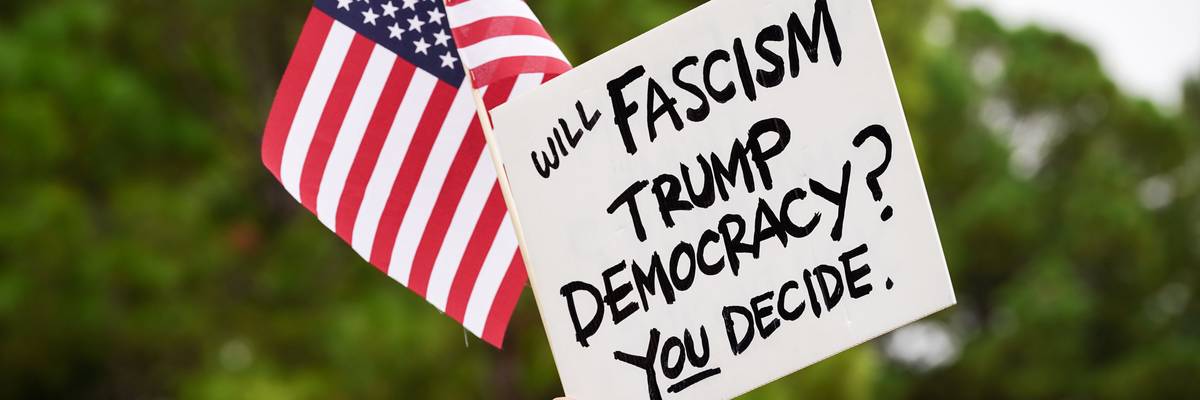
Trump’s plans to steal the 2026 midterm elections are already underway. It’s not alarmism to say this. He is saying it out loud and the Republican Party has shown just how far they will go for this fascist. If people do not mobilize now, it may be too late.


Demonstrators hold protest signs during a rally at the Atlanta Civic Center on October 18, 2025 in Atlanta, Georgia. Organizers expect millions to participate in cities and towns across the nation for the second “No Kings” protest to denounce the Trump administration.
(Photo by Julia Beverly/Getty Images)

Ralph Nader
Aug 22, 2026
Common Dreams


You’d never know it by the title “Dancing in the Dark,” but the Washington Spectator’s recent investigation is about the various steps (mostly illegal) Trump is taking, including the use of enforcement tools and violence, to prepare to reverse any overall Democratic victory in the November Congressional races. The authors, Mark Medish and Joel McCleary, believe Trump needs such a coup to save himself from impeachment, congressional investigations and subpoenas seeking more proof of crimes throughout his lawless, corrupt, dictatorial regime.

Currently, Trump’s polls are so low that he is endangering enough Republican seats in the House and Senate to give the feeble, corporate money-indentured Democratic Party a chance to win control of Congress. This is precisely what Trump fears, even though he has control of the Executive Branch and the immunity given him by six Injustices of the Supreme Court. Take note, he knows that impeachment and removal from office in the Senate are final, not reviewable in the federal courts.

In 23 single-spaced pages, Medish and McCleary walk readers through the events, directives, ballot seizures, and draft emergency orders Trump could use to assert federal control over a midterm election and use a domestic paramilitary force of unprecedented size and budget. Trump and his minions have already expanded their dictatorial control of our democratic institutions. (See: The V-Dem Institute’s Democracy Report 2026.)

To obstruct the vote in key precincts, then fabricate a need for national-security powers to purge and miscount ballots, falsely charge fraud, illegally seize ballots, threaten precinct workers, and claim without evidence foreign interference are preparations for instant escalation.

They then describe the “Devil’s Accordion File” meaning “the elements of a ramified, radical strategy to hold on to power at almost any cost as we approach the test of the 2026 elections…” Although they describe Trump as a brilliant mastermind concentrating extraordinary power in his hands, they remind us that he is also in “full command of his office, directing the Justice Department, the FBI, ICE (the largest new federal police force in American history) the IRS, the Securities and Exchange Commission and the Federal Communications Commission, the intelligence community and the armed forces. [Under total acolyte Pete Hegseth.] He is using each agency in a coordinated attack on his political adversaries in ways that would have been dismissed as fantasy only a few years ago.”

Trump’s iron grip on institutional controls was further strengthened by the Trump/Musk DOGE criminal enterprise which tore through federal agencies in 2025, closing some, shredding others, grabbing huge troves of personal data on Americans, and destroying the non-partisan civil service that could have used federal laws to resist his coup d’état.

Focusing on swing electoral districts—including those politically redistricted earlier this year—and on the various junctures between now and the final certification process in the House of Representatives on January 3, 2027, the authors write that “the political will, personal motivation, legal architecture and technical infrastructure by now [are] all in place.” They could have added Trump’s unlimited pardon power to facilitate the violence and theft by his criminal operatives.

Trump has also precluded any opposition from corporations and the “contented classes” with tax cuts, non-regulation, subsidies and other inducements from which his family also lavishly benefits. (In 2025 Trump took in $1.1 million an hour when measured over a 40-hour workweek —see my column $1.1 MILLION AN HOUR!!—Trump’s Personal Profit in 2025.)

To obstruct the vote in key precincts, then fabricate a need for national-security powers to purge and miscount ballots, falsely charge fraud, illegally seize ballots, threaten precinct workers, and claim without evidence foreign interference are preparations for instant escalation.

Trump tried a dress rehearsal in his July 16 national televised address, pushing his Save America Act, which is stalled in Congress. The speech “bombed” drawing widespread criticism, ridicule and dismissal even by the mainstream media along with some of his Republican partisans.

Undeterred and personally deeply fearful of losing, Trump plunges ahead. He makes the notion that “it can’t happen here” the Achilles heel of Democratic Party opposition, which had better prepare—and work overtime.

The authors warn: “The full election subversion strategy mixes subtlety and brutality, subterfuge and open tactics. It represents unprecedented intensification and escalation of the attack on our once seemingly settled Constitutional order…”

Led by Stephen Miller, his fascistic White House adviser, Trump and his Injustice Department have already launched attacks on so-called “antifa” advocates labeling them “domestic terrorists.” Trump could falsely use this moniker to include any of his selected political opponents. Remember, in 2025, he called for the execution of six Democratic Members of Congress, including two Senators, for reminding U.S. soldiers that they have under Army law a legal obligation to resist illegal orders from their superiors. Hegseth filed charges against Senator Mark Kelly (Dem. Ariz.), a retired Navy Captain for making such a statement; the case was dismissed in federal court.

Trump has often mentioned using the vaguely worded Insurrection Act, which he claims could enable him to quell unrest, including by using unrest as the pretext for his own false-flag operation. Imagine the chilling effect of Trump arbitrarily and illegally deploying federal soldiers to a city or region.

In their conclusion, “What Is to be Done,” the authors have numerous suggestions for the citizenry and state officials. However, they omit the need to mount an Impeachment drive, which, as it intensifies, can serve as a deterrent to Trump. He knows that his blatant disregard for the Constitution and his mounting impeachable offenses could further provoke the public and Congress to use this final remedy provided by our Founding Fathers—telling Trump: “You’re Fired.” This is Trump’s biggest nightmare. Remember the stubborn Richard Nixon, who after winning 49 of 50 states in 1972, was forced to resign when his Republican base collapsed in Congress before the 1974 elections.

In my podcast interview with Joel McCleary, I suggested that he and his allies (he served in the Carter White House) press some House Democrats to conduct a public “shadow hearing” on Impeaching Trump, an effort that polling shows is already supported by 90% of Democratic voters and two-thirds of Independents. (See our July 22, 2026 Symposium on Impeachment.) He replied: “I think that’s a fantastic idea.” We’ll see if these savvy authors can move from words to action. As a 14th century Chinese philosopher once wrote: “To Know and Not to Do is Not to Know.”

Furthermore, the group Indivisible seems to be planning another mass protest march in the Fall. It should replace its weak, obsolete name of “No Kings” with “Impeach Trump Now.”
‘Ugly, Un-American Attack on Our Free Press’: Stars & Stripes Journalists Fired for Saying They Had Independence

“It’s a shame for the institution and service members, who swore to defend the Constitution and deserve the right to a free and independent press,” said ouster journalist Lara Korte.


From left: Stars and Stripes Publisher Max D. Lederer Jr., Editor-in-Chief Erik Slavin and reporter Lara Korte.
(Photo: Stars & Stripes)

Jon Queally
Aug 22, 2026
COMMON DREAMS

Correspondent Lara Korte, editor-in-chief Erik Slavin, and publisher Max Lederer were fired from their posts at Stars and Stripes on Friday, in the latest attack on press freedom by President Donald Trump and members of his administration—this time targeting the paper that provides daily news to U.S. service members worldwide.

“I consider it a great privilege to live alongside members of the military and share their stories,” said Korte in a social media post following her ouster. “It’s a shame for the institution and service members, who swore to defend the Constitution and deserve the right to a free and independent press.”

Korte said she was “informed that the Department of Defense is firing me for insubordination after I told a CBS reporter that I work for Stars and Stripes—not the Pentagon, not any administration, and not any policymaker.”

Slavin explained that he and Korte were fired specifically over an interview they gave earlier this year with CBS News, in which they said they were independent of the Pentagon and the White House and that they would resist any effort to censor the news military members receive. Even though the military publication operates within the US Department of Defense, it has always enjoyed editorial independence.


“I stand by the principle that Stars and Stripes must remain editorially independent, as required by law and by the department’s own policies,” he said in a statement Friday.

Press freedom advocates slammed the move by the DoD.

“Today’s firings are an ugly, un-American attack on our free press,” said the free speech group Fire in a statement. “America’s brave service members swore an oath to defend the Constitution. They deserve the free and independent press our Founders fought for 250 years ago, not Pravda-style propaganda. The United States is uniquely committed to freedom of the press, and has been since our founding. Accepting censorship means losing our national identity.”


Speaking with the Associated Press, Slavin said his firing for insubordination was for saying in the CBS interview “that hypothetical censorship of news for service members would constitute a red line” for him.

“We need to be able to provide independent news to service members,” he had told CBS in July. “If we can’t do that, if we were turned into something other than that, if we were public relations? Yeah, that’s the foxhole.”

According to reporting by Stars and Stripes, Lederer was also fired Friday, though he had announced his retirement earlier this week, on Tuesday.

In a letter to the outlet’s staff, later posted online, Lederer explained, “It has become clear that my philosophy of leadership, and my understanding of value and mission of the Stars & Stripes, differ in fundamental ways from the direction of the leadership of the Department of Defense.”

Replacing Lederer as the new publisher of Stars and Stripes is Capt. William Urban, a longtime public relations officer and communications specialist inside the US military with no professional experience in the field of journalism.

Urban previously served, as he explained in a memo to newspaper staff on Friday, as a “spokesman for some of the hardest Public Affairs assignments in the Navy and Department of War for more than 20 years.”

“Does repeatedly being at the center of a media firestorm qualify me to help lead Stars and Stripes?” Urban asked in his letter. “No, but it is not a bad place to start.”

Apparently, a public relations expert is exactly what The Pentagon, under the leadership of Secretary of State Pete Hegseth and President Trump, has been looking for.

Earlier this week, Sens. Richard Blumenthal (D-Conn.) and Elizabeth Warren (D-Mass.) wrote to Secretary Hegseth about their concerns over the “shakeup” at Stars and Stripes, represented by Lederer’s retirement announcement and the news that Urban would replace him.

“The placement of an active-duty Public Affairs officer in the senior leadership of an organization whose credibility depends on its independence from the military chain of command raises serious questions,” the Senators wrote in a letter.

“For generations, American servicemembers, particularly those stationed overseas and in combat zones, have relied on Stars and Stripes for credible and independent news,” the Senators added. “That trust depends on preserving a clear separation between independent journalism and the Department’s public affairs apparatus. At this critical moment of leadership transition, that independence must not be compromised.”


Trump ‘Has Failed Us’: US Airman Says He Accepts Cost of Speaking Out Against Iran War


“Not only is he a failure as president, he is flagrantly violating the Constitution, breaking the law, engaged in rampant corruption, and is killing Americans, and that is unacceptable to me,” said Maj. Jason Watson.


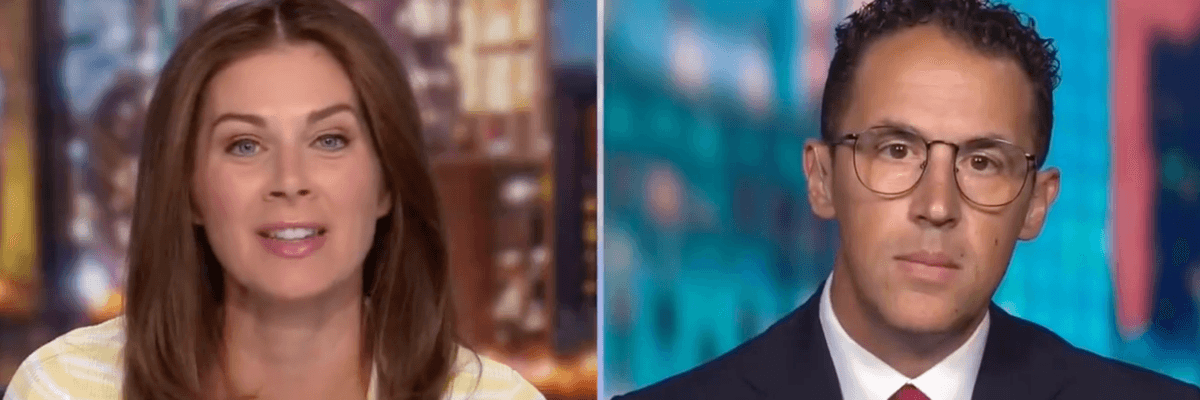
Maj. Jason Watson, a US airman who was arrested in Washington, DC in July for participating in a protest against President Donald Trump’s war in Iran, talked about his decision to speak out on CNN on August 17, 2026.
(Photo: CNN/screenshot)


Julia Conley
Aug 18, 2026
COMMON DREAMS

Maj. Jason Watson’s participation in a protest organized last month by the Removal Coalition, a group that calls for President Donald Trump’s impeachment, wasn’t his first foray into speaking out against the commander-in-chief.

He spent 22 days last year on a hunger strike, staying anonymous by wearing a white mask and white jumpsuit on the US Capitol grounds, next to a sign that read: “Impeach. Convict. Remove.”

But the US airman spoke Monday about what pushed him last month to go public with his protest against Trump’s unprovoked war on Iran, displaying the same sign at a news conference organized by Removal Coalition, where he wore his Air Force uniform and was identified by name.

“If I don’t put myself out there in a big way, it’s just noise,” Watson told CNN anchor Erin Burnett. “We can change what is happening in our country if we’re just willing to pay a price for it.”


His public dissent against the broadly unpopular war could violate Article 88 of the Uniform Code of Military Justice, which mandates punishment against “any commissioned officer who uses contemptuous words” against the president, military leaders, or US government officials, or Article 134, which prohibits statements “made with the intent to promote disloyalty or disaffection toward the United States.”

Air Force Secretary Troy Meink has said the military is investigating the protest. Watson could face dishonorable discharge, a loss of military pay, and months in prison for violating the Uniform Code.

When considering his public protest, Watson said he asked himself, “What’s the highest price that I’m willing to pay, and this is what I ultimately came up with.”

He said he was “absolutely motivated” by his oath to the US Constitution and his concern for the future of the country as Trump and continues to threaten Iran and other countries in the Middle East, nearly six months after the president joined Israel in waging war on Iran.

“Any American can say, this government is intolerable and I want a better future for my children, and I want to hand them a better country than I inherited,” said Watson.

After he joined the news conference on the Capitol steps last month, Watson was arrested by the US Capitol police. He was held in jail overnight and transferred to the DC Superior Court before the DC attorney general dropped the charge, but Air Force police officers then took him into custody and held him at Joint Base Anacostia-Bolling.


Jessica Denson, founder of the Removal Coalition, told The Washington Post last month that Watson was “prepared for the worst-of-the-worst outcome” of his protest.

Watson said after his arrest that during his previous anonymous protest, he had been overly concerned with being identified, considering the Uniform Code.

“There was nobody paying attention because it’s just easy to ignore a lone actor, especially dressed the way that I was,” he said on Denson’s podcast, “Lights On.”

He told Burnett Monday: “Nothing that is worth doing is something that you can do for free. Everything that is worthwhile is going to cost something.”

“It’s going to be hard, it’s going to require sacrifice, and we are in an incredibly challenging time, and in order for us to get out of this situation we all have to have courage,” he said.

On CNN, Watson doubled down on speaking out against Trump’s war in Iran, which has killed more than 3,400 Iranians, including hundreds or children and women, as well as thousands of people across the Middle East as the conflict has widened, and at least 17 US service members.

The war has also worsened the affordability crisis in the US as oil and gas prices have soared, and led to a standoff over control of the Strait of Hormuz, which Iran effectively closed in retaliation for the US-Israeli assault.

“What is happening with the Iran War is very predictable strategically, and a lot of much smarter people than me knew that it would have gone pretty poorly,” said Watson. “And he chose to do it anyway.”


“At the end of the day, it’s also more important to remember that what he did was unconstitutional,” said Watson. “It was an aggressive war of choice that, if we saw another country do that, we would probably look to our allies and say, ‘What are we gonna do about this?’”

He compared the US war on Iran with Russia’s incursion in Ukraine—another “aggressive war of choice.”

“He has failed us,” Watson said of Trump. “Not only is he a failure as president, he is flagrantly violating the Constitution, breaking the law, engaged in rampant corruption, and is killing Americans, and that is unacceptable to me.”
‘Tremendous Victory for the Rule of Law’: Trump-Rubio 75-Nation Visa Ban Struck Down

“At its heart,” said one of the legal challengers to the rule imposed by the State Department, “this case is about keeping families together.”


International travelers leave the Customs and Immigration area of Dulles International Airport (IAD) June 29, 2017, outside Washington, DC, in Dulles, Virginia.
(Photo: Paul J. Richardson/AFP via Getty Images)

Jon Queally
Aug 22, 2026
COMMON DREAMS

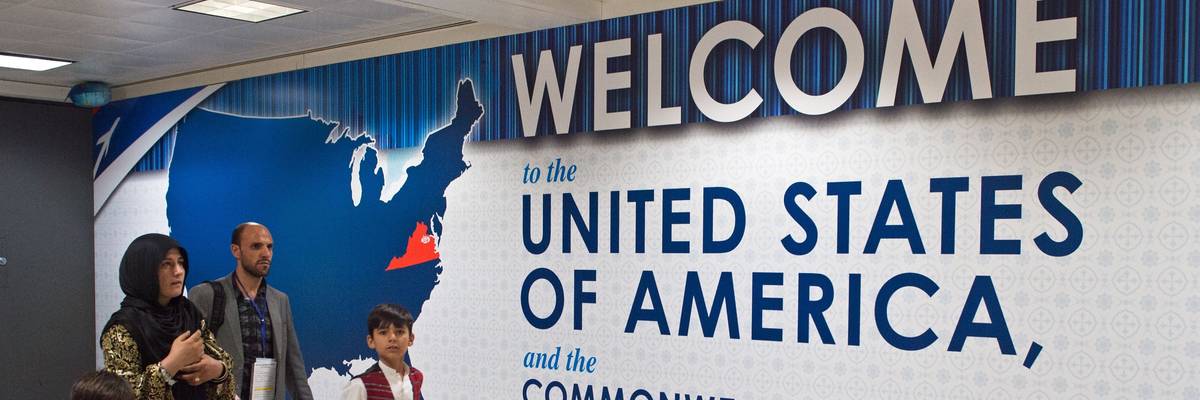
A federal judge in New York has ruled that President Donald Trump and the US State Department overstepped their authority when they suspended the processing of visa applications for people from 75 nations earlier this year, a move that critics at the time called a “travesty,” cruel, and counter to the rule of law.

US District Judge Jeannette Vargas, a Biden appointee, ruled Friday that the pause in visa applications—which Trump and Secretary of State Marco Rubio claimed was necessary to prevent immigrant visitors from freeloading on US taxpayer dollars—was “contrary to law and in excess of statutory authority.”


‘Big Win’: Two More US Courts Reject Trump’s Mass Detention of Immigrants

New Trump Asylum Rule Would Send Hundreds of Thousands of Applicants Straight to Deportation Proceedings


Diana Konate, deputy executive director for policy and advocacy at African Communities Together, which took part in the legal challenge, said the ruling was a “tremendous victory for the rule of law.”

“This unlawful and racist ban caused immeasurable harm, cruelly keeping families and loved ones apart,” Konate said. “Today, we are elated to tell our community members: this ban is no more.”

Vargas determined that the policy first announced by Rubio in January “runs afoul” of the Immigration and Nationality Act by mandating “the refusal of visas to eligible applicants without any basis in law.”

According to the Associated Press:
Vargas said the policy also undermines the congressional requirement that puts consular officers at the forefront of any visa decision.

“Congress imbued these officers with exclusive authority and discretion to determine if an immigrant is eligible for a visa based upon review of specific and detailed criteria set forth in the statute,” she wrote. “The Policy, which categorically prohibits the issuance of immigrant visas based upon the nationality of the applicant, represents a direct abrogation of this statutory scheme.”

The policy was challenged by two nonprofit organizations along with 11 individuals, including six whose family members had been refused visas. The remaining five are outside the country and had filed “employment-based petitions” to come to the United States.


The Catholic Legal Immigration Network, Inc. (CLINIC), one of the other nonprofits behind the suit which led to the ruling, welcomed the decision in a statement on Saturday, calling it “an important victory for families who faced prolonged uncertainty and separation because of a policy that treated applicants differently based on their country of origin rather than their individual circumstances.”


“At its heart,” said Anna Gallagher, CLINIC’s executive director, “this case is about keeping families together.”

“The suspension of lawful visa issuance across 75 countries separated spouses, parents and children who were simply following the legal immigration process,” Gallagher said. “Catholic social teaching calls us to uphold the dignity of every person and recognize the family as the foundation of society. Today’s decision affirms both those values and the rule of law, allowing families to once again move forward toward reunification.”
‘It’s War’: Trump’s 50% Tariffs Take Hold After US-Canada Trade Talks Collapse

“Trump is going to be hitting American consumers with a new round of tax hikes just over two months before the election,” said one economist.


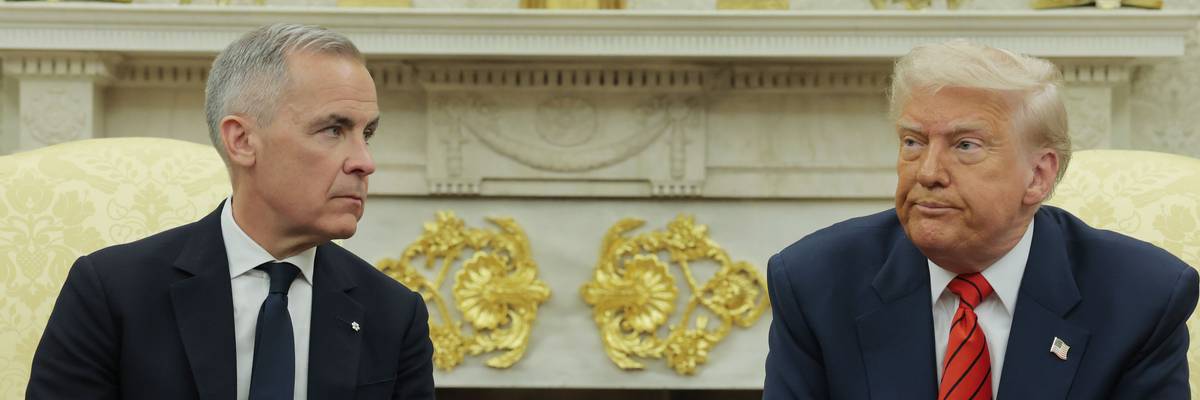
Canadian Prime Minister Mark Carney listens as U.S. President Donald Trump speaks to reporters in the Oval Office at the White House on May 6, 2025 in Washington, DC.
(Photo by Anna Moneymaker/Getty Images)

Jon Queally
Aug 22, 2026
COMMON DREAMS


“It’s war.”

That’s how one Canadian journalist described overnight developments between the governments of the US and Canada after trade talks were suspended Friday night without a deal to avoid the 50% tariffs President Donald Trump threatened on a wide swath of Canadian goods.

Both nations accused the other of scuttling the deal, with Canadian Prime Minister Mark Carney citing “last-minute changes” by the Trump administration and US Trade Representative Jamieson Greer pointing to “new demands and walkbacks” by the Canadians.

Asked earlier on Friday if a deal was within reach, Trump responded, “I think so, yeah, we’ll see.” But by late Friday night, it was clear the talks had collapsed entirely as Carney summoned Canada’s representatives back to Ottawa.

In his statement on Friday night, Carney said, “We have recognized from the beginning that America has changed, and that we will not return to our old relationship. Our government understood, before many, that America is altering all its trade relationships. Putting tariffs on its closest allies and charging for access to its vast market.”

CBC News reports:
The fresh American tariffs and the promise of Canadian counter-tariffs are a significant escalation in the dispute between Canada and the US, two countries once seen as being as close as can be on trade.

Canadian Trade Minister Dominic LeBlanc met with Greer, his American counterpart, throughout the week in Washington, DC, to try to secure a deal before the administration’s Friday night deadline.

The terms of the tentative deal were not made public, but separate sources have said the agreement would have lowered sectoral tariffs that have been crushing the Canadian aluminum, steel and automobile sectors for months. In return, Carney asked Canadian premiers to consider ending provincial bans on American alcohol.

While Carney said the Canadian government operated to strike “a fair deal that would provide the best access to the US market and greater certainty to Canadian businesses and workers,” ultimately the “progress has not been enough,” leading to the suspension of talks.

Carney noted that the US government under Trump would impose, starting at midnight on Friday, a 50% tariff on roughly $28 billion worth of goods, and he vowed that Canada would “match those tariffs dollar for dollar to protect our workers and businesses.”

With such pain being inflicted on both sides of the border, economist Dean Baker, co-founder of the Center for Economic and Policy Research (CEPR) in Washington, DC, said Americans will not avoid the sting of higher prices on a variety of consumer goods, which he argues should be recognized as a tax imposed by President Trump’s chaotic trade policy.

“Trump is going to be hitting American consumers with a new round of tax hikes just over two months before the election,” warned Baker.

Peter Armstrong, senior economics reporter for CBC News, said not only would the new tariffs will “very hard” in the sectors targeted and “be catastrophic for some businesses,” the additional concern that people must understand is that “the collapse in talks” between the US and Canada “might be even worse” due to the breakdown in trust and the new “injection of uncertainty” between two nations that once stood as solid and reliable trading partners.

With no clear sign about when, how, or if talks would resume, Armstrong warned the risk of tit-for-tat retaliation—a spiraling trade war, in other words—remains high. Armstrong said he texted one business leader in Canada to ask “just how bad” things are and the one-word reply was: “Very.”


“The US-Canada trade war is threatening to spiral,” commented Bloomberg’s Josh Wingrove. “Carney is threatening to match tonight’s tariffs dollar-for-dollar; if he does that, a US official is saying Trump will be given options to retaliate again.”

Labor union leaders in Canada expressed support for Carney’s position, but also lamented the looming negative impact the tariffs would have on Canadian industry and workers. As the Toronto Star reports:
Automotive Parts Manufacturers Association president Flavio Volpe, who sits on Ottawa’s Canada-U.S. advisory council, said that while he did not know any details of what happened, “the prime minister promised Canadians that he would walk away from a bad deal and he kept his word. Canadians will appreciate that.”

Unifor president Lana Payne, another member of the group, said negotiators made the right decision to walk away.

“We can’t trade good jobs for a bad deal, and it was clear the U.S. was continuing to push for untenable concessions,” she said.

However, the Global Automakers of Canada said in a statement it was disappointed the two sides could not come to a deal, claiming the “current trade and tariff environment has already cost the sector over $100 billion.”

Phillips P. O’Brien, a professor of strategic studies at the University of St. Andrews, looked at the situation with Canada and castigated the Trump administration’s handling of multiple issues on the geopolitical stage.

“The US decision to launch a trade war against Canada while it is in the midst of a foolish war with Iran, while China is laughing at its weakness, while the deficit is exploding and bond markets are calling BS... shows that the US government is not acting in the US national interest.”

According to O’Brien, “The great debate in foreign relations today is whether the US is more untrustworthy or more self-destructive in how it is interacting with its former allies.” Citing his own confusion on the question, he said, “I can’t make my mind up between them.”


Overflowing Bins in Bethlehem Tell a Bigger Story

They are telling the story of a city under pressure, a story of institutions struggling to maintain essential services, a story of workers trying to do their jobs under increasingly difficult circumstances.


A waste collection point overflows in Bethlehem.
(Photo by Mahmoud Ibrahim)

Mahmoud Ibrahim
Aug 23, 2026
Common Dreams

The world knows Bethlehem as the city of the Nativity. It is a city of churches, olive groves, ancient stone streets, and a history that attracts pilgrims and visitors from across the globe. For many, Bethlehem symbolizes peace, hope, and human resilience.

Yet in recent weeks, another image has emerged. Overflowing garbage containers. Piles of waste left uncollected for days. Unpleasant odors drifting through neighborhoods. Stray dogs searching through torn plastic bags. Flies, rodents, and growing public concern about health and sanitation.

For residents, these scenes are disturbing. For visitors, they are difficult to reconcile with the image of one of the world’s most recognized and beloved cities. But the garbage accumulating in Bethlehem’s streets is not the real story. It is merely the most visible symptom of a much larger crisis. The question is not why a container is overflowing. The question is what happened to the system behind it.

At first glance, it may seem like a simple municipal problem. A shortage of fuel. A broken truck. Workers on strike. Delayed collection rounds. The reality is far more complicated.

The environment does not understand politics. It understands only what we do—or fail to do—to protect it.

Waste management depends on an entire chain of institutions, workers, vehicles, roads, fuel supplies, disposal facilities, municipal revenues, and public cooperation. When enough pressure is placed on that chain, it begins to break. And in Bethlehem, pressure has been building for years.

The city has suffered repeated economic shocks. The tourism sector, once a major source of income, was devastated by the Covid-19 pandemic. Before it could fully recover, the war and the broader economic crisis brought new hardships. Businesses struggled. Workers lost jobs. Household incomes declined. Many families found themselves prioritizing food, rent, and basic necessities over municipal fees.

As revenues declined, local institutions found it increasingly difficult to sustain essential services. At the same time, operational costs continued to rise. Fuel became more expensive and, at times, harder to secure. Vehicles required maintenance. Equipment aged. Service providers struggled to balance growing needs with shrinking resources.

The crisis does not stop there.

Road closures, military gates, and movement restrictions have increasingly complicated daily life throughout Bethlehem Governorate. What should be a routine collection route can suddenly become longer, slower, or more expensive. A delayed truck today may become an overflowing container tomorrow.

Even the final destination of the waste is not immune from these pressures.

The Al-Minya landfill, which serves communities in southern parts of the West Bank, represents a critical component of the region’s waste management system. Any disruption affecting access, transportation, security, or operations along this chain eventually reaches the streets of Bethlehem and surrounding communities.

The result is a problem that residents experience every day. A container left uncollected. A street corner filled with waste. A smell that lingers in the summer heat. A growing sense that something is no longer working as it should.

When waste accumulates, the consequences extend beyond appearance.

Overflowing garbage attracts stray dogs, insects, rodents, and other disease vectors. It increases environmental risks and can create fire hazards during hot weather. It affects public health, community well-being, and the quality of life in neighborhoods already facing multiple challenges.

This is why waste management should never be viewed as a secondary service. It is not simply about removing garbage from the street. It is about protecting public health. It is about preserving human dignity. It is about maintaining the environmental quality of cities and communities. It is also about protecting the people who perform this difficult work.

One night, at around 2:00 am in the morning, I drove into Bethlehem to take my wife to catch an early bus to Allenby Bridge Boarder with Jordan. While most of the city slept, sanitation workers were already on the streets. Wearing reflective orange uniforms, they swept roads, emptied containers, and loaded waste onto trucks. Few residents would ever see them. By sunrise, most traces of their work would have disappeared.

Their presence reminded me that waste management is not an abstract system. It depends on real people working under difficult conditions, often exposed to hazards that most citizens never think about.

But workers alone cannot solve this crisis, neither can municipalities, nor can citizens. Responsibility is shared.

Citizens must reduce the waste they generate, support cleaner public spaces, and contribute to the sustainability of essential services whenever possible.

Municipalities and service providers need stronger planning, better resource management, and long-term financial stability.

National institutions must support local governments struggling under extraordinary economic and political pressures.

And international partners should recognize that environmental services are not luxuries. They are fundamental to public health, social stability, and human dignity.

There is another reason this issue deserves greater attention. Pollution does not recognize borders. Smoke from burning waste does not stop at a checkpoint. Contaminated water does not respect political divisions. Air pollution travels wherever the wind takes it.

The environment does not understand politics. It understands only what we do—or fail to do—to protect it. That is why environmental protection requires cooperation, shared responsibility, and long-term vision.

Bethlehem does not simply need more garbage trucks or more containers. It needs investment in sustainable solutions. It needs stronger institutions. It needs public awareness. It needs serious efforts to reduce waste generation, expand reuse and recycling, and create economic opportunities through a circular economy approach.

Most importantly, it needs recognition that environmental challenges are not isolated technical problems. They are deeply connected to economic conditions, governance, public services, and the daily lives of ordinary people.

The overflowing containers seen today across Bethlehem are telling a much bigger story. They are telling the story of a city under pressure, a story of institutions struggling to maintain essential services, a story of workers trying to do their jobs under increasingly difficult circumstances, a story of economic hardship, environmental vulnerability, and a community searching for sustainable solutions.

And perhaps they are also reminding us of something simple: Garbage does not appear overnight. Neither do environmental crises. Both are the result of problems left unresolved for too long.

If Bethlehem is to remain the beautiful city that the world knows and cherishes, addressing those problems can no longer wait.


Our work is licensed under Creative Commons (CC BY-NC-ND 3.0). Feel free to republish and share widely.


Mahmoud Ibrahim
Mahmoud Ibrahim is a Palestinian humanitarian and environmental professional based in the Bethlehem area of the occupied West Bank, Palestine.
Full Bio >


‘Palestine Is Being Erased Before Our Eyes’: 100 Former French, British Diplomats Say End Weapons Sales, Trade With Israel


The abuses by the Israeli government and military are “a stain on the conscience of humanity, requiring the UK and France to act.”


Palestinians mourn for a three-month-old baby named Tim El Khavaja, who lived in a tent in the Shati Camp lost his life due to cold weather conditions in northern Gaza Strip, Gaza on December 12, 2025. The body of the baby was brought to Al-Shifa Hospital in Gaza City for funeral arrangements.
(Photo by Hamza Z. H. Qraiqea/Anadolu via Getty Images)

Jon Queally
Aug 23, 2026
COMMON DREAMS

While critics of the French and British governments say they are doing too little to confront the crimes and human rights violations of Israel against the Palestinian people, about 100 former diplomats of the two nations penned an open letter published over the weekend agreeing that much stronger actions must be taken to end the atrocities taking place in both the Gaza Strip and Occupied West Bank.

Published in Le Monde on Saturday, the joint op-ed by the former UK and French ambassadors and foreign diplomats argues that because their two nations “played a decisive role in the shaping of the Middle East,” it is incumbent upon them to “make common cause over the region’s fundamental faultline: equal rights for Israelis and Palestinians”—a dynamic grossly lacking as Palestinians are starved and bombed in Gaza, with their rights endlessly under assault in the West Bank.

According to the letter:
In Gaza, two million Palestinians are kettled into 30% of their devastated land, hungry, lacking medicine and housing. Over 1,200 Palestinians have been killed since the so-called “ceasefire” of October 2025. In East Jerusalem and the rest of the West Bank, Palestinian house demolitions and rampant settler violence—with the connivance of the Israeli army and police—amount to ethnic cleansing. Palestine is being erased before our eyes.

This policy of occupation and destruction extends to Lebanon—where many villages have been razed—and Syria. It is a stain on the conscience of humanity, requiring the UK and France to act.


While human rights groups have steadfastly demanded accountability for Israel—including tougher sanctions, suspension of trade agreements, a halt to weapons transfers, and enforcement of rulings by the International Court of Justice (ICJ) and proceedings at the International Criminal Court—for its ongoing criminal behavior against the Palestinians, European governments, the United States, and other western allies have resisted such calls.

While noting that much can be done to help Palestine become “a fully functioning democratic nation,” the letter from the former diplomats makes a call for seven specific action designed to end Israeli impunity and bring the government back into compliance with international law. The policy recommendations directed at the UK and French governments are:Uphold the decisions of the International Court of Justice and the International Criminal Court;
Suspend the EU-Israel Association Agreement and the UK-Israel Trade and Partnership Agreement for breach of human rights provisions;
Suspend arms transfers to and from Israel and all bilateral military cooperation;
Insist on unrestricted aid access to Gaza, led by UNRWA, other UN agencies and international NGOs, with consequences for non-compliance; access too for journalists, diplomats and parliamentarians;
Ban all trade with settlements, including goods, investment, insurance and other financial services;
Warn potential bidders for the red-line “E1” area [east of Jerusalem, in the occupied territories] or other settlement financing/construction that their interests in and with our countries will suffer;
Make it an offense for our citizens to buy property on stolen Palestinian land and remove charitable status from “charities” funding settlements.


Nicholas Hopton, a former UK ambassador to Iran, Qatar and Yemen and one of the signatories of the letter, said that the language they used was not invented by the diplomats themselves.

“The words are not our own,” Hopton explained to Al Jazeera. “They are taken from the international legal bodies, the UN, those who have been observing from a neutral position and with expertise.”

What’s key to understand, said Peter Millett, a former British ambassador to Libya who also signed the letter, is that what the signatories are asking for “is action, not words.”

Foreign ministers of the France and Britia “over the last few months and years have issued statements of criticism, of condemnation and so forth,” Millett told Al-Jazeera, “but as the letter makes clear, this is the time now where we need to see action on trade, action on settlements, more support for aid to go into Gaza, and the ending of the arms trade.”

At the heart of the letter is the idea that world leaders, whether in Europe or elsewhere, must now act aggressively to bring the suffering of the Palestinians to an end and bring Israel’s violations and abuses to a halt.
"These proposals reflect our shared values—international law and equal rights—which are in our interest," the letter concludes. "Where there is no law, none of us is safe."