It’s possible that I shall make an ass of myself. But in that case one can always get out of it with a little dialectic. I have, of course, so worded my proposition as to be right either way (K.Marx, Letter to F.Engels on the Indian Mutiny)
Sunday, August 23, 2026
'It’s chaos': Trump rewards red state farmers with blown profits this year Fifth-generation farmer Aaron Lehman. (YouTube Screen grab)
MS NOW reporter Alex Tabet says there’s a very obvious reason the state of Iowa is slipping out of Republicans’ grasp this midterm, and it has everything to do with the Trump economy.
“It's chaos,” said Iowa Farmers Association President Aaron Lehman, speaking with Tabet on a Saturday morning show. “You know, we are just not on the right path at the time. When farmers are dealing with all this uncertainty, we should be doing more to help them bring stability.”
“We should be passing a farm bill that's three years overdue to provide some stability for farmers. No passage in sight yet. We should be doing more to have a trade policy that gets to fair prices for farmers with fair practices for farmers. We're not getting any closer to that,” Lehman added. “It's just chaos. So, the chaotic situation makes it so hard for farmers to plan on how they can put a crop in the ground, harvest it and expect a reasonable return.”
Tabet, reporting from Lehman’s fifth generation corn, soybean and hay farm, said life on the farm is more expensive than ever.
“This farm operates three tractors … and about a year ago, it was $3.50 per gallon for diesel. Now it's $5.40. Each of these things guzzle about 100 gallons a day. So some quick math will show you for each tractor during harvest season, that's an additional $200 per tractor, $600 in total,” said Tabet.
But that is just one of the many factors that farmers are having to contend with, he added. Equipment and machinery purchase and repairs are significantly more expensive under Trump’s tariffs, and the food they grow, including corn and soybeans are contenting with retaliative tariffs from other countries due to Trump’s tariffs.
“Not to mention the fact that every single farm in America has to purchase fertilizer, and fertilizer costs are up 12 percent in the first quarter of 2026 because of this war in Iran, because of the strait of Hormuz,” said Tabet.
When asking Lehman and other farmers at the Iowa State Fair if their farm was profitable last year, the most common answer was ‘No.” The answer remained a solid “no” when asked if they expected to break even this season, as well.
Lehman, as president of the organization did not say who he voted for in the last election, but the state of Iowa — and farmers in particular — were deep in the fold for President Trump in the last election.
“What I can tell you is we are here in Iowa President Trump won 98 of the 99 counties in the caucuses. He won the state, beating Kamala Harris by 14 points in 2024,” said Tabet. “This is Trump country. But at the same time, the Cook Political Report just put the gubernatorial race as “lean Democratic” for [candidate] Rob Sand and a “toss up” for [Senate candidate] Josh Turek. These are races that shouldn't be this close. But because of these economic conditions, at least according to the Cook Political Report, they are.”
Trump’s military disrespect hits new low — and troops are finally revolting
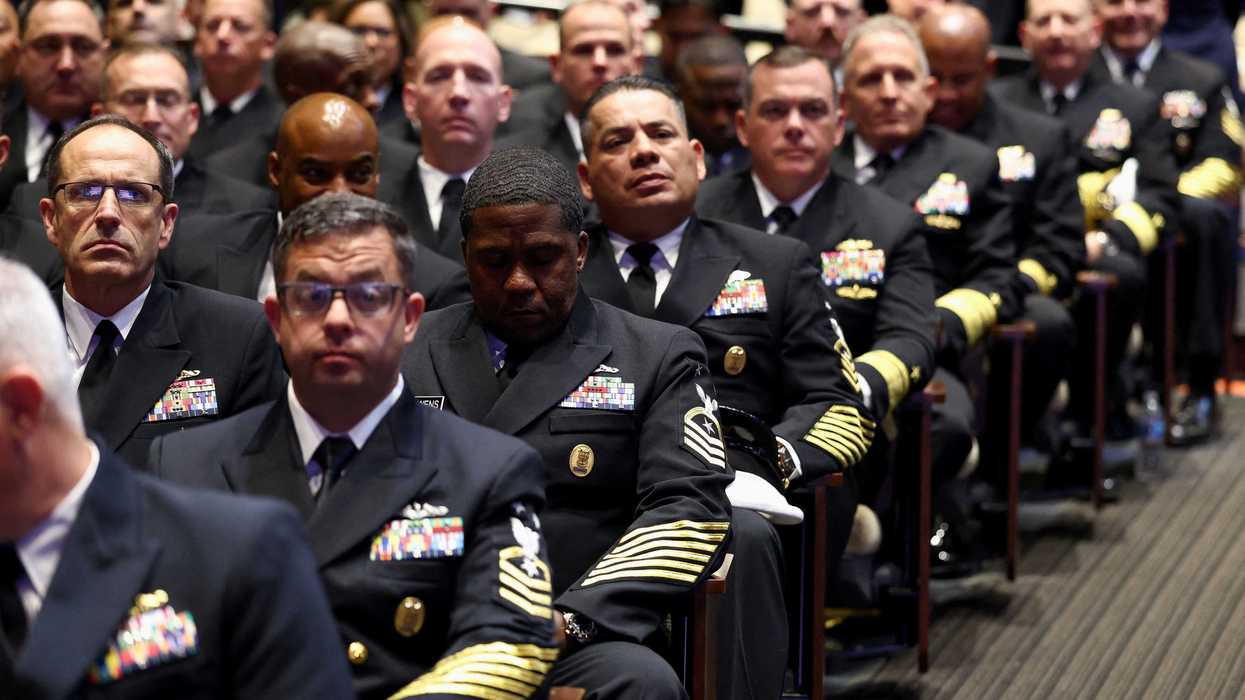
Members of the military wait for President Donald Trump to arrive for a meeting convened by Defense Secretary Pete Hegseth, at Marine Corps Base Quantico, in Quantico, Virginia, September 30, 2025. REUTERS/Kevin Lamarque
In recent weeks, reports have emerged revealing the alarming conditions aboard the USS Abraham Lincoln, a vessel that has been stationed in the Middle East since November and is nearing the record for the longest ever deployment, set back in the Vietnam War. Aboard the ship, troops and officers are reportedly dealing with worsening food and resource shortages, as well as deteriorating physical conditions, with some areas becoming infested with mold. Driven to extreme desperation, some troops have also reportedly attempted to jump overboard to escape the conditions onboard.
When pressed about these stories, Trump and his officials have largely been dismissive. Defense Secretary Pete Hegseth said that the conditions on the Abraham Lincoln were an old story, and claimed that they have already been addressed. Trump, meanwhile, said that the reports were a "fake CNN story." He also insisted that the Abraham Lincoln had not been deployed long enough when asked if its deployment had gone on too long.
In a Saturday piece for The New Republic, deputy editor Jason Linkins connected this latest disrespect towards the military to other emerging reports about troops leaving "anonymous graffiti" messages ripping the ongoing Iran war, written into the dust left on an aircraft wing flap. Among the messages left were “Operation Epstein Fury,” “Peace deal #64 incoming … ALL THIS FOR THE HOLY LAND,” and other insults implying Trump's subservience to Israeli leaders.
"Whether these sentiments are new is indeed unclear, but it’s not without a frame of reference," Linkins wrote. "Trump has always been fairly explicit in his disrespect for the grunts who do most of the work—and all of the dying—in this racket that we call 'war.' But only now is a seemingly unwinnable war bringing this all to a head. It’s no longer possible to pretend that the president doesn’t have boundless contempt for U.S. service members. They’re trapped in a war that was essentially kicked off to distract from all the other terrible news the Trump administration generates—or at least to turn attention away from the Epstein files. (Though if these dust etchings are any guide, Trump failed in this attempt to wag the dog.)"
He added later: "As it happens, this trouble is not confined to the USS Lincoln: Crews on the USS Benfold, Carl Vinson, and Tripoli have also reported miserable conditions in recent weeks. Pete Hegseth, our self-styled 'secretary of war,' has gone to great lengths to downplay and even deny these accounts, characterizing them as misrepresentations while covering up the reason the Lincoln, which is now finally coming home, wasn’t resupplied. The dust scribbles ... tell a different story."
Trump just made the world a far more dangerous place: analysis
President Donald Trump’s ongoing bromance with North Korea’s dictator, Kim Jong Un, is literally putting the world at risk of nuclear war, at least according to one political analyst.
“Trump and administration officials have taken to declaring that the economic sacrifices Americans are making for his war are patriotic gestures to ensure that Iran will never have a nuclear weapon — a pledge that had already been successfully obtained through the 2015 Iran nuclear deal negotiated under President Barack Obama, which Trump tore up upon taking office the first time, and then supposedly obtained again through the force of several bunker-buster bombs in 2025,” wrote Salon's Heather Digby Parton on Sunday. “According to the polls, most Americans aren’t buying that claim.”
Parton added, “At the same time, still sulking that U.S. allies didn’t rush to jump into his Iran quagmire, Trump has decided to pick up where he left off in 2020 with his alleged good pal Kim Jong Un and punish America’s longtime ally South Korea by canceling some military exercises after the country, in his words, ‘refus[ed] to join us in the Denuclearization of the Islamic Republic of Iran.’ Anyone else would have seen how insensitive such a comment would be to a country that has been forced to stand by as the unhinged, totalitarian dictatorship to its north built up a nuclear arsenal aimed at them and their allies, all while the U.S. brayed about ‘denuclearization.’”
She then pointed out that, between North Korea's first successful underground nuclear test in 2006 and the start of Trump’s first term in 2017, “the country had enough fissile material for 60 weapons and they were rapidly developing a ballistic missile program. At first Trump did his usual insult-and-threat routine, and he then hit upon the idea that he could personally talk Kim out of the program. The famous bromance began.”
She added, “When Trump held his first summit with the North Korean leader, giving him the international prestige he had always wanted while getting nothing in return, the president was asked how long he thought it would take for North Korea to denuclearize. ‘Well, I don’t know, when you say a long time,’ he said. ‘I think we will do it as fast as it can be done scientifically, as fast as it can be done mechanically . . . It’s a 15-year process. Assuming you wanted to do it quickly, I don’t believe that . . . You’re talking about a very complex subject. It’s not just like, ‘Oh, gee. Let’s get rid of the nukes.’’”
Ultimately she concluded “there’s a question historians will one day ask of this era: Who started the global nuclear arms race? The answer to that is complicated, but one name will always rise to the top of any list: Donald Trump.”
Parton is not alone in condemning Trump’s North Korea policy. Writing earlier this month for The Wall Street Journal, Trump’s former national security adviser John Bolton said that “Trump put North Korea and its rogue nuclear-weapons program back in the spotlight on Sunday. The president ordered the Defense Department ‘to substantially reduce’ this week’s annual U.S.-South Korean military field exercises to defend against a potential attack by the North. He made the same unilateral concession in his first term, a mistake that is even worse now.”
As far back as 2019, experts have warned that Trump’s attitude toward North Korea constitutes playing with fire.
“When I was in North Korea [President] Kim Jong-il, the father of the current president there, said that he didn’t have any problems with us having our troops in South Korea,” Secretary of State Madeleine Albright told this journalist for Salon in 2019.
She added, “I do think that what is worrisome to me is, in an effort to be flattered by Kim Jong-un, that he gives away something that might have a longer term effect for the next administration.”
Trump trapped in an ultra-wealthy 'bubble' as signs of 'doom' encroach
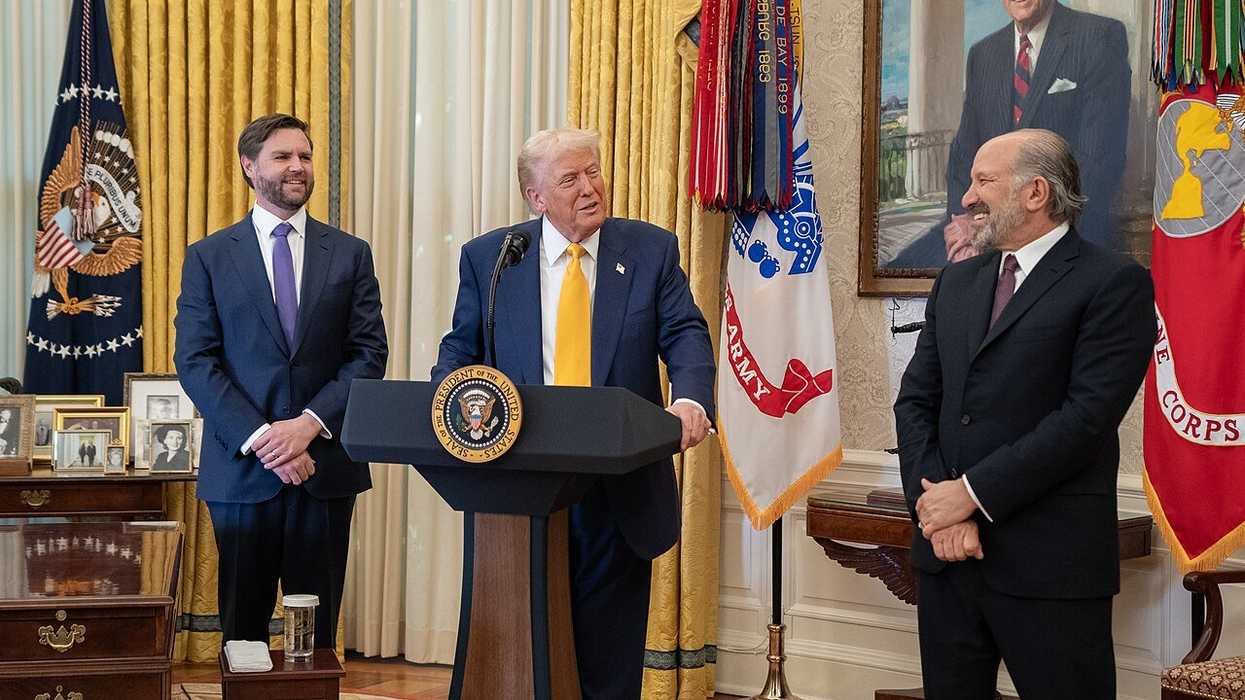
President Donald Trump with Vice President JD Vance and Commerce Secretary Howard Lutnick on February 21, 2025 (Wikimedia Commons)
In a piece published Saturday morning, MS NOW producer Charlie Herman argued that while Trump has long claimed to be more in touch with average Americans than normal politicians, his actions this week "offered signs that he may be out of step with public opinion, especially when it comes to the economy."
The president seems particularly invested in supporting technologies that have grown increasingly "toxic" among voters, largely because they are backed by his ultra-wealthy allies. As these ideas capture his attention, everyday voters and consumers are struggling under the weight of the Trump economy, with the president almost willfully blind to these "warning lights" that could spell political doom for himself and the GOP.
"Trump is embracing cryptocurrency even as Americans express concern about his financial ties to the industry," Herman wrote. "He’s touting artificial intelligence data centers that have become politically toxic. And his administration is filled with multimillionaires and billionaires to a degree unmatched by his predecessors."
He continued: "Outside the White House bubble, warning lights are flashing. Gas prices keep climbing. The national debt just passed $40 trillion. And investors are pushing long-term interest rates to levels not seen in nearly two decades, reflecting concerns about inflation, borrowing and the economy. Taken together, these developments raise questions about how removed the president may be from the economic concerns of many Americans."
Herman further argued that this blindness is being exacerbated by Trump's "K-shaped" administration. This term was in reference to the idea of a "K-shaped economy," a phenomenon in which conditions improve for the wealthy while deteriorating for the rest of the consumer base, and which experts have asserted is the current shape of the U.S. economy under Trump. The president has staffed his White House with 57 individuals worth $100 million or more, vastly more than his immediate predecessors.
"Trump told middle-class voters he would represent their interests and tackle high prices on Day 1," Herman wrote. "Instead, he has gilded the White House not just in gold but with the ultra-wealthy."
The worsening economic conditions have also laid the groundwork for something economists call a "doom loop," a situation in which investors demand higher interest rates when taking on American debt, meaning the government has to borrow more to make those payments, causing the national debt to explode even more. Herman noted that "Investors’ fears about inflation, the federal debt now totaling more than $40 trillion, and billions in corporate borrowing to finance AI are pushing yields (basically, long-term interest rates) on U.S. government bonds to new highs," pushing Trump's economy closer to this doom scenario.
Dan Rather torches Trump's latest 'grift' as 'king of debt' boast backfires
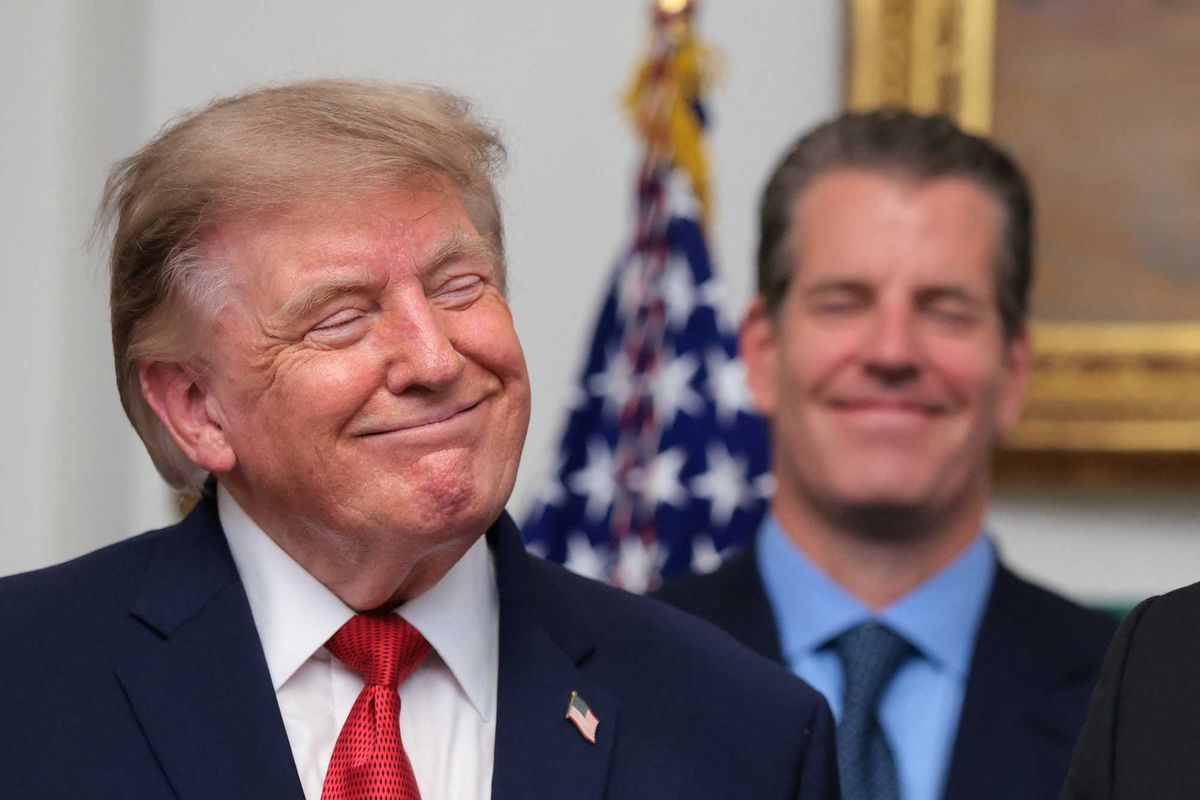
U.S. President Donald Trump reacts during a press conference with cryptocurrency executives in the Roosevelt Room at the White House in Washington, D.C., U.S., August 19, 2026. REUTERS/Kylie Cooper
On Tuesday, the U.S. national debt surpassed $40 trillion, a level that has alarmed economists. Rather argued in a new article for his Substack, "Steady," that Trump once promised to eliminate the national debt during his first term. However, that appears to be just another unfulfilled promise.
"You may remember back in 2016 when Trump proclaimed himself the 'king of debt,' promising to eliminate it in eight years," Rather wrote. "Forty trillion dollars later, that was just another grift. Meanwhile, he is treating the U.S. Treasury like his own personal piggy bank, gleefully spending close to a billion dollars in taxpayer dollars to glorify himself with gilded pieces of junk, mega-ballrooms, and monuments for which no one asked.
The national debt crossed the $40 trillion mark at a time when many Americans are most concerned about affordability ahead of the midterm elections. Rising debt levels will likely increase the cost for Americans to borrow money to buy goods like cars and appliances, according to some experts.
Trump's first Grand Prix DC race draws instant ridicule: 'Clowns need attention'
The site of the Freedom 250 Grand Prix IndyCar series race in Washington D.C., U.,S., August 22, 2026. REUTERS/Aaron Schwartz
President Donald Trump's IndyCar race in Washington, D.C., drew early criticism and mockery as cars were still making their first laps.
On Saturday, drivers started doing practice, qualifying, and other preliminary races for the Freedom 250 Grand Prix, which Trump touted as D.C.'s first-ever IndyCar race. The marquee race, which Trump is expected to attend, will start on Sunday, but the negative reviews started coming in as the drivers raced on bumpy roads, and critics called out the administration for organizing the unsolicited event.
"Turning the National Mall into a race track for the Freedom 250 is a reckless spectacle that puts public spaces at risk because clowns need attention," blasted speaker and advocate Khary Penebaker.
Progressive political commentator Brian Tyler Cohen lamented, "They'll give us literally anything other than healthcare."
"Anyone who has ridden a bicycle in Washington, DC, could tell you this is a terrible idea," activist Alex Palombo wrote in response to a post by NASCAR racer and GOP congressional candidate Jerrod Sessler that noted the "VERY bumpy" track.
"No one in DC is happy about this," journalist Aaron Parnas added.
"August 2026. The streets are now a racetrack," lamented veteran and political commentator Mike Nelson.
Reacting to a post touting the event, Topher Spiro, a senior fellow at American Progress, asked, "Why do you think DC residents want anything to do with this? How much did this promotion cost?"
Reacting to a video from the track, author Erin Page joked, "I have genuinely driven faster through DC, come on now."
"This is any driver from the DMV area," writer Ashley Reese agreed.
"Now just add some MD drivers for the full DC experience," added writer Joe Flood.
Pollster Jake Rubenstein noted that the event is "not packed. But all the people seeing the actual track are blocked by the trees."
Potentially dangerous problem flagged ahead of Trump’s Freedom 250 Grand Prix
Aug 22, 2026; Washington, D.C., USA; A.J. Foyt Enterprises driver Caio Collet (4) races past the U.S. Capitol during practice for the Freedom 250 Grand Prix on the street circuit of National Mall. Mandatory Credit: Amber Searls-Imagn Images
Just hours ahead of President Donald Trump’s IndyCar race in Washington, D.C., NBC News’ Sahil Kapur flagged a potentially dangerous problem that could pose a risk to drivers.
Dubbed the Freedom 250 Grand Prix, the race has been touted by Trump as D.C.’s first-ever IndyCar race, with the president expected to attend. Drivers hit the course Saturday for practice and qualifying races, but as flagged by Fox Sports, already ran into trouble. A bump in the course sent a number of racers into a runoff area after briefly losing control of their vehicles, as seen in a video compilation shared by “IndyCar on Fox.”
“It’s not an authentic DC street track without bumps!” wrote Kapur, NBC News’ senior national political reporter, in a social media post on X Saturday night. “That said, this is a big one in a flat-out section that caused a bunch of IndyCar drivers problems today – and will be a thing in tomorrow’s race.”
Trump’s big race has already received scrutiny from countless critics, some of whom called the event a “terrible idea” given D.C.’s “very bumpy” roads.
Even former NASCAR driver Jerrod Sessler, a Trump-aligned ex-congressional candidate who lost his primary race earlier this month, warned that the race could pose serious issues for drivers.
“The BUMPS are most certainly going to be the talk of the Freedom 250 in DC,” Sessler wrote in a social media post on X. “The track is VERY bumpy! Not just bumps but cars jumping off the ground sort of bumps!”
The Freedom 250 Grand Prix marks the first-ever IndyCar street race held in the nation's capital, run on a 1.66-mile, seven-turn temporary circuit weaving past the U.S. Capitol and Washington Monument. Trump formally established the race through a Jan. 30, 2026, executive order directing the Departments of Transportation and Interior to designate a race route through the National Mall and surrounding city streets, in honor of the United States Semiquincentennial.
SHARIA HYSTERIA
Abdul El-Sayed claps back at JD Vance’s blatantly false attack: ‘Man, this guy is boring’
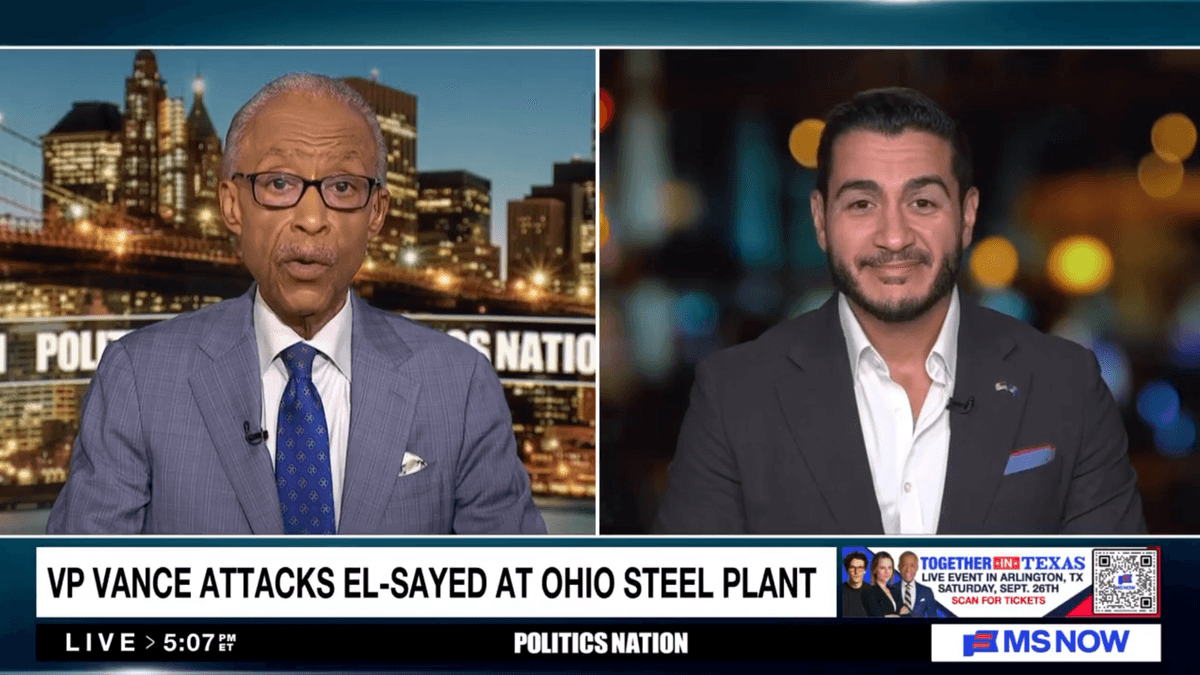
Abdul El-Sayed (right) appears on MS NOW, Saturday, Aug. 22, 2026. (Screengrab / MS NOW)
Democratic Senate nominee Abdul El-Sayed clapped back at Vice President JD Vance Saturday in response to a false claim the vice president issued earlier this week.
Speaking Friday at a steel plant in Ohio, Vance attacked El-Sayed over past remarks that the vice president both mischaracterized and fabricated.
“[El-Sayed] once argued not too long ago that criticisms of Sharia law were rooted in white supremacy,” Vance said, who went on to falsely claim that El-Sayed has said the United States “should have Sharia law,” which is a broad reference to religious law derived from the Quran, the central text of the Islamic faith
In 2022, El-Sayed criticized a 2010 ballot measure that sought to ban courts from considering Sharia law in its decisions, but mentioned “white supremacy” only in the context of criticizing broader efforts to “uproot Muslims Americans” and other marginalized groups in the United States. However, El-Sayed has explicitly come out against incorporating “faith laws into the laws of our country” and believes in separation of church and state.
El-Sayed has also never advocated for implementing Sharia law in the United States, and when asked to react to Vance’s comments during an appearance Saturday on MS NOW, El-Sayed smirked before answering.
“Every time JD Vance opens his mouth, the first two things I can think is, 'man, that guy is boring,' and second, Peter Thiel had to spend a ton of money to get that man elected – barely – in the state of Ohio,” El-Sayed said.
El-Sayed added that he took Vance’s shot “somewhat confusedly,” and characterized it as a misguided attempt to distract from the failings of the Trump administration.
“This is about trying to change the channel, they're trying to dissuade us from actually paying attention to the issues that we see laid bare when we talk about our kitchen table budget every single month,” he said.
“The question Michiganders are asking is not about my parents, it's not about Sharia law, it's about whether or not you can afford your groceries, your gas, whether or not you can see a doctor if you get sick.”
'Missing' Epstein files report spurs Dem to accuse Todd Blanche of illegal activity
Newly-released documents from disgraced late financier and sex offender Jeffrey Epstein, including a sheaf of entirely redacted pages, are seen in this handouts released by the U.S. Justice Department and printed and arranged for a photograph by Reuters in Washington, D.C., U.S., December 19, 2025. REUTERS/Jonathan Ernst
Rep. Ted Lieu (D-CA) openly accused Attorney General Todd Blanche of illegal conduct Saturday on the heels of a new report that an alleged trove of “missing” handwritten FBI notes related to Jeffrey Epstein had been sitting online for months, fully unredacted, and accessible to anyone.
The supposed notes stem from a 2019 FBI interview with a South Carolina woman who accused President Donald Trump and Epstein of sexually and physically abusing her starting when she was 13 years old. Referred to as “Jane Doe 4,” the woman was interviewed by the FBI four times and was found credible by the agency, a Justice Department source told the Miami Herald.
Trump is not facing any criminal charges and has repeatedly denied any and all wrongdoing as it relates to his conduct with Epstein.
The Justice Department (DOJ) has not released the sought-after handwritten FBI notes, which are among the Epstein-related files being sought by former MSNBC host and attorney Katie Phang with her ongoing lawsuit. The agency has justified withholding Epstein-related files by describing them as “duplicative” of material already released.
On Saturday, however, data researcher and writer Rye Howard-Stone released a new report regarding nearly two dozen of the FBI notes – which he claimed had been uploaded by journalist Kaelan Deese of the conservative Washington Examiner. The notes themselves also revealed, according to Phang, that they were not, in fact, “duplicative” of any documents released thus far.
Lieu took to X to publicly call out Blanche.
“Dear [Blanche]: Please tell us the exception under the Epstein Files Transparency Act that allowed you to withhold the below FBI interview notes from the American people,” Lieu wrote Saturday in a social media post on X, tagging Blanche’s account on X and resharing commentary related to the discovery of the FBI notes.
“You can’t, because you are an unethical lawyer and illegally withheld those notes. November is coming.”
The Daily Beast’s Roger Stollenberger called the entire ordeal “inexcusable,” and said he’d “never seen something like this.”
‘Missing’ Epstein files containing major allegations against Trump discovered: report
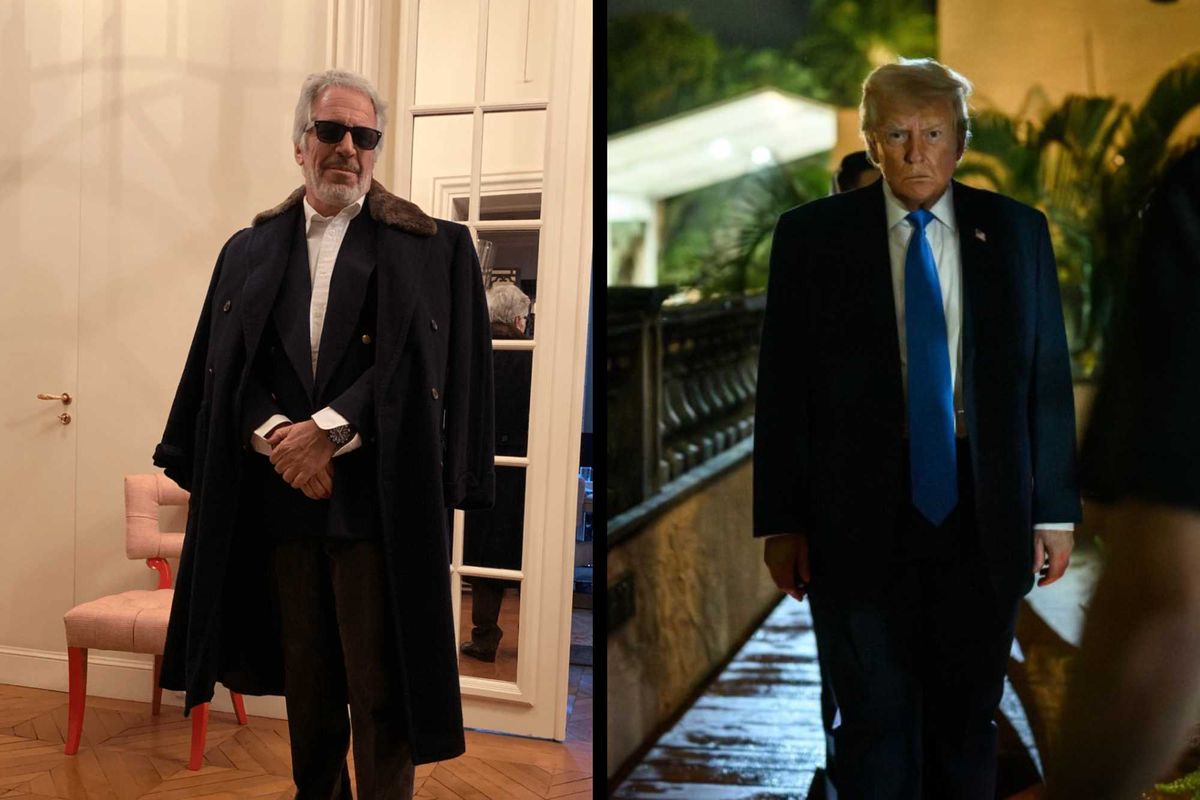
Left: Jeffrey Epstein in an undated photograph released by the Justice Department (DOJ). Right: President Donald Trump addresses the nation on the shooting of two National Guard soldiers in Washington, D.C. (White House)
Supposed FBI files that have previously been referred to as “missing” were recently discovered sitting on an online document-sharing platform, files that former MSNBC host Katie Phang said Saturday contain “allegations of sexual abuse committed by Donald Trump” against a 13- to 15-year-old victim, according to a report published Saturday.
Back in February, the Justice Department (DOJ) announced it was investigating claims that it had withheld a select trove of files related to Jeffrey Epstein. The DOJ had justified withholding some of the files by describing them as "duplicative" of material already turned over, a characterization that has since come under scrutiny.
A growing number of critics increasingly pointed to a trove of 37 pages of FBI handwritten notes taken during a 2019 interview with “Jane Doe 4,” a South Carolina woman who accusedTrump and Epstein of sexual and physical abuse beginning when she was 13 years old.
The woman was interviewed four separate times by the FBI and was found credible by the agency, according to a DOJ source who spoke with the Miami Herald. While some details of her account have since been verified, her specific allegations against Trump remain unsubstantiated, and Trump is not being criminally investigated and has denied any wrongdoing as it relates to Epstein.
The “missing” 37 pages were aggressively pursued by investigators, including Phang, whose ongoing lawsuit against the DOJ specifically sought the release of said pages, alongside a trove of foreign-language documents related to Epstein.
This week, however, New York-based writer Amy Gabrielle appeared to have uncovered an online archive containing some of the sought-after FBI files. Writer and data researcher Rye Howard-Stone picked up where Gabrielle left off and, in a detailed write-up published on his Substack Saturday, revealed the alleged source of the mysterious upload: Kaelan Deese, a journalist with the conservative outlet Washington Examiner.
The Washington Examiner published a report written by Deese on March 7 titled: “What’s still missing from the Epstein files,” but according to Howard-Stone, Deese had “quietly released” 22 pages of the missing 37 on Scribd – the online document-sharing platform – just one day before. Those pages would go unnoticed by major media outlets for months.
“This meant that, for the last five months, anyone with internet access could view the notes, which had Jane Doe 4’s real name all over them, as well as significant biographical details and the names of childhood friends and family members who she said could corroborate elements of her story – all of which she gave the FBI in confidence, and all of which the DOJ had redacted,” Howard-Stone wrote.
“But Deese, who regularly publishes articles with a favorable conservative gloss, was part of a small, select group of people that DOJ brass secretly decided were – unlike the public and members of Congress – able to be trusted with these allegedly ‘duplicative,’ ultra-sensitive files. Entirely unredacted.”
Howard-Stone claimed that while Deese “took the files down shortly after” he contacted a Washington Examiner editor, Deese had also shared additional FBI handwritten notes with “one random person who had discovered the posts.”
“We found that person, who shared his text message exchanges with Deese,” Howard-Stone wrote.
Phang was contacted for comment on the revelation, and told Howard-Stone that the “timing of the discovery and release of these unredacted handwritten notes” was “interesting,” and that it also undermined the DOJ’s rationale for withholding them.
“There also remains an open question as to the authenticity of these published notes. That question could be readily answered if the FBI would just comply with the Epstein Files Transparency Act and release the notes they’ve been legally required to do,” Phang said.
“Regardless, what these notes DO show is that they are not 'duplicative' of the FBI 302s as Blanche has asserted and they clearly contain allegations of sexual abuse and physical abuse committed by Donald Trump with a victim who was 13-15 years old at the time. So the Trump DOJ has no incentive to release them.”
Trump makes his great escape from the Epstein files
U.S. President Donald Trump looks on while hosting a reception for the reigning Major League Baseball (MLB) World Series champion Los Angeles Dodgers in the Rose Garden at the White House, Washington, D.C., U.S., July 23, 2026. REUTERS/Evelyn Hockstein
Trump revealed Friday morning that he had “concluded a deal” that would see as much as 300,000 metric tons of ground beef – the equivalent of more than 2.6 billion quarter-pound hamburger patties – imported into the United States over a 90-day period. As part of the deal, Trump said his administration would waive tariffs on the imported goods, which would be sold at 25% below “current market prices.”
When asked by a reporter Friday where the beef would be imported from, Trump declined to answer.
"I don't want to say," Trump said.
A viral and lengthy post on X written by a user who claims to be a medical student and former research scientist alleges the beef import plan of being a “stealth bailout for meat companies,” a theory that Rep. Thomas Massie (R-KY) appeared to agree with after sharing the post and asking a pointed question of his own: “Could this be considered a fast food bailout?”
Massie also singled out fast-food chains such as McDonald’s, Wendy’s and Burger King as potential beneficiaries of a surge of cheap ground beef, all three of which have been squeezed by surging beef prices, with beef costs increasing by 48% as of March when compared with the previous 12 months.
In a separate social media post, Massie called Trump’s plan a “slap in the face to American cattlemen and consumers.”
“Dumping foreign beef in U.S. markets can temporarily lower prices but it won’t incentivize American farmers to raise more beef. Bring back Country Of Origin Labels & pass my PRIME Act,” Massie wrote, referring to his bill that would loosen restrictions around the sale of meat directly to consumers.
How Riding the Subway as a Kid Changed the Way I See the World
At the time, I hated riding on the subway. But more than 50 years later, I’m grateful for that commute—for the way it forced a visceral reminder of our shared humanity.
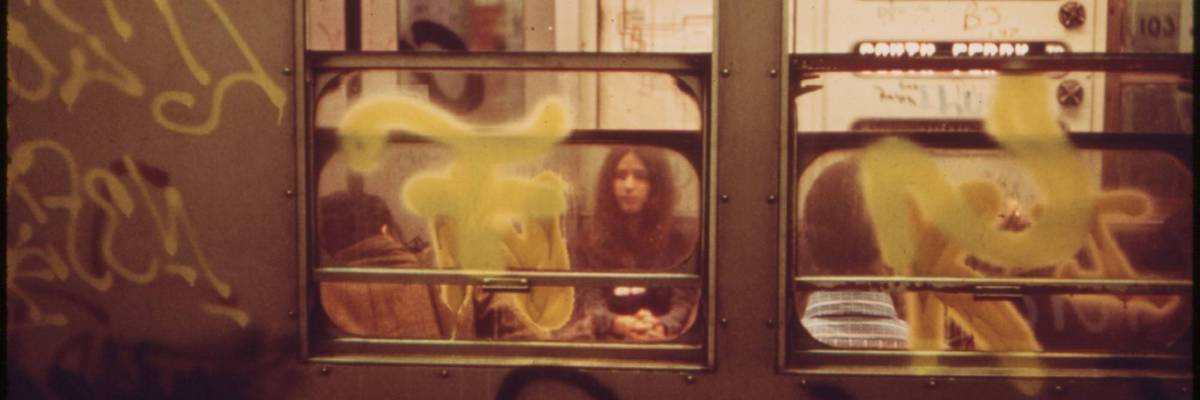
Passengers ride the New York subway in 1973. (Photo by Erik Calonius / US National Archives and Records Administration)
It was 1974. The Bronx was burning. Abandoned cars littered the streets, and New York City teetered on the brink of bankruptcy. I’m still surprised my overprotective Holocaust-survivor parents let their preteen daughter ride the subway to school every day, but somehow they did.
For five years—from eighth grade through high school—I took the No. 5 Dyre Avenue train from our apartment in the Pelham Parkway neighborhood of the Bronx to my Jewish day school on the Upper East Side of Manhattan. The commute was nearly an hour each way and always coincided with rush hour.
Mornings weren’t so bad; I lived near the beginning of the line and could usually get a seat. But heading home, the 86th Street platform was packed five to eight people deep.
When it was my turn to board, I would throw my entire body weight onto the person in front of me, as the person behind me did the same. We all pushed forward together, forcing ourselves into an already crammed car, as more people tried to pack in behind us.
The more choices we have about how we travel or whether we go to private schools or fancy gyms, the easier it becomes to spend our lives among people much like ourselves. Distance makes it easier to dehumanize.
Once the doors closed, we stood packed together in a dense sea of bodies. When the train lurched, the entire crowd swayed as one. Usually, I breathed through my mouth to avoid the smell of sweat and bad breath. I tried to pull away from a hand on my behind that might have been accidental, but probably was not. I remember thinking I was too young for this.
At the time, I hated riding on the subway. But more than 50 years later, I’m grateful for that commute—for the way it forced a visceral reminder of our shared humanity.
Now, like three-quarters of Americans, I go everywhere by car. It’s faster and more convenient but I never see my fellow travelers—only their vehicles speeding past on the highway. And while I don’t miss the discomfort of the subway, I feel more cut off from other people’s lives.
When you don’t see people, you know them less. When entire groups remain unseen it becomes easier to turn them into abstraction—to fear them, dismiss them, or vilify them. It’s much harder to do that when you’ve stood shoulder to shoulder with someone, both of you grasping the pole as the train jolts you from side to side.
These were the days before smart phones or even portable music players. There was little to distract me from just looking and listening to the people around me. For two hours a day, I heard people speaking Spanish. I absorbed its rhythms long before I understood the words. Years later, when I finally learned the language, I picked it up quickly.
The subway exposed me to a depth of poverty I hadn’t seen in my own working-class Jewish neighborhood. I saw people asleep on the seats, curled around garbage bags that held everything they owned. There was a young man with no legs or lower torso who moved through the cars on a wheeled platform, collecting money. I watched him cross the treacherous gaps between cars as the train rattled and swayed.
The subway also showed me where people lived. Unlike highways, which are designed to bypass neighborhoods, the elevated train trestle cuts straight through them.
The No. 5 ran through the South Bronx at a time when more than 80% of buildings had burned or been abandoned. On dark winter evenings, we passed through blocks of hollowed-out shells, with the occasional occupied apartment. From the train I could see into people’s living rooms, glowing blue from the television.
As a teenager, I didn’t know much about redlining, disinvestment, or the policies that had helped create those conditions. I only knew that children my age lived there and I wondered what it was like to grow up in what felt like a war zone.
There are, of course, other ways to encounter difference. My husband, a nurse in one of the poorest communities in Massachusetts, has cared for people from all walks of life. But that’s a different kind of interaction. People meet him when they’re sick, in pain, or in crisis. When you commute, you’re simply sharing space.
But not all forms of transportation create the same kind of shared space. Recently, riding the Amtrak train home from Philadelphia, I watched miles of rundown brick rowhouses slide past the window. Some were boarded up. Inside the train, however, the conversations I overheard were about road races in Cancun and the best spin classes in Manhattan. The passengers’ lives appeared far removed from the neighborhoods we were passing through.
Having last lived in a city decades ago, my rural life is now quieter, more controlled. I move from one place to another sealed inside a car. It’s comfortable and efficient. But it’s made my life smaller. It’s made it possible to live a life where one rarely sees anyone outside one’s own orbit.
How can that not affect one’s ability to empathize—if your neighbors, coworkers, and classmates all reflect some version of yourself? The more choices we have about how we travel or whether we go to private schools or fancy gyms, the easier it becomes to spend our lives among people much like ourselves. Distance makes it easier to dehumanize.
Which is not to say that riding the No. 5 Dyre Avenue made me a kinder person. I still judge people; I could be nicer and more patient. But the commute gave shape and texture to lives I might otherwise reduce to stereotypes. Day after day, it reminded me that everyone, just like me, was simply trying to get home.
Our work is licensed under Creative Commons (CC BY-NC-ND 3.0). Feel free to republish and share widely.
Sarena Neyman Sarena Neyman, who writes a syndicated column for PeaceVoice, is a Massachusetts grant writer. Full Bio >
New York’s Childcare Expansion Could Redefine Early Education
The question is not only how many seats we create, but what those seats make possible and whether we are willing and able to build the systems needed to sustain them.
Students from Little Scholars await the arrival of New York City Mayor-elect Zohran Mamdani on December 11, 2025 in New York City. (Photo by Michael M. Santiago/Getty Images)
Imagine 2-year-old Malek, growing up in an Arabic-speaking home, entering childcare for the first time. At home, language carries feeling, memory, and family connection. In care, it may be the first time he learns that only one language is recognized and that the other must stay behind. As New York City expands care for 2-year-olds, the public conversation has largely centered on key logistics: seats, speed to implementation, and salaries for home-based providers. Another fundamental question is how this expansion will shape children’s relationships to language, community, and belonging, especially for multilingual families whose experience with formal education is associated with estrangement from their home culture and language.
For decades, growing up with more than one language was wrongly framed as a deficit; it was once described as “semilingualism.” A large body of research has documented the social, communicative, and educational benefits of multilingualism, including stronger connections to family and community, and broader cultural and economic opportunities. The evidence is clear: Multilingualism is an asset, not a liability, supporting not only how children learn, connect, and participate in the world, but also adding to their professional pathways in the future.
Anyone who works in education knows the pattern of language loss that begins when a child enters the school system. Over time, heritage languages begin to fade, a loss that is often normalized as an inevitable part of schooling and assimilation. Research, including our own, shows that heritage language attrition follows a predictable pattern when children enter settings where one language dominates socially and institutionally, causing the dominant language to expand at the expense of the other. This is not only a cultural issue; it is foundationally developmental. Sustained exposure to both languages supports more stable language development, while early shifts away from the heritage language can disrupt that balance.
In one of the most linguistically diverse cities, we continue to reproduce monolingualism despite overwhelming evidence of the benefits of multilingualism. New York City’s 2-K program, with its focus on community- and home-based providers, is significant not only for expanding access, but for reshaping how early education is experienced. These programs, and their providers, who are often members of the same community as the families, offer services that are qualitatively different from formal institutional care, offering environments where language, culture, and relationships are not separated from learning, but are its foundation. They are truly a child’s home away from home.
Taken together, the expansion of 2-K home-based care can reshape how language, culture, and education interconnect as a foundation for learning.
In home-based settings, children are more likely to hear and use multiple languages in meaningful, everyday interactions with caregivers and children across ages. Care is organized around relationships and participation, rather than standardized expectations of academic performance. These are not incidental features. They are developmental conditions that support how language is sustained, how children come to belong, and how communities reproduce themselves across generations.
If supported intentionally with professional development opportunities, mentorship, and resources, these community environments could play a critical role in addressing one of the most persistent and overlooked challenges in US education: the systematic erosion of heritage languages beginning in early childhood. One proven way to enhance language development in home-based settings is strengthening the quality of adult-child interactions. In a randomized controlled trial we conducted in linguistically diverse communities, we found that babies in home-based child care vocalized far more when their providers used a program designed to strengthen relationships than did babies in the control group. We also found that the program led to reductions in background noise (such as television and other electronic sounds).
Together, these transformations in the babies’ language environment point to a simple lesson: When caregivers are intentionally supported in building warmer, more responsive interaction patterns, children’s language environments improve in measurable ways. This matters because early language development lays the groundwork for school and lifelong success. Providers can be supported to embed language-rich emotionally responsive interactions across home and care settings, and to facilitate collaboration between families and early learning environments. This potential will not realize itself; it requires deliberate investment.
In addition, home-based settings may address a critical gap in New York’s Early Intervention (EI) system. EI under federal law, is intended to provide support early in a child’s life, before small differences become larger barriers. Each state defines its own criteria. In New York, children with mild delays in a single developmental area, such as communication, often do not qualify for services. The result is inequity: Families with resources turn to private providers, while others must wait until delays become severe enough to meet eligibility thresholds. What is intended as early intervention becomes, in practice, delayed access.
Language can also be supported through family-centered approaches that sustain bilingual exposure when designed from a strengths-based perspective. In our work with Arab American families in New York, this meant creating community-based spaces where parents strengthened their children’s bilingual language use and their own sense of belonging, along with a renewed commitment to bilingualism, and greater confidence in navigating and engaging with public institutions such as libraries and educational spaces. In clinical treatment settings, birth-to-five therapists strive to provide both treatment and supervision in the home languages; it is simply best practice.
As early care becomes more widely available for younger children, providers in these settings are increasingly positioned to notice differences in children’s development, support social participation, and guide families toward resources. This requires ongoing professional support, not only in developmental frameworks, but in approaches that are culturally grounded, transdisciplinary, inclusive, and evidence-based. This means building an interprofessional, holistic, and community-based system of care that brings speech-language pathologists, early childhood educators, mental health professionals, and other healthcare providers to work alongside home-based caregivers and families collaboratively as partners embedded in the same communities.
Evidence from community-based programs shows that when caregivers are supported in building responsive, relational environments, children’s communication skills increase. They grow not through more instruction, but through more meaningful engagement. The question, then, is not only how many seats we create, but what those seats make possible and whether we are willing and able to build the systems needed to sustain them. Home-based providers are already embedded in the communities they serve, often sharing language, culture, and lived experience with families. With intentional and focused support, they will be uniquely positioned to sustain children’s languages, relationships, and development. Without it, expansion risks reproducing the very inequities it seeks to address.
Taken together, the expansion of 2-K home-based care can reshape how language, culture, and education interconnect as a foundation for learning. This direction challenges approaches that pathologize differences and individualize the effects of poverty. It offers a possibility we can realize in New York, where children thrive without giving up who they are, and systems, not families, are accountable.
For Malek, this means entering childcare without being pulled away from his language, home, and identity. Arabic does not stop at the classroom door; it lives in caregivers’ voices and neighborhood interactions. His mother is not measured against narrow expectations of “engagement,” but recognized as a partner in his learning through everyday interactions grounded in their culture. She is not positioned as lacking. Malek does not have to choose between belonging and opportunity because he grows within both.
Our work is licensed under Creative Commons (CC BY-NC-ND 3.0). Feel free to republish and share widely.
Reem Khamis Dr. Reem Khamis is professor of communication sciences and disorders at Long Island University Brooklyn and director of the Culture, Language, and Society (CLaS) Lab. Her research focuses on Arabic language development, culturally responsive clinical practice, and equity in communication sciences. She has led community-based research with Arab American families in New York City on heritage language maintenance and bilingualism, and co-led randomized controlled research in home-based childcare demonstrating how strengthening caregiver-child interactions improves infants' and toddlers' language environments. She is managing co-editor of the Journal of the Critical Study of Communication and Disability and chair of the American Speech-Language-Hearing Association's Middle East and North Africa (MENA) Caucus. Full Bio >
Chin R. Reyes Dr. Chin R. Reyes is assistant professor at the Yale Child Study Center and executive director of the Climate of Healthy Interactions for Learning & Development (CHILD) Program. She is an applied developmental psychologist by training. Dr. Reyes’ scientific work centers around the application of developmental science to inform and improve educational practice, programming, and social policymaking. Dr. Reyes serves as expert panelist on several research study committees and advisory board councils around issues of quality and equity in early education both domestically and globally. Her primary area of interest is the promotion of social and emotional learning skills in young children. She is executive director of the Climate of Healthy Interactions for Learning & Development (CHILD) Lab at the Yale Child Study Center. Full Bio >
Joaniko Kohchi Joaniko Kohchi is director of the Institute for Parenting at Adelphi University and president of the Alliance for the Advancement of Infant Mental Health. Ms. Kohchi is a clinical social worker with broad experience in multiple domains of infant- and child-serving systems and the interventions that contribute to healthy development and trauma resolution. She is endorsed as an Infant and Early Childhood Mental Health Clinical mentor, and enjoys teaching, training, supervising, consulting, and supporting programming for parents and caregivers of young children, as well as providing dyadic trauma treatment for families in need. As director of the Institute for Parenting at Adelphi University, Ms. Kohchi has contributed to the design and implementation of consultative services that support professional frameworks in early care and education, working closely with programs across the five boroughs and Long Island. Full Bio >