Wednesday, August 12, 2026


Euroviews. FIFA’s plans: What the Infantino case tells us about football governance

Ebru Köksal former adviser of FIFA and UEFA
Copyright (C) Ebru Köksal


By Ebru Koksal is a former adviser to FIFA and UEFA, finance and football expert
Published on
The opinions expressed in this article are those of the author and do not represent in any way the editorial position of Euronews.

Former FIFA and UEFA adviser, finance and football expert Ebru Koksal shines a light on lack of governance, transparency and representation in football governance. Against the backdrop of the Infantino case, she identifies in an OpEd insights that can be applied to the corporate sector as a whole.

The withdrawal of the FIFA Forward Enterprise proposal may have ended one controversy. It should not end the governance debate.

The episode raises questions that go far beyond one transaction or one governing body. Who makes football’s biggest decisions? Who is consulted before those decisions are made? And where does independent challenge come from?

These are fundamentally questions of stewardship. Football’s leaders are temporary custodians of institutions they did not create and which should outlast them.

Their responsibility is not simply to maximise commercial opportunity, but to leave those institutions stronger, more trusted and more resilient.

A board should be where important decisions are tested

That matters as football enters a new commercial era. Private capital is not inherently the problem. Football needs investment, which can bring expertise, innovation and growth. But as ownership and commercial structures become more sophisticated, governance must evolve at the same pace.

Transformational decisions require equally rigorous governance: a clear rationale, meaningful stakeholder consultation, independent challenge and confidence that the long-term interests of the institution have been properly considered.

A board should be where important decisions are tested and improved, not simply where decisions shaped elsewhere are ratified.

Independent non-executive board members are an asset

This is one reason I have long argued that football’s governing bodies would benefit from independent non-executive directors. The strongest boards combine deep knowledge of the organisation with people able to challenge assumptions, ask uncomfortable questions and bring experience from other sectors.

This is not a new argument. In 2023, Women in Football launched our Open Doors Agenda after FIFA invited women to “push the doors” and say what football needed to change. Our response was that the structures behind those doors must themselves be fit for purpose.

The Open Doors Agenda called for greater transparency in appointments, genuinely diverse leadership, independent non-executive representation, fixed terms of office, effective safeguarding and reporting mechanisms, and meaningful representation of those working and playing within the game.

Term limits reduce concentrations of power

These proposals are much more than diversity measures. They strengthen challenge, create transparent recruitment and reduce the risk of closed networks. Term limits reduce concentrations of power. Effective reporting systems make accountability real. Representation changes who is in the room. Governance determines whether those voices can make a difference once they get there.

The same principles apply well beyond international governing bodies. The experience of Reading Women, whose team was withdrawn from the Championship after the parent club ceased funding it, demonstrated how decisions driven by financial realities can have much wider consequences.

Further down the pyramid, financial problems at Abdulla Al-Humaidi-owned Ebbsfleet United, which led to the club’s suspension from the National League, reminds us that governance standards cannot be reserved for football’s wealthiest institutions. Financial distress rarely appears overnight. The warning signs for Ebbsfleet are well documented. Strong boards should be asking questions about sustainability, risk and ownership before players, employees, creditors and supporters are left dealing with the consequences.

How transparent is decision-making?

Different circumstances, but similar questions: where is power concentrated? Who provides independent challenge? How transparent is decision-making? And do stakeholders have a meaningful voice before decisions are effectively final?

Football has made extraordinary commercial progress. Media rights have grown, new competitions have emerged and institutional investors have entered the sector. Governance has not always developed at the same speed. That gap matters.

Good governance should never be portrayed as an obstacle to investment, innovation or commercial ambition. It is what makes sustainable growth possible. It gives investors confidence, improves decision-making and protects institutions from becoming overly dependent on individuals. Most importantly, it protects one of football’s most valuable assets: trust.

Football cannot function without trust

Football cannot function without trust. Supporters must trust the integrity of competitions. Players must trust the institutions responsible for their welfare. Employees must trust the systems designed to protect them. Investors and commercial partners must trust the organisations with which they do business.

There is also an important distinction between consultation and communication. Too often, stakeholders are informed once a decision has effectively been made. That is communication. Meaningful consultation happens earlier. It allows relevant perspectives to shape the questions being considered, not simply react to the answers.

Spain players, from left, cheer alongside President Donald Trump and FIFA President Gianni Infantino at the World Cup championship final soccer match
Spain players, from left, cheer alongside President Donald Trump and FIFA President Gianni Infantino at the World Cup championship final soccer match Copyright 2026 The Associated Press. All rights reserved.

Boards and executives must ultimately make decisions and be accountable for them. But having the authority to make a decision does not automatically create confidence in the way it was reached.

How are leaders held accountable?

The conversation prompted by FIFA should not end with FIFA. Underneath sit the same questions: who holds power, how is that power challenged, who has a voice and how are leaders held accountable?

Every organisation in the game should ask whether its governance structures are keeping pace with the scale and complexity of the institution it has become. Ultimately, the measure of stewardship is simple: will the next generation inherit a stronger game because of the decisions we make today?

Ebru Köksal is a finance expert and was the CEO at Galatasaray Football Club, as well as General Secretary of the Turkish Football Federation. Köksal was former adviser to FIFA and UEFA. She is also chair of Women in Football (WIF), a non-profit promoting greater equality and diversity in football.

 

Extreme weather and jellyfish knock one-fifth of France's nuclear capacity offline

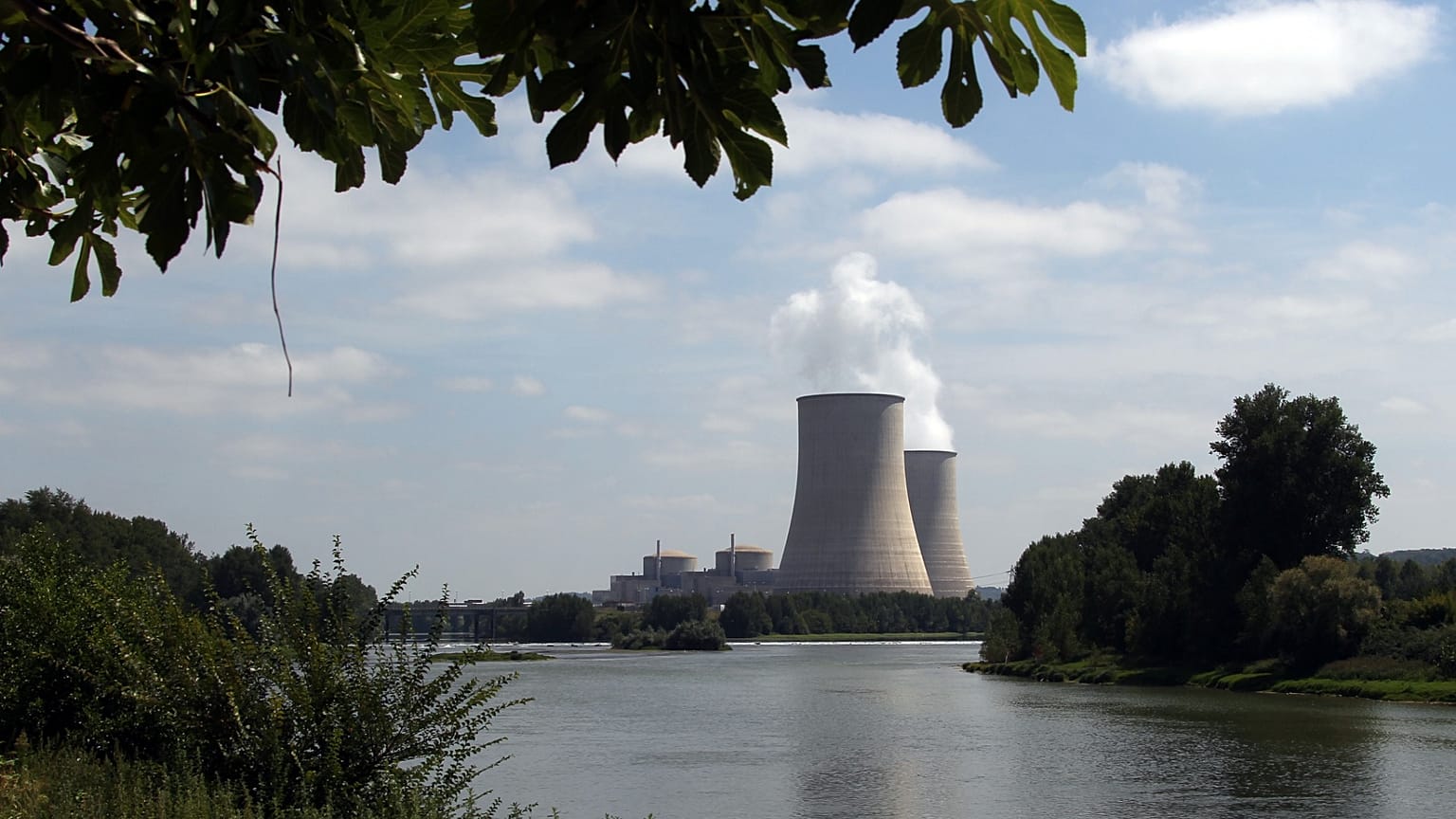
A view of the Golfech nuclear power plant in southwestern France, 6 August, 2015
Copyright AP Photo

By Gavin Blackburn & Serge Duchêne
Published on

France uses nuclear power to generate around 70% of its electricity. The country has seen nuclear power production disrupted by multiple heatwaves and droughts this year.

France recorded a more than 20% shortfall in nuclear power production capacity on Wednesday, a record deficit caused by environmental-related outages linked to drought, extreme heat and a jellyfish invasion.

France uses nuclear power to generate around 70% of its electricity. The country has seen nuclear power production disrupted by multiple heatwaves and droughts this year.

According to AFP calculations based on data published by energy group EDF since 2015, 20.4% of generating capacity was unavailable.

Between 9:45 am and 10:00 am, EDF's nuclear fleet recorded a new peak in outages due to "environmental constraints" or "external environmental causes," both in terms of the number of reactors shut down or operating at reduced output and in terms of lost generating capacity.

In total, 13 of the 57 reactors in EDF's nuclear fleet were affected. Eight reactors were completely shut down while five were operating at reduced power.

Much of the lost nuclear generating capacity was due to full or partial shutdowns at five of the six reactors at the Gravelines nuclear power plant after a swarm of jellyfish clogged pumps used to cool the units.

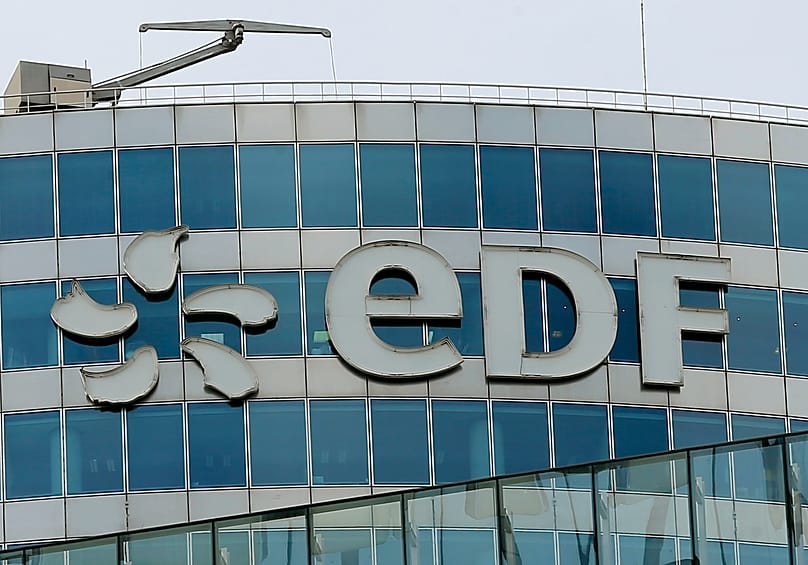
The EDF tower of French state-owned power giant Electricite de France west of Paris, 5 February, 2013
The EDF tower of French state-owned power giant Electricite de France west of Paris, 5 February, 2013 AP Photo

Experts say overfishing, plastic pollution and warming seas due to climate change have created conditions allowing jellyfish to thrive and reproduce.

Outside the Gravelines plant, the largest in Western Europe, the shutdowns or production reductions affecting other reactors are linked to extreme heat and droughts, depriving the plants of the water they need for cooling.

During droughts or heatwaves, lower river flow and higher water temperatures can force EDF to cut, or even halt, production in order to protect the environment and biodiversity.

The operator is then unable to discharge chemical or radioactive effluents or further warm rivers with its cooling water, which is returned to the river at a higher temperature.

"But there is enough leeway that this does not pose any supply problems in the short term," says Nicolas Goldberg, an energy expert at consultancy Colombus Consulting quoted by CNews.

Mount Etna eruption: Catania airport closes and ash cloud reaches as far as Libya


By Isidoro Patalano
Published on

The eruption of Mount Etna continues to bring air traffic in Sicily to a standstill, forcing Catania–Fontanarossa airport to close temporarily as ash reached Malta and as far away as Libya.

The eruption of Sicil's Mount Etna volcano, now in its sixth consecutive day, continues to disrupt air traffic in the island at the height of the summer season.

On Wednesday, Catania–Fontanarossa Airport was forced to suspend all arrivals and departures until 6 pm.

According to data from the airport's tracking system, around 55 outbound flights have been cancelled, on top of roughly 388 departures scrapped between the start of the eruption and the previous day.

Dozens of other flights have been rescheduled or diverted to other airports in the region, notably Palermo, Trapani and Comiso.

At the latter airport, operations were halted for several hours on Wednesday morning, until 10 am, because of volcanic ash.

The airport later resumed operations, with both departures and arrivals restored.

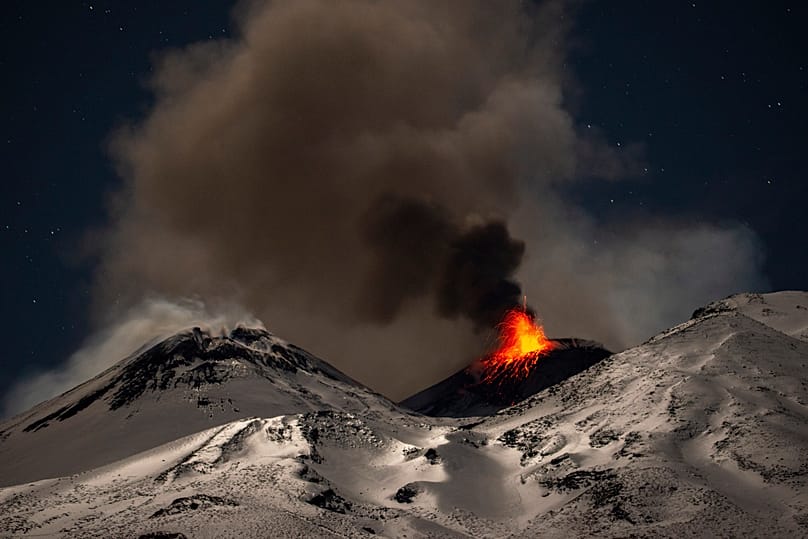
Explosive activity concentrates at the north-east crater of Mount Etna in Sicily, 29 December, 2025
Explosive activity concentrates at the north-east crater of Mount Etna in Sicily, 29 December, 2025 AP Photo

Etna causes disruption beyond Italy's borders

Etna is Europe's most active volcano, located around 220 kilometres north of Malta. The impact of its activity has spread beyond Italy's borders.

Ash clouds have forced some aircraft arriving in and departing from Malta to alter their routes.

The disruption has also affected some local celebrations on the island. The Socjeta Muzikali La Stella Levantina of Attard postponed the fireworks display scheduled for Tuesday, the Feast of Santa Marija.

The organiser explained that the fireworks launch site is close to the runway approach path and that, after consulting with authorities, it decided to postpone the display for as long as operational restrictions remain in force at the airport.

The Volcanic Ash Advisory Centre in Toulouse (VAAC) has noted that the volcanic ash cloud continues to drift south and southwest.

According to a VAAC bulletin issued on Tuesday evening, the highest concentration of ash remains over Sicily, while lower levels have been reported between eastern Malta and as far as northern Libya.

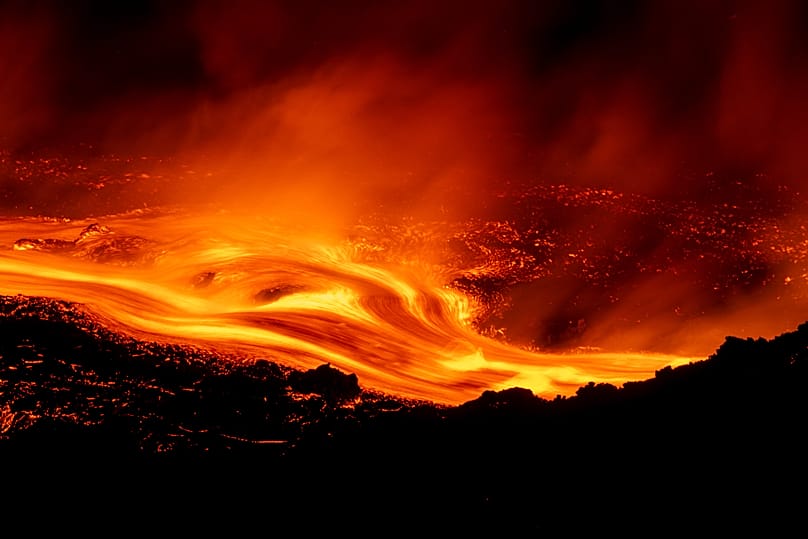
Eruptive activity continues on Mount Etna, 11 August, 2026
Eruptive activity continues on Mount Etna, 11 August, 2026 AP Photo

A political issue

Catania airport, just a few kilometres from the volcano, has been forced to close several times in recent weeks, with numerous flights cancelled or diverted to Palermo at the height of the summer season. The repeated shutdowns have reignited a political and infrastructure debate.

The Minister for Civil Protection and Maritime Policies, Nello Musumeci, has weighed in on the issue.

"What has been happening in recent days at the airports of Catania and Comiso, with cancellations, delays and serious disruption for thousands of citizens and tourists at the height of the summer season, brings back to the fore a problem that Sicily has known about for a long time," the minister said.

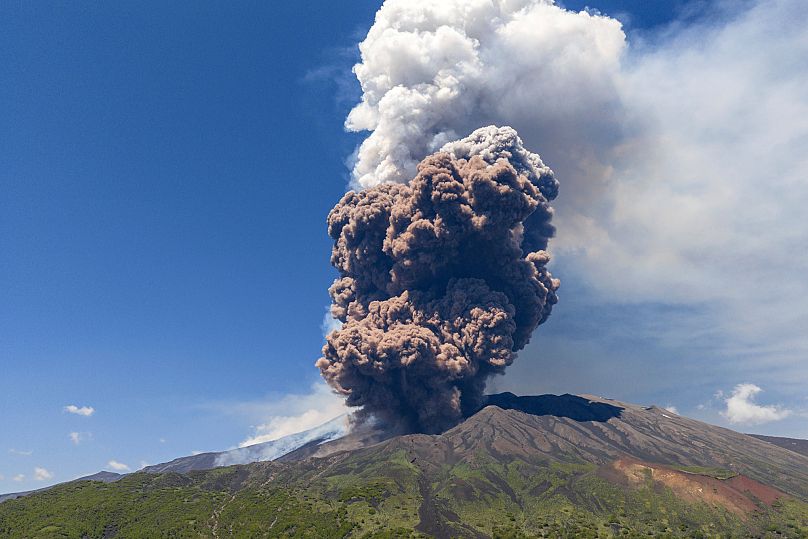
Smoke billows from Mount Etna volcano, 2 June, 2025
Smoke billows from Mount Etna volcano, 2 June, 2025 AP Photo

The minister said this is an issue he had already highlighted during his time as president of the Province of Catania, when he put forward a plan for the Sicilian airport that failed to win support.

"As far back as 1999, as president of the Province of Catania, I had pointed out the limitations of the Fontanarossa airport and its particular vulnerability linked to its proximity to Etna," he said.

"We did not stop at raising the issue: we included in the provincial spatial plan a proposal to relocate the airport. We also commissioned a preliminary study for a new airport on the plain between Catania and Enna, designed to serve seven of the island's nine provinces."

"That idea of mine did not receive any backing," Musumeci added, explaining that he returned to the issue when he was president of the region, only to encounter opposition from the airport operator and indifference from local authorities.

"The events of recent days show just one thing: it is not the volcano that is in the wrong place, but the airport."


Solar eclipse plunges parts of Spain into total darkness in first such event in a century


By Gavin Blackburn
Published on

The eclipse, a first in mainland Europe since 2006, also cast its shadow through parts of Greenland, racing south to smother part of Iceland before arcing across the Atlantic Ocean towards northern Spain.

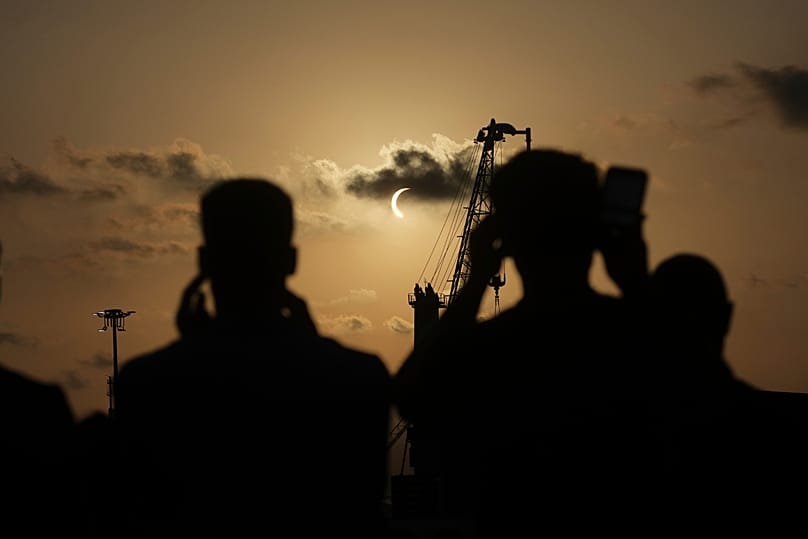
Day briefly turned to night in Spain on Wednesday, as the country witnessed its first total solar eclipse in more than a century, plunging it into eerie darkness in one of nature's greatest spectacles.

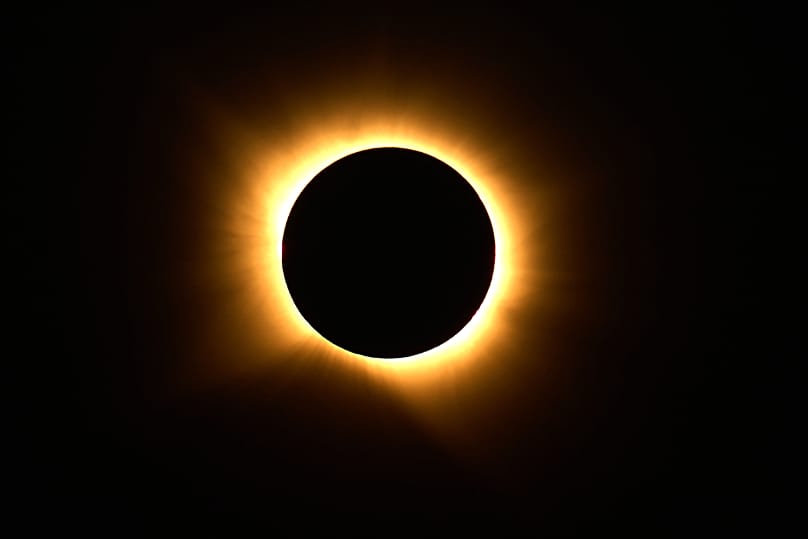
The spectral glow of the Sun's outer corona, shimmering out of the edges of the shadowy Moon, drew gasps and cheers from huge crowds, just 90 minutes after it first appeared in the remote Arctic region of northern Russia.

"This is crazy!" said one woman in Tarragona, on Spain's Mediterranean coast, as the crowd beside her applauded enthusiastically.

The eclipse, a first in mainland Europe since 2006, also cast its shadow through parts of Greenland, racing south to smother Keflavík, some 50 kilometres from Iceland's capital, Reykjavik, before arcing across the Atlantic Ocean towards northern Spain.

In Spain, the lunar shadow moved diagonally in a narrow path from the northern coast to the Balearic Islands, where tourists and locals gathered to watch on the beach, many dressed in swimming costumes accessorised with protective glasses.

Use of this content is for editorial purposes only. For inquiries regarding non-editorial uses, contact your licensing representative.
Use of this content is for editorial purposes only. For inquiries regarding non-editorial uses, contact your licensing representative. AP Photo

"Spectacular, very beautiful, truly a unique moment," said Rosa Maria Zamora, 72, who came to watch the eclipse in Colmenar Viejo, around 30 kilometres north of Madrid.

Supplies of special viewing glasses were in high demand, with huge crowds turning out to watch a partial eclipse across Europe, with the event also visible in Canada, the northern United States and northwest Africa.

A partial eclipse began in parts of northern Spain shortly after 1930 CET, prompting gasps from waiting crowds and applause from South Korean tourists in a field in Lodoso, near the northern city of Burgos.

"How wonderful!" said one woman in the crowd in Colmenar Viejo.

On the summit of the Pic du Midi, in the French Pyrenees, heavy clouds parted minutes beforehand, allowing visitors to see the spectacle, which also drew crowds in London, Paris and across the continent.

The moon covers the sun during a total solar eclipse in Palencia, 12 August, 2026
The moon covers the sun during a total solar eclipse in Palencia, 12 August, 2026 AP Photo

Disappointing view in Iceland

Earlier on Wednesday, a total eclipse plunged western Iceland into complete darkness, though heavy cloud cover and rain blocked the sight of the sun disappearing behind the moon.

Total darkness swept over Keflavík, some 50 kilometres southwest of the capital Reykjavik, at 5:47 pm local time, according reporters at the scene.

It was the first time the rare phenomenon was visible in Iceland's capital Reykjavik since 1433 and attracted thousands of tourists and locals across the country.

Astronomer and popular scientist Saevar Helgi Bragason was among the most eager spectators.

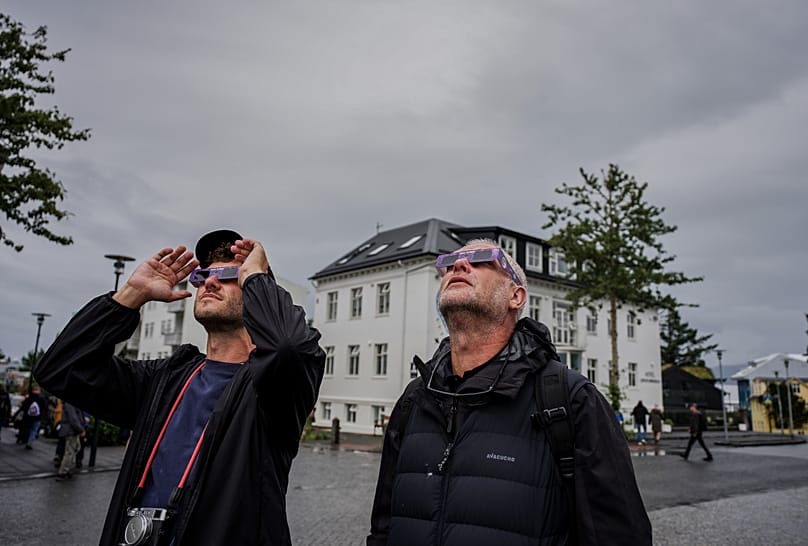
People use solar eclipse glasses to look up at the sun ahead of a solar eclipse Reykjavik, 12 August, 2026
People use solar eclipse glasses to look up at the sun ahead of a solar eclipse Reykjavik, 12 August, 2026 AP Photo

He said he had been "waiting for this day for more than 10 years" after a partial solar eclipse over Iceland on 20 March 2015.

Speaking to the AFP news agency just before the event, he said he was filled with "excitement and heartbreak" because of the unfavourable weather forecast which predicted that clouds would obscure the view of the moon blocking out the sun.

"It's almost like I've lost someone."

The total eclipse lasted the longest over the cliffs of Latrabjarg in the westernmost part of Iceland, about 2 minutes and 13 seconds, while further south in the centre of Reykjavik it lasted for just over one minute.

Hotels in Reykjavik and the rest of Iceland were fully booked, with one hotel in the western village of Breidavik receiving its first booking for the event 14 years ago, according to national broadcaster RUV.

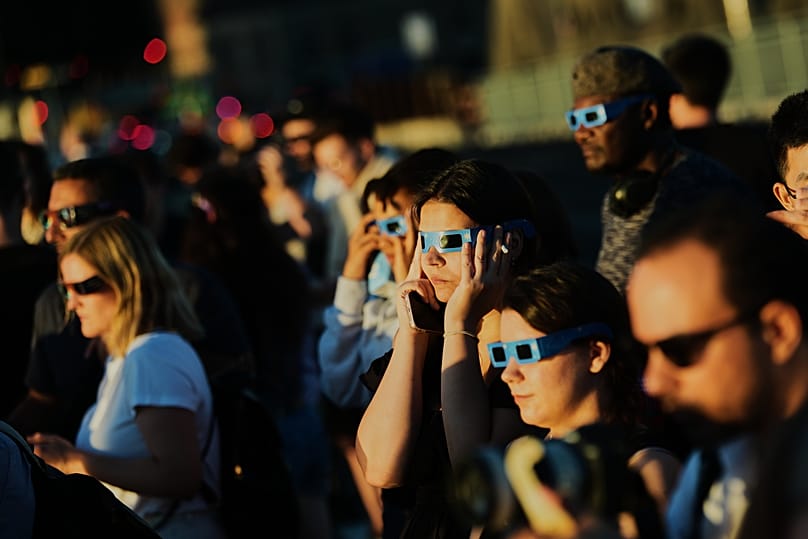
People use solar eclipse glasses to look up at the sun during a solar eclipse in Berlin, 12 August, 2026
People use solar eclipse glasses to look up at the sun during a solar eclipse in Berlin, 12 August, 2026 AP Photo

A fleeting event

Throughout human history, eclipses have stirred amazement, fear and reverence, as they appear to momentarily halt the normal course of nature.

The shadow or "umbra" cast by the alignment of Sun and Moon creates a strange twilight during which temperatures drop, shadows appear at strange angles and some animals go to sleep.

But the phenomenon is generally fleeting: in parts of Russia and Greenland, the total eclipse lasted under two-and-a-half minutes.

The partial eclipse, which occurs as the Moon starts and finishes crossing the Sun's path, dimming its light, was expected to last around one hour and 45 minutes.

The event, which was livestreamed by both NASA and the European Space Agency, presented scientists with a rare opportunity to study the Sun's atmosphere and its outermost layer, as they seek to uncover secrets about solar winds and our star's magnetic field.

SPACE/COSMOS


Sophie Adenot to become first Frenchwoman to walk in space: 'Fantastic news'

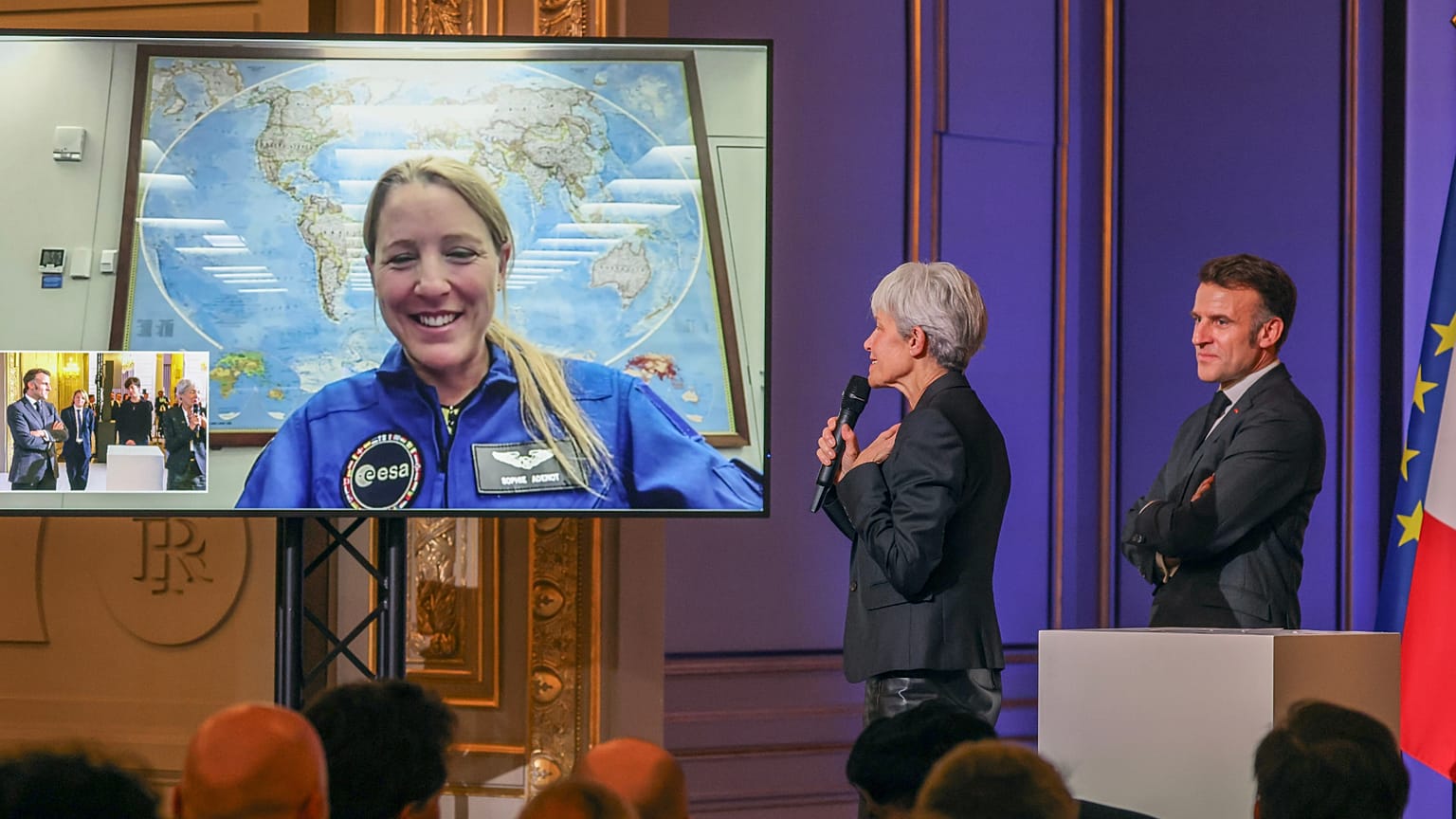
French astronaut Sophie Adenot during a public videoconference held before her departure for the International Space Station, Thursday 5 February 2026.
Copyright AP Photo
By Djeneba Sharon Camara
Published on

"I've got great news: on 18 August it'll be my turn to leave the Station," says Sophie Adenot. On the ISS since February, she is due to become France's first woman to walk in space.

Last February, Sophie Adenot made history by becoming the second French woman to travel into space, after Claudie Haigneré. Six months on, she is about to take another leap forward as she becomes the first French woman to carry out a spacewalk.

On Instagram and X, the astronaut shared the news with her followers.

On 18 August, she will perform her very first spacewalk from the ISS to help repair the station's transmission system. She will be joined by American astronaut Anil Menon, who has already taken part in a spacewalk to work on a high-bandwidth antenna used for communications with Earth.

"Two astronauts from Expedition 75 will conduct a spacewalk to replace an antenna that is vital for high-bandwidth data transmission and communications between the space station and control centres on the ground", explained NASA on its website (source in French).


 NASA 

The two astronauts are already preparing

Sophie Adenot and her crewmate have begun meticulous preparations for the mission.

"On Monday, Menon and Adenot worked together in the Quest airlock and prepared the tools they will take outside the station for the operation", NASA said.

After this mission, Sophie Adenot will become only the second European woman to carry out a spacewalk, after Italy's Samantha Cristoforetti in 2022.

The French astronaut could head back outside the station on 25 August.


Astronomers Discover A Brand-New Type Of Astrophysical Object: A Black Hole Star


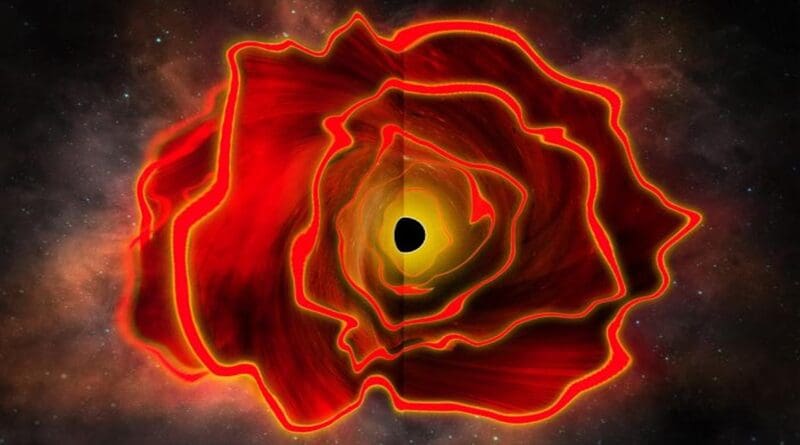
Astronomers have discovered a “black hole star,” an extremely bright red spot in the early universe that appears to be a new type of astrophysical object. It resembles an enormous star, but its energy production is closer to what a black hole might generate. CREDIT: Jose-Luis Olivares, MIT


August 12, 2026

By Eurasia Review

Key Takeaways

Astronomers using the James Webb Space Telescope have discovered an extremely bright red object in the early universe (a few hundred million years after the Big Bang) that is roughly the size of the solar system yet emits about 100 billion times more energy than any known star can produce.

 
The object, named MoM-BH*-1, is best explained as a previously unobserved “black hole star”: a central black hole about 100,000 times the mass of the Sun surrounded by a dense, star-like cocoon of hydrogen gas.
 
This type of source may account for many of the mysterious “little red dots” that appear in nearly every deep JWST image of the early universe but largely vanish by the present day.


Astronomers at MIT and elsewhere have spotted an extremely bright red spot in the early universe. The object resembles an enormous star, spanning the size of our solar system. But it also is putting out 100 billion times more energy than any known star can physically produce. In fact, such energies are closer to what a black hole might generate.

The curious combination suggests that the red spot is an entirely new type of astrophysical source. The astronomers are calling it a “black hole star.”

In a paper appearing in the journal Nature, the team presents their analysis of the new object, which they discovered using NASA’s James Webb Space Telescope (JWST). The telescope spotted the bright red dot in the very early universe, just a few hundred million years after the Big Bang.


The scientists conclude that the most likely explanation for the strange red dot is that it is a mashup of a black hole and a star — a combination that has never been observed until now. The object is likely a hugely dense cloud of gas, powered not by standard nuclear fusion, but by a central black hole.

“Our picture of this object is evolving very rapidly,” says lead author Rohan Naidu, a NASA Hubble Fellow and Pappalardo Fellow at MIT’s Kavli Institute for Astrophysics and Space Research (MKI). “We think there is a central black hole that is 100,000 times as massive as the sun. And around this black hole, there would be this very extended envelope of gas that looks like a star the size of the solar system. It’s huge.”

If the bright red dot is indeed a black hole star, it would help to solve the identity of other mysterious “little red dots” that have appeared in nearly every deep space image JWST has taken to date.

“These little red dots seem to be everywhere in the early universe but essentially disappear by the present day,” Naidu says. “What exactly these objects are has been one of the most debated topics of the JWST era.”


The study’s MIT co-authors are MKI Director Robert Simcoe, the Bruno B. Rossi Professor of Experimental Physics; and Wendy Sun ’26, along with collaborators from multiple other institutions.

A singular source

Naidu and his colleagues didn’t intend to find a black hole star. They were looking for the most distant, earliest galaxies, as part of a survey that they named “Mirage or Miracle” (MoM). The team used the JWST to look into deep space, back when the universe was a few hundred million years old. Their goal was to look for galaxies that actually formed at those early times.

“There’s been this puzzle of many bright galaxies showing up at extremely early times,” Naidu says. “What we found was that what looks like an extremely bright early galaxy, aka a ‘miracle,’ in some cases actually could be a ‘mirage.’”

As they looked through JWST’s images for intriguing sources to target with their survey, they noticed a feature that stood out from the rest: a dot that was very red, and very bright.

“When we see something very red in the universe, we often assume that it is surrounded by dust, like soot or ash,” Simcoe explains. “The same way that the wildfire smoke from Canada recently made the sky in Boston look bright red, astronomical objects can also appear redder than their intrinsic color when you see them through a veil of dust.”


But there were other signatures in the light that didn’t quite match up with what physicists expect from dust. The team also observed another strange pattern: The dot’s light was extremely bright, except below certain wavelengths, where the light completely disappeared.

This spectral drop-off is known as a “Balmer break” — a signature traditionally associated with dense gas soaking up photons in the atmospheres of stars that are a few hundred millions of years old. Vega, one of the brightest stars in the night sky shows exactly this pattern.

“The break we observed in this object is the deepest break we have ever observed in any object, ruling out ‘ordinary’ stars as the source,” Naidu says. “But it made us wonder if we were seeing a new kind of ‘stellar atmosphere,’ but on a spectacular scale.”

What’s more, the red dot’s light contained almost no signature of metals or any elements other than hydrogen and helium. “It was truly singular in so many ways,” Naidu says.


Pure light

To puzzle out what the source of the red dot could be, the team ran simulations of different scenarios to see what combination of astrophysical features could produce the red dot’s distinctive color.

“We started to ask: Could you make something that red using just hydrogen, without any dust?” Simcoe says. “To our surprise, it turns out you can, if you have an extremely dense screen of hydrogen, so dense that it looks more like the surface of an enormous star than a wispy interstellar nebula.”

Their simulations pointed to the red dot possibly being some powerful enshrouded energy source, surrounded by an extremely dense cocoon of hydrogen. If this were the case, it would explain the light-blocking Balmer break and the lack of anything other than hydrogen and helium that the astronomers observed. But it still wouldn’t explain the object’s extreme brightness.

“You have something that looks a bit like a star but is 100 billion times brighter,” Naidu says. “That means you can’t be powering this by nuclear fusion, which is the energy source that sits at the heart of all the stars we have.”

Black holes, however, routinely produce energy at the scales the team observed. Naidu and his colleagues incorporated an active, accreting black hole into their simulations of the hydrogen-cocooned star and varied the black hole’s mass, along with other parameters. They then compared the resulting brightness of the simulated “black hole star” with the brightness that JWST observed from the red dot.


From these simulations, they found the closest match, and concluded that the most likely scenario to explain the red dot, is a black hole star. Specifically, the object likely contains a central black hole that is about 100,000 times as massive as the sun. This powerful core is surrounded by a dense, star-like cocoon of hydrogen that is roughly the size of the solar system.

The team has named the object MoM-BH*-1, after the survey that detected it, as well as the moniker “black hole star – one,” which implies that the object is the first of others. The researchers suspect that black hole stars could explain many of the other little red dots that appear in JWST images. Those objects are not as bright as MoM-BH*-1.

“Every little red dot is consistent with being a black hole star, embedded in a generic early galaxy,” Naidu says. “But what is special about MoM-BH*-1 is, the black hole star is essentially completely outshining its surrounding host galaxy, such that we’re seeing pure black hole star light.”