Saturday, August 22, 2026

Tiny snail derails Trump's other massive ballroom ambition

Tom Boggioni
August 20, 2026 
RAW STORY


Trump International Golf Links entrance (Credit: REUTERS/Damien Storan)

Donald Trump's ballroom ambitions are running into trouble on two continents — and in Ireland, the obstacle is a snail.

According to The Washington Post, Trump and his family have promised to build "the nicest ballroom in Ireland" at the Trump International Golf Links & Hotel in Doonbeg, a 12,000-square-foot hall seating 320 guests.

However, unlike the fight in Washington, the roughly 300 residents of Doonbeg largely support the project. But the endangered Vertigo angustior snail, which lives in the resort's dunes, has long complicated development there. In February, planners approved the ballroom on the condition the Trumps submit a snail restoration plan.

Days later, Liam Madden — a self-described "serial objector" known for derailing developments across Ireland, and who once helped kill a Trump seawall proposal at the same resort in 2020 — stepped into the breach and filed an appeal alongside Friends of the Irish Environment, which has disrupted the massive build-out.

"If there is a God in heaven," Madden said in July, "I will win the planning appeals and capitalize on it for notoriety."

According to the Post, "He returned to the snail — this time focused on helicopters. The Trump Organization, a promotional video indicated, allows guests to be ferried in and out by helicopter. In materials published online, an aviation company, Executive Helicopters, said it has two 'heli landings' at the resort, one by the hotel and one on the golf course. To Madden, this was a 'fatal error': The Trump Organization neither mentioned the helicopters nor sought to measure their ecological impact. The ballroom proposal thus was 'tainted at law and beyond remedy,' he wrote."

Geraint Ellis, an Irish planning law expert who reviewed Madden's appeal for the Post, agreed and said the activist "seems to have found some issues that are worthy of further scrutiny."

Ireland's national appellate board is expected to rule by year's end, the Post is reporting.

Meanwhile in Washington, the $900 million White House ballroom — complete with gold-colored presidential seals — is already under construction despite a D.C. Circuit Court of Appeals ruling this month calling the project "utterly lawless" for bypassing legally required reviews.


‘Perfect Storm’ of Trump’s War and Super El Niño to Drive Food Prices Even Higher

“The world is in for one hell of a ride,” said one climate expert.


A worker assists a customer in the meat aisle in a grocery store in Miami, Florida.
(Photo by Joe Raedle/Getty Images)

Brad Reed
Aug 21, 2026
COMMON DREAMS


Experts are warning that a combination of a super El Niño climate pattern and two separate wars are threatening to put further upward pressure on food prices over the next several months.

A study released by Oxford Economics on Wednesday projects that global food prices will rise by 12% in 2026 and by 5% in 2027 due in large part to the fertilizer shortage caused by the closure in the Strait of Hormuz and increased grain prices caused by Russia’s war with Ukraine.

The strait’s closure, which began after President Donald Trump launched an illegal war with Iran in February, cut off a major shipping lane for fertilizer, whose price Oxford Economics projects will surge by 22% this year.

The four-year conflict between Russia and Ukraine, meanwhile, is putting a strain on grain supplies, as the two countries combined account for 30% of global wheat exports.

And the two wars might not be the biggest driver of higher food prices.

The Independent on Friday reported that the Met Office, the UK’s official weather forecasting service, is projecting this year’s El Niño will be “the largest since the 19th century,” with sea temperatures projected to reach 3ºC above their long-term average in the coming months.

Professor Adam Scaife, head of long range forecasting at the Met Office, told The Independent that he has “never seen an El Niño signal this intense in our forecasts,” describing the projected increase in ocean temperatures as “an unprecedented event.”

Bill McGuire, professor emeritus of geophysical hazards at University College London, told The Independent that the Met Office’s forecasts “suggest that the world is in for one hell of a ride.”

“The astonishing and unprecedented amount of heat building across the eastern Pacific Ocean,” McGuire said, “is all but certain to make this the most powerful El Niño in living memory possibly even the biggest in several centuries.”

McGuire said that this heat would manifest itself in several destructive ways over the next year, such as “bringing drought and wildfire conditions to the Amazon and parts of Australia, torrential rainfall and floods to California, and a reduced South Asian monsoon.”

In an interview with CNBC published Friday, trade and agriculture analyst Noel Fryer noted that North America and Europe have experienced very hot summers that has “decimated” some crops and has hurt grazing prospects by reducing the available supply of grass and hay.

And all this occurred, Fryer added, before the full impact of El Niño has arrived.

“It’s just a huge mix of different issues and we don’t know how they’re going to end,” said Fryer. “It’s a perfect storm.”
The ‘Most Impossible Job in the World’: Will a Woman Become the UN’s Next Chief?

In its 81 years, the UN has never had a woman as its secretary-general; as it selects its new leader, there is considerable pressure to appoint a woman. It shouldn’t be difficult since four impressive women are in the running.


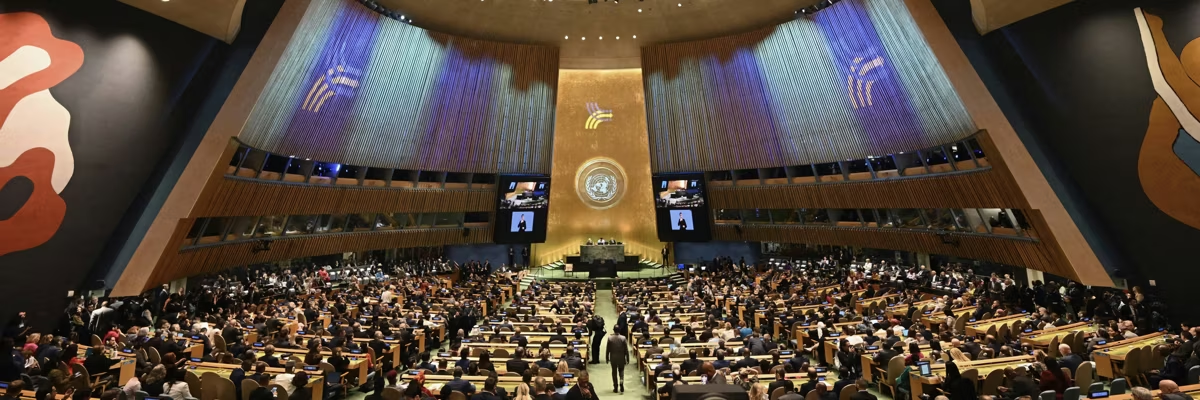
A view of the General Assembly Hall is shown at the opening of the “Summit of the Future” on the sidelines of the United Nations General Assembly at the UN Headquarters in New York, on September 22, 2024.
(Photo by Angela Weiss / AFP via Getty Images)

Connie Peck
Aug 21, 2026
Common Dreams

With the second term of the current United Nations Secretary-General, Antònio Guterres, expiring on December 31, 2026, the organization is in the process of selecting its 10th secretary-general. The UN’s first-ever Secretary-General, Trygve Lie, famously described it as “the most impossible job in the world.“ That was at a time when there were 60 UN member states and the world’s population was 2.6 billion; now there are 193 members and the world’s population is 8.3 billion. It is also, arguably, the most important job in the world.

As the current President of the General Assembly, Annalena Baerbock (1 of only 5 women ever elected to this post in 81 years; the other 76 were men), explains, “Our choice will send a powerful message about who we are, and whether we truly serve all 8 billion people of the world in all their diversity.”

The overall selection process is prescribed by Article 97 of the UN Charter: “The Secretary-General shall be appointed by the General Assembly upon the recommendation of the Security Council.” But the charter offers little other guidance, so various informal procedures and practices have evolved over time. One is the rule of regional rotation, with it currently being Latin America and the Caribbean’s “turn,“ although candidates from other regions can also be nominated, as they have been in this round. Seven candidates have been nominated to date—five from Latin America and the Caribbean (four women and one man) and two from Africa (both men). Although women have only been nominated as candidates since 1991, no woman has ever been appointed, in spite of campaigns to see a woman selected in 2006 and 2016.

It is generally accepted that candidates should come from small or mid-sized countries but not from the five permanent members (P5) of the Security Council. To be considered, a candidate must be nominated by one or more of the 193 member states, although the nomination does not have to come from the country of a candidate’s nationality.

This momentous decision will most likely occur in early October. How the process is carried out and how its outcome is perceived will have significant implications for the restoration of confidence in the UN’s ability to fulfill its mandate in an increasingly turbulent world.

For many years, the selection process was not transparent, but that has recently improved. The current round of nominations was initiated on November 25, 2025 by a joint letter from the presidents of the General Assembly and the Security Council addressed to all member states, inviting nominations and explicitly encouraging countries “to strongly consider nominating women as candidates.” The letter requested that nominations be accompanied by a nomination letter, a vision statement, a curriculum vitae, and a statement of campaign financing disclosures. As nominations were received, the two presidents jointly informed all member states and the information was posted on a UN website.

In response to General Assembly resolution 79/327 of 5 September 2025 on the revitalization of the work of the General Assembly, the president organized interactive webcast dialogues with all candidates (each lasting three hours), where candidates responded to questions posed by representatives of member states and civil society. As anyone who has ever interviewed applicants for a job knows (and as I learned from watching the webcasts), this is a useful means for identifying the best candidates.

In addition, on July 23, a UN Town Hall was organized in the General Assembly Hall by the president of the GA and broadcast live on Bloomberg, with two Bloomberg moderators presiding. All six candidates at the time (a seventh was subsequently nominated) appeared together on the stage and answered questions from the moderators, as well as the audience, who were again representatives of member states and civil society. The Security Council also organized confidential closed-door sessions with each of the candidates.

Subsequently, on July 30, the Security Council held its first confidential “straw poll,“ an iterative process repeated over a number of weeks to decide which candidate has the most support. In each, the 15 members of the council, i.e., the P5—the US, Russia, China, France and the UK and its 10 elected members (E10) who serve two-year terms (currently, Bahrain, Colombia, Congo, Denmark, Greece, Latvia, Liberia, Pakistan, Panama, and Somalia) indicate which candidates they are willing to support by voting ”encourage“ (in favor), ”discourage“ (against), or ”no opinion“ (abstain).

During the first rounds, the ballots are all identical. However, after a few rounds (the number is not specified), the council introduces color-coded ballots: “red” for the P5 and “white” for the E10. From that point onward, votes carry different political weights, since a “discourage” vote from a P5 member is equivalent to a veto. At least nine “encourage” votes with no “discourage” votes from the P5 are required for a candidate to be selected. Candidates with a poor showing may withdraw from the process, although there are no rules requiring this. Votes are intended to be confidential, but results usually leak. The leaked results of the July 30 straw poll are shown here.

Once a determination has been made, the Security Council holds a formal vote on the outcome. The council then makes a formal recommendation to the GA, which can be accepted by acclimation or by a formal vote of the 193 member states. In theory, the GA can send the council’s recommendation back for reconsideration, although this has never happened.

In 2026, there are four impressive women candidates. Readers are encouraged to examine their curricula vitae, vision statements and to view at least a portion of the webcasts. Given that the appointment of a woman in this post is long overdue, there is reason to be hopeful that this will be the outcome.

But for this to happen, it will require that none of the P5 veto her candidature. As noted by a report of Women in International Security, “All things considered, the chances of women in the running will depend heavily on the veto power of the United States or Russia who could block their appointment.” The UK, France, and China have all indicated that they are positive about the appointment of a woman, but Russia has shown resistance to framing UN leadership selection around gender, and the US, under the Trump administration, has been averse to “diversity, equity, and inclusion.”

In a report which discusses the possibility of a “discourage” vote from the P5, Rebeca Grynspan is generally “viewed as the candidate with the lowest ideological controversy,” and Carolyn Rodrigues Birkett “carries the lowest visible P5 friction,” although as Guyana’s permanent representative on the Security Council, she abstained on a 2024 US-sponsored Gaza ceasefire resolution which might annoy the US. Maria Fernanda Espinosa’s prior support for Julian Assange when she was Ecuador’s UN representative and then foreign minister could “unsettle the UK which spent years pursuing his extradition.” Finally, it is suggested that China could “pose a challenge for Michelle Bachelet” since, at the end of her tenure as UN High Commissioner for Human Rights, she authorized publication of a UN report (despite China lobbying against it) stating that abuses against Uyghurs and other Muslim minorities constitute crimes against humanity.

Although the P5 have veto power, the E10 also have power since, if seven members agree on a single candidate and refuse to change their vote, the P5 would not be able to advance a candidate, even if they all agreed—because nine votes are required. With seven E10 members voting “discourage” on a P5 candidate, there would be only eight voting “encourage” and the vote would be blocked. This has even been called the “sixth veto power.”

While support from the E10 is necessary, it is not enough. A single “discourage” vote from the P5 would end a candidate’s prospects, however, early momentum within the E10 would make it harder for a P5 member to block a candidate with sufficient E10 support without paying a reputational price.

Of course, as a Stimson report comments: “A female Secretary-General will not solve every institutional or geopolitical challenge, but electing a strong woman signals that the UN could lead by example… A female SG would reflect half the world’s population, introduce fresh perspectives into global problem-solving, and navigate institutional hurdles with skill, authority, and resilience. After 80 years, the question is no longer whether the world is ready for a woman Secretary-General, it is whether the UN is.”

This momentous decision will most likely occur in early October. How the process is carried out and how its outcome is perceived will have significant implications for the restoration of confidence in the UN’s ability to fulfill its mandate in an increasingly turbulent world. Let us fervently hope that the Security Council will make a wise decision.


Our work is licensed under Creative Commons (CC BY-NC-ND 3.0). Feel free to republish and share widely.


Connie Peck
Dr. Connie Peck is the founder of the United Nations Institute for Training and Research Programme in Peacemaking and Conflict Prevention—the first training program in negotiation and mediation for senior UN staff and diplomats (now in its 33rd year). She is the author of a number of books and numerous articles and book chapters on conflict resolution and the nuclear threat.
Full Bio >
Trump cuddles up to his bestie while railing against those pesky Dem commies

Nick Anderson.
 Raw Story
August 17, 2026 

Nick Anderson/Raw Story
The latest from Raw Story's Nick Anderson, a Pulitzer Prize-winning editorial cartoonist.

Friday, August 21, 2026

RIGHT TO LIFE

With three prisoners scheduled for execution, southern churches toll their bells

(RNS) — Faith-based anti-death penalty activists have used the bell-tolling tactic throughout the country in various waves.
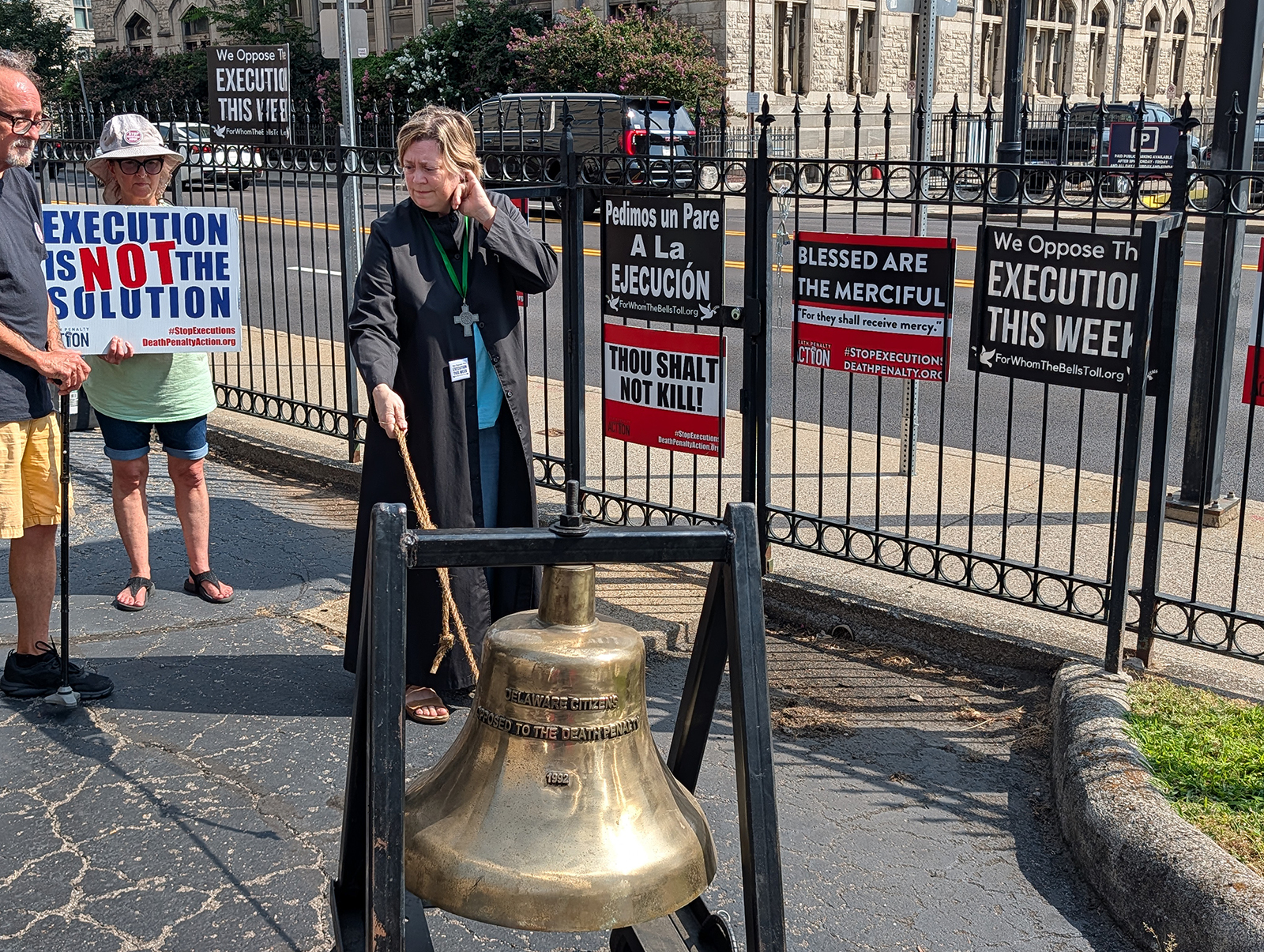
Kristen Hansen, minister of music, rings a bell in opposition to the death penalty outside First Evangelical Lutheran Church, Thursday, Aug. 13, 2026, in downtown Nashville.        (Photo courtesy of Death Penalty Action)

“ We have to be together in our opposition to executions and in our statement that this is not in alignment with the teachings of our faiths,” Abraham Bonowitz, the executive director of Death Penalty Action and co-founder of L’chaim! Jews Against the Death Penalty, told RNS. “ There should never be an execution without protest.”

On Thursday morning (Aug. 13), Tennessee executed Anthony Darrell Hines and Oklahoma executed Carlos Cuesta-Rodriguez. Alabama is scheduled to execute Jeremy Williams Thursday evening. All three were convicted of murder.

Last year saw a surge in executions, with 47 people put to death, more than any year since 2009.

The faith-based effort to toll church bells is a revival of a campaign originally inspired by Filipino Cardinal Jaime Sin’s 1983 order that Catholic churches ring their bells to call for an investigation into the assassination of opposition leader Benigno Aquino Jr., which opposition leaders claimed was ordered by President Ferdinand Marcos.

In 1999, Catholic Bishop Walter Sullivan of Richmond, Virginia, asked churches in his diocese to toll bells on the evening of an execution.

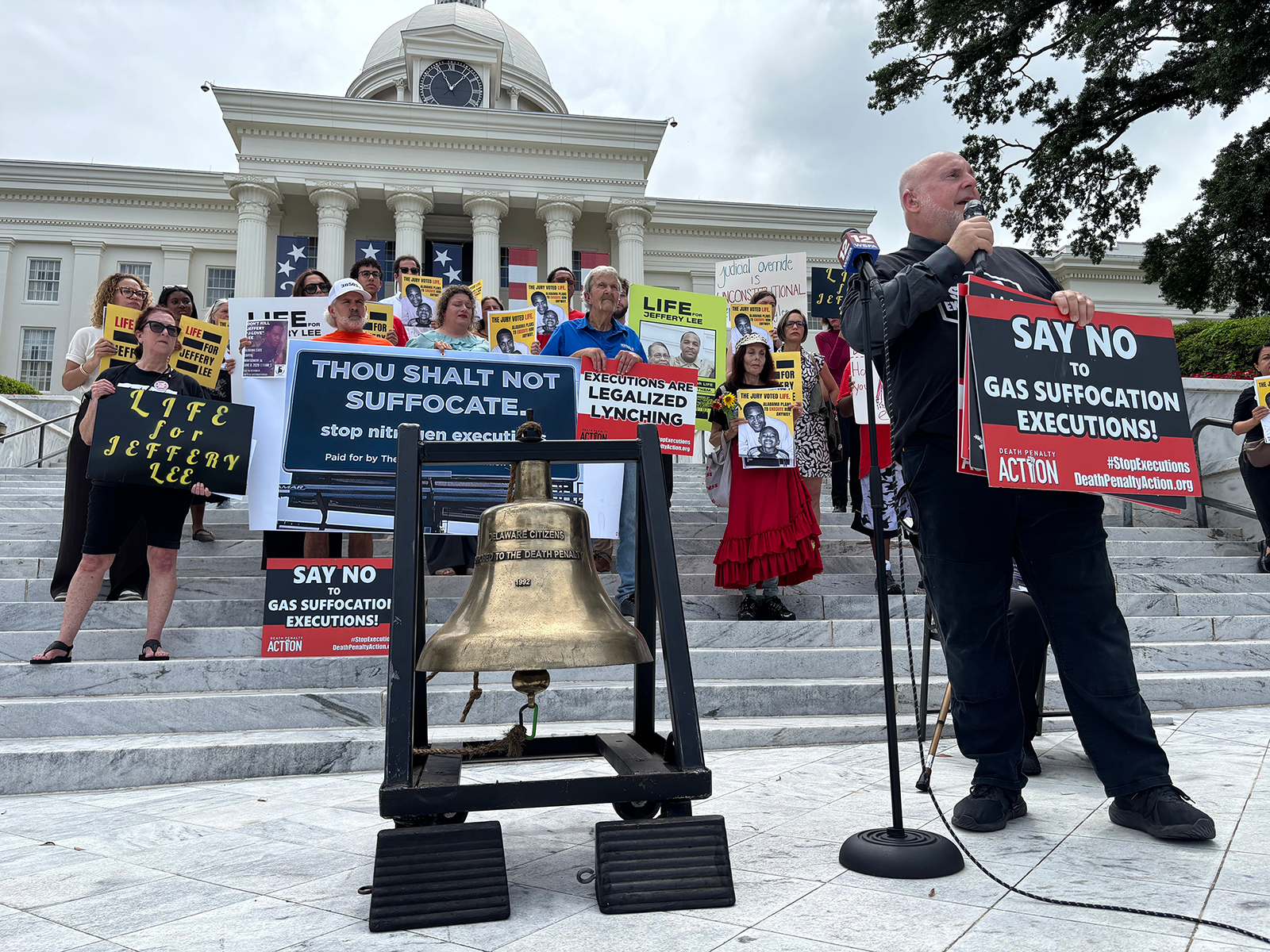
Abraham Bonowitz, of the group Death Penalty Action, leads a demonstration outside the Capitol in Montgomery, Ala., on Monday, June 8, 2026, to oppose an upcoming execution in Alabama. (AP Photo/Kim Chandler)

Faith-based anti-death penalty activists have since used the tactic throughout the country in various waves, but today is the first widespread bell tolling since Death Penalty Action took up the campaign, Bonowitz said.

In the 50 years since a Supreme Court decision reignited the modern era of the death penalty in the United States, faith-based opposition has been a cornerstone of successful abolition and commutation campaigns — even as religious Americans as a whole tend to support the death penalty, data suggests. 


In addition to the bell-ringing campaign, called For Whom the Bells Toll, Death Penalty Action hosted a virtual vigil, which included recordings of “El Malei Rachamim,” a Jewish prayer for the dead, and Psalm 23 by Cantor Michael Zoosman, an anti-death penalty activist.

Last weekend, activists with Death Penalty Action marched from Riverbend Maximum Security Institution, where Tennessee’s men’s death row is housed, to the state Capitol to call for the abolition of the death penalty.

In downtown Nashville on Thursday, First Evangelical Lutheran Church rang a bell provided by Death Penalty Action because the church does not have its own bell. That bell, created by Delaware Citizens Opposed to the Death Penalty, tolled outside as Delaware prisoners were executed in the 1990s and 2000s, until the state ended executions. Since then, it has been rung in opposition to the death penalty in more than a dozen states, according to Death Penalty Action.

Demonstrators stand in the area reserved for people opposed to the death penalty as guards on horseback are positioned nearby outside Riverbend Maximum Security Institution before the planned execution of Anthony Darrell Hines, Thursday, Aug. 13, 2026, in Nashville, Tenn. (AP Photo/Mark Humphrey)

The Rev. Travis Meier, the church’s pastor, told RNS the decision to toll the bell was inspired by 1 Corinthians  15:26,  ”The last enemy to be destroyed is death.” Meier said the death penalty is another way “ we have mechanized death as a society.”

Meier entrusted his music director to ring the bell as he went to Riverbend Maximum Security Institution to attend a prayer vigil that local activists hold outside executions.

On Wednesday, Dan Mann, a Christian who regularly visits a man on death row there, told RNS that he planned to be present for that vigil. Mann said that he regularly talks to other men in the visitation room and that he met Hines once.

Of the men he sees more often, he said, “ We tell them about our life and what we have going on. They tell us about theirs. And in all of that, we’ve become very close,” Mann said.

Inspired by Matthew 25, Mann and his wife, Bethany, have been visiting death row since 2010. In years when there are many executions, the prisoners become especially “somber” and reflective about their childhoods, he said. 

Growing up a fundamentalist Christian, Mann said he was taught that “ if you killed somebody, you deserved to die.” But he now believes that people on death row “are not the people that were put in there 40 years ago,” leading him to conclude that “there is nobody out of the reach of God’s mercy.”

Now, Mann attends Christ Church Cathedral, an Episcopal church that joined other downtown Nashville churches in asking Gov. Bill Lee to stay Hines’ execution. The governor declined to intervene earlier this week. 

Christ Church Cathedral also committed to toll its bells. The five pastors who signed a letter about it wrote, “The bells will toll for mercy, remembering the words of Scripture: ‘Mercy triumphs over judgment.’”


At the vigil outside the prison, after an opening prayer and reading scripture together, the group of a couple dozen waited for news that Hines had been executed, Meier said.

During that time, “ I pray, and I walk because I can’t sit still,” Meier said. His prayers are for Hines, his victim and her family, the prison staff and for a change of heart among legislators.

On Thursday, Meier said, the somber gathering also grappled with “frustration” over Tennessee’s most recent botched execution attempt, during which a doctor spent over an hour trying to insert an IV line to execute Tony Carruthers. Witnesses say the attempt created excruciating pain for Carruthers, who has now been spared execution for a year.

Unlike that last vigil, this time, faith leaders received news that Hines had been successfully executed. The faith leaders sang “Amazing Grace” and prayed the Commendation of the Dying, Meier said.

Meier lamented “the system of death” in the U.S. “ That three executions can happen in the same day, and a majority of the population have no clue that it’s happening — it’s just so commonplace that nobody bats an eye,” he said.

A Hindu soldier and a Muslim poet show how religious identities overlapped in 19th-century India


(The Conversation) — A scholar of India explores how two 19th-century memoirs portray a land where different religious identities coexist.
When India became independent in 1947, its constitution affirmed a commitment to religious diversity and pluralism. (Photo by Indranil MukherjeeI/AFP via Getty Images)

(The Conversation) — The growing assertion of a majority Hindu identity is fueling debates about religious pluralism in India. A 2025 Washington-based research group report documented a steady, incremental increase in hate speech since 2023 targeting religious minorities in India, while Human Rights Watch reported a rise in religious and communal violence in 2024. Much of this rhetoric and violence has been justified as defending religious identity.

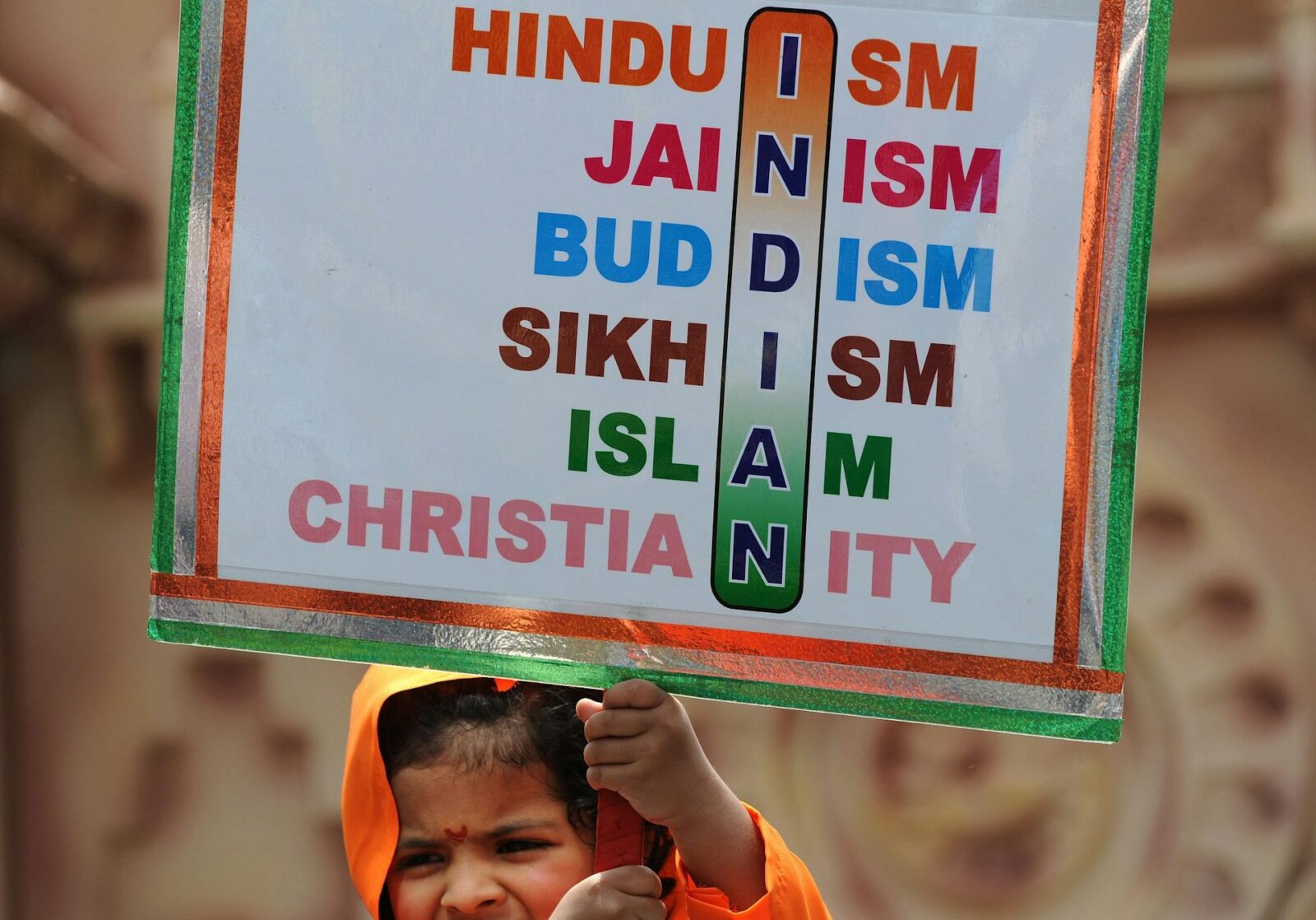
When India became independent in 1947, its constitution affirmed a commitment to religious diversity and pluralism as a national ideal.

India is one of the world’s most religiously diverse countries. While a majority of its population is Hindu, it is home to the world’s third-largest Muslim population – nearly 172 million. Christians, Sikhs, Jains and many indigenous traditions also form part of its rich religious landscape.

As a scholar of late 18th- and 19th-century India, I have studied everyday writings, military records and diaries from the period. They reveal that India was imagined as a sacred land in different ways. Two accounts illuminate this way of being – the memoirs of a Hindu soldier, born in a small village, and those of an elite Muslim poet from Delhi. Despite their different backgrounds, they describe a region where religious identities coexist with multiple forms of belonging.

Memoir of a Hindu soldier

Sitaram Pande, a soldier in the Bengal Army of the British East India Company, wrote a memoir about his travels and time in military service.

His experiences span the years leading up to and after the revolt of 1857. That year, Indian soldiers serving the British East India Company rebelled against the British commanding officers, killing many of them and sparking an uprising that spread rapidly across much of northern India. After a prolonged siege and fighting, the British recaptured Delhi and brutally suppressed the rebellion. In its aftermath, India was brought under direct control of the British Crown.

Pande served in the East India Company army in the British invasion of Afghanistan in 1838. He uses the term “Hindustan,” commonly used in writings of the time, to refer to the land east of the river Indus.

For Pande, Hindustan, which includes territories taken over by the British, is a space of beauty, romance and adventure. “Home” is the village he grew up in in north India and leaves to join the army; everything outside it in Hindustan is the “world.” As he notes, “It was 10 October 1812, and at six o’clock in the morning I … left my home to enter what for me was an unknown world.”

He describes cities he travels through in Hindustan in romantic terms, borrowing from the paradise-like landscapes, where land is depicted in the lush, idyllic ways of Sanskrit poetry. Thus, in the city of Jaipur: “Cuckoos were singing on the mango trees, and peacocks strutted about in shady places.”

Pande is a Brahmin and practices Hindu dietary and ritual practices, such as traveling with his own pots and cookware, in order to draw water from the well and cook his food. At the time Brahmins, traditionally, could accept only food cooked by another Brahmin. When he returns from Afghanistan, he has to perform a prayer to be allowed to return to his village, as he has ventured beyond the sacred geography of Hindustan.

Yet, during his travels he rescues a Hindu woman forced to be the mistress of an Arab mercenary and marries her. He goes against prevailing norms of sexual and religious purity. The woman is not a Brahmin and is considered sexually “impure” – because she is not a virgin – as per prevailing norms.

In a chapter titled “The Lovely Thakurin,” Pande describes how he rescues the woman from her captor and places her in the care of the regiment. Gradually, his “heart became inflamed with love,” and though he is warned she will bring “disgrace,” he decides to marry her.

His account reveals a sacred landscape that borrows descriptions from and echoes the ethos of sacred Sanskrit texts. At the same time, it shows that his life and sense of belonging extend far beyond that religious identity.

A Muslim poet’s vision

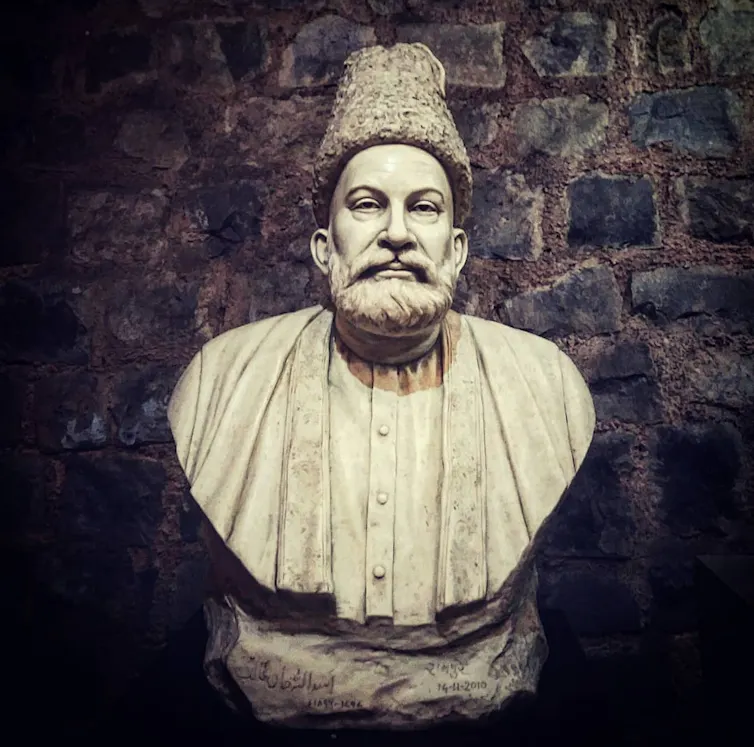
A stone bust of a man with a gray beard and mustache wearing a hat.

A bust depicts the poet Mirza Ghalib.
Banswalhemant via Wikimedia Commons, CC BY-SA

The poet Mirza Ghalib’s memoir, “Dastanbuy” – loosely translated as a “bouquet of flowers” – is an account of his years in Delhi during the revolt of 1857. The city was the site of prolonged fighting between rebel Indian forces and the British East India Company army. The Mughal empire – the Islamic dynasty that had ruled much of northern India since the 16th century – was in its final years. After British forces recaptured Delhi, much of the city was destroyed and the last Mughal emperor Bahadur Shah Zafar was exiled.

For Ghalib, Delhi was a cosmopolitan city where Hindus, Muslims and the British lived and worked side by side. As he notes, here “we composed our verses and compiled our diwans (collection of poems).” Ghalib was a devout Muslim yet drank wine despite Islam’s prohibition on alcohol. In his poetry and in his letters, he expresses a belief in the “peaceful coexistence” for all faiths.

Ghalib describes Delhi as a “garden” underneath the “stars” of the “Lord, the Emperor,” Bahadur Shah Zafar. In the Quran, paradise is described as an ideal garden. In practice, the Mughals in India, from the 15th century onward, had a rich tradition of landscaping and building waterfront and palace gardens, modeling themselves after heavenly authority and their cities after the heavenly garden. Delhi, with its palaces, forts and gardens, echoed this ethos. Ghalib describes the city, prior to its destruction by the British in 1857, in idyllic terms as “filled with tulips and the scent of roses.”

Ghalib’s memoir presents an Islamic vision of the garden through Delhi. At the same time, his identity as a cosmopolitan elite went beyond religious boundaries.

The historical look back shows that religious identities are rarely pure and that India’s sacredness has rested in religious imaginations of multiple faiths.

I believe present-day arguments that justify anti-minority violence and rhetoric in the name of defending “pure” religious identities ignore that historical sacredness.

(Aishwarya Lakshmi, Executive Director, Boniuk Institute for the Study and Advancement of Religious Tolerance, Rice University. The views expressed in this commentary do not necessarily reflect those of Religion News Service.)

Birmingham church bombing wasn’t an isolated act of terrorism – there were dozens of attacks on Black houses of worship during the Civil Rights Movement

(The Conversation) — More than 100 Black churches across the South were targeted from the 1950s-70s. Another wave of violence followed in the ‘90s – and there have been attacks in recent years, too.
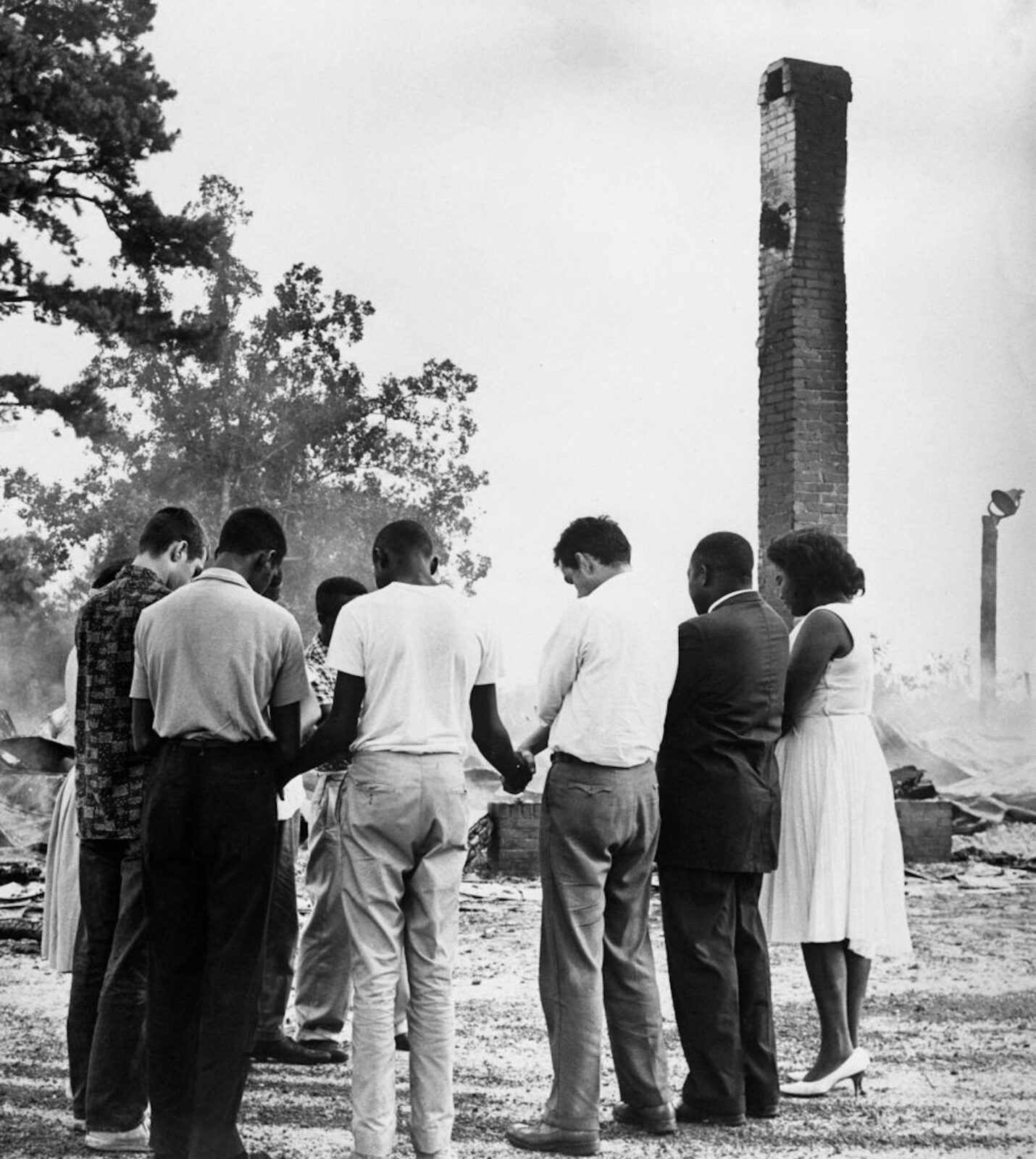
Members of the Student Nonviolent Coordinating Committee pray beside the ruins of a burned church near Dawson, Ga., in 1962. (Bettmann Archive/Getty Images)

(The Conversation) — Sept. 15 marks the anniversary of an infamous terror attack: the 1963 bombing of 16th Street Baptist Church in Birmingham, Alabama. On that Sunday morning, members of the Ku Klux Klan, a white supremacist group, planted dynamite on the east side of the brown brick building.

The bomb went off in the midst of Sunday school, at 10:22 a.m., murdering four girls: Addie Mae Collins, Cynthia Wesley and Carole Robertson, who were all 14 years old, and Denise McNair, who was 11. The blast injured 22 other churchgoers, including a 12-year-old girl, Sarah Jean Collins, who was blinded in one eye.

Sixteenth Street Baptist was the oldest Black congregation in the city of Birmingham. Just on the edge of downtown, the building had been the main hub of organizing for civil rights demonstrations that spring, known as the Children’s Crusade. More than 1,000 Black children marched together protesting segregation, famously facing down police dogs, fire hoses and jail. Months later, this church at the center of it all became the target of white supremacists.

The bombing of churchgoers in their own house of worship shocked the world. The ensuing public outrage is often credited as one of the factors that drove support for the 1964 Civil Rights Act, signed into law by President Lyndon Johnson. Yet it was not the only such attack on Black churches during the civil rights era.

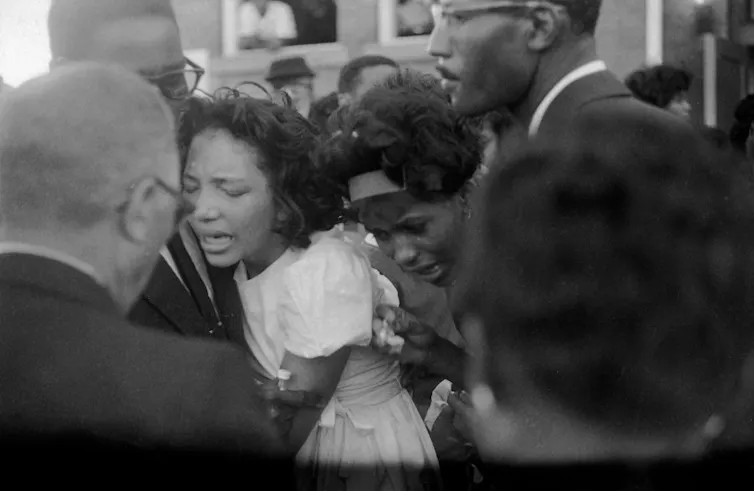
A black and white picture of two men embracing two weeping women.

Mourners at a funeral for victims of the 16th Street Baptist Church bombing in Birmingham, Ala., in September 1963.
Burton McNeely/Getty Images

I first realized the connection between attacks on Black churches and civil rights organizing the first time I taught a class about U.S. social movements, 15 years ago. As a sociologist who studies religion, social movements and race, I was shocked that I had never heard of how widespread bombings and burnings were. From that day on I have documented and studied scores of examples.

Faith and justice

To date, my research team has created a map of about 145 cases across the South, ranging from around 1954 to 1970. As with the 16th Street Baptist Church bombing, many of the attacks coincided with local civil rights activism and protest.

As sociologist Aldon Morris documented in his groundbreaking book from 1986, “The Origins of the Civil Rights Movement,” Black churches were the backbone of local organizing. Social movements need resources, such as leadership, fundraising, volunteers and participants, as well as safe places to meet in order to strategize and coordinate. At the time, all of these were found in local churches, the heart of the Black community.

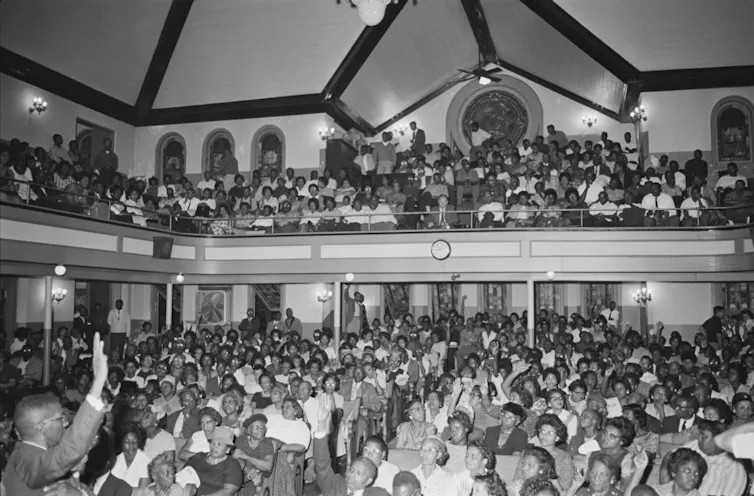
A black and white photo of a crowded church, with people packing the pews of the main sanctuary and balcony.

A rally by civil rights activists Fred Shuttlesworth and Martin Luther King Jr. at a church in Birmingham, Ala., in October 1963.
Frank Rockstroh/Michael Ochs Archives/Getty Images

These factors and the churches’ public visibility, however, made them standout targets to the white supremacists willing to use violence and terror to try to stop the movement.

Targets for violence

For example, Bethel Baptist Church and its parsonage in Birmingham, Alabama, were bombed three times. On one occasion a Black laborer in the area saw a paint can filled with lit dynamite, ran to it and tossed it into the street, where it exploded – shattering windows instead of buildings.

The first of these attacks took place on Christmas 1956, when a bomb damaged both the church and the adjoining parsonage where the Rev. Fred Shuttlesworth was sleeping. The minister was the leading figure in the Birmingham fight for civil rights. He was the head of the Alabama Christian Movement for Human Rights, the local organizing arm of the Black churches, and a member of the Southern Christian Leadership Conference, led by the Rev. Martin Luther King Jr. Shuttlesworth was a constant thorn in the side of local authorities, on account of his efforts to integrate the city’s public spaces, including its public schools.

Other examples abound. For instance, in 1961-62, one of the main civil rights organizations, the Student Nonviolent Coordinating Committee, engaged in a long battle with local authorities to protest segregation in Albany, Georgia. Over 1,000 protesters were arrested and jailed, and the campaign failed to achieve its goals. But in the moment it was significant, prolonged and highly contested.

During this period, four nearby Black churches associated with the Student Nonviolent Coordinating Committee were burned to the ground, including Shady Grove Baptist and High Hope Baptist churches.

Past and present

Unfortunately, violence against Black places of worship is not relegated to America’s history.

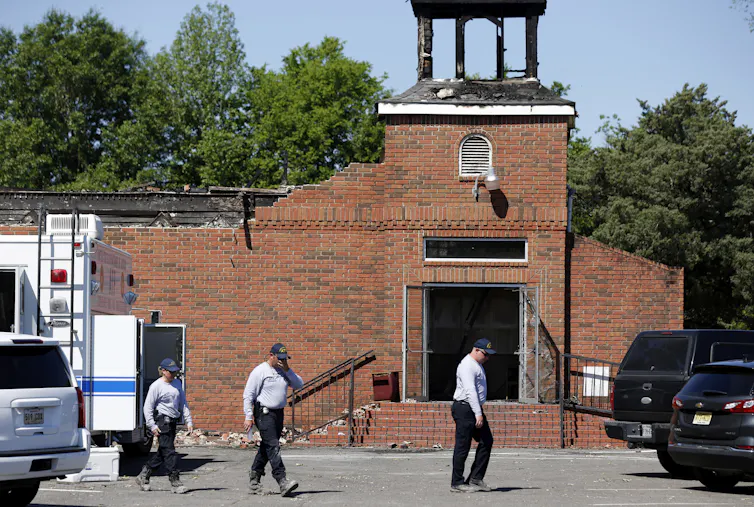
Three people in white shirts and dark pants walk across a parking lot outside a destroyed brick building.

Investigators work the crime scene of the burned ruins of the Mount Pleasant Baptist Church, one of three that had recently burned down in Louisiana’s St. Landry Parish, in April 2019.
AP Photo/Gerald Herbert

A wave of burnings in the 1990s targeted about 200 Black churches across the Southeast, as historian Christopher B. Strain documents in his 2008 book “Burning Faith.”

More recently, a Black church in Memphis, Tennessee, was a target for arson in 2025: Clayborn Temple African Methodist Episcopal Church, which played a leading role in the Civil Rights Movement. The congregation was the organizing place for the sanitation workers’ strike that brought King to town in March 1968, weeks before he was assassinated there. Strikers’ signs created at the church that said “I AM A MAN” have become famous as a symbol of human dignity.

When radical white supremacists want to strike at the heart of the Black community, they still attack Black churches – such as the 2015 shooting at Mother Emanuel AME in Charleston, South Carolina, which killed nine churchgoers during a Bible study.

In some cases, the memory of earlier attacks has been lost to history – and that is something my team is trying to change through our research at the Black Church Burning Project.

(Jason Wollschleger, Professor of Sociology, Whitworth University. The views expressed in this commentary do not necessarily reflect those of Religion News Service.)