Showing posts sorted by relevance for query KOSOVO HUMANITARIAN WAR. Sort by date Show all posts

Saturday, December 12, 2020

CLINTON'S HUMANITARIAN WAR
End of an era? 
Hague trials rock Kosovo's rebel-led politics

Issued on: 12/12/2020 - 
Former President Hashim Thaci (C) and other rebel chiefs were once feted for liberating Kosovo from Serbia in a 1990s war STRINGER AFP

Pristina (AFP)

After more than a decade at the helm, Kosovo's former guerillas may have finally met their match -- not at home but in The Hague, where they are on trial for war crimes.

It has been a long and hard fall from grace for former president Hashim Thaci and other ex-rebels who were once feted as heroes for liberating Kosovo from Serbia in a late 1990s war, with the help of NATO.

Yet if they were once associated with the joy of that victory, in recent years they have become the face of a political elite accused of corruption and clientelism that has clouded Kosovo's first decade of independence.

"They became so strong and accumulated so much wealth that it was impossible to overthrow them," said Ismet Sojeva, 66, a retired English teacher.

"Only The Hague could help bring them from the sky back down to earth".

Thaci, 52, and four others were summoned last month to the EU-backed court in the Netherlands on charges of murder, torture, persecution and other war crimes allegedly committed during the 1998-99 conflict with Serbia.

For many Kosovars, it's a complicated moment.

Most strongly defend the uprising that paved Kosovo's path to independence in 2008.

Yet the guerilla leaders themselves have long ago lost their shine among a public frustrated with enduring poverty and dysfunction.

"There is nothing they have not done to us people," said the owner of a tea shop in Pristina who declined to give his name.

"They almost destroyed the state."

- An opportunity -

With trials that could last up to eight years, political science professor Belul Beqaj believes the absence of Thaci and his cadres could open a new chapter for Kosovo politics.

Thaci's PDK party came to power in 2007 and stayed there until losing an election late last year.

"It is the beginning of the end of the era of the powerful military-political group that brought Kosovo to this state," Beqaj said.

There is a rare opportunity for a "new generation of politicians" to fill the void, adds Arben Hajrullahu, a professor of political sciences at the University of Pristina.

Yet the ex-rebels won't "leave soon and easily," he noted, with some key figures still in politics and many others holding sway in powerful state institutions.

The fragmented opposition would need to unite around a common cause, said the professor, a goal that has so far proved difficult in Kosovo's tumultuous political scene.

- War heroes -

Known as the Kosovo Liberation Army (KLA), the ethnic Albanian rebels are deeply embedded in the national narrative, with scores of streets and monuments bearing their names and stories.

They first emerged as a separatist movement in the 1990s in response to growing oppression of the ethnic Albanian population in Kosovo, then a Serbian province.

Thaci, a founding member, served as the group's political head, using a satellite phone to communicate with peace-brokering diplomats and foreign reporters.

Other prominent leaders on trial include the KLA's former spy chief Kadri Veseli, spokesman Jakup Krasniqi and chief of operations Rexhep Selimi.

After the KLA's clashes with Serbian troops intensified in 1998, the rag-tag army swelled from a few hundred members to thousands of recruits.

Victory arrived with NATO's intervention the following year, after 13,000 lives had been lost, mostly Kosovo Albanians.

The KLA was officially disbanded but its members continued to hold sway, consolidating their power through a series of attacks on political rivals.

- 'Corrupt payouts' -

Many top commanders like Thaci swapped their fatigues for politics and have circled the halls of power ever since.

Their levers of control were unveiled in 2011, when wiretapped phone conversations between then-PM Thaci and his associates showed a system of settling political appointments based on cronyism.

Thaci's clan is also accused of using their clout to scupper local investigations of KLA war crimes -- as well as attempts to obstruct the work of the tribunal in The Hague, which was set up in 2015.

"The suspects wield enormous influence over former KLA members and Kosovo in general," Hague prosecutors said in their request for arrest warrants this year.

Officials loyal to Thaci have "presided over corrupt government pay-outs" and job offers to silence potential witnesses, they alleged.

The trials may signal the end of crucial support from the West, which has long propped up Thaci and his allies.

The US has been a particularly robust ally, embracing Thaci at every turn, including when then-Vice President Joe Biden welcomed him to the White House as the "George Washington of Kosovo".

Critics say the West has backed the former rebels to prioritise stability in the region -- at the cost of rotting democratic institutions and a loss of public faith in politics.

Thaci and his men "looked only after settling and feeding themselves," said 22-year-old economy student Albulen Obrazhda, summing up the widespread disillusionment among youth, many of whom are eager to go abroad for better opportunities.

"They left us at the bottom."

© 2020 AFP

SEE https://plawiuk.blogspot.com/search?q=KOSOVO

Seeing the Forest for the Trees
Thesis on The Kosovo Crisis and the Crisis of Global Capitalism

(originally written May 1999, Bill Clinton set the stage for George W. to invade Afghanistan and Iraq for humanitarian purposes.)
http://plawiuk.blogspot.com/2005/01/war-whats-it-good-for-profit.html

Friday, March 10, 2006

Canada Out Of NATO

Another Progressive For War (PFW) the Galloping Beaver blogs on the background to the Canadian Forces operations in Afghanistan. He is cheered on by Cerberus, and cross posted it to the Torch. So now all the bases are covered.

Galloping Beaver compares the differences between Iraq and Afghanistan. Quite right too. Both operations are different. And as a progressive he is opposed to the war in Iraq but then he continues to try and justify the war in Afghanistan as different, more noble. Because it is sanctioned by the UN and NATO.


But then again when he says it is sanctioned by the UN and NATO let us not forget that so was the war on Serbia over Kosovo. And that mess is still going on. With no resoloution. So far neither the UN nor NATO sanctioned wars have had much success.

See my Seeing the Forest for the Trees
Thesis on The Kosovo Crisis and the Crisis of Global Capitalism

originally written May 1999, Bill Clinton set the stage for George W. to invade Afganistan and Iraq for humanitarian purposes.


And the comparison could be made that initially we were involved in peace keeping in the Balkans and then we were part of the War in the Balkans declared by that other Progressive For War, Bill Clinton.

At that time those who opposed imperialism and war, and the two go togther like peanutbutter and jam, also objected to that war. And that war was fought on so called humanitarian grounds, which many on the left even, mistakenly, supported. Christopher Hitchens opposed the war but now he supports the War in Iraq. Consistency is the hobgobllen of opportunists.

The Galloping Beaver says;
If Canada were to suddenly withdraw because Canadians at home are getting squeamish, those who would have us do that should be aware that Canada would be forever viewed as an unreliable ally; not by the US, but by NATO. Canada relies on collective defence treaties to keep defence affordable. Withdrawl would result in no treaties, no collective defence and a huge price to pay in going it alone.

Exactly why we should withdraw from NATO. Something the NDP called for over many decades until Jack Layton decided to arbitrarily change the party platform. Thus leaving him in the Hobbesian dilemma he is in now over whether our Troops should stay or go. NATO is a cold war relic, whose purpose was to prepare for a European theatre of war with the USSR. Without the USSR, NATO has no purpose.That was until it was utilized to end the Balkan war it's member states had encouraged in the first place (with their recognition of Slovenia and Croatia).

Then the Beaver concludes; "No matter how comfortable people are inside our borders at the moment, they should realize that the world has become a much more dangerous place, particularly since the collapse of the Soviet Union."

Yep thats when the world changed. No longer did we fear the nuclear meltdown due to the Cold War. Nor could the Soviet Union do its job as an Imperialist power in moderating its client states and holding them accountable. Thus a vacuum was created. One into which marched the USA as it declared under the Elder Bush the coming of the New World Order. And the new mask of Imperialism was adopted, that of humanitarian wars.

Military interventions on supposedly humanitarian grounds have become an established feature of the post–Cold War global order. Since September 11, this form of militarism has taken on new and unpredictable proportions. Diana Johnstone’s well-documented study demonstrates that a crucial moment in establishing in the public mind—and above all, within the political context of liberalism and the left—the legitimacy of such interventions was the “humanitarian” bombing of the former Yugoslavia in 1999.

For those of us on the Left we are opposed to Capitalism, Imperialism and War we are not pacifists, we recgonize that all wars are the bosses war which is why we say No War But Class War.

This adventure in Afghanistan clearly exposes those who are the liberals and so called progressives, the new age social democrats who will go to war for humanitarian reasons; which is the new excuse for Capitalism and Imperialism. Like they once used nationalism and honor.


Find blog posts, photos, events and more off-site about:
, , , , , , , , , , ,

Wednesday, June 24, 2020

Kosovo's indicted president withdraws from White House talks

© Provided by The Canadian Press

PRISTINA, Kosovo — Kosovo's president pulled out of a White House meeting with Serbian officials set for Saturday following his indictment on crimes against humanity and war crimes charges.

U.S. presidential envoy Richard Grenell, who invited Kosovar and Serbian officials to meet in Washington to jump start their stalled peace talks, tweeted that Kosovo President Hashim Thaci decided to postpone his trip to Washington.

Grenell wrote: "I respect his decision not to attend the discussions until the legal issues of those allegations are settle.”

The discussions will proceed and be led by Serbian President Aleksandar Vucic and Kosovo Prime Minister Avdullah Hoti, the U.S. envoy said. Grenell said.

Thaci and nine other former separatist fighters were indicted on a range of crimes against humanity and war crimes charges by a court investigating crimes against ethnic Serbs, Albanians and Roma during and after Kosovo’s 1998-99 independence war with Serbia.

The Kosovo Specialist Chambers said the indictment accuses them of being “criminally responsible for nearly 100 murders” of political opponents and Kosovar Albanian, Serb and Roma victims.

THIS IS A BREAKING NEWS UPDATE. AP’s earlier story follows below.

Kosovo’s president and nine other former separatist fighters were indicted on a range of crimes against humanity and war crimes charges, including murder, by a court investigating crimes against ethnic Serbs, Albanians and Roma during and after Kosovo’s 1998-99 independence war with Serbia.

A statement from a prosecutor of the Kosovo Specialist Chambers issued Wednesday said President Hashim Thaci and the others suspects “are criminally responsible for nearly 100 murders” of political opponents and Kosovar Albanian, Serb and Roma victims.

Other charges include enforced disappearance, persecution, and torture. Thaci commanded fighters in the Kosovo Liberation Army, or KLA, during the war.

The president's advisers did not immediately respond to requests for comment from The Associated Press. Before the indictment, Thaci planned to attend a White House meeting with Serbia’s leaders on Saturday aimed at securing a peace agreement between Serbia and Kosovo.

He already has left Kosovo, but it wasn't clear what the charges may mean for his trip to Washington.

Thaci, 52, was elected president in February 2016 and his term ends next year. He previously served as prime minister, deputy prime minister and foreign minister.

The indicted individuals also include Kadri Veseli, former parliament speaker and leader of the opposition Democratic Party of Kosovo. Thaci resigned as the party's leader when he became president, leaving the post to Veseli.

The indictment issued Wednesday was the first by the special tribunal based in The Hague. The court has been operating since 2015 and has questioned hundreds of witnesses. Kosovo’s prime minister resigned last year before he was questioned. Veseli also has been questioned, but not Thaci.

The indictment is being reviewed by a pretrial judge who will decide whether to confirm the charges, according to the statement.

The prosecutor filed the indictment following a lengthy investigation and it reflects his “determination that it can prove all of the charges beyond a reasonable doubt," the statement said.

The prosecutor also accused Thaci and Veseli of repeated efforts “to obstruct and undermine the work" of the tribunal.

“Thaci and Veseli are believed to have carried out a secret campaign to overturn the law creating the Court and otherwise obstruct the work of the Court in an attempt to ensure that they do not face justice,” the statement said.

“By taking these actions, Mr. Thaci and Mr. Veseli have put their personal interests ahead of the victims of their crimes, the rule of law, and all people of Kosovo,” it added.

Kosovo politicians resisted and resented the scrutiny of the war crimes court, repeatedly noting that Serb troops committed massacres and other atrocities during the war that went unpunished.

The 1998-1999 war left more than 10,000 dead and 1,641 are still unaccounted for. It ended after a 78-day NATO air campaign.

Kosovo is a former Serbian province that declared independence in 2008, a move Serbia does not recognize. Tensions between the two countries remain high. European Union-facilitated negotiations to normalize their relations started in March 2011 and has produced some 30 agreements, most of which were not observed.

The White House meeting was set to be the first talks between the two sides in 19 months.

——-
Semini reported from Tirana, Albania. Dusan Stojanovic contributed from Belgrade.
Zenel Zhinipotoku And Llazar Semini, The Associated Press

SEE https://plawiuk.blogspot.com/search?q=KOSOVO

Seeing the Forest for the Trees
Thesis on The Kosovo Crisis and the Crisis of Global Capitalism

(originally written May 1999, Bill Clinton set the stage for George W. to invade Afghanistan and Iraq for humanitarian purposes.)
http://plawiuk.blogspot.com/2005/01/war-whats-it-good-for-profit.html


Thursday, August 15, 2024

NATO WAR ON SERBIA 1999

Tony Blair’s lawyer had ‘serious doubt’ over bombing Serb TV studio

Britain’s attorney general secretly warned Blair against NATO strikes on civilian targets during Kosovo war, newly released files reveal.
DECLASSIFIED. UK
15 August 2024

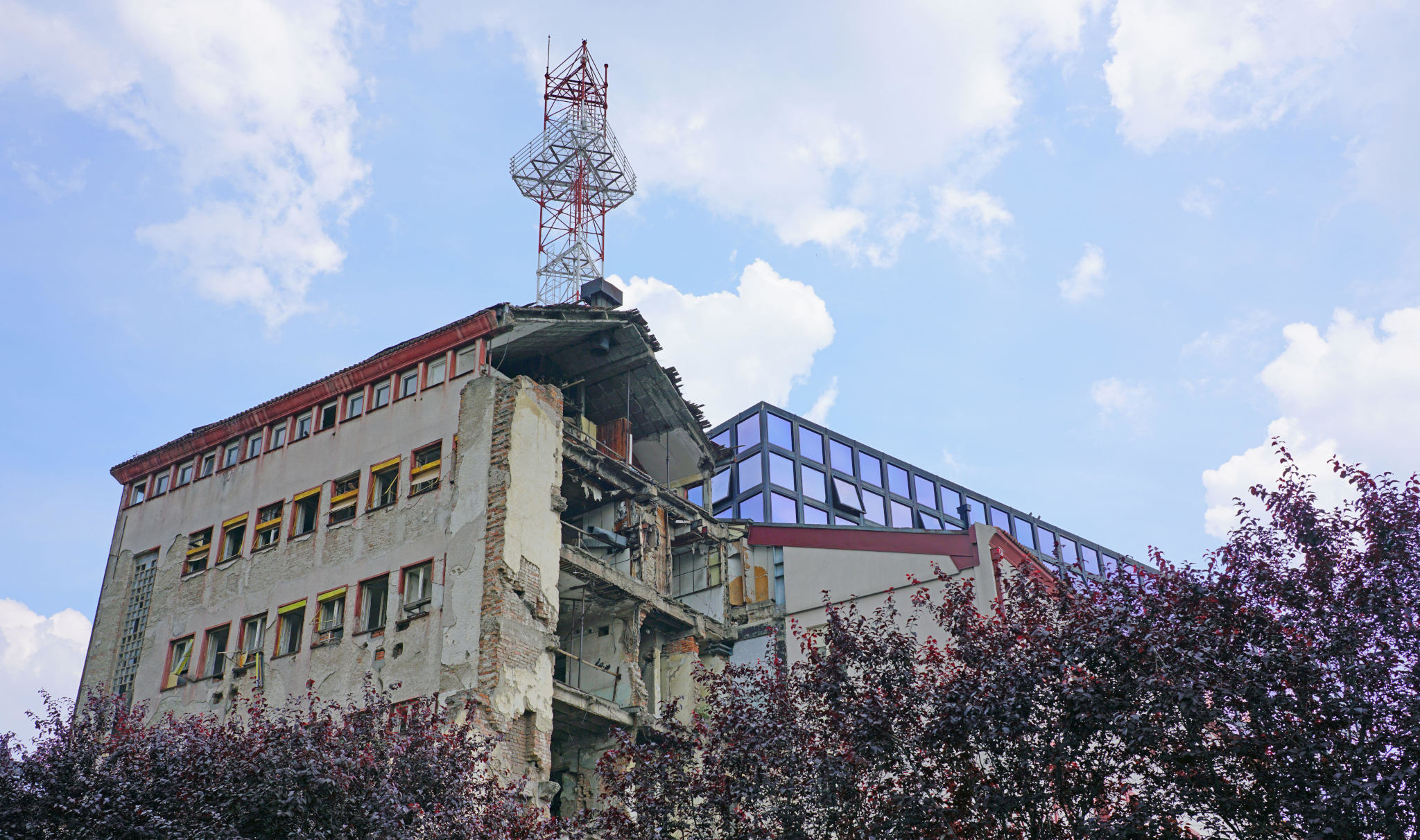
The TV station bombed by NATO. (Photo: EQRoy / Alamy

Twenty five years ago, NATO bombed the main studio of Yugoslavia’s state-owned broadcasting company, Radio-Television Serbia (RTS).

The attack at 2am on 23 April 1999 came amid Bill Clinton and Tony Blair’s “humanitarian intervention” in Kosovo.

Officially they wanted to stop Serbian president Slobodan Milosevic massacring ethnic Albanians during the breakup of Yugoslavia.

But 16 media workers were killed and 19 injured in the strike on RTS, which remains the single most controversial event in NATO’s 78-day military campaign.

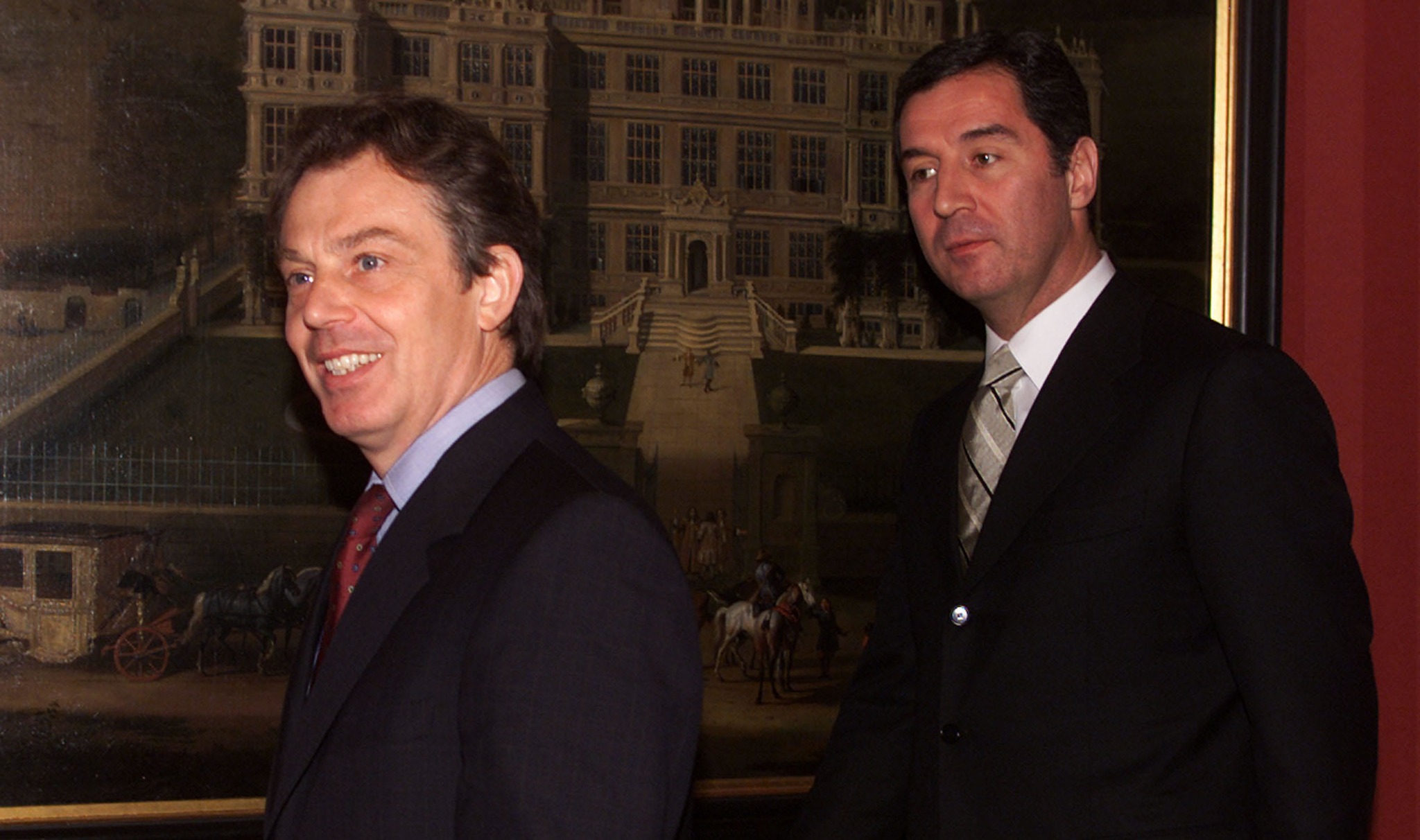
Speaking at a NATO summit the next day, Blair insisted that bombing the television station was “entirely justified” since it was “part of the apparatus of dictatorship and power of Milosevic”.

Human rights and media organisations disagreed.

Amnesty International condemned the attack as a “war crime”, while the National Union of Journalists described it as “barbarity”.

Declassified files now reveal that Blair was privately warned by Britain’s most senior lawyer about bombing civilian targets including the RTS building.

The documents, released to the National Archives last month, suggest Blair misled the British public over the legitimacy of NATO’s military operations in Yugoslavia.
War aims

Britain’s attorney general John Morris issued a “secret and personal” memorandum to Blair just hours after the bombing of the RTS studio.

“I have hesitated before minuting you personally on the legal aspects of our policy on Kosovo”, he wrote.

But Morris, alongside the legal advisers to the UK’s foreign and defence secretaries, had become concerned that NATO “could lose sight… of the legal constraints which necessarily apply to our action” in Yugoslavia.

It was “not clear” to Morris, for instance, how targets such as “radio and TV stations” related to the “relief of humanitarian need in Kosovo” – even “assuming they are lawful targets”.

Without a UN Security Council resolution, the US and Britain had justified armed intervention in Yugoslavia with reference to averting a humanitarian catastrophe.

To this end, Morris argued that it would be “a pity” if NATO’s bombing raids “gave the appearance of placing the objective of crushing or humiliating Milosevic above the objective of relieving humanitarian need”.

Morris’ concerns were not ill-placed. Earlier in April, Blair had privately confessed that “we are moving towards a situation where our aim will become removing Milosevic”, as revealed by The Grayzone.

“We will not want to say so now, but autonomy for Kosovo inside Serbia is becoming absurd. And plainly Milosevic will threaten the stability of the region as long as he remains”, Blair continued.

RELATED

When Tony Blair Bombed Montenegro


‘Serious doubt’

Yet Morris went even further in his letter to Blair, declaring that there was “room for serious doubt about the lawfulness of attacking” economic, political and media targets “whatever our overall objective”.

He continued: “I do not know for example how the… radio and television stations, or the building which housed the Serbian Television Service could have qualified as military objectives”.

NATO did not specify which of its members had taken part in the airstrikes on the RTS building at the time.

But even if Britain had not been directly involved, Morris argued that “the attacks were carried out by the Alliance acting in our name and on our behalf” and “with our full endorsement”.

The New Labour government could therefore expect “close scrutiny from parliament and the British public”.

Blair was also reminded that Britain’s actions could arise for adjudication before the International Court of Justice, the European Court of Human Rights, and the European Court of Justice.

“Litigation in any of these fora would quickly bring under judicial scrutiny the legal justification for our action against Yugoslavia”, Morris warned. “The outcome of that scrutiny cannot be guaranteed”.

In a highly contested ruling, the International Criminal Tribunal for the Former Yugoslavia (ICTY) would later conclude there were no grounds to investigate the bombing of the TV station as a possible war crime.
Milosevic ‘is not losing’

Parallel to the legal warnings, Blair was receiving gloomy reports that NATO could be losing the war.

Paddy Ashdown, then leader of the Liberal Democrats and a former MI6 officer, had visited the Balkans between 18 and 22 April and prepared a briefing for Blair about the situation on the ground.

“It is said that we are winning this war”, Ashdown wrote. “I have, as yet, seen no evidence for that and a great deal of evidence that Milosevic is not losing it”.

He continued: “I am unable to say to what extent his forces have been damaged, especially on the ground in Kosovo – though I have a suspicion that this is less, and progressing less quickly than we like to believe”.

NATO’s air strikes had been hampered by bad weather, reducing visibility over targets.

Ashdown thus recommended that NATO might intensify its military campaign by preparing for a ground invasion and collaborating with the Kosovo Liberation Army (KLA), an ethnic Albanian separatist militia with links to organised crime.

While Blair privately believed that the KLA were “not much better than the Serbs”, Ashdown said “I believe we should take a risk with them”.

He continued: “Crudely, the more we are able sensibly to use them the more effective our air operations will be and the fewer casualties we will take when the ground action starts”.

The insurgent group would effectively act as NATO’s ground force. Its leader Hashim Thaci went on to run Kosovo and is currently standing trial for war crimes in the Hague.

RELATED

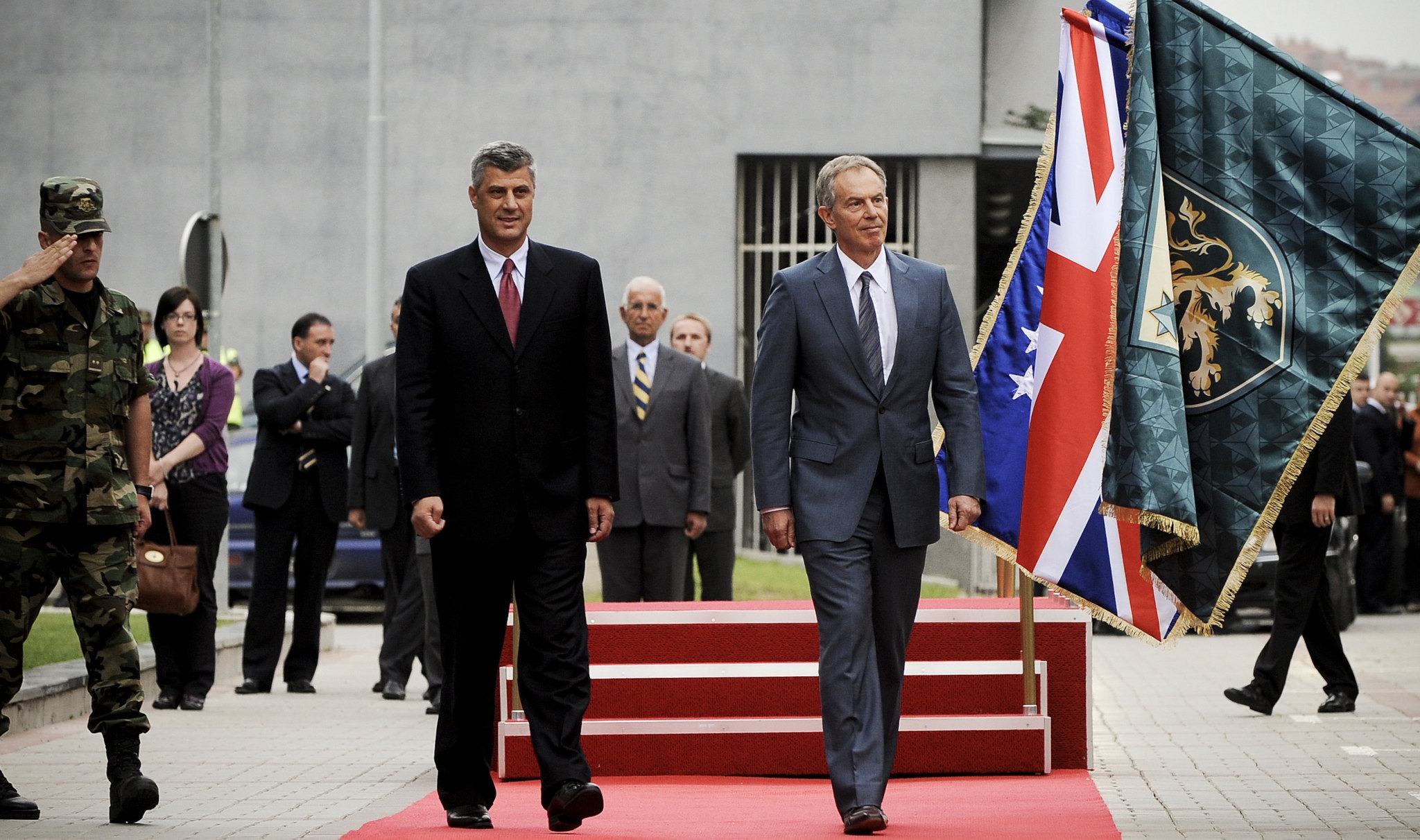
On trial for war crimes – Tony Blair’s former allies


‘Make it happen‘

Concerned about the slow progress of the war, Blair apparently ignored Morris’ legal advice and set about intensifying NATO’s bombing campaign to degrade Serbia’s economy.

Shortly after the strike on the RTS building, the British plan of action for Kosovo involved streamlining target selection so that “if the main [NATO] players agree, we just make it happen”.

This would look like a “war cabinet i.e. a small group of the big five or six” who would “take critical decisions” on what to bomb.

“All blockages to targets must be removed or the responsibility laid clearly at the door of those blocking”, the file continued.

Hesitant members of the Alliance included Portugal, Canada and Greece, who feared that escalation would result in more civilian casualties.

British plans were also drawn up for the sinking of the Yugoslav navy and the use of special forces in order to “unnerve”, “surprise”, or “deter” Milosevic.

Over the following weeks, on British guidance, NATO forces continued to hit civilian targets in Yugoslavia including Montenegro’s main airport and Belgrade’s iconic Hotel Jugoslavija.

Morris would seemingly go on to regret signing off on the hotel bombing, noting how the legal implications were “too close for comfort”.

Milosevic agreed to withdraw Serb forces from Kosovo on 9 June, after almost three months of fighting, amid threats of a NATO ground invasion.

He was overthrown by pro-democracy protests a year later and died in 2006 while awaiting trial at the Hague. Britain was the first country to recognise Kosovo’s unilateral declaration of independence from Serbia in 2008.

“War is never civilised”, declared a triumphant Blair. “But war can be necessary to uphold civilisation”.

‘Astonishing’


Morris, who passed away last year aged 91, published a memoir in 2011 which shed more light on his two-year stint as Blair’s first attorney general.

He said the New Labour government “was probably one of the most warlike of modern world governments” with a prime minister “who was ready to commit British troops with a frequency unparalleled in modern times”.

During the whole of his involvement with Kosovo, Morris “never had a personal meeting with Tony Blair”, which he described “as an astonishing state of affairs”. On one occasion at a Cabinet committee, Blair even questioned his “presence and role”.

Blair’s hostility to legal advice, according to Morris, was inspired by a “strong temptation […] to cut corners” and “to keep in line with the Americans”.

“On the great march to victory”, he wrote, “it would be pretty bad form for us to find it difficult to keep up with the others (that is, with the Americans)”.

In hindsight, the former attorney general maintained that “it was extremely doubtful whether” the RTS building “was an appropriate target”.

Morris reflected how the Kosovo campaign had “aged me a little” and found the choice of some targets “troubling”.

“I did not know how the headquarters of political parties, radio and television stations etc, could have qualified as ‘military objectives’,” he remarked.

NATO and Blair were asked to comment.

ABOUT THE AUTHOR

John McEvoy is an independent journalist who has written for International History Review, The Canary, Tribune Magazine, Jacobin and Brasil Wire.VIEW MORE ARTICLES


SEE https://plawiuk.blogspot.com/search?q=KOSOVO

Seeing the Forest for the Trees
Thesis on The Kosovo Crisis and the Crisis of Global Capitalism

(originally written May 1999, Bill Clinton set the stage for George W. to invade Afghanistan and Iraq for humanitarian purposes.)
http://plawiuk.blogspot.com/2005/01/war-whats-it-good-for-profit.html

Friday, February 19, 2021

CLINTON/NATO'HUMANITARIAN'WAR
Joe Biden's letters show new approach in Kosovo, Serbia


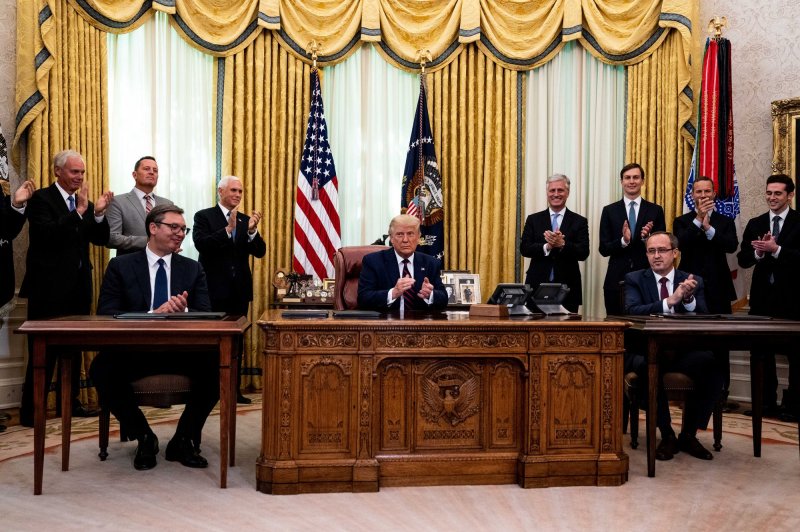
President Donald Trump participates in a signing ceremony and meeting with Serbian President Aleksandar Vucic (L) and the Kovovo Prime Minister Avdullah Hoti, in the Oval Office of the White House on September 4. 
Pool Photo by Anna Moneymaker/UPI | License Photo

WASHINGTON, Feb. 19 (UPI) -- With left-wing politician Albin Kurti elected prime minister of Kosovo last weekend, U.S. President Joe Biden has congratulated the heads of state of both Kosovo and Serbia for their independence days in letters revealing how his approach to the region will be different from that of his predecessor.

The letters, sent to honor Serbia's independence from the Ottoman Empire in 1804 and Kosovo's independence from Serbia in 2008, urged the normalization of relations between the two countries, which have struggled to move past animosities from the bloody war in the region in the 1990s. Although most Western countries recognize Kosovo, Serbia and its allies Russia and China have yet to recognize the new country -- a point of contention in the Balkans.

"We remain steadfast in our support for Serbia's goal of European integration and encourage you to continue taking the hard steps forward to reach that aim -- including instituting necessary reforms and reaching a comprehensive normalization agreement with Kosovo centered on mutual recognition," Biden wrote to Serbian President Aleksandar Vučić earlier this month.

Biden also encouraged Kosovo to move toward normalization with Serbia based on mutual recognition -- the crux of the problem between the two countries -- in a letter with a markedly different tone.

"On a personal note," Biden wrote to acting President Vjosa Osmani this week, "Kosovo continues to hold a special place for the Biden family, in honor of the time our late son Beau Biden spent working to ensure peace, justice and the rule of law for all the people of Kosovo."

The president's son spent time in Kosovo as a legal adviser for the Organization for Security and Cooperation in Europe after the war ended in 1999, leaving such an impact that the country named a main highway after him following his death in 2015.

Joe Biden also spent time in the Balkans as a senator and vice president. He last visited the region as vice president in 2016 in a final push for normalization between Kosovo and Serbia. During the trip, he attended the naming ceremony of the Joseph R. "Beau" Biden III Highway in Kosovo, where he told the country, "I believe in you" and "we love you."

RELATED Kosovo President Hashim Thaci says he will resign to face war crimes trial

In contrast, Biden's meeting with Serbian leaders in Belgrade the day before the highway ceremony was marred by the presence of hundreds of ultranationalist protesters who marched throughout the city shouting "Donald Trump." Biden's visit came about a month after Trump had been nominated as the Republican presidential candidate, garnering support from pro-Russia populists in the country.

The Trump administration showed more willingness to work with Serbia than most previous administrations, said Engjellushe Morina, a Balkans expert at the European Council on Foreign Relations. Trump officials asked what can the United States get out of the region, rather than the past U.S. position of asking what is it that the United States can do to help the region, she said.

Trump organized a much anticipated peace summit with Vučić and then Kosovo Prime Minister Avdullah Hoti in the White House to move forward peace negotiations in September, overseen by Trump's special presidential envoy for peace negotiations between the countries, Ambassador Richard Grenell.

RELATED COVID-19: Serbia arrests 71 in protest over handling of pandemic

But the meeting resulted in the signing of two documents that included no legally binding agreements, Morina said, largely focusing on economic issues and extraneously normalizing relations with Israel instead of establishing mutual recognition between the two countries.

"That agreement is very dubious in terms of the substance," said Florian Bieber, professor of Southeast European history and politics at the Centre for Southeast European Studies at the University of Graz. "Without really putting details on paper, it's not going to matter much."

Bieber said it seems Trump sent Grenell to the region to score an easy foreign policy win before he was up for re-election.

After the summit, Trump sent letters to Vučić and Hoti urging them to take more concrete steps toward normalization. Trump's letters showed less sympathy than Biden's to the Kosovo cause.

"I appreciate and share your steadfast commitment to ensuring the stability and peace of the Balkans and the world," Trump wrote to Hoti. "I look forward to continuing to strengthen the partnership between our nations and send my best wishes to you and the people of Kosovo."

Trump's note to Vučić read more warmly: "I am heartened by your tremendous courage in beginning to normalize economic relations with Kosovo," Trump wrote, "and look forward to continuing to create a safer, stronger and more prosperous region. Best wishes to you and the great people of Serbia."

Despite Kurti's belief that Grenell played a role in the demise of his first coalition, Kurti has said that he does not hold a grudge against the United States and immediately tweeted congratulations to Biden after his inauguration.

Although Vucic has not made a public statement responding to Biden's most recent letter, Serbia's Minister of Foreign Affairs Nikola Selaković said this week that if the United States and other countries expect Belgrade to recognize Kosovo, they will not find the answer they are hoping for in Serbia.

upi.com/7076788


SEE https://plawiuk.blogspot.com/search?q=KOSOVO

Seeing the Forest for the Trees
Thesis on The Kosovo Crisis and the Crisis of Global Capitalism

(originally written May 1999, Bill Clinton set the stage for George W. to invade Afghanistan and Iraq for humanitarian purposes.)
http://plawiuk.blogspot.com/2005/01/war-whats-it-good-for-profit.html



Wednesday, July 08, 2020

 
Photograph Source: Andrew Milligan sumo – CC BY 2.0
When President Clinton dropped 23,000 bombs on what was left of Yugoslavia in 1999 and NATO invaded and occupied the Yugoslav province of Kosovo, U.S. officials presented the war to the American public as a “humanitarian intervention” to protect Kosovo’s majority ethnic Albanian population from genocide at the hands of Yugoslav president Slobodan Milosevic. That narrative has been unraveling piece by piece ever since.
In 2008 an international prosecutor, Carla Del Ponte, accused U.S.-backed Prime Minister Hashim Thaci of Kosovo of using the U.S. bombing campaign as cover to murder hundreds of people to sell their internal organs on the international transplant market. Del Ponte’s charges seemed almost too ghoulish to be true. But on June 24th, Thaci, now President of Kosovo, and nine other former leaders of the CIA-backed Kosovo Liberation Army (KLA,) were finally indicted for these 20-year-old crimes by a special war crimes court at The Hague.
From 1996 on, the CIA and other Western intelligence agencies covertly worked with the Kosovo Liberation Army (KLA) to instigate and fuel violence and chaos in Kosovo. The CIA spurned mainstream Kosovar nationalist leaders in favor of gangsters and heroin smugglers like Thaci and his cronies, recruiting them as terrorists and death squads to assassinate Yugoslav police and anyone who opposed them, ethnic Serbs and Albanians alike.
As it has done in country after country since the 1950s, the CIA unleashed a dirty civil war that Western politicians and media dutifully blamed on Yugoslav authorities. But by early 1998, even U.S. envoy Robert Gelbard called the KLA a “terrorist group” and the UN Security Council condemned “acts of terrorism” by the KLA and “all external support for terrorist activity in Kosovo, including finance, arms and training.” Once the war was over and Kosovo was successfully occupied by U.S. and NATO forces, CIA sources openly touted the agency’s role in manufacturing the civil war to set the stage for NATO intervention.
By September 1998, the UN reported that 230,000 civilians had fled the civil war, mostly across the border to Albania, and the UN Security Council passed resolution 1199, calling for a ceasefire, an international monitoring mission, the return of refugees and a political resolution. A new U.S. envoy, Richard Holbrooke, convinced Yugoslav President Milosevic to agree to a unilateral ceasefire and the introduction of a 2,000 member “verification” mission from the Organization for Security and Cooperation in Europe (OSCE). But the U.S. and NATO immediately started drawing up plans for a bombing campaign to “enforce” the UN resolution and Yugoslavia’s unilateral ceasefire.
Holbrooke persuaded the chair of the OSCE, Polish foreign minister Bronislaw Geremek, to appoint William Walker, the former U.S. Ambassador to El Salvador during its civil war, to lead the Kosovo Verification Mission (KVM). The U.S. quickly hired 150 Dyncorp mercenaries to form the nucleus of Walker’s team, whose 1,380 members used GPS equipment to map Yugoslav military and civilian infrastructure for the planned NATO bombing campaign. Walker’s deputy, Gabriel Keller, France’s former Ambassador to Yugoslavia, accused Walker of sabotaging the KVM, and CIA sources later admitted that the KVM was a “CIA front” to coordinate with the KLA and spy on Yugoslavia.
The climactic incident of CIA-provoked violence that set the political stage for the NATO bombing and invasion was a firefight at a village called Racak, which the KLA had fortified as a base from which to ambush police patrols and dispatch death squads to kill local “collaborators.” In January 1999, Yugoslav police attacked the KLA base in Racak, leaving 43 men, a woman and a teenage boy dead.
After the firefight, Yugoslav police withdrew from the village, and the KLA reoccupied it and staged the scene to make the firefight look like a massacre of civilians. When William Walker and a KVM team visited Racak the next day, they accepted the KLA’s massacre story and broadcast it to the world, and it became a standard part of the narrative to justify the bombing of Yugoslavia and military occupation of Kosovo.
Autopsies by an international team of medical examiners found traces of gunpowder on the hands of nearly all the bodies, showing that they had fired weapons. They were nearly all killed by multiple gunshots as in a firefight, not by precise shots as in a summary execution, and only one victim was shot at close range. But the full autopsy results were only published much later, and the Finnish chief medical examiner accused Walker of pressuring her to alter them.
Two experienced French journalists and an AP camera crew at the scene challenged the KLA and Walker’s version of what happened in Racak. Christophe Chatelet’s article in Le Monde was headlined, “Were the dead in Racak really massacred in cold blood?” and veteran Yugoslavia correspondent Renaud Girard concluded his story in Le Figaro with another critical question, “Did the KLA seek to transform a military defeat into a political victory?”
NATO immediately threatened to bomb Yugoslavia, and France agreed to host high-level talks. But instead of inviting Kosovo’s mainstream nationalist leaders to the talks in Rambouillet, Secretary Albright flew in a delegation led by KLA commander Hashim Thaci, until then known to Yugoslav authorities only as a gangster and a terrorist.
Albright presented both sides with a draft agreement in two parts, civilian and military. The civilian part granted Kosovo unprecedented autonomy from Yugoslavia, and the Yugoslav delegation accepted that. But the military agreement would have forced Yugoslavia to accept a NATO military occupation, not just of Kosovo but with no geographical limits, in effect placing all of Yugoslavia under NATO occupation.
When Milosevich refused Albright’s terms for unconditional surrender, the U.S. and NATO claimed he had rejected peace, and war was the only answer, the “last resort.” They did not return to the UN Security Council to try to legitimize their plan, knowing full well that Russia, China and other countries would reject it. When UK Foreign Secretary Robin Cook told Albright the British government was “having trouble with our lawyers” over NATO’s plan for an illegal war of aggression against Yugoslavia, she told him to “get new lawyers.”
In March 1999, the KVM teams were withdrawn and the bombing began. Pascal Neuffer, a Swiss KVM observer reported, “The situation on the ground on the eve of the bombing did not justify a military intervention. We could certainly have continued our work. And the explanations given in the press, saying the mission was compromised by Serb threats, did not correspond to what I saw. Let’s say rather that we were evacuated because NATO had decided to bomb.”
NATO killed thousands of civilians in Kosovo and the rest of Yugoslavia, as it bombed 19 hospitals, 20 health centers, 69 schools, 25,000 homes, power stations, a national TV station, the Chinese Embassy in Belgrade and other diplomatic missions. After it invaded Kosovo, the U.S. military set up the 955-acre Camp Bondsteel, one of its largest bases in Europe, on its newest occupied territory. Europe’s Human Rights Commissioner, Alvaro Gil-Robles, visited Camp Bondsteel in 2002 and called it “a smaller version of Guantanamo,” exposing it as a secret CIA black site for illegal, unaccountable detention and torture.
But for the people of Kosovo, the ordeal was not over when the bombing stopped. Far more people had fled the bombing than the so-called “ethnic cleansing” the CIA had provoked to set the stage for it. A reported 900,000 refugees, nearly half the population, returned to a shattered, occupied province, now ruled by gangsters and foreign overlords.
Serbs and other minorities became second-class citizens, clinging precariously to homes and communities where many of their families had lived for centuries. More than 200,000 Serbs, Roma and other minorities fled, as the NATO occupation and KLA rule replaced the CIA’s manufactured illusion of ethnic cleansing with the real thing. Camp Bondsteel was the province’s largest employer, and U.S. military contractors also sent Kosovars to work in occupied Afghanistan and Iraq. In 2019, Kosovo’s per capita GDP was only $4,458, less than any country in Europe except Moldova and war-torn, post-coup Ukraine.
In 2007, a German military intelligence report described Kosovo as a “Mafia society,” based on the “capture of the state” by criminals. The report named Hashim Thaci, then the leader of the Democratic Party, as an example of “the closest ties between leading political decision makers and the dominant criminal class.” In 2000, 80% of the heroin trade in Europe was controlled by Kosovar gangs, and the presence of thousands of U.S. and NATO troops fueled an explosion of prostitution and sex trafficking, also controlled by Kosovo’s new criminal ruling class.
In 2008, Thaci was elected Prime Minister, and Kosovo unilaterally declared independence from Serbia. (The final dissolution of Yugoslavia in 2006 had left Serbia and Montenegro as separate countries.) The U.S. and 14 allies immediately recognized Kosovo’s independence, and ninety-seven countries, about half the countries in the world, have now done so. But neither Serbia nor the UN have recognized it, leaving Kosovo in long-term diplomatic limbo.
When the court in the Hague unveiled the charges against Thaci on June 24th, he was on his way to Washington for a White House meeting with Trump and President Vucic of Serbia to try to resolve Kosovo’s diplomatic impasse. But when the charges were announced, Thaci’s plane made a U-turn over the Atlantic, he returned to Kosovo and the meeting was canceled.
The accusation of murder and organ trafficking against Thaci was first made in 2008 by Carla Del Ponte, the Chief Prosecutor of the International Criminal Tribunal for the Former Yugoslavia (ICTFY), in a book she wrote after stepping down from that position. Del Ponte later explained that the ICTFY was prevented from charging Thaci and his co-defendants by the non-cooperation of NATO and the UN Mission in Kosovo. In an interview for the 2014 documentary, The Weight of Chains 2, she explained, “NATO and the KLA, as allies in the war, couldn’t act against each other.”
Human Rights Watch and the BBC followed up on Del Ponte’s allegations, and found evidence that Thaci and his cronies murdered up to 400 mostly Sebian prisoners during the NATO bombing in 1999. Survivors described prison camps in Albania where prisoners were tortured and killed, a yellow house where people’s organs were removed and an unmarked mass grave nearby.
Council of Europe investigator Dick Marty interviewed witnesses, gathered evidence and published a report, which the Council of Europe endorsed in January 2011, but the Kosovo parliament did not approve the plan for a special court in the Hague until 2015. The Kosovo Specialist Chambers and independent prosecutor’s office finally began work in 2017. Now the judges have six months to review the prosecutor’s charges and decide whether the trial should proceed.
A central part of the Western narrative on Yugoslavia was the demonization of President Milosevich of Yugoslavia, who resisted his country’s Western-backed dismemberment throughout the 1990s. Western leaders smeared Milosevich as a “New Hitler” and the “Butcher of the Balkans,” but he was still arguing his innocence when he died in a cell at The Hague in 2006.
Ten years later, at the trial of the Bosnian Serb leader Radovan Karadzic, the judges accepted the prosecution’s evidence that Milosevich strongly opposed Karadzic’s plan to carve out a Serb Republic in Bosnia. They convicted Karadzic of being fully responsible for the resulting civil war, in effect posthumously exonerating Milosevich of responsibility for the actions of the Bosnian Serbs, the most serious of the charges against him.
But the U.S.’s endless campaign to paint all its enemies as “violent dictators” and “New Hitlers” rolls on like a demonization machine on autopilot, against Putin, Xi, Maduro, Khamenei, the late Fidel Castro and any foreign leader who stands up to the imperial dictates of the U.S. government. These smear campaigns serve as pretexts for brutal sanctions and catastrophic wars against our international neighbors, but also as political weapons to attack and diminish any U.S. politician who stands up for peace, diplomacy and disarmament.
As the web of lies spun by Clinton and Albright has unraveled, and the truth behind their lies has spilled out piece by bloody piece, the war on Yugoslavia has emerged as a case study in how U.S. leaders mislead us into war. In many ways, Kosovo established the template that U.S. leaders have used to plunge our country and the world into endless war ever since. What U.S. leaders took away from their “success” in Kosovo was that legality, humanity and truth are no match for CIA-manufactured chaos and lies, and they doubled down on that strategy to plunge the U.S. and the world into endless war.
As it did in Kosovo, the CIA is still running wild, fabricating pretexts for new wars and unlimited military spending, based on sourceless accusationscovert operations and flawed, politicized intelligence. We have allowed American politicians to pat themselves on the back for being tough on “dictators” and “thugs,” letting them settle for the cheap shot instead of tackling the much harder job of reining in the real instigators of war and chaos: the U.S. military and the CIA.
But if the people of Kosovo can hold the CIA-backed gangsters who murdered their people, sold their body parts and hijacked their country accountable for their crimes, is it too much to hope that Americans can do the same and hold our leaders accountable for their far more widespread and systematic war crimes?
Iran recently indicted Donald Trump for the assassination of General Qassem Soleimani, and asked Interpol to issue an international arrest warrant for him. Trump is probably not losing sleep over that, but the indictment of such a key U.S. ally as Thaci is a sign that the U.S. “accountabilty-free zone” of impunity for war crimes is finally starting to shrink, at least in the protection it provides to U.S. allies. Should Netanyahu, Bin Salman and Tony Blair be starting to look over their shoulders?
More articles by:
Nicolas J S Davies is the author of Blood On Our Hands: the American Invasion and Destruction of Iraq and of the chapter on “Obama At War” in Grading the 44th President: A Report Card on Barack Obama’s First Term as a Progressive Leader.

Thursday, July 23, 2026

Silence Surrounds Wartime Rape Of Kosovo’s Ethnic Minorities – Analysis


Balkan Insight
By Serbeze Haxhiaj


Key Takeaways:

Roma, Ashkali, and Egyptian Women Overlooked as Wartime Rape Survivors: While over 2,100 victims of sexual violence from the 1998-1999 Kosovo war have been officially recognized, ethnic minorities (Roma, Ashkali, Egyptian) make up only ~4% of cases, with many excluded from public discourse and support due to stigma, fear, and lack of awareness.

Double Trauma and Barriers to Recognition: Many survivors faced rape by both Serbian forces during the war and Albanian perpetrators afterward, followed by ostracism, poverty, and health issues. Post-war rapes (after June 20, 1999) are not covered under current law, leaving victims without compensation or support.

Calls for Expanded Recognition and Justice: Activists urge extending recognition deadlines, removing post-war cutoffs, and addressing institutional gaps. No cases involving minority women have reached court, highlighting systemic neglect despite years of advocacy.


The Roma woman was 19 years old when she and her cousin were raped by three Serbian policemen on February 25, 1999, at the height of the Kosovo war.

They had been waiting for a bus from the southern city of Prizren to their home in Decan/Decani, when a police patrol approached, asked to see their documents, and then told them had to go to the police station.

“We got in the car with three police officers,” the woman told BIRN. “They didn’t take us to the police station, but to a forest, where they raped us.”

“We arrived home at night. Our family understood what had happened, even though I insisted that they had only beaten us.”

Today, she lives in poverty in a village near the western town of Gjakova/Djakovica, an unemployed mother of five who suffers from depression. Only recently did she apply for recognition as a survivor of wartime sexual violence, having worried for years about how to explain to her husband the 230-euromonthly payments she should receive.

“He doesn’t know about it,” the woman said of the rape. “How do I tell him about the money?”

Her plight will be familiar to many wartime rape survivors from Kosovo’s Roma, Ashkali and Egyptian communities.

BIRN spoke to eight about the neglect and ostracism they face, and how a fear of being rejected by their family, societal stigma, and a lack of awareness about their rights have stopped many from ever seeking help. They all spoke on condition of anonymity.

“Reparation, especially justice, remains largely lacking for minority women,” said Bashkim Ibishi, a Roma activist and director of a Pristina-based NGO dealing with minority issues.
Excluded from public discourse

Survivors of wartime sexual violence in Kosovo were officially recognised in 2018, much later than other categories of war victims and only after years of advocacy by women’s rights NGOs.

According to the Governmental Commission tasked with verifying applications for recognition, there are more than 2,100 recognised victims of wartime sexual violence in Kosovo, of whom all but four per cent are Albanians.

“The Government Commission does not request data on the ethnicity of victims during the verification process, and there is no discrimination,” Commission head Leonora Selmanaj told BIRN.

Minority rights groups say the suffering of ethnic minority victims of wartime sexual violence are often overlooked in public discourse around the issue.

“Roma, Ashkali and Egyptian victims of sexual violence are entirely excluded from public discourse,” said Roma activist Diana Shaka.

Shehrije Balaj, a Roma woman, testified before a court in Belgrade in 2013 to the rape she suffered on May 6, 1999, at the hands of Serbian forces who went on a killing spree in four villages near Peja/Pec, western Kosovo. Balaj, who was 29 at the time, died in September 2018 before her application reached its destination.


In 2019, BIRN reported on her story, and in 2021 she was posthumously decorated for bravery by then Kosovo President Vjosa Osmani.

In her application, seen by BIRN, Balaj described being raped a second time by two Albanian men on July 29, 1999, after the war had ended. She and her family fled the next day and spent the next 13 years in Montenegro. Her son, Haxhi, only found out about his mother’s ordeal when she testified before the court in Belgrade.
Little support

A second woman interviewed by BIRN, a member of Kosovo’s Egyptian minority, was 24 years old when she was raped in an empty house in Rahovec/Orahovec by three Serbian policemen.

It was June 1998, amid a growing insurgency against Serbian rule by Kosovo Albanian guerrillas. She had been with her husband when they were stopped by police; he was taken away, and she was raped. “I was covered in blood,” she said.

Her husband was never found. Her father-in-law’s treatment of her and her three children worsened after he found out what had happened; she eventually took them away and sought help from an NGO.

“Exclusion and shame from the community made me leave the city with my children,” the woman told BIRN.

Today, she says she suffers from depression, anxiety, and a thyroid condition. The 230 euros she receives from the state as a recognised victim of wartime sexual violence does not even cover her medication.

“Most survivors have not had access to employment or economic empowerment public initiatives,” said Roma human rights activist Shpresa Agushi.

A third woman told BIRN about being raped in May 1999 in her home in Gjakova/Djakovica by two members of a Serbian paramilitary unit. She tried to hang herself the next day, but her mother stopped her. Two months later, after the war ended, NATO-led peacekeeping troops saved her from another attempted rape, this time by an Albanian man.

For more than two decades, the woman had no access to psychological or other healthcare support.

She cannot read or write and has struggled to find work.

In 2020, she received recognition from the state and is now one of the few survivors from minority communities receiving psychosocial services from an NGO in her hometown.

The 230-euro monthly payment she now receives does not cover her and her husband’s medical expenses. They live in a single room with their two children.
‘Nobody mentions us’

Those who fled and never returned often have no means of applying for recognition as survivors of wartime sexual violence.


That includes a fourth woman interviewed by BIRN, who was 29 years old when she was raped twice by uniformed men in the police headquarters in Gjakova/Djakovica in March and April 1999. A cleaner in the building, she fled when the war ended out of fear of being targeted for revenge as a former employee of the Serbian state.

The woman now lives in the Montenegrin capital, Podgorica, but does not possess Kosovo documents.

“Living in a refugee camp for a long time, we didn’t have food, let alone a psychologist,” she told BIRN. “Sometimes I bought sedatives when I had a few dinars.”

When the war ended, ethnic minorities were targeted for revenge by Kosovo Albanian guerrillas and civilians.

Speaking to BIRN, an Egyptian woman from a village near Peja/Pec recalled five armed men entering her house on July 27, 1999, one of them in a T-shirt featuring the symbol of the guerrilla Kosovo Liberation Army, KLA. Her husband was beaten and she was dragged into the woods. “One of them raped me, and my husband was unable to help.”

The men later went next door, where they raped the woman’s neighbour.

Three days later, the family left Kosovo. Her case was documented in a 1999 reportby the Belgrade-based Humanitarian Law Centre. In the report, she says: “When they came, they asked me to find two other women and go with them. I told them I could not find any and begged them to let me go because I was a mother with small children. One of them threatened to kill my husband if I did not comply. Crying, I went there. They left me there, crying and dishonoured.”

However, Kosovo’s Law on the Status and Rights of Martyrs, Invalids, Veterans, Civilian Victims, and Victims of Sexual Violence only provides for recognition of survivors of wartime sexual violence between February 1998 and June 20, 1999, i.e. roughly a week after Serbian forces pulled out of Kosovo and the war ended.

The woman said she doesn’t “need” recognition. “But I am frustrated that nobody mentions us,” she said. “Egyptian Roma women have also been raped here.”

Agushi, the Roma rights activist, said rape survivors from minority communities barely feature in public discourse surrounding the war and wartime sexual violence; those raped after the official cessation of hostilities are doubly discriminated against.

“They are even more marginalised, and those who were victims of sexual violence after June 20, 1999, are particularly discriminated against because they are not legally recognised and remain in the shadows.”
Campaign of terror

A 2024 study of the long-term consequences of war rape in Kosovo, by Cologne-based Medica Mondiale and Medica Gjakova, found that incidents of sexual violence committed by Kosovo Albanians, while less frequent, occurred in particular after the end of hostilities and mainly targeted women from ethnic minorities.


Fatmire Haliti of the Pristina-based Kosovo Rehabilitation Centre for Torture Victims, KRCT, said there is “ongoing advocacy to extend the deadline beyond June 20, 1999, as well as to remove the deadline for applications for recognition of the status of victims of sexual violence”.

BIRN identified at least three Roma women who were victims of sexual violence twice, first at the hands of Serbian forces and then, after the war, Albanians.

Some accounts suggest rape was used as part of a campaign of terror to force Roma families to abandon their homes.

“It was a situation in which postwar Kosovo became prey to uncontrollable armed gangs that committed an increasing number of crimes,” said Jean-Christian Cady, Head of Justice at the UN Mission in Kosovo from 2000 to 2004.

One, for example, was 30 years old when she was raped on July 3, 1999, weeks after the end of the war, at her in Mitrovica by two men. Her family was forced to leave their home, which was then occupied by other people. She currently lives in the northern Serbian city of Novi Sad.

Another was 14 when she was raped on June 12, 1999, the day after the war officially ended.

She never reported the rape, but in August 2004, a former KLA guerrilla was arrested in Montenegro and extradited to Serbia, where he was sentenced to 13 years in prison for killing two Serbs and a Roma in June 1999 after the war officially ended.

Today, the woman has four children and lives in a shelter for displaced people. She suffers from diabetes and depression. After initially being denied, she was finally recognised as a victim of wartime sexual violence.

“I was afraid to apply earlier because my case became public during the trial,” she said.

Not a single case concerning wartime sexual violence against Roma, Ashkali or Egyptian women has ever reached court in Kosovo, nor is there any open investigation.


About Balkan Insight

The Balkan Insight (formerly the Balkin Investigative Reporting Network, BIRN) is a close group of editors and trainers that enables journalists in the region to produce in-depth analytical and investigative journalism on complex political, economic and social themes. BIRN emerged from the Balkan programme of the Institute for War & Peace Reporting, IWPR, in 2005. The original IWPR Balkans team was mandated to localise that programme and make it sustainable, in light of changing realities in the region and the maturity of the IWPR intervention. Since then, its work in publishing, media training and public debate activities has become synonymous with quality, reliability and impartiality. A fully-independent and local network, it is now developing as an efficient and self-sustainable regional institution to enhance the capacity for journalism that pushes for public debate on European-oriented political and economic reform.
View all posts by Balkan Insight →