As Brazil prepares to host the UN COP30 climate summit in the Amazon next month, the country's president Luiz Inacio Lula da Silva has clocked impressive climate wins on curbing deforestation, legalising indigenous land reserves and securing conservation funding.
Issued on: 14/10/2025
By: FRANCE 24
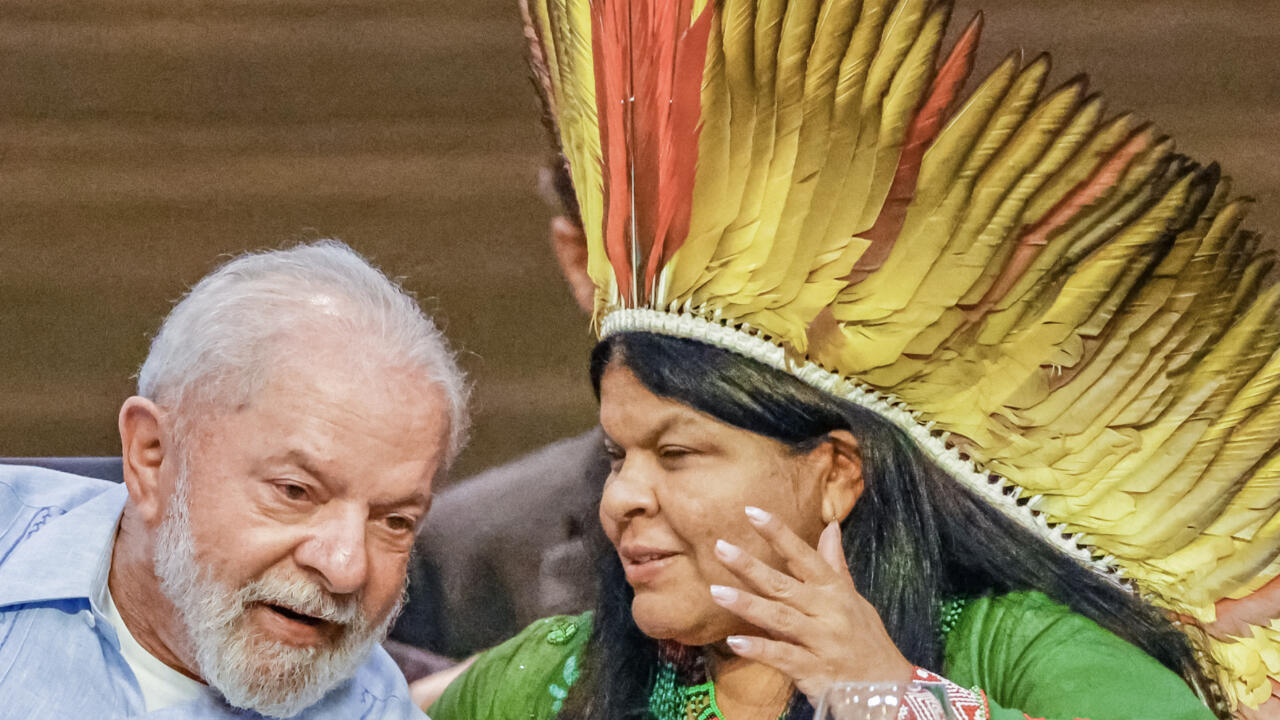
Brazil's president has slashed deforestation in the Amazon and worked to better protect Indigenous people, giving him a generally positive environmental record as he prepares to host COP30 UN climate talks in a month.
However, veteran leftist Luiz Inacio Lula da Silva faces a strong agribusiness lobby in congress that has tried to weaken environmental laws, and the president has enraged green activists with his support for the expansion of oil exploration.
This is what experts say he is doing right:
Brazil's climate comeback
The 79-year-old has returned to office after years of rampant Amazon deforestation under his climate-sceptic predecessor Jair Bolsonaro.
"Brazil is back," he declared at COP27 in Egypt shortly after his re-election, receiving a rock star's welcome as he pledged to protect a rainforest with billions of carbon-absorbing trees that are a key buffer against global warming.
He announced plans to host COP30 in the Amazon itself so world leaders could get a first-hand look at one of Earth’s richest ecosystems.
Another strong message was Lula's choice of environment minister, Marina Silva – who cut deforestation dramatically during his first term.
The pair have previously feuded over the clash between development goals and environmental protection.
They set about rebuilding Brazil's environmental agencies and Lula also reactivated the Amazon Fund, an international financing mechanism to protect the forest that had been suspended under Bolsonaro.
Slowing forest loss
Lula pledged zero deforestation by 2030.
In the last year of Bolsonaro's presidency in 2022, deforestation reached more than 10,000 square kilometres (3861 square miles) – an area about the size of the country of Lebanon.
This number had dropped by more than half by 2024, falling to 4,200 square kilometers.
However, in 2024, Brazil suffered one of its worst waves of forest fires on record. The flames, often linked to agricultural activity, grew out of control amid a historic drought linked to climate change.
Silva said fires had become one of the main causes of deforestation.
Forest loss also slowed in other sensitive biomes like the Cerrado, a vast region of tropical savannah in central Brazil.
Indigenous lands
Indigenous lands are seen as a key barrier to Amazon deforestation.
Lula created an Indigenous people's ministry and legalised 16 Indigenous reserves during his third term – a process that had been paralyzed under previous governments.
Read more Brazil's Lula renews recognition of indigenous land reserves
Marcio Astrini of the Climate Observatory, a collective of NGOs, said the demarcation of Indigenous lands was particularly important in case a climate-sceptic candidate wins 2026 presidential elections.
"A new government can withdraw funding from climate policies, but it won't be able to undo a protected Indigenous area," he told AFP.
Government policies also expelled invaders from more than 180,000 square kilometers of Indigenous lands – an area slightly smaller than Uruguay – according to the state Indigenous affairs agency Funai.
Local populations "regained freedom to move around, resume hunting ... they recovered their territory," Nilton Tubino, coordinator of Indigenous policies for the federal government in the northern Amazon state of Roraima, told AFP.
Financing forest protection
Brazil's government has also designed a global initiative to finance the conservation of endangered forests: the Tropical Forest Forever Fund (TFFF).
"This is the main contribution Brazil intends to make to the COP," said Finance Minister Fernando Haddad.
Authorities envision the TFFF as a fund of more than $100 billion in public and private capital.
Three weeks ago, Lula announced that Brazil would invest $1 billion in this initiative during a speech in New York on the sidelines of the UN General Assembly.
(FRANCE 24 with AFP)
Climate Change Already Affects The Daily Lives Of Amazon Population
By ABr
By Elaine Patricia Cruz
One in three residents of the Amazon (32%) can already feel the effects of climate change directly. The data can be found in the population perception survey Mais Dados Mais Saúde – Clima e Saúde na Amazônia Legal (“More Data, More Health – Climate and Health Care in the Legal Amazon”), released this week.

According to the study, this perception is even greater among people who identify as part of traditional communities – such as indigenous people, quilombolas, riverine communities, and rubber tappers. Of these, 42.2 percent say they can already experience the effects of climate change.
“The Amazon has been prioritizing the establishment of a number of hydroelectric dams, large agricultural businesses, and large-scale deforestation. This has consequences. This development model is exclusionary and predatory, and reinforces poverty and inequality. Traditional peoples are directly affected by these consequences,” Luciana Vasconcelos Sardinha, deputy director for chronic noncommunicable diseases at Vital Strategies and technical head for the study, said in an interview with Agência Brasil.
Among the effects most commonly named by residents are increased electricity bills (83.4%), increased average temperatures (82.4%), increased air pollution (75%), increased occurrence of environmental disasters (74.4%), and increased food prices (73%).
Available at the Public Health Observatory, the survey was conducted online from May 27 to July 24, 2025, with 4,037 people living in one of the nine states that make up the Legal Amazon region – Acre, Amapá, Amazonas, Maranhão, Mato Grosso, Pará, Rondônia, Roraima, and Tocantins.
Above-average temperatures
Two out of three respondents from the Legal Amazon (64.7%) reported experiencing heat waves in the last two years, with temperatures above the local average. Furthermore, about one-third of them (29.6%) stated that, also in the last two years, they experienced persistent drought, aggravated by more heat and less rain, as well as forest fires with intense smoke that impacted their daily activities (29.2%).
During the same time range, residents also reported witnessing environmental deforestation (28.7%), worsening air quality (26.7%), and worsening water quality (19.9%).
Among the people identifying as part of a traditional community, the top reports were of worsening water quality (24.1%) and problems with food production (21.4%).
Behavior
The survey also points out that climate change has already caused changes in the behavior of residents of the Legal Amazon. Half of the population stated, for example, that they had reduced practices they believe could contribute to the worsening of the problem (53.3%), and 38.4 percent said they felt guilty about wasting energy. Most residents usually separate their waste for recycling (64%), a practice that is even more common among traditional communities (70.1%).
According to Sardinha, even though traditional peoples are the most impacted by climate change, they are also the ones who can produce the most efficient responses to these consequences. “Respect for this cultural diversity, which comes from this [traditional] knowledge, is crucial when we think about how to solve these problems or improve quality of life,” she noted.
“We observe that traditional peoples are more exposed because they are more vulnerable and generally have lower incomes and less education. This is directly transforming the territory they live in, as well as their way of life. But it also shows their potential to reinvent themselves. They organize themselves largely in communities and networks, which has helped mitigate the consequences of climate change,” Sardinha said.
However, she went on to say, mitigating the effects of climate change also needs to be part of public policies that focus on reducing regional inequalities.
“We need to strengthen governance to achieve integrated planning and join forces to increase financial, logistical, and human resources, which are always scarce. So, if we do something in an integrated way, we can achieve better results. Another important way to mitigate these problems is through a development model that involves demographic participation, the socialization of these policies, and, above all, sustainability. We must take into account the initiative of traditional peoples,” she argued.

ABr
Agência Brasil (ABr) is the national public news agency, run by the Brazilian government. It is a part of the public media corporation Empresa Brasil de Comunicação (EBC), created in 2007 to unite two government media enterprises Radiobrás and TVE (Televisão Educativa).

No comments:
Post a Comment